
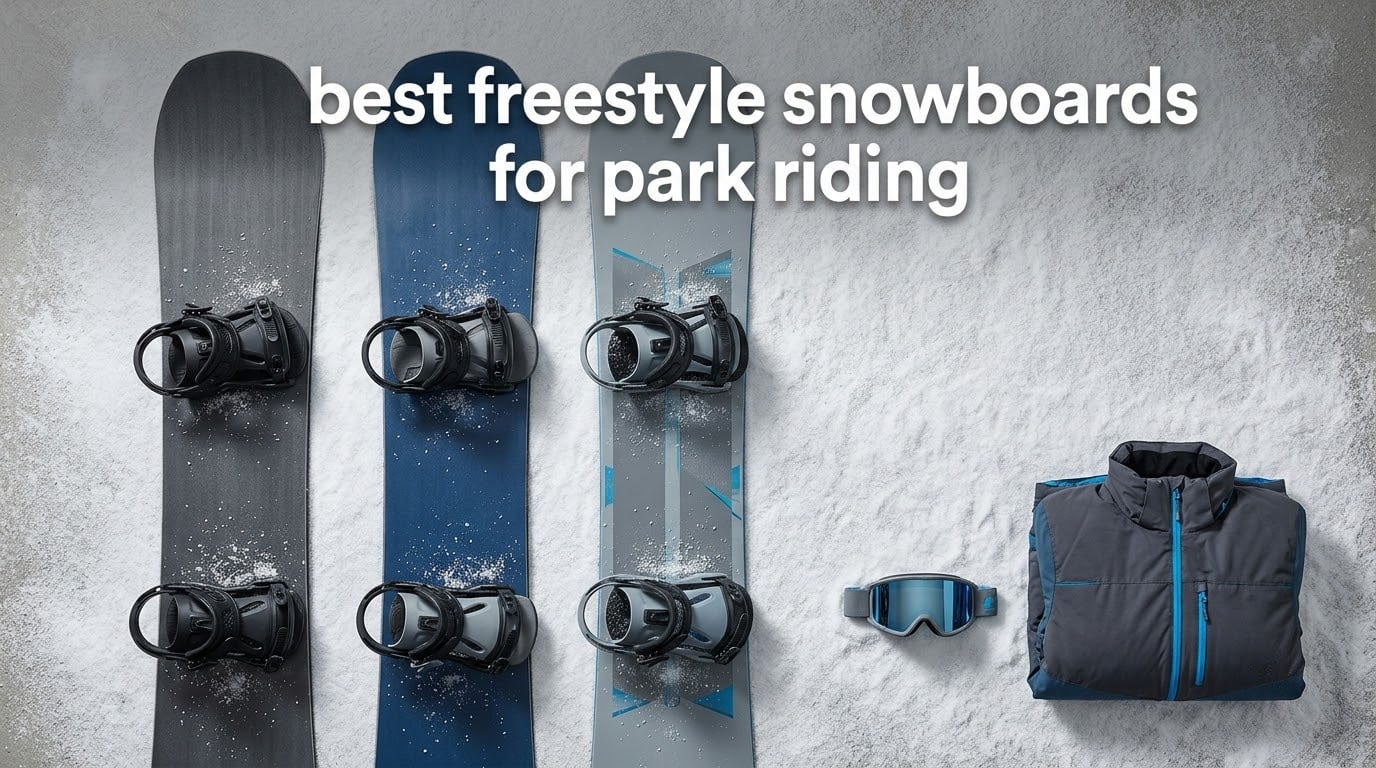
Riding a terrain park on the wrong board is a strange kind of slow-motion failure. Nothing crashes, nothing breaks, but every rail takes three times the effort, every landing feels like it might fold in half, and switch riding feels like riding someone else’s board. The best freestyle snowboards for park riding share a simple design logic: a true twin outline, a soft-to-medium flex, and a flat, rocker, or hybrid camber profile that keeps an edge from catching on a box.
We spent weeks reading spec sheets, warranty terms and rider reviews across twelve boards from CAPiTA, Lib Tech, Nitro, Never Summer, K2, Rossignol, 5th Element and WHITESPACE. The category is dominated by Amazon listings, so the written specification is often thin and the review history is often shorter than we would like. We say so plainly wherever that is the case, because a spec sheet you cannot verify is worse than an honest gap.
This guide covers all twelve picks, then spends real time on the four decisions that actually matter: shape, camber profile, flex and size. If you only have a minute, jump to the quick overview table. If you already own an all-mountain board and are deciding whether to add a second one, read the section titled “Do You Actually Need a Separate Park Board?” first, because the honest answer is often no.
Table of Contents
Top 3 Picks: Best Freestyle Snowboard Picks in 2026
Our three strongest all-round park picks this season, based on the balance of published specifications, build materials, warranty length and the size of the review base behind them.
5th Element All-Mountain Twin
- Flex 2/10 soft flex
- True twin shape
- Camber-dominant pop
- Wide size options
CAPiTA Defenders of Awesome
- True twin shape
- 5.5/10 flex
- Resort V1 camber profile
- Blended radial sidecut

Lib Tech Skate Banana
- Banana rocker profile
- Twin freestyle shape
- Supremely easy riding
- All skill levels
Best Freestyle Snowboards for Park Riding in 2026
All twelve boards in one place. The key features column is drawn from each manufacturer’s published specification, not from our impressions.
| Product | Specifications | Action |
|---|---|---|
| 5th Element All-Mountain Twin Snowboard |
|
Check Latest Price |
| CAPiTA Defenders of Awesome Snowboard |
|
Check Latest Price |
| Lib Tech Skate Banana Mens Snowboard |
|
Check Latest Price |
 Nitro Cheap Thrills True Twin Park Snowboard Nitro Cheap Thrills True Twin Park Snowboard |
|
Check Latest Price |
 CAPiTA Pathfinder Freestyle Snowboard CAPiTA Pathfinder Freestyle Snowboard |
|
Check Latest Price |
 Lib-Tech Terrain Wrecker Mens Snowboard Lib-Tech Terrain Wrecker Mens Snowboard |
|
Check Latest Price |
 Nitro T1 True Twin Park Snowboard Nitro T1 True Twin Park Snowboard |
|
Check Latest Price |
 Never Summer Easy Rider True Twin Never Summer Easy Rider True Twin |
|
Check Latest Price |
 K2 Afterblack Freestyle Park Snowboard K2 Afterblack Freestyle Park Snowboard |
|
Check Latest Price |
 WHITESPACE AMF Twin Snowboard WHITESPACE AMF Twin Snowboard |
|
Check Latest Price |
 Rossignol Ultraviolet Twin Freestyle Rossignol Ultraviolet Twin Freestyle |
|
Check Latest Price |
 Rossignol Ampage Vol 2 Twin Freestyle Rossignol Ampage Vol 2 Twin Freestyle |
|
Check Latest Price |
1. 5th Element All-Mountain Twin Snowboard – Best Overall Park Snowboard with the Softest Published Flex
5th Element Men’s Freestyle All-Mountain Twin Snowboard, Range, 144cm
Flex 2/10
Camber-dominant profile
True twin shape
Wide size options
2 year warranty
Pros
- Softest published flex here at 2/10
- True twin shape supports switch riding and pipe
- Camber-dominant profile delivers real pop off kickers
- Extruded base is simple to maintain
- Compatible with most binding setups
Cons
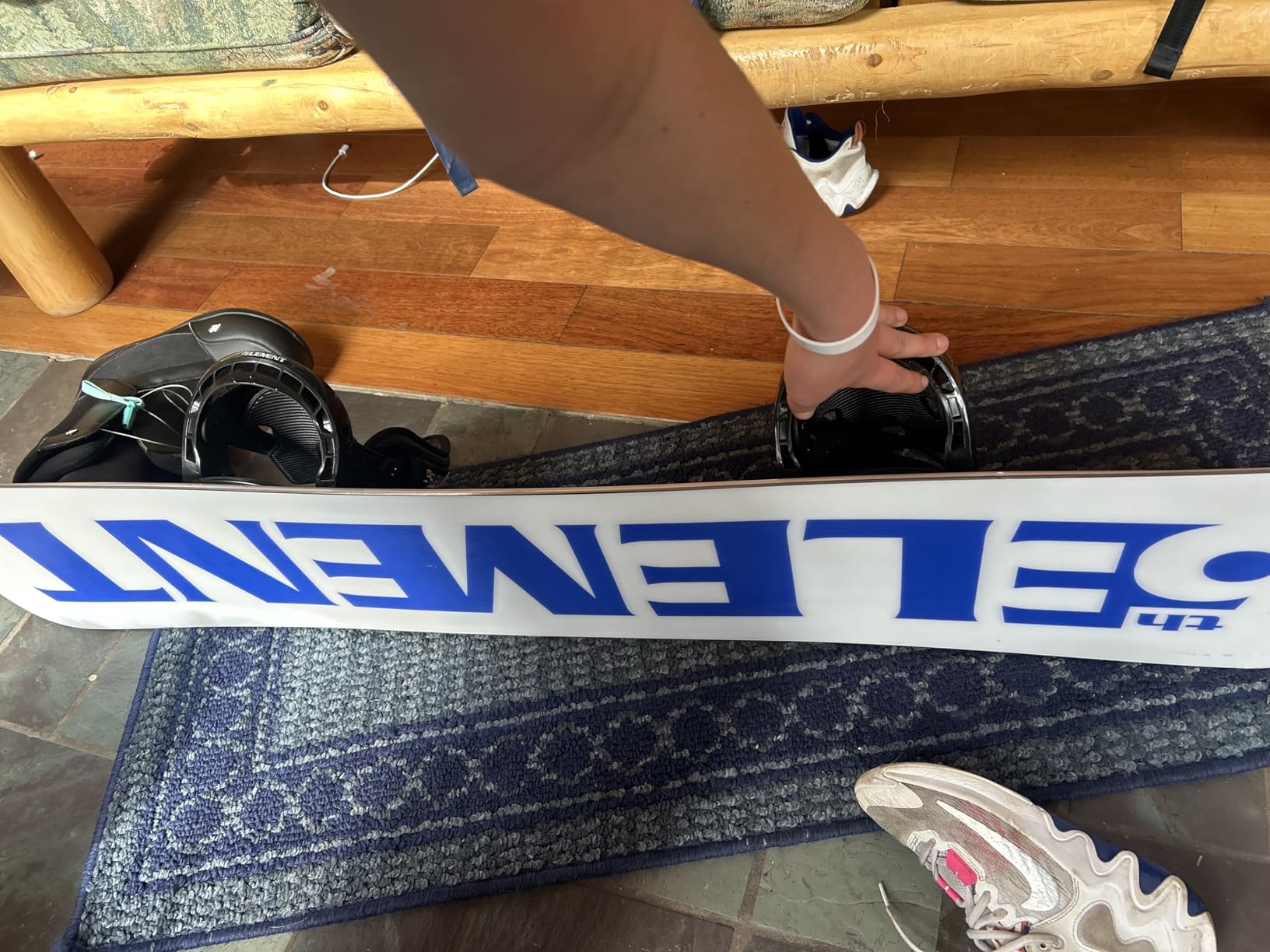
- Packaging quality is the biggest complaint
- One reviewer received a scratched board
- One order shipped the wrong size
This is the board we keep coming back to for anyone starting out in the park. A published flex rating of 2 out of 10 is the softest number published anywhere in this roundup, and that single spec tells you more about the experience than most marketing copy does. The board bends under your weight instead of resisting it, which is exactly what a press, a butter or a slightly sideways landing requires.
It is also a true twin with a camber-dominant profile, which sounds like a contradiction until you ride it. You get the lift underfoot for pop on a kicker, and you get identical nose and tail so switch landings do not feel like a different board. Buyers describe it as good for beginners and intermediate riders, and the flex is described as versatile for park riding rather than flat and dead.
The 4.4 rating across 33 reviews is the largest verified review base of any board in this roundup, which matters a lot in a category where most listings have three or fewer reviews. It is not a perfect score, and the complaints are consistent enough to warn you about: several buyers report boards arriving scratched in thin plastic packaging, and at least one order shipped the wrong size.
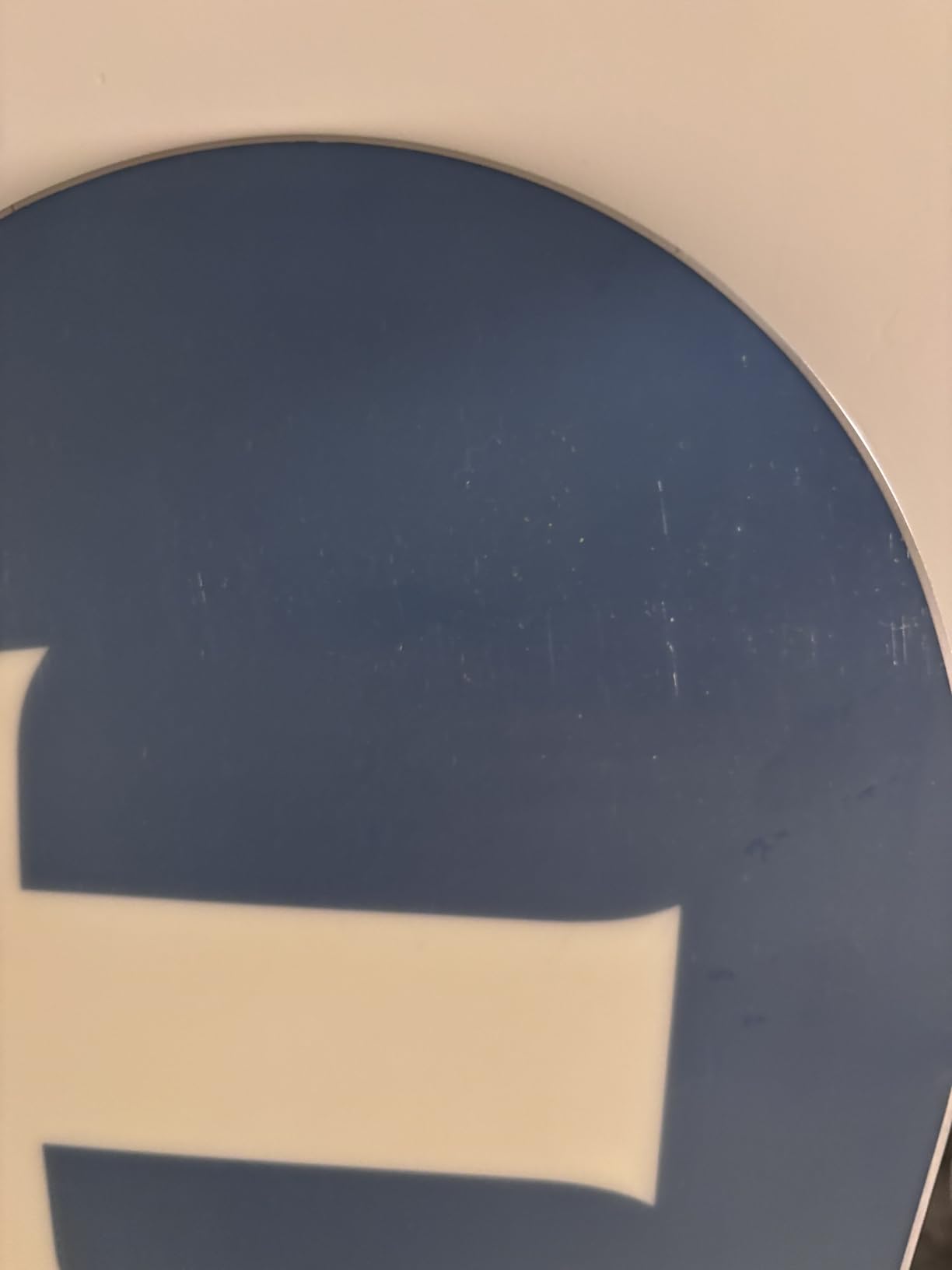
Those packaging complaints are worth taking seriously as a buying signal. A board with a chipped edge from the box is a board you take to a shop immediately, and the wide size range is one of the more useful features here for riders who do not fit standard waist widths. It is listed as compatible with most bindings, which removes one of the usual compatibility questions for a first setup.
The base is an extruded base rather than a sintered one. Extruded bases are cheaper, easier to repair and less fast, and for park riding that trade is usually fine because you spend your time on features rather than running the clock.
Who This Flex Rating Actually Suits
At 2 out of 10, this board assumes you are still building the fundamentals. If your goal this season is switch riding, straight airs and your first presses, it removes more friction than most of the softer boards here. Riders moving up to larger kickers or wanting to load a big hit at full speed may find the response vague, because a very soft board gives up pop to give you forgiveness.
What to Watch Before You Order
Inspect the board the moment it arrives. Check the edges and the base for shipping damage before the first wax, and confirm the size on the label matches what you ordered. The two-year warranty against manufacturing defects is shorter than the three and four-year terms on some picks here, so treat that difference as part of the value calculation.
2. CAPiTA Defenders of Awesome Snowboard – Premium Pick for Riders Who Want Pop Without Losing Forgiveness
CAPiTA Defenders of Awesome Snowboard, 150cm
True twin shape
5.5/10 flex
Resort V1 profile
Blended radial sidecut
2 year warranty
Pros
- Resort V1 blends camber pop with easy turn initiation
- 5.5/10 flex sits in the sweet spot for intermediates
- True twin performs identically regular or switch
- Reviewers praise stability at speed
Cons
- Packaging in plastic bags has led to chipped edges
- One reviewer felt the flex was jittery
- Base shipped with no courtesy wax coat
The Defenders of Awesome is the board we would suggest to an intermediate rider who has outgrown a very soft twin but does not want the punishment of a stiff directional. A flex rating of 5.5 out of 10 is unusually well matched to that stage, and the review summary describes it as the right amount of flex for fun without feeling like a wet noodle.
The profile is the interesting part. Resort V1 is described by CAPiTA as giving the pop and response of a cambered board with the predictability and easy turn initiation you would normally have to give up to get from a flat or reverse camber shape. In practice that means it takes off a kicker without the loading effort a pure camber board demands.
Buyers consistently single out two things: pop and stability at speed. That combination is why this is the pick for riders who want to start hitting jump lines rather than just rails. The blended radial sidecut, a single radius through the middle with a custom blend zone at the contact points, keeps turns predictable without making the board feel vague.
It is also positioned as a resort board that handles groomed runs, varied terrain and the occasional off-piste run, which makes it a reasonable one-board answer for a rider who does not want a dedicated park deck. If deep snow days are a big part of your season, a directional freeride board will always float better, and the wide waist on a freeride shape is not something a twin can replicate.
The build is 100% polyethylene with a two-year manufacturer warranty, and it is offered here in a 150cm size. Check the size range before you commit, because a park board that is too long for you will feel like a plank no matter how good the profile is.
Pop Versus Forgiveness: Where This Board Sits
At 5.5 out of 10, this sits at a useful balance point for the roundup. Riders chasing jump lines and pop will feel the camber-driven response, while riders still working on press technique and smaller landings get enough give to stay on the board. The trade-off is that it is not a very buttery board, and riders chasing pure freestyle softness will find softer options.
What Real Buyers Complain About
Packaging, again. The most repeated negative theme across the reviews is boards shipped in plastic bags with edges chipped on arrival, plus a base that arrived dry with no courtesy wax coat. The graphics also drew criticism for looking bland in person. None of that is a performance problem, but it is a reason to document any shipping damage immediately.
3. Lib Tech Skate Banana Mens Snowboard – Top Rated Pick for Riders Who Want the Easiest Ride in the Park
Lib Tech Skate Banana Mens Snowboard, 152
Banana rocker profile
Twin freestyle shape
152cm size
7 pound board weight
Listed for all skill levels
Pros
- Perfect 5.0 rating across the review history
- Curved banana profile makes flat ground very easy to ride
- Twin shape covers freestyle and all-mountain use
- Listed at 7 pounds
Cons
- Only 9 reviews behind the rating
- Sits in a higher price tier than most of the twin boards here
- Published flex rating is not provided
The Skate Banana is the board people describe in the most uncomplicated terms, which is refreshing. Every review on this listing talks about the same thing: it is easy to ride, and the curved profile is the reason. There is no published flex number, so you are buying the feel rather than a spec, and that is exactly what most riders in this category say they want.
The banana profile is a curved rocker, so the contact points lift off the snow across the whole board rather than at the tips only. The practical result on park features is that the board almost refuses to catch, and on flat groomers it feels almost frictionless and very light underfoot. Buyers describe it as turning the whole mountain into a freestyle playground, which is a fair summary of a 152cm twin at 7 pounds.
What you give up is control-oriented precision. A continuous curve is not the tool for holding a long carve on a firm run, and it is not the profile you want for the snap of a hard-loaded jump. Riders who have moved past cruising and want to shape lines at speed tend to move toward a flat or cambered twin.
Good Fit for Absolute Beginners and Returners
The listing is aimed at all skill levels, and the review history supports that claim for the first half of the range. If you have never snowboarded, or you are coming back after years away and want a low-consequence board for a season of park features, this is a very low-stress way to start. The twin shape means switch riding is available from day one.
Where the Marketing Outruns the Data
The rating is perfect, but it rests on 9 reviews, and no flex rating is published, so we cannot place it precisely against the boards that do publish one. Treat the 5.0 as encouraging rather than conclusive. If you want a board where the spec and the review history both go deep, the boards higher in this list are the safer recommendation.
4. Nitro Cheap Thrills True Twin Park Snowboard – Best for Kicker Lines and Ollie Power
Nitro Cheap Thrills Men’s Freestyle Snowboard – Soft Flex, Twin Shape, Reinforced Edges – Jibbing, Park (2026, 155cm)
Cam-out camber profile
Whiplash core
Radial sidecut
Sintered Ecospeed HD base
155cm size
Pros
- Whiplash core is built for maximum ollie power
- Cam-out camber stays fun and forgiving
- Sintered base is fast and durable
- Radial sidecut gives predictable turning
Cons
- Only 3 reviews behind the rating
- Higher price tier than most of the twins in this guide
- Flex rating is not published
Two Nitro twins appear in this roundup and they share a chassis, so the difference between them is size and edge hardware. The Cheap Thrills is the longer one at 155cm and the heavier of the pair at 2900 grams, which points it at riders who want more stability under them for jump lines rather than pure jib trickery.
The cam-out camber profile is the key spec. Nitro describes it as fun, responsive and forgiving, and it is a useful middle ground: enough arch underfoot to generate lift and pop, but a profile that releases rather than slaps when you come in off-angle. For a rider whose goal is to go bigger in the park, that is the profile that keeps the risk manageable.
The Whiplash core profile is pitched for ollie power, which is the term park riders use for the pop you get out of a small pop off a lip. A board that snaps quickly is what makes a 180 feel controlled, and it is the difference between a landing you ride away from and one you exit with speed.
Why the 155cm Size Matters Here
Length is the underrated variable in park riding. A longer board has more surface area to land on and stays more stable at speed, which matters on a jump line with a big drop. The cost is a wider turning radius and more effort to initiate a press. Riders under 5 foot 6 should look hard at the shorter Nitro twin further down this list before committing to this length.
Reading a Thin Review History
Three reviews is not a track record. Every feature listed for this board comes from Nitro’s own published specification rather than from rider feedback, which is a meaningful distinction when you are weighing it against a board with 30-plus reviews. The components are credible, and the sintered base is a real upgrade over an extruded one, but the ride report is thin.
5. CAPiTA Pathfinder Freestyle Snowboard – Best for a Rider’s First Full Park Season
CAPiTA Pathfinder Men’s Freestyle Snowboard (2026, 162cm Wide)
True twin shape
Reverse camber profile
4/10 twin flex
162cm wide size
Radial sidecut
Pros
- Soft 4/10 flex is forgiving for progressing riders
- Reverse camber makes turn initiation easy
- True twin performs the same in both directions
- Lightweight at 5 pounds
Cons
- Only 2 reviews behind the rating
- Soft flex may feel vague to aggressive riders
- Only offered here in a 162cm wide size
The Pathfinder is listed under a 162cm wide size, and that single fact shapes who it suits. A wide waist gives a bigger rider more room to stand without the board feeling cramped, and for a twin riding a lot of park features where you are constantly shifting weight, that extra room makes edge-to-edge movement less dramatic.
The flex is published at 4 out of 10, twin flex, which places it neatly between the very soft boards and the medium ones. Reverse camber does most of the early work: the lifted contact points make it hard to catch an edge and easy to start a turn from a standstill, which is what you want when the feature in front of you is a box you have not ridden before.
This is the board we would hand someone who is done with beginner lessons and starting to ride a park regularly. It is soft enough to absorb the landings that come with progression and stable enough at 5 pounds to be lively on small features. The radial sidecut keeps the turning predictable, which is the property riders notice most on their first season of real park riding.
Check the Size Before You Fall in Love With the Flex
Only one size is offered in this listing, and it is 162cm wide. If your height and weight would normally put you on a 150 to a 155, this is a longer and wider board than you are used to, and you should demo it rather than assume. The flex rating is the selling point, but a board that is too long will still feel slow in the park.
What Two Reviews Can and Cannot Tell You
Two reviews with a perfect rating is a warm start and nothing more. Everything you are buying here is a published specification, which is genuinely useful, but there is no rider feedback to validate how the 4/10 flex feels in person. Pair that with a demo and treat the rating as a placeholder until you have ridden it.
6. Lib-Tech Terrain Wrecker Mens Snowboard – Best All-Mountain Freestyle Hybrid
Lib Tech Terrain Wrecker Mens Snowboard 152
Hybrid C2X camber with central rocker
Directional twin shape
Magne-Traction edges
FSC certified wood core
152cm size
Pros
- Hybrid camber with central rocker blends pop with soft-snow float
- Directional twin still allows switch riding
- Magne-Traction edges hold well on ice and variable snow
- Premium FSC certified aspen and paulownia core
Cons
- Aimed at advanced and expert riders
- Directional shape is not ideal for pure street jibbing
- Only 2 reviews behind the rating
If you want one board that handles a park session and then goes up a lift in the afternoon, this is worth a close look. It is also the only pick here with a directional twin outline, a floaty nose and a twin chassis, which is a deliberate compromise between pointing down a hill and riding switch.
The C2X hybrid camber profile with central rocker is the technical story. Central rocker means the section between your bindings lifts slightly, softening the ride and adding float in softer snow, while the camber sections toward each end still deliver the pop and precise control a jump line needs. That is the trade a hybrid-profile board is designed to solve, and it is why these boards have become the default choice for high-level all-mountain freestyle riders.
The edges are the quiet headline. Magne-Traction serrated edges are designed to hold grip on ice and variable snow, which is exactly the condition where a park rider loses an edge on the way to the lift line. For a twin, that is a genuine capability most park boards trade away entirely.
Who the Directional Twin Shape Suits
This suits an advanced rider who spends sessions doing both. The long nose helps on the way down, and the twin chassis keeps switch riding viable for park tricks. It is a worse choice than a pure twin for long sessions of street jibbing, where a swinging nose is exactly what you do not want on a slide balance. The listing targets advanced and expert riders, and we agree with that framing.
Material Quality and the Thin Review Base
The core is 75 percent aspen and 25 percent paulownia, both FSC certified, with birch internal sidewalls and UHMW sintered sidewalls for impact resistance. That is a premium layup and the eco-sublimated TNT sintered base is a genuinely fast base. The caveat is simple: two reviews is not enough rider data to tell you how the C2X feels, so demo this one.
7. Nitro T1 True Twin Park Snowboard – Best for Rails and Boxes
Nitro T1 Men’s Freestyle Snowboard – Twin Shape, Camber Profile, Responsive Pop – Park, Jibbing (Model Year 26, 152cm)
True twin park shape
Cam-out camber
Railkiller edge
Radial sidecut
152cm at 2700 grams
Pros
- Railkiller edge is built specifically for rail performance
- Lighter at 2700 grams than the longer Nitro twin
- True twin shape built for street and park use
- Sintered base is fast and easy to maintain
Cons
- Only 1 review behind the rating
- Shorter platform suits smaller riders only
- Sintered base still needs regular edge work
The T1 is built around rail riding, and the difference from the longer Nitro twin is explicit: a Railkiller edge. That is a purpose-built edge designed for sliding on steel and plastic, and it is the feature you should be buying this board for if your season is mostly boxes and flat rails rather than kickers.
At 152cm and 2700 grams it is a notably light platform, which matters for jib riding specifically. A light board makes it easier to move a board that is balanced on a rail, and it makes recovery from a slightly off-centre slide less dramatic. Riders with an all-mountain background will notice the difference in the air and on approach features.
Underneath the edge hardware it uses the same cam-out camber and Whiplash core as its sibling, so the pop is there if you want to hit a jump. This is a board that leans street rather than pipe, and the short length keeps it lively rather than stable at speed.
Why Edge Hardware Matters on a Rail
Rail features reward a specific combination: a raised contact point from the camber profile, a board light enough to move, and edges that tolerate being dragged across a metal surface. Most park boards only deliver the first. The Railkiller edge is the reason this board separates itself from the other twins at a similar length, and it is a real, documented difference rather than a marketing line.
Size and the One-Review Problem
This listing is 152cm, which is the size to pick if you are around 5 foot 4 to 5 foot 9 and want a lively platform for street features. Riders who will be hitting larger kickers should look at the longer Nitro twin instead. Be aware that a single review carries no weight as evidence, so every claim here comes from Nitro’s published specification.
8. Never Summer Easy Rider True Twin Snowboard – Best for Advanced Park Riders Who Want a Damped Ride
Never Summer Easy Rider Triple Camber Hybrid Men’s All-Mountain Snowboard (2026, 154cm)
Triple Camber Hybrid profile
Power Strip carbon
True twin
154cm
RDS 2 damping
3 year warranty
Pros
- Triple camber hybrid gives strong pop with a predictable ride
- RDS 2 damping absorbs vibration through rough landings
- Power Strip carbon adds pop without bulk
- Three year limited warranty
- Made in the USA
Cons
- Only 1 review behind the rating
- Premium price tier compared with most picks
- Carbon layup can feel firm to riders who want maximum softness
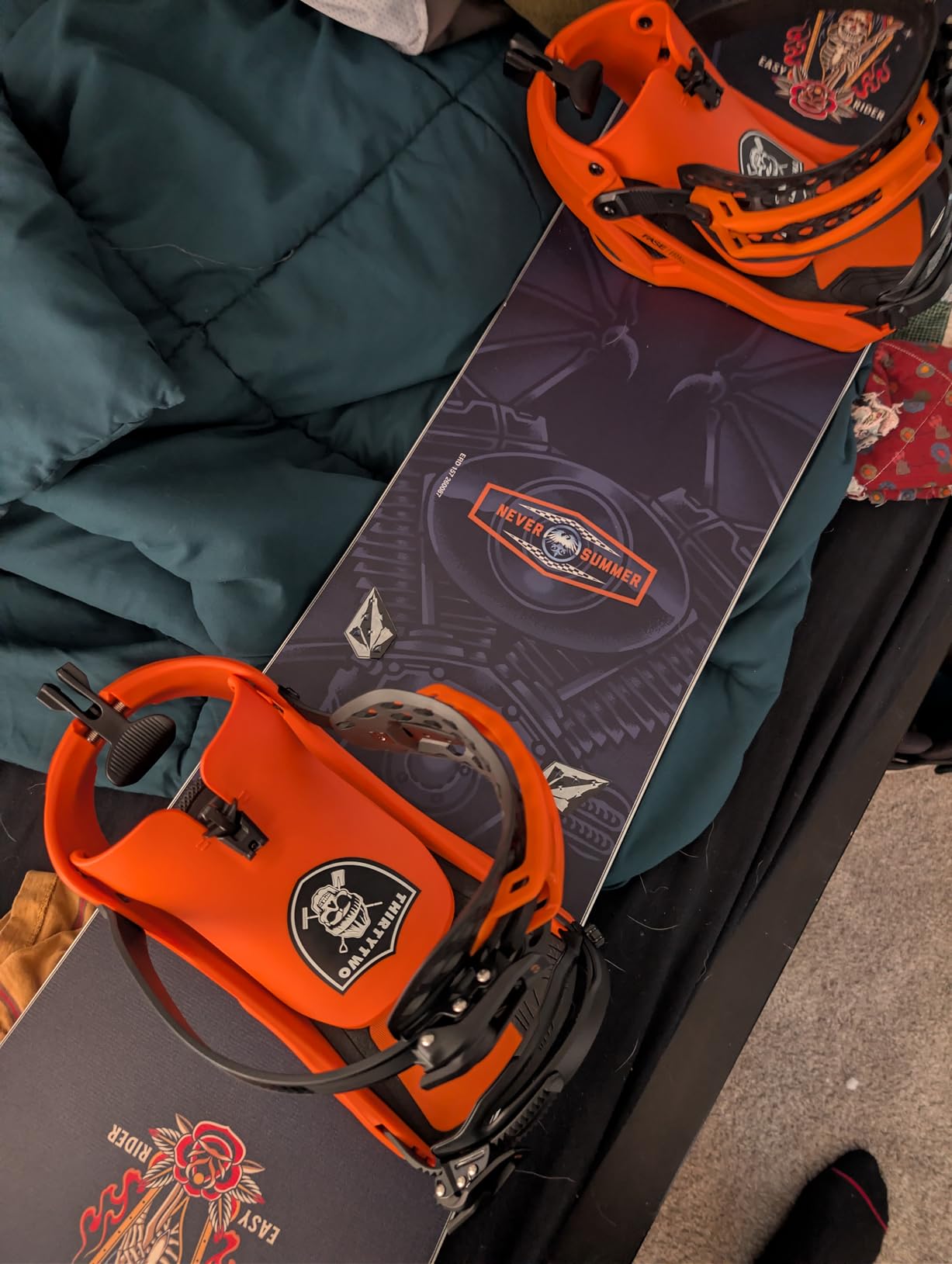
Never Summer built this board around damping, and that is the detail that separates it from everything else here. The RDS 2 damping system is designed to absorb vibration, which is the difference between a board that stays composed when you land slightly off your axis on a firm run and one that buzzes all the way down. For a rider who has moved past the beginner stage, that is a comfort feature you notice on every run.
The profile is Triple Camber Hybrid, which is a more aggressive version of a hybrid camber board. You get three raised contact sections rather than one arch, which spreads the load across a wider area of the board and delivers strong pop while keeping turn initiation predictable. The shape is a true twin at 154cm, so switch riding is fully supported.
The layup is where the money goes: a superlight wood core, Power Strip carbon, Bi-Lite fiberglass and STS pre-tensioned fiberglass over a Durasurf XT sintered 5501 base. Carbon in the layup adds pop and response without much weight, and the board is made in the USA with a three-year limited warranty, matching the longest published manufacturer terms in the group.
Where This Board Fits in the Flex Range
No flex rating is published, but the carbon-reinforced layup tells you this is on the firmer end of a true twin rather than a buttery street board. That suits an advanced rider who wants to load a jump and get snap out of it. A beginner learning to press will find more flex than they need in a board at this level.
Premium Build, Thin Evidence
This is one of the most fully specified boards in the roundup: core, laminates, base, damping system, warranty and manufacturing origin are all published, which is genuinely rare. Against that, there is a single review. The specification is verifiable and the components are credible, so the risk here is about feel rather than quality, and a demo resolves it quickly.
9. K2 Afterblack Freestyle Park Snowboard – Best for Intermediate Riders
K2 Afterblack Men’s Freestyle Park Snowboard, 151cm
BAP core
Carbon DarkWeb
Triax fiberglass
Sintered 4000 base
151cm
3 year warranty
Pros
- Carbon DarkWeb adds pop and stability to a small package
- Triax fiberglass adds torsional stiffness for edge-to-edge response
- Three year warranty against manufacturing defects
- Intermediate is the stated target level
Cons
- Only 1 review behind the rating
- Basic published sizing with no shape or flex details
- Listed at 7 pounds which is at the heavier end here
The Afterblack is listed for intermediate riders, and the construction supports that placement. Carbon DarkWeb is a carbon-added stringer system that increases pop and stability without turning the whole board into a stiff stick, and Triax fiberglass across three axes gives you the torsional rigidity that keeps a board from twisting when you land on a flat base.
That combination is why it works for a rider who is past beginner presses and starting to hold their own on medium features. The BAP core is a bamboo and aspen blend that sits in the middle of the flex range, and a sintered 4000 base gives you the fast glide and durability you want when you are linking features at speed.
The 151cm size and a listed weight of 7 pounds make it a middle-of-the-size-range true twin, which suits a broad band of riders. The three-year warranty against manufacturing defects is one of the longer terms available, and it is tied to a current production model rather than a discontinued listing.
What Triax Fiberglass Changes Under Your Feet
Torsional stiffness is the term that matters most in the park. A board with too little of it twists when you put weight on the nose or tail, a common cause of an off-angle landing on a jump. Triax construction resists that twist, so the board lands the way you intended it to. Riders who are moving up from a very soft board will feel the difference as soon as they start popping.
What the Specification Does Not Tell You
There is no published flex rating, no shape description and no sidecut type for this model, which makes the spec sheet thinner than most of what we cover despite the solid component list. Combined with a single review, you are buying on reputation and construction rather than evidence. Ask a shop whether they can source the shape and flex details before you commit.
10. WHITESPACE AMF Twin Snowboard – Best Value True Twin with a Wide Waist
WHITESPACE AMF Twin Snowboard – True Twin Freestyle, Wide Park & All-Mountain Hybrid Camber
True twin freestyle shape
Wide hybrid camber
Tri-axial fiberglass
Paulownia and poplar core
140cm and 144cm
Pros
- Four year limited warranty
- the longest published term among the picks
- Premium blended wood core with a sintered base
- Tri-axial fiberglass for responsive performance
Cons
- Only 1 review behind the rating
- Only 2 size variants available
- Blend resin and wide shape are not a match for pure street riders
The AMF Twin is built for anyone who wants a genuine all-mountain freestyle board rather than a pure park deck. A wide waist combined with hybrid camber is a volume-shifted approach: the board is effectively ridden shorter than its length suggests, which keeps it quick in the park while giving it the width to be stable and float when you leave the feature line.
The construction is more substantial than the entry-level boards here. A Paulownia and poplar blend core, 30-degree tri-axial fiberglass, plant-based bio-resin and a sintered base is a credible layup, and the thermoplastic ABS sidewalls are a sensible choice for a board that will be hit by rails and boxes.
The four-year limited warranty is the longest published term among the picks, and the short 140cm and 144cm sizes give shorter riders an option instead of forcing them onto an oversized board. For a rider around 4 foot 10 to 5 foot 4 who is done with beginner lessons, that is the single most useful thing on this listing.
Why a Wide Waist Works in Both Directions
Width gives a park board edge-to-edge stability without adding length, and length is what makes a board feel slow on a small feature. Riders on short all-mountain boards know this effect. A wide twin keeps a tight turning radius while resisting the wobble that shows up on a landing, which is why wide park twins are increasingly common as a one-board setup rather than a specialist.
Check the Size Range First
Only two sizes are offered, 140cm and 144cm. If you are taller than the 144cm suits, this listing will not work for you at all, and the wide waist does not compensate for a board that is too short. Everything else about the board is well specified, so size is the single question to resolve before anything else.
11. Rossignol Ultraviolet Twin Freestyle Snowboard – Most Versatile for New Riders
Rossignol Ultraviolet Twin Freestyle – Snowboards for Men and Women – Entry-Level
AmpTek Auto-Turn rocker
Twin freestyle flex
Softer symmetrical flex
144cm and 149cm
5 pounds
Pros
- Catch-free rocker profile is very forgiving on first features
- Softer symmetrical flex makes switches and small landings easy
- Listed at 5 pounds for easy carrying
- Two size options cover most shorter riders
Cons
- Entry-level construction will not satisfy advanced riders
- Only 2 size variants and no wide option
- Base is simpler than the sintered options
The Ultraviolet is the pick for someone whose season plan is a season of beginner park features. The AmpTek Auto-Turn rocker gives it a catch-free feel and instant float, and the softer symmetrical flex is what makes small rails and boxes survivable while you are still learning to slide.
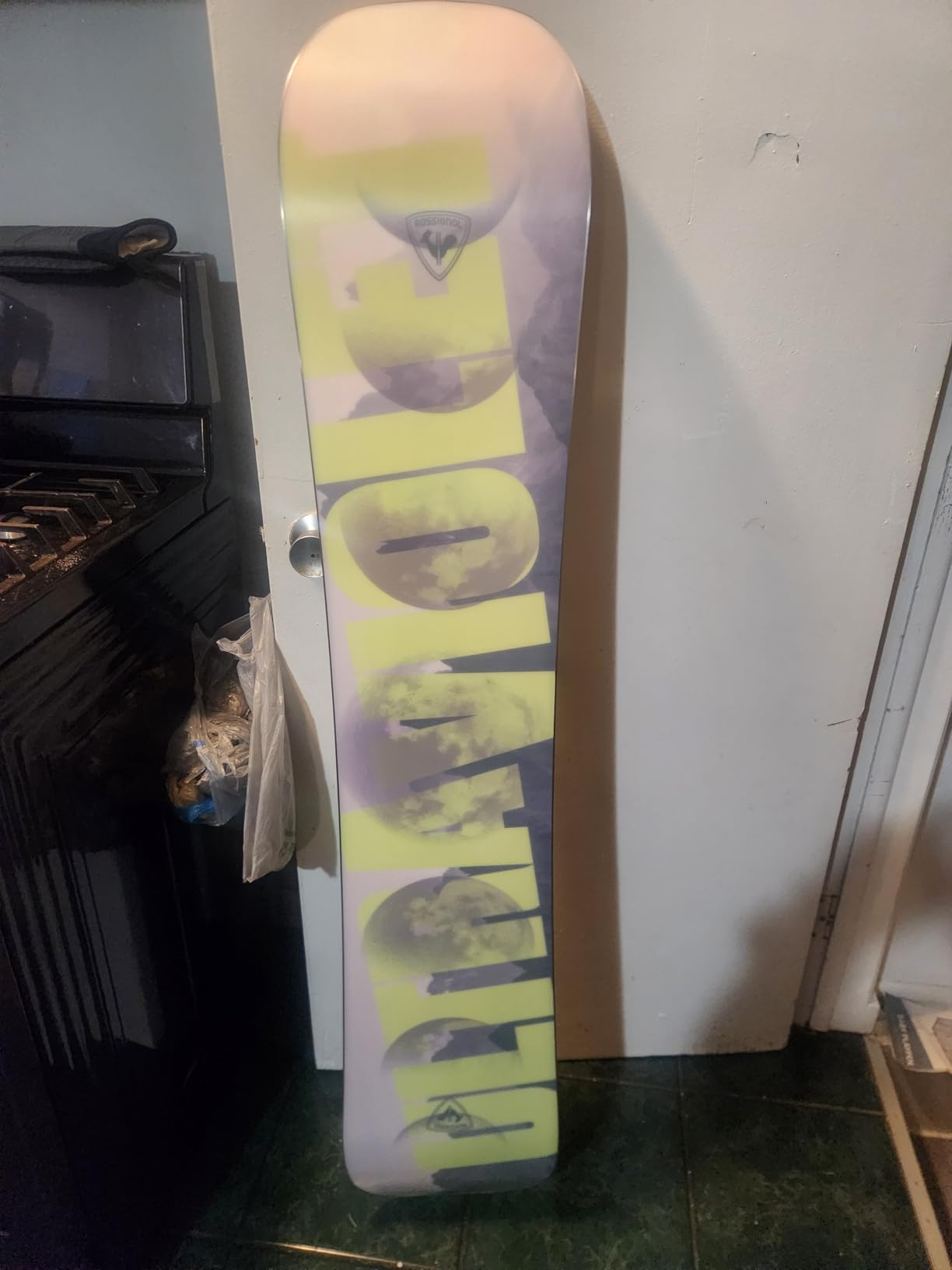
Rossignol describes it as a twin freestyle flex designed for pop and balance, and the 4.8 rating across 7 reviews with a large share of 5-star ratings is a reasonable level of evidence for a board at the entry point. Buyers consistently mention the maneuverability and the forgiving feel, and the wood core is sustainably harvested, which is a genuine bonus at this level.
At 5 pounds and available in 144cm and 149cm, it is a light and short platform. That combination is ideal for a first park season and poor for a rider who wants to load big features, because a light short board gives you very little to land on at speed.
The shorter of the two Rossignol lengths is the one to pick if you are under about 5 foot 5, and the 149cm covers riders up to roughly 5 foot 9. Beyond that range, step up to one of the wider or longer twins in this roundup rather than riding a board that is visibly small for you.
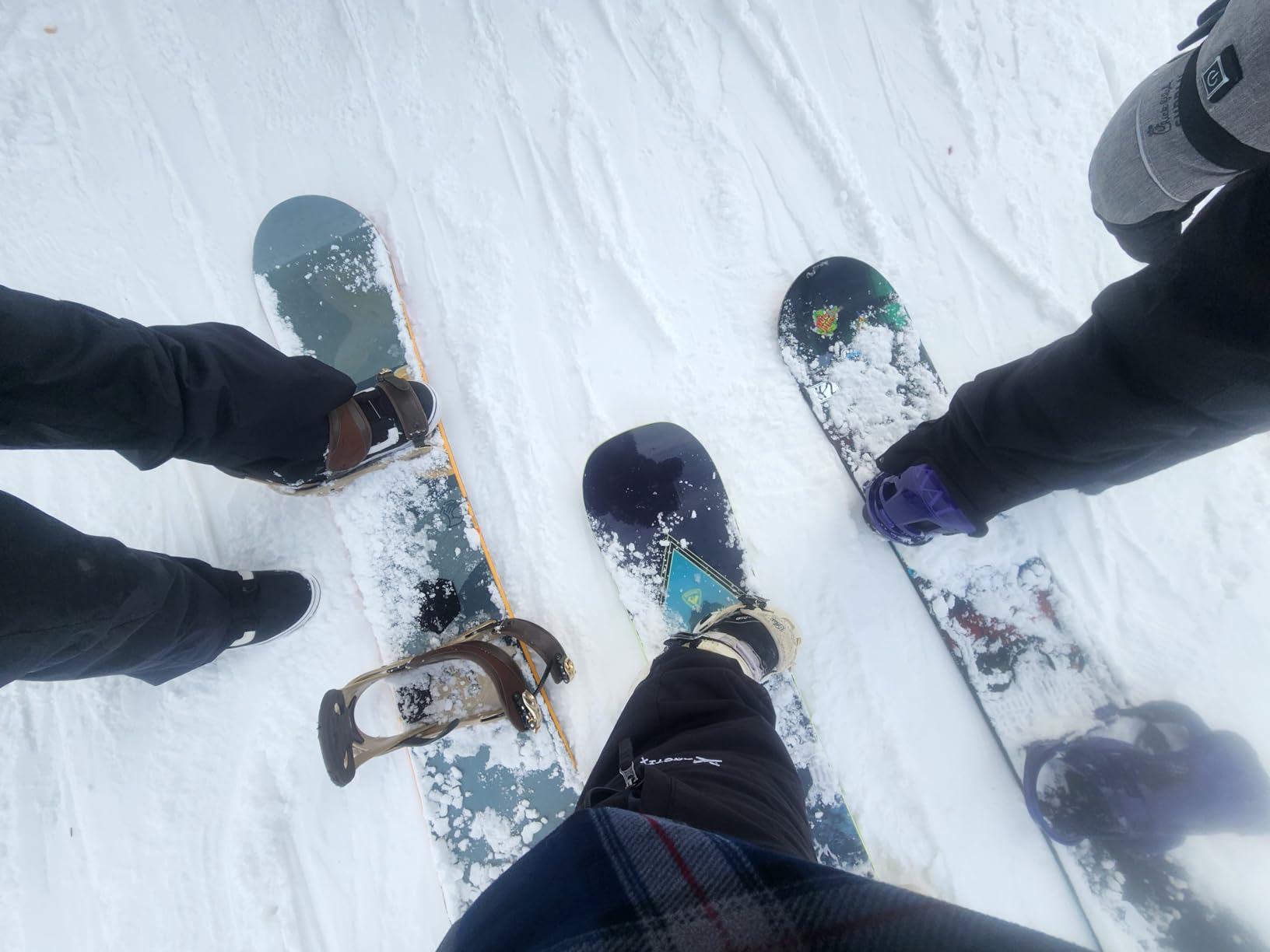
What Rocker Gives Up and When It Matters
Rocker lifts the contact points off the snow across the whole board, which is why the Ultraviolet is hard to catch. The trade is edge hold: there is less steel touching the snow, so icy traverses and firm packed runs take more work. If your season is mostly park features, you will rarely notice. If you ride a lot of ungroomed early-season terrain, you will.
How Long This Board Stays Relevant
Realistically, a season. Entry-level construction is designed to be forgiving, not to reward progression into larger features, and the flex will feel vague once you are loading serious jumps. Treat it as a first board and plan the upgrade around the flex-matching advice in the buying guide below.
12. Rossignol Ampage Vol 2 Twin Freestyle – Best for Youth Riders and Small Sizes
Rossignol Ampage Vol 2 Twin Freestyle, Entry-Level Snowboards for Women and Men
AmpTek Auto-Turn rocker
Twin freestyle flex
Soft symmetrical flex
146cm to 161cm across six sizes
5 pounds
Pros
- Six size options
- covering 146cm to 161cm
- Soft symmetrical flex is forgiving for younger riders
- Rocker profile is catch-free on small features
- Lightweight at 5 pounds for easy carrying
Cons
- Basic wood construction compared with premium layups
- Listed age range is Kid so adult sizing should be confirmed
- Only 5 reviews behind the rating
The Ampage Vol 2 solves a problem none of the other boards here address, which is size coverage. Six variants run from 146cm to 161cm, so a family outfitting two kids of different ages, or a short rider who has been pushed onto an oversized twin, can find an actual fit rather than making a compromise.
The riding characteristics are the same forgiving package as the Ultraviolet. Twin freestyle flex supports riding in both directions, AmpTek Auto-Turn rocker handles small features without catching, and a soft symmetrical flex absorbs the landings that come with learning. The core is 98 percent sustainably harvested wood, and the board weighs 5 pounds, which matters when a younger rider is carrying their own gear to the shuttle.
The 4.7 rating across 5 reviews is decent for the segment, and buyers point to the range of sizes as the deciding factor. One caution: the listing is tagged with a Kid age range, so if you are an adult shopping this for yourself, confirm the fit and the intended rider profile before you order.
Getting the Size Right for a Younger Rider
Size is the whole game here, and it is worth doing properly. A board that is too long for a smaller rider is exhausting to turn and hard to control on a feature, and that puts people off riding entirely. Match the rider’s weight and height to the published range, then drop one size below what they would ride as an all-mountain board.
When to Move Up a Tier
The basic wood construction and soft flex make this a progression board for a first season, not a long-term setup. When your rider starts linking features, going for switch landings and hitting small kickers consistently, move up in flex before you move up in price, and use the sizing rule above to pick the next size rather than simply the next model.
How to Choose a Park Snowboard: The Buying Guide
Four decisions account for nearly all of the difference between a good park board and a frustrating one: shape, camber profile, flex and size. Decide them in that order, because each one constrains the next. Get the shape wrong and no amount of clever engineering will rescue it on a switch landing.
True Twin vs Directional: Shape Comes First
A true twin has a symmetrical outline, stance, sidecut and flex, so the nose and tail are identical and switch riding feels the same as regular. A directional board has a longer nose and a shorter tail, which makes it better at pointing down a hill and worse at doing anything that needs balance on a flat base.
For dedicated park riding, the twin is the default and the reason is not subtle. When you are balanced on a rail, a directional nose swings out. When you land switch, a directional tail feels completely different from the nose. Almost every board in this roundup is a twin for that reason.
The exception is the all-mountain freestyle hybrid, where a directional twin with a floaty nose gives you a better day on the mountain without giving up switch riding. If you only ride park, pay the extra and get a pure twin. If you split your time, the hybrid is a reasonable compromise.
Camber Profile: Pop Against Catch-Free
Camber is a raised arch under each foot. It delivers the most pop and the best edge hold, and it is the most likely to catch on a rail or a flat landing.
Rocker lifts the contact points off the snow toward the tips. It almost never catches and it floats well, but it gives up pop and edge hold. Boards like the Rossignol twins and the Lib Tech Skate Banana sit here.
Flat, or zero camber, is a level profile with no arch. It is balanced, forgiving and predictable, and flat profiles remain a very common choice for true-twin park boards.
Hybrid camber, sometimes called camber-rocker, keeps camber under the bindings and adds rocker toward the tips. It is the compromise most advanced park riders end up on, because it keeps the pop where you load a jump while lifting the contact points where a rail would catch them.
There is no single best profile, but there is a single best profile for your level. Beginners get the most out of flat or rocker. Riders loading real jumps get the most out of camber or hybrid.
Soft or Stiff: The Load and Pop Trade
This is the question riders argue about most, and the most useful answer we found came from r/ShredditGirls: a softer board will not get you as high but is easier to load, while stiffer boards give you more pop. That single sentence is the whole trade-off, and it is worth repeating because the flex rating number on a spec sheet means nothing without it.
Read the ratings in this roundup as a spectrum. A flex of 2 out of 10, as published on the 5th Element twin, bends almost immediately and is built for learning. A flex of 5.5, as published on the CAPiTA Defenders of Awesome, is the intermediate sweet spot. Higher than that and you are choosing a jump and carve board, not a park progression board.
There is one honest warning here: flex ratings are not standardised across brands. A 5 from one manufacturer is not guaranteed to be identical to a 5 from another, so use the published number to sort boards within a brand, and use rider reports to sort across brands. The regret pattern we hear most often is buying a board that is too stiff for the rider’s stated ability.
What Size Board for Park Riding?
Park boards are typically ridden one to two sizes shorter than the equivalent all-mountain board. Shorter means a shorter effective edge, a tighter sidecut radius and less surface area to land on, all of which make a board easier to move in the air and easier to initiate a press.
Start with your weight rather than your height, because weight is what determines how deeply a board flexes under you. Then go one size down from your current all-mountain length. If you are a heavier rider or you mainly ride jump lines, stay at your all-mountain length instead. If you are a smaller rider who feels oversized on your current board, this is where the biggest single improvement is available to you.
Sidecut radius is the number most buyers ignore. It is the depth of the arc cut from the side of the board, and a tighter radius turns more quickly, which suits park maneuverability. A board with a very wide, long radius feels stable and slow in exactly the situations where you need it to be quick.
Finally, check the actual size list on the listing before you commit. Several boards in this roundup are offered in a single size only, and a board that is too long or too short for you will feel wrong in ways that are hard to describe and easy to fix.
Match Your Bindings to Your Board Flex
Board, bindings and boots work as one system, and getting the flex wrong across that system is a complaint that comes up constantly in rider forums. The rule riders give most often on r/snowboarding is straightforward: if your board is soft and noodly, use a flexible binding, because a stiff binding locks your movements and stops you loading presses at all.
A practical way to think about it: a very soft board, anything around 2 to 4 out of 10, wants a soft or medium binding and a medium-flex boot. A medium board around 5 to 6 wants a medium binding. A stiffer board wants a stiffer binding so your input is not absorbed before it reaches the flex.
Riders on snowboardingforum.com also point out that a supple highback and a cushioned footbed make butters and presses noticeably easier, and that tool-less adjustment is worth more than most people expect when you are changing stance angles in the park.
You do not always need new boots. Riders frequently reuse an existing setup when the flex is in the same range, and the board is the piece that changes the feel most. If your bindings are the main thing making your board feel dead, replace those first.
If you are buying a second setup, remember that the board is the cheaper half of the equation once you count bindings, and possibly boots. That is the real budgeting objection most riders have, and it is worth planning for before you start shopping.
Finally, demo if you can. Riders consistently say demoing beats spec sheets, and the flex numbers in this roundup are only a starting point for that conversation. Buy used gear carefully too, and replace anything with bindings that are more than three or four seasons old, since binding components wear out long before the deck does.
Frequently Asked Questions
What type of snowboard is best for a park?
A true twin with a soft-to-medium flex and a flat, rocker or hybrid camber profile. The twin shape means the nose and tail are identical, so switch riding feels the same as regular, the softer flex bends under you to make presses easier and to absorb off-angle landings, and the lifted contact points stop an edge from catching on a rail or box.
What size snowboard should I get for park riding?
Ride one to two sizes shorter than your all-mountain board. Start with your weight, since that determines how deeply the board flexes, then drop one size down from your current all-mountain length. Heavier riders and riders who focus on jump lines should stay closer to their all-mountain length, and smaller riders who feel oversized get the biggest improvement from dropping sizes.
Should a park snowboard be soft or stiff?
Match the flex to what you are trying to do rather than picking a single correct number. A soft board will not get you as high but is easier to load, and a stiff board gives you more pop. Beginner park riders want roughly 2 to 4 out of 10, progressing intermediates sit around 5 to 6, and stiffer boards suit riders who are loading large jumps and carving.
What are the best snowboard bindings for freestyle riding?
Match the binding flex to the board flex as one system. A very soft board wants a soft or medium binding and a medium-flex boot, a medium board wants a medium binding, and a stiff board wants a stiff binding so your input is not absorbed. Look for a supple highback and a cushioned footbed, which make presses and butters noticeably easier.
Do I need a separate park snowboard?
Usually not, at least not yet. Most riders do more than enough on an all-mountain twin, and a dedicated park board is an incremental upgrade rather than a transformation. Buy one if you ride features every session on a directional board, if your board is too stiff for the landings you are attempting, or if you are a smaller rider who feels oversized on your current length.
The Best Freestyle Snowboard for Your Park Season
If you want one answer, take the 5th Element All-Mountain Twin. It is a true twin, it publishes the softest flex rating among these picks at 2 out of 10, and it carries the largest verified review base here, which is a rare combination of forgiveness and evidence in this category.
Buy the CAPiTA Defenders of Awesome if you are intermediate and want more pop than the softest boards give you. Buy the Nitro T1 if your season is mostly rails and boxes, and the Lib-Tech Terrain Wrecker if you want one board for the park and the whole mountain.
And demo before you commit. Our picks are built from published specifications and rider review data rather than from a season on each deck, and the one thing no spec sheet can tell you is how a board feels under your own boots. That is the 2026 park season sorted: pick the flex that matches your current ability, size down from your all-mountain board, and spend the time on the features rather than on the spec sheet.