
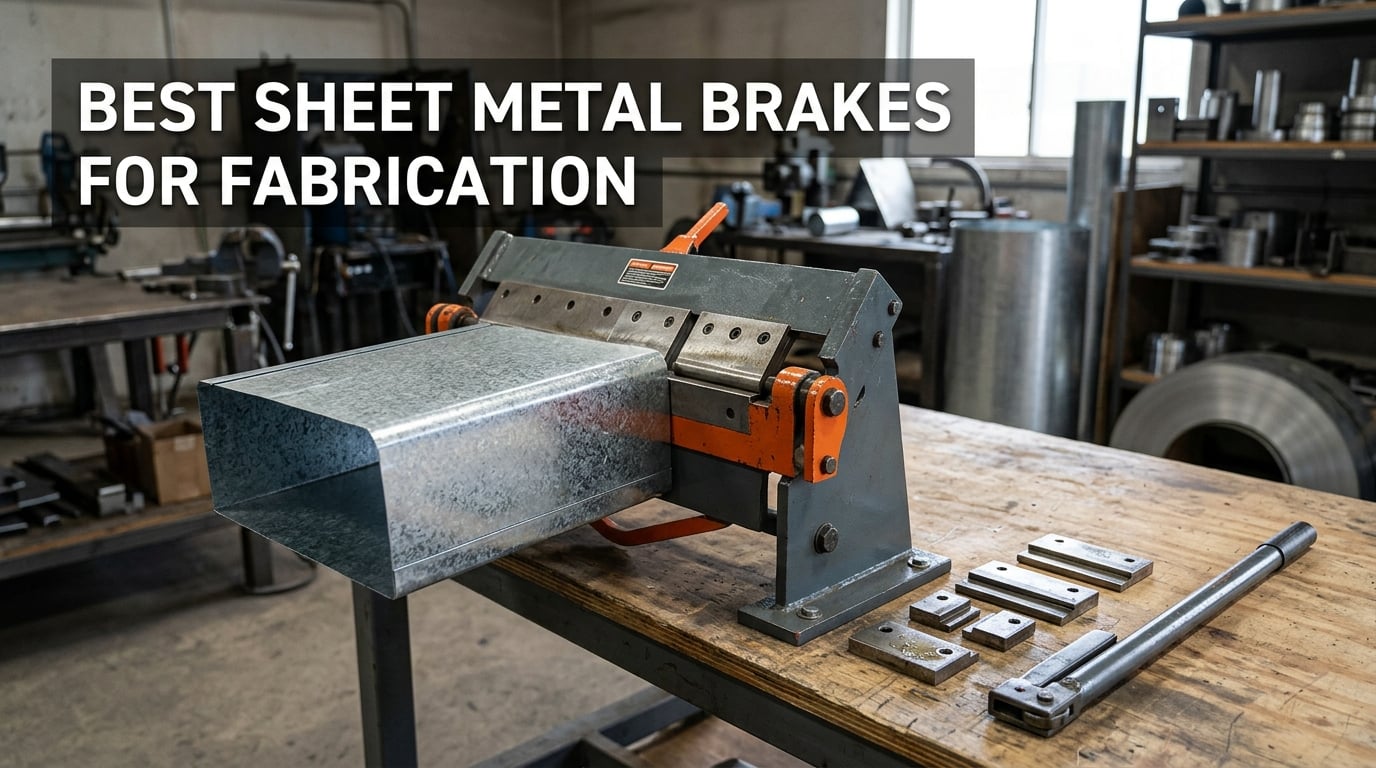
If you bend sheet for a living, the machine under your bench decides whether a job gets quoted in an afternoon or a week. A sheet metal brake clamps a sheet between a punch and a V-die and forces the metal to a set angle, and the difference between a folder and a press brake is simply how that force gets applied. This roundup covers the best sheet metal brakes for fabrication across eight real machines, from benchtop hand folders to a contractor-grade siding brake, and it is written for HVAC duct shops, electrical enclosure builders, automotive restorers and serious home-shop metalworkers.
We picked these eight by weighing star rating against how many people actually left one, then checking gauge capacity, bending width, included tooling and whether replacement parts are realistic to get in your country. The shop-floor reality matters more here than any spec sheet: machines that run out of force before their advertised gauge are the single most common complaint from owners, and imported machines with thin parts support is the second.
Two things to know before you read on. First, gauge is only half the story – a brake rated for 16 gauge across 48 inches is a different tool from one rated for 16 gauge across 6 inches, and buying on gauge alone is how shops end up with a machine that will not do their widest parts. Second, if you cut your stock on a plasma table, pairing it with a brake from the same equipment family makes sense; our plasma cutter roundup covers the cutting side of the same workflow.
One more caution from the shop floor before we get into the machines. Long-term owners on fabrication forums talk about brands lasting well over a decade, and the machine that survives is usually the one bought a size up rather than the one that squeezed past the budget.
Table of Contents
Top 3 Picks: Best Sheet Metal Brakes for Fabrication (October 2026)
Below is the same shortlist referenced throughout this guide – the three best sheet metal brakes for fabrication – summarized first so you can shortlist before reading the full reviews.

VEVOR 48-Inch Box and Pan Brake
- 48 inch bending width
- 0 to 135 degree range
- 20 gauge steel and 14 gauge aluminum
- Q235 steel frame

KASTFORCE KF5002 28-Inch Brake
- 28 inch bending width
- 18 gauge steel and 16 gauge aluminum
- 0 to 135 degree range
- Heavy-duty steel frame

Van Mark Mark II Bending Brake
- Contractor grade construction
- Power Lock clamping
- 10 ft 6 in model size
- One-year limited warranty
The 48-inch VEVOR leads because it has the largest review base in this group at 277 ratings and the widest bending width at 1220 mm, which means full-width sheet fits without a seam. The KASTFORCE KF5002 takes the value slot on the strength of a 4.5 average across 220 reviews while still holding 18-gauge steel across the full 28 inches. The Van Mark Mark II is the pick when you bend siding and capping all day and the machine has to survive a crew.
Best Sheet Metal Brakes for Fabrication in 2026 at a Glance
| Product | Specifications | Action |
|---|---|---|
| VEVOR 48-Inch Box and Pan Brake |
|
Check Latest Price |
| KASTFORCE KF5002 28-Inch Sheet Metal Brake |
|
Check Latest Price |
 KASTFORCE KF5006 Box and Pan Brake KASTFORCE KF5006 Box and Pan Brake |
|
Check Latest Price |
 Eastwood Press Brake Attachment Eastwood Press Brake Attachment |
|
Check Latest Price |
 Midwest Snips 15-Inch Seamer Midwest Snips 15-Inch Seamer |
|
Check Latest Price |
 KAKA Industrial FB-4 Manual Bending Brake KAKA Industrial FB-4 Manual Bending Brake |
|
Check Latest Price |
 VEVOR 3-in-1 Shear Brake Roll Machine VEVOR 3-in-1 Shear Brake Roll Machine |
|
Check Latest Price |
| Van Mark Mark II Bending Brake with Power Lock |
|
Check Latest Price |
Read that table as three separate axes, not one. Bending width tells you the longest sheet you can form in one pass, gauge capacity tells you the thickest material at that width, and the type of drive tells you whether the force comes from your arms or from a motor. Machines in the same category rarely match on more than one axis.
1. VEVOR 48-Inch Box and Pan Brake, 20 Gauge – Best Wide-Format Sheet Metal Brake for Full-Width Folders
VEVOR Box and Pan Brake, 48-Inch, 0-130 Degrees Sheet Metal Bending Brake
48 inch (1220 mm) bending width
20 gauge steel, 14 gauge aluminum
0 to 135 degree range
61.7 pounds
Pros
- Widest bending width among the hand folders in this roundup at 48 inches
- Integrated press plate holds sheet without external clamps
- Reinforced rib blade design adds rigidity
- Q235 steel frame
Cons
- 4.2 average hints at inconsistent finish quality between machines
- 61.7 pound bulk makes it awkward to move between locations
This is the folder to buy when your parts are wider than a 36-inch bench can handle. At 48 inches of bending width it accepts full 4-by-8 sheet without a splice, and the integrated press plate does the clamping work so you are not fighting clamps while the sheet tries to spring back.
Adjustability runs from 0 to 135 degrees, which covers everything from a simple 90-degree flange to shallow roof transitions and standing-seam style folds. The 0.31-inch blade with reinforced ribs is the part that stops the frame from twisting under load across that span.
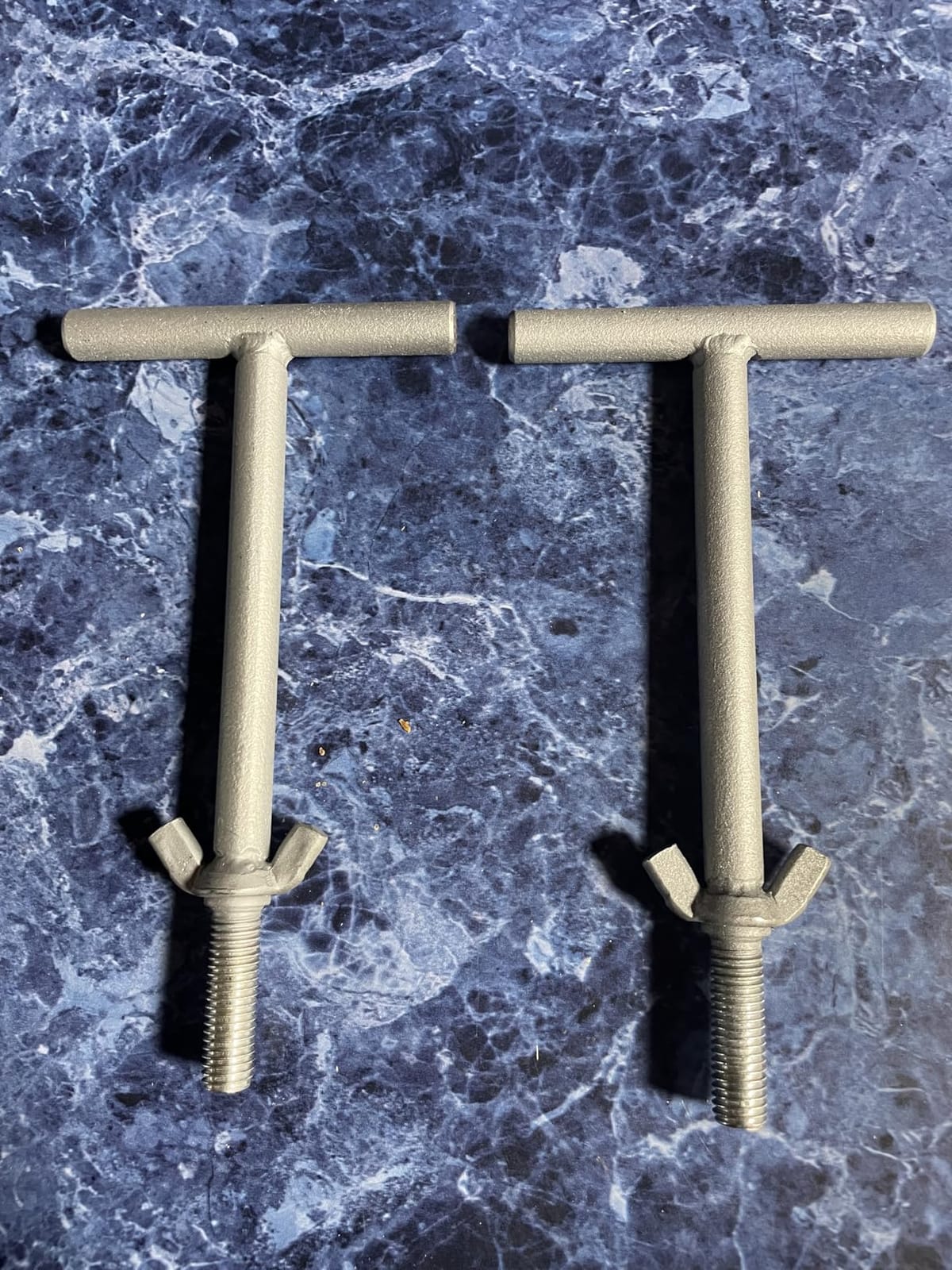
Capacity is 20-gauge low carbon steel or 14-gauge aluminum, and that rating assumes a clean, flat, well-supported sheet. Owners doing heavy work near that limit report the machine wanting a second person to hold the far end, which is normal for a hand-powered folder this size.
The 4.2 average across 277 ratings is the widest review pool in the group, and it is the reason this sits at the top of the list. The consistent note is that finish quality varies a little between units, so check the blade alignment and the press plate travel as soon as it arrives.
What to check before you commit
Confirm your widest part fits inside 48 inches and that you can support the offcut side. Most shops bolt this to a stand rather than a bench because 61.7 pounds plus a full sheet is a lot of leverage on a workbench.
Look at replacement finger and blade availability locally before you buy. If the nearest source is far away, a wider machine is not the cheapest machine.
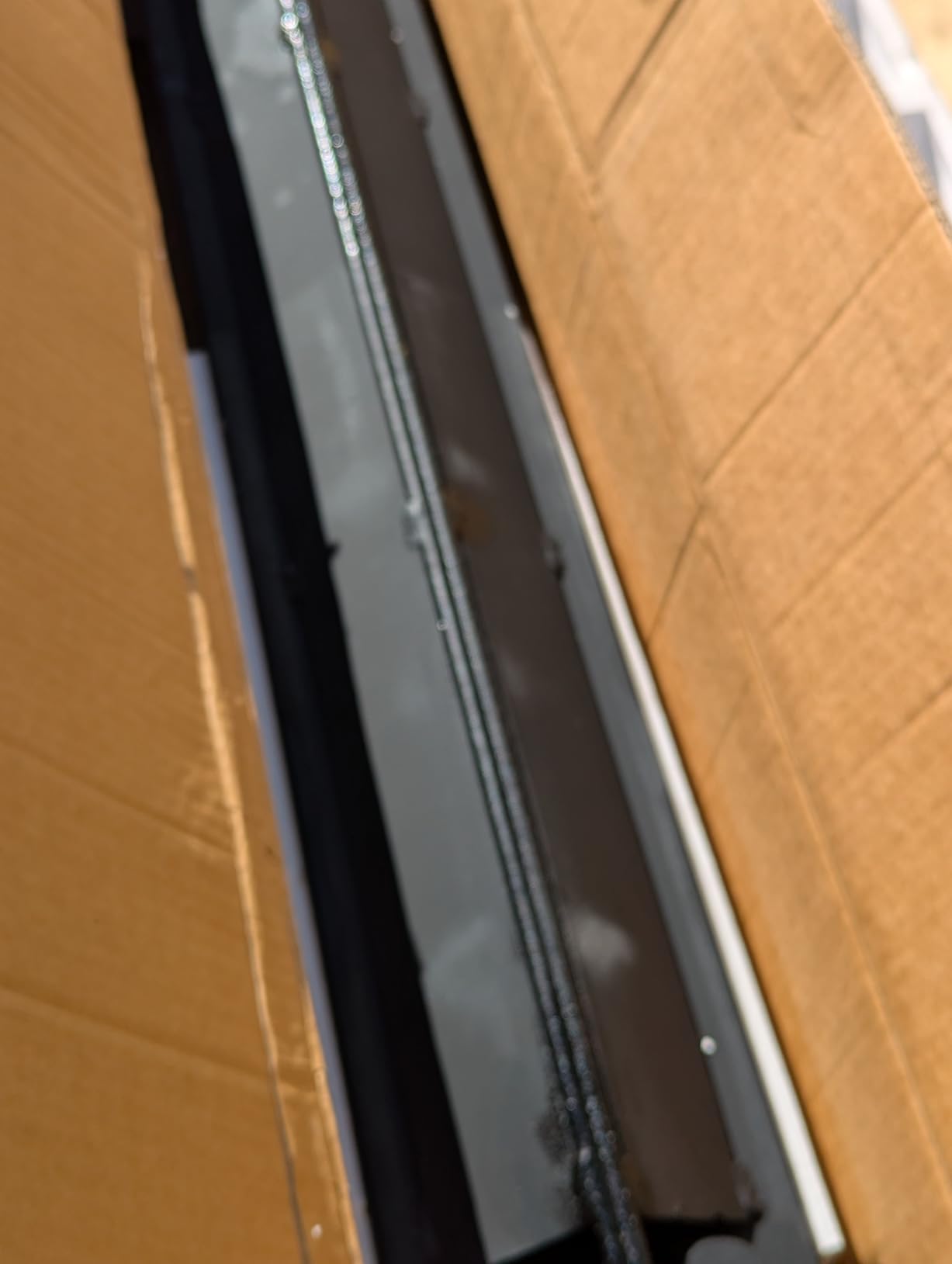
Where it falls short
At 20 gauge this is not a thick-material machine, and anyone planning to bend 1/4-inch mild steel should look elsewhere. It also does not form boxes the way a multi-finger brake does, because the blade is a single folding edge rather than a set of interchangeable fingers.
The bulk is a genuine issue for shops that move equipment between job sites. Treat it as a stationary machine and it stops mattering.
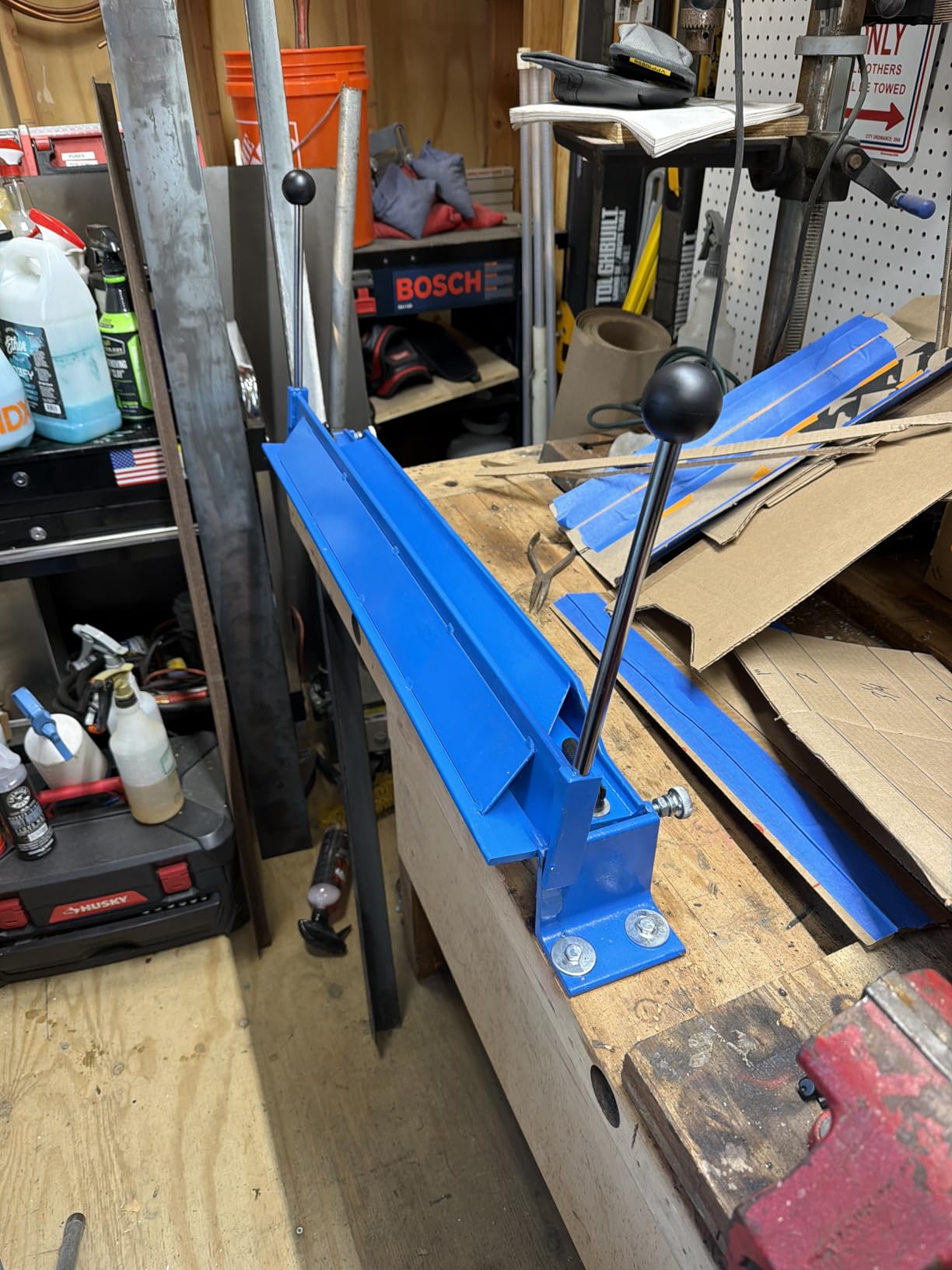
2. KASTFORCE KF5002 28-Inch Sheet Metal Brake, 18 Gauge – Best Value Folder for Duct and Trim Shops
KASTFORCE KF5002 Sheet Metal Brake Steel Bending Brake Sheet Metal Bender Metal Folder 28 Inch (730mm) 18 Ga (1.2mm) Capacity for Steel Aluminum Copper
28 inch (730 mm) bending width
18 gauge steel, 16 gauge aluminum
0 to 135 degree range
44 pounds
Pros
- Holds 18 gauge steel and 16 gauge aluminum across full 28 inch width
- 4.5 average with 71 percent five-star share
- Heavy-duty steel frame for repeated shop use
- Suited to ductwork shutters and auto body
Cons
- 44 pound weight and long carton make it awkward to move alone
- 28 inch width is well short of 48 inch models for oversized sheet
The KF5002 is the machine most shops should start with if duct and trim is the bulk of the work. It holds 18-gauge mild steel and 16-gauge aluminum across the entire 28-inch width, which is the honest number that matters, not the headline gauge.
With 220 reviews averaging 4.5 stars and 71 percent of those at five stars, the feedback is unusually consistent. Owners describe sharp, repeatable folds and a steel frame that reads as a long-term shop tool rather than a project that will be sold on.
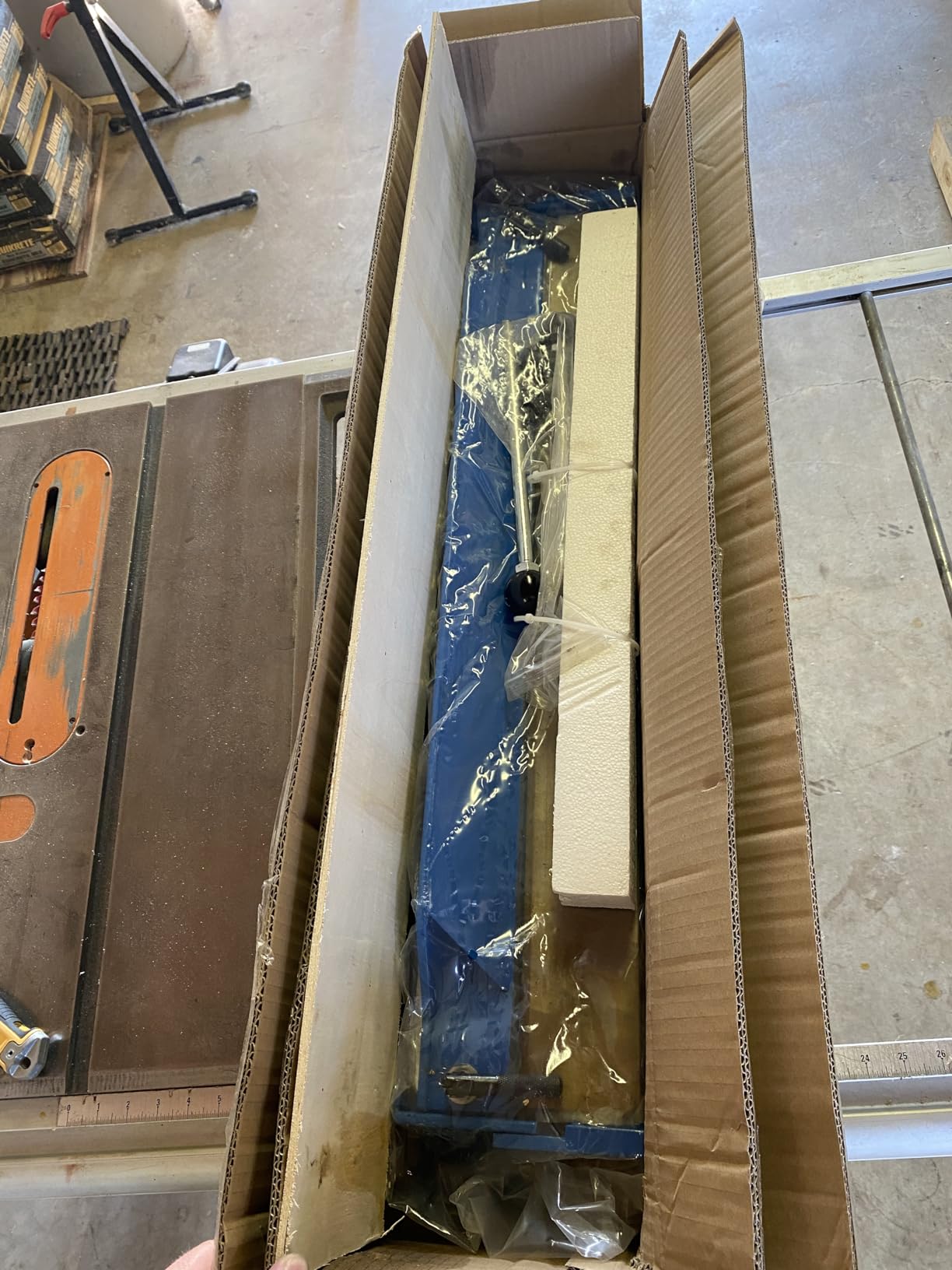
The 0 to 135 degree adjustment covers standard 90-degree returns, hems and shallow transition folds without changing tooling. That range is what makes it a folder for general fabrication rather than a single-purpose hemmer.
Where it does not stretch is width. Any part longer than 28 inches means two setups, a splice and an extra operation, so run your drawings first and see how much of your work exceeds that. The wide-format VEVOR above covers that case when you need both capacity and width.
Why owners keep it
Repeatability is the word that comes up most. A fixed stop and a consistent 0.31-inch-class blade edge produce the same fold on the tenth part as on the first, which is what makes hand folders viable for production-adjacent work.
Reviewers also point to the frame. At 44 pounds the machine is heavy in the right way, because the mass keeps the bed from walking when the lever is worked hard on a thick fold.
Where it falls short
The 28-inch bed is the hard limit. Shop owners working with full 4-by-8 sheet report it is the reason they eventually add a wider machine.
Handing is also mild. The carton is long and the weight sits low, so plan for two people or a hand truck on installation day.
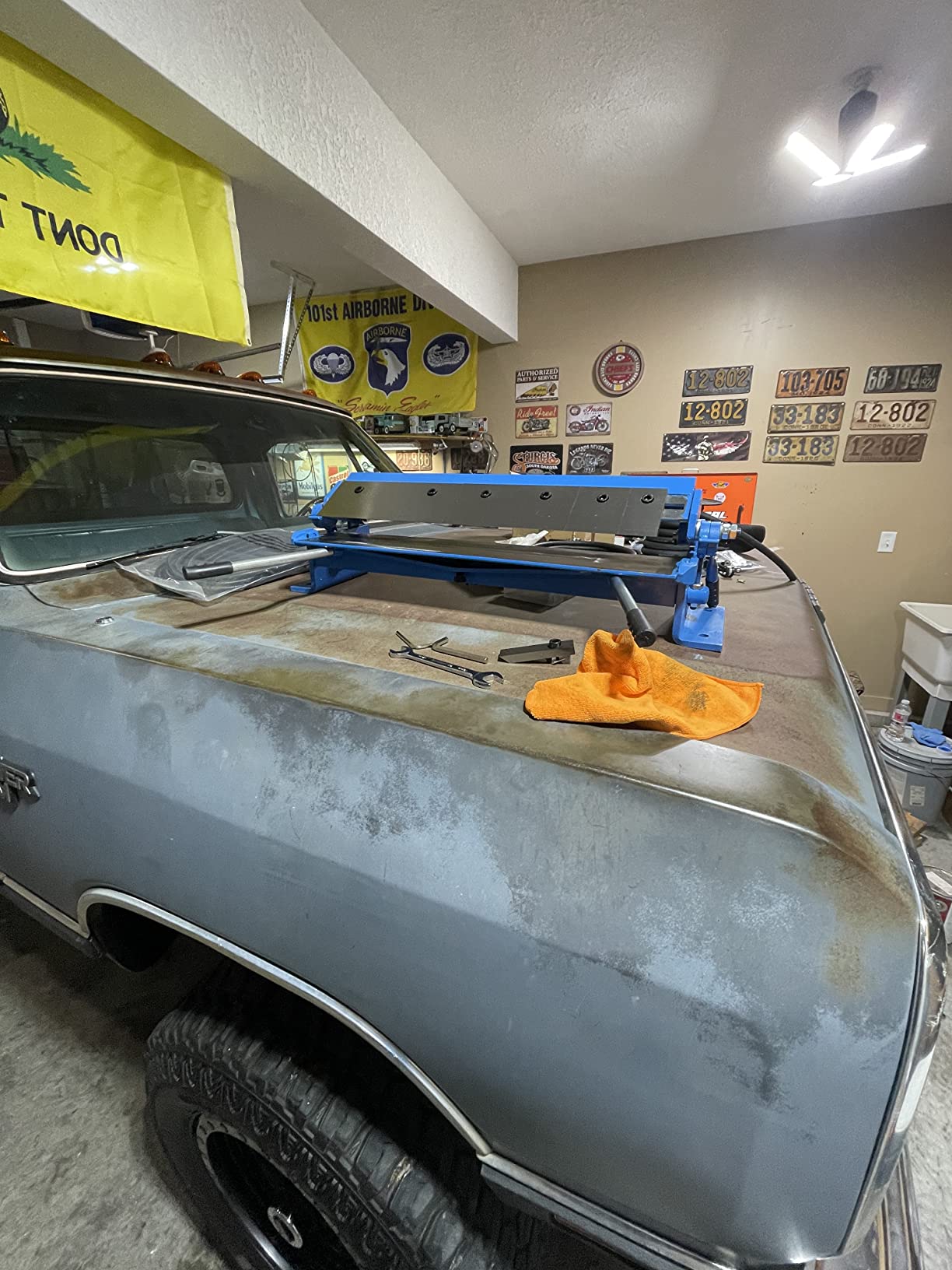
3. KASTFORCE KF5006 Box and Pan Brake with 5 Fingers, 24 Inch – Best Multi-Finger Brake for Hood, Pan and Trailer Work
KASTFORCE KF5006 Box and Pan Brake Sheet Metal Folder Bending Brake Metal Forming Machine Max Capacity 24 Inch (610mm) 20 Ga (1.0mm) with 5 Fingers 0-135 deg
24 inch (610 mm) width capacity
20 gauge mild steel maximum
1 inch 2 inch 3 inch 8 inch 10 inch fingers
1.5 inch (38 mm) box depth
Pros
- Five interchangeable fingers handle box pan and transition folds in one machine
- Highest average rating in the roundup at 4.6 stars
- 20 gauge mild steel across a 24 inch width
- 1.5 inch box depth forms real pan walls
Cons
- 68.1 pounds makes bench-mounting effectively mandatory
- Only 45 reviews means thinner long-term durability data
This is the brake for anyone who needs boxes and pans, not just flat folds. The five included fingers at 1, 2, 3, 8 and 10 inches let you switch flange widths and pan heights without buying extra tooling, and owners cite that set of fingers as the reason the machine earns its cost.
Maximum box depth is 1.5 inches, which covers typical hood panels, trailer work and light HVAC duct transitions. The 0 to 135 degree range handles the closing folds once the sides are up.
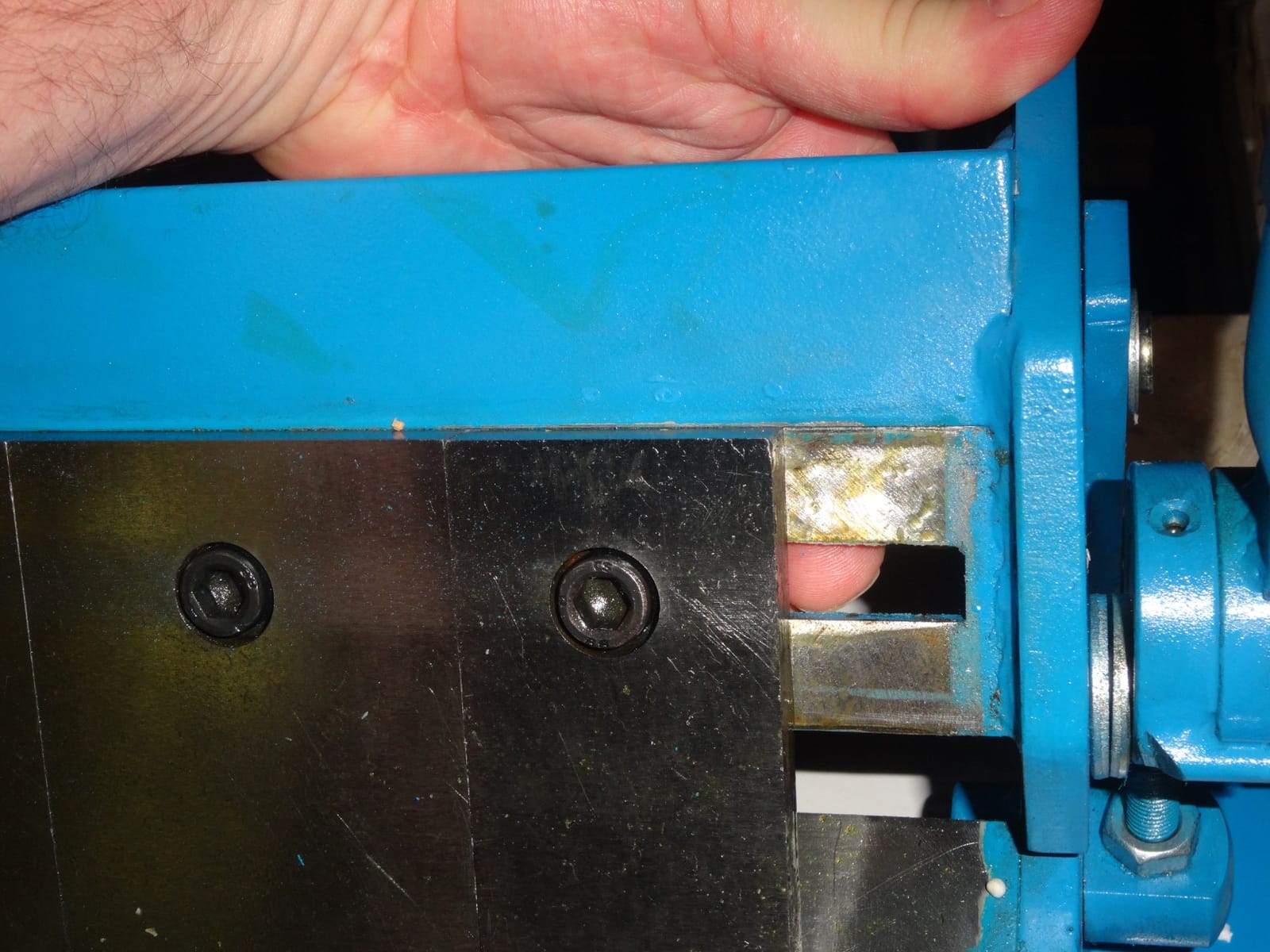
Material capacity is 20-gauge mild steel across a 24-inch width. That is thinner than the KF5002 at full width, and it is the trade you make for forming a real box rather than a simple flange.
At 4.6 stars this has the highest average rating in the group, with 72 percent of ratings at five stars. The reason is simple: fingers included in the box save a separate purchase and a trip to a supplier.
Best for multi-sided parts
If a quarter of your work involves a formed box, tray or pan, the finger set pays for itself quickly. A plain folder can do the flange and then stop, and finishing the job means four more setups and a second machine.
Users working on trailer and automotive panels mention the 20-gauge limit as a real boundary, and recommend staying a couple of gauges under it when folding across the full 24 inches.
Where it falls short
At 68.1 pounds it is the heaviest of the folding-brake models in this group, so bench mounting is not optional in most shops. Plan the bolt-down location before it arrives.
Forty-five reviews is a thin pool. The rating is excellent, but long-term ownership data is limited, and thin review history is worth weighing against a model with hundreds of owners.
4. Eastwood Press Brake Attachment, 3/8-Inch Capacity – Best Shop-Press Brake for Thick Steel
Eastwood Press Brake Attachment for Standard 12/20 Ton Hydraulic Shop Presses
Bends up to 90 degrees in mild steel and aluminum
Thickness to 3/8 inch
Bend width to 12 inches
Fits most 12 and 20 ton shop presses
Pros
- Handles 3/8 inch mild steel far beyond any folder in this roundup
- Users confirm clean bends in 1/8 inch stainless
- Fits standard 12 and 20 ton hydraulic shop presses
- Alloy steel construction rated for heavy use
Cons
- Requires you to already own a 12 or 20 ton hydraulic press
- Protruding underside hardware needs press blocks to sit flat
- 12 inch bend width suits short parts only
Every folder in this roundup runs out of force at around 20 gauge. This attachment runs past that, bending up to 90 degrees in mild steel and aluminum up to 3/8 inch thick, which puts it in a different category entirely.
It clamps onto most standard 12 or 20 ton hydraulic shop presses, so if you already have a press for straightening or crushing, this is the cheapest way to add a real bending brake to the shop. Users build trailer parts, brackets and wiring supports on it.
Reviewers confirm it handles 1/8-inch stainless without complaint, which is notable because stainless usually needs substantially more force than mild steel of the same thickness. The 4.5 average across 60 reviews puts 72 percent of ratings at five stars.
Why thick-material work needs this
Gauge capacity on a folder is limited by arm strength and frame stiffness, not by steel. A 3/8-inch mild steel bend across 12 inches needs a rigid die and real force, and that is what a hydraulic press provides.
The published examples are useful: 3/16 inch at 12 inches wide, 5/16 inch at 6 inches wide, and 3/8 inch at 3 inches wide. Check your widest heavy part against that list before committing.
Where it falls short
The dependency is real. If you do not own a 12 or 20 ton hydraulic press, this is not a purchase yet, because the press is the more expensive half of the setup.
Owners also report hardware protruding from the bottom surface, so the tool will not sit flat on the press bed without extra press blocks. Plan for a small modification on day one.
5. Midwest Snips 15-Inch Seamer – Best Lightweight Hand Bender for Standing-Seam Roof Work
MIDWEST Seamer, 15″ Straight Sheet Metal Bender
15 inch straight seamer
1-1/4 inch throat depth with quarter inch graduations
Interchangeable 5 inch 9 inch 15 inch blades
2 pounds total weight
Pros
- Only 2 pounds so it carries all day
- Produces the tight standing-seam bends roofers rely on
- Interchangeable blades in three sizes
- Hot drop-forged high carbon steel brackets
Cons
- 1-1/4 inch throat limits it to hems seams and edges
- Blades sometimes arrive misaligned or flimsy
- Rated 4.0 stars on quality control complaints
Most of the machines in this roundup weigh tens of pounds and bolt to a stand. This one is 2 pounds, aluminum-bodied, and goes up a ladder with you, which is why roofers and tinsmiths keep it on the belt even when the shop has a bigger machine.
The 1-1/4 inch throat with quarter-inch depth graduations is the feature that makes the tool precise rather than approximate. You set a depth, you clamp, you fold, and standing seam comes out consistent along a long run.
What a seamer is actually for
A seamer forms hemmed and standing-seam edges, not boxes or panels. The limited throat is intentional, and that focus is exactly why the folds come out crisp on roof work.
Interchangeable blades in 5, 9 and 15 inch lengths let the same tool cover a narrow trim profile and a long panel seam without a second seamer.
Where it falls short
The 4.0 average across 153 reviews is the lowest star rating among the handheld tools here, and the reason is quality control. Owners report blades arriving out of alignment, weak clamping pressure that lets sheet slide, and hinge play that stops the jaws lining up.
Inspect the jaws on arrival and check the alignment before the first job. Several trade users modified the tool or moved to another seamer brand after hitting the same issue.
6. KAKA Industrial FB-4 Manual Steel Bending Brake, 4 Inch – Best Benchtop Bender for Brackets and Small Parts
Manual Steel Bending Brake, 4 in Capacity KAKA INDUSTRIAL FB-4
2.5 ton pressing force
4 inch bending capacity
3/16 inch mild steel and 3/8 inch aluminum
19 pounds
Pros
- Compact 19 pound bench-mount format
- Bends 3/16 inch mild steel and 3/8 inch aluminum at full width
- Users bend 1/4 inch by 1 inch bar and 1.5 inch aluminum flat
- Entry point for brackets and gussets
Cons
- Rounded die edges give roughly a 3/8 inch bend radius
- Jaw gap between blade and anvil is unadjustable and skews bends
- Top strap frequently arrives installed upside down
The FB-4 is a bench-mount lever bender rather than a folder, and that distinction shapes everything about it. At 19 pounds with mounting holes for a workbench, it turns a 4-inch-wide, 3/16-inch mild steel blank into a 90-degree bracket in a few seconds, which is the right tool for motor mounts, gussets and small brackets.
Aluminum capacity is 3/8 inch, and users report bending 1/4-inch by 1-inch steel bar and 1.5-inch aluminum flat bar cleanly. The 2.5-ton lever force is genuinely useful for material that would overwhelm a finger folder.
At 103 reviews and a 4.1 average, the feedback is solid but the setup complaints repeat. A 2.5-ton lever bender is a real shop category rather than a novelty, and this one carries enough of a review base to trust the rating.
Where it fits in the shop
Think of it as a fourth hand with more force than you have. It bolts to a bench, works on short pieces, and takes up almost no floor space in a shop that already owns a folder.
The 4-inch capacity suits brackets, flanges and short returns. Parts longer than that need a real folder or press brake in the lineup.
Where it falls short
The rounded male and female die edges produce roughly a 3/8-inch bend radius, not a crisp inside corner. That suits brackets and gussets and rules out tight sheet-metal cabinet corners.
Two assembly issues appear often enough to expect them: an unadjustable gap between the stationary jaw and the blade that skews bends, and a top strap installed upside down. Five minutes of setup saves a stack of scrap.
7. VEVOR 3-in-1 Shear, Brake and Roll Machine, 12 Inch – Best All-in-One Benchtop Machine for Small Shops
VEVOR Sheet Metal Brake, 12-inch, 3-In-1 Combination Shear Brake Roll Machine, 20-Gauge Capacity Shear Press Brake with 90° Max Bending Angle, Shears and Slip Roll Machine for Shear Bending Rolling
Shear brake and roll in one 20 inch unit
12 inch (305 mm) width
20 gauge (1 mm) maximum thickness
90 degrees maximum bend angle
Pros
- Three operations in one benchtop footprint
- Segmented blades at 1 inch 2x2 inch 3 inch and 4 inch
- Clean results when work stays within the 20 gauge rating
- Ground rollers reduce scratching on finished sheet
Cons
- Shear and roller struggle on 20 gauge low carbon steel
- Rated 3.9 stars on average
- Assembly quality varies and bent handles needed correcting
- 90 pounds is too heavy to reposition casually
When floor space is the constraint, this machine is hard to argue with. Shearing, bending and slip rolling happen in a single 20-inch benchtop unit, and the segmented bending module carries five blades at 1 inch, 2×2 inch, 3 inch and 4 inch for different flange and panel widths.
Blade clearance is under 0.0027 inches, and the HT200 cast body with a T10 shear blade and 45# bending blade and roller is a sensible material stack for hobby and light shop work. It also handles brass, copper, lead, plastic and zinc sheet.
Users who stay within the 20-gauge rating report clean cutting and good bends, and the ground rollers genuinely reduce friction and surface scratching on finished pieces. It sits near the top of the press brakes category in its retail rankings, so demand for a compact combo like this is real.
Best for small shops and models
The pitch is simple: one machine replaces a shear, a folder and a slip roll on a crowded bench. For a small shop or a model-scale bodywork project, that consolidation is worth more than any single capability.
Aluminium and lighter metals are the sweet spot. At 12 inches wide and 20 gauge, it handles typical panel and cover work comfortably.
Where it falls short
The 3.9 average across 58 reviews is the lowest of the eight picks, and two complaints drive it. First, the 20-gauge rating is optimistic for low carbon steel, where the shear needs constant readjustment.
Second, assembly quality shows up on arrival. Some units reached owners with bent handles and adjustment knobs that needed correction before the machine would run at all.
8. Van Mark Mark II Bending Brake with Power Lock, 10 Foot 6 Inch – Best Contractor-Grade Siding Brake for Professional Shops
Van Mark Bending Brake Mark II W/Power Lock #TM10
Contractor grade Mark II TrimMaster brake
Power Lock material clamping
10 ft 6 in model size
312 pounds, 110V 200W
Pros
- Highest five-star share in the roundup at 77 percent
- Long repeat ownership with buyers on their third or fourth brake
- Fast consistent output for siding capping and trim
- Power Lock keeps material secure on long runs
Cons
- A professional purchase only
- 312 pounds demands permanent floor space
- Crated transit damage is a recurring complaint
- Not suited to hobby or light-gauge work
The Mark II is the only machine here built around continuous contractor output rather than general shop fabrication. At 10 feet 6 inches it takes a full length of siding, trim or coil material, and the Power Lock clamping holds the work without drift across a long run.
With 77 percent of its 120 ratings at five stars, it has the highest five-star share in the group, and the ownership pattern is unusual. Buyers report this being their third or fourth brake, which is the strongest long-term durability signal available in this list.
Typical work is window capping, replacement window trim and siding termination, and contractors describe it as fast and accurate. At 312 pounds and 110 volts with a 200-watt draw, it is a permanent fixture rather than a portable tool.
Where a siding brake pays off
If you cut and bend full-length exterior trim daily, the 10-foot capacity removes an entire class of spliced joints. That changes both labor and material yield, which is why contractors accept the cost quickly.
Owners also cite the 18-hole pattern and dual handles as practical details for holding long stock square while working the bend.
Where it falls short
The cost sits well above the other seven machines in this roundup, and it is a professional purchase only. Home shops and hobbyists will not get value out of 10-foot siding capacity.
Transit handling is a genuine concern. Reports of crate and tooth damage on arrival are common enough to plan for inspection before first use, and the one-year limited warranty is shorter than many shop buyers expect from a machine of this class.
What Is the Best Metal Brake? Box and Pan, Finger Brakes and Press Brakes Compared
The best metal brake is the one whose capacity matches your widest, thickest part and whose repeatability matches your production volume. For most shops under five people, that is a box and pan or finger folder rather than a press brake, because folders need no tooling set, no tonnage calculation and almost no training.
There are two main types of brake press used in most fabrication shops. A press brake drives a punch into a V-die with powered tonnage, and the V-die width sets the inside bend radius and roughly a tenth of the tonnage. A finger, box and pan or magnetic swiveling brake uses segmented fingers and clamping fingers that swivel in, so you form a box, pan or duct section by closing each finger in turn with a hand lever.
Below that sit two narrower groups. Hand benders and seamers work on short hemmed and standing-seam edges, and combined machines fold shear and roll in one frame. A fourth path is an attachment that turns an existing hydraulic shop press into a bender, which is the cheapest route to thick-material capacity if you already own a press.
Which one suits you comes down to the shape of the part, not the shape of the machine. Flat flanges and returns are finger-brake work. Closed boxes, pans, hoods and duct transitions need swiveling or multi-finger capability. Anything past roughly 20 gauge of mild steel needs powered tonnage regardless of branding.
Buying Guide: Tonnage, Gauge Capacity, Bend Width and Drive System
Three sizing axes, not one
Buyers routinely try to size a brake with a single number, and that is the most common sizing mistake in this category. Gauge tells you thickness. Bend width tells you the longest piece you can form in one pass. Tonnage tells you the force available to move that material. A machine can be excellent on one axis and useless on another.
Work from the widest and thickest part you actually build. If it is 20-gauge mild steel at 48 inches wide, a 28-inch folder is not a cheaper answer, it is the wrong tool.
Tonnage and material penalties
The standard estimating formula is material strength times thickness squared times bend length, divided by eight times the V-die opening. Worked through on 16-gauge mild steel, that number is 0.060 inches of thickness, 48 inches of bend length and a 0.5-inch V-die opening, which puts the requirement a little under 17 tons. That is why 16 gauge across a full 48 inches sits at the limit of most benchtop machines.
Two multipliers change that number. Stainless steel commonly needs 50 to 100 percent more tonnage than mild steel of the same gauge, and aluminum sits between the two. Size for 20 to 30 percent headroom over your current worst-case part so you are not running at the limit on every bend.
Air bending vs bottoming vs rotary draw bending
Air bending is the default on a press brake: the punch descends into an open V-die without touching the metal, forming the bend by air pressure alone. It is fast and the tooling is cheap, but the angle varies with material thickness and springback, so it needs control.
Bottoming presses the metal into the bottom of the die for a consistent angle and a tight radius, at the cost of higher tonnage and more wear on the tooling. Rotary draw bending pulls the sheet around a rotating punch with very little tonnage, and it is the cleanest method for a large radius on long, shallow folds.
Hand folders and box and pan brakes do not use V-dies at all. They fold the sheet around the edge of the clamping fingers, so the radius is set by the finger, not by tooling you change.
Tooling, fingers and stops
On a press brake, tooling is where the real cost hides. Punches, V-dies, gooseneck tooling and radius tooling multiply quickly, and a brake with a small standard die set will need more purchases before it can do your parts.
On a folder, look at the included finger set instead. Brakes that ship with 1, 2, 3, 8 and 10 inch fingers cover box and pan work without a second purchase, and a positive stop rod is what turns a good bend into a repeatable one.
Parts, service and total cost of ownership
Aftermarket parts availability is a repeated complaint from owners of imported machines, so it belongs in the buying decision and not the afterthought column. Blades, dies and replacement fingers that ship from another continent turn a small repair into a long wait. Owners on the fabrication forums also warn against buying the smallest brake that merely fits the budget, and recommend sizing up while budget allows.
Feeding the brake is its own cost line. If you run coil or narrow strip rather than full sheet, the feed speed sets your real production rate, and our high-speed sheet-fed scanner roundup covers that side of the workflow.
Count training time as part of the cost. Press brakes with CNC controls need an operator who can set tonnage, V-die selection and springback compensation, while a finger brake is productive within a day with a stop rod and a scrap sheet.
Safety around the machine
Keep hands clear of the clamping finger line and the back gauge, which is the single most dangerous area on any brake. Wear eye protection, keep the back gauge access clear so nothing pulls the sheet back mid-bend, and never reach into the fold line while a part is under pressure.
Secure the machine to a stand or bench before bending at full width, and check that the sheet is supported on both sides so a long part cannot drop onto a foot or a hand.
Frequently Asked Questions
What is the maximum sheet thickness a metal brake can bend?
It depends on the machine type and width. Hand folders and box and pan brakes in this roundup top out at 20-gauge mild steel across their full width, with 18-gauge steel across 28 inches on the KASTFORCE KF5002. For thicker material, the Eastwood press brake attachment reaches 3/8 inch mild steel on a 12 or 20 ton hydraulic shop press. Remember that capacity falls as bend width increases.
What are the two main types of brake presses used in most fabrication shops?
A press brake and a box and pan or finger brake. A press brake drives a punch into a V-die with powered tonnage, so the V-die width sets the bend radius. A box and pan or finger brake uses swiveling clamping fingers and a hand lever, forming a box, pan or duct section one fold at a time without dedicated tooling.
What gauge metal can a box and pan brake bend?
Most of the folders reviewed here are rated for 20-gauge low carbon steel at full width, and the wider 28-inch KASTFORCE KF5002 holds 18-gauge mild steel. The VEVOR 48-inch unit also takes 14-gauge aluminum. In practice, stay a gauge or two below the rating for full-width bends, and expect noticeably more springback in stainless than in mild steel.
How to build your own sheet metal brake?
1. Define the part range: decide the widest sheet and thickest gauge you will form. 2. Choose a design matched to that, either segmented clamping fingers for box and pan work or a fixed-blade folder for flat folds. 3. Source a frame that resists twist, ideally heavy steel with a reinforced rib layout. 4. Build or buy the pivot and clamping mechanism, and make sure the blade is adjustable for angle. 5. Add a positive stop rod so folds repeat. 6. Test on scrap, and expect to rebuild the clamping surfaces. Homemade brakes save money and cost you consistency, accuracy and warranty support.
What is a good hand bender for sheet metal?
For hems, seams and standing-seam roof work, the Midwest Snips 15-inch straight seamer is the strongest hand option here, with a 1-1/4 inch graduated throat and interchangeable blades. For short brackets and heavier stock, the KAKA Industrial FB-4 applies 2.5 tons of lever force and bends 3/16 inch mild steel. Match the tool to the part, not to the brand.
Is a box and pan brake worth it for a home shop?
For a home shop doing duct transitions, pans and small boxes, yes. The machines reviewed here start well below a powered press brake, need no tooling set, and produce a repeatable fold once a stop rod is set. If your work is limited to flat flanges and returns, a straight folder is simpler and cheaper. The multi-finger brake is worth the upgrade only when your parts have sides.
Conclusion: The Best Sheet Metal Brakes for Fabrication
These best sheet metal brakes for fabrication cover three very different jobs, and the right one depends on the widest and thickest part on your bench. The VEVOR 48-inch box and pan brake is our top pick for full-width sheet because it has the largest review base in the group at 277 ratings and the only bed that takes 4-by-8 stock without a seam. The KASTFORCE KF5002 is the value answer for duct and trim shops, holding 18-gauge steel across 28 inches at a 4.5 average, and the Van Mark Mark II is the one to buy when you bend siding all day and the machine needs to last decades.
Match the brake to your parts before you match it to a budget, set a positive stop rod on whatever you buy, and expect a few setup adjustments on day one. If you are still cutting stock on a saw, our track saw roundup covers the other half of a clean fabrication workflow, and for non-metal sheet our plywood and sheet goods track saw picks go deeper on that side.