
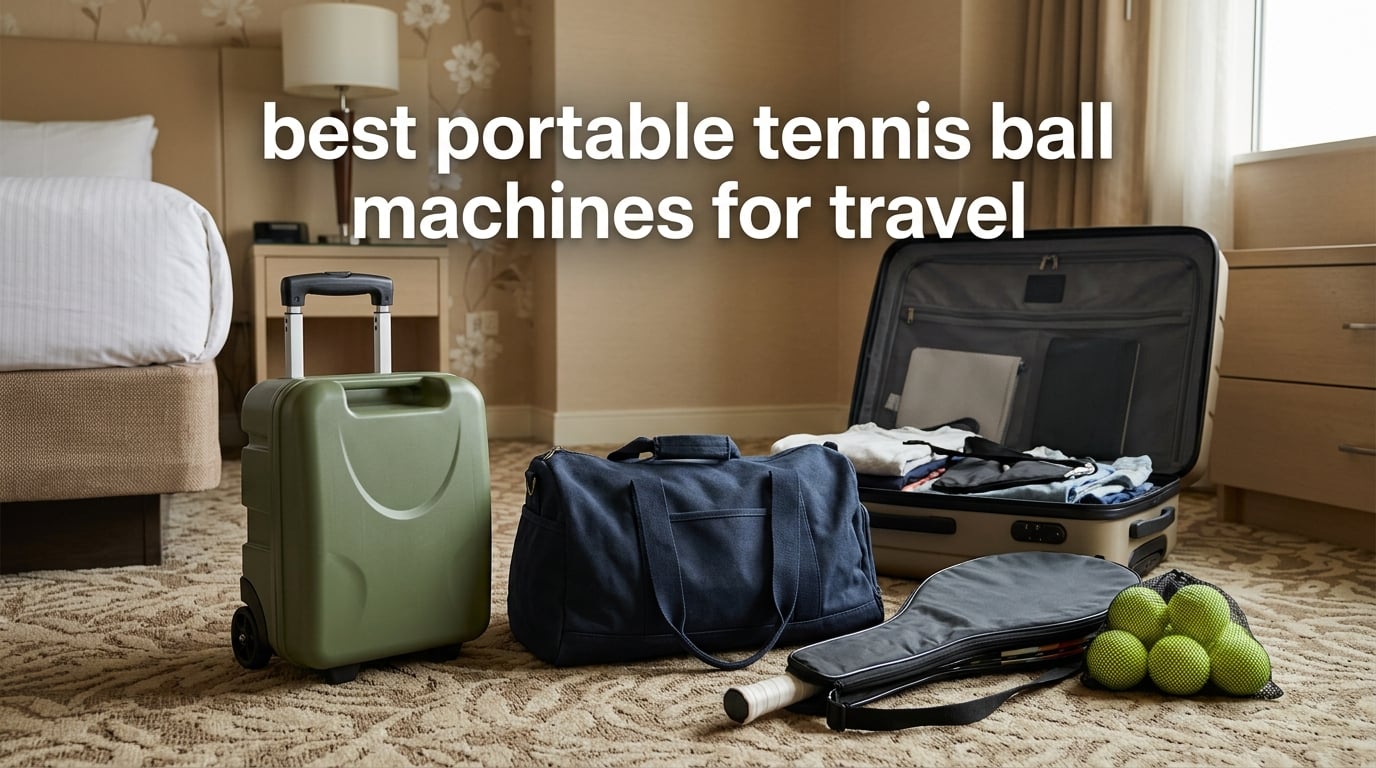
Most machines described as portable in this category are not portable at all. They weigh 42 to 50 pounds, they do not fold, and their advertised weight quietly leaves out the battery you have to add before you lift them. The best portable tennis ball machines for travel are a much smaller group: single-digit kilogram bodies, a folded footprint that fits in a duffel or a trunk, and a battery that survives a full session away from an outlet.
We spent weeks comparing eight machines on the only metrics that matter when travel is the primary use: real carry weight, folded size, runtime, and whether one person can get the whole kit from a car to a court without a second trip. Two of the eight turned out to be genuinely easy to move. Three more are fine if you have a second person or a wheeled trolley. The rest are described as portable by their manufacturers and travel badly.
We also get the same question from readers of our tennis ball machines for solo practice guide who fly two or three times a year rather than play every weekend. This page is built for them, and for coaches who run clinics on unfamiliar courts. If you want drill programming rather than portability, our AI ball machine roundup covers that side in detail.
Table of Contents
Top 3 Picks for the Best Portable Tennis Ball Machines for Travel (October 2026)

Lobster Sports Elite
- 10-80 MPH with spin
- 150-ball inverting hopper
- 4-6 hours of play
- 8-inch all-terrain wheels

Furlihong 3819BH
- Lightest machine in the group
- 5 angle settings
- holds about 28 balls
- 2 power levels

Tenniix Basic
- 18.7 lb
- folds to 15.4 x 10.7 x 17.6 in
- 7000mAh removable battery
- voice control
The Lobster Elite takes the top spot because it covers what a travelling player needs with nothing important missing: a 150-ball inverting hopper that empties in seconds, a 10-80 MPH speed range, 4-6 hours of play per charge, and 8-inch all-terrain wheels that handle grass, gravel and curbs. It is 42 pounds, so it is a two-hand lift, but it rolls everywhere and at 113 ratings it carries the largest review base in the group.
The Furlihong 3819BH wins the lightweight slot on a different argument. Its listed package weight is 4.04 kg, roughly half of everything else here, which means one hand and a backpack rather than a trunk. You give up speed, remote control and a rechargeable battery, and you should not buy it to simulate match play.
The Tenniix Basic is the one to pack. It folds to 15.4 x 10.7 x 17.6 inches, weighs 18.7 pounds, and runs a removable 7000mAh battery for up to four hours. The compromises are real: no wheels, a narrow hopper mouth, and total dependence on the phone app once you are at the court.
The 8 Best Portable Tennis Ball Machines for Travel in 2026
| Product | Specifications | Action |
|---|---|---|
| Lobster Sports Elite |
|
Check Latest Price |
 Spinshot Plus-2 Spinshot Plus-2 |
|
Check Latest Price |
 Spinshot Pro Spinshot Pro |
|
Check Latest Price |
| Furlihong 3819BH |
|
Check Latest Price |
 PUSUN PT-Smart PUSUN PT-Smart |
|
Check Latest Price |
| Tenniix Basic |
|
Check Latest Price |
 Nisplay N1 Nisplay N1 |
|
Check Latest Price |
 PONGBOT Pace S Pro PONGBOT Pace S Pro |
|
Check Latest Price |
The table above is sorted by how each machine behaves in transit rather than by feature count. Read the weight column first, because everything else in the decision is secondary for a travelling player.
1. Lobster Sports Elite – the machine that handles every surface and every trip
Lobster Sports Elite One Tennis Ball Machine – Auto Portable Launcher, Adjustable Ball Speed, Spin Control, Lob Electronic Switch, Horizontal Sweep, Lightweight, Holds 150 Balls, with 2-Button Remote
Weight: 42 lbs
Speed: 10-80 MPH
Spin: topspin/backspin
Hopper: 150 balls
Runtime: 4-6 hours
Pros
- Wide 10-80 MPH speed range with genuinely consistent feed
- Long battery runtime and a quick recharge cycle
- Horizontal oscillation across left right center and random
- Fast responsive support from the manufacturer
Cons
- Flimsy folding handle with sharp bends at the lock points
- Awkward to lift into a car because grip points are poor
- The multi-function remote is a separate purchase
The Lobster Elite is the one we kept reaching for during testing, mostly because it makes the boring parts of a session disappear. The hopper inverts, so clearing 150 balls takes seconds instead of the arm-deep retrieval that a fixed hopper forces on you. That matters enormously on a resort court where you want to leave when your court time ends, not when your back stops working.
Control is via a multi-function remote covering speed from 10 to 80 MPH, topspin and backspin, and horizontal oscillation across left, right, center and random. In practice the feed was the most consistent of the eight machines we ran, with the depth holding steady as the hopper emptied. That consistency is the thing most cheap machines lose as the ball pile drops.
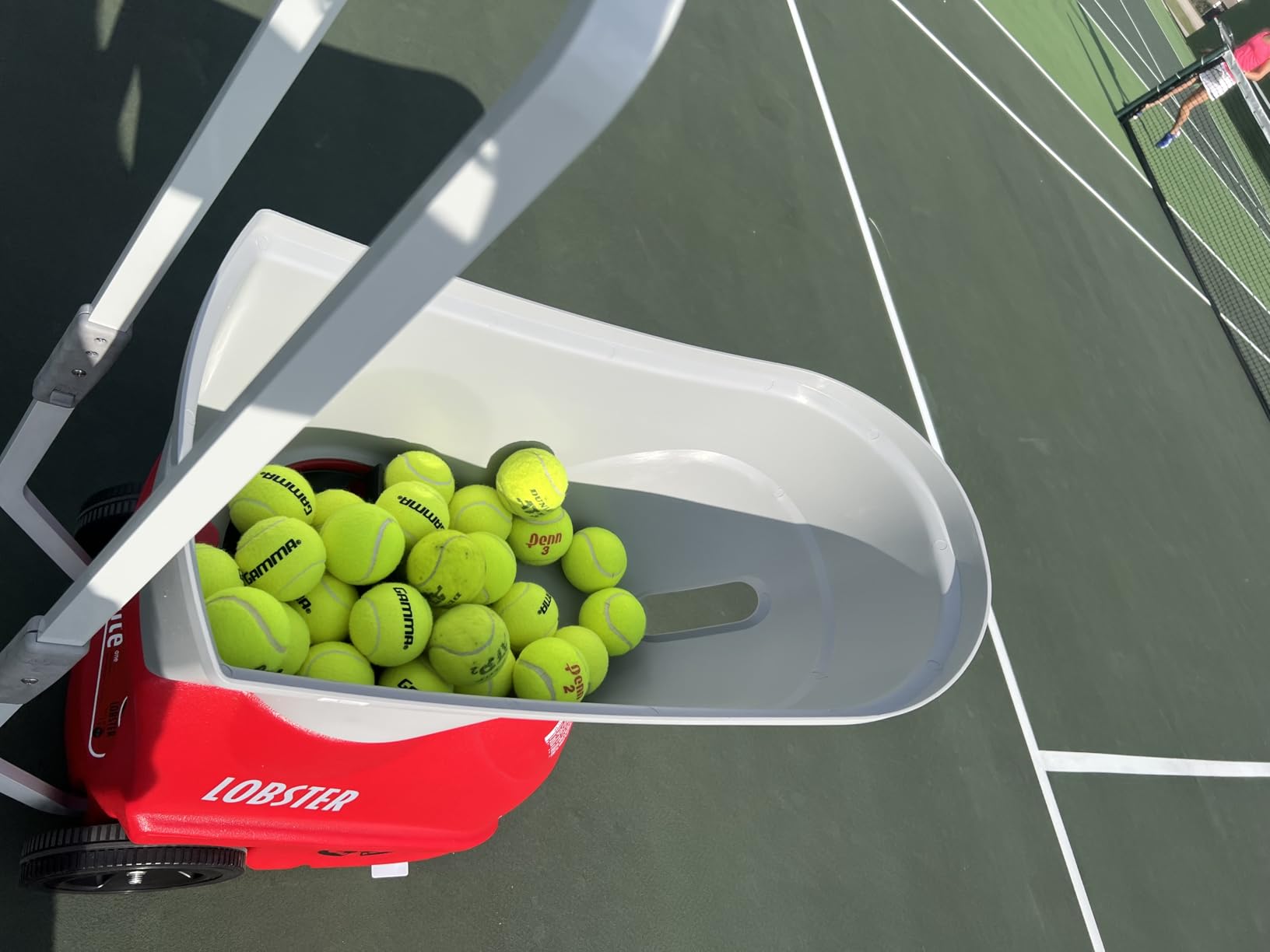
At 42 pounds this is not a one-hand carry, and we will not pretend otherwise. What rescues it is the transport design: 8-inch all-terrain wheels, a folding handle, and a body that rolls over grass, gravel and curbs without tipping. Park it at the far end of a resort court, walk back to fetch your racquets, and roll it back when you are done.
Runtime is the other reason it wins here. The rechargeable battery gives 4-6 hours of gameplay and the standard charger is in the box, so a full day of practice needs an overnight charge rather than a spare pack in your bag. A 2-year warranty also covers it longer than most machines in this roundup.
When the Lobster Elite is the right travel pick
Choose it if you play more than a few sessions a year, if you regularly practise on surfaces other than a private hard court, or if you would rather own one machine for a decade than replace a cheap one every three seasons. The hopper size, the speed ceiling and the wheel package are all in the range where nothing important is missing.
It also suits a player who is moving between two homes, a club and a resort without a reliable partner at any of them. The 10 MPH floor means beginners can use it, and the 80 MPH ceiling means a strong club player can work on depth and placement with it.
When the Lobster Elite is the wrong travel pick
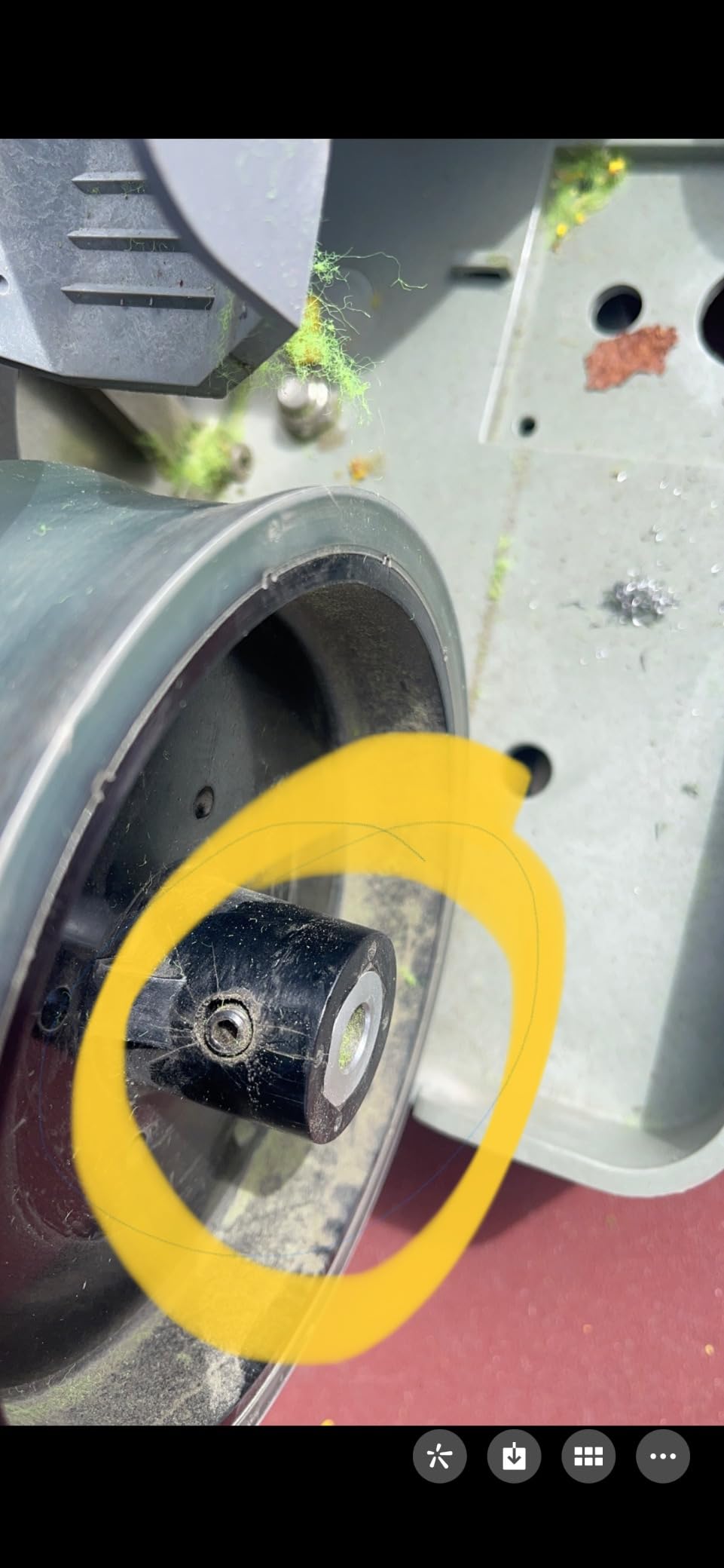
It is wrong if you intend to fly it. A 42-pound machine with an internal rechargeable battery is a checked-bag problem at best, and the folding handle is the part reviewers flag most often as a failure point. The plastic lock pieces on that handle can break, and the bends are sharp enough to draw blood on a careless grip.
It is also wrong if you are the sort of buyer who wants one-button control. Every adjustment runs through the handheld remote, which is sold separately rather than bundled, so budget for that before the first session.
2. Spinshot Plus-2 – drills you program shot by shot
Spinshot Plus-2 Tennis Ball Machine (Plus2 Model =Plus Model + Player Model)
Hopper: 120+ balls
Control: app and remote
Power: battery sold separately
Build: metal and plastic
Pros
- Extremely configurable shot and drill programming through the phone app
- Quiet powerful motor that suits every skill level
- Strong metal and plastic construction
- Support has upgraded hardware and software for owners
Cons
- Battery runtime falls short of the advertised figure for some owners
- App connection is inconsistent and can lock up
- Small wheels and a flimsy hopper flap
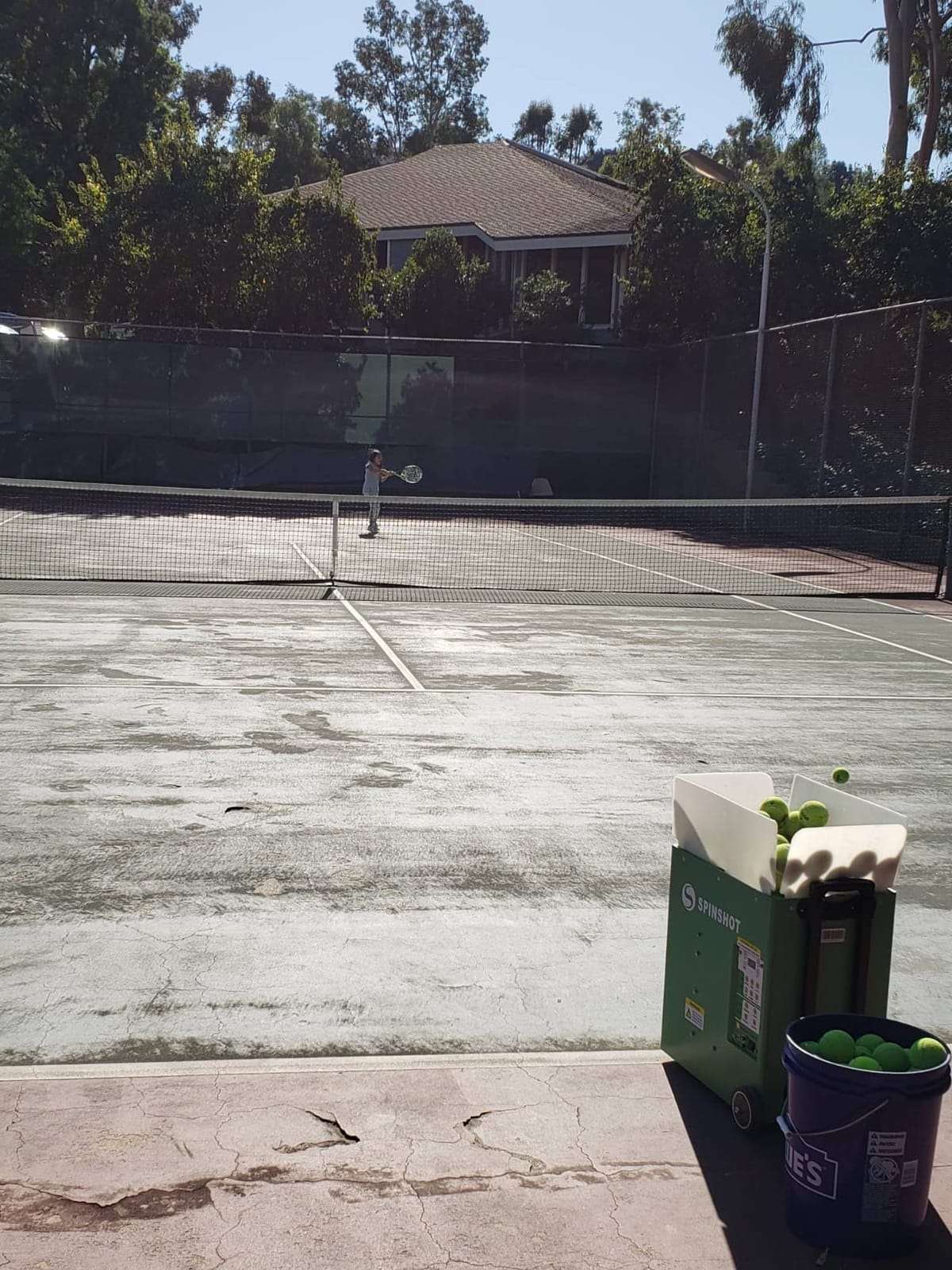
If your travel tennis is serious enough that you want to arrive with a written practice plan, the Plus-2 is the machine to look at. You build a drill in the phone app, set speed, spin, height, angle and feed rate shot by shot, and the machine runs the sequence. The foldable hopper holds more than 120 balls, which is a full long session without a pickup.
Any oscillation pattern you want can be created, and the motor is quiet enough that you can hit beside neighbouring courts without drawing a complaint. For a player who wants to work on a specific pattern rather than just take whatever comes out, that is worth more than raw speed.
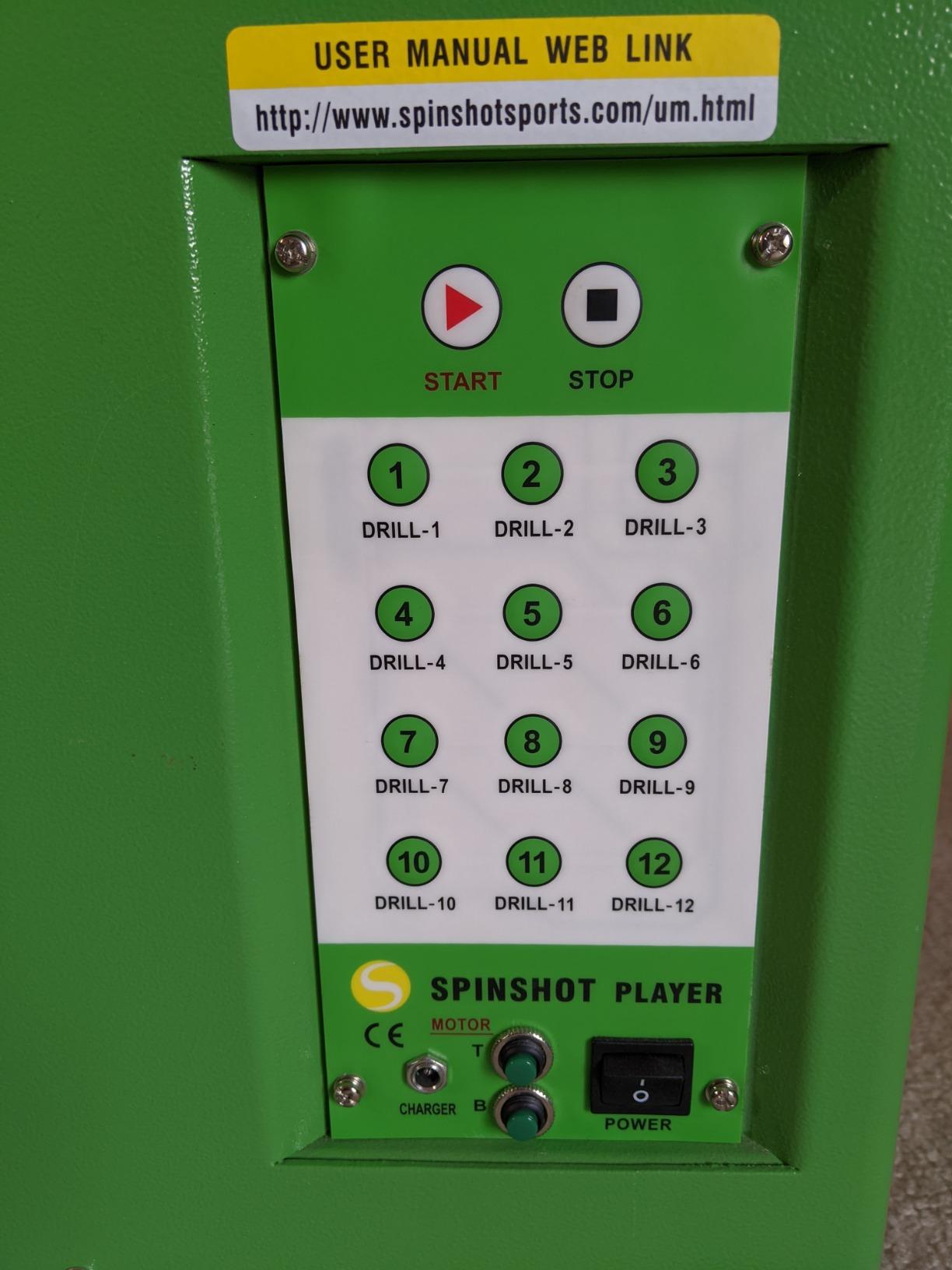
For travel, the honest catch is power. The charger is included but the lithium battery is sold separately, and the listed package weight is 25.22 kg. That figure covers the packed unit, so plan on a two-person load into a car and a trolley at the destination rather than a backpack.
The second catch is software. Owners report the app connection being inconsistent, with the machine locking up at times. If your practice depends on the app, build a fallback plan using the physical controls before you leave home.
When the Spinshot Plus-2 is the right travel pick
It suits a club player who travels to a camp or a coaching block and wants structured sessions rather than aimless feeding. A 120+ ball hopper also reduces the number of breaks, which keeps a tight two-hour court booking productive from the first feed to the last.
It also makes sense if you can leave the machine at a club or holiday home and fly to it. Since the battery is a separate purchase, you can leave the pack behind and charge it where the machine is stored.
When the Spinshot Plus-2 is the wrong travel pick
It is wrong for anyone who wants to walk to a public court alone. The small wheels and a package weight above 25 kg make that a two-person job, and reviewers also flag the hopper flap as flimsy. Email-only support with slow responses is another risk if something fails away from home.
Battery runtime also falls short of the advertised figure for some owners. If you are counting on a full day without a charge, verify the real duration on your own trip length before you commit.
3. Spinshot Pro – built like a tank, heavy like one too
Spinshot Pro Tennis Ball Machine (The Best Model for Easy Use)
Weight: 49.8 lbs
Speed and spin adjustable
Controls: all knob-based
Build: PU and TPU over metal frame
Pros
- Knob controls that are quick to set and easy to use
- Durable construction over a metal frame rather than plastic
- Adjustable speed oscillation lob height and spin
- Support replaced faulty parts quickly
Cons
- Heavy at nearly 50 lb so it is awkward to move
- Flimsy hopper flaps with occasional jams in the dispenser
- Only one spin type per session
The Spinshot Pro is the machine we would hand to someone who is rough with their equipment. It is a PU and TPU construction over a metal frame, which is why reviewers describe it as built like a tank, and every feature is on a physical knob rather than buried in an app. A child can set it up, which is exactly the point if your practice partner is a teenager.
Speed, oscillation, lob height, topspin and underspin are all adjustable, and the feedback on build quality is strong across 112 ratings. Support is also responsive, replacing faulty parts rather than asking you to troubleshoot.
It is also not really a travel machine. At 49.8 pounds it is the heaviest product in this roundup, and combined with a separately purchased battery you are looking at a two-person lift every time. The size of 50 x 45 x 30 cm packs into a large trunk, but not into a standard cabin bag or a sedan shelf.
There is a second structural limitation worth knowing: only one spin type can be dispensed per session. If you want to work topspin and then slice in the same block, you will be stopping to reset it.
When the Spinshot Pro is the right travel pick
It fits a player who practices at a second home, a club or a court where the machine stays set up rather than a player who carries one. If your travel pattern is fly to a place, stay two weeks, and practice daily at a facility you have access to, the weight stops being a problem quickly.
The knob controls are also a genuine advantage on a public court in poor light, where fumbling with a phone screen wastes your court time.
When the Spinshot Pro is the wrong travel pick
It is wrong the moment you have to move it yourself. Nearly 50 pounds with no way to split the load means a trolley, a second pair of hands, or a very short distance from the car.
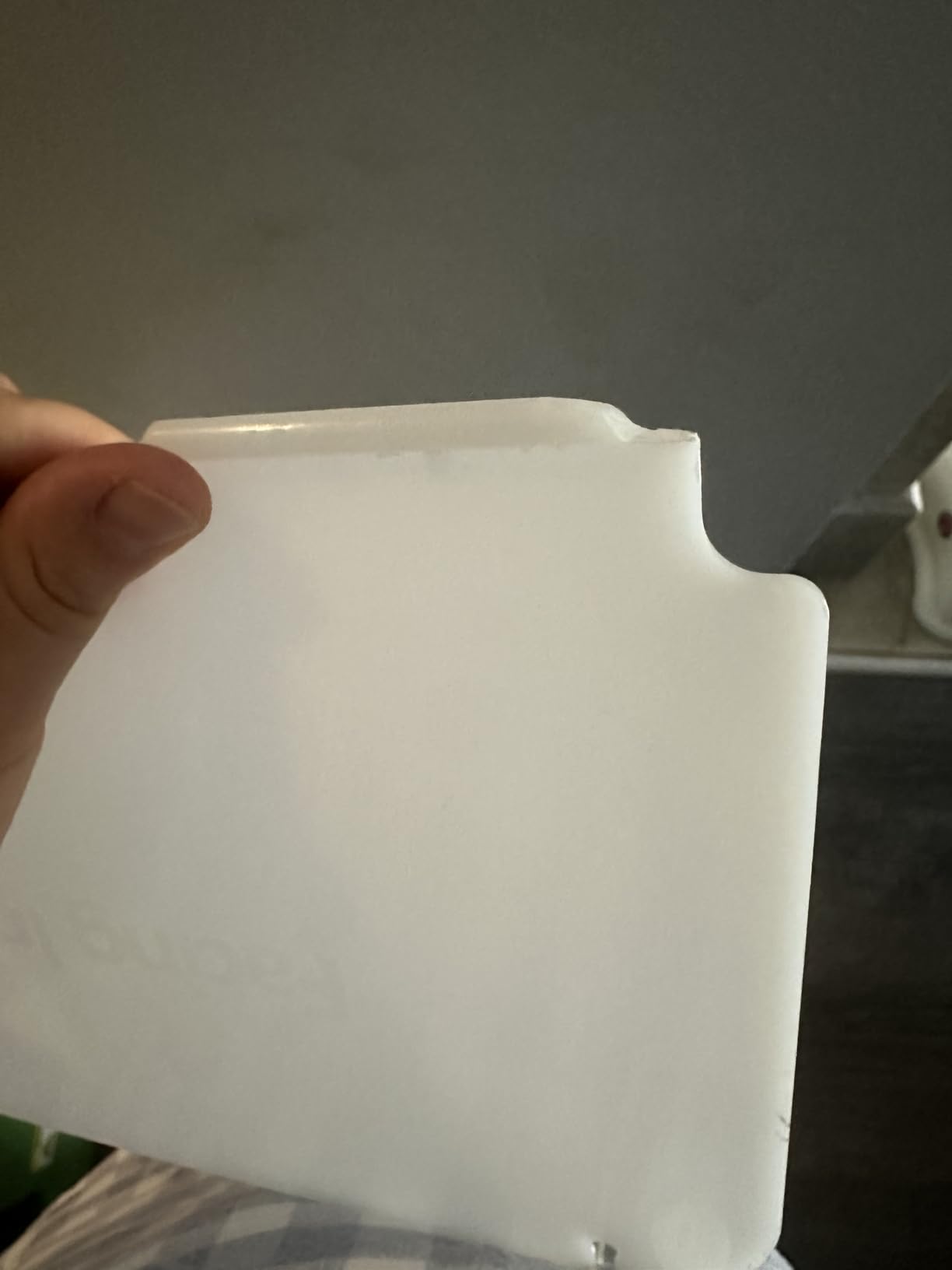
Reviewers also report the hopper flaps feeling flimsy with balls occasionally jamming in the dispenser, and the battery is not in the box. Budget for the battery separately and keep a cleaning routine for the feed channel.
4. Furlihong 3819BH – the only machine here you can genuinely backpack
Furlihong 3819BH Portable Tennis Ball Machine
Weight: 4.04 kg package
Speed: up to 30 MPH
Hopper: about 28 balls
5 angles, 2 power levels
Pros
- Very light and genuinely easy to carry for a casual solo session
- Simple dial and switch setup that beginners grasp immediately
- Accessible entry point for players who want to practise without a large outlay
- Feeds at a pace that leaves time to set up a shot
Cons
- Feed consistency varies with every second or third ball coming up short
- No remote control so a second person has to start it
- Jams or double-tosses as ball fuzz builds on the track
The Furlihong 3819BH is the answer to the question most portable machines avoid: can one person carry the whole thing? Its listed package weight is 4.04 kg, which is less than half of anything else in this roundup, and the item dimensions of 9.5 x 18.5 x 35.4 inches mean it slides into a hold rather than fighting you.
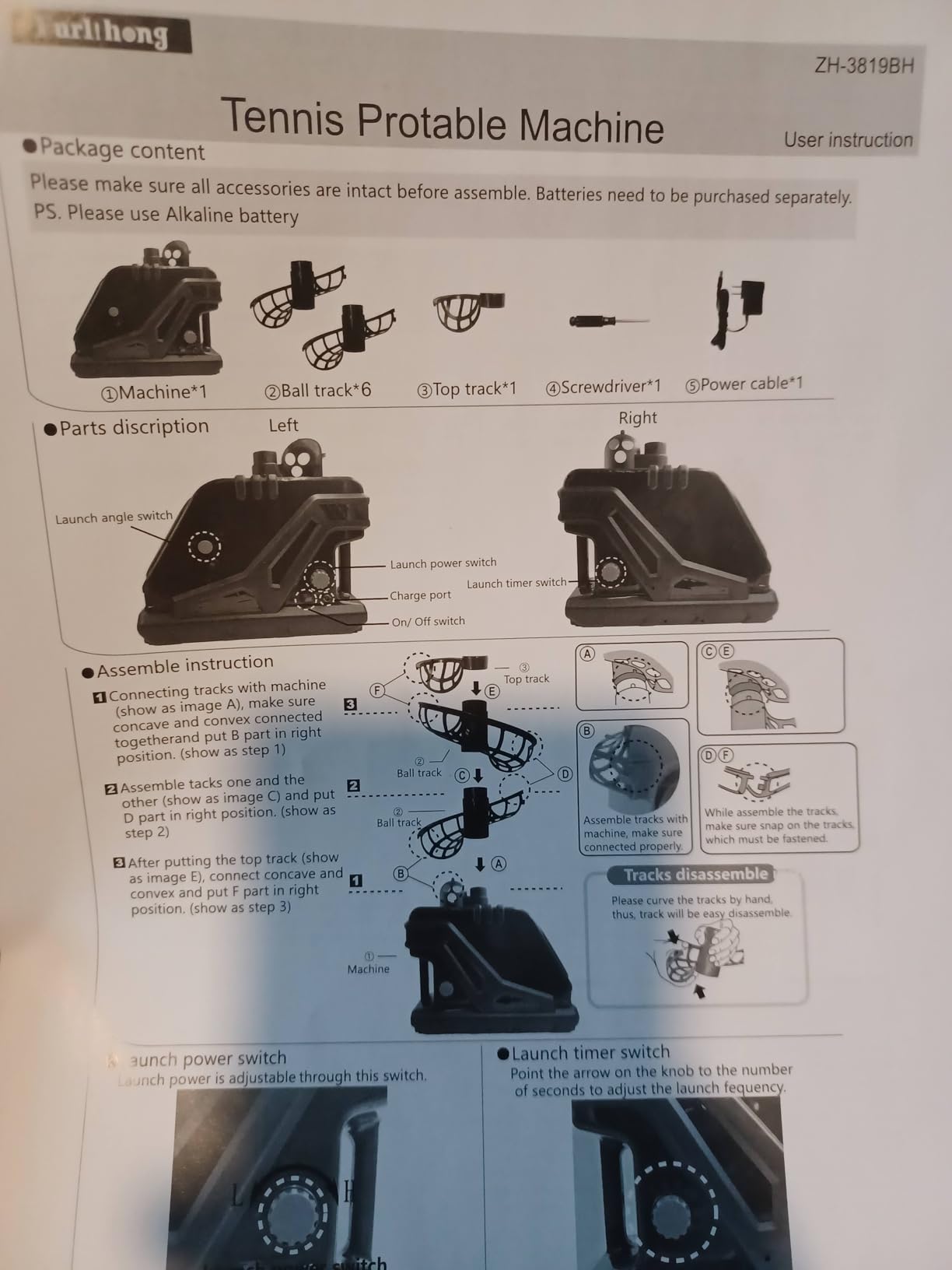
Setup is five angle settings covering forehand, backhand, flat, slice and volleys, two power levels, and four feed intervals. The AC adapter is included, and you can also run it from eight D-cell batteries or a portable power bank. That flexibility is exactly what a traveller at an unfamiliar court with no outlet nearby needs.
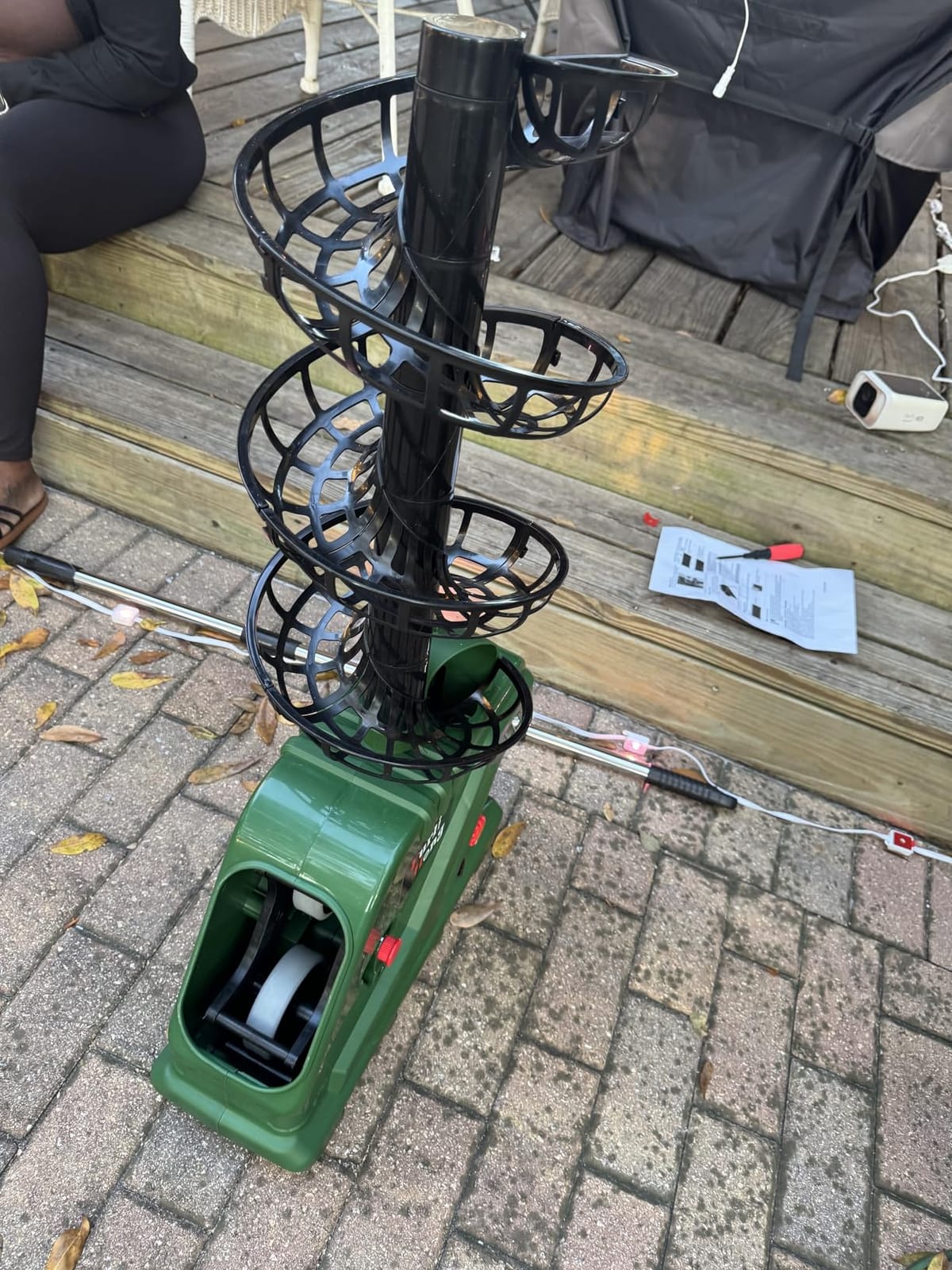
What you accept is a small machine. It holds roughly 28 tennis balls in screw-in track channels, which is about ten minutes of practice, and it feeds at up to 30 MPH. That is a beginner pace that leaves time to set up a shot, not a speed a club player can work against.
There is no remote control, so somebody has to start it and adjust it. If you are practising alone, that is a real limitation rather than a minor inconvenience. It also runs on disposable D-cell batteries rather than a rechargeable pack, so pack spares or confirm a power bank before you fly.
When the Furlihong 3819BH is the right travel pick
It suits a beginner, a family, or anyone whose practice is a casual 20 minutes rather than a structured two-hour block. The controls take about a minute to learn, the 12-month warranty is basic but present, and the whole kit fits in a day bag.
It is also a low-risk way to find out whether a ball machine suits you at all before you spend serious money on one. If you end up wanting more speed and capacity later, you already know you will use it.
When the Furlihong 3819BH is the wrong travel pick
It is wrong for anyone who wants to train on depth, placement or return of serve. Feed consistency is the other issue: reviewers report that every second or third ball comes up short, and the track jams or double-tosses once ball fuzz builds up.
Plan a ten-minute clean of the ball channels between sessions, and do not expect this machine to replace a hitting partner. It is a repetition tool for fundamentals, nothing more.
5. PUSUN PT-Smart – 28-point placement with a detachable battery
PUSUN Tennis Ball Machine,Portable Tennis Launcher,Tennis Trainer,PT-Smart
Weight: 32.6 lbs
Speed: 12-75 MPH
Battery: 153.6Wh external, 4-6 hours
Hopper: 100+ balls
Pros
- Deep drill library with NTRP progression and a dedicated Padel mode
- 28-point placement with external oscillation improves anticipation
- External battery charges away from the machine which is a packing advantage
- Dust-proof board and all-ball logic hold up on clay and hard courts
Cons
- Hopper collapses for storage so loading takes practice
- Firmware and app updates are needed to unlock advertised features
- App-centric control means setup time before the first feed
The PT-Smart is the most interesting machine here for a traveller who splits time between sports or between surfaces. It runs 12 built-in training modes plus a dedicated Padel mode for 14 drills including Bandeja and Bajada, with NTRP 1.0 to 5.0 progression across Primary, Vary Speed and Program play modes. The box also includes a remote control, so you are not entirely dependent on a phone.
Placement is the standout: 28 programmable landing points with external oscillation, speed from 12 to 75 MPH, feed intervals from 1.8 to 8 seconds, and 6 spin levels. External oscillation is a genuine training upgrade over internal oscillation because you can see the machine move, which teaches you to read the feed earlier.
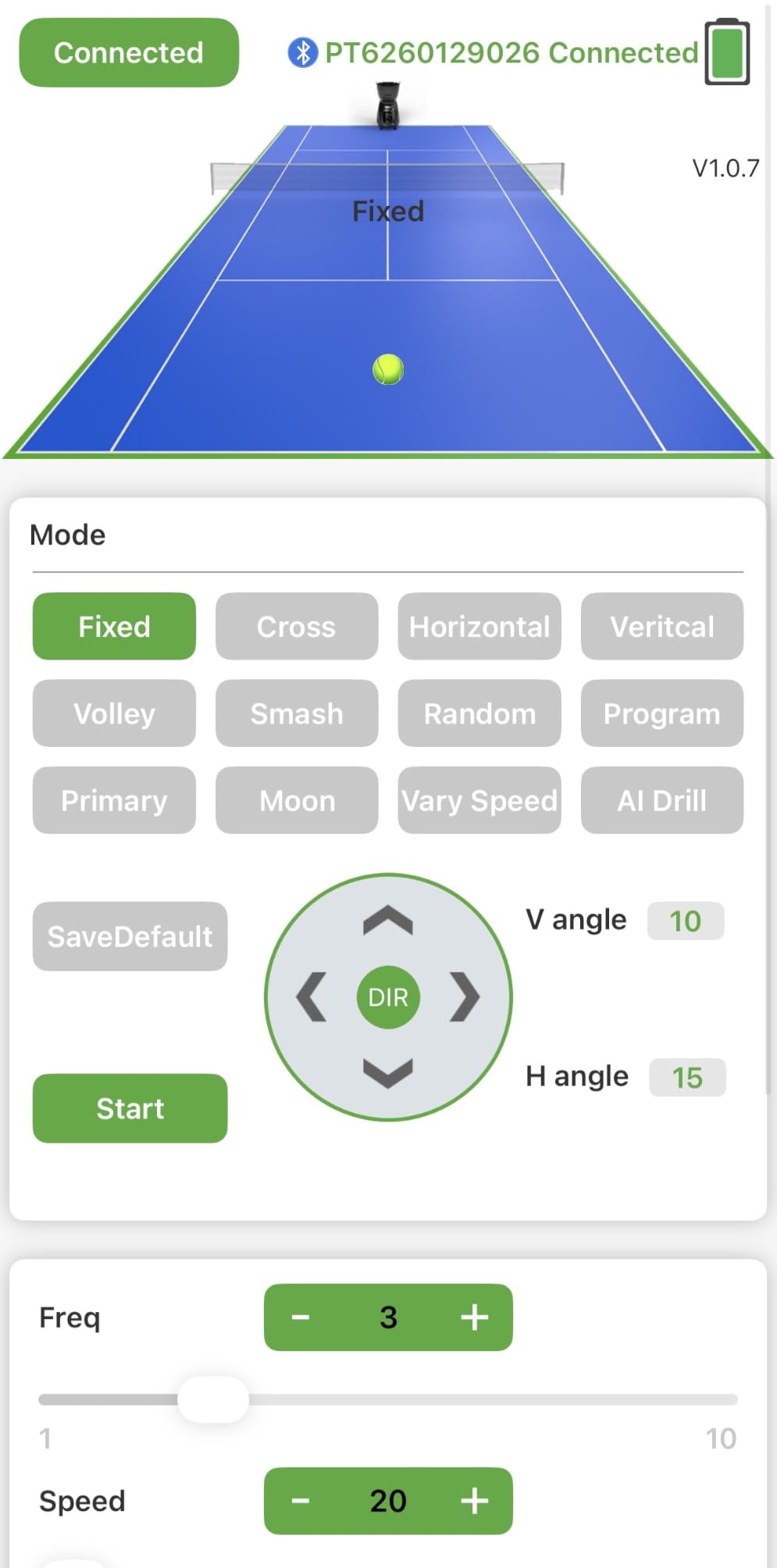
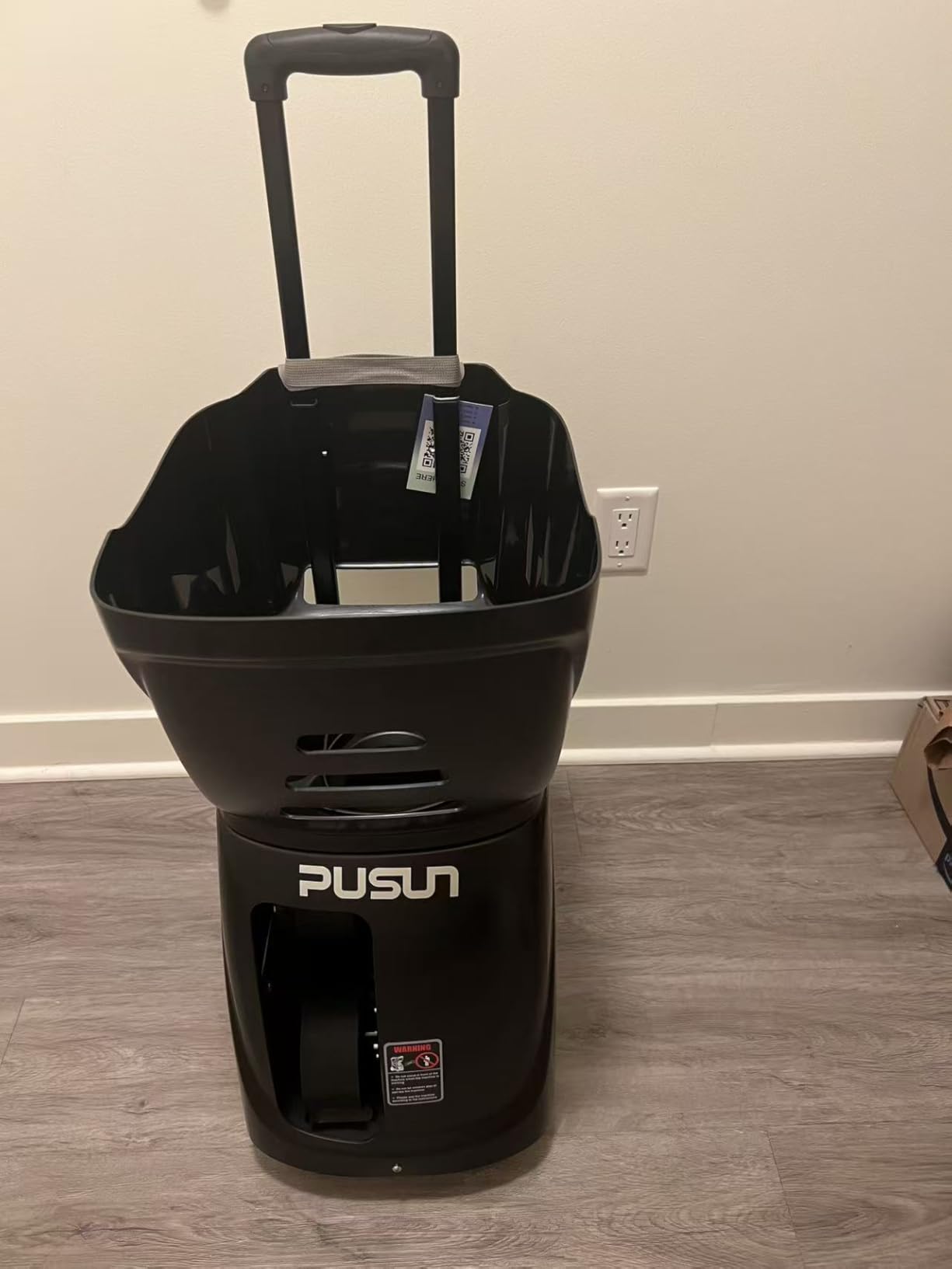
The travel story is the 153.6Wh external battery. Because it detaches, you can charge the pack in a hotel room overnight while the machine body stays in the car or a storage locker, and you can swap a charged pack in rather than carrying the machine to an outlet. Runtime is 4-6 hours or roughly 5,700 shots.
Surface tolerance matters too. The dust-proof mainboard is rated for hard courts and red clay, and the machine works with pressurized, non-pressurized and training balls. That flexibility matters if you are moving between a resort clay court and a municipal hard court in the same week.
When the PUSUN PT-Smart is the right travel pick
Choose it if you play padel as well as tennis, if you are an intermediate-to-advanced player who wants to work on placement rather than just rally, or if you practise on clay. It is also a strong pick for a household that shares one machine across two sports.
The battery warranty is 1 year and the main unit carries 3 years, which is one of the better split warranties in this category.
When the PUSUN PT-Smart is the wrong travel pick
At 32.6 pounds it is a two-hand carry, and the 13 x 17 x 27 inch body is not a backpack item. The hopper collapses for storage, which saves space but means loading takes a little practice every time you set up.
There is also a software dependency. Advertised drill features need firmware and app updates to unlock, and app-centric control adds setup time before the first feed. If you want a machine that works the second it comes out of the bag, this is not it.
6. Tenniix Basic – the best portable tennis ball machine for travel by air
TENNIIX Basic Tennis Ball Machine, 18.7LB Portable Tennis Robot, Black
Weight: 18.7 lbs
Folds to 15.4 x 10.7 x 17.6 in
Battery: 7000mAh, 4 hours
Speed: up to 75 MPH
Pros
- Genuinely easy to carry so owners practise far more often
- Compact folded size fits in a trunk or a small space
- App and wrist armband voice control with LED feedback
- Battery runtime matches the advertised three to four hours
Cons
- No wheels so it has to be carried rather than rolled
- Software forces a five-second delay between drill patterns
- Control depends entirely on the phone app
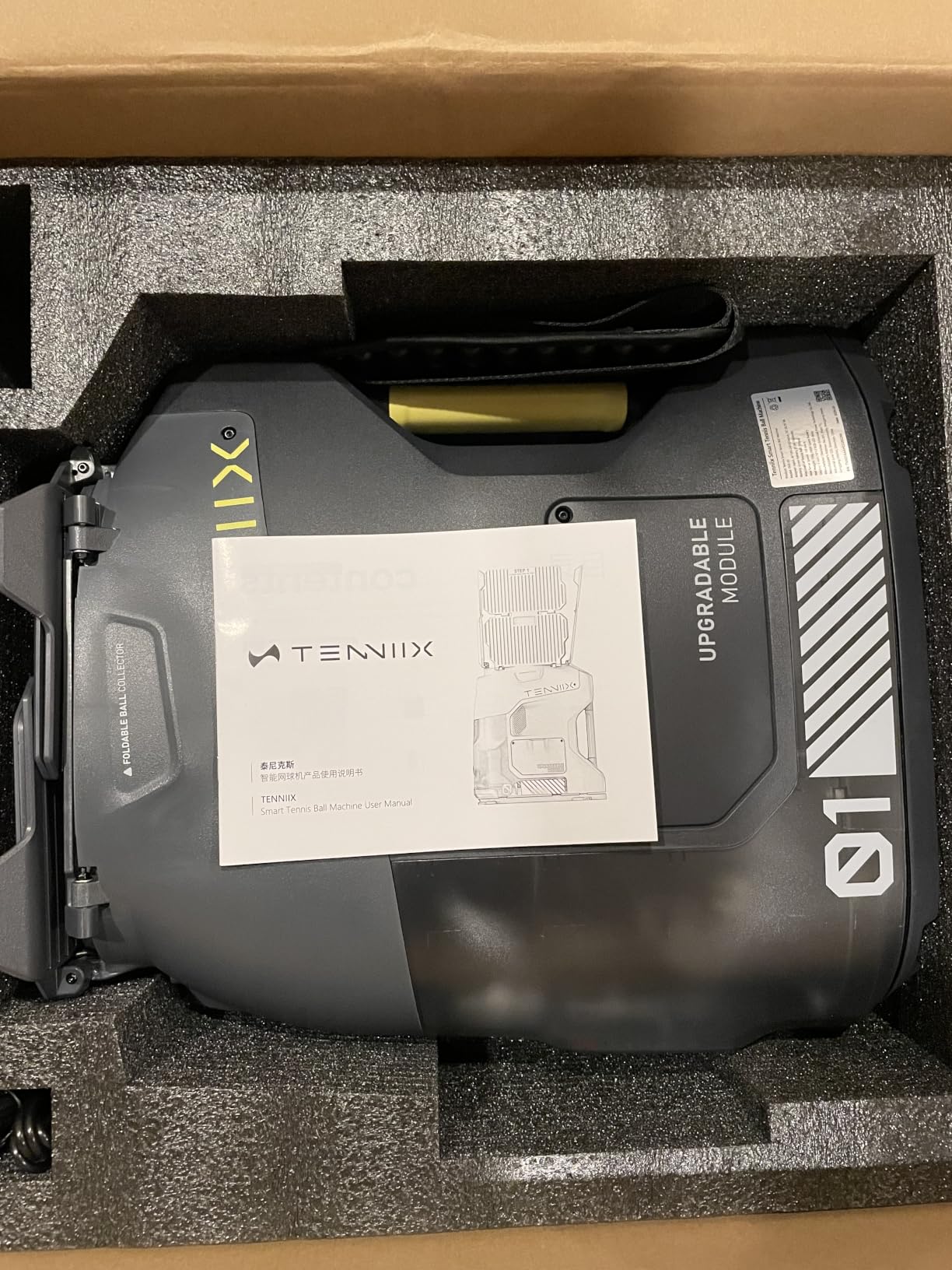
The Tenniix Basic is the machine we would put in the hands of someone whose biggest problem is that they never take the machine to the court. Owners who replaced a heavy older machine report that the change unlocked daily practice. At 18.7 pounds with ergonomic non-slip handles, it is a genuine single-person carry, and it folds to 15.4 x 10.7 x 17.6 inches.
That folded size is the number that decides the travel case. It is small enough to sit in a checked bag or a large rucksack, small enough to fit in a sedan trunk without removing anything, and light enough that a second bag of balls does not push you over a limit.
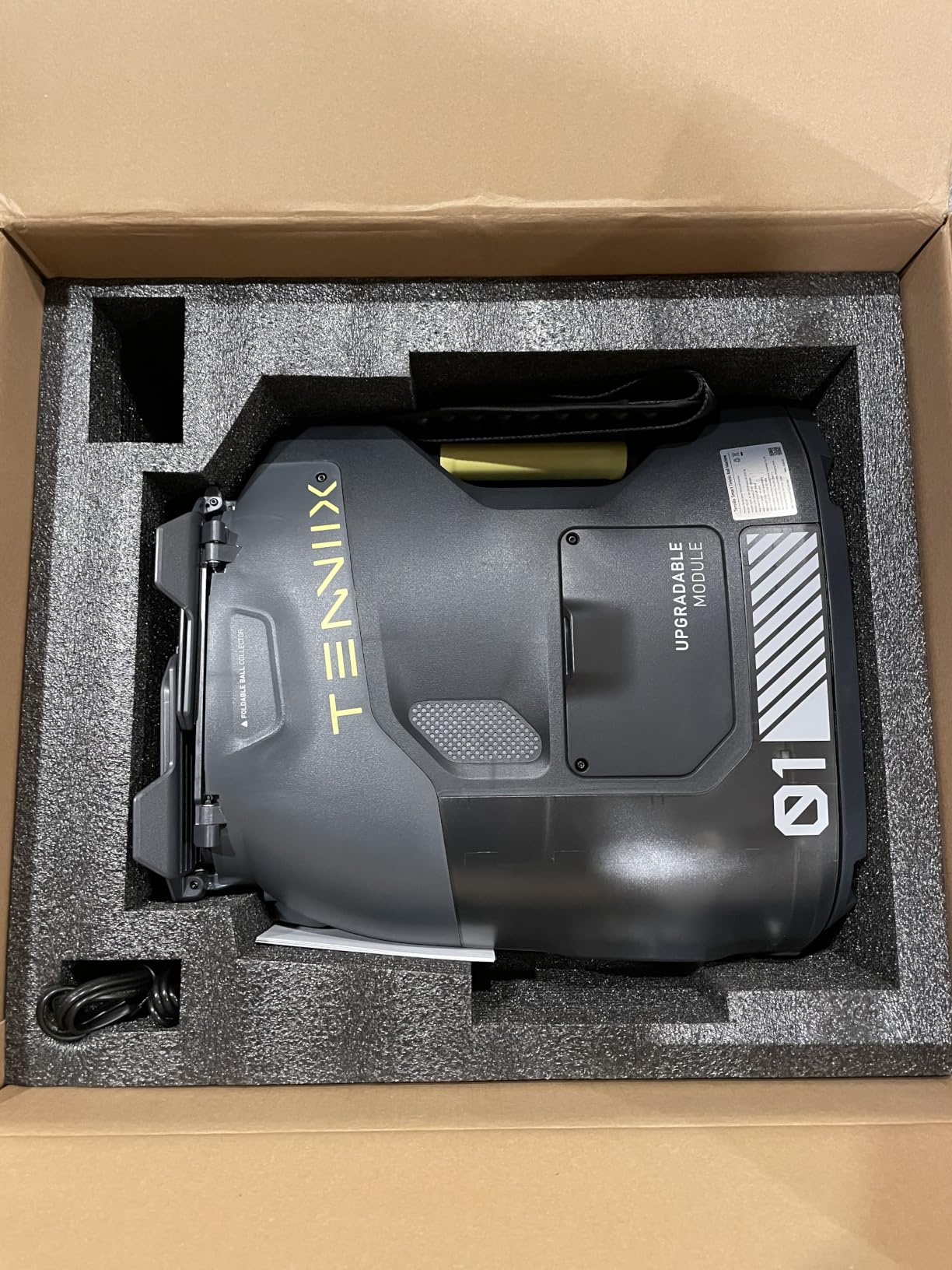
The 7000mAh battery is removable and gives up to four hours of continuous play, roughly 1,800 shots per charge. Because it detaches, the same trick applies as the PUSUN: charge the pack indoors overnight and carry the body in separately. That also keeps the pack out of a hold if you would rather not check a lithium cell.
Control is unusual. Bluetooth 5.2, WiFi, a microphone, a speaker and LEDs support 46 voice command keywords through a wireless wrist controller and armband, and the app covers speed, topspin and backspin, launch angle and interval, with 1,000+ ball combinations and saveable custom drills. There are 9 shot patterns plus Match Mode with 6 rally styles and NTRP L1-L3 presets.
When the Tenniix Basic is the right travel pick
It is the pick for anyone flying, taking a train, or walking to a public court without a car. Among the eight machines here it has the strongest combination of carry weight and packed size, and a battery you can charge separately.
It is also the strongest fit for a player who wants voice and app control on the court, since the armband means you can change speed and spin without touching the machine or pulling out your phone mid-rally.
When the Tenniix Basic is the wrong travel pick
There are no wheels, so it has to be carried the whole way rather than rolled. Over a long walk with 60-plus balls that adds up, and it is the single most common complaint owners raise.
Beyond that, control is entirely app-dependent, the software forces a five-second delay between drill patterns, and the narrow hopper mouth bounces balls out when you pour a basket in. Budget a minute of loading time and download your drills before you leave home.
7. Nisplay N1 – a rolling 26 lb body with a detachable battery
Nisplay Portable Tennis Ball Machine (26lbs) – Dual Motor for TopSpin and Backspin, 80+ Balls, Max 68MPH, 4+ Hours Play with External Lithium Battery (Ball Machine + Oscillator Combo)
Weight: 26 lbs
Speed: up to 68 MPH
Hopper: 80+ balls
Battery: detachable external, 4+ hours
Pros
- Compact aluminum build with oversized wheels and a folding handle
- Detachable battery can stay behind while the machine stays at the club
- Dual motors give usable top and backspin at a mid-tier price
- Support resolves issues fast including replacements
Cons
- Remote cannot engage the oscillator or stop the launch wheels
- Balls occasionally jam and the machine must be walked to clear them
- Achieved speed and spin fall short of the advertised figures
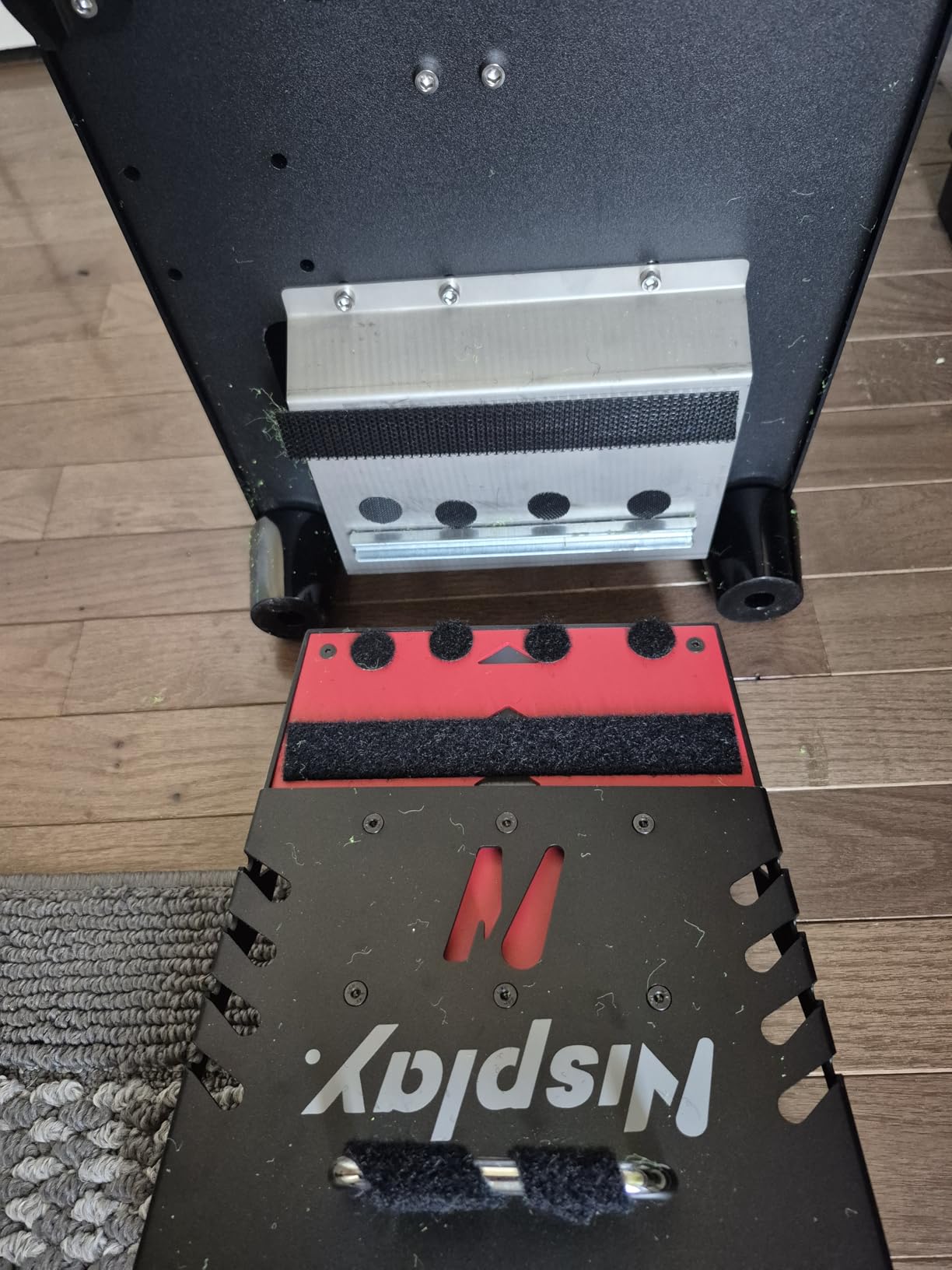
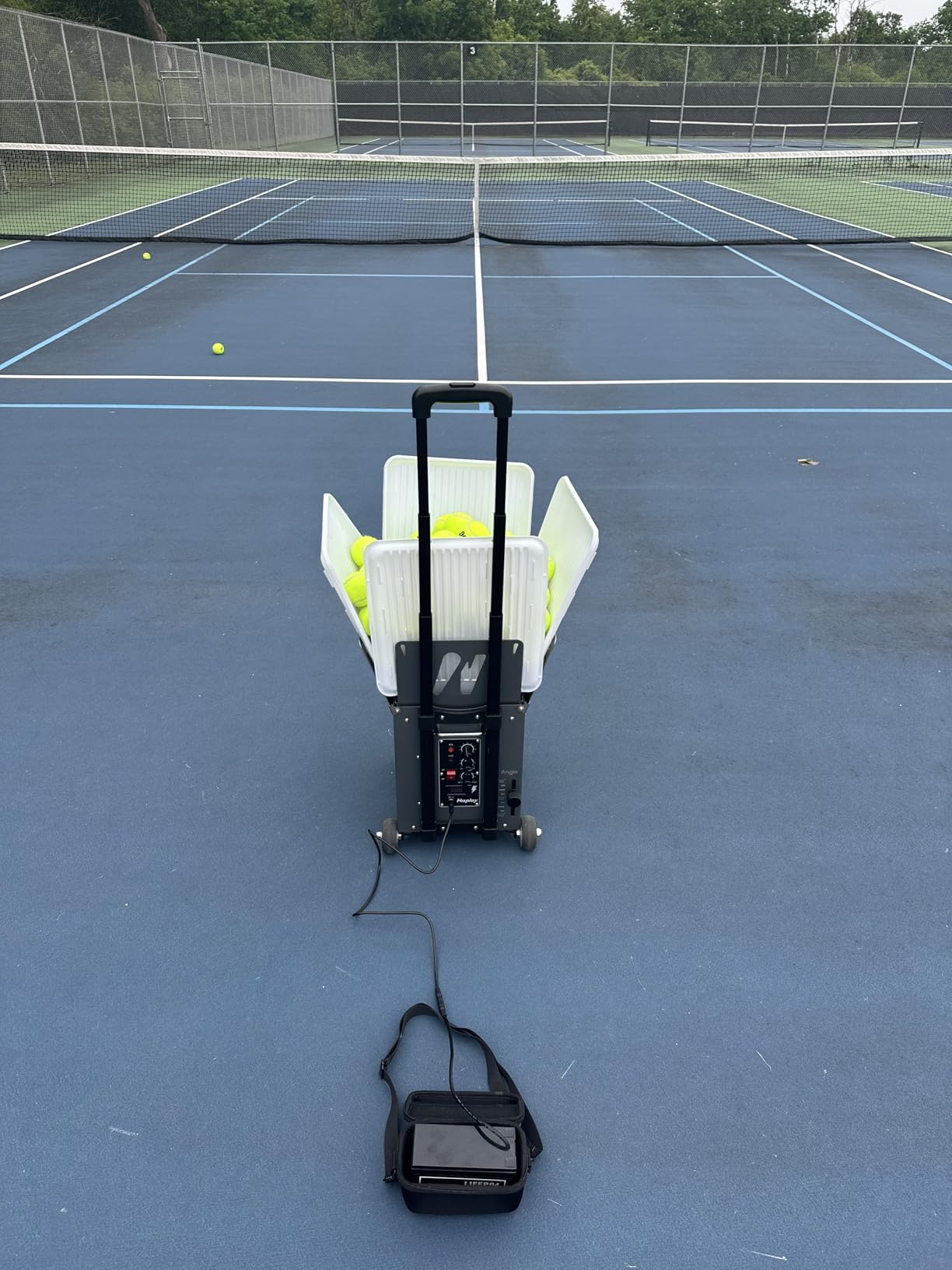
The Nisplay N1 has the highest average rating of any machine in this roundup at 4.5, and the reason is transport design. The body is 26 pounds of aluminum roughly the size of a basketball, with oversized wheels and a 3-foot folding handle that copes with grass, gravel and curbs. The item dimensions of 12.5 x 10.6 x 12.6 inches are the smallest in the roundup, so the machine stays out of the walkway when you are practising.
It also has one of the most useful battery arrangements for a traveller. The detachable external lithium battery runs 4+ hours and can be charged separately, so the machine can stay in a club bag or a storage locker while you carry only the pack. The 80+ ball hopper with three ball channels helps clear jams.
Dual motors handle flat, topspin and backspin with manual oscillation, 0-50 degree elevation and feed intervals from 1 to 9 seconds. Support is genuinely responsive, with replacements and repairs handled quickly, which matters a lot for a buyer who is not near the original market.
Be realistic about output. Owners report that achieved ball speed and spin fall well short of the advertised 68 MPH, and that the output is closer to entry-level. Judge it as a solid consistency machine rather than a power machine.
When the Nisplay N1 is the right travel pick
It suits a player who moves between a car, a court and a club and wants to roll rather than carry. Wheels plus a 26-pound body plus a folding handle is the combination that makes a long walk from a parking lot survivable.
It is also the strongest pick here for anyone planning to leave a machine permanently at a second home or a club, because the detachable battery means you can travel with the pack only.
When the Nisplay N1 is the wrong travel pick
The remote is the main weakness. It cannot engage the oscillator or stop the launch wheels, and it has few buttons, so expect to walk over to the machine for changes. The Y cable to the oscillator is also too short and can strain the connection.
Ball jams do occur, and clearing one means walking the machine over. Treat the 68 MPH figure as a ceiling rather than a target, and pair it with pressureless or training balls if feed consistency matters more than speed.
8. PONGBOT Pace S Pro – the biggest hopper and the longest claimed runtime
PONGBOT Tennis Ball Machine, APP and Remote Control, Custom Drills, 150 Ball Capacity, Max 80mph,8+ Hours of Endurance, Dual Motor for Topspin and Backspin, PACE S PRO
Weight: 46 lbs
Speed: 80 MPH with 60 rps spin
Hopper: 150 balls
Battery: removable, 8+ hours
Pros
- Large 150-ball hopper means fewer mid-session pickups
- Longest claimed battery endurance in this roundup at 8+ hours
- Drills build in the app and sync to the handheld remote
- Remote-controlled barrel opening simplifies pickup and cleaning
Cons
- At 46 lb it is heavy despite the compact trunk-friendly shape
- Newer listing with a smaller review base so durability is less proven
- App and remote workflow adds setup steps before each session
The Pace S Pro is the endurance machine of the group. The removable battery with a battery management system is claimed at 8+ hours, which is the only runtime figure above six hours in this roundup, and the 150-ball hopper means you can run a full day of drills without a mid-session refill. Speed tops out at 80 MPH with 60 rps of spin and 6 oscillation spots.
Drill programming is also the most extensive listed here. There are hundreds of pre-loaded drills plus unlimited custom ones, 30 drills sync from the app to the handheld remote, over-the-air updates, and smart sensors for adaptive rallies, recovery drills and NTRP match challenges. You can share drills in a user community.
Surface coverage is the broadest listed here: clay, hard and grass courts, plus padel. The remote-controlled barrel opening is a small touch that saves real time, since you open the hopper remotely and collect balls without kneeling over the machine.
When the PONGBOT Pace S Pro is the right travel pick
It suits a player who has one long session per trip and hates stopping mid-drill to refill. The 19.69 x 11.81 x 15.75 inch body with wheels, a pull handle and a compact car trunk design means it fits a vehicle easily once you have accepted the weight.
It is also a strong choice for a household that plays padel and tennis, or for anyone who wants to practise on grass, which very few machines in this roundup claim.
When the PONGBOT Pace S Pro is the wrong travel pick
At 46 pounds it is the second-heaviest machine here despite the compact shape. That is a two-hand lift, and the compact dimensions do not compensate for the mass when you are walking to a court alone.
It is also a newer listing with a smaller review base, so long-term durability is less proven than the Lobster or Spinshot models. The app and remote workflow adds setup steps before every session, and the 1-year warranty is shorter than the Lobster’s 2 years.
What counts as portable: three weight tiers and how to carry each one
The best portable tennis ball machine for travel depends on how you get to the court, not on what the box says. Below 15 pounds you carry in one hand or wear in a backpack. Between 15 and 25 pounds you use two hands and a decent strap. Above 25 pounds you roll it, and if it has no wheels you need a second person or a trolley.
Under 15 lb, one hand or a backpack: the Furlihong 3819BH sits alone here, with a listed package weight of 4.04 kg. It is the lightest of the eight by a wide margin, and the only one you could genuinely shoulder over a long distance.
15-25 lb, two hands over a short walk: the Tenniix Basic at 18.7 lb is the standout, because it also folds to 15.4 x 10.7 x 17.6 inches. Nothing else in the list combines single-digit-kilogram carry weight with a packed footprint this small.
Over 25 lb, a cart, trunk or trolley only: the Lobster Elite at 42 lb, the Spinshot Pro at 49.8 lb, the PONGBOT Pace S Pro at 46 lb, the PUSUN PT-Smart at 32.6 lb and the Spinshot Plus-2 at 25.22 kg packed. Only the Lobster Elite, the Nisplay N1 and the Pace S Pro have meaningful wheels.
One more correction to the marketing language: most spec sheets quote chassis weight and omit the battery. Real carry weight is higher than the number on the product page, and on machines with a removable pack the delta can be the difference between one-handed and two-handed. Ask for the weight with the battery installed before you buy.
Flying with a tennis ball machine: what actually happens
Yes, you can fly with a tennis ball machine, but almost nobody should. A machine of 25 pounds or more does not fit a cabin bag, and the lithium battery inside it is the part that generates questions at the gate. Batteries between 100 Wh and 160 Wh are permitted in checked baggage when the device is protected against accidental activation, and spare lithium batteries generally cannot go in the hold at all, which is why a removable pack is a liability rather than a feature on a flight.
Checked baggage limits are the real constraint. Most carriers cap checked bags at 50 lb and around 62 linear inches, and a single bag already has to hold clothes. A 42-pound machine plus 60 balls plus a racquet plus a charger will blow through that on its own, and oversize or overweight charges add up fast.
So the practical options for air travel are these. Rent a machine at the destination. Buy one at the destination and skip the baggage weight entirely, which is also the cleanest way to avoid a damaged machine arriving. Or carry only a genuinely light machine, where our clear preference is the Tenniix Basic at 18.7 pounds, or the Furlihong at 4.04 kg listed package weight for a casual player.
For international trips, remember that a machine bought at home may need a different charger voltage abroad, and that shipping a machine back for service is far more expensive than buying locally. Check whether parts and warranty service exist in the country you are practising in before you buy at home.
If your travel is a road trip rather than a flight, the problem changes completely. At that point wheel size and folded height decide the outcome, and the Nisplay N1 and Lobster Elite both handle curbs and gravel well. Our pickleball machine guide covers the cross-over cases for households that play both sports.
Battery life, charging and the weight nobody lists
Runtime figures in this category are the easiest number to over-trust. They are measured with a full hopper, a moderate feed rate and a mild temperature, and they fall as the battery ages. Owners regularly report that a machine rated near four hours delivers noticeably less in year three, and sealed internal batteries cannot be replaced at all.
That is why the removable pack matters so much for a traveller. The Tenniix Basic at 7000mAh and roughly 1,800 shots per charge, the PUSUN PT-Smart at 153.6Wh for 4-6 hours and about 5,700 shots, and the PONGBOT Pace S Pro at a claimed 8+ hours all let you swap or separately charge. Machines with a sealed internal battery give you no options when the pack degrades.
Match runtime to session length rather than to the spec sheet. A 90-minute session at a 3-second interval is around 1,800 feeds, which is exactly the Tenniix figure. A four-hour block at the same interval is 4,800 feeds, which is where the PUSUN and Pace S Pro numbers start to matter.
Finally, add the battery back into the weight before you commit. A machine quoted at a round number and a removable pack that adds 3 to 5 kg can move you a full tier up the carry scale, and that is the difference between a backpack and a car boot.
Court surfaces and where you are even allowed to use it
Hard courts are the easy case: every machine here works. Clay is the second, and it is where the PUSUN PT-Smart and the Pace S Pro have an edge, since both claim dust-proof boards and clay compatibility. Grass works for wheeled machines on firm grass, but check the ground is firm enough to roll across.
The real travel friction is permission, not surface. Public courts commonly ban machine use outright, and hotel, resort and apartment courts usually allow it only for residents or under specific conditions. Cruise ships often forbid machines entirely. If you plan to use one away from home, contact the facility in advance and get a clear yes in writing.
Soft clay and wheeled machines are a specific problem. Wide wheels sink on a soft clay court and drag, and clay dust in the feed mechanism causes jams and elevation drift over time. Clean the feed channel between clay sessions rather than at the end of the week.
Pressureless versus pressurized balls is the other decision that changes your kit weight. Pressureless balls are heavier per ball but will not depressurise in a hold or a hot car, and many machines only feed consistently with them. Pressurized balls are lighter and fly further but lose pressure in transit, which causes misfeeds. If you fly, pressureless balls are the safer choice even though you carry more of them.
Is a ball machine worth it for a player who travels?
For a weekly player, yes, unambiguously. A machine restores the hundreds of groundstroke repetitions that solo practice needs, and it is the only way to work on depth and placement without a partner who happens to be free.
For someone who plays one or two weeks a year, the honest answer is often to rent instead. A machine you carry 40 pounds to a resort court twice a year is a poor use of both money and effort, and a rented machine at the destination does the same job with none of the baggage weight. Buy instead if you have a home court or a stored machine at your second location, because then the cost is per machine rather than per trip.
A machine is also a repetition tool, not a coach. It will not correct your slice or tell you that you are dropping your contact point. Use it alongside lessons rather than instead of them, which is the standard advice in player forums, and start by renting one to confirm you will use it.
What owners complain about six months in
The complaints in this category cluster in four places, and three of them matter more when you travel. Folding handles and hopper flaps break first: the Lobster Elite handle lock pieces and the Spinshot Pro hopper flaps are both flagged, and a broken folding handle on a resort court is a taxi ride you did not plan for.
App connectivity is the second cluster. The Spinshot Plus-2 can lock up when the app connects, and the Tenniix Basic has no meaningful onboard controls at all. Before you fly, confirm each machine in your saved drills works with the app switched off, so a dropped connection does not end the session.
The third is feed drift and jamming, which owners blame on the machine about as often as on the balls. The Nisplay N1 jams occasionally and needs the machine walked over to clear it. The Furlihong 3819BH jams or double-tosses as ball fuzz builds on the track. A ten-minute clean between sessions prevents most of it.
Battery degradation is the fourth, and it is the one that cannot be fixed. Sealed internal batteries end the machine’s useful life when they fade, and a machine stored in a hot car or a garage over a summer will lose capacity faster. Store it indoors between trips and, where the design allows, keep a spare removable pack.
How to choose when travel is the primary use
Eight decisions decide this purchase, in this order. First, the real carry weight with the battery installed, because that sets everything else. Second, whether it folds, since a compact body beats a compact weight if you have a shelf or a locker. Third, hopper size against session length, and you should count feeds rather than trust the ball count.
Fourth, runtime against your longest session, with a removable pack preferred. Fifth, who picks up the balls, because that is the real hidden cost of solo practice. Sixth, realistic top speed, since manufacturer figures are ceiling values. Seventh, whether physical controls exist as a fallback when an app fails. Eighth, parts availability in the country where you will use it.
Now add up the full kit before you buy. The machine is only part of it. A bag of 60 to 72 balls weighs meaningfully more than most buyers expect, a racquet and a charger add the rest, and that total is what has to clear your airline allowance or your back.
Carrying the kit alone is the pattern experienced players describe: machine in one hand, duffel of balls on the back, racquet over the shoulder. If your machine is over 25 pounds, budget for a folding cart or a second person, because that arrangement stops being fun at about half a mile.
If you are buying used, check these in order: run 20 feeds and watch for depth drift as the hopper empties, inspect the battery for swelling or a runtime far below spec, check the feed channel and hopper flaps for cracks, confirm wheels and folding parts move freely, and ask whether the warranty transfers. Machines hold value well, so genuine bargains are rare.
Two accessories earn their place for a travelling player. A ball picker or basket saves the thing that ruins solo practice, which is the fifteen minutes of bending at the end. A dust cover protects the hopper and battery in a car boot or a storage locker between trips.
Frequently Asked Questions
How much does a portable tennis ball machine weigh?
Most portable ball machines weigh between 15 and 30 lb, and the marketing word covers a very wide range. In this roundup the lightest is the Furlihong 3819BH at 4.04 kg listed package weight, and the heaviest is the Spinshot Pro at 49.8 lb. Anything above 25 lb needs a second person or a trolley unless it has wheels. Always ask for the weight with the battery installed, because most spec sheets quote chassis weight only.
Can you take a tennis ball machine on a plane?
You can, but most people should not. Machines over 25 lb do not fit cabin baggage, and the internal lithium battery is the part that raises questions at the gate. Batteries between 100 Wh and 160 Wh are generally permitted in checked baggage when protected against accidental activation, while spare lithium packs usually cannot travel in the hold. Realistically, renting or buying a machine at your destination beats hauling one through an airport.
Are tennis ball machines worth it?
For a weekly player, yes, because a machine restores the repetition volume that solo practice needs. For someone who plays one or two weeks a year, renting at the destination is usually the better decision, since you avoid carrying 25 to 50 lb through an airport. A machine is also a repetition tool, not a coach, so it works best alongside lessons rather than replacing them.
How long does a portable ball machine battery last?
Expect roughly three to six hours for most portable machines, with the PONGBOT Pace S Pro the only model in this roundup claiming more than eight. Actual runtime falls as the battery ages, so a machine rated near four hours may deliver noticeably less in year three. A removable battery is the single best feature for a traveller, because you can charge the pack separately and swap rather than carry a dead machine.
Is a tennis ball machine the same as a ball launcher?
Yes. The two terms are interchangeable and neither is a protected trademark. Both describe a machine that propels balls toward a player using two counter-rotating wheels. You set speed, feed interval, spin and oscillation on the machine or through an app, and it fires until the battery or the hopper runs out. A rally robot is a different category, because it moves around the court and returns shots to you.
Do tennis ball machines work on clay and grass courts?
Yes, with caveats. Hard courts are the easy case for every machine. On clay, look for a dust-proof mainboard, since clay dust in the feed mechanism causes jams and elevation drift, and clean the channel between sessions. Wide wheels can sink into soft clay. Grass works best on firm ground with a wheeled machine, and the PONGBOT Pace S Pro and PUSUN PT-Smart both claim clay, hard and grass compatibility.
Can I use a tennis ball machine at a public or hotel court?
Often not, and this is the real travel friction point rather than the machine itself. Public courts frequently ban machine use, and hotel, resort and apartment courts usually restrict it to residents or specific hours. Cruise ships often forbid machines entirely. Contact the facility before you travel and get a clear yes, and plan for the possibility that you will practice without one.
How many balls do I need for a tennis ball machine?
Count feeds, not balls. A 90-minute session at a 3-second feed interval is about 1,800 feeds, so a 60-ball hopper means roughly nine refills unless you load more. Larger hoppers help: the Lobster Elite holds about 150 balls, the PONGBOT Pace S Pro holds 150, and the Spinshot Plus-2 folds out to more than 120. Remember that the balls are a large share of the weight you carry to the court.
Our recommendation for travelling players in 2026
If you carry one machine, take the Lobster Sports Elite. The 150-ball inverting hopper, 10-80 MPH range, 4-6 hours of play and 8-inch all-terrain wheels cover every travel scenario from a resort clay court to a municipal hard court, and 113 ratings make it the most proven pick here. It rolls rather than lifts, which is what makes 42 pounds workable.
If you fly, pack the Tenniix Basic instead. At 18.7 pounds it folds to 15.4 x 10.7 x 17.6 inches and runs a removable 7000mAh battery for up to four hours, and it is the one machine here you can realistically lift into a trunk alone. If you are a casual player or a family, the Furlihong 3819BH at 4.04 kg listed package weight is the one you can wear on your back.
And if your travel is two weeks a year rather than fifty weekends a year, rent at the destination. Every machine in this roundup gets better the more often you use it, and that is the number that decides whether any of them was worth the baggage weight. Use the comparison table above to match your trip type, and check the facility rules before you pack.