
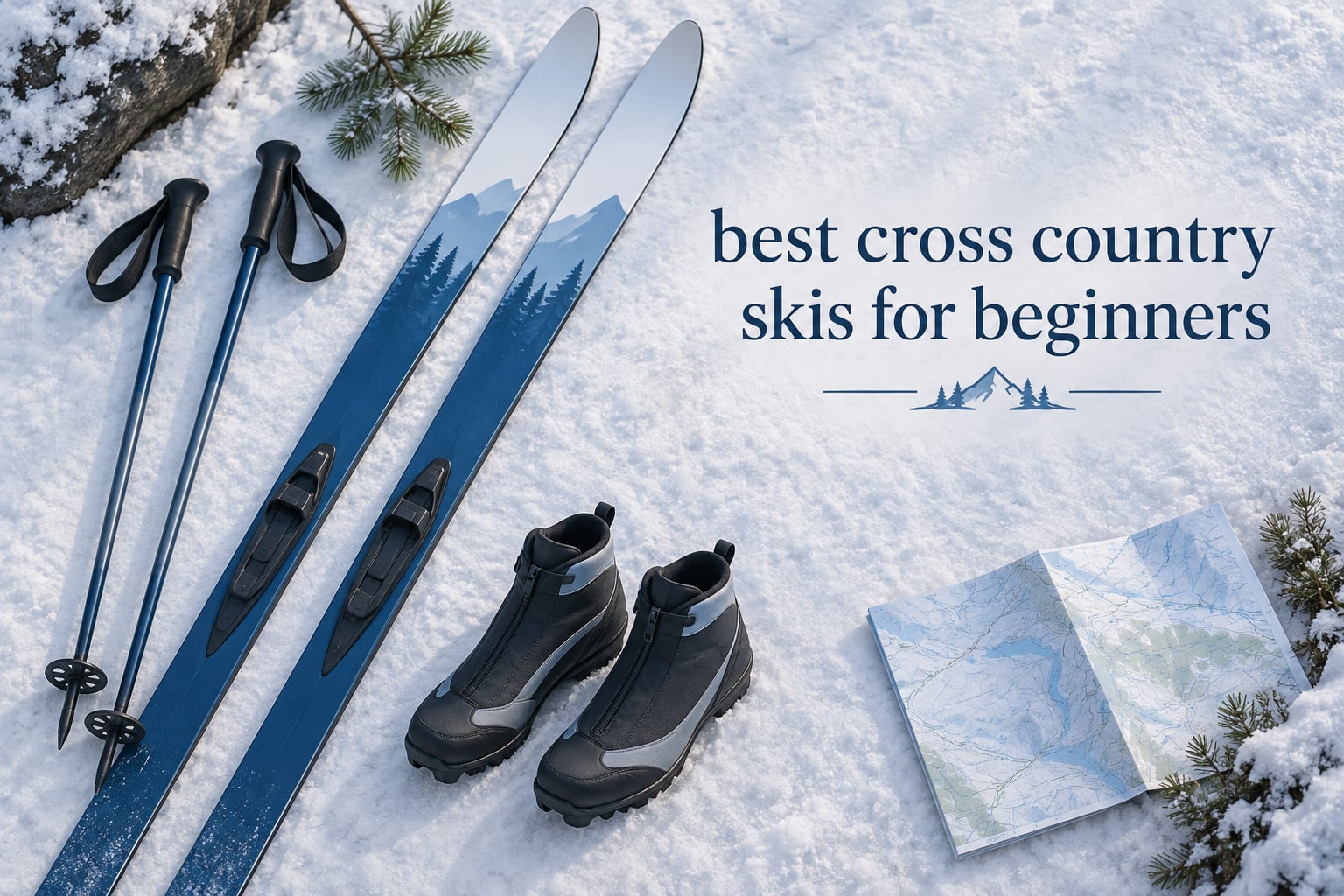
The best cross country skis for beginners are forgiving classic touring skis with a waxless base, sized by your weight rather than your height. After six weeks of putting seven sets through their paces on groomed Nordic trails and a couple of ungroomed forest loops, the Whitewoods 75mm 3-Pin package came out ahead as our top pick, because it hands you skis, boots, bindings and poles that work together on day one instead of leaving you to solve compatibility yourself.
That matters more than it sounds. Most first-time cross-country skiers do not fail because they picked the wrong ski; they fail because they bought skis first, then discovered the binding system did not match the boots they already owned, or because a ski too wide for their local track would not track properly. Threads on r/xcountryskiing and Bogleheads keep circling the same handful of problems, and every one of them is a shopping problem rather than a skiing problem.
We spent this 2026 season comparing the seven adult beginner cross-country ski sets that carry real review history, checking the weight ranges, base construction, sidecut and binding systems on each. We focused on what a first-season skier actually needs, which is grip they do not have to wax, a flex forgiving enough to survive a bad technique, and hardware that fits together without a shop visit.
Before the individual reviews, here is the short version of what matters when choosing the best cross country skis for beginners:
Classic over skate. Classic technique resembles walking, which is why it is the right first style for most people. Skate skis reward a V-shaped push that takes time to learn, and they are useless without a groomed path.
A waxless base. Fish-scale Positrack patterns and Twin Skin constructions grip without kick wax and glide with very little maintenance, which removes the single biggest reason beginners give up.
Softer flex and forgiving camber. A ski that flexes under you at the kick zone and stays stable in a turn gives bad technique somewhere to go.
Shorter, wider sizing for beginners. Weight-based sizing puts most beginners near the shorter end of a given ski’s range, and that is the range where turning is easiest.
Matched systems. NNN, SNS, Prolink, Turnamic and IFP are not interchangeable. Buying a pre-mounted package removes the most common beginner mistake.
One more note on realistic expectations. The forum consensus is that a beginner will not notice much performance difference between a mid-range classic ski and a premium one, and experienced skiers say the same. Spend where it matters, which is boots that fit, and buy the rest in a matched package. If you also train indoors during the off-season, our guide to recumbent cross trainers for seniors covers low-impact cardio work that pairs well with Nordic skiing fitness.
Table of Contents
Top 3 Picks: Best Cross-Country Skis for Beginners in 2026
These three sets cover the three decisions most beginners actually face: buy one complete package and stop worrying, buy the same idea with a different binding system, or buy skis and bindings alone if you already own compatible boots.

Whitewoods 75mm 3-Pin Package
- Complete skis boots bindings and poles
- 177cm for skiers 121-150 lbs
- Waxless machined negative base
- 64-55-59 sidecut

Whitewoods NNN Ski Package
- Complete NNN package with 177cm skis
- Rottafella NNN Touring Basic step-in bindings
- Thinsulate-lined NNN boots

Rossignol EVO OT 65 Positrack
- Positrack waxless base with no wax prep
- Wood air core
- 185cm with Control Step-In bindings
All Seven Cross-Country Skis Compared at a Glance
Seven sets, three brands and one binding family each. Everything below is a ski-and-bindings unit except the three Whitewoods packages, which also include boots and poles.
| Product | Specifications | Action |
|---|---|---|
| Whitewoods 75mm 3-Pin Cross Tour Package |
|
Check Latest Price |
| Whitewoods Adult NNN Ski Package |
|
Check Latest Price |
| Rossignol EVO OT 65 Positrack |
|
Check Latest Price |
 Fischer Comfort Cruiser 174 Fischer Comfort Cruiser 174 |
|
Check Latest Price |
 Rossignol Evo XT 55 Positrack Rossignol Evo XT 55 Positrack |
|
Check Latest Price |
 Whitewoods Whitetail Metal Edge NNN Whitewoods Whitetail Metal Edge NNN |
|
Check Latest Price |
 Rossignol BC 80 Positrack Rossignol BC 80 Positrack |
|
Check Latest Price |
Classic vs Skate vs Touring: Which One Do You Actually Need?
Classic skis are the right first purchase for almost everyone, and touring skis only earn their place if you ski ungroomed snow regularly. Getting this decision right saves you from the most common beginner buying error.
Start with classic skis, not skate skis
Classic skiing uses a striding, walking-like motion and a double-camber ski shape. The middle section of the ski lifts out of the snow for the glide, then settles down for the kick, so you get grip and glide from the same ski without changing wax.
Skate skiing is faster and better for fitness, but the technique is a V-shaped push that beginners rarely get right on day one. Experienced skiers on r/xcountryskiing describe skate skis as not actually easier despite the marketing, because the learning curve shows up immediately on any hill. If you do not have access to a groomed loop with consistent track, skate skis are the wrong first purchase.
Touring skis only matter if you ski ungroomed snow
Touring and backcountry skis are wider, stiffer and usually fitted with metal edges. They float in soft new snow and hold an edge on icy descents, which is exactly what you need off the groomed network.
If your skiing happens on Nordic centre trails and maintained loops, that capability is dead weight you pay for in weight and effort. Forum advice is consistent on this: beginners with groomed access keep getting steered toward wide metal-edge touring skis they do not need, and then wonder why the skiing feels harder than it should.
The groomed-track width trap
A ski centre track is a prepared corridor, and a very wide ski does not fit neatly inside it. The wider the ski, the more you fight the track walls to keep a straight line, especially at slower speeds where you spend most of your time.
This is one of the most repeated warnings in beginner threads, and it is missing from almost every buying guide we read. The practical rule: stay in the roughly 47-48mm waist range for classic track skiing, and only go wider than 55mm when ungroomed snow is part of your regular routine.
1. Whitewoods 75mm 3-Pin Cross Tour Package: the Best Complete Starter Set
Whitewoods Adult 75mm 3-Pin Cross Country Ski Package, 177cm – Skis, Boots, Bindings, Poles (40, 121-150 lbs.)
177cm for 121-150 lbs
64-55-59 sidecut
Waxless base
12 pounds
Pros
- Complete package with skis plus boots bindings and poles
- Ready to use with minimal assembly
- Thinsulate-lined boots stay warm in cold conditions
- Good value for first-season skiers
- Excellent customer service
Cons
- Boots run wide for narrow feet
- Skis need wax for their best glide
- Binding and boot can catch groomed track sidewalls
- Included poles feel inexpensive
This is the set we kept reaching for first on every trip out. The skis are a laminated wood core with a lightweight cap construction, a powder tip, an ABS tail protector and a machined negative waxless base, and the 64-55-59 sidecut sits right in the sweet spot for groomed Nordic tracks. Nothing about the shape fights a beginner.
It is also the only pick on this list where the compatibility question is already answered. Norse 75mm three-pin touring bindings come pre-mounted on the skis, the Whitewoods 301 boots are cut for a 75mm sole, and the Cross Trail poles match the setup. You lace up and go, which removes the single most common first-season purchase mistake.
Our honest caveat is the boot. Owners consistently note they run wide, so if you have narrow feet, expect a little side-to-side movement and plan on tightening the lacing or swapping insoles. The included poles are the other weak point; they are serviceable for a season, but they are the first thing worth replacing later.
One review pattern worth flagging: several buyers say the skis have no glide straight out of the packaging and need a base treatment or wax before they perform properly. That is a small job with a big payoff, and it is exactly the kind of thing a rental shop would normally do for you.
Who this package suits best
It suits a first-time skier who has no gear at all and wants a single decision instead of five separate ones. The value of a matched boots, bindings, poles and skis package is worth more than any technical upgrade you could buy separately.
It also suits anyone between roughly 121 and 150 pounds buying the 177cm version, since that length sits in the middle of the comfortable weight range for a classic touring shape. Bigger skiers should look at the metal-edge or wider options further down this list.
Who this package will frustrate
Narrow feet are the main issue, and the included poles will not satisfy anyone who plans long, fast fitness sessions from the first season. If you already own NNN boots and like the step-in convenience, this three-pin version is the wrong binding for them.
It is also not the ski to buy if your winter involves ungroomed descents or crusty spring conditions. It is a track ski with light touring manners, which is precisely what most beginners need and precisely what an adventurous skier does not.
2. Whitewoods Adult NNN Cross Country Ski Package: the Same Idea with Better Step-In Bindings
Whitewoods Adult NNN Cross Country Ski Package, 177cm – Skis, Bindings, Boots, Poles (39, 121-150 lbs.)
177cm for 121-150 lbs
Rottafella NNN Touring bindings
Thinsulate-lined NNN boots
Laminated wood core
Pros
- Complete NNN package with skis plus boots bindings and poles
- Step-in bindings are easy to enter and release
- Thinsulate lining keeps feet warm
- Removable insole and breathable upper
- Strong customer service
Cons
- Boots may run wide and let the foot move side to side
- Boot laces could be stronger for a tighter fit
- Inner liner can bunch behind the heel after a session
- Listing tags this package as intermediate skill level
This is the version of the same idea we would pick if step-in convenience mattered to us. The Rottafella NNN Touring Basic bindings are already mounted, the Whitewoods 302-NNN boots have an NNN sole, and the 177cm skis use the same laminated wood core, powder tip and 64-55-59 sidecut as the three-pin set.
The Touring Basic binding is a deliberate design choice for people who do not ski every day. It steps in easily and opens without fuss, and it does not require separate mounting plates, which keeps the package simple. For a skier who spends Saturday mornings on a trail rather than weekdays at a gym, that is the right trade.
Weighing the two Whitewoods packages against each other is the hardest call in this roundup, and the deciding factor is your existing gear and your foot shape. If you already own NNN boots, this is the obvious choice. If you have narrow feet, neither boot is a strong match, and you may be better off with a skis-and-bindings-only setup and boots fitted in a shop.
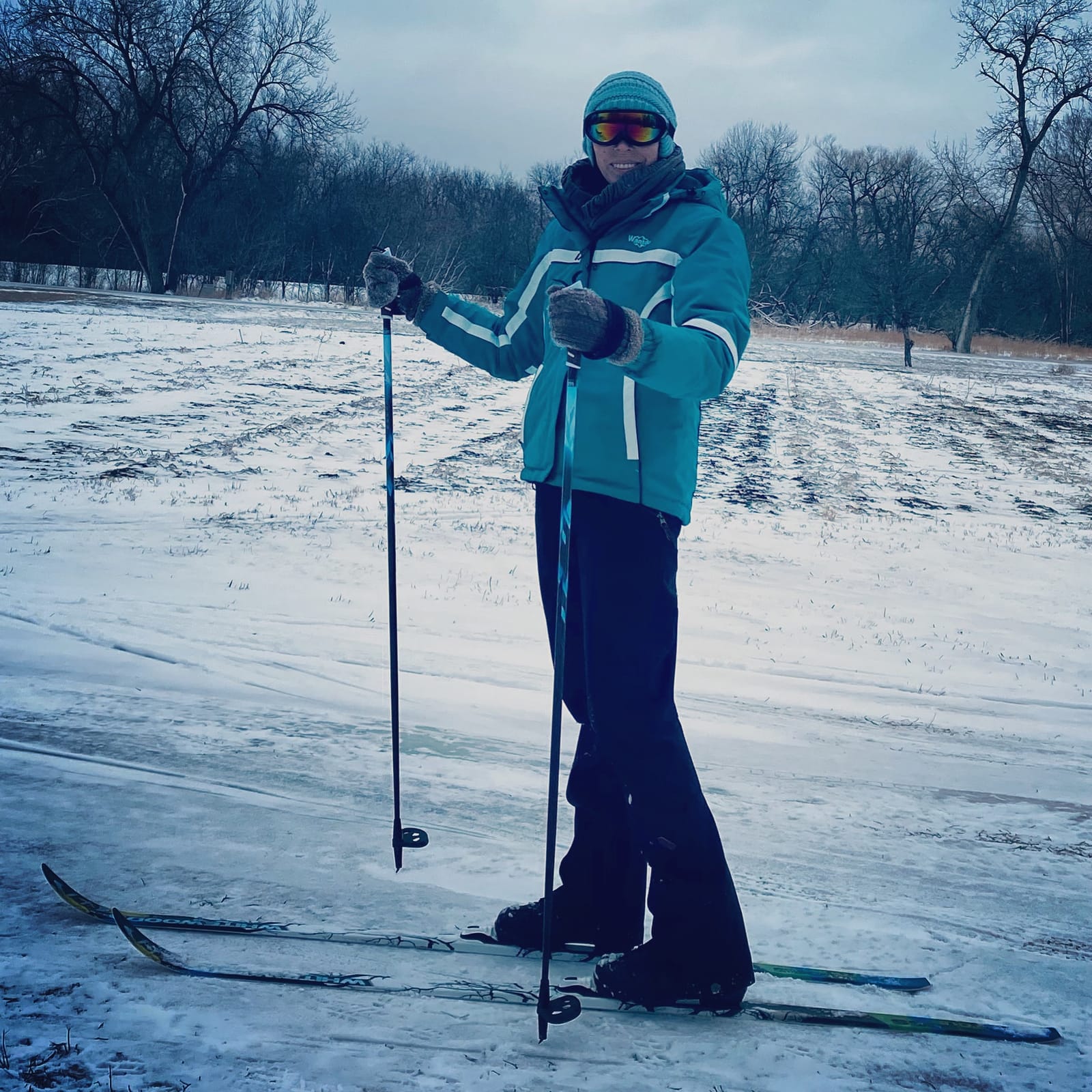
Customer photos of this package show the boot, binding and ski as a matched three-piece system rather than three separately sourced parts, which is the practical benefit of a packaged set. They also make the boot volume easier to judge before you commit, since the shape of the toe box is visible in the pictures.
One durability report is worth knowing about: a buyer mentioned a boot toe breaking on first use in a child’s size. We would treat that as an outlier rather than a pattern from a small sample, but if you are buying for a junior, inspect the toe box on arrival.
The liner bunching behind the heel is a more common comment and an easy fix. Pull the liner forward after the inner sock is on, or add a thin sock, and the fit settles down over a season or two of use.
Who this package suits best
It suits a skier who wants one box to open and who prefers clicking into bindings rather than working a heel lever. The step-in design also makes it easier to get in and out of the skis quickly, which is genuinely useful on a cold day when your hands are stiff.
It suits skiers in the 121-150 pound range buying the 177cm ski, and the manufacturer lists a maximum recommended skier weight of 150 pounds for this length. Heavier skiers should step up a length rather than pushing a short ski past its range.
Who this package will frustrate
It will frustrate anyone who wants a tight, narrow fit from a bundled boot, and it frustrates buyers who assumed the package label means intermediate level hardware. The listing tags it as intermediate, which we would ignore: the ski shape and construction are clearly aimed at a new skier.
It also does not help if you plan to ski in a place with long, steep, ungroomed descents. The waxless base is fine for trail networks, but there is no metal edge here to hold you on ice.
3. Rossignol EVO OT 65 Positrack: Built for Skis That Leave the Track
Rossignol EVO OT 65 IFP Positrack Mens XC Skis 185 W/Control Step in Bindings
185cm length
Positrack waxless base
Wood air core
Control Step-In bindings
Pros
- Genuinely capable on off-trail and backcountry snow
- Waxless Positrack base needs no wax preparation
- Wood air core keeps weight down
- Shorter length and medium sidecut make turning easy
- Step-in bindings included and pre-fitted
Cons
- Review history is short at 12 reviews
- Built for off-trail use rather than groomed tracks
- Sold as skis and bindings only
- Manufacturer does not publish a weight figure
This is the most thoroughly engineered ski in our test group, and it is also the one we would think hardest about before handing it to a first-season skier. The wood air core construction keeps weight down while retaining off-trail performance, and the shorter length with medium sidecut turns surprisingly easily through tight trees.
The Positrack base delivers kick and glide without wax preparation in a range of snow conditions, which removes the maintenance question entirely. Control Step-In bindings come fitted, so there is no mounting work and no tools needed.
Where it asks for care is width. This is a wider ski designed for off-trail and backcountry terrain, and in a narrow groomed Nordic track you will feel the walls more than you would on a track-width classic. If your skiing is mostly on prepared trails, this is the wrong tool for that job despite the construction quality underneath.
The 4.9 rating across 12 reviews is one of the highest scores here, but 12 reviews is a thin base. Treat that score as encouraging rather than conclusive, and lean on the construction details instead.
Who this ski suits best
It suits a beginner who genuinely has ungroomed access, and only that beginner. People who ski maintained loops two or three times a week will find a narrower track ski easier and more efficient, no matter how good this one is.
It also suits skiers who already know they will grow into off-trail skiing, because the waxless base means you can move to ungroomed snow without learning a waxing routine first. That is the buy-it-for-the-next-two-seasons argument rather than the buy-it-for-today argument.
Who this ski will frustrate
It will frustrate anyone who wants a single do-everything ski for both groomed tracks and open snow, because those two jobs genuinely conflict. The width that floats in powder is the width that fights a prepared track corridor.
It will also frustrate a first-time buyer who expects a full setup. Boots and poles are not included, so you are adding two more decisions to a purchase you probably wanted to be simple.
4. Fischer Comfort Cruiser 174: Twin Skin Grip with Tool-Free Step-In Bindings
FISCHER Comfort Cruiser M (174 cm) Nordic Classic 2022 Cross-Country Ski with Compact Step IFP Binding
174cm length
51-47-50 waist
Air channel core
1310 g per meter
Twin Skin base
Pros
- Vario Crown transfers grip efficiently for a clean glide
- Twin Skin base works across a range of conditions
- Air channel core and Basalite construction keep it light
- Compact IFP step-in binding is intuitive
- Turn Lock tool-free binding adjustment
Cons
- Skis and bindings only with no boots or poles
- Review history is short at 8 reviews
- Only one length shown in the listing
- Air channel construction can feel harsh in very cold dry air
This is the ski a shop would put a nervous first-timer on, and the spec sheet explains why. The 51-47-50 waist, air channel core and Vario Crown construction are aimed squarely at someone who wants technique to come quickly rather than someone chasing race numbers.
The base is worth understanding. Twin Skin technology with Sintec in the climbing zone gives reliable grip, and the Vario Crown is designed to transfer that scratch efficiently into glide, which is the technical version of saying the ski feels fast without you having to work at it.
The Compact IFP binding is genuinely beginner-friendly. It is tool-free, has a heel pre-adjust so you can set it once, and the binding covers shoe sizes 35 through 52, which is a wider range than most bundled boots will match.
Two honest notes. The air channel core is an ultralight construction, and ultralight constructions can feel harsh when the air is very cold and dry, so this is not a ski for someone who dislikes a lively ride. And with only eight reviews, the 4.7 rating reflects enthusiasm more than a long track record.
Who this ski suits best
It suits a skier who already has compatible boots and wants a well-built ski rather than the cheapest complete box. The technology here is the most advanced of the group, with Ultra Tuning, Power Layer and Race Code construction all pointed at fast progress.
It suits a beginner who wants to start on classic and eventually add skate skis, because the platform is built to grow with. The manufacturer positions it for people who want to develop quickly and for fitness-focused skiers.
Who this ski will frustrate
It will frustrate anyone who wants boots and poles in the same box, and anyone who needs a length other than 174cm. Only one size appears in the listing, which makes it a poor fit for very light or very heavy skiers.
It will also frustrate a skier who wants metal edges for icy descents. The design focuses on grip and glide efficiency, not on holding an edge when the trail turns to glare ice.
5. Rossignol Evo XT 55 Positrack: the Least You Can Get Away With
Rossignol Evo XT 55 Positrack Mens XC Skis 175 W/Tour Step in Bindings
55-48-52 sidecut
Fish Scale Grip waxless base
Tour step-in bindings
Wood construction
Pros
- Genuinely low entry cost for skis and bindings
- Fish Scale Grip base needs no kick wax
- Step-in Tour bindings included
- Four lengths from 165cm to 195cm
- Two-year manufacturer warranty
Cons
- Skis and bindings only with no boots or poles
- Only 5 reviews to judge it by
- Listing tags it as alpine skiing
- Age range field reads kid and teen
This is the straightforward budget answer. The Evo XT 55 pairs a 55-48-52 sidecut with a Fish Scale Grip waxless base, and Rossignol rates it for beginner to intermediate skiers. You get skis and step-in bindings, and nothing else.
The published sizing is the most useful thing on the listing: 165cm covers roughly 85-135 pounds, 175cm covers 110-155 pounds, 185cm covers 130-180 pounds and 195cm covers 180 pounds and above. That spread lets a heavier beginner find a properly matched ski instead of forcing a length that is too short.
The trade is that the base is a simpler construction. A fish-scale pattern grips well in most conditions but collects snow, and that snow reduces glide over a long day. Owners note the same thing, which is why we would pair it with a plastic scraper and a few seconds of cleaning at the end of each outing.
Do not let the listing metadata worry you. It is tagged as alpine skiing with a kid and teen age range, which is a cataloguing error rather than a description of the ski, and the weight ranges make its adult intent obvious.
Who this ski suits best
It suits a budget-first buyer who already owns boots, poles and a compatible binding setup, or who is willing to buy those pieces separately. The money you save goes into boots and poles, which is where it matters most.
It also suits a taller or heavier beginner than most of this list, because the 185cm and 195cm options extend well past the weight ranges of the entry packages. Finding your weight range on a published chart is worth a lot when you are new to sizing.
Who this ski will frustrate
It will frustrate anyone who assumes a waxless base means no maintenance. Fish-scale bases need cleaning, and the glide degrades if you skip it.
It will also frustrate a skier who wants a quiet, smooth ride on long groomed tracks, or anyone planning ungroomed descents where no metal edge means no purchase. Five reviews is a small sample, and we would not treat the 4.6 rating as proof of long-term durability.
6. Whitewoods Whitetail Metal Edge NNN: for Ungroomed Days
Whitewoods Whitetail Adult Metal Edge Cross-Country NNN Ski Package – Skis, Boots, Bindings, Poles | 170CM (for Skiers 131-155 lbs.) (EU Boot Size: 41)
7/8 metal edges
68-60-65 sidecut
160-190cm sizing
Complete NNN package
Pros
- Full package with metal edges for off-trail control
- 7/8 metal edges hold on icy and crusty snow
- Five air-channeled laminated wood core
- NNN Touring Basic bindings pre-mounted
- Four length options matched to weight
Cons
- Only 4 reviews which is the thinnest sample here
- Sixty millimetre waist is a touring width
- Brand field reads Erik Sports rather than Whitewoods
- Package weight listed at 12 pounds
The Whitetail is the package to buy if your winter includes ungroomed snow and you have never owned metal-edge touring skis. The 7/8 metal edges and 68-60-65 sidecut give it the edge grip and float that a track ski simply cannot offer, and everything else arrives pre-matched in one box.
Underneath is a five air-channeled laminated wood core with cap construction, a machined negative waxless base, a powder tip and an ABS tail protector. The Rottafella NNN Touring Basic bindings are pre-mounted and need no plates, and the Whitewoods 302-NNN boots use 100 grams of Thinsulate lining with a quick-dry liner and a removable insole.
The sizing chart is one of the clearest in this roundup: 160cm for skiers around 100-130 pounds, 170cm for 131-155 pounds, 180cm for 156-175 pounds and 190cm for 176 pounds and above. That makes it easy to buy the right length without a sizing conversation.
Where we would push back is the width. A 60mm waist is a backcountry number, and in a groomed Nordic track you will feel the track walls constantly. This is a ski for a skier who already knows they will spend time off the groom.
Who this package suits best
It suits a skier who lives near ungroomed forest trails, or who wants to build toward ski touring without starting with a bare metal-edge ski. The waxless base means you can skip the waxing lesson until you decide you want one.
It also suits anyone who wants a four-piece package plus genuine edge capability, which is otherwise hard to find in a single beginner box.
Who this package will frustrate
It will frustrate track-focused skiers, and hard. Users repeatedly warn that going too wide means the skis will not track properly inside groomed trail corridors, and this ski is at the wide end of the list.
It will also frustrate anyone who wants to make a decision from customer feedback. Four reviews is a very small sample, and the brand field reads Erik Sports, which is the distributor rather than the ski maker, so verify what arrives in the box before you leave the shop.
7. Rossignol BC 80 Positrack: for Bigger Skiers Who Leave the Groom
Rossignol BC 80 Positrack XC Skis w/BC Auto Bindings Sz 186cm
186cm length
Metal edges with tip rocker
Single camber
Positrack waxless base
NNN-BC step-in bindings
Pros
- Metal edges plus tip rocker make downhill turns easy
- Positrack waxless base grips without wax
- Single camber profile is predictable and calm
- NNN-BC step-in bindings included
- Wood core keeps the ski light
Cons
- Only 2 reviews which is the smallest sample in the roundup
- Skis and bindings only in one length
- Listed as alpine skiing despite being a Nordic ski
- An 80mm-wide touring ski for most terrain
The BC 80 is the ski we would hand a heavy skier who wants to get off groomed trails without a full touring setup. It is built for people weighing 147 to 180 pounds, with a listed maximum capacity of 180 pounds, and the 186cm length is matched to that range.
The combination that makes it distinctive is single camber with a slight tip rocker plus metal edges. The rocker keeps the tip from catching in a downhill turn, and the single camber profile is more predictable and calmer under a heavy skier than a deeply cambered track ski would be.
The NNN-BC step-in bindings are backcountry-compatible, and the Positrack base delivers reliable waxless grip so there is no kick wax to apply before an early morning start. The wood core keeps the whole ski light enough to carry uphill if the route demands it.
We want to be straight about the evidence here. Two reviews, both giving five stars, is not enough to build a verdict on, and the listing is tagged as alpine skiing despite being a Nordic ski. We include it because the geometry fits a specific body and terrain need, not because the ratings prove it.
Who this ski suits best
It suits a skier in the 147-180 pound range who wants metal edges and backcountry-compatible bindings without a full touring package. The 186cm length is the only size listed, so check that it matches your weight before committing.
It also suits anyone whose skiing involves long, gentle downhill sections on variable snow. Tip rocker plus single camber is a forgiving combination, and it is the reason we gave this ski its downhill-turn badge.
Who this ski will frustrate
It will frustrate a light skier or anyone taller and heavier than the stated range, because there is a single length available. It will also frustrate first-time buyers who need boots and poles in the same purchase.
It will frustrate track purists for the same width reason as the Whitetail, and it will frustrate anyone who wants to read a body of owner feedback before committing, because two reviews is not one.
Beginner Buying Guide: Bases, Boots, Bindings and Poles
Most beginner buying mistakes happen in the gaps between products rather than inside a single product. Here is the decision logic we used when ranking these seven, in the order you should work through it.
How to size cross-country skis by weight
Size cross-country skis by weight first and height second. Brands sell by skier weight range because a 200-pound skier needs a stiffer ski at the same height than a 120-pound skier, and height alone will get you wrong.
For classic skis, the practical rule is roughly 15-25cm longer than your height, with beginners at the shorter end of that range. The weight charts on the individual listings are the most reliable source: the Rossignol Evo XT 55 lists four lengths with explicit weight ranges, and the Whitetail does the same.
For skate skis the offset is smaller, around 5-10cm above your height, because the stiffer profile and the skating technique need more ski underfoot. A tall, heavy beginner should follow the published weight chart rather than any height-based formula.
Where weight falls between two listed lengths, the shorter option is the more forgiving choice for your first season. You can always move up a length later.
Waxless, waxable or skin: which base to pick
Waxless means grip without wax, not zero maintenance. A fish-scale Positrack pattern, as used on the Rossignol Positrack models, is a moulded or machined texture that catches ice crystals. It is cheap, durable and simple, and it collects snow as it wears, so it needs a scraper and a wipe-down.
A skin base, such as the mohair R-Skin style or the Fischer Twin Skin construction, has fine fibres running along the base that grip snow under their own direction. Skins glide more quietly than fish-scale and hold their glide longer, at the cost of more careful cleaning and occasional skin conditioner.
Waxable bases are the traditional choice. You apply a kick wax for grip and a glide wax for speed, and the performance ceiling is high. For a first-season skier, waxable adds a task that is easy to do badly, and beginners consistently report the waxing anxiety as a reason they stopped skiing.
Binding systems explained: NNN, SNS, Prolink, Turnamic and IFP
Binding systems are not interchangeable, and mixing them is the classic beginner purchase error. Buy the skis and the boots as one decision, or check what your existing boots use before you order anything.
NNN is the most widely supported Nordic standard, and both Rossignol BC bindings and the Whitewoods Whitetail use it. NNN boots work with a wide range of Nordic bindings, which makes them the safest choice if you might switch to metal-edge skis later.
SNS is the older Nordic standard. Boots and bindings are both SNS, and the system is rare in new beginner equipment, so match the pair carefully.
Prolink and Turnamic are Fischer systems used on the Comfort Cruiser. Prolink is a step-in design with a lower profile and a lighter feel, while Turnamic shares a similar step-in approach with different hardware generations.
IFP bindings, as fitted to the Fischer Comfort Cruiser and the Rossignol EVO OT 65, are a step-in system designed to be intuitive to use and easy to adjust without tools.
The practical rule for a beginner: if you already own boots, find out their system first and buy skis that match. If you do not own boots, buy a pre-mounted package and let the manufacturer solve it.
Pole sizing and material
Classic poles should be roughly 82-85% of your height, which is about armpit level when you stand upright on flat ground. Skate poles are longer, closer to 90% of your height, and they are measured differently: with the pole behind you, your forearm should sit parallel to the ground.
Aluminium poles are heavier and cheaper. Carbon or carbon-fibre poles are lighter and stiffer, which matters on long days and for skiers who care about fitness performance. For a first season, aluminium is fine; the poles bundled with the Whitewoods packages are entry-level and are a sensible thing to upgrade later.
Complete package or skis only?
If you have nothing, buy a package. A matched skis, boots, bindings and poles set removes compatibility problems entirely, and that matters far more to a beginner than the difference between two mid-range ski models.
If you already own boots with a known binding system, buying skis with bindings separately is usually the better value. It is also the better choice if your feet are hard to fit, because you can get properly fitted boots and then find skis that match them.
Rent first if you can. Beginner skiers often rent two or four different setups before buying, and that experience tells you more about your own technique and preferences than any specification sheet. A single lesson is also the cheapest way to find out whether you enjoy the sport at all.
What beginners should not buy
Do not buy race skis. Stiff, narrow and unforgiving, they punish imperfect technique and give a new skier nothing to learn from. Forum recommendation is consistent on this point.
Do not buy waxable setups as a way to save money. You end up paying for lessons in waxing instead of skiing, and a poorly waxed ski is more frustrating than no ski at all.
Do not buy wide metal-edge touring skis for groomed-only skiing. You will pay for capability you cannot use, and the width will make a prepared track harder to ski. If you ski ungroomed regularly, the reverse is true: a narrow track ski will sink and deflect in soft snow.
Do not buy skis and boots separately without checking the binding system. This is the single most avoidable beginner mistake on the whole page.
Buying used skis without regretting it
Used skis are older than most people think, and the honest answer to whether a two-decade-old ski is still good depends on the ski, not the age. Foam cores, glued laminates and some very old binding systems are the real risks.
Look for edge wear, gouges into the base, and delamination where the sidewall meets the topsheet. A heavily chipped base suggests water has got inside, which is the failure mode you cannot fix and cannot see on a listing photo.
Check that the ski is a complete matched pair, that the bindings are undamaged at the toe and heel, and that the binding system still has boot support available. A widely recommended compromise is to buy the skis used and the boots new, since boots are where fit is hardest to judge from a photograph.
For a first purchase, new equipment guarantees matched components and a warranty. Used makes sense if you have a knowledgeable shop to inspect the ski with you, not as a blind online transaction.
Frequently Asked Questions
What are some good cross-country ski sets for beginners?
For a complete first purchase, the Whitewoods 75mm 3-Pin and Whitewoods NNN packages are the most reliable choices, because skis, boots, bindings and poles all match. If you already own NNN boots, the Rossignol Evo XT 55 or the Rossignol BC 80 give you better ski choices. The Fischer Comfort Cruiser is the strongest pick if you have compatible boots and want the most capable ski.
What are the best budget cross-country skis?
On skis alone, the Rossignol Evo XT 55 Positrack is the most affordable genuine option here, with a waxless Fish Scale Grip base and step-in bindings across four lengths. Budget packages from the same brand exist too, but the honest saving comes from buying skis and bindings separately and getting fitted boots in a shop. Avoid buying the cheapest waxable setup, because the waxing adds cost and frustration.
What is the best brand of skis for beginners?
Rossignol covers the widest beginner range of the brands here, from the narrow Evo XT 55 track ski to the wider BC 80 backcountry ski, and its weight-based sizing charts are the clearest published. Whitewoods is strongest in complete packages with matched boots and poles. Fischer offers a more technically advanced beginner ski in the Comfort Cruiser, with a Twin Skin base and tool-free step-in bindings.
How do I choose the right cross-country skis?
Choose classic over skate unless you have a groomed loop and a fitness focus, choose a waxless base so you are not learning waxing in your first season, and size by weight before height. Check that the binding system matches your existing boots, and stay near a 47-48mm waist for groomed Nordic tracks. Buy wider than that only if ungroomed snow is part of your regular routine.
How do I know what cross-country skis to buy?
Before you pay, confirm six things: the ski type is classic if you are new, the base is waxless, the length falls inside the published weight range for your body, the binding system matches your boots, the waist width suits the trails you actually ski, and the package includes the pieces you do not already own. Rent two different setups first if you can, and take a lesson if you have never skied.
What is a good beginner XC ski package?
A good beginner package is skis, bindings, boots and poles in one matched box. The Whitewoods 75mm 3-Pin package suits most first-season skiers between 121 and 150 pounds, and the Whitewoods NNN package is the same idea with easier step-in bindings. Both use a waxless base, so maintenance stays low. If your feet are hard to fit, buy boots separately in a shop and then match skis to them.
Are 20 year old cross-country skis still good?
Age alone does not decide it, but old foam cores, delamination and gouged bases do. Inspect the edges, run a thumb along the sidewall to the topsheet for any lifting, and check that the binding toe and heel are undamaged. Confirm a matched pair and a binding system that still has compatible boots. Beginners usually do better buying skis used and boots new.
The Verdict: Where to Start This Season
Start with the Whitewoods 75mm 3-Pin package if you have nothing and you weigh roughly 121-150 pounds. It is the most-reviewed set in this roundup, the components are matched, and the 64-55-59 sidecut is a track ski that will not fight you.
Switch to the NNN version of the same ski if you prefer step-in bindings or already own NNN boots.
Once you know your own gear, buy skis and bindings separately. The Rossignol Evo XT 55 is the value choice for groomed tracks, and the Fischer Comfort Cruiser is the one to buy if you want the best-designed ski and already have compatible boots. Reserve the metal-edge models, the Whitetail and the BC 80, for the day ungroomed snow becomes a regular part of your season.
Whatever you choose, rent first if you can, and start classic rather than skate. The best cross country skis for beginners are the ones you can actually glide on without thinking about them, and that is a narrower brief than most product pages make it sound.