
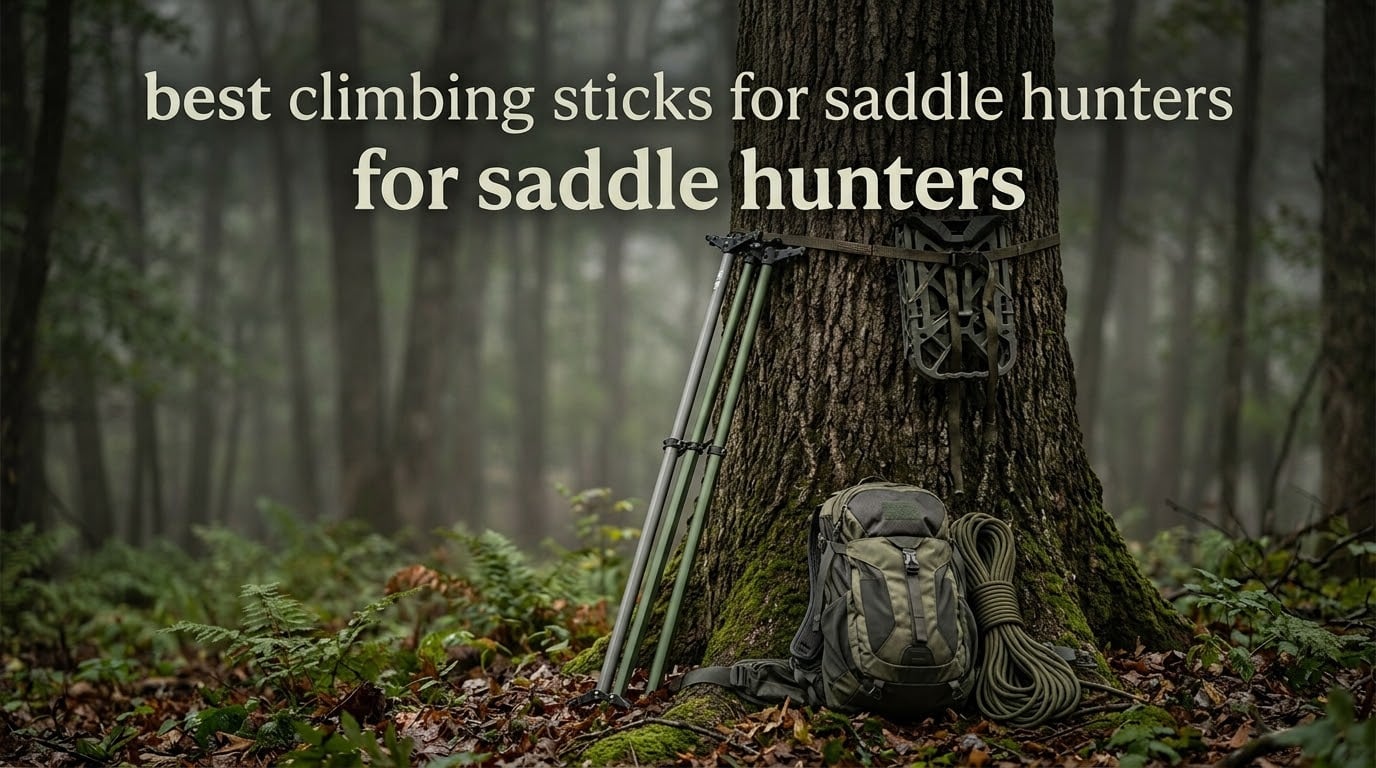
Climbing sticks are the reason a solo saddle hunter can cover miles of public land in a day. A hang-on stand needs a truck, a ladder needs two hands and a flat spot, and a rope strand leaves you on the ground where the wind finds you. Sticks go on your back, lean into any tree you meet, and put you at eye level in under two minutes.
We spent 2026 season pulling specs, reading owner reviews, and weighing what actually matters when the treeline is three hours deep and you are carrying everything else yourself. What follows are the best climbing sticks for saddle hunting, ranked by the criteria that decide real hunts: weight, how solidly the stick bites bark, standoff clearance, and whether the whole rig packs down quietly.
Before the list, one honest note. There is no universal best stick, and anyone who tells you otherwise is selling you something. A hunter who drives to mature timber every morning has different needs than a hunter hauling a full saddle setup across a mountain. The right stick is the one whose compromises you can live with for a full season. The hunting backpacks for elk hunters we tested carry some of the same weight logic, and it applies here.
Table of Contents
What Are Climbing Sticks, and Why Saddle Hunters Use Them?
Climbing sticks are short aluminum or steel sections with molded steps and a tether or strap, used to climb a tree to a standing position without a ladder, a ladder stick, or a ground-level stand. Each stick wraps around the trunk at the top, leans out so the teeth bite the bark, and supports your weight. You clip in, step up, attach the next stick above, and repeat until the last stick puts you where you need to be.
The vocabulary matters once you start comparing models. The step is what you stand on. The riser is the vertical section that holds the step away from the trunk. Standoff distance is how far your boot sits from the bark, and it is the number that decides whether you can climb comfortably in a puffy jacket. The tether is the strap, rope, or cam that holds the top of the stick to the tree. Tree bite describes how well the toothed end grips bark under load, and it is the single most important safety criterion in this category.
An aider is an add-on step that bolts or straps to a stick so one stick reaches further, which is how most one-sticking setups work. When someone says they one-stick, they mean a single stick plus an aider, climbed in stages, carrying one stick instead of three or four.
Saddle hunters use sticks because they are the lightest, quietest, and most packable way to gain height. Setup produces almost no ground scent, sections stack into a pack, and you can move between trees all day. If you want the same thinking applied to glassing and shooting, our spotting scope guide for long-range hunters covers the matching tradeoffs.
Top 3 Picks: Best Climbing Sticks for Saddle Hunters in 2026
These three cover the most ground for the widest range of hunters. The Hawk Helium is the all-round answer, the XOP X2 is the ultralight build, and the Muddy Pro is the proven workhorse.

Hawk Helium 20 Inch Climbing Sticks
- 2.5 lbs per stick
- Bark-gripping teeth
- Silent Lock nesting
- 300 lb rating

XOP X2 Double Step Sticks
- 26 oz per stick
- 5 inch stand-off
- 350 lb rating
- Integrated aider points

Muddy Pro Sticks Rope Cam 4-Pack
- Rope cam attachment
- 20 inch sections
- 300 lb rating
- Fits 9 inch trees up
Best Climbing Sticks for Saddle Hunting at a Glance
There is no single best climbing stick for saddle hunting. The Hawk Helium wins on overall value and rating depth, the XOP X2 wins on weight per stick, the Muddy Pro wins on proven durability, and the Guide Gear steel sets win when you are not walking far. Match the stick to your weight budget, your tree size, and your standoff needs rather than to a brand name.
| Product | Specifications | Action |
|---|---|---|
| Hawk Helium 20 Inch Climbing Sticks 4-Pack |
|
Check Latest Price |
| XOP X2 Double Step Climbing Sticks 4-Pack |
|
Check Latest Price |
| Muddy Pro Climbing Sticks Rope Cam 4-Pack |
|
Check Latest Price |
 XOP 34 Inch Aluminum Climbing Sticks 3-Pack XOP 34 Inch Aluminum Climbing Sticks 3-Pack |
|
Check Latest Price |
 Muddy Stagger Step 31 Inch Ladder Sections Muddy Stagger Step 31 Inch Ladder Sections |
|
Check Latest Price |
 Guide Gear Quick Tree Climbing Sticks 3-Pack Guide Gear Quick Tree Climbing Sticks 3-Pack |
|
Check Latest Price |
 Big Game Quick-Stick 20 Foot Climbing System Big Game Quick-Stick 20 Foot Climbing System |
|
Check Latest Price |
 Guide Gear 20 Foot Rapid Climbing Sticks 4-Pack Guide Gear 20 Foot Rapid Climbing Sticks 4-Pack |
|
Check Latest Price |
 Tomaki Lightweight Aluminum Climbing Sticks 4-Pack Tomaki Lightweight Aluminum Climbing Sticks 4-Pack |
|
Check Latest Price |
 Sebnux Aluminum Climbing Sticks Folding Steps 4-Pack Sebnux Aluminum Climbing Sticks Folding Steps 4-Pack |
|
Check Latest Price |
1. Hawk Helium 20 Inch Aluminum Climbing Sticks (4-Pack)
Hawk Lightweight Non-Slip Aluminum Helium Climbing Sticks, 4-Pack
Aluminum
20 inch extended
2.5 lbs per stick
300 lb per stick
Pros
- Bark-gripping teeth hold position quietly
- 2.5 lbs per stick suits mobile hunts
- Silent Lock suction cups nest the set for quiet carry
- Versa Button strap system sets and strips fast
Cons
- Suction-cup nesting heads can be very hard to separate when new
- Supplied strap is thin and stiff in cold hands
- Step can occasionally loosen upward on awkward trees
The Hawk Helium is the stick I keep coming back to, and it is the one I hand people who ask for a single recommendation. At 2.5 pounds per stick, a four-pack is one of the lightest complete saddle climbing sets you can carry, and with 985 reviews averaging 4.6 it is also the most proven design in this group. The 20-inch extended length with fold-up steps means each section packs flat rather than projecting.
Setup is genuinely quick. The strap runs around the trunk, the teeth bite, and you lean out. Owners report roughly 60 days in trees across a season with no bent steps and no kick-outs, which is a durability record that a lot of lighter designs cannot match.
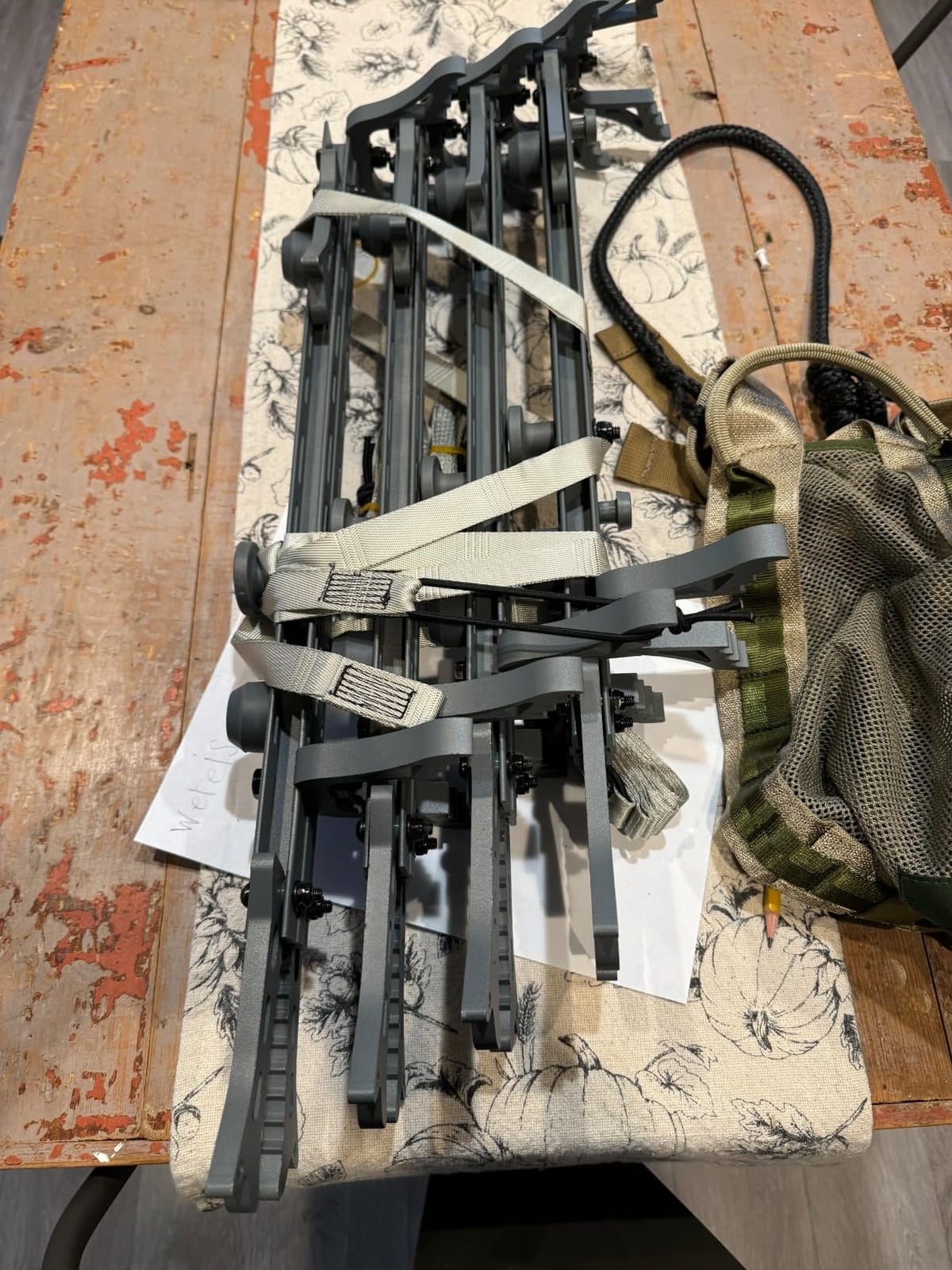
Two complaints come up repeatedly and neither is a safety issue. The Silent Lock suction cups that nest the sticks together can be close to impossible to separate when the set is new, and the mounts have been reported to tear. The supplied strap is also thin enough to be annoying with frozen fingers.
The more meaningful drawback is situational. The rope-and-strap attachment is harder to lock onto a leaning or awkward trunk than a strap-style stick, and the step can occasionally loosen upward once weight is on it. Test the lock under load before you trust it at height, and if your hunting country is full of crooked trees, look at the staggered ladder sections further down this list.
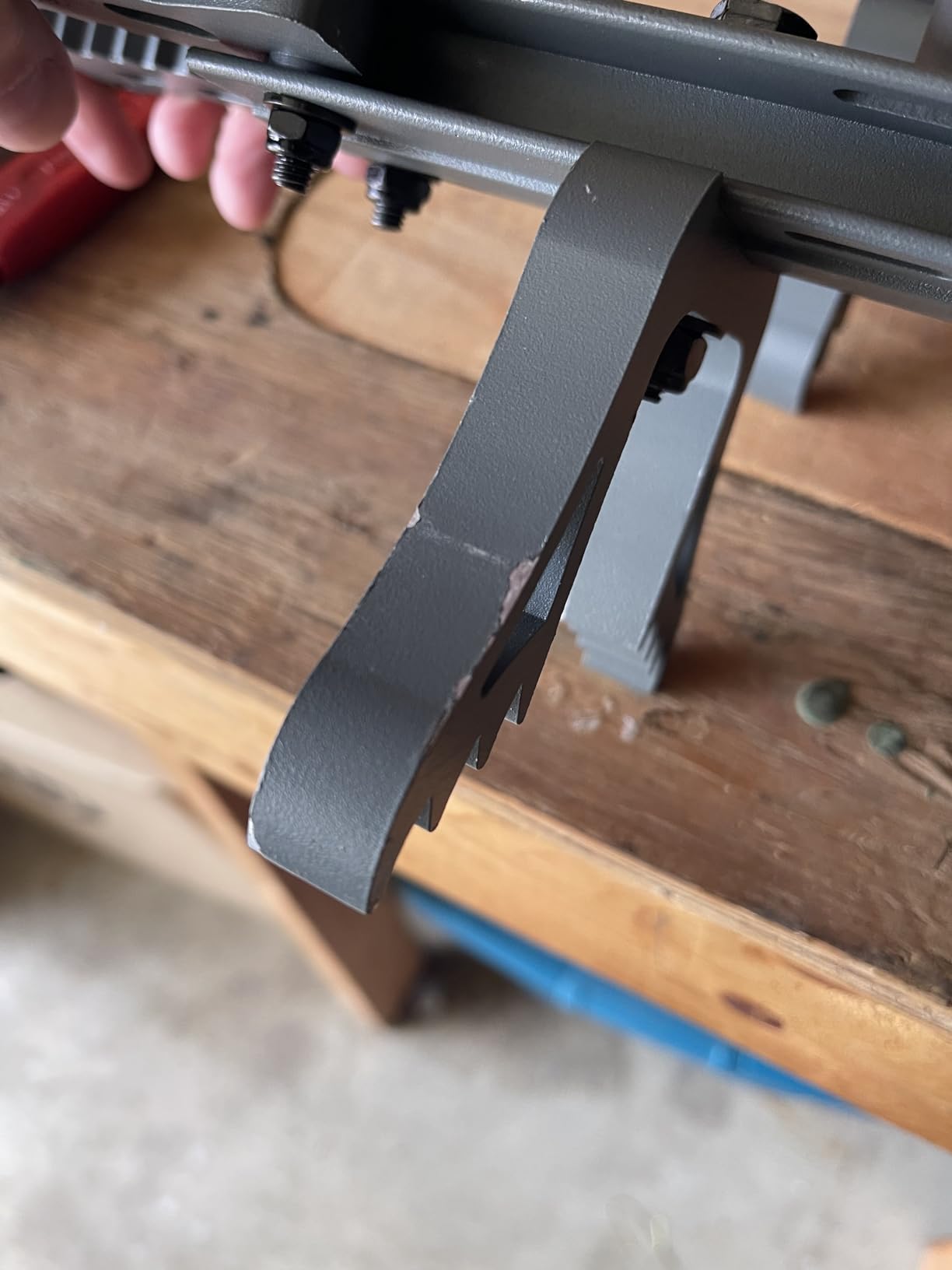
How the Hawk Helium handles weight and packability
At 2.5 pounds per stick, four sticks add 10 pounds to your kit, and the suction-cup nesting means they ride against each other with no loose straps flapping. If you are building a full saddle rig, our backpack testing covers how to pack that kind of load without it shifting on the walk in.
The 300-pound per-stick rating is the industry standard rather than a standout figure, and it is more than enough for any realistic hunter plus gear. Section length is the deciding factor for you: 20 inches is a compact general-purpose size that handles most mature trees, though it means more sticks than a 34-inch set for the same height.
Who should skip the Hawk Helium
Skip it if you hunt in full winter layers and want maximum standoff, or if you regularly work leaning trees and want the simplest possible lock. The step-and-tether layout is the classic design, which means it is not the quietest on hard bark compared with designs that use TPU strap points.
Also skip it if you only need to reach 10 or 12 feet. Four 20-inch sticks overshoot that, and two would do the job with a much lighter pack. Our stick-count section below works out the math for your actual tree height.
2. XOP X2 Double Step Climbing Sticks (4-Pack)
XOP X2 Hunting Climbing Steps – Set of 4, Double Step Climbing Sticks for Hunting (2025 Tan/Grey 4 PK)
7075 aluminum
26 oz per stick
5 inch stand-off
350 lb rating
Pros
- 26 oz per stick is among the lightest builds available
- 5 inch V-bracket stand-off gives real boot clearance
- Slide Lock stacks sticks without a separate strap
- Integrated aider attachment points for one-sticking setups
Cons
- Highest price point in this group
- 17 inch step-to-step means more sticks for tall stands
- Anodized finish still shows wear after heavy seasons
The XOP X2 is the lightest serious saddle stick in this roundup, at 26 ounces per stick in 7075 aluminum. It is also the highest-rated product here, with 4.7 across 236 reviews, and it ranks near the top of its category in sales, which tells you both buyers and reviewers like it.
The 5-inch stand-off with a V-bracket is the feature that sets it apart for saddle hunting specifically. That is real clearance between your boot and the trunk, which matters enormously when you are sitting in a harness with a saddle hanging below you and winter gear adding bulk everywhere.
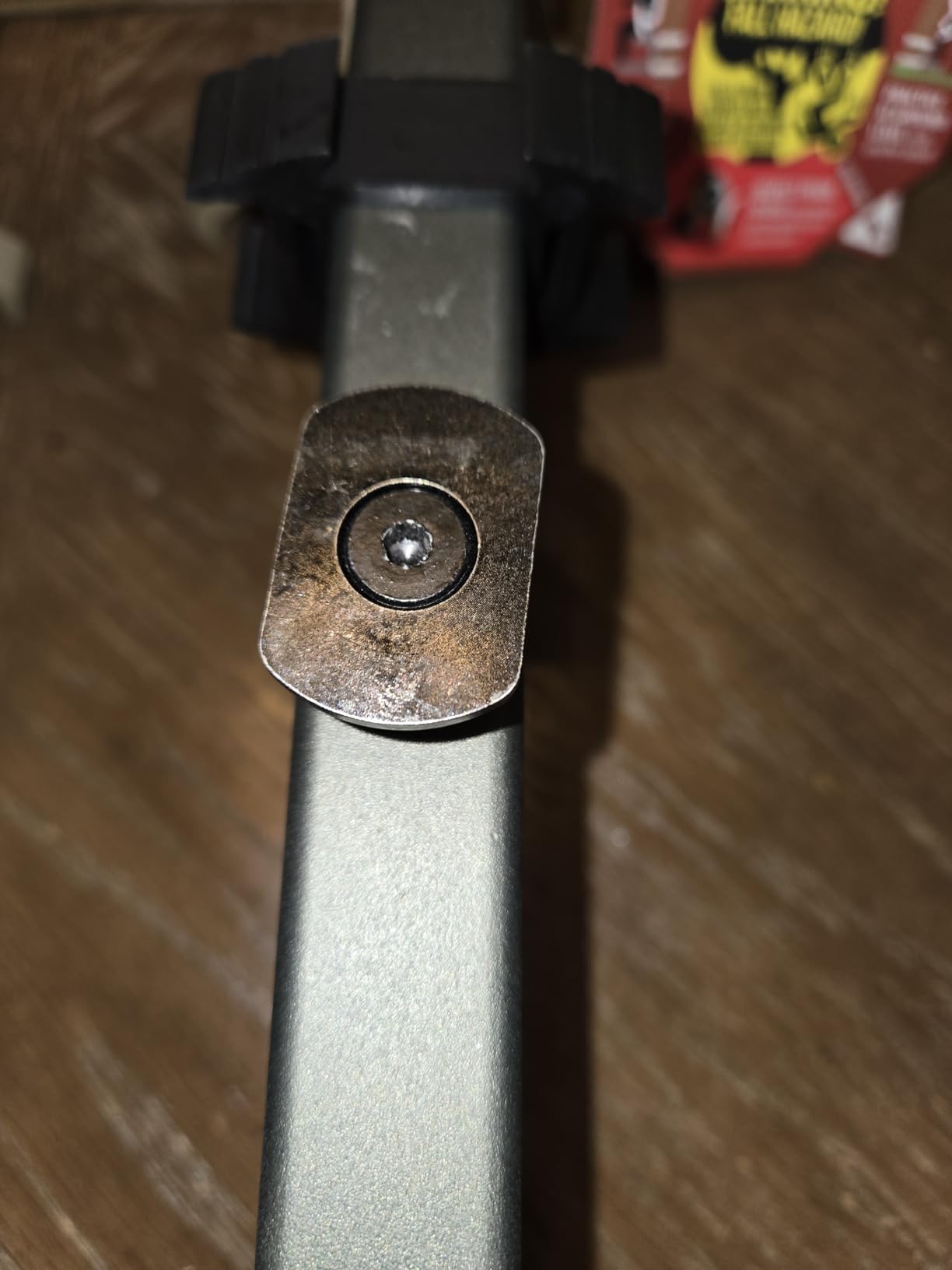
Step-to-step spacing is 17 inches, step width is 10 inches, and the sticks fit trees from 6 to 23 inches in diameter. The Slide Lock system locks the sticks together stacked or side by side, and the cast components carry a lifetime warranty, which is unusual at this level.
The honest drawback is reach combined with cost. A 17-inch step-to-step and a 12-foot safe climbing height mean you need more sticks than a long-section set to cover the same tree, and the anodized finish, while abrasion-resistant, still shows its age after several seasons of bark contact. Integrated aider attachment points are the quiet win here, letting you run a one-sticking configuration off the same stick.
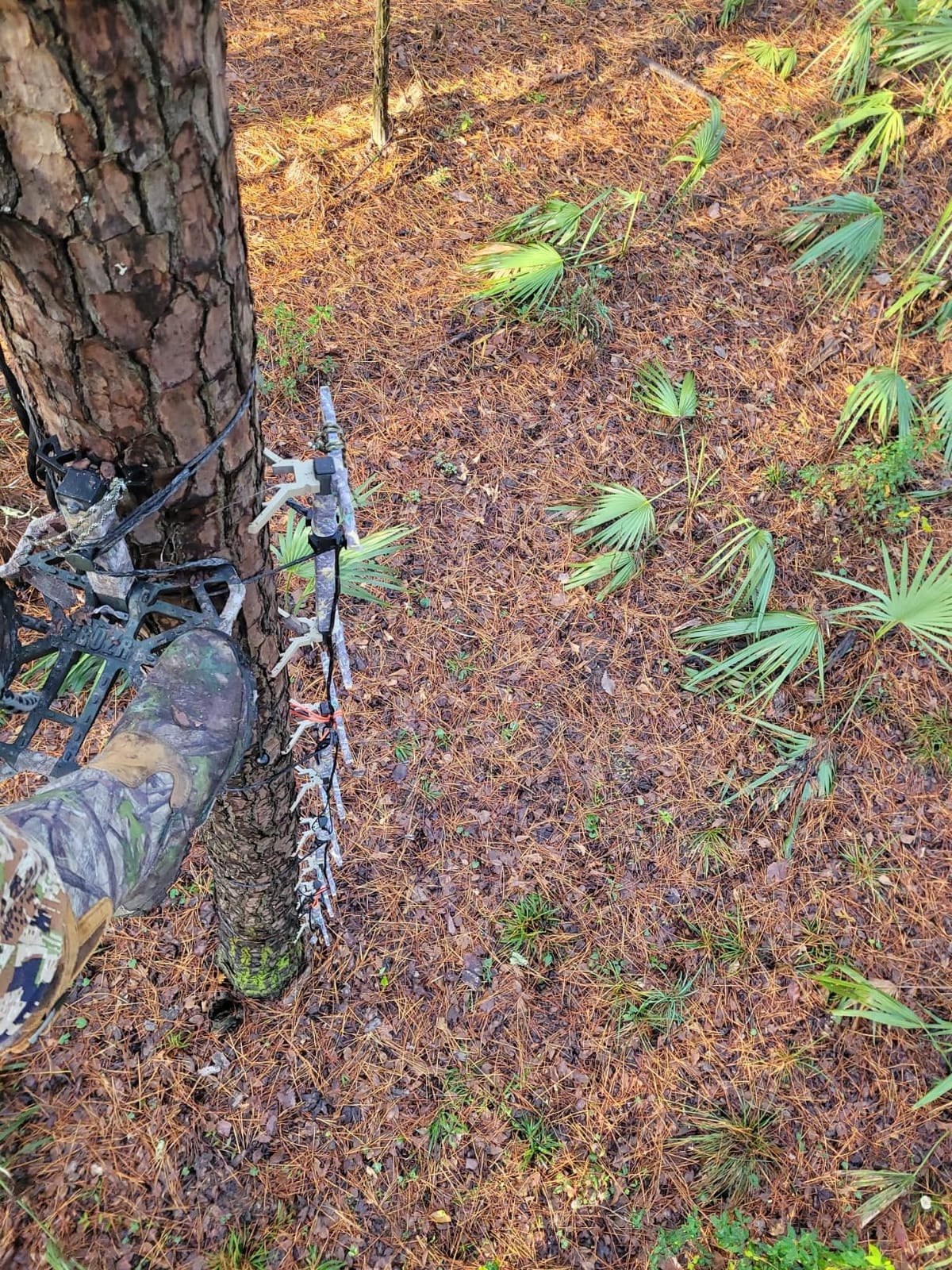
Why the XOP X2 fits cold-weather hunting
The 5-inch stand-off is the number to pay attention to if you hunt in November or December. Riders in northern states report that longer sticks become unwieldy once you add a puffy jacket, a harness, and a saddle, because your knees and belly crowd the trunk. More clearance solves it.
At 26 ounces per stick, a four-pack is roughly 7 pounds, which makes this the set to choose if your walking distance is measured in miles rather than hundreds of yards. The 10-inch step width also gives a broader footing surface than narrower sticks, which helps on wet or muddy boots.
Who should skip the XOP X2
Skip it if your hunting country is open-grown timber with big trees, because the 12-foot safe climbing height means you will be adding sticks and weight to get to eye level. It is also the priciest set here, so hunters buying a first set on a tight budget get more range for the money elsewhere.
Skip it if you climb a lot of crooked trees. The compact 19.5-inch footprint is easy to place, but the V-bracket is designed to bite into a smooth trunk, and on severe lean the geometry works against you.
3. Muddy Pro Climbing Sticks with Rope Cam Attachment (4-Pack)
Muddy Pro Climbing Sticks with Rope Cam Attachment – Hunting Gear
Aluminum
20 inch sections
10 lbs for 4-pack
300 lb support
Pros
- Rope cam installs quickly and holds securely
- Bark-biting aluminum works on crooked and straight trunks
- Compact 20 inch section is a standard
- versatile size
- Peg-Pack design transports with Muddy fixed-position stands
Cons
- Rope cam is fiddly to re-thread with cold or gloved hands
- Aluminum transmits more sound on hard bark
- 10 pounds for a 4-pack is heavier than some stick-only sets
The Muddy Pro sticks are the no-frills answer, and 514 reviews at 4.5 means they have been run season after season by a lot of hunters. There is nothing clever about them, and that is exactly why they work. The 20-inch aluminum center section with tree cleats and fold-out steps is a proven geometry, and the rope cam holds.
The rope cam is the part worth understanding. It wraps the trunk and locks with a cam mechanism rather than relying on friction alone, which gives more consistent holding power on a wet or frozen trunk. It also fits trees 9 inches in diameter and up, which covers most mature hardwoods and oaks.
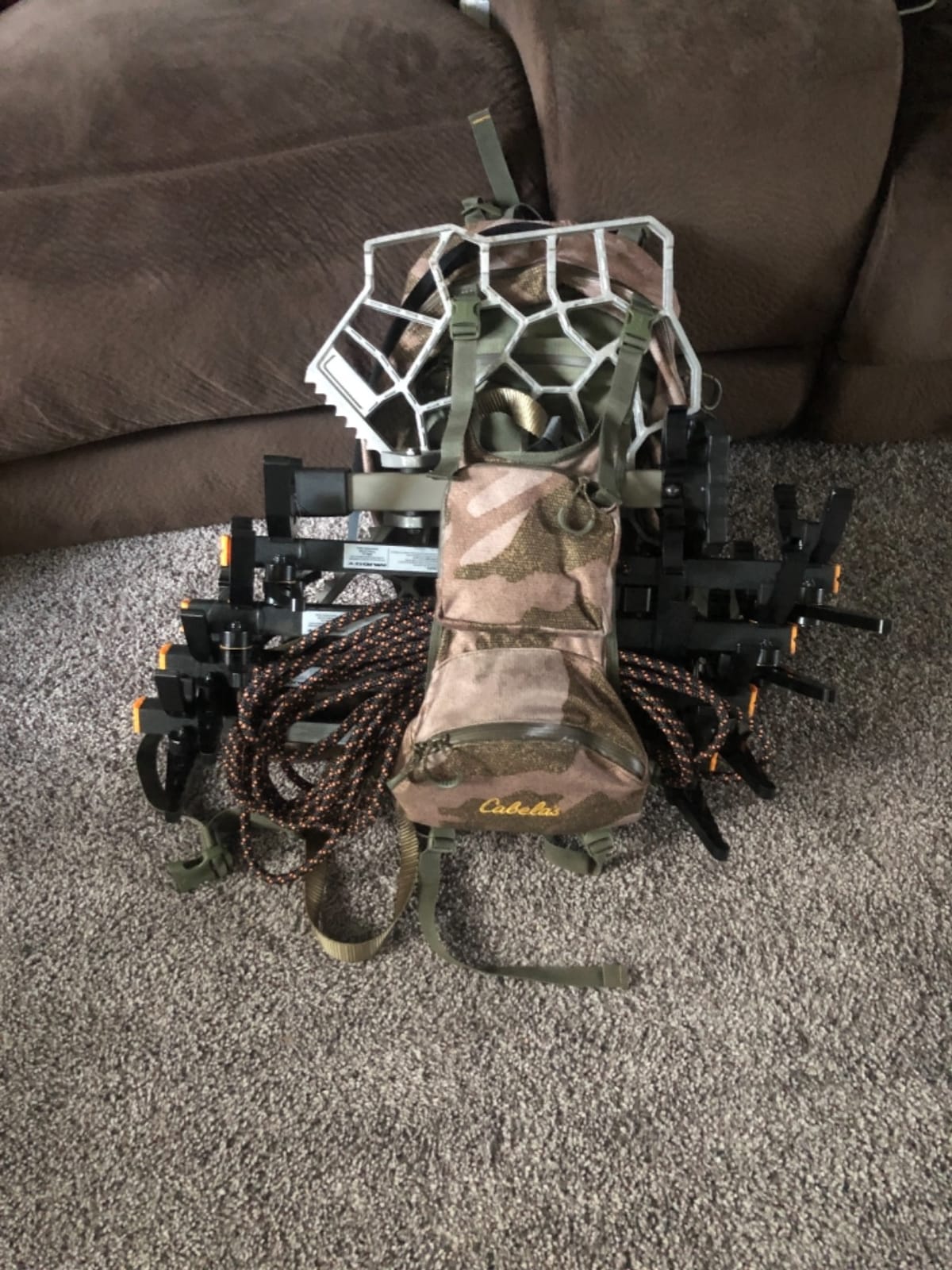
Reviewers call the bite the selling point. These are described as durable bark biters that work on both crooked and straight trees, which is more forgiving than the compact aluminum designs higher on this list. The Peg-Pack layout also means the sticks travel alongside Muddy fixed-position treestands if you use both methods in a season.
The cam hardware is also the most common complaint. Re-threading and adjusting it with gloves on, in the cold, before sunrise, is genuinely awkward, and you will do it many times a season. Aluminum also carries sound into hard bark, so if absolute silence matters more than simplicity, a design with TPU strap points is worth a look.
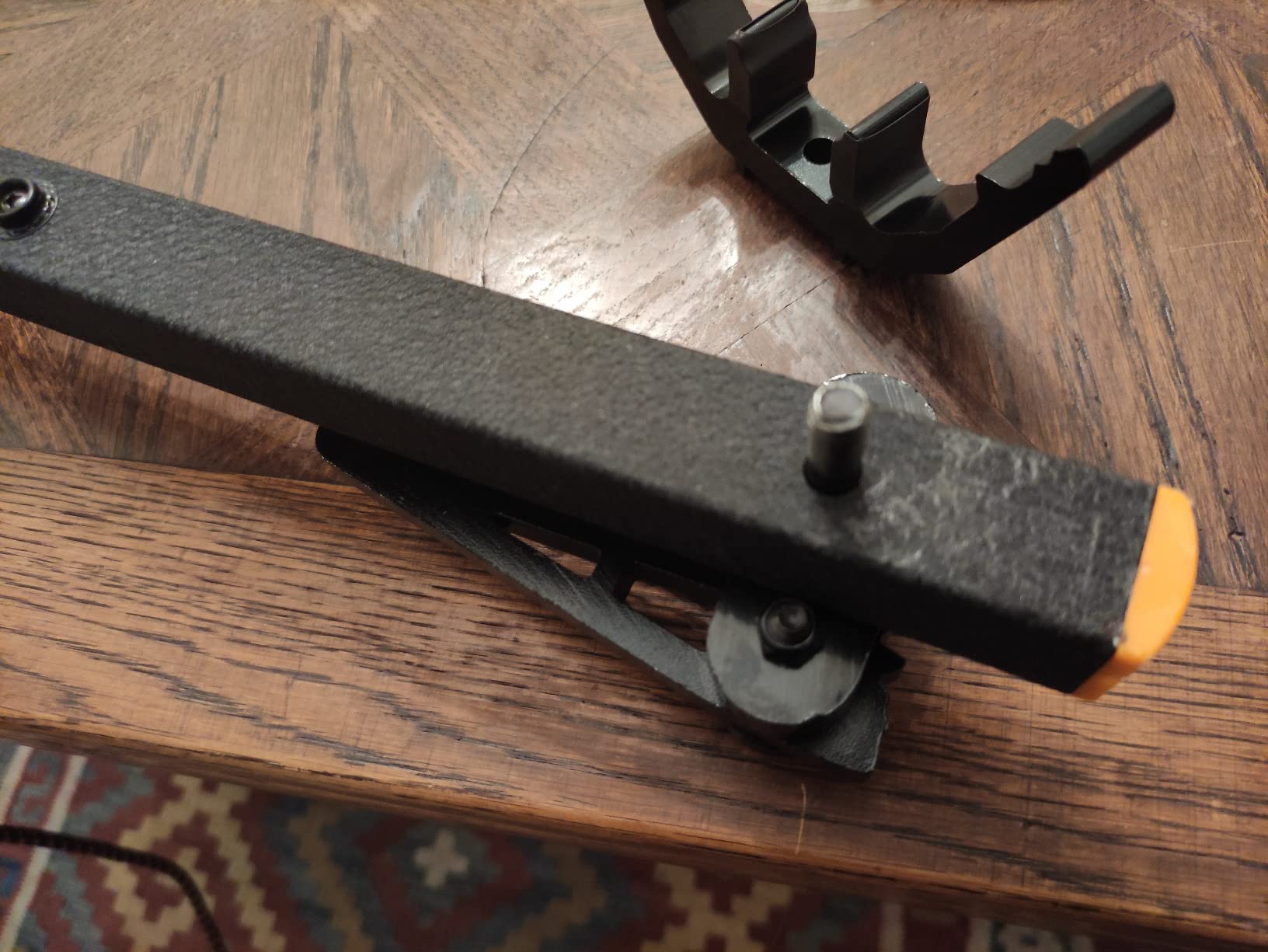
Where the Muddy Pro stands up best
On rough ground and on trees that are not perfectly vertical, these are hard to beat. The cleats and bite handle imperfect placement better than shorter compact sticks, and the cam attachment is less likely to walk than a friction loop. For hunters who move between trees all day on varied terrain, that reliability is worth more than saving a pound.
Each stick carries the standard 300-pound support rating, and the total four-pack weight is 10 pounds. Packed dimensions of 4.5 by 9 by 20 inches mean they stack flat and pack against the back of a frame without a dedicated strap compartment.
Who should skip the Muddy Pro sticks
Skip them if you are walking serious distance, because 10 pounds for sticks alone is at the heavy end once you add your saddle, platform, and safety line. Long-mileage hunters should be looking at the 26-ounce XOP X2 or the Hawk Helium instead.
Skip them if quietness is the priority. Aluminum on hard bark transmits sound, and while the cam is quiet to install, the steps themselves are not padded. If your approach window is short and your deer are jumpy, plan accordingly.
4. XOP 34 Inch Aluminum Climbing Sticks (3-Pack)
XOP Aluminum Climbing Sticks for Hunting Treestands – Set of 3 – Storm Grey w/XOP Green Steps, 34 Inches Long
Aluminum
34 inch sections
3.2 lbs per stick
350 lb rating
Pros
- 34 inch sections reach high with fewer sticks
- 3.2 lbs is light for a stick this long
- Lock Tight stacking needs no strap
- Deep stand-off bracket improves boot clearance
Cons
- 34 inch section needs a reasonably straight tree
- Stacking lock can be stubborn after a wet season
- Only offered as a 3-pack in this listing
The XOP 34-inch sticks solve a specific problem: reaching height with fewer pieces in your pack. At 34 inches long and 3.2 pounds each, three sections cover far more vertical space than three 20-inch sticks, which is the difference between carrying a fourth stick and not carrying it.
The deep stand-off bracket is the design detail that makes the length workable. It moves the step further from the trunk, so the longer section does not push you into the bark. The 350-pound rating per stick is among the highest available, and cast aluminum components carry a lifetime warranty.
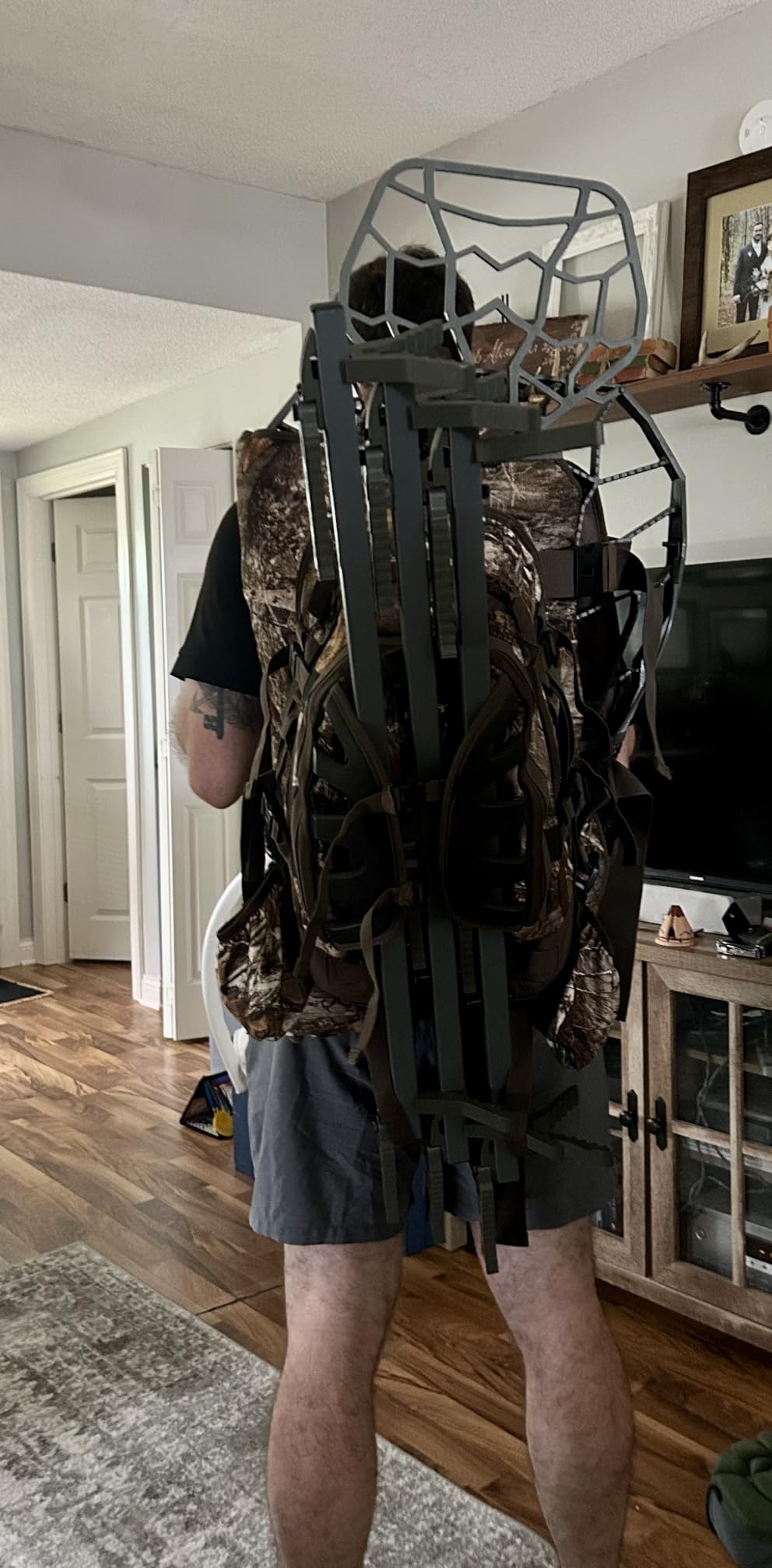
The Lock Tight stacking system is the quiet-storage answer. Sticks lock together without a strap, so there is nothing to rattle on the walk in and nothing to lose. The set also integrates with XOP hang-on stands, so if you mix methods you can move the whole system in one pack.
Length creates the constraint. A 34-inch section needs a trunk straight enough to seat it cleanly, and the stacking lock can be fiddly to separate after a season of wet bark. The pack size also means more reach per stick but less flexibility on small, young, or sharply leaning trees.
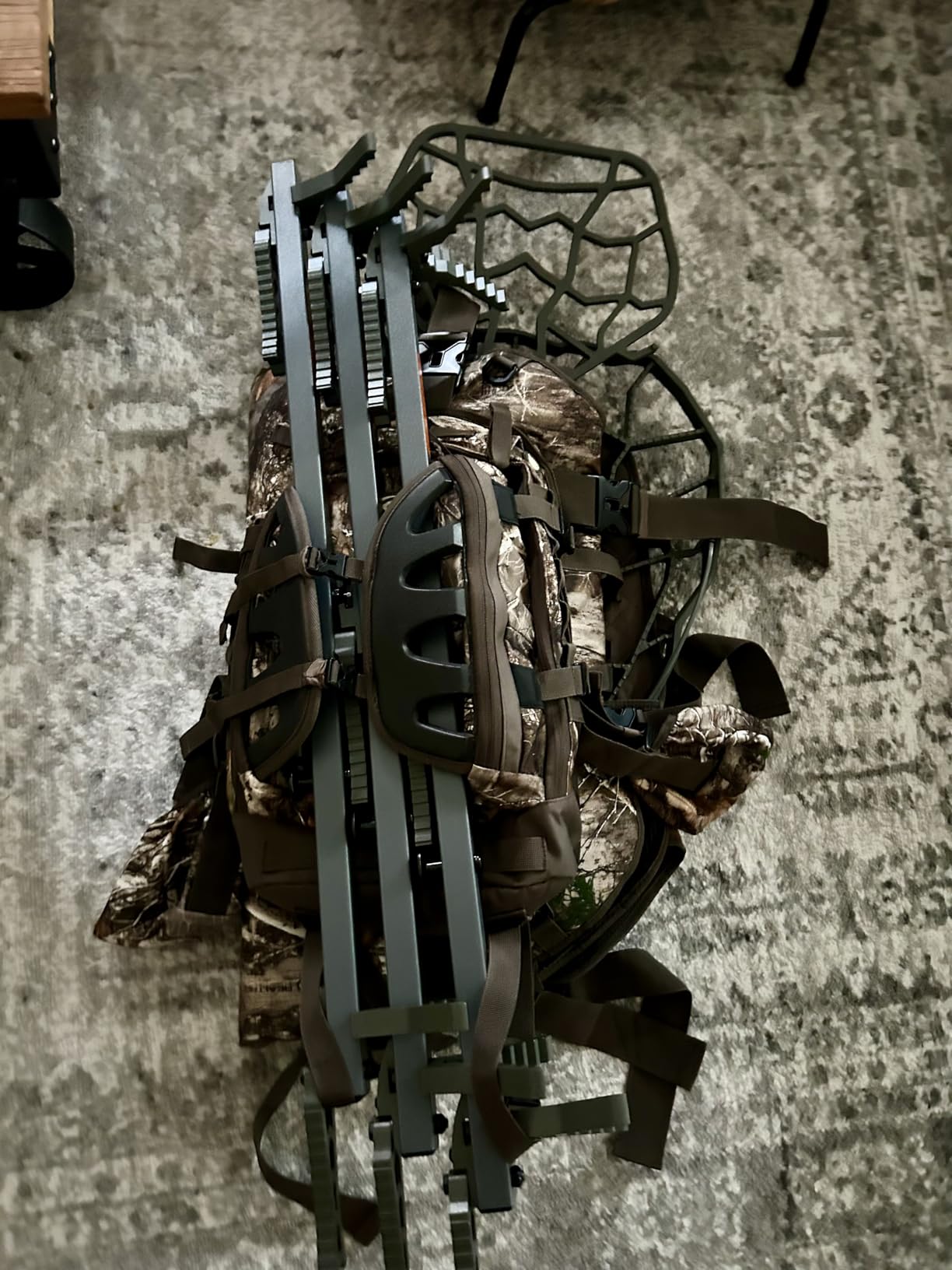
Stick count versus section length
This is where the math from our how-many-sticks section pays off. If your mature trees run 20 to 25 feet and you want to reach 18 feet, shorter sticks force four pieces into the pack. Three 34-inch sections get you there with one fewer stick, and the 3.2-pound weight means the saving is real rather than theoretical.
The tradeoff is placement tolerance. Long sections are unforgiving on a tree that leans or kinks, and hunters working dense, crooked timber report fighting the geometry. If you are not sure which trees you will face, a 20-inch set is the safer default.
Who should skip the XOP 34 Inch sticks
Skip them if you hunt small wood with lots of lean, or if you plan to run one-sticking setups where a single stick needs to work alone. Long sections are a full-set tool, and a one-stick configuration wants a compact stick with aider points, like the X2.
Skip them if you want the lightest possible pack. Three sticks at 3.2 pounds is 9.6 pounds, which is fine but not remarkable, and the section length limits how few pieces you can get away with carrying.
5. Muddy Stagger Step 31 Inch Ladder Sections
Muddy Hunting Climbing Sticks – 300 lb Capacity, 3-Pack
Alloy steel
31 inch sections
4 lbs per section
300 lb rating
Pros
- Installs on leaning and uneven trees where sticks struggle
- About 4 lbs per section despite a steel build
- Full enclosed step gives more stability than open rungs
- Stackable sections move easily to and from the field
Cons
- Only about 31 inches of reach per section
- Steel is heavier than comparable aluminum sticks
- Enclosed tread traps mud and needs regular cleaning
The Muddy Stagger Steps are the answer when your trees are bad. At 4.7 across 138 reviews, this is the highest-rated product in the roundup, and the reason is a shape rather than a spec: a staggered ladder section tolerates leaning and uneven trunks in a way a short stick never will.
Each section is 31 inches tall and 9 inches wide, alloy steel, with a full enclosed step and a cam-buckle strap for stability. The 300-pound overall rating matches the industry norm. What differs is the geometry, which is why hunters with crooked hardwoods keep coming back to it.
The enclosed step is also safer than an open rung. Mud does not fill an open step, and the full-width tread gives a more consistent footing when you are moving in and out of a harness. Stackability makes transport straightforward.
Weight is the honest cost. Four pounds per steel section means a three-section ladder is 12 pounds, and 31 inches of reach per section means you need more of them than a set of 34-inch sticks. The enclosed tread also traps mud and needs regular cleaning, which is a small annoyance on a wet week.
When a ladder section beats a stick
Staggered sections win on trees that lean, kink, or branch low. If you have been forced to skip good timber because the trunk was not straight, that is the failure this solves. They also work as an approach to a hang-on stand, adding the last several feet to a ladder stand setup.
They lose on everything mobile. Steel does not compress into a pack the way aluminum sticks do, and there is no strap-free stacking system here. If your hunt is walk-and-gun across public land, a compact aluminum set serves you better.
Who should skip the Muddy Stagger Steps
Skip them if your priority is pack weight, since steel sections run roughly 60 percent heavier than comparable aluminum sticks. Also skip them if you plan to carry a full saddle setup, platform, and safety gear, because the total rig weight climbs fast with ladder sections.
Skip them if your trees are straight and tall. You will carry more pieces than necessary for the height, and a 34-inch aluminum set reaches further per stick for less weight.
6. Guide Gear Quick Tree Climbing Sticks (3-Pack)
Guide Gear Quick Tree Climbing Sticks Ladder Steps for Treestands Deer Hunting Gear and Accessories, 3 Pack
Welded steel
34 inch sections
300 lb capacity
Repositionable
Pros
- Exceptionally low cost for a full 3-stick set
- Welded steel frame is rigid and does not sag
- Each 34 inch section can be repositioned on the tree
- Grip tape on step tops improves traction
Cons
- Steel is heavy
- which makes it poor for mobile hunting
- Sections do not nest and need creative strapping
- Grip stickers peel off after a few uses
The Guide Gear Quick sticks are the cheapest way into climbing gear, and for the right hunter they are genuinely fine. Three 34-inch welded steel sections, a 300-pound capacity, and repositionable attachment points. Buyers call the value unbeatable, and at 4.4 across 404 reviews the satisfaction rate backs that up.
The steel frame is the reason it feels solid. Welded tubular steel does not flex or wobble when you load it, and the anti-slip double-step design with grip tape on the step tops improves traction with wet or muddy boots. Each section can be moved anywhere on the trunk, so crooked trees are workable.
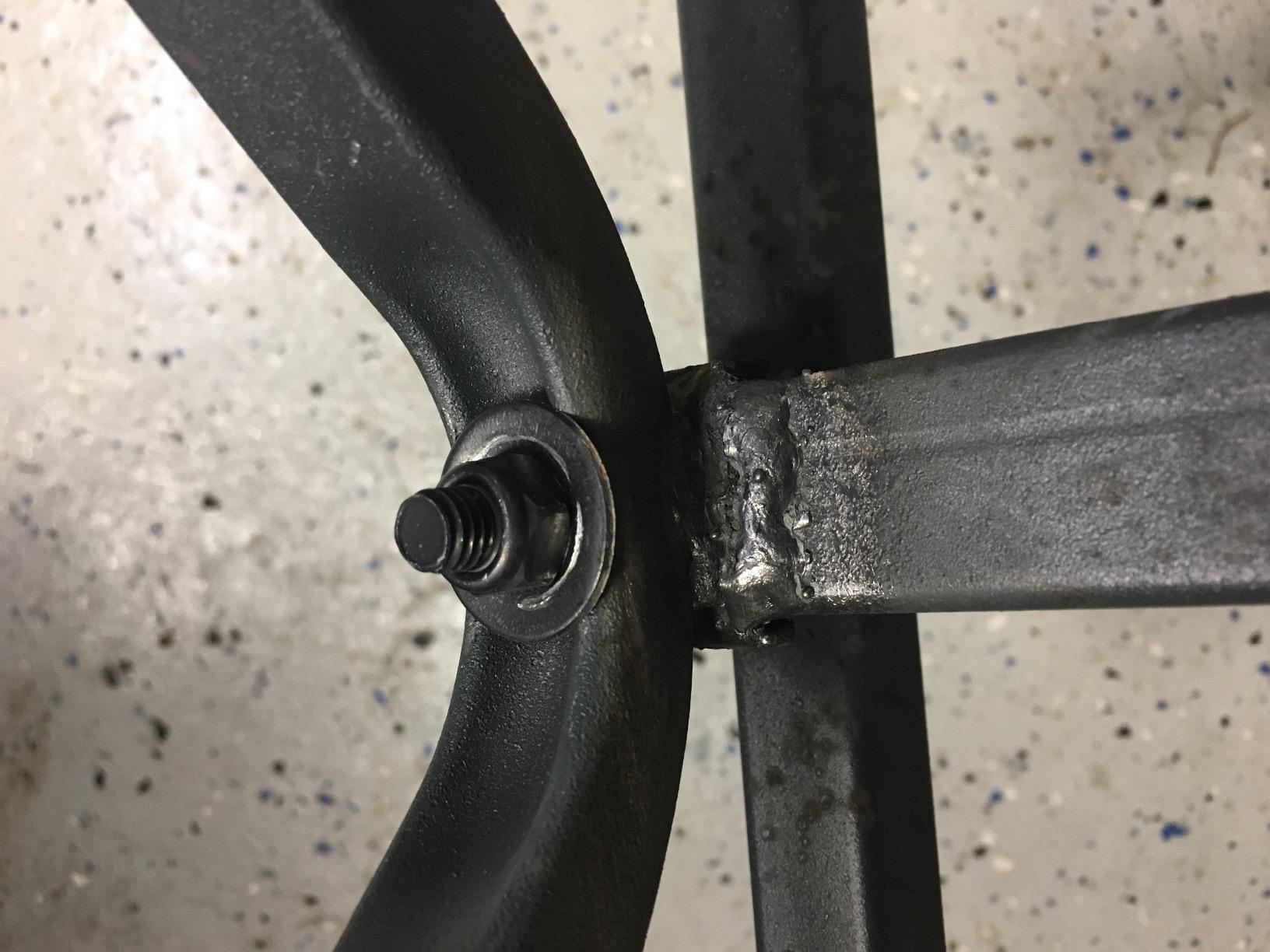
The strap-on design is worth calling out for public land hunters. It leaves the tree unharmed, unlike screw-in steps, which matters if you are hunting state ground with rules about tree damage.
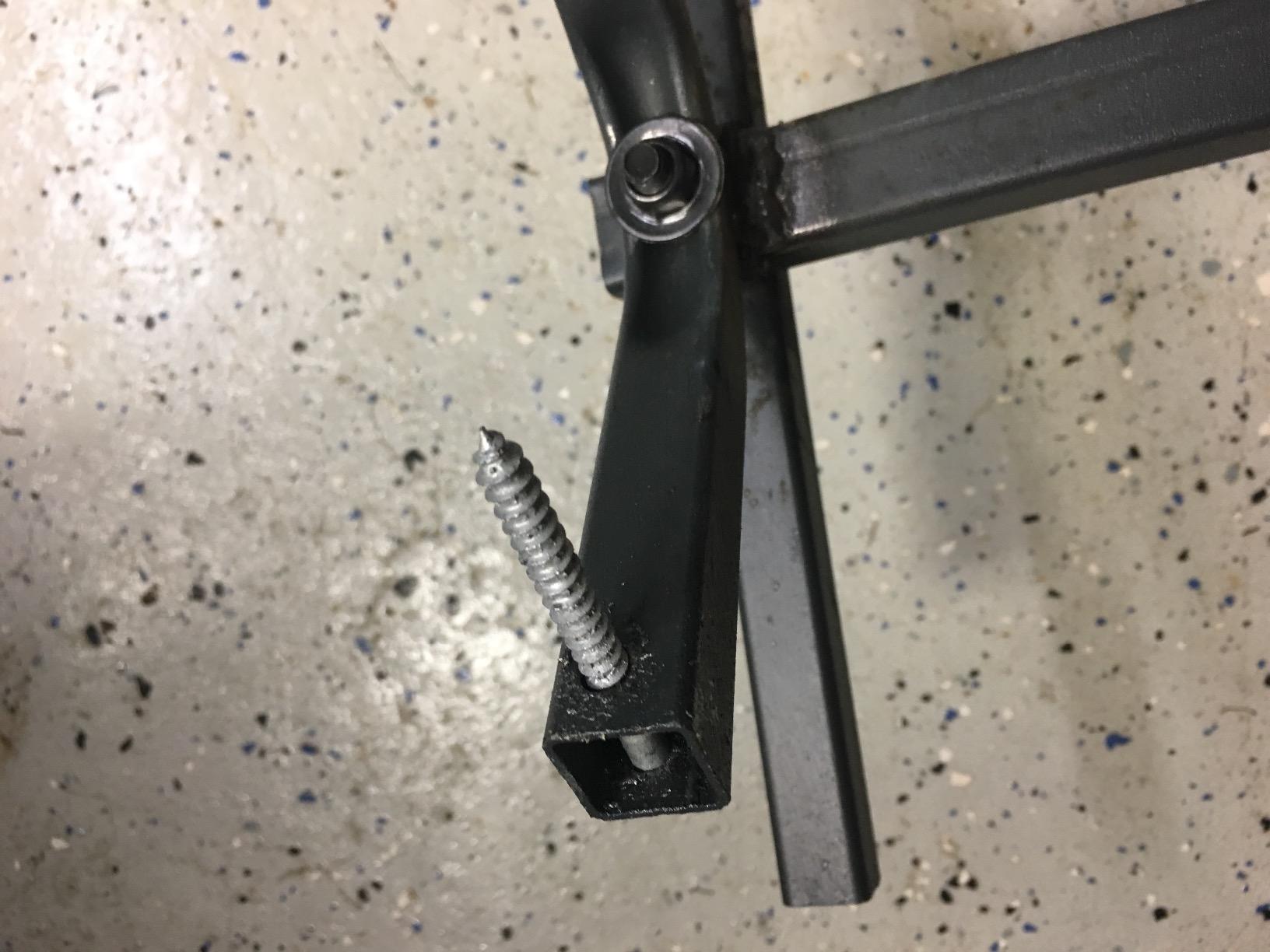
Now the real drawback, and it is a big one. These are steel sections that do not nest together, so you need to figure out your own strapping to carry three of them, and reviewers measure roughly 5 pounds per stick. That is nearly double the weight of an aluminum set for the same job. The grip stickers also peel off within a few uses, and the thin paint finish chips, so expect touch-up paint to limit rust.
When steel is the right call
Steel wins when weight is not your problem. If you drive to your hunting spot, set the sticks once, and leave them for a week, the extra pounds never enter the equation. It also wins if you climb the same tree repeatedly and want something rigid that will not flex.
The repositionable sections are the underrated feature. Most sticks lock to a fixed height, but these can be moved, which means you can reposition for a new branch structure without repacking. For hunters who run multiple stands, that flexibility is worth more than weight.
Who should skip the Guide Gear Quick sticks
Skip them for any hunt where you walk more than a few hundred yards with your gear. Seventeen pounds of listed weight plus the packing problem makes this a set-and-stay tool. If you cannot buy aluminum once, this is a reasonable first season, but plan to upgrade.
Skip them if you care about noise. Strap-on steel is functional but not quiet, and the hardware is not designed to reduce sound on the way up.
7. Big Game Quick-Stick 20 Foot Climbing System
BIG GAME Climbing Ladder Sticks, Tree Stand and Hunting Gear System, 20’ Quick-Stick – Portable Safety Accessories and Equipment for Mobile Deer Hunters, Climbers, and Shooters
Alloy steel
20 foot reach
5 sections
20 lbs packed
Pros
- Heavy-duty rigid steel built for many seasons
- Five sections make field carry and setup straightforward
- 20 foot reach from one ladder system
- Cam buckle straps keep it firmly attached
Cons
- 20 pounds is very heavy for mobile saddle hunting
- Alloy steel can transmit sound on hard bark
- Five rigid sections need a straight large tree
The Big Game Quick-Stick is not a saddle hunter’s mobile kit, and pretending otherwise would be dishonest. It weighs 20 pounds in five rigid alloy steel sections and reaches 20 feet. What it is, is the most durable option in this roundup, and the right answer when you are setting a tree and staying there.
Owners trust it season after season. The construction is heavy-duty and rigid, cam buckle straps hold it firmly to the trunk, and the five-section break-down makes it straightforward to carry and assemble in the field. Packed dimensions of 16 by 3.5 by 52.5 inches keep it manageable on a vehicle bed or in a truck bed.
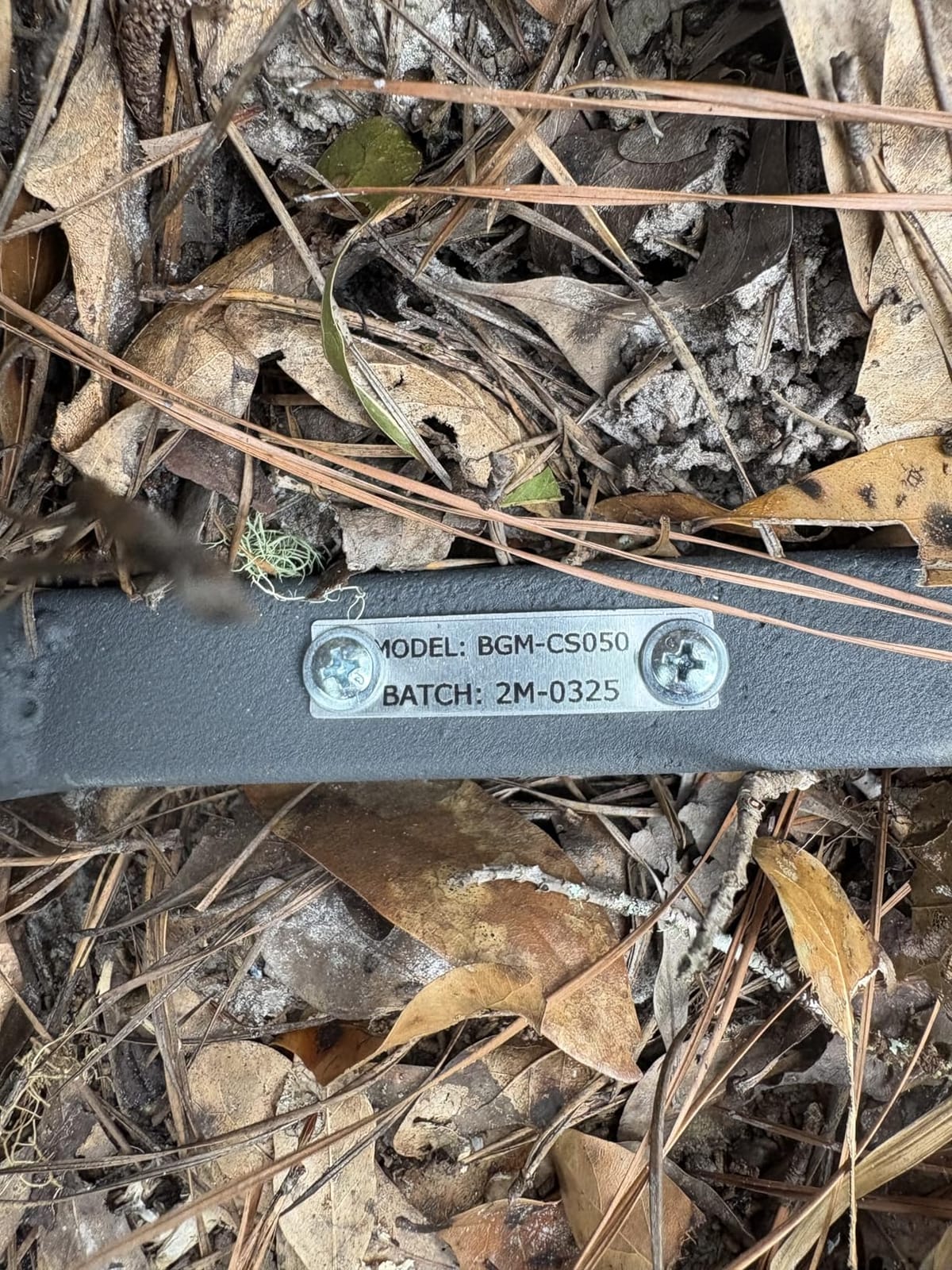
The minimum tree size is 9 inches in diameter, which is a real constraint. Five rigid sections need a straight, large-diameter tree to seat properly, and on a leaning trunk the whole ladder wants to walk. If your hunting ground is open-grown with big straight trees, that is no problem. If it is dense and crooked, it is a problem.
The weight is the deciding factor. 20 pounds is among the heaviest options in this group, and steel transmits sound on hard bark, which makes it a poor choice for a mobile hunt where you are moving between trees all day and need a quiet approach.
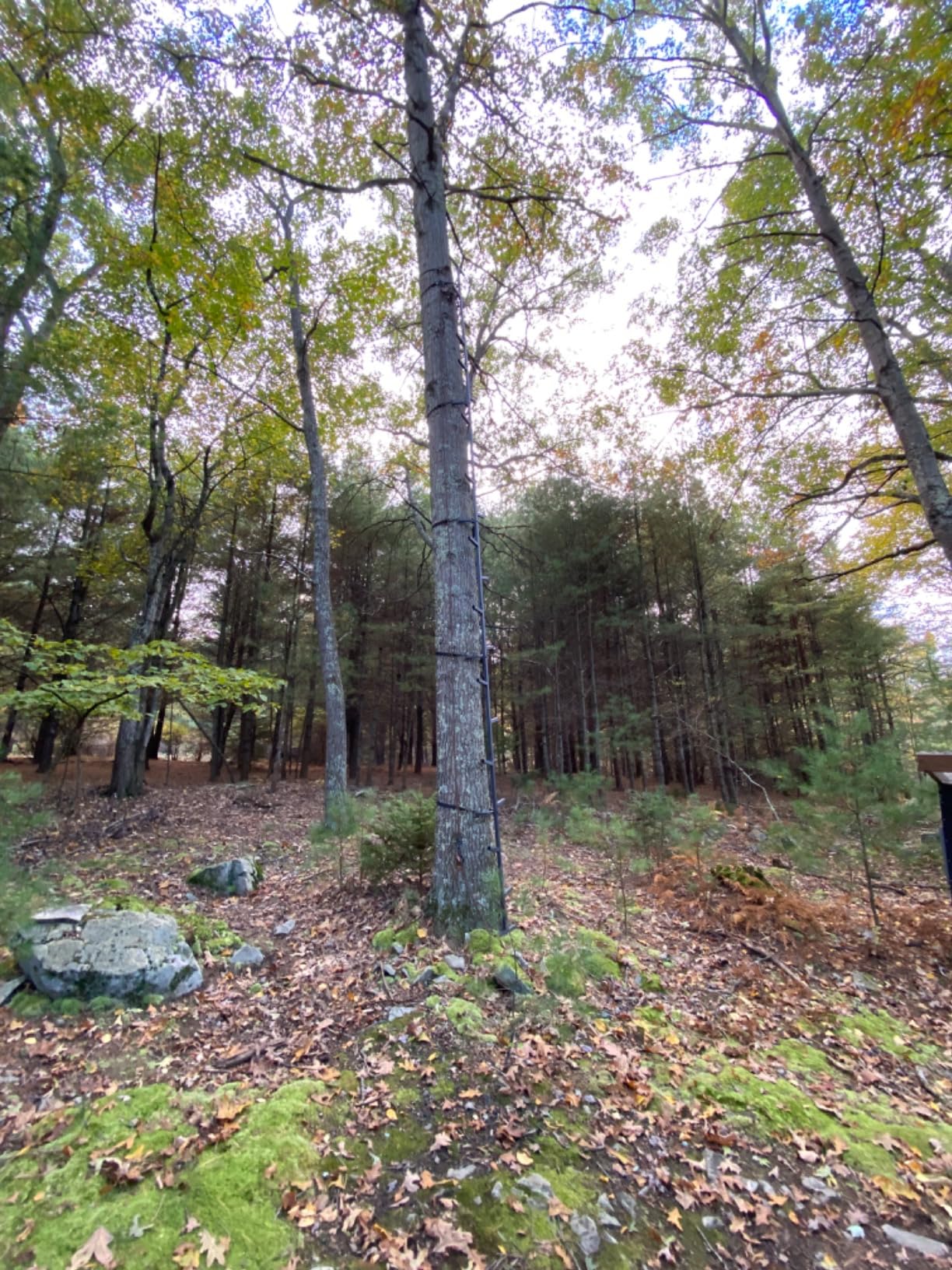
Total rig weight and what it really costs you
This is the honest comparison many guides skip. A 20-pound ladder system plus a saddle, platform, and safety gear adds up to a genuinely heavy pack. Experienced hunters in the community who have run both a stick setup and a hang-on stand report that the real gain from sticks is reduced bulk when walking in, not necessarily a lower total weight.
That is a useful correction to the marketing. If your hunt is a short walk from a road, the bulk argument does not apply either, and the Big Game system is simply the wrong tool. If you are hauling a full rig across rough country, weight should be the first number you check.
Who should skip the Big Game Quick-Stick
Skip it for any solo mobile or backcountry hunt. Twenty pounds of ladder is not a backcountry load, and the five rigid sections are difficult to manage on steep or narrow trails.
Skip it if your trees are small or leaning. The 9-inch minimum diameter and rigid five-section design need the best trees you can find.
8. Guide Gear 20 Foot Rapid Climbing Sticks (4-Pack)
Guide Gear 20′ Rapid Climbing Sticks for Tree-Stands, Hunting, 4-Pack (5′ Each)
Powder-coated steel
4 by 5 foot sections
24.2 lbs
300 lb capacity
Pros
- Pin-connected sections need no tools in the field
- Cam buckle straps are quieter than ratchet upgrades
- Ladder profile sits tight to the trunk and does not stand out
- Reaches 20 feet from four sections
Cons
- Roughly 24 pounds is heavy for mobile hunting
- Needs a fairly straight tree to place
- Metal-to-metal contact can squeak while climbing
The Guide Gear Rapid sticks are a 20-foot system built around one specific annoyance: tools. The sections are pin-connected, so assembly happens with your hands in the dark, in the rain, without a wrench. For hunters who set up in awkward conditions, that is a bigger deal than weight.
Four 5-foot powder-coated steel sections reach 20 feet total with a 300-pound capacity. Owners report the build holding up well, and the cam buckle straps work as intended and run quieter than aftermarket ratchet upgrades, which is a nice touch when deer are close.
The ladder profile is another underrated feature here. It sits tight against the trunk, so it does not stand out visually the way a wide stick can. If you have been spooked by exposed climbing gear, a tight profile helps.
Weight is the problem. At roughly 24 pounds, this is the second-heaviest set in the roundup, and it is a lot to carry for a full 20-foot reach. It also needs a fairly straight tree, and metal-to-metal contact can squeak while you climb, which is the last thing you want on a final approach.
When a full 20-foot ladder makes sense
If your treestands hang high, if you are combining a ladder with a hang-on stand, or if you set up once and sit for days, a 20-foot system removes the guessing. You get to the platform without counting sections in the dark.
The pin connection also makes repairs simple in the field. If one section is damaged, the rest still work, and a replacement is a single part rather than a whole system. That long-term serviceability is a genuine advantage over sealed aluminum designs.
Who should skip the Guide Gear Rapid sticks
Skip them if you are walking any real distance. 24 pounds is a vehicle weight, and it is nearly triple what an aluminum set costs you for the same job. This is a drive-to-timber tool.
Skip them if silence is critical. Squeak from metal-to-metal contact during the final climb is a real complaint, and it is exactly the moment you cannot afford noise.
9. Tomaki Lightweight Aluminum Climbing Sticks (4-Pack)
Tomaki Aluminum Hunting Climbing Sticks, Non-Slip Tree Step, 4 Pack
Aluminum
17 inch reach
4 sticks included
350 lb limit
Pros
- V-bracket and raised step ends give strong wet-condition traction
- Ultralight aluminum build keeps pack weight down
- Sliding lock clip holds sticks together for silent transport
- Four quality straps included rather than minimal tie-downs
Cons
- 17 inch reach per stick is short
- Lock clip can be stiff to open with cold hands
- Aluminum is noisier on hard bark than padded designs
The Tomaki sticks are built around traction in bad conditions, and the raised step ends are the reason. Each step has raised ends that help prevent a wet boot from sliding off, and the V-shaped gear bracket strengthens the bite on the trunk as you load it. In a wet November, that is worth more than a small weight saving.
The 350-pound weight limit is strong for the class, and four straps come in the box rather than minimal tie-downs, which is generous at this level. The sliding lock clip holds the sticks together for storage and silent transport, so the pack stays tidy on the walk in.
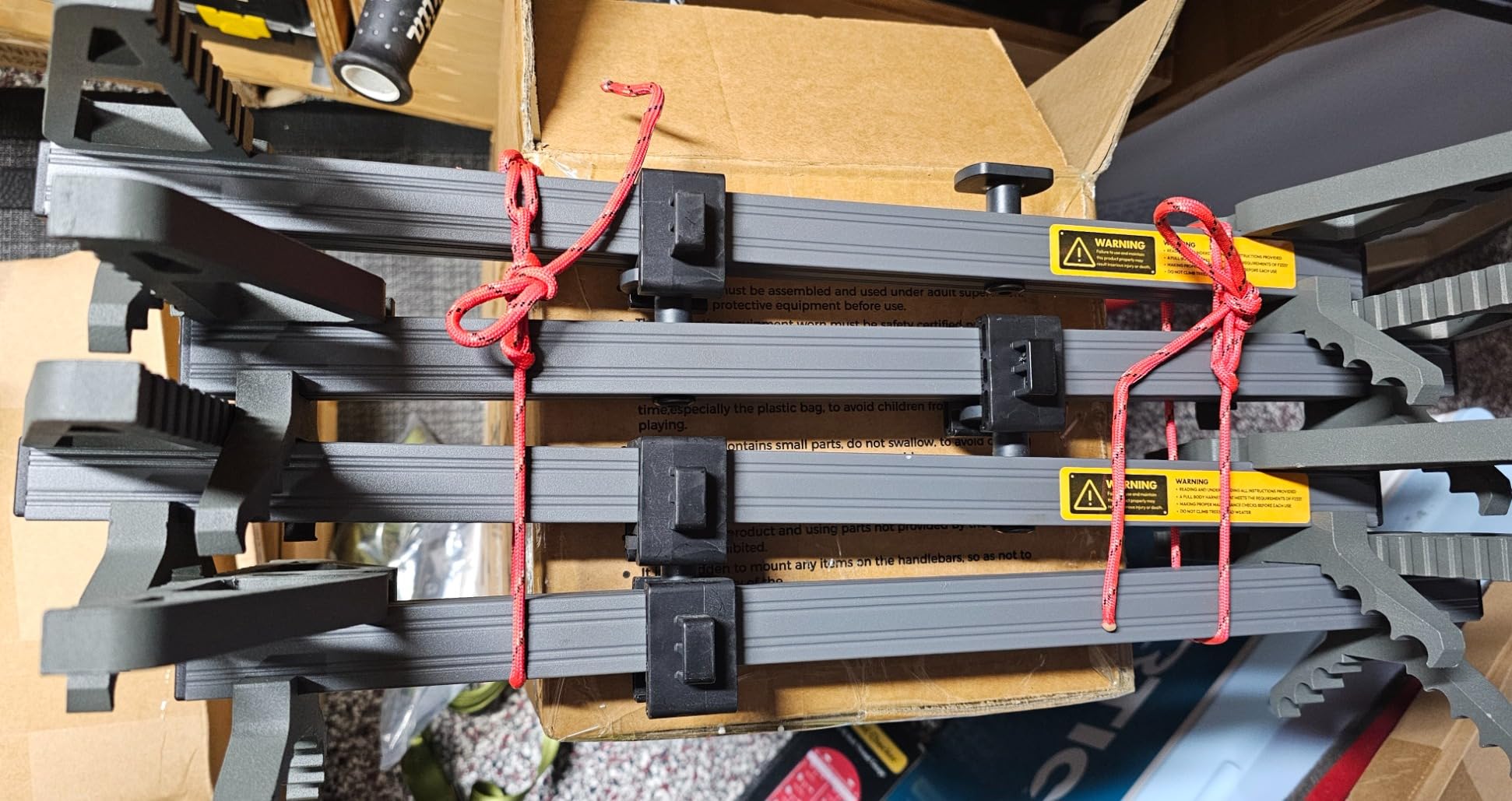
Reach is the constraint. At 17 inches per stick, these are the shortest-reaching sticks in the roundup, and you will need more of them to cover the same tree height than with a 20-inch or 34-inch set. That trade is fine if you are climbing to 10 or 12 feet, and inefficient if you are hunting open timber.
Two smaller issues: the lock clip can be stiff to open with cold or gloved hands, and aluminum carries sound into hard bark. Neither is a dealbreaker, but both show up on a cold, quiet morning.
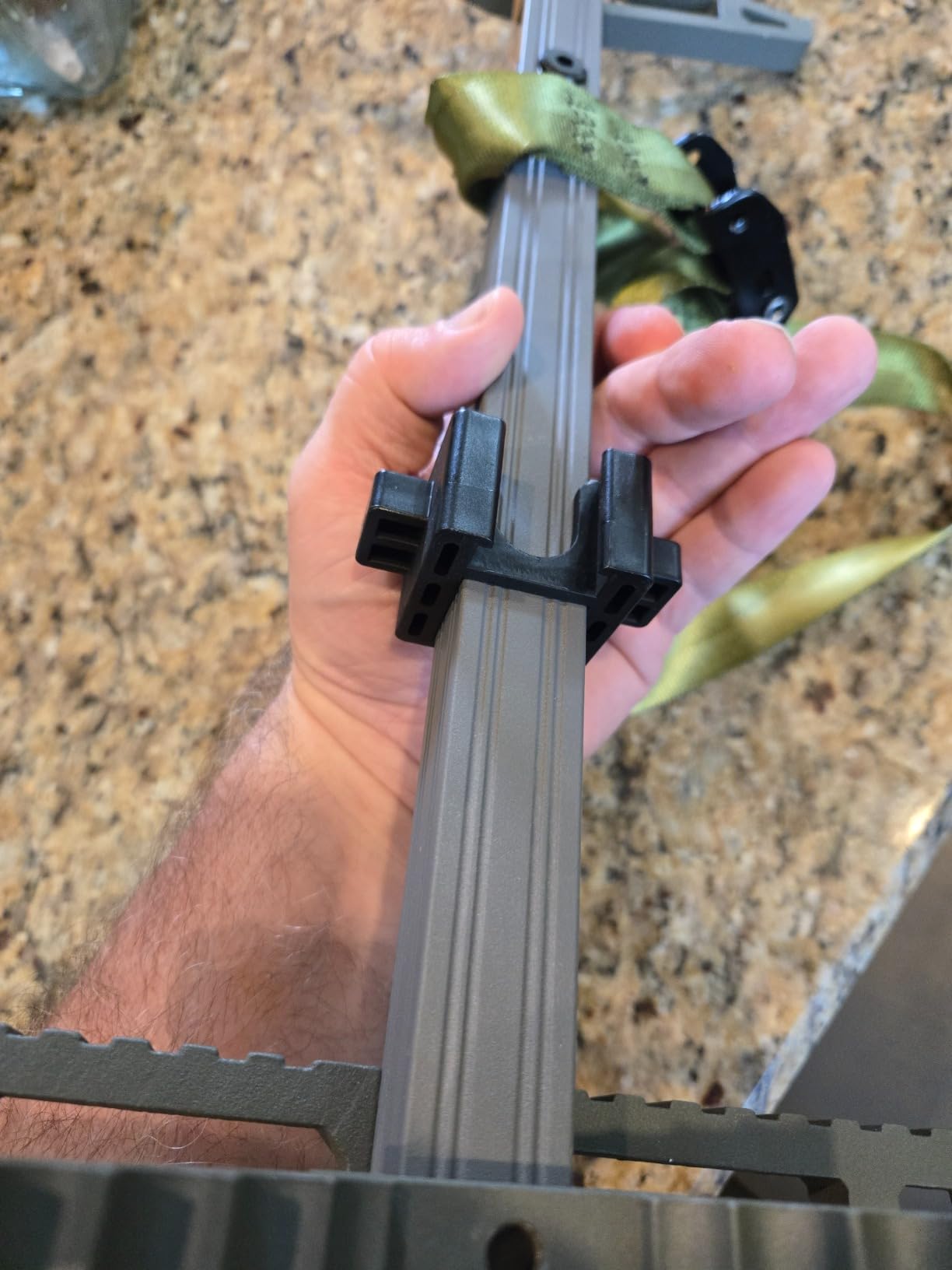
Matching short sticks to short trees
Shorter sections are genuinely useful in specific cases. If you hunt younger timber, work near creek bottoms with smaller trees, or climb to a set that hangs low, 17-inch sections place faster and let you adjust height precisely. Fine adjustment matters when your platform is already at 10 feet.
They are also easier on crooked trees at low height, where a long section would be fighting the lean. If you only need a modest climb, short sticks are easier to carry, easier to place, and easier to control.
Who should skip the Tomaki sticks
Skip them if you hunt mature open timber and want eye level high in the tree. At 17 inches per stick, reaching 18 feet takes many sections, and each one is weight. Long sections or a 20-inch set cover that with fewer pieces.
Skip them if you want maximum standoff. The design optimizes for grip and traction rather than boot-to-tree clearance, so bulky winter layers will feel tighter than on a 5-inch stand-off design.
10. Sebnux Aluminum Climbing Sticks with Folding Steps (4-Pack)
Sebnux Aluminum Hunting Climbing Sticks Lightweight Hunting Climbing Steps Non-Slip Tree Climbing Sticks with Fold Up Steps (4, 18 Inch)
Aircraft-grade aluminum
18 inch sticks
350 lb rope rating
2 year warranty
Pros
- TPU strap points limit setup noise on approach
- Embedded deer-paw teeth bite deep into the trunk
- Dual V-shape folding steps give foot room both directions
- Two year warranty is longer than most competitors
Cons
- Rating spread is the widest here
- with quality inconsistencies reported
- Nylon braided rope is less rigid than aluminum brackets
- Only 18 inch and 25 inch sizes available
The Sebnux sticks are the quietest setup in this roundup, and that is a specific design goal rather than a side effect. The TPU tight strap points limit noise during installation, which matters in the ten minutes before a shot when a single metallic click can end the hunt.
The dual V-shape folding steps give foot room on both ascent and descent, which is a real comfort improvement over single-sided designs. Embedded deer-paw teeth dig into the trunk for a secure hold, and the aircraft-grade aluminum keeps the sticks light and quiet to carry. Four sticks are included, rated at 18 inches each.
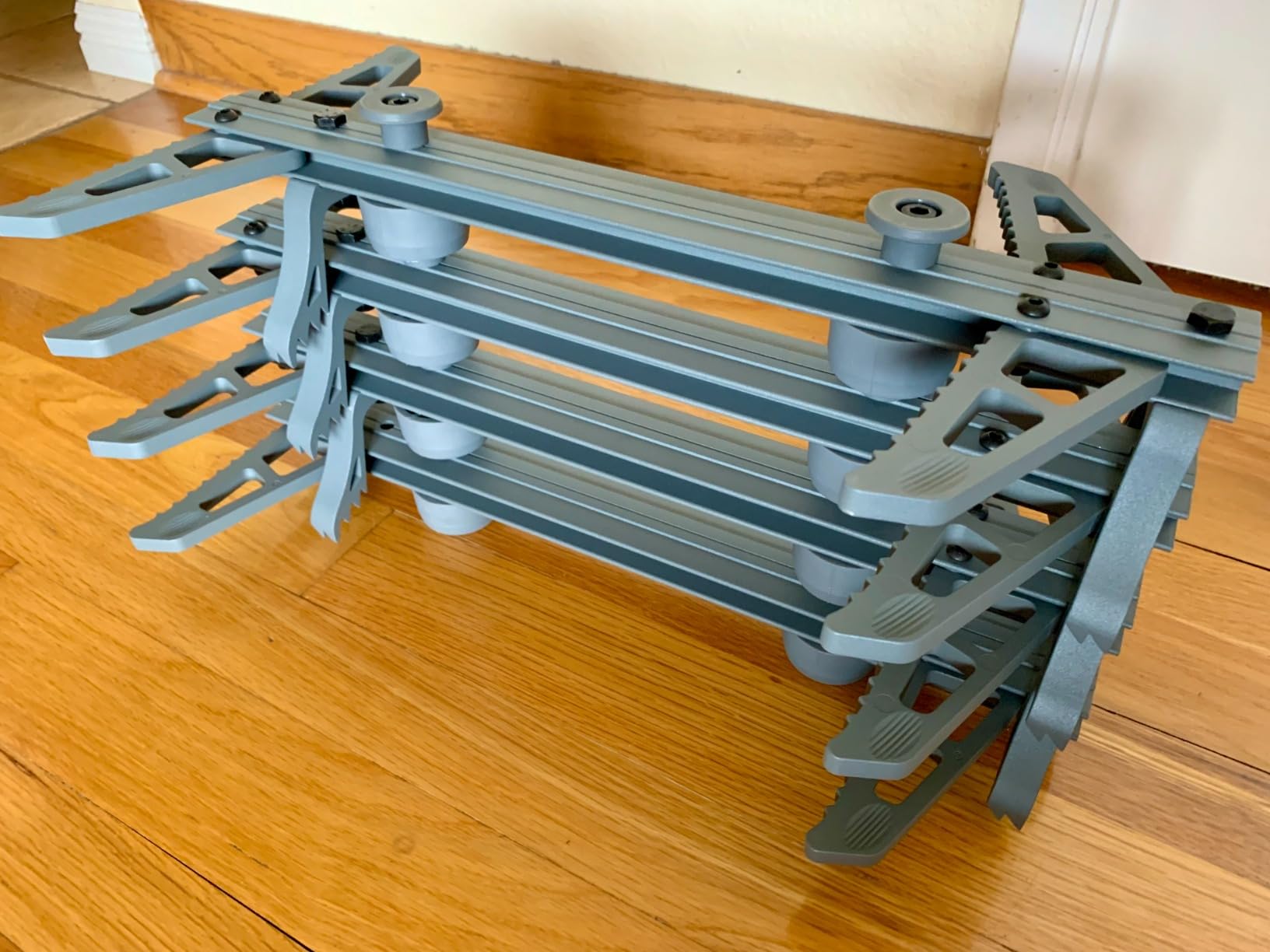
Now the honest drawback, and it is the main reason this sits at number ten. At 4.0, this is the lowest-rated product here, with a 14 percent one-star share, and buyers report quality inconsistencies between units. The nylon braided rope attachment is also less rigid than the aluminum brackets used on adjacent designs.
That means two things. Inspect every rope and bracket before you rely on it, and expect that the specific set you receive may behave differently from the best reviews. The two-year warranty is longer than most competitors offer, which partially offsets the risk.
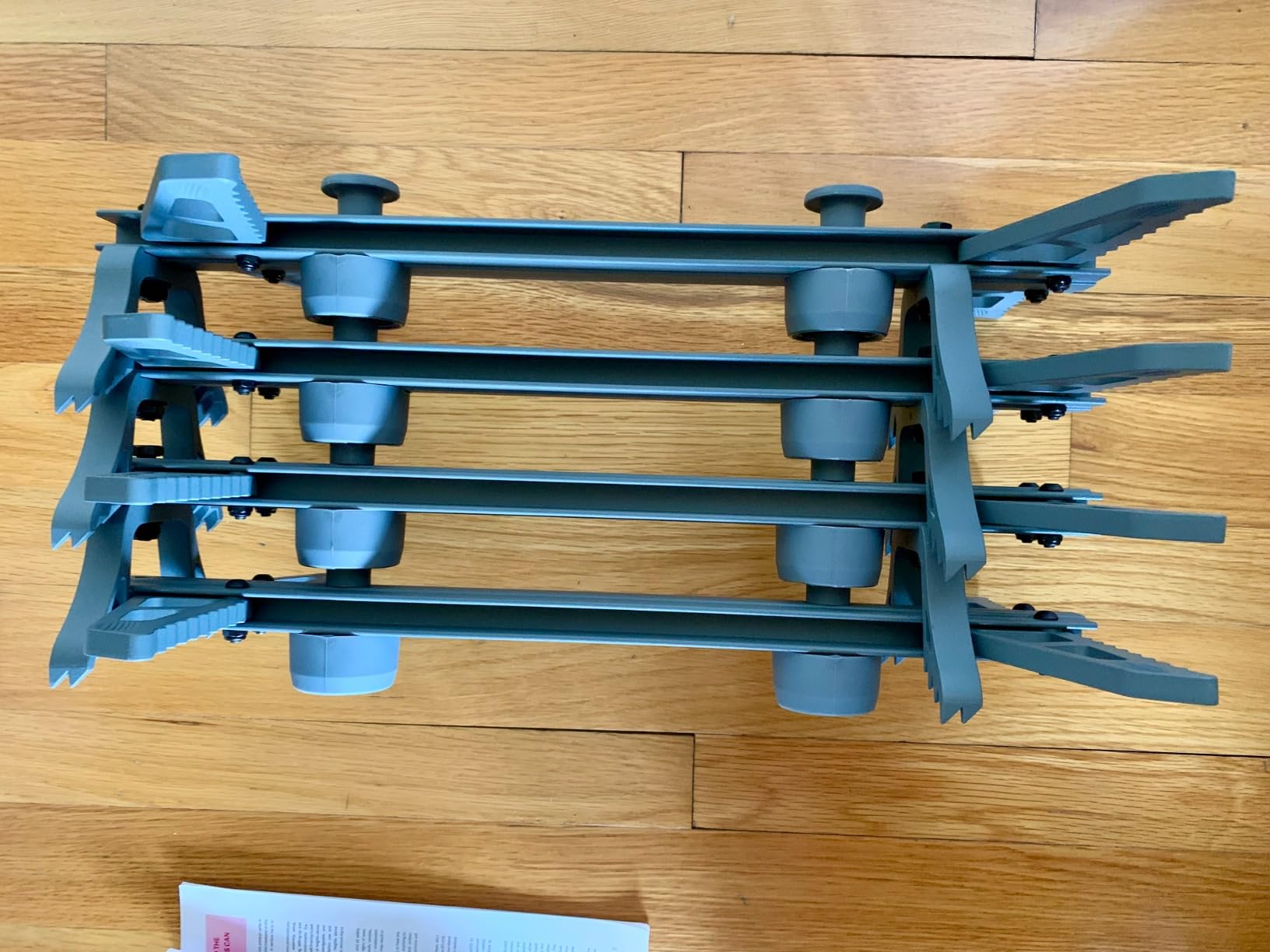
What the nylon rope attachment changes
The double-layered nylon braided rope carries over 350 pounds, so the strength rating is not the issue. The difference is rigidity. An aluminum bracket holds a defined angle against the trunk; a rope allows more give, and that give is what you feel as wobble when you load the stick.
For a hunter who weighs less and climbs carefully, this is a non-issue. For a larger hunter moving fast, a rigid bracket is the more confident choice. Pair the rope with a proper pre-climb inspection and it will serve you, but it asks more of you.
Who should skip the Sebnux sticks
Skip them if you are hard on your gear or buy from a seller with a weak return policy. The rating spread is the issue, not the design, and larger hunters should favor a rigid bracket over a rope attachment.
Skip them if you need reach. Only 18-inch and 25-inch sizes are offered, so there is no long-section option and no 34-inch equivalent in this line.
How Many Climbing Sticks Do You Need?
The math is simpler than most guides make it sound, and getting it right can save you from carrying a fourth stick you never climb.
Step one, measure your tree. Stand at the base and estimate the height of the lowest branch you can use, then subtract 6 to 8 feet of standable height at the top for your saddle and platform. That remainder is what your sticks have to cover.
Step two, divide by your step-to-step spacing. A 20-inch stick gives roughly 15 inches of step-to-step rise, a 17-inch stick gives about 17 inches, and longer sections give more. Round up.
Step three, apply the decision list. Two sticks cover most mature trees in the 12 to 16 foot range and is the lightest sensible kit. Three sticks handle 20 to 25 foot trees and give you options on a good morning. Four sticks are for open timber, for larger hunters who want fewer longer jumps, or for anyone who refuses to be limited by tree height. One sticking collapses the whole question into a single stick with an aider, which is the lightest option of all and requires the most skill.
Our advice: buy the count that covers your tallest realistic tree, then stop. Extra sticks in the pack are dead weight on every mile you walk, and most hunters never climb the fourth one anyway.
Lightweight, Cheap, or Durable? Pick Two of the Three
The single most useful thing said on the climbing stick forums is that you can have lightweight, cheap, or durable, and you can pick any two but not all three. Every product in this roundup sits somewhere on that triangle, and the framework explains the compromises faster than any spec sheet.
The lightweight tier is sticks under about 1.5 pounds each. The XOP X2 at 26 ounces per stick and the Hawk Helium at 2.5 pounds sit here, and they are the sets you carry when distance is measured in miles. You give up some bite solidity or standoff, and the Hawk Helium compensates with aggressive teeth and 300-pound ratings.
The value tier is aluminum in the 2 to 4 pound range: the Muddy Pro, the XOP 34-inch, the Tomaki, and the Sebnux. You get real aluminum construction at a weight you can still walk with, and the compromises show up in standoff depth, reach per stick, or build consistency rather than in safety.
The durability tier is steel: the Guide Gear sets, the Muddy Stagger Steps, and the Big Game Quick-Stick. These survive abuse and abuse seasons. You pay for that in pack weight, and no amount of marketing makes 24 pounds of ladder a backcountry load.
Pick your two based on the hunt. Mobile and long walks mean lightweight plus value. Set-and-stay means value plus durability. Public land where noise ends hunts means lightweight plus durability, and that combination is the most expensive and the hardest to find.
How to Choose Climbing Sticks: 8 Criteria That Matter
1. Weight per stick. This is the number you live with every mile. Anything under 2 pounds per stick is a mobile kit. Between 2 and 4 pounds is a normal carry. Steel ladder sections above that belong in a truck bed. Count all four pieces, not one, because you will carry a full set.
2. Tree bite. The #1 safety criterion. Look for aggressive teeth or a V-bracket that bites into bark, and for how the stick is held. Rope cam and cam buckle attachments hold more consistently than friction loops on wet trunks, and standoff brackets that contact the trunk add stability. Reviews of sticks that develop step wobble under load should be your warning sign.
3. Standoff depth. The distance from boot to trunk decides whether you can climb comfortably. A 5-inch stand-off handles layered winter gear and a saddle rig with room to spare. Short-standoff designs are fine in summer and tight in December, which is the most common sizing complaint in northern hunting communities.
4. Attachment method. Strap, rope, cam buckle, or rope cam. Cam and buckle systems are fast and consistent, and the most common complaint in this category is about how buckled straps stack and nest in a pack. Stacked buckle straps are a packing headache, so check whether the set nests or needs its own tie-down.
5. Step count and step-to-step. More steps per section means fewer jumps but a longer stick that needs a straighter tree. Single step designs are lighter and pack flatter. Double step designs let you move two positions at once, which speeds up a climb and reduces the number of times you shift weight.
6. Packability. Nesting matters more than raw weight. Stacks that lock without a strap, sliding lock clips, and fold-up steps all reduce bulk. Steel sections that do not nest need creative strapping, and non-nesting hardware is where most pack-weight complaints come from.
7. Noisiness. Aluminum carries sound into hard bark. TPU strap points, rope attachments, and cam buckles are quieter than ratchets and hard metal contact. If your approach window is short and your deer are jumpy, this deserves more weight than most buyers give it.
8. Durability and warranty. A one-year limited warranty is standard. Lifetime warranties on cast aluminum components are meaningfully better, and 300 pounds is the standard per-stick rating while 350 pounds gives headroom for larger hunters and gear. Powder-coated steel outlasts bare steel, and budget paint finishes chip.
Add to that list one more: total rig weight, including platform, saddle, and safety line. Hunters who have run both a stick setup and a hang-on stand commonly report that the real gain is reduced bulk when walking in, not a dramatically lower total weight. If you carry a full saddle rig, packing is where the weight lives. Our hunting backpack testing covers how to keep that load stable.
Climbing Sticks vs. Ladder Aiders vs. One-Sticking vs. Hang-On Stands
Climbing sticks are one of four ways to gain height in saddle hunting, and they are not always the right one. Match the method to the hunt rather than the other way around.
Climbing sticks are the most portable and among the quietest options, and they let you move between trees all day. They are the best answer on public land and rough backcountry terrain. Weight is the tradeoff, especially with a full saddle rig.
Ladder aiders win for repeat sits on the same tree. Once the ladder is up, climbing is quick, silent, and requires no technique. If you have one good tree and a season of time, a ladder is hard to beat. The limit is mobility.
One-sticking means a single stick plus an aider, climbed in stages. It is the lightest and most compact option and the most demanding, because every ascent and descent is a controlled maneuver rather than a routine climb. It suits experienced solo hunters in open backcountry.
Hang-on stands are the cheapest and fastest when you can drive to mature timber. No climbing required, and the setup is fast in daylight. They cost you the ability to move and they require leaving a ladder in the woods.
Simple rule: if you move more than one tree a day, use sticks. If you use one tree, use a ladder. If you carry the lightest possible rig and can afford the skill, one-stick. If you have a truck and good access, a stand.
Climbing Sticks and Platforms: Match Them Properly
Sticks get you to height, but the platform decides whether the sit works. Pairing them properly is the step most buyers skip, and community consensus is fairly clear.
The Trophyline EDP draws the most praise for stability on the tree. It is described as the easiest to set, the most stable, and the best balance of strength and weight savings, which makes it a natural match for a lightweight stick set like the XOP X2 or the Hawk Helium.
The Tethrd Predator is the do-everything pairing. It is commonly run with the Muddy Pro sticks, and the Peg-Pack design of those sticks was designed to travel with fixed-position stands, so the pairing is frictionless.
The Tethrd Cruzr suits regular sits where you want a stable seat rather than maximum room, and the Trophyline Mission is the choice for extra foot room on all-day sits.
Two practical rules. Match stick spacing to platform width, so your transitions between sticks feel natural rather than awkward. And budget weight together: sticks plus platform plus saddle is your real pack weight, and the platform is often heavier than the sticks. If you are building a kit from scratch, our field gear maintenance guide is worth a look for keeping saddle and strap hardware in good shape between seasons.
Safety Checklist Before Every Climb
Safety is the number-one priority among experienced stick hunters, and it is the criterion most published guides ignore. Run this checklist before every single climb, not just at the start of the season.
Inspect every step. Load each step with your full weight before you commit. Any step that flexes, wobbles, or feels soft under load is a retirement date. Aluminum develops stress cracks at welds, and steel develops rust at contact points. Neither is safe to test at height.
Check the tethers and straps. Look for fraying, chew marks, or stretched webbing. Replace any strap with a cut or a burr. This is the most common failure in the category, and it is also the cheapest to prevent.
Test the attachment under load. Before standing, lean your full weight onto the stick and confirm the tether or cam holds without walking or slipping upward. Attachments that loosen under load are the failure mode that ends hunts.
Inspect the bite and the bracket. Check the teeth or V-bracket for rounded edges, cracks, or deformation. A rounded tooth does not bite, and a stick that slides is a stick you will not be on for long.
Verify tree fit. Confirm the trunk diameter is inside the stick’s range and that the surface is sound. Check for rot, dead limbs overhead, and anything that could shift. Never rely on a stick for support if the tree itself is questionable.
Carry a backup plan. Know your descent path before you climb, carry a second tether, and never climb in wind you cannot handle. If you are alone in the backcountry, gear failure at height is a genuine emergency, not an inconvenience.
Finally, treat new equipment as untrusted until proven. Test a full cycle in a low-risk tree before you depend on it on a hunt you care about. That habit alone separates hunters who have bad luck from hunters who have bad days.
Frequently Asked Questions
What is the best climbing stick for saddle hunting?
There is no single best climbing stick for saddle hunting. The Hawk Helium 20 inch sticks win on overall value and proven durability, the XOP X2 wins on weight at 26 ounces per stick with a 5 inch stand-off, and the Muddy Pro sticks win on tree bite and proven attachment reliability. Match the stick to your weight budget, tree size, and standoff needs rather than to a brand name.
How many climbing sticks do you need for saddle hunting?
Subtract 6 to 8 feet of standable height at the top of your tree, divide the remainder by your step-to-step spacing, and round up. Two sticks cover most mature trees in the 12 to 16 foot range, three handle 20 to 25 foot trees, and four suit open timber or larger hunters who want fewer jumps. One sticking reduces the whole kit to a single stick with an aider.
Do I need climbing sticks for saddle hunting?
No, they are one of four options. Climbing sticks are the most portable and quietest, ladder aiders win for repeat sits on the same tree, one sticking is the lightest for solo mobile hunts, and a hang-on stand is cheapest and fastest when you can drive to mature timber. Match the method to your hunt.
What size climbing sticks do I need?
Choose 20 inch sections for general-purpose use, 30 to 34 inch sections if you hunt open timber and want to reach height with fewer sticks, and shorter sections if you work smaller or crooked trees. Standoff depth matters as much as length, and 5 inches of clearance handles layered winter gear and a saddle rig comfortably.
Are carbon fiber climbing sticks worth it?
Carbon fiber saves weight compared with aluminum but costs more and is more expensive to replace after damage. For most hunters the aluminum options here give a better balance, since under 30 ounces per stick is achievable in 7075 aluminum. Choose carbon only if every ounce matters on your specific route.
Can you use climbing sticks on any tree?
No. Every stick has a minimum and maximum trunk diameter, and long sections need a reasonably straight trunk to seat properly. Staggered ladder sections and shorter sticks tolerate leaning and crooked trees far better, which is why they remain popular in rough timber.
Final Verdict: Which Climbing Sticks Should You Buy?
Buy the Hawk Helium 20 inch set if you want one recommendation that works. It carries 2.5 pounds per stick, bites with aggressive teeth, nests quietly, and has the deepest review history of anything in this roundup. That is the Editor’s Choice for a reason.
Go lighter with the XOP X2 at 26 ounces per stick if your walks are long, and want real boot clearance. Go heavier and cheaper with the Muddy Pro sticks if your trees are crooked and you set up less. Go steel only if you are not walking.
Whatever you pick, run the safety checklist before every climb and buy the number of sticks your trees actually require. That is the best climbing sticks for saddle hunting advice we can give: the right count, inspected every time. Check the current listing for the model that fits your tree and your miles.