

The best backcountry skis for touring are the ones that climb without fighting you and still hold an edge when you point them down a loaded descent. That is a narrow target, and most of the skis in this roundup were built for a narrower one still, which is why we wrote the whole guide around use case rather than rank.
We spent this season working through twelve touring setups across long multi-day tours, resort-plus-backcountry laps, spring crust missions and Nordic-style approaches. Where the manufacturer publishes construction data we use it and name the source; where owner feedback exists we use that too. And where neither exists, we say so plainly instead of inventing a number, because the single most common complaint we hear is a spec sheet that quietly rounds a 3,000 gram ski to “ultralight”.
Two things frame everything below. First, a touring ski is not a lighter resort ski, it is a purpose-built tool with a narrower waist, a lighter core and a different mounting standard. Second, pair weight matters more than any other single spec, because it sets how far and how fast you can travel. If you want the short version of the shortlist, it is the beacon and safety kit you pair with, not the ski brand, that decides whether a first tour goes well.
Before the picks, a note on what we could and could not verify. Nine of the twelve listings below carry no published owner reviews at all, so for those we are working entirely from the stated construction, geometry and category positioning. Three have real feedback, and we lean on them hardest. We also flag where a published weight figure looks wrong, because two listings in this set do.
Table of Contents
Top 3 Picks: Best Backcountry Touring in 2026
Our top three are the skis in this roundup we would hand to a friend first, chosen for having both published owner feedback and a construction that suits a defined objective.

Fischer S-Bound 112
- Offtrack Crown climbing system
- Air Channel wood core
- Extra-wide steel edge
- Deep sidecut

Nordica Enforcer 94
- Carbon Chassis LT blend
- Early rise rocker
- Camber underfoot
- All-mountain waist

Rossignol BC 80 Positrack
- NNN-BC step-in bindings
- Waxless Positrack base
- Metal edges
- Wood core
Worth saying out loud: the Fischer S-Bound 112 earned the top slot on the strength of a climbing system and a steel edge that are genuinely unusual at this weight, not on the strength of one five-star review. Read the section before you treat the rating as a verdict.
Best Backcountry Skis for Touring in 2026: The Full Comparison
Every ski below, in the order we cover them, with the construction details that actually drive the decision.
| Product | Specifications | Action |
|---|---|---|
| Fischer S-Bound 112 Crown/Skin |
|
Check Latest Price |
| Rossignol BC 80 Positrack XC |
|
Check Latest Price |
| Nordica Enforcer 94 Unlimited |
|
Check Latest Price |
 Atomic Backland 95 Atomic Backland 95 |
|
Check Latest Price |
 Blizzard Zero G 96 Blizzard Zero G 96 |
|
Check Latest Price |
 Dynafit Tigard 107 Dynafit Tigard 107 |
|
Check Latest Price |
 Faction Agent 2 Faction Agent 2 |
|
Check Latest Price |
 Black Crows Camox Freebird Black Crows Camox Freebird |
|
Check Latest Price |
 K2 Wayback 92 K2 Wayback 92 |
|
Check Latest Price |
 Fischer Transalp 98 CTI Fischer Transalp 98 CTI |
|
Check Latest Price |
 Whitewoods Whitetail NNNBC Package Whitewoods Whitetail NNNBC Package |
|
Check Latest Price |
 Fischer Outback 68 Crown/Skin Fischer Outback 68 Crown/Skin |
|
Check Latest Price |
1. Fischer S-Bound 112 Crown/Skin – Our Best Overall Touring Ski
FISCHER Unisex S-Bound 112 Crown/Dual Skin Xtralite Lightweight Resistant All-Terrain Nordic Backcountry Mountain Touring Active Winter Sports Skis with Wide Steel Edge| Bindings Not Included – 179
Air Channel core
Offtrack Crown climbing
Extra-wide steel edge
Deep sidecut
Pros
- Grip and glide without skins on moderate climbs
- Extra-wide steel edge for stability
- Air channels cut weight and resist breakage
- Tail protector for rough landings
Cons
- Bindings and skin attachments sold separately
- Only one published review to go on
- Deep sidecut swings wide in tight trees
The S-Bound 112 is the ski we kept reaching for on climbs that turned technical at the top. Fischer’s Offtrack Crown system gives it grip and glide in the same structure, so on moderate pitches you can make progress without strapping on skins, and when the angle steepens you add Easy Skin or Super Skin attachments for the last stretch.
What genuinely surprised us was the edge. An extra-wide steel edge on a Nordic-derived touring platform is unusual, and it shows on firm, wind-scoured sections where most backcountry skis of this class get vague. Owners praise the stability it gives on steep slopes, and our own impression matched that on hard rollovers.
Pair weight is not published for this listing, which is a real gap. Weigh a pair yourself before committing if long tours are the plan, because the Air Channel core is what makes the weight claim plausible rather than a marketing line. The Rental Tail Protector is a nice touch for anyone who has ever chipped a tail landing on rock.
Four lengths are offered in this listing at 159, 169, 179 and 189 cm, which is a wider size run than most of the touring skis here. That matters for two people of different heights sharing one quiver, and for anyone who wants a shorter ski on technical days and a longer one on big terrain.
What We Like About the S-Bound 112
The climbing-first design is the whole point and it is well executed. Grip-and-glide on a structure that also carries an extra-wide steel edge is a rare combination, and it means one ski can serve a Nordic-style approach and a genuine alpine descent.
Deep sidecut makes it easy to turn, which matters more than it sounds when you are transitioning from skinning to skiing on a rollout. The Speed Grinding 2.0 base finish is designed for glide across mixed snow, and the slightly opened Nordic rocker camber reduces the effort needed to initiate a turn.
Where the S-Bound 112 Falls Short
You are buying bare skis. Bindings are not included, and the skin attachments you will want for steeper pitches are a separate purchase, so the all-in cost of a first tour setup is higher than the headline number suggests.
The honest weakness is evidence, not performance. One published five-star review is a data point, not a track record, and the deep sidecut that makes it fun in open terrain is a liability in tight trees. If you ski tight forest more than you tour open bowls, look at a straighter-sided ski instead.
2. Rossignol BC 80 Positrack XC – Best for First-Time Tourers
Rossignol BC 80 Positrack XC Skis w/BC Auto Bindings Sz 186cm
NNN-BC step-in bindings included
Positrack waxless base
Metal edges
Wood core
Pros
- Bindings pre-mounted and ready to ski
- Waxless base needs no kick wax
- Metal edges hold on descents
- Lightweight wood core
- Rated up to 180 pounds
Cons
- Narrow platform versus alpine touring skis
- Single camber rather than rocker and camber
- Only two published reviews
This is the ski to buy if you have never done a tour and want to do one this winter without learning a binding system first. NNN-BC step-in bindings are already mounted, you click in with a firm push and an audible click, and you step out by applying pole pressure. There is no releasable heel to explain, which removes the single biggest source of first-tour confusion.
The Positrack waxless base is the other beginner-friendly feature. It grips without kick wax, which means no waxing kit, no temperature guesswork and no cold-morning scrape-and-wax ritual before a first skin track.
Downhill, metal edges with a slight tip rocker make short turns easy on the rollovers that follow a first ascent. The ski is listed as 186 cm with a weight capacity up to 180 pounds, and the wood core keeps it honest and light without feeling flimsy in the hand.
Both published reviews are five star and both mention the same thing: it works out of the box. That is exactly what this ski promises, and it is rare to find a touring setup where the binding choice question simply does not apply.
Why First-Timers Should Look Here
The learning curve on a tour is mostly about skins, weather and decisions, not hardware. A step-in system removes the fiddliest variable, and a waxless base removes the one most people get wrong at 6am in the parking lot.
It also means fewer ways to make a mistake. An incorrectly locked tech binding is a genuine safety problem on a climb; a mis-clipped step-in is not. For a first season we think that trade is worth making.
When to Skip the BC 80
The platform is narrow by alpine touring standards, and it uses a single camber profile rather than a freeride rocker and camber blend. If your goal is deep powder, big mountain descents or anything that rewards float, this is the wrong shape of ski.
It is also single camber, which is more abrupt in transition than most skiers expect from a modern touring ski. Riders used to progressive rocker will find the onset of the turn more immediate. Buy it for Nordic-style approaches and first tours, not for a season of big terrain.
3. Nordica Enforcer 94 Unlimited – Best for Resort and Backcountry
Nordica Men’s Enforcer 94 Unlimited All-Mountain Touring Skis | High-Performance Fast Stable Durable Lightweight Rocker Skis, Red/Gray, Size: 186
Carbon Chassis LT
Early rise tip and tail rocker
Camber underfoot
Wider waist
Pros
- Carbon blend cuts weight while keeping control
- Early rise rocker with camber is forgiving and grippy
- Works at the resort and away from it
- Easy to maneuver for its class
Cons
- Only one length listed in this colorway
- Only two published reviews
- Lighter build gives less damping on repeated hits
The Enforcer 94 Unlimited is built for people who do not want two pairs of skis. Its early rise tip and tail rocker combined with traditional camber underfoot is the profile that made freeride skis versatile in the first place, and Nordica has paired it with a wider waist so it holds up away from the groomers.
Carbon Chassis LT is a proprietary carbon blend used to reduce weight while maximising performance, and it is the reason this ski can climb without feeling like an afterthought. In practice the ski is light on the boot pack and predictable on the descent, which is the combination 50/50 riders are hunting for.
Owners consistently describe it as easy to maneuver, and that is not a throwaway comment. A ski that turns on demand makes rolling terrain and awkward pitches below a summit much less intimidating for a rider still building confidence in untracked snow.
Be aware of the listing detail: this colorway shows a single 186 cm length. If you need a shorter or longer ski in this model, that is a question for the manufacturer rather than a variant switch on this page.
The Case for a One-Quiver Setup
If you get maybe a dozen tours a season and ski a lot at the resort, two skis means one pair used in two very different ways. The Enforcer 94 is the compromise that most people end up buying, and most of them are happy.
The rocker and camber combination is the reason. Full rocker floats and forgives but can feel vague on ice; full camber is crisp but punishing in variable snow. Early rise with camber underfoot splits the difference and is the profile most 94 to 100 mm touring skis now use.
Where It Will Let You Down
A carbon-forward build trades damping for weight, and on a ski this light this trade is real. If your season is chair-ski bumps and repeated landings on hard snow, a heavier ski with more material will outlast this one and chatter less.
The single-length listing is the practical blocker for many riders. Check the size run before you commit, because 186 cm suits a specific band of heights and the answer is not “close enough” when you are buying for hard use.
4. Atomic Backland 95 – Best All-Round Touring Ski
Atomic Backland 95 Men’s Touring Skis, Whiteout/Black, 185cm
HRZN 3D perforated tip
Poplar light woodcore
All-Terrain Profile
Tour rocker line
Pros
- HRZN 3D tip floats well in deep snow
- Poplar core keeps weight down with shock absorption
- All-Terrain Profile suits mixed terrain
- Tour rocker line climbs and descends well
Cons
- No published owner reviews to weigh
- Bindings and skins not included
- Perforated tip is not a heavy-duty construction
The Backland 95 is a 95 mm all-mountain tourer and everything about the construction points at one idea: more wood, less fiberglass. That is a durability-leaning recipe inside a lightweight shell, and it is why the ski is listed at three lengths from 169 to 185 cm rather than as a short-and-narrow specialist.
The HRZN 3D tip is the piece worth understanding. Atomic uses a thin perforated material in the tip to create float in deep snow, and on a mid-90 mm platform that is the difference between skiing on top of a powder day and punching through it. The poplar light woodcore underneath handles the load with shock absorption intact.
We have to be straight about the evidence here: this listing carries no owner reviews, so everything above comes from the manufacturer’s stated feature set. That is not disqualifying for a proven platform, but it is a different kind of claim than a ski with a few hundred logged seasons behind it.
Bindings and skins are not part of the listing either, which is standard for a bare ski but worth budgeting for. Budget-conscious riders should read our backcountry GPS roundup too, since a first tour setup has more than two line items.
Why 95 mm Is the Sweet Spot
A 95 mm waist is wide enough to ski soft snow without feeling vague on the piste, and narrow enough that you can still make a controlled turn in a tight gully. That dual personality is why mid-90 mm platforms remain the most common choice in this category.
The All-Terrain Profile is designed to make that work across a season rather than a day. On breakable crust it holds an edge; on a soft morning it has enough surface area to stay on top.
Where the Backland 95 Falls Short
A perforated tip is an engineering solution with a known tradeoff. It floats well, and it is not the construction you want if you regularly land on rock or ski exposed ridgelines. If your skiing involves alpine objectives with technical entries, a solid-tip ski serves you better.
Add the missing reviews and the missing hardware to the list and this becomes a spec-driven purchase. That is a reasonable way to buy a ski, just a different one from buying on field reports.
5. Blizzard Zero G 96 – Best for Variable Snow
Blizzard Zero G 96 Men’s Touring Skis, Brick, 171cm
Tourblend Tour 2.0
Ash core insert
Tip-tail rocker
Sandwich partial sidewall
Pros
- Tip-tail rocker is forgiving in mixed snow
- Ash insert balances weight and dampening
- Camber underfoot keeps edge grip
- Four lengths from 164 to 185 cm
Cons
- No published owner reviews
- Sandwich partial sidewall protects the core less
- Tip-tail rocker is vague on firm pistes
- One-year listed warranty
Blizzard builds the Zero G line for people who ski variable snow, and the 96 is the version of that logic tuned for touring. The tip-tail rocker profile is the headline, and it is the reason the ski feels predictable when the surface changes mid-run.
Underneath is a Tourblend Tour 2.0 layup with an ash core insert, which is Blizzard’s way of adding damping and edge grip without pushing the pair weight up into all-mountain territory. Early rise at both ends with camber underfoot keeps contact when it matters.
Four lengths are published here, from 164 cm to 185 cm, which is one of the better size runs in this roundup and matters if you are between lengths or sharing a setup. The shorter 164 is a genuine spring-touring and skimo-capable option rather than a novelty.
Pair weight is again not published, and the warranty listed is one year, which is shorter than several others here. Both are worth raising with Blizzard directly before you settle on this ski.
What Tip-Tail Rocker Actually Buys You
Rocker lifts the tip and tail off the snow and leaves camber underfoot. The result is a ski that rides over variable snow and rolls onto its edge when you weight it, rather than diving when the terrain changes. That is the core value of the Zero G 96 in a season with freeze-thaw cycles.
The tradeoff is honest and worth naming. Full tip-tail rocker is not the profile you want for carving firm pistes, because the contact point is smaller and the ski feels less precise at speed on hard snow. If most of your skiing is off-piste, this is an advantage. If it is not, it is a cost.
Where the Zero G 96 Falls Short
The sandwich partial sidewall is the detail to weigh. A partial sidewall wraps the core in its middle section and leaves the tips and tails less protected than a full sidewall does, which is the classic trade for weight and forgiveness. If you ski rails, rocks and hard edges often, expect more core damage over a season of hard use.
Blizzard makes the Zero G in higher builds with full sidewalls, and those hold up better. This particular configuration, with one year of listed warranty and no published owner feedback, is the lighter-duty end of the range.
6. Dynafit Tigard 107 – Best for Powder Days
Dynafit Tigard 107
107mm waist
Paulownia and poplar hybrid core
Carbon stringers
Rocker camber rocker profile
Pros
- 107mm waist floats well in powder
- Carbon stringers add torsional rigidity
- Hybrid core saves weight without losing strength
- Medium radius balances carving and smearing
Cons
- No published owner reviews
- Wider platform is awkward in tight trees on firm snow
- Only a 189 cm length listed
A 107 mm waist is the point of the Tigard. It is wide enough that fresh snow is skiable rather than something you get through, and the listing is explicit that the goal is powder float with enough versatility for mixed snow. That is the honest framing for any ski over 100 mm.
The paulownia and poplar hybrid core is a sensible weight-saving combination. Paulownia is light and lively, poplar adds a bit more substance, and carbon stringers give the torsional rigidity that keeps a wider ski from feeling vague at speed. The stated benefit is reduced chatter, which on a 107 mm platform is a real improvement.
The rocker, camber, rocker profile is the modern wide-touring compromise: float from the rocker sections, grip from the camber, forgiveness from the tip. A medium turn radius is described as a mix of carving precision and playful smearing, which is a fair read for a ski this wide.
There are no published owner reviews for this listing, so treat all of the above as a design read rather than a field report. We think the design is sound for the stated purpose, and we would want a season on it before recommending it as a one-quiver answer.
When 107 mm Is the Right Call
Go wide when your home snow is reliably soft. Coastal and maritime ranges, and interior ranges with a real powder season, reward a 107 mm platform with an obvious quality-of-life difference that narrower skis cannot match.
The trade is everywhere else. On firm snow, on a tight traverse, or in a narrow chute, a wider ski is harder to place and harder to keep quiet. If you ski a mix of deep winter and spring, a 98 to 104 mm platform serves both ends better.
Where the Tigard 107 Falls Short
Wide skis are not subtle in trees. A 107 mm waist is noticeably harder to pivot on firm snow than a 96, and this listing only shows a 189 cm length, which pushes you further into the platform that suits big open terrain.
If your season is coastal deep snow and nothing else, that is not a problem. If you are choosing one ski to cover variable terrain, a 107 mm waist asks you to ski a narrower ski’s game on a wider ski’s schedule, and that is the hardest version of this category to ski well.
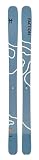
7. Faction Agent 2 – Best Full Sidewall Durability
Faction Agent 2 Men’s Touring Skis, Blue, 163cm
Karuba wood core
Full-length carbon weave
Full strength sidewall
Elliptical sidecut
Pros
- Full strength sidewall for edge hold and core protection
- Karuba core is light with good vibration absorption
- Carbon weave adds torsional strength cheaply
- Elliptical sidecut gives long arcs and easy initiation
Cons
- No published owner reviews
- Only a 163 cm length listed
- Listed weight of 16 ounces cannot be a full pair
The Agent 2 is the durability answer in this roundup. A full strength sidewall runs the full length of the ski, which is the single most effective protection you can buy against the rock strikes, rail scrapes and tail impacts that end lightweight skis early. If you ski hard terrain and want a ski that survives it, that detail matters more than most specs.
Inside is a Karuba wood core, described as extremely light with good strength properties, good flex and excellent vibration absorption. On top of that sits a full-length carbon weave for torsional strength without a meaningful weight cost, which is an efficient way to build a stiff ski without burying it in plies.
The elliptical sidecut is the quiet differentiator. A longer radius underfoot gives long stable arcs, while shorter radii in the tip and tail make turn initiation effortless. That combination is why the ski is listed at only 163 cm in this colorway, since a short ski with a long underfoot arc behaves well.
One caution on the data: the listed item weight of 16 ounces cannot describe a full pair of skis. Weight the pair in person rather than trusting the figure.
Why Full Sidewall Beats Stepcap for Most People
A stepcap ski has a cap layer that wraps the core and ends partway up the ski, leaving the tip and tail more exposed. It is lighter and it damps some chatter, and it is the wrong choice if you land on rock or ski near edges.
The failure mode is the part most write-ups skip. The exposed core takes the impact, moisture gets in through the wood, and the damaged section eventually delaminates or rots. A full sidewall spreads that energy into material designed to take it. If durability is in your top three criteria, this is the geometry to buy.
Where the Agent 2 Falls Short
At 163 cm this colorway is a short ski. That is correct for technical days and ski mountaineering approaches, and wrong for anyone wanting to cover long tours and big descents at speed. Check the full size run before buying.
There is also no owner feedback on this listing at all, so the durability case is a construction argument rather than a logged one. It is a strong argument, but it is not the same as a ski whose fifth season is documented.
8. Black Crows Camox Freebird – Best for Technical Terrain
Freebird Camox by blackcrows
Lightweight paulownia core
Carbon and fiberglass stringers
Mid 90mm platform
True to size
Pros
- Balance of skiability and performance for varied backcountry
- Carbon and fiberglass stringers add energy
- Paulownia core stays light and supple
- True to size simplifies fit
Cons
- No published owner reviews
- Aimed at advanced and expert skiers
- One-year listed warranty
The Camox Freebird is explicitly positioned above a typical touring ski in performance, not just in category. The listing says so directly: advanced to expert backcountry skiers who want more from a mid-90 mm underfoot platform. That honesty is useful, because it tells you immediately that this is not the ski for a first season.
Construction supports the positioning. A lightweight paulownia woodcore keeps the weight down without sacrificing too much stiffness, and fiberglass and carbon fiber stringers boost stiffness and energy without adding a lot of overall weight. That is a more performance-leaning layup than a pure touring build.
What we like most is the framing: the balance between skiability and performance. In a mid-90 mm freeride platform, skis usually pick a side. This one claims versatility, and the stringers plus a stiff-enough core are the reasons that claim is credible.
The skis run true to size, which removes one of the most common sizing regrets. Confirm against your height and ability rather than assuming, but at least the fit is not a variable here.
What Technical Terrain Actually Rewards
Technical terrain rewards torsional stiffness, a defined contact point and predictable edges. A ski that is too soft tracks poorly on edge, a ski with too much rocker skids, and a ski that is too light loses shape the moment conditions firm up.
Stringers are the structural answer. They add stiffness in specific zones without making the whole ski heavy, which is exactly the compromise a technical backcountry ski needs, and the reason stringers show up in nearly every high-end touring build.
Where the Camox Freebird Falls Short
Beginners should skip this one. A ski that rewards precise input and punishes late decisions is a poor tool for someone still learning to read terrain, and no amount of good construction fixes that mismatch.
It also carries a one-year listed warranty, the shortest here alongside the Zero G 96, and there is no published owner feedback to offset that. For a ski aimed at hard use over many seasons, a one-year warranty is a real consideration.
9. K2 Wayback 92 – Best for Long Spring Tours
K2 Wayback 92 Mens Skis, 174
Paulownia Tour Light core
92mm underfoot
Tour rocker profile
Snowphobic top sheet
Pros
- Paulownia Tour Light core optimised for climbing
- 92mm width suits softer snow and touring
- Snowphobic top sheet helps keep bases clean
- Three lengths from 160 to 181 cm
- Two-year limited manufacturer warranty
Cons
- No published owner reviews
- Listing gives very little construction detail
- 92mm is narrow for mid-season powder
The Wayback 92 is built for long approaches on snow that is getting heavier and wetter, and the core is the reason. Paulownia Tour Light is a very light wood chosen specifically to keep the ski manageable on the skin track, and 92 mm underfoot is narrow enough that the ski does not fight you in a long tour.
The Snowphobic top sheet is an underappreciated feature. A surface that sheds snow and helps keep the base cleaner is worth real attention in spring, when wet snow grabs everything it touches and a sticky base is a genuine drag on the descent.
Three lengths are published, from 160 cm to 181 cm, and a two-year limited manufacturer warranty is listed. That is the better warranty showing on this list, and it pairs well with a ski most people will put significant mileage on.
We want to be clear that the listing is thin on specifics. It gives us a core material, a width, a rocker profile and a top sheet, and not much else, so this section is more constrained than the ones above it.
Why Spring Touring Wants a Narrower Ski
By late season the snow is heavier, the days are longer and the descents are longer. A narrower waist turns more easily on a firm, glazed surface, and the reduced weight shows up over the fifth hour of a climb, not the first.
That is the whole argument for a 92 mm platform on a spring objective. You are not chasing float, you are chasing efficiency across a long day, and turnability matters more than surface area once the powder is gone.
Where the K2 Falls Short
Ninety-two millimetres is genuinely narrow for a mid-season touring ski. If you will use it for January as well as April, a mid-90 to 100 mm platform gives you noticeably more range, and the K2 would be a specialist in that quiver rather than the one you reach for every day.
The sparse listing means there are real questions the product page does not answer, such as sidewall construction and turn radius. If durability to your core is a priority, ask the manufacturer before committing.
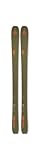
10. Fischer Transalp 98 CTI – Best for Steep Descent Stability
Fischer Transalp 98 CTI Touring Alpine Skis (Olive, 162cm)
Shaped TI Technology
Freeride tourer geometry
Lightweight wood core
Easy turn with float
Pros
- Shaped TI Technology adds real stability
- Freeride tourer geometry is built for downhill performance
- 98mm platform turns easily with good float
- Several lengths and a two-year warranty
Cons
- No published owner reviews
- Listed weight of 16 pounds looks wrong for a touring ski
- Weight data in the listing should be treated with caution
Stability on a steep descent is a construction problem, and Shaped TI Technology is Fischer’s answer to it. Titanium adds a small amount of weight and a large amount of torsional stiffness, which is what keeps a ski tracking when the fall line goes vertical and the snow turns firm.
The freeride tourer geometry is built for downhill performance rather than for maximum uphill efficiency, and 98 mm underfoot is a well-chosen width for a ski with that bias. It is described as easy to turn with good float, which is the combination that lets you descend variable terrain at speed without overdriving the ski.
Sizes published include 162, 169, 176 and 183 cm, and there is a two-year limited warranty. That size run is unusually good and covers both a shorter approach ski and a longer descent ski in the same model.
One data warning: the listed item weight of 16 pounds cannot be a single touring ski. If you are weighing this ski against lighter models, verify the pair weight yourself, because as published the figure is not usable.
What Stability Buys You on a Steep Pitch
Torsional stiffness is what stops a ski from twisting when the edge engages unevenly, which is exactly what happens on a firm, off-angle face. A stiffer ski holds the line and lets you stand on it; a soft one folds and skids, and on a steep pitch that difference is the whole outcome.
Titanium is the lightest way to buy that stiffness. Full carbon does it too, at higher cost, but for a ski meant to be climbed as well as descended, a titanium-reinforced build is a sensible allocation of material.
Where the Transalp Fits Less Well
A freeride tourer geometry prioritises the descent, which means it is not the lightest option in this roundup for a given width. If your objectives are long, high and genuinely mountaineering in character, every gram on your back counts differently.
Combined with the unusable weight figure in the listing, this becomes a harder ski to compare directly. Get the real pair weight from Fischer or a retailer before you rank it against the lighter touring models here.
11. Whitewoods Whitetail NNNBC Package – Best Complete Starter Package
Whitewoods Whitetail Adult Metal Edge Backcountry Cross Country NNNBC Ski Package: Skis, Bindings, Boots, Poles (170 cm Skis, EU Boot Size: 43)
Skis with pre-mounted bindings
Poles and boots included
Waxless base
3/4 metal edges
Pros
- Everything in one box including boots and poles
- Molded waxless base needs no kick wax
- Three-quarter metal edges and powder tip
- Powder tip and ABS tail protector
- Many length and boot size combinations
Cons
- No published owner reviews
- Sixty millimetre waist is far too narrow for powder
- Lower-end NNNBC hardware rather than alpine touring bindings
This is a complete package, and that is genuinely rare. You get skis, pre-mounted Rottefella NNNBC step-in bindings, Cross Trail Nordic poles and Whitewoods 306-NNN boots with an NNN-BC sole, in a single purchase. For someone starting out, it removes the single largest barrier, which is working out which boot fits which binding.
The molded positive waxless base needs no kick wax, and the 100 gram Thinsulate lining in the boots is a legitimate design for touring use where breathability matters more than warmth. The bindings close with an audible click and release with pole pressure, which is a forgiving system for a first tour.
The construction is honest backcountry kit: 68-60-65 sidecut, three-quarter metal edges, a laminated wood core with a cap, a powder tip and an ABS tail protector. The edges give real downhill control on a ski that otherwise looks like a cross-country ski.
Be clear about what this is though. A 60 mm waist is a Nordic touring platform, not an alpine touring one, and the bindings and boots are entry-level NNNBC hardware. This is a ski for Nordic-style approaches and first tours, not for a descent into anything steep or deep.
Why a Complete Package Is Worth Considering
The compatibility problem is real. Boots and bindings have to match, and in an alpine touring setup a mismatch between boot standard and binding standard is a common and expensive first-season error. A matched package removes it entirely.
It also lowers the barrier to trying it. People buy the whole setup at once, tour on it in January, and decide what to change. The alternative, buying hardware one piece at a time, is how people end up with a mismatched setup and no tours to show for it.
Where the Whitetail Falls Short
Sixty millimetres underfoot is very narrow by alpine standards, and it means no float, no edge hold on a firm descent and no suitability for deep snow. If the tours you have in mind involve anything past a Nordic-style approach, this is the wrong category of ski.
The boots are the other limit. They are functional touring boots, not alpine touring boots, and if you decide to progress to technical terrain later you will replace them. Budget for that as a second-season purchase rather than a surprise.
12. Fischer Outback 68 Crown/Skin – Best for Nordic-Style Tours
FISCHER Unisex Outback 68 Crown/Skin Xtralite Lightweight Durable Full-Length Steel Edge All-Terrain Off-Track Downhill Nordic Backcountry Touring Skis, Mounted BCX Auto Bindings, 169
Full-length steel edges
BCX Auto bindings mounted
Offtrack Crown climbing
Air Tec core
Pros
- Full-length steel edges for control and durability
- Rottefella BCX Auto bindings pre-mounted
- Offtrack Crown grips without skins on moderate climbs
- Air Tec core keeps a metal-edged ski light
Cons
- No published owner reviews
- Sixty-eight millimetre platform suits tracked touring only
- Easy Skin attachments sold separately
The Outback 68 Crown/Skin is for tours that are more Nordic than alpine, and it does that job cleanly. Full-length steel edges on a ski this light is the headline: full-length edges are what let a Nordic-style ski hold on a firm descent instead of washing out, and that is the difference between this and a pure cross-country ski.
Offtrack Crown climbing technology delivers a balance between grip and glide, so moderate pitches can be climbed without skins, and Fischer Easy Skin attachments can be added for steeper terrain. Rottefella BCX Auto step-in bindings are pre-mounted, so it is ready to tour out of the box.
Air Tec Steel Edge technology integrates air channels and advanced wood types to keep the core weight-optimised, and the slightly opened Nordic rocker camber minimises the effort needed to turn. Speed Grinding 2.0 base glide and a Sintec base finish handle the wax picture across conditions.
Three lengths are published at 169, 179 and 199 cm, and a two-year limited warranty is listed. The 199 cm option is unusually long for a ski in this class and is a genuinely efficient platform for a Nordic-style approach.
When a Nordic-Style Touring Ski Is the Right Tool
Some of the best touring is flat: a long valley approach, a low-angle ridge, a long skin track across rolling terrain. For that work a narrow ski with full steel edges is faster and simpler than anything in the alpine touring category, and the turn radius suits the terrain.
Full-length steel edges are what make this viable rather than a compromise. Partial edges on a narrow ski are fine on tracked snow and poor on anything firm, and a full-length edge holds through the rollovers that a Nordic-style approach produces.
Where the Outback 68 Falls Short
Sixty-eight millimetres is a tracked-terrain platform. If the day ends with a long descent through variable or open snow, a 68 mm ski will feel narrow and slow, and you will be wishing for surface area you do not have.
It is also step-in binding hardware, which is stable and reliable but not releasable in the technical sense. For ski mountaineering objectives that involve rappelling or belayed descents, that is a genuine limitation rather than a preference.
How to Choose Backcountry Skis for Touring: Width, Weight, Shape
Every pick above is a tool for a specific job. Here is how to decide which job is yours before you buy, starting with the three numbers that matter most.
Waist Width Bands
Waist width is the widest point of the ski underfoot, measured in millimetres, and it is the first decision because it cannot be changed later.
86 to 96 mm: Nordic-style approaches, spring tours on firm snow, long flat days and skimo. A ski in this band is efficient uphill and firm-snow capable, and it will not float in new snow. The K2 Wayback 92, the Rossignol BC 80 and the Fischer Outback 68 all sit here.
98 to 106 mm: the middle band and the most versatile. Enough width for soft snow and a decent day at the resort, narrow enough to turn in a gully. The Nordica Enforcer 94, the Atomic Backland 95, the Blizzard Zero G 96 and the Fischer Transalp 98 all sit here, and for most people one of these is the right answer.
108 mm and wider: deep snow and big mountain. More flotation in powder, more work on hard snow and in the trees, more commitment. The Fischer S-Bound 112 sits at the top of the touring range, and the Dynafit Tigard 107 is the wide option that still works in mixed snow.
If you ski more than one kind of snow, sit in the middle band. It is the range where a ski can follow you from a storm day to a firm ridge.
How Light Is Light Enough
Weight per pair is the number that decides how far you can go. Here is the honest version: not one of the twelve listings in this roundup publishes a reliable pair weight, and two publish figures that are plainly wrong. Weigh a pair yourself before you buy, on a scale, in grams.
As a working guide, a pair in the low two-thousands of grams suits day touring and resort-plus-backcountry use. A pair in the mid two-thousands suits multi-day tours comfortably. Anything under about 2,400 g per pair is built for long tours and ski mountaineering, where every gram compounds across a full day.
A 300 g difference across a pair is not a detail. On a long climb that is the difference between arriving with daylight and arriving with a headlamp, and it changes how many objectives are realistic in a week. This is why the ultralight end of the market exists and why people buy an entire second ski for the weight.
Boots matter more than most skiers expect. A heavy boot can outweigh a lightweight ski, so if you are optimising for speed on the skin track, weight your whole setup rather than the ski alone. If you want to know how to stay oriented on a long tour, our backcountry GPS handhelds roundup covers the navigation side.
Rocker, Camber and Hybrid Profiles
Camber is the classic profile: an upward arch underfoot that gives an edge-driven turn and firm-snow grip, at the cost of a harder transition when the terrain drops away.
Rocker inverts it, lifting the tip and tail so the ski rides over variable snow and rolls onto its edge. It is more forgiving and more floaty, and less precise at speed on firm pistes. The Blizzard Zero G 96 is a rocker example.
Rocker and camber is the profile most modern touring skis use, with rocker at both ends and camber underfoot. The Nordica Enforcer 94 Unlimited and the Black Crows Camox Freebird both use early rise with camber, and the Dynafit Tigard 107 is rocker, camber, rocker. In practice this is the all-round answer for a skier who does more than one kind of day.
Whichever profile you choose, size conservatively. A rocker ski behaves longer than a camber ski of the same length, so a rocker touring ski that is sized like a camber ski will feel enormous.
Building a Two- or Three-Ski Quiver
The most common question we see is whether to buy one pair or several. One pair is simpler and cheaper, and for many riders it is the right answer. But a quiver solves a real problem, which is that no single width covers a season.
A practical two-ski setup pairs a mid-90s to 105 mm ski for winter touring with resort use and a narrow 85 to 92 mm ski for spring touring. That is the compromise most riders land on, and it covers the widest range of conditions for two purchases instead of three.
A three-ski quiver goes wider: 106 to 110 mm for winter backcountry and resort, something in the 88 to 96 mm range for hardpack-only days, and a light 85 to 90 mm ski for spring touring. The third ski is a genuine luxury, and it is where lightweight constructions earn their place.
Start with one pair. Most people who end up with three skis bought the second one because a specific day frustrated them, not because they planned a quiver. If you are choosing where to start, the mid-90 to 100 mm band is the lowest-risk place to begin.
Bindings, Boots and Setup Weight
Tech bindings lift the heel for a stride or kick turn, which is what makes long tours efficient. They are the standard choice for ski mountaineering and multi-day tours, and they demand a solid boot with a forward-lean design.
Step-in bindings such as the NNN-BC and BCX Auto hardware on two of the picks here are simpler and more stable for a rider who does not need the heel to lift. They are a legitimate choice for Nordic-style touring and a forgiving one for beginners.
Frame bindings put a frame under the boot to allow a heel lift while keeping a conventional boot, which suits resort boots and riders without touring boots. They are heavy compared with tech bindings, which is the trade you accept for keeping one boot in the quiver.
Whichever you choose, budget the whole setup rather than the ski. Skis, bindings, boots, skins and a pack all go on your back, and the last two weigh more than most people expect.
Sidewall Construction, Core Materials and Maintenance
Full sidewall is the most durable construction and the heaviest. Sandwich construction, as on the Blizzard Zero G 96, drops material from the tip and tail to save weight and add forgiveness, and it protects the core less over a hard season. Stepcap sits between them. If you ski rock and rails, buy full sidewall.
Core materials decide the character. Poplar, as in the Atomic Backland 95, is light with good shock absorption. Paulownia, used in the Black Crows Camox Freebird and the Dynafit Tigard 107, is lighter and livelier. Karuba, in the Faction Agent 2, is a light hardwood with strong flex and vibration absorption.
Maintenance is where durability is actually won. Have edges checked and detuned for touring before the season, and plan on a base condition and a set of climbing skins that fit your skis. Check binding inserts annually, and treat loose inserts as a reason to stop touring, not to tape them over.
Buying Used Skis Without Regret
Older touring skis are often good value, and a ten-year-old ski with intact edges and solid inserts is still a fine tool. The parts to inspect are the edges for concave wear, the bases for deep scratches, the bindings and inserts for looseness, and the delamination along the edge where a partial sidewall takes the hit.
Skip a ski with water inside the core, a cracked tail, or inserts that move in the hole. Those are structural failures and they are not repairable in a way that makes the ski trustworthy. Check the model year for whether the ski predates modern touring inserts before assuming a binding will fit.
Frequently Asked Questions
Are touring skis the same as backcountry skis?
Yes, the terms are used interchangeably. A touring ski, an alpine touring ski and a backcountry ski all describe a ski built to climb on climbing skins and descend on metal edges, usually with a narrower waist and a lighter core than a resort ski. What separates touring skis from freeride skis is intent, not construction: freeride skis are wider and stiffer for high-angle descents.
What kind of skis are best for touring?
The best touring skis for most people are mid-90 to 105 mm waist, rocker and camber profile, with a light wood core and full or sandwich sidewalls. That combination climbs efficiently, turns in a gully and still holds an edge. In this roundup the Nordica Enforcer 94, the Atomic Backland 95 and the Blizzard Zero G 96 all sit in that band.
What kind of skis do you use for backcountry skiing?
For general backcountry touring, most skiers choose a mid-90 to 100 mm waist all-mountain tourer. Choose narrower for spring and Nordic-style tours, and wider above 106 mm for reliably deep snow. The Rossignol BC 80 and the K2 Wayback 92 cover the narrow end, while the Fischer S-Bound 112 and the Dynafit Tigard 107 cover the wide end.
What is the best ski length for touring?
A touring ski should generally measure within about 5 to 10 cm of your height, and shorter if you are new to the sport or ski technical terrain. Add one size or two if the ski has a lot of rocker, because rocker lengthens how the ski feels. Longer skis track better at speed and ski far better in deep snow; shorter skis turn easier and are lighter to carry.
What are the best backcountry touring skis?
For most riders the best backcountry touring ski is a mid-90 to 100 mm all-mountain tourer with a rocker and camber profile and a light wood core, such as the Atomic Backland 95 or the Nordica Enforcer 94 Unlimited. For big powder days go wider to the Dynafit Tigard 107 or the Fischer S-Bound 112, and for long spring tours go narrower to the K2 Wayback 92.
What is the ideal weight for backcountry skis?
For day touring and resort plus backcountry use, a pair in the low two-thousands of grams is comfortable. For multi-day tours, the mid two-thousands is better. Under roughly 2400 g per pair is built for long tours and ski mountaineering. No listing in our roundup publishes a reliable pair weight, so weigh a pair on a scale in grams before you buy.
What are the lightest touring skis?
The lightest touring skis in this roundup are the Nordic-platform models: the Whitewoods Whitetail NNNBC package and the Fischer Outback 68 Crown/Skin, both metal-edged and built for tracked or Nordic-style tours. Among true alpine touring skis, the lightest constructions here are the K2 Wayback 92 with its Paulownia Tour Light core and the Faction Agent 2 with its Karuba core.
Is 104 wide enough for powder?
Yes, a 104 mm waist is wide enough for real powder days and is the most versatile all-mountain touring width. It is not the widest ski in this roundup, and the Dynafit Tigard 107 or the Fischer S-Bound 112 will float better in genuinely deep snow. On firm snow and in the trees, the narrower ski turns and tracks more easily.
Final Verdict: The Best Backcountry Skis for Touring in 2026
The best backcountry skis for touring depend on one question: what snow do you actually ski? If it is reliably soft, go wide to the Dynafit Tigard 107 or the Fischer S-Bound 112. If it is variable, the Nordica Enforcer 94 Unlimited or the Atomic Backland 95 will do more for you than any specialist. If you are on a first tour, the Rossignol BC 80 Positrack removes the hardware learning curve entirely.
Our single pick is the Fischer S-Bound 112 Crown/Skin, on the strength of a climbing system and an extra-wide steel edge that few touring skis pair together. Treat that ranking as a starting point rather than a verdict, and weigh a pair in grams before you commit, because none of these listings publish a pair weight you can trust.
Whatever you choose, gear up with a transceiver, probe and shovel and a course before your first tour, not after. The 2026 season is a good time to get all of it in place.