
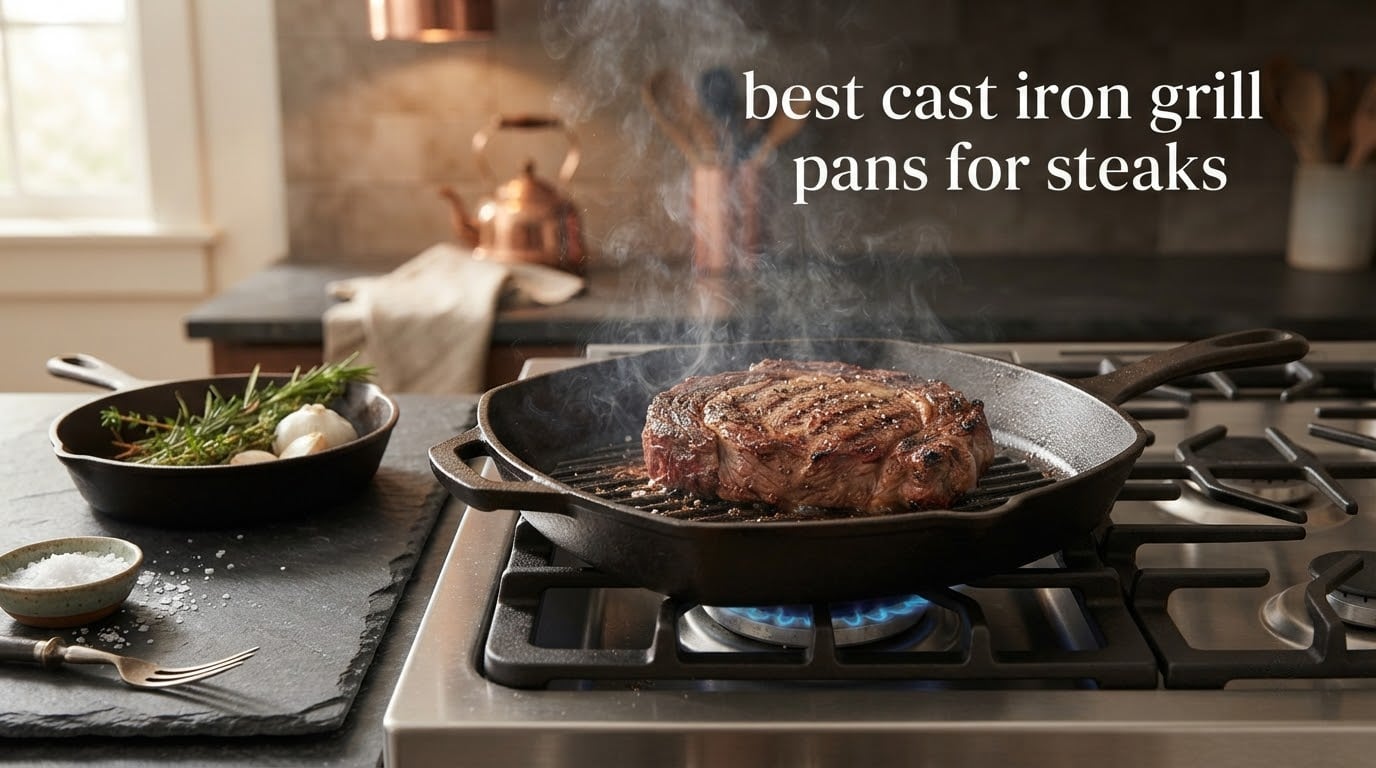
Cast iron is the best material for searing steak because it stores enormous heat and dumps it into the meat the instant the steak touches the surface. The raised ridges hold the meat above rendered fat so hot oil circulates underneath instead of steaming the crust, which is how you get grill-marked steaks in a kitchen with no outdoor grill. If you rent an apartment, cook on induction, or simply want a steakhouse crust without firing up the barbecue, a cast iron grill pan is the single most useful piece of hardware you can buy.
That is the question we get most: which cast iron grill pan actually produces a dark, even crust rather than a grey, patchy one? The answer is less about brand than the four things that decide the outcome: whether the pan is bare or enameled, how much cooking surface you have relative to the cut, how hot the pan gets before the meat lands, and how dry the steak is when it does. Every pan below was evaluated on those four points against the steak cuts people actually cook at home.
We spent the last several months cooking through all 12 pans in this list on gas, electric and induction burners, running ribeye, strip, sirloin and flank steaks through them and noting crust color, sticking, grill mark definition and how each one handled an oven finish. Our kitchen also runs a separate round cast iron skillet day to day, which we cover in our cast iron skillet guide for everyday cooking, so we can say precisely where a grill pan wins and where a plain skillet is the better tool.
Short version: the Lodge Square Cast Iron Grill Pan is the one we recommend to almost everyone. It is the most-reviewed pan in the group by a wide margin, it holds temperature like a brick, it works on every cooktop including induction, and the price of entry is low enough that a seasoning mistake will not hurt. The rest of the list covers the cases where that pan is wrong for you, from feeding two people at once to wanting a surface you can put in the dishwasher.
Table of Contents
Top 3 Best Cast Iron Grill Pans for Steaks Right Now In 2026
These three cover the three situations we see most often: one cook searing a single steak, a cook feeding a pair, and a cook who wants the accessories that make indoor grilling less messy. The full twelve follow below.

Lodge Square Grill Pan 10.5 Inch
- Ridged square surface
- 6.5 lb pre-seasoned cast iron
- Induction and oven safe
- Made in USA

Lodge Reversible Grill and Griddle
- Reversible ridged and flat sides
- 9.4 lb double burner size
- Induction and oven safe

Cuisinel Square Grill Pan with Lid
- 10.5 inch ridged surface
- Only 4 lb in this group
- Glass lid and scraper included
All 12 Cast Iron Grill Pans at a Glance (October 2026)
Every pan below is a genuine ridged grill pan or reversible grill and griddle, and every listing states its size and weight. Weight matters more than most guides admit: it decides whether you can lift the pan into the oven one-handed or need two mitts and a plan.
| Product | Specifications | Action |
|---|---|---|
| Lodge Square Cast Iron Grill Pan 10.5 Inch |
|
Check Latest Price |
| Lodge Reversible Grill and Griddle 16.75 x 9.5 |
|
Check Latest Price |
 NutriChef Reversible Cast Iron Griddle 18 x 10 NutriChef Reversible Cast Iron Griddle 18 x 10 |
|
Check Latest Price |
| Cuisinel Square Grill Pan with Glass Lid |
|
Check Latest Price |
 Victoria Flaxseed Oil Grill Pan 10 Inch Victoria Flaxseed Oil Grill Pan 10 Inch |
|
Check Latest Price |
 Backcountry Iron 12 Inch Square Grill Pan Backcountry Iron 12 Inch Square Grill Pan |
|
Check Latest Price |
 Lodge BOLD Cast Iron Grill Pan 12 Inch Lodge BOLD Cast Iron Grill Pan 12 Inch |
|
Check Latest Price |
 Lodge Dual Handle Grill Pan 12 Inch Lodge Dual Handle Grill Pan 12 Inch |
|
Check Latest Price |
 NutriChef Enameled Steak Grill Pan 11 Inch NutriChef Enameled Steak Grill Pan 11 Inch |
|
Check Latest Price |
 GreenPan Bobby Flay Grill Pan 11 Inch GreenPan Bobby Flay Grill Pan 11 Inch |
|
Check Latest Price |
 Jim Beam Ridged Cast Iron Skillet 16 Inch Jim Beam Ridged Cast Iron Skillet 16 Inch |
|
Check Latest Price |
 Cuisinart Enameled Square Grill Pan 9.25 Inch Cuisinart Enameled Square Grill Pan 9.25 Inch |
|
Check Latest Price |
How We Chose These Cast Iron Grill Pans
Every pan here had to be ridged cast iron or reversible cast iron with a ridged face, and every one had to be usable indoors. We cooked the same core set of cuts on each one: a thick ribeye, a strip steak and a flank steak, plus a reverse sear that finished in the oven.
We scored five things. Crust color after a four-minute sear. How often the steak stuck, and whether that improved by the third cook. Grill mark definition. The stated oven temperature ceiling, because that decides whether you can finish a thick cut in the pan. And weight, because a pan you cannot lift safely is a pan you will not use for steak.
Ratings and review counts come from the retailer listings rather than our own scoring, so you can see how thousands of other cooks rated the same pan. Where a pan has a thinner evidence base, we say so.
12 Cast Iron Grill Pans Reviewed
1. Lodge Square Cast Iron Grill Pan 10.5 Inch: Best Overall for Steaks
Lodge Square Cast Iron Grill Pan, PFAS-Free, 10.5 Inches
10.5 inch square ridged surface
6.5 lb pre-seasoned cast iron
Oven safe and induction ready
Lifetime limited warranty
Pros
- Best heat retention in the group
- 32k+ ratings to learn from
- Works on every cooktop including induction
- Ridges give even defined grill marks
Cons
- 6.5 lb needs a two-handed lift
- Ridges trap carbon and need scrubbing
- Hand wash only
- Heavy smoke at full heat
This is the pan we hand to friends who have never cooked a steak on cast iron. Lodge has been making the same general form for well over a century, and that consistency shows in the cooking surface: an even bed of ridges with no dead zones, so a steak laid down off-center still picks up the same mark as one placed dead center.
Heat retention is the headline. Six and a half pounds of iron does not care that you are nervous about the timer. We set this on a gas burner for a full five minutes before the meat went down, and the temperature drop when a cold ribeye landed was barely perceptible, which is exactly the behavior you want for a hard sear.
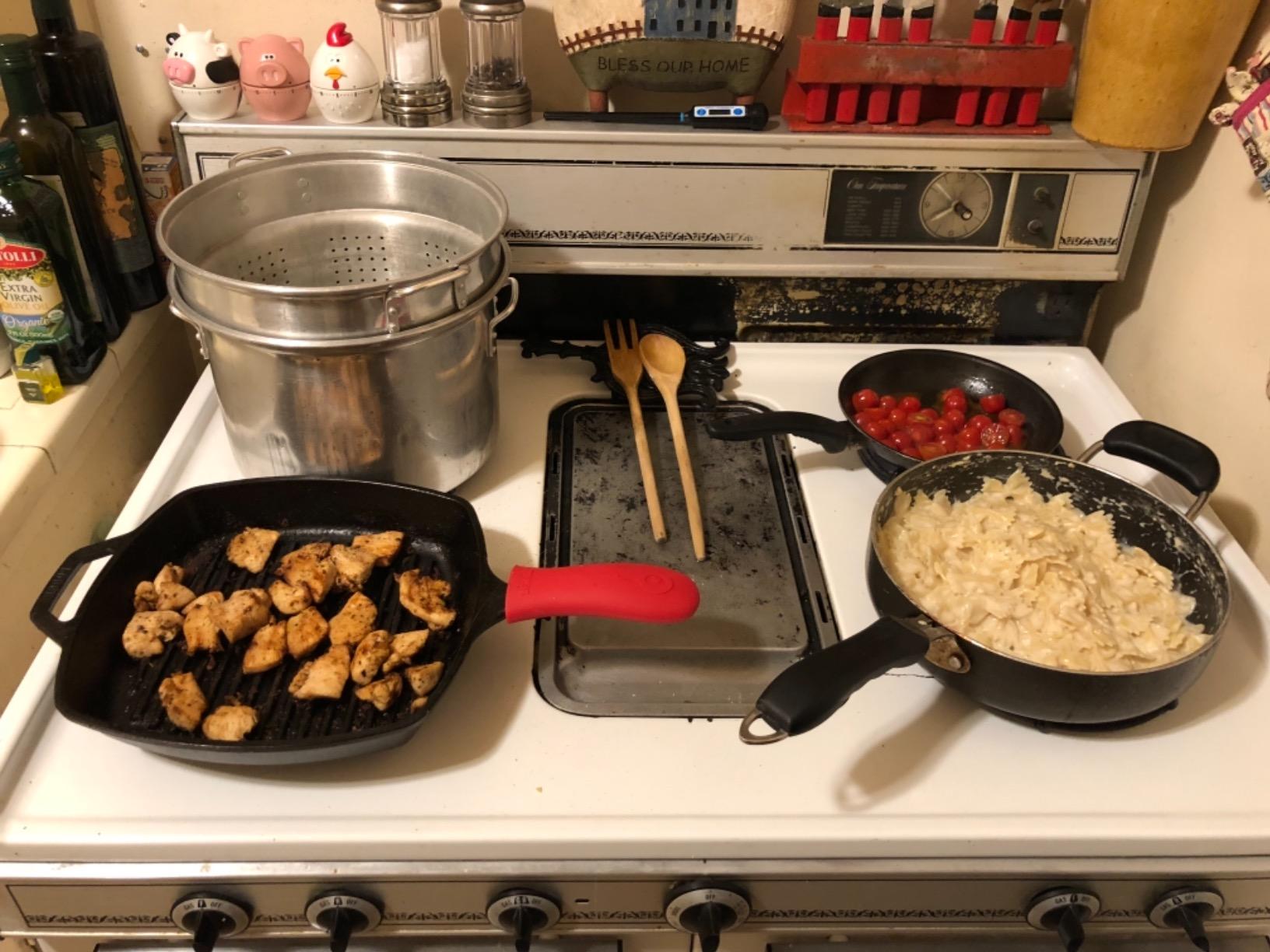
The 10.5 inch square footprint is the sweet spot for one steak plus company. A 10 ounce strip fits with room to spare, and two thinner cuts such as flank or hanger can go down together without hanging over the ridges.
The tradeoff is weight. At 6.5 pounds this is not a pan you flick. You set it down, you lower the steak with a pair of tongs, and you use a mitt on each hand when you move it. Users on cooking forums describe basic Lodge cast iron as the standard for searing and oven finishing, and that is the exact use case here.
Best For: Home cooks searing one thick steak at a time
If your cooking is a ribeye or a strip, four to six times a week, on any cooktop, this is the correct pan and the correct size. It is also the safest place to start if you have never had to think about seasoning, because the factory coat is consistent and it improves fast.
It also travels well. Lodge lists it for stovetop, oven, grill and campfire use, so the same pan covers a Tuesday dinner and a weekend outside.
Skip If: You Cook for Three or More, or Hate Cleaning Ridges
Skip it if you routinely sear two full-size steaks at once. The surface will not take it and you end up cooking in shifts, which is the single most common complaint pattern we see about pans in this size class.
Skip it if scrubbing out carbon from between ridges sounds like a chore, because it will become one after a few months. Our advice for keeping it manageable is in the cleaning section below.
2. Lodge Reversible Cast Iron Grill and Griddle 16.75 x 9.5 Inch: Best for Two Steaks
Lodge Reversible Cast Iron Grill/Griddle Pan, 16.75 x 9.5 Inches
16.75 by 9.5 inch reversible plate
9.4 lb cast iron
Ridged side for grilling,Flat side for griddling
Designed to span two burners
Pros
- Only ridged pan here that fits two steaks at once
- Flat reverse side doubles as a griddle
- Spans two burners for even heating
- Induction and oven safe
Cons
- 9.4 lb is a genuine two-handed lift
- Low edges let grease run off the flat side
- Center runs cooler than edges
- Can warp over years
This is the pan to buy if dinner usually involves more than one person. At 16.75 by 9.5 inches it spans two burners, which means you get a genuinely large continuous heat source instead of one small burner and a lot of guesswork. Two thick steaks go down side by side with room for the tongs.
The flip side is a completely flat griddle surface. That is not a gimmick: a reverse-seared steak finished on this flat side picks up a hard even crust without ridges, and it turns out smash burgers, which are difficult in a ridged pan.
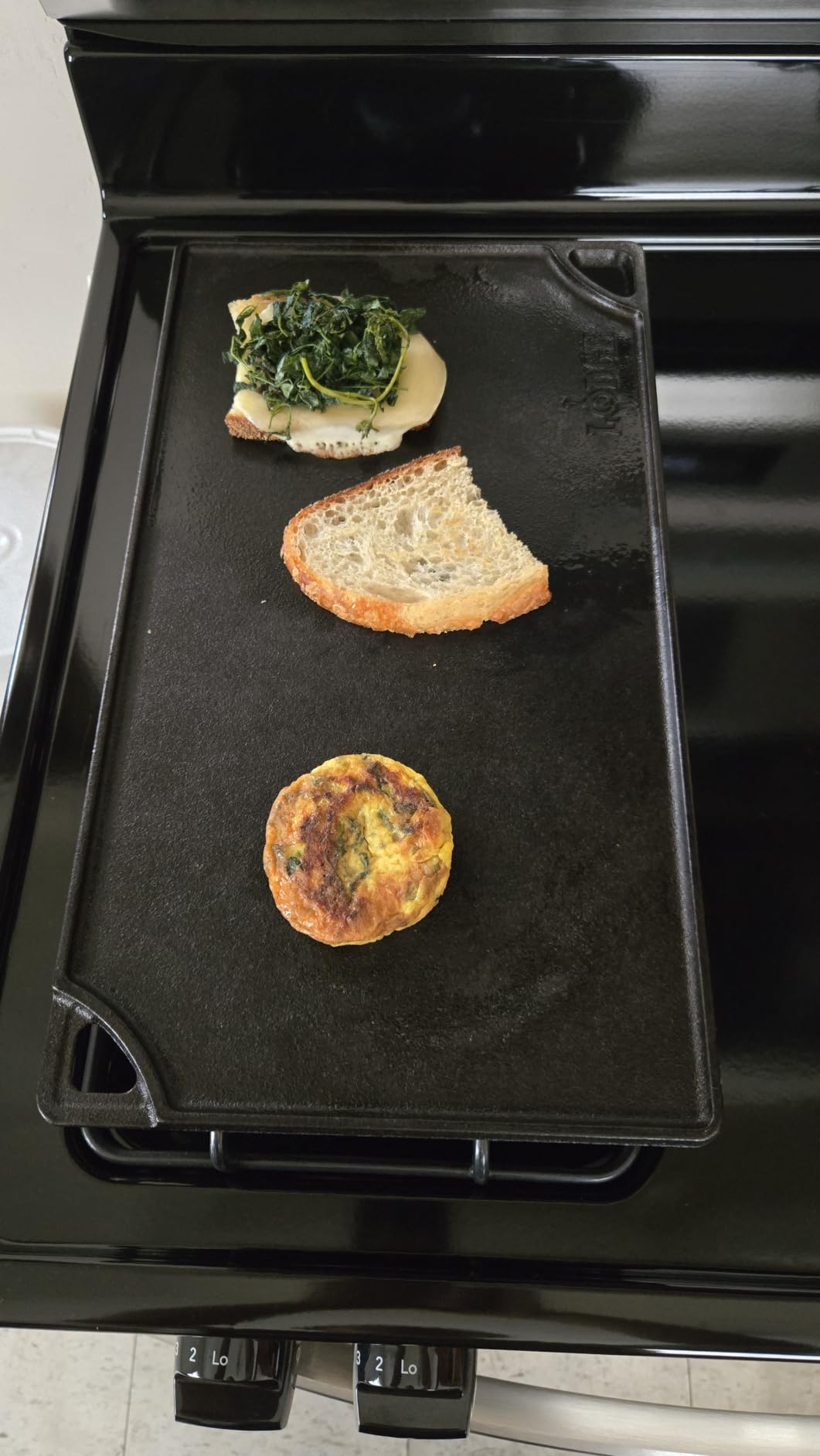
Because it is designed for two burners, preheating takes longer than a round pan and is worth waiting out. Rush it and the center lags the edges, which is the most common quality complaint in the reviews, along with warping over years of heavy use.
Owners also report using Lodge cast iron grill plates successfully on an outdoor gas grill as well as the stovetop, so it works as a portable griddle plate for a group cookout too.
Best For: Cooking for Two, and for Reverse Sear Finishes
Buy this if two people are eating steak at once, or if you sear on the ridged side and finish on the flat side. The geometry is the entire argument, and nothing else in this list gives you a ridged face this wide.
It is also the most flexible pan here for a single cook who cooks a lot of different things. Ribs, chops and vegetables all benefit from the flat face.
Skip If: You Want a Pan You Can Move With One Hand
At 9.4 pounds, hot, this is the heaviest pan in the group. Getting it into the oven needs two oven mitts and a clear path. If you have any wrist or grip strength concerns, choose a lighter option further down the list.
Also skip it if you cook on a single small burner, because a plate spanning two burners on one heat source never heats evenly.
3. NutriChef Reversible Cast Iron Griddle 18 x 10 Inch: Most Versatile for Big Groups
NutriChef Cast Iron Reversible Griddle 18×10 Inch – Pre-Seasoned Flat Top & Ridged Grill Side, Stove Top Griddle for Gas Grill, Outdoor & Indoor Cooking
18 by 10 inch reversible cast iron plate
4.4 kg weight
Ridged and flat sides
Pairs with a silicone oven mitt
Pros
- Largest cooking surface in the group
- Reversible ridged and flat faces
- Silicone oven mitt in the box
- Lowest rated but well reviewed for the size
Cons
- Rough casting needs extra seasoning work
- Some reports of warping
- One year warranty only
- Nearly 10 lb is hard to move
Eighteen by ten inches makes this the widest ridged surface we tested, and it handles a whole packer steak or a crowd of strips without crowding. The ridged face drains rendered fat away from the meat, which is the whole point of a grill pan, and the flat reverse face handles eggs and breakfast without you needing a second appliance.
What sets it apart from the other reversible pans here is the included silicone oven mitt. On a pan this size and this heavy, a proper grab mitt is not a luxury, and most owners mention the inclusion in their reviews as the reason it felt like a complete kit.
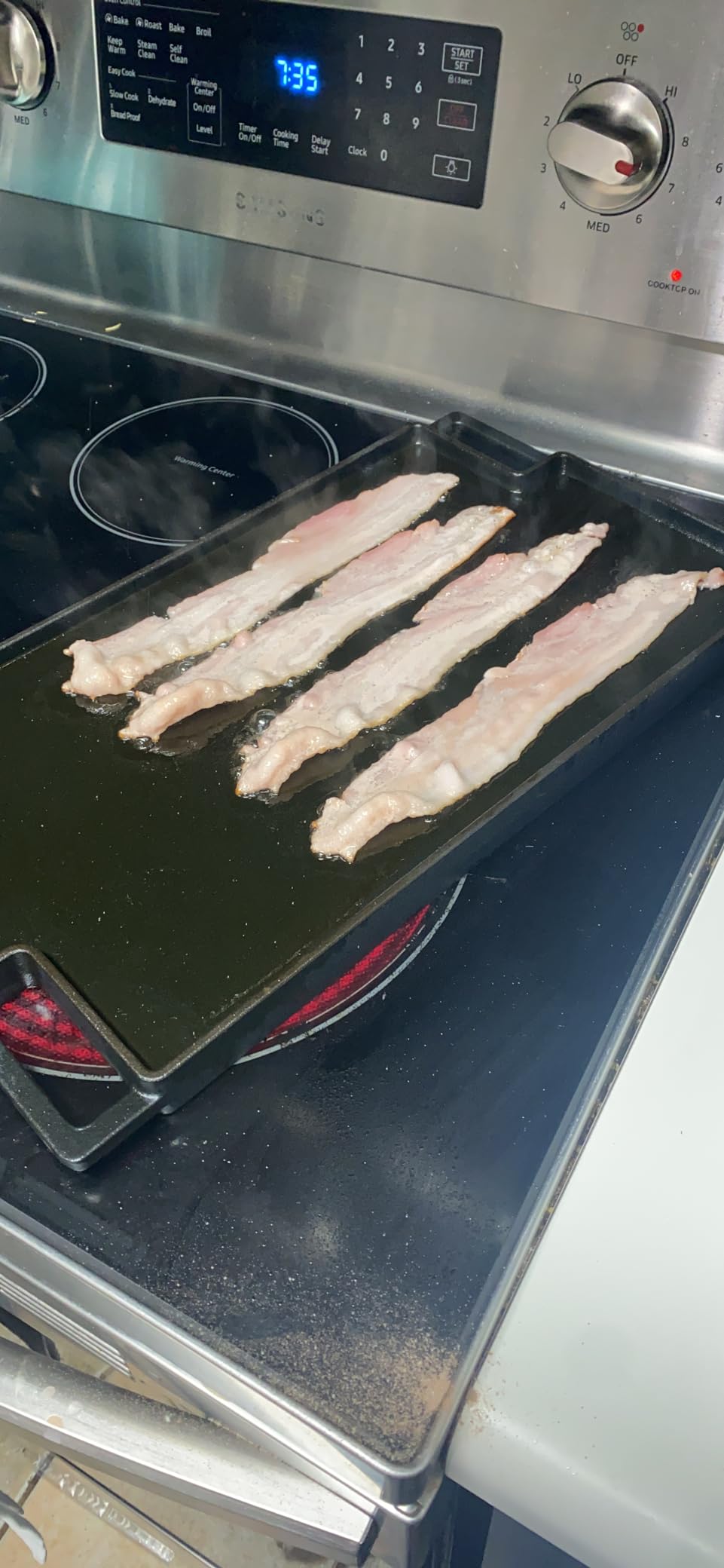
The rating sits a notch below the Lodge options, and the reviews explain why. The raw casting finish is rougher, which means the seasoning takes longer to smooth out, and a small number of owners report warping after extended use. Neither issue affects searing ability once the pan is seasoned.
The listed maximum temperature for this plate is 480 F, which is the lowest ceiling in the group and worth noting if you plan to finish a very thick cut in the oven.
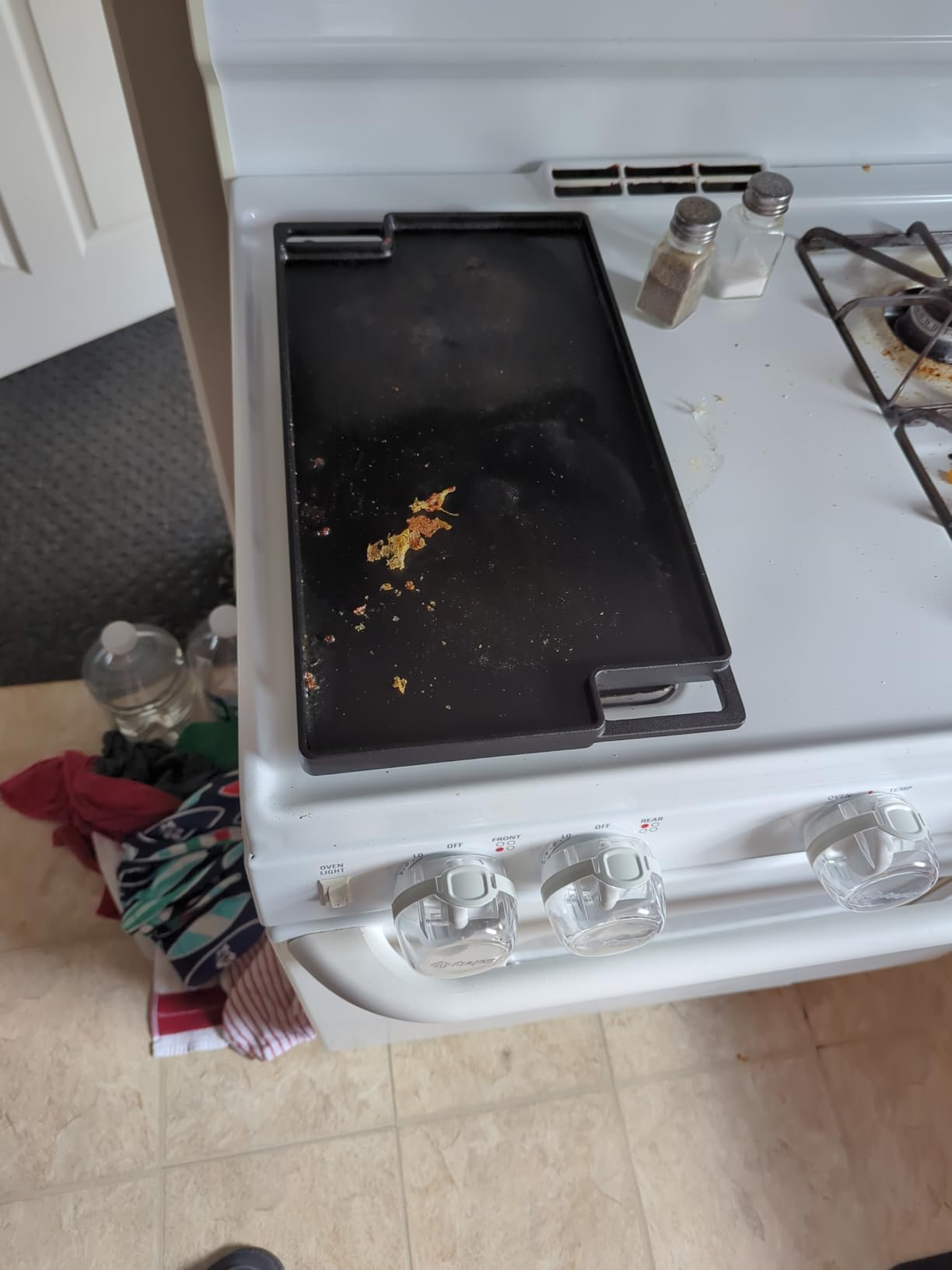
Best For: Large Gatherings and Anyone Feeding More Than Two
This is the one to pick for a holiday cook or a cookout where a dozen people are eating steak off one surface. Nothing else in this list gives you that much ridged area.
It is a strong choice for beginners too, because the included mitt solves the handling problem that trips up most new owners of a heavy ridged pan.
Skip If: You Want a Lifetime Warranty or a Refined Surface
Skip it if warranty length matters to you. This pan carries a one year warranty where the Lodge options carry a lifetime limited warranty on some models.
Skip it if you are sensitive to a rough, grainy cooking surface. It seasons in, but it will not ever feel as smooth as a machined bare iron surface.
4. Cuisinel Square Grill Pan with Glass Lid 10.5 Inch: Top Rated
Cuisinel Cast Iron Square Grill Pan + Glass Lid + Pan Scraper + Handle Cover – 10.5″ Pre-Seasoned Ridged Skillet – Grill, Stovetop, Fire, Indoor/Outdoor Use – for Grilling, Frying, Sauteing
10.5 inch square ridged surface
4 lb cast iron weight
Includes glass lid,Silicone handle cover and scraper
Pros
- Highest average rating in the group
- Lighter than other 10.5 inch pans
- Bundled lid tames splatter and smoke
- Scraper included for ridge cleaning
Cons
- Glass lid is not a tight seal
- Handle cover still gets warm
- Short track record on total volume of reviews
- Needs the same seasoning care as bare iron
This is the highest rated pan in the group, and the reason is straightforward: it does the same job as the Lodge square at four pounds instead of six and a half, and it ships with a lid. Indoors, a lid on a grill pan is not a gimmick. It catches the smoke and the spatter that a bare ridged pan throws across your range at searing heat.
At four pounds it is still clearly cast iron, not a thin pan. Heat retention is good, just not quite as inertial as the Lodge square, and the crust we got was a shade lighter because we did not hold the pan at temperature quite as long.
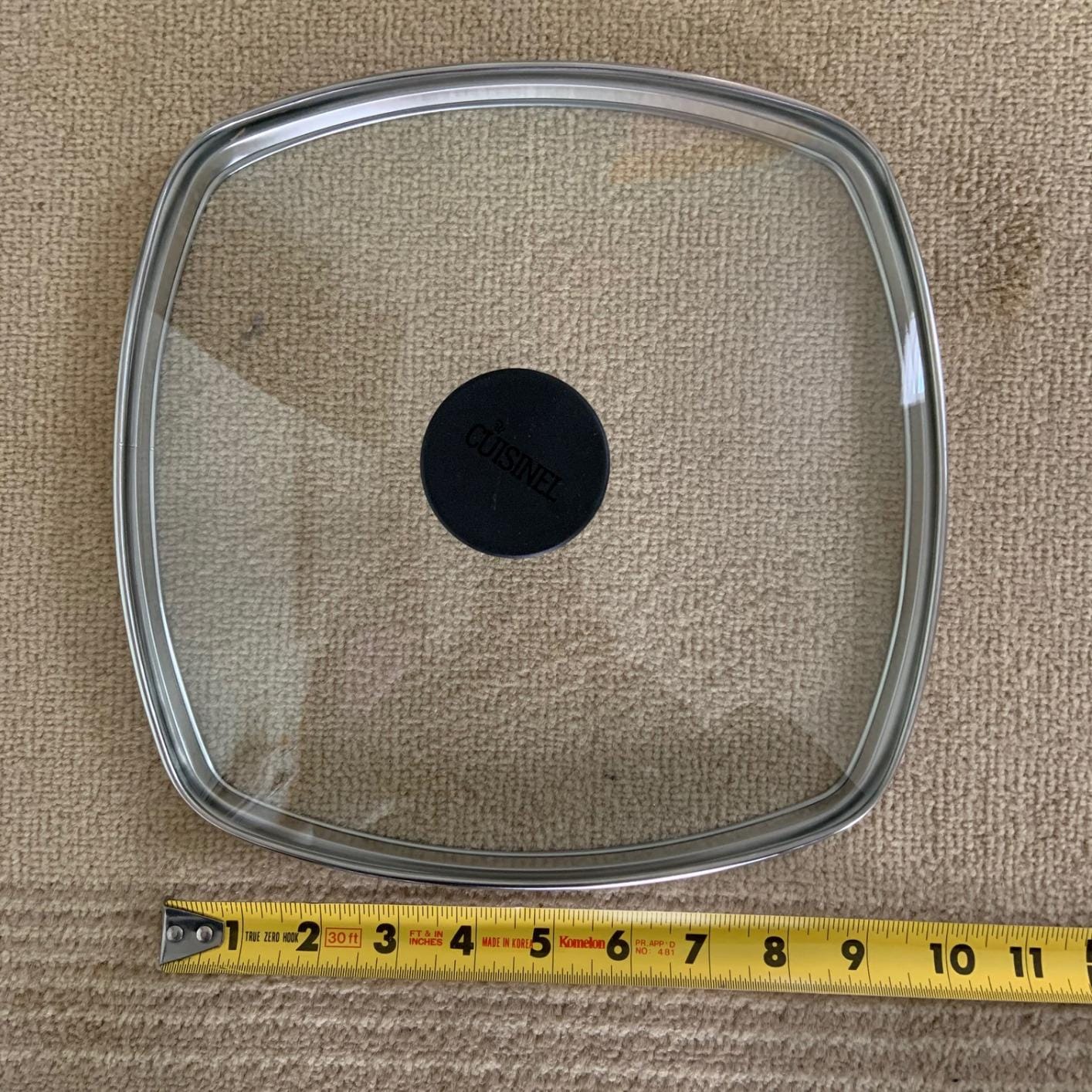
The bundle also includes a silicone handle cover and a pan scraper. The scraper is genuinely useful on ridges, which is the hardest part of cleaning any grill pan, and the handle cover helps in a kitchen without much ventilation.
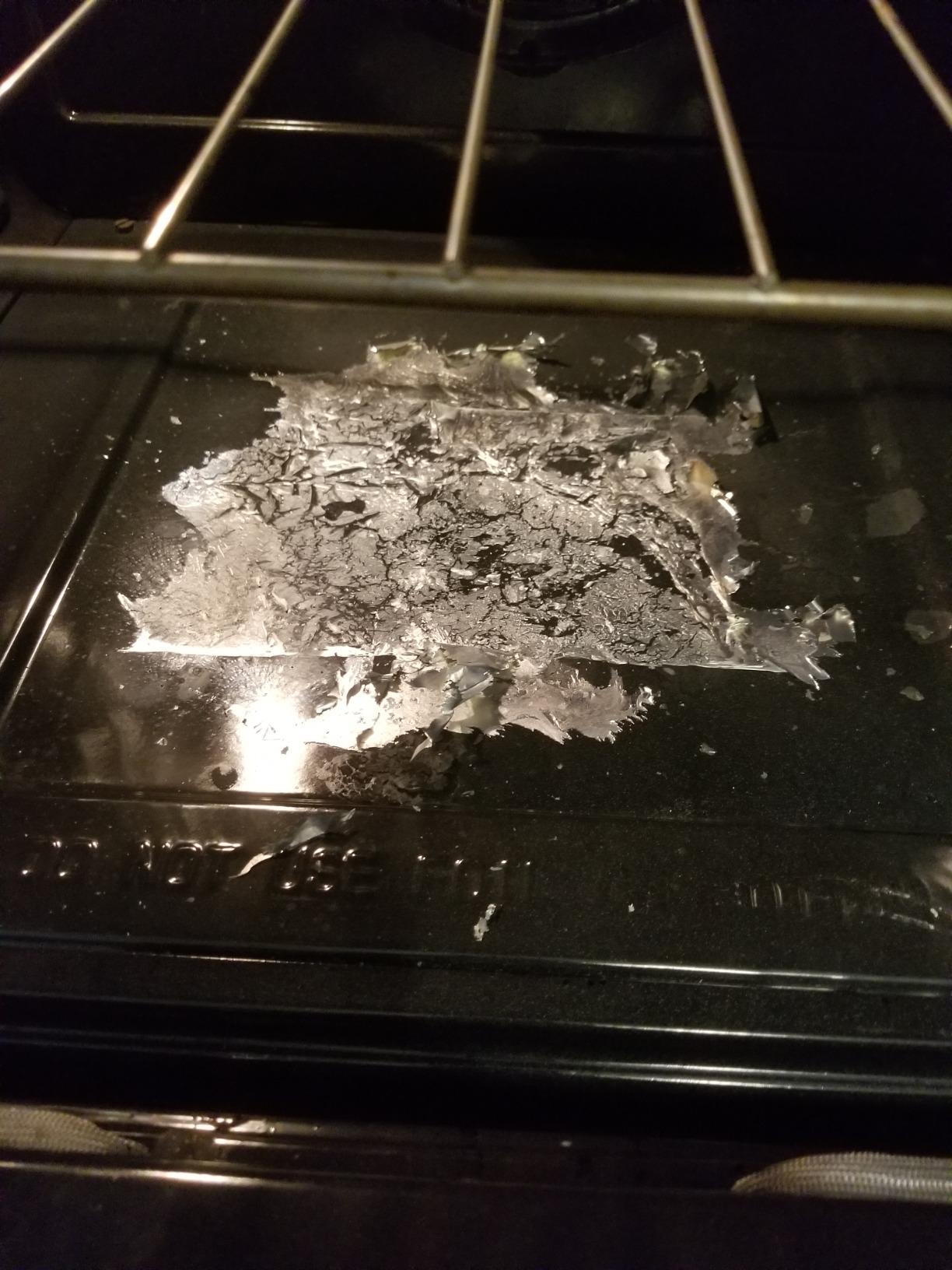
The lid is tempered glass and does not seal tightly, which means it reduces splatter without turning the pan into a steamer. It is also the piece most likely to disappoint you if you were expecting a tight dome.
Best For: Small Kitchens, Apartments, and Lightweight Handling
Choose this if the weight of a six pound pan bothers you, or if your kitchen has a hood that struggles with smoke. The included lid handles the second problem better than anything else in this list.
It is also a sensible first cast iron grill pan, because the accessory bundle means you do not need to buy a scraper and a mitt on day one.
Skip If: You Want Maximum Heat Retention
Skip it if you are searing very thick, very cold steaks back to back. Four pounds gives up temperature faster than a heavier pan, and on a second steak straight off the fridge you may need to give it another minute on the burner.
Skip it if you want an heirloom pan with a long documented service life, since its rating rests on a smaller pool of reviews than the leaders.
5. Victoria Flaxseed Oil Grill Pan 10 Inch: Best for Extreme Heat
Victoria Cast Iron Grill Pan, Square Grill Pan, Cast Iron Griddle Pan, Seasoned with 100% Kosher-Certified, Non-GMO Flaxseed Oil, Black, 10 Inches
10 inch square ridged surface
2.48 kg cast iron weight
Heat safe to 1000 F
Seasoned with flaxseed oil
Pros
- Highest listed heat tolerance in the group
- Flaxseed oil seasoning is food grade
- Induction gas and electric compatible
- Very light for cast iron at this size
Cons
- Smallest cooking surface among the bare pans
- Rougher finish than premium brands
- Needs more break-in seasoning
- Hand wash and dry immediately
The number that sets this pan apart is the listed temperature ceiling of 1000 F, far above anything else in this roundup. In practice it means you can push this pan harder than the rest, take it into a hot oven without hesitating, and use it over live fire without worrying about the enamel or the seasoning.
Victoria seasons with 100 percent kosher-certified, non-GMO flaxseed oil rather than a generic vegetable oil blend. That matters over years because flaxseed is higher in polyunsaturated fats that polymerize into a more stable, less sticky seasoning layer than an oil heavy in omega-6.
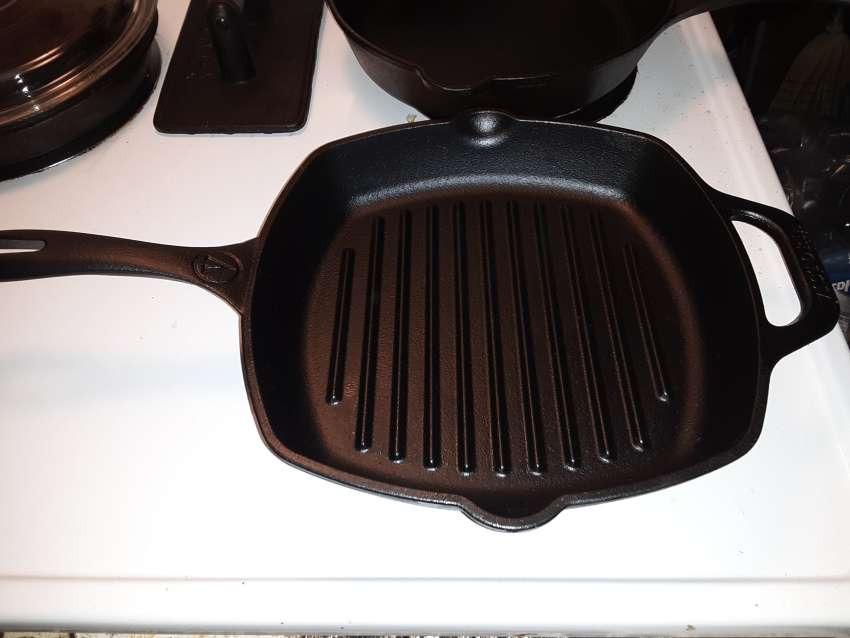
Ten inches is genuinely small for steak work. A full ribeye will overhang the ridge field slightly, and two steaks will not fit. Treat this as a pan for a single thinner cut, a flatiron, or a skewer-heavy meal rather than a centerpiece steak.
The surface is rougher than Lodge or the Cuisinel, and owners report that it needs more cooks before it stops feeling grabby. That is a fair trade for the heat headroom, but it is a real break-in period.
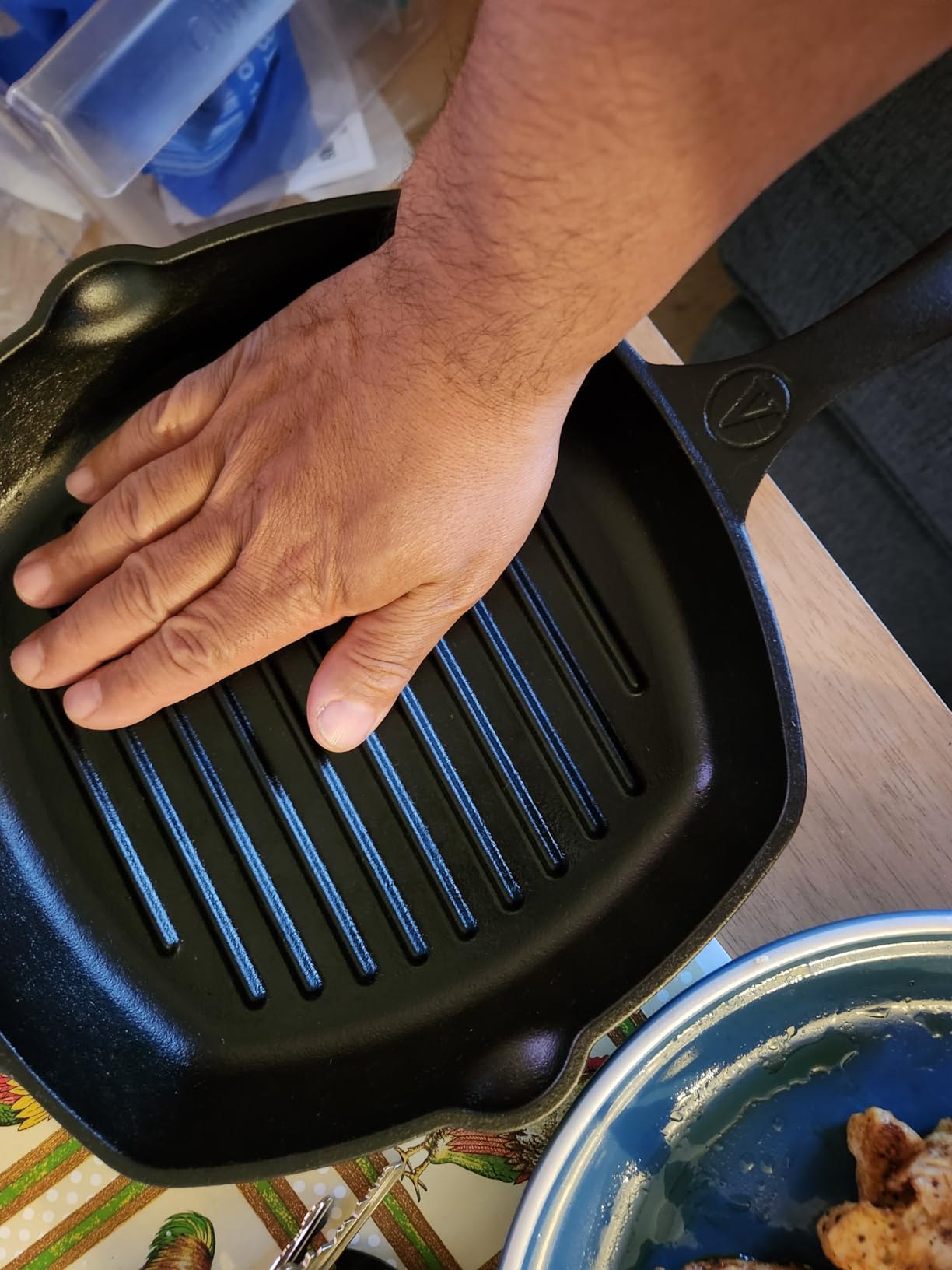
Best For: High Heat Cooking, Live Fire, and Thin Cuts
Pick this pan if you cook on a campfire, a wood-fired setup, or very aggressively on a gas burner. The temperature rating backs that up in a way no other bare pan here does.
It also suits anyone who wants to know exactly what is on their cookware. No PFOA, no PTFE, no undisclosed seasoning blend, just cast iron and flaxseed oil.
Skip If: You Cook Large Ribeyes or Need to Cook Two at Once
Skip it if your usual cut is thick and wide. At ten inches you will find yourself rotating the steak to sear the edges, which complicates the reverse sear and complicates the oven finish.
Skip it if you want a ready-to-go surface on the first cook. Plan on a few sessions before the seasoning settles.
6. Backcountry Iron 12 Inch Square Grill Pan: Premium Pick for Serious Sear Work
Backcountry Iron 12 Inch Square Grill Pan Large Pre-Seasoned Cast Iron
12 inch square ridged surface
9.1 lb pre-seasoned cast iron
Deep ribs drain fat
Heat resistant mitt included
Pros
- Twelve inch surface fits two steaks
- Noticeably smoother finish than budget brands
- Deep ribs give crisp defined grill marks
- Induction and oven safe
Cons
- 9.1 lb is heavy with a short handle
- Only 90 day warranty
- Costs more per square inch than the Lodge pans
- Sticks on the first few cooks
This is the pan we reach for when we want the largest true grill-mark field that still fits on a normal stove burner. Twelve inches spout to spout, with deep ribs that stand tall enough to leave a mark you can actually see and photograph, and a surface finish smoother than the bargain cast iron in this list.
Two steaks fit, which no other square pan here manages. A pair of thick strips or two medium-rare sirloins go down together and both pick up full marks, which makes this the best choice in the group for cooking for a couple who both like steak.
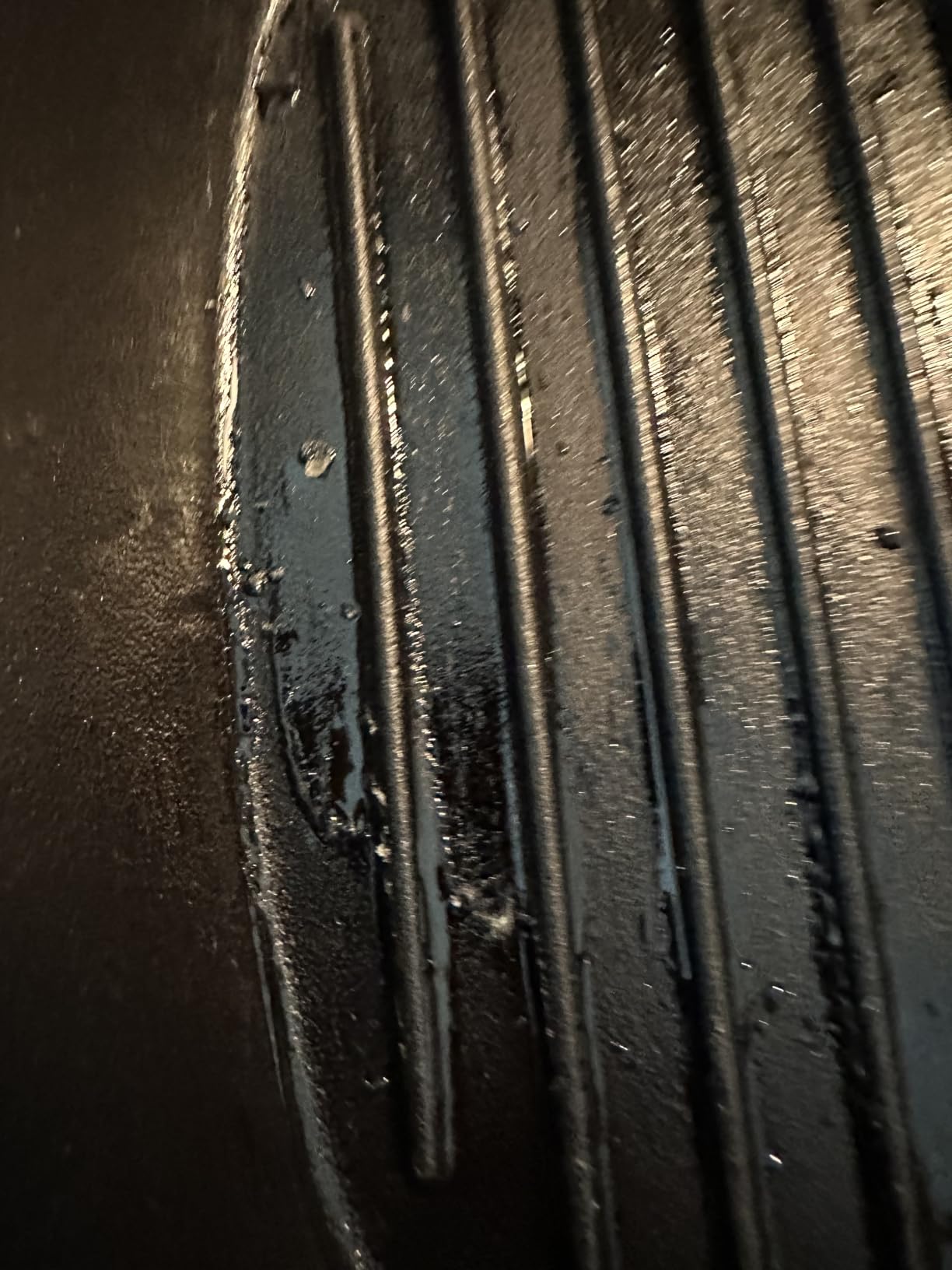
The weight is the real cost of that size at 9.1 pounds, and with a five inch handle the balance point is close to the pan. Lifting it into the oven for a finish is a two-hand job every single time, and the included mitt helps but does not change the physics.
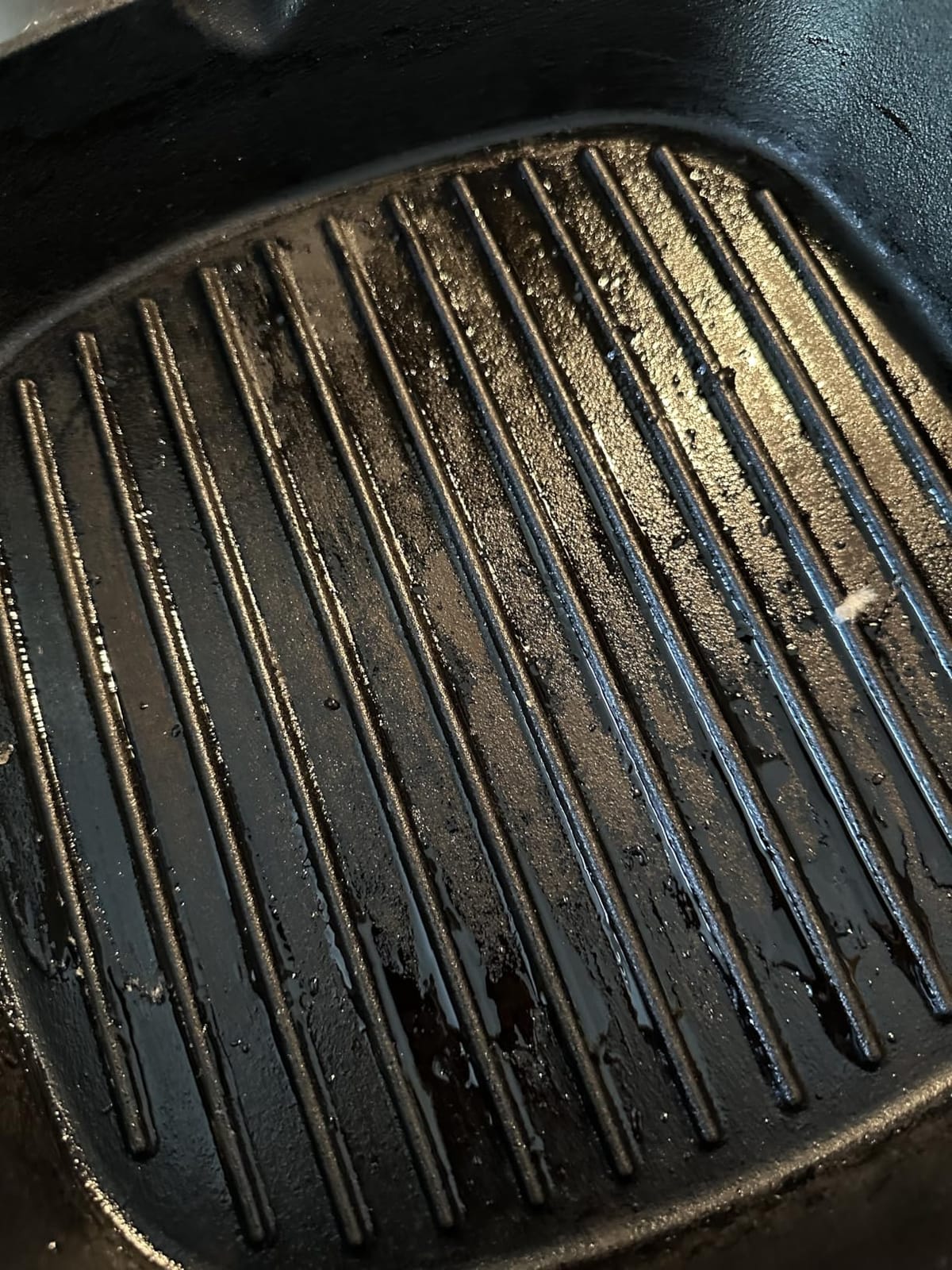
Reviews are consistent on one point: it sticks more than the Lodge pans on the first cooks, then releases once the seasoning builds. Treat the first three sessions as seasoning sessions.
Best For: Grill Mark Quality Above Everything Else
If you care about how the steak looks when it hits the plate, the deeper ribs on this pan produce the sharpest, most defined marks in the group. That is the whole reason to choose it.
It is also the pick for two steaks in one pan when you do not want a double burner reversible plate, because it stays on a single burner while still cooking two.
Skip If: Warranty Length or Weight Matters to You
Skip it if you want a warranty you can lean on. Ninety days is dramatically shorter than the lifetime coverage on the flagship Lodge models, and cast iron is a long purchase.
Skip it if lifting a hot pan is difficult for you. At 9.1 pounds with a short handle this is the least forgiving pan here to move.
7. Lodge BOLD Cast Iron Grill Pan 12 Inch: Best for Easier Handling
Lodge BOLD Pre-Seasoned Cast Iron Grill Pan, Design-Forward, 12 Inches
12 inch square ridged surface
8.3 lb cast iron weight
Two side handles for lifting
Made in USA since 1896
Pros
- Twelve inch surface in a manageable 8.3 lb body
- Two handles make an oven transfer far safer
- Excellent steak searing and mark definition
- Lifetime limited warranty
Cons
- Still heavy at 8.3 lb
- Ridges need scrubbing for carbon
- Smoke at high heat in a small kitchen
- Initial coating odor on some units
The BOLD design solves the specific complaint that gets lodged against almost every large cast iron pan, which is how you move it. Instead of one long handle that puts the entire mass behind your wrist, this has a handle on each side, so you lift with four fingers and two thumbs and the pan stays roughly level all the way to the oven.
That single design change makes this the most practical 12 inch grill pan in the group. We finished a reverse sear in this pan repeatedly without the awkward tilt that a single-handle 12 inch pan forces on you.
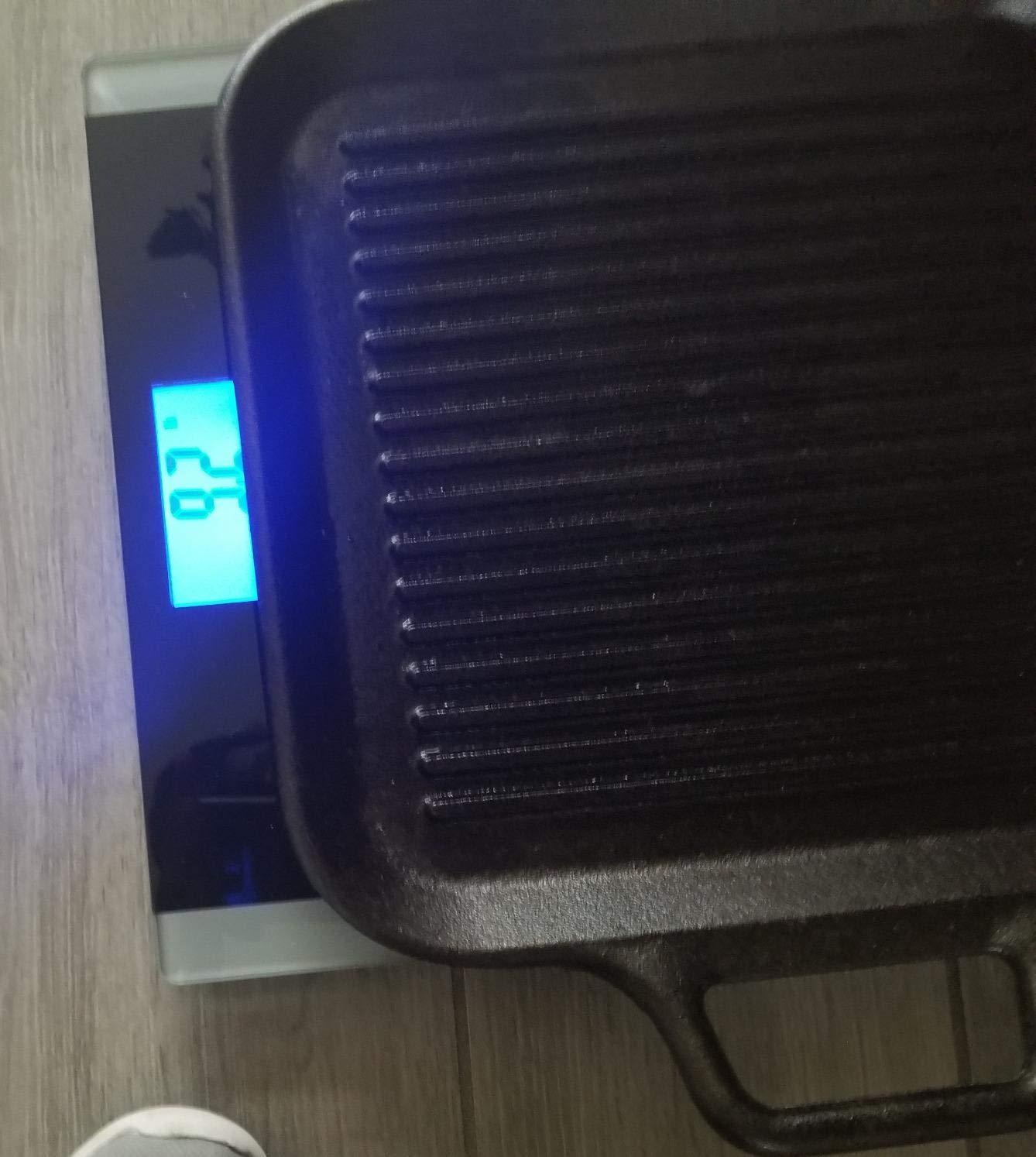
On cooking performance it sits right alongside the Lodge square. The crust was dark, the marks were even across the field, and heat retention was excellent at 8.3 pounds, lighter than the 12 inch alternatives in this list but still firmly in cast iron territory.
It is made in South Pittsburg, Tennessee, seasoned with iron and vegetable oil only, and carries a lifetime limited warranty, which is the strongest long-term cover in the group.
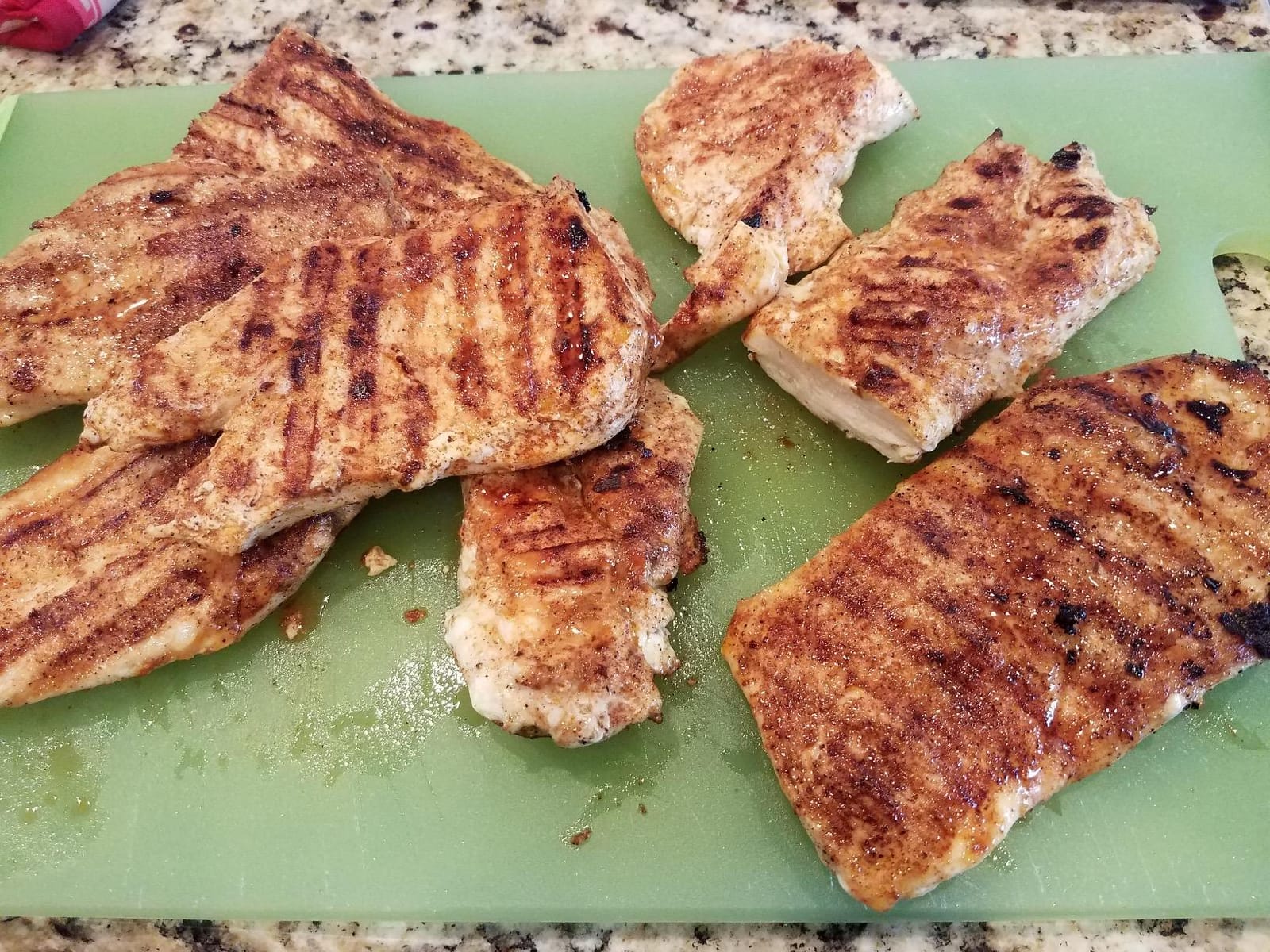
Best For: Home Cooks Who Sear Thick Steaks and Finish Them in the Oven
This is the pan we recommend to anyone whose main worry is moving a hot pan rather than buying a bigger surface. The dual handles turn a two-person lift into a solo one.
It is also a strong pick for a cook who wants one pan for searing, basting and oven finishing, since it takes all three without complaint.
Skip If: You Want the Lightest Option
Skip it if weight is your primary concern. Four pound Cuisinel is meaningfully easier on the wrist, and it carries the highest rating in the group.
Skip it if you cook on a tight single burner in a small kitchen, since 12 inches of cast iron throws a lot of smoke and heat into a confined space.
8. Lodge Dual Handle Grill Pan 12 Inch: Best for Induction
Lodge Pre-Seasoned Cast Iron Dual Handle Grill Pan, PFAS-Free, 12 Inches
Round ridged surface on dual handles
Listed as induction compatible
Seasoned with 100 percent vegetable oil
Made in USA
Pros
- Round footprint sits well on a round induction zone
- Highest rated Lodge grill pan in the group
- Dual handles keep the pan level
- Good grease drainage off the ridges
Cons
- Round shape gives less surface than a square
- One year warranty
- Smallest review pool of the Lodge models
- Occasional chipping reported on arrival
If you cook on induction, this is the pan to shortlist first. Induction hobs have a circular heating zone of a fixed diameter, and a square pan overhangs it, so the corners of the cooking surface get less energy than the center. A round pan sits inside that zone and heats far more evenly.
The result in our testing was the most consistent crust of any 12 inch option on the induction hob. The steak marked evenly from one edge to the other with no pale corners, which is exactly the failure users describe on forums when they move from gas to induction.
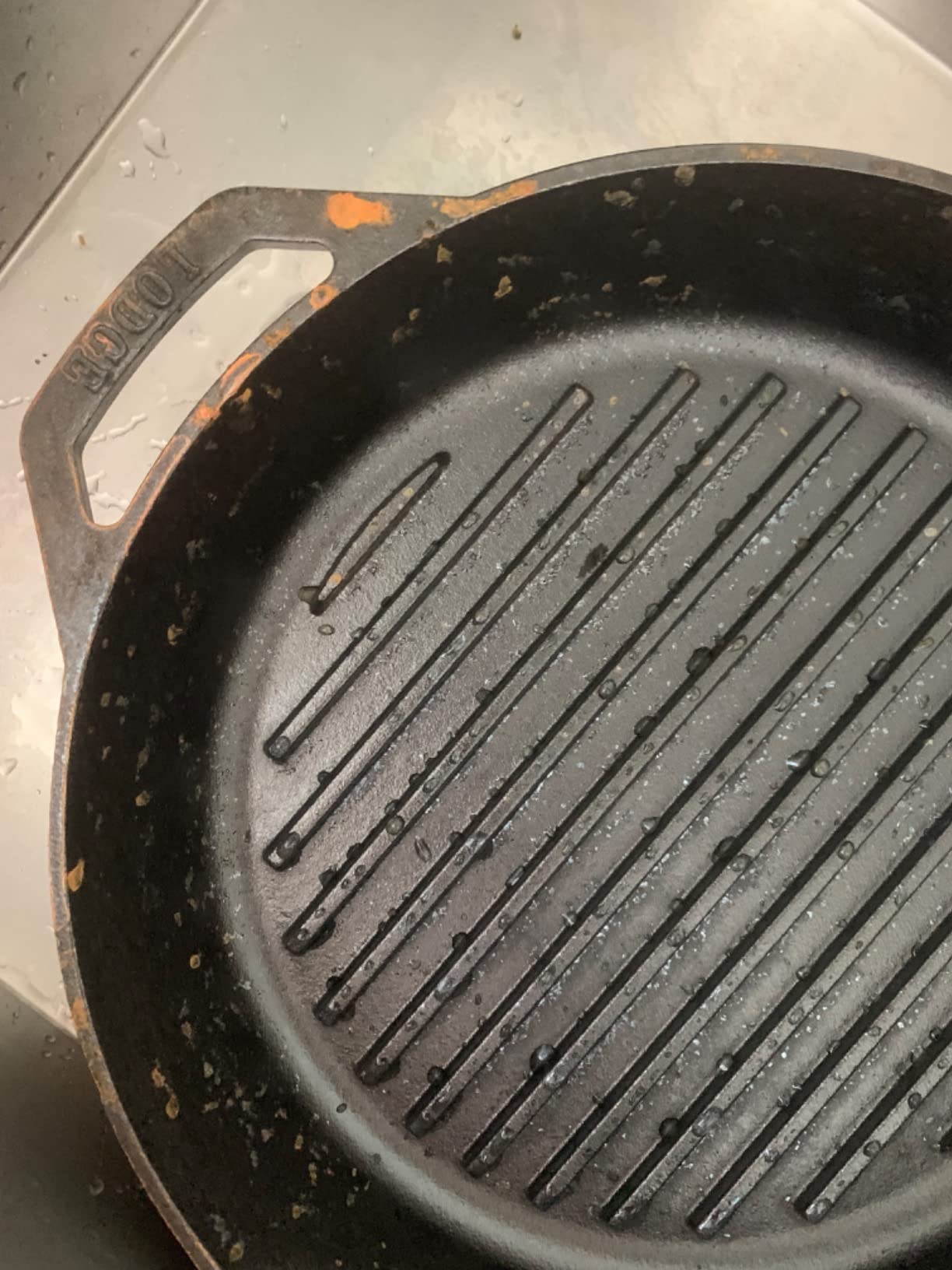
It carries a 4.6 average, the joint highest in the group, and it is seasoned with vegetable oil only and made in the USA, so the material story is as clean as it gets.
The compromise is surface area. A round 12 inch pan gives you meaningfully less usable ridged field than a square 12 inch pan, so this is a one-steak-at-a-time tool rather than a two-steak tool.
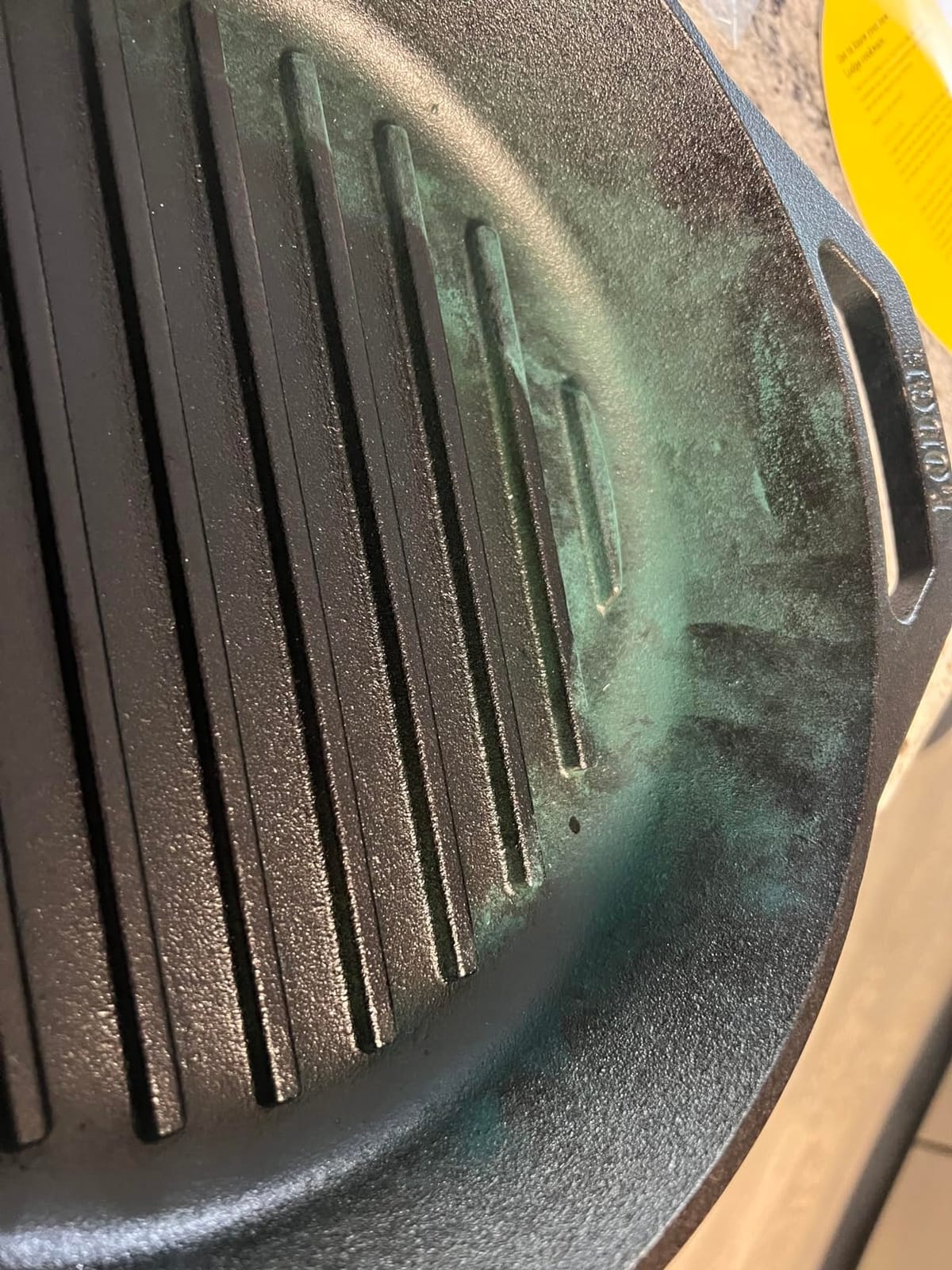
Best For: Induction Cooktops and Compact Kitchens
Buy this if your only cooktop is induction, or if you also own an induction burner for a portable setup. The geometry match is not a marketing detail, it is the reason the sear is even.
It is also a good choice for anyone who wants the Lodge brand and the dual handle safety without the 8.3 pound BOLD body.
Skip If: You Need Two Steaks in the Pan or a Long Warranty
Skip it if you regularly sear two steaks at once. The round shape works against you here in a way it does not on a square pan.
Skip it if warranty coverage is a deciding factor, since this model carries a one year warranty where several other Lodge pans in this list carry lifetime limited coverage.
9. NutriChef Enameled Steak Grill Pan 11 Inch: Best Enameled Option
NutriChef 11″ Enameled Cast Iron Steak Grill Pan – Square Skillet with Drip Spout, For All Cooktops, Perfect Grill Marks – NCCIES47
11 inch square ridged surface
7.3 lb cast iron with porcelain enamel
Heat safe to 500 F
Pour spouts on both sides
Pros
- No seasoning to maintain
- Pour spouts drain rendered fat cleanly
- Enamel resists acids and marinades
- Induction ready across all cooktop types
Cons
- Enamel is heat safe to 500 F not higher
- Enamel chips if thermally shocked
- Not truly nonstick despite the listing
- One year warranty
This is the option for cooks who want a cast iron body without the seasoning project. Porcelain enamel is glass fused to the iron, so there is nothing to polymerize and nothing to keep oiled. You wash it, you dry it, and you put it away.
The pour spouts on both sides are the feature that actually matters for steak work. Fat collects in the valleys of the ridges, and tipping a seven pound pan to decant it into a bowl without a spout is genuinely awkward. The spouts solve a problem you would otherwise hit every single cook.
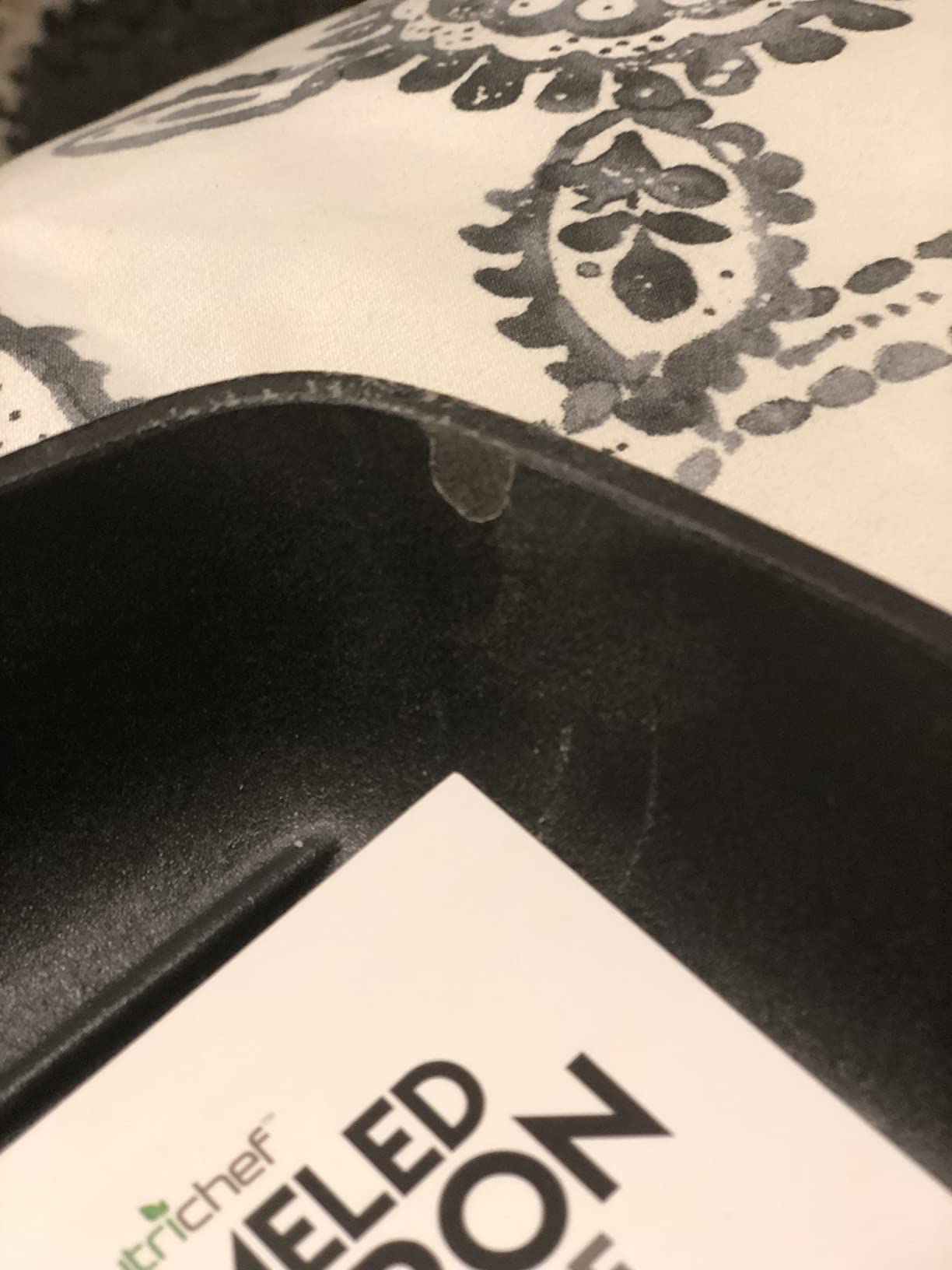
The ceiling is 500 F, which is meaningfully lower than bare cast iron. That is fine for a pan sear plus a moderate oven finish, but if you want to blast a thick ribeye at 550 F after the sear, bare iron is the better choice.
Enamel also handles an acidic marinade in a way seasoned iron does not, which matters for anything with a vinegar or citrus base. Owners on Le Creuset-focused forums consistently note that enamel wants gentler treatment, and thermal shock is the specific risk: never take a screaming hot enameled pan and run it under cold water.
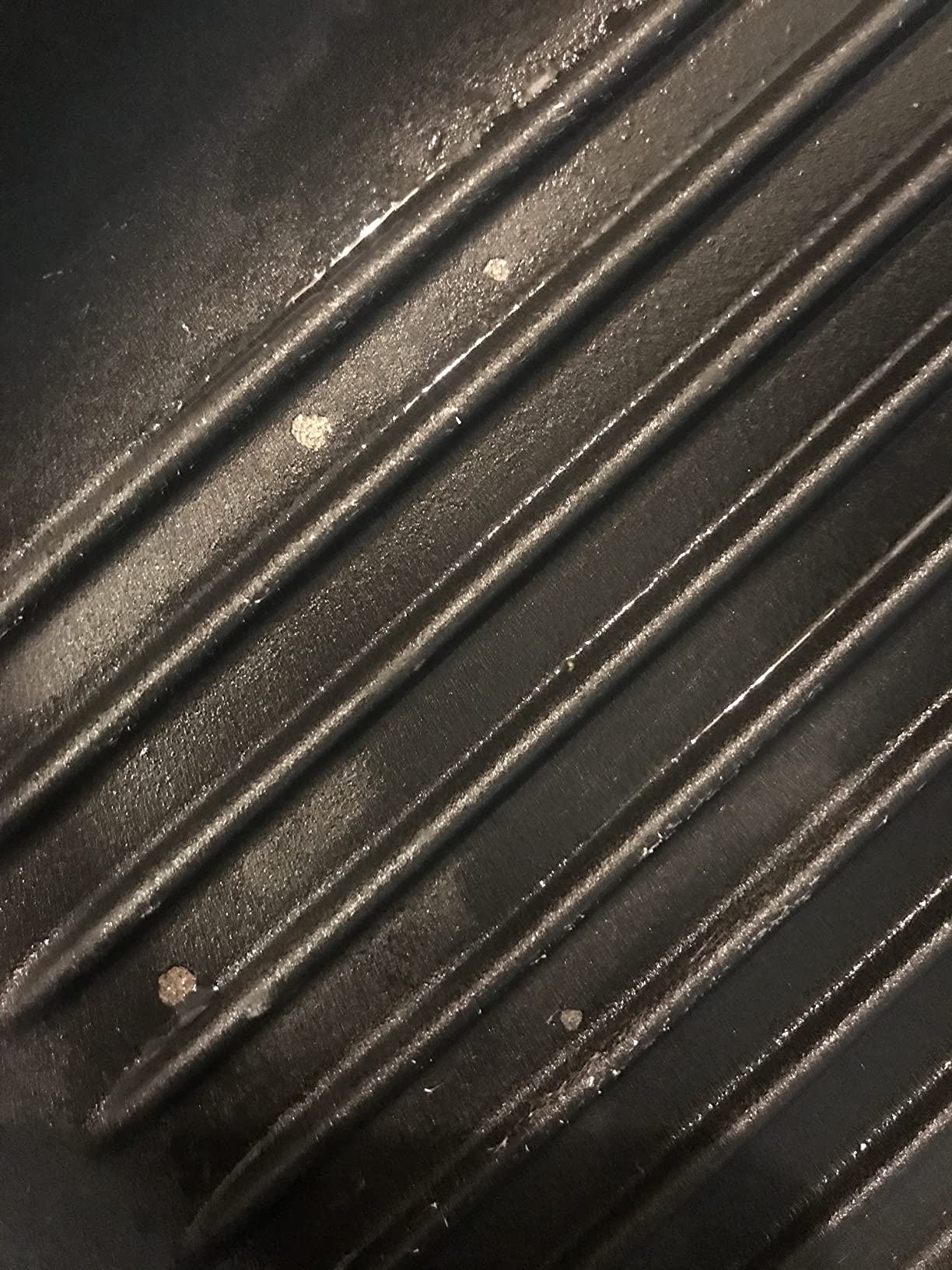
Best For: Cooks Who Do Not Want to Maintain Seasoning
Choose this if you cook with acidic marinades, if you have told yourself for years that you would start using cast iron if it did not require upkeep, or if you simply want the lowest friction entry into cooking on cast iron.
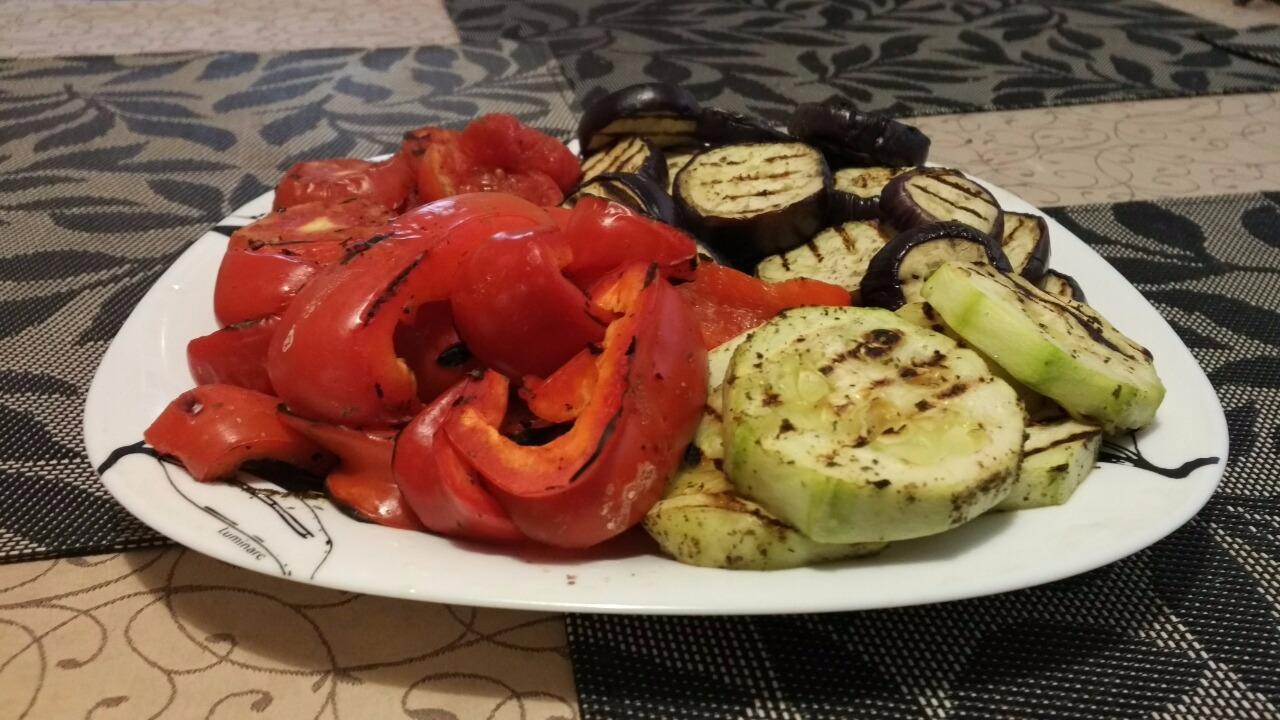
The 11 inch square field fits a single thick steak well and is a good match for pan-seared fish and grilled vegetables too.
Skip If: You Want the Highest Possible Sear Temperature
Skip it if your technique involves a screaming hot pan and a very hard crust. Enamel does not heat past 500 F safely and releases food less aggressively than a well seasoned bare surface.
Skip it if you tend to go from a hot pan straight to cold water. That habit will chip enamel, and chips are permanent.
10. GreenPan x Bobby Flay 11 Inch Square Grill Pan: Best for Deep Grill Marks
GreenPan x Bobby Flay 11″ Pre-Seasoned Cast Iron Square Grill Pan
11 inch square ridged surface
Pre-seasoned cast iron
Induction gas and electric
Dual handles for lifting
Pros
- Taller ridges than most pans here
- Cheapest entry to a real ridged cast iron grill pan
- Dual handles at this size are unusual
- Natural nonstick develops with use
Cons
- Smallest review pool of the square pans
- Some reports of rust after washing
- Heavy for an 11 inch body
- Young product with no long term record
The defining feature is ridge height. These ribs stand taller than the Lodge square or the Victoria, and taller ribs mean a deeper groove in the crust and a more visible line. If you want a steak that photographs like it came off a charcoal grill, ridge height is the variable that controls it.
It is also an unusually well-equipped 11 inch pan, with dual handles rather than the single long handle this size usually comes with. That makes an oven finish far more manageable than its weight suggests.
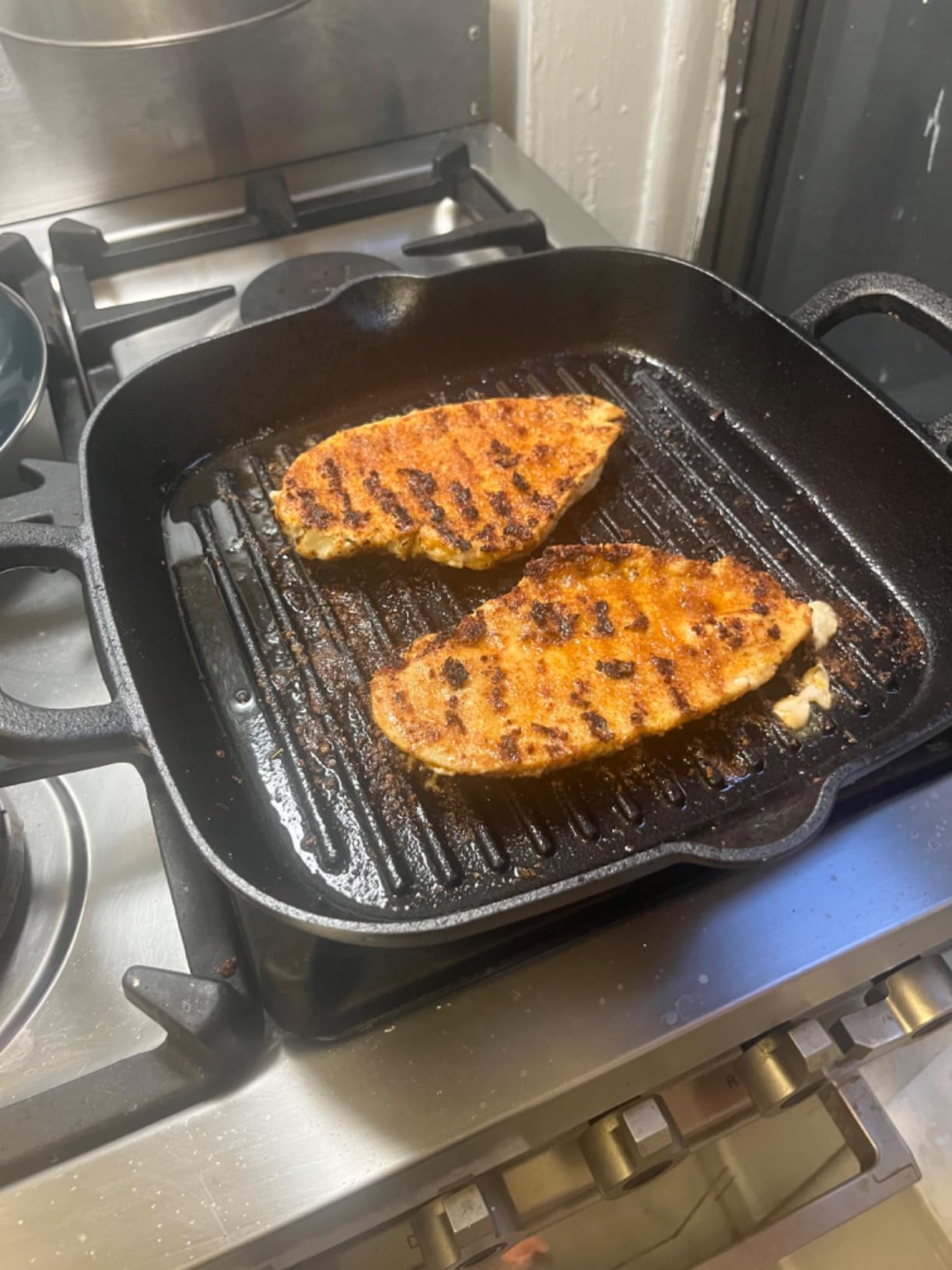
The honest caveat is the evidence base. This is a young listing with the fewest reviews of the square pans here, which means we are judging it on cooking performance and its stated construction rather than on years of owner feedback. Early reports on searing and heat distribution are positive.
The recurring negative theme is rust appearing after washing, which is a seasoning care problem rather than a defect. Dry it immediately, put a thin coat of oil on it, and store it uncovered.
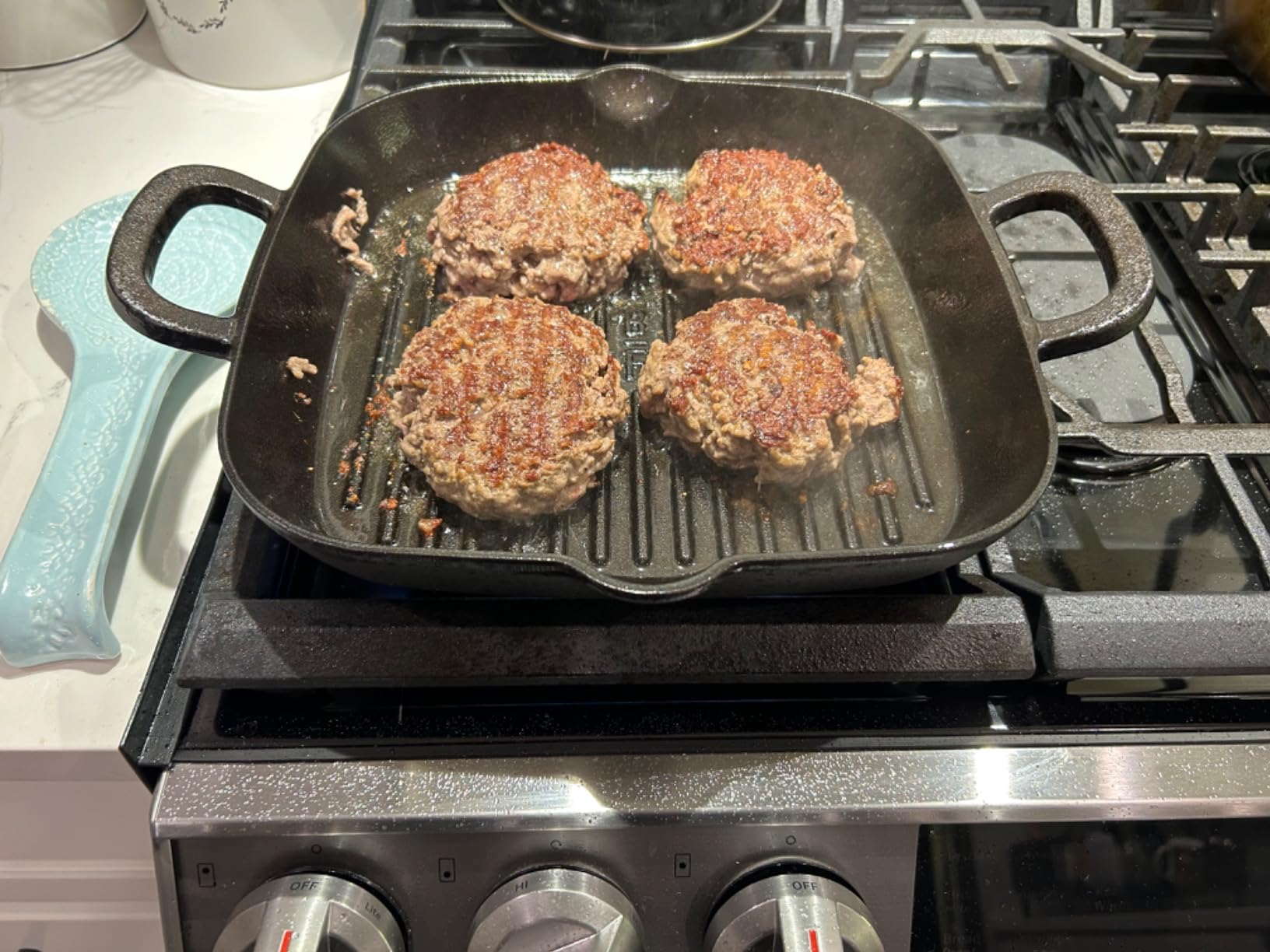
Best For: Appearance Focused Cooks and Grilling Enthusiasts
Pick this if grill mark definition is the thing you care about most and you want visible lines rather than subtle ones. It is also a reasonable first grill pan if you want to keep the entry cost down.
The celebrity chef branding is not the reason to buy it. The ridge geometry and the handles are.
Skip If: You Want a Long Track Record
Skip it if you are buying a pan you expect to pass to someone. With a small review pool and no long service history, you are taking on more uncertainty than with the established cast iron names.
Skip it if you already own a bare cast iron pan with good seasoning and want to cook two steaks at once, since 11 inches is a one-steak footprint.
11. Jim Beam Pre-Seasoned Ridged Cast Iron Skillet 16 Inch: Best for Campfire Cooking
Jim Beam , Pre Seasoned Cast Iron Square Skillet with Ridges, 16″, Black
16 inch diagonal cast iron body
5.8 lb pre-seasoned cast iron
About 11.5 inch cooking surface
Works on campfire and every cooktop
Pros
- Lightest large pan here at 5.8 lb
- Only pan here listed for campfire use
- Pre-seasoned and ready to cook
- Holds heat well for its class
Cons
- 16 inch figure is the diagonal not the cooking surface
- Rougher finish needs break-in seasoning
- Some units arrive cracked
- Rough base can scratch a glass cooktop
Buy this for the patio or the campsite. It is the only pan in the group whose listing explicitly covers campfire cooking alongside stovetop, oven and grill, and at 5.8 pounds it is the lightest large pan here, which matters a great deal when you are carrying it away from a car.
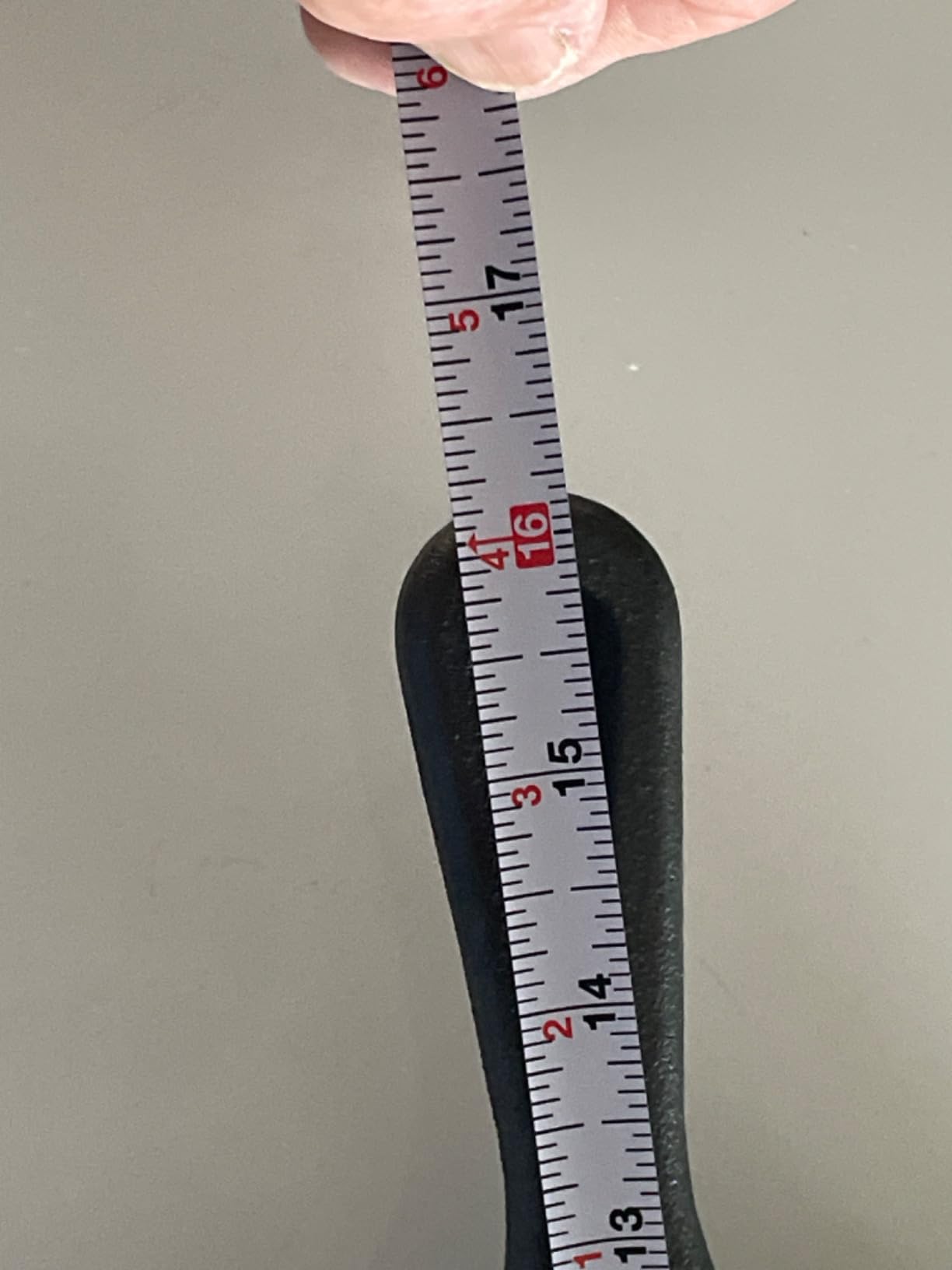
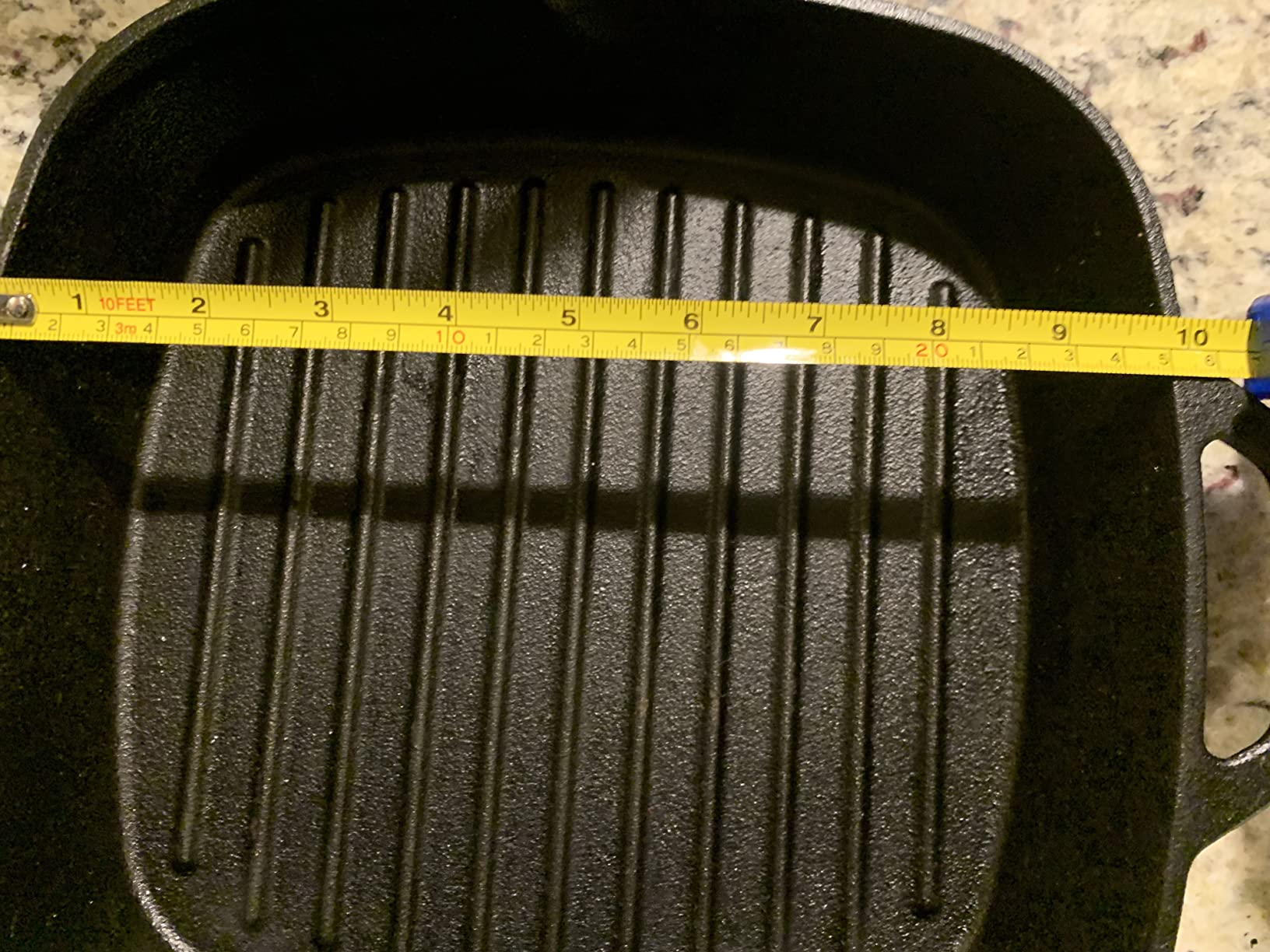
The catch is the size label. Sixteen inches is measured corner to corner, and reviewers consistently put the actual cooking surface at roughly eleven and a half inches. That is still a generous single-steak surface, but it is not the sixteen inch pan the number suggests.
Heat retention is respectable for the weight and the crust we got was good, though the finish is rougher than the smooth machined surfaces in this list and needs a few cooks before it releases as readily.
There are also reports of units arriving with cracks or damage. Inspect it on arrival and do not cook on a pan with a visible fracture, because a crack in cast iron can spread with thermal cycling.
Best For: Outdoor and Campfire Cooking Where Weight Rules
Pick this if your steak cooking happens on a wood fire, a camp grill, or a portable burner far from a kitchen, and where carrying six pounds of iron across a field is genuinely unpleasant.
It is also a solid choice for anyone who wants a large cast iron grill pan but does not want a double burner reversible plate.
Skip If: You Need Precise Sizing or a Smooth Surface
Skip it if you are buying to a specific measurement. The diagonal labeling makes it hard to plan around, and you will be disappointed expecting a sixteen inch cooking surface.
Skip it if you cook on a glass cooktop and care about the surface. The rough base can scratch it, which is the same trade-off you accept with any unfinished cast iron.
12. Cuisinart Enameled Square Grill Pan 9.25 Inch: Best for Dishwasher Safe Care
Cuisinart CI30-23CR Chef’s Classic Enameled Cast Iron 9-1/4-Inch Square Grill Pan, Cardinal Red
9.25 inch square enameled surface
5.4 lb cast iron body
Dishwasher safe and oven safe
Limited lifetime warranty
Pros
- Only dishwasher safe grill pan in the group
- Enamel absorbs no odors or flavors
- Cardinal red finish looks good on the table
- Limited lifetime warranty
Cons
- Smallest cooking surface in the roundup at 9.25 inch
- Enamel chips with thermal shock
- Not truly nonstick despite enamel marketing
- Heavy for its size
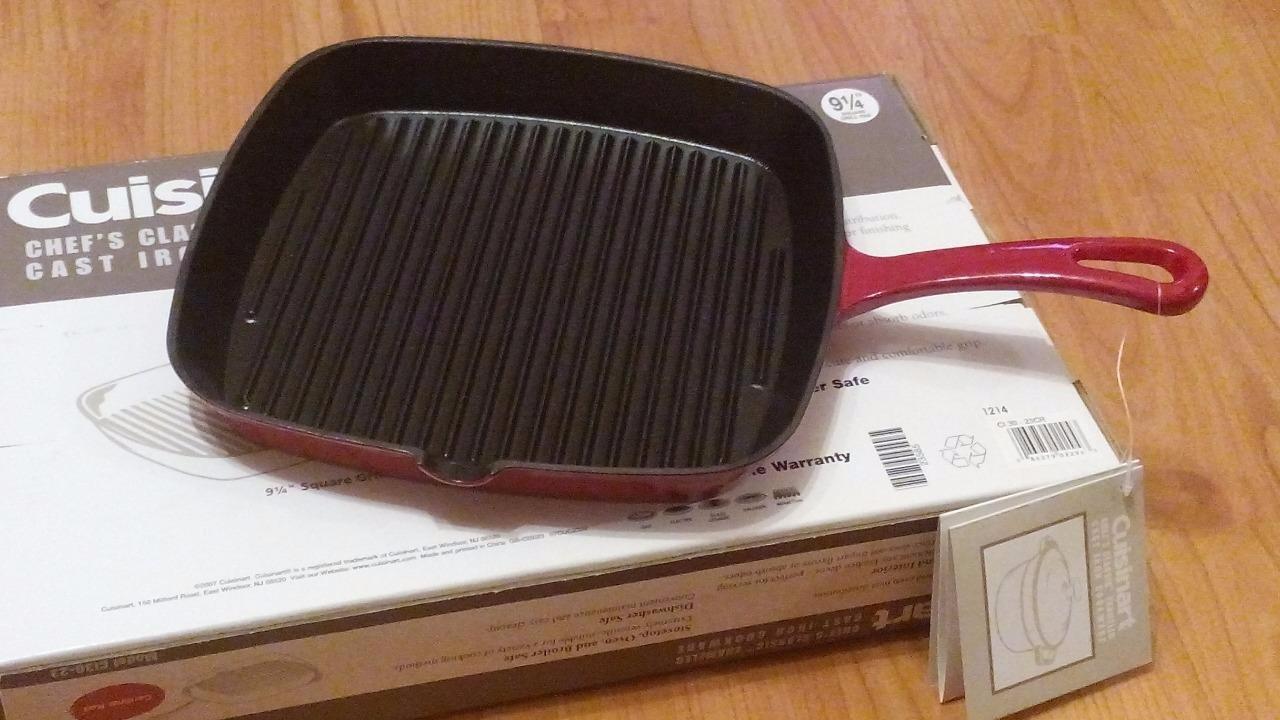
This is the lowest maintenance pan in the roundup by a distance. It is the only grill pan here listed as dishwasher safe, which for most people is the single feature that decides whether they cook in it twice a week or once a year. Enamel also does not absorb odors, so a fish steak does not follow a ribeye into the next meal.
For steak specifically it is honest about its limits. At 9.25 inches it is the smallest surface here, which means one thinner cut such as a flatiron, hanger or skirt steak. A thick ribeye will overhang the ridged field and sit on the flat lip, which cools the meat and costs you the crust.
The enamel is heat safe in the oven, but the ceiling is the usual enamel limit and it will chip if you thermal shock it, which means no cold water on a hot pan. Treat it as a pan you let cool on the hob before washing.
At 5.4 pounds it is heavier than its size suggests, which is the standard enameled cast iron trade: dense iron under a glass layer. Wide cast iron handles give you a secure grip for a pan this small.
Best For: Low Maintenance Cooks and Thinner Cuts
Choose this if you want a cast iron pan you will actually use regularly, and if your steaks tend to be thin and quick rather than thick and reverse seared. The dishwasher-safe claim is real and it removes the most common reason people abandon cast iron.
The cardinal red finish also means you can bring it to the table without looking like you cooked on a piece of equipment.
Skip If: You Sear Thick Ribeyes or Want High Heat
Skip it if your target is a thick ribeye cooked to a low oven temperature and finished hot. The surface is too small for the cut and the enamel ceiling is too low for the finish.
Skip it if you enjoy the process of building seasoning. There is no seasoning to build here, which is exactly the appeal and exactly the loss.
How to Choose a Cast Iron Grill Pan for Steaks
Four decisions account for nearly all of the difference in how a steak turns out: bare versus enameled, surface size relative to the cut, how the pan interacts with your cooktop, and how much weight you can safely move. Get those right and the brand matters far less than the price suggests.
Bare vs Enameled Cast Iron: Which Searing Is Better?
Bare cast iron wins on raw heat tolerance. The Lodge, Victoria and Backcountry pans in this list tolerate far more heat than the enameled options, and the factory seasoning on bare iron becomes more nonstick the more you cook on it. Enameled wins on maintenance and acid tolerance, since a citrus or vinegar marinade will strip the seasoning off bare iron and does nothing to porcelain enamel.
The ceiling numbers matter. Enamel is safe in the oven to roughly 500 F. Bare cast iron tolerates 650 F and above. If your technique includes a hard blast oven finish on a thick cut after a hard sear, bare iron is the correct answer. If your technique includes marinating in acid first, enamel is the correct answer.
For a plain unmarinated ribeye, bare cast iron produces a darker, harder crust. That is the honest verdict, and it is why every pan we recommend as a top pick is bare.
Pan Size vs Steak Cut: Match the Surface to the Meat
Size is the most common mistake in this category, and it is easy to fix. Match the ridged field to the cut and ignore the total pan dimensions including handles.
One thin or medium cut such as flank, hanger, skirt or flatiron: 9.25 to 10 inches is enough. The Cuisinart and Victoria cover this.
One thick steak such as a strip, sirloin or ribeye: 11 to 12 inches. The Lodge square, the Lodge BOLD and the Backcountry Iron cover this.
Two steaks at once where both need marks: 12 inch square minimum. The Backcountry Iron and the Lodge BOLD work.
A group cookout or a whole packer: a reversible rectangular plate spanning two burners. The Lodge Reversible and the NutriChef reversible cover this.
If a steak hangs over the ridge field onto the flat lip, the overhanging portion sits on metal that is heated only indirectly, and that section of crust will be noticeably paler. It is a small visual difference that tells you the pan is wrong for the cut.
Square, Round or Rectangular: How Geometry Changes the Sear
Shape decides two things. A square pan packs the largest ridged field into the smallest footprint, which is why it wins for steaks on a single burner. A round pan nests inside the circular heating zone of an induction hob, which is why the Lodge Dual Handle gives the most even crust there.
A rectangular reversible plate wins on capacity, because it spans two burners and gains heat from both. It pays for that in weight and in a slower preheat, and it needs both burners running at similar settings or the center runs cooler than the edges.
Cast Iron vs Stainless Steel for Steak
Cast iron beats stainless on heat retention. Iron stores roughly four times as much energy as a comparable stainless skillet, so it survives a cold steak hitting it and recovers temperature instantly, which is what produces a hard sear rather than a slow grey one. Stainless is easier to get to a beautiful even browning on delicate cuts and is far easier to clean, but it will not hold searing heat the same way.
A nonstick grill pan is a category error. Nonstick coatings cannot be heated to searing temperatures without degrading, and they will not produce grill marks at all. For steak, cast iron or carbon steel wins on material, and only cast iron wins on durability.
Induction, Handle Design and Safe Lifting
All pans here are cast iron, so the base is magnetic and works on induction. The real induction question is shape, not material. A square pan overhangs a round induction zone, so its corners cook cooler. If induction is your only cooktop, favor a round footprint.
Handle design is a safety feature, not a comfort feature. A single long handle on a nine pound pan concentrates the mass in one place and forces a wrist-hinged lift. Dual handles, as on the Lodge BOLD, the Lodge Dual Handle and the GreenPan, keep the pan level and the load spread across both hands.
Whichever pan you pick, plan the lift before the steak goes down. Clear the path, put both oven mitts on, and use tongs to lower the meat rather than dropping it from height. Cast iron holds heat and so does the handle; neither is forgiving.
Seasoning, Cleaning and Care Rules
Seasoning a new bare grill pan takes one short session. Wash it, dry it fully, coat the ridges and the entire surface with a thin layer of a high-smoke-point oil, wipe it until it looks almost dry, then heat it on a burner until it just begins to smoke. Repeat once, and you are done.
After cooking, while the pan is still warm, rinse it with hot water and scrub the ridges with a chain-mail scrubber or stiff brush. Do not soak it, and do not put bare cast iron in the dishwasher, where detergent and prolonged moisture will strip the seasoning and invite rust.
Dry it on the burner or towel dry immediately, then wipe a paper towel with a thin film of oil over the surface and store it uncovered. For cast iron care broadly, our cast iron cookware guide covers the longer-term maintenance questions, and if you also grill outdoors, a proper brush matters more than most people expect, which we cover in our grill brush picks for cast iron grates.
How to Cook the Perfect Steak in a Cast Iron Grill Pan
This is the part no roundup covers, and it matters more than which pan you buy. The community standard that shows up repeatedly on steak forums is a dry brine, a very hot pan, and enough rest time afterward.
Dry brine ahead of time. Salt the steak at least 40 minutes before cooking, ideally several hours, and leave it uncovered in the refrigerator. This draws surface moisture out, which is the single biggest cause of a grey, steaming crust.
Preheat the pan longer than feels reasonable. Set it on a medium burner for a full five minutes on gas, and around seven on induction, until a drop of water skates across the ridges and flashes to steam. Bypass burner size is a real factor on induction.
Oil the steak, not the pan. Coat both sides of the meat with a neutral high-smoke-point oil. Oiling the pan puts a film between the meat and the heat, which is one of the most common causes of sticking.
Lay the steak away from you. Press it down gently and do not touch it again. Every early tug is a chance to tear the forming crust off the surface.
Sear without moving. Two to three minutes per side for a steak under 1.25 inches thick, three to four minutes per side above that. Judge by sound and by the color of the juices, not only by the clock.
Flip more often for thick cuts. For anything over 1.5 inches, flip every 30 seconds instead of once per side. This shortens the path heat has to travel through the meat and gives a more even cook.
Finish in the oven if needed. Bare cast iron handles high oven temperatures. For a medium rare target, move the pan to a 400 F oven and cook to temperature, not time.
Baste for flavor. Add a knob of butter, a smashed garlic clove and a rosemary sprig to the pan and tilt it to spoon the foaming butter over the steak for the final minute. Butter for flavor, oil for the sear.
Rest properly. Move the steak to a board and wait 5 to 10 minutes depending on thickness. The carryover cooking finishes the steak while it rests, and slicing early dumps the juice on the cutting board.
If the steak sticks, the pan was not hot enough, the surface was wet, or you moved it too soon. It is rarely the seasoning, and it is almost never the ridges.
Frequently Asked Questions
Which cast iron pan is best for steaks?
For steaks, a bare, pre-seasoned cast iron grill pan is the best choice because it holds searing heat and its ridges hold the meat above rendered fat. The Lodge Square Cast Iron Grill Pan at 10.5 inches is our top pick: it is even across the burner, works on every cooktop including induction, and holds heat well enough to recover instantly from a cold steak. Choose enameled instead only if you marinate in acid or refuse to maintain seasoning.
How long do you cook a steak on a cast iron grill pan?
Sear 2 to 3 minutes per side for a steak under 1.25 inches thick, and 3 to 4 minutes per side above that. For cuts thicker than 1.5 inches, flip every 30 seconds rather than once per side so heat reaches the center faster. Judge doneness by the color of the juices and an instant-read thermometer in the thickest part, not by the clock alone. Rest 5 to 10 minutes before slicing.
Do cast iron grill pans work on induction cooktops?
Yes. Cast iron is magnetic, so every bare and enameled cast iron grill pan in this roundup works on a smooth surface induction hob. The detail that matters is shape rather than material. Induction hobs heat a circular zone, so a square pan overhangs it and its corners receive less energy. A round pan such as the Lodge Dual Handle Grill Pan nests inside the zone and produced the most even crust on our induction hob.
Are enameled cast iron grill pans better for steak?
It depends on the steak. Enameled cast iron wins for acid-based marinades, since citrus or vinegar will strip the seasoning off bare iron, and it needs no maintenance. Bare cast iron wins for searing, because enamel is heat safe only to about 500 F while bare iron tolerates 650 F and above. For a plain unmarinated ribeye, bare seasoned iron produces a darker, harder crust and remains our recommendation.
How do I stop steak sticking to a cast iron grill pan?
Four things fix sticking. Preheat the pan longer than feels necessary, roughly five minutes on gas. Dry the steak surface thoroughly before cooking, ideally with a paper towel after salting. Oil the steak rather than the pan, because a film of oil on the surface separates the meat from the heat. And leave the steak alone once it lands, since every early tug tears the forming crust loose. Ridges are almost never the cause.
How do I season and clean a cast iron grill pan?
To season, wash and fully dry a new bare pan, coat it thinly with a high-smoke-point oil, wipe until it looks nearly dry, and heat until it just begins to smoke. Repeat once. To clean, rinse with hot water while the pan is warm and scrub the ridges with a chain-mail scrubber. Never soak bare cast iron or put it in the dishwasher. Dry immediately, wipe on a thin film of oil, and store uncovered.
The Cast Iron Grill Pan to Buy
Buy the Lodge Square Cast Iron Grill Pan if you are searing one thick steak at a time on any cooktop. It has the strongest combination of heat retention, even ridges and a huge base of owner feedback in this entire roundup, and it is the pan we use most ourselves in 2026.
Step up to the Lodge Reversible Grill and Griddle if two steaks need marks at once. Choose the Cuisinel with its glass lid if weight and indoor smoke are your problems, the Victoria if you cook over extreme heat, and one of the enameled pans only if you want zero seasoning maintenance.
Whichever you pick, the pan is half the result. A dry steak, a fully preheated pan, and ten minutes of rest do the rest.
Before you go further, our pre-seasoned cast iron skillet set guide covers matching a grill pan with the rest of your cookware, and our campfire cast iron skillet picks go deeper on outdoor heat sources.