Understanding Criterion Validity: Complete 2026 Guide

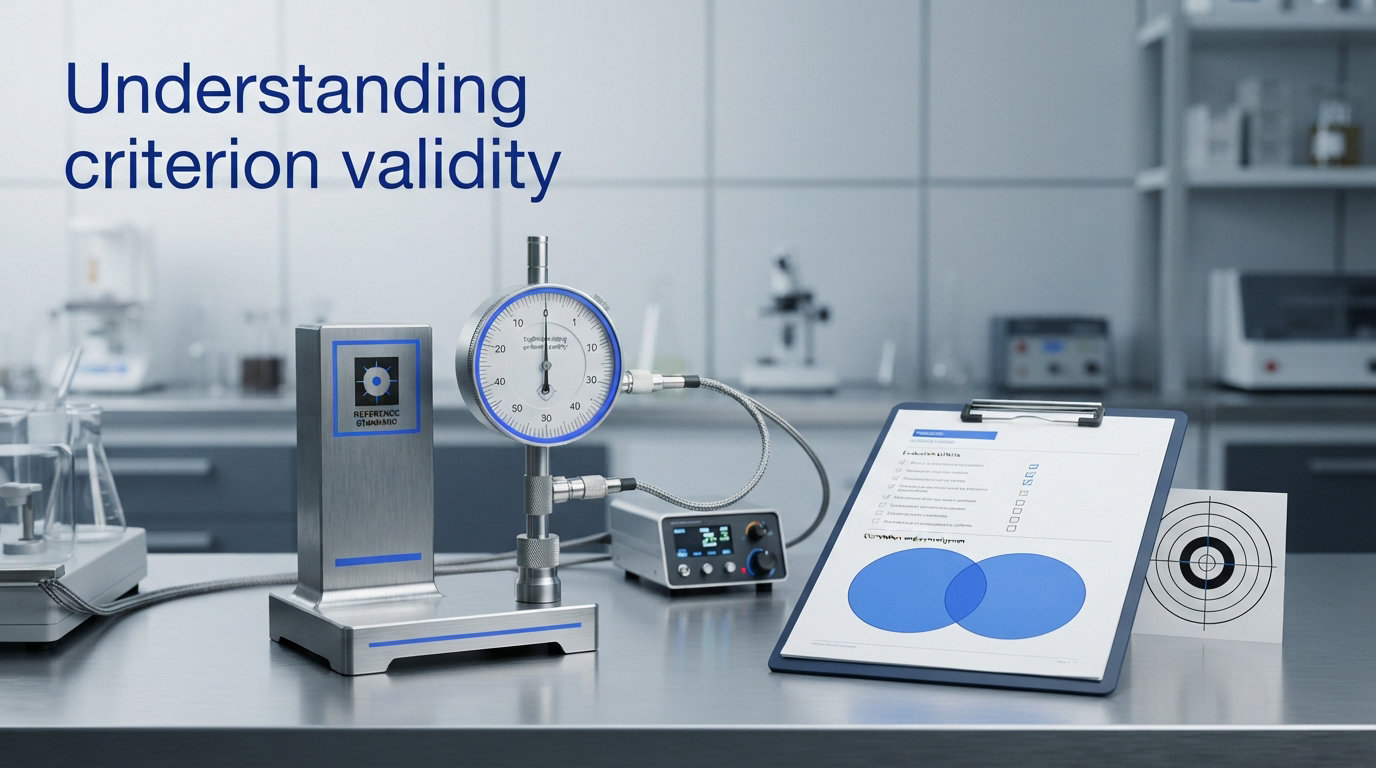
Understanding criterion validity

Every researcher who has ever developed a questionnaire, selected a psychological assessment, or designed an educational test has faced the same fundamental question. Does this instrument actually work? Understanding criterion validity provides the answer. Criterion validity is one of the most important concepts in psychometrics and research methodology because it tells you whether your measurement … Read more

What the Spearman-Brown Formula Tells You About Test Length in 2026?

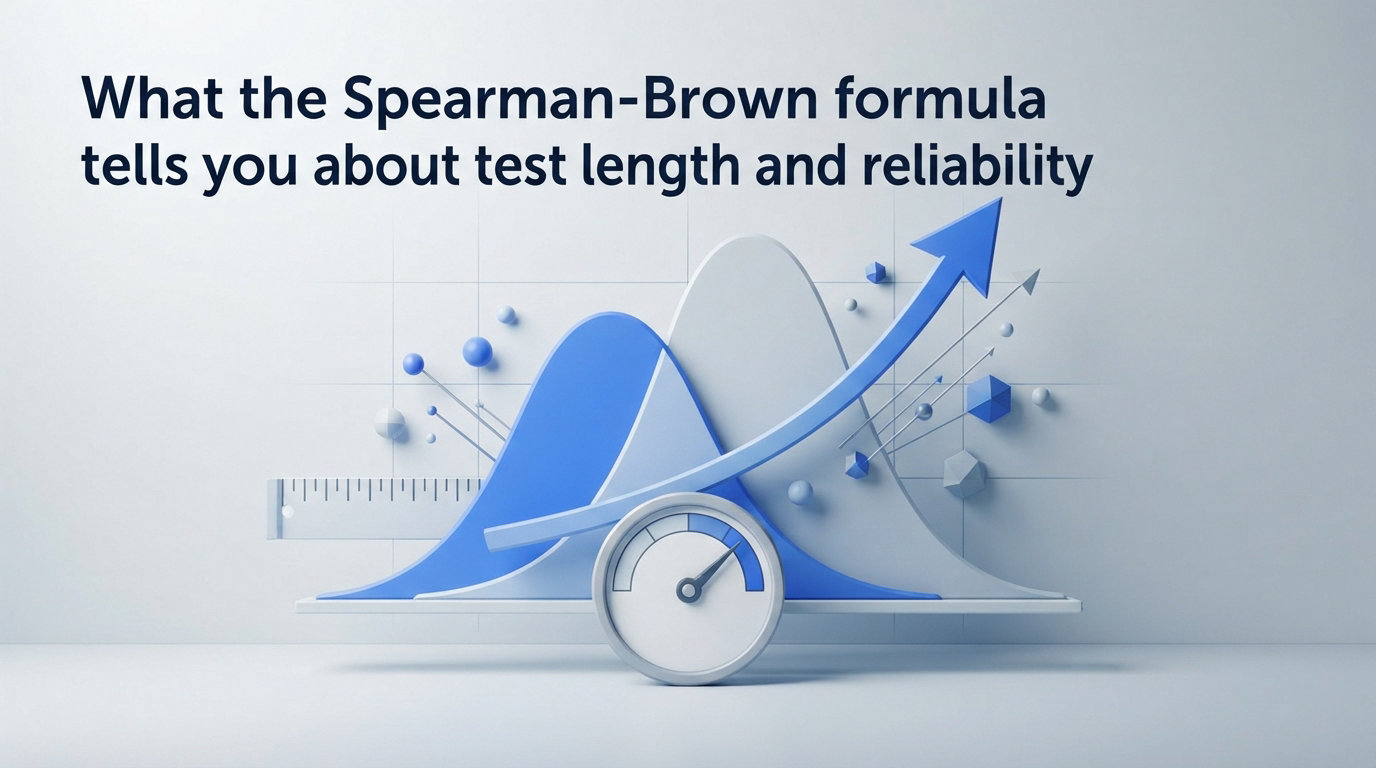
What the Spearman-Brown formula tells you about test length and reliability

If you have ever developed a questionnaire, an educational assessment, or any multi-item scale, you have probably wrestled with one stubborn question: how many items do I actually need for reliable scores? The answer is not intuitive, and doubling your test length does not double your reliability. That nonlinear relationship is exactly what the Spearman-Brown … Read more

How Split-Half Reliability Works and When It Is Still Useful? (2026 Guide)

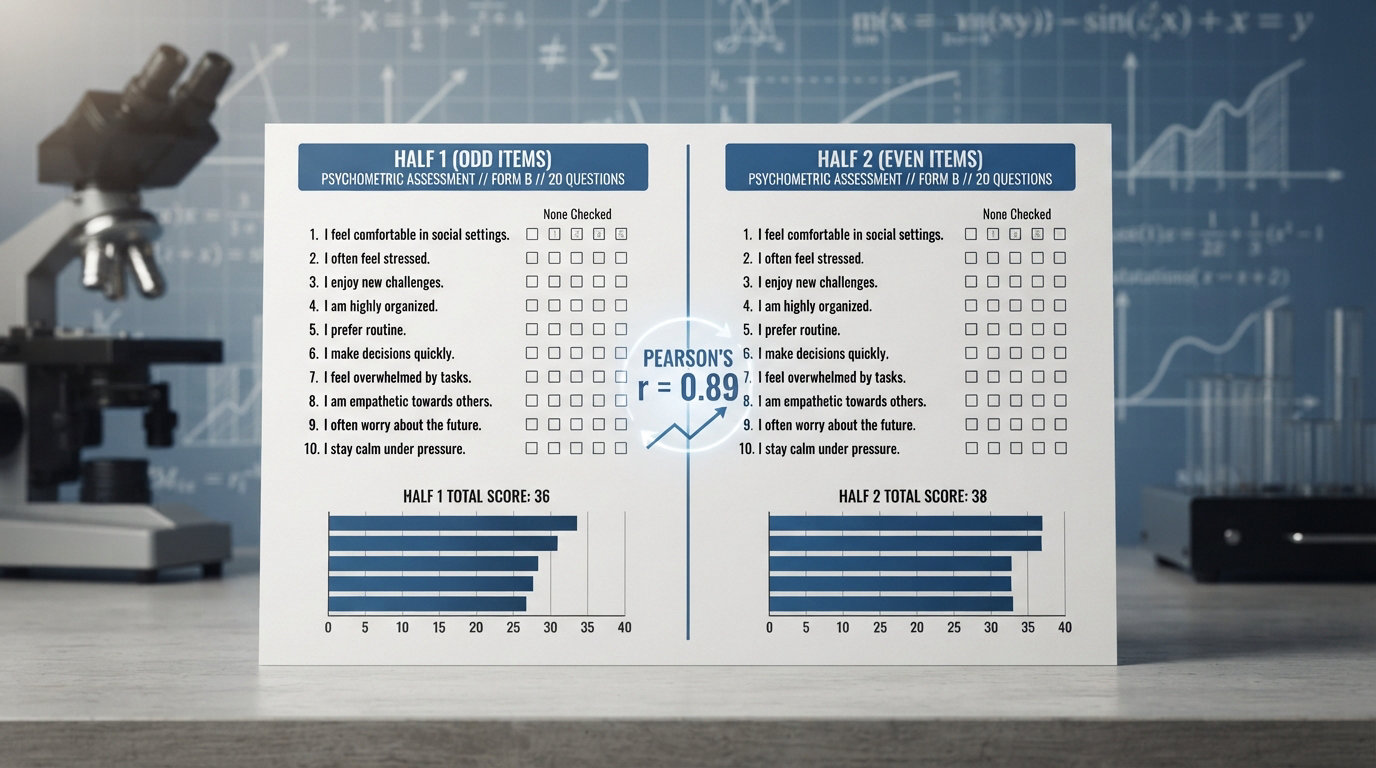
How split-half reliability works and when it is still useful

If you have ever built a survey, a questionnaire, or a psychological test, you have probably asked yourself one question: can I trust these scores? That is the core question behind split-half reliability, one of the oldest and most intuitive methods for checking whether a measurement instrument is internally consistent. Split-half reliability divides a test … Read more

How to Interpret a Heterotrait-Monotrait Ratio? (2026 Guide)

How to interpret a heterotrait-monotrait ratio

Structural equation modeling (SEM) lives or dies on one foundational assumption: the constructs in your model must measure genuinely distinct concepts. That assumption is called discriminant validity, and the most reliable tool for testing it today is the heterotrait-monotrait ratio of correlations, or HTMT. If you are working through a measurement model for a thesis, … Read more

Understanding Measurement Invariance and Why It Matters Across Groups in (2026) Guide

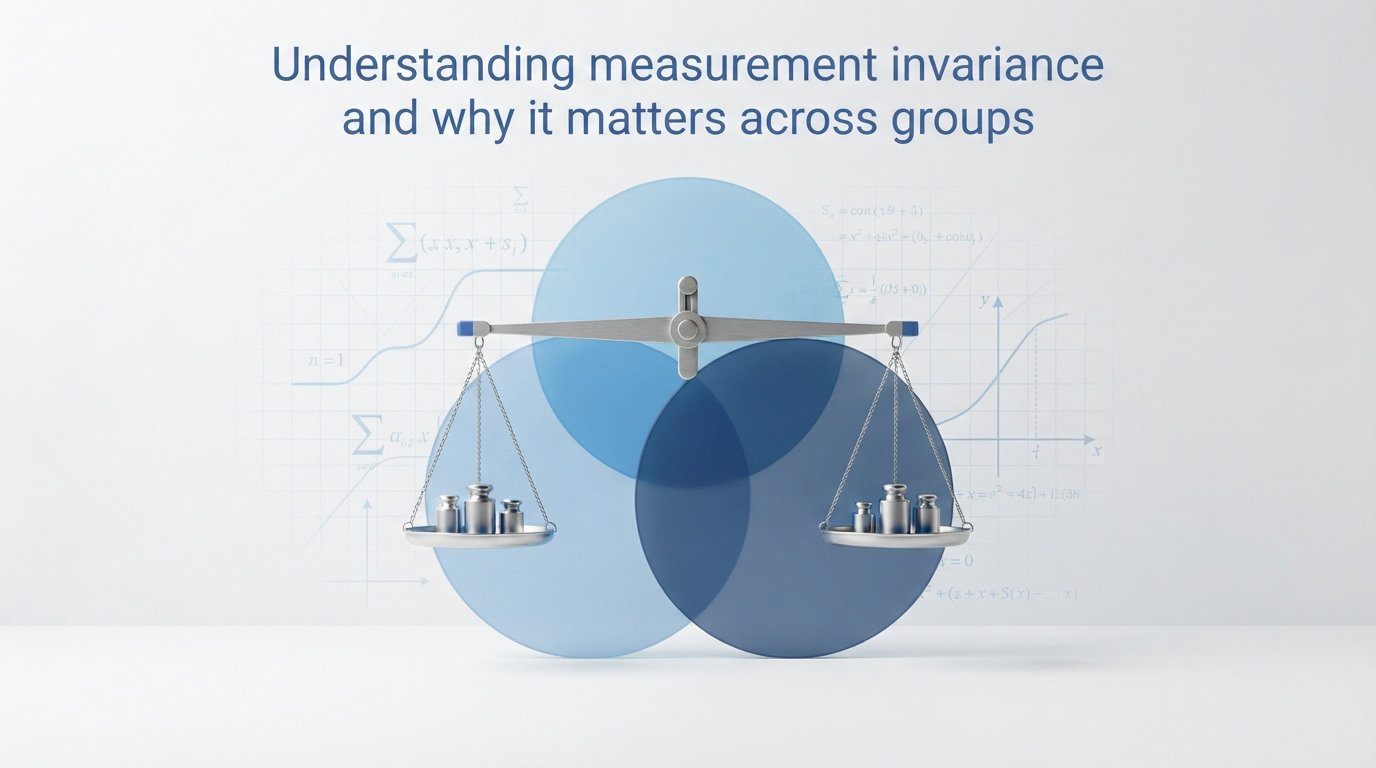
Understanding measurement invariance and why it matters across groups

Measurement invariance is a psychometric property that assesses whether a construct is measured in the same way across different groups or time points. When researchers compare groups, they need to know that observed score differences reflect true differences in the underlying trait, not artifacts of how the instrument behaves in each group. Without this equivalence, … Read more