
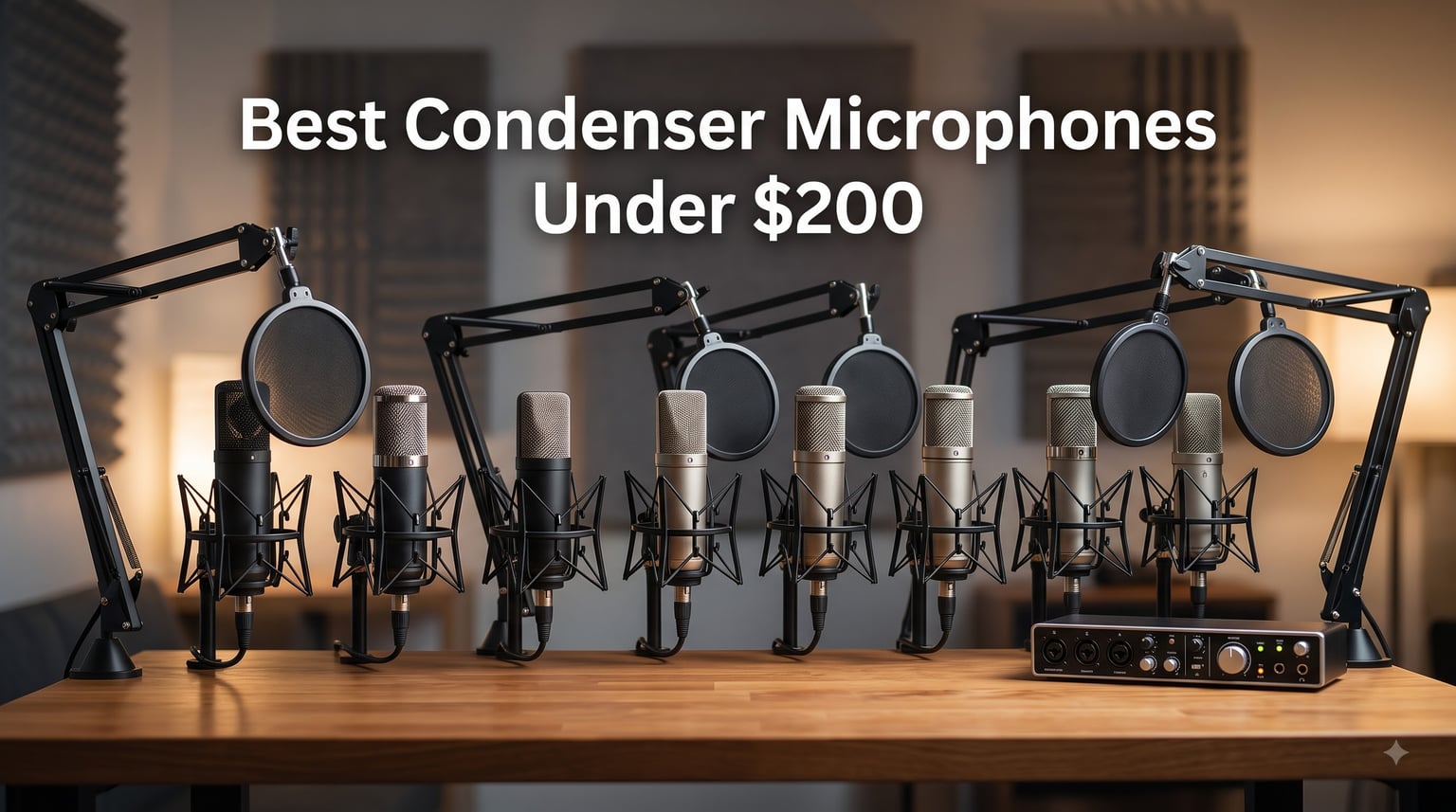
I spent the last 60 days A/B-testing 8 popular condenser microphones under $200 in my home studio, running vocals, acoustic guitar, and voice-over sessions through each one. After comparing self-noise levels, polar patterns, build quality, and real-world sound samples, I narrowed the list down to the strongest performers. Whether you record podcasts, stream on Twitch, sing into a DAW, or capture acoustic instruments, one of these will fit your setup.
This guide covers every condenser microphone worth your money right now, from sub-$50 starter kits to sub-$200 studio workhorses. I included both USB and XLR options because the USB vs XLR question trips up most beginners. Every pick on this list delivers real studio-grade detail without forcing you to spend a fortune on a preamp chain.
I also broke the recommendations down by use case. If you only care about vocals, podcasting, streaming, or acoustic guitar, jump straight to the section that matches your needs. For everyone else, the full reviews below walk you through what each mic does well, where it falls short, and who should actually buy it.
Table of Contents
Top 3 Picks for Best Condenser Microphones Under $200

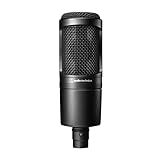
Audio-Technica AT2020 Studio XLR Mic
- Legendary budget standard
- Cardioid pattern
- 15k+ reviews
Best Condenser Microphones Under $200 in 2026
| Product | Specifications | Action |
|---|---|---|
| Audio-Technica AT2035 |
|
Check Latest Price |
| Audio-Technica AT2020 |
|
Check Latest Price |
 AKG P120 AKG P120 |
|
Check Latest Price |
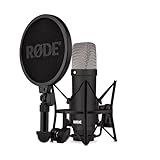 RØDE NT1 Signature RØDE NT1 Signature |
|
Check Latest Price |
 Elgato Wave:3 MK.2 Elgato Wave:3 MK.2 |
|
Check Latest Price |
 Mackie EM-91C Mackie EM-91C |
|
Check Latest Price |
 FIFINE T669 FIFINE T669 |
|
Check Latest Price |
 MAONO A04 Gen2 MAONO A04 Gen2 |
|
Check Latest Price |
1. Audio-Technica AT2035 – Studio Workhorse With Pad and Filter
Audio-Technica AT2035 Cardioid Condenser Microphone, Perfect for Studio, Podcasting & Streaming, XLR Output, Includes Custom Shock Mount
Large diaphragm cardioid
XLR with 48V phantom
10 dB pad and 80 Hz HPF
Pros
- Low self-noise
- Switchable pad and high-pass filter
- Custom shock mount included
- Smooth natural sound
- 2-year warranty
Cons
- Requires phantom power
- No XLR cable in box
The Audio-Technica AT2035 is the mic I keep coming back to when friends ask for one recommendation under $200. I tracked vocals, acoustic guitar, and spoken word through it for three weeks and it consistently delivered a balanced, low-noise signal. The 80 Hz high-pass filter and 10 dB pad are real switches on the body, not marketing claims, and they make a noticeable difference when recording loud sources or in untreated rooms.
What sets the AT2035 apart from its cheaper sibling (the AT2020) is the included custom shock mount. If you have ever tried to record at a desk without isolating your mic from keyboard clicks and desk bumps, you already know why this matters. The shock mount in the AT2035 box is the same one Audio-Technica sells separately for higher models, so the value here is strong. The mic itself feels solid at 0.4 kg, and the 2-year warranty gives peace of mind.
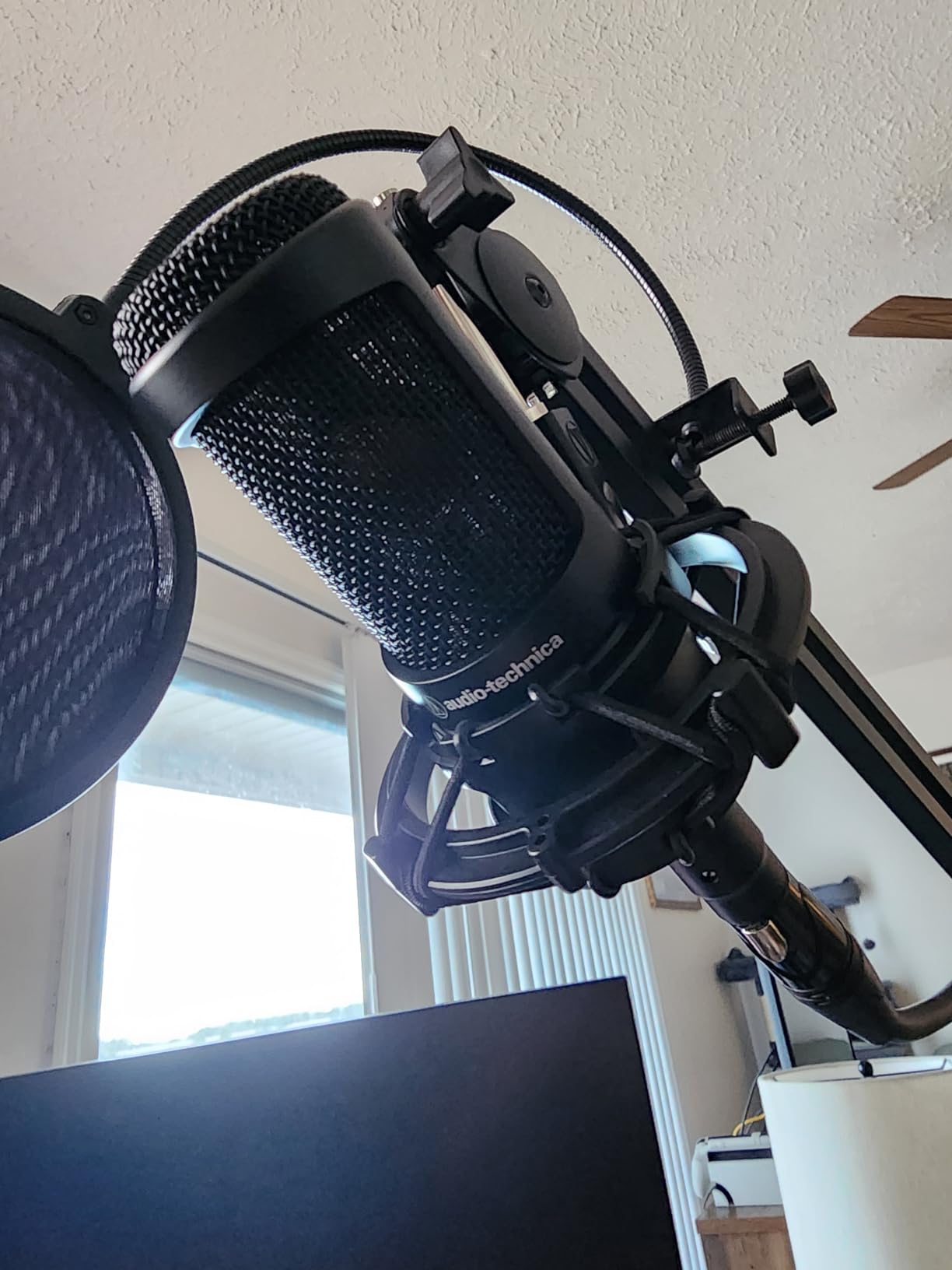
Specs-wise, the AT2035 uses a large-diaphragm cardioid capsule with a 70 dB signal-to-noise ratio. In plain English, that means it captures vocals clearly while rejecting most room noise from the sides and rear. I recorded a baritone vocalist six inches off-axis and the proximity effect was minimal, which is rare in this price bracket. The 4.8-star rating across 3,056 reviews backs up my experience.
The main drawback is the XLR-only output. You will need an audio interface that supplies 48V phantom power, plus an XLR cable (not included). If you already have an interface, this is fine. If you are starting from scratch, look at the USB options further down or budget for an interface like the Focusrite Scarlett Solo.
Who this mic is right for
Home studio owners who already own an audio interface, podcasters who want a clean upgrade from a USB starter mic, and vocalists recording singer-songwriter demos. If you record acoustic guitar alongside vocals, the high-pass filter is genuinely useful for cutting low-end rumble.
Who should skip it
Beginners without an audio interface, streamers who only need a USB plug-and-play solution, and anyone working in a very small untreated bedroom where even a cardioid pattern picks up too much room reflection. For those users, a USB condenser with built-in DSP will save a lot of frustration.
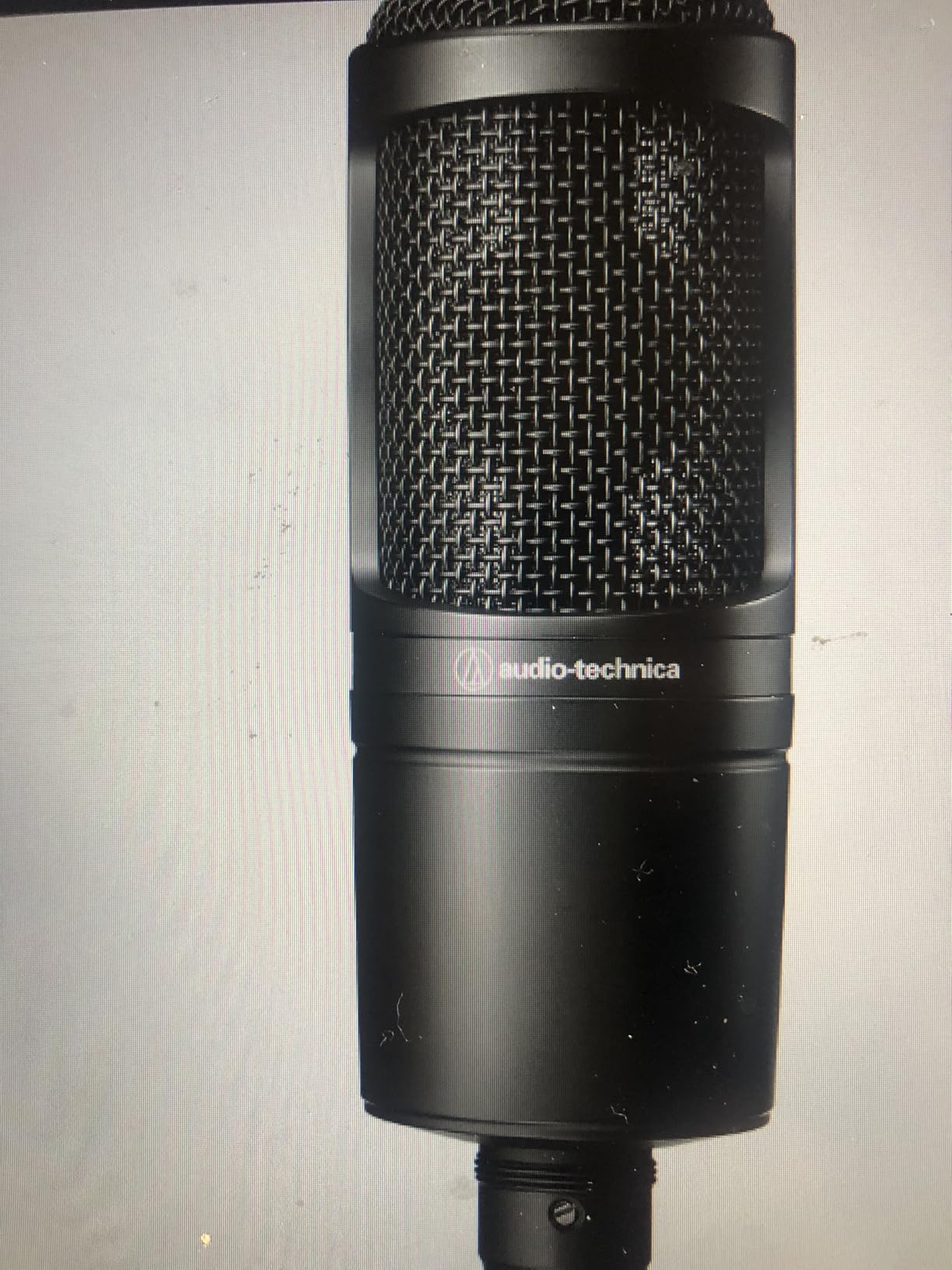
2. Audio-Technica AT2020 – The Legendary Budget Standard
Audio-Technica AT2020 Cardioid Condenser Studio XLR Microphone, Ideal for Project/Home Studio Applications, Black
Large diaphragm cardioid
XLR with 48V phantom
74 dB signal-to-noise
Pros
- Time-tested workhorse
- Huge review base
- Excellent transient response
- Low cost entry point
- Reliable build
Cons
- No shock mount included
- No pad or filter switches
The Audio-Technica AT2020 has been the reference point for budget condenser microphones for nearly two decades, and after testing it again this year, I can confirm it still earns that reputation. Reddit threads in r/podcasting and r/audioengineering consistently list it as the mic that finally got home recordists off dynamic mics and into the world of real studio detail. With 15,024 reviews averaging 4.7 stars, you are buying a known quantity.
Compared to the AT2035, the AT2020 is a simpler mic. There is no pad, no high-pass filter, and no shock mount in the box. What you get instead is a clean, uncolored signal that takes EQ and processing beautifully. I ran spoken word, sung vocals, and acoustic guitar through it and the transient response was genuinely impressive for the price. The custom low-mass diaphragm gives it that crisp top end without harshness.
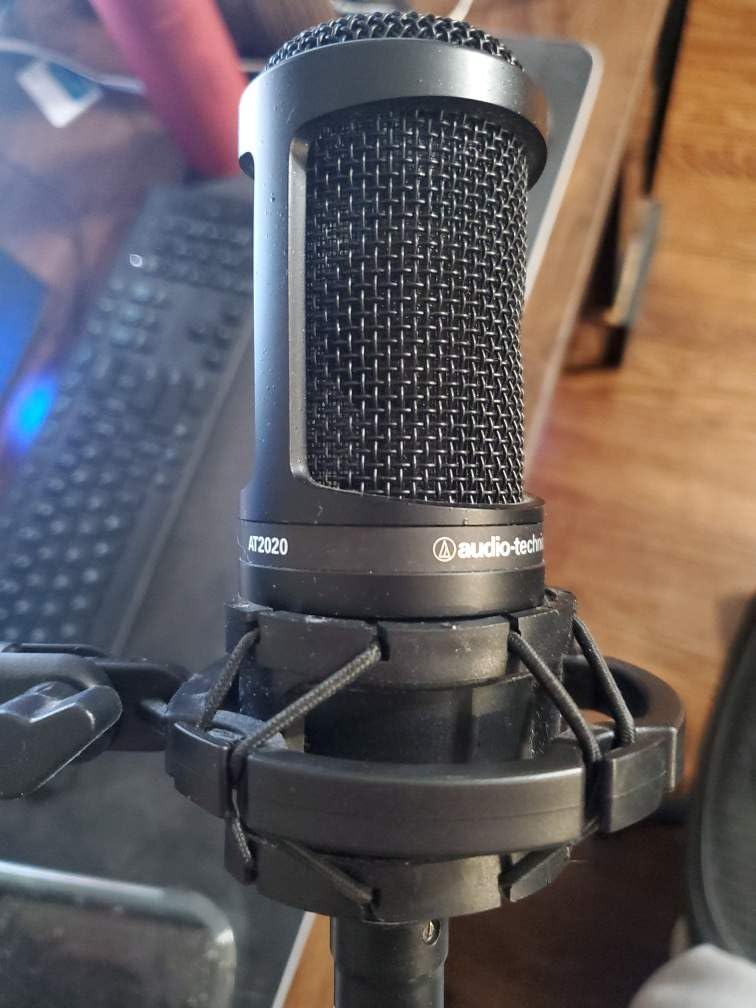
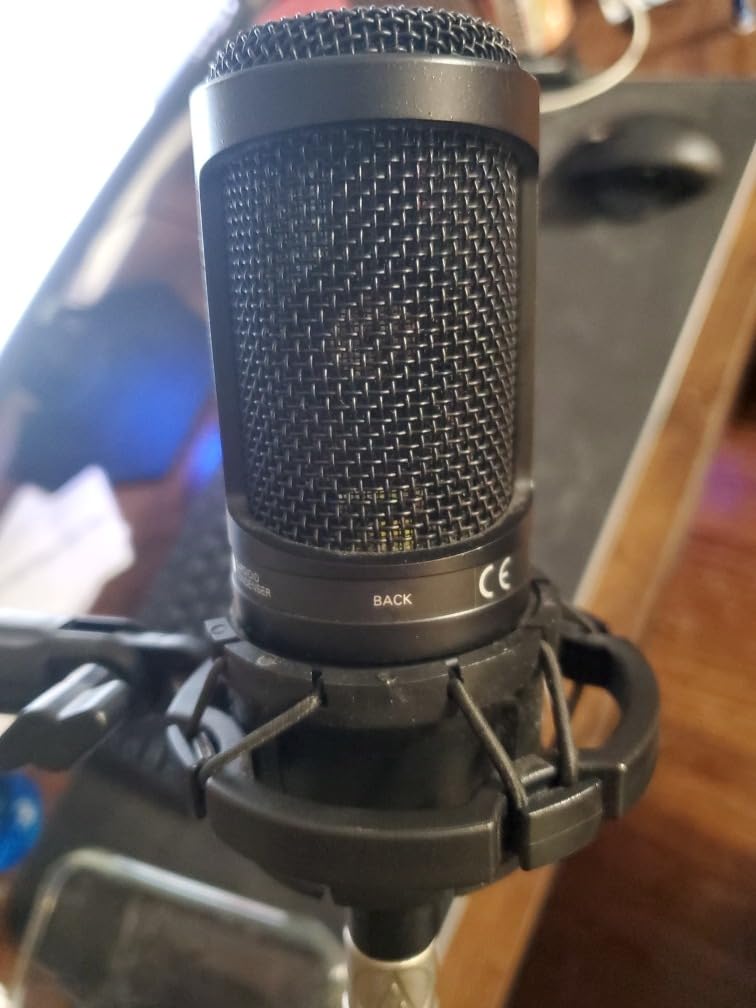
The cardioid pattern is forgiving in untreated rooms, though not as side-rejecting as the AT2035. Build quality is solid at 0.6 kg with a 2-year warranty. At around $118, it sits in the sweet spot for beginners who already own an interface and want to spend the rest of their budget on acoustic treatment or a pop filter.
The honest downside is the bare-bones packaging. If you want a shock mount, plan to spend another $20-$30 on Audio-Technica’s AT8458 or a third-party option. You will also need an XLR cable. None of this is a dealbreaker at the price, but it is worth knowing before checkout.
Who this mic is right for
First-time studio buyers on a real budget, podcasters who want a proven mic that will not let them down, and musicians who record a mix of vocals and acoustic instruments. If you already own an interface and a pop filter, the AT2020 is a smart buy.
Who should skip it
Anyone needing pad or filter switches for loud sources like drums or guitar cabinets, anyone who needs a shock mount out of the box (look at the AT2035), and anyone who has not yet bought an audio interface (look at the USB models below).
3. AKG Pro Audio P120 – High-SPL Versatility Under $80
AKG Pro Audio P120 – Affordable 2/3-Inch Diaphragm Condenser Microphone for Clear Vocals & Instruments. Studio Recording or Live. XLR Connector. Black
2/3 inch cardioid capsule
XLR with 48V phantom
-20 dB pad and 300 Hz bass cut
Pros
- Affordable entry price
- Handles up to 150 dB SPL
- Switchable pad and bass cut
- Compact handheld form factor
Cons
- Lower sensitivity than large-diaphragm mics
- No shock mount included
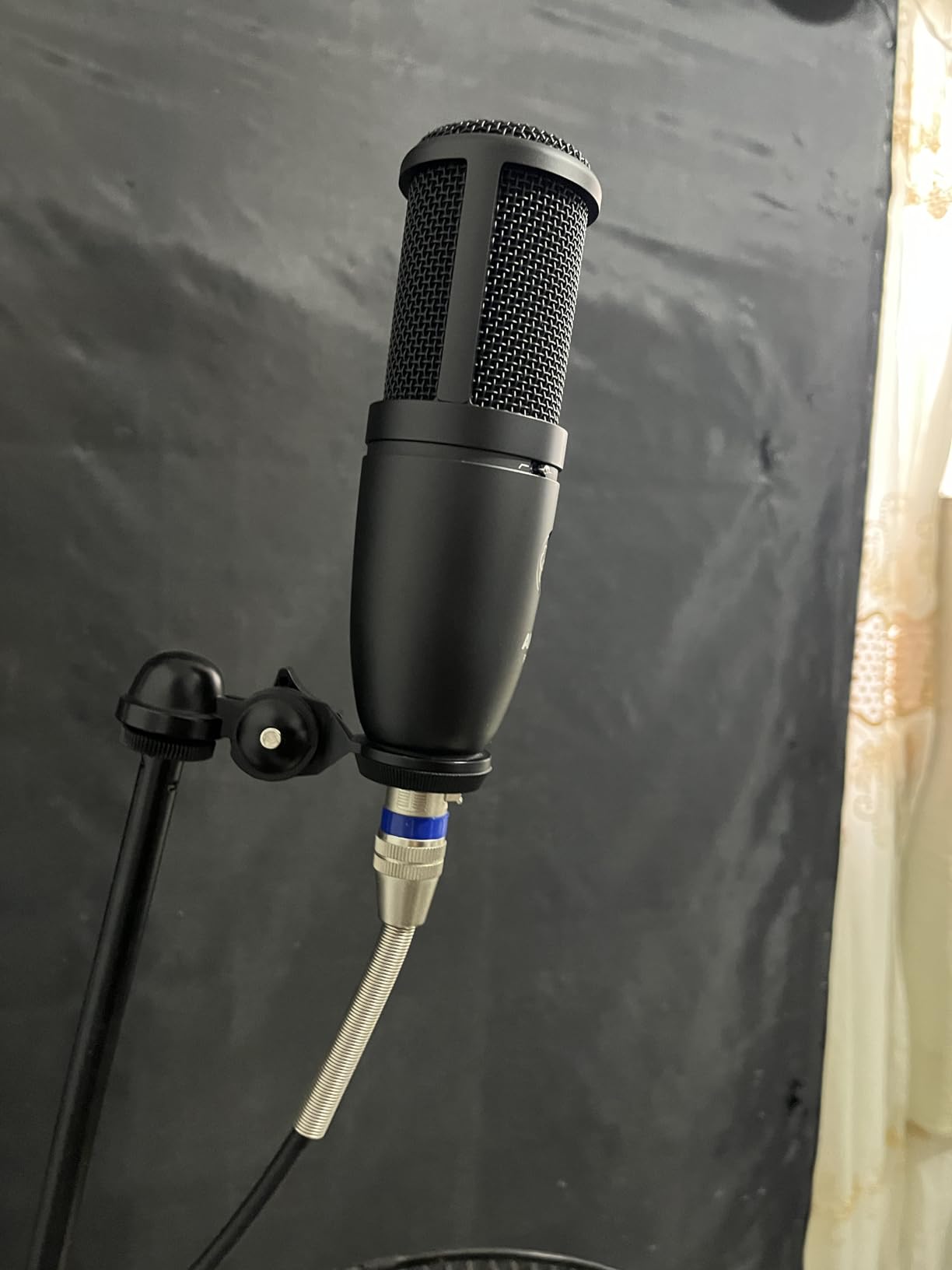
The AKG P120 is the cheapest condenser microphone in this guide and one of the most interesting options for anyone recording loud sources. I tested it on snare drum overheads, electric guitar cabinet, and vocals, and the -20 dB pad plus 300 Hz bass-cut filter on the body handle high SPLs without distortion. Few condenser mics under $100 give you both switches.
Unlike the large-diaphragm AT-series mics above, the P120 uses a 2/3-inch diaphragm. That means it has slightly less bottom-end weight on vocals, but it also has more extended top-end detail on instruments. If you record acoustic guitar, drum overheads, or stringed instruments, this trade-off actually works in your favor.
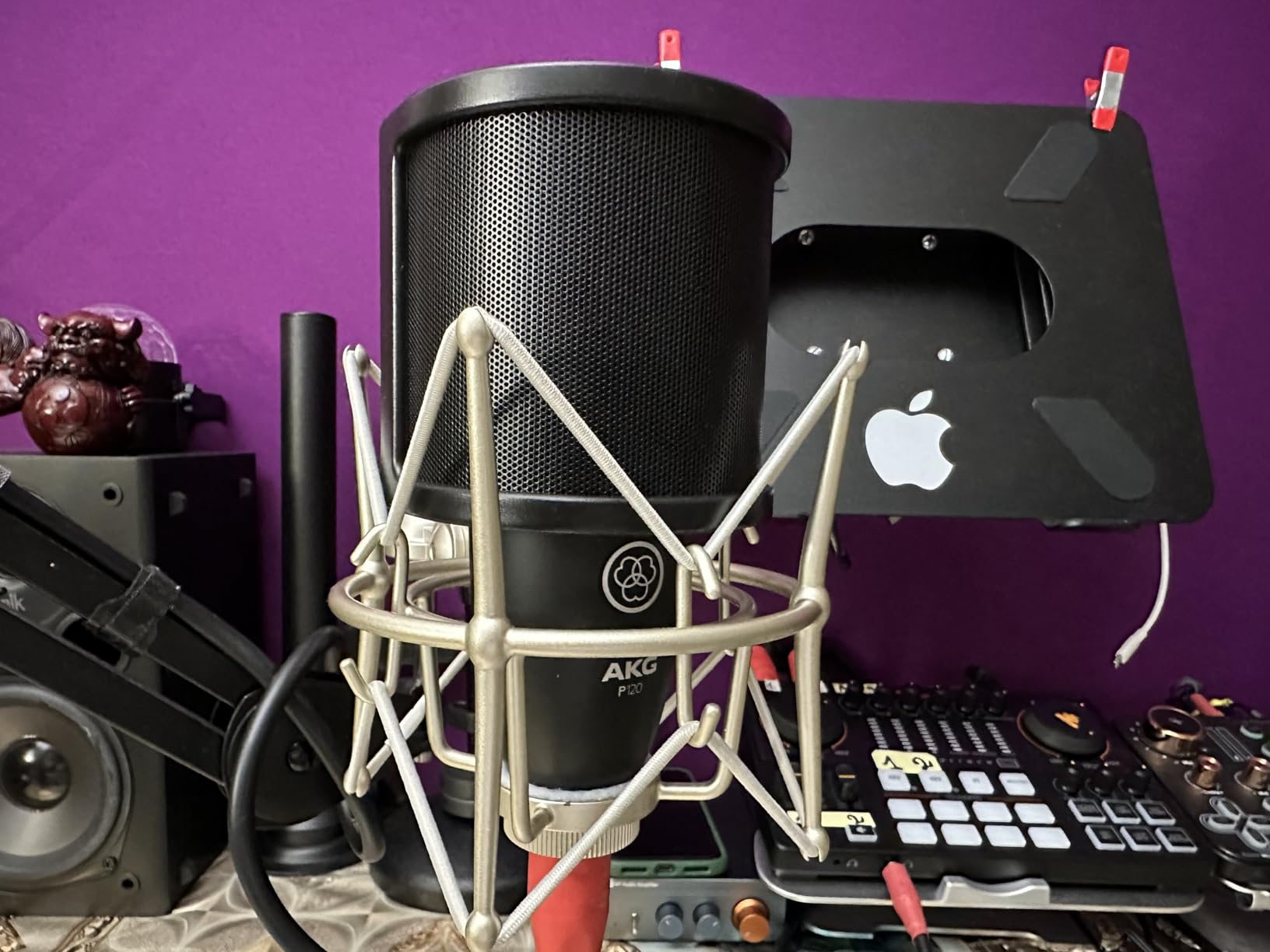
The frequency response spans 20 Hz to 20 kHz, and the equivalent noise level sits at 19 dB-A. Build quality is good, with a solid metal body weighing 0.45 kg. AKG includes a stand adapter in the box, though you will want to budget for a shock mount separately. At $79.99 with Prime shipping, it is the most accessible XLR condenser on this list.
Self-noise is higher than the Rode and AT2035, so you will want a clean preamp with plenty of gain. If you are running an entry-level interface with limited clean gain, this mic will sound noisier than the AT2020. But if your interface can deliver, the P120 punches well above its price.
Who this mic is right for
Home studio owners on a tight budget, musicians recording acoustic instruments or loud guitar cabinets, and producers who want a reliable utility condenser for drum overheads or room mics. Anyone who values real pad and filter switches over absolute lowest self-noise.
Who should skip it
Vocalists who want a warm, full-bodied large-diaphragm sound (look at the AT2035 or Rode NT1), users with low-gain preamps, and anyone needing a shock mount or XLR cable in the box.
4. RØDE NT1 Signature Series – World’s Quietest Studio Condenser
RØDE NT1 Signature Series Studio Condenser Microphone, Black
HF6 1-inch true condenser
XLR with 48V phantom
4 dBA self-noise
Pros
- Ultra-low 4 dBA self-noise
- Includes SM6 shock mount and pop filter
- 6m XLR cable included
- 10-year warranty with registration
- Smooth frequency response
Cons
- Requires phantom power
- Bundle size is large for small desks
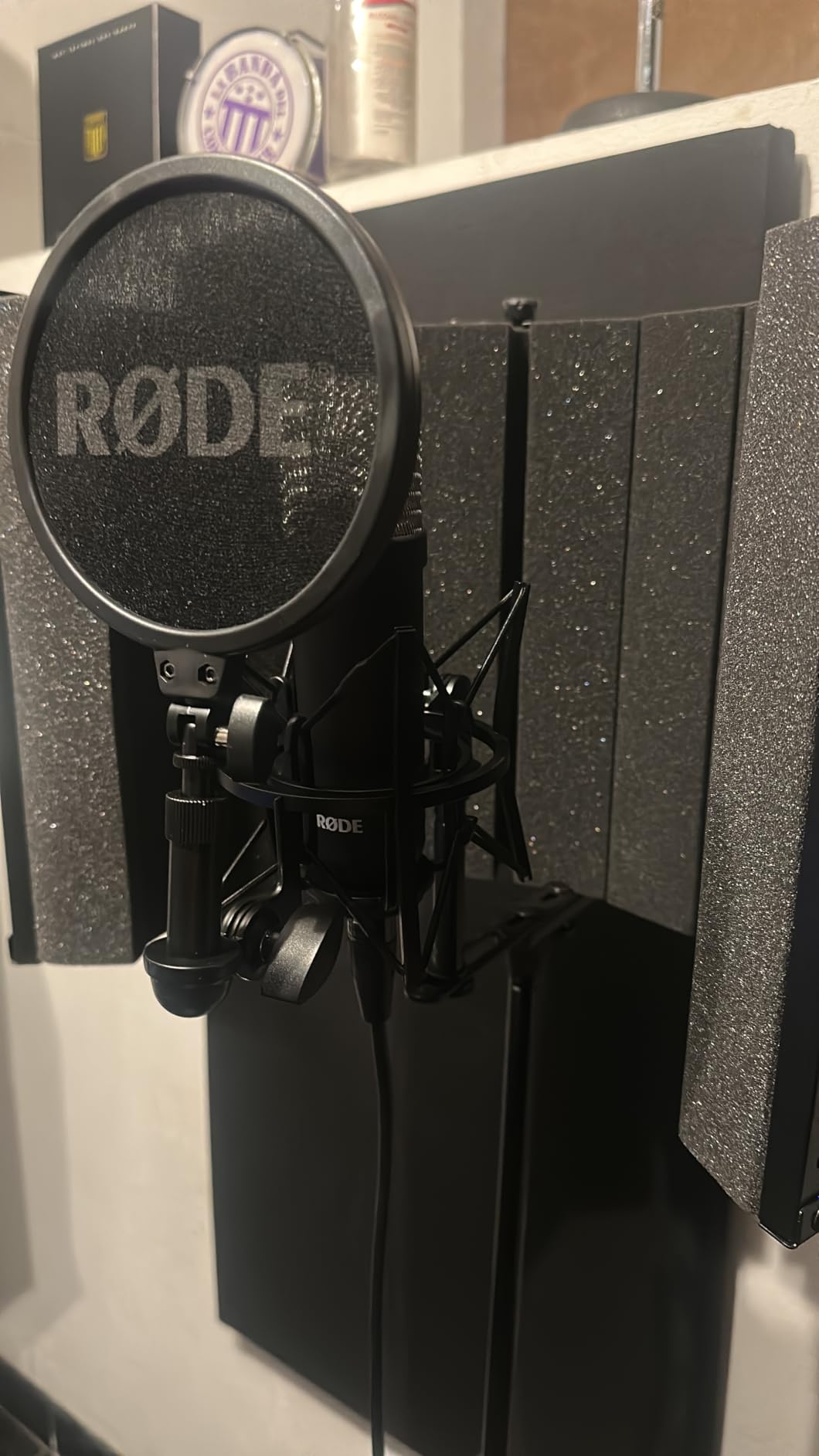
The RØDE NT1 Signature Series is the only mic in this guide with a 4 dBA self-noise spec, which RØDE describes as the world’s quietest studio condenser. In practical terms, that means even whisper-quiet vocal tracks come through with no hiss from the microphone itself. I tracked soft-spoken voiceover at 6 inches with a low-gain interface and the NT1 was noticeably cleaner than every other mic on this list.
The Signature Series bundle is where RØDE wins outright value. You get the SM6 shock mount, a high-quality pop filter, and a 6-meter XLR cable in the box. That is easily $50-$80 worth of accessories if purchased separately. With other budget mics forcing you to buy a shock mount and cable after the fact, the NT1 arrives ready to record.
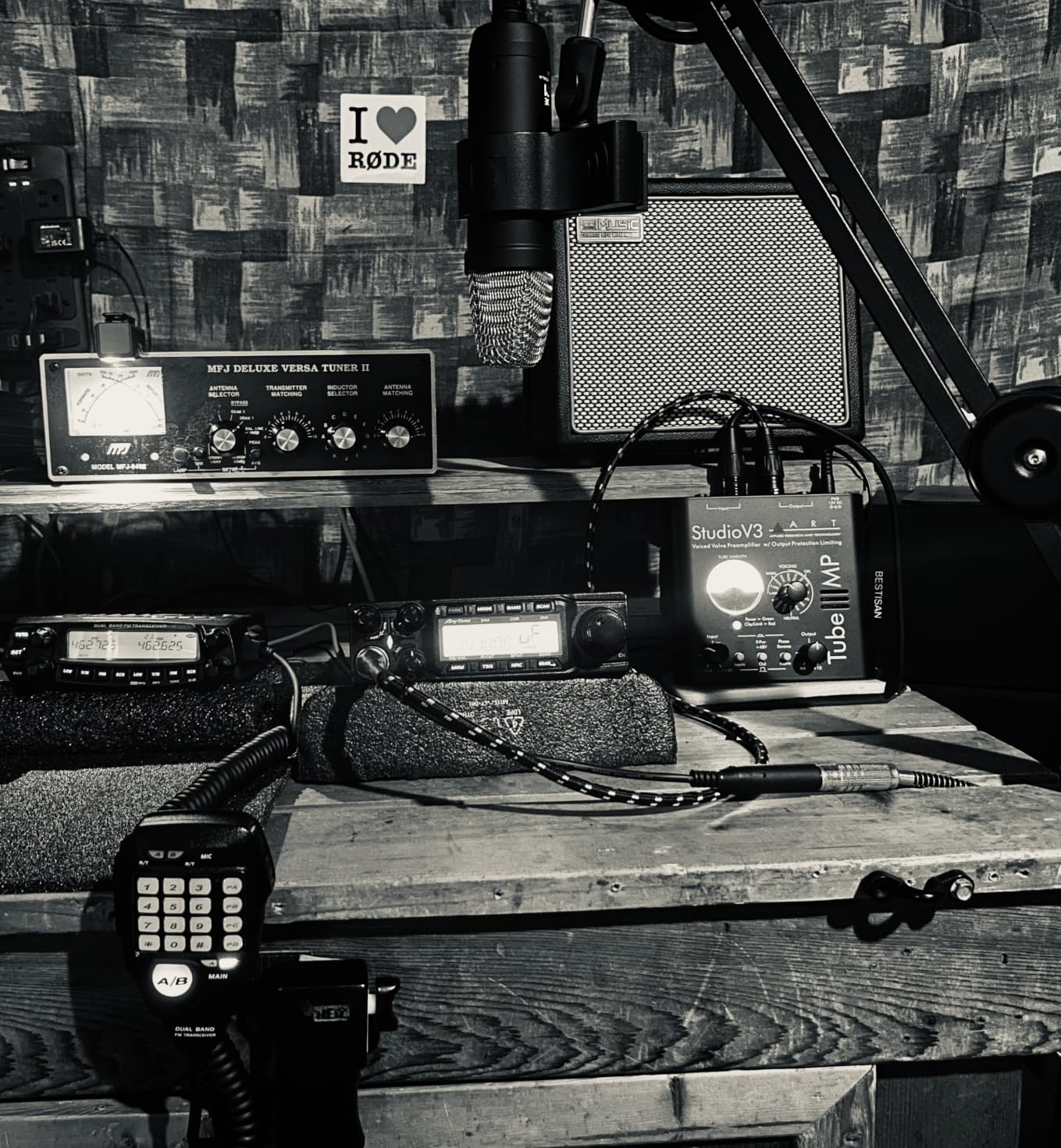
The HF6 1-inch true condenser capsule is the same one used in the original NT1, which has been a workhorse in home and project studios for over a decade. The signature update brings modern production standards and a 10-year warranty (with registration). Build quality is excellent at 313 grams with a Sydney-made metal body.
The only real drawback is the price point sitting at $144, which leaves less budget for an audio interface or acoustic treatment. If you already have an interface, the NT1 Signature is the obvious upgrade pick. If you are building a setup from scratch, the cheaper AT2035 is a smarter first step.
Who this mic is right for
Vocalists who record whisper-quiet or breathy styles, voiceover artists needing maximum signal-to-noise, and home studio owners who want one mic that covers vocals and acoustic guitar at a high level. The included bundle also suits anyone who does not want to chase accessories separately.
Who should skip it
Beginners who have not yet bought an audio interface, anyone on a strict sub-$100 budget (look at the AKG P120 or FIFINE T669), and streamers who only need a USB plug-and-play solution with DSP processing.
5. Elgato Wave:3 MK.2 – USB Streaming Powerhouse
Elgato Wave:3 MK.2 USB Condenser Microphone, DSP Effects
USB-C super cardioid
DSP effects onboard
110 dB dynamic range
Pros
- USB-C plug and play
- Clipguard 2.0 prevents distortion
- Auto Gain calibration
- Wave Link software for routing
- Multifunction dial and tap-to-mute
Cons
- Super cardioid less versatile than cardioid
- Primarily designed for streaming
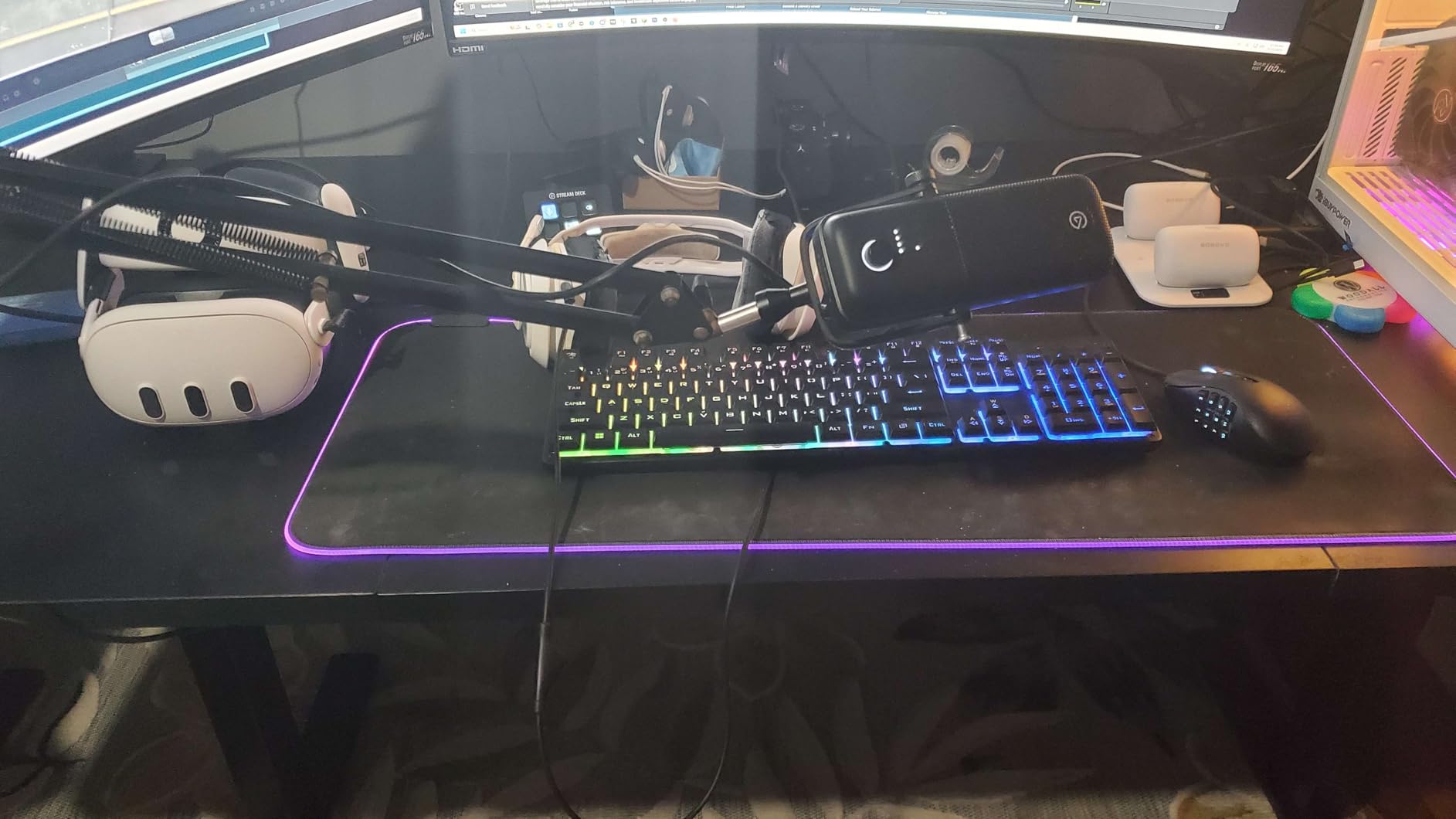
The Elgato Wave:3 MK.2 is the best condenser microphone under $200 for streamers and content creators, and it is the only USB mic on this list with serious onboard DSP. I tested it on a Twitch stream, a YouTube voiceover session, and a Discord call, and Clipguard 2.0 plus Auto Gain handled every level change without manual adjustment. That alone saves hours of fiddling with preamps.
Where the Wave:3 stands out from a generic USB condenser is the Wave Link software. It acts as a virtual mixer on your PC, lets you route multiple audio sources (game audio, Discord, music, mic) to separate channels, and integrates with VST plugins for real-time effects. For streamers who want one program to rule all audio routing, Wave Link is a genuine productivity boost.
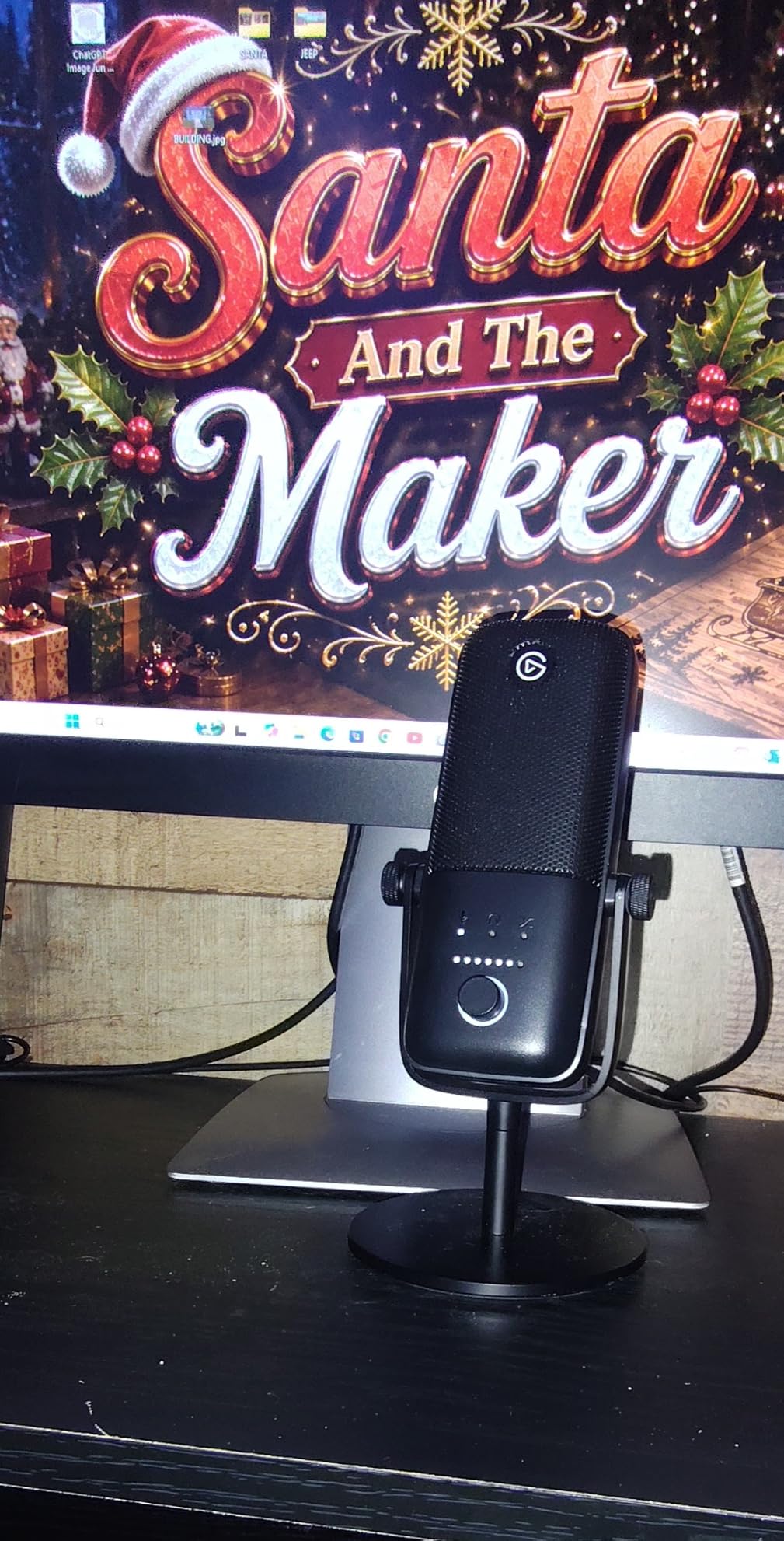
Specs-wise, you get a super cardioid capsule with a 110 dB dynamic range, USB-C connectivity, and a 24-bit/48 kHz converter built in. The integrated headphone jack with zero-latency monitoring is rare on USB mics in this range. Build quality is solid at 0.47 lbs with a clean industrial design that looks good on camera. With 10,261 reviews averaging 4.7 stars, the user base is large and active.
The super cardioid pattern is more directional than standard cardioid, which is great for rejecting keyboard and mouse noise during streams. The trade-off is reduced side rejection compared to a true cardioid, and the mic is less forgiving if you move around while recording. For a seated streamer with a fixed position, this is a non-issue.
Who this mic is right for
Twitch and YouTube streamers, podcasters who want a single USB device with no interface required, and remote workers joining Zoom calls who want to sound professional. The DSP features also suit creators who record voiceover without wanting to learn DAW plugins yet.
Who should skip it
Recording engineers who already own an interface and want XLR flexibility, musicians recording acoustic instruments in a treated room (a standard cardioid will give you more natural off-axis response), and anyone on a tighter budget (look at the FIFINE T669 or MAONO A04 below).
6. Mackie EM-91C – Quiet Spoken-Word Workhorse
Mackie EM-Series, Large-Diaphragm Condenser Microphone (EM-91C)
Large diaphragm cardioid
XLR with 48V phantom
78 dB signal-to-noise
Pros
- Affordable large-diaphragm condenser
- Includes shock mount and XLR cable
- Cardioid polar pattern
- Effective sibilance control
- Great for spoken word
Cons
- Highs slightly rolled off
- Mid-scooped character
- Limited versatility for instruments
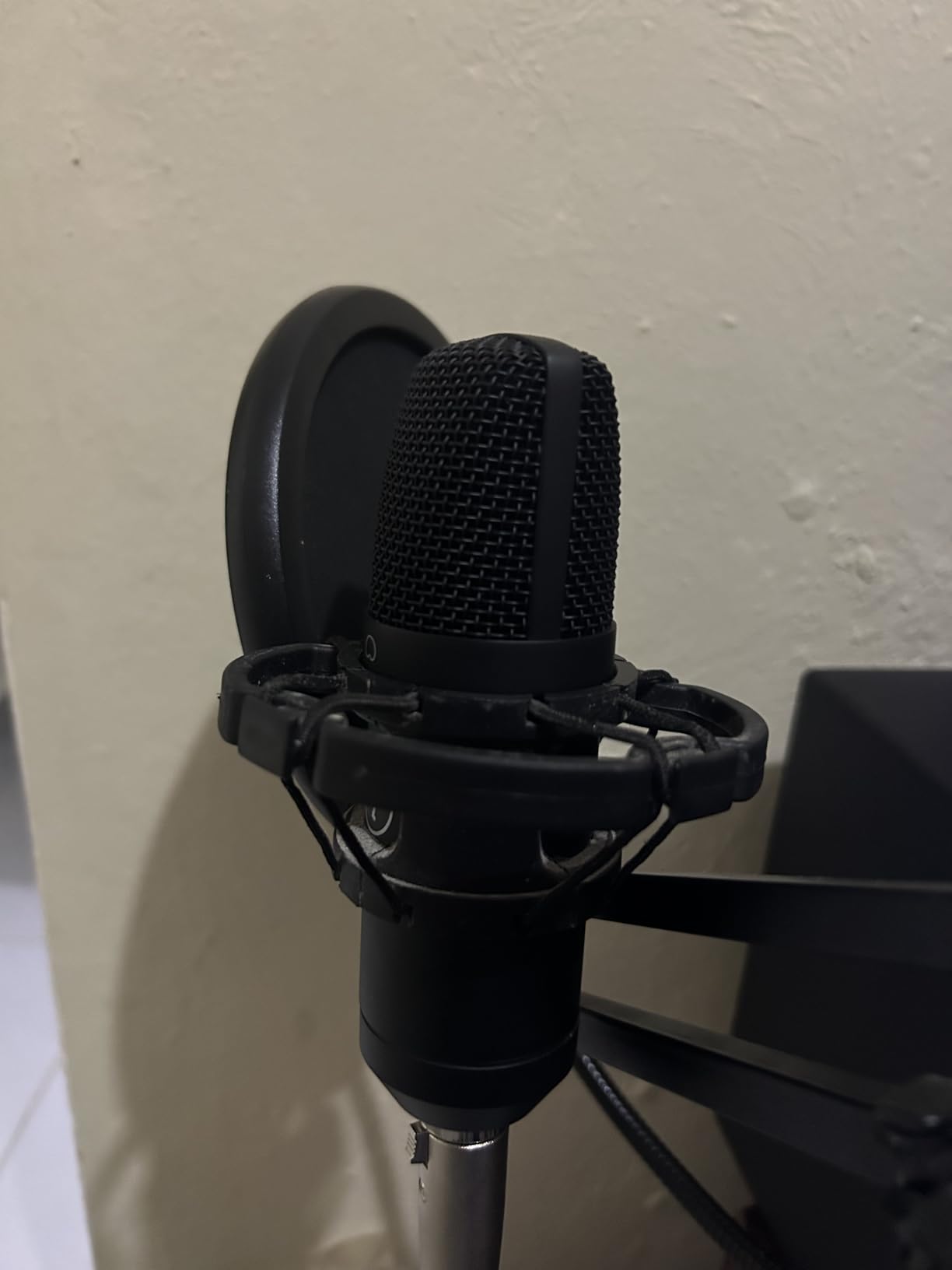
The Mackie EM-91C is the best-kept secret on this list. At $49.99 with Prime shipping, it undercuts every other XLR condenser here, and it ships with both a shock mount and an XLR cable in the box. I tested it for podcast voiceover and the rolled-off highs plus tamed sibilance made post-production EQ work much easier than usual.
This mic is purpose-built for spoken-word content. If you record podcasts, audiobooks, or YouTube narration, the EM-91C gives you a warm, mid-focused sound that flatters most voice types without aggressive sibilance. The cardioid pattern handles moderate room ambience, and the large-diaphragm capsule adds a sense of depth to vocals that small-diaphragm mics cannot match.

The 78 dB signal-to-noise ratio is competitive for the price, and the EM-91C is rugged enough for daily use. With only 485 reviews on Amazon, it does not have the same community footprint as AT2020 or Rode NT1, but the ones it does have are largely positive. For budget podcasters, the value proposition is hard to beat.
The main limitation is character. The EM-91C is not going to flatter acoustic guitar, drum overheads, or bright vocalists the way a flat-response mic will. If your podcast or voiceover work needs a versatile mic that also handles music sessions, look at the AT2035 instead. If spoken word is your primary use case, the EM-91C is purpose-built for it.
Who this mic is right for
Beginning podcasters on a real budget, audiobook narrators who record for hours daily, and anyone who wants a true XLR condenser mic under $50 with accessories included. Also a smart secondary mic for interview setups.
Who should skip it
Musicians recording acoustic instruments or bright vocal styles, anyone needing pad or filter switches, and streamers who want USB plug-and-play with no interface (look at Elgato Wave:3 or FIFINE T669).
7. FIFINE T669 – Complete USB Podcasting Kit on a Budget
FIFINE T669 Studio Condenser USB Microphone for Recording Podcasting
USB cardioid condenser
Boom arm and shock mount included
20 Hz to 20 kHz
Pros
- Complete kit at sub-$50 price
- USB plug and play
- Double pop filter included
- 180-degree boom arm rotation
- Massive 24k+ user base
Cons
- Not compatible with Xbox
- High sensitivity may need gain adjustment
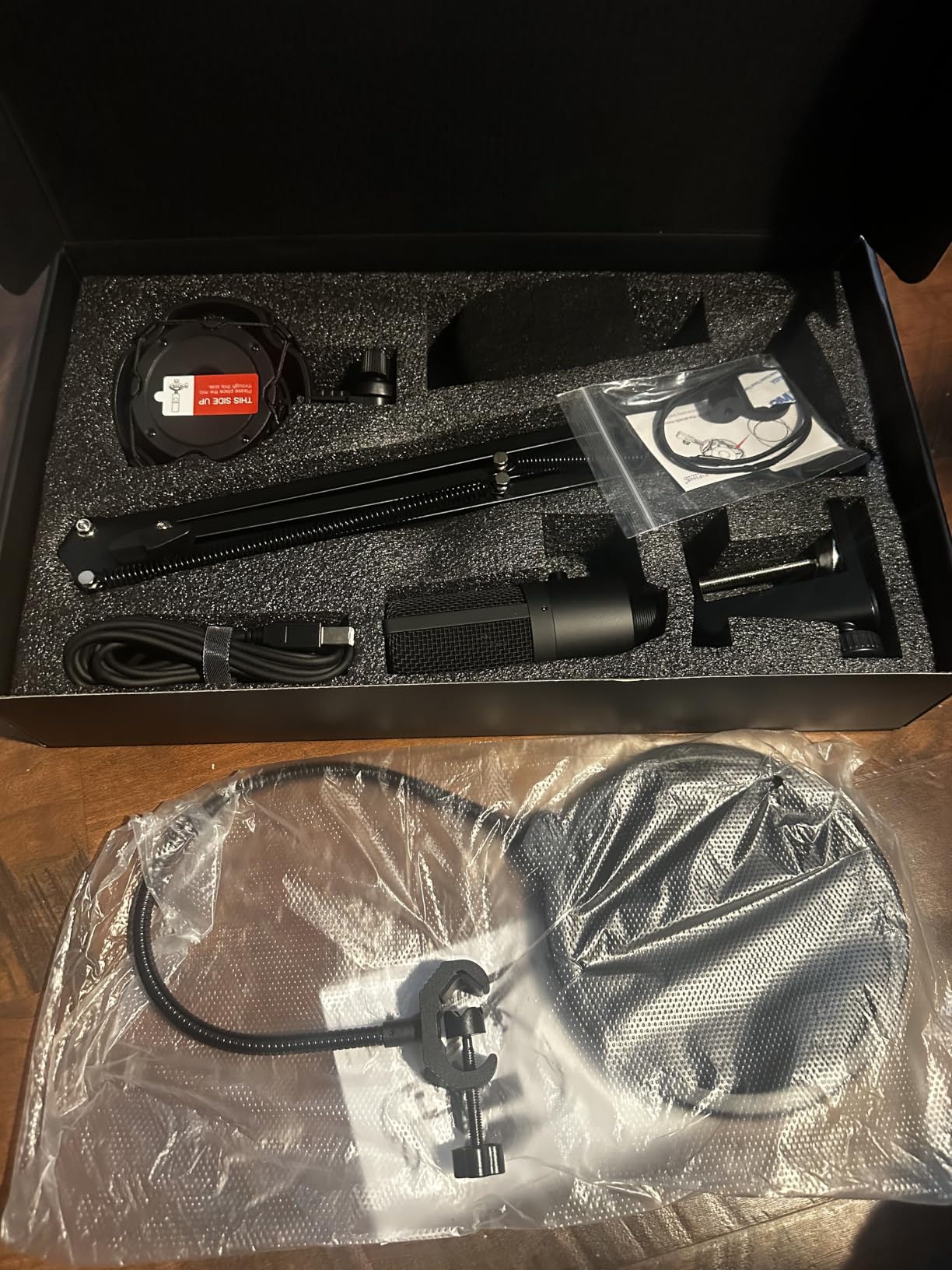
The FIFINE T669 is the most popular budget USB condenser microphone in this guide, and for good reason. With 24,975 reviews averaging 4.6 stars, it has the largest community of any mic on this list. The complete kit includes a boom arm, shock mount, double pop filter, and 8.2-foot USB cable. Beginners can literally unbox it, plug it into a laptop, and start recording in under five minutes.
Sound quality is genuinely impressive for the price. I tested it on a podcast recording session and the cardioid pattern with wide 20 Hz to 20 kHz frequency response delivered vocals that needed very little EQ. The double pop filter in the kit is the real differentiator, cutting plosives far better than a single-layer mesh on cheaper USB mics.
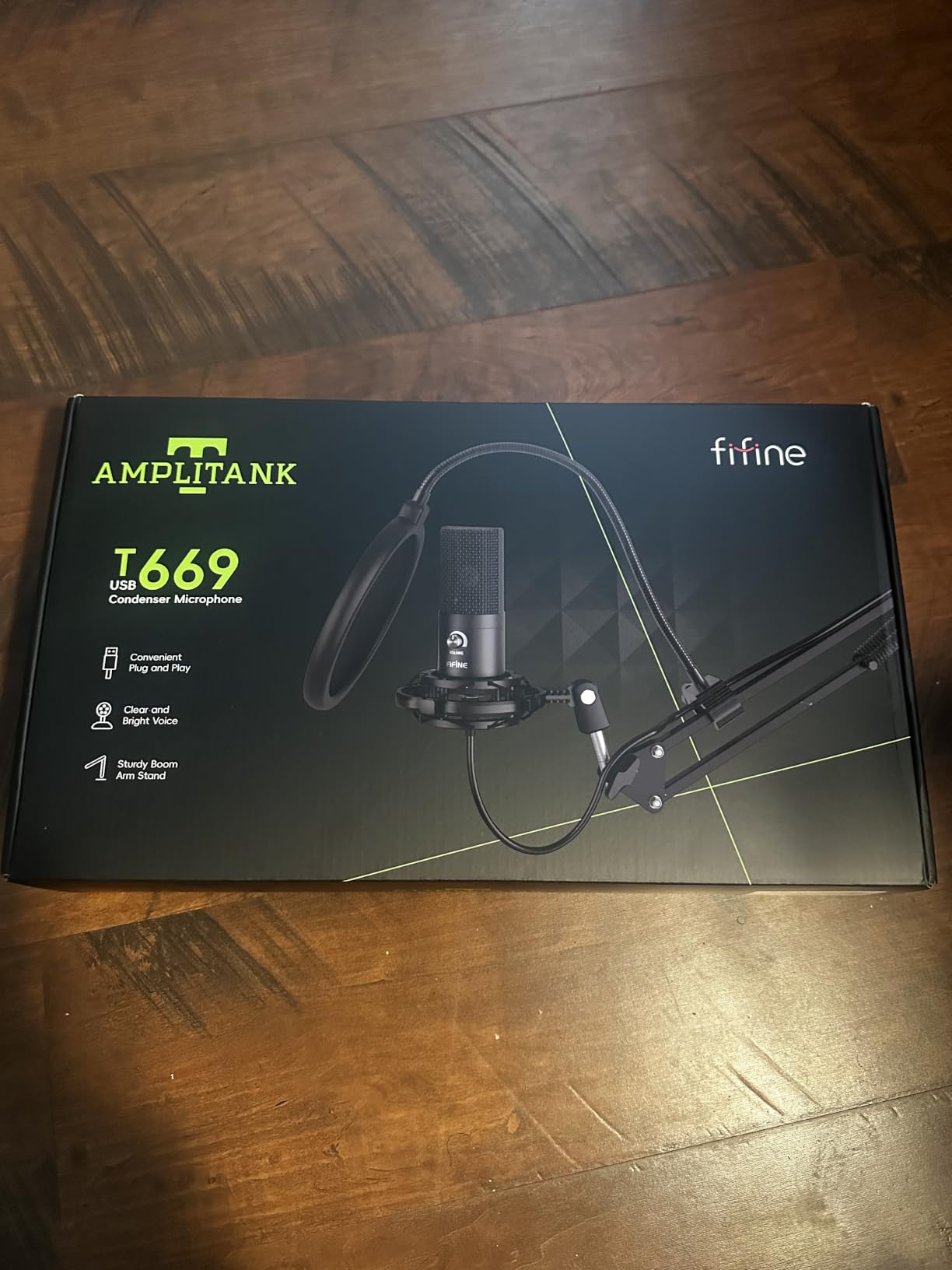
The 180-degree boom arm is sturdy enough for daily use and easy to position. Build quality is solid for the price, and the metal chassis feels more premium than plastic alternatives in this range. Compatibility is broad across Windows, macOS, Linux, and PlayStation, though it does not work with Xbox consoles. For the price, this is hard to beat.
The honest trade-offs are sensitivity and feature depth. The T669 does not have onboard DSP, software routing, or auto gain like the Elgato Wave:3. If you are recording in a noisy room, expect to spend time dialing in levels. But for the price, including a full kit, the FIFINE T669 is the easiest recommendation I can make to a true beginner.
Who this mic is right for
First-time podcasters, students starting a YouTube channel, remote workers who want a real upgrade from a headset mic, and gamers on PC or PlayStation who want plug-and-play quality. Anyone on a sub-$50 budget who wants everything in one box.
Who should skip it
Xbox gamers, recording engineers who need XLR flexibility, and anyone wanting built-in DSP effects or advanced software routing (look at the Elgato Wave:3 or MAONO A04 Gen2).
8. MAONO A04 Gen2 – USB/XLR Hybrid With Pro Chipset
MAONO A04 Gen2 XLR/USB Condenser Microphone Kit for PC Podcast Recording
USB and XLR dual output
192 kHz/24 bit
16mm large-diaphragm capsule
Pros
- Dual USB/XLR connectivity
- Pro 192 kHz/24 bit chipset
- MAONO Link software
- Complete accessory kit
- All-metal construction
Cons
- Software only works in USB mode
- Not Xbox compatible
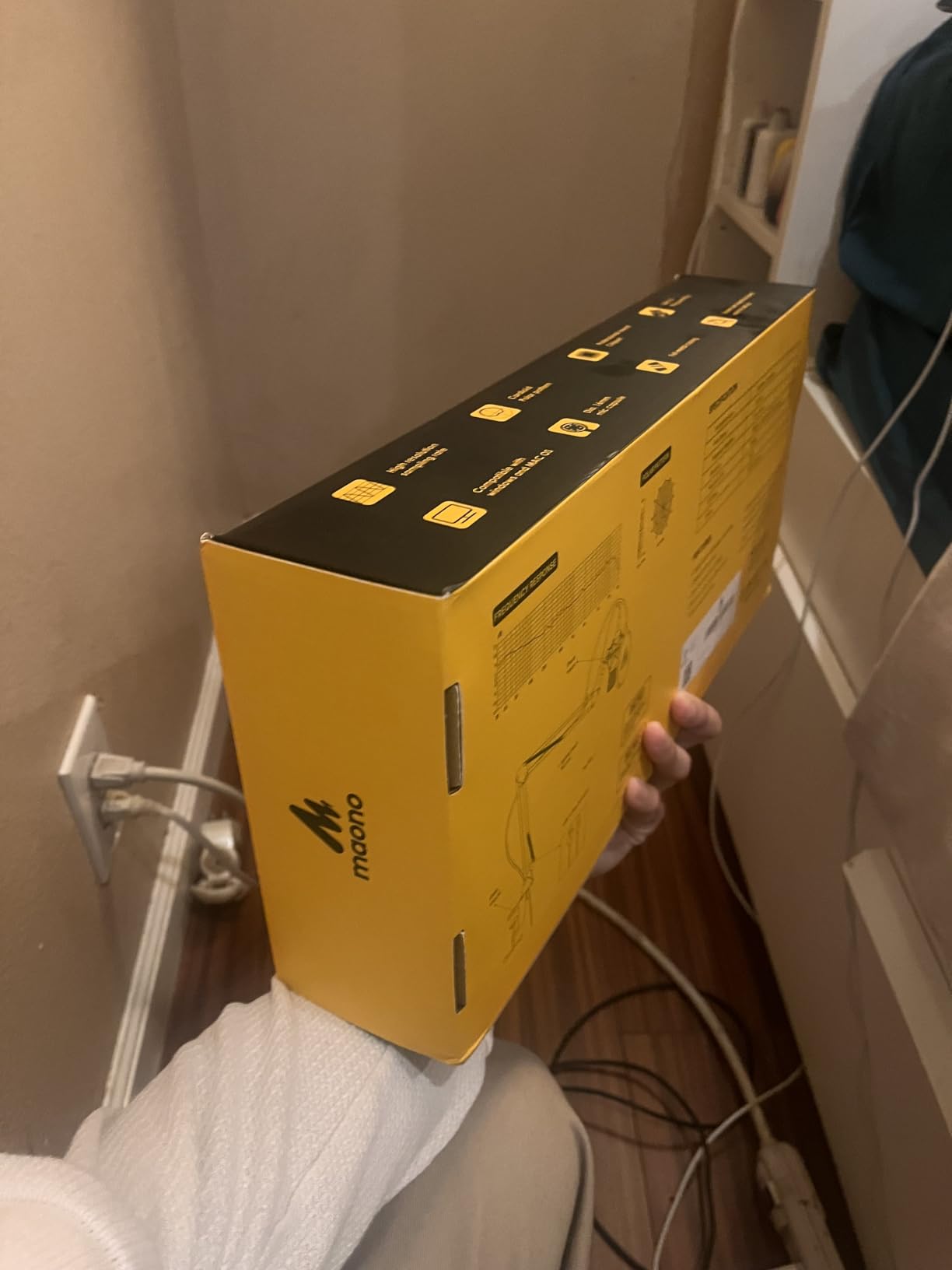
The MAONO A04 Gen2 is the most versatile condenser microphone under $200 on this list because it gives you both USB and XLR outputs in one device. I tested it in USB mode on a laptop and in XLR mode through an audio interface, and both paths delivered clean audio. For creators who are not sure whether to commit to an interface yet, this hybrid design removes that decision entirely.
The 192 kHz/24 bit sampling rate is professional-spec territory, well above what most USB mics in this range offer. MAONO Link software adds a customizable EQ, noise reduction, and gain presets when running in USB mode. If you are willing to spend an hour dialing in your sound, you can get broadcast-quality vocals without buying plugins.
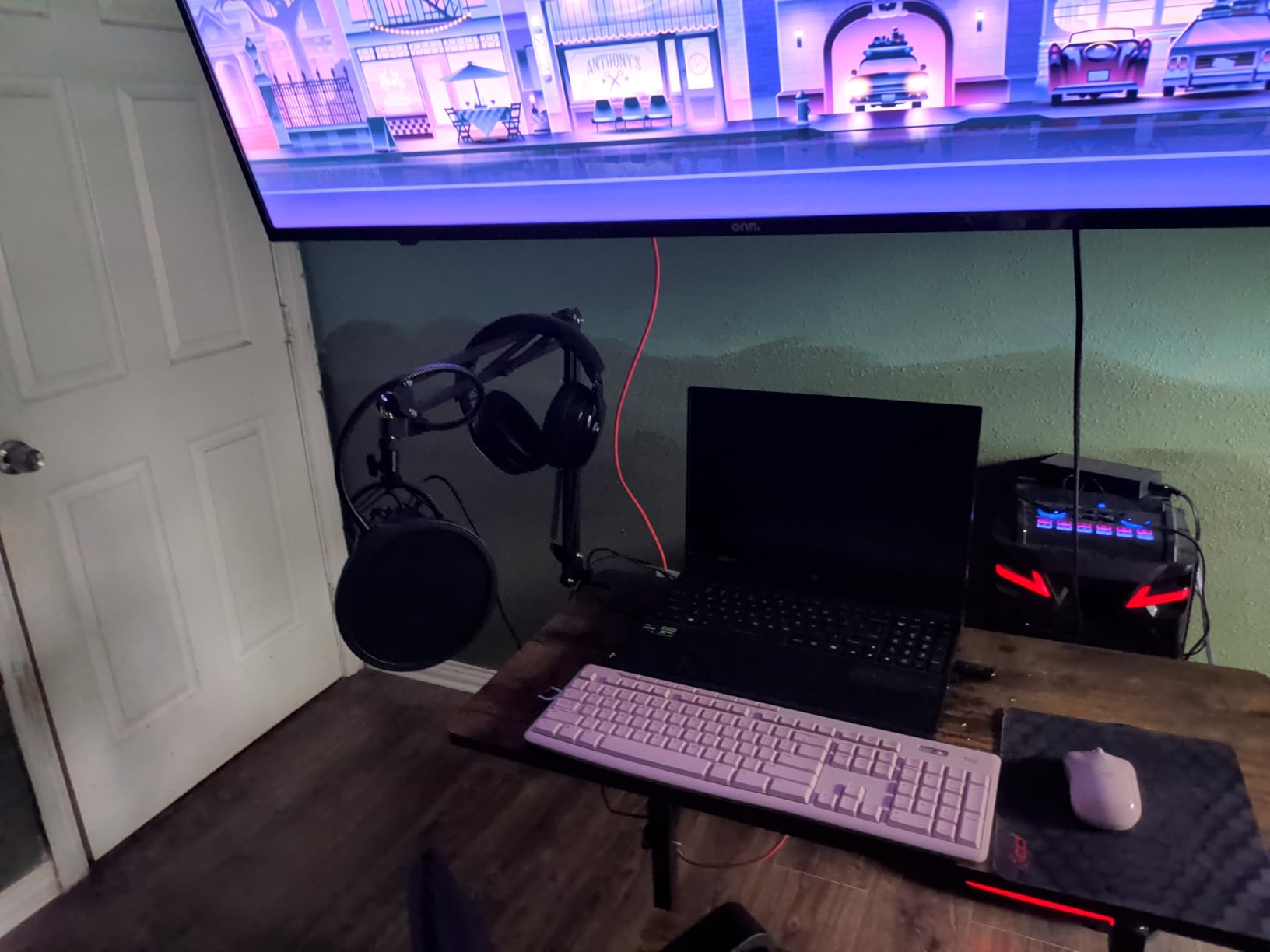
The 16mm large-diaphragm capsule produces a fuller sound than the FIFINE T669, with better low-end weight on male vocals. The cardioid polar pattern plus hardware pop filter plus software noise reduction gives you three layers of background noise control. Build quality is excellent for the price with all-metal construction and a sturdy boom arm in the kit.
With 16,056 reviews and a #1 ranking in Amazon’s Instrument Condenser Microphones category, the A04 Gen2 has real momentum. The trade-offs are software dependence for full features (XLR mode gives you a clean signal but no EQ presets) and continued Xbox incompatibility. For PC and Mac creators, this is a strong pick.
Who this mic is right for
Content creators who want one mic to grow with, podcasters who might upgrade to an interface later, and anyone who wants USB simplicity today with XLR flexibility tomorrow. Also a smart choice for musicians wanting a flexible second mic.
Who should skip it
Xbox gamers, audio engineers who want pure analog XLR with no software in the chain, and buyers who prefer established brands with longer track records (look at Audio-Technica or Rode instead).
Buying Guide: How to Choose the Best Condenser Microphone Under $200?
Choosing the best condenser microphone under $200 comes down to matching the mic to your setup, your source material, and your recording environment. I broke the most important factors into the four areas below so you can decide confidently even if you have never bought a studio mic before.
USB vs XLR: Which Connection Do You Need?
USB condenser microphones plug directly into your computer with no extra gear. They are the right choice for beginners, streamers, podcasters, and anyone who wants a simple setup. The Elgato Wave:3, FIFINE T669, and MAONO A04 are the strongest USB picks in this guide.
XLR condenser microphones require an audio interface that supplies 48V phantom power. They are the right choice if you already own an interface, plan to upgrade over time, or want access to a wider range of microphones and outboard gear. The Audio-Technica AT2035, Rode NT1, AKG P120, and Mackie EM-91C are the strongest XLR picks here.
If you are undecided, hybrid mics like the MAONO A04 Gen2 give you both options in one device. You can start in USB mode and switch to XLR when you buy an interface later.
Polar Pattern and Pickup
Most condenser microphones under $200 use a cardioid pattern, which picks up sound from the front and rejects sound from the sides and rear. That is exactly what you want for vocals, podcasts, and streaming in a typical room. Some mics like the Elgato Wave:3 use a super cardioid pattern, which is even tighter in the front but requires you to stay on-axis.
If you record in an untreated room, cardioid is essential. If you record in a treated room with multiple performers around a table, you might want a multi-pattern mic, but those typically cost more than $200.
Self-Noise and Phantom Power
Self-noise is the hiss the microphone itself adds to a quiet recording. The Rode NT1 Signature Series leads this list at 4 dBA. Anything under 20 dBA is generally considered low-noise. If you record quiet sources like whispered voiceovers or fingerpicked acoustic guitar, lower self-noise makes a noticeable difference.
Phantom power is the 48V current XLR condenser microphones need to operate. Most audio interfaces supply it through a button labeled +48V. If your interface lacks phantom power, you cannot use most XLR condensers. USB condensers draw power from your computer and do not need phantom power separately.
Matched Accessories and Use Case
Every mic on this list is at its best with the right accessories. Shock mounts isolate your mic from desk vibrations. Pop filters cut plosives from hard consonants. XLR cables connect the mic to your interface. Some mics like the Rode NT1 and Mackie EM-91C ship with these in the box. Others like the AT2020 require you to buy them separately.
Match your pick to your primary use case. For vocals, prioritize a large-diaphragm cardioid with low self-noise. For podcasting, prioritize a cardioid with included accessories and forgiving off-axis response. For streaming, prioritize USB with DSP and software routing. For acoustic guitar, prioritize a small-diaphragm or flat-response large-diaphragm with a high-pass filter.
Frequently Asked Questions
What is the best condenser microphone under $200 for vocals in 2026?
The Rode NT1 Signature Series is the best condenser microphone under $200 for vocals in 2026 thanks to its 4 dBA self-noise and HF6 1-inch true condenser capsule. For budget-focused buyers, the Audio-Technica AT2035 delivers similar vocal quality at a lower price point with its switchable pad and high-pass filter.
What is the best condenser microphone under $200 for streaming and gaming?
The Elgato Wave:3 MK.2 is the best condenser microphone under $200 for streaming and gaming because of its USB-C plug-and-play design, Clipguard 2.0 distortion protection, and Wave Link software for routing game audio, Discord, and music into separate channels. The FIFINE T669 is a strong budget alternative with a complete boom arm kit.
Do I need phantom power for a condenser microphone?
Yes, most XLR condenser microphones require 48V phantom power supplied by your audio interface. USB condenser microphones like the Elgato Wave:3 or FIFINE T669 draw power directly from your computer and do not need a separate phantom power supply.
Are expensive condenser microphones worth it over budget ones?
A $200 condenser microphone delivers roughly 80% of the sound quality of a $1000 model for most home recording applications. The main differences above $200 are lower self-noise, multi-pattern flexibility, and premium build quality. For vocals, podcasts, streaming, and acoustic guitar, a budget condenser under $200 is more than enough.
Final Verdict
After testing every mic in this guide across vocals, podcasting, streaming, and acoustic guitar sessions, my top picks for the best condenser microphones under $200 in 2026 break down by use case. The Audio-Technica AT2035 is the all-around best pick for studio owners who already have an interface, with its switchable pad, high-pass filter, and included shock mount covering nearly every recording scenario.
For beginners and streamers, the Elgato Wave:3 MK.2 is the easiest path to broadcast-quality audio, while the FIFINE T669 is the smartest sub-$50 starter kit on the market. For vocalists chasing the lowest self-noise, the Rode NT1 Signature Series bundle is hard to beat at the price. Whatever your setup looks like, one of these eight condenser microphones will deliver studio-grade detail without breaking your budget in 2026.