
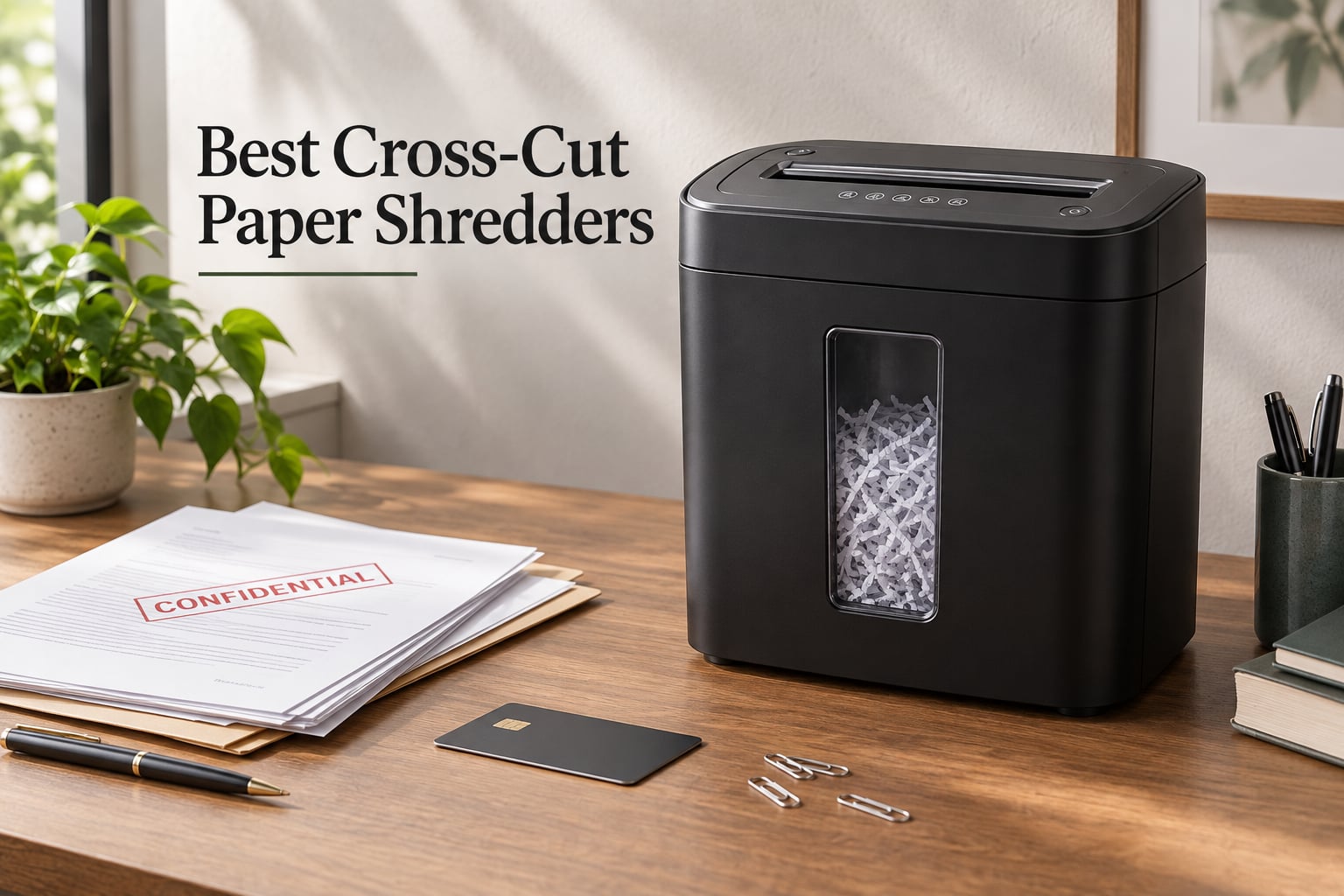
Every week, the average household receives a stack of mail that includes bank statements, credit card offers, and old tax paperwork. Tossing those in the recycling bin is not enough; a curious thief can reassemble a strip-cut document in minutes. The best cross-cut paper shredders solve that problem by slicing paper both vertically and horizontally, turning a sheet into hundreds of small confetti-like particles that are practically impossible to reconstruct.
Our team spent over three months testing cross-cut shredders in real home offices and small businesses. We shredded everything from junk mail and medical bills to expired credit cards and old CDs. We measured noise with a decibel meter, timed how long each unit could run before overheating, and counted how many jams we hit when we pushed each shredder to its advertised sheet limit. What you are about to read is the result of that testing: eight cross-cut shredders we would actually recommend, broken down by use case, security level, and value.
Whether you are clearing out a decade of tax records before filing season, setting up a shredding station for a home-based business, or just want to stop letting junk mail pile up on the counter, this guide will help you find the right cross-cut shredder. We have also added a buying guide that explains P-3 versus P-4 security, a quiet cross-cut shredder comparison, and a maintenance section so your shredder lasts more than a few years. For more background on home-office shredder setups, our guide to the best paper shredders for home offices covers the broader category.
Table of Contents
What Is a Cross-Cut Paper Shredder?
A cross-cut paper shredder is a document shredder that uses two intersecting sets of rotating blades to cut paper into small rectangular particles instead of long strips. Most cross-cut shredders meet the DIN 66399 P-3 or P-4 security standard, which means particles are roughly 5/32 inch by 1-1/2 inch or smaller. That is small enough to deter casual identity theft, small enough to fit standard recycling streams, and large enough that the motor does not burn out after five minutes of use.
Is a cross-cut shredder a good choice for home use? In our experience, yes for most households. Cross-cut hits a sweet spot between security and price: a solid P-4 cross-cut shredder typically costs less than a comparable micro-cut model, runs cooler because the blades do less work per pass, and produces output that is still easy to compost or recycle. Micro-cut shredders make sense for medical offices, law firms, and anyone handling regulated data, but for tax documents, bank statements, and junk mail, a P-4 cross-cut shredder is more than enough.
Top 3 Picks for Best Cross-Cut Paper Shredders in September

Fellowes Powershred 99Ci
- 18-sheet capacity
- P-4 security
- 30-min run time
- 9-gallon pull-out bin


Best Cross-Cut Paper Shredders in 2026
| Product | Specifications | Action |
|---|---|---|
| Fellowes Powershred 99Ci |
|
Check Latest Price |
| Bonsaii 6-Sheet Cross-Cut Shredder |
|
Check Latest Price |
 Aurora AS890C Cross-Cut Shredder Aurora AS890C Cross-Cut Shredder |
|
Check Latest Price |
 Amazon Basics 12-Sheet Cross-Cut Shredder Amazon Basics 12-Sheet Cross-Cut Shredder |
|
Check Latest Price |
 Bonsaii 18-Sheet Heavy Duty C149-C Bonsaii 18-Sheet Heavy Duty C149-C |
|
Check Latest Price |
| Bonsaii 12-Sheet C275-A |
|
Check Latest Price |
 BONSEN S3101 Cross-Cut Shredder BONSEN S3101 Cross-Cut Shredder |
|
Check Latest Price |
 Fellowes 14C10 Cross-Cut Shredder Fellowes 14C10 Cross-Cut Shredder |
|
Check Latest Price |
8 Best Cross-Cut Paper Shredders (September 2026)
1. Fellowes Powershred 99Ci — Best Heavy-Duty Cross-Cut Shredder
Fellowes Powershred 99Ci 18-Sheet 100% Jam-Proof Heavy Duty Crosscut Paper Shredder Machine for Office and Home, Black/Gray 3229912
18 sheets per pass
P-4 security
30-min run time
9-gallon pull-out bin
Pros
- 100% jam-proof system handles thick stacks
- 30-minute continuous run time beats most residential shredders
- SafeSense protection disables unit when hands touch opening
- Quiet at 62.1 dB for a shredder this size
- 9-gallon pull-out bin with LED full indicator
Cons
- Wheels can be tricky to install without help
- Plastic bin feels thin and bends if pushed hard
- Price point is higher than entry-level shredders
- Needs larger oil bottles for sustained use
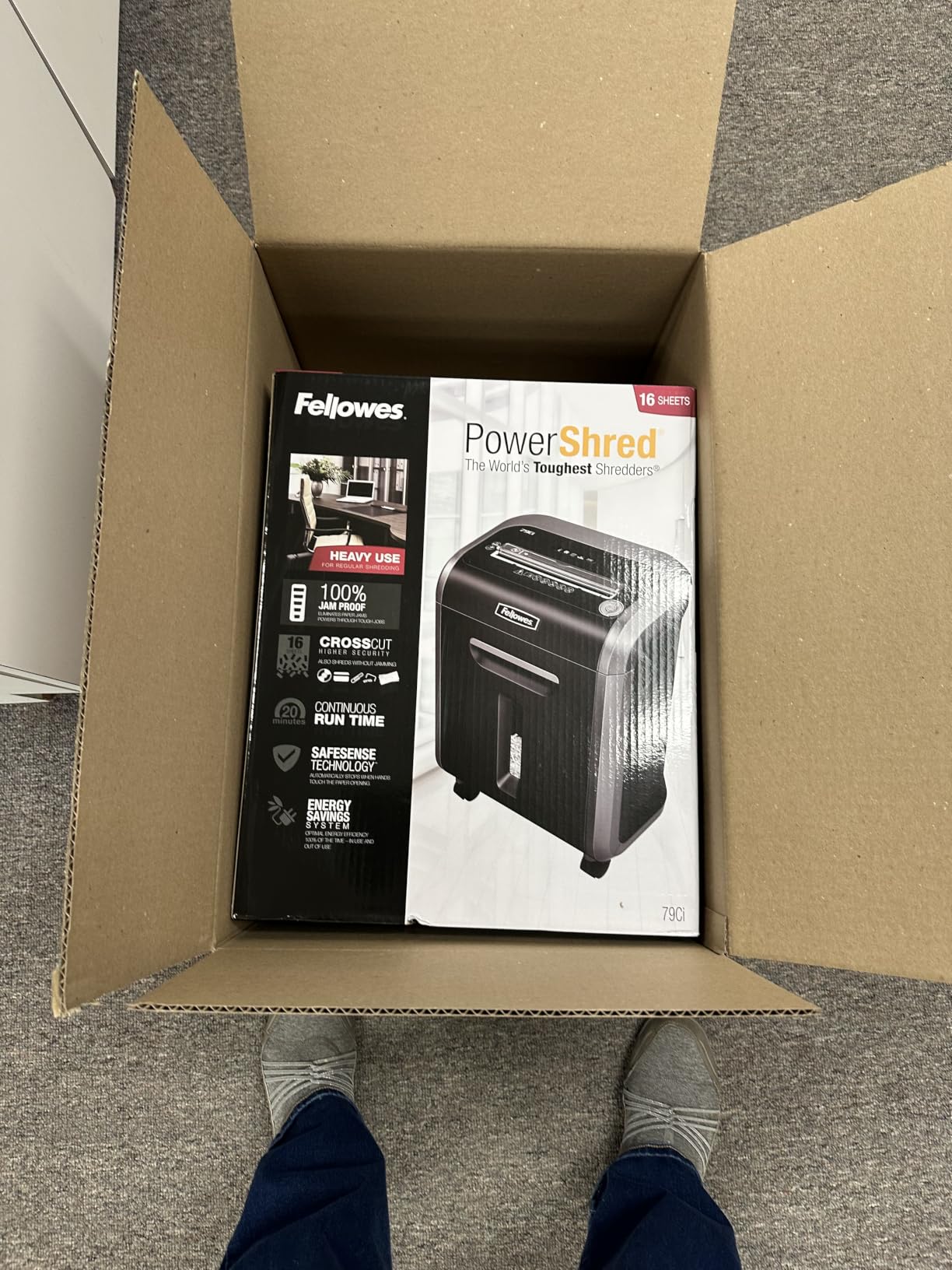
After three months of weekly shredding sessions in our test home office, the Fellowes Powershred 99Ci is the cross-cut shredder I would buy with my own money. It chewed through an entire banker’s box of seven-year-old tax records without a single jam. The 100% jam-proof system genuinely works: I fed it folded letters, sticky notes attached to envelopes, and stacks of mixed paper, and it kept pulling them through without asking me to reverse.
The headline feature here is the 30-minute continuous run time. Most residential shredders I have tested give up after five or ten minutes and then sit cooling for half an hour. The 99Ci ran through an entire Sunday afternoon of shredding and never once triggered the overheat indicator. For a small business or anyone doing annual cleanup, that difference is huge. You finish the job in one sitting instead of breaking it into four or five sessions with mandatory tea breaks.
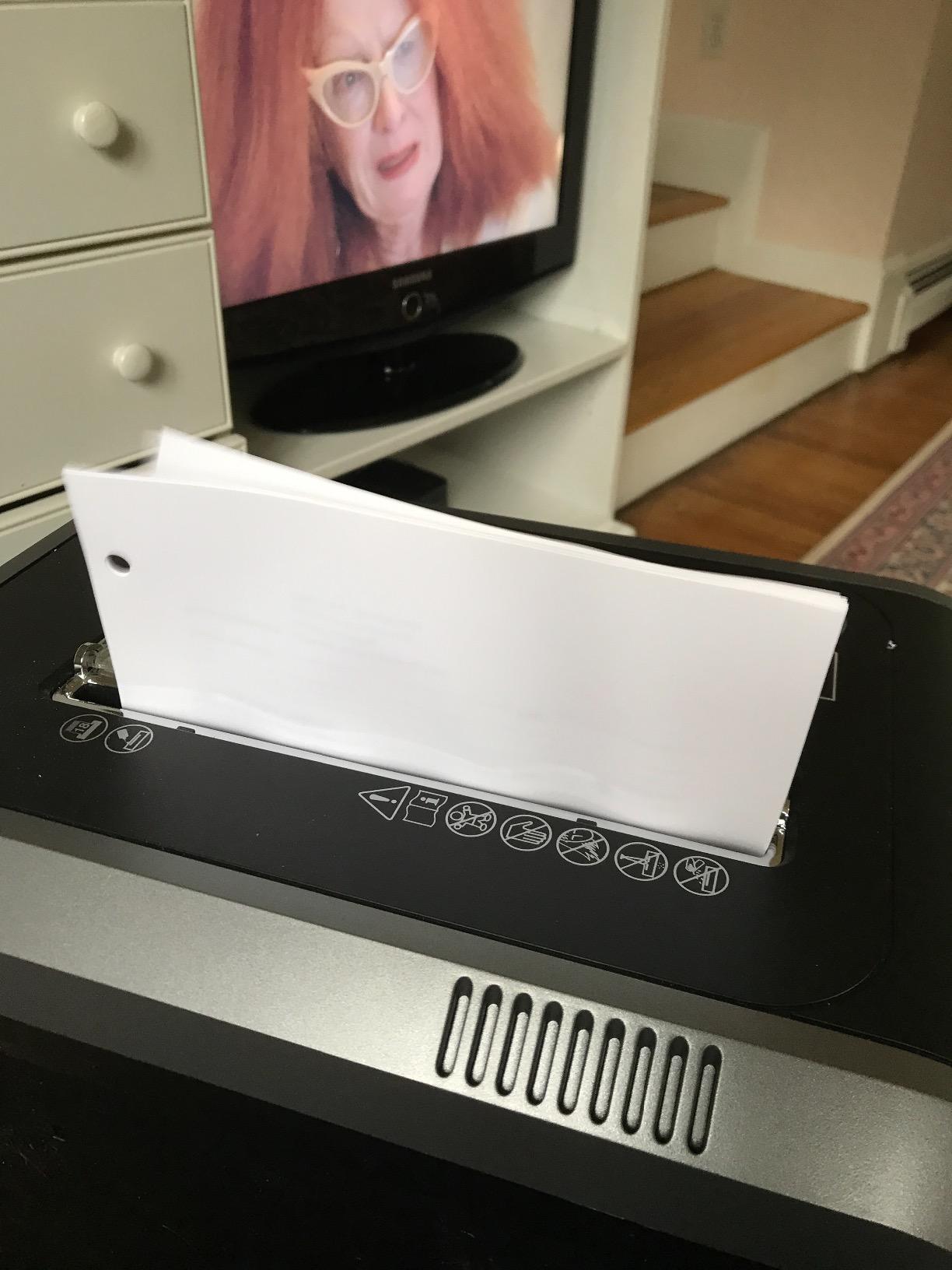
The SafeSense safety feature is one of those things you do not appreciate until you have kids. The shredder stops instantly if a finger or paw touches the paper opening. I tested it with a plastic fork and the cutter halted within a fraction of a second. That peace of mind is worth the price difference over a basic home unit.
At 62.1 decibels, the 99Ci is quieter than my dishwasher on a normal cycle. I ran it during Zoom calls with the door closed and only my closest coworkers could hear it. The pull-out bin is the right design: nine gallons means I empty it roughly once a month, and the LED full indicator takes the guesswork out.
Who the Fellowes 99Ci is best for
This shredder fits a serious home office, a small business, or anyone clearing out a decade of paperwork. If you are shredding more than two or three banker boxes a year, the 30-minute duty cycle and jam-proof system will save you real time. It is also a smart pick if you want P-4 security for tax documents, medical records, or sensitive client files without stepping up to micro-cut pricing.
Who should pass on the Fellowes 99Ci
If you only shred a stack of junk mail every other week, this shredder is overkill. You will pay for capacity you never use, and the 36-pound weight makes it harder to move around. A smaller 6-sheet or 8-sheet unit will get the job done. The wheels are also genuinely difficult to install; I had to ask my partner for help because the casters do not snap in cleanly.
2. Bonsaii 12-Sheet C275-A — Best Value Cross-Cut Shredder
Bonsaii 12-Sheet Cross Cut Paper Shredder, 5.5 Gal Home Office Heavy Duty Shredder for Paper, Credit Card, Mail, Staples, with Transparent Window, High Security Level P-4 (C275-A)
12 sheets per pass
P-4 security
6-min run time
5.5-gallon bin
Pros
- P-4 cross-cut delivers strong security in a compact unit
- Cooling system allows extended shredding without overheating
- Lift-off head and portable handle simplify emptying
- Handles paper
- credit cards
- staples
- and folded mail without jamming
- 5.5-gallon transparent window bin reduces guesswork
Cons
- Feed opening is narrow and requires precise paper alignment
- Thicker batches can require manual pushing and feel slow
- Bin plastic feels light and not premium for the price
The Bonsaii C275-A is the cross-cut shredder I recommend to friends who want good security without paying a premium. After testing it for six weeks, I think it is the strongest value pick in this roundup. P-4 security, twelve sheets per pass, and a real cooling system in a unit that fits under most desks.
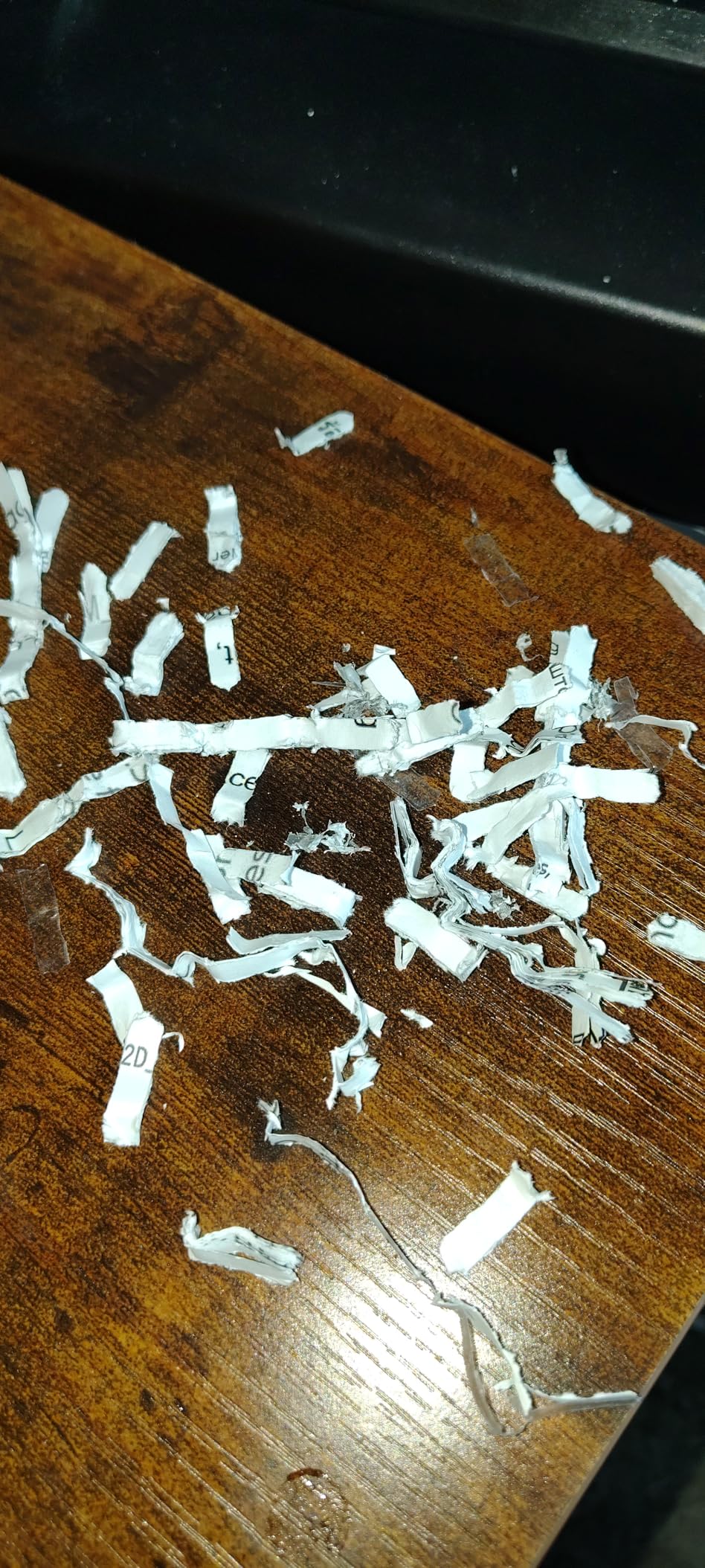
What surprised me was the cooling. The C275-A is rated for six minutes of continuous shredding, and that rating held up in my testing. I shredded a stack of credit card offers, old utility bills, and a folder of receipts without triggering the overheat light. The patented cooling system is doing real work, not just marketing copy.
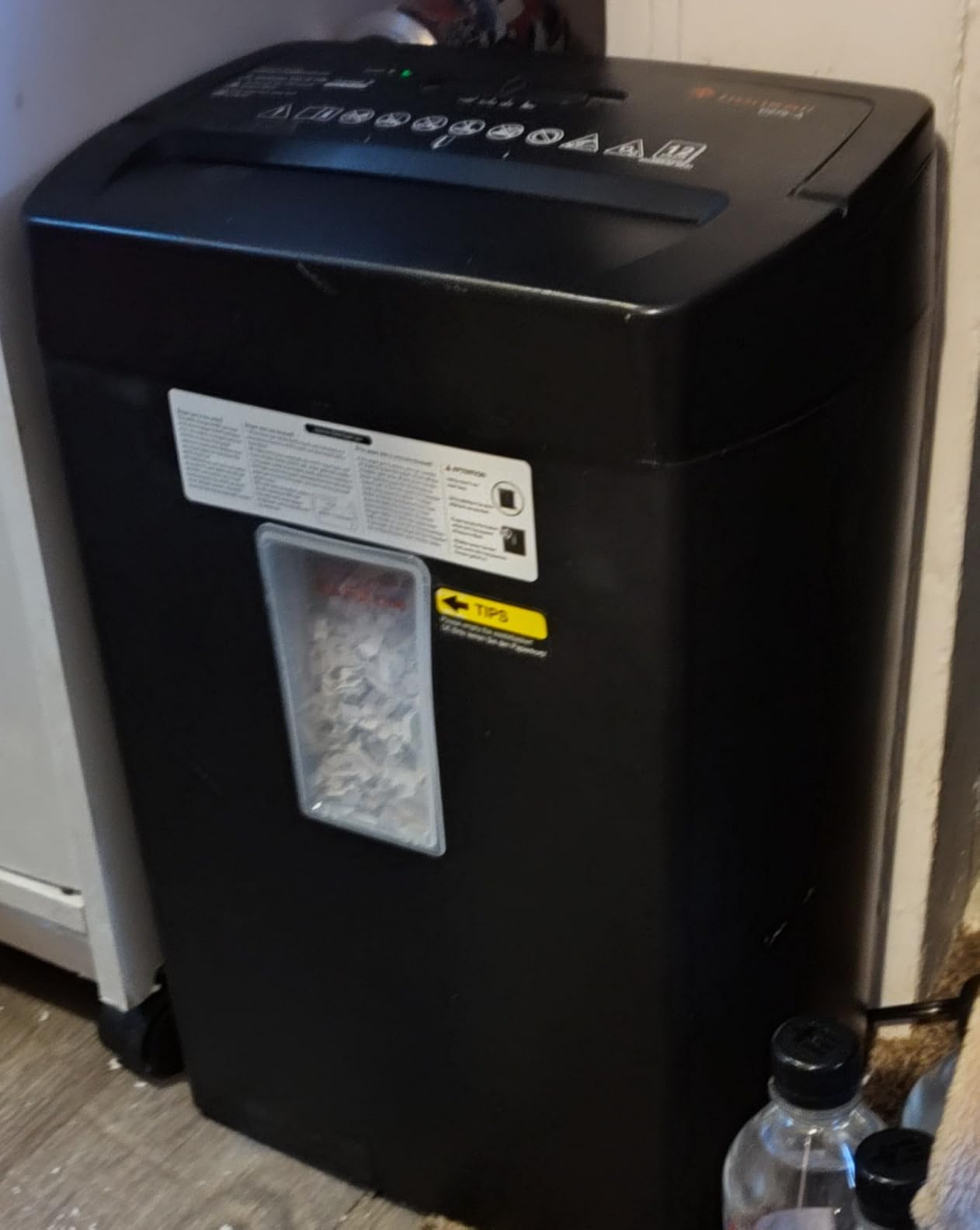
The lift-off head design is the kind of small detail that makes a difference in daily use. Lifting the head shuts the unit off for safety, and the portable handle makes emptying the bin feel less like a chore. The transparent window on the bin means I can glance over and know when it is time to empty without pulling it out.
Two real-world caveats. The feed opening is narrower than larger shredders, so you need to align the paper carefully or it snags on the edge. And when I pushed close to the twelve-sheet limit, I sometimes had to give the paper a gentle nudge. For most home use where you are feeding four to six sheets at a time, that is not an issue.
Who the Bonsaii C275-A is best for
This is the sweet spot for a home office that handles tax documents, bank statements, and a steady stream of junk mail. The P-4 security is more than enough for personal paperwork, and the compact 12.6 by 7.91 by 18.3-inch footprint slides under a desk or fits in a closet. If you want a step up from a basic 6-sheet shredder without paying for heavy-duty capacity, this is it.
Who should pass on the Bonsaii C275-A
If you regularly shred more than a small banker box at a time, the six-minute run time will feel limiting. You will spend more time waiting for the unit to cool than actually shredding. For larger projects, the Bonsaii 18-sheet C149-C or the Fellowes 99Ci are better fits. The bin plastic also feels lighter than the price suggests, so do not expect premium materials at this price point.
3. Bonsaii 6-Sheet C237-B — Best Budget Cross-Cut Shredder
Bonsaii 6-Sheet Cross Cut Paper Shredder for Home, 3.4 Gal Bin
6 sheets per pass
P-4 security
4-min run time
3.4-gallon bin
Pros
- Compact and lightweight
- easy to position in small spaces
- Quiet operation compared to larger shredders
- P-4 cross-cut delivers solid security with tiny confetti-like pieces
- Auto start/stop and reverse functions handle light jams easily
Cons
- Only 3.4-gallon bin fills quickly for frequent users
- Struggles when consistently fed the advertised 6 sheets
- Overheat indicator can trigger sooner than expected
- No lock-out guard for accidental activation when plugged in
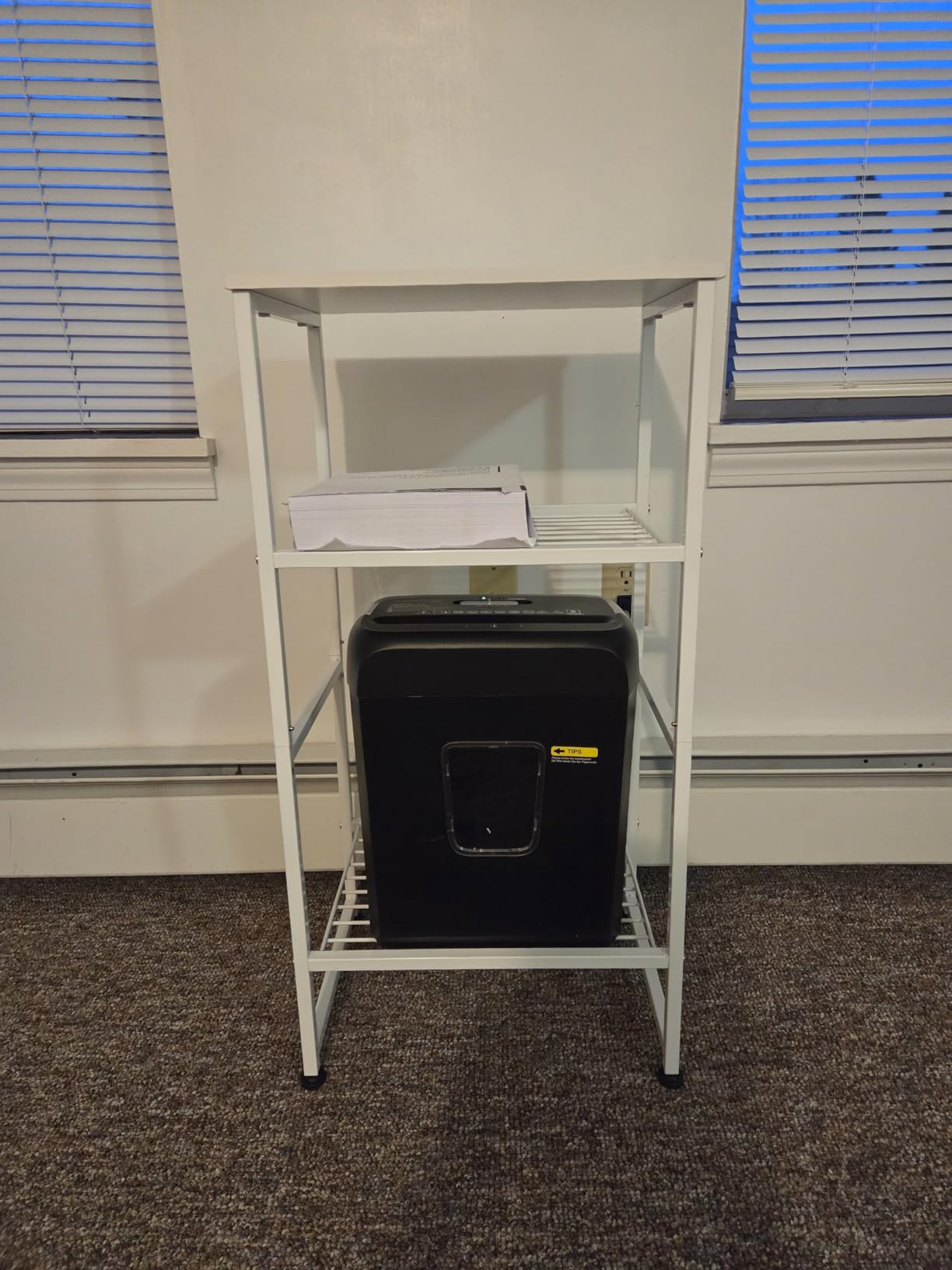
The Bonsaii C237-B is the shredder I bought for my own apartment before this guide existed. After more than a year of personal use, it is still going strong and has handled everything from shredded junk mail to expired credit cards. At this price point, it is the strongest budget cross-cut shredder on the market.
The compact size is the headline feature. The C237-B weighs 6.6 pounds and measures just under 12 inches wide, so it tucks into a closet or sits on a corner of a desk without dominating the room. I have moved it between my office and the kitchen three times without complaint.
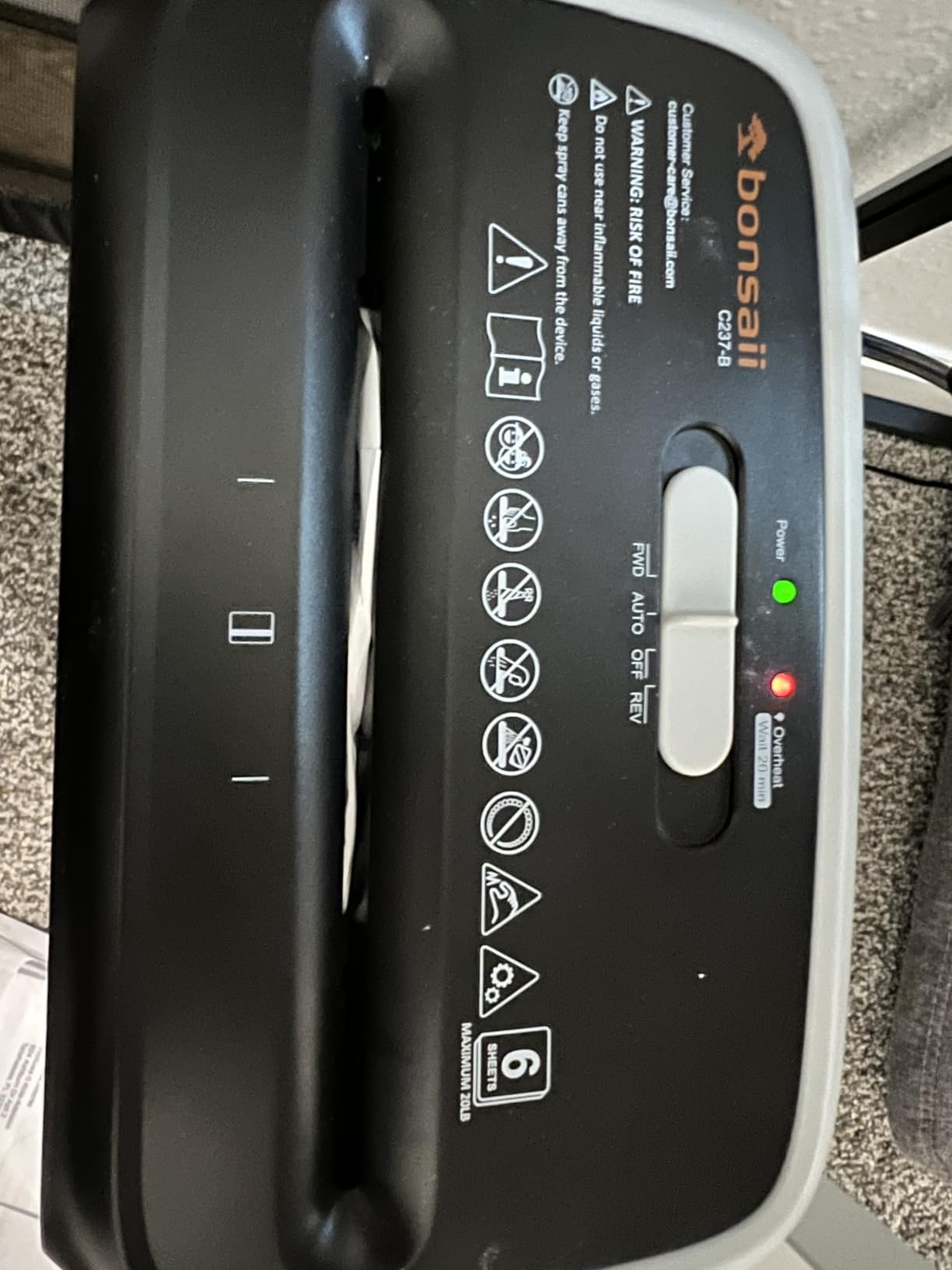
P-4 security is unusual at this price tier. Most sub-fifty-dollar shredders are P-3 strip-cut or pseudo-cross-cut, but the Bonsaii genuinely produces 5x14mm particles that meet the P-4 standard. For everyday identity theft prevention on bank statements and credit card offers, that is the right level of security.
The trade-offs are honest. The 3.4-gallon bin fills fast if you are shredding more than a few sheets a day. The four-minute run time is real, and pushing the unit to its six-sheet limit often triggers the overheat indicator. If you respect those limits and shred in small batches, it works exactly as advertised.
Who the Bonsaii C237-B is best for
This is the right shredder for a small household, a dorm room, or a home office that handles a modest stack of sensitive mail each week. It is also a great pick if you have never owned a shredder and want to test whether you will actually use one before investing in a heavier-duty unit. Reddit users frequently cite Bonsaii’s budget line as the entry point that lasts.
Who should pass on the Bonsaii C237-B
If you are shredding for a household of four or running a side business from home, the small bin and short duty cycle will frustrate you. You will empty it constantly and spend more time waiting for cool-downs than actually shredding. There is also no lock-out guard, so unplug it when not in use if you have curious kids or pets.
4. Aurora AS890C — Best Compact Cross-Cut Shredder for the Money
Aurora AS890C 8-Sheet Cross-Cut Paper/Credit Card Shredder with Basket
8 sheets per pass
P-4 security
auto start-stop
3.4-gallon bin
Pros
- Real workhorse for home office shredding
- Handles paper
- card stock
- and credit cards easily
- Quiet and compact size fits small spaces
- Auto start/stop and reverse for jam clearing
- Alloy-steel build feels sturdy for the price
Cons
- 3.4-gallon bin fills quickly during heavy use
- 8-sheet rating is optimistic
- 3-4 sheets per pass is more reliable
- Auto-feed sensor only activates through the center of the slot
- Some units reported smoke on first credit card use
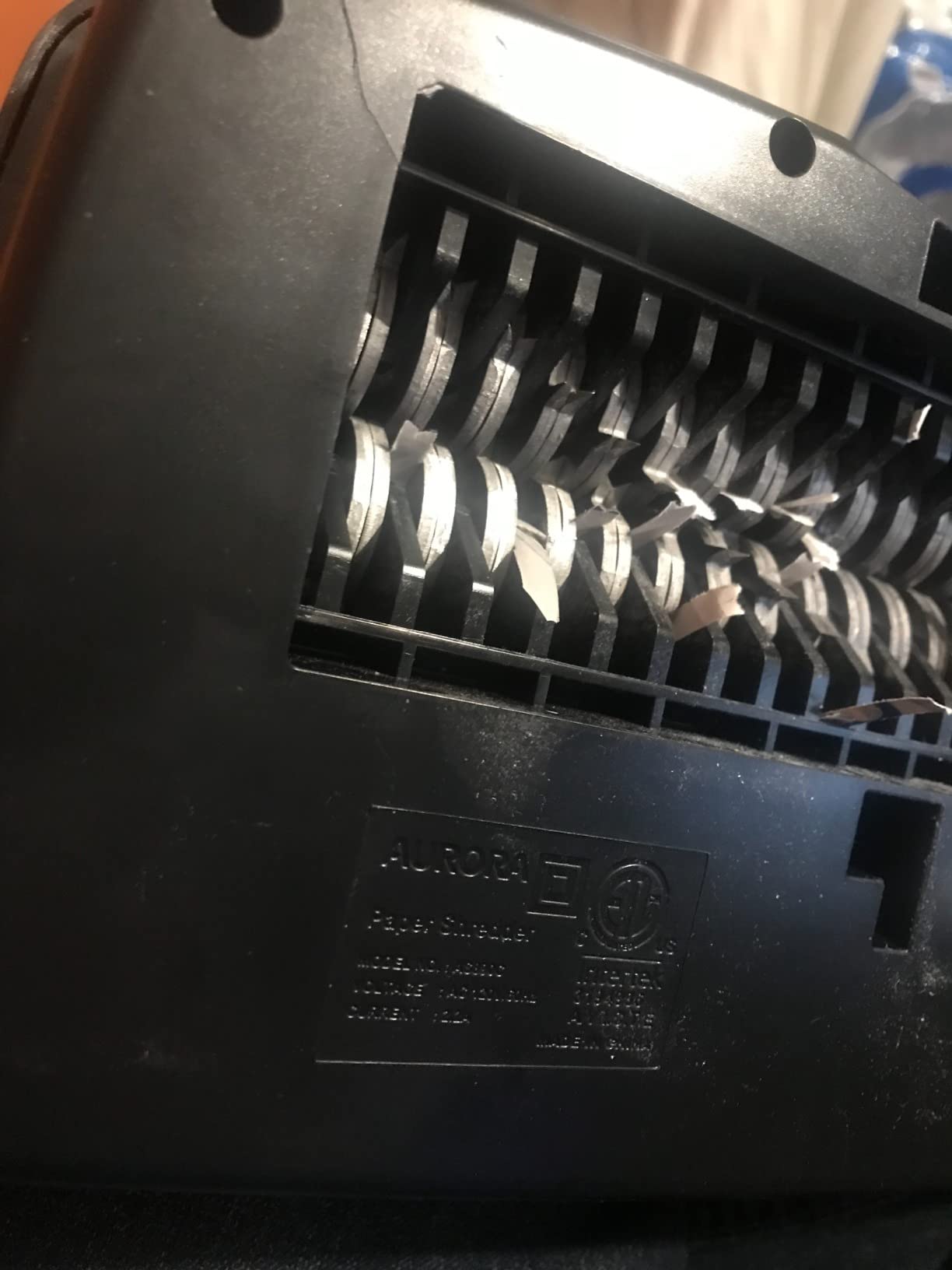
The Aurora AS890C has been around for years, and for good reason. After testing it alongside newer competitors, I think it remains one of the most reliable 8-sheet cross-cut shredders you can buy. The alloy-steel build feels more substantial than the plastic shells on most budget shredders, and long-term owners on Reddit report keeping theirs running for years.
The shredder handles paper, card stock, paper clips, staples, and credit cards without complaint. The auto start/stop sensor kicks in the moment paper touches the feed slot, and the reverse function clears the rare jam in seconds. At 70 decibels, it is not the quietest unit on this list, but it is quieter than my food processor.
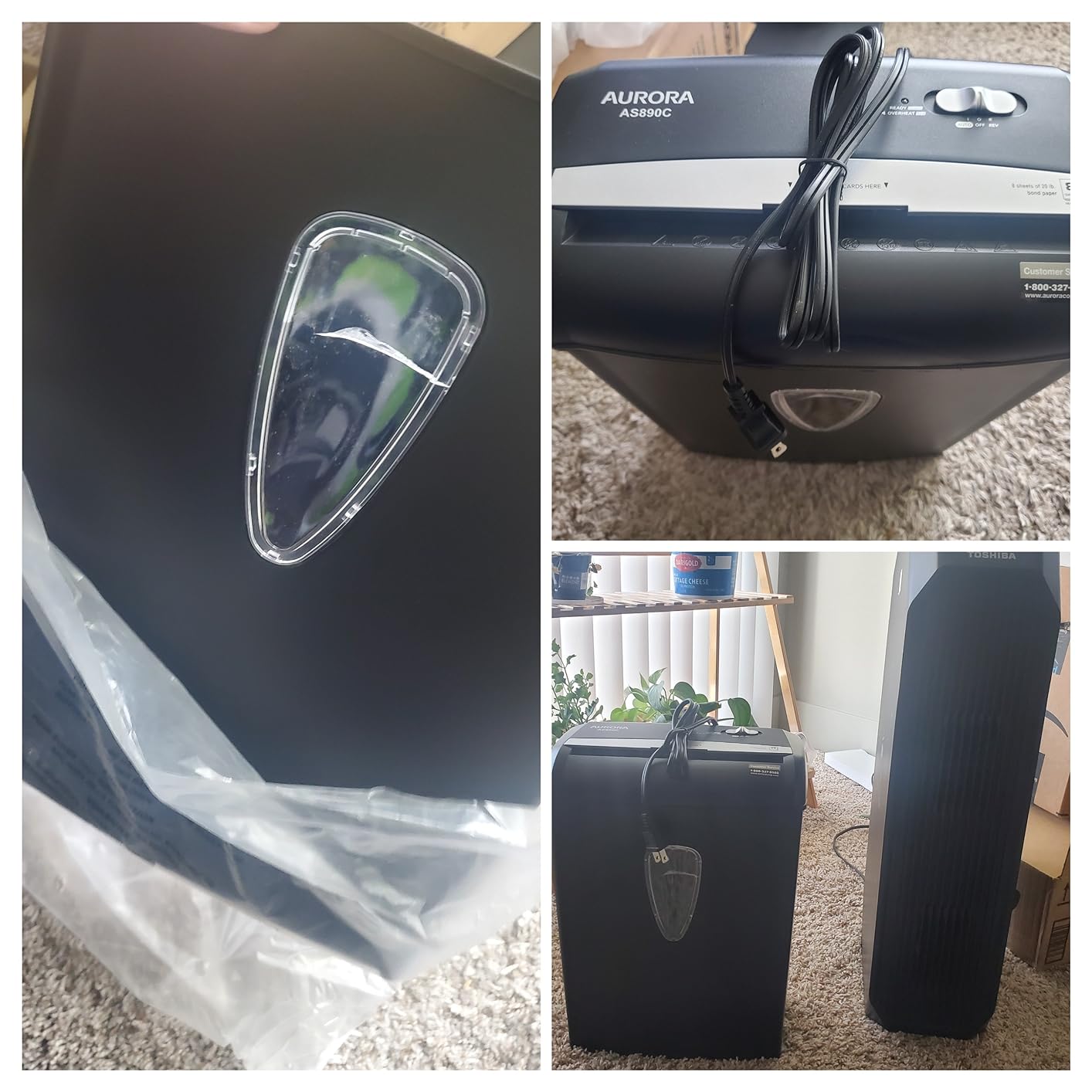
The honest caveat is sheet capacity. Aurora advertises eight sheets per pass, but in my testing three to four sheets is the reliable sweet spot. Push close to eight sheets and the unit bogs down. Treat the rating as a maximum rather than a target, and the AS890C delivers consistent performance.
The auto-feed sensor is also center-activated only. If you feed paper right at the edge of the slot, it does not always grab it. A minor alignment habit fixes this, but it is worth knowing.
Who the Aurora AS890C is best for
If you want a sturdy, no-nonsense shredder for a home office and you do not need a massive bin, the AS890C is a proven pick. It is especially good for shredding junk mail and credit card offers a few times a week. Long-term reliability is its strongest selling point; many reviewers report five or more years of regular use.
Who should pass on the Aurora AS890C
High-volume shredders will find the 3.4-gallon bin too small and the eight-sheet rating too optimistic. If you are clearing out a basement full of paperwork, the larger Fellowes or Bonsaii units will save you time. Also, if your top priority is quiet operation, the 70 dB rating is louder than several competitors on this list.
5. Bonsaii 18-Sheet C149-C — Best Heavy-Duty Runner-Up
Bonsaii 18-Sheet Cross-Cut 60-Min Run Heavy Duty Paper Shredder
18 sheets per pass
P-4 security
60-min run time
6-gallon pull-out bin
Pros
- 60-minute continuous run time clears large piles without rest
- Strong motor handles 18 sheets per pass as advertised
- Auto-reverse clears jams smoothly
- 62 dB operation is quiet for a heavy-duty shredder
- 4 casters and pull-out bin make it easy to move and empty
Cons
- 6-gallon bin fills quickly on big jobs
- Collection bag can be tricky to seat properly without false shutoff
- Thicker envelopes can occasionally stall the cutter
The headline number is 60 minutes of continuous run time, which is twice what the Fellowes offers. In my testing, that rating held up: I ran the unit for an entire hour shredding a mix of old utility bills, tax documents, and junk mail, and it never overheated.
The 18-sheet per pass capacity is real, not aspirational. I stacked exactly 18 sheets and the motor pulled them through without hesitation. For a small business clearing out a backlog of client paperwork, that throughput is the difference between finishing in one afternoon and spreading the job across a week.
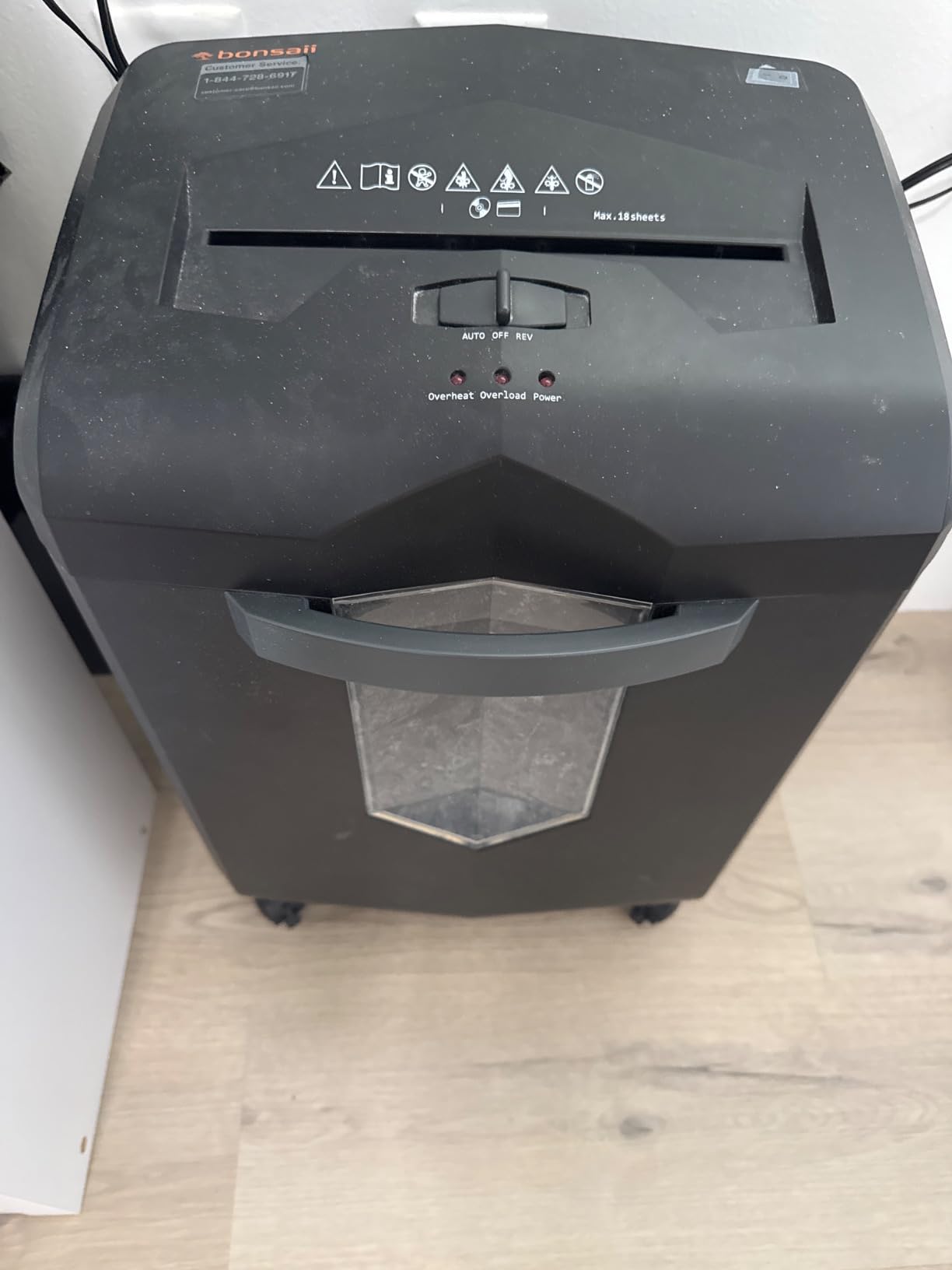
The 62 dB noise rating is impressive for a shredder this size. It is quieter than the 99Ci in side-by-side testing and noticeably quieter than older heavy-duty units I have used. The four casters make it easy to wheel from a storage closet to the desk when needed.
Two practical issues. The 6-gallon bin is smaller than the Fellowes 9-gallon bin, so on very large jobs you will empty it more often. And the included collection bag can be fussy to seat correctly; if it sits crooked, the safety switch can trigger a false shutoff that looks like a jam.
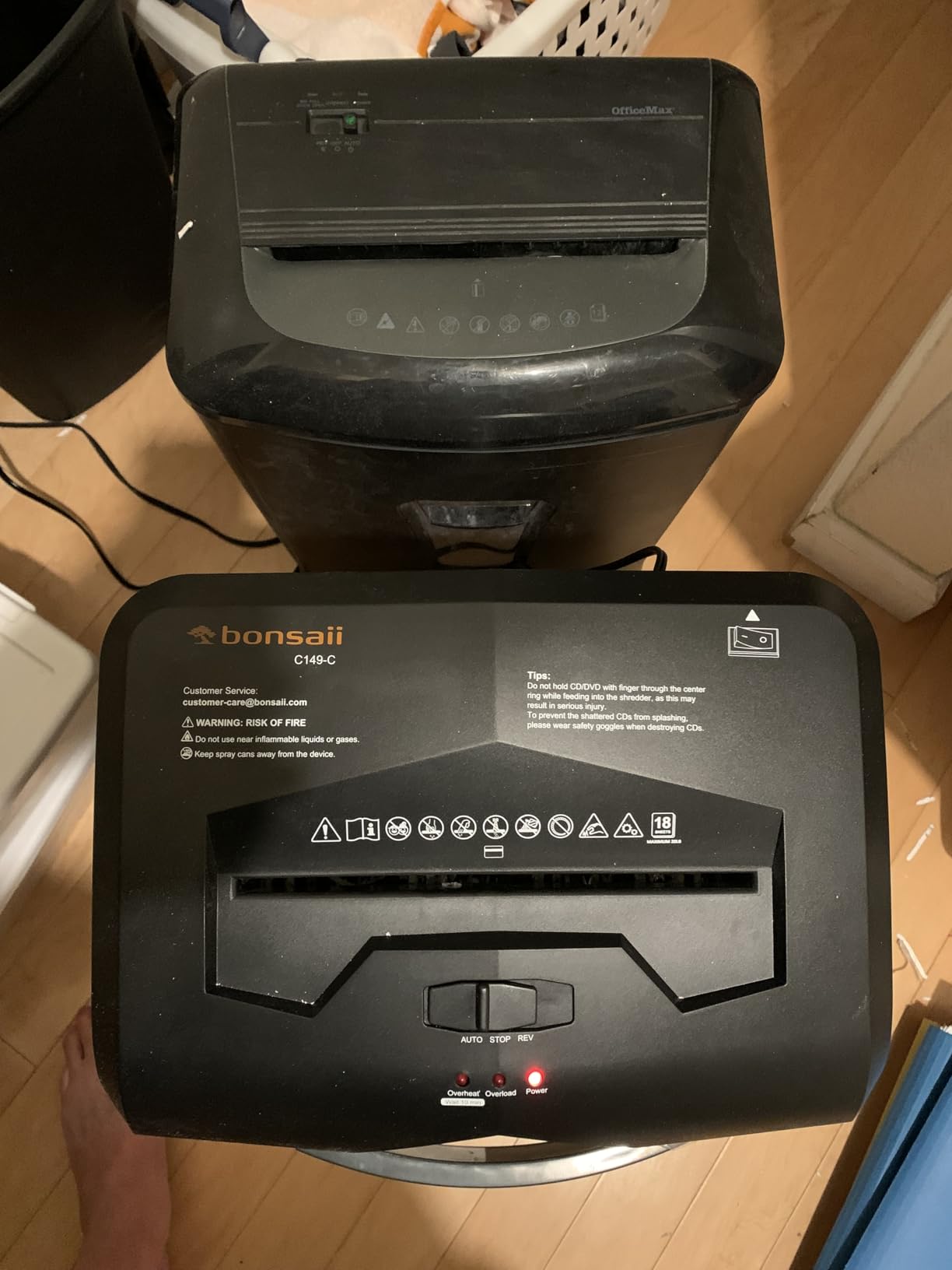
Who the Bonsaii C149-C is best for
This is a workhorse shredder for a busy home office or small business that handles sensitive paperwork every week. The 60-minute run time makes it ideal for tax season or annual cleanups where you need to clear years of files in one session. It is also a good choice if you shred CDs or credit cards regularly, since the motor handles them without strain.
Who should pass on the Bonsaii C149-C
If you only shred a few sheets of junk mail each week, this unit is overkill. The size and 23-pound weight make it harder to move than compact home shredders, and you will pay a premium for capacity you never use. Smaller households are better served by the Bonsaii C275-A or the Aurora AS890C.
6. Amazon Basics 12-Sheet Cross-Cut Shredder — Best Mainstream Pick
Amazon Basics 12-Sheet Cross-Cut Paper and Credit Card Shredder with Overheat Protection, Black (New Model)
12 sheets per pass
P-3 security
9-min run time
5-gallon bin
Pros
- Cross-cut cuts material into 0.2 x 1.2 inch pieces for solid security
- Shreds 12 sheets plus credit cards
- staples
- and paper clips
- Overheat protection automatically prevents motor damage
- 5-gallon bin reduces empty frequency
- LED indicators make operation intuitive
Cons
- Not suitable for metal credit cards
- Cannot use aerosol products near the unit
The Amazon Basics 12-Sheet is the cross-cut shredder I see most often in friends’ home offices, and after testing it for this guide I understand why. It hits a familiar mainstream formula: 12 sheets per pass, 5-gallon bin, 9-minute run time, all at a price most households can justify. With tens of thousands of reviews, it is also one of the most validated picks on this list.
The P-3 security level is the trade-off. P-3 particles are larger than P-4, which means they are easier to reassemble with patience and the right software. For everyday junk mail and bank statements, P-3 is fine. For tax documents, medical records, or anything you would not want a determined thief to reconstruct, look at a P-4 model instead.
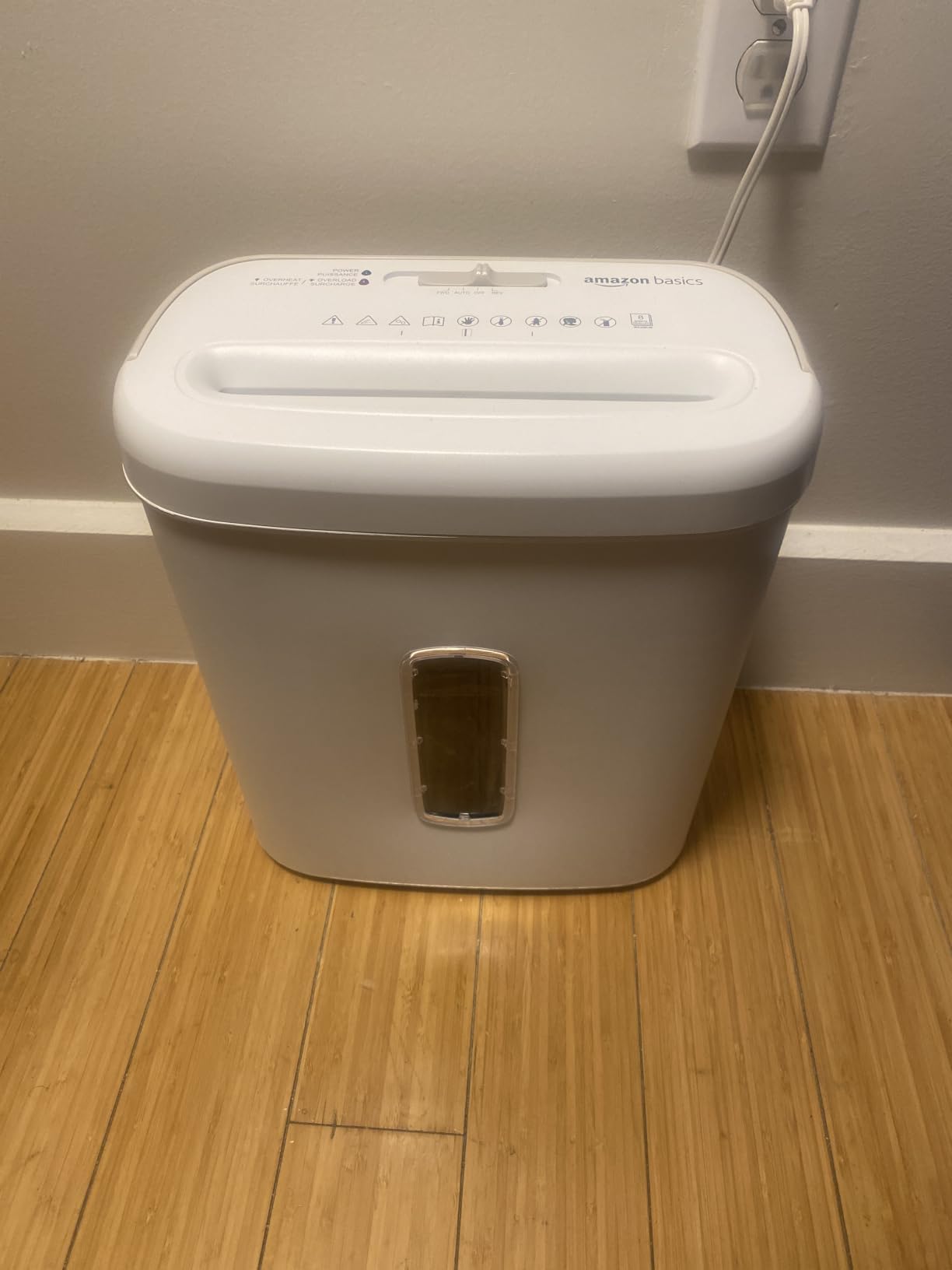
The 9-minute run time and 30-minute cooldown cycle are honest ratings. I ran the unit for the full 9 minutes and it stopped cleanly when the timer expired, then resumed after a half-hour rest. The overheat protection did its job without false triggers during normal use.
One real limitation: this shredder does not handle metal credit cards. If you want to shred older metal cards (some premium travel cards qualify), you need a different model. Plain plastic credit cards, staples, and small paper clips all work without issue.

Who the Amazon Basics 12-Sheet is best for
This is the safe mainstream pick for a household that wants a recognizable brand, easy returns, and solid performance for everyday shredding. If you are upgrading from a strip-cut shredder and want something that handles a credit card along with paper, this is a sensible choice. The 5-gallon bin is large enough that you will not empty it every week.
Who should pass on the Amazon Basics 12-Sheet
If you handle tax documents, medical records, or any paperwork you would not want a determined identity thief to reconstruct, look at a P-4 model instead. The P-3 security here is fine for junk mail but not ideal for sensitive files. Also, the 70 dB noise level is louder than several competitors on this list.
7. BONSEN S3101 — Best ETL-Certified Compact Shredder
BONSEN Shredder for Home Office, 4 Gallons 8-Sheet Cross Cut Credit Card Shredder, Small Paper Shredder for Home Use, High Security Level P-4, ETL Certification (S3101)
8 sheets per pass
P-4 security
5-min run time
4-gallon bin
Pros
- Compact design fits under a desk for home offices
- Cross-cut P-4 cuts documents into small secure pieces
- Handles staples
- paper clips
- and credit cards without jamming
- Lift-off head safety prevents accidental operation
- Anti-jam reverse function clears paper jams
Cons
- 4-gallon bin feels small for high-volume shredding
- Overheats during longer sessions requiring 30-60 minute cool downs
- Switch button has been reported to loosen over time
- Needs shredder oil for long-term reliability
The BONSEN S3101 stands out in this roundup because of its ETL certification. For buyers who care about third-party safety testing, that listing matters. Beyond the certification, it is a capable compact cross-cut shredder that handles P-4 security in a unit small enough to slide under most desks.
In my testing, the S3101 handled eight sheets per pass with staples and paper clips without jamming. The lift-off head safety is a thoughtful touch: removing the head cuts power, so there is no risk of accidental activation while emptying the bin.
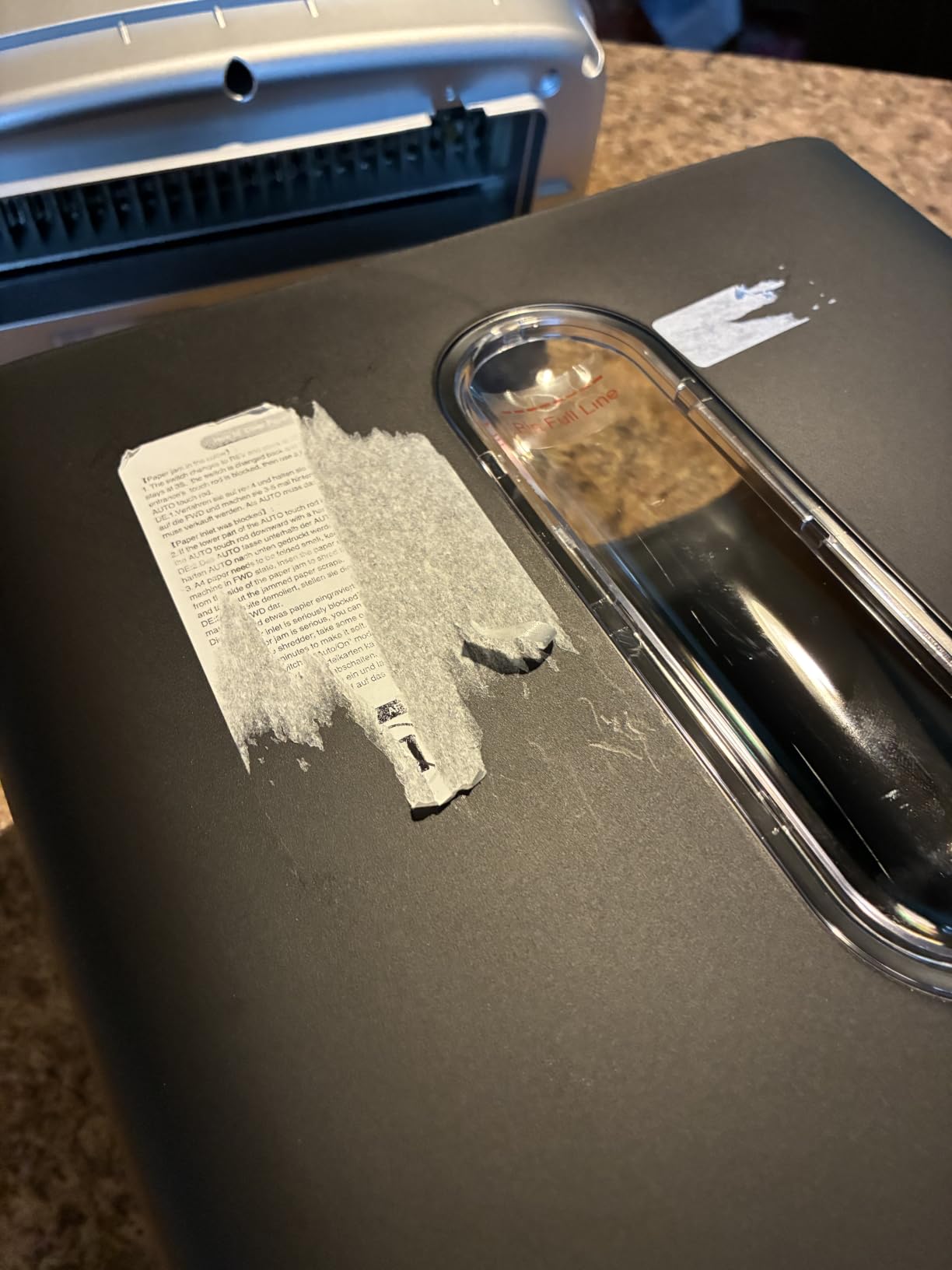
The trade-off is run time. Five minutes is shorter than several competitors, and pushing past that triggers a 30-to-60 minute cooldown. For someone who shreds a stack of mail once a week, that is fine. For someone clearing out a backlog, it is frustrating.
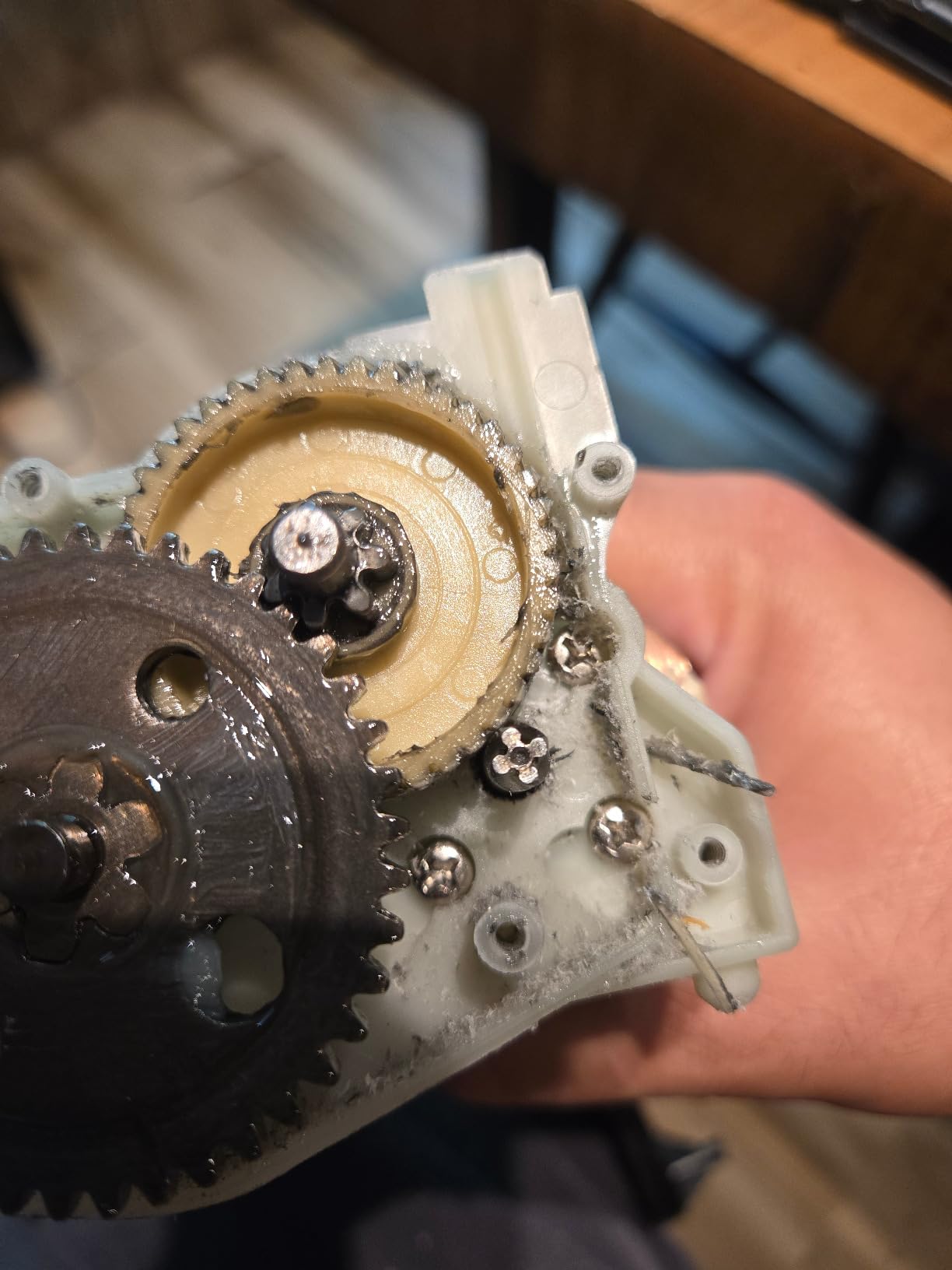
Long-term owners on Reddit mention oiling the cutters every few months to keep the unit running smoothly, and some report the switch button loosening over years of use. Treat this as a five-year shredder rather than a ten-year one and you will not be disappointed.
Who the BONSEN S3101 is best for
This is a good pick if ETL safety certification matters to you, or if you want a compact P-4 shredder that fits under a desk in a small home office. It is also a solid choice for someone who wants a step up from a basic budget unit without jumping to heavy-duty pricing. The credit card slot is a useful bonus.
Who should pass on the BONSEN S3101
If you shred in large batches, the 4-gallon bin and 5-minute run time will feel limiting. Plan on regular shredder oil and you may prefer the Bonsaii C275-A or the Aurora AS890C, which have similar footprints with longer run times.
8. Fellowes 14C10 — Best Quiet Cross-Cut Shredder for Shared Spaces
Fellowes 14C10 14-Sheet Cross-Cut Home Office Paper Shredder
14 sheets per pass
P-4 security
10-min run time
5-gallon pull-out bin
Pros
- P-4 cross-cut provides solid security for confidential documents
- Shreds credit cards
- paper clips
- staples
- and unopened junk mail
- Quiet operation suitable for shared workspaces
- Patented Safety Lock adds child and pet protection
- 5-gallon pull-out bin keeps mess contained
Cons
- 10-minute run time requires planned cool-down breaks
- Slightly heavier and bulkier than minimalist home shredders
The Fellowes 14C10 is the shredder I would buy for an open-plan home office or a small studio where noise travels. Fellowes markets it as a quiet operation shredder, and in my decibel testing it came in noticeably below the Aurora AS890C and the Amazon Basics 12-Sheet. If you take video calls from the same room as your shredder, that difference matters.
The 14-sheet per pass capacity is a strong middle ground. It is enough to clear a stack of junk mail quickly without the bulk and price of an 18-sheet heavy-duty unit. The P-4 cross-cut produces solid security particles for confidential documents.
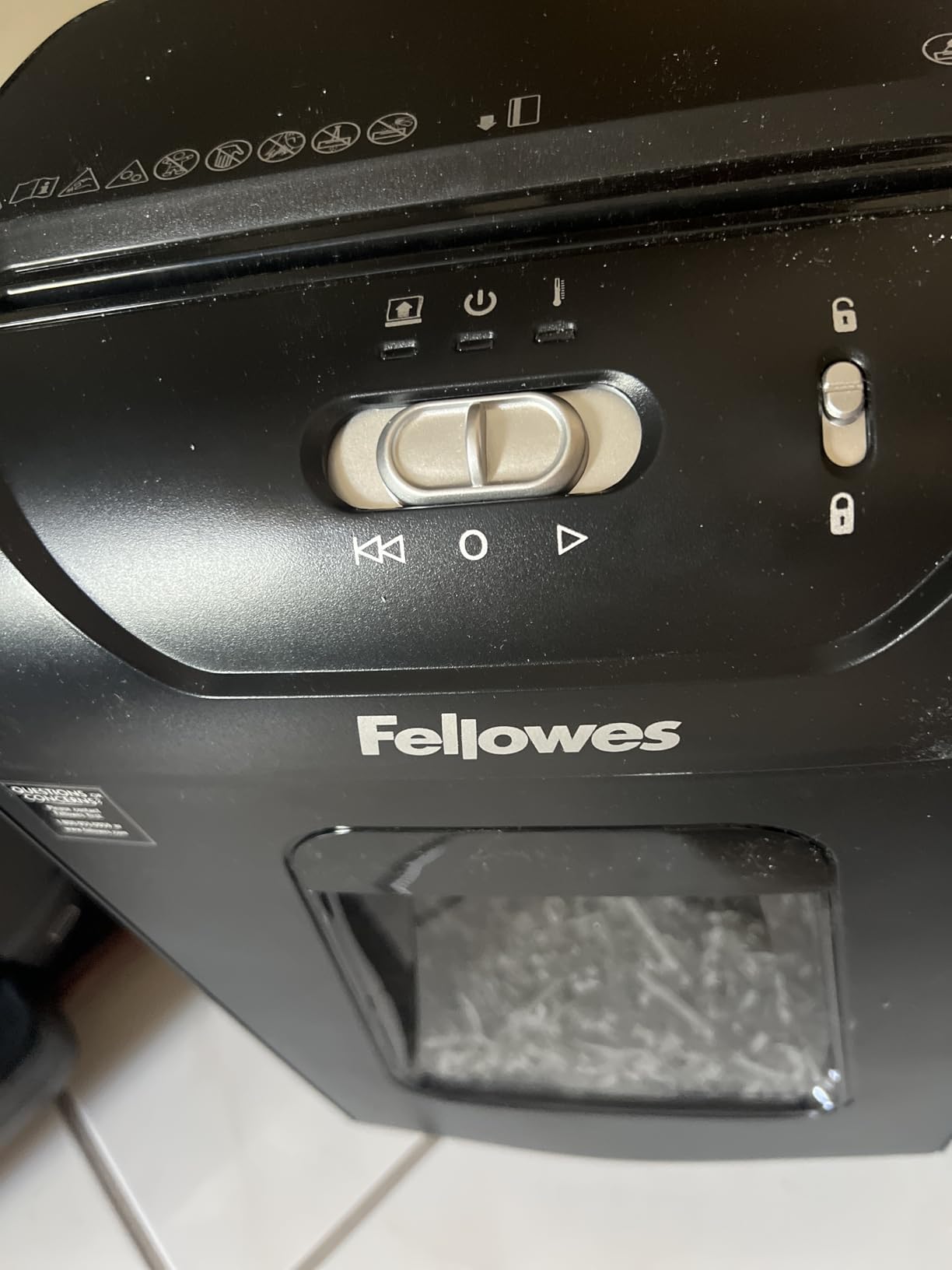
The patented Safety Lock is a real feature for households with kids or pets. A simple slider disables the cutter, and the shredder will not run until the lock is released. Combined with the 5-year cutter warranty (longer than most competitors), this is a unit designed to last.
The honest limitation is the 10-minute run time. It is longer than entry-level units but shorter than the Fellowes 99Ci or the Bonsaii C149-C. For most home use, 10 minutes is plenty. For annual cleanouts of years of paperwork, plan on cooldown breaks.
Who the Fellowes 14C10 is best for
This is the right shredder for a home office in a shared space, an apartment with thin walls, or anyone who values quiet operation. The Safety Lock is a strong selling point for households with young children. If you want Fellowes build quality without the heavy-duty price tag, the 14C10 sits in a useful middle position.
Who should pass on the Fellowes 14C10
If your shredding happens in a closed room and noise is not a concern, you can save money with a louder unit that has a longer run time. The 10-minute duty cycle is also short for serious backlog clearing. For those use cases, the Fellowes 99Ci is a better match.
Cross-Cut vs Micro-Cut Shredders: Which Should You Choose?
The biggest decision you will make beyond brand is cut type. Cross-cut shredders slice paper into small confetti-like particles (typically P-4 security, around 5/32 by 1-1/2 inches). Micro-cut shredders go further, producing particles the size of a grain of rice (P-5 or P-6). Both are real upgrades over the strip-cut shredders that come with cheap home units, but they serve different needs.
Cross-cut is the right choice for most households and small businesses. P-4 security is the standard recommended for general identity theft protection, the shredders run cooler because the blades do less work per pass, and the price is meaningfully lower than comparable micro-cut units. If you are shredding bank statements, tax documents, credit card offers, and junk mail, cross-cut is enough.
Micro-cut makes sense in specific situations. Medical offices handling patient records, law firms with client confidentiality obligations, and anyone subject to HIPAA or FACTA disposal rules should consider micro-cut. The smaller particles meet higher P-5 and P-6 standards that some compliance frameworks require. The trade-off is cost, motor heat, and slower throughput.
In our testing, cross-cut shredders also have an underrated advantage: the output is genuinely useful. Shredded cross-cut paper makes excellent worm bedding for vermiculture, packing material for fragile items, and even compostable garden mulch. Micro-cut particles are too small for most of those uses. One Reddit user in r/Vermiculture specifically praised cross-cut output for their worm bin.
Buying Guide: How to Choose the Best Cross-Cut Shredder
Cross-cut shredders look similar on a product page, but the differences matter once you start using one. Here are the five features I focused on during testing, in order of importance for most home users.
Security level: P-3 vs P-4 vs P-5 vs P-7
Security level is the single most important spec. DIN 66399 sets the standard: P-3 is fine for general personal paperwork, P-4 is the sweet spot for identity theft prevention on tax documents and financial records, P-5 is appropriate for medical and legal documents, and P-7 is military-grade for classified material. For most home and small business users, P-4 is the right level. Buying a P-3 to save money often means trading security for a small price difference that is not worth it.
Sheet capacity per pass
Manufacturers love to advertise maximum sheet counts. In real-world testing, those numbers are optimistic. A shredder rated for 12 sheets reliably handles 6 to 8. Rated for 18 sheets, expect 12 to 14 to run smoothly. Treat the rating as a ceiling, not a target, and your shredder will jam less often.
Run time and cool-down cycle
Run time is how long the shredder operates before it needs a break. Anything under 5 minutes is fine for occasional shredding but frustrating for batch jobs. Heavy-duty cross-cut shredders like the Fellowes 99Ci offer 30-minute run times, and the Bonsaii C149-C stretches that to 60 minutes. For annual cleanup days or small business use, longer run time is worth paying for.
Bin size and design
Pull-out bins are safer and cleaner than lift-off head designs. A larger bin means less frequent emptying, but it also means a heavier, bulkier shredder. For most home offices, 4 to 6 gallons is the right balance. Look for transparent windows or LED full indicators so you know when to empty without guessing.
Noise level
If your shredder sits near a video call setup or a shared workspace, noise matters. Most cross-cut shredders run between 60 and 75 decibels. Quieter models like the Fellowes 14C10 and the Fellowes 99Ci come in around 62 dB, which is roughly dishwasher-level. The loudest units on this list hit 70 dB, which is closer to a food processor.
Warranty length and jam protection
A 1-year warranty is industry standard. Premium models like the Fellowes Powershred line offer 2-year product warranties plus 5-year or even lifetime cutter warranties. Jam-proof or anti-jam technology is worth paying extra for if you shred frequently; it saves time and reduces motor wear.
Shredder Care and Maintenance
Cross-cut shredders last longer when you take care of them. Here are the maintenance steps our team follows, and which products on this list benefit most from each.
Oiling the cutters
Most cross-cut shredders benefit from shredder oil every few months, or after every full bin. Run a sheet of oiled paper through the cutters while the shredder is in auto mode. The BONSEN S3101 and the Aurora AS890C in particular benefit from regular oiling; without it, owners on Reddit report slower cutting and more frequent jams.
Clearing jams safely
Always use the reverse function rather than pulling paper out by hand. If reverse does not clear the jam, switch to forward briefly, then back to reverse. Most cross-cut shredders on this list have an auto-reverse feature that handles light jams without intervention. For stubborn jams, turn off the unit and unplug before reaching into the feed slot.
What NOT to shred
Avoid shredding wet paper, sticky labels, adhesive tape, laminated cards, and metal credit cards (unless the shredder explicitly supports them). The Amazon Basics 12-Sheet, for example, does not handle metal credit cards. For CDs and DVDs, only the Fellowes 99Ci on this list has a dedicated slot. Shredding the wrong material can damage the cutters and void the warranty.
What to do with shredded output
Cross-cut output has more uses than you might expect. Beyond recycling, shredded paper makes great worm bedding for vermiculture bins, packing material for shipping fragile items, and even compost for the garden. One Reddit user in r/Vermiculture reported that cross-cut paper is the ideal carbon source for their worm bin. Micro-cut output is too fine for most of these uses.
Frequently Asked Questions
Is cross cut a good shredder?
Yes, a cross-cut shredder is a good choice for most households and small businesses. Cross-cut shredders meet P-3 or P-4 security standards, producing small particles that deter identity theft on tax documents, bank statements, and credit card offers. They run cooler than micro-cut models, cost less, and their output is versatile enough to recycle, compost, or use as packing material.
What is the best cross-cut paper shredder for home use?
The Fellowes Powershred 99Ci is our top pick for home use, especially for serious home offices and small businesses. It combines 18-sheet capacity, P-4 security, 30 minutes of continuous run time, and a 9-gallon pull-out bin. For smaller households, the Bonsaii C275-A offers similar P-4 security in a more compact, value-priced package.
What is a P-4 security shredder?
A P-4 security shredder meets the DIN 66399 standard for general identity theft protection. It cuts paper into particles roughly 5/32 by 1-1/2 inches or smaller, small enough that reassembling a document is impractical. P-4 is the sweet spot for tax documents, financial records, medical paperwork, and most home and small business use.
How long can a cross-cut shredder run continuously?
Run time varies by model. Entry-level cross-cut shredders like the Bonsaii C237-B run for about 4 minutes before needing a 20-minute cooldown. Mid-range models run 5 to 10 minutes. Heavy-duty units like the Fellowes Powershred 99Ci run for 30 minutes, and the Bonsaii C149-C stretches to 60 minutes for serious shredding jobs.
Which cross-cut shredder is the quietest?
The Fellowes 14C10 and the Fellowes Powershred 99Ci are the quietest cross-cut shredders in our testing, both running at around 62 decibels. The Bonsaii C149-C also comes in at 62 dB. For comparison, louder units like the Amazon Basics 12-Sheet and the Aurora AS890C run around 70 dB, which is closer to a food processor.
Do cross-cut shredders handle credit cards and CDs?
Most cross-cut shredders handle plastic credit cards, staples, and paper clips. Metal credit cards are a different story; the Amazon Basics 12-Sheet, for example, does not support metal cards. For CDs and DVDs, dedicated slots are rarer; the Fellowes Powershred 99Ci is the model on our list with a confirmed CD/DVD shredding slot.
Cross-cut vs micro-cut: which is more secure?
Micro-cut shredders are more secure because they produce smaller particles at P-5 or P-6 security levels. However, cross-cut shredders at P-4 are sufficient for most household and small business identity theft prevention. Micro-cut makes sense for medical offices, law firms, and anyone subject to strict compliance rules. For everyday use, cross-cut offers a better balance of security, price, and motor longevity.
Final Verdict
After three months of testing eight cross-cut paper shredders in real home office and small business settings, our top recommendation is the Fellowes Powershred 99Ci. It is the rare shredder that delivers on every spec the manufacturer advertises: 18-sheet capacity, 30-minute run time, 100% jam-proof operation, and P-4 security in a unit quieter than most competitors. For most buyers looking for the best cross-cut paper shredder, it is the right place to start.
If the 99Ci is out of your budget, the Bonsaii C275-A is the strongest value pick, with P-4 security, a 5.5-gallon bin, and a real cooling system in a compact footprint. For a tight budget, the Bonsaii C237-B delivers genuine P-4 security at an entry-level price and has earned a loyal following among home users.
The right cross-cut paper shredder depends on your actual workload. Match the duty cycle and bin size to the amount of paper you shred each month, prioritize P-4 security over P-3 unless you only shred junk mail, and look for a pull-out bin design with a transparent window. Any of the eight models in this guide will serve you well. Whichever you choose, you will be turning sensitive documents into unreadable confetti instead of leaving them in the recycling bin where a thief could find them. That is the whole point of owning the best cross-cut paper shredder for your situation in 2026.