
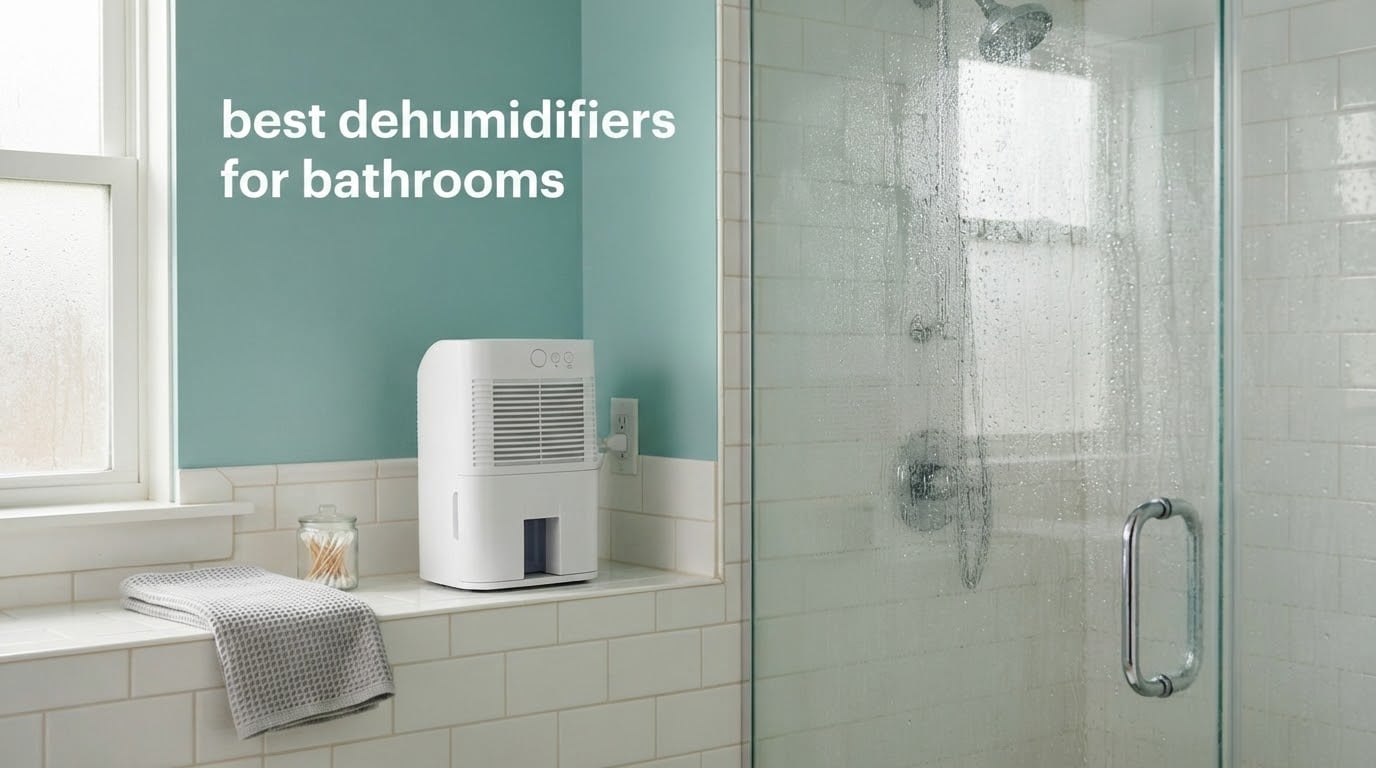
The best dehumidifiers for bathrooms are small, quiet machines that fit on a vanity or beside the tub and pull water out of the air after every shower. For most homes the Tenergy Sorbi is the one to beat, pairing a 1 liter tank with true HEPA filtration at 35-42 dB. Shower-heavy, windowless rooms need far more extraction than that, and we call out which model here can actually deliver it.
Most bathroom moisture problems are the same problem: a lot of water vapour enters a very small volume of air. A 5 by 8 foot bathroom is about 40 square feet, and a single shower can push that room past 70% relative humidity in minutes. Above roughly 60% RH, mold and mildew start working into grout and caulk, paint begins to bubble, and everything smells musty.
That is why a dehumidifier earns its place in a bathroom faster than in almost any other room. It runs quietly, needs no window, and no ducting. The trouble is that most of the models sold for closets and storage totes are also the models people put in bathrooms, and they simply cannot keep up with shower steam. We went through the specs and thousands of owner reviews for eight models to sort out which one fits which bathroom, including the honest note that a bigger tank does not mean more extraction.
Table of Contents
Top 3 Picks for Bathrooms in 2026

Best Dehumidifiers for Bathrooms at a Glance (October 2026)
All eight models below are compact machines, because a bathroom is a compact room. Capacity ranges from 6 ounces of passive absorption to 13 pints a day of active desiccant extraction, and the noise ceiling sits under 50 dB for every electric model here.
| Product | Specifications | Action |
|---|---|---|
| Tenergy Sorbi 1000ml |
|
Check Latest Price |
 Eva-Dry E-333 Eva-Dry E-333 |
|
Check Latest Price |
 avylo DH-CS03 25oz avylo DH-CS03 25oz |
|
Check Latest Price |
 BREEZOME MCS008 60oz BREEZOME MCS008 60oz |
|
Check Latest Price |
 avylo DH-CS06 42oz avylo DH-CS06 42oz |
|
Check Latest Price |
 Ivation 13-Pint Desiccant Ivation 13-Pint Desiccant |
|
Check Latest Price |
 Pro Breeze Osmo Pro Breeze Osmo |
|
Check Latest Price |
 Windangel DH-D2 44oz Windangel DH-D2 44oz |
|
Check Latest Price |
How We Picked the Best Dehumidifiers for Bathrooms
We compared eight models against the same criteria a bathroom actually imposes on a machine, rather than against basement ratings. Floor area, tank size, extraction rate at the stated test conditions, noise, wattage, drainage options and electrical safety came first, because those are the specs that decide whether a machine survives contact with a shower.
The second input was owner review volume. Two of the models here have well over 2,000 reviews, which is where the long-term patterns become visible: adapters failing after a year or two, tank switches, condensation escaping around a plug during recharge. Where reviews repeatedly describe the same weakness, we put it in the cons list rather than smoothing it over. One model in this group collects roughly six times less water than another, and pretending otherwise would waste your money.
Two limits shaped the list. First, the extraction ratings printed on the box assume 86F and 80% relative humidity, far harsher than an average bathroom, so treat every pints-per-day figure here as a ceiling rather than a promise. Second, headroom between the machine and the shower matters more in a bathroom than anywhere else, so we favoured units under 12 inches tall.
1. Tenergy Sorbi 1000ml – Best Overall Bathroom Dehumidifier With HEPA
Tenergy Sorbi 1000ml Air Dehumidifier w/Purifying Function, True HEPA Filter, Auto Shutoff, Touch Control Adjustable Air Speed, Ultra-Quiet, Ideal for Closets & Bathrooms
750ml per day
1 liter tank
200 sq ft
35-42dB
45W
True HEPA
Pros
- Doubles as an air purifier with true HEPA filtration
- Very quiet at 35-42dB
- One liter tank is large for a compact unit
- Auto shutoff with water level sensor and LED
- ETL and CARB certified
Cons
- Peltier output of 750ml per day
- Only rated for spaces up to 200 sq ft
- Single fan speed with no timer or app
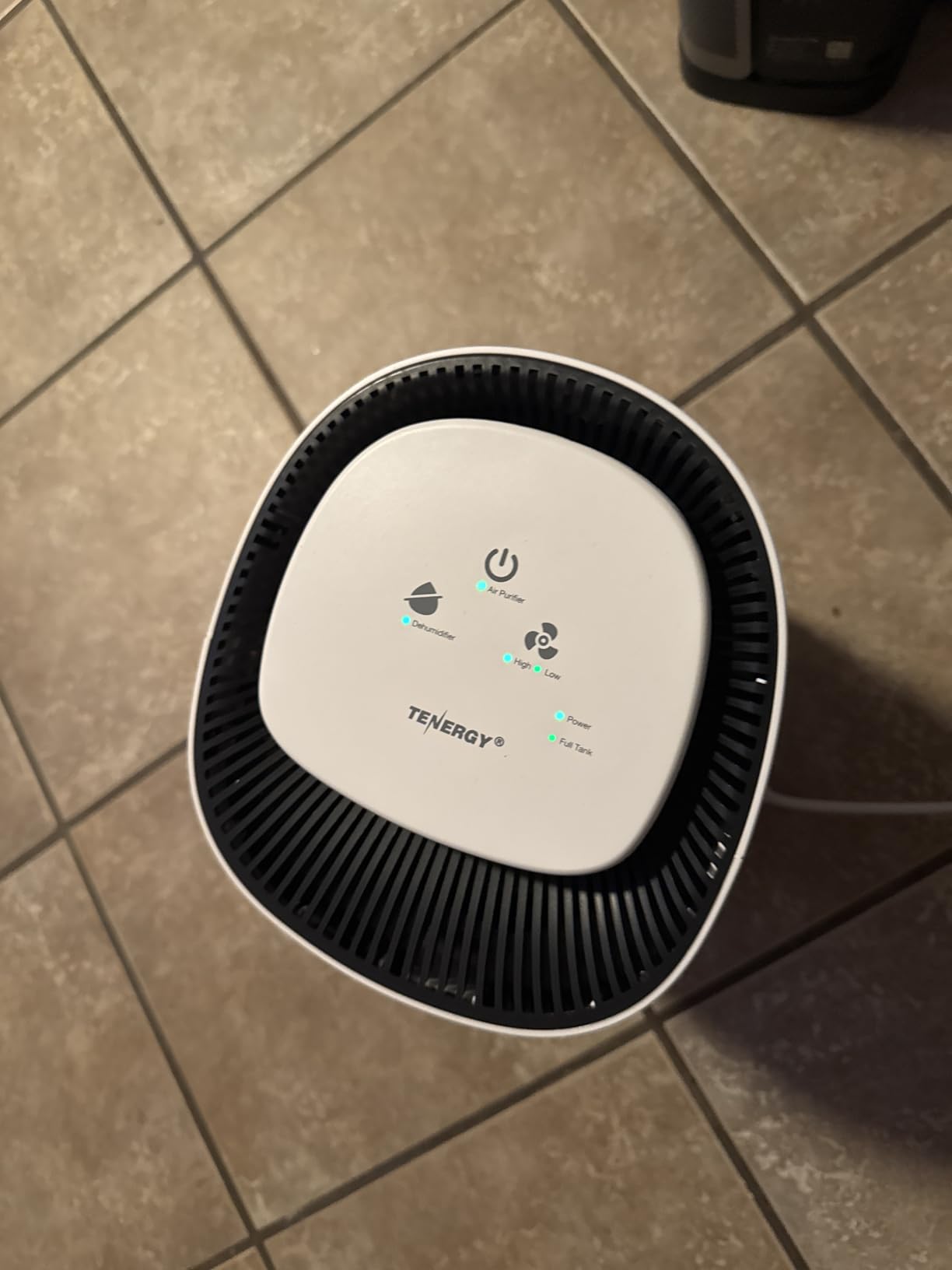
The Sorbi is the most balanced machine in this group, and it is the one we would put in a normal family bathroom. It extracts up to 750 ml a day, holds a full liter of water, and runs at 35-42 dB, which is quiet enough to sit on a vanity while someone showers. At 4.4 stars across 2,980 reviews it also holds the highest rating of anything we tested.
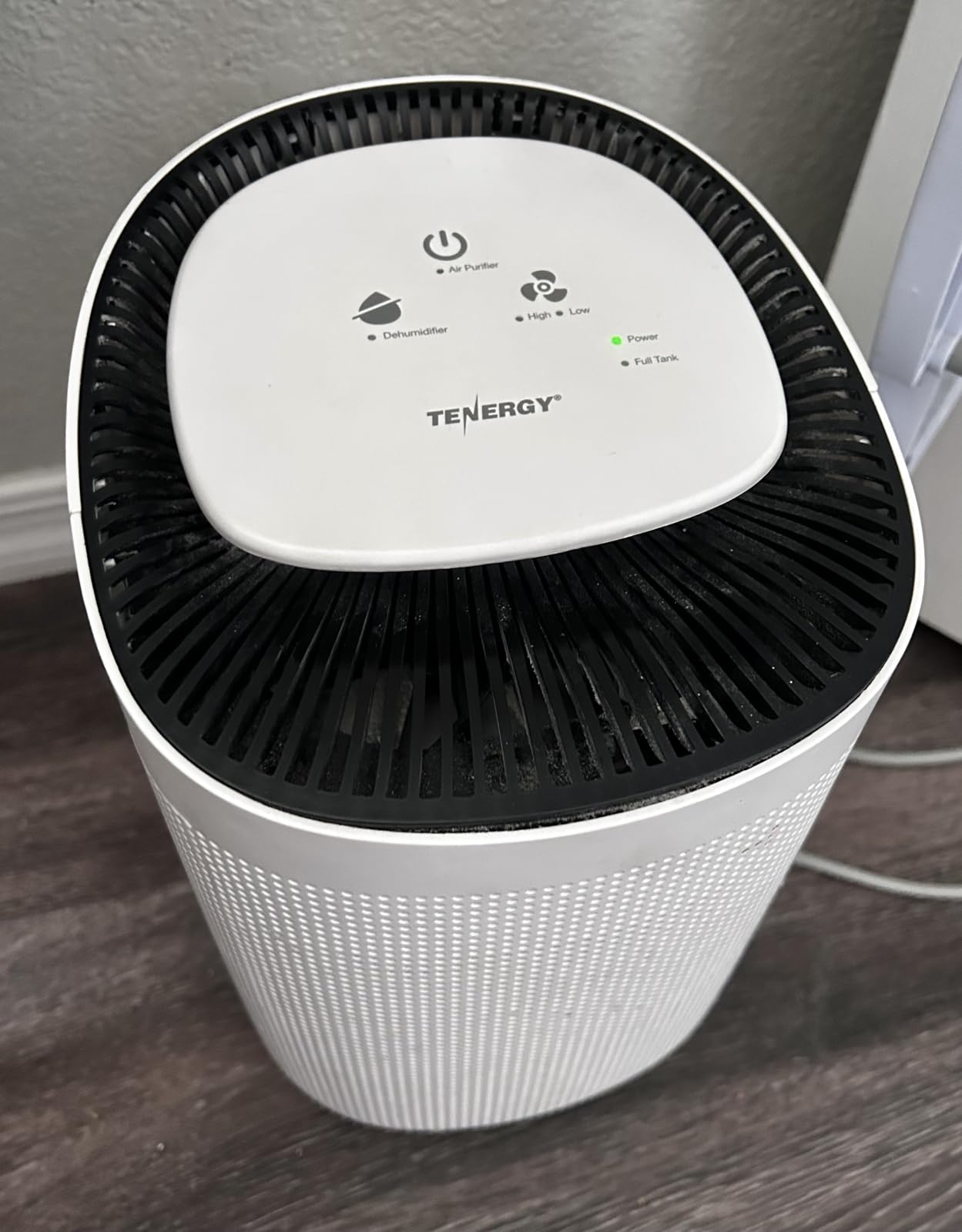
What makes it unusual for a bathroom unit is the HEPA filtration. Most compact dehumidifiers blow damp, particle-laden air straight back into a room that already has shower spray in it. The Sorbi captures 99.97% of particulates on the way through, so it does something for a musty room that a plain condenser cannot. Owners frequently mention pairing it with a small room in a long-term way rather than running it only after showers.
The 45 watt draw is genuinely modest, and the one liter tank means you are not emptying it daily in a typical powder room. It weighs 6 pounds and measures 7.7 by 8.5 by 12 inches, which clears most vanities and most tub surrounds without crowding the glass.
What you should check before buying
Decide first whether you want air cleaning as well as moisture removal. If anyone in the house has allergies, or the bathroom is a small closed room you run for hours, the HEPA stage earns its place. If you only need post-shower control, the money is better spent on capacity.
Also check the outlet. The unit needs a GFCI-protected receptacle, and a bathroom vanity outlet is often the one within reach of the tub spout. Keep the plug and cord on the dry side of the room, away from the splash zone, and never run it through an extension cord.
Where it falls short
Seven hundred fifty ml a day is honest but modest. In a windowless shower bathroom that gets used twice a day by several people, the Sorbi will be topping up a tank rather than pulling the room back down to 50% relative humidity on its own. It is a moisture maintainer, not a moisture emergency unit.
There is also no timer, no app and only one fan speed, which you may miss if you like to schedule the machine for a 90 minute post-shower run. And the 200 square foot rating is honest, so do not expect it to manage a large en-suite.
2. Eva-Dry E-333 – Best Budget Pick for Small Enclosed Spaces
Eva-Dry Wireless Mini Dehumidifier, White (E-333)
0.38 pints per day
6 oz tank
333 sq ft listed
1.5 pounds
5 year warranty
Pros
- Totally cordless with no plug or batteries
- Runs 20-30 days per charge
- Hangs anywhere with the included hook
- Non-toxic and safe around children and pets
- 5 year manufacturer warranty
Cons
- Minimal effect in open or larger rooms
- Beads can darken if left plugged in too long
- No auto shutoff or ready indicator
The E-333 is the most reviewed model in this roundup by a wide margin, and it has been in bathrooms, closets, boats and gun safes for years. It holds 6 ounces of water and keeps working for 20 to 30 days before it needs recharging. It weighs just 1.5 pounds and measures 6.25 by 1.25 by 4.75 inches.
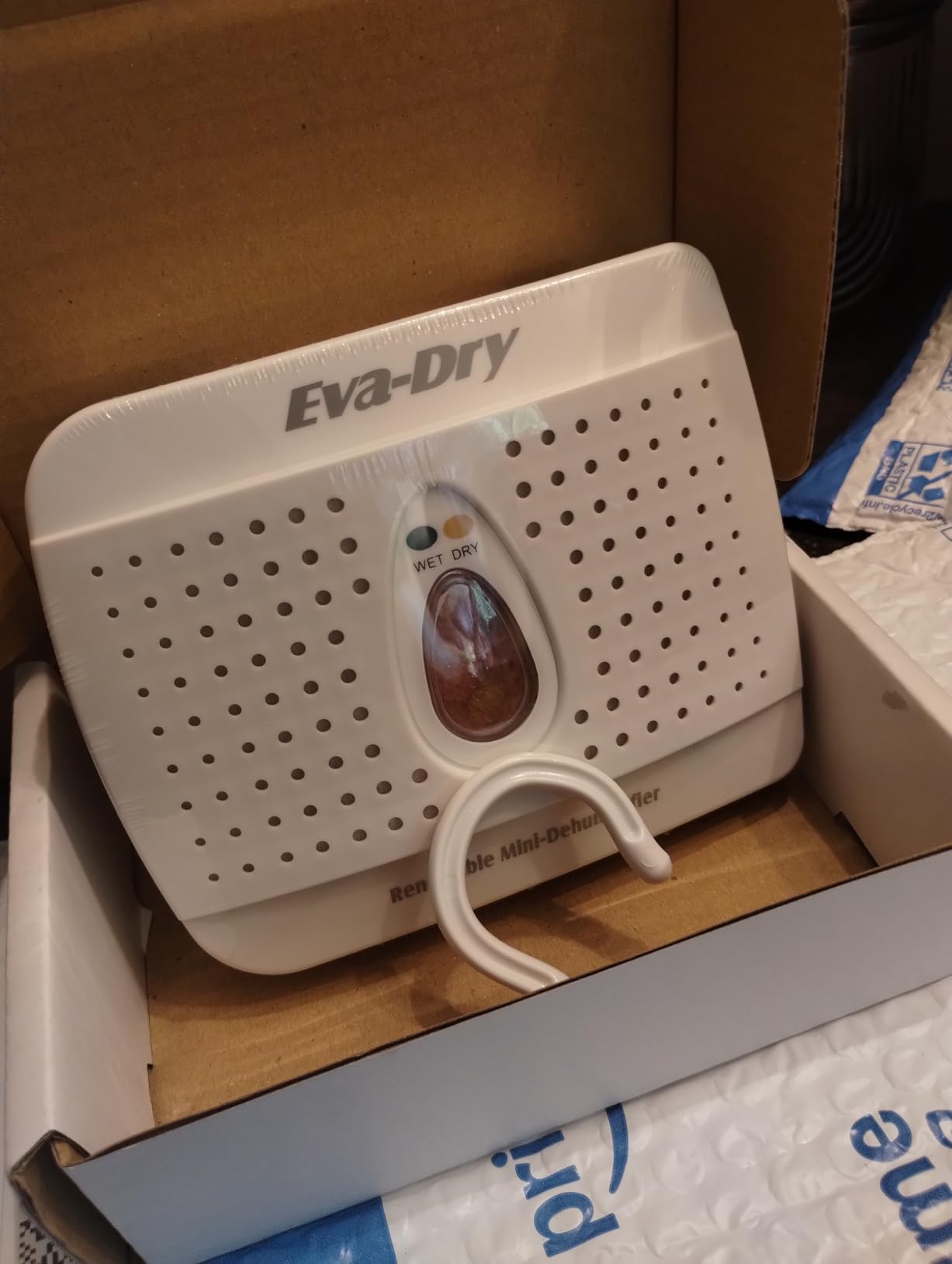
The design is the whole point. There is no cord, no battery and no spill risk, so it can hang inside a medicine cabinet, a linen cupboard or a cabinet that holds damp towels. The included hook means it occupies no counter space at all.
Long-term owners report units still working after a decade when recharged roughly once a week. That track record, plus the 5 year manufacturer warranty, is why we rate it as the best budget pick despite the modest extraction rate.
What you should check before buying
Ask whether your moisture is contained or open. This machine works by absorbing water into silica gel beads, so it is only effective where the air is trapped, such as inside a cabinet or a closed powder room with a shut door. It is a genuine problem solver in those spots.
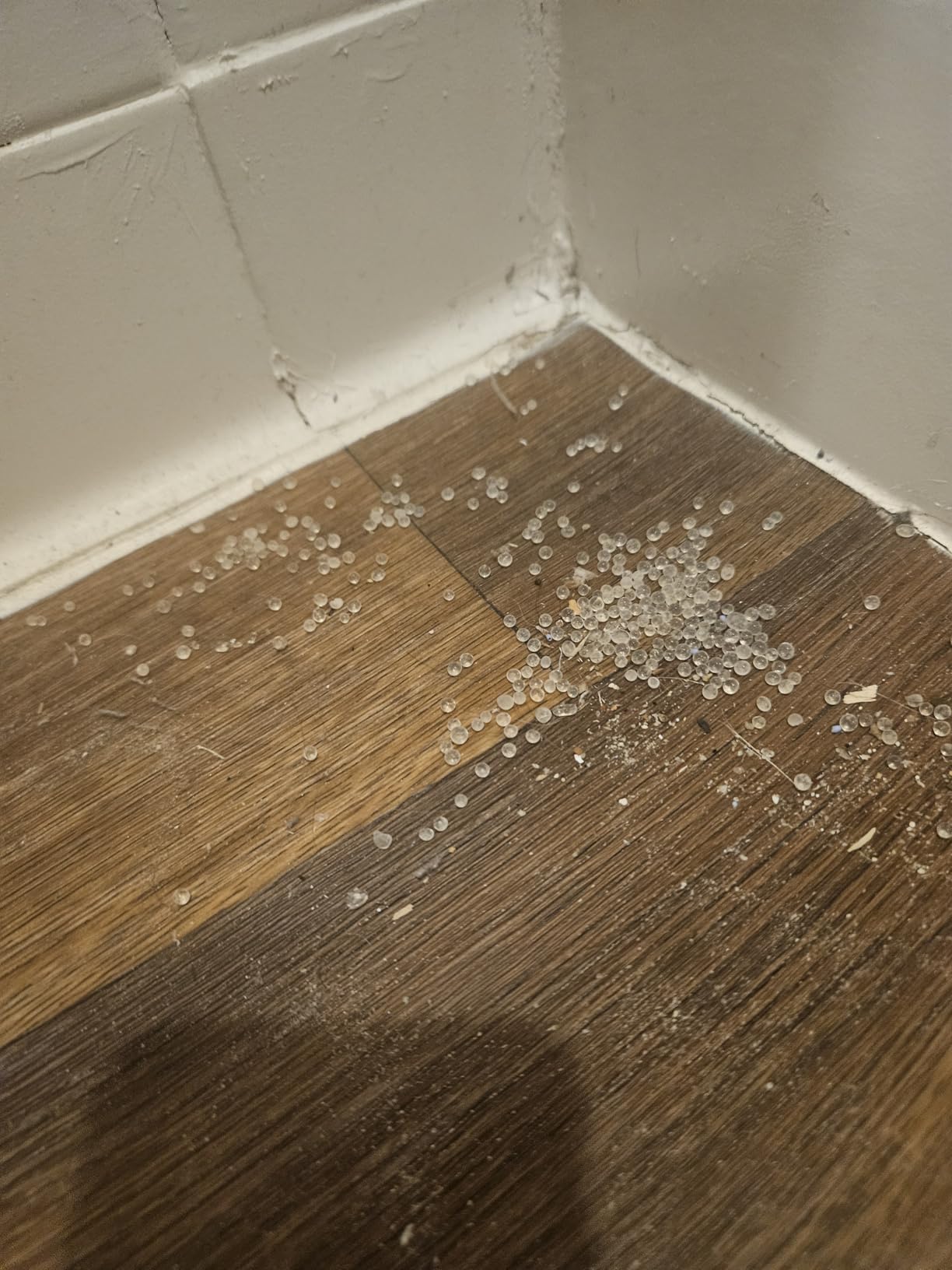
Plan the recharge. You plug it into a wall outlet for roughly 12 to 14 hours to dry the beads out again, and condensation forms on both the front and the back while it does that. Plug it in somewhere with clear space on every side, not flush against a wall or inside a cupboard.
Where it falls short
It will not pull a shower bathroom down to 50% humidity. At 0.38 pints a day, it manages a slow background damp in a small enclosed space and does nothing for active shower steam. Anyone expecting visible tank water after a long shower will be disappointed.
There is also no auto shutoff and no ready indicator, so recharging is on your memory. Leave it plugged in for days at a time and the beads can darken and lose capacity. In a room where you would want it running continuously, choose a powered model instead.
3. avylo DH-CS03 25oz – Best Value for a Powder Room
SANVINDER Dehumidifiers for Home, 25oz Dehumidifier for Bedroom with Auto-off, Ultra Quiet Energy Saving for Bathroom Closet Wardrobe Office RV (285sq.ft)
450ml per day
25 oz tank
320 sq ft
Under 35dB
23W
Pros
- Compact 5 inch footprint fits on a vanity
- Under 35dB in normal use
- Auto shutoff with red light when full
- Color changing nightlight
- 23W draw at 0.96 kWh per day
Cons
- Removes only about 450ml per day
- Power adapter failures reported on this style
- No user replaceable filter
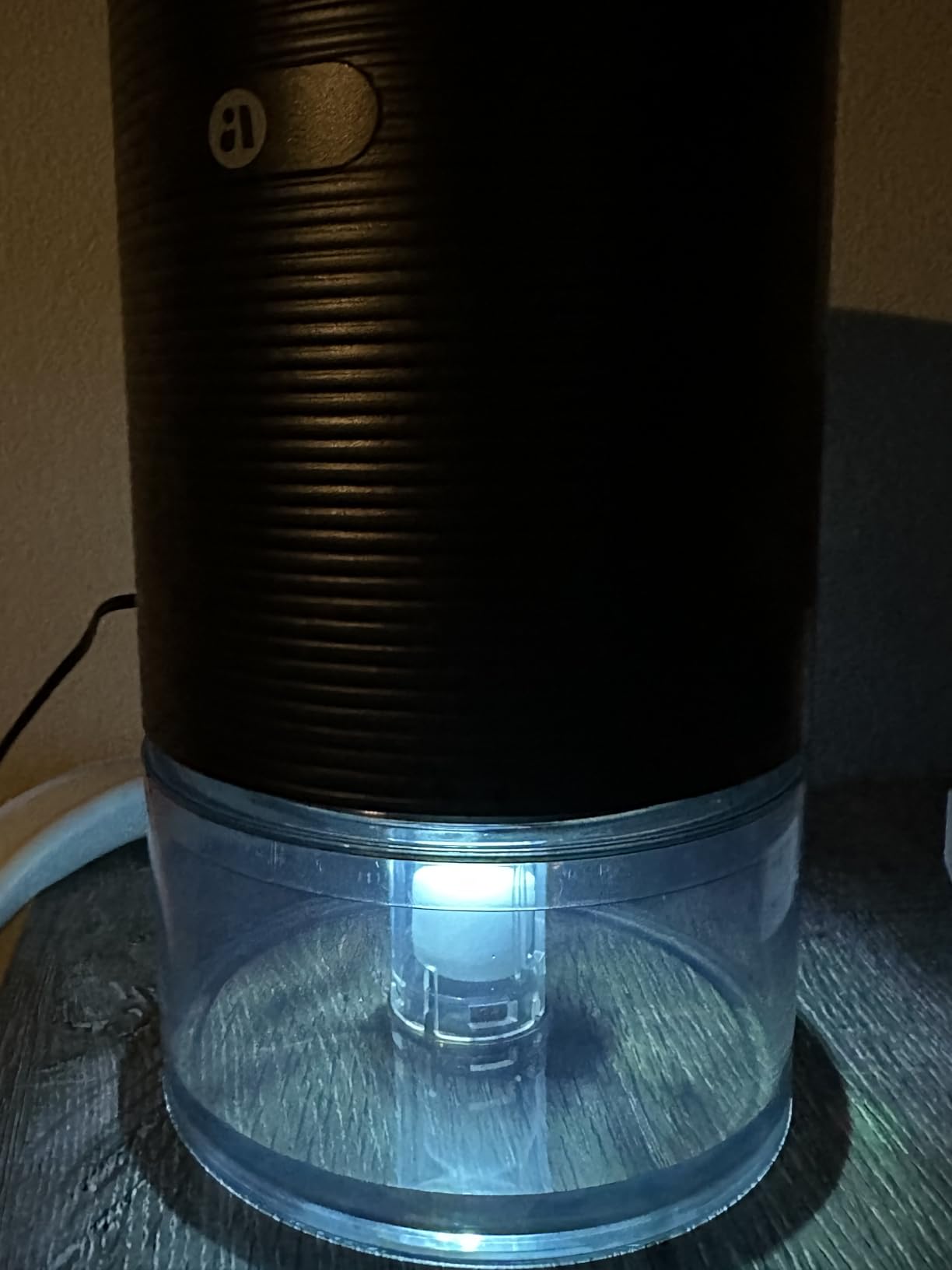
This is the small, cheap, powered workhorse of the group, and for a half bath it is the right size. The Peltier element pulls up to 450 ml a day into a 25 ounce tank, the whole body is 5.03 inches square by 8.38 inches tall, and it runs under 35 dB. It weighs 2.2 pounds, so moving it between the vanity and the linen closet takes no effort.
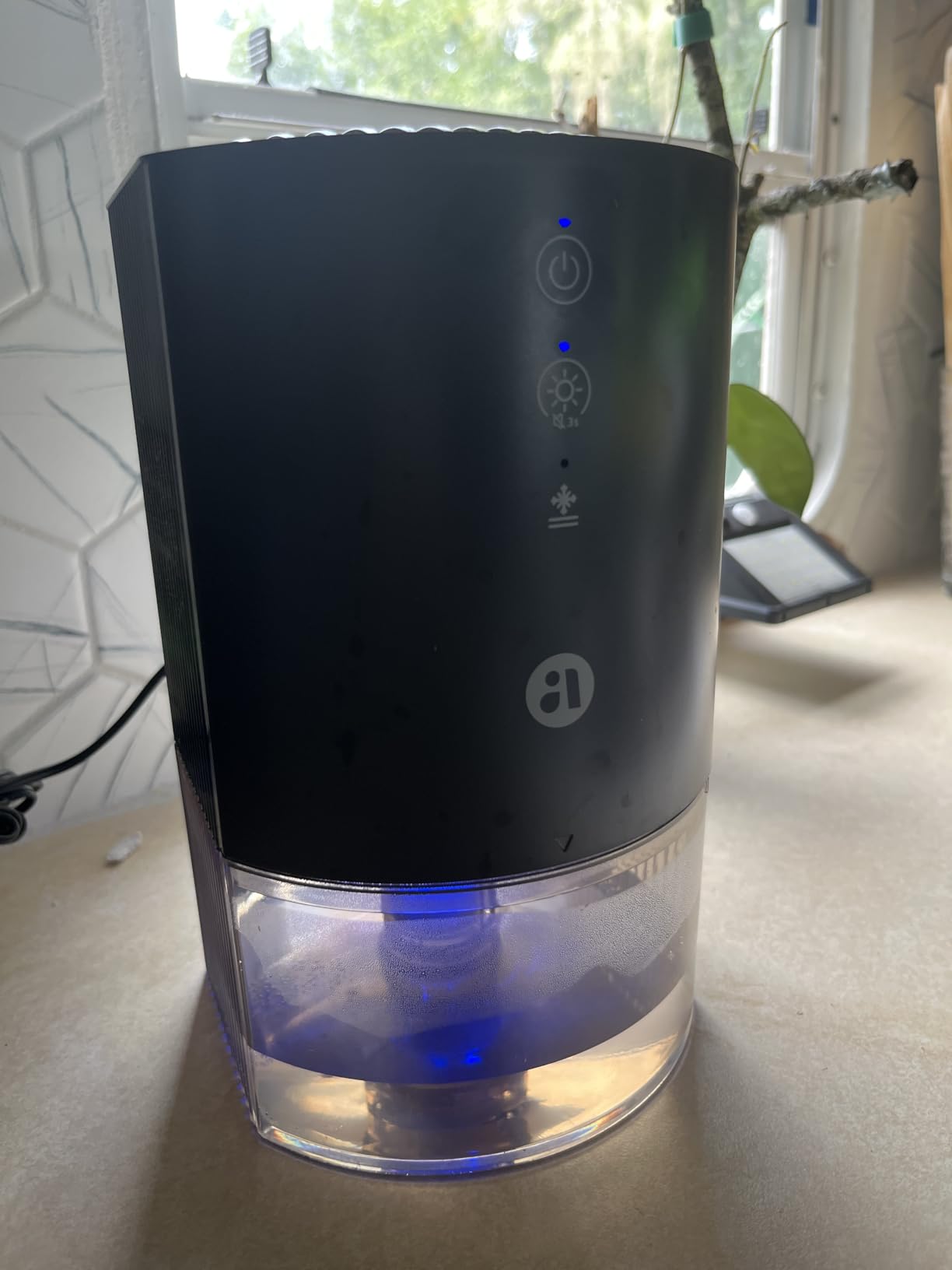
The auto shutoff stops the compressor and flashes red when the tank fills, so the unit never runs over the water line. The color changing nightlight is a small touch, but in a guest powder room it is the difference between an appliance and an object. Reviewers consistently describe it as much better than the passive absorber tubs it replaced, and quieter than a game console.
Power use is low enough to leave on for a week without thinking about it, at 0.96 kWh over 24 hours of continuous running. That figure comes from the manufacturer, and it is the reason this model works as a set-and-forget unit in a small room.
What you should check before buying
Check whether your room has a shower. Half baths, powder rooms and en-suite toilets without a wet zone are exactly the spaces a 450 ml a day unit can hold steady. Add a shower into the same room and you want a bigger tank and more extraction than this one offers.
Think about adapter reliability, because it is the one recurring complaint. Owners report the small power adapter on units of this type failing after extended use, and there is no user replaceable filter. If the machine is going to run unattended for months, choose a model with a conventional power cord.
Where it falls short
Four hundred fifty ml a day is genuinely small against a heavy shower. In an enclosed space of 40 square feet or less it makes a visible difference, and in a larger room it can run all day without the tank ever reaching the top.
There is only one fan speed and no timer, so you cannot schedule a 90 minute post-shower cycle. It also has no drain port, which means weekly manual emptying in a busy room.
4. BREEZOME MCS008 60oz – Best for Longer Intervals Between Emptying
60 OZ Dehumidifiers for Home, Dual-Semiconductor Quiet Dehumidifier with Timer Sleep Mode Auto-Off 7 Colors Light Portable Small Dehumidifiers for Bathroom, Cloakroom, RV
700ml per day
60 oz tank
350 sq ft
35dB sleep mode
48W
Pros
- Dual semiconductor condensers raise extraction
- 60 oz tank empties every 4-7 days
- Soft white noise with a 35dB sleep mode
- 12 24 36 and 48 hour timer
- Clear tank walls on three sides
Cons
- Some models stop collecting after 1.5-2 years
- Weak extraction in very small sealed rooms
- Not built for below freezing spaces
The biggest reason to consider this model is the 60 ounce tank. In a bathroom where nobody wants to tip a bucket into a sink every night, capacity is the feature that changes daily life, and this one holds more than twice what most compact models manage. The dual semiconductor condensers deliver up to 700 ml a day, which is the highest extraction of any electrically powered machine in this roundup.
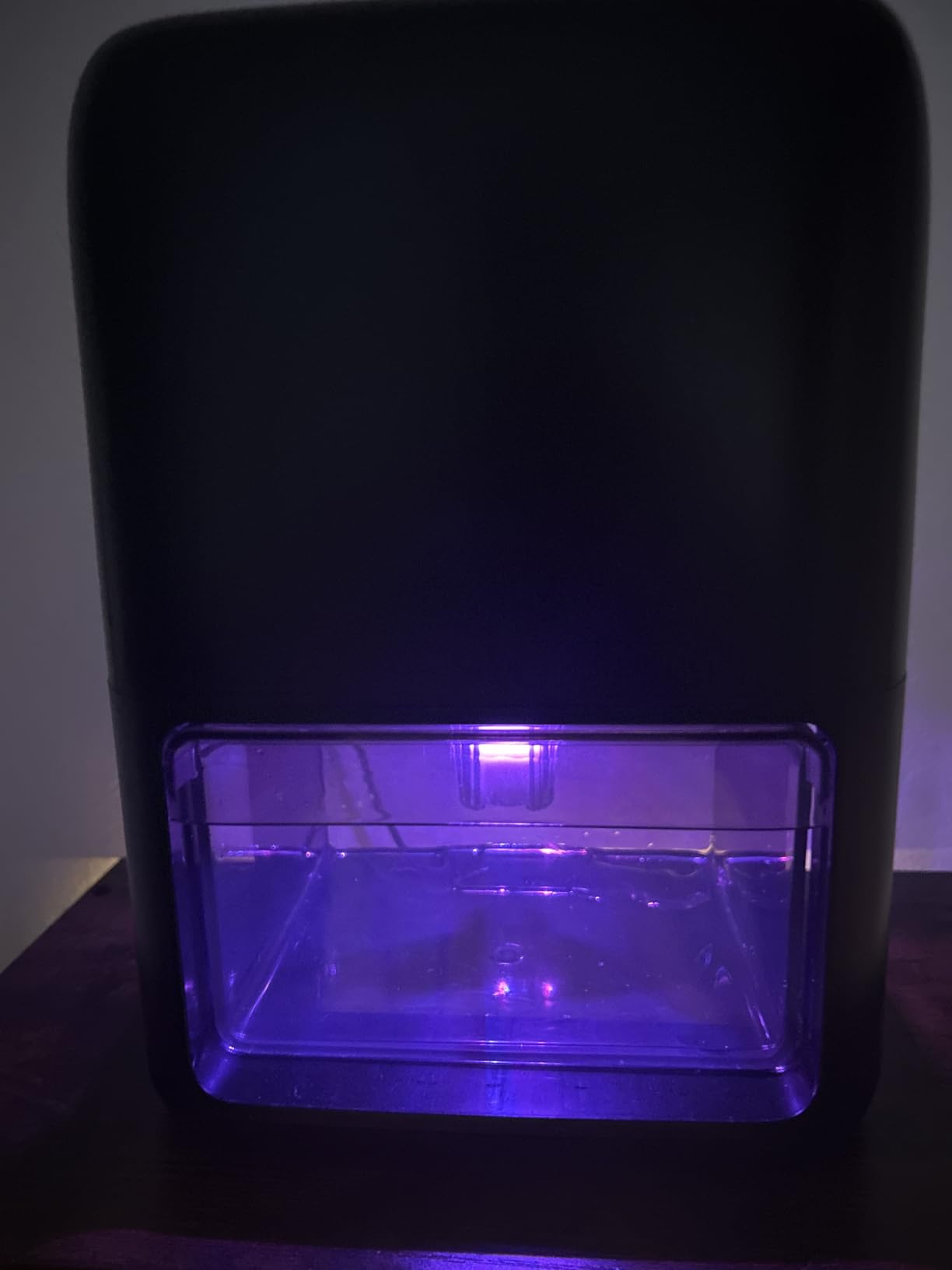
Owners in humid climates, small apartments and small bathrooms report meaningful relative humidity drops of 4 to 7 percent, with the tank filling somewhere between every four and seven days. The 35 dB sleep mode is described as soft white noise rather than a hum, and the 12, 24, 36 and 48 hour timer lets you run it automatically after a predictable routine.
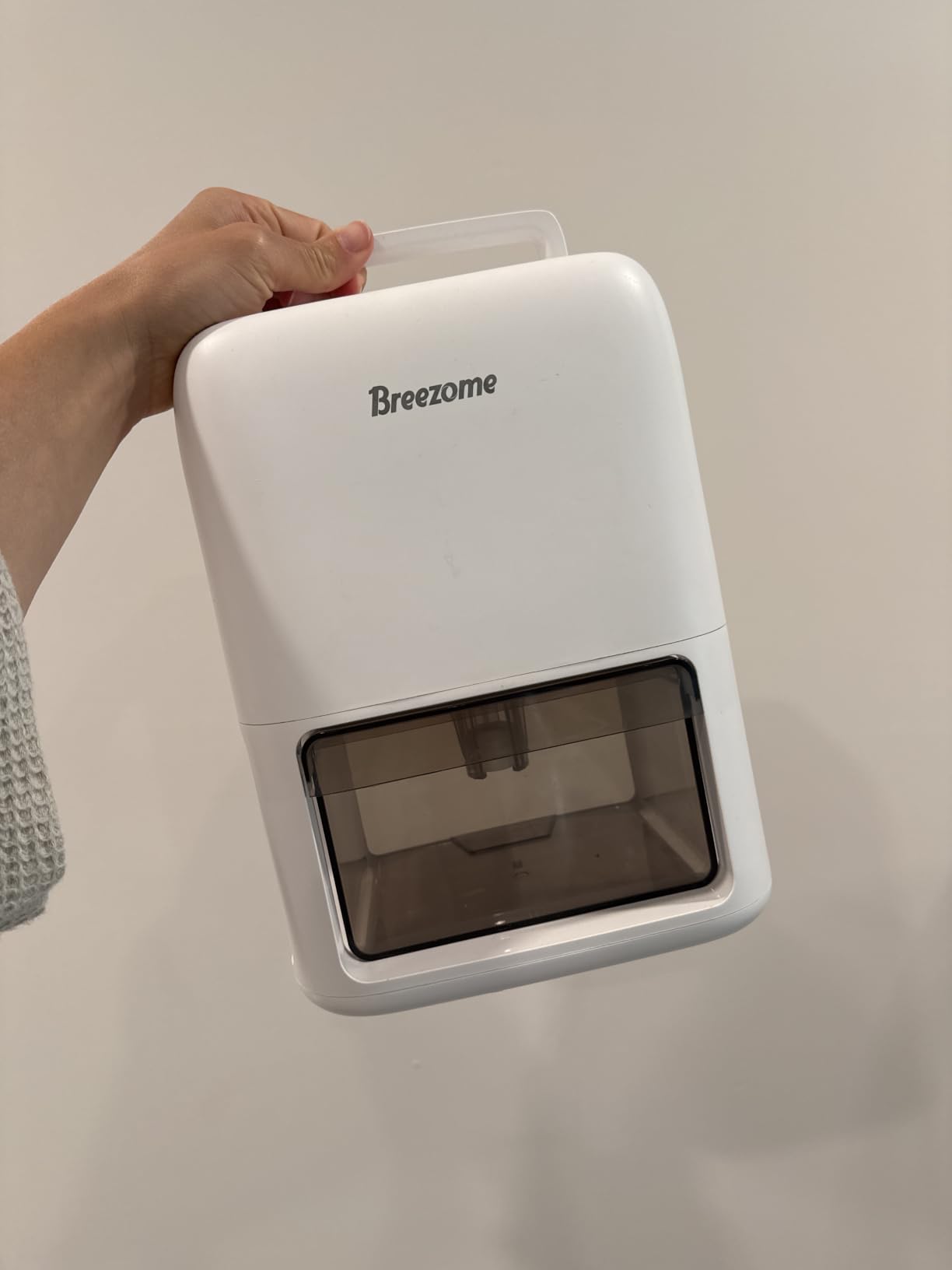
It measures 6.26 by 8.62 by 11.34 inches and weighs 1.7 kg, with a built-in handle for moving it. Transparent tank walls on three sides make it easy to see the water level without lifting the lid.
What you should check before buying
Look at the drain situation before you commit to a large tank. This model has no continuous drain port, so the full 60 ounces still ends up in your hand. If your bathroom has no floor drain, budget for a weekly trip to the sink, or consider a desiccant model with a hose.
Check the timer against your routine. Scheduled runs are useful for households where the shower happens at a predictable time, and less useful for guest bathrooms used at random hours.
Where it falls short
Durability is the theme in reviews, with several owners replacing the unit somewhere around a year and a half to two years of use. That is worth factoring into a purchase for a room that would otherwise run year round.
A handful of owners also report little water collection in very small enclosed spaces, which sounds odd until you realise the machine was never sized for a 30 square foot closet. And without defrost support in cold conditions, it is a bathroom unit rather than a garage unit.
5. avylo DH-CS06 42oz – Quietest Electric Model for a Sleepy Bathroom
avylo Small Dehumidifier for Bedroom,162 Sq.Ft 42oz with Auto Shut Off
450ml per day
42 oz tank
28dB
40W
Auto defrost
Pros
- Quietest electric option here at about 28dB
- 42 oz tank cuts emptying frequency
- Automatic defrost for cooler rooms
- Compact body with a built-in handle
- 7 color LED night light
Cons
- Extraction suits small enclosed rooms only
- Claimed area figure far exceeds real use
- Tank only with no drain option
Noise is the deciding factor in a lot of bathrooms, and at roughly 28 dB this is the quietest powered model we reviewed. It is quieter than a refrigerator hum and barely registers next to a conversation, which makes it the pick for a bathroom adjacent to a bedroom or for a household that runs it overnight.
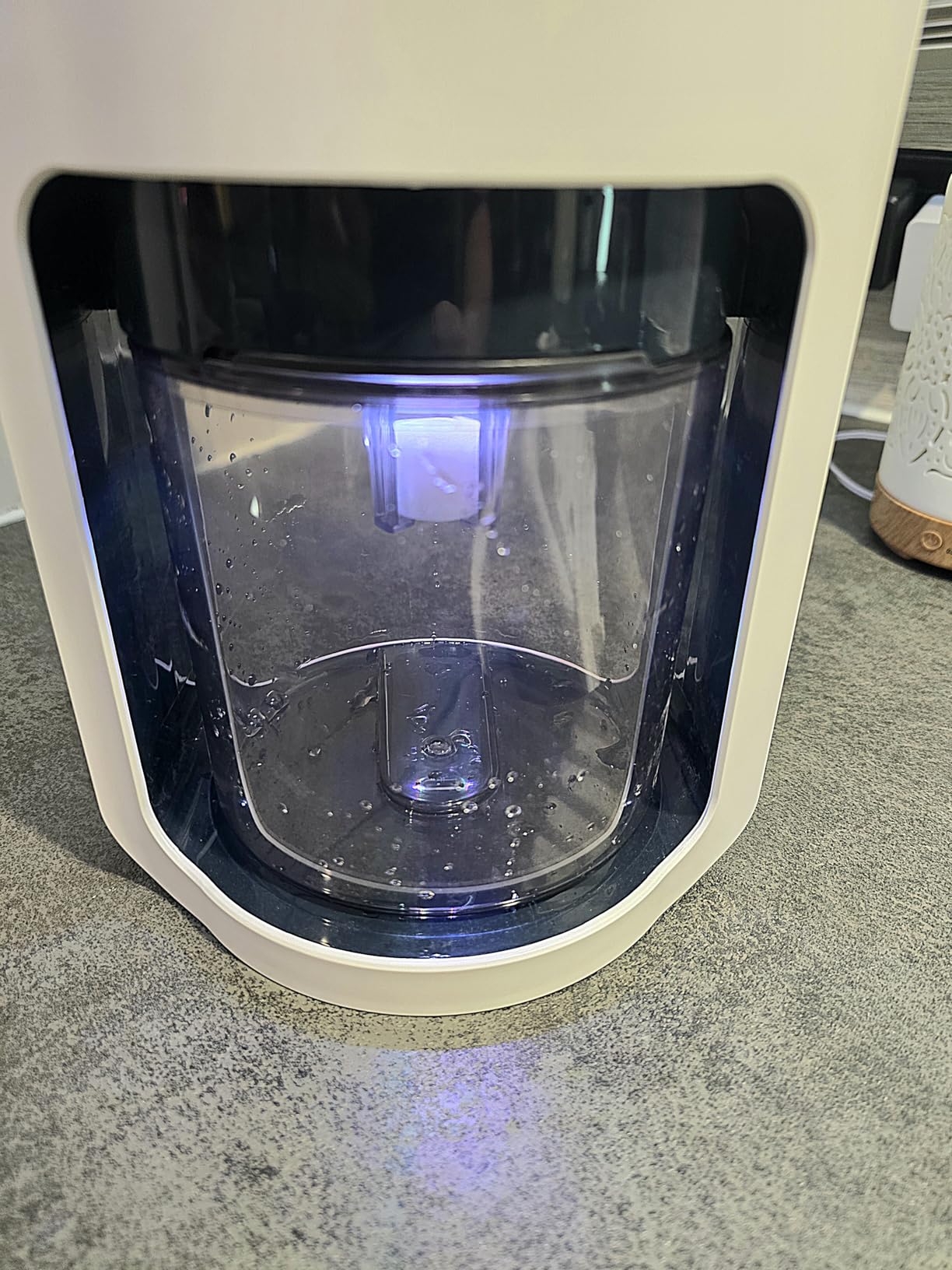
The 42 ounce transparent tank is the largest in the compact category, so the combination of quiet running and infrequent emptying is the practical reason this model stands out. Automatic defrost protection helps it keep performing in a cooler room, and a 7 color night light gives a soft glow for a late night visit.
It measures 5.6 by 6.37 by 11 inches and weighs 2.6 pounds, so it fits a narrow gap between a vanity and a wall. The 40 watt draw sits in the middle of this group.
What you should check before buying
Read the coverage figure carefully. The listing carries a very large square footage number that reflects theoretical reach, while the real extraction rate is up to 16 ounces, or 450 ml, a day at 86F and 80% relative humidity. Owners consistently describe the usable range as small enclosed rooms.
If your bathroom is on an upper floor in a cool climate, the automatic defrost is a genuine advantage over bare condenser models. If it is a warm ground-floor room, you can ignore that feature.
Where it falls short
Quiet does not equal powerful. Four hundred fifty ml a day is the same modest figure as the smaller avylo model, so this is a machine for steady background control rather than for recovering a room after several showers.
There is no continuous drain, so the tank empties by hand, and there is no timer to schedule a cycle around your shower routine.
6. Ivation 13-Pint Desiccant – Best for Cold and Heavy-Humidity Rooms
Ivation 13-Pint Small-Area Desiccant Dehumidifier Compact and Quiet – With Continuous Drain Hose for Smaller Spaces, Bathroom, Attic, Crawlspace and Closets – For Spaces Up To 270 Sq Ft, White
13 pints per day
3.8 pint reservoir
270 sq ft
470W high
33F to 104F
Pros
- Highest extraction in the group at 13 pints a day
- Desiccant rotor works down to 33F
- Continuous drain hose for hands free drainage
- LCD panel with humidity target and timer
- Auto restart after a power outage
Cons
- Bulky at 17.35 inches tall and 14 pounds
- 470W on high is a heavy power draw
- Warm exhaust air from the outlet
This is the model that solves the real shower bathroom problem, and it does it in a way none of the compact machines here can. A desiccant rotor pulls up to 13 pints of moisture a day at 60% relative humidity and 68F, which is roughly six times the extraction of the best compact unit on the list. Owners in attics, crawl spaces and unheated bathrooms single out the extraction rate as the reason they bought it.
The desiccant rotor is why it also works in cold rooms, operating from 33F to 104F where a compressor coil would freeze. The LCD control panel has six touch buttons covering power, fan speed, humidity target, timer and vent swing, with a Fahrenheit and Celsius toggle, so you can set a target instead of simply running it forever.
Drainage is the second reason to like it in a bathroom. It has a removable 3.8 pint reservoir or an included continuous drain hose that carries up to a half gallon to a sink or bucket, so it can run unattended for long stretches. Auto restart after a power outage means you do not come back to a full tank.
What you should check before buying
Measure the floor space twice, because the footprint is the real constraint. It stands 17.35 inches tall, is 10.6 inches wide and 6.85 inches deep, and weighs 14 pounds, so a small water closet may simply not have the clearance.
Check where the drain hose can go. Continuous drainage needs a sink, a bucket or a floor drain within hose reach, and plenty of bathrooms have none of those near the machine.
Where it falls short
Power draw is substantial at 470 watts on high and 280 watts on low, so it belongs on a schedule rather than on 24 hour continuous duty if you are watching energy use. It also runs warm, and owners note the exhaust air is noticeably warm, which is pleasant in a cold room and unhelpful in a warm one.
At 4.2 stars from 609 reviews, the rating is solid but the volume is thinner than most of this list, so treat long-term durability feedback as less established here.
7. Pro Breeze Osmo – Best No-Power Pick for Renters and Small Enclosed Rooms
Pro Breeze Osmo Non-Electric Moisture Absorber, 44 fl.oz, Included 1.54lb Refillable Tablet, Lasts 100 Days, Ideal Silent Mini Dehumidifier for Closet, Bathroom & Bedroom, Fragrance Free, White
Passive absorption
44 fl oz tank
108 sq ft
0 dB
100 days per fill
Pros
- Completely silent at 0 dB with no plug needed
- Reusable tank and refillable tablet
- Works up to 100 days per fill
- Large 44 fl oz tank for a passive unit
- 360 degree perforated housing
Cons
- Passive absorption cannot actively dry a room
- Coverage limited to about 108 sq ft
- No drain option so it is emptied by hand
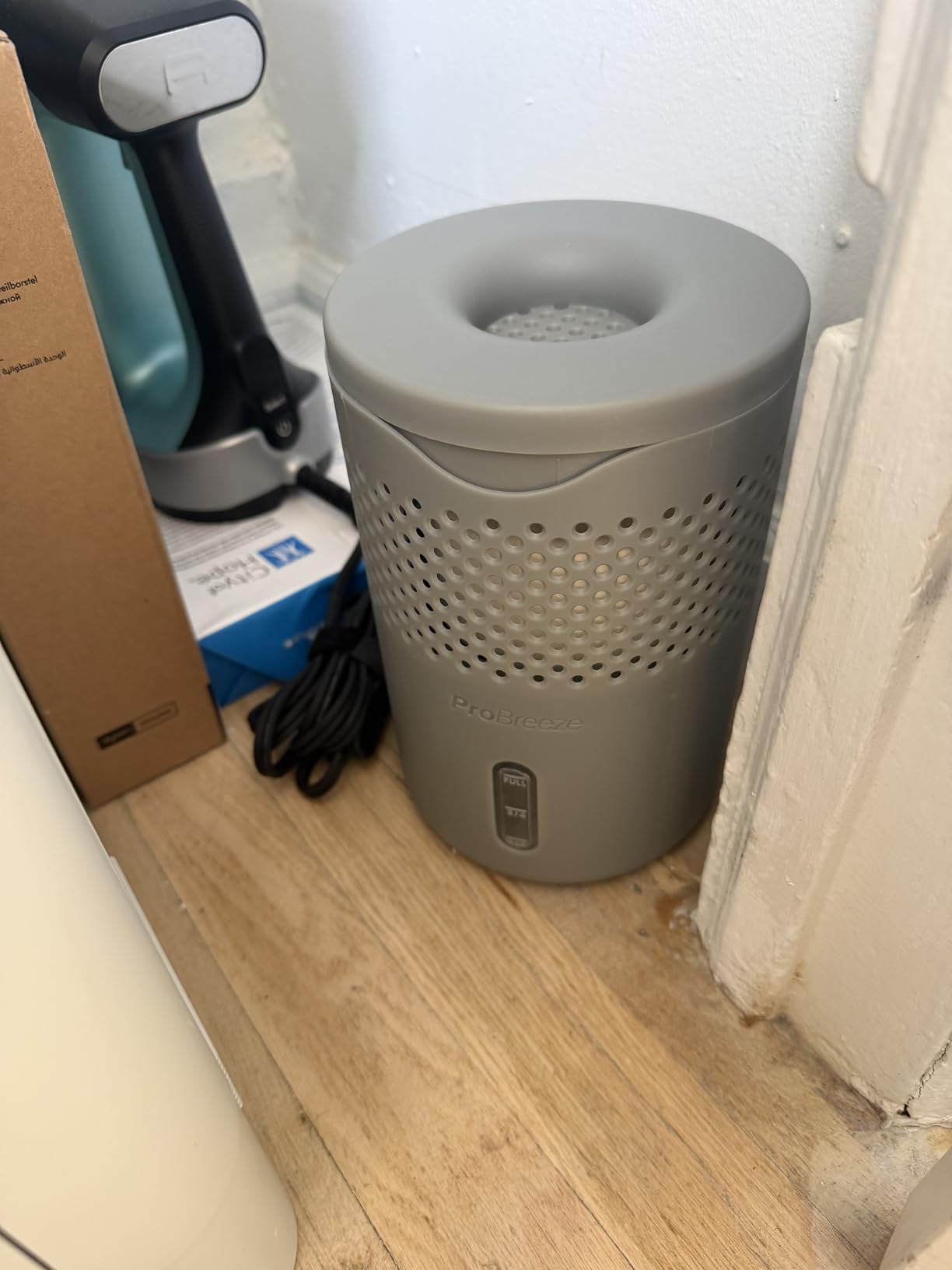
Some bathrooms do not need a machine at all. If the moisture is a slow background damp inside a linen cupboard, a small cabinet or a closed powder room, the Osmo does the job with no cord, no outlet and no noise whatsoever. It operates at 0 dB, which is a genuine advantage next to a bed or a nursery.
The refillable design beats the disposable hanging packets it replaces. It ships with a 1.54 pound tablet that works up to 100 days depending on conditions, and the 44 fluid ounce tank has a water level window, a safety lid and an easy pour spout. Owners point out the savings over single-use crystal packs.
The 360 degree perforated housing lets air move in from every side, and at 5.7 by 9 by 5.7 inches it sits on a shelf or the floor of a cabinet without looking like equipment.
What you should check before buying
Ask how much water the room actually makes. Passive absorption manages a slow, steady moisture load of the kind found in cupboards and storage, and reviewers consistently set that expectation. It will not respond to a shower, because there is no airflow behind it.
Check your tenancy and your sockets. A unit with no power cord is the easiest thing in this roundup to own, because there is nothing to plug in, nothing to trip over and nothing to argue about with a landlord.
Where it falls short
Coverage is limited to roughly 108 square feet of enclosed space, and passive absorption cannot actively dry a damp bathroom. Anyone with a mold problem needs airflow and extraction, not a salt tablet.
There is no pump and no drain option, so the collected liquid has to be emptied by hand, and at 4.1 stars this is the lowest rated model in the group, which tracks with the limited performance range.
8. Windangel DH-D2 44oz – Best for Custom Ambient Lighting and Modes
Windangel 44oz(1.3L) Small Dehumidifier for Home Auto-Off Quiet Portable Dehumidifier with 3 Modes 10 Color Lights 4 Timer Settings for Bedroom Bathroom Closet (215 sq.ft)
349ml per day
44 oz tank
3 modes
10 color lights
24W
Pros
- Only model here with three operating modes
- Ten colors across three brightness levels
- Continuous run plus 24 48 and 72 hour timers
- Lightest build at 2.6 pounds
- Auto shutoff and automatic defrost
Cons
- Lowest extraction of the powered models
- 12 percent one-star share on durability
- Small tank needs frequent emptying
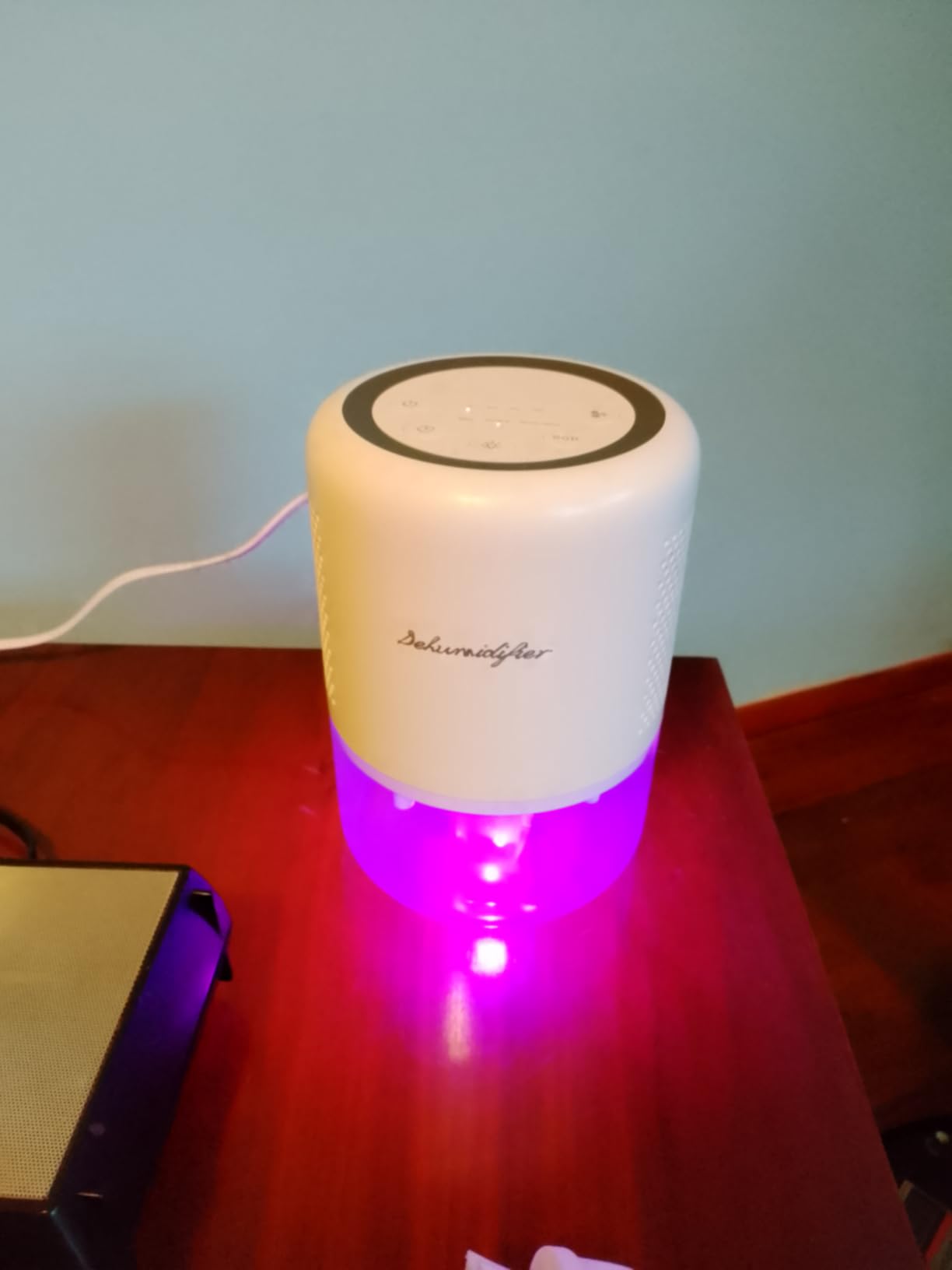
Bathroom appliances live in plain sight, so how one looks is a real buying factor. The Windangel is the most customisable machine here: ten colors across three brightness levels, a dedicated sleep mode, a normal mode and a performance mode for high humidity days. The mood light is a genuine preference in a visible room rather than a gimmick.
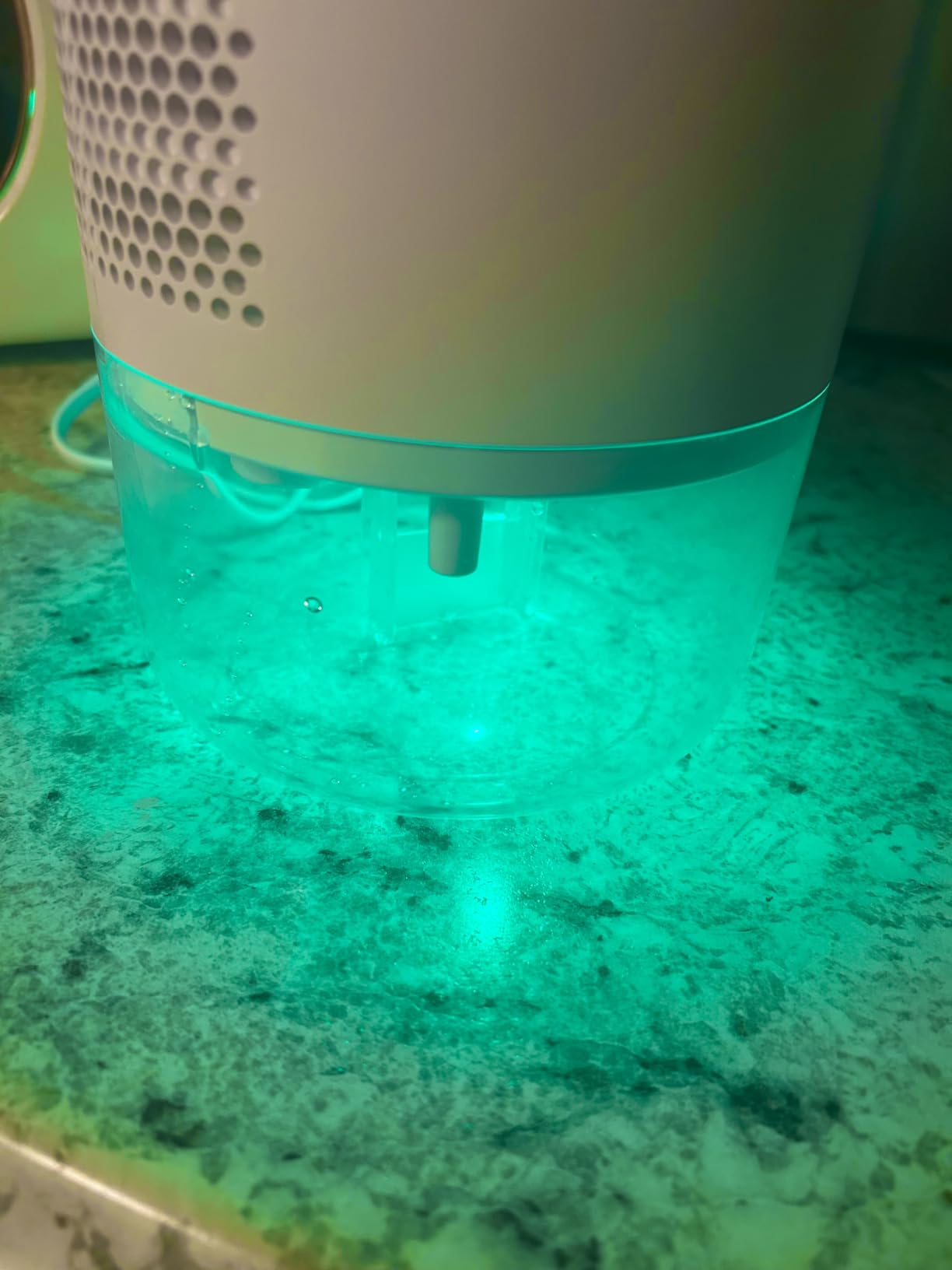
It also holds the target humidity at 45 to 55 percent, which is the band we would set in a bathroom anyway, and the performance mode is a useful lever when the room is genuinely saturated after a long shower. The timer offers continuous running plus 24, 48 and 72 hour cycles.
At 5.91 inches square by 8.46 inches tall and 2.6 pounds, it is the lightest powered model here and draws 24 watts. Automatic defrost protection and auto shutoff with a red flashing light are both included.
What you should check before buying
Focus on the modes rather than the lights, because that is where the useful difference sits. Sleep mode drops the fan for steady background control, and performance mode is what you want during and immediately after a shower session.
Check that a visible machine suits the room. If the unit will sit in plain view near a vanity, the color options are a real advantage. If it will be hidden inside a closet, they do you no good.
Where it falls short
At about 349 ml a day, this is the lowest extraction of any powered model in the roundup. It is fine for a small dry-ish room and underpowered for a shower bathroom, and the 1.3 liter tank needs emptying more often than the 42 or 60 ounce models.
Durability is the other theme, with a 12 percent one-star share, the highest among the top sellers in this group, on reports of units that stop performing. Buy it for the features, not for a decade of service.
How to Choose a Bathroom Dehumidifier in 2026
How big should a dehumidifier be for a bathroom?
Size to the square footage and the wet zone, not to a marketing figure. Measure the floor, then match it to the extraction class below. A 5 by 8 foot bathroom is roughly 40 square feet, and a family shower bathroom of 80 to 120 square feet needs a different machine entirely.
30 to 50 sq ft, no shower: passive absorbers and cordless silica gel units work, because the moisture load is slow and steady.
30 to 50 sq ft, with a shower: aim for a powered unit extracting roughly 400 to 800 ml a day and running under 35 dB, which is the middle of this roundup.
80 to 120 sq ft, with a shower: move up to a larger tank, ideally 42 to 60 ounces, or to a desiccant rotor unit with a drain hose if the room has no window.
Over 120 sq ft, or a wet room used several times a day: this is where capacity stops being negotiable, and where a larger compressor style machine starts to make more sense. Our picks for the best dehumidifiers for large rooms and the best basement dehumidifiers cover that end of the market.
Compressor, desiccant or thermoelectric?
Three technologies compete for bathroom duty and they are not interchangeable. A compressor or refrigerant unit condenses moisture on a cold coil, which is powerful and efficient but stops working properly as the room temperature drops toward 60F. A desiccant unit uses a rotor of drying compound instead, which works down to freezing, draws more power and releases warm air.
A thermoelectric or Peltier unit cools a small plate with a semiconductor chip. It is inexpensive, tiny and nearly silent, which makes it a good fit for a powder room, but its extraction ceiling is low. That is the honest reason we would not put a Peltier unit against a daily shower, and the reason the units below earn their place in small rooms rather than large ones. If a shower is the dominant moisture source in your bathroom, buy extraction, not silence.
Tank, continuous drain or both?
A larger tank means fewer trips to the sink but a heavier lift when you get there, and none of the compact models in this roundup offer a drain hose. Desiccant machines are where continuous drainage becomes available, and that is the feature to prioritise if nobody will remember to empty anything.
If you plan to run a unit around the clock, drainage matters more than tank size. Forum discussions about bathrooms without a floor drain come up repeatedly, and the practical answer is a machine that drains to a sink, a bucket or an outdoor line rather than one that fills up unnoticed.
Where should you place it, and what about power?
Place the unit on the dry side of the room, clear of the tub and shower spray, and leave clearance on all sides so air can move through the intake and the outlet. Positioning matters more than most buyers expect, since a machine boxed into a corner works far harder for the same result.
Power safety in a wet room is not optional. Use a GFCI protected receptacle, keep the plug and cord away from splash zones, and never use an extension cord, which manufacturers prohibit and which creates both a shock and a trip hazard in a tiled room.
Aim for a target between 45 and 55 percent relative humidity. The EPA treats 30 to 50 percent as the healthy indoor range, and mold growth becomes a real risk once relative humidity stays above roughly 60 percent, so anything in the low 50s gives you margin without overworking the machine.
Bathroom fan or dehumidifier?
If your exhaust fan is correctly sized and actually vents outdoors, it is the better first tool, because it removes humidity at the source rather than cleaning up after it. Run it for twenty minutes after every shower and much of the problem never starts.
A dehumidifier earns its place when the fan is missing, undersized, noisy, or venting into the attic rather than outside. It also works in winter, when cold outdoor air makes an extract fan far less effective. In older homes with a permanently musty bathroom, owners often run both together, and where floor space is tight our picks for the best whole-house dehumidifiers cover the higher end. Our best crawl space dehumidifiers cover the other common unvented space in the house.
Frequently Asked Questions
Which is the best dehumidifier for a bathroom?
For a typical family bathroom, the Tenergy Sorbi is the strongest all-round choice, with 750 ml a day of extraction, a one liter tank, HEPA filtration and a 35-42 dB running noise. For a shower-heavy windowless room, pick extraction over convenience and look at the Ivation desiccant unit, which removes up to 13 pints a day and drains continuously.
How big should a dehumidifier be for a bathroom?
Match the machine to the square footage and to whether there is a shower. A 30 to 50 square foot powder room is handled by a passive absorber or a compact unit removing 400 to 800 ml a day. A 80 to 120 square foot shower bathroom needs a larger tank, or a desiccant unit with a drain hose, because compact models cannot keep up with daily steam.
What type of dehumidifier is best for a bathroom?
A compressor unit gives the strongest extraction but struggles below about 60F, a desiccant unit works in cold rooms and drains continuously, and a thermoelectric Peltier unit is quiet and small but only handles slow background damp. Powder rooms suit Peltier models, and shower bathrooms suit compressor or desiccant machines.
Does a dehumidifier help with mold?
It helps by keeping relative humidity below roughly 60 percent, which is the level at which mold and mildew begin to grow in grout, caulk and behind fixtures. It does not replace fixing the cause, so an undersized or unvented exhaust fan will keep feeding the problem no matter how good the machine is.
Is a dehumidifier the same as an air purifier?
No. A dehumidifier removes water vapour and condenses it into a tank or drain. An air purifier captures particles such as dust and pollen. A few combination models do both, including the Tenergy Sorbi with its true HEPA filter, but most compact dehumidifiers do only one job.
Conclusion
For most bathrooms, the Tenergy Sorbi is the pick. It has the highest rating in this group at 4.4 stars, enough extraction for normal family use, a tank that does not need daily emptying, and HEPA filtration that does something for a musty room. Add the Eva-Dry for enclosed cabinets and a zero-noise option, the avylo 25 oz for a cheap half bath, and the BREEZOME 60 oz when you refuse to empty a tank every night.
The one place to spend more is a shower bathroom with no window, where the Ivation desiccant unit and its continuous drain are the only combination in this roundup that matches the moisture load. Whichever machine you pick, use a GFCI protected outlet, keep the cord out of the splash zone and set your target between 45 and 55 percent relative humidity. Tell us your bathroom size, whether it has a window and where you want the machine to sit, and we will narrow the shortlist for you.