
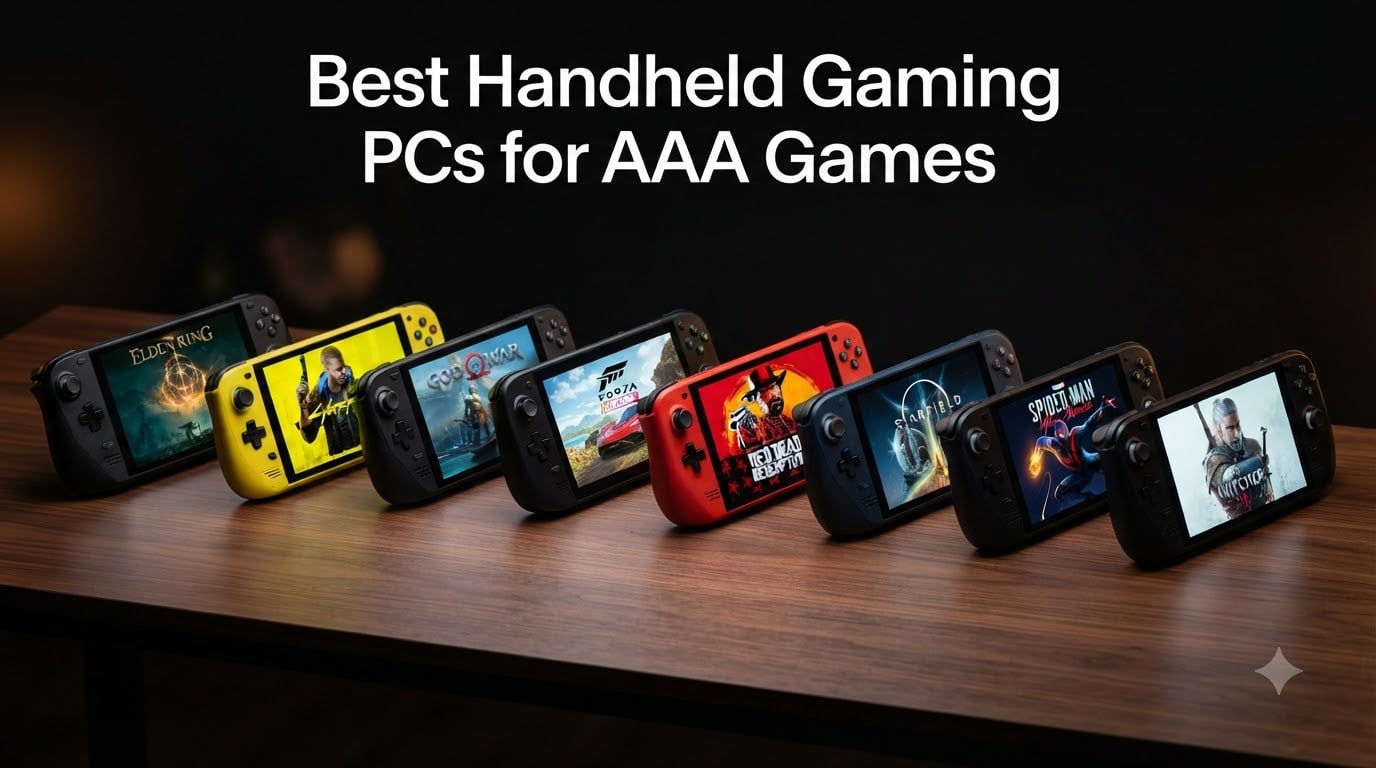
A handheld gaming PC is a console-sized computer with built-in controls, a high-refresh display, and enough graphics power to run Windows or SteamOS games away from a desk. The best handheld gaming PCs for AAA games in 2026 can handle demanding releases such as Cyberpunk 2077, Baldur’s Gate 3, and Red Dead Redemption 2, although you usually need 720p or 1080p settings, FSR or XeSS, and a 30 FPS target for smooth play.
I reviewed the available specifications, verified customer feedback, software requirements, battery information, and ergonomics for eight handhelds. This guide focuses on practical AAA performance rather than a simple specification contest, with separate recommendations for Steam players, Windows libraries, high-refresh OLED displays, and buyers who want the lowest entry point.
Battery life is the biggest compromise. Most Windows handhelds last only 1-2 hours under demanding AAA load, while lighter games can extend that to 3-5 hours. SteamOS can add efficiency, but kernel-level anti-cheat and some third-party launchers can limit compatibility, so your game library should guide the operating-system decision before you buy.
Table of Contents
Top 3 Picks for Best Handheld Gaming PCs for AAA Games (September 2026)

Lenovo Legion Go – WQXGA 144Hz 8.8 inch…
- AMD Ryzen Z1 Extreme
- 16GB RAM
- 512GB SSD
- Detachable Controllers

Lenovo Legion Go S – 8 inch 120Hz IPS Display
- AMD Ryzen Z2 Go
- 16GB RAM
- 512GB SSD
- SteamOS Ready

ASUS ROG Ally Z1 – 7 inch 120Hz IPS Display
- AMD Z1 APU
- 512GB SSD
- Windows 11
- FreeSync Premium
Best Handheld Gaming PCs for AAA Games in 2026
| Product | Specifications | Action |
|---|---|---|
| Lenovo Legion Go |
|
Check Latest Price |
| Lenovo Legion Go S |
|
Check Latest Price |
 MSI Claw A8 MSI Claw A8 |
|
Check Latest Price |
 MSI Claw 8 AI+ MSI Claw 8 AI+ |
|
Check Latest Price |
 Valve Steam Deck OLED Valve Steam Deck OLED |
|
Check Latest Price |
 ASUS ROG Xbox Ally ASUS ROG Xbox Ally |
|
Check Latest Price |
 Lenovo Legion Go 2 Lenovo Legion Go 2 |
|
Check Latest Price |
| ASUS ROG Ally Z1 |
|
Check Latest Price |
1. Lenovo Legion Go – Best Handheld Gaming PC Overall
Lenovo Legion Go | Gaming Handheld | WQXGA IPS 144Hz 8.8″ Touchscreen | AMD Ryzen Z1 Extreme | 16GB RAM | 512GB SSD PCIe NVMe | Wi-Fi 6E RZ616 | Shadow Black | Windows 11 Home
AMD Ryzen Z1 Extreme
8.8 inch WQXGA 144Hz IPS
16GB LPDDR5X, 512GB SSD
Pros
- Stunning 8.8 inch QHD 144Hz display
- Detachable controllers work as mouse in FPS mode
- Premium build quality with kickstand
- Runs most AAA games at 30 to 60 FPS on medium
Cons
- Battery life limited to 1 to 2 hours gaming
- Windows 11 not optimized for handheld
- Heavier than competitors at 1.9 pounds
The Lenovo Legion Go is the best all-round handheld gaming PC in this group for people who want a large screen and a premium display. Its 8.8-inch WQXGA IPS touchscreen runs at 144Hz, reaches 500 nits, and covers 97% of DCI-P3, so demanding games look sharp and colorful even when resolution has to be reduced.
The detachable right controller is the unusual feature that makes this Lenovo different from the competition. In FPS mode it acts as a mouse, while the built-in kickstand supports a table or lap setup. That makes it especially appealing for strategy, role-playing, and shooter games that benefit from precise cursor input.
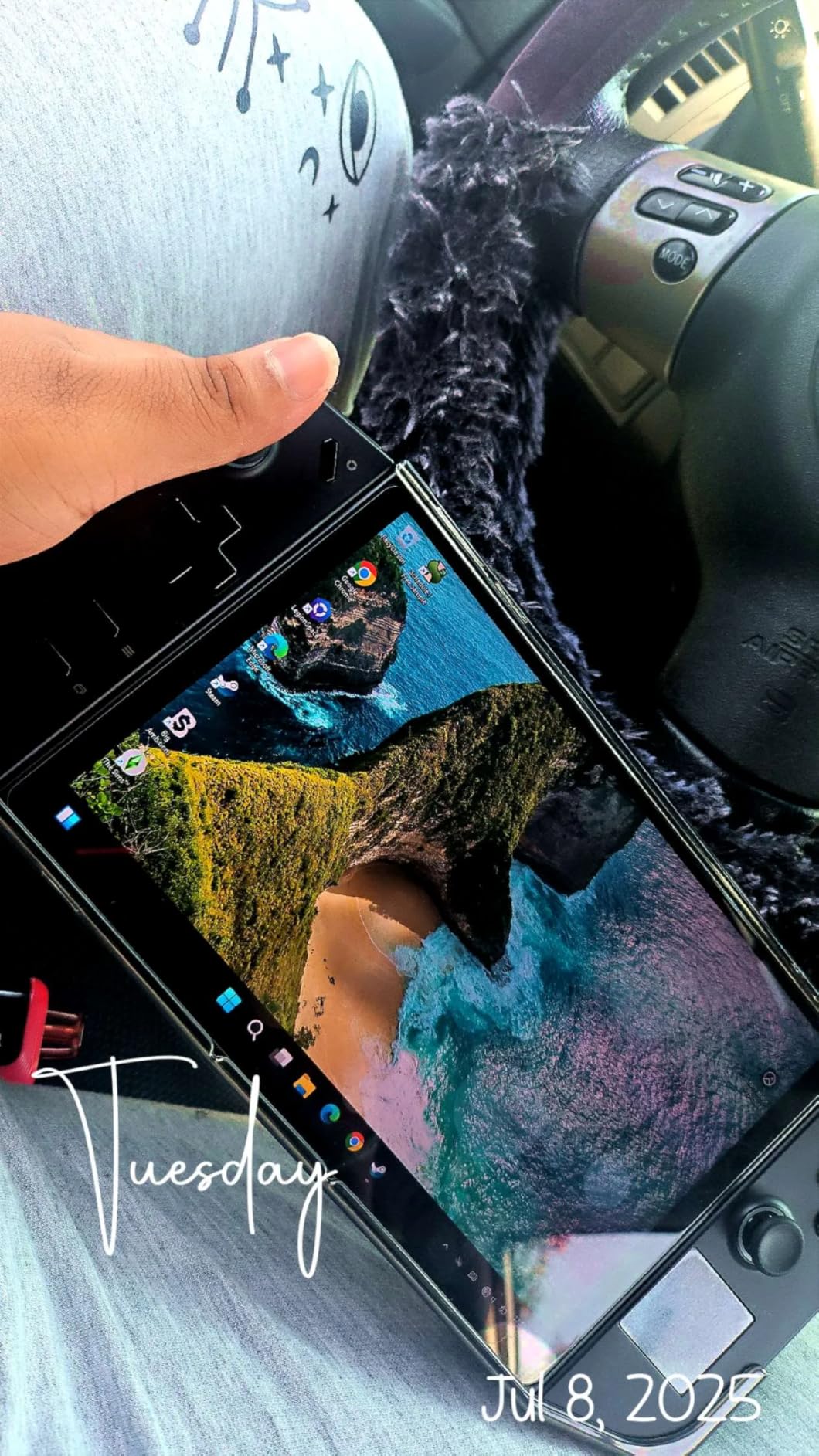
AMD’s Ryzen Z1 Extreme remains a strong AAA gaming APU. With a reasonable 1080p profile, FSR, and medium settings, games such as Cyberpunk 2077, Baldur’s Gate 3, and Red Dead Redemption 2 can run smoothly, but no handheld should be expected to match a modern gaming laptop at native resolution.
The model includes 16GB of LPDDR5X memory, a 512GB NVMe SSD, a microSD reader, Wi-Fi 6E, and two USB4 40Gbps ports. The PCIe 4.0 M.2 slot provides a more capable internal upgrade path than relying on microSD alone, which matters if your library contains several 100GB releases.
Display and Visual Experience
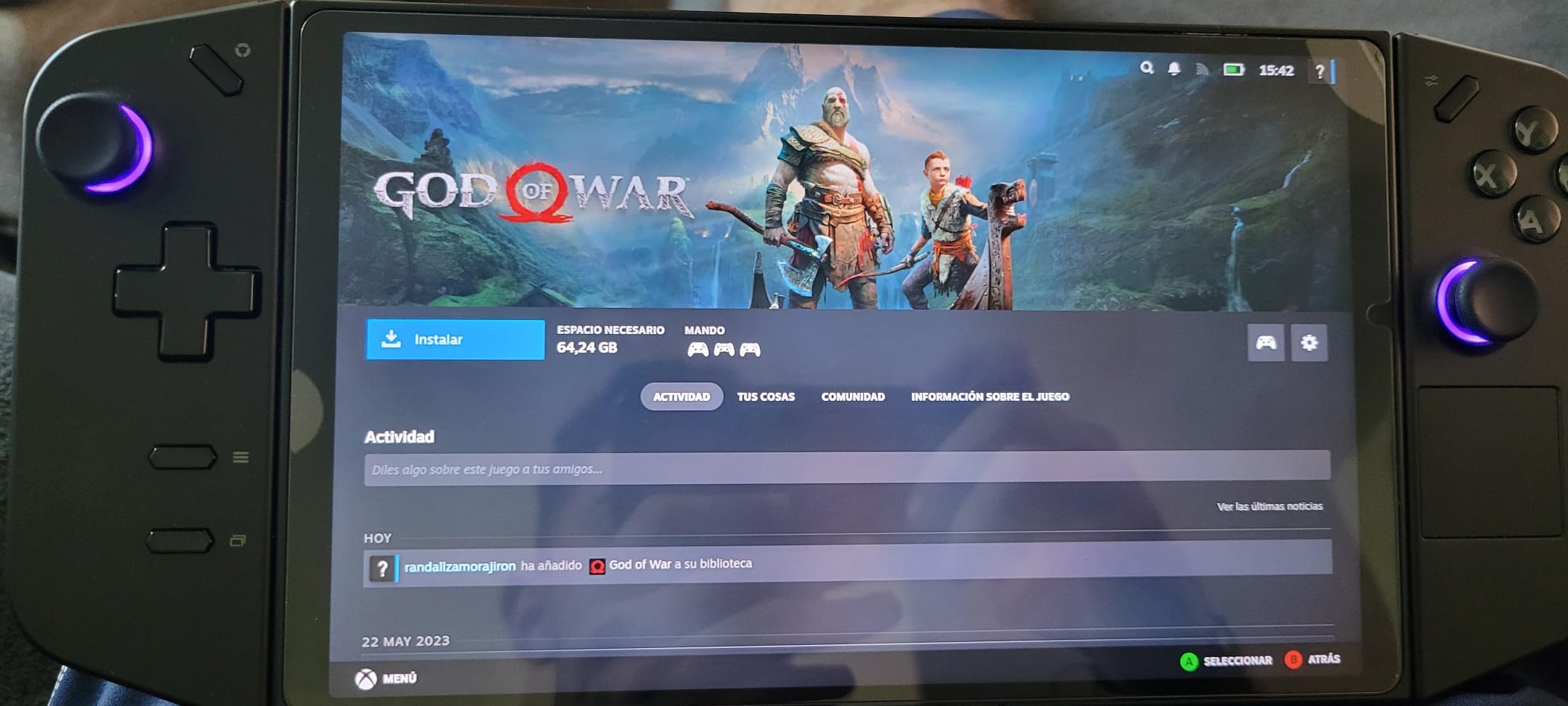
The 8.8-inch IPS touchscreen is the largest display here and is protected by Corning Gorilla Glass 5. Its 144Hz refresh rate and FreeSync support improve motion clarity, while 500-nit brightness keeps games visible in brighter rooms.
The 97% DCI-P3 rating also makes this handheld useful for media and light creative work. A 16:10 panel gives vertical games more room, and the touchscreen remains useful when navigating Windows outside handheld mode.
Comfort and Heat Management
At 1.9 pounds, the Legion Go is heavier than most 7- and 8-inch rivals. Longer sessions may require a break, a stand, or a lap desk, particularly for users with smaller hands.
The Legion Coldfront cooling system is paired with an adjustable performance utility. Quiet mode helps with browsing and indie games, while higher modes are better reserved for plugged-in AAA sessions when fan noise is less noticeable.
2. Lenovo Legion Go S – Best Budget Windows Handheld
Lenovo Legion Go S – 2025 – Mobile Gaming Console – AMD Radeon graphics – 8″ PureSight IPS Display – 120Hz – AMD Ryzen™ Z2 Go – 16GB Memory – 512GB Storage – Glacier White – Free PC Game Pass
AMD Ryzen Z2 Go
8 inch 120Hz IPS
16GB RAM, 512GB SSD
Pros
- 8 inch 120Hz display with 500 nits
- 16GB memory and 512GB storage
- Includes 3 months PC Game Pass and EA Play
- Can install SteamOS for a better experience
- 55.5Whr battery
Cons
- Z2 Go trails Z1 Extreme in demanding titles
- Windows can feel cluttered on a handheld
- Battery runtime is modest under AAA load
- Some users report restart issues
The Lenovo Legion Go S is the practical value choice for buyers who want a modern 8-inch handheld without paying for a larger premium model. It combines a Ryzen Z2 Go processor, 16GB of memory, 512GB of storage, and a 120Hz IPS panel in a 1.6-pound design.
Its AAA performance is lower than that of a Z1 Extreme device, so lower resolution and FSR are important. That trade works for Cyberpunk 2077 and Red Dead Redemption 2 when you prioritize a stable 30 FPS over maximum detail, and games such as Baldur’s Gate 3 are well suited to the 8-inch display.
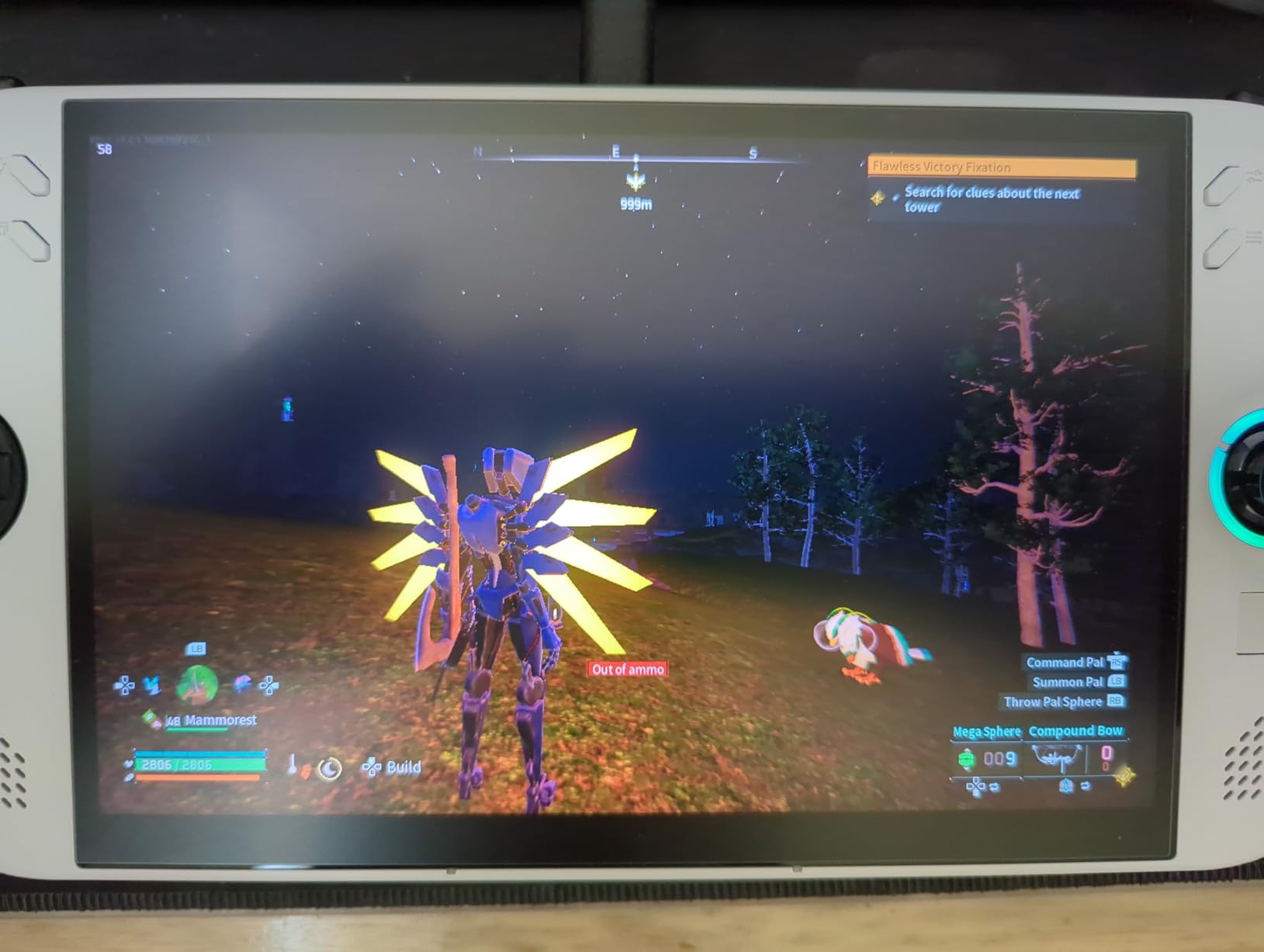
The Legion Go S is one of the most appealing options for SteamOS because Lenovo officially supports installation. SteamOS can provide a cleaner interface and better efficiency for compatible games, while Windows remains useful for Game Pass and other PC launchers.
The 55.5Whr battery is rated for extended sessions, but real AAA runtime remains closer to a few hours than a full day. Lenovo’s Coldfront cooling, front-facing speakers, HDMI connectivity, and 500-nit display round out a thoughtful package for couch and travel use.
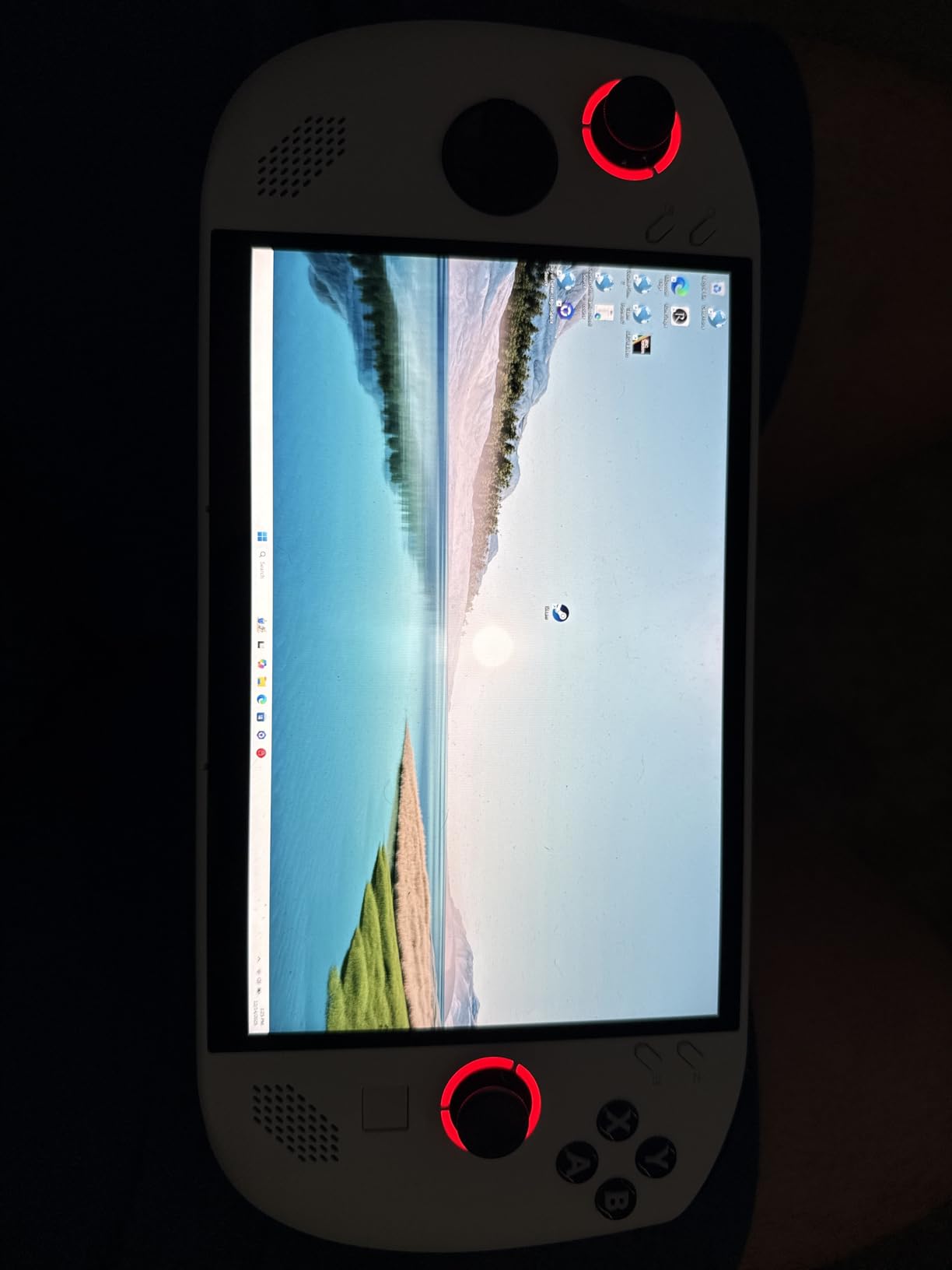
SteamOS Option for Better Battery Life
Installing SteamOS can reduce background overhead and provide suspend, resume, and controller-first navigation. It is the better interface for a library made mostly of Steam games.
Use Windows instead if Game Pass, Battle.net, anti-cheat-sensitive games, or a broad mix of launchers is central to your setup. Dual-booting is the most flexible route, although it requires extra storage and setup time.
Display and Build Quality
The 8-inch PureSight IPS display has 1920×1200 resolution, a 120Hz refresh rate, 500 nits of brightness, 100% sRGB coverage, and 10-point touch support. It offers an excellent balance of clarity, brightness, and smoothness for the category.
Legion TrueStrike controllers use an anti-slip texture and an ergonomic shape. At 1.6 pounds, the Go S is easier to carry for long periods than the original Legion Go.
3. MSI Claw A8 – Best High-Performance AAA Gaming
msi Claw A8 PC Gaming Handheld: AMD Ryzen Z2 Extreme, 8″ FHD+ 120Hz Display, 24GB LPDDR5x, 1TB NVMe SSD, SD Card Reader, Thunderbolt 4, Win 11 Home: White BZ2EM-070US
AMD Ryzen Z2 Extreme
8 inch FHD Plus 120Hz
24GB LPDDR5X, 1TB SSD
Pros
- Ryzen Z2 Extreme handles demanding AAA titles
- 24GB LPDDR5X for multitasking
- 1TB NVMe SSD with fast loading
- Thunderbolt 4 and storage expansion
- Thoughtful ergonomic design
Cons
- High purchase cost
- Plastic finish can feel less premium
- Charging setup deserves care
- AAA games drain the battery quickly
- Windows requires ongoing management
The MSI Claw A8 is the performance leader in this roundup because it pairs the AMD Ryzen Z2 Extreme with 24GB of LPDDR5X memory. The newer APU is aimed at higher AAA frame rates, especially when combined with FSR and a carefully selected 1080p profile.
That power does not remove the need for sensible settings. Red Dead Redemption 2 and Cyberpunk 2077 remain demanding, but the Claw A8 has more headroom than a Z1 Extreme system when both the CPU and integrated GPU are under load.
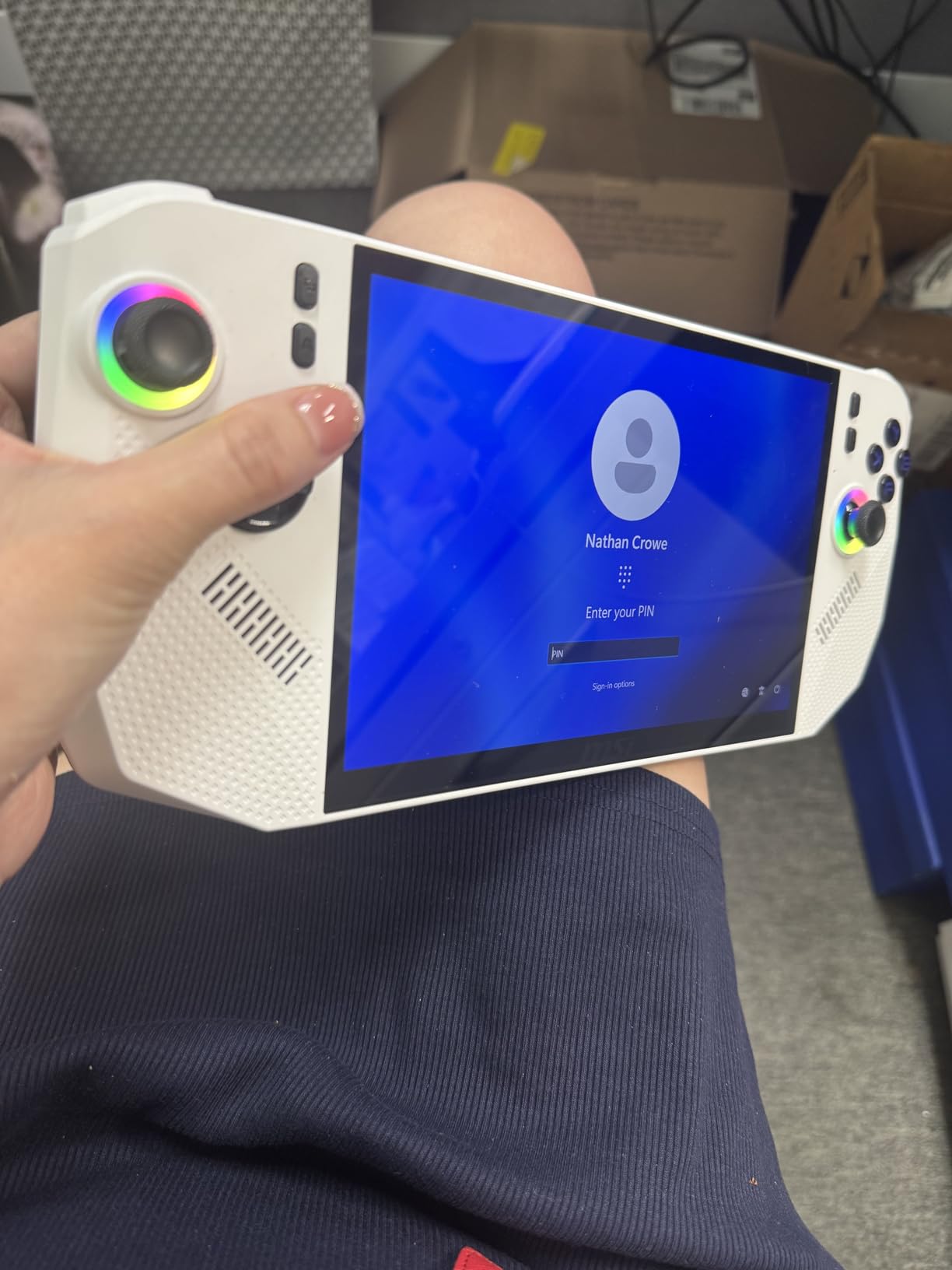
The 24GB memory configuration is useful for streaming, recording, web browsing, and game launchers running together. The 1TB NVMe SSD also leaves more room for large PC libraries, while microSD and the SD card reader offer additional expansion.
Thunderbolt 4 supports docks, external displays, storage, and compatible external graphics enclosures. That gives the Claw A8 a useful desktop path when a single handheld screen is not enough for work or media.
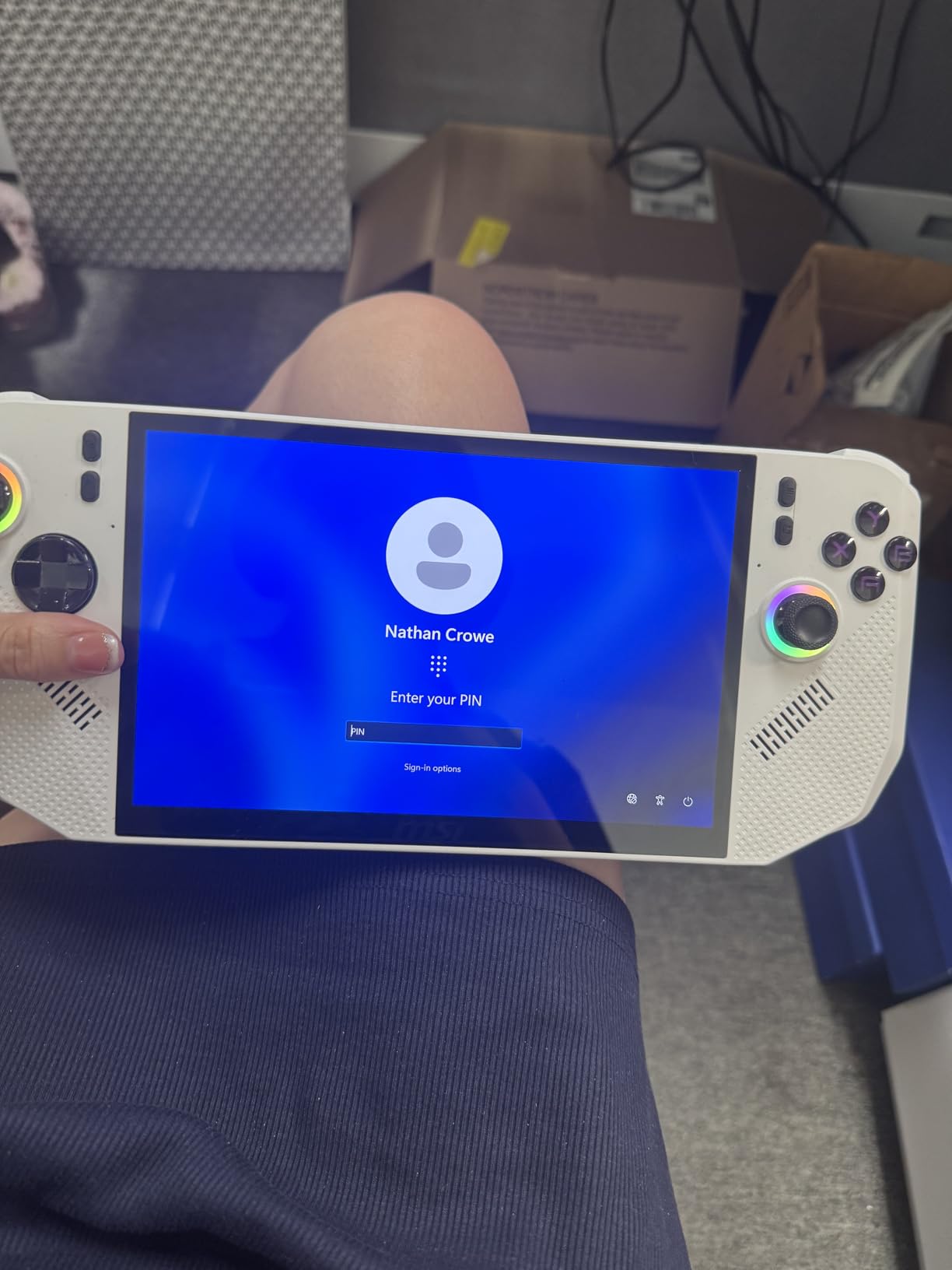
Premium Ergonomics and Cooling
MSI uses an anthropometric design intended to improve grip and weight balance. The rounded body is more comfortable than a flat, angular slab, and the 1.7-pound weight is manageable for a large-screen handheld.
The thermal system is designed for sustained load, but maximum fan speed will be audible during AAA gaming. MSI Center M provides performance, fan, and display controls, though the software experience may need more polish than Lenovo’s Legion Space or Asus Armoury Crate.
Battery Life Trade-Offs
Expect the shortest runtime from the Ryzen Z2 Extreme under demanding play. The large 8-inch 120Hz display and higher performance mode both consume power quickly, so a charger or power bank should be part of your travel kit.
Lowering refresh rate, reducing brightness, using a frame cap, and selecting a balanced power profile can extend unplugged sessions. These changes can make a significant difference during indie, strategy, or emulation use.
4. MSI Claw 8 AI+ – Best Intel-Powered Performance
msi Claw PC Gaming Handheld: Intel Ultra 7-258V, 8″ FHD 120Hz Display, 32GB LPDDR5, 1TB NVMe SSD, MicroSD Card Reader, Thunderbolt 4, Win 11 Home: Black 8 AI+ A2VM-001US
Intel Core Ultra 7-258V
8 inch FHD 120Hz
32GB LPDDR5, 1TB SSD
Pros
- Intel Core Ultra 7-258V delivers strong AAA performance
- 32GB memory for multitasking
- Thunderbolt 4 connectivity
- Fast 1TB NVMe SSD
- Strong battery efficiency for a Windows handheld
Cons
- High purchase cost
- Still limited to roughly 1.5 to 2 hours under heavy load
- Windows updates can interrupt gaming
- Printed setup guidance is limited
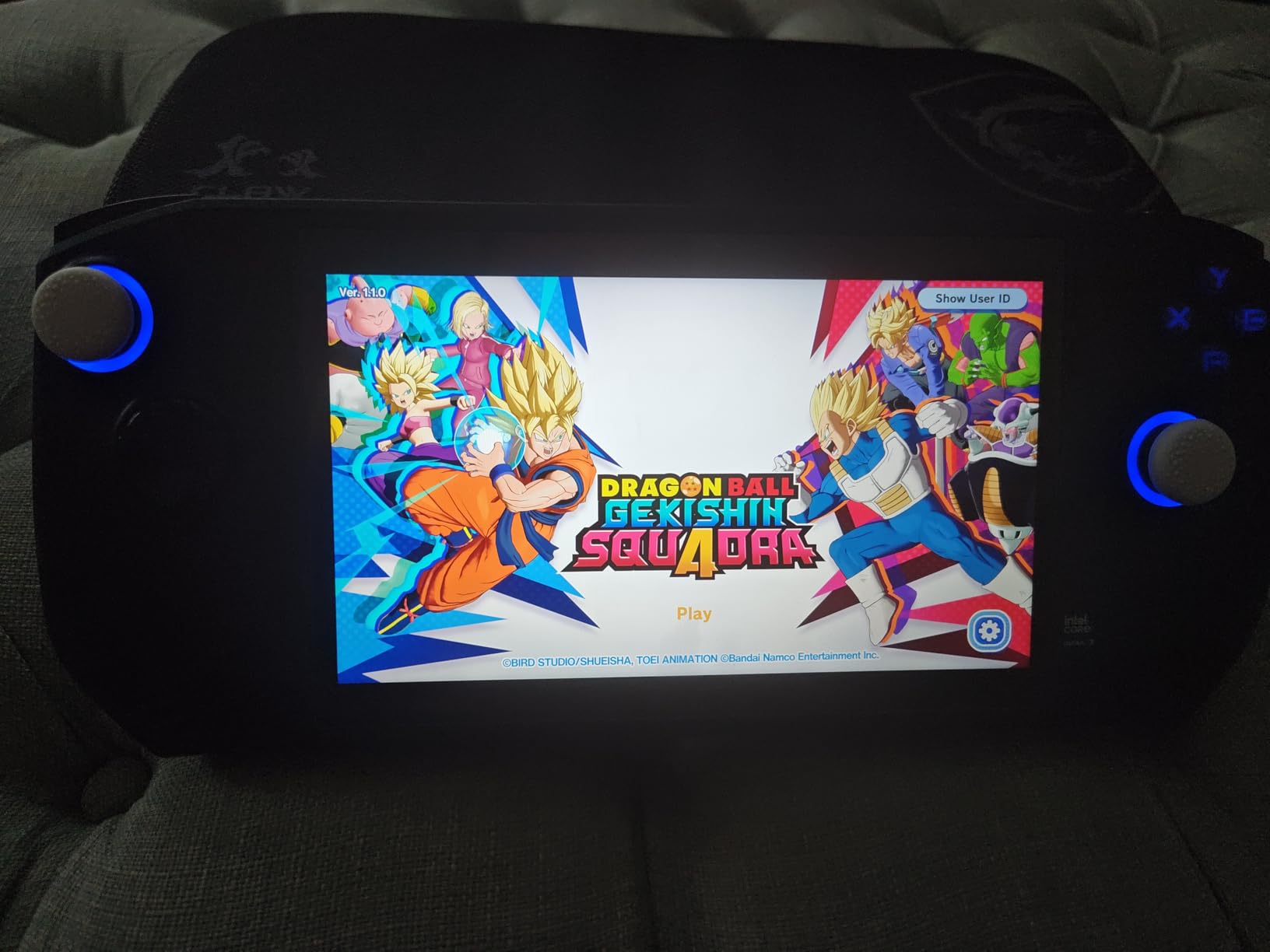
The MSI Claw 8 AI+ is a strong alternative for buyers who prefer Intel’s Core Ultra platform. The Core Ultra 7-258V and Intel Arc G3 graphics provide modern AAA capability, while the 32GB of LPDDR5 memory is unusually generous in a handheld.
The 8-inch 1920×1200 display runs at 120Hz and uses an IPS panel. Intel’s platform can use XeSS and compatible AI-assisted features to improve frame rates, but the usefulness of frame generation depends on the game and your target refresh rate.
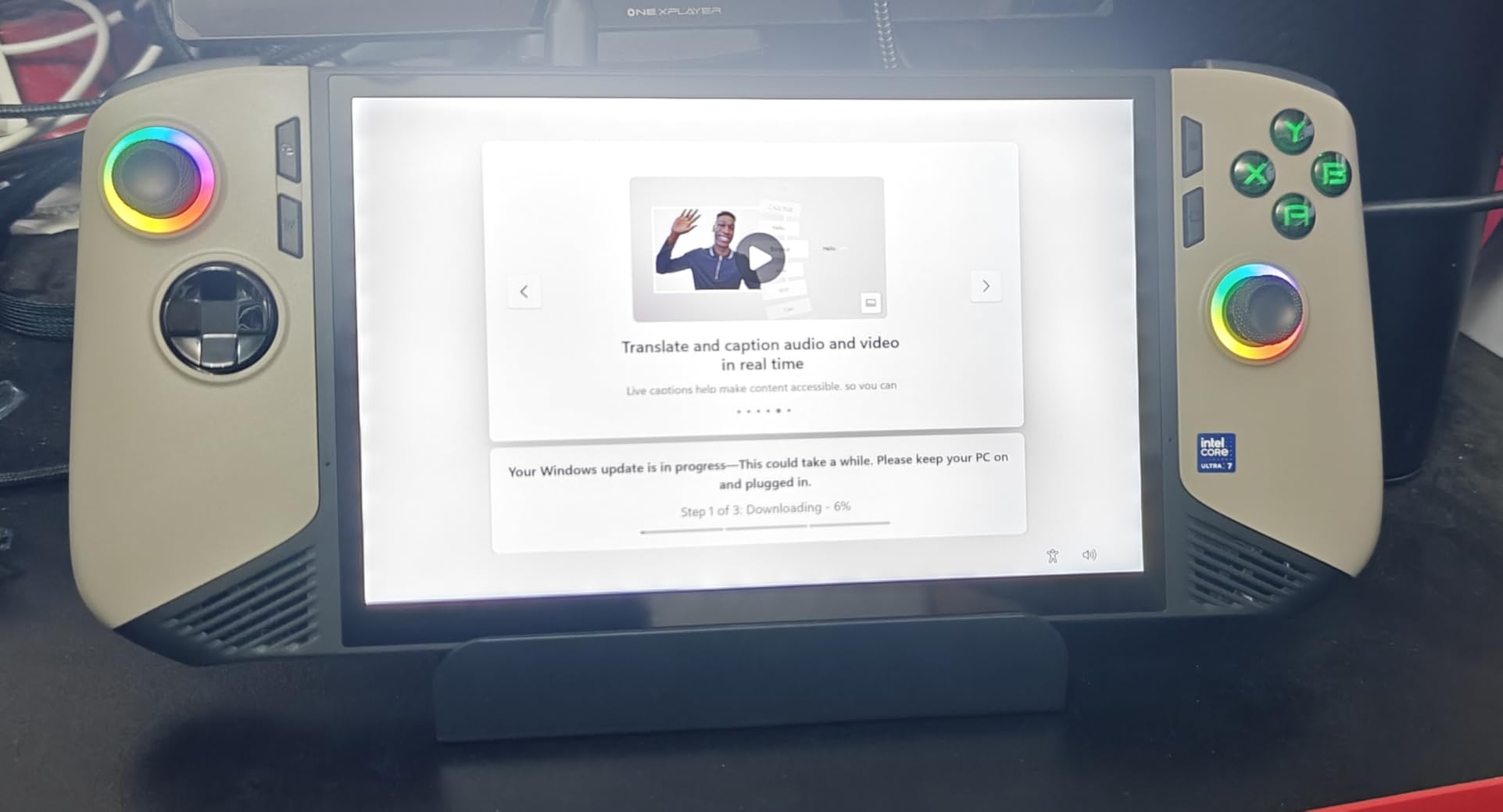
The 32GB memory configuration is helpful when streaming, recording, or keeping several desktop applications open. A 1TB NVMe SSD provides more local storage than most mid-range handhelds, while microSD and Thunderbolt 4 give you more ways to expand and dock.
Customer feedback praises the Claw 8 AI+ for performance, quiet fan behavior, sound quality, and comfortable handling. Battery life is still the main practical limit for heavy AAA games, and the lack of detailed printed guidance may leave new owners relying on MSI Center M.
AI Features and Software Polish
The AI+ label refers to the Intel platform’s AI capabilities and efficiency features. The dedicated NPU can handle compatible background workloads while the CPU and graphics system focus on the game, but compatibility varies by application.
MSI Center M is the control point for power modes, fan curves, updates, and game profiles. It is functional, although community feedback has historically rated MSI’s software behind Asus and Lenovo.
Build Quality and Connectivity
At 1.8 pounds, the Claw 8 AI+ is balanced for an 8-inch device. The 120Hz display is bright enough for indoor gaming, and front audio makes the device practical without external speakers.
Thunderbolt 4 is especially valuable for a desk setup. It can support an external display, dock, fast storage, or an eGPU when the software and enclosure are compatible, extending the device beyond portable play.
5. Valve Steam Deck OLED 1TB – Best SteamOS Experience
Valve Steam Deck OLED 1TB Handheld Gaming Console
AMD Zen 2 APU
7.4 inch 1280x800 OLED HDR
1TB NVMe SSD
Pros
- Stunning OLED display with perfect contrast
- 30 to 50 percent better battery than original
- Whisper quiet and cool operation
- Lightweight comfortable design
- Easy Steam account integration out of box
Cons
- Limited to SteamOS for the easiest experience
- 1280x800 resolution is modest for AAA games
- Third-party availability can carry a premium
- Some games require manual configuration
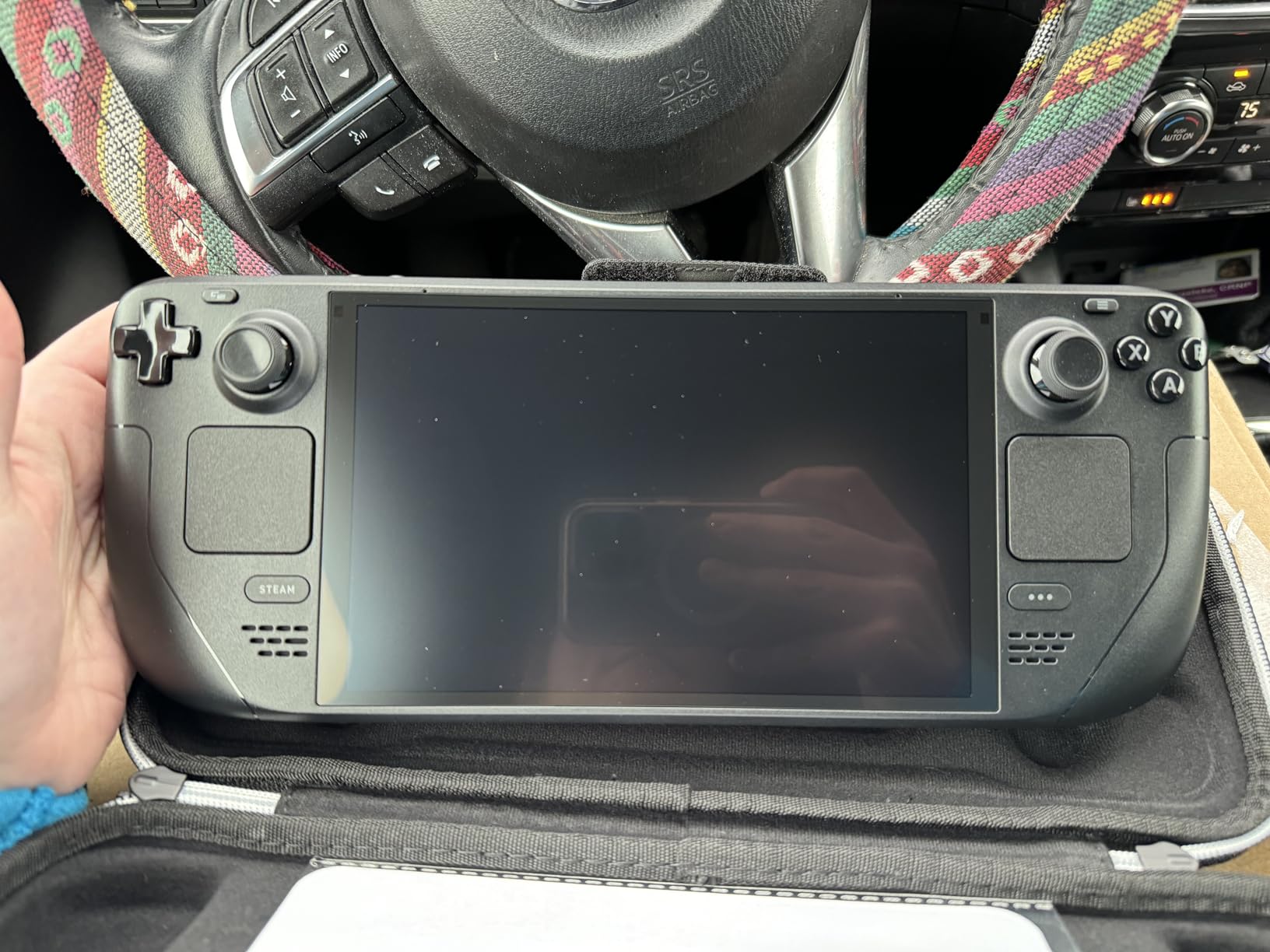
The Valve Steam Deck OLED remains the best choice for a console-like SteamOS experience. Its 7.4-inch HDR OLED display has 1280×800 resolution, up to a 90Hz refresh rate, premium etched glass, and the deep contrast that OLED buyers value.
The custom Zen 2 platform is no longer the performance leader, but SteamOS optimization, FSR, and a mature game-compatibility system make it a consistent option. Older and less demanding AAA games run well, while recent releases often need 800p or lower settings and a 30 FPS target.
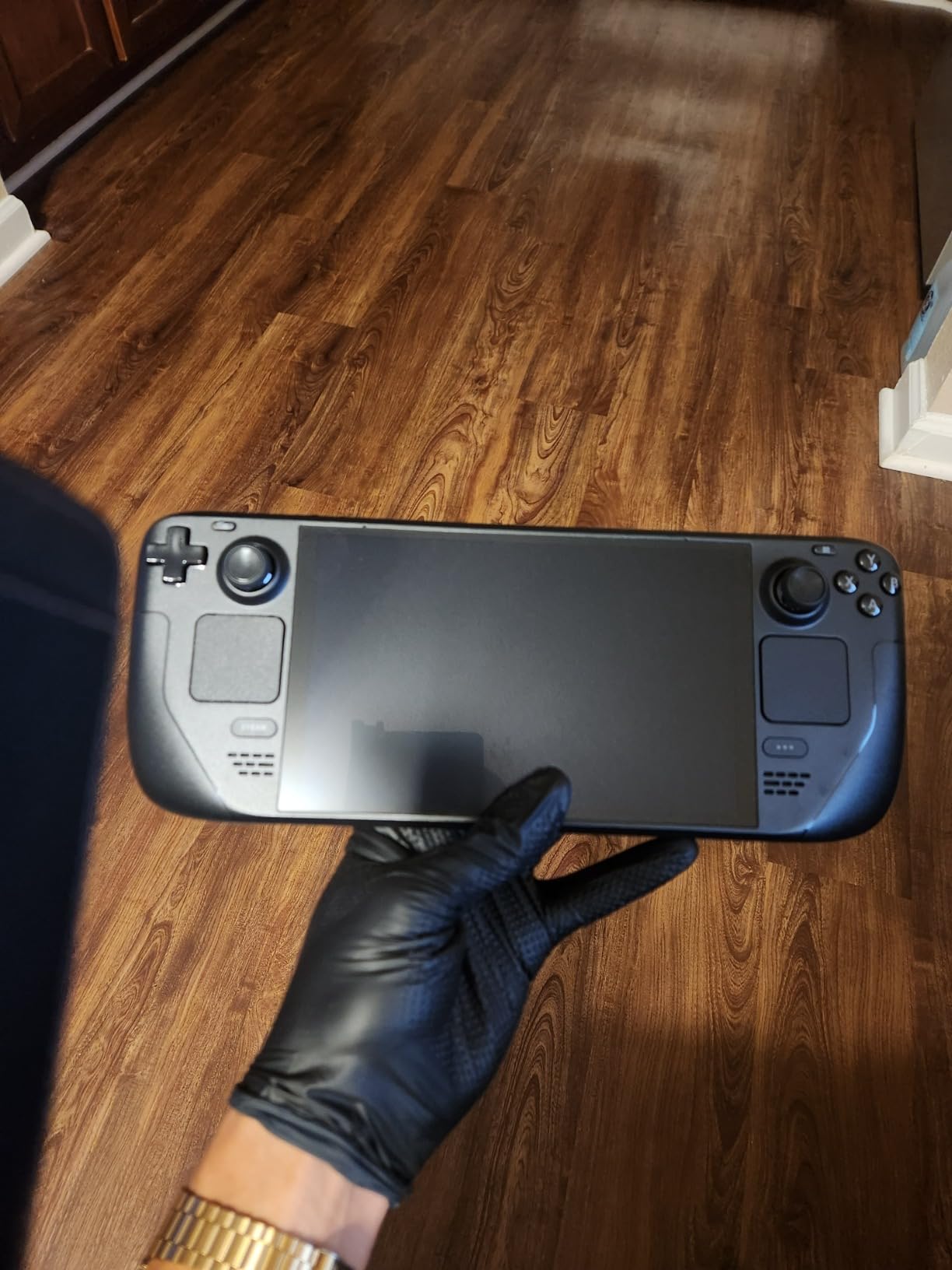
Battery life is the key advantage over most Windows handhelds. Valve’s 50Whr battery is rated for 3-12 hours depending on the game, and community testing consistently finds that low-demand indie titles last much longer than demanding AAA releases.
The 1TB NVMe SSD, Wi-Fi 6E, microSD expansion, quiet cooling, and comfortable controls make the system easy to live with. A carrying case with a removable liner is included in the analyzed configuration.
SteamOS Ecosystem Advantages
SteamOS boots into a controller-friendly interface with fast suspend, game-artwork navigation, driver management, and compatibility information. It is the least demanding mainstream handheld setup for a Steam-focused buyer.
Steam can hold non-Steam shortcuts, and tools such as Heroic Launcher can add supported games from other stores. The main limitation is anti-cheat, because titles with unsupported kernel-level anti-cheat may not run on Linux.
Who Should Buy the Steam Deck OLED
The Steam Deck OLED is ideal for Steam libraries, travel, couch gaming, and buyers who value battery life over maximum frame rate. Its display and software also make it a strong choice for indie, strategy, role-playing, and older AAA games.
Choose a newer AMD or Intel handheld if your library contains recent CPU-heavy releases or Windows launchers. For a polished Steam-first experience, the OLED model remains the benchmark.
6. ASUS ROG Xbox Ally – Best Xbox Integration
ASUS ROG Xbox Ally Gaming Handheld 7″ 120Hz Touchscreen IPS Display (AMD Ryzen Z2 A, 16GB LPDDR5X, 512GB SSD, AMD RDNA 2 Graphics, Fingerprint, WiFi 6E, Bluetooth 5.4, Win 11 Home) with DKZ Hub
AMD Ryzen Z2 A
7 inch 1080p 120Hz IPS
16GB LPDDR5X, 512GB SSD
Pros
- Xbox Full Screen Experience with Game Bar
- 120Hz FreeSync Premium display
- Fast charging 0 to 50 percent in 30 minutes
- Comfortable Xbox-inspired controller grips
- Access to the full Windows game library
Cons
- Battery life is 1 to 2 hours under heavy load
- Windows may need performance tuning
- Some quality-control reports
- Z2 A trails higher Z1 and Z2 Extreme chips
The ASUS ROG Xbox Ally is built around the Xbox Full Screen Experience, giving Game Pass and other Windows games a controller-first interface. It is the most natural fit for an Xbox Game Pass library in this roundup.
The Ryzen Z2 A is capable but sits below the Z1 Extreme and Z2 Extreme in performance. Expect 1080p or lower settings, FSR, and a 30 FPS target in many current AAA games, while older releases and lighter titles can run at higher settings.
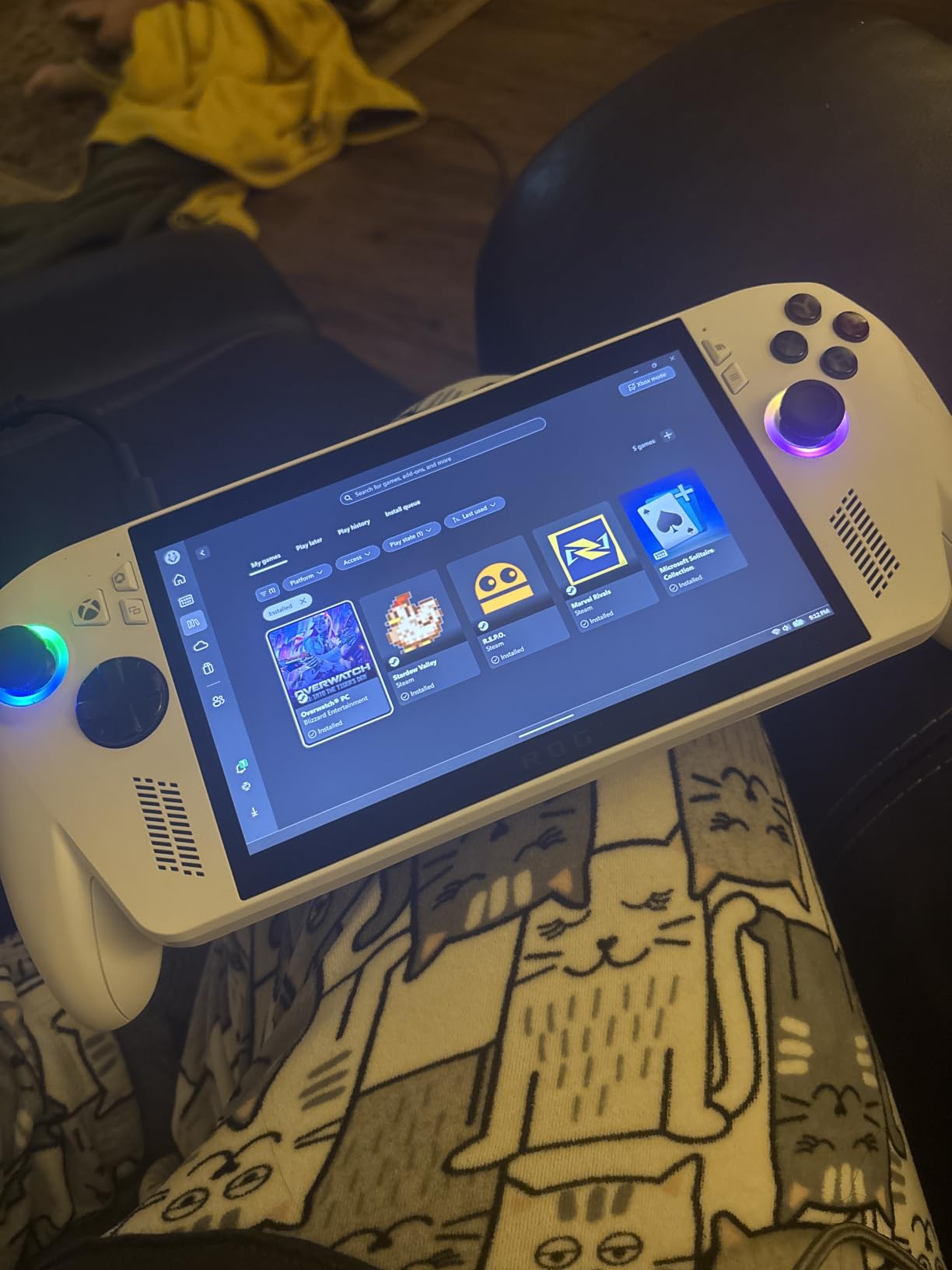
The 7-inch 1080p IPS touchscreen runs at 120Hz with FreeSync Premium and 500 nits of brightness. Its 16:9 format is familiar for console ports and video, and the Gorilla Glass surface gives the display extra protection.
The 60Whr battery can charge from 0% to 50% in about 30 minutes. That fast top-up is useful for travel, although it does not turn a demanding AAA session into an all-day battery experience.
Xbox Controller-Inspired Design
The contoured grips are inspired by Xbox Wireless Controllers and feel familiar from the first session. ASUS distributes the 1.47-pound design well, helping reduce the hand fatigue associated with flat slabs.
The display is bright and smooth, with FreeSync reducing stutter when frame rates vary. Touch is useful in Windows, but the main attraction is how the system puts games, Game Bar, and related settings within easy reach.
Game Pass Integration Deep Dive
The Xbox interface can launch supported games, show achievements, and keep an Xbox-oriented game library in one place. Game Pass Ultimate also adds access to cloud streaming when a stable internet connection is available.
This is still a Windows PC rather than a closed console, so storage management, updates, and third-party launchers remain part of the experience. Keep a microSD card ready for a large Game Pass catalog.
7. Lenovo Legion Go 2 – Premium OLED Flagship
Lenovo Legion Go 2 – Mobile Gaming Console – AMD Ryzen Z2 CPU – 8.8″ WQXGA PureSight OLED Display – 144Hz – Integrated AMD Radeon™ Graphics – 16GB Memory – 1TB Storage – Fingerprint Reader
AMD Ryzen Z2
8.8 inch WQXGA OLED 144Hz
16GB RAM, 1TB SSD
Pros
- Stunning 8.8 inch OLED with perfect blacks
- 144Hz refresh rate
- 74Whr battery
- Detachable controller for FPS mode
- Wi-Fi 6E and 1TB PCIe SSD
Cons
- High purchase cost
- Controller connectivity reports
- Performance varies in some AAA titles
- Heavy at 2 pounds
- Limited stock
The Lenovo Legion Go 2 is the premium choice for buyers who want an 8.8-inch OLED display and the Legion Go’s detachable-controller design. The 144Hz WQXGA panel, 1TB SSD, 74Whr battery, and 16GB of memory make the specification sheet unusually strong.
Its Ryzen Z2 performance is competitive with earlier Z1 Extreme systems but does not consistently match the newer Z2 Extreme used in the MSI Claw A8. Recent games still benefit from 1080p, lower settings, FSR, and a capped refresh rate.
Detachable Controllers and FPS Mode
The right controller can work separately as a mouse, which is useful in first-person games. A built-in kickstand also makes the device practical on a desk or tray, while the controllers stay available for controller-first titles.
The 2-pound weight is the main comfort cost. Shorter sessions and tabletop use play to the design better than holding the device for several hours at a time.
Battery Life and Connectivity
The 74Whr battery is the largest in this group, which helps offset the power draw of the 144Hz OLED display. Runtime still varies widely, with demanding AAA games consuming the battery much faster than indie games or emulation.
Wi-Fi 6E, Bluetooth 5.3, USB-C, a 1TB PCIe SSD, and Nahimic spatial audio provide a complete package. The fingerprint reader is a useful addition when switching between personal profiles.
Real-World Concerns
Customer feedback is mixed, with controller connectivity problems and inconsistent performance reported among a small review base. The 13 analyzed reviews are not enough to treat those reports as universal, but they are worth considering before choosing this model.
The detachable design and OLED display are compelling, yet users who value reliability and predictable performance may prefer the simpler Steam Deck OLED or the higher-performance MSI Claw A8.
8. ASUS ROG Ally Z1 – Most Affordable Windows Handheld
ASUS – ROG Ally Gaming Handheld Console – Z1 Processor, 512GB, 1080p 120Hz Display,White
AMD Z1 APU
7 inch 1080p 120Hz IPS
16GB RAM, 512GB SSD
Pros
- Low entry cost for a Windows handheld
- Plays Windows-compatible games
- 7 inch 1080p 120Hz display
- Includes 90-day Xbox Game Pass Ultimate
- Expandable SSD
Cons
- Battery life is limited under heavy load
- Windows requires maintenance and updates
- Some quality-control reports
- Heavy at 2.9 pounds
The ASUS ROG Ally Z1 is the lowest-cost Windows handheld in this roundup. Its AMD Z1 APU and 7-inch 1080p display can run many AAA games at 720p or 900p with medium settings, FSR, and a 30 FPS target.
The system supports Windows games from Steam, Xbox, Epic Games, GOG, and other compatible launchers. That broad access is the main reason to choose it over a SteamOS-first handheld when your library spans several stores.
Display and Build
The 7-inch 1080p IPS touchscreen has a 120Hz refresh rate and AMD FreeSync Premium. The resolution is a good match for the Z1 APU, and the smaller body is easier to pack than an 8.8-inch model.
The listed 2.9-pound weight is high for a modern handheld, so check the grip and button spacing if you have smaller hands. A case and stand can improve longer sessions.
Value Proposition
The 512GB internal SSD can be upgraded, and microSD provides another storage option. A 90-day Xbox Game Pass Ultimate inclusion adds immediate access to a large catalog, but confirm the offer terms at purchase.
Windows 11 requires driver and update management, and a SteamOS installation can provide a more console-like interface. Test your most important games after any OS change because anti-cheat and launcher compatibility can vary.
Who Should Buy the ROG Ally Z1
The ROG Ally Z1 is best for buyers who want Windows compatibility and a lower starting cost. It is a sensible way to enter portable PC gaming if you already own a large library and can accept the battery and weight trade-offs.
Choose the Steam Deck OLED for SteamOS polish and battery life, the Legion Go S for a larger 8-inch display, or the ROG Xbox Ally for a more modern controller-first Windows experience.
Buying Guide: How to Choose the Best Handheld Gaming PC for AAA Games
The best handheld gaming PC is not automatically the one with the fastest chip. Resolution, cooling, battery capacity, controls, software, and the size of your game library all affect whether a powerful specification becomes a good daily device.
Performance and Processor Choices
AMD’s Ryzen Z2 Extreme is the strongest performance option in this group, while the Z1 Extreme remains a capable mainstream choice. The Z2 Go favors efficiency and value, and the original Z1 is best for buyers willing to accept lower settings.
For AAA gaming, treat 16GB of memory as the practical baseline and 24GB or 32GB as extra headroom for multitasking. Storage should start at 512GB if you plan to keep several modern releases installed.
Display Quality and Size
OLED gives you perfect blacks, high contrast, and rich color, which makes dark games and cinematic scenes look especially good. The Steam Deck OLED and Legion Go 2 are the two OLED options in this roundup.
IPS panels such as the Legion Go and Claw A8 displays offer high refresh rates, strong color coverage, and more predictable outdoor visibility. A 7-inch screen is easier to pack, while an 8.8-inch panel gives games and desktop apps more room.
Battery Life Realities
Expect about 1-2 hours from most Windows handhelds during demanding AAA gaming. The Steam Deck OLED can run much longer in lighter titles, and the Legion Go 2’s 74Whr battery is the largest here.
Lower brightness, cap the frame rate, use balanced power mode, and turn off background applications when you are away from a charger. A USB-C power bank can also extend a session if the device supports adequate power delivery.
SteamOS vs Windows
SteamOS is better for Steam libraries, controller-first navigation, suspend and resume, and efficient background management. It can be less suitable for kernel-level anti-cheat, some launchers, and games that require Windows-specific drivers.
Windows provides the broadest access to Game Pass, Battle.net, Epic Games, and other PC stores. It also requires more updates, storage planning, and controller tuning, but it is the safer choice for a mixed or Windows-exclusive library.
Comfort and Ergonomics
Weight and grip shape matter once a game runs for more than an hour. Devices under 1.7 pounds are easier to carry, while a 2-pound screen can feel tiring when held continuously.
Look for textured grips, balanced weight, accessible shoulder buttons, and a kickstand if you plan to play strategy or role-playing games. The detachable Legion controllers are useful for FPS aiming, but their extra weight is a trade-off.
Frequently Asked Questions
What handheld can play AAA games?
Modern handheld gaming PCs from ASUS, Lenovo, MSI, and Valve can run AAA games at playable settings. The MSI Claw A8 with AMD Ryzen Z2 Extreme, MSI Claw 8 AI+ with Intel Core Ultra 7-258V, and Lenovo Legion Go 2 with an 8.8-inch OLED display are among the strongest options in 2026. Budget choices such as the ASUS ROG Ally Z1 handle many titles at lower resolution and settings.
Which is the most powerful handheld gaming PC?
The MSI Claw A8 with AMD Ryzen Z2 Extreme is the strongest performance option in this roundup, with 24GB of LPDDR5X memory and a 120Hz display. The MSI Claw 8 AI+ is a strong Intel alternative with 32GB of memory. The Legion Go 2 prioritizes a premium OLED screen and detachable controller over the highest sustained frame rate.
How long does battery last on handheld gaming PCs?
Most Windows handhelds last about 1-2 hours during demanding AAA gaming, while lighter titles can extend runtime to 3-5 hours. The Steam Deck OLED is rated for 3-12 hours depending on the game and settings. The Legion Go 2 has the largest battery at 74Whr, but OLED brightness and high refresh rates still consume power quickly.
SteamOS vs Windows handheld – which is better?
SteamOS is better for Steam libraries, a controller-first interface, suspend and resume, and lower background overhead. Windows is better for Game Pass, Battle.net, Epic Games, and broader PC compatibility, but requires more updates and tuning. The Lenovo Legion Go S officially supports SteamOS, while many other Windows handhelds can run SteamOS or Bazzite when compatibility is confirmed.
Can handheld PCs run modern AAA games?
Yes, handheld PCs can run many modern AAA games, but usually at 720p or 1080p with medium or low settings. FSR, XeSS, frame caps, and a 30 FPS target help control heat and battery use. Demanding releases such as Cyberpunk 2077 and Red Dead Redemption 2 need more conservative settings than older or less demanding games.
Final Verdict: Which Handheld Gaming PC Should You Buy?
The best handheld gaming PCs for AAA games in 2026 each serve a different type of player. The Lenovo Legion Go is the best all-round choice when a large 144Hz display and detachable controller justify the extra size, while the MSI Claw A8 is the pick for buyers who want the strongest AAA performance.
The Lenovo Legion Go S is the value recommendation for an 8-inch 120Hz screen, official SteamOS support, and a comfortable 1.6-pound body. The Steam Deck OLED is the better choice for a mature SteamOS interface, quiet operation, and longer battery life in lighter games.
For the lowest-cost Windows entry, the ASUS ROG Ally Z1 remains a capable 1080p handheld. The MSI Claw 8 AI+ is a compelling Intel option with 32GB of memory, the ROG Xbox Ally suits Game Pass users, and the Legion Go 2 is the premium OLED choice for buyers who accept its weight and mixed early feedback.
Before buying, check the requirements of the three games you play most and whether they use kernel-level anti-cheat. That single check will tell you whether SteamOS or Windows is the right foundation, after which the best choice comes down to screen size, battery life, and comfort.