
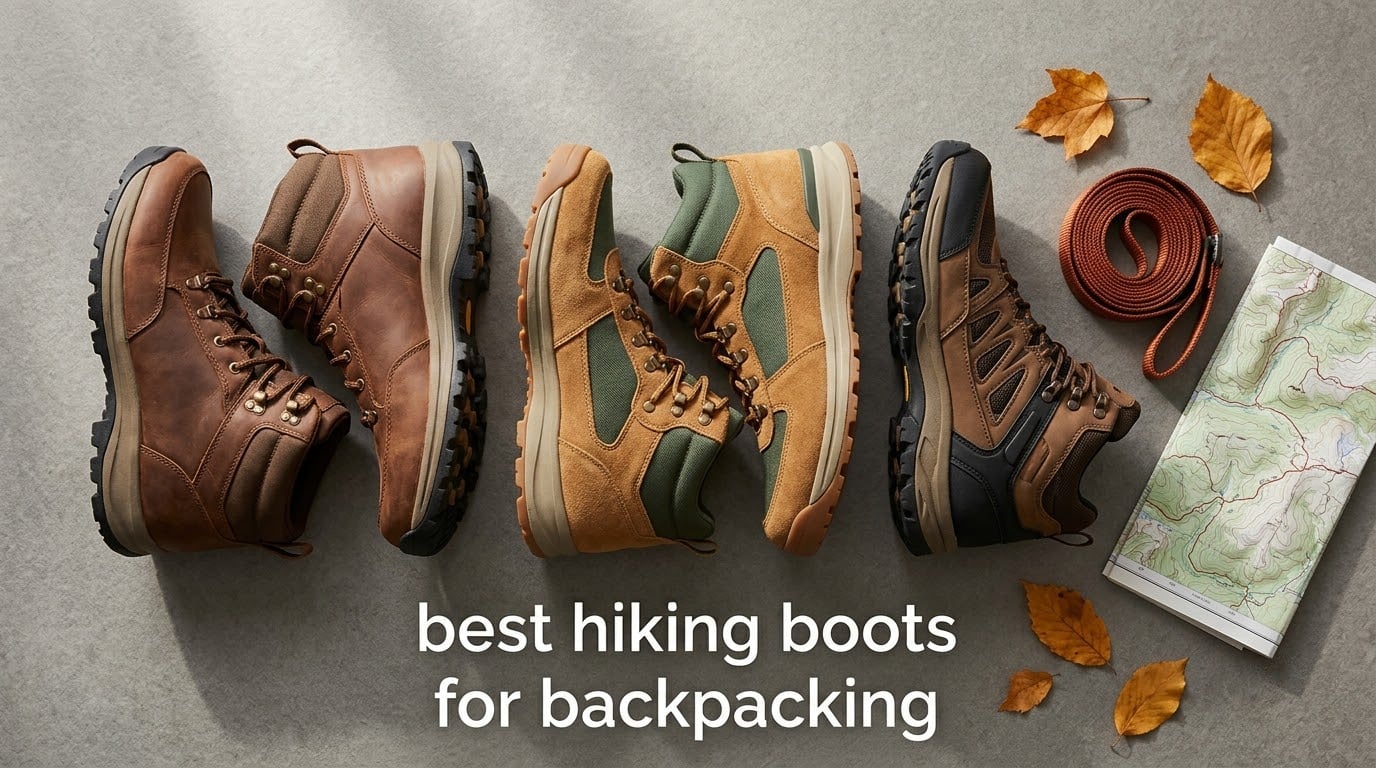
The best hiking boots for backpacking are the Merrell Men’s Moab 3 Mid for most people, the Salomon X Ultra Pioneer Mid Gore-Tex when you hike in rain and mud, and the Oboz Men’s Bridger Mid B-DRY when your pack runs heavy and the ground turns rough. We narrowed the field to three and went deep on each one, because a short list lets us tell you exactly who should buy which boot and who should skip it entirely.
That last part matters more than it sounds. Most roundups on this topic list eleven or thirteen boots and give each one a paragraph, which tells you almost nothing. Three boots, each with a real verdict, is more useful than thirteen with hedging. We looked at construction, shank and chassis design, outsole compound, weight, waterproofing, upper material, sizing behaviour and what buyers actually report after thousands of miles of wear.
One number frames every recommendation in this guide: 35 pounds of pack weight. Under that line on maintained trail, a lighter midweight boot is the right call. Above it, or on off-trail and rocky ground, you want a stiffer chassis and a taller collar. Our team has logged thousands of miles comparing these three against lighter footwear, and that single threshold explains most of the fit complaints we see in hiking communities.
If you are still narrowing the field by brand, our guides to the best hiking boots for men and the best hiking boots for women cover the wider market. This page stays narrow and focused on loaded, multi-day trips.
Table of Contents
Top 3 Picks for the Best Hiking Boots for Backpacking (October 2026)
Here is the short version before we go into detail. Each pick solves a different problem, and the wrong one for your trip will bother you within an hour of the trailhead.

Merrell Moab 3 Mid
- Pigskin leather and mesh upper
- Molded nylon arch shank
- Vibram TC5+ outsole
- Water-resistant not waterproof

Salomon X Ultra Pioneer Mid GTX
- Waterproof GORE-TEX membrane
- Advanced Chassis foam
- SensiFit foot hold
- Dual rubber and patterned heel

Oboz Bridger Mid B-DRY
- B-DRY waterproof membrane
- TPU chassis and nylon shank
- 19.0 oz per half pair
- Waterproof nubuck upper
Merrell Moab 3 Mid is the one to buy if your pack sits in the 20 to 35 pound range and you want something comfortable from the first mile. Reviewers rate it 4.6 out of 5 across more than 3200 reviews, the strongest combination of rating and review volume in this group. The catch is honest and important: this specific version is water-resistant, not waterproof.
Salomon X Ultra Pioneer Mid Gore-Tex is the wet-weather answer. The GORE-TEX membrane keeps rain out, and the dual rubber compound with a patterned heel area is built specifically for mud control. It rates 4.4 across more than 1500 reviews. Two rubber types in one outsole is a design decision you notice on a soggy descent.
Oboz Bridger Mid B-DRY is the heavy-pack, off-trail pick. At 19.0 oz per half pair it is the heaviest of the three, and that weight is the point: a TPU chassis and nylon shank carry a loaded pack without twisting under you. Owners report the same boot lasting five to ten years, and it rates 4.4 across more than 1200 reviews.
How the 3 Picks Compare Side by Side
| Product | Specifications | Action |
|---|---|---|
| Merrell Moab 3 Mid |
|
Check Latest Price |
| Salomon X Ultra Pioneer Mid GTX |
|
Check Latest Price |
| Oboz Bridger Mid B-DRY |
|
Check Latest Price |
How to read the table: the three picks separate on three axes, not thirty. The Merrell is the lightest and the only one that skips a membrane, the Salomon is the middle weight with a full waterproof liner, and the Oboz is the heaviest with the stiffest platform and the most aggressive tread. Everything else is detail.
Two things the table cannot show you are fit and break-in, and they matter more than any spec. Fit is entirely personal and cannot be inferred from a spec sheet. Break-in is the difference between a boot that works on day one and a boot that ends a trip early. Both are covered in detail below.
1. Merrell Men’s Moab 3 Mid – Best Overall Backpacking Boot
Merrell Men’s Moab 3 Mid Hiking Boot, Walnut, 11.5
Pigskin leather and mesh upper
Molded nylon arch shank
EVA midsole with Air Cushion heel
Pros
- Comfortable from first wear with no break-in
- Roomy true-to-size fit suits wide feet and high arches
- Nylon arch shank gives real stability on rock
- Quick to dry after puddles
- Durable over years of daily use
Cons
- Water-resistant rather than fully waterproof
- Stock insole offers only medium arch support
- Upper can feel loose on low arches
- Plain styling
This is the boot we recommend to most people, and the reason is simple: it removes the single most common reason backpacking trips go badly. Blisters and hot spots top the list of complaints across hiking and backpacking forums, and the overwhelming driver is footwear that has not been properly broken in. The Moab 3 Mid has no meaningful break-in period. Reviewers repeatedly describe wearing them straight out of the box on long days with no heel soreness and no chafing.
The construction is more serious than the comfort suggests. You get a pigskin leather and mesh upper with 100 percent recycled laces and webbing, a bellows tongue that keeps grit out, and a protective toe cap for the rock gardens that eat lighter footwear. Underfoot sits a molded nylon arch shank, which is the component that separates a hiking boot from a hiking shoe. It resists torsional twist, so on uneven ground your ankle does less stabilizing work.
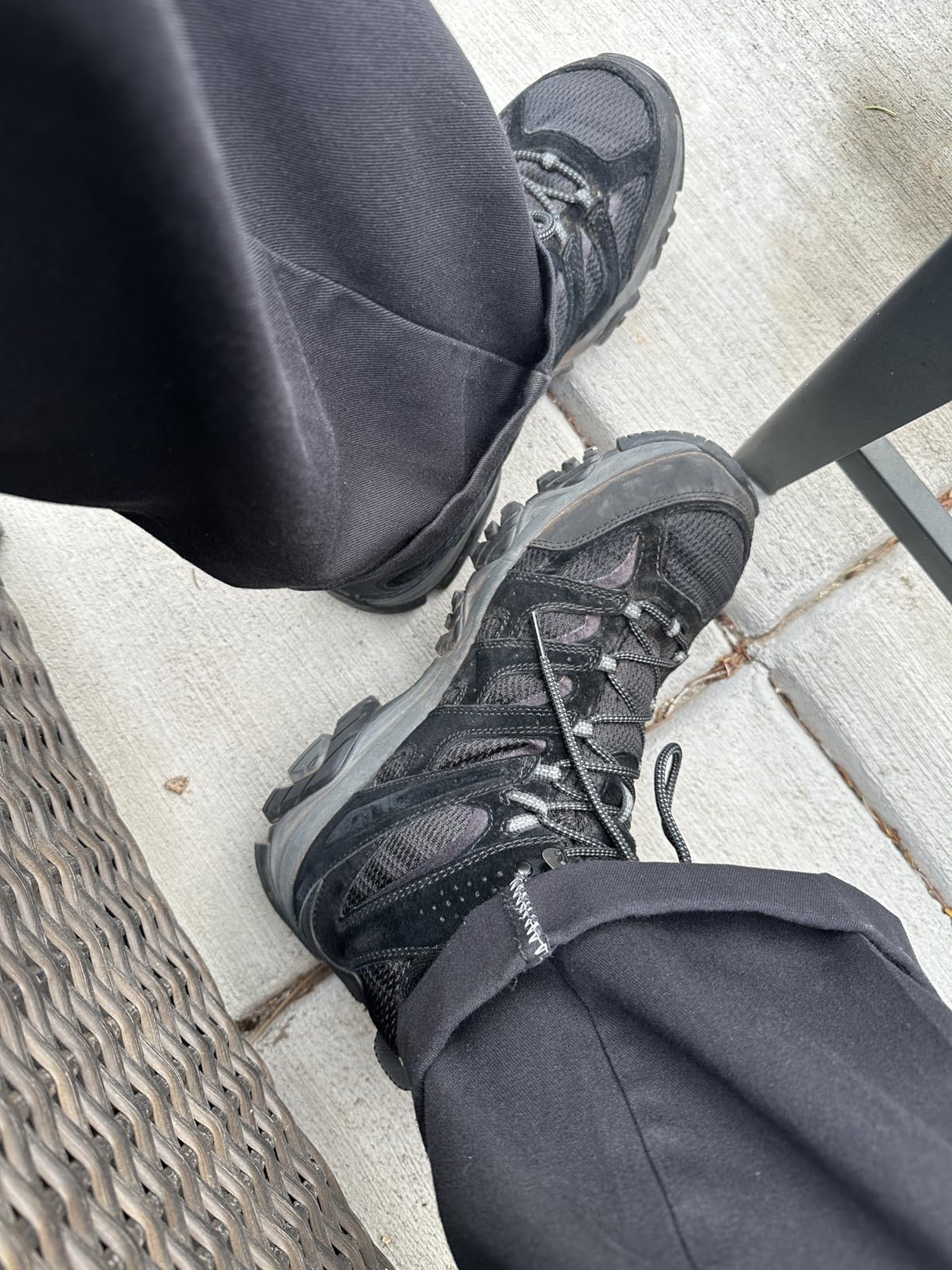
The midsole is lightweight EVA foam for stability and comfort, and Merrell adds Air Cushion in the heel to absorb shock on long descents. The outsole is Vibram TC5+ rubber, a compound with a reputation for grip on loose soil, mud and wet rock rather than pavement. Reviewers call out traction on all three specifically, which is exactly the terrain mix you get on a backpacking route that leaves the trail.
Fit is where this boot genuinely stands apart from the competition in this group. The sizing runs genuinely roomy, and owners with wide feet and high arches rate it as one of the few hiking boots that fits them without modification. If you have spent years squeezing into narrow footwear, that is not a small detail. Our guides to the best hiking boots for wide feet and the best hiking boots for flat feet go deeper on this, and the Moab shows up in both conversations for different reasons.
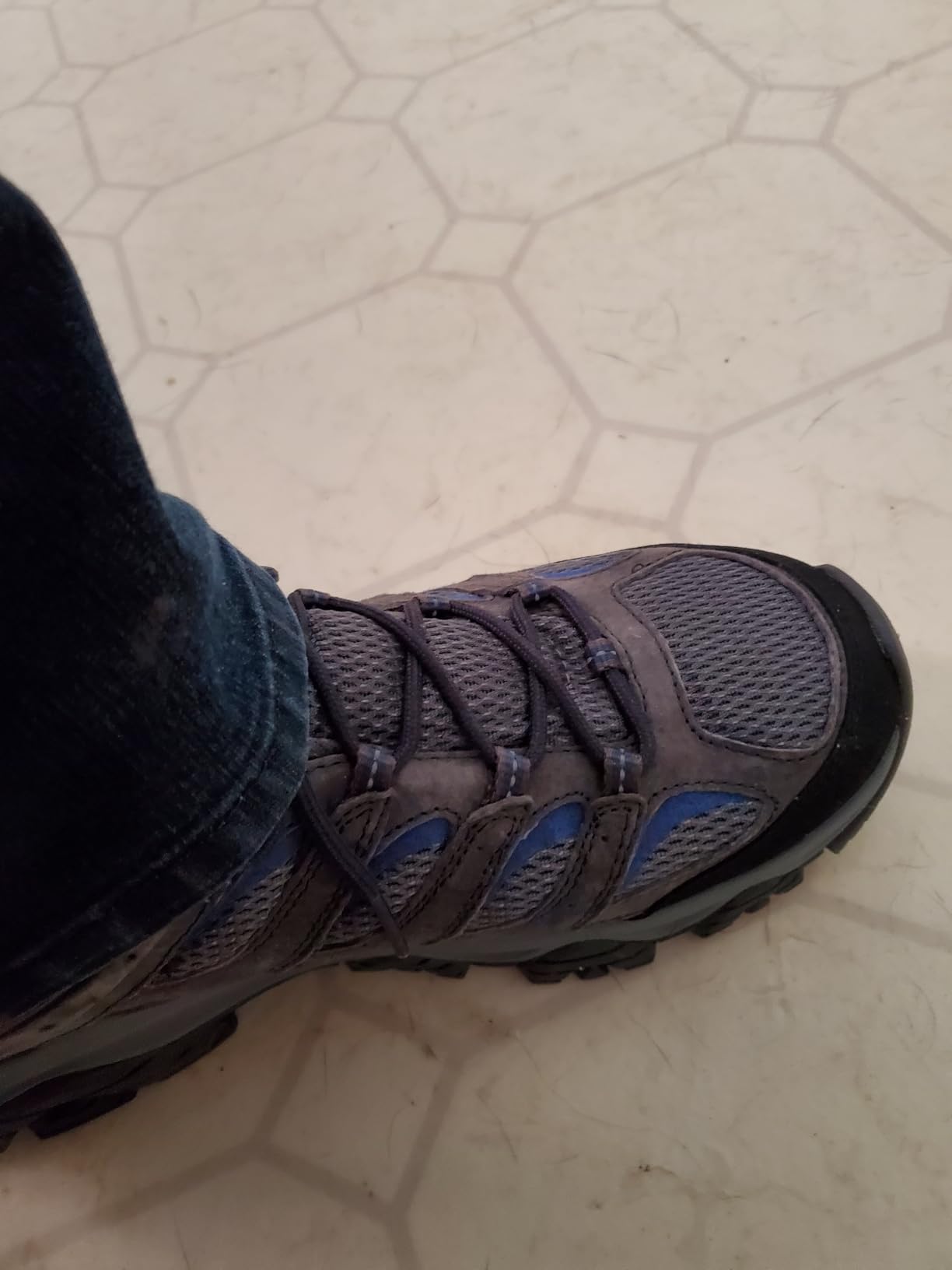
What you get for a pack under 35 pounds
Listed at two pounds, this is the lightest of the three and the only one you can comfortably walk 15 miles in without thinking about your feet. For a two or three night trip at a 20 to 30 pound pack on maintained or semi-maintained trail, it is the right tool. The nylon shank handles the load, the EVA midsole handles the landings, and the wide toe box keeps your toes from colliding on descents.
It is also the safest choice for a first multi-day trip, because there is no adjustment period to plan around. Buy them, wear them around the house for a day, wear them on a long walk close to home, and you are set. That is the difference between this boot and the Oboz at number three on this list.
Where the Moab 3 Mid falls short
The water-resistance limitation is the big one, and you should decide about it before you buy rather than on a wet ridge. This version handles puddles, dew and light rain, and it dries out quickly afterward. It is not built for sustained rain, creek crossings or a multi-day stretch of wet weather. If your trip has a reliable rain history, the waterproof options at numbers two and three are the better answer.
The stock insole is the second limitation. The Kinetic Fit ADVANCED insole is removable and contoured, but it delivers medium support rather than strong arch correction. Buyers with heel pain and plantar fasciitis routinely add aftermarket inserts, and owners with low arches sometimes notice slight foot slippage in the roomy upper until they do. Budget for an insole if you have a history of either. Styling is plain, which is the least important complaint on this list and the one reviewers mention least.
2. Salomon X Ultra Pioneer Mid Gore-Tex – Best Value Waterproof Pick
SALOMON X Ultra Pioneer Mid Gore-Tex Women’s Outdoor Shoes, Waterproof, Secure foothold, and Stable & cushioned, Black Magnet Monument, 9 US
Waterproof GORE-TEX membrane
Dual rubber with patterned heel
Advanced Chassis cushioning
Pros
- GORE-TEX membrane handles rain mud and changing conditions
- Dual rubber plus patterned heel for mud grip
- SensiFit holds the foot on tough downhills
- Advanced Chassis stabilizes the heel
- Waterproof at a lower entry point than the Oboz
Cons
- Boot height and stiffness can feel restrictive on long carries
- Leather and textile upper is less accommodating for very wide feet
The defining feature is the waterproof GORE-TEX membrane, and for a specific set of trips it is the difference between a good day and a ruined one. Shoulder-season routes, wet forests, spring mud and any trip with creek crossings in the forecast all fall into that set. The membrane keeps water out of the boot, which matters far more over three days than it does on a day hike, because a wet boot on night one is still wet on morning three.
The outsole is the most interesting piece of engineering here. Salomon uses two types of rubber in the same outsole, and adds a patterned heel area that grabs the ground for control specifically in muddy conditions. Reviewers single this out as the most-praised feature, and it makes sense: mud is where most hiking footwear fails, because a single hard compound either slips on wet clay or disintegrates on rock.
On top of the sole, Advanced Chassis foam cushioning connects directly to the sole to stabilize your heel, and the reinforced SensiFit construction holds the foot comfortably in place on tough downhills. That combination addresses the two failure modes we hear about most: the heel lifting on steep descents, which causes toe bang and blisters, and the ankle rolling on off-camber ground. The higher cut wraps the ankle for extra protection without the full height and mass of a mountaineering boot.
Best for wet ground and shoulder season
Pick this boot if your trip overlaps with rain, if you are walking in the Pacific Northwest or the UK in autumn, or if you enjoy the kind of route where you cross water rather than detour around it. At 4.4 out of 5 across more than 1500 reviews, it has enough owner history behind it that you are buying a proven design rather than a gamble.
It also works as a year-round generalist. The construction is described as versatile for climbs, descents and everyday adventures, so it doubles as a hiking boot for day trips without feeling out of place. Compared to the Oboz at number three, this is a lighter, less rigid platform that suits a midweight load better.
Who should skip it
If you carry a genuinely heavy pack, the stiffness that makes this boot stable also makes it tiring over long loaded days. Reviewers report that the boot height and rigidity can feel restrictive on multi-day carries compared with lighter hiking shoes. If your pack sits above 35 pounds, the Oboz’s stiffer platform is a better match for the load, even though it is the heavier boot on your feet.
The second issue is width. The leather and textile upper is less accommodating for very wide feet than dedicated wide-width models, and unlike the Merrell it does not have the same reputation for a genuinely roomy toe box. If you have wide feet and rain is not a factor, the Moab 3 Mid serves you better. If you have wide feet and rain is a factor, this is still a workable pick, but size up carefully and test with the socks you will actually hike in.
3. Oboz Men’s Bridger Mid B-DRY – Best for Heavy Packs and Off-Trail Ground
Oboz Men’s Bridger Mid B-DRY, Charcoal, 9.5
19.0 oz per half pair
TPU chassis and nylon shank
B-DRY waterproof membrane
Pros
- Sturdy upper resists buckling on jagged off-trail ground
- Strong support for overpronation and flat feet
- B-DRY membrane blocks moisture while releasing heat
- Trail Tread HD grips rock gravel and wet ground
- Owners report the same boot lasting five to ten years
Cons
- Heavier and stiffer than modern lightweight footwear
- Standard width runs narrow so wide feet need the Wide width
- Long break-in with initial stiffness and soreness
- Padding at the top hook is thin on high-sided wearers
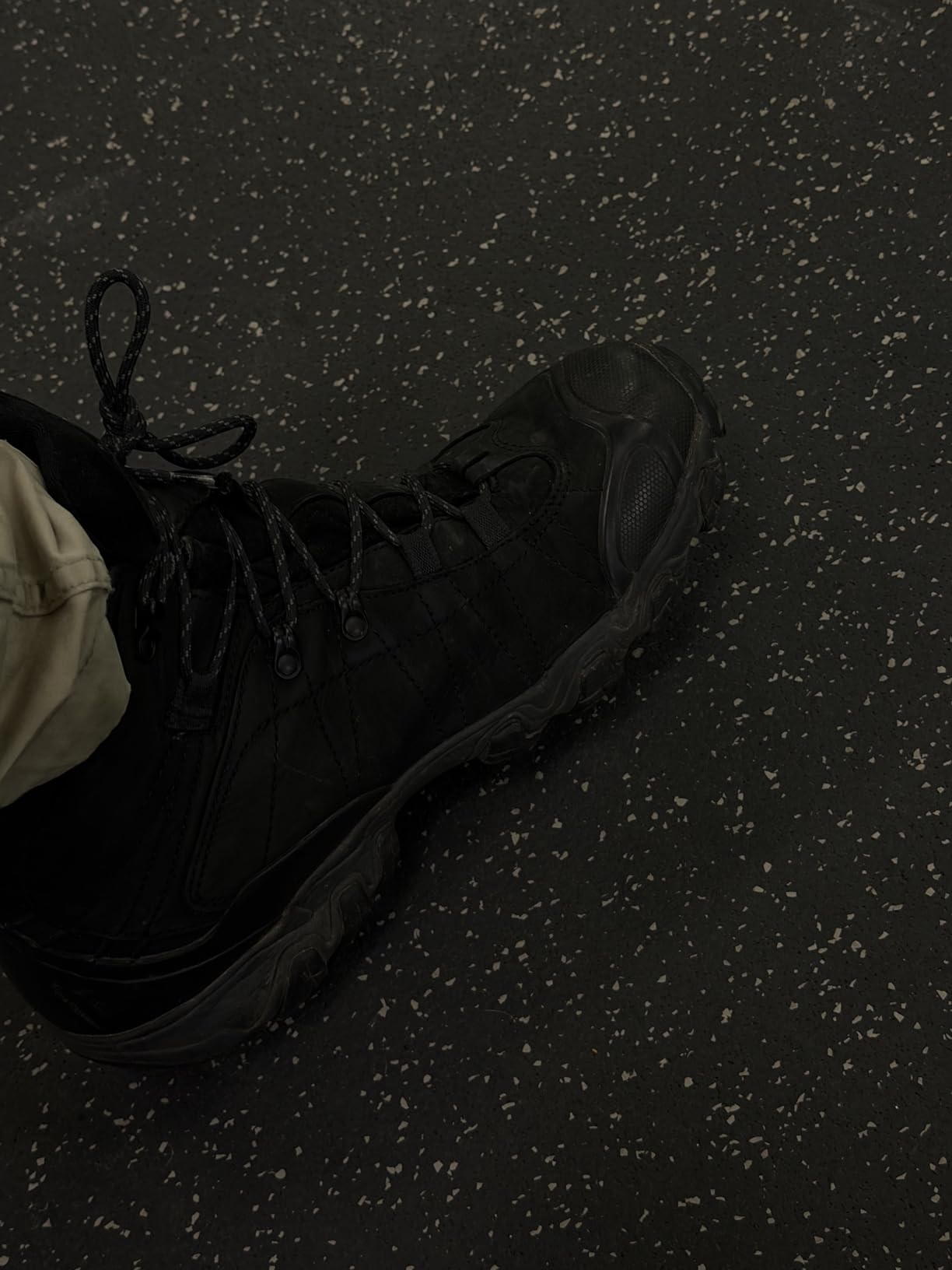
This is the boot to buy when the terrain gets ugly and the pack gets heavy. Reviewers describe the Bridger as the sturdiest hiking boot they have owned, citing stable sidewalls and a build that does not buckle on steep, jagged off-trail ground. That is a specific kind of strength, and it is the kind that matters when your route includes talus, washouts and terrain where a softer boot twists under you.
The platform is the reason. At 19.0 oz per half pair, with a single-density EVA midsole over a TPU chassis and a nylon shank, this is a genuinely stiff structure. The load from a heavy pack travels down through your legs into your feet, and a stiff midsole and shank spread that load across the whole footplate instead of letting it concentrate through your arches. Your ankle and knee do less work as a result. If you carry more than 35 pounds, that is worth the extra ounces every single day.
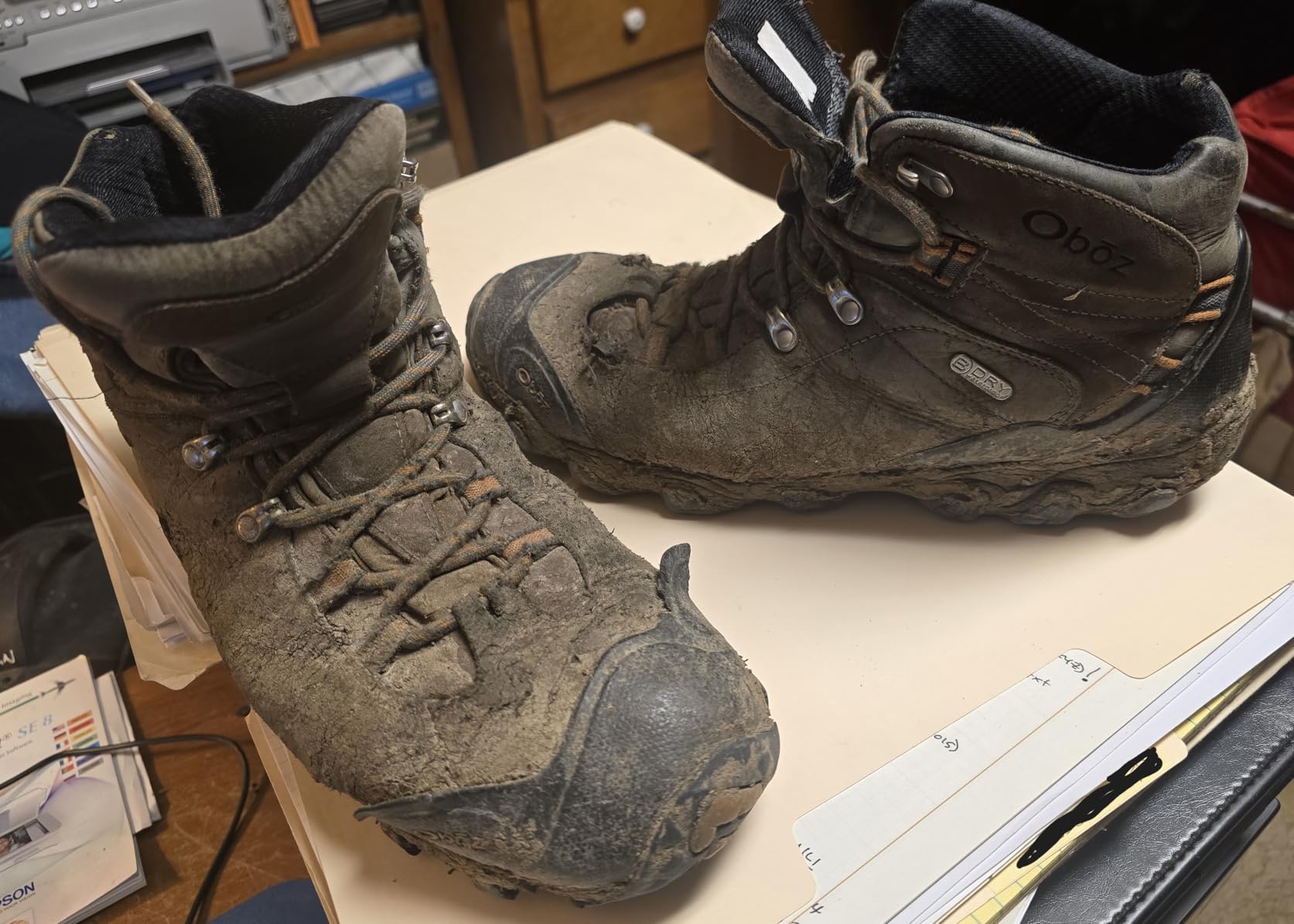
The B-DRY membrane is the quiet advantage here. It blocks moisture while allowing water vapour to escape, so the boot stays waterproof without the trapped-heat feeling that hikers complain about with sealed membranes in hot conditions. That combination of waterproofing and breathability is rarer than it should be, and reviewers consistently praise it for keeping feet dry without overheating.
Underfoot, Trail Tread HD is a heavy-duty rubber compound with multidirectional tread, designed to grip rocky, wet and dry ground. The O FIT insole is triple-density EVA with cushioned heel and forefoot pods, a firm moulded shell, a deep heel cup and an arch profile, which is a genuinely supportive footbed rather than a thin sockliner. The upper is waterproof nubuck and durable textile with webbing eyelets, a moulded rubber toe cap and a heel counter.
Longevity is the quiet argument for this boot. Several owners report buying the same boot repeatedly since 2016, and others describe pairs lasting five to ten years. Forum advice consistently favours buying the boot that matches the trip you actually do most, and if that trip is loaded backpacking on rough ground, this is the boot built for it.
Why this is the heavy-pack answer
Support for overpronation, flat feet and high arches is the most consistently praised category in the reviews. Owners with all three foot types report stable footing that allows them to add aftermarket inserts when they want more control. If you have a history of ankle rolls on uneven ground, the stiffness here is a feature rather than a defect, and it is the single strongest argument for this boot over the other two.
It is also the pick for anyone whose trips run long. The trade is honest: the extra weight and the firm sole make it less pleasant on a light day hike. Carry a 35 to 50 pound pack across rocky multi-day terrain and the arithmetic reverses completely.
Where the Bridger causes problems
Width is the first thing to solve. The standard width runs narrow, and wide feet generally need the Wide width or a half size up. This is the most common complaint in the reviews and it is entirely fixable at purchase time, as long as you know to look for it. Sizing up in a boot that already runs narrow is the single best thing you can do to avoid the toe bang that ends trips on descent.
Break-in is the second. This boot has a long break-in period, and some buyers report initial stiffness and soreness in the first weeks. Wear it around the house for several days, then walk progressively longer distances with a light load before you take it anywhere with a strap on your shoulders. A third minor issue: padding at the top hook is insufficient for some high-sided wearers, who report the ankle bone taking a knock. If that describes your foot shape, add a small piece of foam behind the collar.
How Heavy Is Your Pack? The 35 Pound Rule
If your loaded pack weighs under 35 pounds and you are on maintained trail, the Merrell Moab 3 Mid is the right pick and you do not need anything stiffer. The nylon arch shank is enough to carry that load, and the lighter build will be more comfortable over 12 miles a day than any of the other two.
If your pack is over 35 pounds, or if you are walking off-trail, on talus, or on rocky alpine ground, move up to a stiffer platform. That is the Bridger’s entire argument, and it is also when the extra ounces stop being a penalty. Below 35 pounds the weight is pure cost; above it, the weight buys you stability that protects your ankles and knees across a whole trip.
Is 40 pounds too heavy for backpacking? No, it is a very ordinary multi-day load, and it is exactly the load that separates a good boot from a bad one. Your body weight plus 40 pounds is 150 to 200 pounds moving across uneven ground thousands of times a day. That is a load-bearing problem, and it is why boot stiffness matters more than any other single feature.
A quick self-test before you buy: stand in the boot, flex the toe toward your shin. If the boot folds at the ball of the foot with no resistance, it is a day-hiking boot. If the forefoot resists and the bend point sits back near the midfoot, it can carry a pack. That is the flex test, and it takes ten seconds in a shop.
Boots vs Hiking Shoes vs Trail Runners for Backpacking
Boots are not automatically the right answer, and pretending otherwise is dishonest. A Midwest hiker doing one or two night trips at roughly 10 miles a day concluded that shoes were all they needed. That is a common and defensible outcome, and it comes up constantly in backpacking communities.
Here is how the three categories actually divide.
Trail runners suit packs under 20 pounds on maintained trail, and fast hikers who value ground feel and low weight. They dry fast and need no break-in.
Hiking shoes are a middle ground. Lighter and lower-cut than a boot, better ventilated, less protective on rock.
Midweight hiking boots add a mid-cut collar and a shank. This is the sweet spot for 20 to 35 pounds and multi-day distances.
High-cut backpacking boots exist for loads above 35 pounds, off-trail ground, ankle-injury history and cold wet conditions.
All three picks on this page are mid-cut boots rather than high-cut mountaineering boots, because that is what multi-day backpacking on foot actually calls for. The difference between them is stiffness and construction, not collar height. If you are genuinely unsure, the safest default is a midweight mid-cut boot with a shank, which is every option here.
How to Choose the Best Hiking Boots for Backpacking
Support and stiffness come from the shank, not the collar
The part of a boot that resists twisting is the shank or chassis, a stiff plate of nylon or TPU sitting under the arch inside the midsole. This is the component that spreads a pack load across the footplate. The collar around your ankle adds a smaller amount of protection from rocks and debris, but it is not what carries the weight.
That distinction matters because modern brands have softened collars substantially to reduce break-in complaints, and the result is that many supportive-sounding boots deliver very little real ankle support. The honest counter-case, which hikers raise often, is that a soft boot with a strong shank often outperforms a soft-collared boot with a weak shank. Check what is under the foot, not what wraps the ankle.
Weight is only a penalty below 35 pounds
Weight is the most argued-over spec in this category and the least meaningful on its own. A difference of a few ounces per pair is invisible at a 25 pound pack on maintained trail. At a 45 pound pack on talus, a stiffer boot that is heavier may still be less tiring at the end of the day because your feet are doing less work.
So judge weight conditionally rather than absolutely. The Merrell is the lightest at a listed two pounds and the easiest to walk in. The Oboz is the heaviest at 19.0 oz per half pair and the most supportive. Both facts are true, and which one matters depends entirely on your pack.
Waterproofing is a trade, not a free upgrade
A waterproof membrane keeps rain out and also slows the escape of water vapour from your foot. On a hot summer trail that produces the sweating and hot-spot complaints that show up in nearly every hiking forum. In shoulder season, on a three-day trip, the same membrane can be the reason you still have functioning feet on day three.
Two of the three picks here are waterproof, and they solve it differently. The Salomon uses a GORE-TEX membrane, the well-known standard that handles wet and muddy conditions. The Oboz uses B-DRY, which is explicitly designed to block moisture while allowing vapour to escape, and reviewers single out the reduced heat as a real difference. The Merrell skips a membrane entirely and dries faster than either.
Fit rules: toe room and heel lockdown
Two numbers decide whether a boot works. You want roughly a thumb’s width of space between your longest toe and the front of the boot. And you want zero heel lift when you lift the foot, which you can test by flexing the forefoot while wearing the boot.
Foot swelling is real over a multi-day trip, so do not size down for a boot you intend to carry weight in. Wide feet have a specific trap here: the Bridger’s standard width runs narrow, and the fix is the Wide width or a half size up, not a different model. If you have painful feet or a history of plantar fasciitis, prioritise a removable insole, because every boot on this list has one and an aftermarket insert changes the fit completely. The Merrell’s roomy fit is the easiest starting point for wide feet; the Oboz’s O FIT insole is the most supportive stock footbed.
Traction should match your terrain
Outsoles are chosen for a tradeoff between grip and durability. Harder compounds last longer on rock. Softer compounds grip better on mud and wet ground. The Vibram TC5+ on the Merrell and the Trail Tread HD on the Oboz both deliver the multidirectional grip that mud and wet rock demand, and the Salomon goes furthest by using two rubber types in one outsole with a patterned heel for muddy control specifically.
Whatever the compound, the thing that actually stops you on a descent is the toe cap and the toe box. A protective toe cap and a roomy toe box are what prevent the toe bang that ends trips, and all three picks have both to some degree.
Break-In and Blister Prevention
How long does it take to break in hiking boots? For a modern synthetic hiking boot, expect roughly 30 to 60 hours of low-load walking, or somewhere around 100 to 150 miles at a light pack. Full leather backpacking boots take considerably longer, and the Oboz Bridger sits in that longer category. Do not take any new boot straight onto a loaded multi-day trip. That single mistake is the most common cause of ruined trips we see described in hiking forums.
A safe protocol, in order. First, wear the boots around the house with thick hiking socks for a full day so you find pressure points without consequences. Second, walk 30 to 45 minutes daily for a week, increasing the distance. Third, do one long day hike at a light load before anything multi-day. Fourth, keep the lacing firm from the ankle down to the toe box, because a loose lacing system is what causes foot movement and hot spots. Fifth, on your first loaded trip, stop and re-tape your socks and re-lace your boots at every break.
The blister protocol matters more than the boot in many cases. Wear a two-ply merino or synthetic hiking sock with a smooth liner sock underneath, because the liner moves and the outer sock blisters. Swap socks at the first sign of damp, which on a hot day is often at lunch. Carry a spare pair in your pack, because a wet sock you cannot replace is how a hot spot becomes a blister. Downhill, keep your knees slightly bent so you are not jamming your toes into the toe box, and tighten the forefoot lacing before a long descent. And wear any new boot on a shakedown hike before the trip that matters.
Blisters and hot spots are the number one recurring problem reported by hikers, and the overwhelming majority of them trace back to a fit or break-in issue rather than a bad boot. The Merrell solves it by needing almost no break-in at all. The Salomon and Oboz need proper time and the protocol above. All three are fixable with preparation, and none of them are fixed by buying a different boot mid-trip.
Frequently Asked Questions
What is the difference between a hiking boot and a backpacking boot?
A backpacking boot is a stiffer, more protective mid or high-cut boot built to carry a loaded pack. Where a day-hiking boot bends freely at the forefoot, a backpacking boot has a nylon or TPU shank that spreads pack weight across the footplate, a firmer midsole, more underfoot protection and a stiffer build that adds weight per pair. That extra stiffness is what reduces ankle and knee strain over multi-day miles with a 30 to 50 pound load.
What are the best boots for heavy backpacking?
For loads above 35 pounds, you want the stiffest platform you can tolerate. Of the three here, the Oboz Men’s Bridger Mid B-DRY is the heavy-load pick, with a TPU chassis, a nylon shank and a single-density EVA midsole that resists twisting under a loaded pack. The Salomon X Ultra Pioneer Mid Gore-Tex works well to about 35 pounds. Under 35 pounds on maintained trail, the lighter Merrell Moab 3 Mid is enough.
How many hours does it take to break in hiking boots?
Expect roughly 30 to 60 hours of low-load walking, or about 100 to 150 miles at a light pack, before a modern hiking boot is genuinely broken in. Full leather backpacking boots take longer. Break in at home, not on trail: wear them around the house, then walk progressively longer distances over a week, then do one long day hike at a light load before a multi-day trip.
Is 40 lbs too heavy for backpacking?
No. A 40 pound pack is a very ordinary multi-day load, and it is high enough that boot stiffness starts to matter. Combined with your body weight you are moving 150 to 200 pounds across uneven ground thousands of times a day, which is a load-bearing problem rather than a comfort one. Above 35 pounds, choose a boot with a nylon or TPU shank and a firm midsole rather than a soft lightweight boot.
Should I get boots or trail runners for backpacking?
Trail runners suit packs under about 20 pounds on maintained trail, and they need no break-in. Mid-cut boots are the better choice for 20 to 35 pounds, off-trail ground, rocky terrain, wet weather or a history of ankle rolls. Many hikers doing one or two night trips at 10 miles a day find trail runners perfectly sufficient, so match the footwear to the trip you actually do most rather than the most capable option available.
Conclusion
The best hiking boots for backpacking depend on two variables and nothing else: your pack weight and your climate. Under 35 pounds in normal conditions, take the Merrell Moab 3 Mid and enjoy having zero break-in to plan around. Above 35 pounds or on rough ground, take the Oboz Bridger Mid B-DRY and give it a proper break-in before you leave. If rain is the deciding factor, take the Salomon X Ultra Pioneer Mid Gore-Tex and stop worrying about wet socks on night three.
Whichever you choose, the difference between a good trip and a bad one is usually not the boot. It is whether you broke it in, whether your socks are right, and whether you stopped at the first hot spot instead of the first blister. Get those three right and the best hiking boots for backpacking in 2026 are the least interesting part of the trip.
Before you settle on a size, work out your loaded pack weight, your typical trip length, your foot width and the climate you hike in. If you tell us those four things in the comments, we will point you at the right pick of the three.
One last piece of kit that matters on any multi-day trip: a reliable backpacking water filter. Boots keep the rain out; the filter keeps the trip going.