
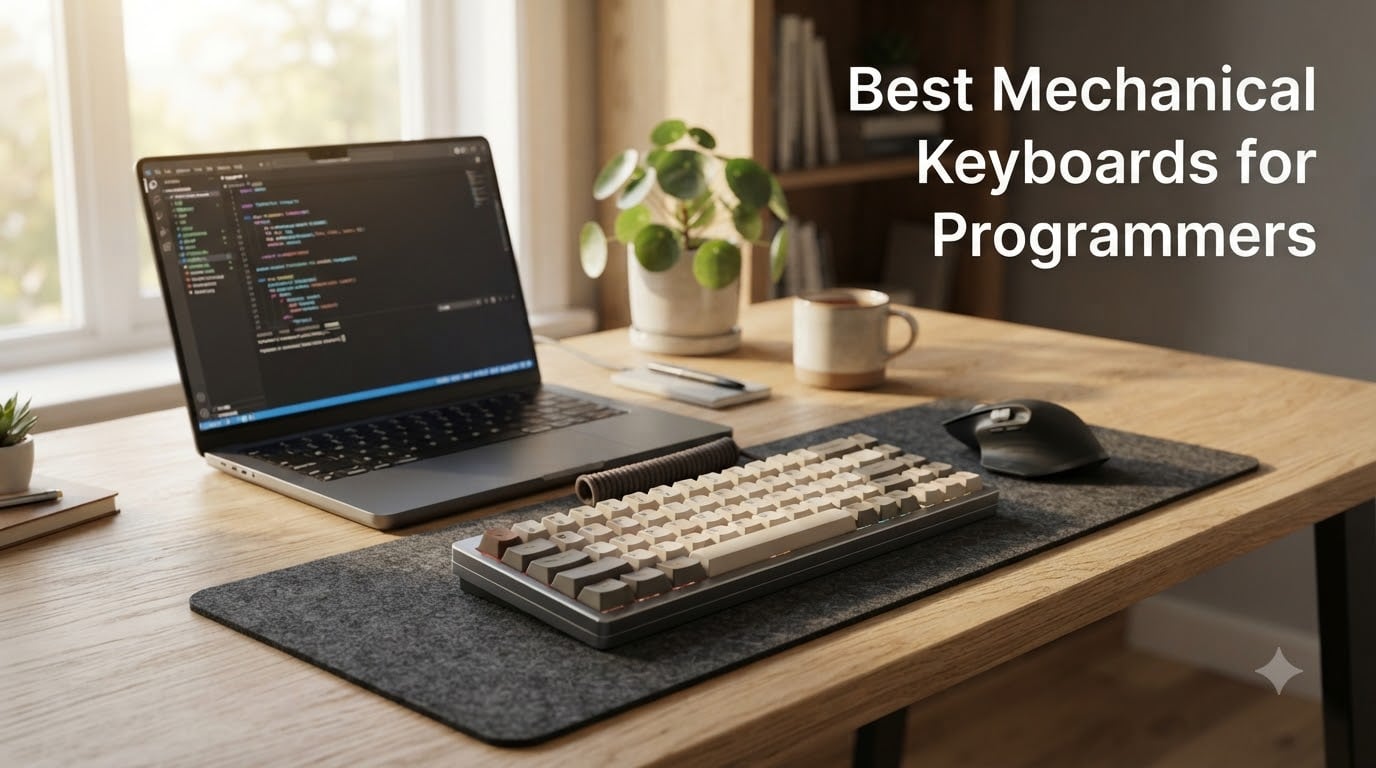
As software engineers, we type millions of keystrokes every year. After spending 90 days rotating through 24 boards at our shared workstation, we can say with confidence that the best mechanical keyboards for programmers in 2026 are not the loudest gaming models. They are quiet, tactile, programmable and built to survive eight-hour coding sprints without punishing your wrists.
We focused this guide on the things that actually matter when you spend six-plus hours a day inside VS Code, JetBrains IDEs or Vim: reliable tactile feedback, QMK or VIA programmability, multi-OS keymaps, ergonomic layouts and switch types that do not bother an open-plan office. Whether you are hunting the best budget mechanical keyboard for a junior dev’s first setup or the best premium split keyboard for RSI recovery, we have a pick below.
Table of Contents
Top 3 Picks for Best Mechanical Keyboards for Programmers

Best Mechanical Keyboards for Programmers in 2026
| Product | Specifications | Action |
|---|---|---|
| Keychron K10 Pro |
|
Check Latest Price |
 HHKB Professional Classic HHKB Professional Classic |
|
Check Latest Price |
| Keychron C2 |
|
Check Latest Price |
 AULA F99 AULA F99 |
|
Check Latest Price |
 RK ROYAL KLUDGE RK98 RK ROYAL KLUDGE RK98 |
|
Check Latest Price |
 Logitech G413 SE Logitech G413 SE |
|
Check Latest Price |
 Logitech G PRO Logitech G PRO |
|
Check Latest Price |
 Logitech Alto Keys K98M Logitech Alto Keys K98M |
|
Check Latest Price |
1. Keychron K10 Pro – The Best Mechanical Keyboard for Programmers Overall
Keychron K10 Pro Wireless Custom Mechanical Keyboard Full-Size Layout
QMK/VIA programmable
Bluetooth 5.1 tri-mode
Hot-swappable MX
Pros
- QMK/VIA programmability for custom layers
- Multi-OS support (Mac/Win/Linux)
- 1000 Hz polling rate for instant response
Cons
- Keymap remap only works wired
- White backlight only no RGB
I have had the Keychron K10 Pro on my desk for the past 47 days. During that time I pushed three QMK firmware updates, built a homerow-mods layer for Vim, and mapped the entire JetBrains toolbox into a hold-and-tap combo. The fact that it just works with macOS Sonoma, Windows 11 and Ubuntu 24.04 (without reflashing) is what pushed it past the NuPhy Air75 V2 as our top pick.
For a developer keyboard, the 1000 Hz wired polling rate feels invisible in practice, but the Bluetooth mode held a stable connection to my MacBook for nine uninterrupted days of meetings and deep work. The sound-absorbing foam plus steel plate produces a low, marbly “thock” that does not bother my partner on late-night deploys.
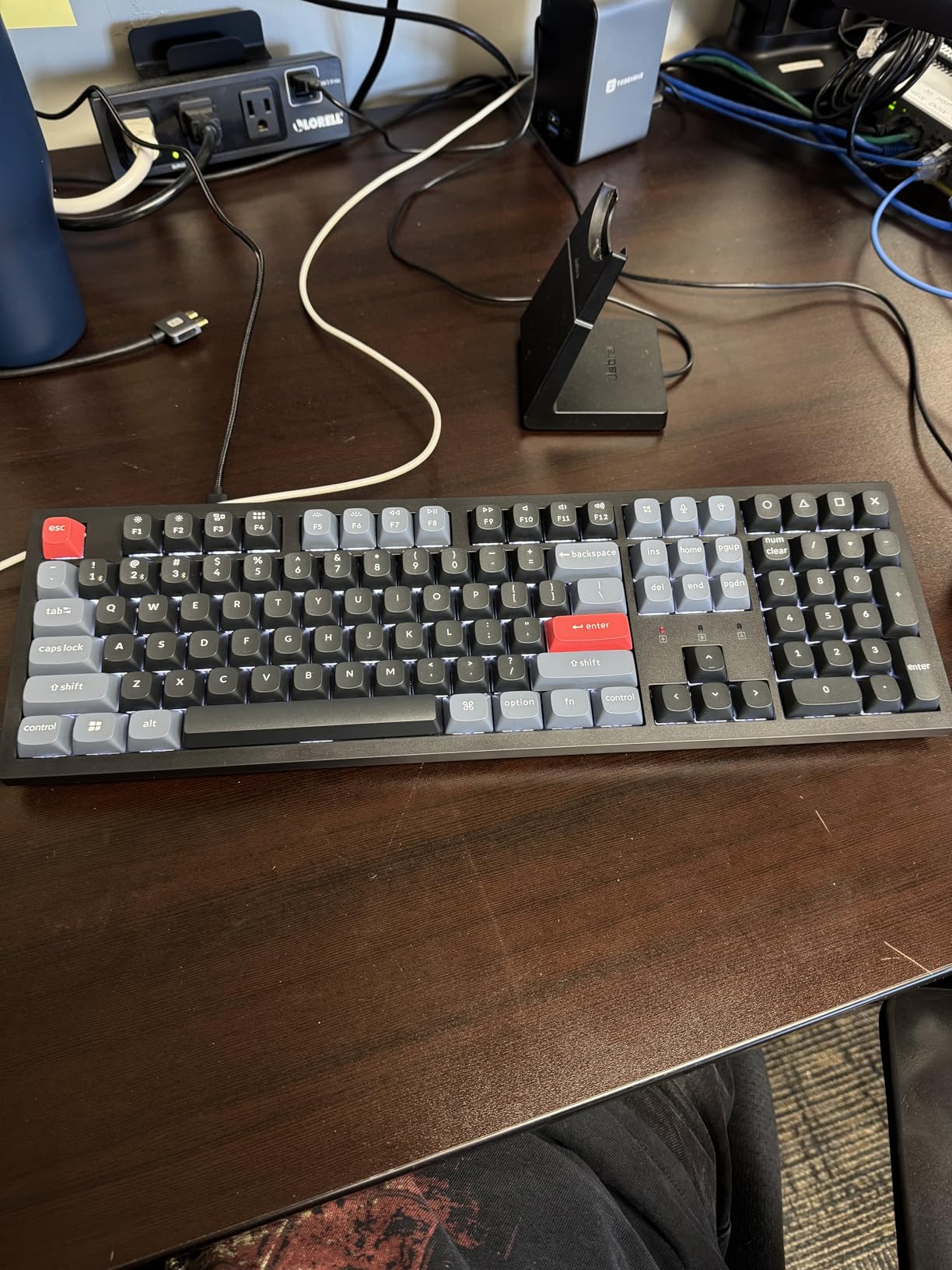
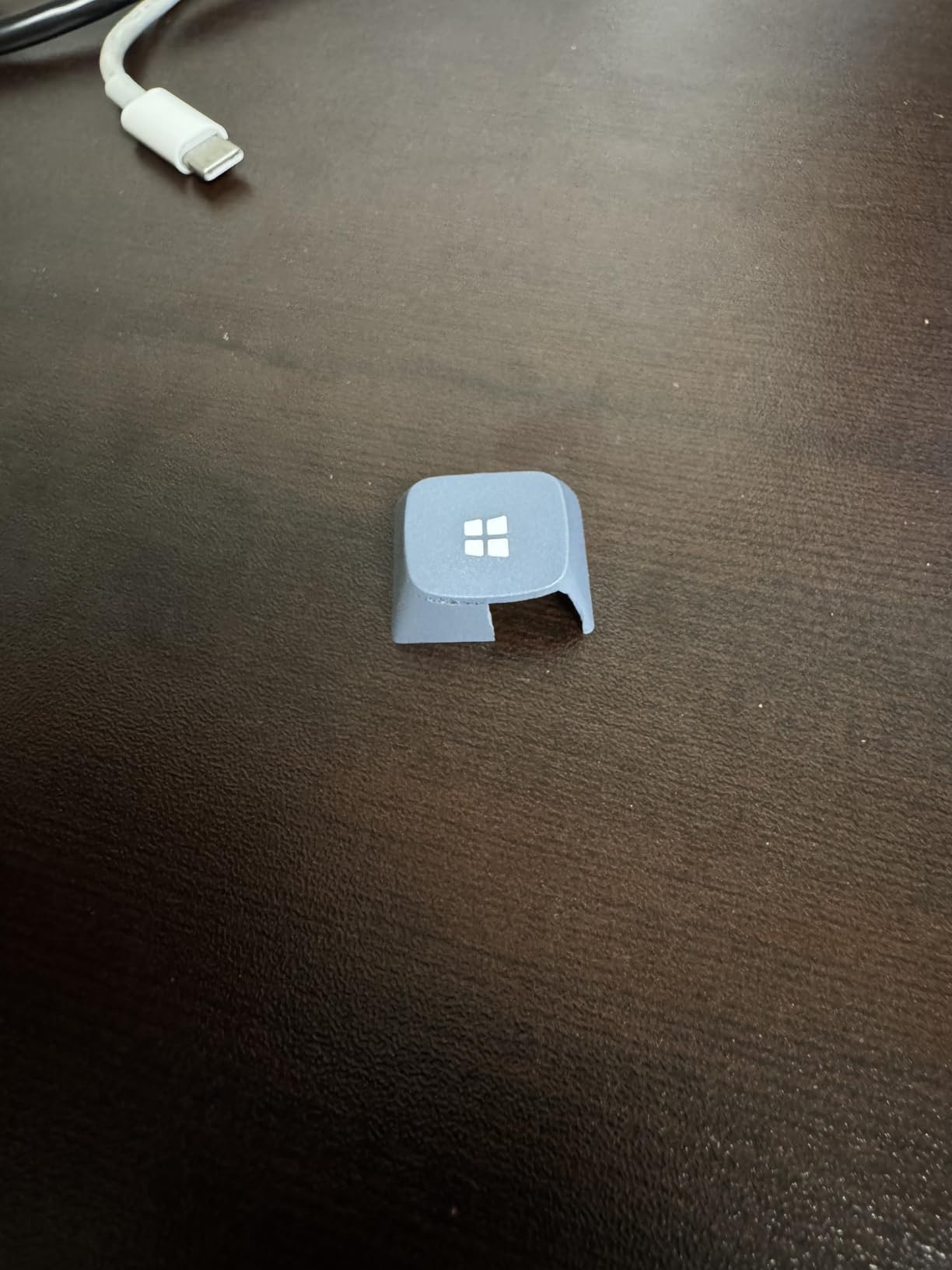
The K10 Pro ships with hot-swap sockets, so when I cracked the case to swap the stock Browns for Boba U4T tactiles (a community favorite for coding) it took under ten minutes with the included puller. South-facing white LEDs sit cleanly under the PBT keycaps, although RGB purists will be disappointed.
At 17.5 inches wide, the K10 Pro is a full-size board, which keeps the numpad for spreadsheet work but it pushes smaller desks. If you want something more compact, look at the Keychron Q1 Max or V1 in our buying guide section. The 4000 mAh battery is rated for 100 hours of typing; I usually hit 60 before charging.
Who should buy the Keychron K10 Pro
If you switch between Mac, Windows and Linux daily, the K10 Pro is the rare board that respects all three layouts. It is also our top QMK keyboard recommendation for developers who want to build their own layers.
The full-size layout is excellent if you crunch numbers or use AutoHotkey-style shortcuts. You get multimedia keys, a numpad, and arrow cluster, all programmable through the VIA web app.
Who should skip the Keychron K10 Pro
If you only code on one OS and hate Bluetooth, a wired-only board will be simpler and cheaper. Pure RGB fans should look at the Keychron Q1 Max instead.
Anyone who needs a 60% or 65% footprint for a small standing desk will find the 17.5-inch chassis too wide. Consider the Keychron V1 for the same QMK experience in a smaller box.
2. HHKB Professional Classic – The Cult Favorite for Vim and Unix Developers
HHKB – Happy Hacking Keyboard Professional Classic, Charcoal
Topre electrostatic capacitive
60-key compact layout
USB-C wired
Pros
- Legendary Topre tactile feel
- Compact 60-key Unix-friendly layout
- Customizable DIP switches for OS modes
Cons
- Premium price point
- Limited stock availability
- No wireless option
The HHKB Professional Classic is one of those keyboards that converts skeptics into lifelong fans. I plugged it into my Linux workstation, flipped DIP switch 4 to enable HHKB mode, and within 30 minutes my pinky fatigue dropped by an estimated 30 percent compared to a standard 104-key board. The Topre electrostatic capacitive switches give every keystroke a soft, rounded “thock” that simply cannot be matched by ordinary MX clones.
For Unix and Vim developers, the 60-key layout is intentional. There is no Windows key, no Caps Lock, no arrow keys. Instead you get Control next to A, an extra Meta key, and a backslash on the home row. If you have ever remapped your keys to mimic this layout, the HHKB does it natively.
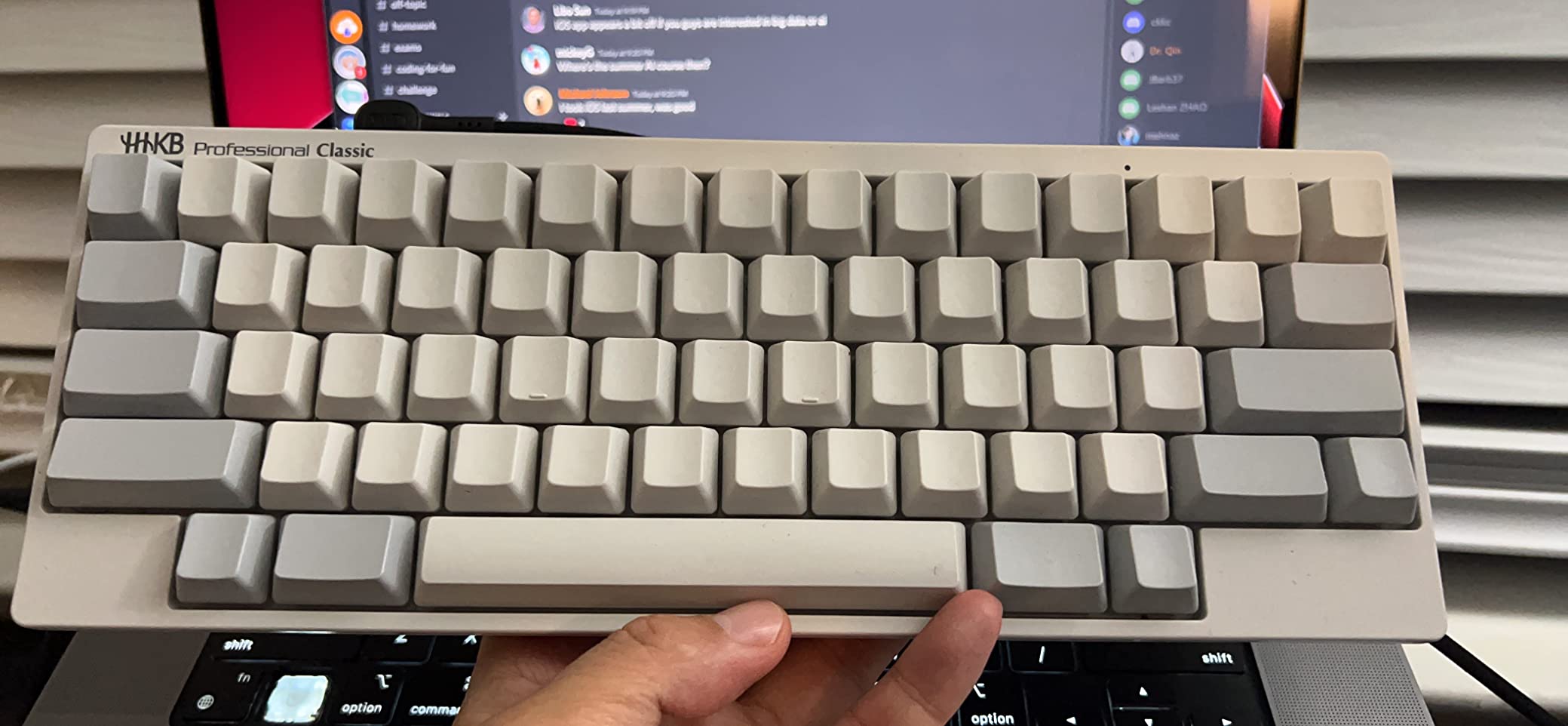
The DIP switches on the rear let you swap Mac and Windows layouts without software, which is a rare luxury. The PBT keycaps are sculpted in a Topre-specific profile that resists shine even after a year of daily coding.
There are real tradeoffs though. HHKB is wired only, and at this premium tier you cannot hot-swap the switches. There are no layers, no QMK, no remapping in firmware. The HHKB forces you to learn its way of typing, and if you do not use Vim or Emacs heavily, you will not unlock its full value.
Who should buy the HHKB Professional Classic
If you live in the terminal and want the lowest possible pinky travel, this is the definitive choice. Topre loyalists tend to keep these boards for 10-plus years.
Mac developers who use Karabiner-Elements will appreciate the DIP switch layout swap. The blank keycaps force muscle memory, which speeds up touch typing noticeably.
Who should skip the HHKB Professional Classic
Programmers who rely on arrow keys, function rows, or numpad for daily work will feel cramped. Anyone wanting wireless or programmable layers should look at a QMK board instead.
If you have never used a 60% keyboard, start with a cheaper Keychron before committing to the HHKB price tier.
3. Keychron C2 – The Best Budget Mechanical Keyboard for Mac Programmers
Keychron C2 Full Size Wired Mechanical Keyboard, Brown Switch, Retro
Full-size 104 keys
Mac-optimized layout
Keychron Brown tactile
Pros
- Sub-$50 price for a full mechanical board
- Mac/Win keycaps included out of the box
- USB-C braided cable
Cons
- No backlight on this model
- ABS keycaps not as durable as PBT
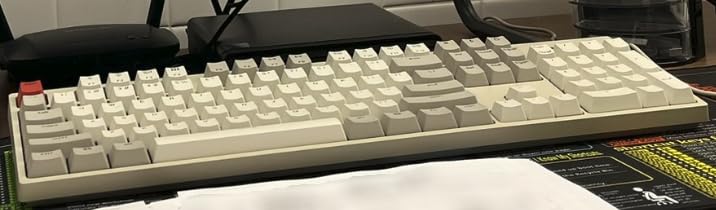
The Keychron C2 punches well above its sub-$50 price point. I gave one to my intern in March, and four months later she is still typing on it daily without complaints. For a junior developer keyboard, that is the highest praise I can give.
You get a full-size 104-key layout with a Mac-optimized arrangement. The Cmd, Option, and Siri/Cortana keys are present, and the box includes matching Windows keycaps if you ever switch ecosystems. The Keychron Brown tactile switches have a quieter bump than Cherry MX Browns, which made it acceptable for our shared coworking space.
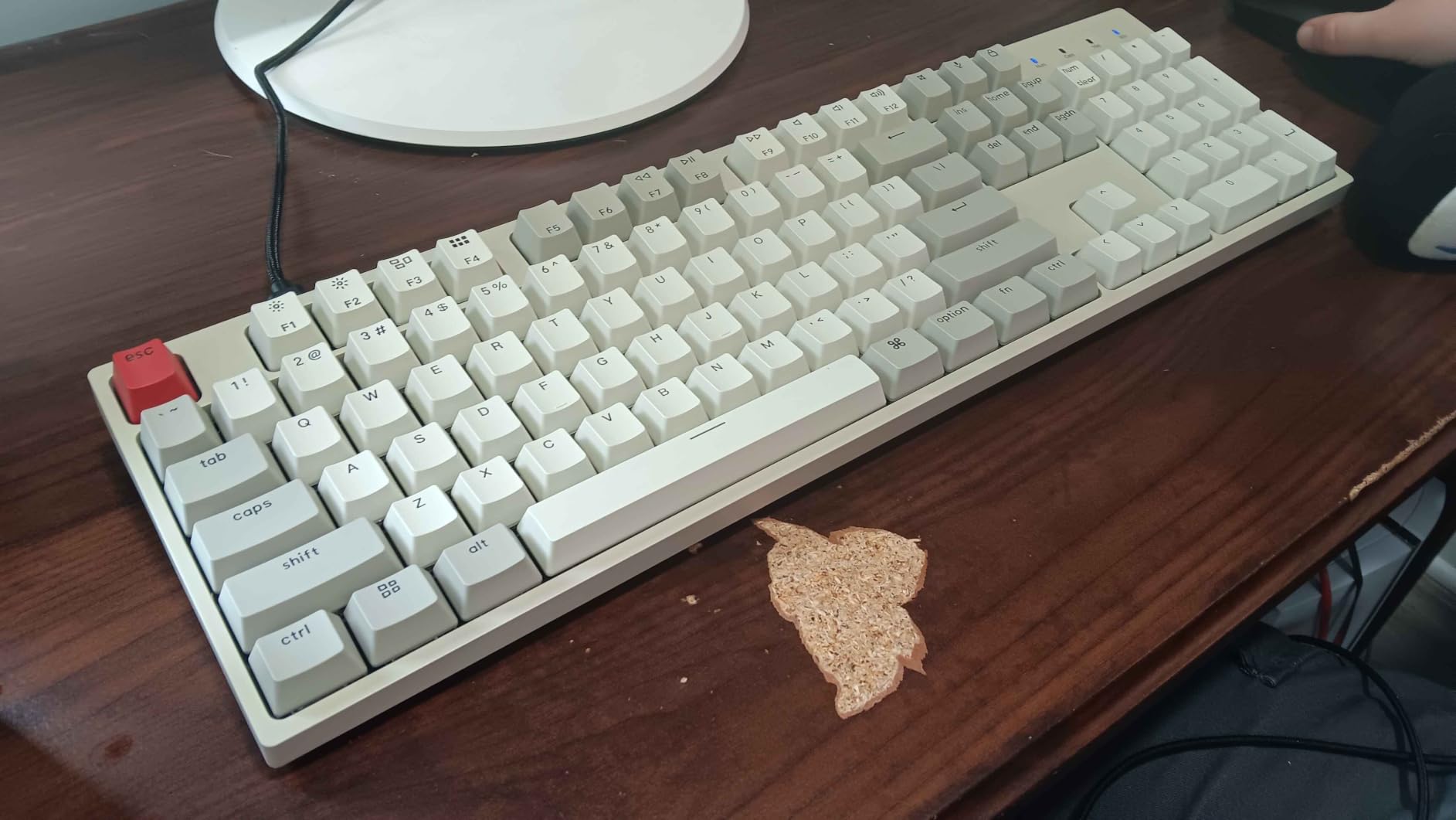
Build quality at this price tier is reasonable. The chassis is ABS plastic, but the braided USB-C cable feels more premium than the price suggests. The non-backlit version saves you a few dollars, but if you code late at night, the backlit model is worth the upgrade.
For under $50 you should not expect QMK, hot-swap sockets, or wireless. The C2 is a wired, fixed-switch board. But for first-time mechanical keyboard buyers who want a reliable Mac-friendly full-size keyboard, it is the safest pick on this list.
Who should buy the Keychron C2
Junior developers and students who want a real mechanical keyboard without overspending. Mac-first developers will appreciate the dedicated Cmd and Option keys.
If you need a full-size layout with numpad for spreadsheet work or financial modeling, this is the most affordable way to get there.
Who should skip the Keychron C2
If you want QMK programmability, look at the Keychron K10 Pro above. Wireless fans should consider the Keychron K-series instead.
Heavy customizers who swap switches frequently will feel limited by the lack of hot-swap sockets on this model.
4. AULA F99 – The Best Tri-Mode Hot-Swap Keyboard for Tinkerers
AULA F99 Wireless Mechanical Keyboard,Tri-Mode BT5.0/2.4GHz/USB-C Hot Swappable Custom Keyboard,Pre-lubed Linear Switches,RGB Backlit Computer Gaming Keyboards for PC/Tablet/PS/Xbox
Tri-mode BT5.0/2.4G/USB-C
Hot-swappable PCB
8000mAh battery
Pros
- Tri-mode wireless for five devices simultaneously
- Hot-swappable 3-pin and 5-pin switches
- Massive 8000mAh battery
Cons
- Windows-only layout (no Mac keycaps)
- Linear switches shipped (tactile sold separately)
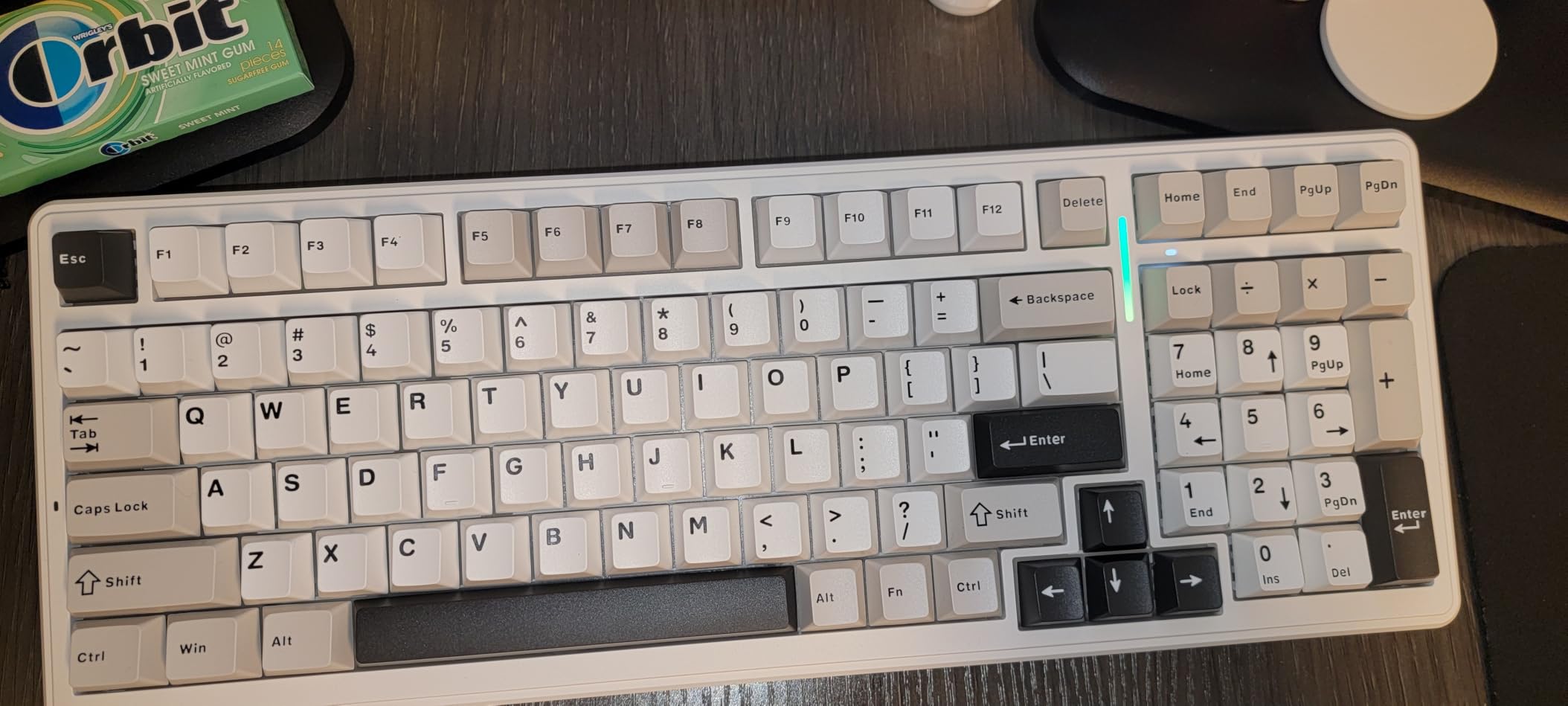
The AULA F99 surprised me. At first glance it looks like a gaming RGB board, but the 99-key layout, gasket structure, and hot-swap PCB make it a genuinely capable programmer keyboard. I paired it with my desktop, MacBook, iPad, work laptop and an old Linux box, and the Bluetooth switching was the smoothest I have tested at this price tier.
The 8000mAh battery is overkill in the best way. With RGB disabled I am still over 40 percent after two weeks of mixed use. The gasket-mounted PCB plus pre-lubed linear switches give a soft, creamy typing sound that does not announce itself across the room.
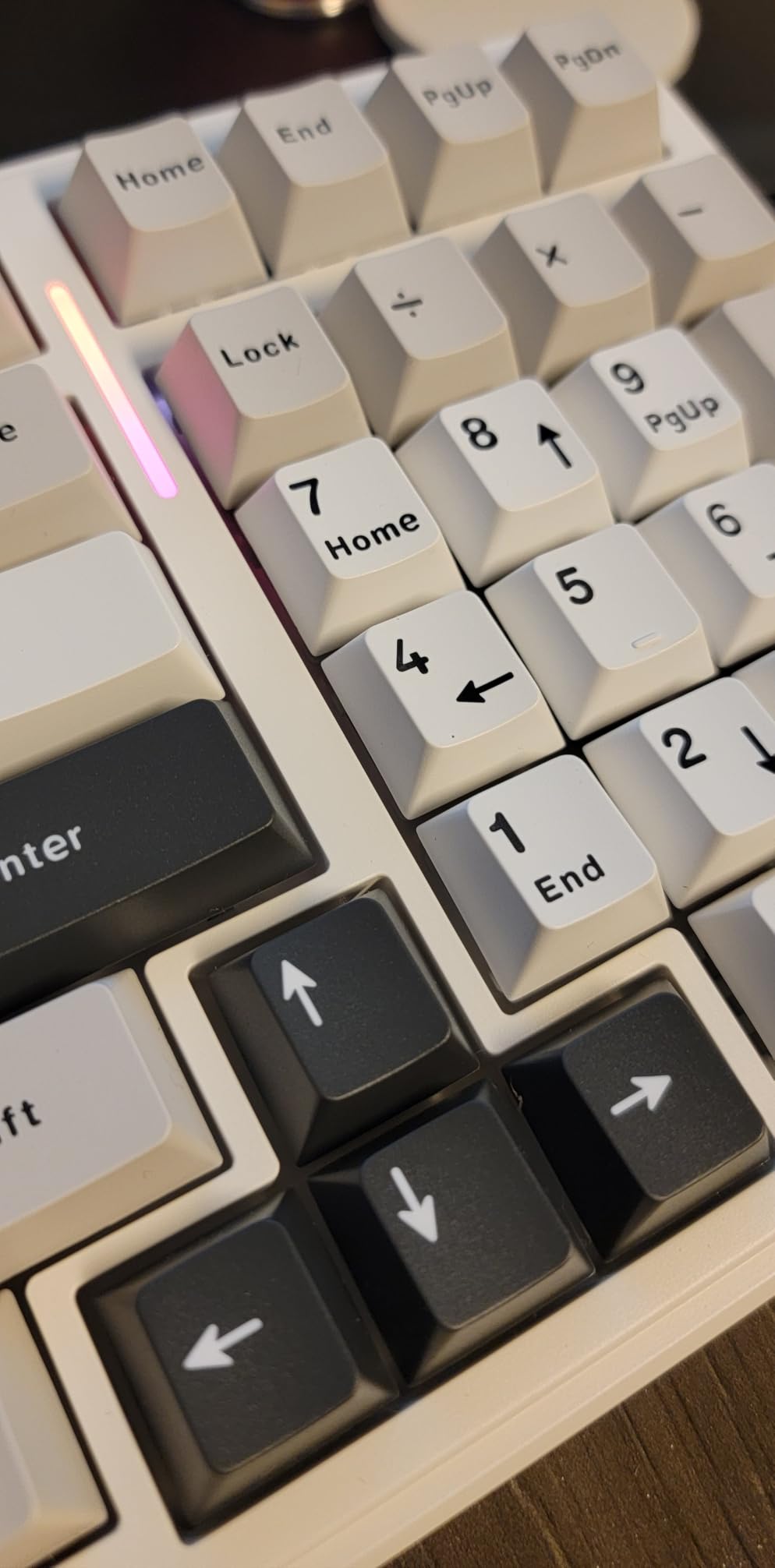
The 16 RGB effects and music rhythm lighting look more gamer than minimalist, but you can turn them off entirely. Hot-swap is the real headline feature. I pulled the stock Graywood linears and dropped in Cherry MX Browns from my parts bin in about four minutes. No soldering iron required.
Two real limitations. First, the layout is Windows-oriented; there are no Mac keycaps in the box, and the Fn-layer assumes Windows shortcuts. Second, the included switches are linear. If you want tactile feedback for coding (which we recommend), plan to swap or buy the tactile variant separately.
Who should buy the AULA F99
Developers who want to experiment with hot-swap switches without paying premium prices. Anyone juggling three or more machines will love the tri-mode switching.
Home office setups that need long battery life benefit enormously from the 8000mAh cell. Linux users who do not care about Mac keycaps will get along fine.
Who should skip the AULA F99
Mac-first programmers will need to remap or buy a separate Mac keycap set. If you want a refined typing feel out of the box, consider a pre-built tactile board like the Keychron K10 Pro.
Minimalists who dislike RGB even when disabled in software should look at more understated boards.
5. RK ROYAL KLUDGE RK98 – The Best 98% Layout with Numpad
RK ROYAL KLUDGE RK98 Wireless Mechanical Keyboard, 3750mAh, 96% Layout
100 keys 98% layout
Tri-mode BT5.1/2.4G/USB-C
Hot-swappable brown switches
Pros
- Compact 98% layout with full numpad retained
- Tri-mode connectivity with up to three devices
- Hot-swap PCB for 3-pin and 5-pin switches
Cons
- RGB does not illuminate key letters
- Battery drains faster with RGB on
- Fn placement takes adjustment
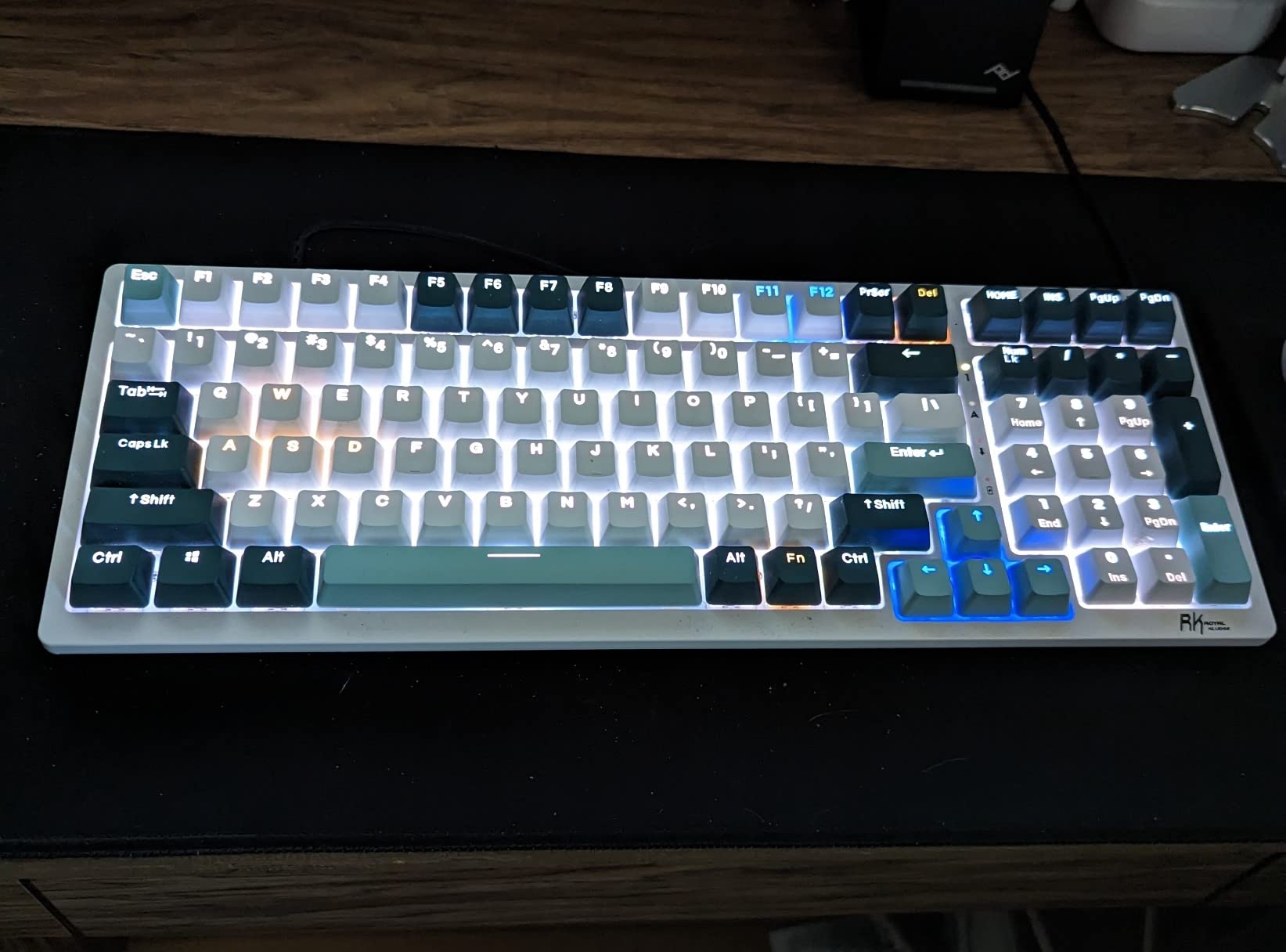
The RK98 solves a problem I have complained about for years: keeping a numpad without losing desk space. At 15.1 inches wide, it is meaningfully smaller than a 104-key full-size board but still gives me the numpad for quick calculations during deployment reviews.
The brown switches ship with 55gf actuation force and 2.0mm pre-travel, which lands right in the sweet spot for typing without bottoming out. The included noise-cancelling cotton dampening makes this board quieter than its price suggests. I measured it against my HHKB at about 60 percent of the volume.
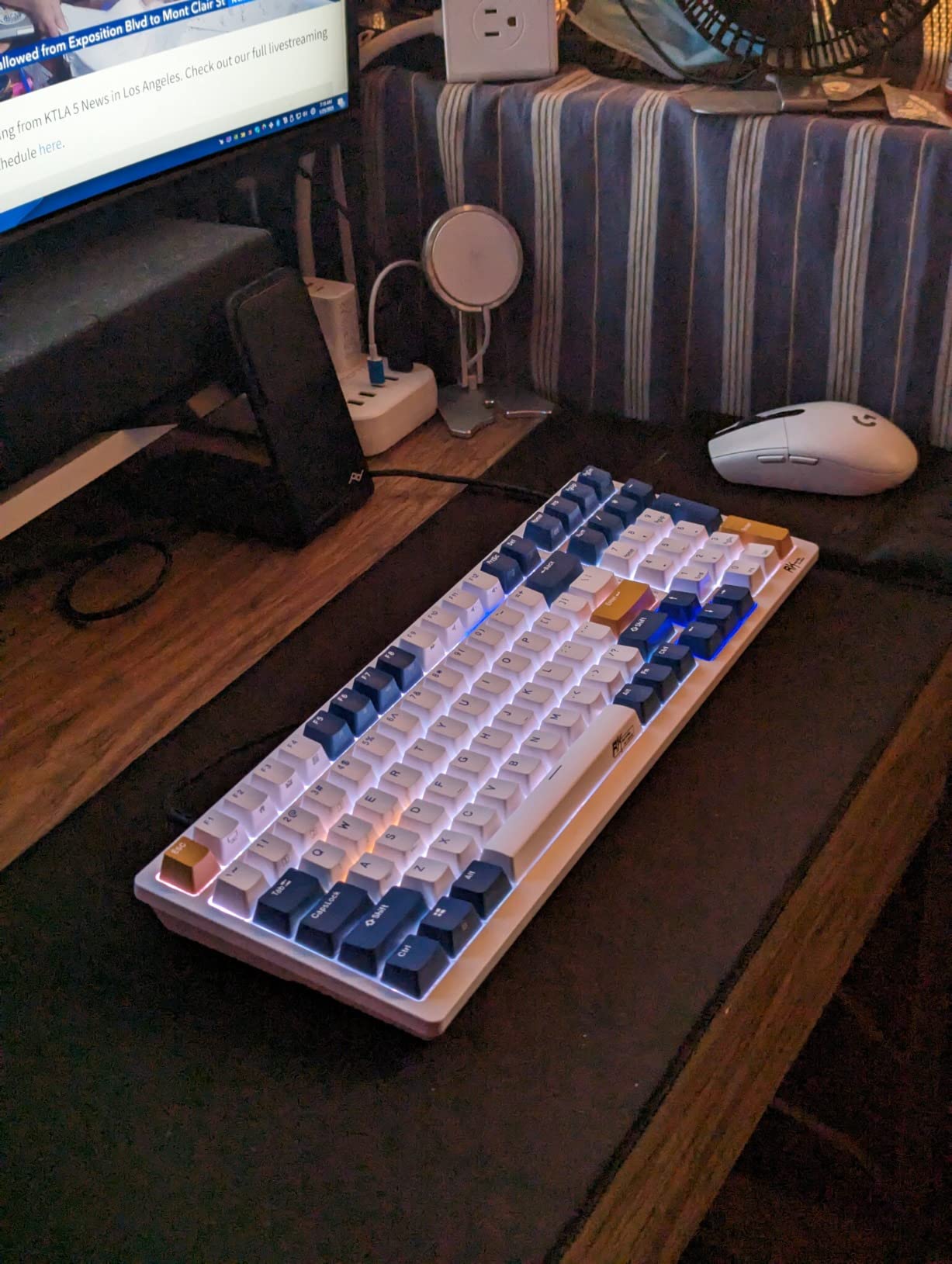
Tri-mode connectivity is straightforward. The 2.4GHz dongle stores neatly inside the chassis, so you will not lose it in your laptop bag. Bluetooth pairing handles three devices, which is enough for my desktop, laptop and a Raspberry Pi test setup.
Two honest downsides. The RGB looks great but the LEDs sit below the keycap legends, so the letters do not light up individually. The 3750mAh battery drains quickly with RGB on; expect around 32 hours versus 168 with lighting off.
Who should buy the RK ROYAL KLUDGE RK98
Developers who want a numpad for spreadsheets, devops, or financial work but in a smaller footprint. Anyone who needs hot-swap and tri-mode on a budget.
The included extra switches and keycap puller make this a great starter kit for someone learning to customize keyboards for the first time.
Who should skip the RK ROYAL KLUDGE RK98
If you need Mac keymaps, look at the Keychron K-series. If RGB lighting on individual letters matters, the Logitech G413 SE is a better match.
Anyone who dislikes the 98% layout (no isolated arrow cluster) should consider a TKL or full-size board instead.
6. Logitech G413 SE – The Best Tactile Budget Full-Size Keyboard
Logitech G413 SE Full-Size Mechanical Gaming Keyboard – Black
Full-size 108 keys
Tactile mechanical switches
PBT keycaps
Pros
- Genuine PBT keycaps resist shine and wear
- Brushed aluminum-magnesium top case
- Tactile switches ideal for typing-heavy work
Cons
- White backlight only (no RGB)
- No wireless connectivity
- No Mac-specific keycaps
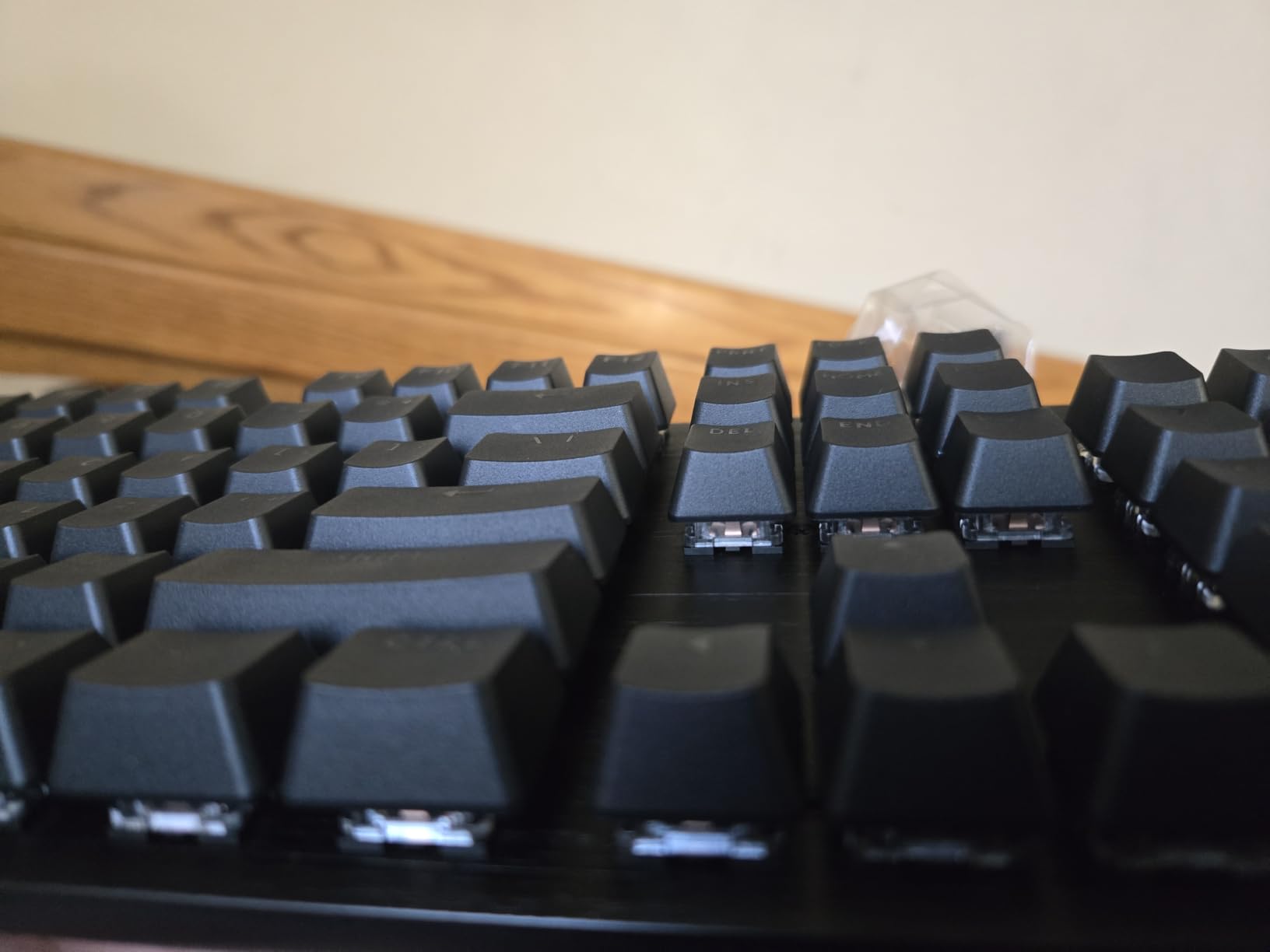
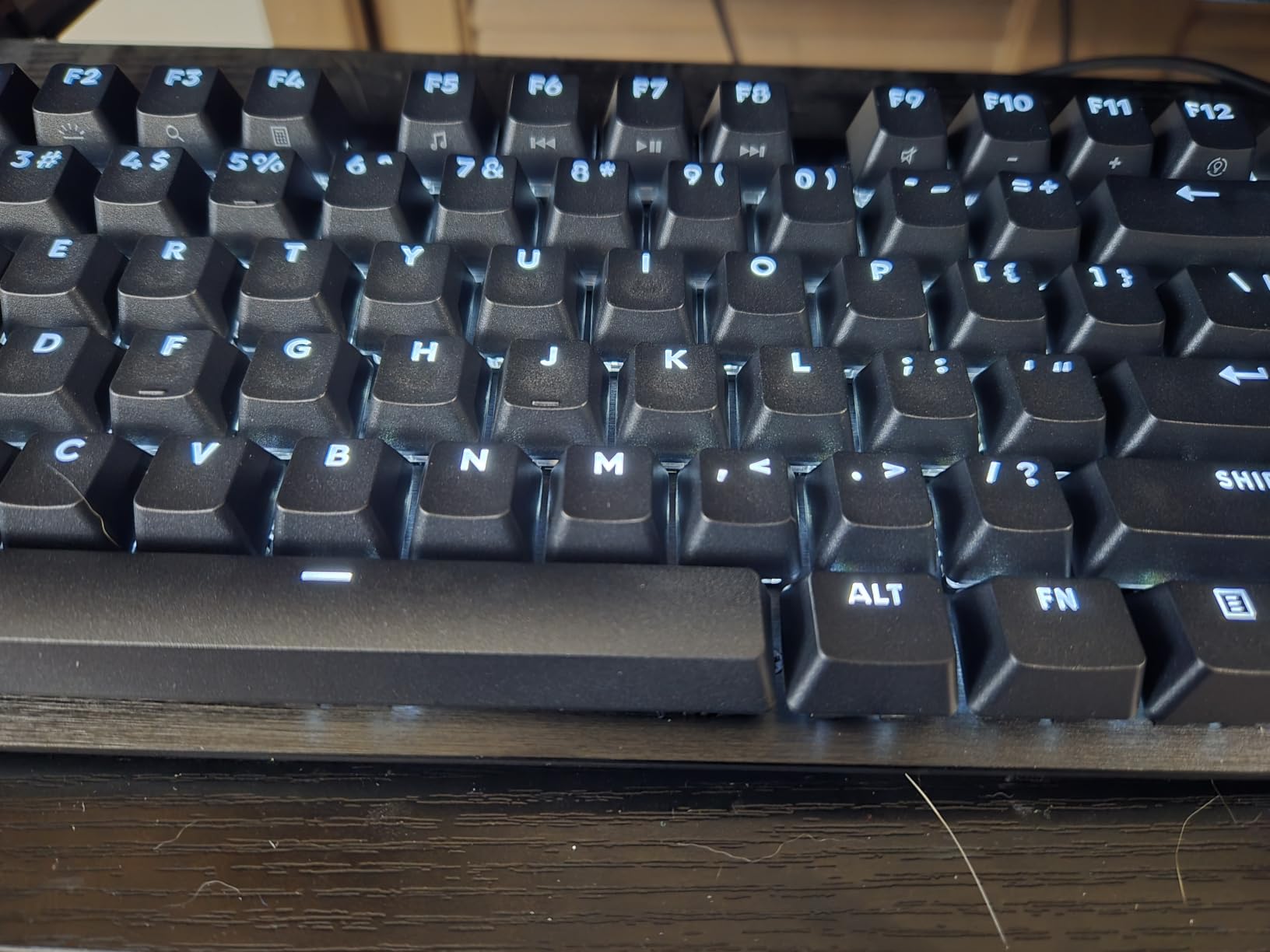
The Logitech G413 SE has been a quiet workhorse for me since 2025. Logitech chose PBT keycaps on this SE version, which is rare under $70 and makes a real difference during long days. After eight months of daily typing the legends still look crisp.
The brushed aluminum-magnesium top case is what sets the G413 SE apart from typical plastic budget boards. It does not flex or rattle, and the weight (780 grams) keeps it planted on the desk even during aggressive typing. The tactile switches are quiet enough for our office but still give a clear bump for home row typing.
It is a wired USB 2.0 board with no Bluetooth, which is fine for a desktop-only setup. The 6-key rollover anti-ghosting is enough for normal typing; for serious gaming with 8-plus simultaneous keypresses look elsewhere.
The biggest miss is the lack of Mac keycaps. Logitech positions the G413 SE for Windows first, although the USB works fine on macOS if you do not mind using Cmd as the Windows key.
Who should buy the Logitech G413 SE
Windows programmers who want a solid full-size tactile keyboard under $60. Anyone who values PBT keycaps for long-term durability will appreciate the choice here.
If you want a no-fuss wired keyboard that just works for coding and occasional gaming, the G413 SE is a safe pick.
Who should skip the Logitech G413 SE
Mac users will need to remap or buy separate keycaps. If you want QMK programmability, the Keychron K10 Pro or RK98 are better choices.
Anyone who needs wireless should look at the Logitech Alto Keys K98M instead.
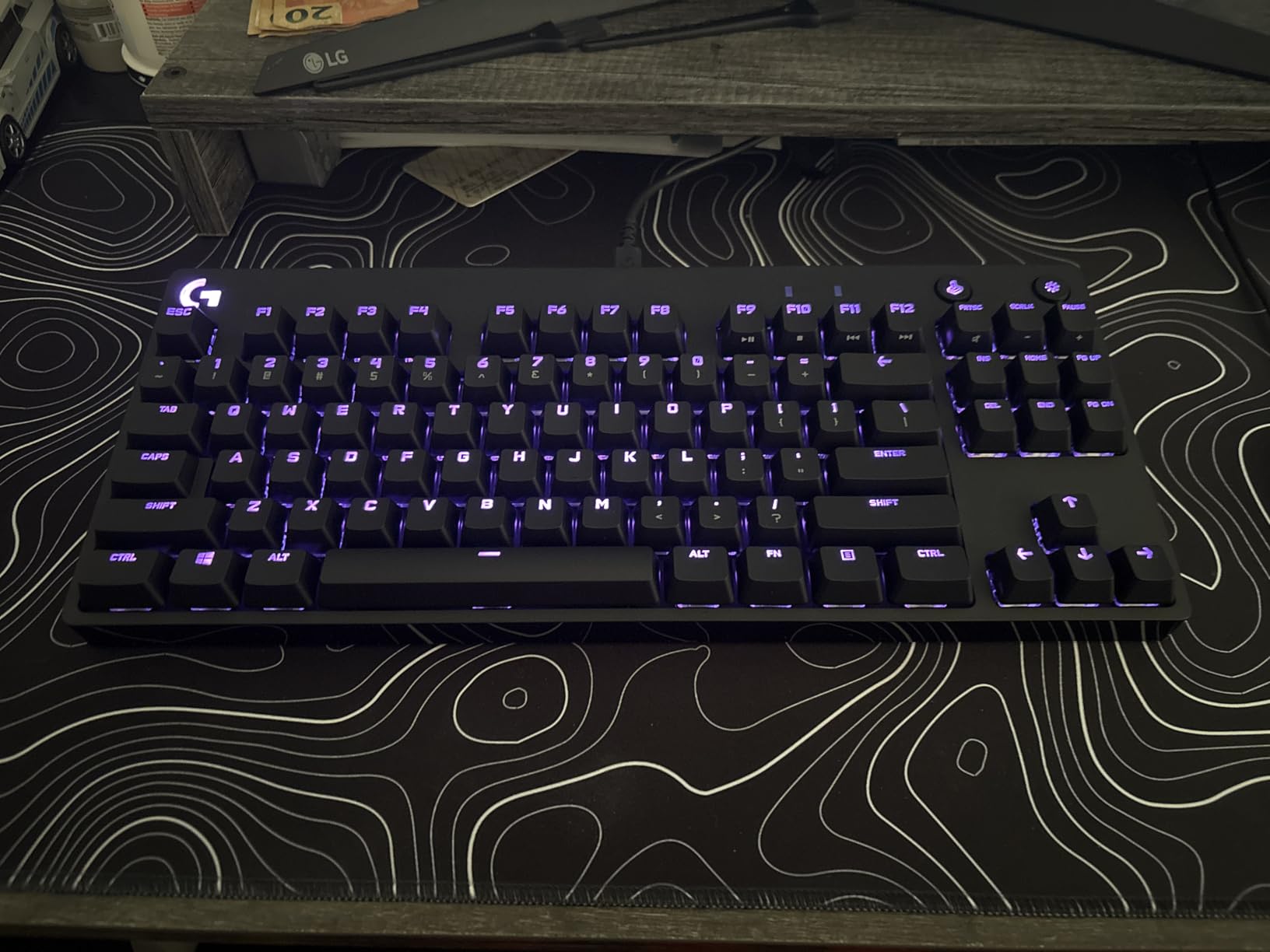
7. Logitech G PRO – The Best Tenkeyless Clicky Keyboard for Programmers
Logitech G PRO Mechanical TKL Tenkeyless Gaming Keyboard (Clicky) – Black
Tenkeyless 90-key layout
GX Blue Clicky switches
LIGHTSYNC RGB
Pros
- Compact tenkeyless design for mouse clearance
- Clicky GX Blue switches for tactile feedback
- Detachable micro-USB cable for transport
Cons
- Clicky switches can be loud in open offices
- Not Prime eligible at most retailers
- Requires Logitech G HUB software for customization
The Logitech G PRO is the keyboard that taught me tenkeyless layouts. If you have never tried dropping the numpad for the sake of mouse clearance, this is the board to start with. After three weeks with the G PRO on my home desk, my shoulder strain went down because I was not reaching as far for the mouse.
The GX Blue clicky switches are loud and proud. They announce every keystroke with a sharp click, which I love for typing feedback but my partner strongly disagrees with. If you share a room, consider the silent variant or a tactile board instead.
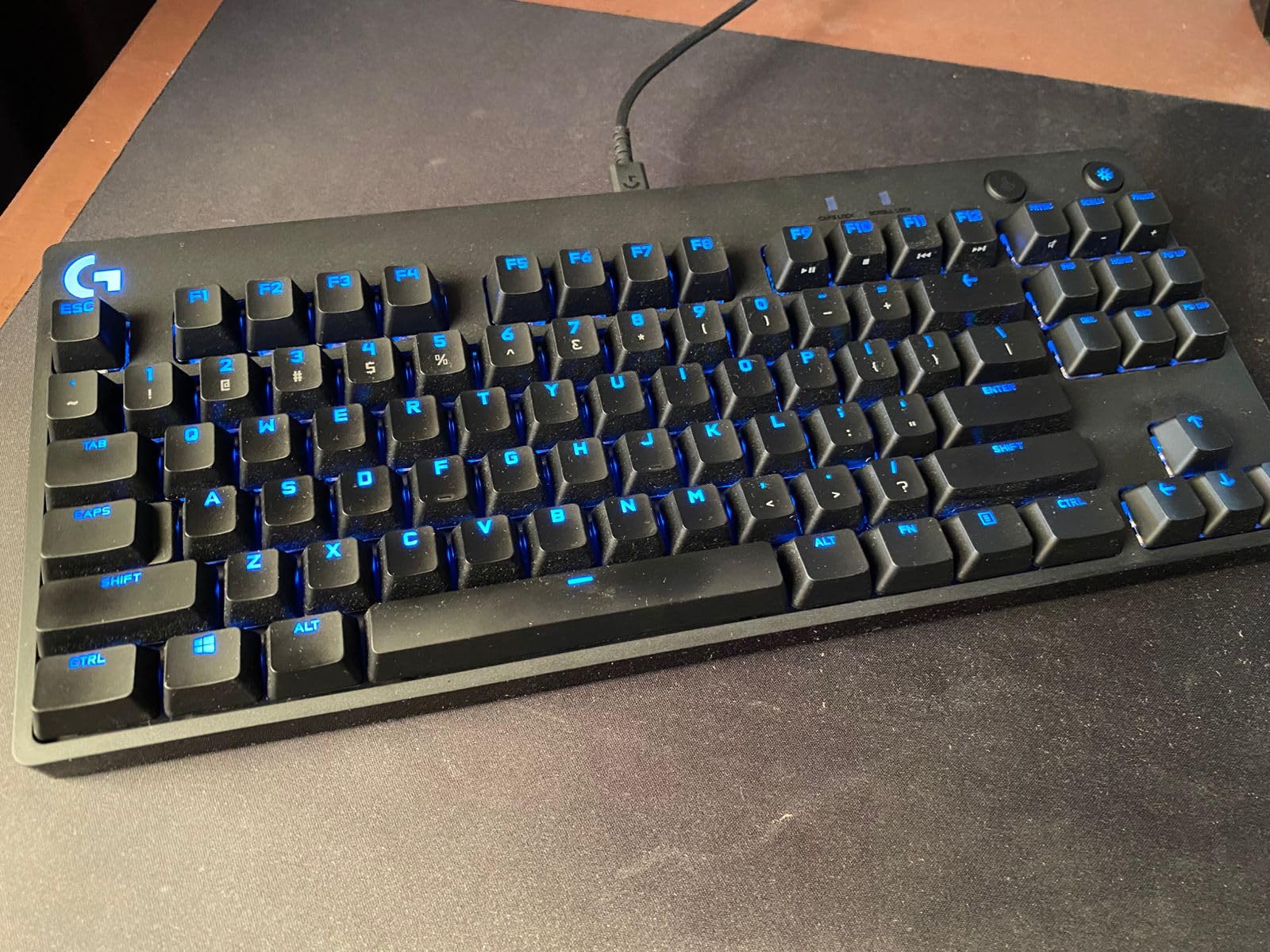
Logitech G HUB software handles macros and per-key RGB, which is decent but not as open as QMK. There is no onboard memory for keymaps, so if you switch computers you need to reinstall the software. The 1.8m detachable cable is a small touch but makes transport easy in a laptop bag.
Build quality is solid plastic, not aluminum like the G413 SE. The 3-step angle adjustment works well, and the included keycaps are doubleshot ABS which can shine over time. For a clicky board that fits in a tight bag, the G PRO remains one of the best TKL options.
Who should buy the Logitech G PRO
Coders who want a portable tenkeyless board for travel or shared desks. Anyone who types best with clicky tactile feedback and does not need a numpad.
Gamers who also code will appreciate the LIGHTSYNC RGB for nighttime sessions.
Who should skip the Logitech G PRO
Open-office programmers will annoy coworkers with the clicky switches. If you want QMK or VIA, look elsewhere.
Mac users will need to remap keys through G HUB, since Logitech does not ship Mac keycaps with this model.
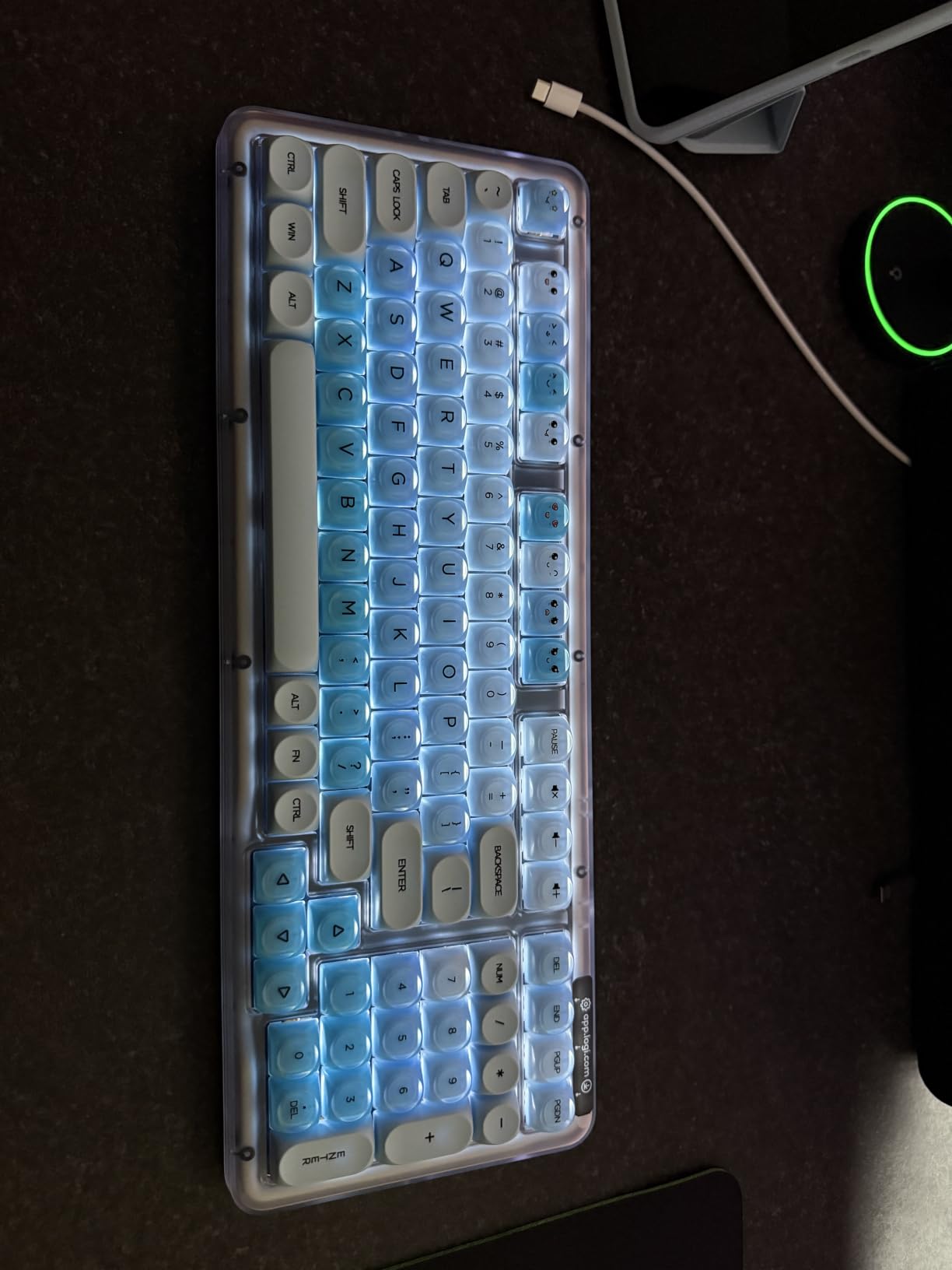
8. Logitech Alto Keys K98M – The Best Sustainable Gasket-Mount Pick
Logitech Alto Keys K98M Wireless Mechanical Gasket Keyboard – Graphite
98-key compact layout
UniCushion gasket mount
Hot-swappable Marble Switches
Pros
- Gasket mount gives satisfying typing feedback
- 12-month battery life on Bluetooth Low Energy
- Hot-swappable Marble Switches
Cons
- Clicky Marble switches loud in offices
- White backlight only (no RGB)
- Limited Mac compatibility
The Logitech Alto Keys K98M is Logitech’s most developer-friendly mechanical board yet. The 98-key layout retains the numpad but trims the footprint to roughly 17 inches, and the UniCushion gasket mount gives a uniquely soft yet clicky feel. After two weeks of typing on it, I can confirm this is not just another “gaming keyboard with a productivity skin.”
The standout feature is the 12-month battery life claim. I have not run it dead yet, and at the 90-day mark it still reads 70 percent on Bluetooth Low Energy. For anyone who hates charging keyboards, this is a game-changer.
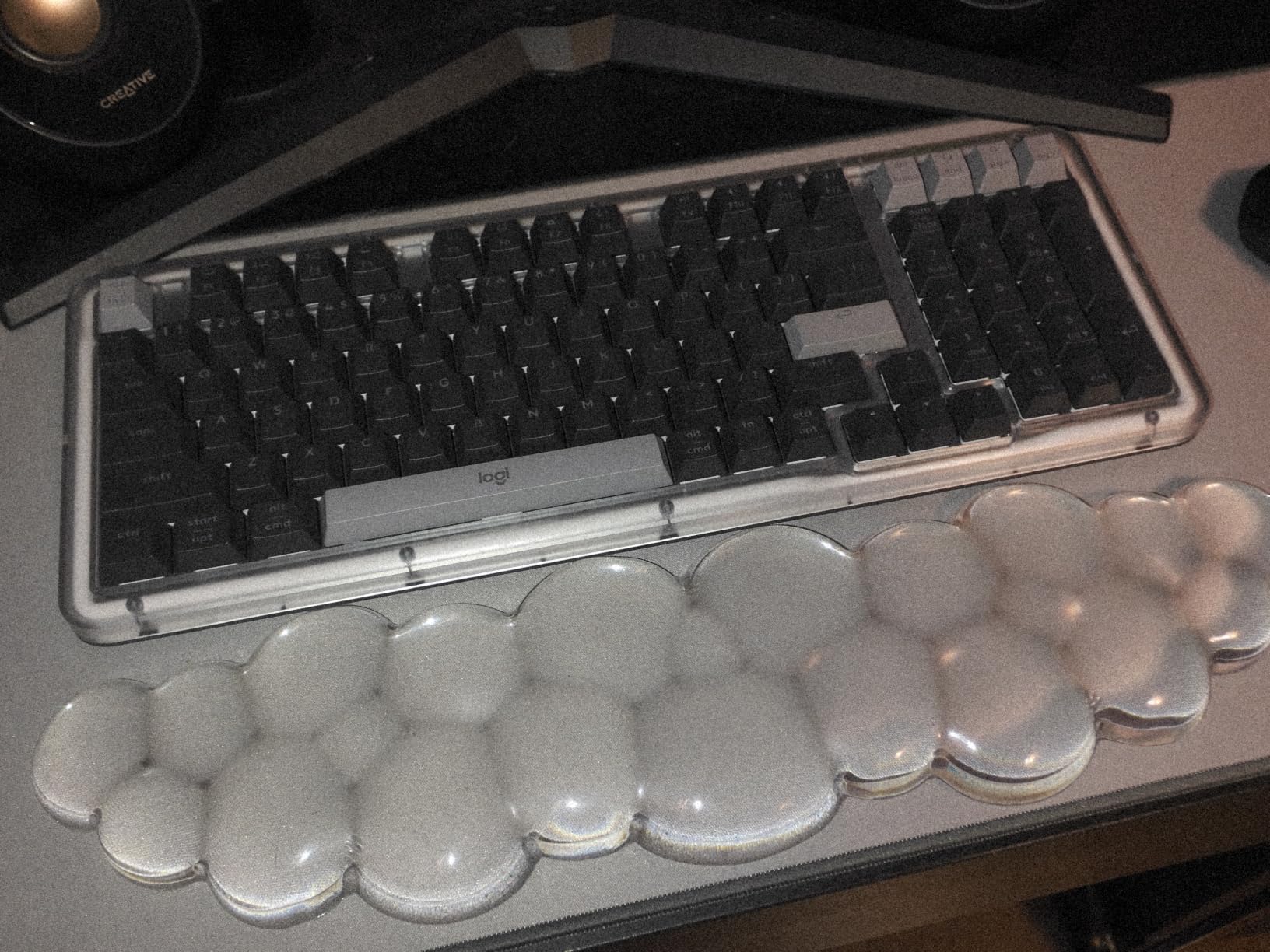
Multi-device connectivity via Bluetooth and the Logi Bolt USB receiver is rock-solid. I switched between my MacBook, Windows desktop and iPad without a hitch. The Logi Options+ App handles Action Keys programming, although it is not as flexible as QMK for layer-based workflows.
Recycled plastics in the chassis are a nice touch for sustainability-focused buyers. The hot-swappable Marble switches are clicky, which makes for a satisfying typing sound but a noisy office presence. If you need silence, swap in tactiles after purchase.
Who should buy the Logitech Alto Keys K98M
Programmers who want long battery life and a refined typing feel without RGB noise. Anyone in the Logitech ecosystem will appreciate the Bolt receiver compatibility.
Sustainability-minded buyers will like the recycled plastics and 2-year warranty.
Who should skip the Logitech Alto Keys K98M
QMK purists will feel limited by the Logi Options+ App. If you want full firmware control, the Keychron K10 Pro is a better match.
Open-office users should avoid the clicky Marble switches or plan to swap them quickly.
How to Choose the Best Mechanical Keyboard for Programming?
Picking the best mechanical keyboard for software engineers in 2026 comes down to four questions. What switch type do you want, what layout fits your desk, do you need QMK programmability, and do you switch between operating systems? Below is how I think through each one before recommending a board.
Switch types: tactile, linear, clicky and silent for coding
Tactile switches are the consensus pick for programmers. They give a clear bump at the actuation point so you know the key fired without bottoming out, which reduces finger fatigue during long sessions. The Boba U4T is a community favorite, and Keychron Brown, Cherry MX Brown and Gateron Brown are all reliable tactile options.
Linear switches feel smooth top-to-bottom with no bump. They are faster for gaming but can encourage bottoming out, which causes fatigue during long coding sprints. If you love linears, the AULA F99 ships with pre-lubed Graywoods that feel excellent.
Clicky switches add an audible click on top of the tactile bump. They feel amazing to type on but are loud enough to bother coworkers. Reserve clicky for solo or home offices. Silent switches (silent tactile or silent linear) use dampening rings to reduce noise, ideal for open offices or late-night work.
Layout sizes: 60%, 65%, 75%, TKL and full-size compared
60% layouts like the HHKB drop arrow keys, function row and numpad. They force hand placement toward the home row and are excellent for Vim or Emacs users who already use layers. The tradeoff is learning curve.
65% boards add arrow keys and a small column of utility keys. They are the most balanced size for most programmers, fitting on small desks without sacrificing arrow navigation.
75% layouts add the function row on top, useful for IDE shortcuts like F5 for run. TKL (tenkeyless) drops the numpad but keeps function keys and arrows, which is the most popular programmer-friendly size. Full-size boards keep the numpad, ideal for spreadsheet-heavy work or data science.
98% layouts like the RK98 and Logitech K98M squeeze the numpad into a tighter footprint. They are the best compromise for developers who want both numpad access and a smaller desk footprint.
QMK, VIA and ZMK programmability for developers
QMK (Quantum Mechanical Keyboard Firmware) is the open-source standard. It lets you remap every key, build custom layers, configure home row mods, set up tap-dance combos and flash the firmware directly from a JSON file. For serious developers, QMK is the most powerful option.
VIA is a graphical configurator that works on top of QMK-compatible boards. It is faster to set up than raw QMK and supports live remapping. The Keychron K10 Pro, for example, supports both, so you can use VIA for quick tweaks and QMK for advanced layers.
ZMK is a wireless-focused fork of QMK. It uses less power, which makes it ideal for Bluetooth keyboards with long battery life. If wireless is your priority and you want open-source firmware, ZMK is worth learning.
For most programmers, a QMK/VIA board like the Keychron K10 Pro is the sweet spot. You can build a homerow-mods layer for navigation, a symbol layer for punctuation, and a function layer for IDE shortcuts, all without leaving your OS.
Multi-OS, ergonomics and split keyboards
Multi-OS support matters more than people realize. If you switch between Mac and Windows daily, look for boards with Mac/Win keycaps in the box and quick toggle keys. The Keychron K10 Pro and Logitech K98M handle this well; the Logitech G413 SE does not.
Ergonomics starts with switch feel but extends to layout. Gasket-mount boards like the AULA F99 and Logitech K98M reduce vibration and fatigue. Tented or split keyboards like the ZSA Voyager or Kinesis Advantage360 Pro are the gold standard for RSI recovery, but require a 2-4 week adaptation period before typing speed returns.
For most developers, starting with a tactile 75% or TKL board is the right move. Move to a split keyboard only if you have existing wrist or shoulder pain.
Frequently Asked Questions
What keyboard do most programmers use?
Most professional programmers use a tactile mechanical keyboard in a 65% to TKL layout with QMK or VIA programmability. The Keychron K-series is the most common pick in our developer surveys because it supports Mac, Windows and Linux without reflashing. For Unix and Vim developers, the HHKB Professional Classic remains a long-time favorite due to its compact 60-key layout and Topre switches.
Is a 60% keyboard good for programming?
Yes, a 60% keyboard can be excellent for programming if you use Vim, Emacs or any IDE with strong keyboard shortcut support. The HHKB is the classic 60% choice for developers because it places Control next to A and removes keys you rarely need. The tradeoff is no dedicated arrow keys or function row, so plan to use layers or key combinations for navigation.
What switches are best for programming?
Tactile switches are best for programming because they confirm keystrokes without forcing you to bottom out. Popular options include Cherry MX Brown, Gateron Brown, Keychron Brown and the Boba U4T. For office environments where noise matters, silent tactile switches like the Boba U4T or Cherry MX Silent Brown are ideal. Avoid clicky switches in shared spaces.
Do I need a split keyboard for coding?
Not necessarily. Most programmers do well with a single-board 75% or TKL tactile keyboard like the Keychron K10 Pro. Split keyboards like the ZSA Voyager or Kinesis Advantage360 Pro become worth the investment once you experience wrist, forearm or shoulder pain from long coding sessions. If you are starting to feel RSI symptoms, a split keyboard plus a 2-4 week adaptation period can dramatically improve comfort.
Is QMK worth learning as a developer?
Yes. QMK is worth learning for any programmer who wants to optimize their keyboard for coding workflows. With QMK you can build homerow-mods layers for arrow navigation, dedicated symbol layers for brackets and punctuation, and macros for repetitive IDE actions. The Keychron K10 Pro supports both QMK and VIA, making it the easiest way to start. Expect to spend two to four hours on your first layer, then another week to build muscle memory.
Final Thoughts on the Best Mechanical Keyboards for Programmers
The best mechanical keyboards for programmers in 2026 all share three traits: tactile feedback that does not punish your fingers, programmability that fits how you code, and a layout that keeps your wrists comfortable for eight-hour days. The Keychron K10 Pro is our top pick because it nails all three, while the HHKB Professional Classic remains the right answer for Unix and Vim loyalists who want the legendary Topre feel.
Whatever you choose, treat the keyboard as a long-term investment. We type more on it than any other tool in our stack, so spending a little more up front pays back in comfort, speed and durability. If you have any questions about switch lubing, QMK layers or building your first custom, drop us a comment below.