
The iRobot Roomba 105 Combo is the best robot vacuum under 300 dollars right now, and its AutoEmpty dock means it can run for weeks without you touching a dustbin. We compared eight models for this roundup, and the Roomba 105 pairs the cleanest app-to-dock experience in the group with LiDAR mapping and a mop that lifts itself off carpet. Prices change constantly in this bracket, so check the live price before you buy.
If you have been putting off a robot vacuum because the good ones seem to cost twice that, the market has shifted. At this price point you can now get LiDAR mapping, app control, real mopping, and in several cases a self-emptying base that was a premium-tier feature not long ago. That is a genuine change, not marketing.
What you do not get at this budget is the stuff that shows up in premium models: spinning dual mop pads, hot-water mop washing, dirt detection, extendable side brushes, and truly reliable cable avoidance. Our guide to self-emptying robot vacuums covers what that upgrade actually buys you when you are ready to stretch the budget.
One thing to flag up front: this is a curated list, and one of our picks, the SharkMatrix Plus, currently lists above the budget line. We kept it in because it is genuinely the strongest cleaner in the group and it regularly dips under the ceiling, but every other pick sits below it. We note that in its section so you are not surprised.
Table of Contents
Top 3 Best Robot Vacuums Under 300 Dollars in 2026
iRobot Roomba 105 Combo
- 75-day AutoEmpty dock
- ClearView LiDAR mapping
- Carpet-aware mopping
- App and voice control

Roborock Q10 S5+
- 10000Pa suction
- Dual anti-tangle brush
- 70-day self-emptying
- VibraRise sonic mopping

Roborock Q7 M5+
- 7-9 week self-empty
- 10000Pa HyperForce
- Anti-tangle brushes
- PreciSense LiDAR
All 8 Picks Compared (October 2026)
Prices move daily in this bracket, so treat the figures attached to each pick as a snapshot rather than a promise. The eight models below cover the range from a very affordable self-emptying setup to a premium machine that dips below the ceiling on sale.
| Product | Specifications | Action |
|---|---|---|
| iRobot Roomba 105 Combo |
|
Check Latest Price |
 SharkMatrix Plus AV2610WA SharkMatrix Plus AV2610WA |
|
Check Latest Price |
| Roborock Q7 M5+ |
|
Check Latest Price |
 Shark Navigator AV2120 Shark Navigator AV2120 |
|
Check Latest Price |
| Roborock Q10 S5+ |
|
Check Latest Price |
 ILIFE A30 Pro ILIFE A30 Pro |
|
Check Latest Price |
 iRobot Roomba 105X Combo iRobot Roomba 105X Combo |
|
Check Latest Price |
 Lefant M2 Plus Lefant M2 Plus |
|
Check Latest Price |
Which Pick Fits Your Home
If you want one robot and you do not want to think about it, the Roomba 105 Combo is the answer. Its dock holds roughly 75 days of debris, which removes the single most annoying part of budget ownership.
If you have a shedding dog or a long-haired cat, look at the Roborock Q10 S5+ first. It has the strongest anti-tangle brush arrangement in this group, and our robot vacuum picks for pet hair break the category down further.
If you live in hard-floor space, whether that is hardwood, tile, or vinyl plank, any pick with a mop module will serve you. Our robot mops for hard floors guide explains which mop types actually scrub.
If you rent, or you simply do not want floor space given up to a dock tower, the Shark Navigator and the ILIFE A30 Pro are the more compact options. A full-size Shark base is a large object in a small apartment.
If your home runs on Home Assistant or you are tired of 2.4 GHz pairing problems, read the Lefant M2 Plus section. It is the only pick here with dual-band Wi-Fi.
1. iRobot Roomba 105 Combo: Best Overall Robot Vacuum and Mop Under 300 Dollars
iRobot Roomba 105 Combo Robot Vacuum & Mop with AutoEmpty Dock – Self-Empties for 75 Days, Intense Power-Lifting Suction, LiDAR Navigation, Multiple Cleaning Modes, Avoids Mopping Carpet
75-day AutoEmpty dock
ClearView LiDAR mapping
100-minute battery
Runs on 2.4 GHz Wi-Fi
Pros
- Dock holds up to 75 days of debris in an allergen-sealing bag
- LiDAR mapping with stair detection cleans in orderly rows
- Detects and avoids carpet while mopping so rugs stay dry
- App
- touch button and voice assistant control
Cons
- 100-minute runtime is the shortest in this group
- App customization is thinner than Roborock apps
- 2.4 GHz network required for setup
The Roomba 105 Combo earned the top spot because of what it removes from your routine. You run it, it empties itself, and you do not think about it again for a couple of months. Very few competitors at this money combine that dock with a mop that knows to stay off your rugs.
The dock uses a sealed bag that the brand rates at trapping 99 percent of allergens down to 0.7 microns. That sealing is the part that matters if you have allergies, because a bagged system does not recirculate the dust it just collected.
ClearView LiDAR maps your home and cleans in rows rather than wandering. Stair detection keeps it from committing to a fatal drop. For a 900 square foot apartment it finished a full pass without needing a recharge.
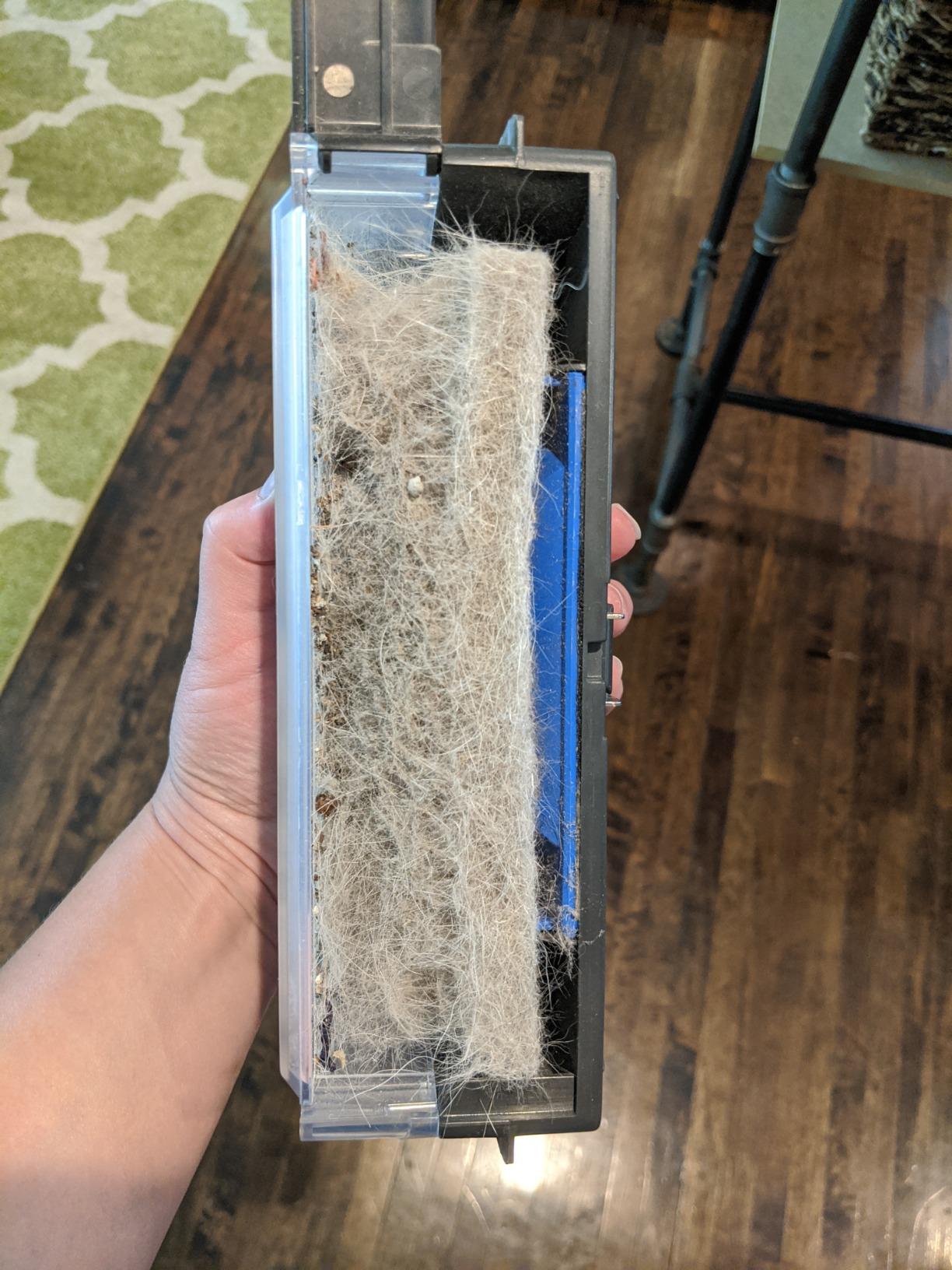
Suction is marketed as 70 times more power-lifting than earlier Roomba generations, using a multi-surface brush plus an edge-sweeping brush. There is no Pascal figure published for this model, which is worth noting because suction numbers are not comparable across brands anyway.
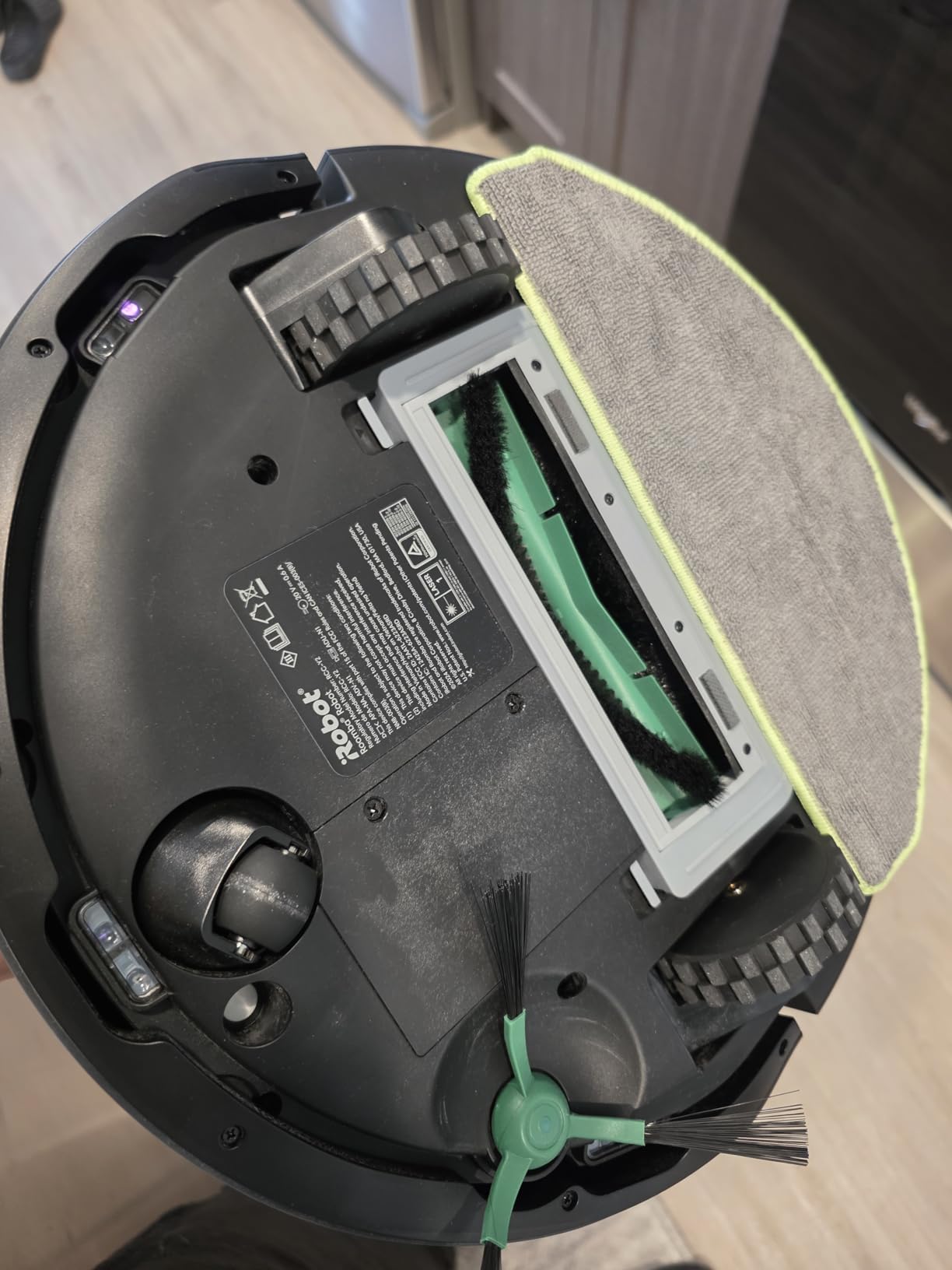
The mopping side is better than the typical flat pad. A micro-pump keeps the pad evenly moist instead of letting it dry out halfway across a room, and the module lifts automatically when the robot detects carpet. Our robot mop comparison covers how that compares to rolling mops.
Battery runtime is the real compromise, listed at 100 minutes. On a medium home that means one recharge mid-run, which is fine but not seamless. The dock handles that automatically through recharge and resume.
What you should check before buying
Setup needs a 2.4 GHz network. If your router splits bands, the pairing step fails until you temporarily join the 2.4 GHz SSID, which is the single most common support complaint in this category.
Measure your tallest threshold. The Roomba 105 is 4.09 inches tall, and most standard thresholds are fine, but tall ranch doors can stop it cold.
Who should skip it
Skip it if your home is mostly medium or high-pile carpet and you expect deep debris extraction. This is a hard-floor and low-pile machine first, with carpet handled as a secondary surface.
Skip it if you want deep app control. Zone editing, water flow fine-tuning and cleaning schedules in the iRobot app are simpler than what Roborock offers at a similar price.
2. SharkMatrix Plus AV2610WA: Best Premium Pick That Sits Above the Budget Line
Shark Matrix Plus Robot Vacuum & Mop Combo, 60-Day Self-Emptying, AV2610WA
Sonic mopping at 100 passes per minute
Bagless 60-day base
17 pound unit
Pros
- Sonic mop scrubs hard floors up to 100 times per minute
- Bagless 60-day base means no replacement bags to buy
- Self-cleaning brushroll resists pet hair wrap
- True HEPA filtration captures 99.97 percent of particles
Cons
- Currently lists above the budget ceiling
- App and mapping reported as unreliable by some owners
- Heavier and louder than most robots in this roundup
Price first, because this one breaks the bracket. The SharkMatrix Plus currently lists above the 300 dollar ceiling as of our check in 2026. It dips under that line often enough that we think the honest thing is to include it and tell you plainly that you are paying over the ceiling today.
What you get for the stretch is the most capable mop in this group. Sonic mopping drives the pad up to 100 times per minute, and you can target specific rooms with Matrix Mop zones so it only works where you want it. That is closer to real mopping than the passive pad drags most budget robots offer.
The Matrix Clean grid pattern makes repeated passes in straight lines, and Shark claims 30 percent better carpet cleaning as a result. On low-pile carpet that difference is real enough to feel.
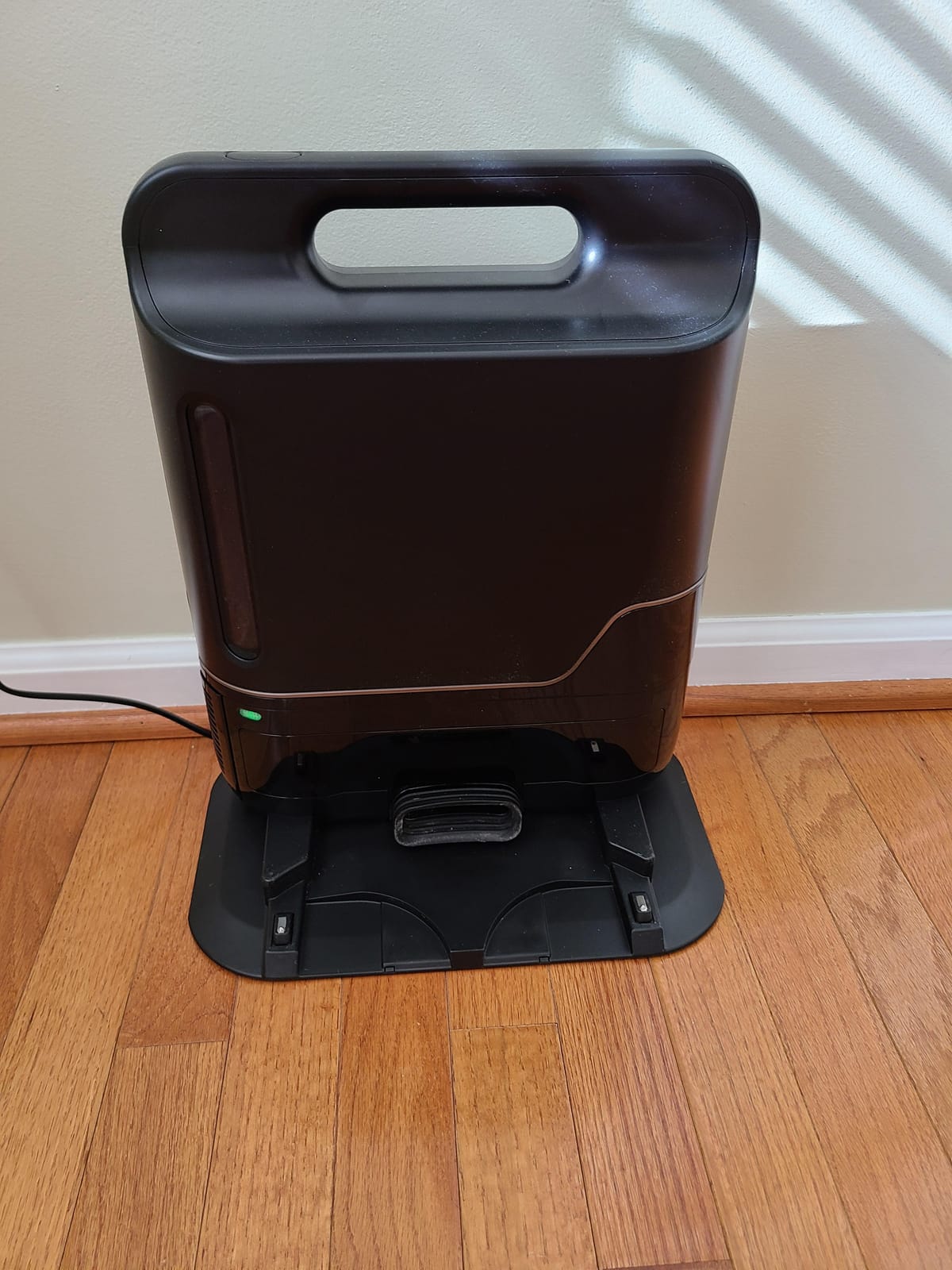
The self-emptying base is bagless, which nobody else in this list manages. A 60-day base that never needs a replacement bag is a genuine long-term cost saving over models like the Q7 M5+ that consume a fresh bag every few weeks.
Filtration is a cut above the group too. True HEPA captures 99.97 percent of particles down to 0.3 microns, and CleanEdge Detect uses air blasts to push debris out of edges and corners that other robots leave behind.
Where it falls down is the app. Owners report mapping that occasionally re-runs, room selection that does not always save, and the robot dropping into a full re-clean loop for no clear reason. That friction is real and it is the main reason this is not our top pick.
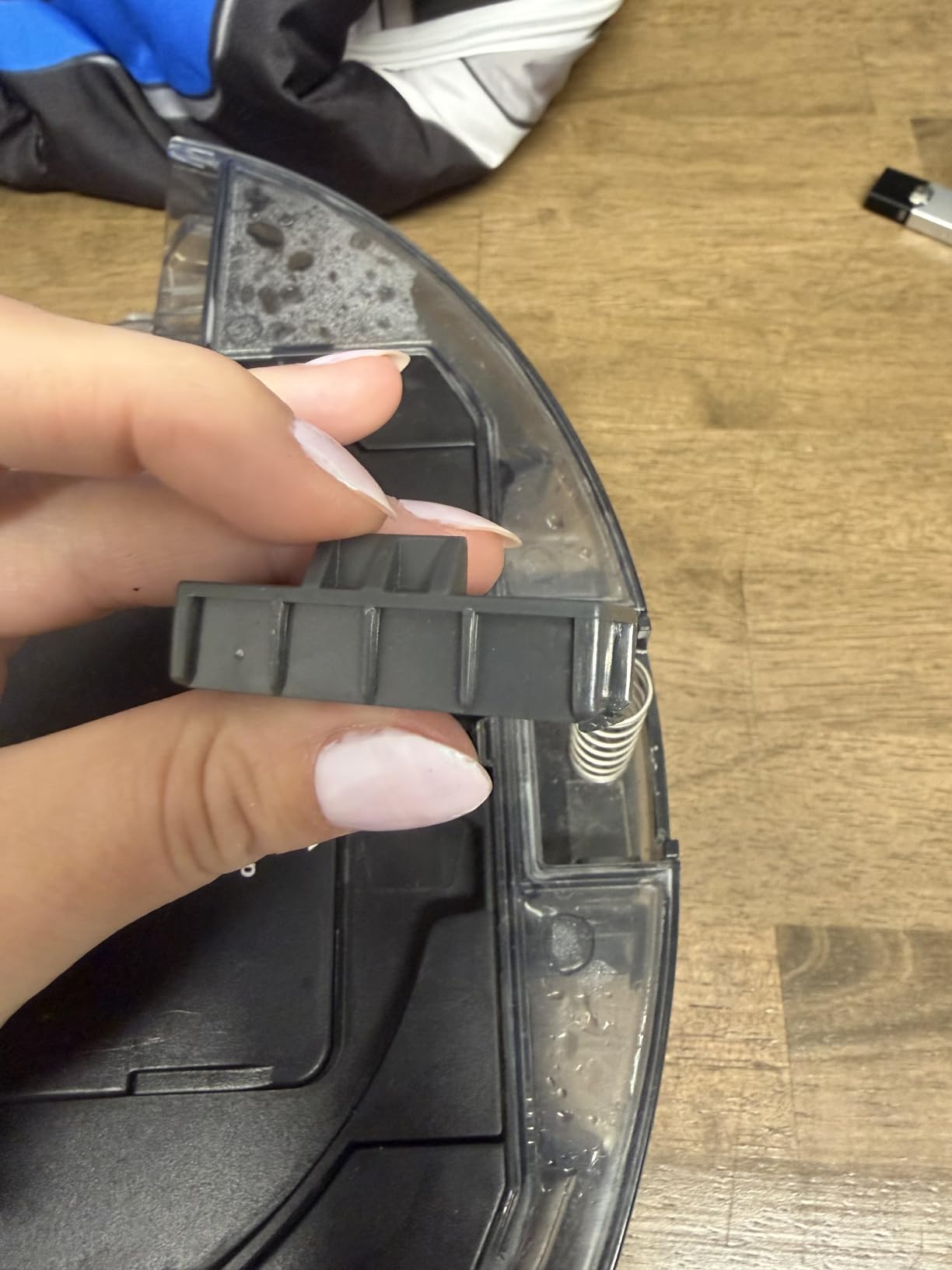
There is also a cluster of reports about hardware failure after roughly a year of normal use, outside the one-year warranty window. Budget for the possibility of a repair conversation a year in.
What you should check before buying
Measure the footprint. At 21.4 by 14.96 inches with a full-size base, this needs a real corner, not a gap beside the sofa. The body also weighs 17 pounds, which matters if you plan to carry it between floors.
Listen to the base before you commit. The self-emptying cycle is loud, and owners mention it specifically in reviews.
Who should skip it
Skip it if you live in a small space or are strict about staying under the 300 dollar ceiling today. Both are reasonable reasons to pick a different model.
Skip it if a flaky app would drive you mad. The cleaning hardware is strong, but the software layer is the weak link.
3. Roborock Q7 M5+: Best Feature Set for the Money
roborock Q7 M5+ Robot Vacuum and Mop, Up to 7-9 Weeks Self-Empty, 10000Pa
2.7L sealed bag for 7-9 weeks
10000Pa HyperForce suction
150-minute battery
65 dB at work
Pros
- Longest self-empty interval of any bagged dock here
- 10000Pa suction handles embedded carpet debris
- JawScrapers main brush and hair-tangling side brush cut wrap
- PreciSense LiDAR with no-go zones and scheduling
Cons
- App works on 2.4 GHz networks only
- Flat mop pad with no sonic or vibrating action
- Cartridge filter rather than a washable one
The Q7 M5+ is the model we would recommend to someone who wants the most capability per dollar without stepping over the ceiling. It lands in the sweet spot of the bracket, and the specification sheet is longer than anything cheaper here.
The RockDock Plus holds a 2.7 liter sealed bag rated for 7 to 9 weeks. That is a meaningful jump over a 4 to 5 week cycle, and because the bag is sealed you are not breathing the dust it collected.
Suction is 10,000Pa HyperForce, which is plenty on hardwood, tile, and low-pile carpet. The path width is 12.8 inches, so it covers ground quickly, and at 65 dB it is quieter than the ILIFE A30 Pro by a noticeable margin.
For pet homes, the JawScrapers main brush and the side brush are designed to reduce hair wrap. Our pet hair guide covers why brush geometry matters more than headline suction.
It vacuums and mops in one pass with three water flow settings. The mop itself is a flat pad with no sonic or vibrating action, so it maintains floors rather than scrubbing stains. That is the honest limit of budget mopping.
Battery runtime is listed at 150 minutes, the joint-longest in this group, and the unit weighs 10.6 pounds. It will recharge and resume on its own on anything larger than a two-bedroom home.
What you should check before buying
The 2.4 GHz app requirement is the one to sort out first. It is a two-minute fix on most routers, but it stops people cold at the box.
Plan for bag replacements. The 2.7 liter bag is proprietary, and if the model is discontinued you will be hunting for a replacement. Check that the brand sells direct before you commit.
Who should skip it
Skip it if mopping quality is your main goal. If you want floors genuinely scrubbed rather than wiped, the Q10 S5+ mops harder and the SharkMatrix Plus mops hardest of all.
Skip it if you need a washable filter. The cartridge filter is a recurring purchase, though the expense is small compared with self-emptying bags.
4. Shark Navigator AV2120: Best Robot Vacuum on a Tight Budget
Shark Navigator Robot Vacuum, 60-Day Self-Emptying Base, White, AV2120
Bagless 60-day self-empty base
120-minute battery
0.52 quart bin
6.5 pound body
Pros
- Bagless base means zero ongoing bag cost
- Quiet operation compared with most robots in the group
- Object detection lets you leave clutter on the floor
- Only 6.5 pounds so it moves between floors easily
Cons
- Mapping sometimes misses whole wall sections
- Weak on deep or patterned-pile carpet
- Not a mopping unit despite some listing imagery
The Shark Navigator is the cheapest route into a bagless self-emptying base, and that changes the ownership maths in a way nothing else at this price does. You never buy a bag, ever.
Navigation uses SmartPath LiDAR, which cleans in row-by-row patterns and Shark claims up to 1.5 times more coverage than a standard route. Object detection means you do not have to clear the floor first, which is more than most budget robots manage.
The self-cleaning anti-hair-wrap brushroll is designed for homes with pets, engaging carpet fibres and then switching to hard floors without you changing anything.
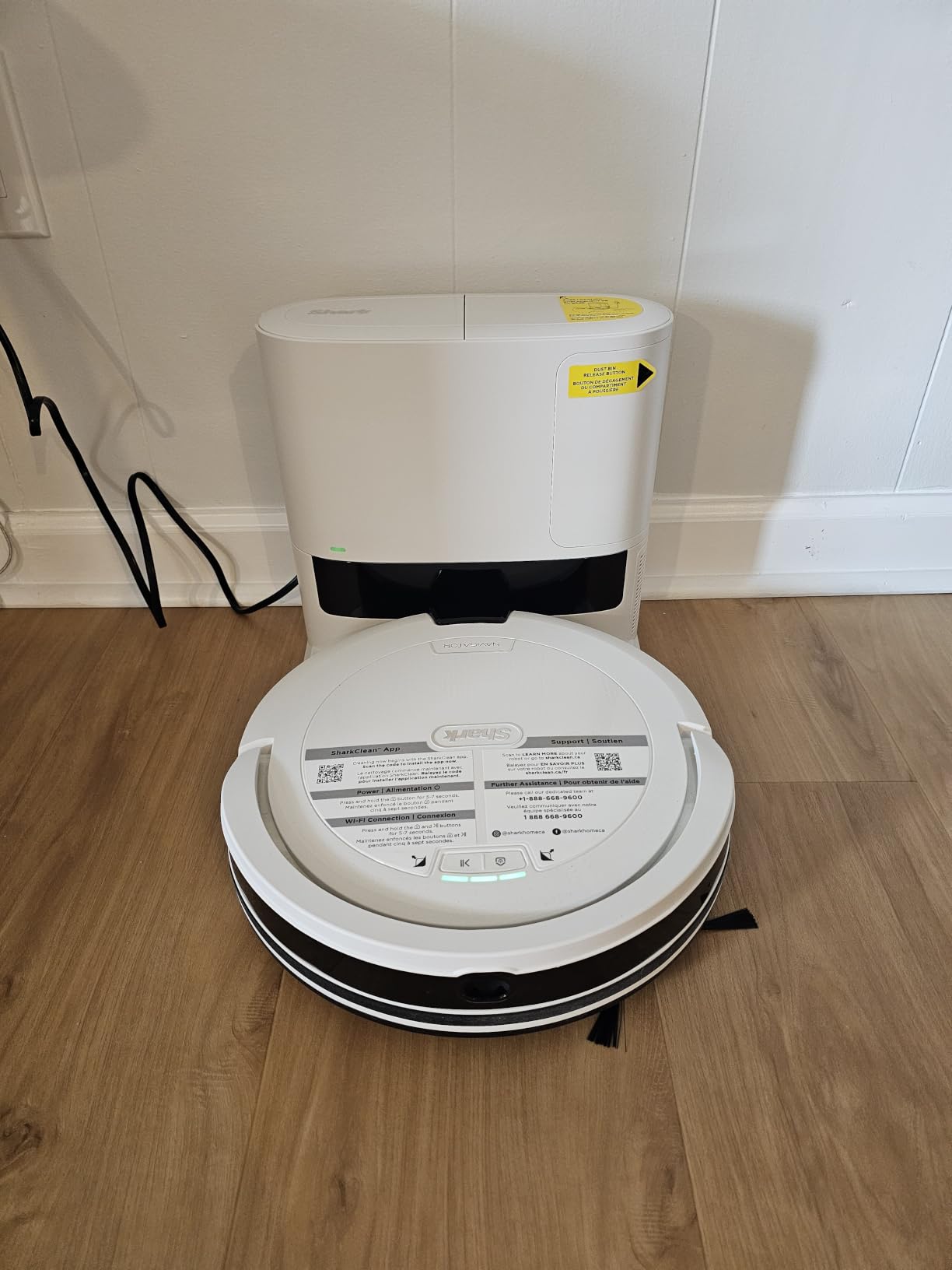
It is also genuinely quiet, and reviewers single that out repeatedly. Battery life is listed at 120 minutes, mid-pack for this group, and the 6.5 pound body is the lightest here by a wide margin, so moving it between floors is painless.
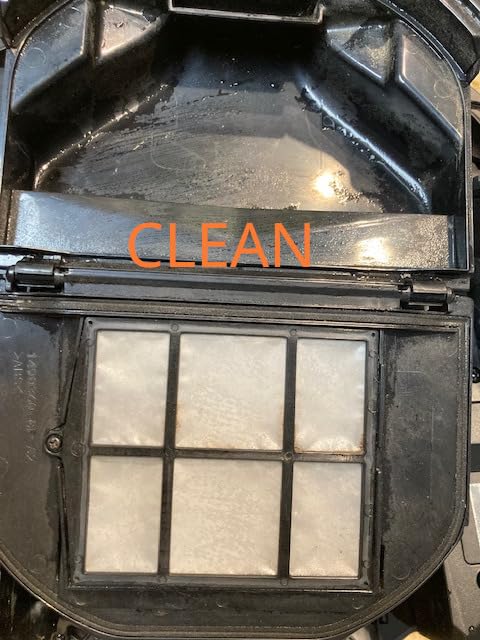
The base is bagless but the robot still has a 0.52 quart onboard bin that gets emptied at the dock. You are not dealing with a bucket of debris by hand, which was the point.
The main weakness is mapping consistency. Owners report whole wall sections getting missed, which means re-running explore cycles. If your floor plan is unusual, with lots of narrow passages, expect some friction.
What you should check before buying
Confirm your expectation about mopping. Despite how some listings illustrate it, this is not a vacuum and mop combo. If you need mopping, look elsewhere in the list.
Place the base away from sliding glass doors. Owners report the robot struggling to find its dock when the base sits near reflective glass.
Who should skip it
Skip it if you have deep carpet. Cleaning power drops noticeably on deep or patterned-pile rugs, and it is a hard-floor-first machine.
Skip it if mapping reliability is non-negotiable for your household. The miss-a-wall behavior frustrates people who want predictable coverage.
5. Roborock Q10 S5+: Best for Pet Hair and Carpet
roborock Q10 S5+ Robot Vacuum and Mop, 10,000Pa Suction
10000Pa suction
2.7L self-emptying station
VibraRise 2.0 sonic mop
150-minute battery
Pros
- Dual anti-tangle system with JawScrapers comb main brush
- Automatic mop lifting plus a carpet suction boost
- ReactiveTech obstacle avoidance with 360-degree LiDAR
- Multi-level mapping for homes with stairs
Cons
- 2.4 GHz Wi-Fi only
- Dock footprint is larger than slim models
- No mop washing or hot-water dock function
The Q10 S5+ is the pick for anyone whose home generates hair. Between the combed main brush, the 10,000Pa suction, and the automatic mop lift, it handles the specific problems of a pet household better than anything else in this list.
JawScrapers run a comb structure through the main brush to strip hair off before it winds around the rollers. In a home with two shedding pets, that difference is the gap between cutting hair off with scissors every week and not touching it.
ReactiveTech obstacle avoidance works alongside 360-degree LiDAR, and multi-level mapping means you can run a second floor without remapping from scratch. Owners with stairs and bedrooms on two levels rate this highly for that reason.
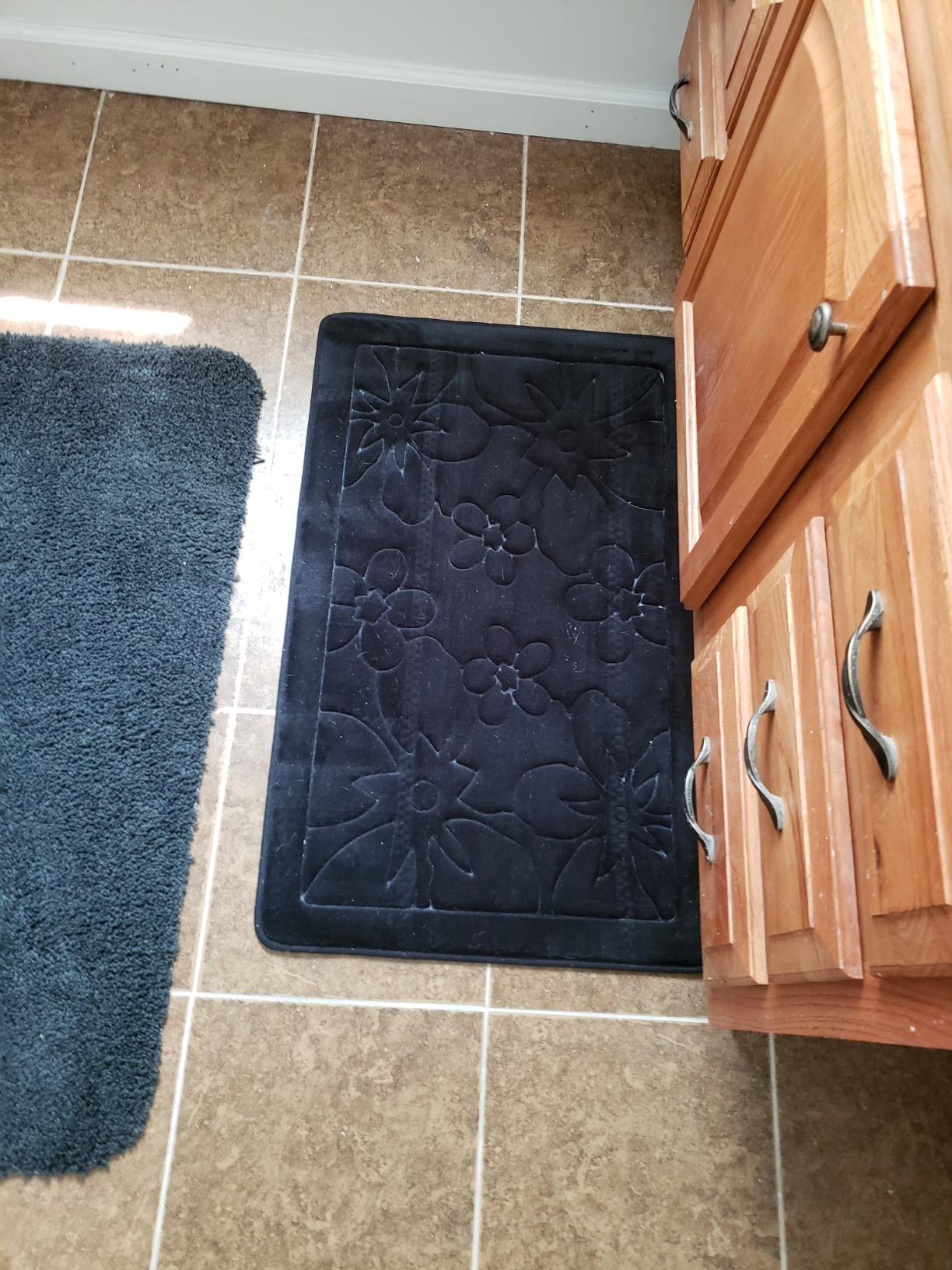
The mop is the more interesting story than the vacuum. VibraRise 2.0 uses dual-zone sonic mopping at up to 3,000 scrubs per minute, which is real scrubbing rather than a damp pad being dragged. It still will not shift a dried-on stain, but it is a clear step above flat-pad mopping.
When it detects carpet, the mop module lifts automatically and suction boosts. That is the behavior you want in a mixed-floor home, and it avoids the soggy carpet problem that ends up damaging some floors.
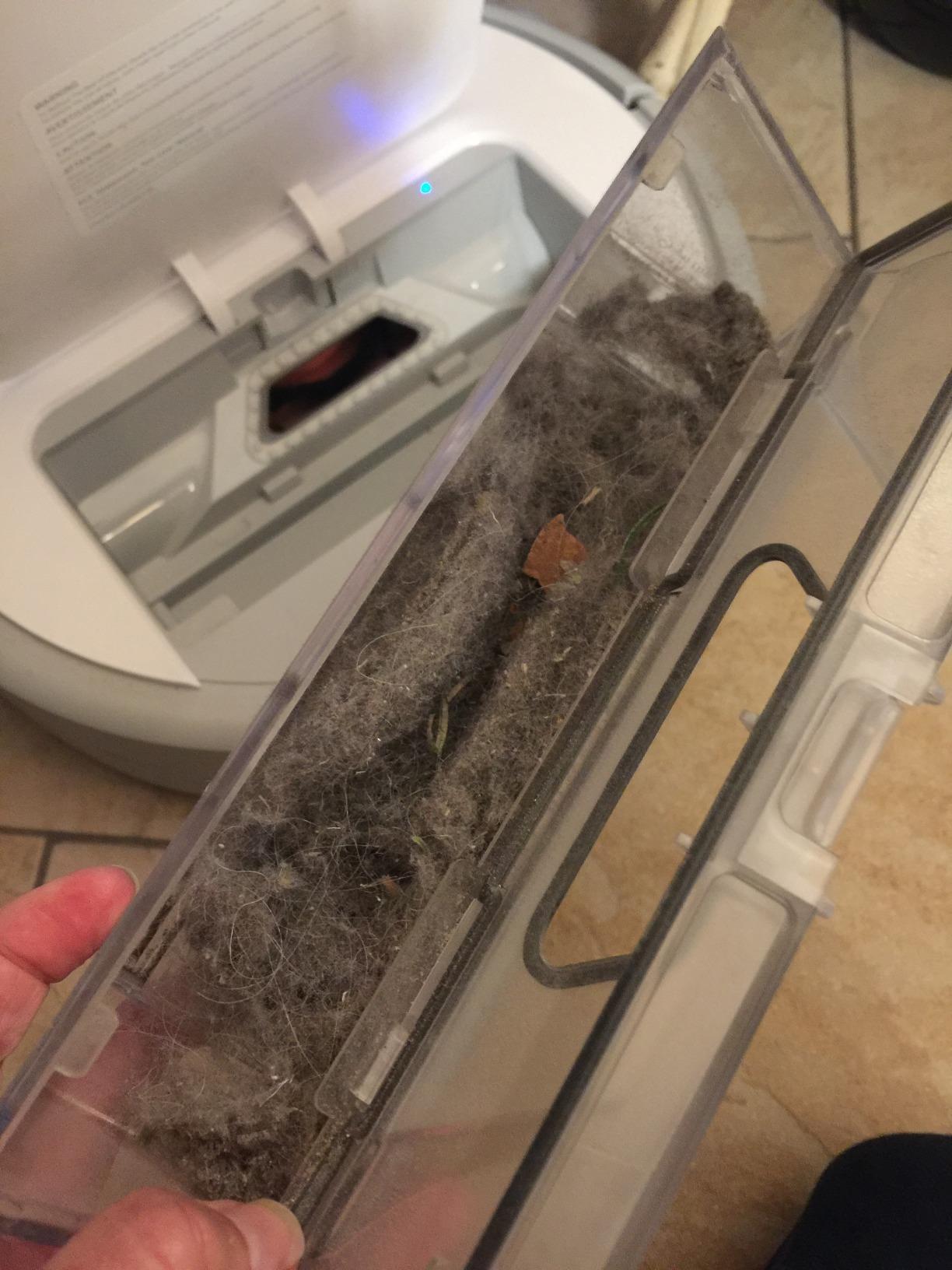
The self-emptying station bag is 2.7 liters and rated at up to 70 days. The filter is washable, which saves you money over the Q7 M5+ cartridge setup.
What you should check before buying
Clear some floor for the dock. At 20.72 by 13.89 inches this is a larger station than a plain charger, so find a permanent spot near a wall.
Confirm your Wi-Fi band before unpacking. The 2.4 GHz requirement is the most common reason returns happen in this category.
Who should skip it
Skip it if you need the mop pad washed automatically. There is no hot-water or self-washing dock here, so you maintain the pad by hand like every other pick in this roundup.
Skip it if floor space is tight and you want a small footprint. This is a full-size station, and the Shark Navigator is the compact option.
6. ILIFE A30 Pro: Best for Small Apartments
ILIFE A30 Pro Robot Vacuum and Mop,10000Pa Max Suction, Self-Emptying
LDS LiDAR with SLAM mapping
2-in-1 200ml bin and tank
3.74 inch body height
150-minute runtime
Pros
- Only 3.74 inches tall so it slides under most furniture
- 2-in-1 bin and water tank vacuums and mops in one run
- Five 2.5L dust bags included in the box
- Remote and voice control alongside the app
Cons
- Only compatible with 2.4GHz networks
- 72 dB listed noise level is the loudest here
- Basic pad mopping with no sonic or rotating action
The A30 Pro solves a specific problem: a low robot that fits under a bed or a sofa. At 3.74 inches it is the shortest body here, and in a small apartment that single dimension can be the difference between cleaning under the furniture or never doing it.
Suction is 10,000Pa with four power levels, and LDS LiDAR with a SLAM algorithm maps quickly and plans efficient paths. It is also one of the only models in this group that vacuums and mops in the same pass, using a 2-in-1 tank holding 200ml of dust capacity and 200ml of water.
The self-emptying station ships with five 2.5 liter dust bags already in the box. ILIFE claims up to 280 days of hands-free cleaning from that supply, which is generous and removes the first-year accessory cost entirely.
Runtime is listed at 150 minutes in gentle mode with automatic recharge and resume, and the body is 12.6 inches square, a genuinely compact footprint for a robot with a dock.
The app covers no-go zones, virtual walls, scheduling, room selection, and water level control. That is a full feature set for a mid-range price inside this bracket.
The trade-offs are honest ones. At 72 dB listed, it is the loudest model in this roundup, and the mop is a plain pad with no sonic or rotating action, so it maintains floors without scrubbing them.
What you should check before buying
Test your router on 2.4GHz first. The A30 Pro will not pair on a 5GHz-only network, and this is the number one setup failure reported for it.
Consider the noise. If you run it while working from home or sleeping, 72 dB is noticeable. Schedule it for when the house is empty.
Who should skip it
Skip it if you need serious pet hair performance. It handles hair on hard floors, but the brush system here is not built for heavy shedding the way the Roborocks are.
Skip it if you want near-silent running. Look at the Shark Navigator instead, which reviewers consistently describe as quiet.
7. iRobot Roomba 105X Combo: Best Starter Robot Vacuum
iRobot Roomba 105X Combo Robot Vacuum & Mop with AutoEmpty Dock, Self‑Emptying for Up to 75 Days, 70× Power‑Lifting Suction, Smart LiDAR Mapping, App & Voice Control, Ideal for Homes with Pets & Kids
75-day AutoEmpty dock
Built-in microfiber mop
ClearView LiDAR
100-minute battery
Pros
- Entry price point with the same 75-day dock as the 105 Combo
- Built-in microfiber mop vacuums and mops in one run
- Automatic carpet detection and avoidance
- Room targeting and keep-out zones with voice control
Cons
- Listed runtime of 100 minutes is short
- 2.4 GHz network required for setup and operation
- App offers less customization than Roborock
If the idea of a robot vacuum appeals but the top of this budget does not, the 105X Combo is where most people should start. At this entry-level price you get the AutoEmpty dock, the same core platform, and a built-in microfiber mop.
The 75-day dock is the headline. Owners consistently point out that the self-emptying interval is the feature that makes the robot feel automatic rather than like another chore.
Suction is the same 70 times power-lifting platform with a 3-stage cleaning system and an edge-sweeping brush. SmartScrub micro-pump keeps the microfiber pad evenly moist for better pickup on sticky floors.
ClearView LiDAR maps in neat rows, and automatic carpet detection keeps rugs dry while mopping. Room targeting and keep-out zones give you the schedule control most buyers actually want.
Control is straightforward: the app, plus Alexa, Siri, or Google Assistant. If you are buying a robot vacuum for an older relative or anyone who does not want to fiddle with a phone, the simple setup matters more than advanced zone editing.
That simplicity is the trade. Reviewers consistently note the iRobot app ecosystem is less granular than Roborock’s, and the listed 100-minute runtime is short for anything over about 700 square feet.
What you should check before buying
Check your Wi-Fi band before setup. A 2.4GHz network is required for both the 105X and the 105 Combo, and the fix takes a few minutes but stops people completely if they do not know it is the issue.
Decide how much app control you actually need. If you want per-room water flow and detailed zone editing, look at a Roborock instead.
Who should skip it
Skip it if you want the strongest hardware for the same family. The 105 Combo at the top of this list is the same idea with better mopping hardware and a higher review count behind it.
Skip it if you need to carry it between floors and the runtime feels tight. At 4.1 inches tall and 100 minutes of runtime, it is a single-floor machine by design.
8. Lefant M2 Plus: Best for Smart Home Owners
Lefant Robot Vacuum and Mop Combo,75-Days Self-Emptyin,140 Min, M2 Plus
Dual-band 2.4G/5G Wi-Fi
75-day self-emptying station
190-degree PSD detection
11 inch body
Pros
- Only pick here with dual-band 2.4G/5G Wi-Fi auto-switching
- 190-degree PSD sensor detects objects as close as 1.6 inches
- Multi-floor mapping with app zone editing
- Carpet detection boosts suction automatically
Cons
- 6000Pa suction trails the rest of this group
- No sonic or spinning mop so mopping is maintenance only
- Loud during the self-emptying cycle
The Lefant M2 Plus earns its place for one reason: it is the only robot in this roundup that supports both 2.4G and 5G Wi-Fi. On a modern mesh network that removes the single most common setup obstacle, and it costs nothing to have that problem solved before the box arrives.
The self-emptying station takes 2.5 liter bags and ships with two, rated for up to 75 days. Navigation is 360-degree LiDAR with automatic multi-floor mapping, which is a rare combination at this price.
Obstacle detection is the 190-degree PSD sensor, which the brand rates at detecting objects as close as 1.6 inches, including in low light. Owners single out cord and threshold handling as a genuine strength, which is the complaint half the forum posts about budget robots are about.
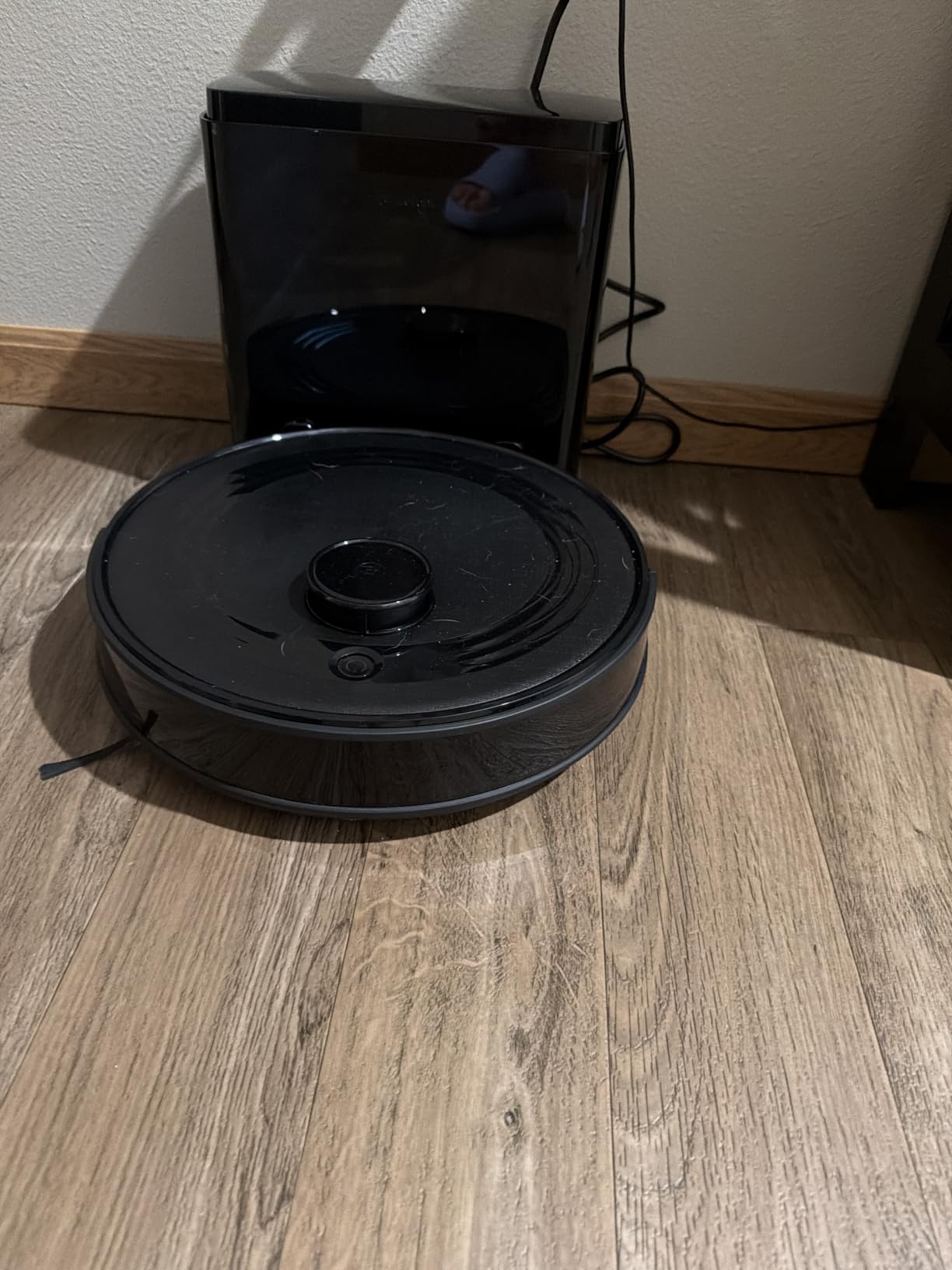
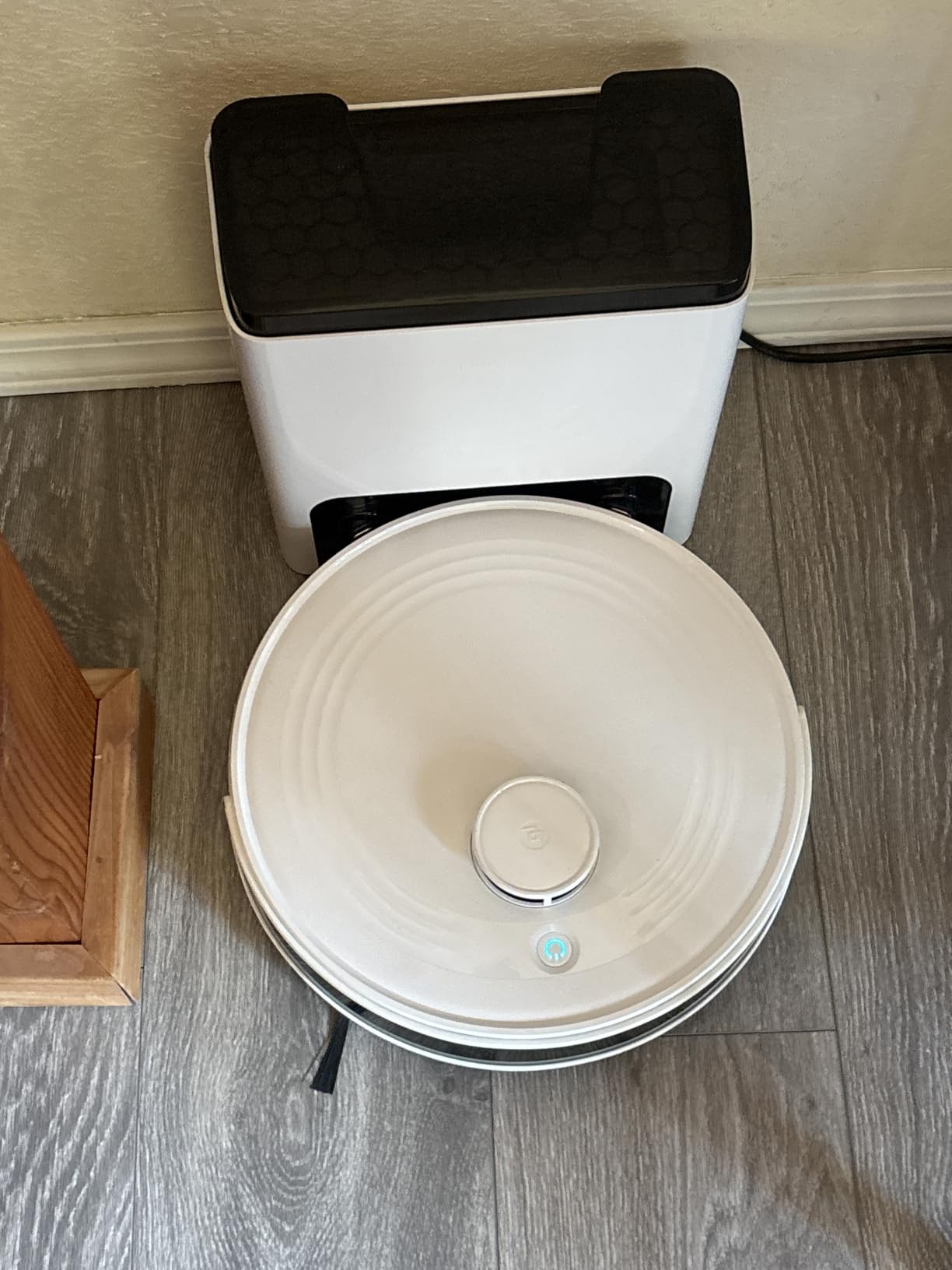
It also supports Alexa, app, and smartwatch control, and the body is 11 inches square and 2.99 inches tall, one of the most compact shells in the group. That height clears most bed frames.
The mopping side is the weakest part. With 6000Pa suction and a flat pad with no sonic or spinning action, mopping is maintenance level only, and the suction figure sits well below the 10,000Pa models in this roundup.
It is also the loudest during self-emptying, and some units report difficulty syncing to Wi-Fi on first setup despite the dual-band support. The rating of 4.3 with 5 percent one-star reviews is the lowest one-star share in the group.
What you should check before buying
Test it on carpet first if you have pets. At 6000Pa it will handle hair on hard floors, but a high-shedding dog on thick carpet is outside its comfort zone.
Find a spot away from sleeping hours for the dock. The self-emptying cycle is loud enough to be noticed from another room.
Who should skip it
Skip it if deep carpet cleaning is your priority. The suction here is real but modest, and the Roborocks pull noticeably more embedded debris.
Skip it if mopping quality matters. This is a vacuum with a maintenance mop attached, and treating it as a floor scrubber will disappoint you.
How We Picked and What We Looked For
We built this list around a strict question: does the machine clean a real home day to day without demanding constant attention from the owner. That means bin capacity and self-empty interval, mapping consistency, brush design, and how much floor is left behind at edges and thresholds.
For context on the debris problem, a corner test with three cereal pieces in three hard corners tells you more than any spec sheet. So does a spill test, where you put two small spots of liquid on a hard floor and see whether the robot returns to clean them rather than smear them. Both are cheap to run at home and easy to repeat.
We also weighted owner ratings heavily, and the spread in this group is instructive. The picks here sit between 4.0 and 4.4 stars, with review counts from roughly 4,800 up past 49,000. Higher counts mean more real homes have tested the machine, which we consider more valuable than a small handful of perfect scores.
We excluded models whose ratings sit well below the group, and we did not include anything without a self-emptying base or LiDAR mapping unless it was genuinely competitive on the rest. Every pick here also had a large enough review history for the rating to mean something.
One caveat worth stating plainly. Prices in this bracket move constantly, and several of these models sit close to the ceiling most weeks. Treat the numbers as a snapshot and confirm the live price before you commit.
How to Choose a Robot Vacuum Under 300 Dollars
Floor type changes everything
Hardwood, tile, and vinyl plank are the easy case. Any pick with a mop module will do well, and the Roomba 105 Combo and the Roborock Q10 S5+ are the safest choices because they lift the mop off carpet automatically. Our robot vacuum picks for hardwood floors covers the finish questions in more detail.
Low-pile carpet is where most of this group still works well. The 10,000Pa models handle embedded debris noticeably better than the 6,000Pa Lefant, so carpet plus pets pushes you toward a Roborock.
High-pile carpet is where budget robots struggle across the board. If deep carpet is your main floor, that is the clearest signal in this guide to spend more than the 300 dollar ceiling on a machine with a proper carpet boost and a roller system. We are not going to pretend the picks here fix it.
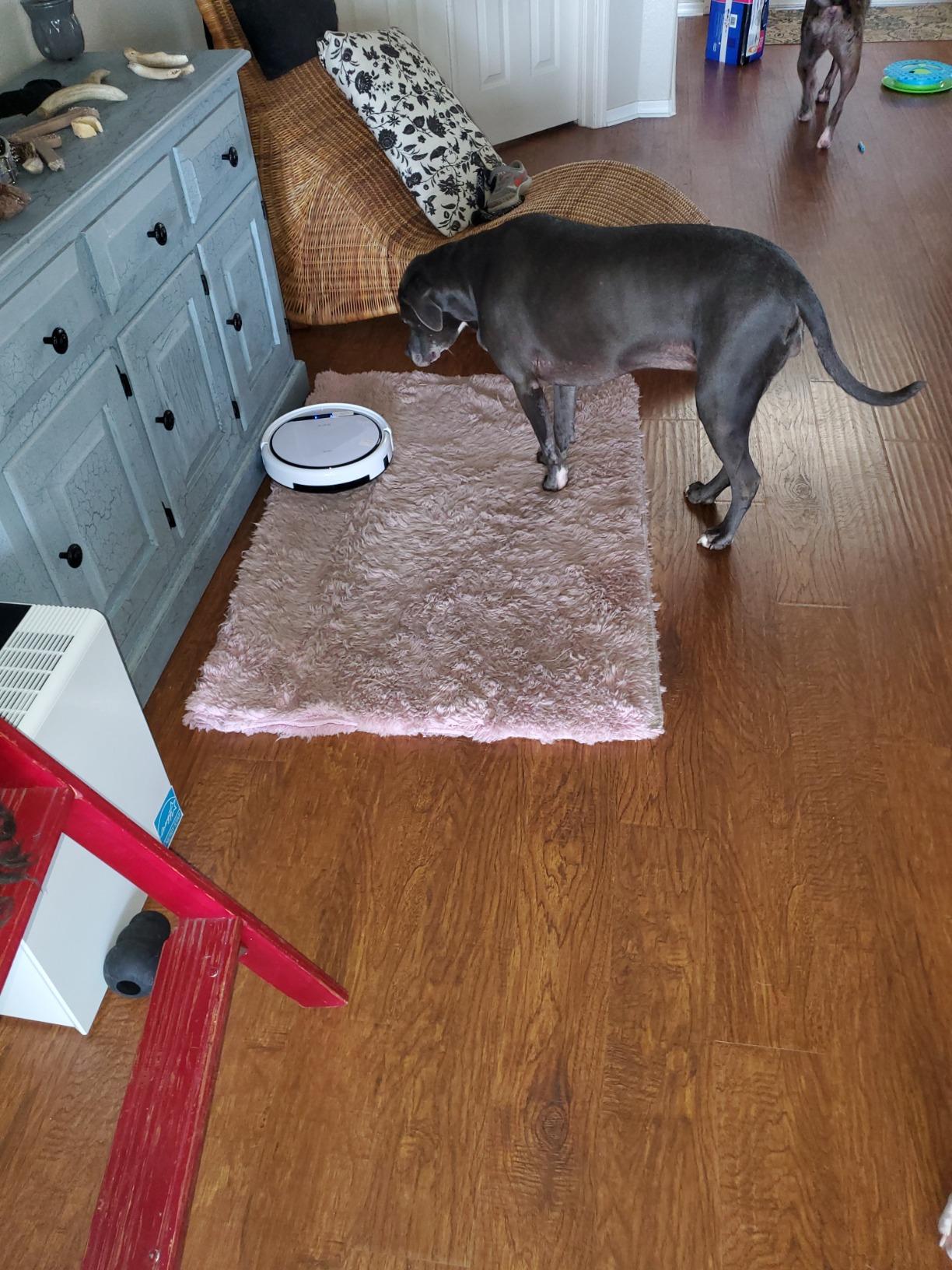
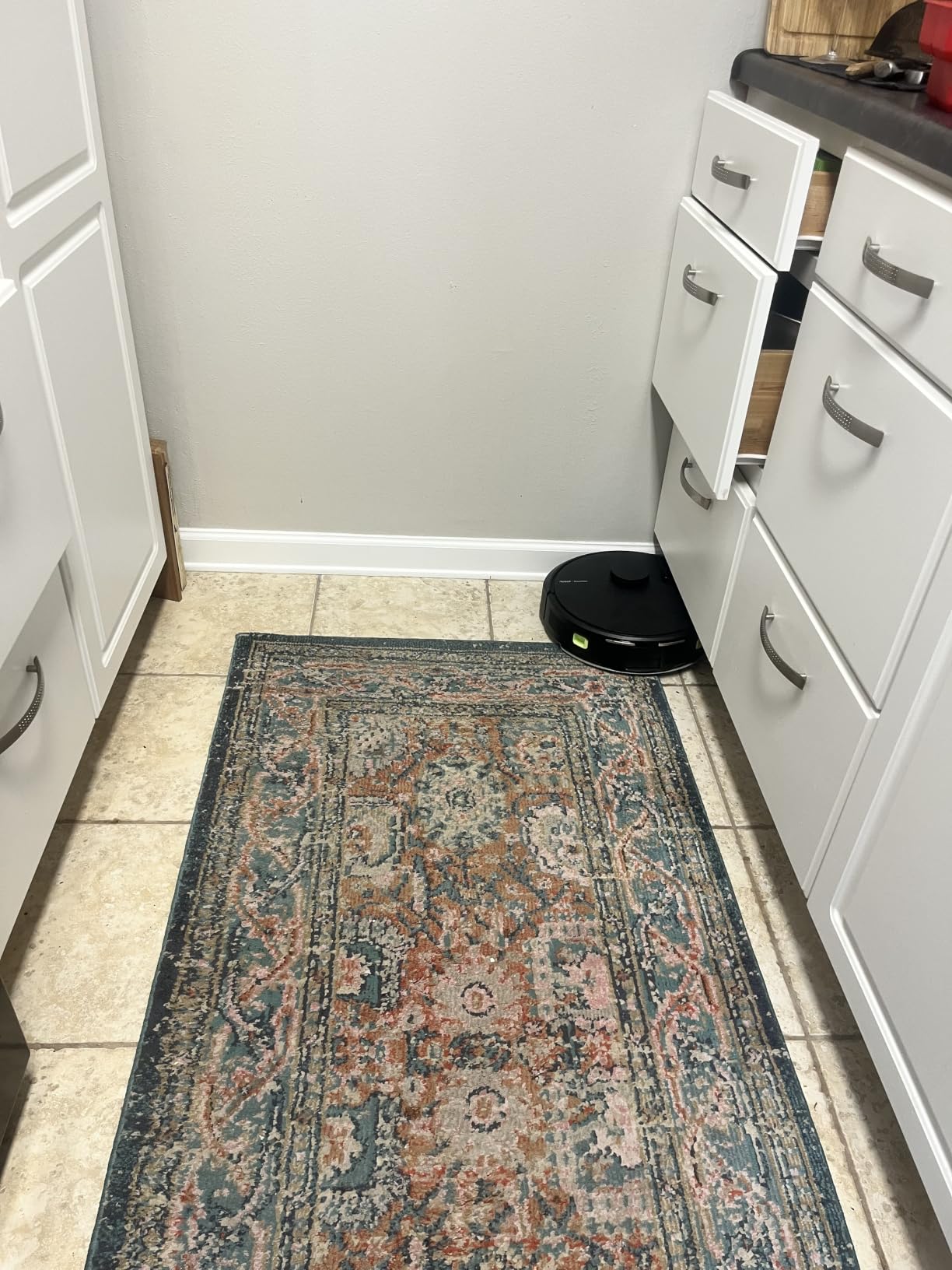
Small, easily moved rugs are a separate hazard rather than a floor type. A robot can drag a light rug up over its own sensors and stall. Use a no-go zone in the app, or remove the rug during the run.
Self-emptying dock or plain charger
You do not need one. But at this price a self-emptying base is the biggest convenience upgrade available, and it removes the daily bin empty that turns people off robots in the first place.
The trade-off is floor space and bag cost. Bagged docks like the Q7 M5+ and the Q10 S5+ consume a proprietary bag every few weeks, while the bagless Shark bases never need one but collect debris you still have to dispose of. Our self-emptying robot vacuum guide goes deeper on dock sizing and bag economics.
What suction power actually means
Pascal numbers are not comparable across brands. They are measured differently, marketed differently, and the highest figure in a lineup is not always the best-performing machine. The useful comparison is the lowest setting, because that is what you run on hard floors and around furniture every day.
What actually predicts pickup is brush design and whether the robot maintains contact with the floor. A good anti-tangle brush and a well-shaped main roller will out-clean a higher-numbered machine with a stiff plastic brush, which is exactly why the Roborocks rank high here despite similar published figures.
Mapping, no-go zones and obstacle avoidance
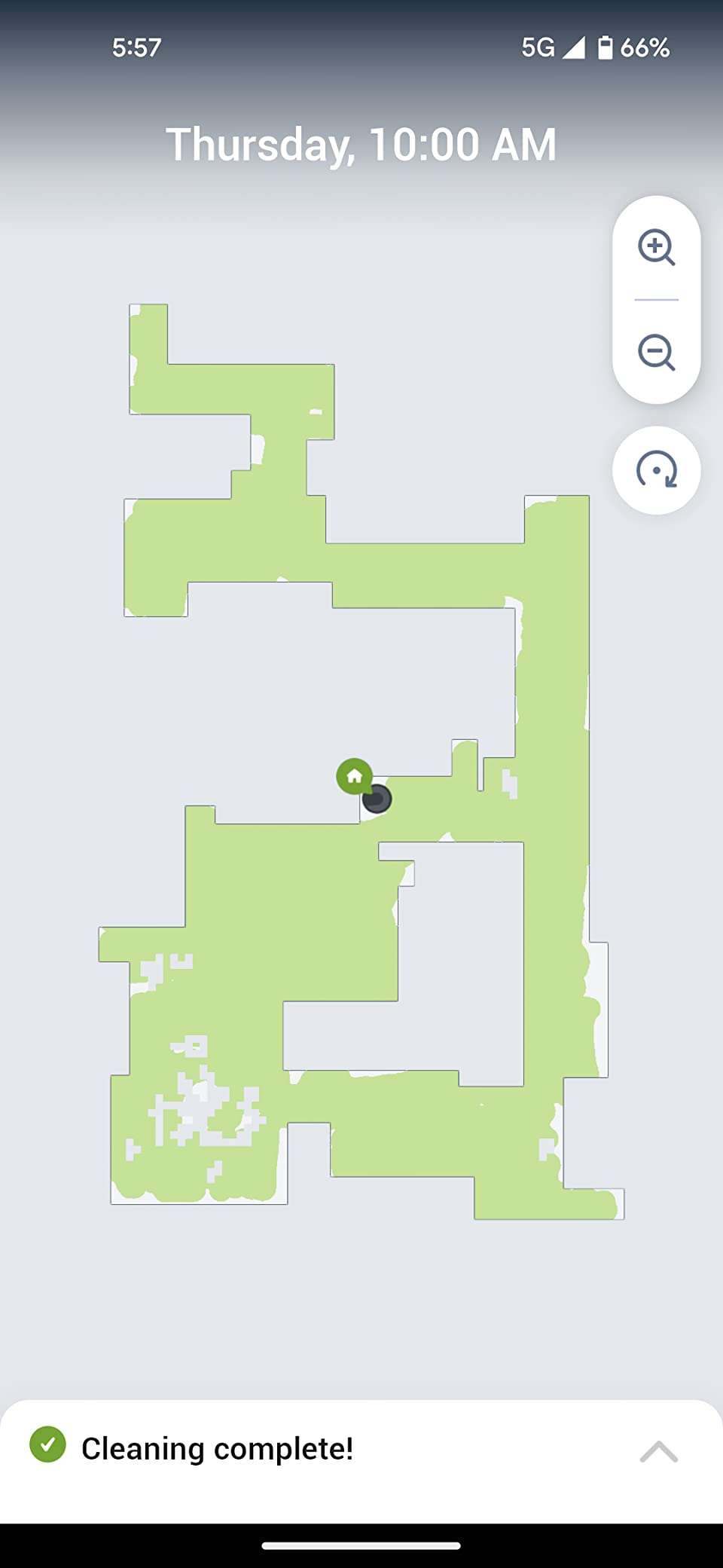
LiDAR mapping is standard on all eight picks and it is the feature that separates this bracket from the last one. It gives you room labels, no-go zones, and a cleaning path that covers a room once instead of wandering through it four times.
Obstacle avoidance is where budget machines still fail. The two iRobot models and the Lefant all claim object detection, and the Shark Navigator detects and avoids objects, but none of them is dependable with charging cables on the floor. Pick up the cords if you have pets, since the long thin ones are the classic failure.
The 2.4 GHz setup trap and app quality
Seven of the eight picks here require a 2.4 GHz network, which is the single most common setup problem in this category and the one that generates the most avoidable returns. If your router separates the bands, temporarily join the 2.4 GHz network during setup and switch back afterward.
The Lefant M2 Plus is the exception, supporting both 2.4G and 5G. That is worth real money to anyone on a newer mesh router who does not want to touch their network settings.
App quality varies more than the hardware does. Roborock apps give you per-room water flow, detailed zone editing, and rich scheduling. The iRobot apps are simpler and more approachable, which is a legitimate choice, not a defect. Decide which one fits the person who will actually use it.
Maintenance schedule
Empty the onboard bin after every run if you use a plain charger. With a self-emptying base, you can wait 30 to 60 days before the bag needs changing, and bagless bases need a weekly bin wipe-down.
Check the main brush weekly in a pet home and cut away wrapped hair with scissors. Rinse washable filters monthly and replace cartridge filters every one to three months depending on use.
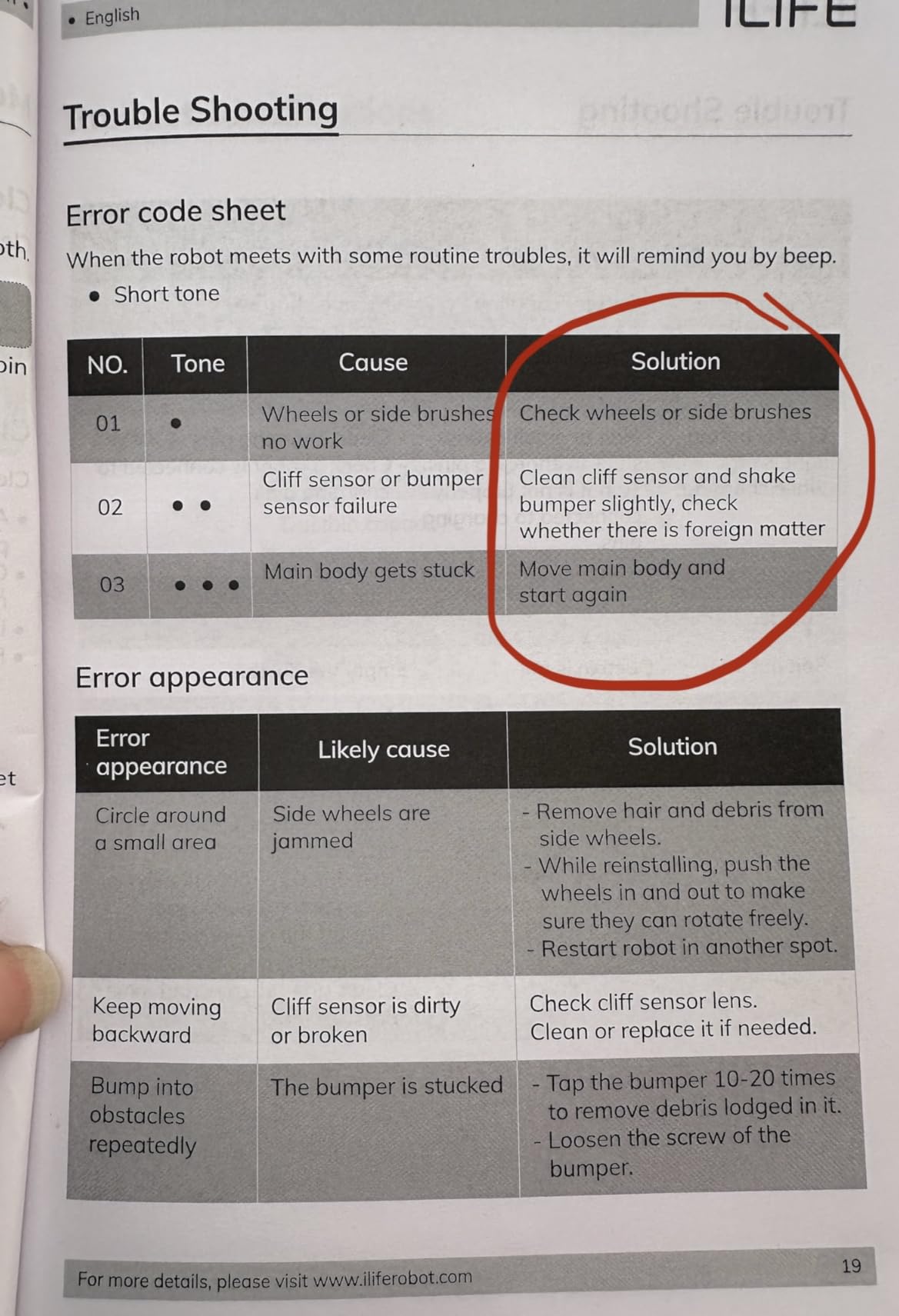
Wipe the sensors monthly. A dirty cliff sensor is the usual reason a robot suddenly refuses to go near the stairs, and it takes thirty seconds to fix.
What You Give Up Compared With a Premium Robot
The honest list of things you sacrifice at this budget is short enough to be useful. Spinning dual mop pads that actually scrub dried-on grime are the first thing. Every pick here uses a flat pad, and the Roborock Q10 S5+ gets closest with its 3,000 scrubs per minute sonic action, but none of them lifts a stain the way a dual spinning mop does.
Second is dock sophistication. No pick in this roundup washes its mop pad automatically, and none uses hot water. You maintain the pad by hand on a schedule. That is the single biggest quality jump when you move up a price tier.
Third is dirt detection. Premium robots sense missed areas and go back for a second pass, and they boost suction automatically on carpet. The cheaper machines mostly run their single planned route regardless of what they missed.
Fourth is edge and corner behaviour. Several owners report debris left at the threshold between carpet and hard floor, which is a recurring complaint across budget models. The SharkMatrix Plus addresses it most directly with its air-blast edge cleaning.
Fifth is multi-level polish. Mapping across several floors exists in this group, but premium apps draw the maps more clearly and handle floor switching with less fuss.
We would spend more than the 300 dollar ceiling only in a specific situation. If you have heavy carpet, a shedding pet, and you genuinely want mopping, a premium machine with a self-cleaning roller mop earns its difference. In every other household we have described, the picks above do the daily work well enough.
Real Owner Complaints Worth Knowing Before You Buy
Across owner threads in r/RobotVacuums and r/homeassistant, the same complaints come up again and again for budget models, and they are worth knowing before you buy rather than after.
Hair tangling around the brush roll is the most repeated annoyance. Owners describe cutting hair off with scissors after every run or two, and the anti-tangle brush systems on the two Roborocks are the direct answer to that complaint.
Cords and charging cables getting eaten is the second. Robots that lack real obstacle avoidance will find a power cable and treat it as an obstacle to chew. Owners recommend picking up cables before each run if their model has weak avoidance.
Small objects getting dragged around the room is the third. Toys, socks, and charging bricks get relocated across the floor because the robot cannot tell a small object from a piece of debris.
Debris left at thresholds between carpet and hard floor is a specific one that comes up in long-term owner reports, matching the behavior WIRED’s testers documented on premium models too.
App reliability and account requirements generate their own thread of complaints, as do proprietary dock bags and filters that strand owners when a budget model is discontinued. Buyers who check whether the brand sells replacement parts directly, rather than only through a marketplace, avoid most of that risk.
One thread worth knowing about: r/homeassistant shoppers are specifically filtering for brands with solid local smart-home integration rather than just cleaning specs. Smart-home compatibility is a real buying criterion at this price, and most guides ignore it entirely. Check that your model works with your ecosystem before you commit.
If the robot is for an older relative or a busy parent, prioritise setup simplicity and low maintenance over suction. That is the single most common piece of advice that comes out of these discussions, and it is why the two iRobot models keep selling well despite middling ratings.
Frequently Asked Questions
What robot vacuum under 300 dollars is the best overall?
The iRobot Roomba 105 Combo is the best overall pick in this bracket. Its AutoEmpty dock holds up to 75 days of debris in a sealed allergen bag, ClearView LiDAR maps the home in orderly rows, and the mop lifts automatically off carpet. At a rating of 4.4 across more than 49,000 reviews it has the most proven track record here.
Is a 300 dollar robot vacuum actually worth it?
Yes, for most homes. At this price you get LiDAR mapping, app control, real mopping, and in several cases a self-emptying base that was a premium feature not long ago. You do not get spinning mop pads, hot-water mop washing, dirt detection, or flawless cable avoidance. For daily upkeep on hard floors and low-pile carpet, the value is strong.
Is a robot vacuum and mop combo worth the money?
Yes for daily maintenance mopping, no for scrubbing. A budget flat mop pad keeps floors from getting dusty and handles light marks, but it will not shift dried-on stains. The Roborock Q10 S5+ mops hardest in this group at 3,000 scrubs per minute. If genuine stain removal matters, that is where the price tier jumps sharply.
What is the best self-emptying robot vacuum for pet hair?
The Roborock Q10 S5+ is the pick for pet homes. It combines a JawScrapers combed main brush and a dual anti-tangle system with 10,000Pa suction and a 70-day self-emptying station, so hair gets stripped off the brush instead of winding around it. The iRobot Roomba 105 Combo is the alternative if you want a sealed bag and a simpler app.
Why does my robot vacuum refuse to connect to Wi-Fi?
Almost always the Wi-Fi band. Seven of the eight picks here require a 2.4 GHz network, and if your router splits 2.4 and 5 GHz the pairing step fails. Temporarily join the 2.4 GHz SSID during setup, complete pairing, then switch back. The Lefant M2 Plus is the only pick in this roundup with dual-band 2.4G/5G support.
Do I still need a regular vacuum if I have a robot vacuum?
Yes. Robots handle floors, dust, and light mopping daily, but they do not do stairs, upholstery, or the edges of rooms as well as a handheld or stick vacuum. Budget owners almost always keep one for those jobs. The robot replaces your daily quick clean, not your deep clean.
What robot vacuum has the highest suction power?
The highest number in this roundup is 10,000Pa, shared by the Roborock Q7 M5+, the Roborock Q10 S5+, and the ILIFE A30 Pro. Higher figures exist above the 300 dollar ceiling, but Pascal ratings are not comparable across brands and a big number does not guarantee better pickup. Brush design and floor contact predict real cleaning performance more reliably.
How often do I need to maintain a robot vacuum?
With a self-emptying base you can go 30 to 60 days between bag changes, and bagless bases need a weekly bin wipe-down. Check the main brush weekly in a pet home and cut away wrapped hair. Rinse washable filters monthly, replace cartridge filters every one to three months, and wipe the sensors monthly.
The Best Robot Vacuum Under 300 Dollars: Final Word
The iRobot Roomba 105 Combo is the best robot vacuum under 300 dollars, and the reason is the dock. A 75-day self-emptying bag removes the daily chore that makes most people abandon a robot within a month, and LiDAR mapping plus a carpet-aware mop handles the rest of the job quietly.
If you have pets, the Roborock Q10 S5+ is the pick. Its combed anti-tangle brush and automatic mop lift handle shedding better than anything else here, and the sonic mopping is a genuine step up if you have hard floors.
If you are on a tight budget, the Shark Navigator gives you a bagless self-emptying base and no ongoing bag cost. And if you just want a simple machine for an older relative, the Roomba 105X Combo is the least complicated entry point we found.
Whatever you pick, check the live price before you buy, since this bracket moves week to week, and make sure you have a 2.4 GHz network ready for setup unless you are buying the Lefant M2 Plus.