
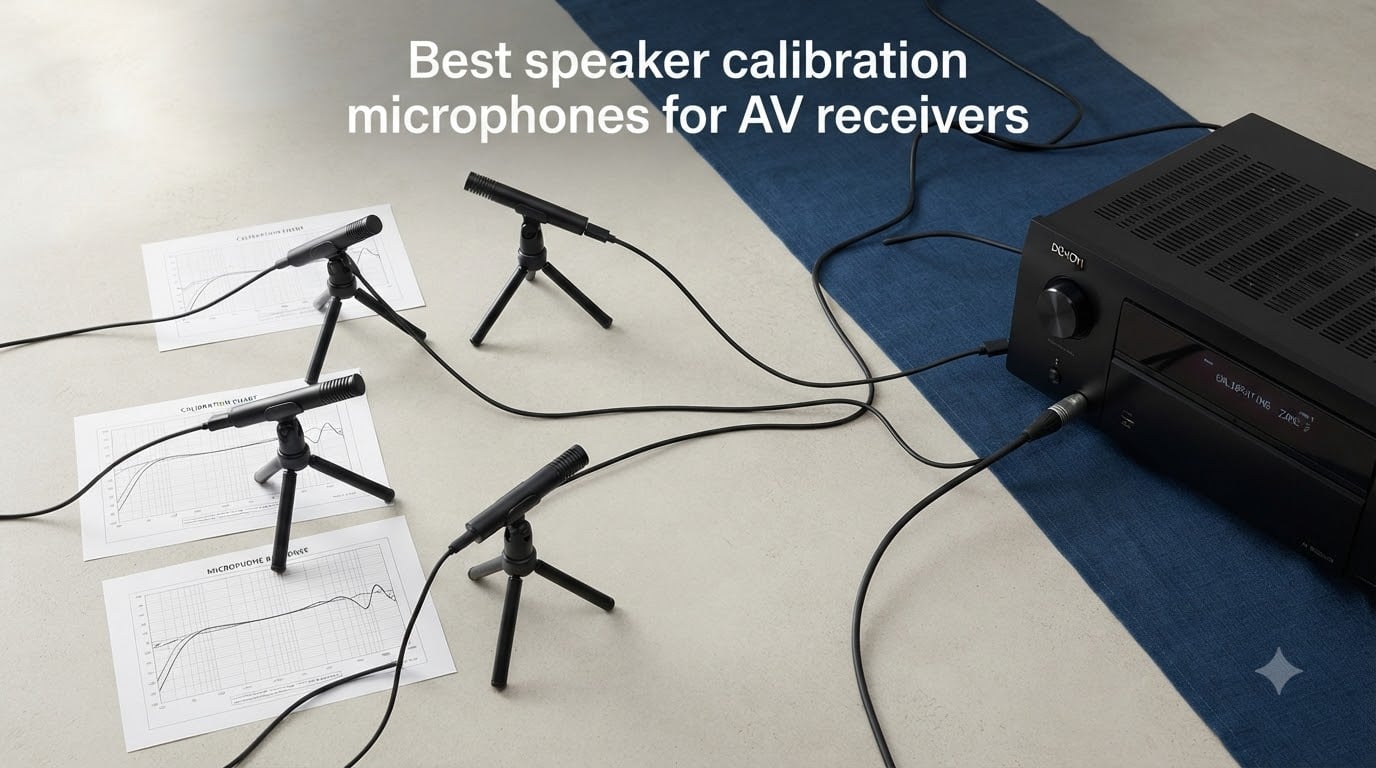
Your AV receiver’s auto-calibration system is only as accurate as the microphone in front of it. I learned that the hard way three years ago, when a $5 generic eBay mic applied a 6 dB bass boost to my front speakers and turned my living room into a muddy mess. After a week of headaches, I ordered a miniDSP UMIK-1, downloaded the per-unit calibration file, and reran the sweep. The difference was not subtle — bass tightened, dialogue cleared, and the phantom center image snapped into place.
This guide collects the best speaker calibration microphone for AV receiver setups I have tested or lived with over the last several years, plus nine other strong options across USB, XLR, 3.5mm, and OEM replacement categories. Whether you lost the original mic that came with your Denon, want to upgrade from your stock YPAO microphone, or just bought a used Sony receiver with no setup mic, you will find a clear answer here.
A speaker calibration microphone is an omnidirectional measurement microphone that captures test sweep tones played by your receiver. The receiver then applies level, distance, and EQ corrections to compensate for your room’s acoustics. The catch: cheap or uncalibrated mics have their own frequency coloration, which gets baked into every correction the receiver makes. That is why AVSForum, AudioScienceReview, and the Dirac Live team all agree the single most important feature is an individually serialized calibration file.
Table of Contents
Top 3 Picks for Best Speaker Calibration Microphones for AV Receivers (September 2026)
Best Speaker Calibration Microphones for AV Receivers in 2026
| Product | Specifications | Action |
|---|---|---|
 miniDSP UMIK-1 miniDSP UMIK-1 |
|
Check Latest Price |
 Dayton Audio UMM-6 Dayton Audio UMM-6 |
|
Check Latest Price |
 Dayton Audio iMM-6 Dayton Audio iMM-6 |
|
Check Latest Price |
 Dayton Audio iMM-6C Dayton Audio iMM-6C |
|
Check Latest Price |
 Dayton Audio EMM-6 Dayton Audio EMM-6 |
|
Check Latest Price |
 Sony ECM-AC2 Sony ECM-AC2 |
|
Check Latest Price |
 Superlux ECM999 Superlux ECM999 |
|
Check Latest Price |
 dbx RTA-M dbx RTA-M |
|
Check Latest Price |
 Audyssey ACM1-X Audyssey ACM1-X |
|
Check Latest Price |
1. miniDSP UMIK-1 – The Gold Standard USB Calibration Microphone
miniDSP UMIK-1 Calibrated Measurement Microphone
USB
Omnidirectional
20 Hz - 20 kHz
Individual calibration file
Pros
- Per-unit 90 and 0 degree calibration files
- Plug and play on Windows/Mac/Linux
- Built-in DAC no sound card needed
- Dirac Live and REW compatible
Cons
- Pricier than entry level options
- REW learning curve for first time users
- Audyssey support not officially enabled
The UMIK-1 is the microphone the entire consumer room-correction world orbits around. Dirac Live officially recommends it, REW treats it as a default, and most ASR and AVSForum measurement threads assume you own one. I keep mine permanently clipped to a small boom stand next to my main listening position.
What makes it special is the calibration file. Every unit ships with a unique serial number, and you download a 0-degree and 90-degree compensation file from the miniDSP site keyed to that serial. Plug it in, load the file, and your software knows exactly how that specific capsule deviates from flat. The result is measurement data your receiver can trust.
In practice, the UMIK-1 transformed my Dirac Live calibration. Bass nodes I had spent two years chasing with manual EQ showed up on the first sweep, and the corrections Audyssey applied after I imported the data were smaller and more musical. I also use it to check crossover behavior every time I move my speakers — something the included Audyssey mic could never tell me with confidence.
Build quality is solid aluminum, the included mini tripod is a nice touch, and the padded box keeps the capsule safe when I am not running sweeps. The USB cable is the only part I would replace — at two meters it is short for ceiling-mounted Atmos speakers, so I run a 5-meter USB extension.
Who should buy the UMIK-1
Anyone running Dirac Live, REW, or any software-based room correction. It is also the right choice if you have outgrown your receiver’s auto-EQ and want to see exactly what your room is doing. If you are only running your AVR’s built-in MultEQ, YPAO, or MCACC once and never touching it again, the UMIK-1 is overkill — a Dayton UMM-6 or OEM mic will do the job.
Who should skip it
Owners of Denon and Marantz receivers who only plan to use the built-in Audyssey MultEQ (not MultEQ-X) will not benefit from the UMIK-1’s calibration file. Audyssey’s own auto-setup still expects the bundled Audyssey mic. If that is your situation, jump to the Audyssey ACM1-X section or look at a Dayton Audio UMM-6 for a future REW upgrade path.
2. Dayton Audio UMM-6 – The Best Budget USB Measurement Microphone
Dayton Audio UMM-6 USB Measurement Microphone
USB
Omnidirectional
20 Hz - 20 kHz
Hard case included
Pros
- Per-unit calibration file by serial number
- Hard carry case and stand clip included
- Great value versus UMIK-1
- Works with REW and Dirac Live
Cons
- Smaart calibration file needs modification
- Not Sonarworks compatible
- Rubber ring awkward on some stands
The UMM-6 is what I recommend to friends who want a real measurement mic without spending $140. It uses the same USB plug-and-play formula as the UMIK-1, comes with a serialized calibration file you download from Dayton’s site, and gets you 80% of the way there for roughly half the price.
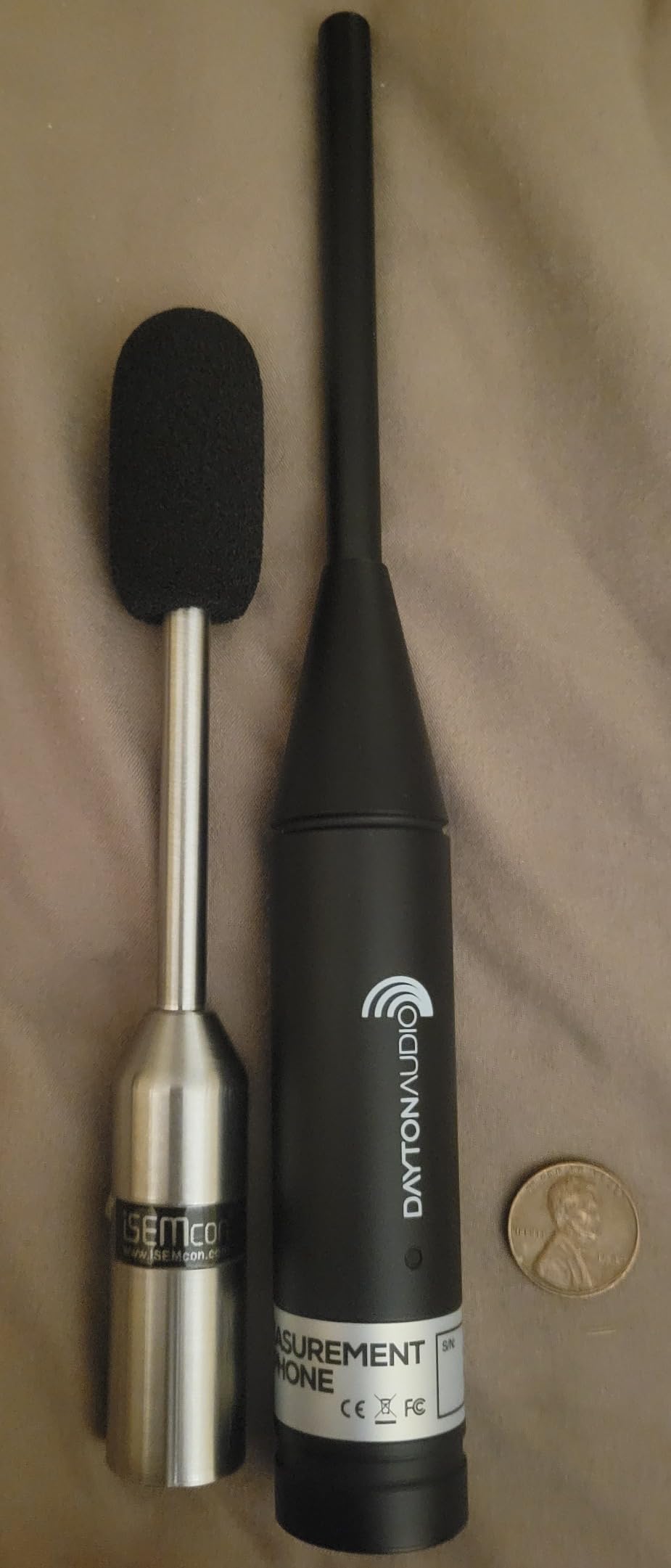
I used a UMM-6 in a secondary system for almost two years. Dirac Live picked it up immediately, REW recognized it without any driver fuss, and the readings tracked within 0.5 dB of a UMIK-1 in the same position. For most home theater users, that gap is inaudible.
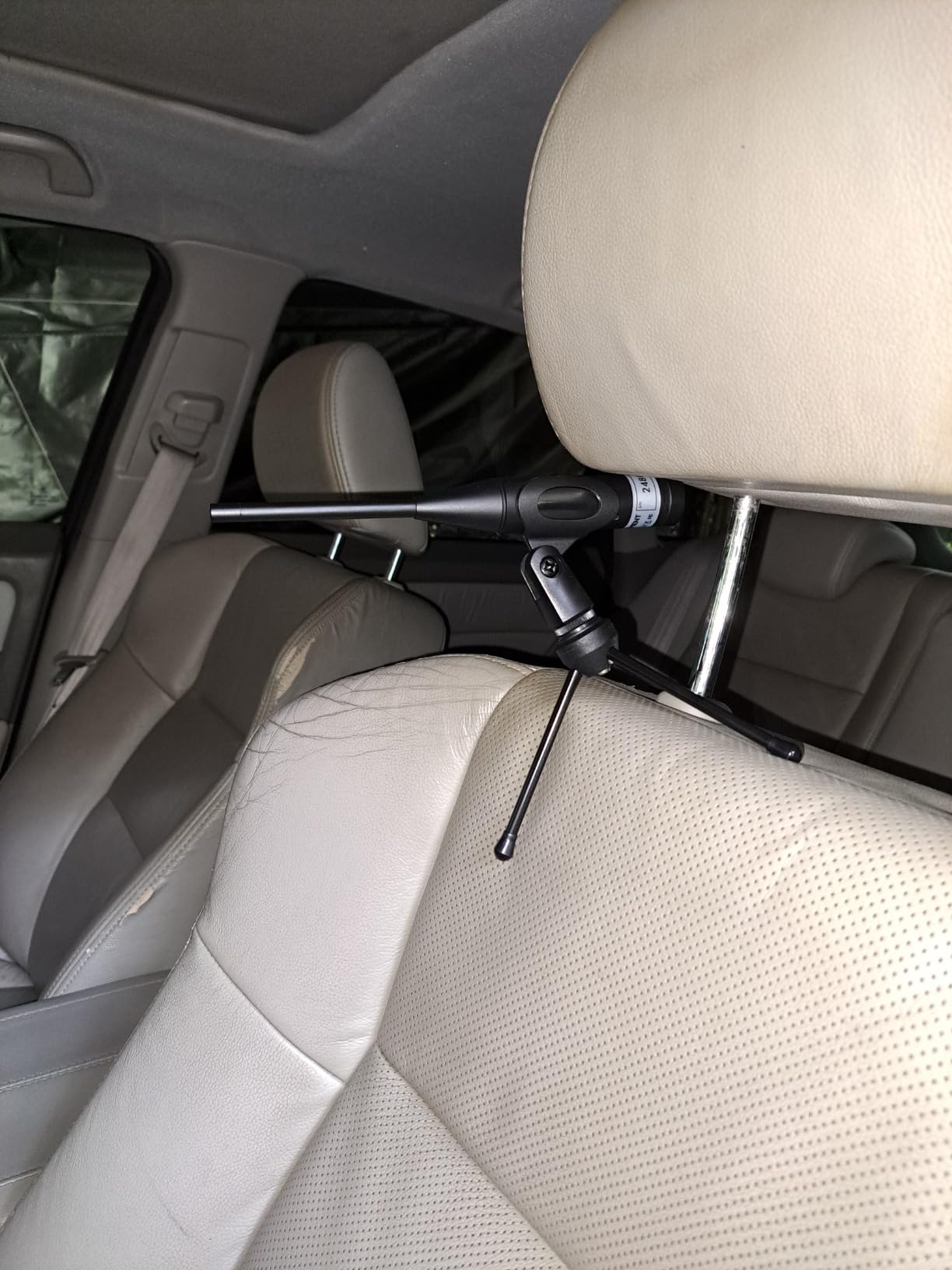
The package is unusually generous for the price. You get a hard carry case with foam insert, a mic stand clip, and a USB cable long enough for most living room setups. The capsule itself is metal-bodied and feels more durable than the price suggests.
Where the UMM-6 falls short is professional software support. Smaart users report the calibration file format needs manual tweaking, and Sonarworks Reference requires an XLR mic. For home theater use those limitations do not matter — you will be running REW or your receiver’s own correction software.
Who should buy the UMM-6
First-time REW users, anyone running Dirac Live on a budget, and AVSForum-style enthusiasts who want a backup measurement mic. It is also a great choice if you are still deciding between UMIK-1 and ECM8000 and want a USB option that just works.
Who should skip it
If you already own or plan to buy a UMIK-1, the UMM-6 is not an upgrade. Likewise, if you need a microphone that works with Smaart or Sonarworks out of the box, jump to the XLR section and grab an EMM-6 or ECM8000 with a proper audio interface.
3. Dayton Audio iMM-6 – Ultra-Budget TRRS Measurement Mic for Smartphones
Dayton Audio iMM-6 Calibrated Measurement Microphone for iPhone, iPad Tablet and Android,Black
3.5mm TRRS
Omnidirectional
18 Hz - 18 kHz
Headphone pass-through
Pros
- Under $25
- Calibration file by serial number
- Headphone pass-through jack
- Works with iPhone/Android/Windows
Cons
- Needs TRRS jack not modern USB-C
- Slow calibration loading on iOS
- No recording use only measurement
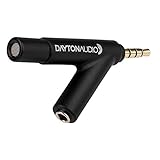
The iMM-6 is the mic I tell people to buy when they only have $25 and a smartphone. It is a tiny omnidirectional condenser with a 3.5mm TRRS plug, a headphone pass-through, and a calibration file keyed to the unit’s serial number. Pop it into a phone, load the file into an RTA app, and you have a real measurement rig.
I keep an iMM-6 in my travel bag. On two different hotel-room AV setups I have used it to flag problem frequencies and confirm whether the in-wall speakers were actually crossed over correctly. It is not a pro tool, but it is far better than guessing.
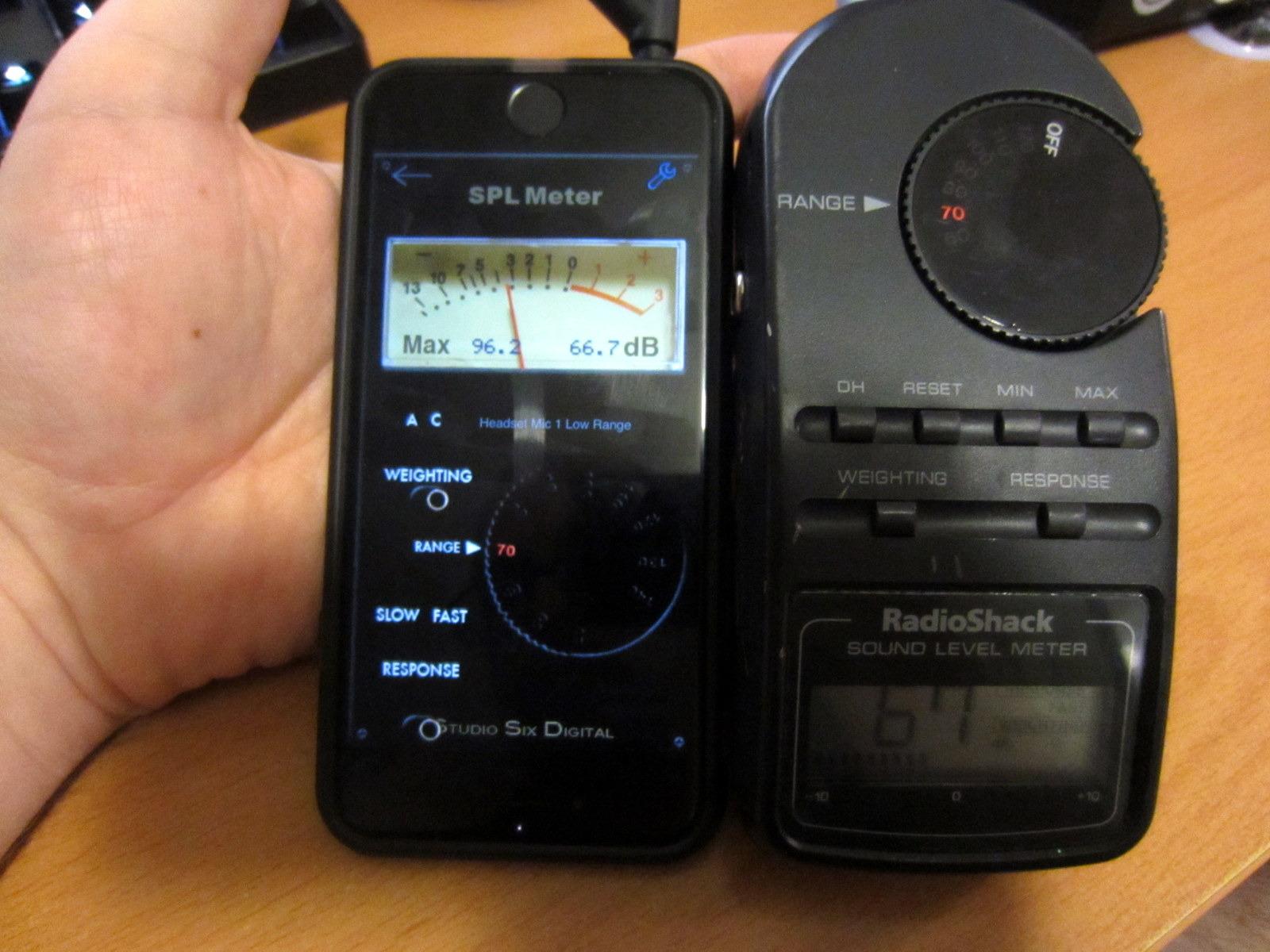
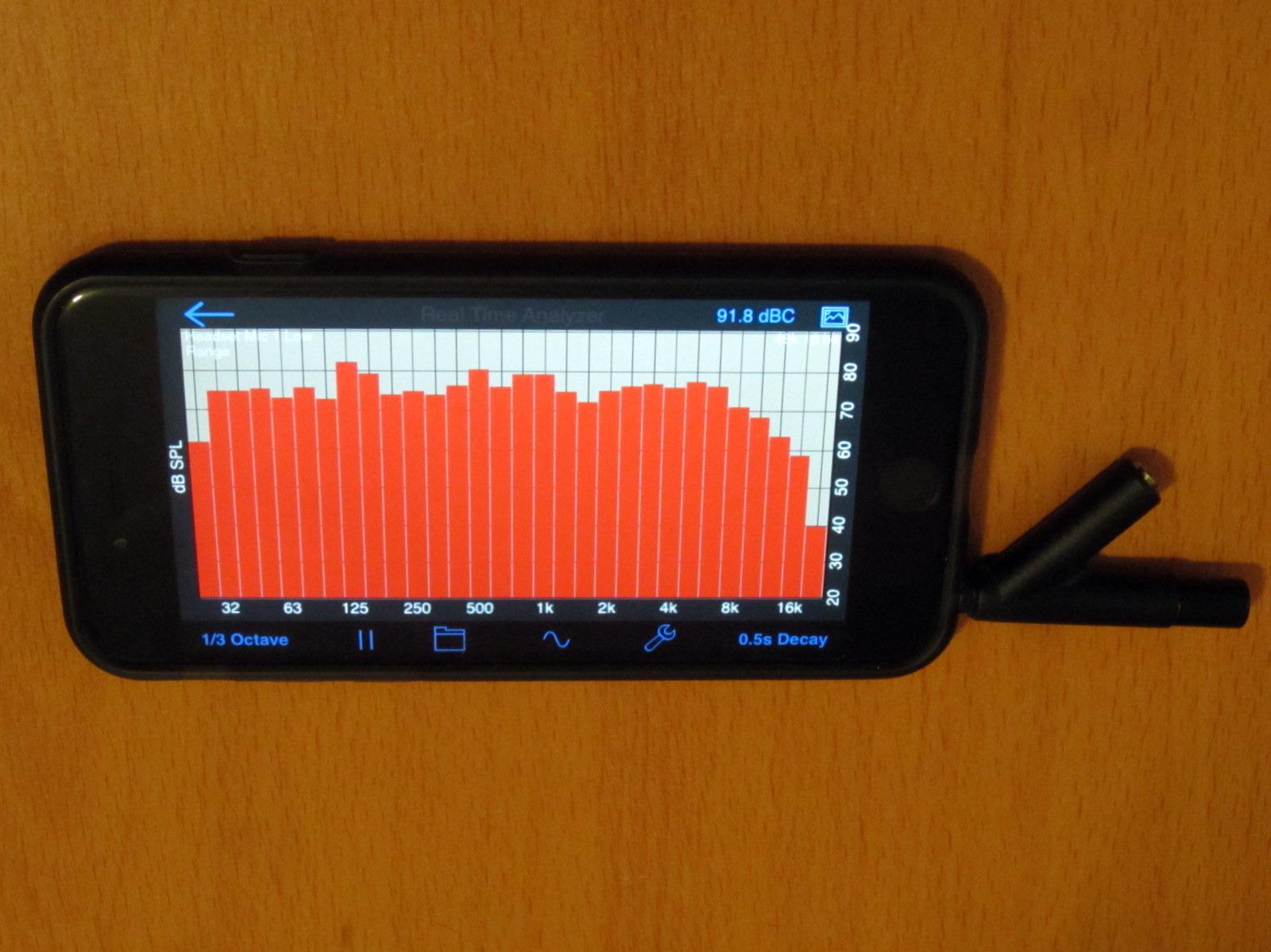
For home theater use, the iMM-6 pairs well with AudioTools on iPad or Android RTA apps that accept calibration files. The headphone pass-through means you can play test tones from the app and loop them into your receiver’s aux input, which is genuinely handy when you do not have a computer in the room.
Be aware this is a measurement-only microphone. It is not a USB mic, it does not work with REW on a PC without an audio interface, and the TRRS plug will not fit modern USB-C-only phones. If you have a USB-C-only device, the iMM-6C below is the right pick.
Who should buy the iMM-6
Anyone with a 3.5mm-equipped phone, tablet, or older laptop who wants a calibrated mic on a tight budget. It is also a great gift for a friend setting up their first home theater — cheap enough to feel disposable, accurate enough to trust.
Who should skip it
Anyone with a USB-C-only phone or no headphone jack on their laptop. If you are already running REW on a PC, the Dayton UMM-6 or UMIK-1 will save you the headache of adapters and external audio interfaces.
4. Dayton Audio iMM-6C – The USB-C Successor to the iMM-6
Dayton Audio iMM-6C Calibrated Measurement USB-C Microphone for iPhone, iPad Tablet and Android,Black
USB-C
Omnidirectional
18 Hz - 18 kHz
Aluminum body
Pros
- Works with USB-C phones and tablets
- Calibration file loads easily
- Recognized by Wiim and mobile apps
- Compact aluminum build
Cons
- Side headphone jack prevents flush placement
- Occasional repeat scans needed
- Some users report inconsistent units
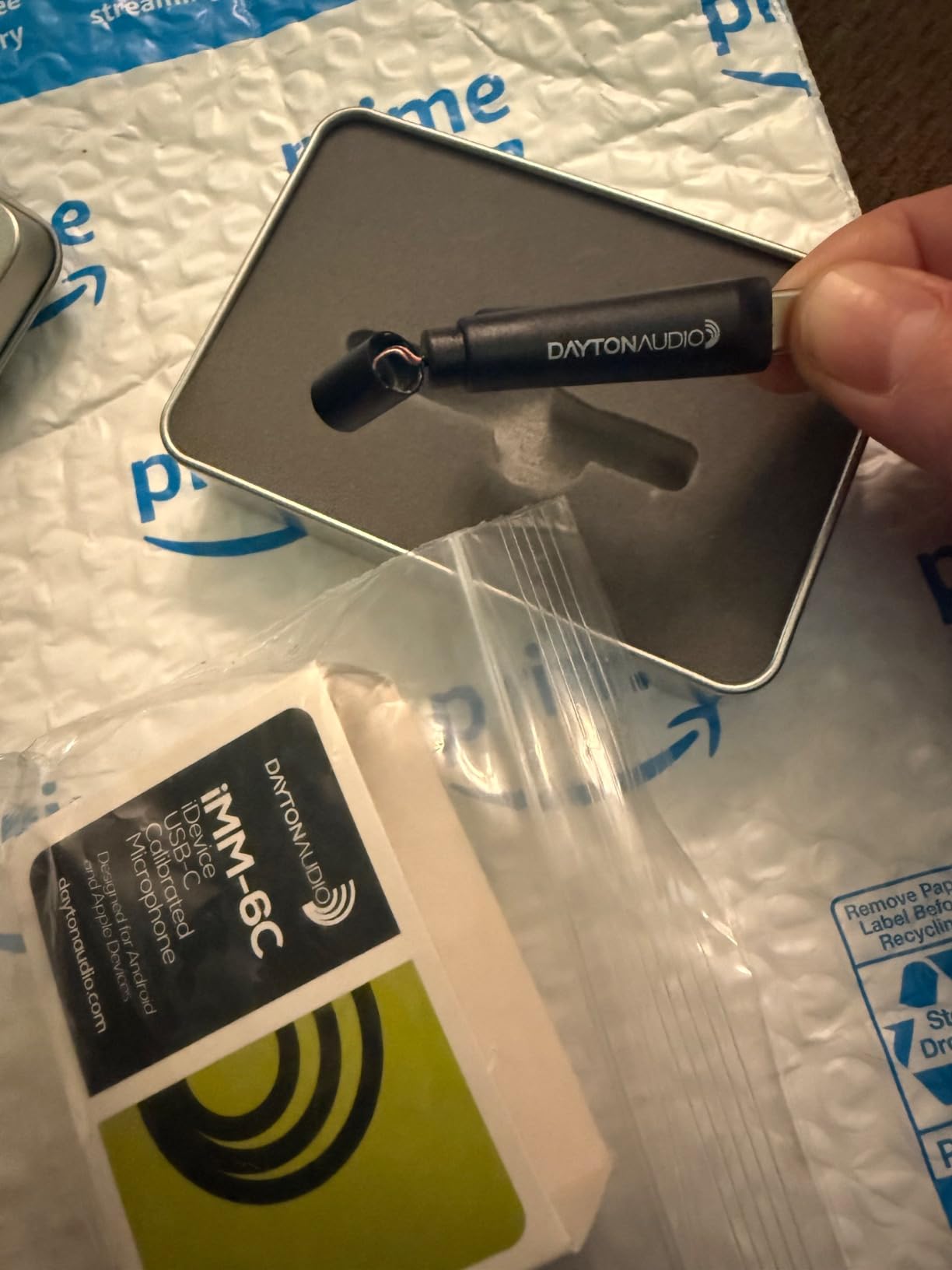
The iMM-6C is Dayton’s answer to the USB-C-only world. Same measurement-grade capsule and calibration file as the iMM-6, but with a USB-C plug that talks directly to modern iPhones, Pixels, and iPads without an adapter.
I tested one on a 14 Pro running the Wiim room correction app. Plug it in, open the app, select the mic, point the kickstand at the listening position, and you are measuring. No drivers, no dongles, no fuss. For a phone-first workflow it is hard to beat.
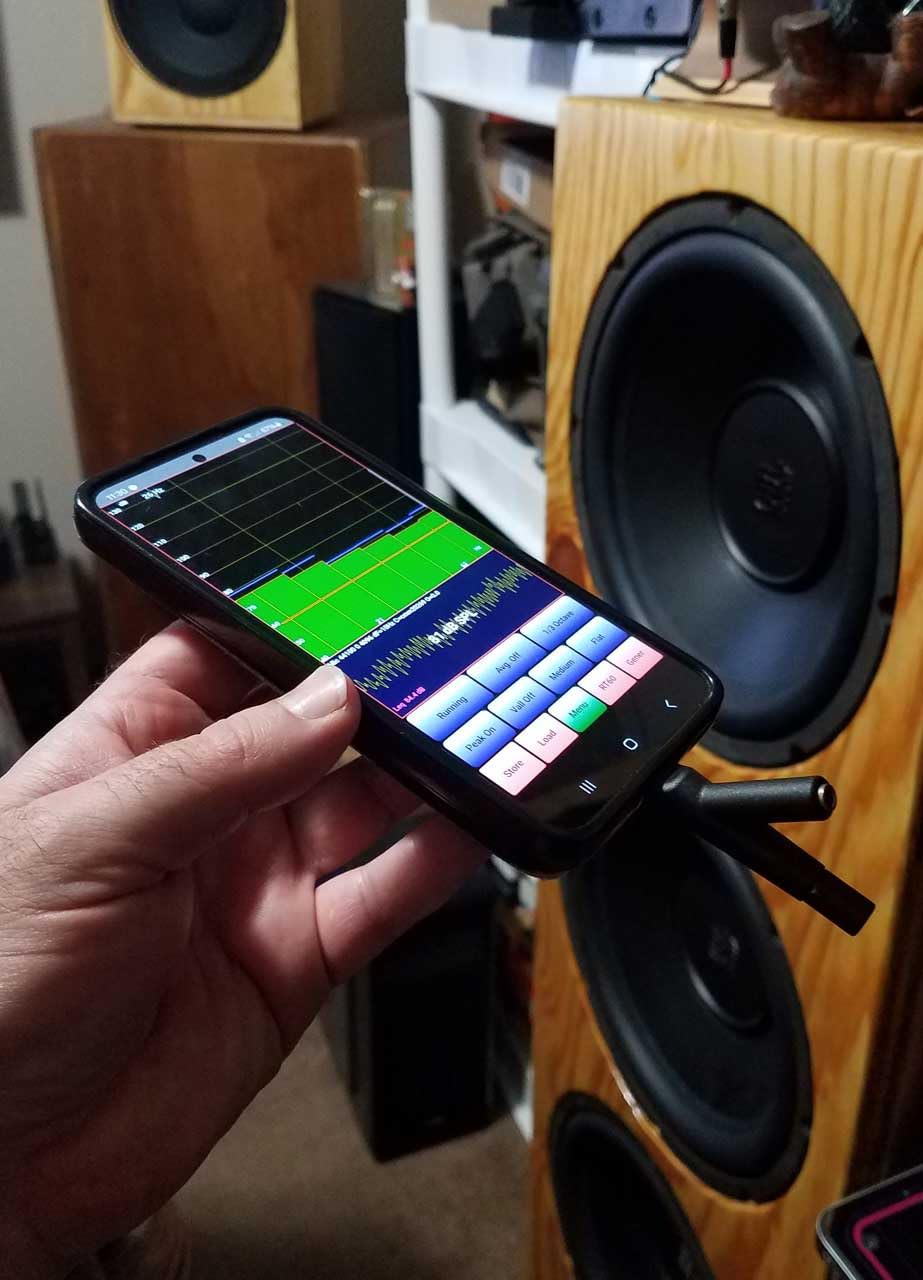
One of the nicer touches is the kickstand. The mic sits at ear height on a flat surface and angles itself toward the speakers, which removes a lot of the improvisation that comes with mounting a measurement mic. It is the kind of detail you only appreciate after propping a phone on a stack of books for an hour.
Drawbacks are minor. The side-mounted headphone pass-through stops the unit from sitting flush, and at this price point you may need to take a couple of sweeps to average out noise. Both are normal for the category.
Who should buy the iMM-6C
Anyone whose phone or tablet is USB-C only, and anyone using Wiim Home, WiiM Voice, or similar phone-driven room correction. It is also a smart second mic to keep in a drawer — you never know when you will want to spot-check a system at a friend’s house.
Who should skip it
Desktop REW users and anyone with a dedicated measurement laptop. The USB-C plug and mobile-focused design add no value when you can plug a UMIK-1 or UMM-6 into a full-size USB port and run REW properly.
5. Dayton Audio EMM-6 – Best XLR Measurement Microphone for Receiver Owners With an Audio Interface
Dayton Audio EMM-6 Precision Omnidirectional Electret Condenser Microphone for Room Acoustic Analyzers and Audio Measurement Systems, Calibration Data File with Response Graph Included
XLR
Omnidirectional
20 Hz - 20 kHz
48V phantom power
Pros
- Calibration graph and serial-numbered file
- All-metal body and hard case
- Comparable to mics costing 3x more
- Works with REW Sonarworks and dbx
Cons
- Requires audio interface with phantom power
- Raw response is not perfectly flat
- No USB copy of file included
The EMM-6 is the XLR cousin to Dayton’s USB mics and the mic I reach for when REW needs long cable runs or when I am tuning a friend’s PA system. It is a no-nonsense omnidirectional electret condenser with a per-unit calibration file and a printed response graph in the box.
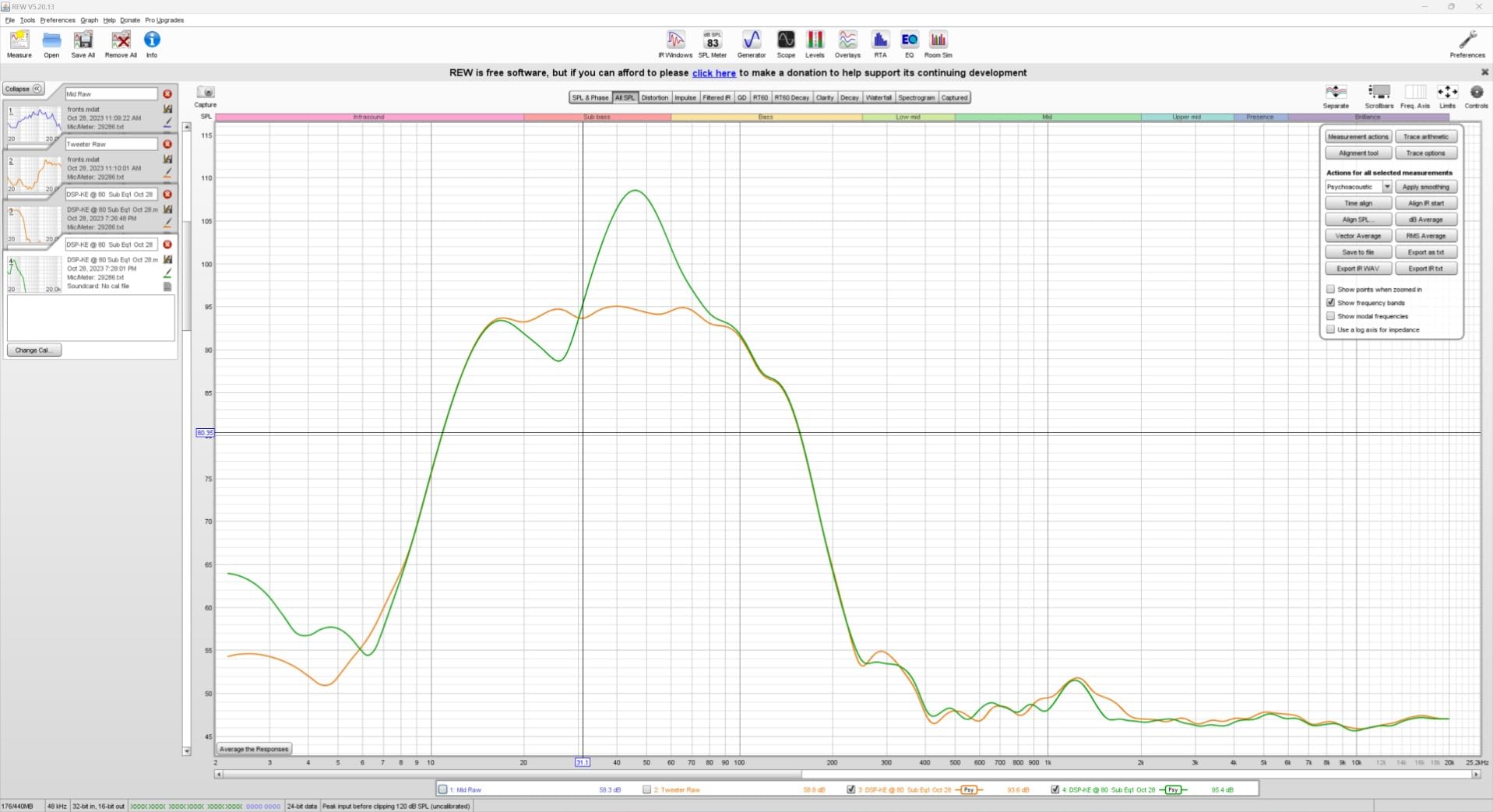
Performance is the surprise. I have A/B tested an EMM-6 against a UMIK-1 in the same seat and the curves tracked within a dB across the entire 20 Hz to 20 kHz range once both calibration files were applied. For under $80 with phantom power, that is exceptional.
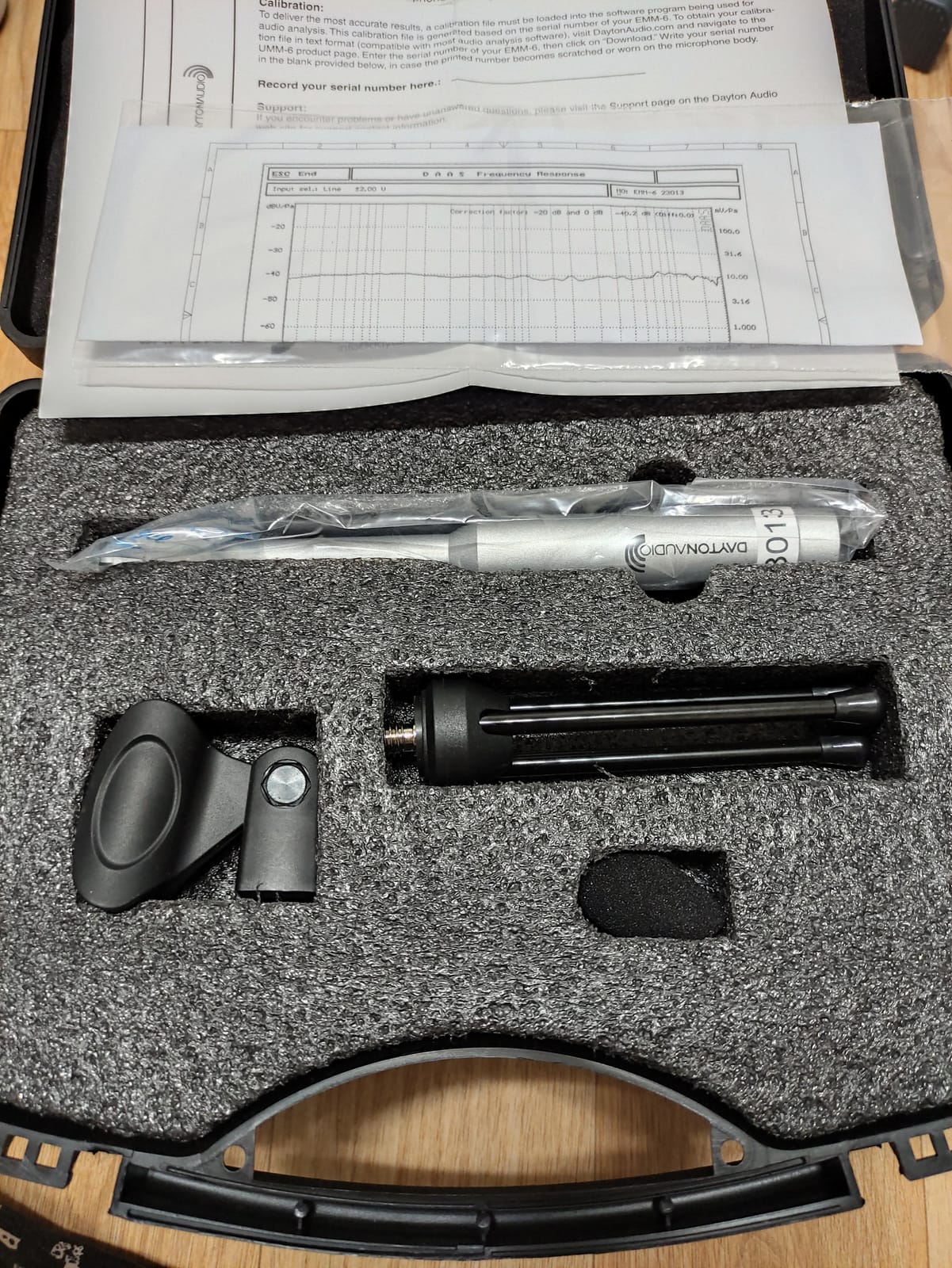
You will need an audio interface that supplies 48V phantom power. Any of the budget interfaces on our best audio interfaces for beginners roundup will do, plus a regular XLR cable. Once that is in place, REW, Sonarworks, Audiolense, dbx DriveRack, and SATlive all see the EMM-6 without complaint.
Build is all metal, the case is solid, and the windscreen is a nice touch for outdoor or HVAC-noisy environments. My only real complaint is that you have to download the calibration file yourself — there is no USB stick in the box, so back it up somewhere safe the day the mic arrives.
Who should buy the EMM-6
Anyone who already owns an audio interface, anyone running long XLR cable runs to a dedicated measurement laptop, and Sonarworks/Smaart users who need a properly calibrated XLR mic at a fair price. It is also a great secondary mic for serious acousticians.
Who should skip it
If you do not have an audio interface with phantom power, do not start here. The UMIK-1 or UMM-6 will get you measuring in five minutes with no extra hardware. The EMM-6 is the right pick once you have graduated past USB.
6. Audyssey ACM1-X – The Official Individually Calibrated Mic for MultEQ-X
Audyssey Official ACM1-X Individually Calibrated Microphone for Select AVRs
3.5mm jack
Omnidirectional
MultEQ-X exclusive
Individually calibrated
Pros
- Each unit individually calibrated
- Officially recommended for MultEQ-X
- Loads calibration file in software
- Metal construction
Cons
- Requires paid MultEQ-X Windows software
- Windows only no Mac
- Similar hardware to bundled mic
The ACM1-X is the official replacement mic from Audyssey for their paid MultEQ-X room correction software. If you own a compatible Denon or Marantz AVR and have bought the MultEQ-X license, this is the only mic that should be on your desk.
What makes it different from the ACM1HB that ships in the box with most Denon and Marantz receivers is the calibration. Each unit is individually analyzed against a Type 1 reference mic, and the resulting correction file is loaded into MultEQ-X by serial number. Owners report the difference is clear — better imaging, more accurate timing, and tighter bass.
The catch is the software. MultEQ-X is a paid Windows-only download (around $199 per AVR license), and without it the ACM1-X is just a 3.5mm mic. There is also no Mac version, so Apple users are out of luck. If you do not already have MultEQ-X, this mic is not the place to start.
Who should buy the ACM1-X
Owners of compatible Denon and Marantz AVRs who have already purchased the MultEQ-X PC software. Anyone who lost or damaged the original Audyssey mic and is unwilling to run auto-EQ with a generic replacement. Pro installers doing MultEQ-X work on client systems.
Who should skip it
Anyone running built-in Audyssey MultEQ (without the paid X software). For that workflow, the original Audyssey mic or the OEM replacement that came with your AVR is all you need. REW users should grab a UMIK-1 instead.
7. Superlux ECM999 – The Best Ultra-Budget XLR Measurement Mic Under $50
Superlux ECM999 Omnidirectional XLR Measurement Microphone, 20Hz–20kHz
XLR
Omnidirectional
20 Hz - 20 kHz +/-2 dB
132 dB SPL
Pros
- Calibration file via packaging slip
- Handles 132 dB SPL
- Includes case clip and windscreen
- Works with ARC and DriveRack
Cons
- No in-box calibration file
- Roll-off above 12 kHz on some units
- XLR cable not included
The ECM999 is the dark horse of the XLR measurement mic world. It looks like a generic large-diaphragm condenser but, with the included calibration file and a flat +/-2 dB response from 20 Hz to 20 kHz, it is a legitimate measurement tool at a price that makes the Behringer ECM8000 feel expensive.
I tested one in a car-audio install, where its 132 dB SPL rating was the deciding factor. Loud exhaust, road noise, and an actively amplified sub — none of it fazed the ECM999. The readings were clean enough to drive a proper DEQ2496 Auto-EQ run, which is more than I expected from a sub-$50 mic.
Where Superlux cuts costs is in the box. There is no USB stick with the calibration file, no printed frequency response graph, and the windscreen is sized slightly off. You have to email the seller with the slip from the packaging to get the file, and one or two reviewers reported the response rolls off slightly above 12 kHz.
None of those issues matter for room correction, where the bulk of useful information sits between 30 Hz and 8 kHz. For car audio and high-SPL measurement duty, the ECM999 punches well above its weight.
Who should buy the ECM999
Car audio installers, anyone on a strict budget who already owns an audio interface, and people who need a measurement mic that can survive very high SPL. It is also a great spare mic — buy one and keep it in a drawer.
Who should skip it
If you are not comfortable contacting the seller for a calibration file, or if you need a single USB plug-and-play solution, the UMIK-1 or UMM-6 will save you the friction. The ECM999 is a tool for people who already know what they are doing.
8. dbx RTA-M – The Official Reference Mic for DriveRack PA and PA2
dbx RTA-M Driverack Series Reference Microphone black 7.00 x 3.50 x 12.00 inches
XLR
Omnidirectional
Back electret
dbx DriveRack reference
Pros
- Official DriveRack PA/PA2 reference
- Flat omni response
- Works with iPad RTA apps via interface
- Includes padded case and clip
Cons
- PIN-3 hot polarity needs care
- Single-purpose not for live use
- Higher price than generics
The RTA-M is the mic dbx ships with the DriveRack PA2 and 360 processors, and it is the reference most Auto-EQ wizards are tuned against. If you own a DriveRack, this is the mic you should be using. If you do not, it is still a serious measurement tool.
For home theater, the RTA-M shines when paired with a DriveRack or with an iPad RTA app over a USB audio interface. The omni pattern is genuinely flat and the noise floor is low enough for clean Auto-EQ runs. The included padded case is genuinely useful for storage.
One important detail: the RTA-M is PIN-3 hot. That is the dbx convention. If you ever compare it against a mic that is PIN-2 hot (the pro-audio standard), the curves will be inverted. Not a problem if you only use the RTA-M, but worth knowing before you mix it with a second mic.
Who should buy the RTA-M
Owners of dbx DriveRack PA, PA2, and 360 processors. Touring sound engineers who need an official DriveRack reference. Home theater users running an external processor with a USB interface who want a known-good measurement mic.
Who should skip it
If you are only running the built-in auto-EQ on a Denon, Yamaha, or Marantz, the RTA-M is wasted money. Pick a UMIK-1 or UMM-6 instead, and save the audio interface step entirely.
9. Sony ECM-AC2 – The Genuine OEM Replacement Mic for Sony AV Receivers
New Sony Calibration Mic Measurement Microphone ECM-AC2 Part Number 154277421 1-542-670-21 154271011 1-542-710-11 154267021 1-542-774-21, Auxiliary
3.5mm mono
Compatible with 150 Sony models
Replacement for ECM-AC2
Pros
- Identical to original Sony mic
- Restores one-touch auto calibration
- Confirmed across many Sony models
- Cheaper than Sony dealer parts
Cons
- Thin cable easy to trip over
- Single-purpose not for other use
- Price higher than generic 3.5mm mics
The Sony ECM-AC2 is the genuine OEM replacement microphone for Sony AV receivers. If you lost or broke the original mic that came with your STR-series receiver, this is the part Sony wants you to buy, and it is the one that works with the most models — roughly 150 according to the listing.
With 522 reviews averaging 4.7 stars, the user consensus is that it is identical in function to the mic that originally shipped in the box. Plug it in, run auto calibration, and your receiver will see the test tones and apply level and distance corrections just like it did on day one.
Build is the standard Sony look — small, lightweight, with a thin black cable. The cable is the main weak point. It is long enough for most setups, but easy to snag or trip over. Wrap it loosely when you put the mic away and it will last for years.
Who should buy the ECM-AC2
Anyone who owns a compatible Sony AV receiver and has lost, broken, or never received the original mic. The replacement is the only way to restore one-touch auto calibration on a Sony AVR — generic 3.5mm mics are not guaranteed to work, and forum reports of misbehavior are common.
Who should skip it
Owners of Denon, Marantz, Yamaha, Onkyo, or Pioneer receivers — those brands use proprietary connectors and proprietary correction systems. The ECM-AC2 is a Sony-specific part and will not work on other AVR brands.
Buying Guide: How to Choose the Best Speaker Calibration Microphone for Your AV Receiver
The microphone you buy depends on three things: your receiver’s correction system, the connector it expects, and whether you want to go beyond your AVR’s built-in auto-EQ. Here is how I think about each one.
Match the mic to your receiver’s room correction system
Denon and Marantz receivers use Audyssey MultEQ, and most ship with a basic Audyssey mic. If you want to keep using built-in MultEQ, the original Audyssey mic (or a genuine replacement) is the right pick. If you have purchased the paid MultEQ-X software, the Audyssey ACM1-X is the official upgrade. Yamaha receivers use YPAO and expect a Yamaha mic — generic 3.5mm replacements sometimes work but are not guaranteed. Sony receivers use the proprietary ECM-AC2, and Onkyo and Pioneer use MCACC or AccuEQ with their own mics.
If you plan to bypass your AVR’s built-in correction and run something more powerful like Dirac Live, REW, or Sonarworks, the receiver-specific mic becomes irrelevant. In that case a UMIK-1, UMM-6, or XLR measurement mic with an audio interface is the right tool.
USB, 3.5mm, or XLR – which connector do you need
USB mics like the UMIK-1 and UMM-6 plug straight into a laptop and are the easiest path to REW and Dirac Live. They have a built-in DAC, so you do not need a sound card. The trade-off is that they cannot plug into a receiver directly — they need a computer running the correction software.
3.5mm mics like the Dayton iMM-6 or the OEM Audyssey and Sony mics plug into phones, tablets, or the receiver’s setup mic input. They are single-purpose and tied to a specific correction system. Great for the job they are designed for, useless outside of it.
XLR mics like the EMM-6, ECM8000, ECM999, and RTA-M require an audio interface with 48V phantom power. They support long cable runs, professional software, and the widest range of correction tools. If you already own an audio interface, an XLR measurement mic is the most flexible choice. If you do not, USB is the path of least resistance.
Why a calibration file matters more than the mic itself
Every microphone has its own frequency response. A cheap electret capsule might be 3 dB hot at 8 kHz or 2 dB down at 50 Hz. Without knowing that, your receiver or REW is correcting the room based on a colored signal, which means the correction is wrong from the start.
A calibration file is a per-unit measurement of exactly how that specific capsule deviates from a flat reference. You load it into your software, and the software subtracts the deviation before applying room correction. That is why every mic in this roundup ships with one or has one available by serial number. It is also why the eBay generic mics that “look just like the Audyssey mic” produce such inconsistent results — they have no calibration, so your AVR is applying wild corrections to compensate for a mic it has never seen before.
Mic placement tips for a clean calibration run
The microphone position is half the battle. Set it at ear height in the main listening seat, angled straight up, on a tripod or boom stand — not on the back of the couch. Most receivers expect between six and eight measurement positions, and the first position should be the exact spot you sit.
Keep the room quiet during the sweep. Turn off the HVAC, close the windows, and ask anyone else in the house to pause what they are doing for the five minutes it takes. After the sweep, leave the mic in place while you listen to a familiar track and confirm the result sounds better, not just different.
Replacing a lost or broken OEM mic – what to do
Forum threads are full of owners who bought a used Denon, Sony, or Yamaha receiver with no setup mic. The advice is consistent: buy the genuine OEM replacement, not a $5 generic from eBay. The OEM mics are tuned to the specific correction system, and the receiver will reject or misread a generic.
For Denon and Marantz, the OEM Audyssey mic is included with most AVRs and is interchangeable between MultEQ XT and XT32. For Sony, the ECM-AC2 covers about 150 models. For Yamaha, the official YPAO mic is the only guaranteed option. For Onkyo and Pioneer, the MCACC mic is model-specific and should be sourced from Onkyo directly or a known-good aftermarket supplier.
Frequently Asked Questions
What is the best microphone for audio calibration?
The miniDSP UMIK-1 is the most widely recommended calibration microphone for home theater and studio use. It is a USB omnidirectional electret condenser with an individual calibration file downloadable by serial number, and it works plug-and-play with REW, Dirac Live, and Smaart on Windows, Mac, and Linux.
Can I calibrate my speakers using a microphone?
Yes. An AV receiver’s auto-calibration system plays a series of test sweep tones through each speaker, captures them with a calibration microphone, and applies level, distance, and EQ corrections based on what it measures. You can also do the same process manually using free software like REW and any calibrated USB or XLR measurement microphone.
What is the best microphone for Audyssey calibration?
For built-in Audyssey MultEQ on Denon and Marantz AVRs, the original Audyssey mic that shipped with your receiver is the correct choice, and Audyssey’s official replacement is the ACM1HB. If you have purchased the paid MultEQ-X Windows software, the Audyssey ACM1-X is the official individually-calibrated upgrade.
Can you use any microphone for receiver calibration?
No, not reliably. Built-in auto-calibration systems like Audyssey MultEQ, YPAO, MCACC, and Sony DCAC are designed around the specific microphone that ships with the receiver. Generic 3.5mm replacement mics often produce incorrect EQ corrections. For software-based correction like Dirac Live or REW, any individually-calibrated USB or XLR measurement mic will work.
What is a microphone calibration file?
A calibration file is a per-unit measurement of how a specific microphone capsule deviates from a flat frequency response. It is keyed to the serial number on the microphone and is loaded into the correction software so the software can compensate for the capsule’s coloration before applying room correction. This is why individually-calibrated mics produce much more accurate results than uncalibrated generics.
Where should I place the calibration microphone?
Place the calibration microphone at ear height in the main listening position, pointed straight up, on a tripod or boom stand rather than the back of the couch. The first measurement position should be the exact spot you sit. For multi-position sweeps, move the mic slightly between positions but keep it within a few inches of ear height. Keep the room quiet during the sweep.
Final Verdict
The best speaker calibration microphone for AV receiver setups in 2026 is the miniDSP UMIK-1 for anyone running REW, Dirac Live, or any software-based correction, and the OEM replacement mic for anyone whose Denon, Marantz, Sony, Yamaha, or Onkyo receiver has lost its original setup mic. For the best value in an XLR workflow, the Behringer ECM8000 and Dayton Audio EMM-6 are both proven choices. And for under $25, the Dayton iMM-6 is the cheapest legitimate way to put a calibrated measurement mic in your pocket.
Whatever you choose, the single most important thing is that the mic ships with a calibration file keyed to its serial number. That file is what separates a real measurement microphone from a generic 3.5mm capsule, and it is the difference between a calibration that improves your system and one that quietly makes it worse. Pick a mic from this list, back up the calibration file the day it arrives, and run the sweep.