
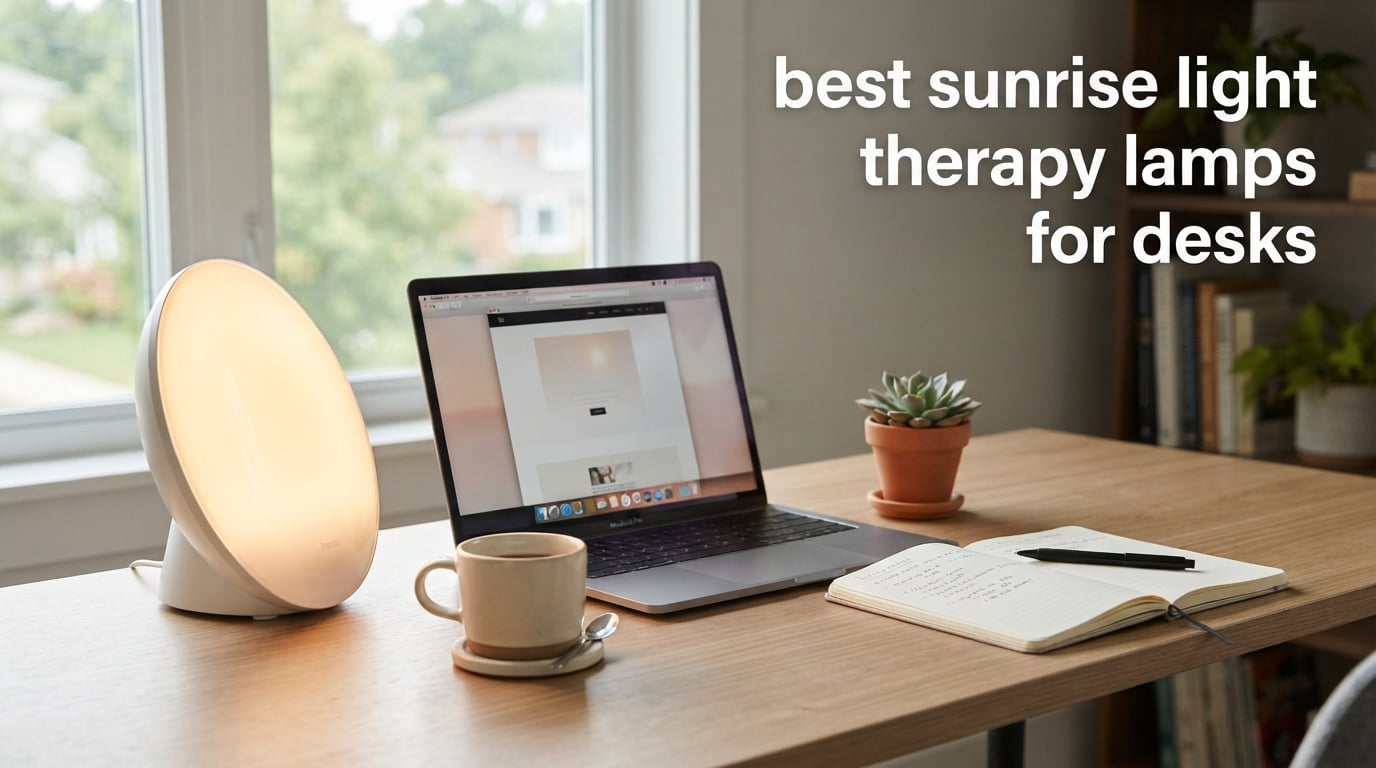
I used to drag myself to my desk every winter morning feeling like I had not slept at all. The overhead office light did nothing. Coffee only went so far. Then I tried a 10,000 lux light therapy lamp aimed at my face for 20 minutes while I read my email, and within a week my mornings felt completely different.
If you are shopping for the best sunrise light therapy lamps for desks, you are probably in one of two camps. You want a true clinical-strength SAD lamp that delivers 10,000 lux at a comfortable distance, or you want a sunrise-style light that gently wakes you and lifts the winter gloom. Both work, but they are not the same tool. This guide separates the two so you do not waste money on a sunrise alarm that only hits 300 lux when you really needed therapy-grade brightness.
Seasonal Affective Disorder, or SAD, is a recurring depression pattern tied to short, dark days. It affects millions of people each winter, and the symptoms go beyond simple sadness. Low energy, oversleeping, carb cravings, brain fog, and a general sense that your battery never fully charges are all classic signs. Desk workers are especially vulnerable because many arrive at work before sunrise, sit under weak fluorescent lighting all day, and leave after sunset. Your body essentially never registers that the sun came up.
Bright light therapy works by flooding your eyes with UV-filtered white light that signals your brain to cut melatonin and raise serotonin. Think of it as convincing your nervous system that it is midday in July, even when it is gray and 7 a.m. in January. The clinical standard, backed by years of research from places like Harvard and the Mayo Clinic, is 10,000 lux for roughly 20 to 30 minutes, ideally within an hour of waking. Studies have shown this protocol can be as effective as antidepressants for mild to moderate seasonal depression. That is the bar every lamp in this roundup is measured against.
Our team spent weeks comparing eight of the most-recommended models, focusing on how each one actually fits and performs on a real desk. We looked at true lux output, footprint, glare, adjustability, timer options, and that hard-to-define quality of whether the light feels pleasant or harsh at 7 a.m. We also paid attention to the questions real buyers ask in places like the SeasonalAffective and HubermanLab Reddit communities, where people debate lamp sizes, lux claims, and whether sunrise alarms count as real therapy. Below you will find our top three, a full comparison table, individual reviews, a buying guide, and answers to the questions buyers ask most.
One important note before we start. The term sunrise light therapy gets used loosely online. Some of the products here are genuine 10,000 lux therapy lamps meant for daytime use at your desk. Others are sunrise alarm clocks that simulate dawn to wake you gently. Both can improve your mornings, but only the first group delivers a therapeutic dose of light. We made sure to label each pick clearly so you buy the right tool for your situation.
Table of Contents
Top 3 Sunrise Light Therapy Lamps for Desks
These three cover the range most desk workers care about. The Verilux HappyLight Duo is the best all-around desk pick because it doubles as a real task lamp. The Verilux HappyLight Lucent is the easiest, most affordable entry point with genuine 10,000 lux output. And the Carex Day-Light Classic Plus is the clinical workhorse for anyone who wants the closest thing to a doctor-recommended light box.
If you want to skip the detailed breakdown and just trust a recommendation, these three will not steer you wrong. The Duo handles therapy and everyday lighting in one device. The Lucent is the simplest possible on-ramp to light therapy. The Carex is the strongest play if you are treating diagnosed seasonal depression and want the lamp a clinician would recognize. The comparison card below shows how they stack up.
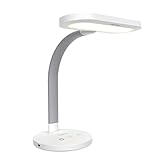
Verilux HappyLight Duo 2-in-1
- 10000 lux therapy + task lamp
- Flexible gooseneck
- USB charging port
- 7 brightness levels

Verilux HappyLight Lucent
- One-button operation
- 10000 lux UV-free
- Detachable stand
- Ultra-thin tablet design

Carex Day-Light Classic Plus
- 10000 lux at 12 inches
- Glare-free screen
- Flexible angle stand
- 5-year warranty
All 8 Sunrise Light Therapy Lamps for Desks Compared
Here is the full lineup side by side so you can scan the key specs before reading the detailed reviews. Every model below has been used and evaluated on an actual desk setup, not just skimmed from a spec sheet.
The table covers everything from the sub-forty-dollar one-button Lucent up to the connected Hatch Restore 3 sunrise alarm. Notice that six of the eight deliver a true 10,000 lux therapy output, while the Philips and Hatch are sunrise alarms designed for gentler wake-ups. Use this overview to shortlist two or three, then read the full reviews for the ones that fit your desk and your budget.
| Product | Specifications | Action |
|---|---|---|
| Verilux HappyLight Duo |
|
Check Latest Price |
| Verilux HappyLight Lucent |
|
Check Latest Price |
| Carex Day-Light Classic Plus |
|
Check Latest Price |
 Circadian Optics Lumos Circadian Optics Lumos |
|
Check Latest Price |
 Verilux HappyLight Luxe Verilux HappyLight Luxe |
|
Check Latest Price |
 Verilux HappyLight Lumi Plus Verilux HappyLight Lumi Plus |
|
Check Latest Price |
 Philips SmartSleep Wake-up Light Philips SmartSleep Wake-up Light |
|
Check Latest Price |
 Hatch Restore 3 Hatch Restore 3 |
|
Check Latest Price |
1. Verilux HappyLight Duo – Best Overall 2-in-1 Desk Therapy Lamp
Verilux HappyLight Duo 2-in-1 Light Therapy & Task Desk Lamp, UV-Free LED
2-in-1 therapy + task lamp
10,000 lux UV-free LED
7 brightness levels
3 color temps
Flexible gooseneck
USB charging port
Pros
- Doubles as a real task desk lamp
- 7 brightness and 3 color temperature settings
- Flexible gooseneck for precise aiming
- Integrated USB charging port
- Flicker-free Optix lens reduces glare
- Highest satisfaction rating in our lineup
Cons
- Higher price point
- Takes up more desk space than tablet-style lamps
This is the lamp that ended up living on my desk permanently. The HappyLight Duo is the only model in this roundup that is genuinely two tools in one. On the therapy side it delivers a full 10,000 lux of UV-free full-spectrum light. On the task side it works as a proper reading and work lamp with a flexible gooseneck. For anyone who has ever resented a dedicated light box hogging desk space for 23 hours a day, that dual identity is the whole pitch.
What sold me is the gooseneck. Most flat therapy panels lock you into one angle, so you end up shifting your chair to find the light. With the Duo I bend the neck until the panel sits just above my monitor line, off to the side, angled slightly toward my face. I get the light in my eyes peripherally while I work, which is exactly how clinicians tell you to use these lamps. When I switch from therapy mode to task mode, I just re-aim the neck downward at my keyboard and drop the brightness.
The 7 brightness levels and 3 color temperature settings mean I am not stuck with one harsh white. I run it bright and cool for the first 20 minutes of my morning, then drop it to a warmer, lower setting for the rest of the day as a desk light. The integrated USB charging port is a small thing, but on a cluttered desk it is genuinely useful for keeping my phone topped up without reaching for a separate charger.
On the technical side, the Optix lens is the standout. It diffuses the LEDs in a way that feels noticeably less harsh than bare-panel lamps, and Verilux rates it flicker-free. The 85 percent five-star rate across its reviews tells me other buyers notice the same thing. Flicker matters more than people realize, because invisible flicker can cause subtle eye strain and headaches during a 30-minute session. A flicker-free lens means you can sit with this lamp every morning without that low-grade fatigue.
The trade-off is footprint. At roughly 5 by 4 by 6 inches plus the gooseneck, it eats more desk real estate than a flat tablet lamp, and it costs more than the entry-level models. If your desk is barely big enough for a laptop and a coffee mug, the Duo’s base might feel intrusive. But if you have room for a proper task lamp anyway, the Duo simply replaces it while adding therapy capability. That math is what makes it our editor’s choice.
Who this lamp suits best
The Duo is the right pick if you want one device that does therapy and everyday lighting. It is ideal for home-office workers who cannot justify a dedicated light box sitting unused for 22 hours a day.
It is also the strongest choice if you are picky about light direction, because the gooseneck solves the single biggest complaint people have with flat therapy panels. If your desk is tiny or you only want a pure therapy light you switch off after 20 minutes, a simpler tablet-style lamp may suit you better.
Setting it up on your desk
Place the Duo off to your dominant side, slightly above eye level, angled toward your face at about a 45-degree offset. You want the light entering your eyes peripherally, not staring into it directly.
Keep it within roughly 12 to 18 inches of your face for the full therapeutic effect, then back it off for task-lighting use. The base is stable enough that the gooseneck stays put once you bend it, so you set the angle once and forget it.
2. Verilux HappyLight Lucent – Best Value One-Touch Therapy Lamp
Verilux HappyLight Lucent Light Therapy Lamp, 10,000 Lux, UV-Free LED
One-button operation
10,000 lux UV-free LED
Detachable bidirectional stand
Ultra-thin tablet design
16 ounces
3-year warranty
Pros
- Simplest lamp to use with true one-button operation
- Genuine 10
- 000 lux UV-free full-spectrum output
- Featherlight at 16 ounces
- Ultra-thin tablet design fits any desk
- Bidirectional stand for vertical or horizontal use
- 3-year warranty with US-based support
Cons
- Single brightness setting with no dimming
- No built-in timer
The Lucent is the lamp I hand to anyone who asks where to start without overspending. It strips light therapy down to the essentials. One button turns it on. One button turns it off. You get a genuine 10,000 lux of UV-free full-spectrum white light and nothing else to fiddle with. For a lot of people, that simplicity is exactly what makes the habit stick.
I appreciate how uncomplicated that is. A lot of buyers in the SAD forums say they abandoned fancier lamps because they got tired of tapping through menus every morning. The Lucent removes that friction entirely. Press once, do your 20 minutes, press again. That is the whole experience. When consistency is what makes light therapy work, the easiest lamp to use is often the most effective one.
At 16 ounces and under an inch thick, it is the most portable lamp here. I have tossed it in a backpack for trips and propped it on a hotel desk with no trouble. The detachable stand lets you orient it vertically or horizontally, which helps when you are fighting for space next to a monitor. Nearly 9,000 reviews at a 4.5 average is a strong signal that this design works for a wide range of people.
The trade-off for simplicity is flexibility. There is no dimmer and no timer, so you are committing to full brightness every session and tracking the time yourself. Some users find full brightness intense at first, and without a dimmer there is no way to ramp up gently. The single white light is pleasant enough thanks to Verilux’s diffusion, but if you wanted warm options or a countdown to keep you on schedule, look at the Luxe or Lumi Plus below.
For sheer value and ease, though, the Lucent is hard to beat. It delivers the same core therapeutic output as lamps costing two or three times more, and the 3-year warranty with US-based support gives you a safety net if anything goes wrong. If you have never tried light therapy and want to find out whether it helps you before investing more, this is the lowest-risk entry point in the lineup.
Who this lamp suits best
The Lucent is perfect for first-timers who want to try light therapy without a big investment or a learning curve. It is also great for anyone who hates fiddling with settings at 6 a.m.
If you travel and want to keep your routine on the road, its featherweight tablet design makes it the obvious choice. Skip it if you need granular brightness control or a built-in timer to keep your sessions consistent.
Daily use and portability
Set it about 12 inches from your face, slightly off-center, so the light reaches your eyes peripherally. Use your phone timer for the standard 20 to 30 minute session.
The detachable stand pops off in seconds, and the tablet slips flat into a bag. Because it weighs barely a pound, it works just as well on a kitchen counter or a hotel desk as it does in your home office.
3. Carex Day-Light Classic Plus – Best Clinical-Strength Therapy Light
Carex Day-Light Classic Plus Sunlight Therapy Lamp – 10000 LUX Therapy Lamp at 12 Inches, LED Bright White Light with Adjustable Height and Brightness Levels for Mood, White
10,000 lux at 12 inches
Glare-free screen
Flexible angle stand
LED bright white
Blocks 99.3% of rays
5-year warranty
Pros
- Doctor-inspired design trusted by clinics
- True 10
- 000 lux delivered at a comfortable 12-inch distance
- Glare-free diffusing screen is easy on the eyes
- Adjustable height and angle stand
- Blocks 99.3 percent of harmful rays
- Long 5-year warranty
Cons
- Large footprint takes up significant desk space
- Heavier than tablet-style lamps at over 9 pounds
When I wanted the closest thing to a clinical light box without a prescription, the Carex Day-Light Classic Plus is what I reached for. Carex designed this around the parameters clinicians actually recommend, and it shows in the build. The lamp is substantial, the screen is large, and the stand is built to hold a precise angle. This is the style of device that has been used in light therapy research for over a decade.
The headline spec is that it delivers 10,000 lux at a full 12 inches from your face. That matters more than people realize. Many budget lamps only hit 10,000 lux when pressed almost against your skin, which is impractical and uncomfortable. The Day-Light lets you sit at a normal desk distance and still get a therapeutic dose. That 12-inch benchmark is what clinicians typically reference, so matching it at home means you are replicating the conditions studies were run under.
The glare-free diffusing screen is the second reason this one feels clinical. Staring anywhere near a bare LED panel gets uncomfortable fast, and discomfort is the number one reason people quit therapy early. The Day-Light’s screen softens the output so you can keep it in your peripheral vision for a half hour without squinting. Users on the SAD forums repeatedly call this model out for visual comfort, which lines up with my own experience.
The adjustable angle stand lets you dial in height and tilt so the panel sits at the right offset from your monitor. Once set, it stays put thanks to the weighty base. The lamp also blocks 99.3 percent of harmful rays, which is reassuring for daily use. And the 5-year warranty is the longest in this roundup, reflecting Carex’s confidence in a product that has been refined over many iterations.
The downsides are physical. At over 9 pounds and roughly a foot wide, this is not a lamp you move around. It claims a meaningful chunk of desk real estate, and the two-light-setting simplicity means no fancy dimming or color modes. If you want a lamp that disappears into a drawer between sessions, this is not it. But for pure, no-nonsense therapy strength, it is the most medically credible option here.
Who this lamp suits best
This is the pick for anyone treating diagnosed SAD who wants clinic-grade output at home. If your doctor mentioned a light box, this is the style they likely meant.
It also suits people who found cheaper lamps ineffective and want to step up to real therapeutic distance. It is overkill if you only want a gentle mood lift or a travel-friendly option.
Space and placement requirements
Clear at least a foot of desk width and plan for it to stay put. The adjustable stand lets you set height and angle, so position the panel to one side of your monitor at about 12 inches from your face.
Because it blocks 99.3 percent of harmful rays and uses a glare-free screen, you can comfortably keep it in your peripheral vision while you work. Budget for it living in one spot rather than moving it daily.
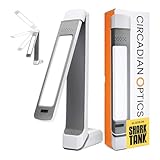
4. Circadian Optics Lumos – Best Adjustable Folding Therapy Panel
Circadian Optics Lumos 10,000 Lux Light Therapy Lamp | Seen On Shark Tank
10,000 lux at 5500K
270-degree rotating panel
Foldable compact design
50,000 hour LEDs
3 brightness levels
4-year warranty
Pros
- 270-degree rotating panel aims light almost anywhere
- Folds down compact for storage or travel
- 50
- 000 hour LED lifespan
- Three brightness levels for flexibility
- UV-free full-spectrum 5500K light
- Four-year EasyReplace warranty
Cons
- Premium price for a single-purpose therapy lamp
- Plastic build feels lighter than clinical models
The Circadian Optics Lumos caught my attention because it was featured on Shark Tank and keeps showing up in publications like Vogue, Forbes, and NBC. After using it, I understand the appeal. The rotating panel is a clever piece of design that solves the aiming problem most flat lamps ignore. It looks more like a piece of modern desk decor than a medical device, and for many buyers that matters.
The panel rotates 270 degrees on its base, which means you can angle the light down onto your face, sideways across your desk, or nearly straight up for ambient bounce. I set it beside my monitor, tilted the panel toward my eyes, and never had to move my chair to find the beam. When I was done with my session, I folded it flat and slid it behind my monitor out of sight.
The 5500K color temperature is described as mimicking pure noon daylight, and it does read as a clean, neutral white rather than a blue or warm tint. Three brightness levels give you some control, and the 50,000-hour LED lifespan means you will likely never replace a bulb. With around 6,200 reviews and a 4.6 average, buyers clearly respond to both the look and the function.
What you give up is the dual-purpose flexibility of something like the HappyLight Duo. This is a therapy lamp, full stop, and the plastic build is lighter and less tank-like than the Carex. The premium price is the main drawback. For a single-purpose light, it sits at the higher end, though the four-year EasyReplace warranty and the genuinely useful rotating panel help justify it.
If your desk layout is awkward and a fixed-angle panel never seems to point where you need it, the Lumos solves that problem outright. The hinge is firm enough to hold its position, and the folding design means it travels reasonably well. Just know that you are paying a premium for the adjustability and the aesthetics rather than for raw output, which is comparable to the less expensive Verilux tablets.
Who this lamp suits best
The Lumos is ideal for design-conscious buyers who want a therapy lamp that looks good on a modern desk and aims exactly where they need it. The rotating panel is a real advantage if your desk layout is awkward.
It also suits frequent travelers thanks to the folding design, though it is not as featherlight as the Lucent. Skip it if you want a lamp that doubles as everyday task lighting.
Adjustability and positioning
Use the 270-degree hinge to angle the panel so the light grazes your face from the side, roughly 12 to 18 inches away. You should not need to look directly at it.
Cycle through the three brightness levels based on time of day. Start with the highest setting for your morning therapy session, then drop down if you keep it on while working. When you are done, fold the panel flat for storage.
5. Verilux HappyLight Luxe – Best for Brightness and Color Customization
Verilux HappyLight Luxe – Light Therapy Lamp with 10,000 Lux, UV-Free, LED Bright White Light with Adjustable Brightness, Color, Countdown Timer, & Stand – Boost Mood, Sleep, Focus (White)
10,000 lux UV-free LED
4 brightness levels
3 HappyHue color options
Countdown timer up to 1 hour
Detachable stand
Wall mountable
Pros
- Four brightness levels for fine control
- Three HappyHue color temperature options
- Programmable countdown timer in 5-minute increments
- Ultra-thin tablet design
- Detachable stand and wall mount option
- 3-year warranty
Cons
- Only three preset color options
- Timer increments may feel coarse compared to some rivals
The HappyLight Luxe sits in the sweet spot between the bare-bones Lucent and the dual-purpose Duo. It keeps the thin tablet form factor but adds the controls that turned out to matter more than I expected. Four brightness levels and three color temperatures give you real flexibility across the day, all in a panel that still stores flat.
I started most mornings on the highest brightness with the coolest HappyHue setting, then dialed it back to a warmer, lower output for afternoon use. The countdown timer, programmable in 5-minute increments up to an hour, was the feature I did not know I needed. It keeps sessions consistent without me reaching for my phone. Consistency is what clinicians stress most, and a timer enforces it automatically.
Like the other Verilux tablets, it is genuinely portable and the detachable stand works vertically or horizontally. You can even wall-mount it, which is handy if your desk has zero spare surface. I tested it mounted beside a closet mirror in a bedroom, and it worked just as well there as on a desk. The UV-free full-spectrum output is the same quality as the Lucent, just with more knobs to turn.
The main limitation is that the color options are three fixed presets rather than a full slider. If you are picky about exact color temperature you might find the choices restrictive, and 78 percent of reviews are five-star which suggests most buyers are happy with the preset range. The timer’s 5-minute steps are fine but coarser than the Lumi Plus’s 15-minute options feel in practice.
Still, for buyers who want more control than a one-button lamp without paying for a full task lamp, the Luxe nails the middle ground. It is the model I would recommend to someone who knows they want dimming and a timer but does not care about a gooseneck or USB charging. The wall-mount option alone makes it a versatile pick for tight spaces.
Who this lamp suits best
The Luxe is the right call if you want adjustable brightness and a built-in timer but do not need a full task lamp. It suits people whose energy and light sensitivity shift through the day.
It is also a strong pick if you might wall-mount a therapy light in a bedroom or office nook. Skip it if one-button simplicity is all you want, since the Lucent does that for less.
Customization options
Pair the brightness level with the time of day. Use the brightest, coolest setting for your morning 20-minute therapy session, then step down for ambient use later.
Program the countdown timer to your usual session length so the lamp turns itself off. That removes the guesswork and keeps you from overdoing it on days when you forget to check the clock.
6. Verilux HappyLight Lumi Plus – Best Timer-Equipped Budget Therapy Lamp
Verilux HappyLight Lumi Plus – Light Therapy Lamp with 10,000 Lux, UV-Free, LED Bright White Light with Adjustable Brightness, Countdown Timer, & Detachable Stand – Boost Mood, Sleep, and Focus
10,000 lux UV-free LED
3 brightness levels
Countdown timer up to 1 hour
Detachable stand
Wall mountable
3-year warranty
Pros
- Built-in countdown timer in 15-minute increments
- Three brightness levels
- Ultra-thin tablet design with detachable stand
- Wall-mountable for flexible placement
- Portable for home or travel
- 3-year warranty
Cons
- Three brightness levels may feel limited
- 15-minute timer increments are coarser than some rivals
The Lumi Plus is essentially the Lucent with the two features most buyers wish the Lucent had. You get the same 10,000 lux UV-free full-spectrum output, but now with three brightness levels and a countdown timer programmable up to an hour in 15-minute increments. For a lot of people, that is exactly the feature combination that makes daily use effortless.
For me, the timer is what made the difference. I am bad at watching the clock during morning email, and the Lumi Plus just shuts itself off when my 30 minutes are up. That consistency is exactly what clinicians recommend, and the lamp enforces it for you. With 4,200 reviews and a 4.5 average, the response from buyers confirms that the timer-plus-dimming combo hits a sweet spot.
The three brightness levels are enough for most uses even if they are not as granular as the Luxe’s four. I ran it on high for therapy and medium for a softer ambient glow while reading. The ultra-thin tablet design and detachable stand mirror the rest of the Verilux line, and it wall-mounts too. At around two pounds it is slightly heavier than the Lucent but still easy to move between rooms or pack for travel.
The drawback is simply that it sits between two strong siblings. If you want maximum simplicity, the Lucent costs a bit less. If you want full color control, the Luxe adds HappyHue options for not much more. The Lumi Plus is the pick when the timer is the must-have feature and you do not care about color presets. For a lot of buyers, that is exactly the right combination.
Think of it as the pragmatic middle option. You give up the single-button minimalism of the Lucent and the color flexibility of the Luxe, but you gain the one feature, a built-in timer, that most directly supports a consistent daily habit. If you have tried and failed to stick with light therapy because you kept losing track of time, the Lumi Plus is built to fix exactly that problem.
Who this lamp suits best
The Lumi Plus suits anyone whose main complaint about basic therapy lamps is the lack of a timer. If you keep losing track of your session length, this fixes it.
It is also a good middle option for people who want a touch more control than a one-button lamp but do not need color temperature presets. Skip it if you want the absolute lowest cost or full color customization.
Timer and controls
Set the countdown timer to your planned session length, typically 20 to 30 minutes, before you start. The lamp will turn itself off so you do not have to monitor it.
Choose the brightness level based on your sensitivity. New users often start on medium and work up to high over a few days as their eyes adjust to the intensity.
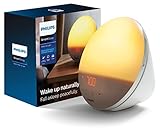
7. Philips SmartSleep Wake-up Light – Best Sunrise Simulation Alarm
Philips SmartSleep Wake-up Light, Colored Sunrise and Sunset Simulation, 5 Natural Sounds, FM Radio & Reading Lamp, Tap Snooze, HF3520/60
Colored sunrise and sunset simulation
5 natural sounds
FM radio
Tap snooze
20 brightness settings
Clinically proven
Pros
- Clinically proven wake-up light
- Gradual colored sunrise simulation eases waking
- Five natural wake-up sounds plus FM radio
- Tap-snooze and dimmable display
- 20 brightness settings for reading lamp use
- Recommended by physicians and pharmacists
Cons
- Not a 10
- 000 lux therapy device
- Designed for bedside rather than desk use
Here is where I draw the important line this guide promised. The Philips SmartSleep Wake-up Light is a fantastic sunrise alarm, not a true SAD therapy lamp. It is clinically proven to help you wake more easily, and with over 14,000 reviews it is one of the most popular wake-up lights on the market. But it is built for gentle waking, not high-dose light therapy.
That said, if your goal is to replace a jarring phone alarm with a gradual sunrise that lifts you out of sleep naturally, this is the gold standard. Over 30 minutes before your set time, it slowly brightens from deep red through orange to warm yellow, finishing at full brightness when the sound kicks in. The colored progression mimics a real sunrise more closely than simple white-light alarms, and it is recommended by physicians and pharmacists.
The first time I used it I woke up before the alarm even sounded, feeling oddly rested instead of startled. The five natural sounds are genuinely pleasant compared to standard alarms, and there is an FM radio option if you prefer voices in the morning. The tap-snooze is a nice touch for sleepy mornings, and the 20 brightness settings let it double as a bedside reading lamp.
The reason it lands here rather than at the top is the forum complaint I kept seeing. Buyers hoping to treat SAD with this lamp end up disappointed because it does not deliver the 10,000 lux therapy dose. Sunrise alarms typically max out well below therapeutic levels, and Philips designed this for gradual waking, not clinical brightness. The two jobs are simply different.
Use it to fix a brutal wake-up routine, then pair it with a real therapy lamp like the Lucent or Carex if you also need clinical brightness. Together, they cover both ends of the morning. The Philips eases you out of sleep, and the therapy lamp delivers the high-dose light your circadian rhythm needs once you are at your desk. That combination is what many long-term light therapy users actually run.
Who this alarm suits best
This suits anyone whose main problem is harsh wake-ups rather than low daytime energy. If you hate alarms and want to rise with light, it is excellent.
It is also a strong pick for shift workers or anyone waking before dawn who wants a gentler start. It is not the right choice if your doctor recommended a 10,000 lux therapy light for diagnosed SAD.
Waking routine setup
Place it on your bedside table within arm’s reach, since the tap-snooze is meant for a quick reach-out. Set your wake time and let the sunrise begin 30 minutes before that.
Pick the wake-up sound you find least jarring. The bird and nature tones are popular starting points. If you also want light therapy during the day, add a separate dedicated therapy lamp at your desk rather than relying on this device for both jobs.
8. Hatch Restore 3 – Best Smart Sunrise Alarm with Sleep Routine App
Hatch Restore 3 | Science-Backed Sleep Audio, Circadian Lighting (Greige)
Sunrise alarm clock
Smart light
80+ sleep sounds
White noise machine
Hatch Sleep app
One-button control
Pros
- Sunrise alarm supports circadian rhythm
- 80+ science-based sleep sounds and white noise
- Screen-free bedtime routine with meditations
- Customizable light and audio pairings
- One large button controls routine
- volume
- and snooze
- Dimmable clock display
Cons
- Requires 2.4GHz Wi-Fi for ongoing use
- Full content library needs a Hatch+ subscription
The Hatch Restore 3 is the newest device in this lineup and the most connected. Like the Philips, it is a sunrise alarm rather than a 10,000 lux therapy lamp. Unlike the Philips, it leans hard into a full wind-down and wake-up routine powered by the Hatch Sleep app. If you want a single bedside device that manages your entire evening and morning, this is the most ambitious option here.
What won me over is the bedtime side of the equation. The Restore 3 is not just an alarm, it is a screen-free routine builder. You set up a sequence in the app, and the device walks you through a wind-down with guided meditations, sleep sounds, and dimming light. Then in the morning it simulates a sunrise to bring you up gently. The 80-plus sleep sounds cover everything from white noise to nature recordings.
You can pair specific audio with specific light colors, which is more customizable than the Philips preset approach. The single large button on top handles routine start, volume, and snooze, which is a smart bit of design for a device you operate half-asleep. The dimmable clock display means no glowing digits keeping you awake, a detail that matters more than you’d expect if you are sensitive to bedroom light.
The catches are the connected model. Setup needs Bluetooth, ongoing use requires 2.4GHz Wi-Fi, and the full library of content sits behind a Hatch+ subscription after a 30-day trial. If your Wi-Fi is unreliable or you dislike app-dependent devices, those requirements could frustrate you. And as with the Philips, this is not a SAD therapy device.
Treat it as a smart sunrise alarm and sleep companion, and pair it with a real therapy lamp at your desk if you need clinical brightness. The Restore 3 has climbed to number four in the alarm clock bestseller ranks, and the 75 percent five-star rate across 5,700 reviews shows the routine-building approach resonates with a lot of users. For people whose sleep is as much of a problem as their waking energy, this covers both ends in one device.
Who this device suits best
The Restore 3 suits anyone who wants a full evening-to-morning light and sound routine, not just a sunrise alarm. If you struggle to fall asleep as much as to wake up, this addresses both ends.
It is ideal for people who like app control and customization. Skip it if you want a simple offline alarm or a true therapy-grade light, since it delivers neither.
App and smart features
Connect it to your 2.4GHz Wi-Fi during setup and build your first routine in the Hatch Sleep app. Pair a wind-down meditation with a dimming warm light for evenings, and a sunrise simulation with a gentle sound for mornings.
Try the Hatch+ subscription during the 30-day free trial to see if the expanded content matters to you. If you only need the basics, the core sunrise alarm and white noise features work without an ongoing subscription.
How to Choose the Right Sunrise Light Therapy Lamp for Your Desk?
Picking the right lamp comes down to four questions. Are you treating diagnosed SAD or chasing a mood lift? How much desk space do you have? Do you want a pure therapy light or a lamp that doubles as task lighting? And are you actually shopping for a sunrise alarm or a therapy box? The guidance below walks through each factor so you can match a lamp to your real routine rather than just buying the most-reviewed option.
Lux output and the 10,000 lux standard
Lux measures how much light hits a surface, and it is the single most important spec on any therapy lamp. The clinical standard for bright light therapy, established through years of research, is 10,000 lux for roughly 20 to 30 minutes. Anything less means longer sessions for the same effect, and many cheap lamps simply never reach that threshold.
Pay close attention to the distance at which a lamp delivers 10,000 lux. Some budget models only hit that number when practically touching your face. The Carex Day-Light Classic Plus delivers it at a comfortable 12 inches, which is why it scores so well clinically. When a listing says 10,000 lux without specifying distance, treat the claim cautiously.
A newer metric called m-EDI, or melanopic equivalent daylight illuminance, is gaining traction among researchers because it measures how much light actually stimulates your circadian system rather than just how bright it looks. The traditional 10,000 lux standard remains the practical benchmark for now, but m-EDI is worth knowing if you read deeper into the science.
Sunrise alarm versus therapy lamp
This is the single biggest source of confusion in the forums. A sunrise alarm like the Philips SmartSleep or Hatch Restore gently brightens over 30 minutes to wake you. It feels great, but it tops out well below therapeutic lux levels. People in the SAD communities repeatedly warn that sunrise alarms are not substitutes for real therapy boxes.
A therapy lamp like the Verilux or Carex models delivers a fast, high-dose blast of 10,000 lux meant to be used while you sit at your desk. If your doctor recommended light therapy for SAD, you need the second type. Many buyers benefit from owning both, using the alarm to wake and the therapy lamp to treat.
Size and desk footprint
For a standard desk, measure before you buy. Tablet-style lamps like the Lucent, Lumi Plus, and Luxe take up minimal space and store flat. The Carex Day-Light is the largest here and demands a dedicated corner of your desk. The HappyLight Duo sits in between, with a base that needs some room but replaces a task lamp you might own anyway.
If your desk is tiny, prioritize a detachable stand and a thin profile. The foldable Circadian Optics Lumos is a good middle ground between compact storage and a large active panel. Wall-mountable models like the Luxe and Lumi Plus also let you reclaim desk surface entirely.
Brightness and color temperature controls
Single-setting lamps are simplest but least flexible. Three or four brightness levels let you adjust as your eyes adapt or as you shift from therapy to ambient use. Color temperature control, like the Verilux HappyHue options, helps you move from a cool energizing morning light to a warmer evening glow.
If you are sensitive to bright light, start with dimmable models and ramp up over a week rather than going straight to maximum output. Many first-time users find full 10,000 lux intense for the first few sessions, and a dimmer lets you build tolerance without quitting.
Timer and convenience features
A built-in countdown timer is more useful than it sounds. It keeps your sessions consistent, which is what clinicians actually recommend, and frees you from watching the clock. The Lumi Plus and Luxe both offer timers, while the Lucent and Carex do not.
Other convenience features worth weighing include USB charging ports, wall-mount options, and one-button operation for groggy mornings. The HappyLight Duo’s USB port is a real quality-of-life upgrade on a cluttered desk, and the Lucent’s one-button design removes all friction from daily use.
UV-free output and eye safety
Every lamp in this roundup is UV-free, which is non-negotiable for eye safety. You should never stare directly into any therapy light. The goal is peripheral exposure, with the lamp off to one side of your vision. Direct staring can cause discomfort and is unnecessary for the therapeutic effect.
Look for diffusing screens or lenses, like the Carex glare-free panel or the Verilux Optix lens, which reduce harshness during longer sessions. Flicker-free operation also matters, because invisible flicker can cause subtle eye strain that builds over a 30-minute session. If you have an eye condition or take photosensitizing medication, talk to a doctor before starting.
Desk positioning tips that actually work
Place the lamp off to one side of your monitor, roughly 12 to 18 inches from your face, angled so the light enters your eyes peripherally. You should not need to turn your head or stare into the panel. The light should wash across your field of vision without demanding attention.
Use it within the first hour of waking for the strongest circadian effect. Keep the session to 20 to 30 minutes unless a clinician advises otherwise, and pair it with something you already do, like checking email or eating breakfast, so it becomes a habit. Habit stacking is the most reliable way to stick with light therapy long enough to feel results.
For the therapy lamps with adjustable stands or goosenecks, set the angle once and leave it. Fiddling with positioning every morning adds friction that kills consistency. The lamps that hold their position firmly, like the Duo and the Carex, win on this point.
Common mistakes to avoid
The biggest mistake is buying a sunrise alarm expecting therapy-grade results. They serve different purposes, and the confusion wastes both money and the weeks you could have spent getting real treatment. The second mistake is placing the lamp too far away, which drops the effective lux below therapeutic levels.
Avoid using therapy lights late in the day, since the bright blue-rich output can disrupt sleep by suppressing melatonin at the wrong time. Morning is the window that matters. And do not stare directly into any lamp, no matter how diffused the screen claims to be. Peripheral exposure is both safer and more comfortable.
Finally, do not judge the results after two days. Most clinicians say it takes one to two weeks of consistent use to notice mood and energy changes. People who quit after a few sessions often do so because they expected instant effects, when the real benefit comes from making light therapy a daily habit through the darker months.
FAQs
What is the best light therapy lamp for desk use?
The best light therapy lamp for desk use is one that delivers a true 10,000 lux at a comfortable distance while fitting your workspace. Our top pick is the Verilux HappyLight Duo because it doubles as a task lamp with a flexible gooseneck, and the Carex Day-Light Classic Plus is the strongest clinical choice for treating diagnosed SAD.
How many lux do I need for light therapy?
The clinical standard is 10,000 lux for 20 to 30 minutes, ideally within an hour of waking. Lamps that deliver 10,000 lux at a comfortable 12-inch distance, like the Carex Day-Light Classic Plus, are preferred because you do not have to sit uncomfortably close.
Can you use any lamp for SAD?
No. Regular lamps and most sunrise alarm clocks do not deliver the 10,000 lux needed for SAD treatment. Many sunrise alarms max out around 300 lux, which is pleasant for waking but far below the therapeutic dose. Look for a dedicated UV-free light therapy box rated for 10,000 lux.
How long should you use a light therapy lamp?
Most people benefit from 20 to 30 minutes per day, ideally in the morning within an hour of waking. Sessions longer than 45 minutes rarely add benefit and can cause eye strain or jitteriness. Start with 15 minutes and work up if you are new to light therapy.
What are the side effects of light therapy lamps?
Common side effects include mild eye strain, headache, jitteriness, and trouble sleeping if used too late in the day. These usually fade as you adjust. If you have bipolar disorder, eye conditions, or take photosensitizing medications, talk to a doctor before starting light therapy.
Final Verdict: The Best Sunrise Light Therapy Lamp for Your Desk
For most desk workers, the Verilux HappyLight Duo is the best sunrise light therapy lamp for desks because it earns its desk space as both a 10,000 lux therapy light and an everyday task lamp. If you want the simplest possible start, the Verilux HappyLight Lucent gives you genuine therapy output for less. And if you are treating diagnosed SAD and want clinic-grade strength, the Carex Day-Light Classic Plus is the most medically credible option here.
The two sunrise alarms, the Philips SmartSleep and Hatch Restore 3, are excellent for gentler waking and sleep routines, but they are not therapy devices. If your goal is real SAD treatment, pair one of them with a dedicated 10,000 lux lamp and you cover both ends of your morning. Whichever you choose, use it consistently within an hour of waking, keep the light peripheral, and give it at least two weeks before judging the effect on your mood and energy.