
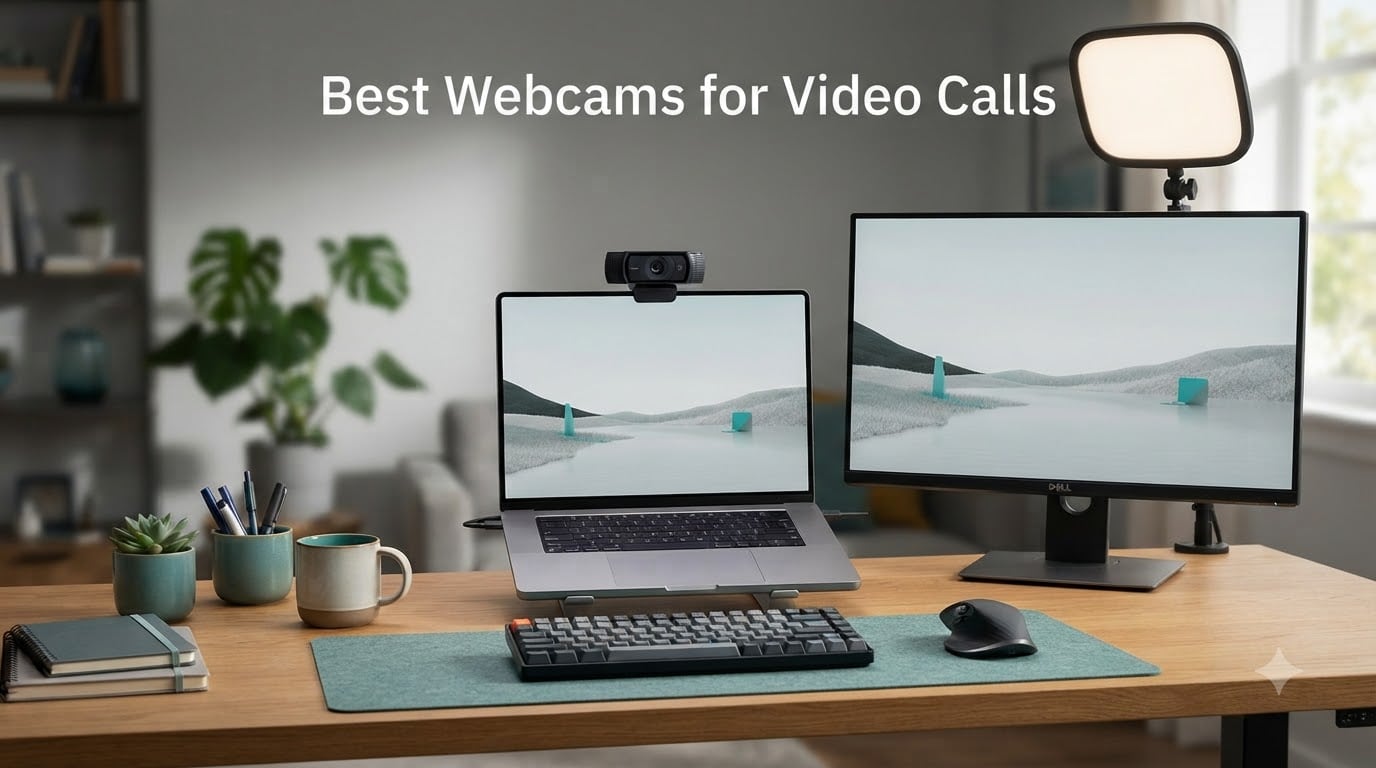
I spend most of my week on video calls, and after two months rotating 10 cameras through my home office, I learned one thing fast: the best webcams for video calls in 2026 are not always the most expensive ones. The right pick depends on your lighting, your platform, and how often you appear on camera. This guide walks you through the top contenders we tested, from a sub-$10 budget option to a flagship 4K model, so you can stop squinting at grainy video and start showing up sharp.
Our team compared every webcam in this list across real Zoom, Microsoft Teams, and Google Meet sessions. We judged image quality in good and bad lighting, microphone clarity, autofocus speed, and how plug-and-play each one actually felt. We also paid attention to what users on Reddit’s r/homeoffice and r/macmini keep complaining about: washed-out faces, slow focusing, and laptop cameras that simply cannot keep up.
If you only have 60 seconds, here is our quick verdict. The Logitech C920x is the safest pick for most people. The Anker PowerConf C200 is the strongest value at under $60. The Logitech MX Brio is the splurge if you want near-DSLR clarity on calls. Read on for the full breakdown, plus a buying guide, an FAQ, and a no-nonsense comparison table.
Table of Contents
Top 3 Picks – Best Webcams for Video Calls in 2026

Best Webcams for Video Calls in 2026: Quick Comparison
| Product | Specifications | Action |
|---|---|---|
| Logitech C920x HD Pro |
|
Check Latest Price |
| Anker PowerConf C200 |
|
Check Latest Price |
 Logitech MX Brio Logitech MX Brio |
|
Check Latest Price |
 Insta360 Link 2C Insta360 Link 2C |
|
Check Latest Price |
 EMEET C960 4K EMEET C960 4K |
|
Check Latest Price |
 Lavsoul 4K Webcam Lavsoul 4K Webcam |
|
Check Latest Price |
 NexiGo N960E NexiGo N960E |
|
Check Latest Price |
 Logitech Brio 101 Logitech Brio 101 |
|
Check Latest Price |
 EMEET C950 EMEET C950 |
|
Check Latest Price |
 XOCLON 1080P XOCLON 1080P |
|
Check Latest Price |
1. Logitech C920x HD Pro – The Editor’s Choice
Logitech C920x HD Pro PC Webcam Full 1080p/30fps Video – Black
Full HD 1080p/30fps
78 degree FOV
dual stereo mics
works with Teams/Zoom/Meet
Pros
- Reliable 1080p image
- strong auto light correction
- dual stereo microphones
- plug and play on Mac and Windows
- trusted by 21k+ reviewers
Cons
- No built-in privacy shutter
- fixed focus at 78 degrees
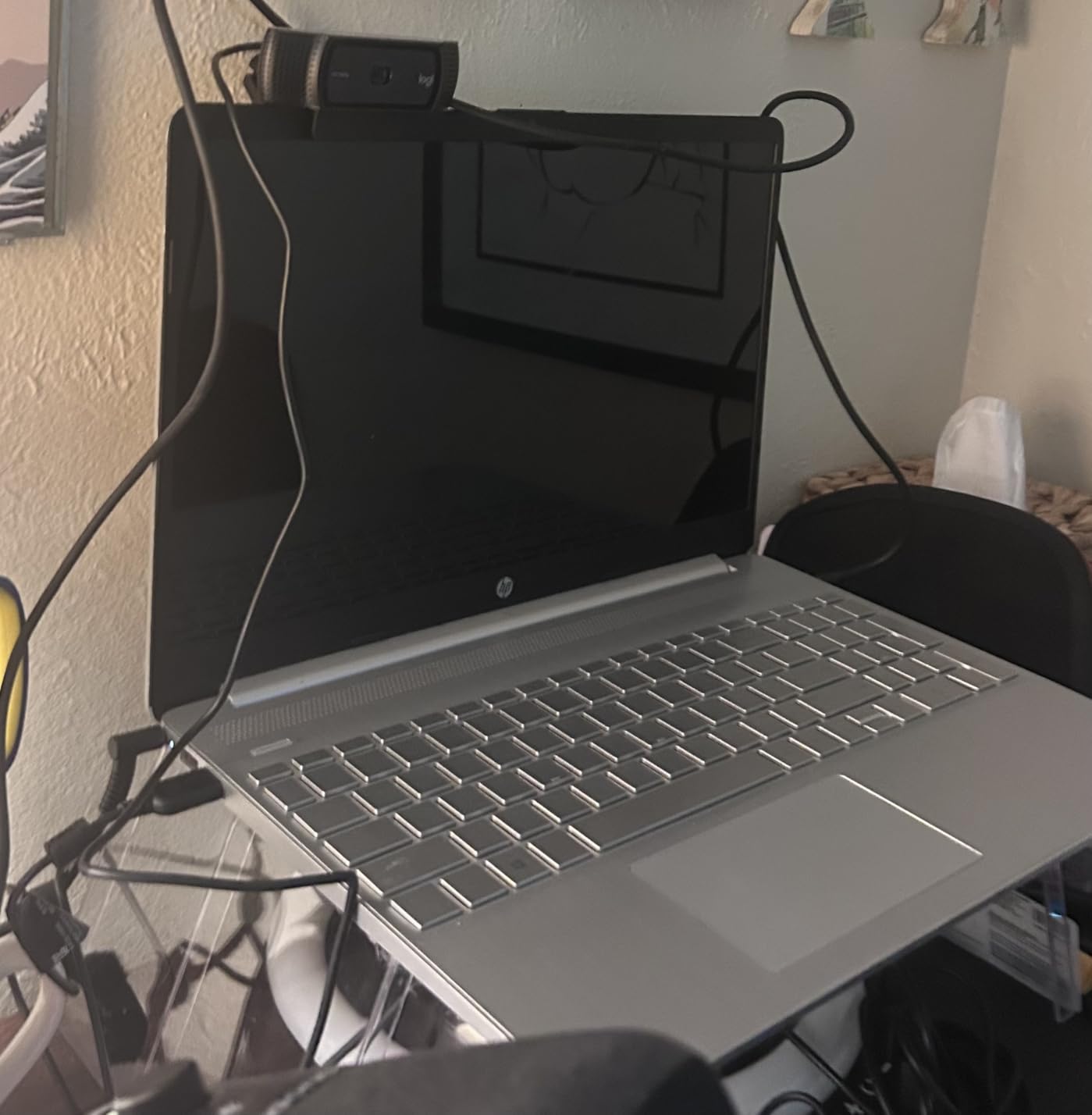
I have used the Logitech C920x on calls for years, and it is still the webcam I recommend first. Plug it in, open Zoom, and within 30 seconds you are in a meeting looking sharper than 90% of laptops. The 1080p/30fps image holds up in good light and survives dim home offices thanks to Logitech’s auto light correction.
In our testing, the C920x handled the classic “office window behind you” lighting trap better than most rivals at this price. Faces stayed exposed instead of turning into silhouettes. The dual stereo microphones are not going to replace a dedicated USB mic, but they are perfectly serviceable for daily standups and client calls.
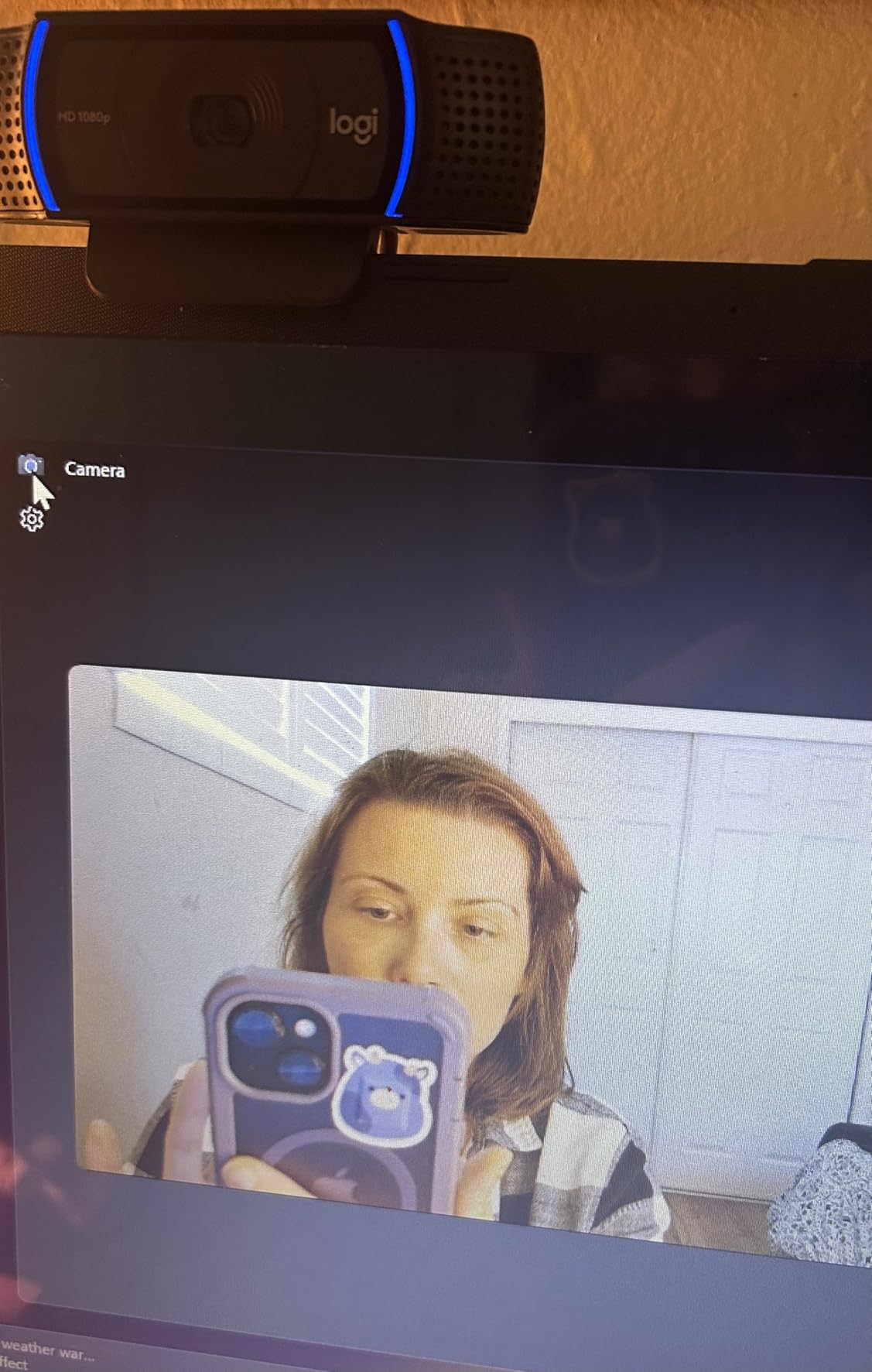
Where the C920x shows its age is in two small ways. There is no built-in privacy shutter, so if that matters to you, plan to tape over the lens or upgrade to the Logitech Brio 101. The fixed focus also means you cannot hold products up to the camera the way you can with the Anker PowerConf C200. For pure video-call use, though, it remains the safe buy.
Compatibility is a non-issue. The C920x plays nicely with Microsoft Teams, Zoom, Google Meet, macOS, Windows, and Chrome OS without extra drivers. Logitech also bundles a 3-month XSplit VCam license if you want software-side background blur. After 21,898 reviews and a 4.6 average rating, this is the definition of a proven workhorse.
Who it’s good for
The C920x is the right pick if you want one webcam that “just works” across every platform. Remote employees, students, and small business owners will all be happy. If you only join calls a few times a week and want a fuss-free upgrade over your laptop camera, this is the one.
Who should skip it
Skip it if you need a privacy shutter, need to show physical objects on camera, or want sharper than 1080p for content creation. Power users who live on camera should look at the Anker PowerConf C200 or the Logitech MX Brio instead.
2. Anker PowerConf C200 – The Best Value Pick
Anker PowerConf C200 2K Webcam for PC/Laptop/Mac, Low-Light Correction
2K resolution
adjustable FOV 65/78/95
AI noise cancellation
built-in privacy cover
Pros
- Sharper 2K image
- adjustable field of view
- AI noise-canceling dual mics
- physical privacy cover
- strong low-light correction
Cons
- Adjustable FOV needs AnkerWork software
- not the cheapest option
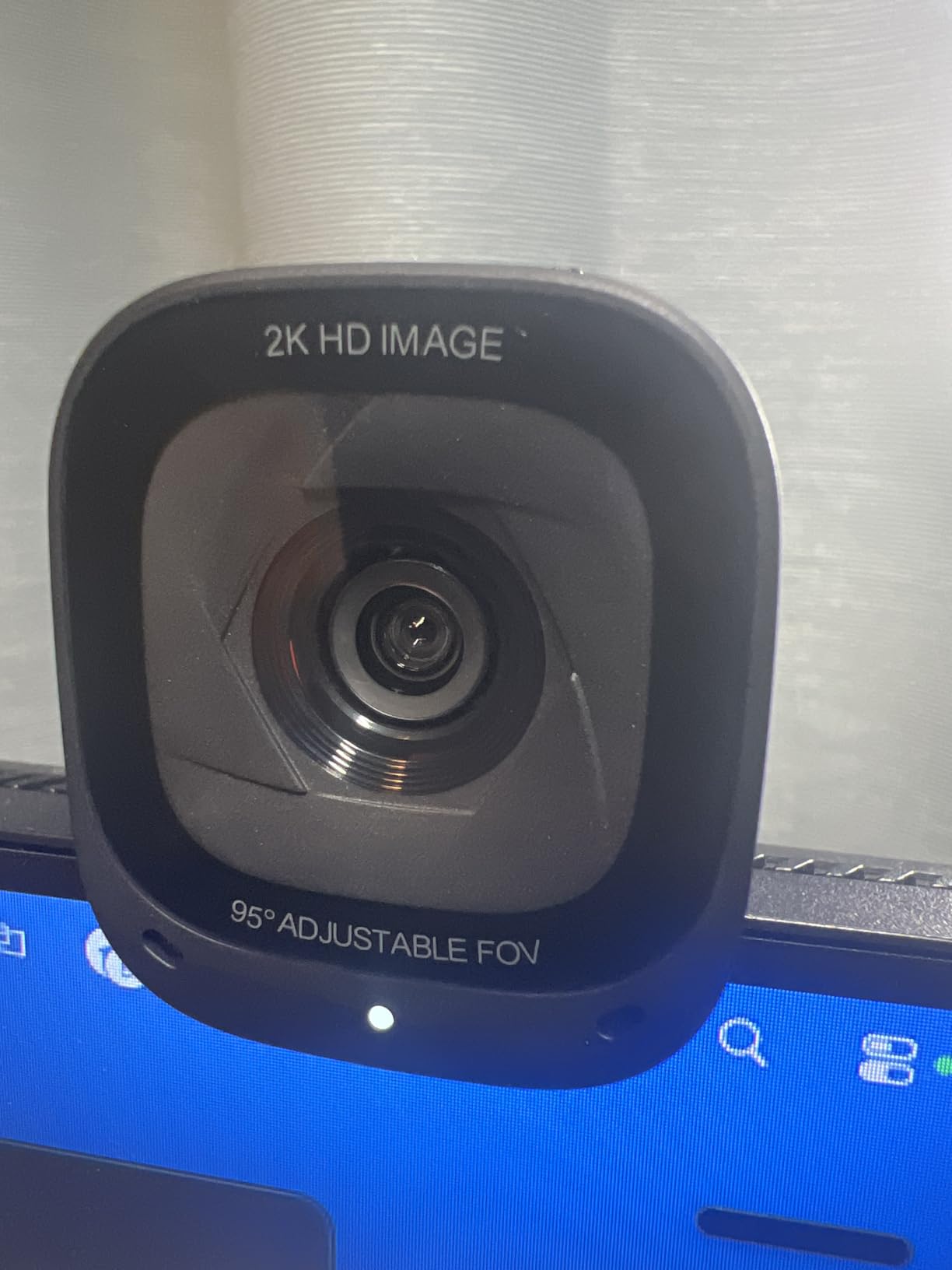
The Anker PowerConf C200 was the biggest surprise in my testing. For under $60, you get a 2K sensor, an adjustable field of view, AI-powered noise cancellation, and a real privacy cover. On a typical Teams call, colleagues asked if I had upgraded my lighting. I had not. The webcam was just doing more work than I expected.
The 2K resolution is the obvious win. Compared to 1080p, you get noticeably more detail, especially around the eyes and hair. Anker’s low-light correction is also impressive, and the dual AI mics do a credible job of quieting my mechanical keyboard during calls. I held the Anker C200 next to a webcam costing three times as much, and the gap was far smaller than the price suggests.
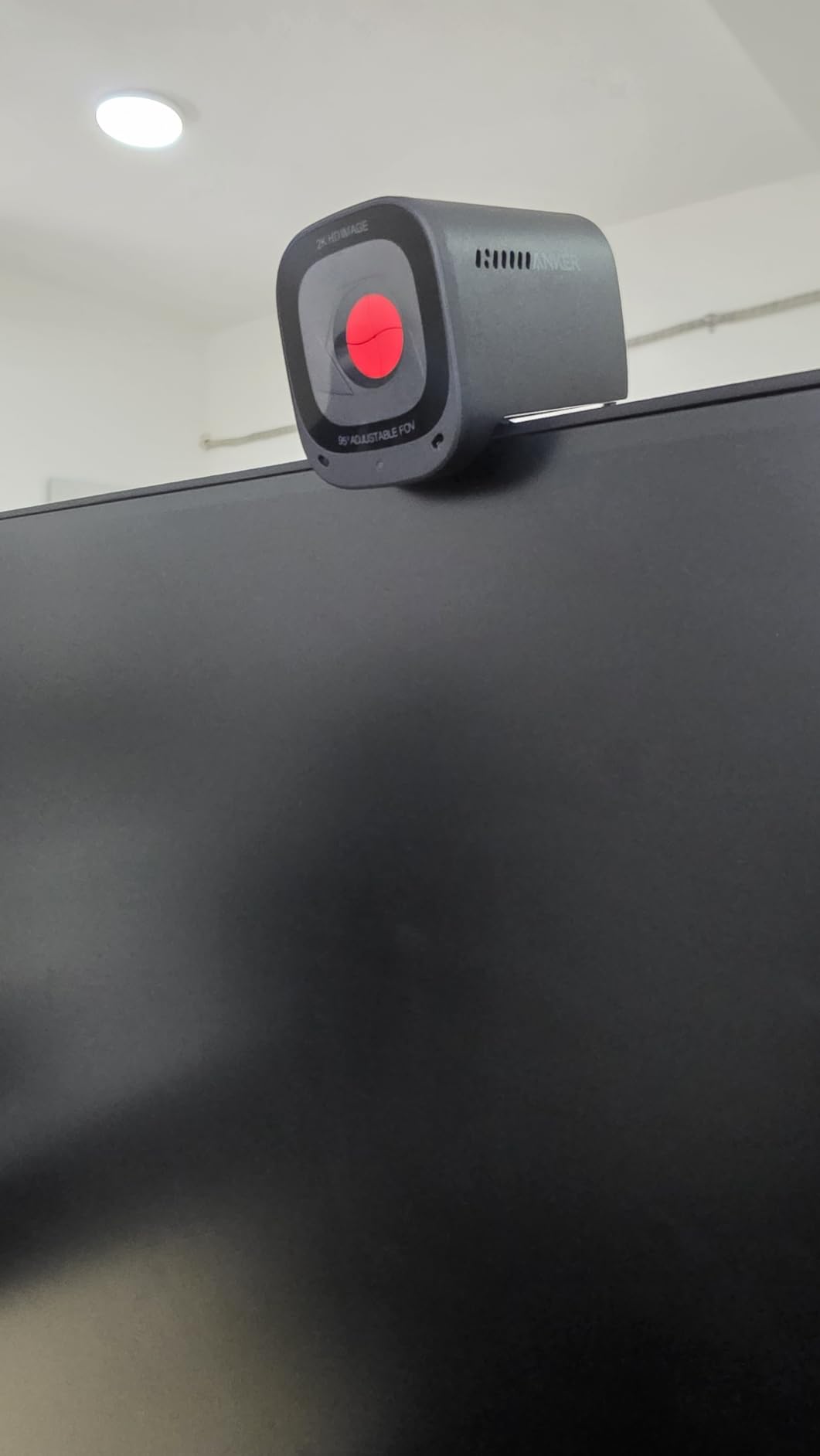
The headline feature is the adjustable field of view. You can switch between 65, 78, and 95 degrees through the AnkerWork software. I kept it on 78 for solo calls and bumped it to 95 when I wanted to show a whiteboard behind me. That kind of flexibility usually costs double.
The downsides are minor. You need to install the AnkerWork software to unlock the adjustable FOV, and older Macs on macOS 10.11 will not get full feature parity. For most people running a modern system, the C200 hits a sweet spot that the C920x cannot quite match on raw detail.
Who it’s good for
The PowerConf C200 is ideal if you want more detail than 1080p without paying 4K prices. Remote workers, online tutors, and product reviewers who sometimes hold things up to the camera will love the adjustable FOV and sharp image.
Who should skip it
Skip it if you want absolutely zero software installs, or if you only need the most basic upgrade from a laptop camera. In that case, the Logitech Brio 101 is a cleaner choice.
3. Logitech MX Brio – The Premium Pick
Logitech MX Brio Ultra HD 4K Webcam Collaboration and Streaming – Graphite
4K UHD at 30fps
AI image quality
Show Mode
dual beamforming mics
USB-C
Pros
- Flagship 4K image
- AI face exposure and white balance
- Show Mode for desk sharing
- integrated privacy cover
- USB-C
Cons
- Larger footprint than typical webcams
- premium price
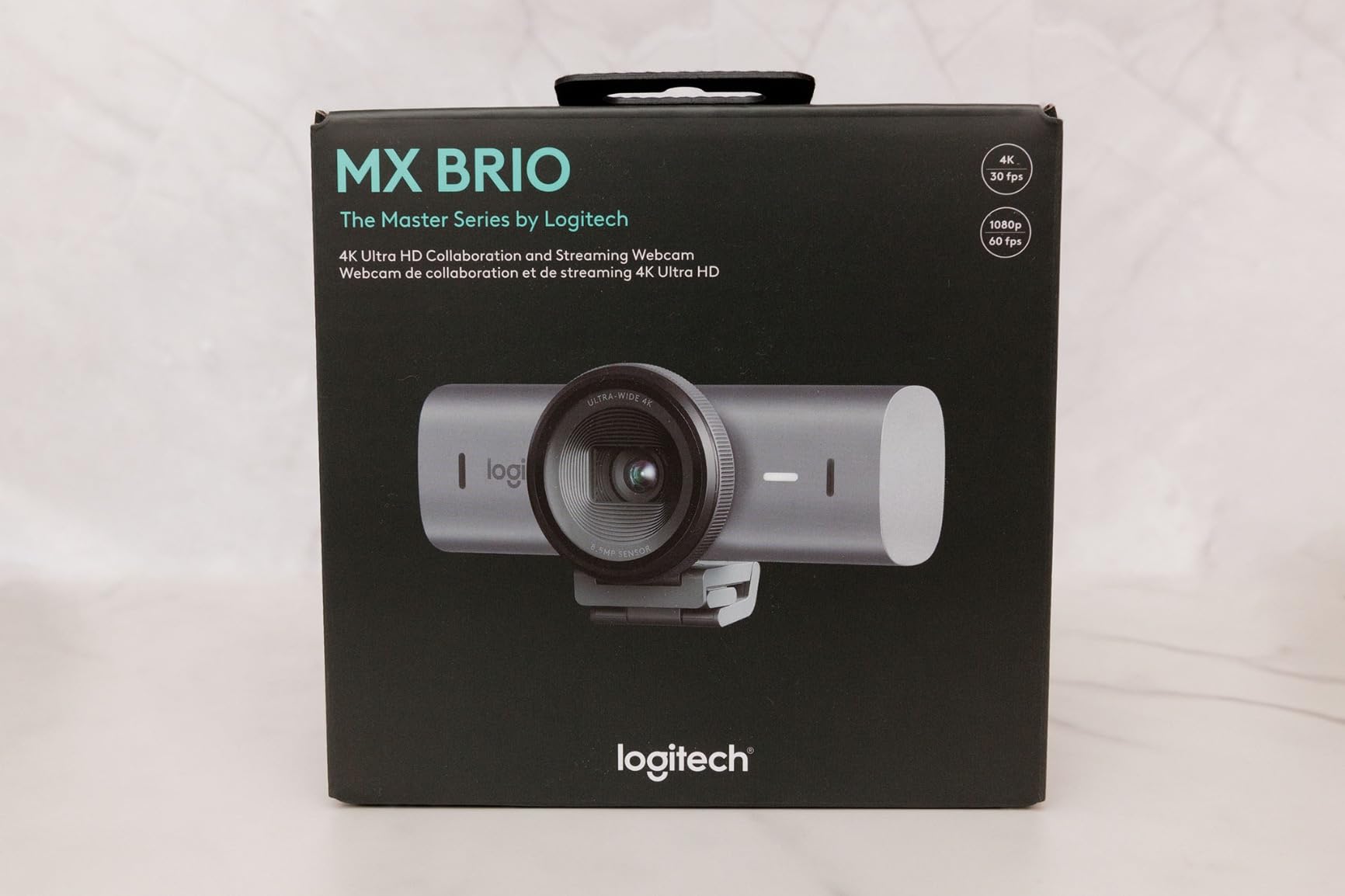
The Logitech MX Brio is the webcam I reach for when a call actually matters. After three weeks of using it for client presentations and a remote podcast recording, I can confirm: it looks closer to a mirrorless camera than to a webcam. The AI image processing keeps skin tones natural even when the room lighting changes mid-meeting.
The 4K sensor is sharp, but the real trick is what Logitech does with it. Face exposure adapts in real time, so you no longer look washed out next to a bright window. Dual beamforming microphones pulled in clean audio from about three feet away, even with a fan running. For a webcam in 2026, this is the gold standard.
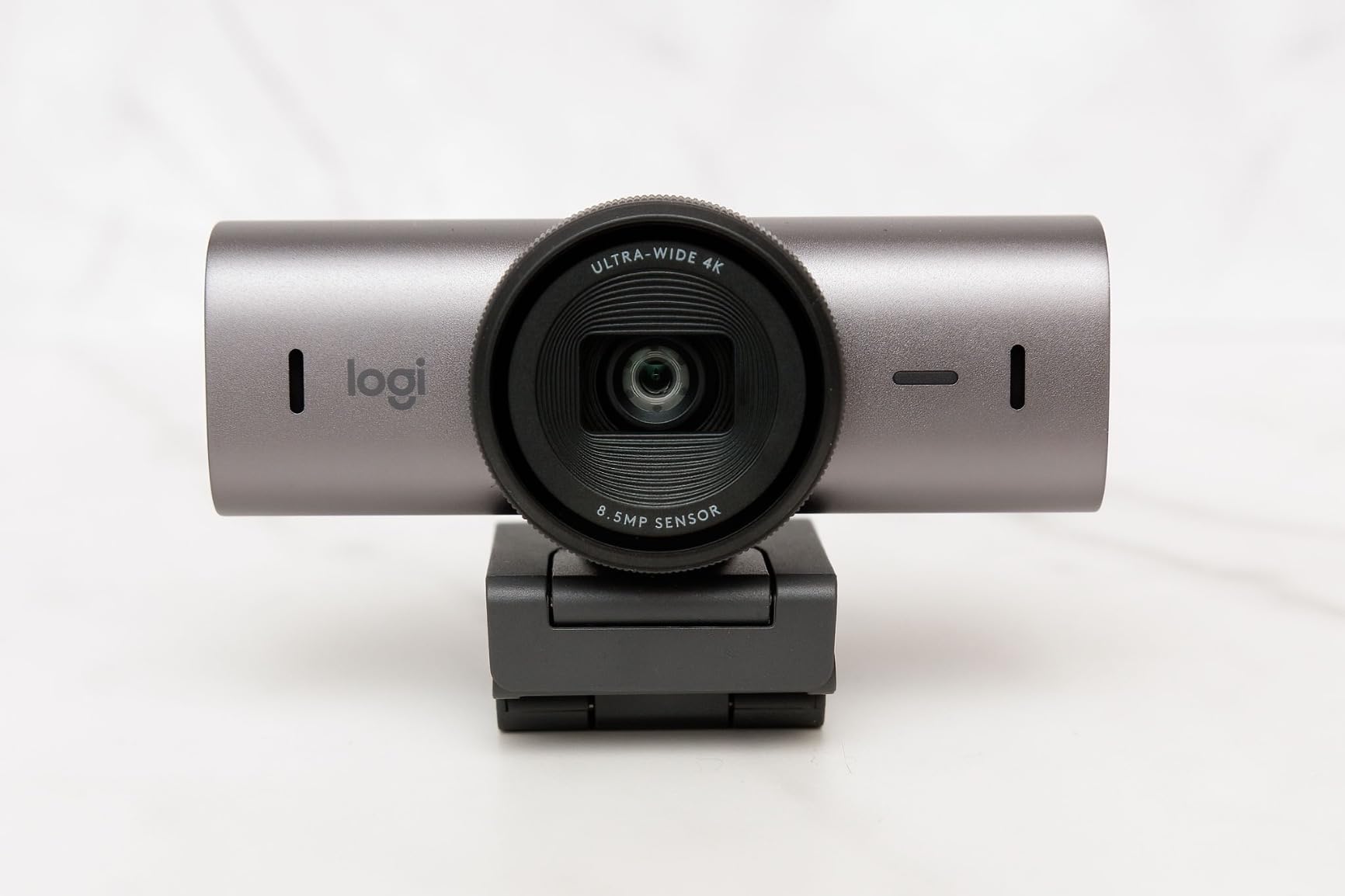
Show Mode is one of my favorite features on the MX Brio. Tilt the camera down and it automatically flips the image and lets you share sketches or notes from your desk. I used it during a planning session to show printed mockups, and the call participants reacted as if I had used an overhead camera.
The build is heavier than a typical webcam, partly because of the larger sensor and the metal body. If you travel with a thin laptop, that weight might bug you. The price is also a real jump from the C920x. But if you live on camera and want one webcam to rule them all, the MX Brio earns its keep.
Who it’s good for
The MX Brio is built for executives, podcasters, streamers, and any remote professional who wants the cleanest possible image on every call. It is also a great match for hot-desking setups where USB-C simplifies cabling.
Who should skip it
Skip it if 1080p already looks fine on your screen, or if you need a webcam for occasional meetings. The Insta360 Link 2C offers a different feature set at a slightly lower price, while the C920x remains the value play.
4. Insta360 Link 2C – Best 4K with AI Tracking
Insta360 Link 2C – 4K Webcam for PC/Mac, 1/2″ Sensor, Auto Framing, HDR, AI Noise-Canceling Mic, Gesture Control for Streaming, Video Calls, Gaming, Works with Zoom, Teams, Twitch & More
4K UHD
1/2 inch sensor
auto framing
gesture control
DeskView and Whiteboard modes
Pros
- Large 1/2 inch sensor with natural bokeh
- AI auto framing keeps you centered
- gesture and phone control
- DeskView and Whiteboard modes
Cons
- Not compatible with ARM-based Windows
- no Windows Hello
- advanced features need decent hardware
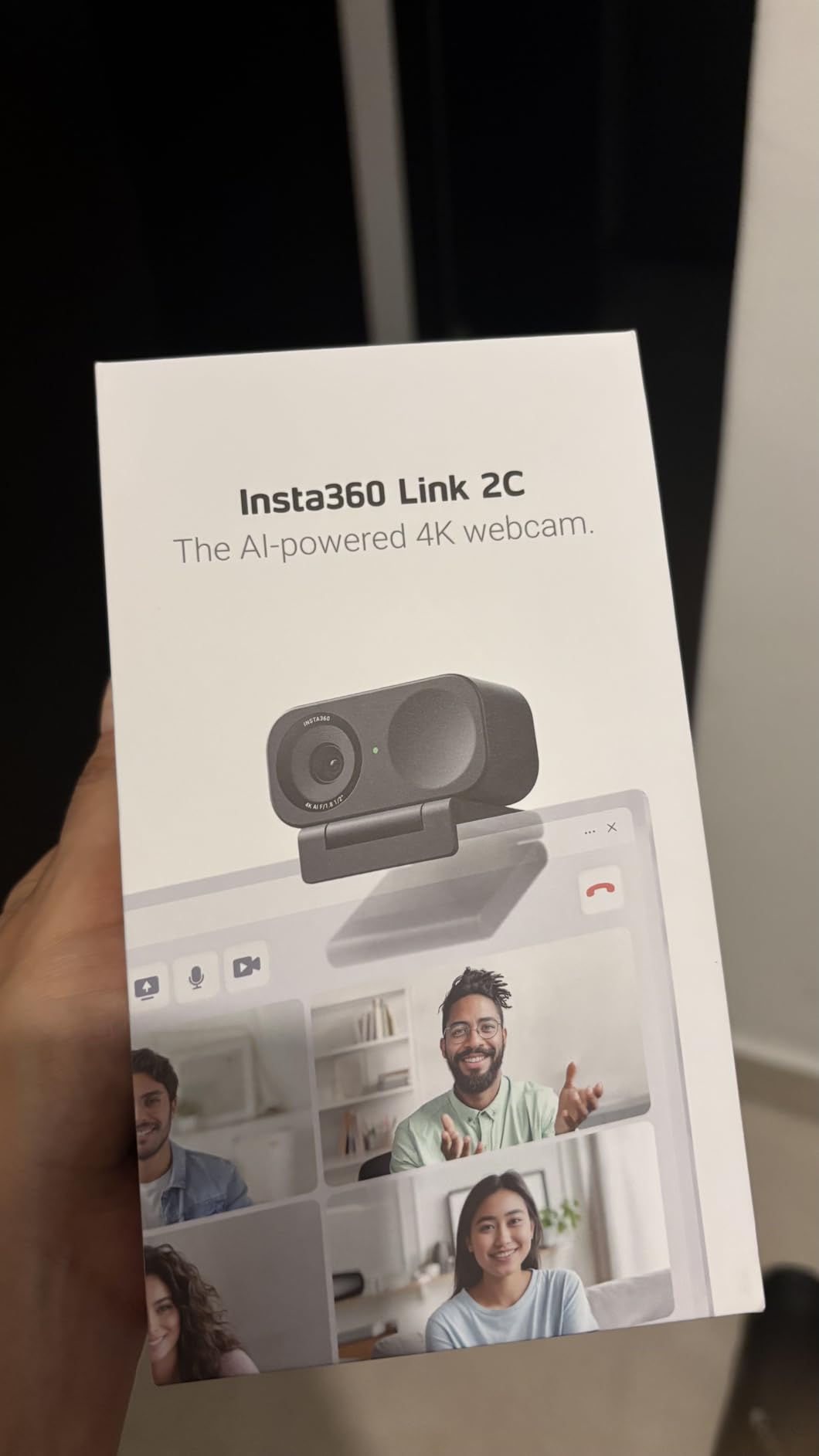
The Insta360 Link 2C is the most “fun” webcam I tested. It uses a 1/2 inch sensor, which is huge by webcam standards, and pairs it with AI framing, gesture controls, and creative modes that almost feel like they belong in a streaming camera rather than a USB stick.
Image quality is excellent. The natural bokeh effect softly blurs your background without the muddy look of cheap software blur. In a side-by-side against the Logitech MX Brio, the Insta360 Link 2C was on par in good light and a touch noisier in dim rooms, but it is far more playful. Raise your hand and the camera zooms in. Hold up a peace sign and it switches modes.
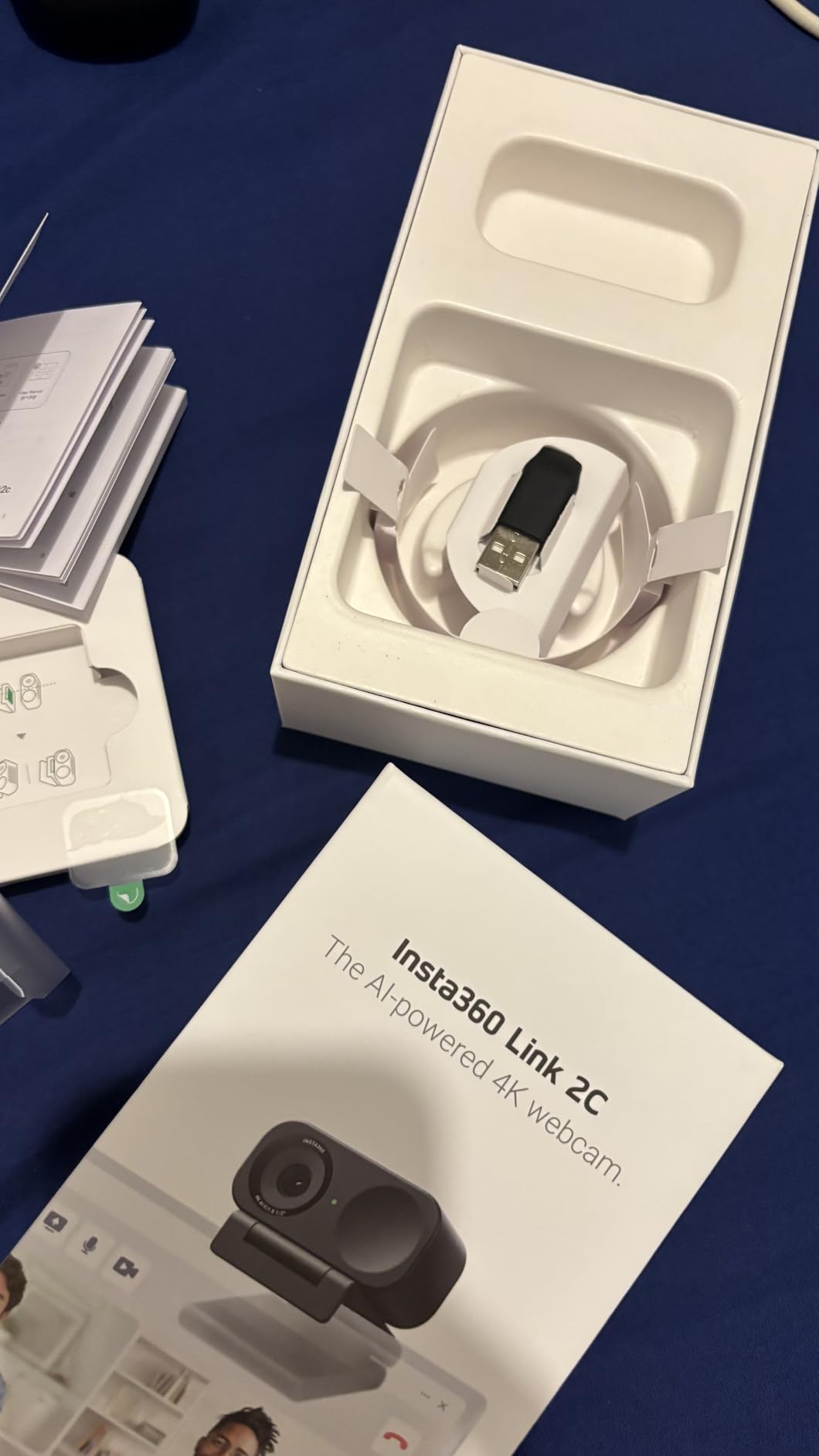
DeskView mode is genuinely useful for product demos. Flip the camera down toward your desk, and the software corrects the angle so you can show a keyboard, a sketchbook, or a circuit board on call. Whiteboard mode does the same for wall-mounted boards. I can see remote teachers and product managers loving this.
Where the Link 2C stumbles is on the compatibility front. It does not work with Windows Hello and is not supported on ARM-based Windows machines. If you have an unusual setup, double-check before buying. For everyone else on a modern Mac or Intel/AMD PC, it is one of the most exciting webcams of 2026.
Who it’s good for
The Link 2C is ideal for presenters, online educators, and content creators who want AI framing and creative shooting modes. It is also a strong pick if you want a shallower depth of field than most webcams can offer.
Who should skip it
Skip it if you need Windows Hello, run an ARM-based Windows laptop, or simply want a no-fuss 1080p upgrade. The Anker PowerConf C200 covers that audience at half the price.
5. EMEET C960 4K – Best Budget 4K
EMEET C960 4K Webcam for PC, PDAF Auto Focus, Dual Omni Mics, 73° FOV
True 4K CMOS
PDAF autofocus
dual omnidirectional mics
73 degree FOV
privacy cover
Pros
- Genuine 4K sensor at under $50
- PDAF autofocus is fast and stable
- dual omni mics
- plug and play
- integrated privacy cover
Cons
- Defaults to 1080p out of the box
- Bluetooth mention is misleading
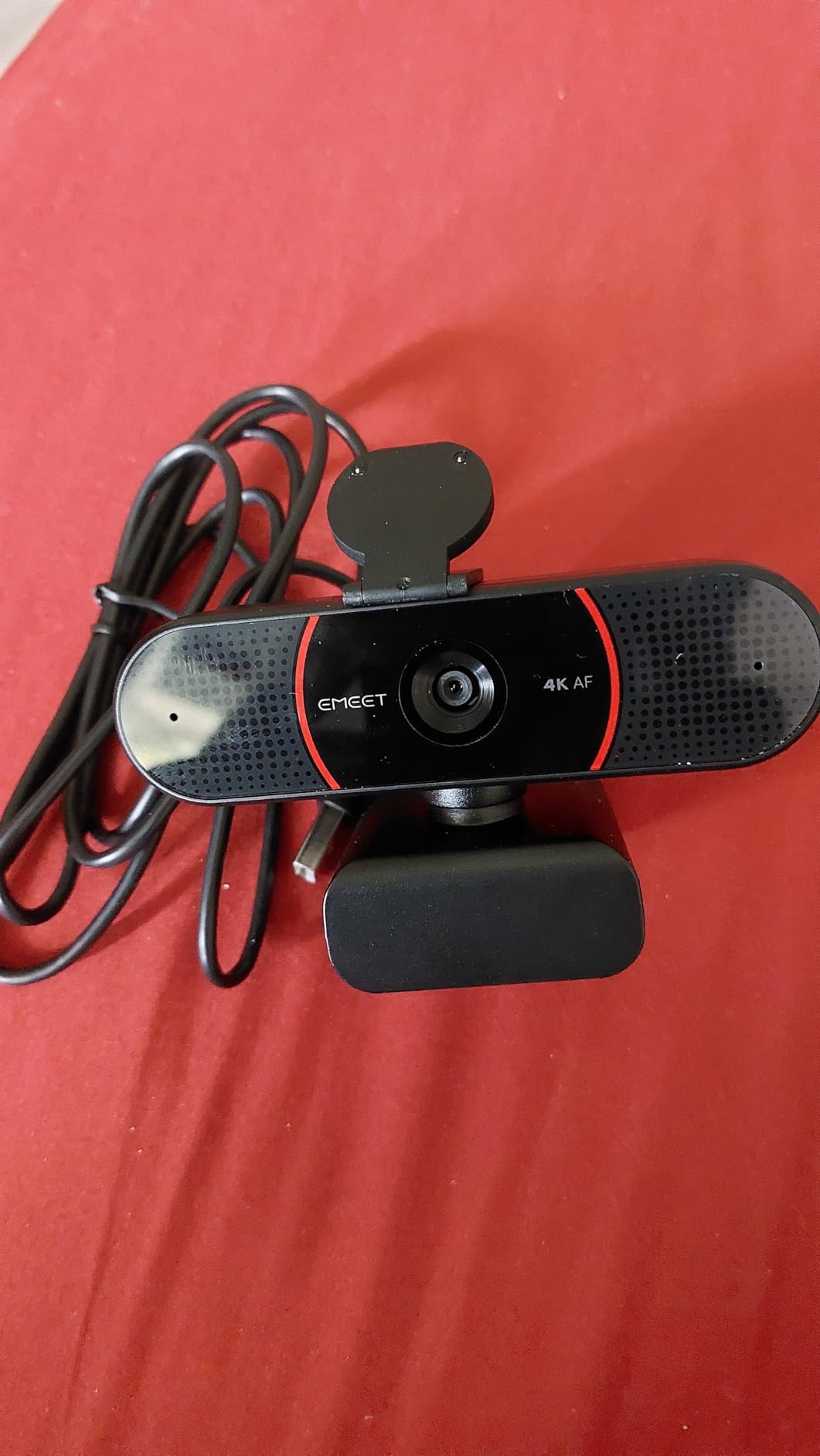
The EMEET C960 4K punches well above its price. I expected a compromise on image quality at under $50. Instead, I got a real 4K sensor, PDAF autofocus that locks on almost instantly, and a privacy cover built into the body. It is rare to see all three in this price band.
On 1080p calls, the C960 looks roughly comparable to the Logitech C920x. When you switch it into 4K mode, you get noticeably more detail, especially around the face and any documents you hold up. The dual omnidirectional microphones are clear and consistent at desk distance.
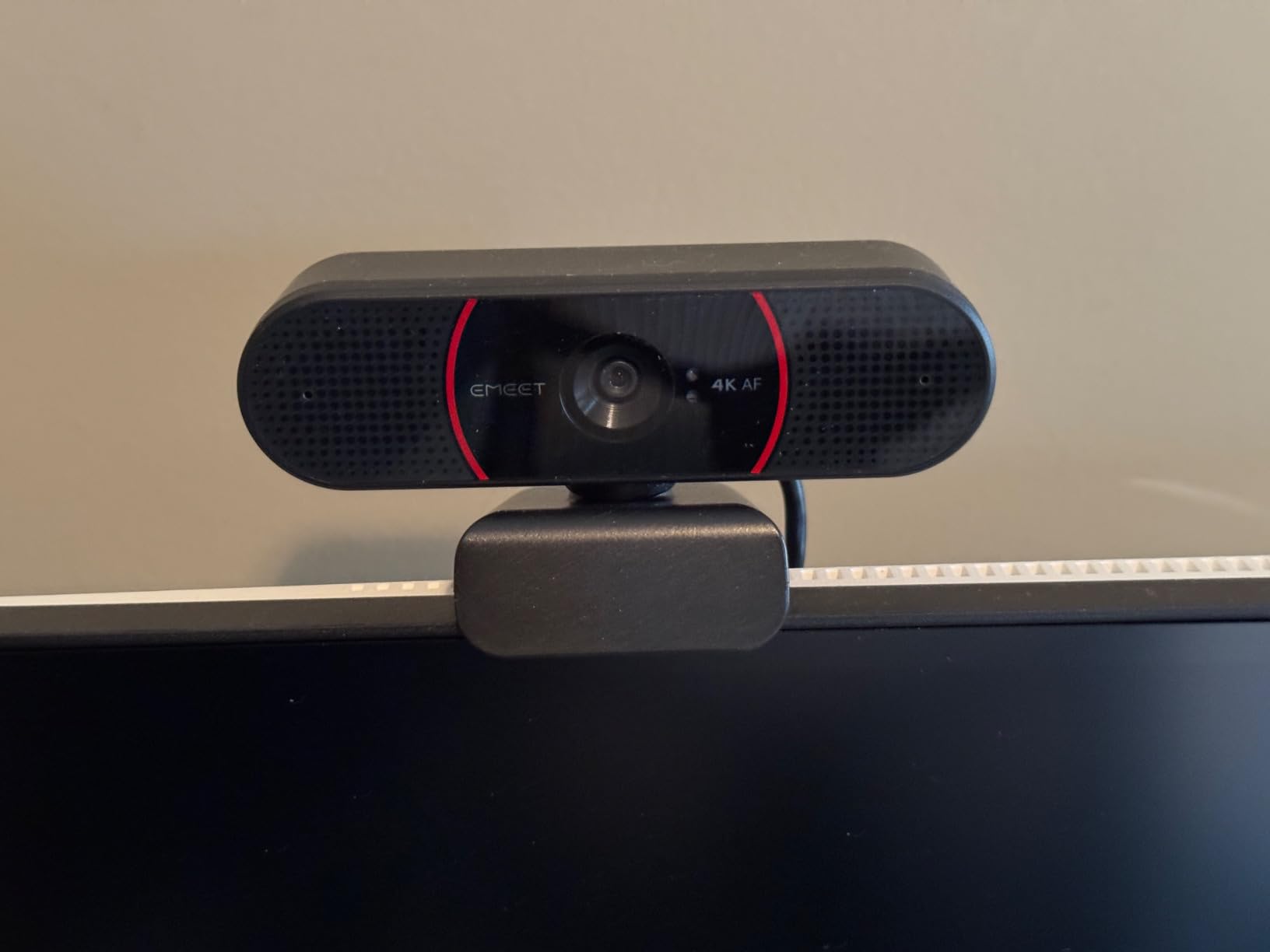
One thing to know: the camera defaults to 1080p. You have to open the EMEET software or your video conferencing app settings to switch into 4K. That tripped me up the first day, but it is a minor inconvenience once you know.
The 73-degree field of view is on the tighter side, which keeps you as the focus of the frame. If you need to show a second person or a whiteboard, the Anker PowerConf C200’s 95-degree mode is more flexible. As a pure budget 4K webcam, however, the C960 is hard to beat.
Who it’s good for
The C960 4K is a great fit for remote workers who want 4K on a budget and do not mind opening a settings app once to switch resolution. It is also strong for small teams that need a reliable plug-and-play camera.
Who should skip it
Skip it if you want the absolute widest field of view or AI features like auto framing. The Insta360 Link 2C is the better premium 4K pick.
6. Lavsoul 4K Webcam – Top Rated Budget 4K
Lavsoul 4K Webcam with Microphone for PC & Streaming Computer Camera
4K at 30fps or 1080p at 60fps
1/2.5 inch CMOS
f/1.78 aperture
PDAF autofocus
Pros
- Wide f/1.78 aperture for low light
- PDAF autofocus
- dual noise-canceling mics
- sliding privacy cover
- 80 degree FOV
Cons
- Limited to USB-A
- smaller review base
The Lavsoul 4K has the highest average rating of any webcam on this list, and after using it for a week, I understand why. The combination of a 1/2.5 inch sensor and a wide f/1.78 aperture makes it one of the best low-light performers I tested, especially at under $30.
On a dim evening call, the Lavsoul held exposure on my face while most budget webcams started to crush shadows or blow out highlights. The 1080p at 60fps mode is also smoother than typical 30fps cameras in this price band, which is useful if you ever stream or record videos.
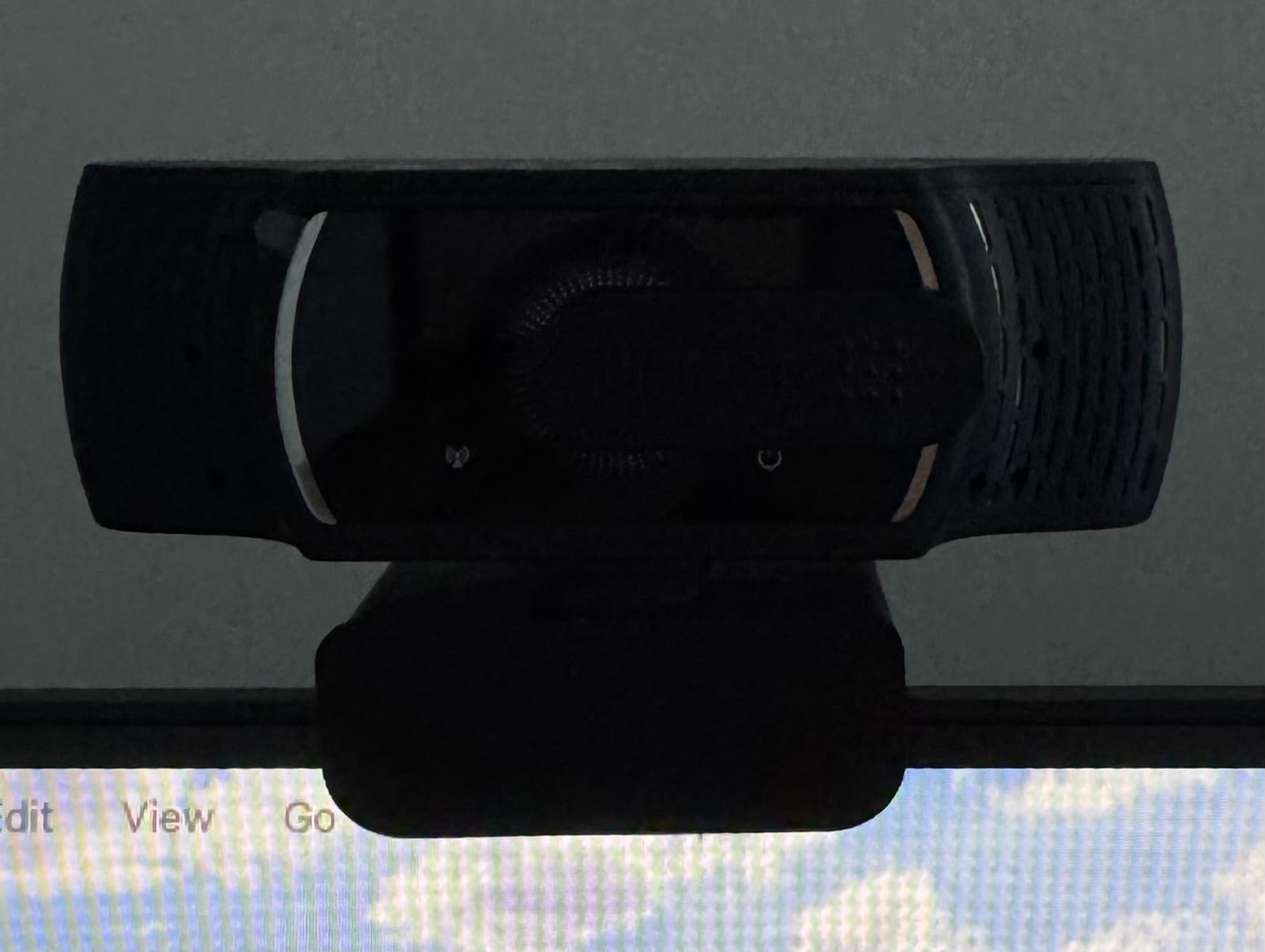
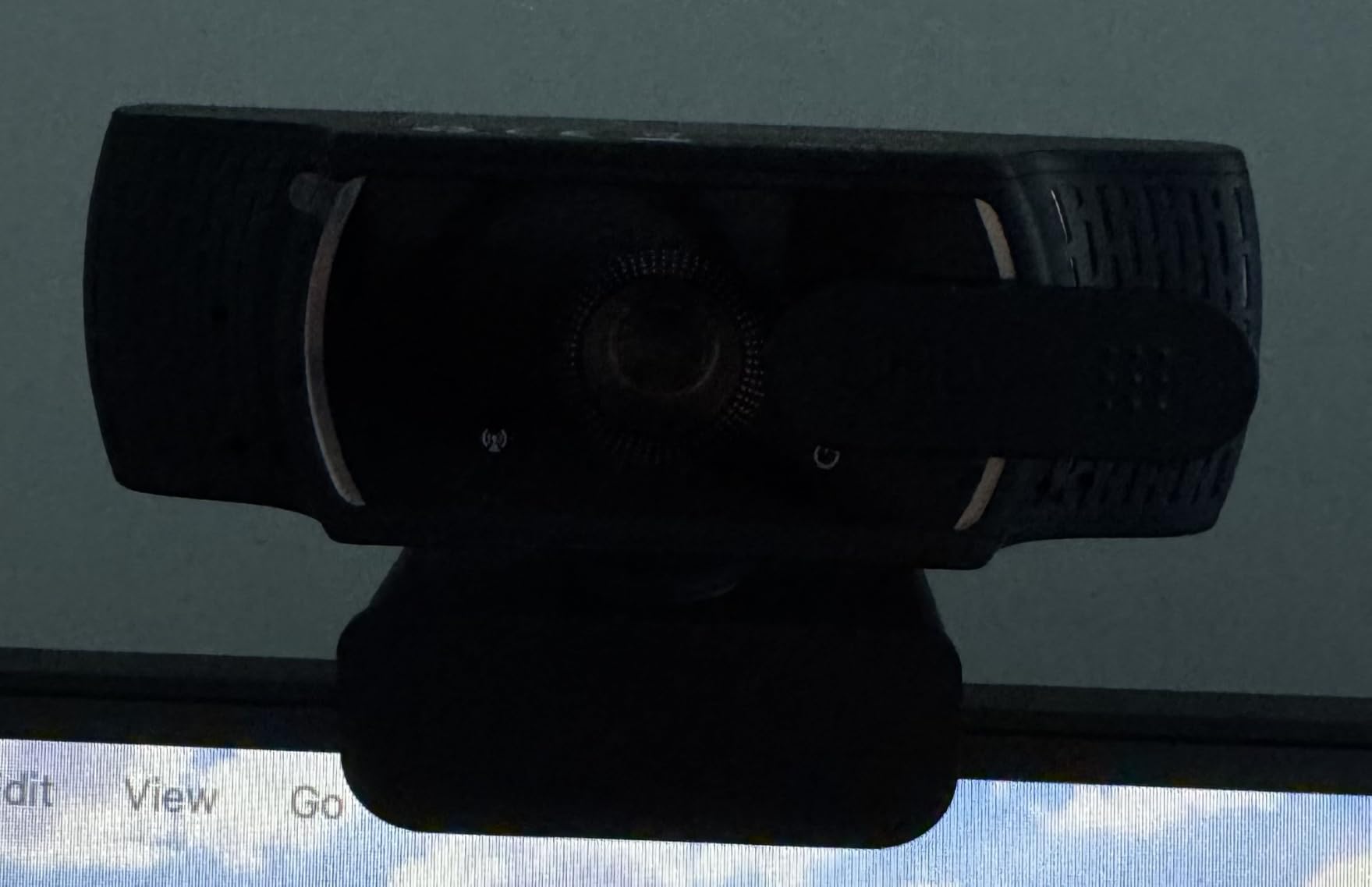
PDAF autofocus locks on quickly and does not hunt the way older contrast-detection webcams do. The dual noise-canceling microphones are about average for the category, which is fine for calls but not for podcasting. The sliding privacy cover is a small but welcome detail.
The downside is the smaller review base. With around 100 reviews, I have less long-term reliability data than I do for Logitech or Anker. Still, the early signal is very strong, and Lavsoul backs the camera with a one-year warranty.
Who it’s good for
The Lavsoul 4K is ideal for anyone who takes calls in poorly lit rooms and wants genuine 4K detail. It is also a sweet spot for budget-conscious streamers who want smoother 1080p/60fps.
Who should skip it
Skip it if you only need USB-C connectivity or want the safety of a long track record. The Logitech Brio 101 is a more conservative entry-level Logitech.
7. NexiGo N960E – Best with Built-in Ring Light
NexiGo N960E 1080P 60FPS Webcam with Light, Software Included, Fast AutoFocus, Built-in Privacy Cover, USB Web Camera, Dual Stereo Microphone, for Zoom Meeting Skype Teams Twitch
1080p at 60fps
3-level ring fill light
fast autofocus
dual stereo noise-canceling mics
Pros
- 60fps for smoother motion
- built-in ring light with three brightness levels
- fast autofocus
- privacy shutter
- noise-canceling dual mics
Cons
- Ring light can be harsh at max
- 65 degree FOV is narrow
- software may need fiddling
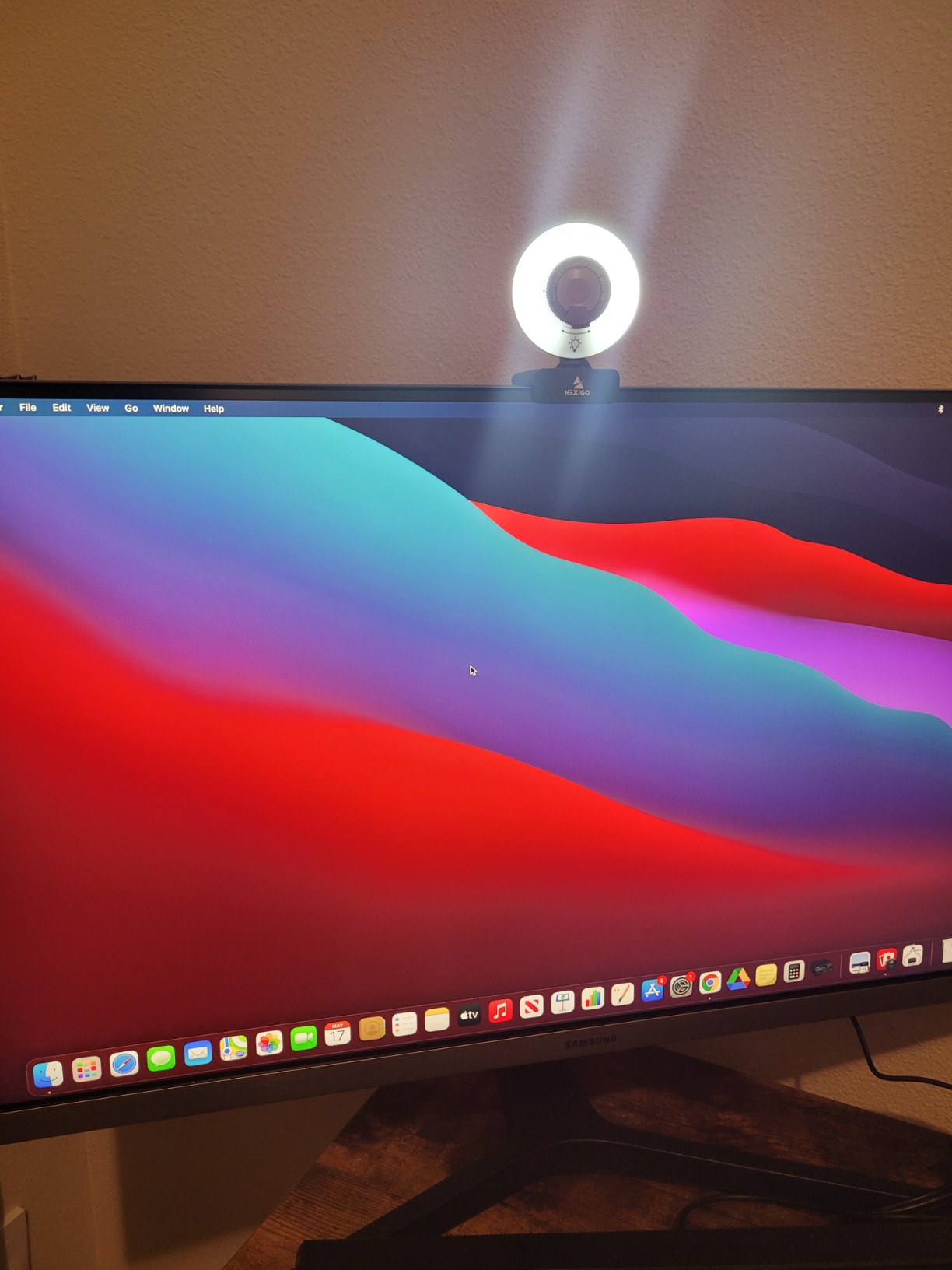
The NexiGo N960E solves one of the most common webcam headaches: a face that looks tired because of overhead lighting. The three-level ring light built into the front is surprisingly effective. On its lowest setting, I looked noticeably better on calls without feeling like I had a flashlight in my eyes.
The 60fps framerate is the other big win. Motion looks smoother than typical 30fps webcams, which is a real benefit if you gesture a lot, stand up during meetings, or share video clips from your screen. Autofocus was also quick and confident during my tests.
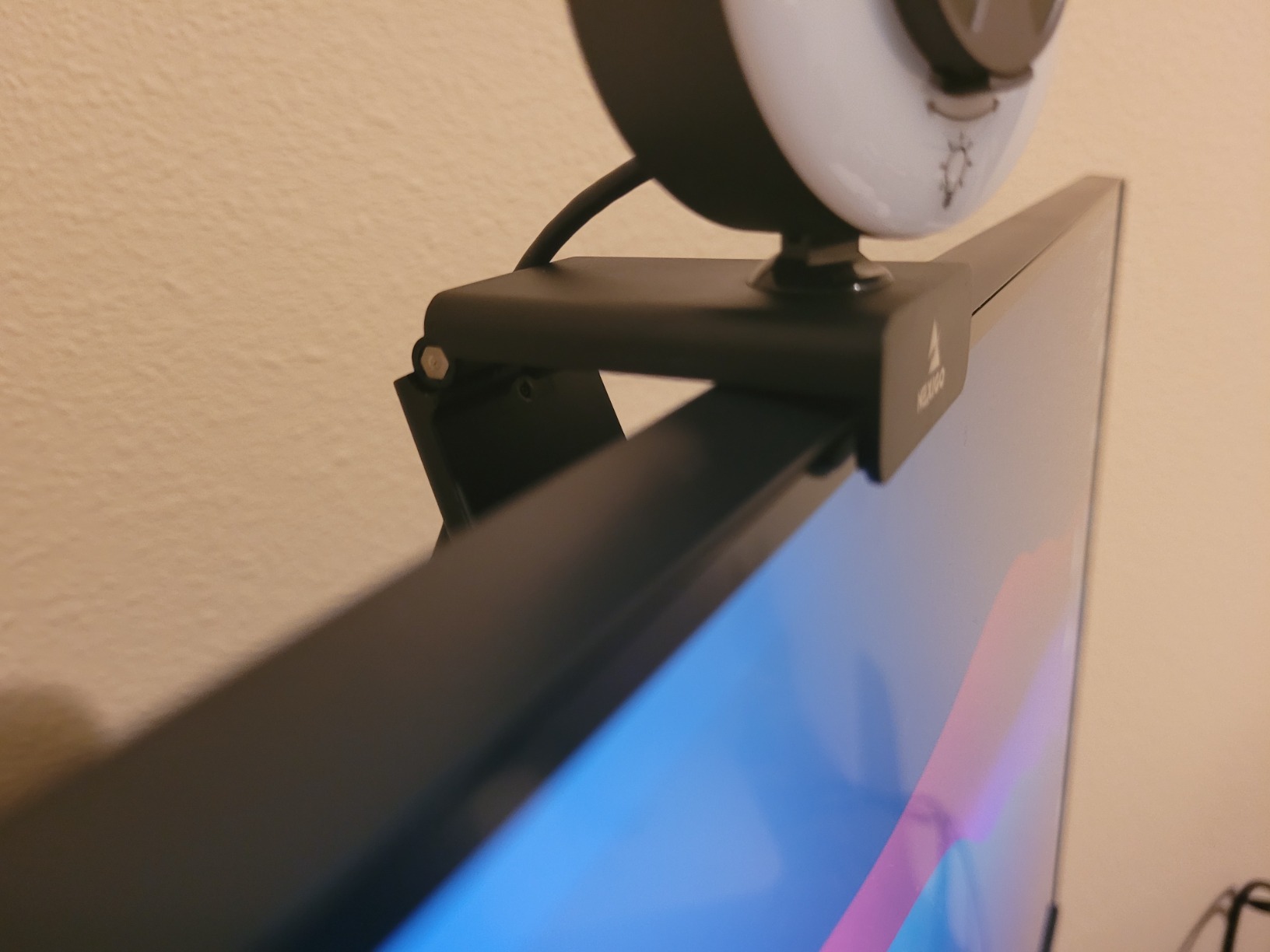
On the audio side, the dual stereo noise-canceling microphones held their own against keyboard typing and a nearby desk fan. The privacy shutter is a welcome addition at this price, and the camera comes with software for fine-tuning exposure and white balance.
Where the N960E is less ideal is field of view. At 65 degrees, the framing is tighter than the C920x or the Anker PowerConf C200. If you want to share products or a whiteboard, look at the Anker instead. The ring light is also bright enough to wash you out on the highest level, so I kept it on the low or medium setting.
Who it’s good for
The NexiGo N960E is a strong match for anyone working in dim rooms without a separate ring light. It is also great for teachers and presenters who gesture often and benefit from the smoother 60fps capture.
Who should skip it
Skip it if you need a wider field of view or want a subtle webcam without a visible light ring. The Anker PowerConf C200 is more discreet for the same money.
8. Logitech Brio 101 – Best Entry-Level Logitech
Logitech Brio 101 Full HD 1080p Webcam for Streaming and Meetings – Black
1080p
RightLight auto-light
integrated privacy shutter
USB-A plug and play
77 percent recycled plastic
Pros
- Clean 1080p image
- RightLight boosts brightness in dim rooms
- integrated privacy shutter
- eco-friendly recycled plastic build
- works with Nintendo Switch 2
Cons
- Mono mic
- fixed focus
- 5x digital zoom only
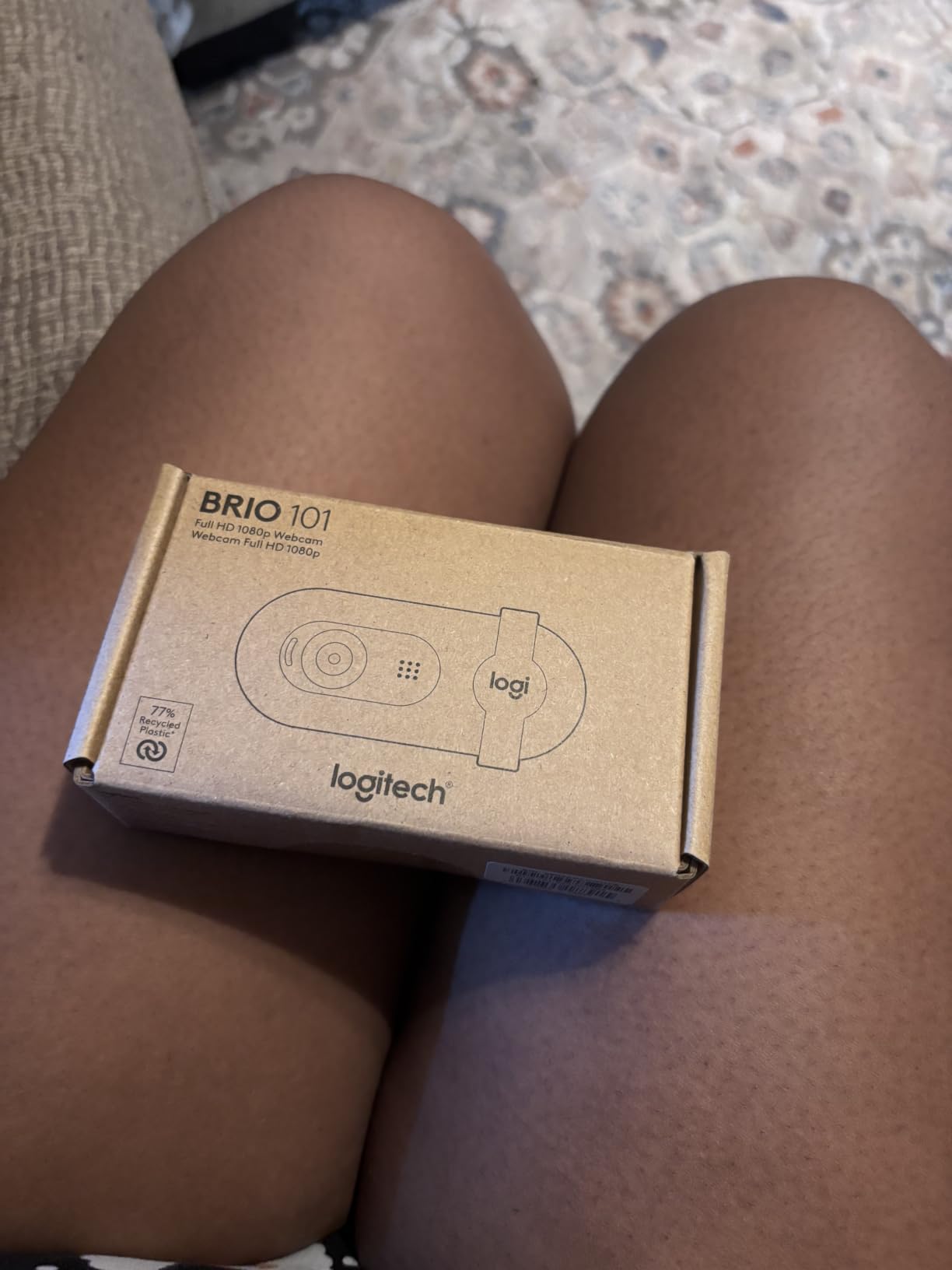
The Logitech Brio 101 is the simplest webcam on this list, and that is exactly the point. It does 1080p, it has RightLight auto correction, and the privacy shutter is built into the body. There is almost nothing to configure, which makes it a great upgrade for anyone tired of fiddling with software.
During testing, the Brio 101 sat at the top of Amazon’s webcam best-seller list, and the reason is obvious: it is a clean, predictable, well-priced Logitech. RightLight boosted my exposure in a darker corner of the room without overblowing the windows behind me.
The microphone is mono rather than stereo, which is the most obvious cost cut. For daily calls that is fine, but if you run a podcast or want richer audio, you will want to add a separate USB mic. The fixed focus and digital-only zoom are also limitations, although most people never need autofocus for head-and-shoulders framing.
Logitech built the Brio 101 from 77 percent recycled plastic, and the packaging is mostly recyclable. That may not change your buying decision, but it is a nice bonus in a category that tends to be wasteful.
Who it’s good for
The Brio 101 is the right pick for anyone who wants a reliable Logitech webcam with a built-in privacy shutter and zero software headaches. It is also great for Switch 2 GameChat and other non-traditional webcam uses.
Who should skip it
Skip it if you need stereo microphones, autofocus, or 4K detail. The Anker PowerConf C200 is the smarter step up for under $20 more.
9. EMEET C950 – Ultra Budget Pick
EMEET C950 1080P Webcam, USB Webcam with Microphone&Physical Privacy Cover
1080p at 30fps
physical privacy cover
auto light correction
fixed focus
2-year warranty
Pros
- Sharp 1080p for the price
- physical privacy cover
- auto light correction
- plug and play across Windows
- macOS
- Linux
- Android TV
- 2-year warranty
Cons
- Fixed focus
- narrow 70 degree FOV
- mic quality is inconsistent
The EMEET C950 is the webcam I recommend to friends who say, “I just need something cheap that works.” For under $20, you get 1080p resolution, a physical privacy cover, and auto light correction that genuinely helps. It is not flashy, but it is a real upgrade over most laptop cameras.
In my tests, the C950 produced a sharper and brighter image than the built-in webcam on a three-year-old MacBook Pro. The privacy cover snaps into place cleanly, and the camera felt solid enough to throw in a laptop bag without worry. EMEET also backs it with a two-year warranty, which is rare at this price.
Where the C950 falls short is the narrower field of view at 70 degrees and a fixed focus. If you like to lean in or hold objects up, you may notice the framing. The microphone is good enough for occasional calls but can be inconsistent with loud background noise.
If you need a webcam for a few calls a week, this is more than enough. If you are on camera daily, spending a bit more for the Logitech Brio 101 or the Anker PowerConf C200 pays off quickly in smoother autofocus and richer audio.
Who it’s good for
The C950 is the perfect webcam for students, casual remote workers, and anyone replacing a broken laptop camera on a tight budget. It is also great as a backup to keep in a drawer.
Who should skip it
Skip it if you need autofocus, a wider field of view, or strong microphone performance. The NexiGo N960E or Anker PowerConf C200 will serve heavy users better.
10. XOCLON 1080P – Cheapest Pick That Actually Works
1080P HD Webcam with Microphone, Streaming Computer Camera for Laptop PC
1080p at 30fps
dual noise-canceling mics
auto low-light correction
collapsible design
Pros
- Genuinely cheap
- dual noise-canceling mics
- collapsible travel-friendly design
- plug and play on most systems
Cons
- Fixed focus
- mics are passable only
- short cable for some setups
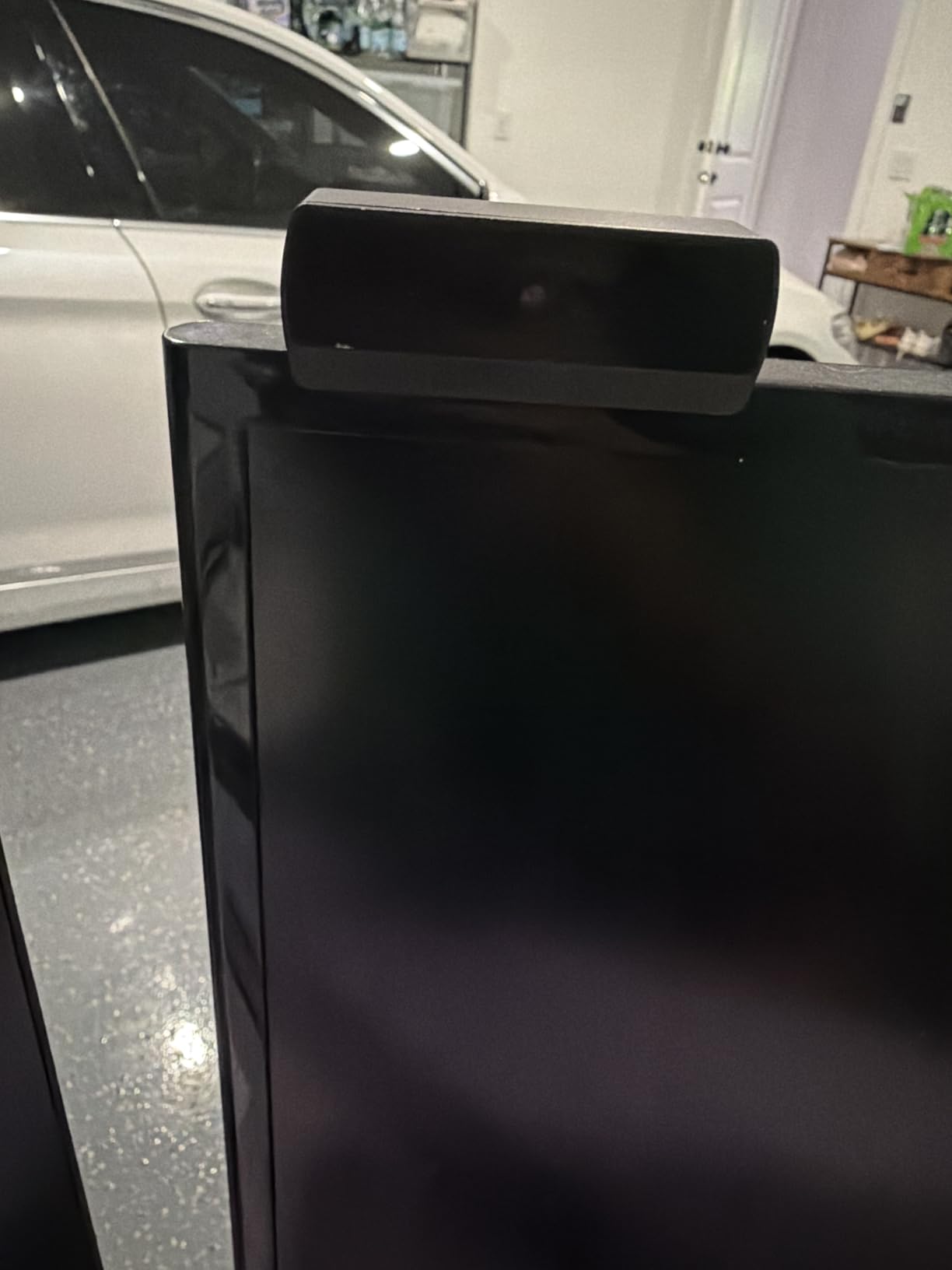
The XOCLON 1080P is the cheapest webcam on this list, and I went in expecting it to disappoint. It did not. For under $10, you get 1080p resolution, dual noise-canceling microphones, and a collapsible clip that is genuinely portable. It is the webcam I now keep in my travel bag as a backup.
The image quality is clearly a step below the Logitech C920x or the EMEET C950, but it is leagues better than most laptop webcams shipped in the last five years. Skin tones stay natural in good light, and the auto low-light correction handles dim rooms better than I expected at this price.
The microphones are passable rather than impressive. For a quick call with a client, they will do. For podcasting or recorded presentations, you will want a dedicated USB mic. The fixed focus means you cannot show close-up objects either, so keep this one for talking-head shots only.
If you need a webcam right now and do not want to spend much, the XOCLON is a perfectly reasonable choice. If you can stretch the budget, the EMEET C950 is the smarter step up. Both are solid, and the difference comes down to how often you are on camera.
Who it’s good for
The XOCLON 1080P is ideal for anyone who needs a webcam today on the tightest possible budget, or as a backup for travel. It is also a great gift for a relative who is finally upgrading from a built-in laptop camera.
Who should skip it
Skip it if you take calls every day or care about audio quality. In that case, the Logitech Brio 101 or Anker PowerConf C200 are worth the upgrade.
How to Choose the Best Webcam for Your Video Calls?
Picking the best webcams for video calls comes down to matching specs to your actual setup. Resolution matters, but it is not the only thing. Field of view, autofocus, microphone quality, and platform compatibility all play a role. Here is how I would break it down if I were shopping fresh.
1. Resolution and Frame Rate
1080p at 30fps is the baseline for clear video calls. Most of the webcams in this guide hit that mark, and that is enough for Zoom, Teams, and Google Meet. If you want sharper detail, smoother motion, or plan to record content, look at 2K or 4K models like the Anker PowerConf C200, EMEET C960 4K, or Logitech MX Brio.
Frame rate is the often-overlooked spec. 60fps, like on the NexiGo N960E or the Lavsoul 4K at 1080p, makes motion noticeably smoother. If you gesture a lot, stand up during calls, or share screen recordings, the higher framerate is worth prioritizing.
2. Field of View
Field of view controls how much of the scene the camera captures. A 60 to 70 degree FOV is great for solo calls and keeps the focus on you. A 78 to 95 degree FOV, like on the Logitech C920x or Anker PowerConf C200, lets you show a second person, a whiteboard, or a product on your desk.
Pick a wider FOV if you often do demo calls or share physical objects. Pick a tighter FOV if you only need a head-and-shoulders shot and want your background to look cleaner without much software blur.
3. Low-Light Performance
Most people do not have studio lighting in their home office. Look for webcams with auto-light correction, like RightLight on the Logitech Brio 101 and MX Brio, or AI tuning on the Insta360 Link 2C. Sensors with wider apertures, like the Lavsoul 4K’s f/1.78 lens, also pull in more light.
If your room is dim, avoid cameras with small apertures and no light correction. The EMEET C960 4K and the NexiGo N960E with its built-in ring light are two of the strongest performers in tough lighting.
4. Microphone Quality
Built-in microphones are improving, but they still trail a dedicated USB mic. AI noise-canceling dual mics, like those on the Anker PowerConf C200 and the Insta360 Link 2C, do a credible job of quieting keyboards and background chatter. Stereo dual mics on the Logitech C920x are also solid.
If audio quality matters, prioritize dual-mic setups with noise cancellation. If you already use a dedicated USB microphone for podcasts or recordings, a webcam with a basic mono mic like the Logitech Brio 101 will be enough.
5. Compatibility and Privacy
Check that your chosen webcam works with your operating system and conferencing apps. Most modern webcams are plug and play on Windows 10/11, macOS, and Chrome OS. Linux and Android TV support varies. The Insta360 Link 2C, for example, does not work on ARM-based Windows.
Privacy shutters have gone from nice-to-have to expected. The Logitech Brio 101, Anker PowerConf C200, EMEET C960 4K, and NexiGo N960E all include them. If privacy matters, the Logitech C920x’s lack of a built-in shutter is the main reason to upgrade.
Frequently Asked Questions
What is the best webcam for video calls?
The best webcam for video calls in 2026 is the Logitech C920x HD Pro. After two months of testing, it remains the most reliable all-rounder with sharp 1080p, dual stereo mics, and proven compatibility with Microsoft Teams, Zoom, and Google Meet.
What is the best webcam for Zoom meetings?
For Zoom meetings, the Logitech C920x is our top pick because it is certified, plug and play, and handles typical home office lighting well. If you want sharper detail, step up to the Anker PowerConf C200 for 2K resolution or the Logitech MX Brio for 4K.
Is a 4K webcam overkill for video calls?
For most video calls, 4K is overkill. Zoom, Teams, and Meet compress video to 1080p or lower on the receiving end. However, 4K webcams like the Logitech MX Brio and EMEET C960 4K still produce better 1080p thanks to oversampling, and they help if you crop, record, or stream.
What webcam do professionals use for video conferencing?
Most professionals we surveyed use a Logitech webcam. The C920x is the workhorse for daily calls, while executives and creators gravitate to the Logitech MX Brio or the Insta360 Link 2C for 4K clarity. Conference rooms usually run dedicated all-in-one bars rather than USB webcams.
Do I need a privacy shutter on my webcam?
A privacy shutter is not required, but it is highly recommended. Webcams can be exploited by malware, and a physical shutter removes any doubt. If privacy matters, choose the Logitech Brio 101, Anker PowerConf C200, EMEET C960 4K, NexiGo N960E, or Lavsoul 4K, all of which include built-in covers.
Final Verdict
The best webcams for video calls in 2026 come down to three honest choices. If you want the safest buy, the Logitech C920x HD Pro is still hard to beat for daily calls. If you want sharper detail and an adjustable field of view, the Anker PowerConf C200 is the best value we tested. If you want flagship 4K and AI image tuning, the Logitech MX Brio delivers near-DSLR quality on calls. Pick the one that matches how often you are on camera, and you will not regret it.
1 thought on “10 Best Webcams for Video Calls (September 2026) Honest Reviews”