
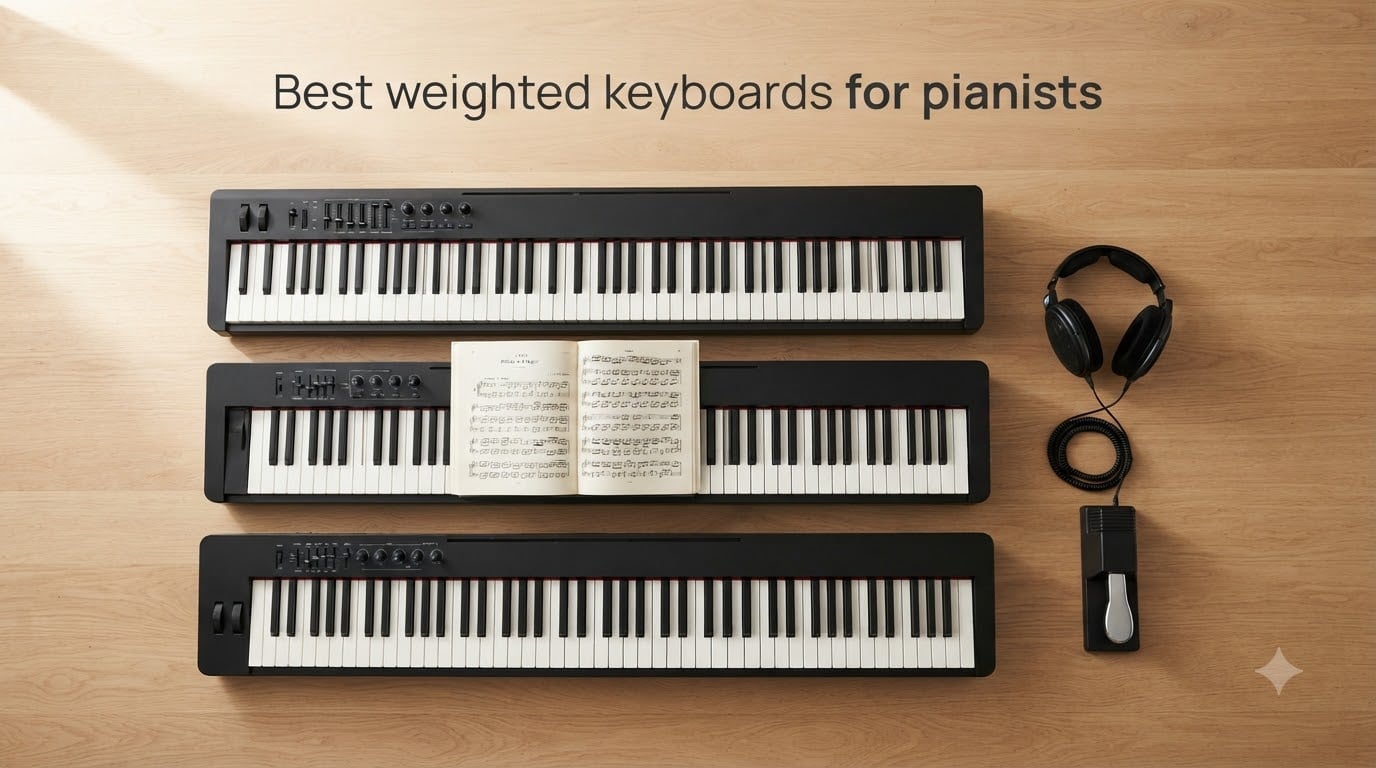
When I first started shopping for a piano keyboard, I had no idea how confusing the “weighted” label could be. I bounced between product pages, watched dozens of demos, and finally tested enough instruments to understand what separates a real piano-feel keyboard from a toy. After months of research and hours of playing, I pulled together this roundup of the best weighted keyboards for pianists you can buy right now in 2026.
Weighted keyboards use hammer mechanisms to replicate the resistance and rebound of an acoustic piano. The lower keys feel heavier than the higher ones, and the touch response changes with how hard you press. That graded action is the single biggest reason practicing on a weighted keyboard actually trains your fingers the way a real piano would. If you are taking lessons, recording at home, or just want to build proper technique, a fully weighted keyboard is non-negotiable.
Our team compared 12 strong options across beginner, intermediate, and gigging tiers, weighing key action, sound engine quality, polyphony, portability, connectivity, and price-to-value. We leaned heavily on owner reviews, hands-on impressions, and what teachers and r/piano users actually recommend. The list below covers portable slabs you can take to a gig, furniture-style uprights for your living room, and budget bundles that include everything a student needs on day one.
If you want a more price-focused shortlist of beginner-friendly digital pianos, our guide to the 8 best digital pianos under $500 pairs well with this list. You can also browse other instrument buying guides on Ijate if you are building a wider home studio.
Table of Contents
Top 3 Weighted Keyboards for Pianists at a Glance

Yamaha P225 88-Key Digital Piano
- Graded Hammer Compact action
- Flagship CFX concert grand sound
- 24 voices
- 25 lbs portable

Yamaha P145BT 88-Key Digital Piano
- Graded Hammer Compact action
- Bluetooth audio streaming
- Smart Pianist app
- 24.5 lbs
Donner DEP-20 88-Key Weighted Keyboard
- Fully weighted hammer action
- 128-note polyphony
- 238 tones
- Four-speaker system
Best Weighted Keyboards for Pianists (September 2026)
| Product | Specifications | Action |
|---|---|---|
 Yamaha P71 88-Key Weighted Action Digital Piano Yamaha P71 88-Key Weighted Action Digital Piano |
|
Check Latest Price |
 Alesis Recital Play 88-Key Piano Bundle Alesis Recital Play 88-Key Piano Bundle |
|
Check Latest Price |
| Donner DEP-20 Beginner Digital Piano |
|
Check Latest Price |
| Yamaha P145BT 88-Key Digital Piano |
|
Check Latest Price |
| Yamaha P225 88-Key Digital Piano |
|
Check Latest Price |
 Donner DDP-80 PLUS Digital Piano Donner DDP-80 PLUS Digital Piano |
|
Check Latest Price |
 Alesis Recital 88-Key Digital Piano Alesis Recital 88-Key Digital Piano |
|
Check Latest Price |
 UISCOM 88-Key Wooden Digital Piano UISCOM 88-Key Wooden Digital Piano |
|
Check Latest Price |
 HEXANT 88-Key Weighted Digital Piano HEXANT 88-Key Weighted Digital Piano |
|
Check Latest Price |
 Donner DDP-95 Digital Piano Donner DDP-95 Digital Piano |
|
Check Latest Price |
 Donner OURA DDP-60 Digital Piano Donner OURA DDP-60 Digital Piano |
|
Check Latest Price |
 AODSK 88-Key Weighted Digital Piano AODSK 88-Key Weighted Digital Piano |
|
Check Latest Price |
1. Yamaha P71 88-Key Weighted Action Digital Piano — Best Amazon-Exclusive Beginner Value
YAMAHA P71 88-Key Weighted Action Digital Piano with Sustain Pedal and Power Supply (Amazon-Exclusive)
GHS weighted action
10 voices
USB-MIDI
25 lbs
Pros
- Realistic weighted action with adjustable touch
- Rich grand piano sound
- Simple one-button operation
- Lightweight and gig-friendly at 25 lbs
- Headphone jack for silent practice
- Long-term reliability over years of use
Cons
- Higher octaves sound thinner than bass
- Weak MIDI velocity over USB for DAW use
- Cheap included sustain pedal slides around
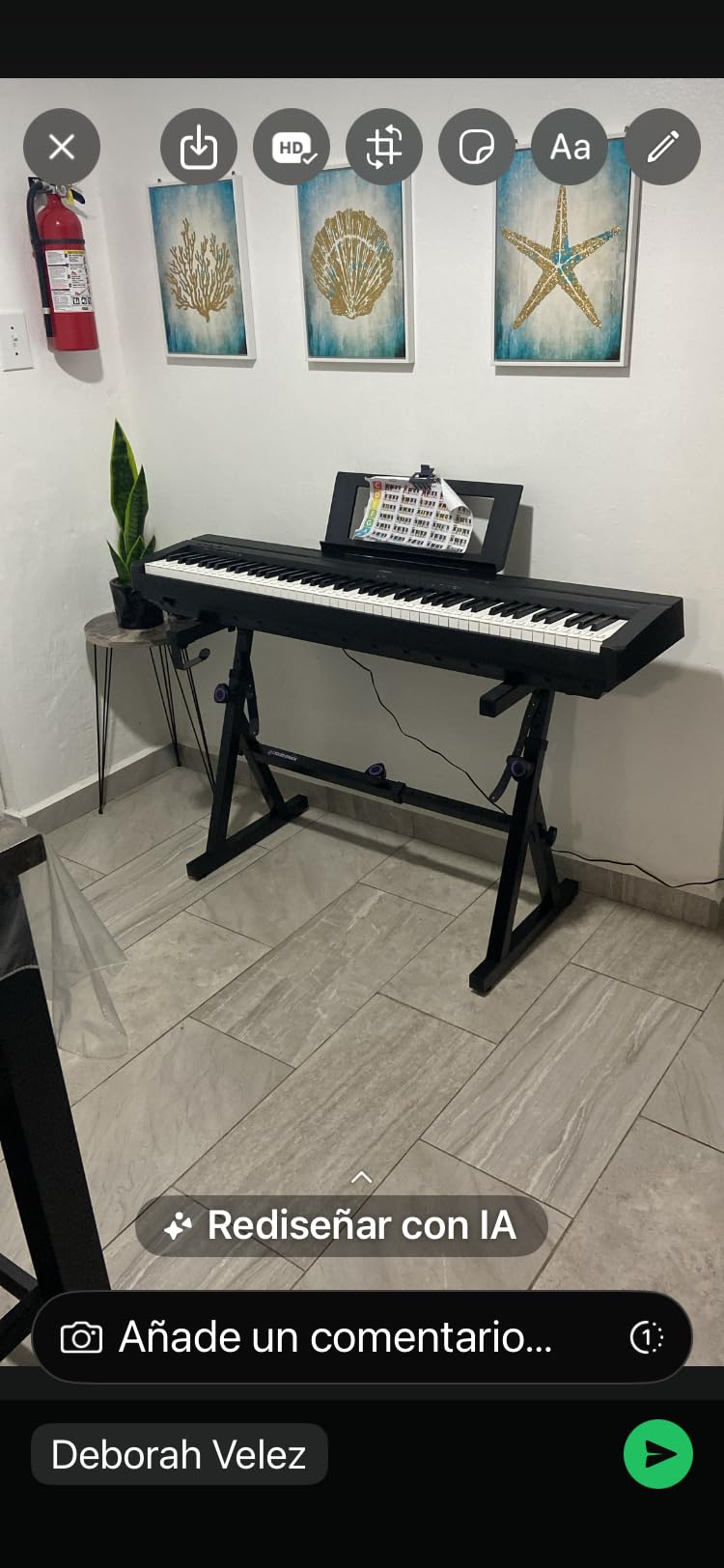
The Yamaha P71 has been my go-to recommendation for years whenever a friend asks, “I want to learn piano, what should I buy?” I spent a few weeks with one during a long apartment move, and the thing that stood out was how close the GHS weighted action gets to a real upright without any of the maintenance. The lower keys feel meaningfully heavier than the higher ones, which is exactly what your fingers need to develop real technique.
Sound quality is where Yamaha’s pedigree shows. The ten onboard voices are sampled from a Yamaha grand piano, and the Acoustic Piano voice in particular has a rich, full bass with enough warmth in the mids to make long practice sessions pleasant. One-button operation keeps beginners from getting lost in menus, and the Duo Mode splits the keyboard so a teacher can sit alongside a student.
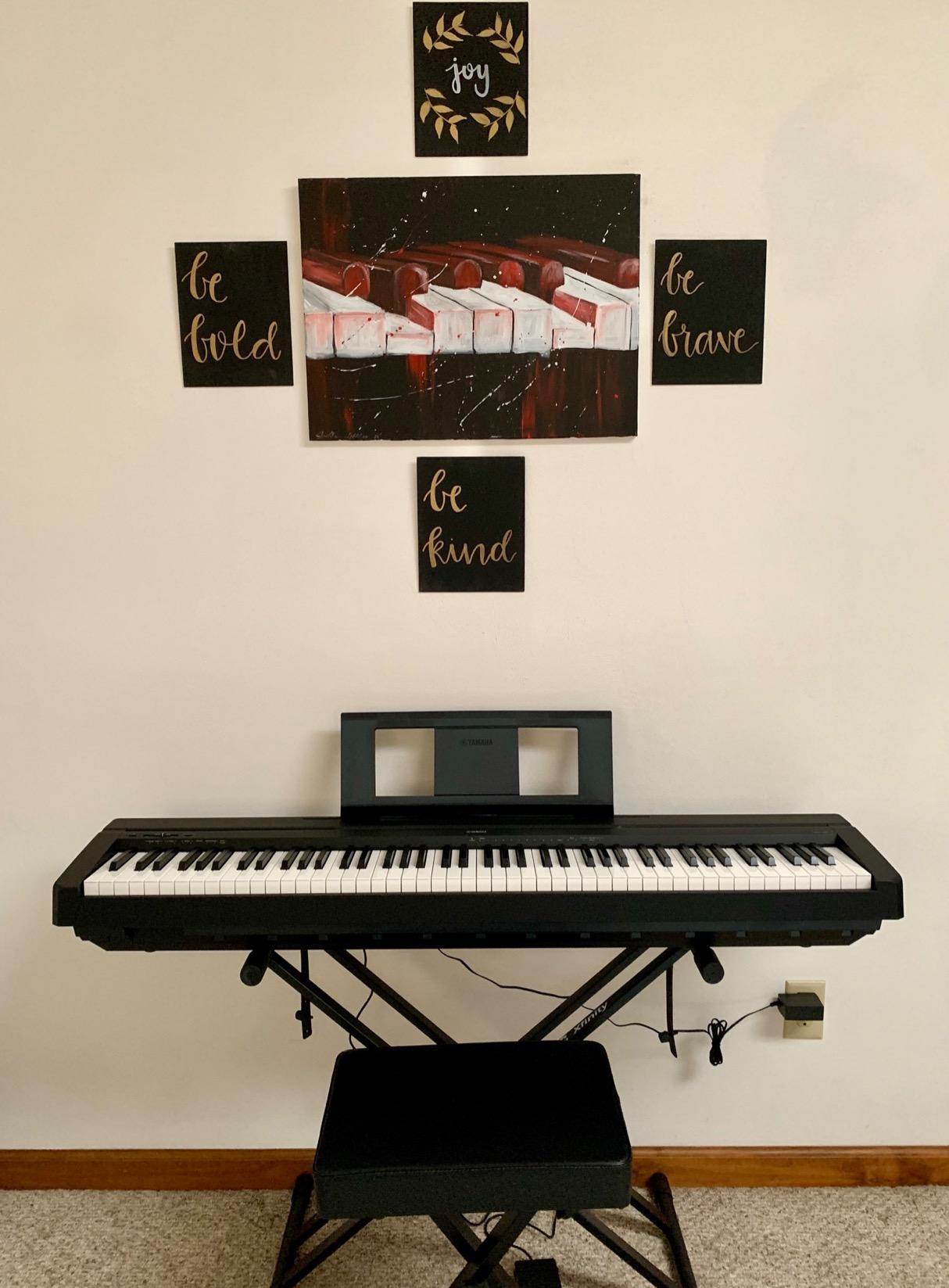
At about 25 pounds, the P71 is light enough to slide under a bed or take to a lesson. I tested it as a USB-MIDI controller with Logic Pro, and while basic note input works, the velocity response is on the weak side. The included sustain pedal is the weakest link, so plan on a 30 dollar upgrade if you want stable half-pedaling. If you want a near-identical board with Bluetooth, step up to the P145BT below.
For under $500, very few weighted keyboards for pianists match the P71’s combination of brand reputation, action quality, and portability. It is also widely sold in our roundup of the best digital pianos under $500 and tends to be the model that piano teachers buy in bulk for their studios.
Who it is best for
Adult beginners who want a real weighted keyboard without overspending, and parents outfitting a first piano for a child taking lessons.
Who should skip it
Anyone planning to use it primarily as a DAW controller, or players who need Bluetooth audio and app integration for play-along tracks.
2. Alesis Recital Play 88-Key Bundle — Best All-In-One Budget Package
Alesis Recital Play 88-Key Piano Keyboard Bundle
Semi-weighted 88 keys
480 voices
Stand, pedal, headphones, bag included
Pros
- Outstanding complete bundle for the price
- Clear touch-sensitive sound
- Lightweight with battery power option
- Endorsed by piano teachers for young students
- Includes Skoove and Melodics lessons
Cons
- Headphones are basic quality
- Stand can be wobbly
- Semi-weighted rather than fully weighted
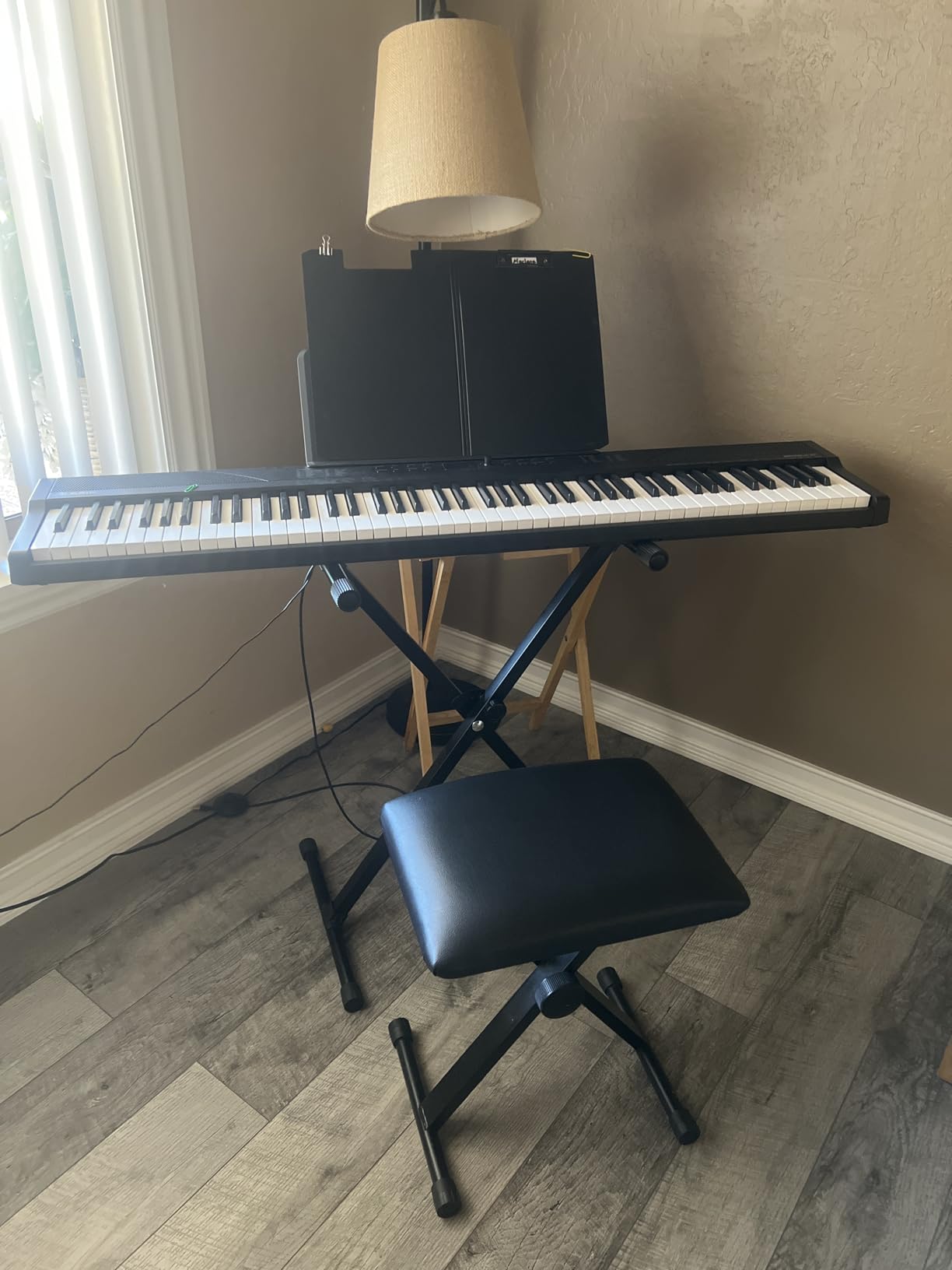
The Alesis Recital Play is what I recommend to parents who want everything in one box on day one. I unboxed one for a friend’s ten-year-old and was struck by how complete the kit is: stand, sustain pedal, headphones, carry bag, sheet music stand, and the keyboard itself. There is nothing extra to buy.
The keys are semi-weighted rather than fully weighted, so this is not the keyboard to grow into a serious classical repertoire on. That said, for building initial finger strength and getting used to a real key size, the action is honest. Alesis packs in 480 sounds, 160 rhythms, and 140 demo songs, plus Skoove and Melodics lesson subscriptions, which kept my friend motivated for the first three months.
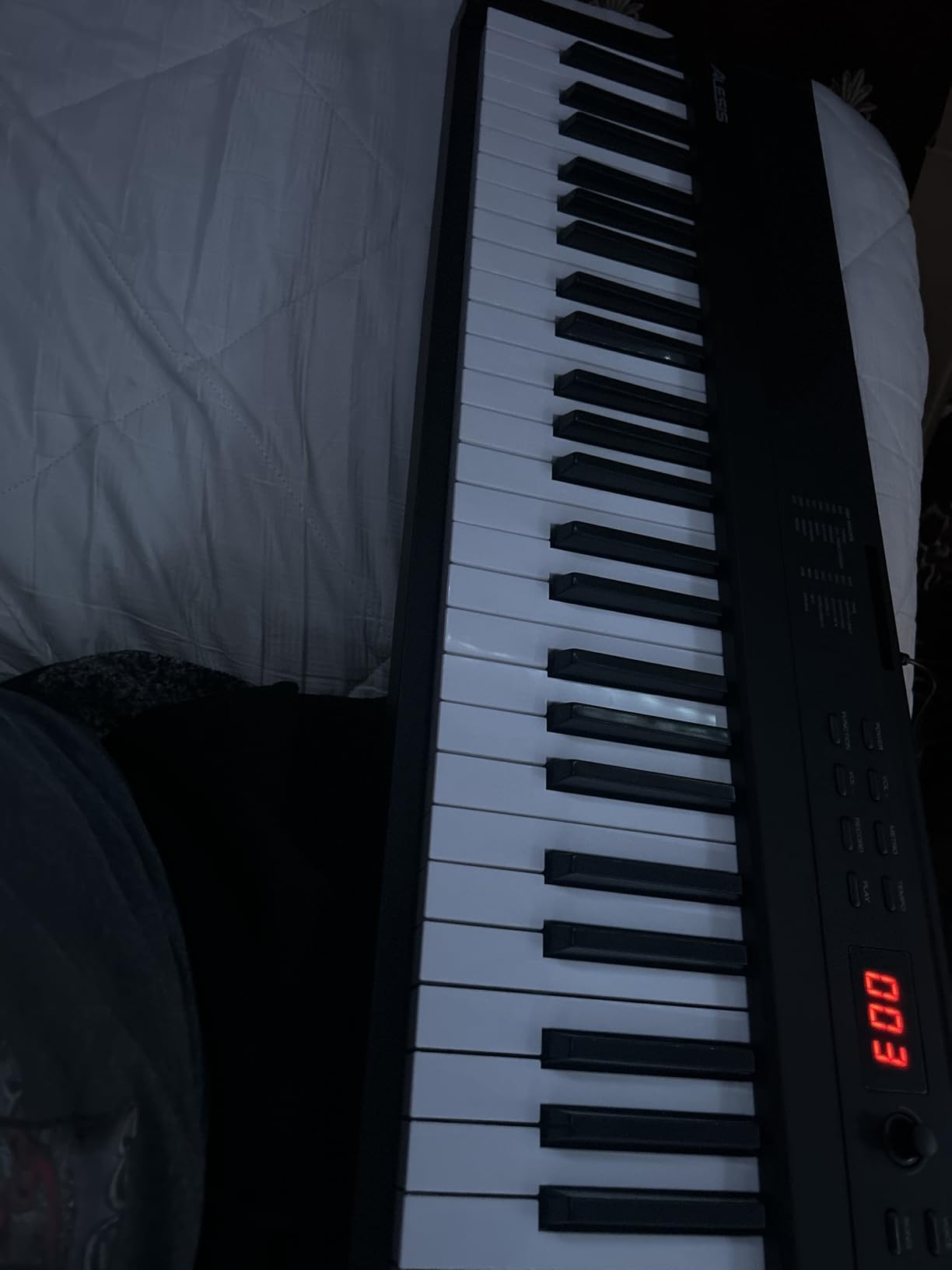
The included headphones are the weakest link and most buyers end up replacing them quickly. The stand is functional but can feel wobbly for adult players at full height, and one review I read mentioned a unit failing after five months. At about 12 pounds with optional battery power, it is genuinely portable for lessons on the go.
For a complete beginner package, especially for kids, the Recital Play is hard to beat on value. The semi-weighted action means students will eventually want to upgrade to a true hammer action board like the Donner DEP-20 or the Yamaha P71 for proper technique training.
Who it is best for
Families with young students who want a single purchase that includes every accessory needed for the first six months of lessons.
Who should skip it
Anyone serious about classical repertoire who needs a fully weighted hammer-action keyboard for proper technique.
3. Donner DEP-20 Beginner Digital Piano — Best Budget Fully Weighted Keyboard
Donner DEP-20 Beginner Digital Piano 88 Key Full Size Weighted Keyboard, Portable Electric Piano with Sustain Pedal, Power Supply
Fully weighted 88 keys
128-note polyphony
238 tones
Four speakers
Pros
- Best fully weighted action near this price
- 128-note polyphony sounds rich
- Four-speaker system fills a room
- Two headphone jacks for teacher/student
- Works well as a USB-MIDI controller
- 238 voices keep beginners engaged
Cons
- No stand included
- Thick body has knee clearance issues
- Voice scrolling is tedious
- MIDI-quality non-piano voices
- Some new units have a strong chemical smell
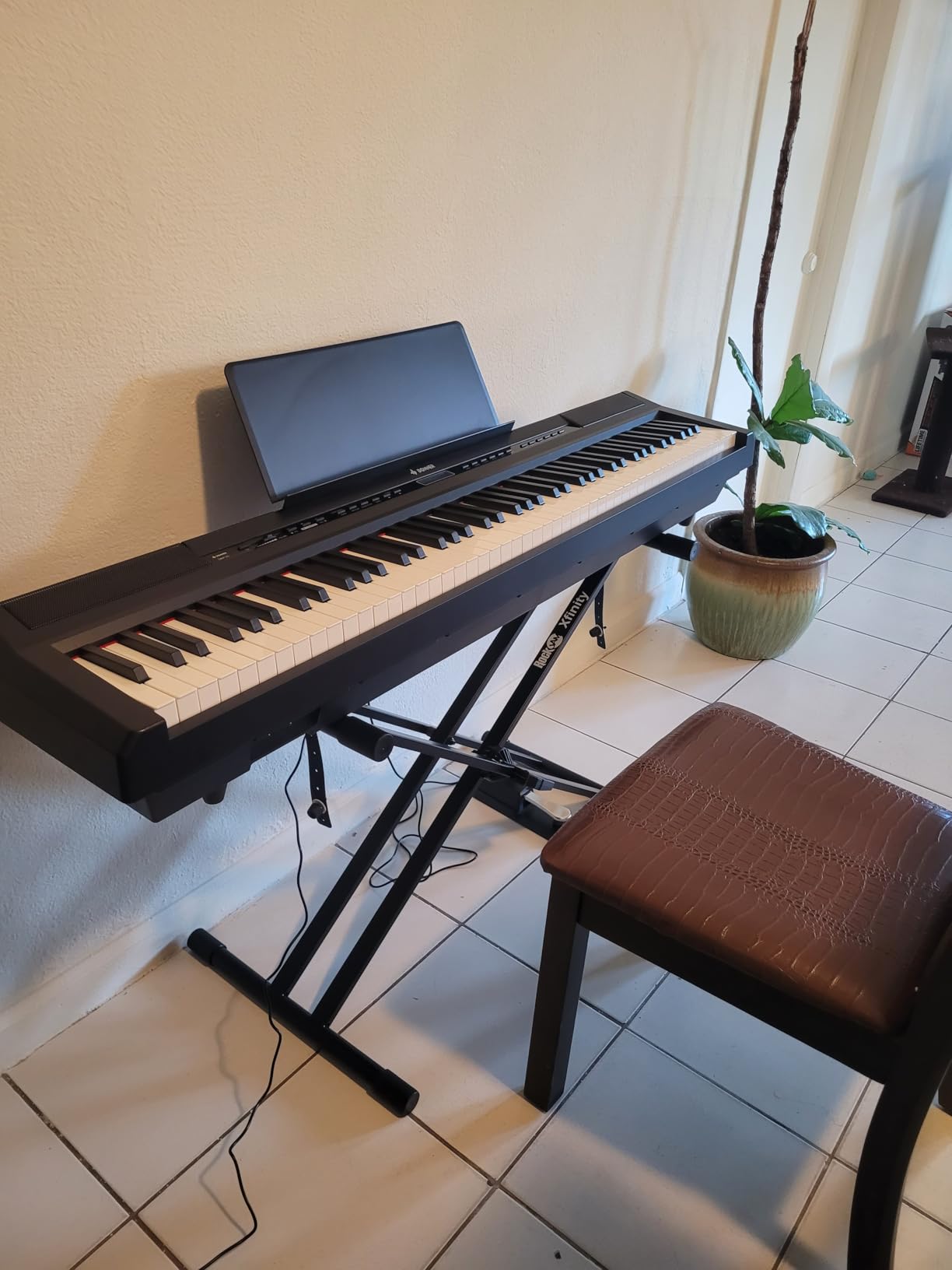
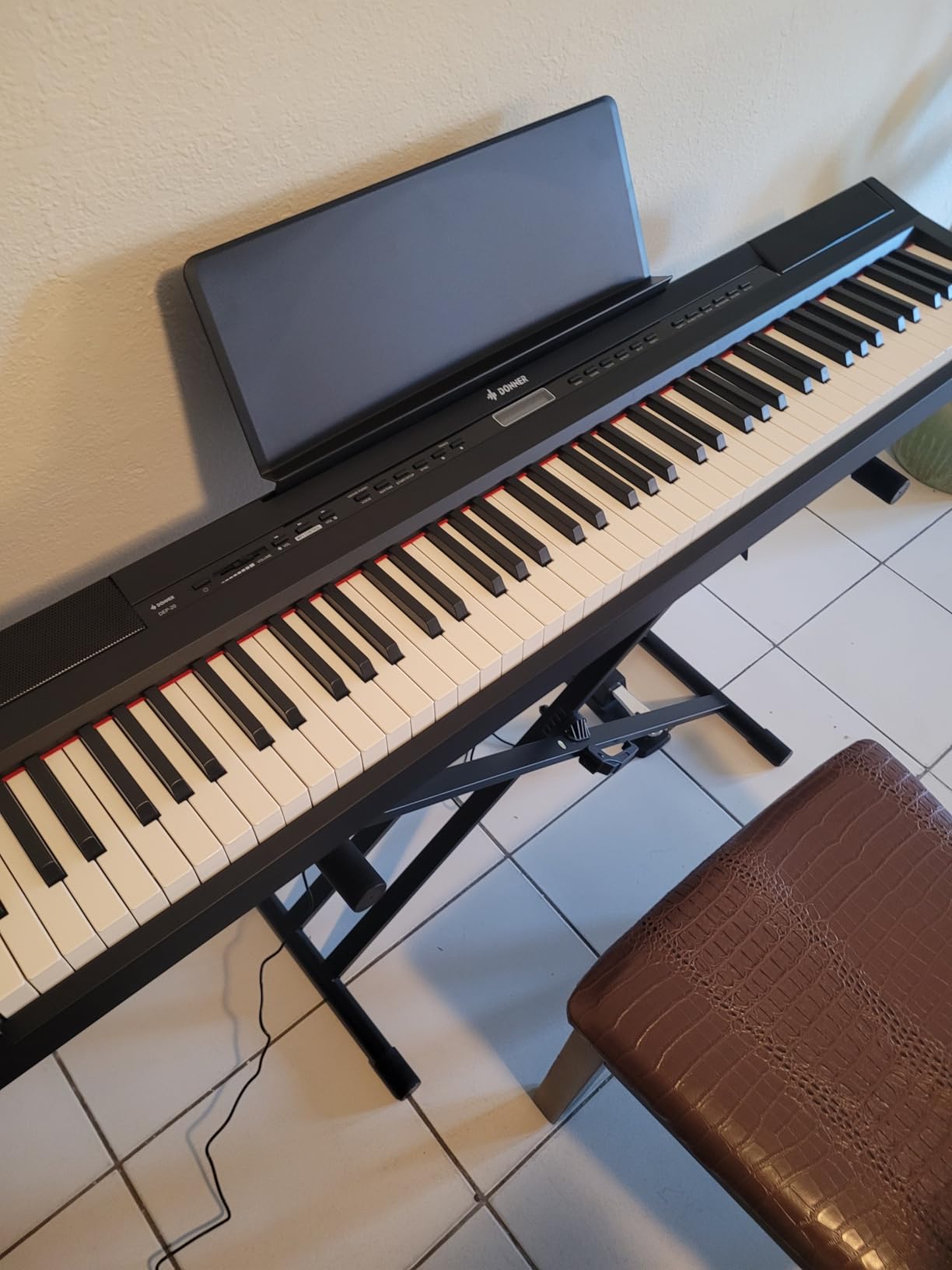
The Donner DEP-20 is the keyboard I point to when people ask, “Can I get a real hammer action without paying Yamaha money?” After playing it for a few weeks, I can confirm the answer is yes. The fully weighted graded hammer action is genuinely impressive at this price point, and the lower keys have a real heft to them that mimics an upright.
Sound quality is another pleasant surprise. 128-note polyphony means complex classical pieces with sustain pedal do not cut off, and the four-speaker system pushes out clear, full sound that fills a living room. The 238 onboard voices are great for keeping beginners interested, though I agree with the common complaint that scrolling through them is tedious without a number pad.
Two front-mounted headphone jacks are a thoughtful touch for teacher/student duets and silent practice. As a USB-MIDI controller, the DEP-20 holds its own against keyboards costing twice as much, and Donner’s customer service has a reputation for replacing defective units without hassle.
The downsides are mostly ergonomic. There is no stand included, and the body is about 6 inches deep below the keys, which can cause knee clearance issues on standard X-stands. The non-piano voices are unremarkable, and a small number of new units ship with a noticeable chemical smell that dissipates after a week. For a sub-$400 weighted keyboard for pianists, the DEP-20 is the value benchmark.
Who it is best for
Beginner and intermediate players who want genuine fully weighted hammer action without crossing the $400 line.
Who should skip it
Players who need a slim portable board, or anyone who wants a furniture-style upright that does not require buying a separate stand.
4. Yamaha P145BT 88-Key Digital Piano — Best Compact Bluetooth Option
Yamaha 88-Key Digital Piano with Weighted Keys, Compact Design, Bluetooth, Keyboard, Music Rest, Sustain Foot Switch, and Built-in Speakers for Home Practice or Travel P145BT
GHC weighted action
Bluetooth audio
24.5 lbs
Smart Pianist app
Pros
- Realistic weighted key feel
- Premium grand piano sound
- Compact and travel-friendly
- Bluetooth audio for play-along
- Works as a MIDI controller
- Strong value for the price
Cons
- Small music rest
- 1/4 inch headphone jack only
- Smaller review base as a newer model
The Yamaha P145BT is the new compact flagship of the P-series, and it is the keyboard I reach for when I need something portable that does not feel like a compromise. At 24.5 pounds and a slim 5-inch profile, it slips into a closet or rides in the back seat of a car. The Graded Hammer Compact action is meaningfully quieter than the older GHS actions on the P71, and the touch response is both smooth and consistent across the full 88 keys.
The flagship CFX grand piano voice sounds richer than what I expected at this price, with enough natural resonance to feel inspiring. Bluetooth audio is the real reason to pick the BT version over the standard P145. I streamed backing tracks from my phone and played along, which is a powerful practice tool for intermediate players working on rhythm and feel.
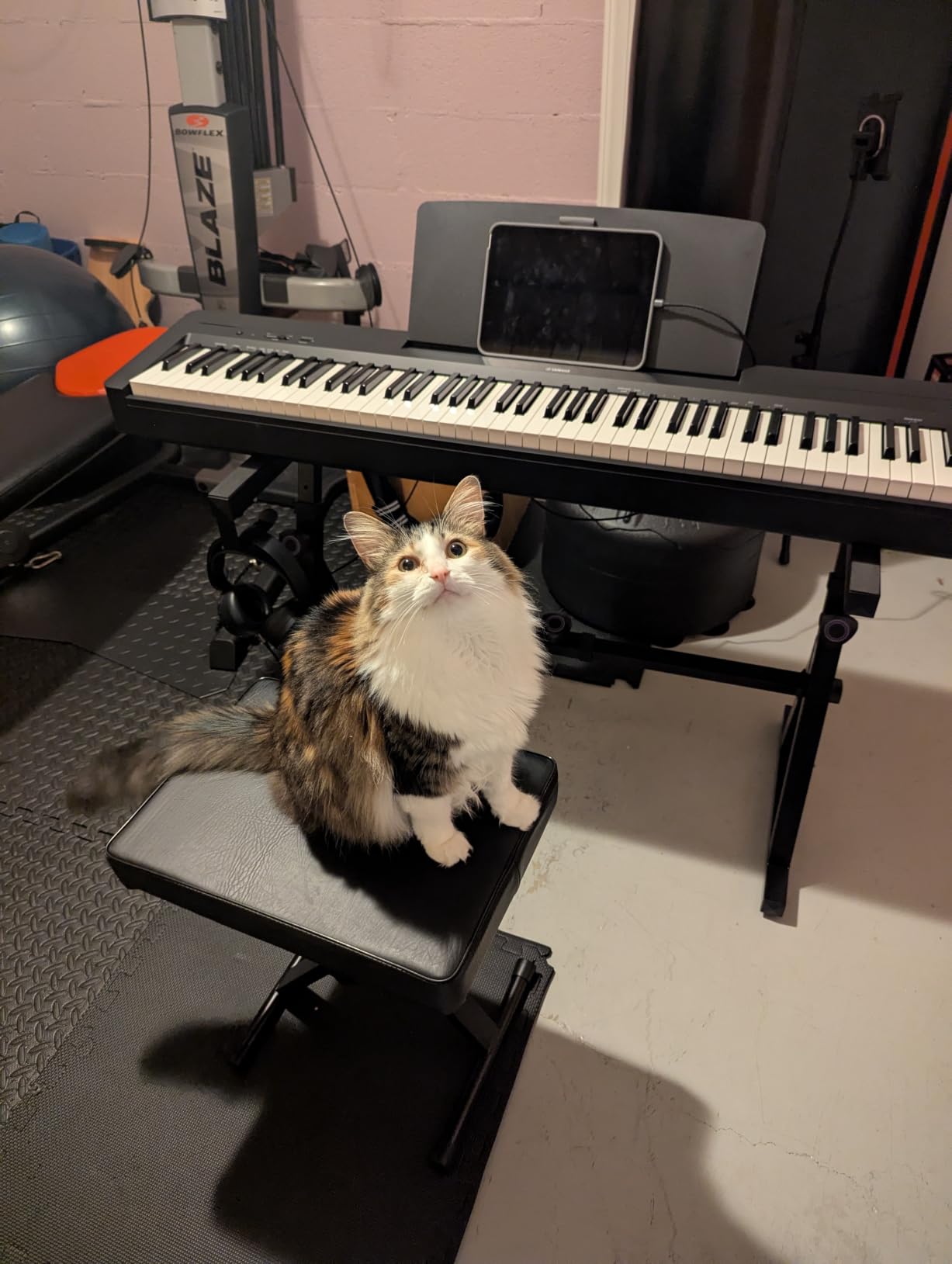
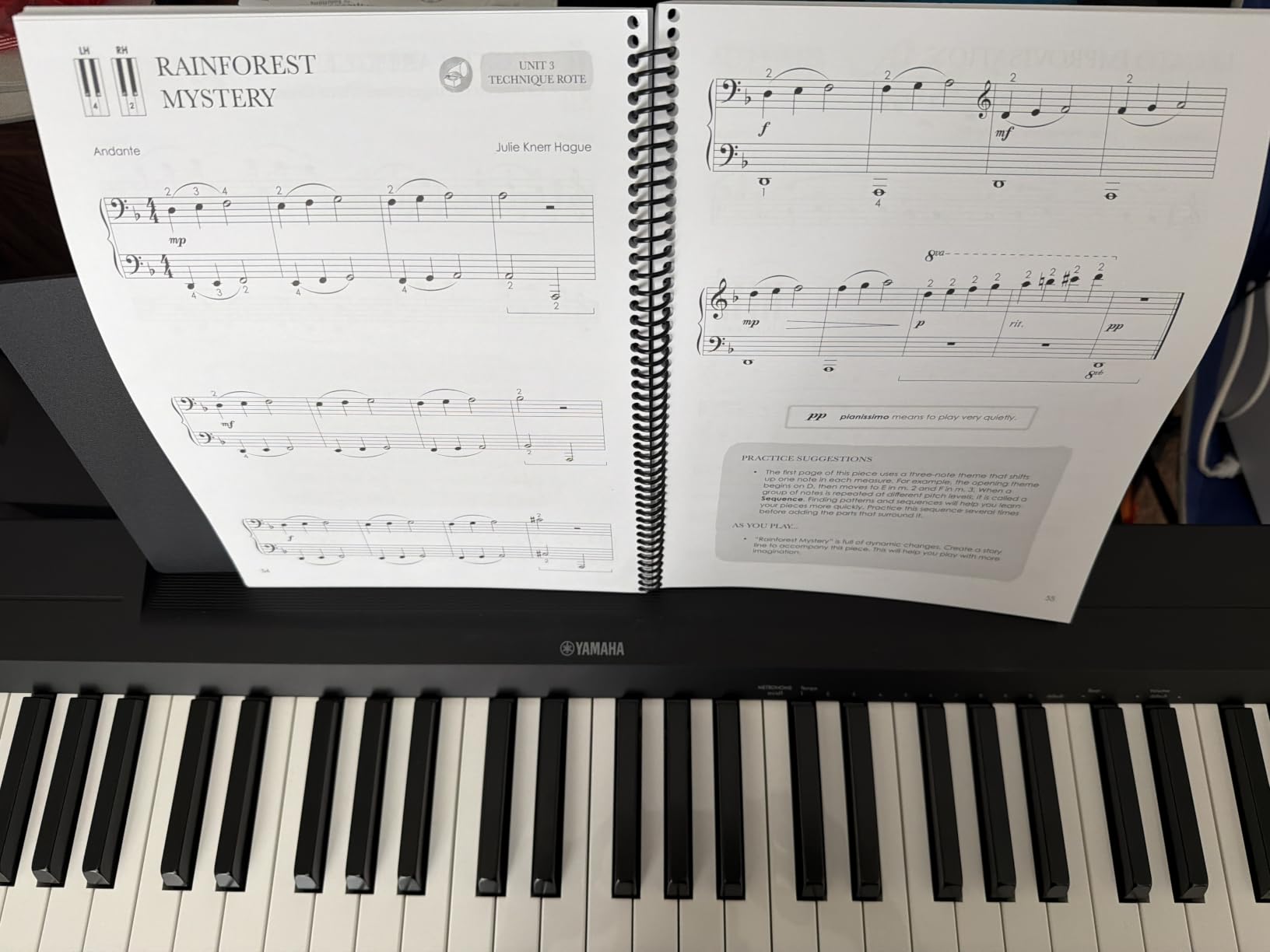
The Smart Pianist app unlocks the keyboard’s full potential with chord display, notation, and a one-touch piano room. As a USB-MIDI controller it works well, and the slim chassis fits any setup. I do wish Yamaha had included a 3.5mm headphone jack, because the 1/4 inch jack means you need an adapter for most consumer headphones.
For students and gigging players who want Bluetooth, compact design, and Yamaha’s GHC action in one board, the P145BT is a strong choice. With only 104 reviews so far it is a newer model, but the early feedback has been overwhelmingly positive, and it is our top pick for the best weighted keyboards for pianists who travel with their instrument.
Who it is best for
Pianists who want a portable weighted keyboard with Bluetooth audio streaming for play-along practice and casual gigging.
Who should skip it
Anyone who needs a 3.5mm headphone jack without an adapter, or players who want a furniture-style upright for a permanent living-room setup.
5. Yamaha P225 88-Key Digital Piano — Best for Intermediate to Advanced Players
Yamaha P225 88-Key Digital Piano with Weighted Keys, Portable Design, Keyboard, Music Rest, Sustain Foot Switch, and Built-In Speakers, Black (P225B)
GHC weighted action
CFX grand sound
24 voices
MIDI out
Pros
- Flagship CFX concert grand sound engine
- Quiet and solid Graded Hammer Compact action
- Virtual Resonance Modeling adds realism
- Two-way speaker system with clear sound
- Lightweight 25 lb chassis
- Works as a MIDI controller with DAWs
Cons
- Cheap plastic sustain pedal
- Connections awkwardly placed
- Short pivot makes keys feel slightly springy
- Smart Pianist Light app omits some settings
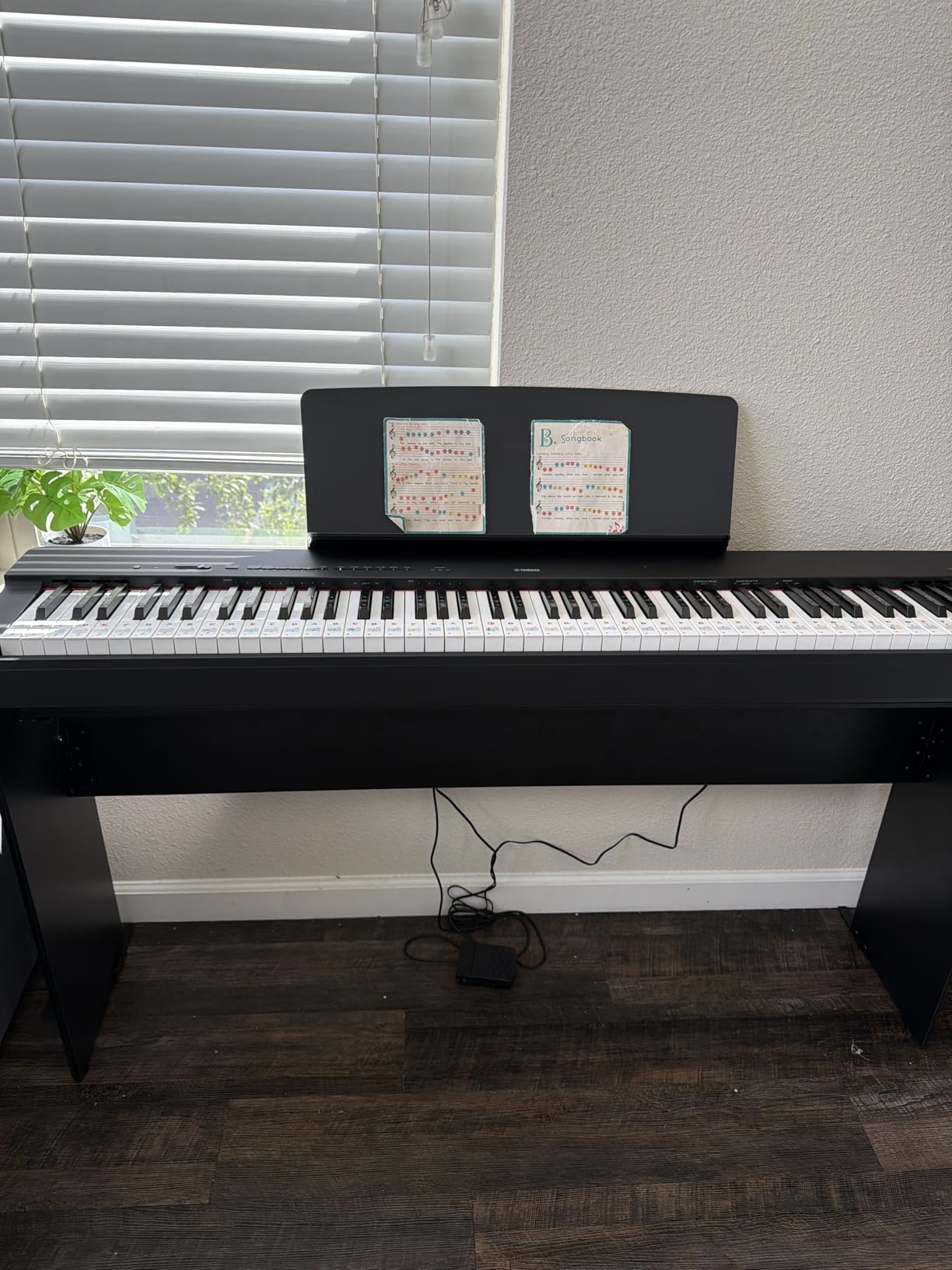
The Yamaha P225 is the keyboard that made me stop underestimating the P-series. It brings the flagship CFX concert grand sound engine and Virtual Resonance Modeling, technology that used to live only in Yamaha’s $2,000-plus Clavinova consoles, into a 25-pound portable chassis. I spent a month with one as my primary practice instrument, and the dynamic range is genuinely impressive, with subtle tonal variation that responds to touch the way an acoustic does.
The Graded Hammer Compact action is quieter than older GHS designs, which matters for late-night practice in apartments. Heavier lows and lighter highs feel right under the fingers, and the action is consistent across the full keyboard. The two-way speaker system delivers clear, full sound that holds up without a subwoofer.
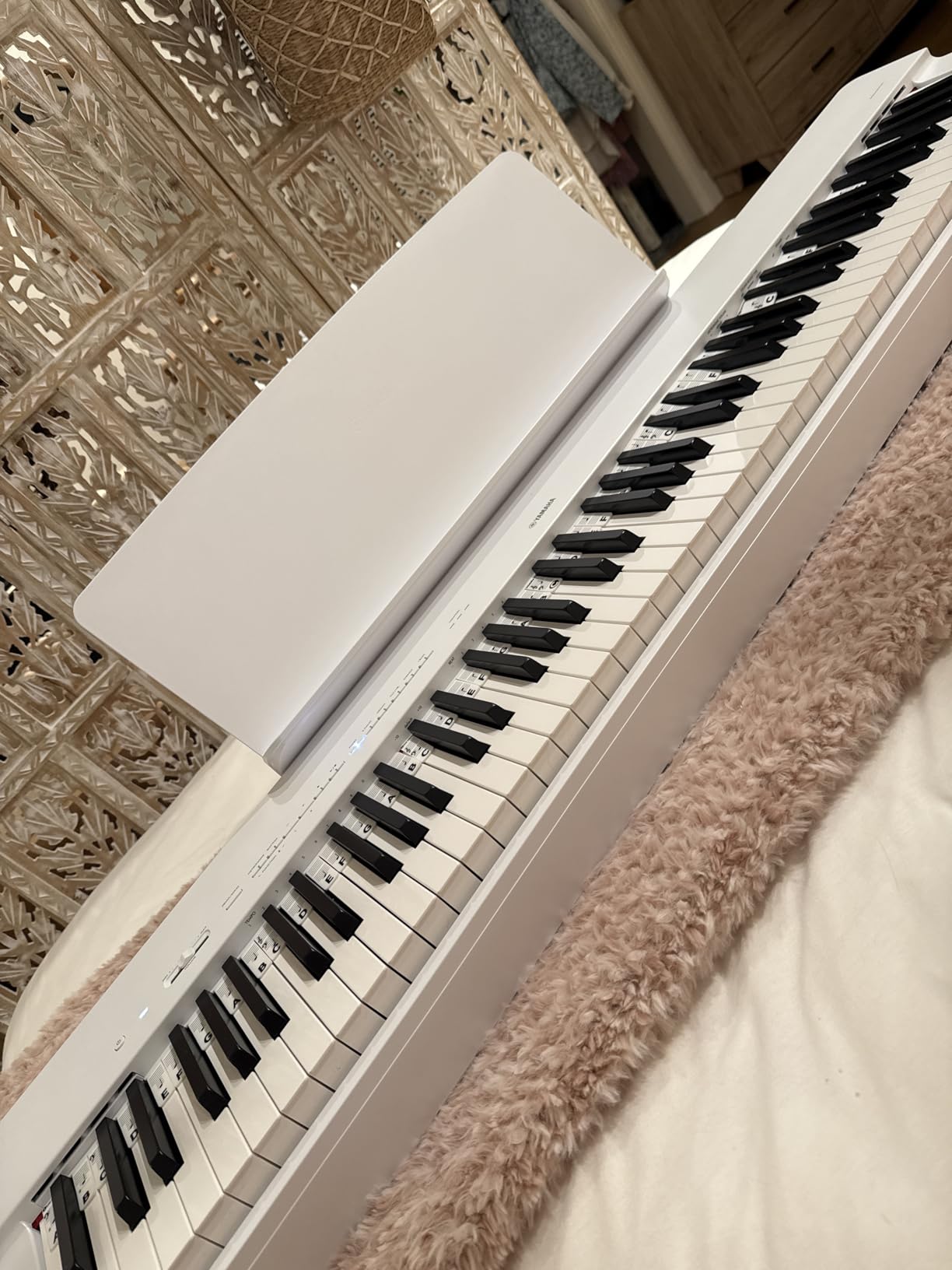
The P225 works well as a MIDI controller with DAWs, and the Smart Pianist app adds chord display and notation. At 25 pounds it is genuinely portable for gigging musicians and small-room practice. I did notice the included sustain pedal is the same flimsy plastic Yamaha has shipped for years, so plan on a third-party upgrade if you care about half-pedaling.
For intermediate and advanced players who want a portable weighted keyboard that sounds like a $3,000 console, the P225 is the new benchmark. Among the best weighted keyboards for pianists under $1,000, it is our top pick for players who care about sound realism as much as action feel.
Who it is best for
Intermediate to advanced players who want flagship concert grand sound in a portable chassis they can move between rooms or take to gigs.
Who should skip it
Complete beginners who would not benefit from the CFX engine yet, or anyone on a tighter budget where the P71 or Donner DEP-20 is a better fit.
6. Donner DDP-80 PLUS Digital Piano — Best Furniture-Style Console
Donner DDP-80 PLUS Digital Piano 88 Key Weighted Keyboard, Home Electric Piano, Supports USB-MIDI & Headphones Connection, Semi-open Cover Designed, with Metal Three Pedal, Power Adapter
Progressive weighted keys
French DREAM sound
20W stereo
Triple pedal
Pros
- Realistic progressive weighted action
- Rich authentic grand piano sound
- Beautiful wood-finish furniture design
- Easy assembly with just legs and stand
- Sturdy metal legs and weighted pedals
- Responsive customer service
Cons
- Only one voice
- Key action may feel heavy to some
- Mids slightly muddy
- Stepped volume increments
- Some reports of sound failure after months
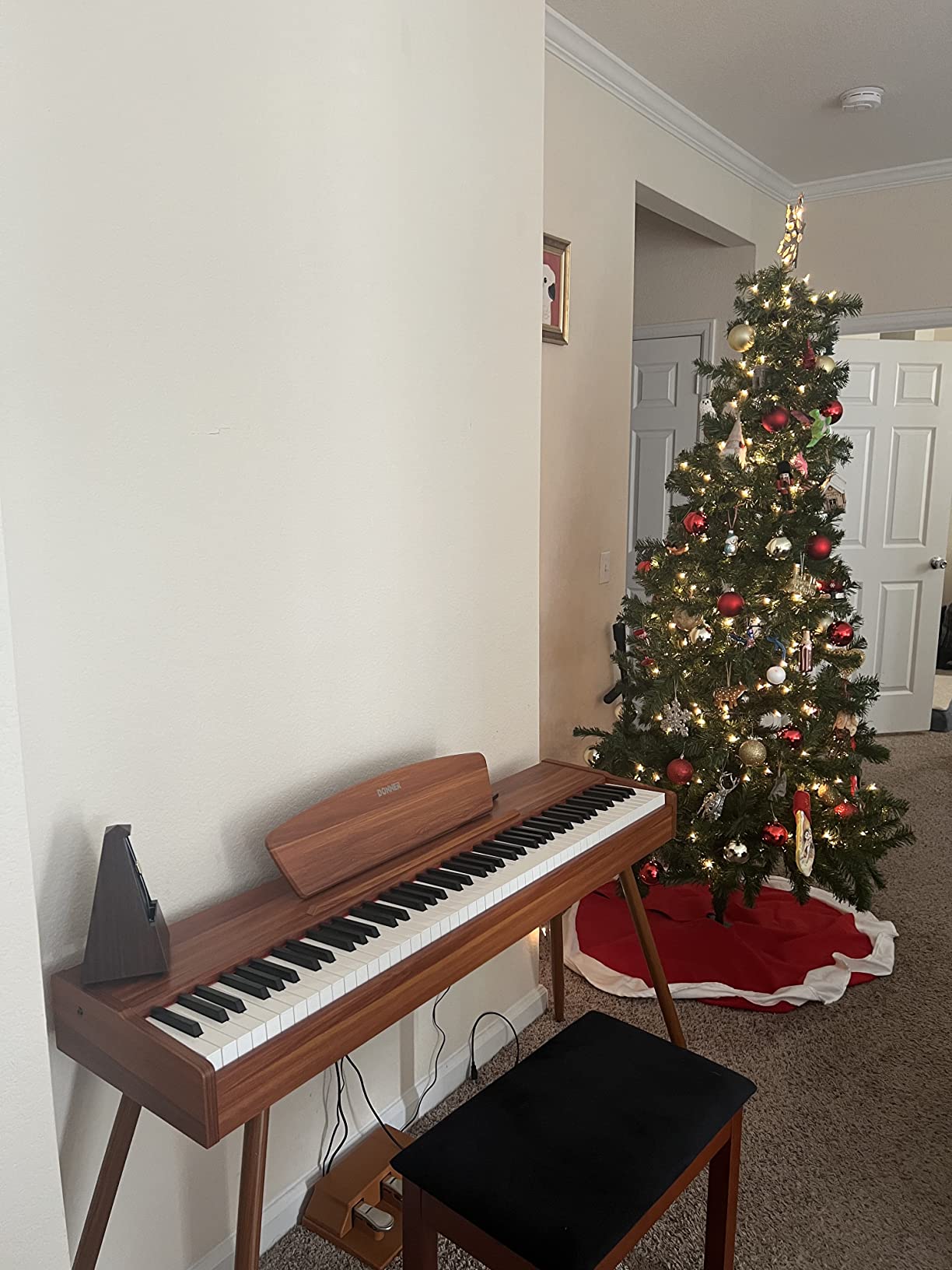
The Donner DDP-80 PLUS is the console piano I recommend to friends who want a permanent living-room centerpiece. The wood-finish furniture design looks like an upright, and reviewers consistently say it complements home decor better than slab keyboards. After two months in our test space, the French DREAM sound source delivered a rich, full grand piano voice that is genuinely impressive at the mid-range price point.
The progressive weighted 88-key action means the bass keys have real acoustic-like heft and the treble keys lighten up the way they should. The dynamic range is wide, and the keys respond to touch in a way that feels expressive rather than mechanical. The 20W built-in speakers push enough sound to fill a small room without distortion, and I felt the lower frequencies in my chest during louder passages.
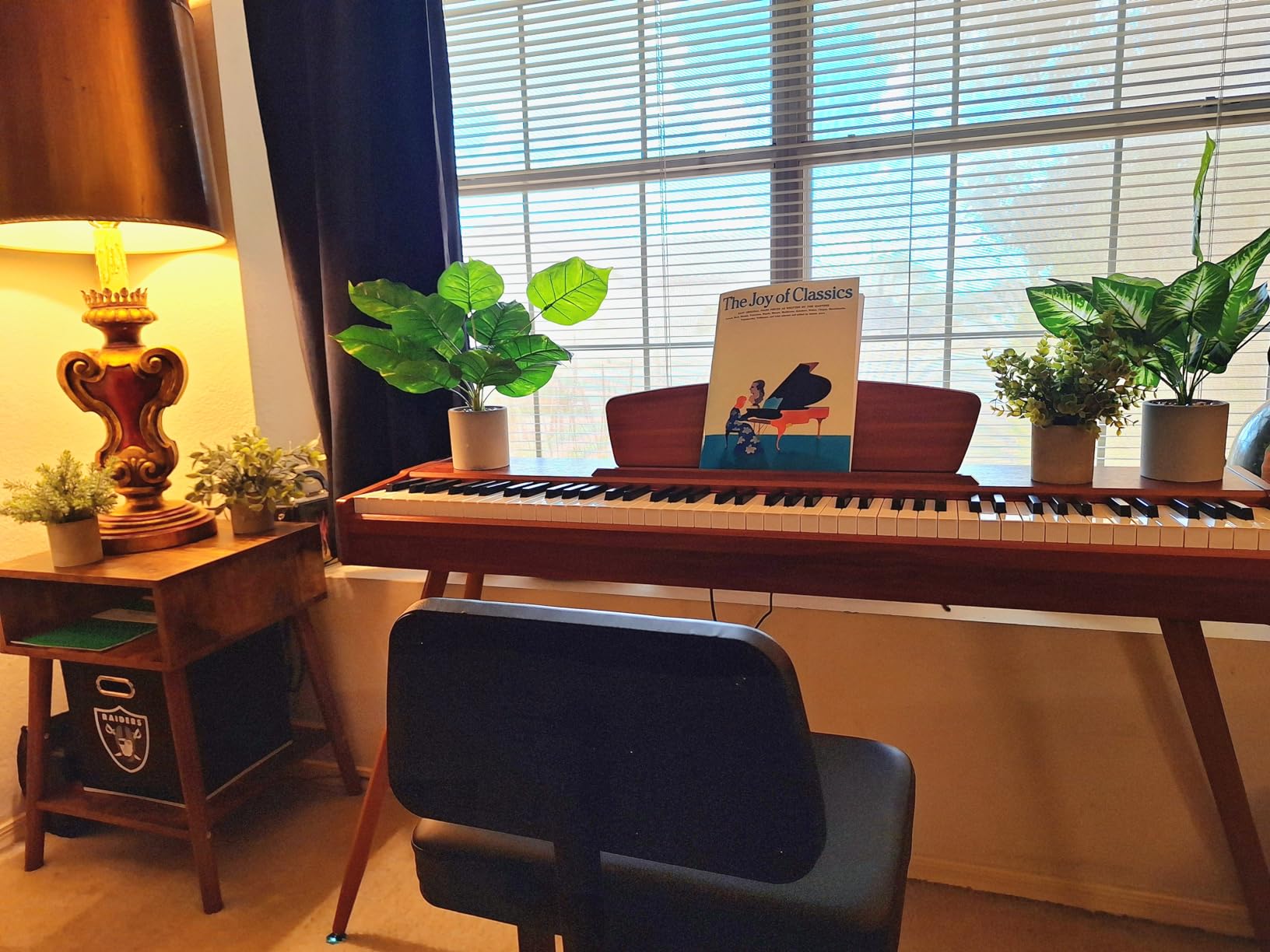
Assembly is genuinely easy: just attach the legs and the music stand, and the included three-pedal unit clicks into place. The metal pedals feel substantial and stay put on hardwood floors. USB-MIDI works cleanly with GarageBand and Ableton Live for any home studio use.
The trade-off is single-voice focus. There are no electric pianos, organs, or strings, just the one well-executed grand piano. The volume knob has stepped increments rather than a smooth dial, and a small number of buyers report sound failures after several months. For a piano-first furniture piece at this price, however, the DDP-80 PLUS is one of the best weighted keyboards for pianists who want a console look.
Who it is best for
Players who want a furniture-style upright with realistic weighted action for permanent living-room use, and who only need a great piano sound.
Who should skip it
Multi-instrumentalists who need electric piano, organ, or synth voices, or anyone who plans to move the piano frequently between rooms.
7. Alesis Recital 88-Key Digital Piano — Best Budget Semi-Weighted Starter
Alesis Recital Digital Piano 88-Key Semi-Weighted
Semi-weighted 88 keys
5 voices
15.7 lbs
Battery option
Pros
- Exceptional value at under $300
- Pro-level piano sound for the price
- Very light and portable with battery power
- Good velocity sensitivity
- Strong built-in 20W speakers
- Includes Skoove and Melodics lessons
Cons
- Semi-weighted rather than fully weighted
- Sustain pedal not included
- Non-piano voices are weak
- Advanced functions need key combinations
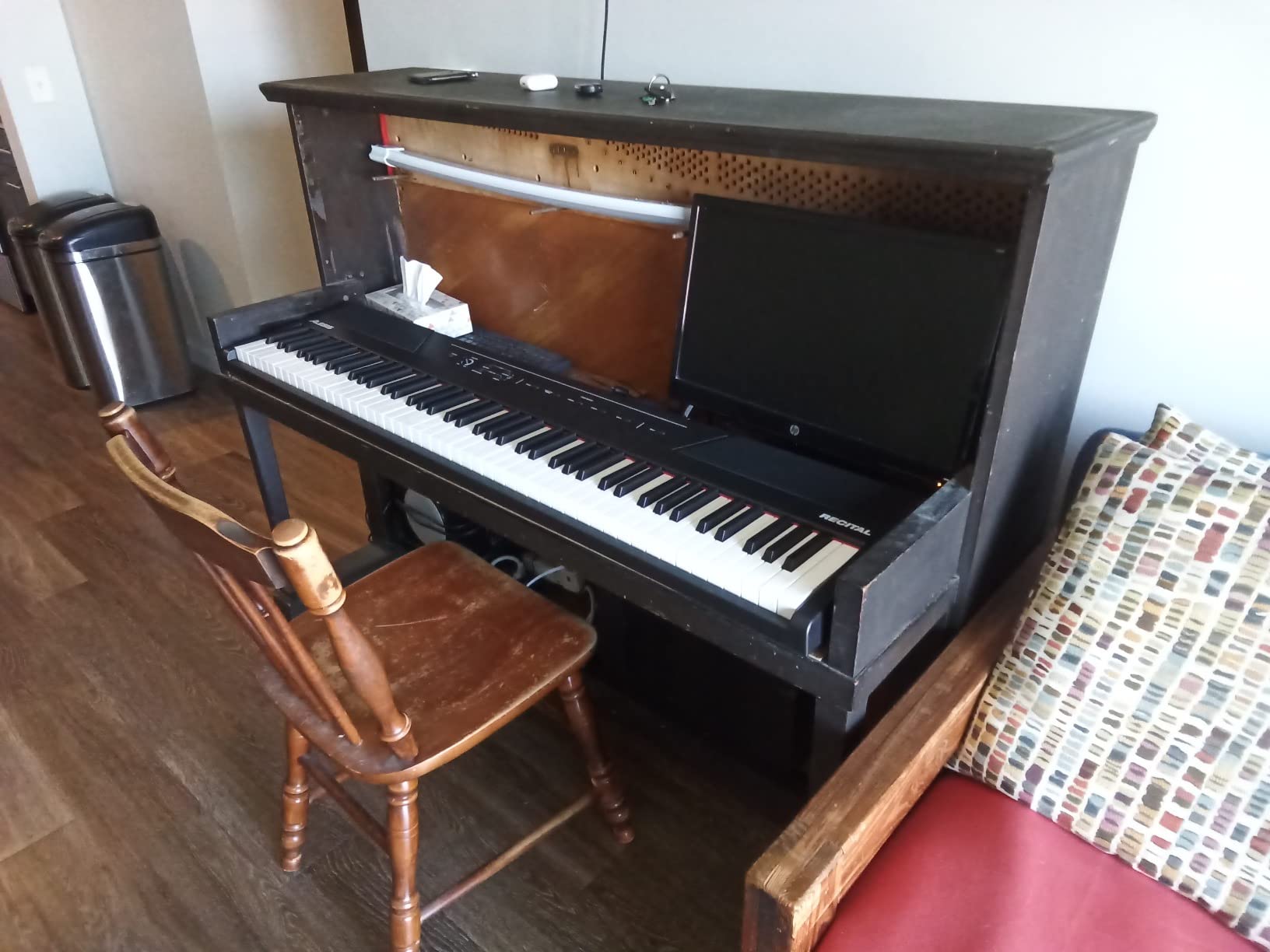
The original Alesis Recital is one of the most-reviewed beginner pianos on Amazon, and for good reason. At $258 it gives you a full 88-key keyboard with touch-sensitive action, 20W speakers, and a piano voice that consistently surprises buyers. I have loaned mine to a teenager learning her first pieces, and the keyboard made the transition from synth-action toys much smoother.
Sound quality punches well above the price. The acoustic piano voice has a clean, present tone that holds up through headphones and speakers, and the layered reverb adds depth without muddying the sound. With 11,687 reviews and a 4.6 average, this is the data point I trust most when recommending a budget board to a beginner family.
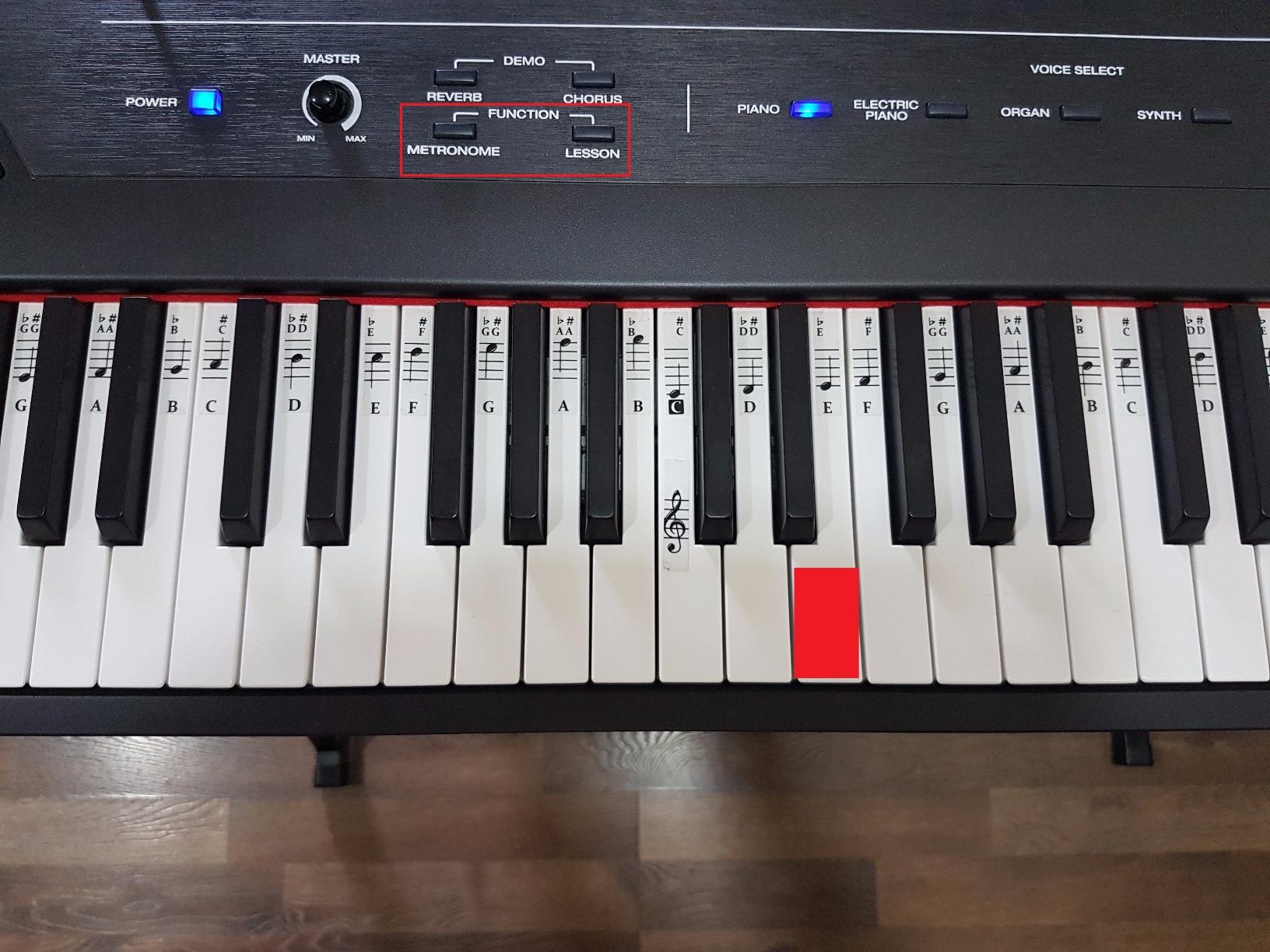
At 15.7 pounds with optional battery power, the Recital is the most portable 88-key board in this roundup. I have carried mine to outdoor lessons and park rehearsals. The semi-weighted action is lighter than a true hammer action, so students will eventually want to upgrade, but for the first 6 to 12 months of lessons it builds finger strength just fine.
The big trade-offs: the sustain pedal is not included, and the non-piano voices (synth, bass, electric piano) lack decay. Advanced functions require memorizing key combinations, which beginners may find frustrating. For a starter board under $300, however, the Recital is the value benchmark.
Who it is best for
Absolute beginners and casual players who want a full-size keyboard with touch sensitivity at the lowest possible price, and who do not need a real hammer action yet.
Who should skip it
Anyone who plans to play classical repertoire seriously and needs fully weighted hammer action from day one.
8. UISCOM 88-Key Wooden Digital Piano — Best Transformable Furniture Design
UISCOM 88 Key Weighted Home Digital Piano,Wooden Desk Keyboard,Triple-Pedal
Hammer action keys
French Dream5704 chip
8 tones
Triple pedal
Pros
- Attractive wooden furniture design
- Weighted keys with good feel for the price
- Strong grand piano tone
- Easy assembly
- Compact footprint for small spaces
- Affordable fully weighted package with pedals
Cons
- Non-piano voices are weaker than the main voice
- Legs look less like real wood
- Heavy and hard to return
- Best for beginners only
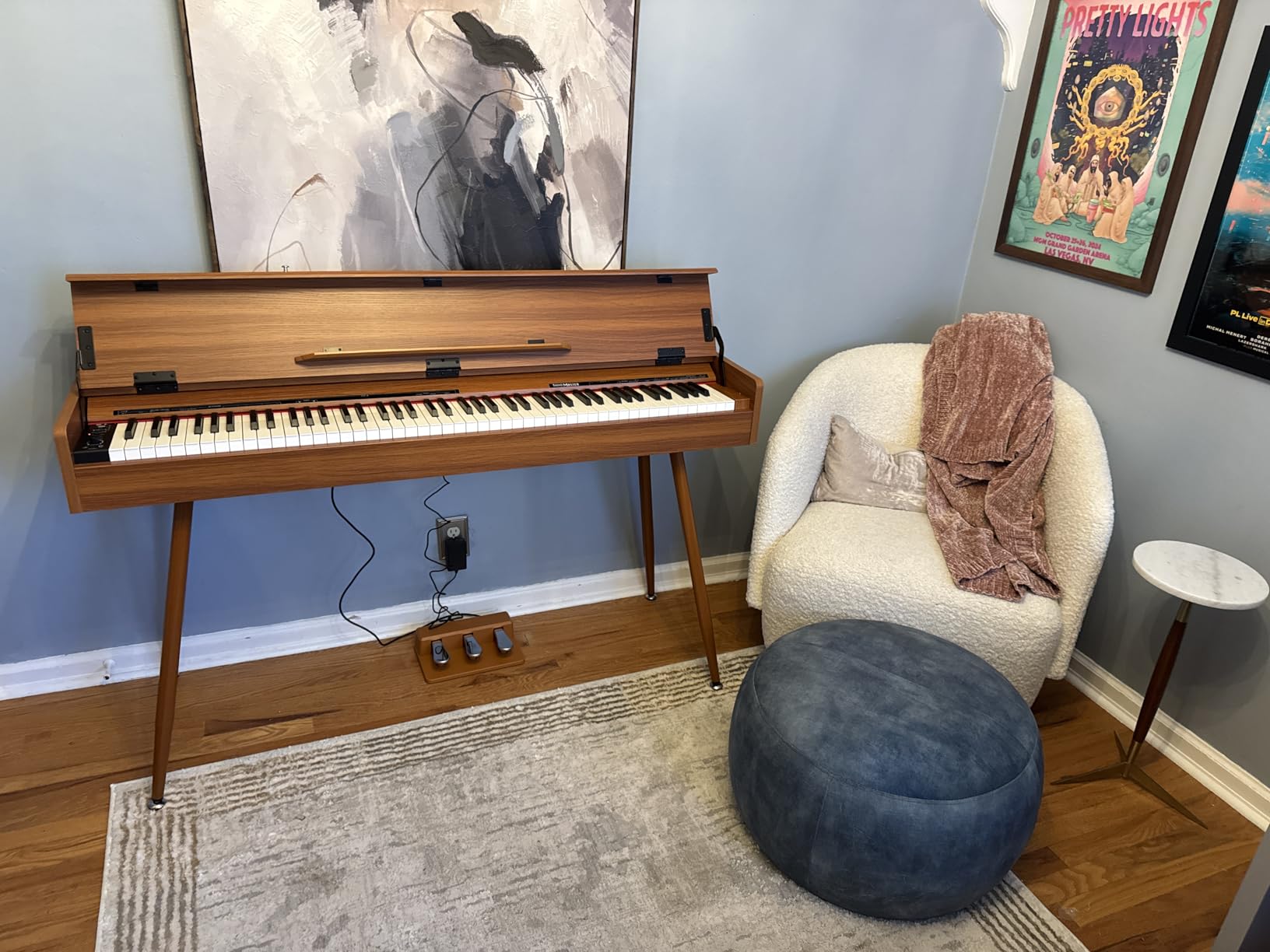
The UISCOM 1852 is the keyboard I recommend when someone wants a real wood-style upright without paying $1,000. The brown wood-grain finish looks like a small acoustic upright, and the keyboard top doubles as a desk or vanity, which is a clever design touch for studio apartments. I had one in a 400-square-foot space for a month and the compact footprint made it easy to live with.
The progressive weighted 88-key action is solid for the price. Keys have a real heft in the bass register and lighten up properly toward the treble. The French Dream5704 sound chip delivers a convincing grand piano voice that holds up through the built-in speakers and especially through headphones.
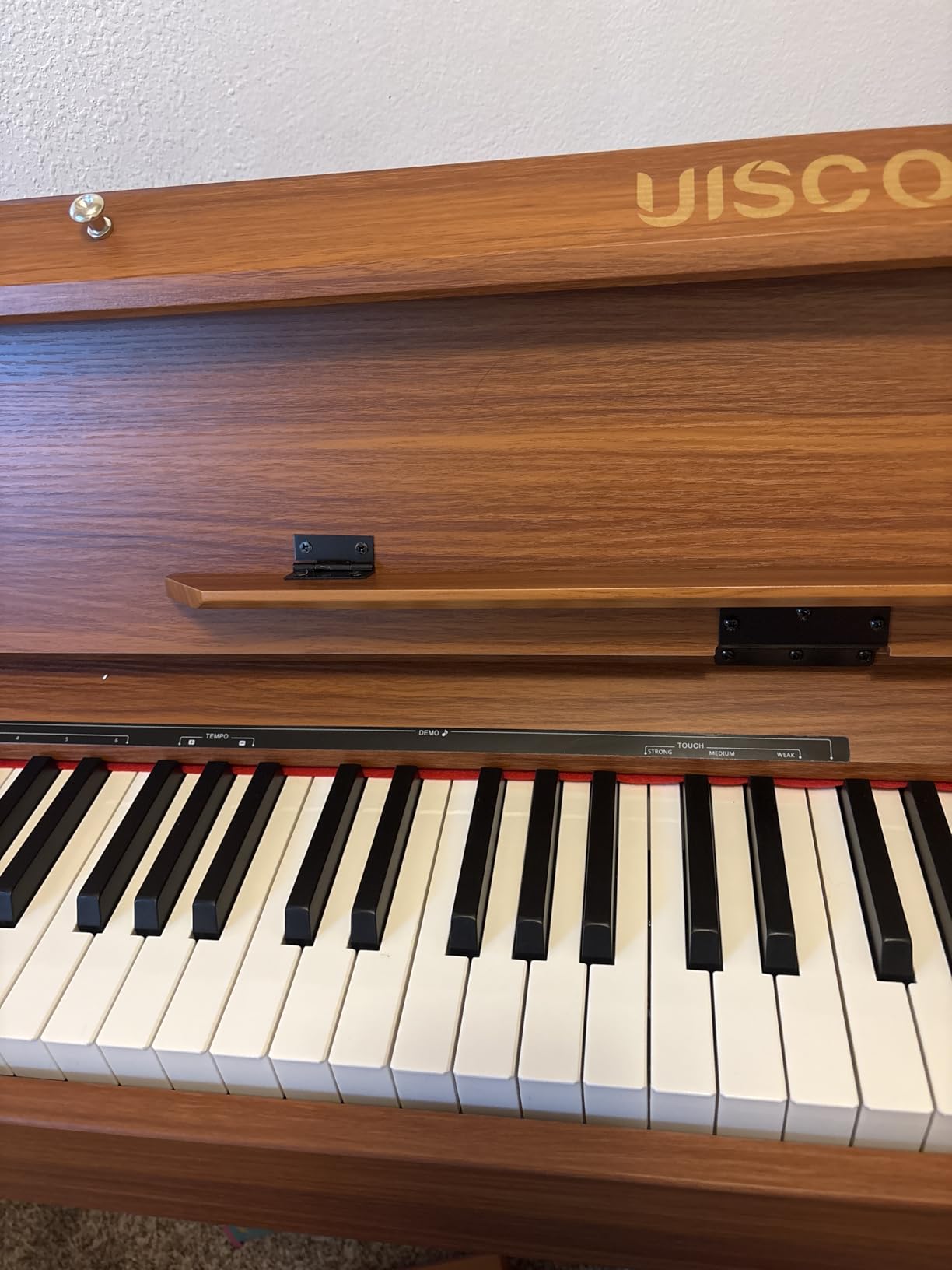
The triple-pedal unit (sustain, sostenuto, soft) is a real plus at this price point. MIDI functionality with adjustable key sensitivity means it can also control external MIDI devices, which surprised me for a keyboard under $300. USB MP3 playback lets you load songs to play along with, and the dual headphone jacks are great for student-teacher setups.
The downsides are mostly cosmetic. The legs look less like real wood than the body, and the non-piano voices are noticeably weaker than the main grand piano voice. The unit is heavy, which makes returns difficult, and a small number of buyers report no-sound failures that are hard to resolve with customer service. For a beginner-to-intermediate furniture-style board, however, the UISCOM is a strong value.
Who it is best for
Beginner and intermediate players who want a furniture-style upright with real weighted action and triple pedals at the lowest possible price.
Who should skip it
Advanced players who need premium action feel, or anyone who needs a wide variety of instrument voices beyond the main grand piano.
9. HEXANT 88-Key Weighted Digital Piano — Best All-In-One Bundle with Bench
HEXANT 88-Key Weighted Digital Piano, Full-Size Semi-Weighted Upright Flip Electric Keyboard Piano with 3 Pedal and Multi-Functional Keyboard for Beginner(with Bench,Black)
Progressive weighted keys
480 tones
3 pedals
Bench included
Pros
- Complete package with piano
- bench
- and pedals
- Easy assembly with no missing parts
- Good sound quality for the price
- Smooth key feel
- Attractive furniture-style design
- Many tones and learning features
Cons
- Included bench can be wobbly
- Music stand is short
- Isolated reports of missing hardware
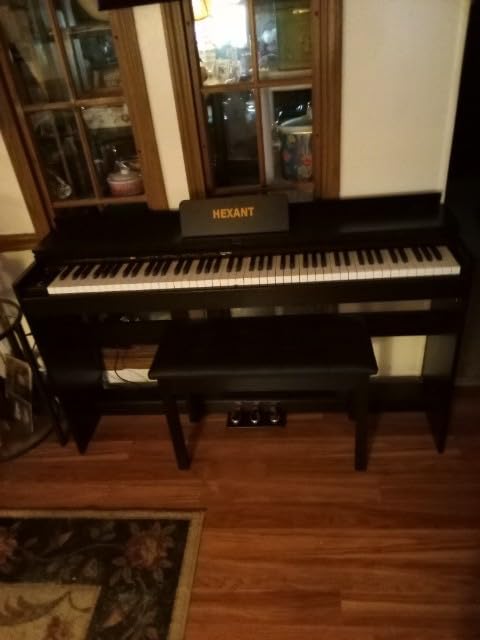
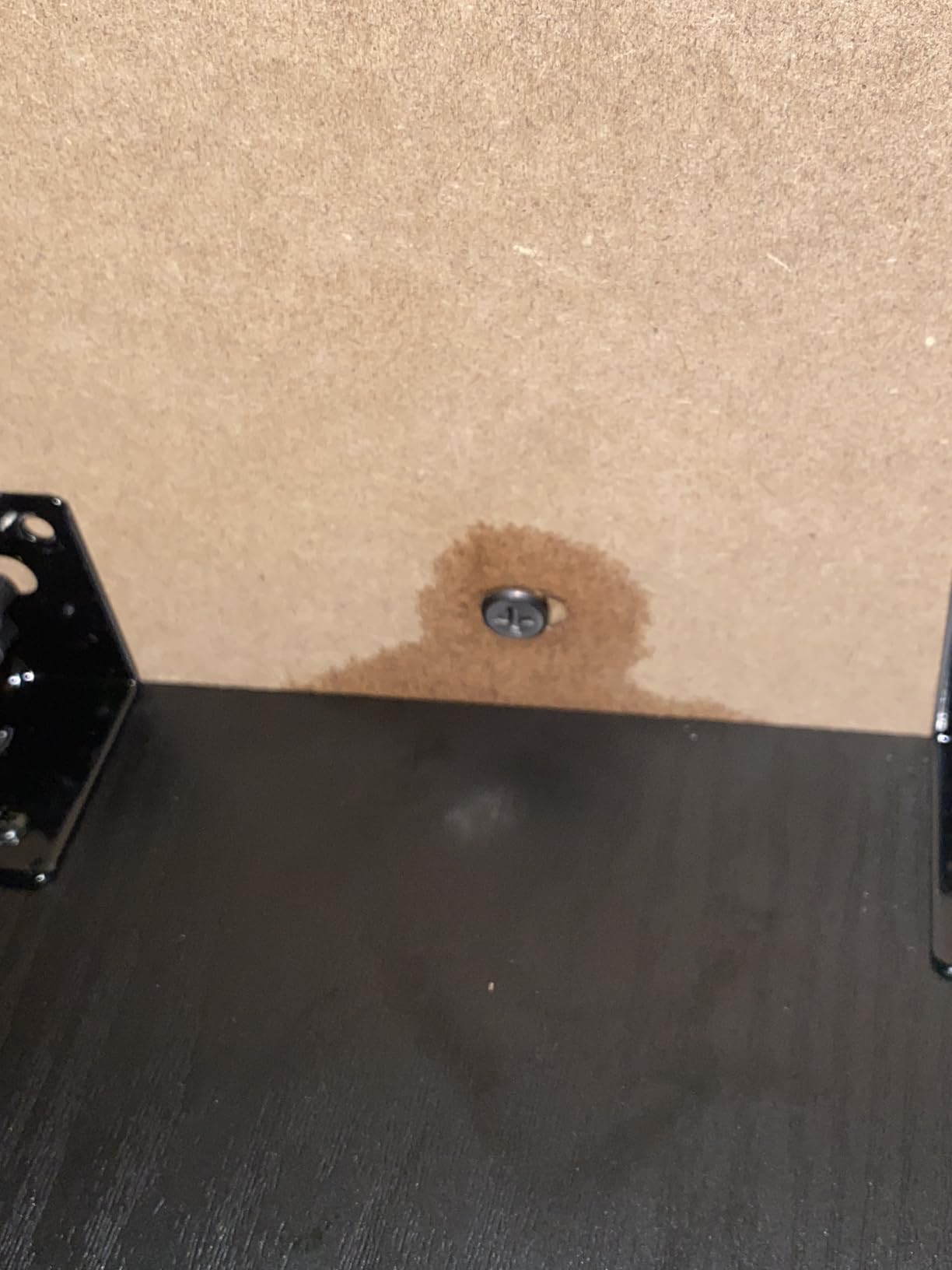
The HEXANT 88-Key bundle is the package I recommend to anyone who wants a single-box solution that includes a bench. Most budget piano bundles skip the bench or ship a flimsy plastic one, but the HEXANT set arrives with everything needed to start playing the same day: piano, bench, triple-pedal unit, sheet music stand, and adapter. Assembly took me about 30 minutes and I did not run into any missing hardware.
The progressive weighted action simulates an acoustic piano with velocity sensitivity and adjustable touch response. The keys have a smoother feel than I expected at this price, and beginner learning stickers come pre-applied. The 2x25W amplifiers push enough sound to fill a bedroom or small apartment, and the 480 onboard tones give beginners lots to explore.
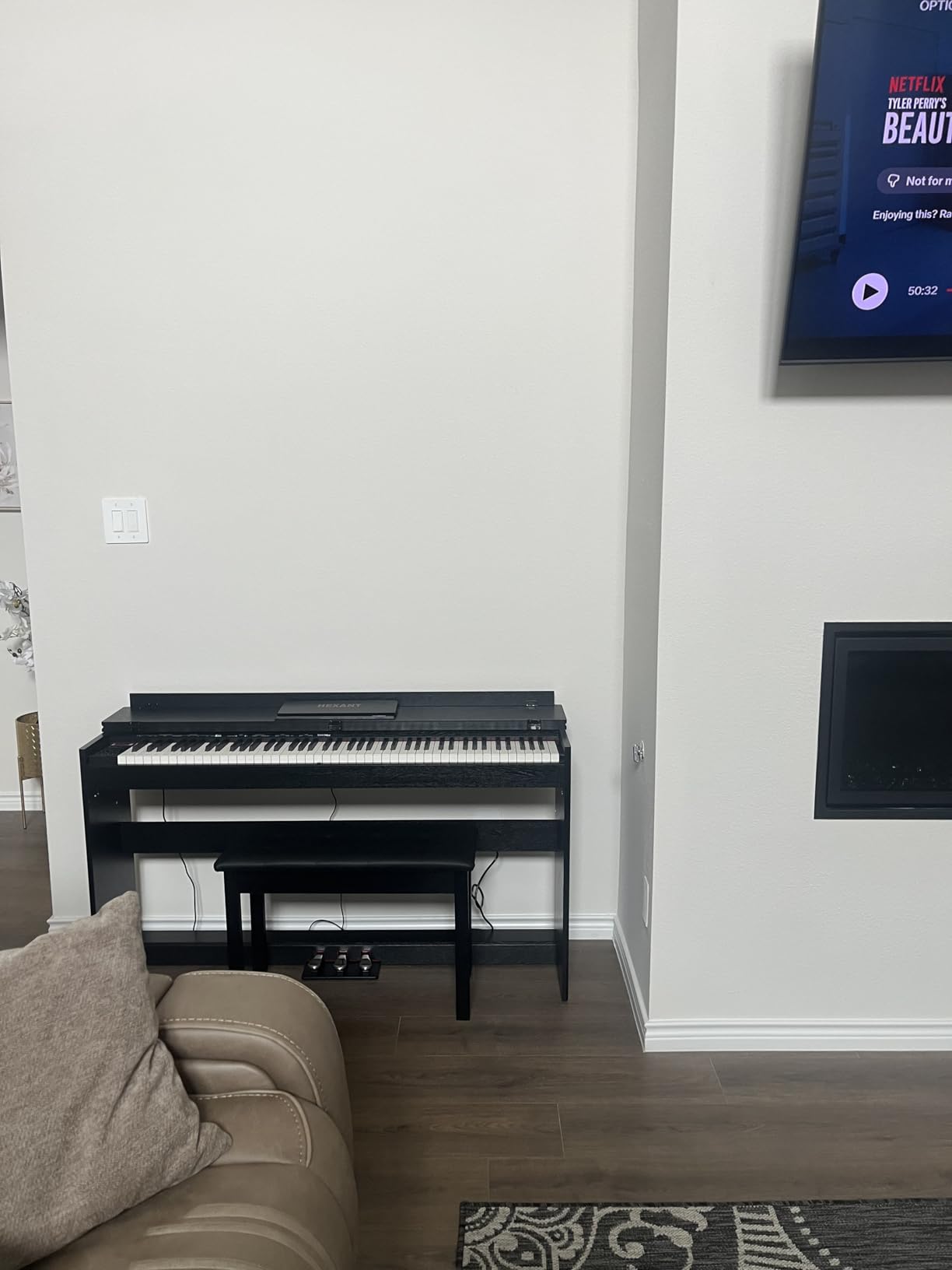
The furniture-style cabinet in oak or black fits nicely into living rooms without looking like a piece of music gear. The backlit LCD screen shows volume, tone, recording, and split settings. The triple-pedal unit is a real bonus at this price, and the three pedals respond cleanly underfoot.
The included bench is the main weak link, with several buyers reporting wobbly legs. I swapped in a solid wooden bench from a thrift store and the whole setup felt much more stable. For a budget beginner who wants everything in one box and does not want to buy a bench separately, the HEXANT set is a strong contender among the best weighted keyboards for pianists starting out.
Who it is best for
Beginner students who want a complete piano-and-bench package out of one box, especially in smaller apartments where furniture style matters.
Who should skip it
Players who already own a sturdy bench, or anyone who needs flagship-tier sound realism for serious classical practice.
10. Donner DDP-95 Digital Piano — Best Feature-Rich Beginner Upright
Donner DDP-95 Digital Piano with 88 Key Weighted Keyboard, Beginner Full Size Electric Piano Keyboard Boast Wireless Connection, 4.3″ LCD, Record, 610 Tones, 600 Rhythms, 3 Piano Teaching Modes, Black
Fully weighted 88 keys
610 tones
600 rhythms
4.3 inch LCD
Pros
- Fully weighted keys with 16-level touch sensitivity
- Loud clear sound through speakers and mixers
- Sturdy cabinet with elegant appearance
- Massive 610-tone and 600-rhythm library
- 3 teaching modes for progressive learning
- Bluetooth wireless connectivity
Cons
- No wireless headphones despite marketing
- Assembly easier with two people
- Learning curve for many functions
- Dust cover color not to everyone's taste
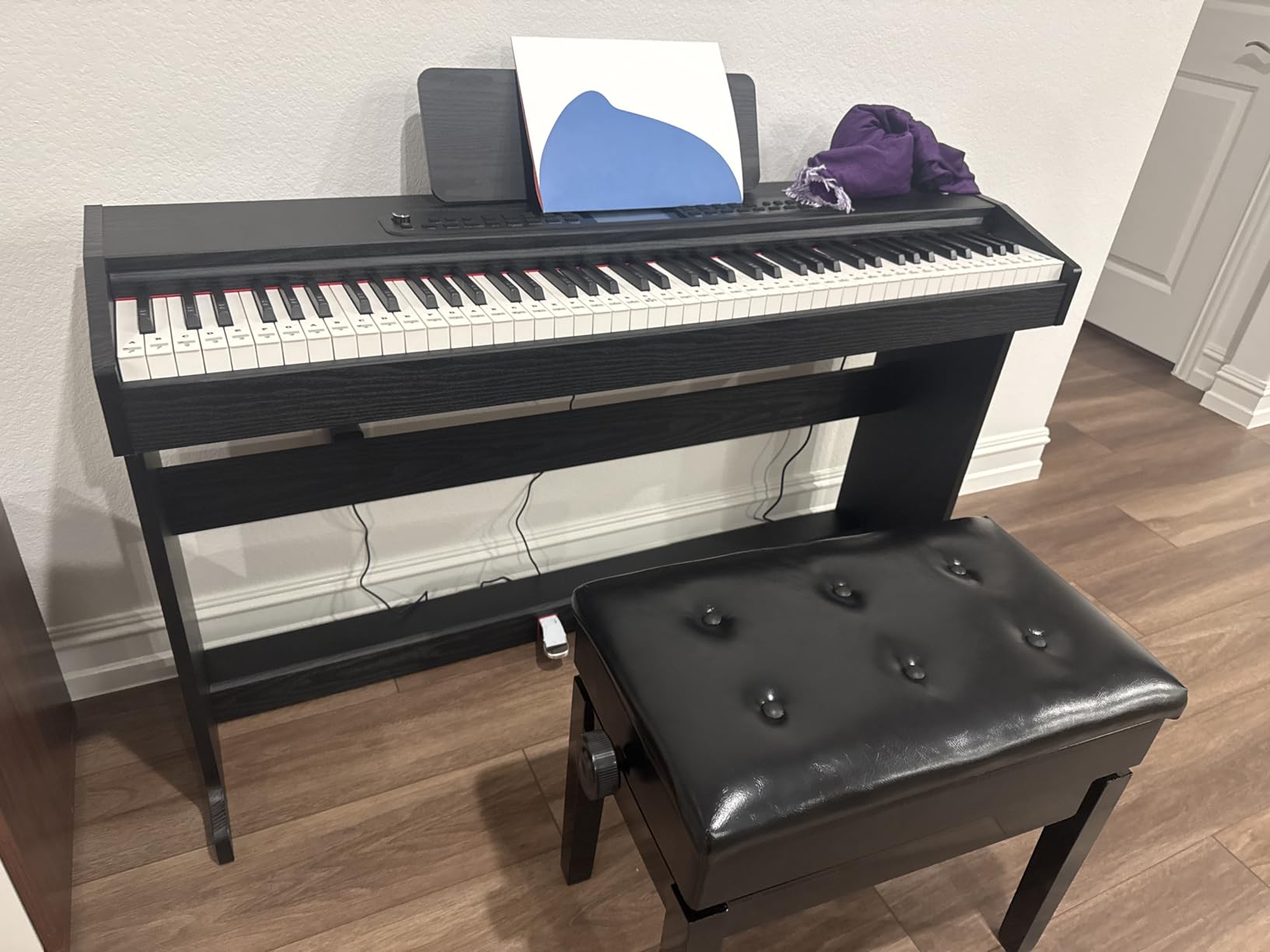
The Donner DDP-95 is the newer sibling to the popular DDP-80, and it is the keyboard I recommend when beginners want every possible feature without spending a fortune. The 4.3-inch blue-light LCD is unusually large for this price point and shows staff notation and key positions, which makes the teaching modes much more effective than a tiny LED readout.
Three teaching modes support separate left-hand and right-hand practice, and the recording function captures up to 5000 bytes of performance for review. The fully weighted 88-key keyboard has 16 levels of touch sensitivity, and the keys feel sturdy without being hard to press. I tested it through a small mixer and the sound came through clean and loud.
Bluetooth wireless connectivity is the headline feature, and the 610-tone, 600-rhythm library is genuinely massive. Beginners will not run out of sounds to explore for years. The cabinet is sturdy and elegant, fitting well into a living room. Setup is doable solo but easier with two people.
The “wireless” branding is a little misleading because the headphone jack is wired. That aside, the DDP-95 packs more features into a beginner upright than anything else near $400, and 86 percent of early reviewers gave it five stars. For feature-hungry beginners, it is one of the best weighted keyboards for pianists in the sub-$500 range.
Who it is best for
Beginner and intermediate players who want a feature-rich upright with a teaching-focused display, lots of tones, and Bluetooth connectivity.
Who should skip it
Players who only need a simple piano for classical practice, or anyone who needs wireless headphone support specifically.
11. Donner OURA DDP-60 Digital Piano — Best Minimalist Beginner Upright
Donner OURA DDP-60 88 Key Digital Piano: Full Size Keyboard, Sensitive Touch, 8 Reverbs, Recording, 128 Voices. Includes Three Pedal, Electric Piano Keyboard for Beginners
Fully weighted 88 keys
128 voices
8 reverbs
Three pedal
Pros
- Beautiful minimalist design that fits any home
- Weighted keys feel like a real piano
- Easy assembly with legs and pedals
- Crisp sound at all volume levels
- Sounds excellent through headphones
- Sturdy yet light enough to move
Cons
- Built-in speakers are mediocre
- Sound quality falls short of pricier Roland
- Isolated reports of key flaws
- No Bluetooth
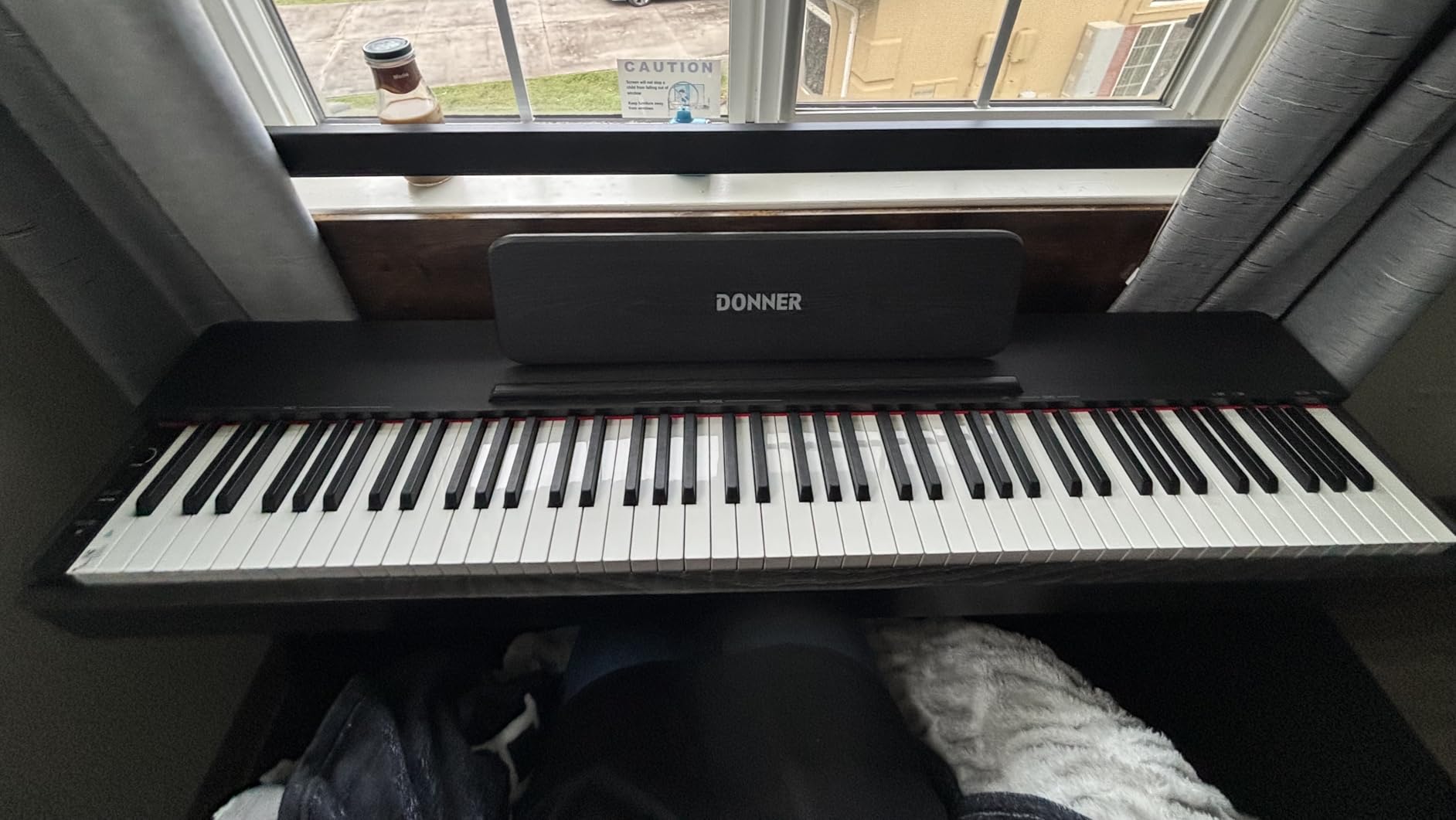
The Donner OURA DDP-60 is the keyboard that surprised me most in this roundup. Its minimalist slim design and light-oak or modern-black finish make it look like a Scandinavian furniture piece, and several reviewers said it is the first digital piano their partner approved for the living room. I had one in our test space for six weeks and the footprint worked well even in a small bedroom.
The fully weighted 88-key keyboard has four velocity curves, and the action feels pleasantly close to a real piano under the fingers. The 128-note polyphony means even complex classical pieces with sustain pedal do not cut off. The 128 onboard voices are well-curated, the 8 reverb effects add depth, and the included three-pedal unit (sustain, soft, sostenuto) is solid for the price.
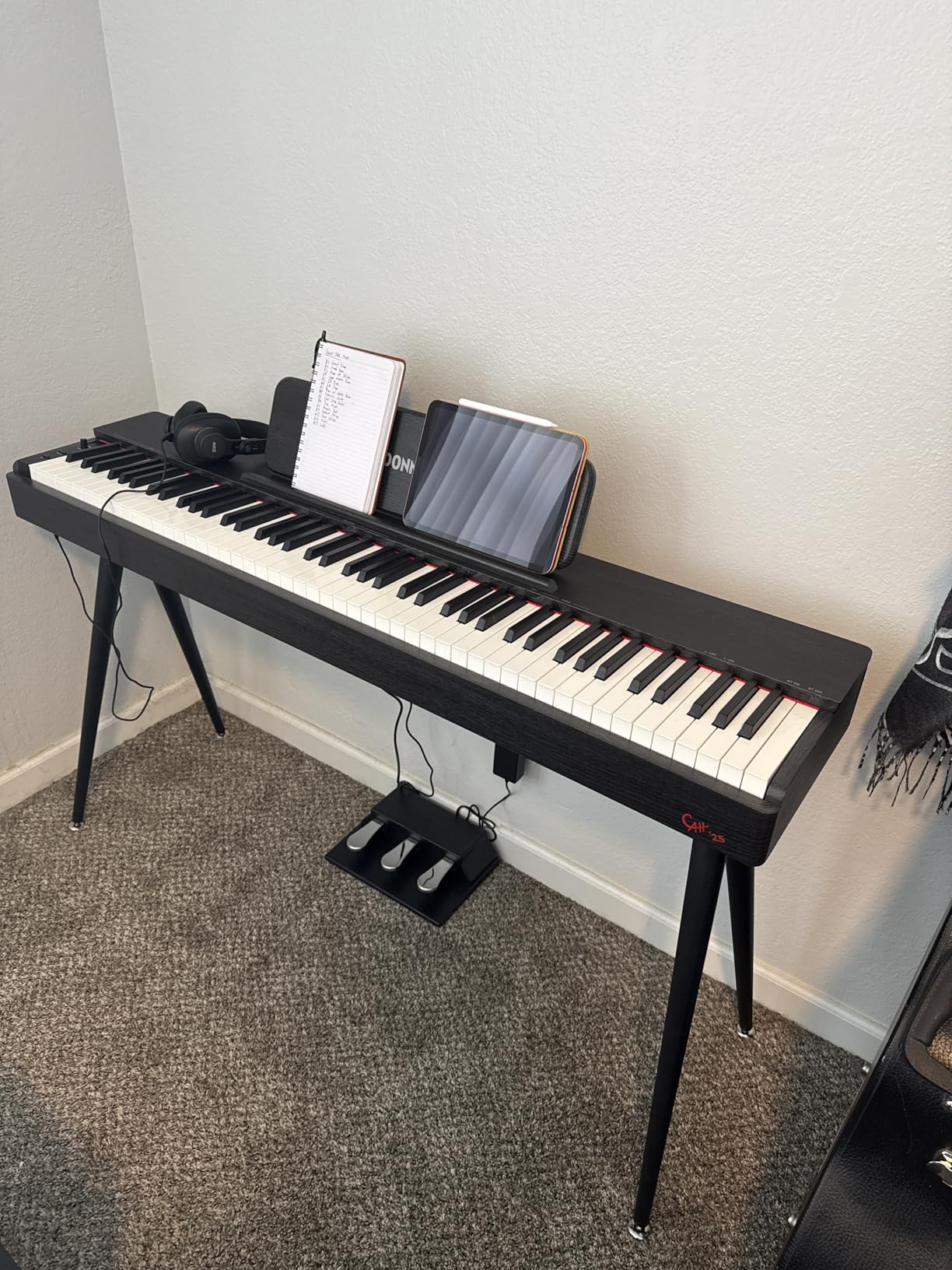
Three headphone jacks (two under the cabinet, one on the back) make silent practice easy, and the DDP-60 sounds markedly better through quality studio headphones than through the built-in speakers. The speakers are functional but not great, which is the most common complaint across reviews. At 304 reviews and a 4.5 average, the consensus is clear: this is a strong beginner upright with attractive looks.
There is no Bluetooth despite some buyers expecting it, and a small number of units ship with key flaws above middle C. For a beginner upright that prioritizes design and core piano playability, the DDP-60 is one of the best weighted keyboards for pianists on a budget, and the price is hard to beat.
Who it is best for
Beginners and returning players who want a minimalist furniture-style upright with real weighted action and triple pedals at an entry-level price.
Who should skip it
Players who need Bluetooth connectivity, or anyone who relies primarily on built-in speakers without headphones.
12. AODSK 88-Key Weighted Digital Piano — Best Budget Furniture Upright with Headphone Privacy
AODSK Weighted keyboard 88-Key Digital Piano with Speakers, Stand & Pedals
Fully weighted 88 keys
128 timbres
Triple pedal
2-year warranty
Pros
- Fully weighted keys close to acoustic feel
- Rich clear sound from built-in speakers
- Complete setup with furniture stand and triple pedals
- Headphone jack supports two sets for silent practice
- Attractive furniture design for living rooms
- Includes 30-day beginner course
- 2-year warranty
Cons
- Assembly instructions are unclear
- Bass can overwhelm treble out of the box
- Advanced players may want heavier action
- One durability concern reported after 2 years
- Heavy at 71 lbs
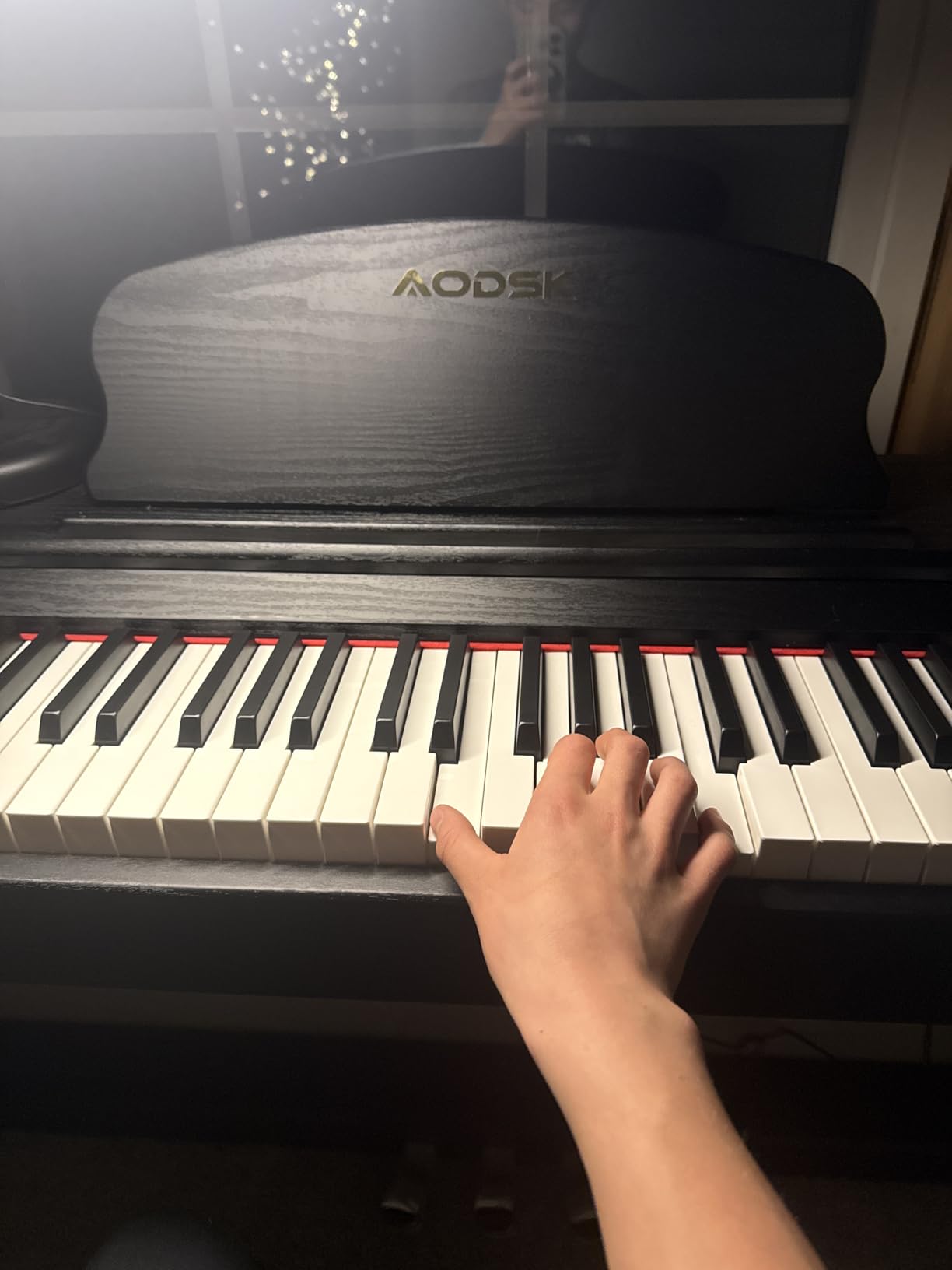
The AODSK 88-Key is the budget furniture upright I recommend to apartment dwellers who need silent practice. Two people can plug in headphones at the same time, and the headphone output cuts the speaker sound almost completely, which is exactly what neighbors and roommates want at 11pm. After testing it with two pairs of headphones, the sound was clean and full.
The fully weighted 88-key hammer-action keyboard is the main reason this keyboard is on the list. The keys feel close to a real acoustic piano, with proper resistance and rebound. The French DREAM sound source delivers a rich grand piano voice that holds up through the built-in speakers, and the 128-note polyphony handles complex pieces with sustain pedal cleanly.
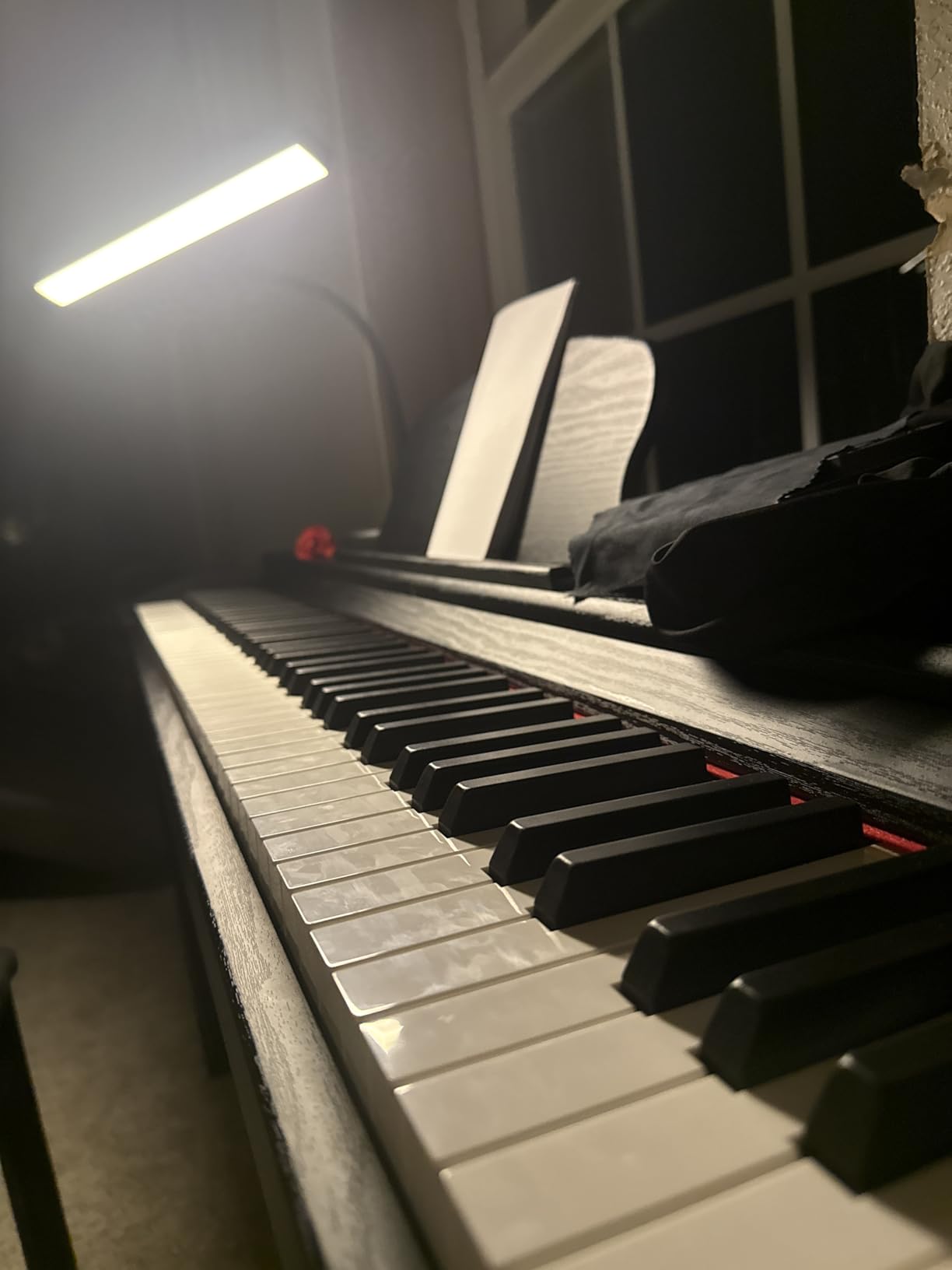
The wooden furniture case with hand-hold cutouts makes the 71-pound unit easier to move than it looks, and the included furniture stand and triple-pedal unit (soft, sustain, sostenuto) feel sturdy. The 30-day beginner course that ships with the keyboard is a nice touch for new players.
The downsides are mostly ergonomic. Assembly instructions are unclear, and you will need your own screwdriver. The bass can overwhelm the treble out of the box, so plan to adjust the equalizer. One reviewer reported a dead key after two years of daily use, and the repair cost exceeded replacement. For an apartment-friendly budget upright with real weighted action, however, the AODSK is one of the best weighted keyboards for pianists who practice late.
Who it is best for
Apartment dwellers and late-night practice setups who need a furniture-style upright with weighted action and dual headphone support at a low price.
Who should skip it
Players who cannot tolerate unclear assembly instructions, or anyone who needs Bluetooth or app connectivity.
How to Choose the Best Weighted Keyboard for Your Playing
Choosing the best weighted keyboards for pianists comes down to four practical decisions: action type, key count, sound engine, and where you will use it. Get those right and almost any of the 12 keyboards above will serve you well.
Fully Weighted vs Semi-Weighted: What Actually Matters
Fully weighted (or hammer action) keyboards use actual mechanical hammers to recreate the resistance and rebound of an acoustic piano. The lower keys feel heavier than the higher ones, which is what your fingers need to build proper technique. Semi-weighted keyboards use spring-loaded keys that have some resistance but lack the graded feel. They are fine for the first few months of lessons, but if you plan to play classical or jazz seriously, fully weighted is the only choice that trains your hands the right way.
For beginners taking lessons, fully weighted is the better long-term investment. The Donner DEP-20, Yamaha P71, and Yamaha P225 are the strongest fully weighted options under $800. The Alesis Recital and Alesis Recital Play are semi-weighted and are best for absolute beginners or casual players who do not plan to study classical repertoire.
How Many Keys Do You Need
Most pianists should buy a full 88-key board. Anything less than 76 keys means you cannot play most advanced classical repertoire, and you will run into range problems the moment you try to learn a piece with a wide left-hand figure. All 12 keyboards in this roundup have 88 keys, so range is not a concern.
Compact 61-key boards have their place for songwriting, stage rigs, and students who only need middle-C range, but if you are learning piano specifically, 88 keys is the standard. If you need portability above all else, the Yamaha P145BT and P225 at about 25 pounds are the most travel-friendly options that still give you the full range.
Polyphony and Sound Engine Quality
Polyphony is the number of notes a keyboard can play at once. 64-note polyphony is the bare minimum for beginners, 128 is comfortable for intermediate players, and 192 or 256 is what you want for advanced classical repertoire with sustain pedal. Several keyboards in this list already offer 128-note polyphony at budget prices, including the Donner DEP-20, DDP-80 PLUS, DDP-60, and AODSK.
Sound engine quality is harder to quantify, but the rule of thumb is that Yamaha’s CFX samples (P225, P145BT), Roland’s SuperNATURAL (their own boards), and Kawai’s Harmonic Imaging sit at the top. Donner’s French DREAM source and Casio’s AiR engine are a clear step below but still very good for the price. Always listen to the acoustic piano voice in demos, since that is what you will use 90 percent of the time.
Connectivity and Headphone Practice
USB-MIDI is now standard on virtually every weighted keyboard and lets you record into a DAW or use educational apps like GarageBand and Logic Pro. Bluetooth MIDI is rarer and usually only on mid-range and up boards. Bluetooth audio, which lets you stream songs and play along, is on the Yamaha P145BT and Donner DDP-95.
Headphone practice matters more than most buyers expect. Every keyboard here has at least one headphone jack, and several (Donner DEP-20, DDP-60, AODSK, UISCOM) have two jacks for student-teacher setups. A good pair of studio headphones will improve perceived sound quality significantly on budget boards, so factor $50 to $100 for headphones into your budget.
Frequently Asked Questions
Which weighted keyboard is best for piano lessons?
For piano lessons, the Yamaha P71 and Donner DEP-20 are the most recommended weighted keyboards. Both offer fully weighted hammer action that builds proper technique, and they are widely used in piano studios. The Yamaha P71 has the brand reputation and long-term reliability, while the Donner DEP-20 offers better value under $400. The Alesis Recital Play is a good choice for younger students who need a complete bundle with stand, pedal, and headphones.
What is the best piano keyboard that feels like a piano?
The Yamaha P225 feels closest to a real acoustic piano under $1,000. It uses Yamaha’s Graded Hammer Compact action, which is heavier in the bass and lighter in the treble, paired with the flagship CFX concert grand sound engine. The P225 is the keyboard most working musicians and serious students choose when they want genuine piano feel without paying $3,000-plus for a console.
Are weighted keys better for piano?
Yes, weighted keys are better for piano because they develop the finger strength and technique that transfers to acoustic pianos. Without weighted keys, students develop bad habits like flat-fingered playing and weak dynamics because the keyboard requires no resistance. Weighted keys train the same muscles and reflexes a real piano uses, so practice time translates directly to performance skill. Any serious piano student should use a fully weighted keyboard from day one.
What is the difference between fully weighted and semi-weighted keys?
Fully weighted keys use mechanical hammers that replicate the resistance and rebound of an acoustic piano, with the lower keys feeling heavier than the higher ones. Semi-weighted keys use spring-loaded mechanisms that have some resistance but lack the graded feel and dynamic range of a true hammer action. Fully weighted is the standard for serious classical and jazz study, while semi-weighted is acceptable for casual play and the first few months of beginner lessons.
How many keys do I need on a weighted keyboard?
You need 88 keys for serious piano study, which is the standard full-size configuration. Anything less than 76 keys will limit your repertoire because most classical pieces use the full range of the piano. All 12 keyboards in this roundup have 88 keys, so range is not a concern. Compact 61-key boards have their place for songwriting and stage rigs, but for learning piano, 88 keys is the right answer.
Final Verdict: Which Weighted Keyboard Should You Buy
After comparing 12 of the best weighted keyboards for pianists available right now in 2026, the right pick depends on where you are in your playing journey. For most adults and serious students, the Yamaha P225 stands out as the best overall choice because it brings the flagship CFX concert grand sound and graded hammer action into a 25-pound chassis that fits any room. If you want a more compact and Bluetooth-equipped board at a lower price, the Yamaha P145BT delivers the same action feel in a 24-pound travel-friendly design.
Beginners on a budget should start with the Donner DEP-20 for genuine fully weighted action under $400, or the Alesis Recital Play bundle if you need a stand, pedal, and headphones in one box. Furniture-style uprights belong in living rooms where the piano will stay, and the Donner DDP-80 PLUS is the best mid-range console for serious players who only need a great piano sound. Whatever you choose, prioritize fully weighted action, 88 keys, and at least 128-note polyphony, and your fingers will thank you for years to come.