
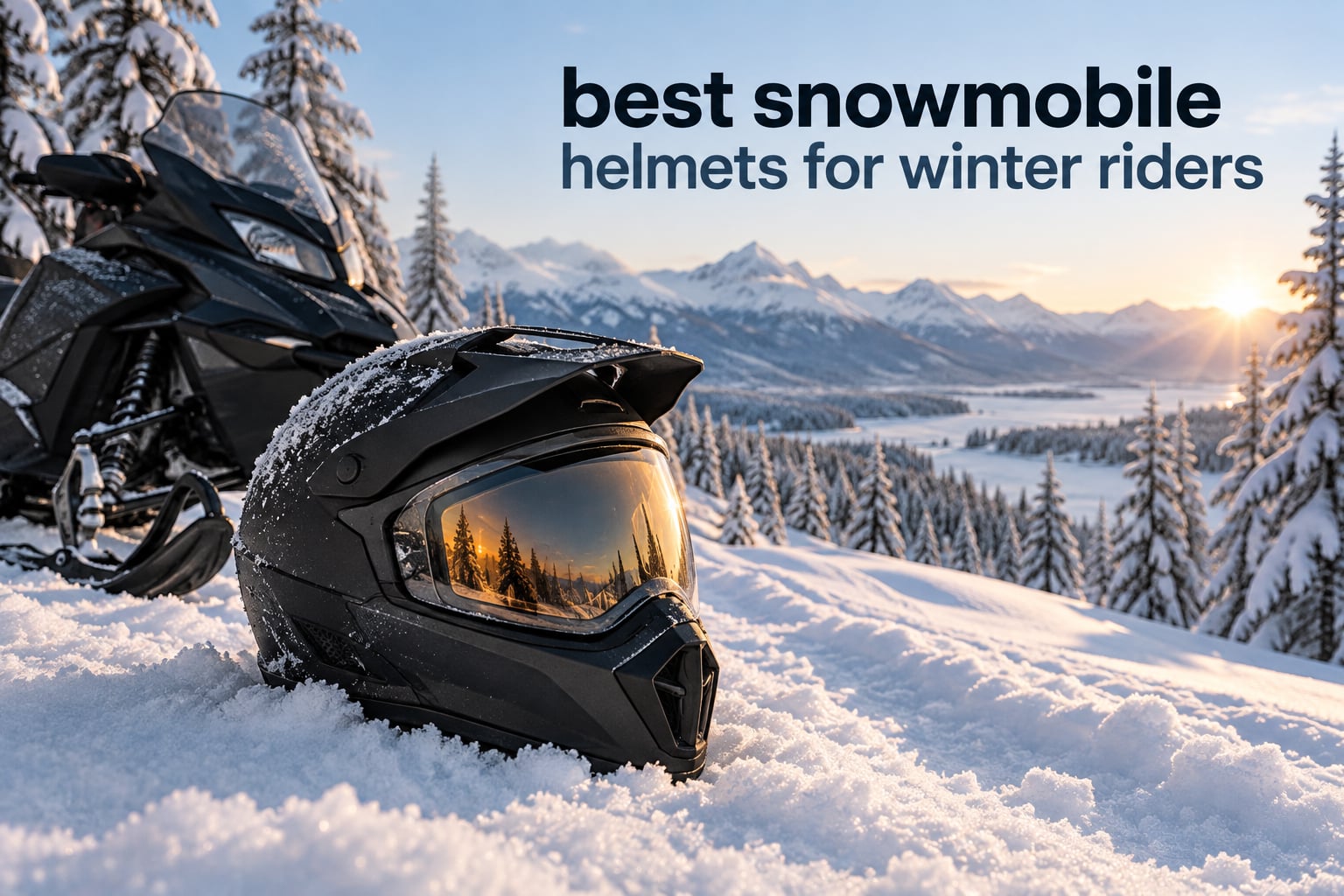
The best snowmobile helmets for winter riders are not all built for the same job, and buying the wrong one is the fastest way to ruin a season. A shield helmet that seals tight is superb on a groomed trail at 50 mph and miserable the moment you push into deep snow, because you are working hard and your breath lands on the lens. A goggle helmet handles that climb far better but lets wind roar across your face on a long fast run. Get that split right and everything else is detail.
So here is the scope before we get into the list. Trail and crossover riders should look at full-face or modular helmets with a dual-pane or electrically heated shield. Mountain, backcountry and deep-snow riders should be shopping goggle-compatible helmets instead, usually lighter, usually without a shield at all. Every pick below lists which side of that line it belongs to, because no single helmet wins both.
We spent 2026 season working through the sled-first brands and the motorcycle brands that have jumped into snowmobiling, comparing shell materials, shield systems, breath boxes, liners and certification. The ten helmets here are the ones that made sense after we sorted out the two riding styles. We also leaned on what riders actually complain about on the forums: fogging at stops, cold drafts at the eye port, liners that soak sweat and then freeze, and heated shields that need power routing nobody has done before.
One question comes up so often that it deserves an answer right here. Snowmobile helmets are warmer than motorcycle helmets, because they are built around sealed eye ports, a breath box that routes your exhale down and away from the lens, chin curtains and a warm removable liner. A standard street helmet vents that warmth out on purpose. If you ride in cold weather and want the answer in one line, our overall pick is the ILM 909F modular, and the best heated-shield pick for trail riding is the 509 Delta R4 Ignite.
Table of Contents
Top 3 Snowmobile Helmet Picks for Winter Riders in September
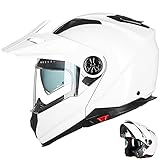
ILM 909F Modular Snow Helmet
- DOT FMVSS 218 certified
- Flip-up modular design
- Pinlock EVO anti-fog insert
- 3 ventilation ports

509 Delta R4 Ignite
- Heated dual-pane Ignite shield
- Fidlock magnetic strap
- Dual density EPS
- Removable breath box

509 Altitude 2.0
- Hand lay-up fiberglass shell
- Goggle compatible
- Fidlock magnetic strap
- Removable breath box
All 10 Snowmobile Helmets at a Glance
This table is the short version. The shield column is the one that decides how a helmet behaves in real winter conditions, so read it before anything else.
| Product | Specifications | Action |
|---|---|---|
| ILM 909F Modular Snow Helmet |
|
Check Latest Price |
| 509 Delta R4 Ignite |
|
Check Latest Price |
 Orthrus Halo Dual Sport Helmet Orthrus Halo Dual Sport Helmet |
|
Check Latest Price |
 509 Delta R3L Ignite 509 Delta R3L Ignite |
|
Check Latest Price |
| 509 Altitude 2.0 |
|
Check Latest Price |
 Castle X CX950 V2 Fierce Castle X CX950 V2 Fierce |
|
Check Latest Price |
 VEGA V-Star Snowmobile Helmet VEGA V-Star Snowmobile Helmet |
|
Check Latest Price |
 Typhoon TH158 Modular Typhoon TH158 Modular |
|
Check Latest Price |
 Castle X CX935 Raid Castle X CX935 Raid |
|
Check Latest Price |
 Castle X CX200 Dual Sport Castle X CX200 Dual Sport |
|
Check Latest Price |
How We Picked These Helmets
Every helmet on this list is DOT certified to FMVSS 218, because that is the baseline for a helmet used on a snowmobile in North America. Beyond that, we weighted four things: how well the shield handles fog, whether the breath box actually seals, how warm and removable the liner is, and whether the shell and liner design suits the riding style rather than just looking good on a shelf.
We gave extra weight to helmets with a large body of owner feedback, because a heated shield either works at minus 15 or it does not, and only owners will tell you which. We also read the one-star reviews on every product. The fogging complaints on the Castle X CX200 and the sizing complaints on the VEGA V-Star are the reason those two are positioned as narrower picks rather than default recommendations.
Riders who also ride in warmer months can start with our motorcycle helmet picks for touring riders and our dirt bike helmet guide for trail riders, both of which cover venting and fit in more detail than a snow roundup can.
1. ILM 909F Modular Snowmobile Helmet – Best Overall
ILM Motorcycle Full Face Modular ATV Helmet Three in One Snowmobile Casco with Pinlock Anti Fog Visor for Men Women DOT Model 909F(White S)
DOT FMVSS 218
ABS shell
Pinlock EVO insert
2.54 kg
5 year warranty
Pros
- Largest review base in this roundup at 478 ratings
- 3-in-1 full face flip-up and off-road design
- Pinlock EVO anti-fog insert in the box
- Three vents plus a breath guard
- Quick-release buckle works with gloves
Cons
- Sizing runs small for some riders
- ABS shell heavier than fiberglass
- No heated shield
The ILM 909F is the most sensible all-round snowmobile helmet in this group for one reason above all others: it has the biggest body of owner feedback we could find, at 478 ratings averaging 4.0 stars. That is a lot of winter miles across a lot of machines, and it is why we are comfortable naming it our overall pick despite not being the highest rated helmet on the list.
What you get is a genuinely modular design. The chin bar flips all the way up, so you can talk at a gas stop or a warming shack without taking the helmet off, and the same shell works as a full face or as an off-road lid. That flexibility is why it also appeals to riders who split their season between sledding and dirt work.
Fog control comes from the included Pinlock EVO insert rather than from electric heat, and it is genuinely useful on a trail helmet at moderate effort. Three vents plus the breath guard give you real airflow on a warmer spring afternoon, which is where most fully sealed snow helmets let you down. The liner is Comtex moisture-wicking and both the interior and cheek pads come out for washing.
Being straight with you about the downsides. Reviewers repeatedly mention that sizing runs small, so order up if you are between sizes. At 2.54 kg it is a heavy lid, and the ABS shell gives you less margin in a hard impact than a fiberglass or carbon shell would. The quick-release buckle is one of the better ones for gloved hands, and the five year warranty is the longest in this roundup.
Who the ILM 909F suits
This is the helmet for a trail or crossover rider who wants one lid that handles both stopping in town and long full-face stretches. It is also the one we would suggest to a first-time snowmobile helmet buyer, because nothing about it is fussy and there is a lot of advice attached to it if something feels off.
If you ride mostly in mild conditions, or you switch to a lighter open-face lid in summer, the three-in-one design earns its keep twice a year. It is a sensible companion to our e-bike helmet guide for riders with a second machine that is not a snowmobile.
Where the ILM 909F falls short
It is not the right pick for deep-snow mountain riding, because the flip-up chin bar and the sealed face port make it hot when you are working hard on a climb. Nor is it the pick for anyone riding well below freezing who wants zero fog without thinking about it, since a Pinlock insert is passive protection rather than active heating.
If your priority is the lowest weight on the mountain, look at the 509 Altitude 2.0 instead. If your priority is a shield that never fogs, the Delta R4 Ignite is the ticket.
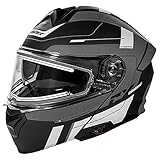
2. 509 Delta R4 Ignite – Best Heated Shield for Trail Riders
509 Delta R4 Ignite Snowmobile Helmet with Heated Shield (Gloss Storm Chaser (2024) – 2X-Large)
DOT approved
Ignite heated dual-pane shield
6 lb
Fidlock strap
Bluetooth ready
Pros
- Zero fogging reported with the shield powered
- Heated shield tested by owners down to minus 11 F
- Two shell sizes with dual density EPS
- Fidlock magnetic clasp works with gloves
Cons
- Drop-down sun visor fogs when flipped down
- Some air leakage around the chin area
- Heavier at 6 pounds
The 509 Delta R4 Ignite is the heated shield pick, and the one we would point trail riders at first. The Ignite shield is a dual-pane electric setup, so it is attacking fog from two directions at once, with an insulating air gap between the panes and an element that actively warms the lens. Owners report zero fogging with it plugged in, including in genuinely bitter cold.
It is also the most talked about sled helmet on the forums, and for good reason. On the r/snowmobiling subreddit owners describe the Delta R4 as one of the most underrated snowmobile helmets made, and that advocacy is a useful signal when you are deciding between two similarly priced heated options.
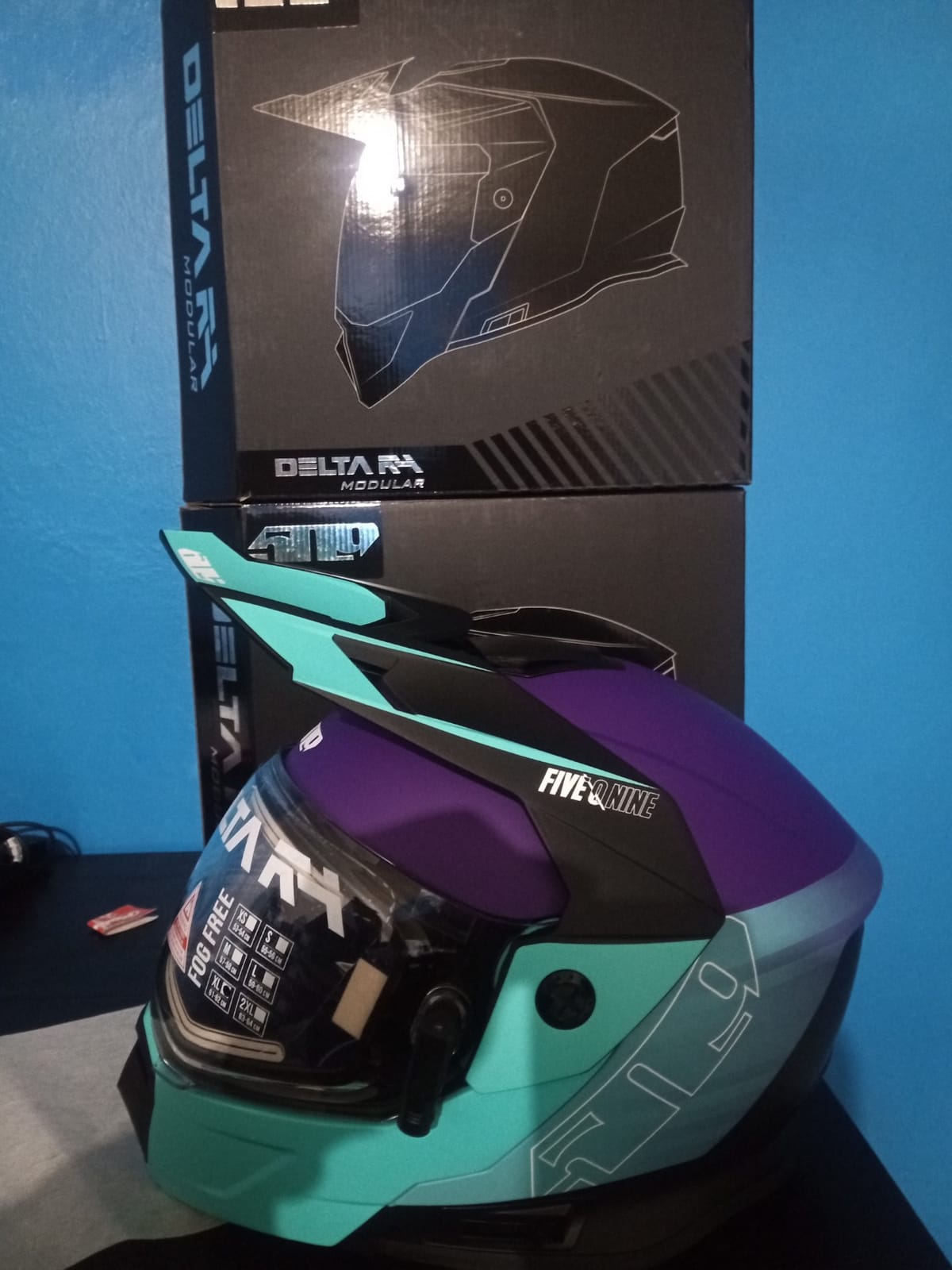
The hardware is unusually good for a heated helmet. A Fidlock magnetic chin strap means you are not wrestling a ratchet with frozen fingers, and the removable breath box plus chin curtain let you control airflow properly rather than guessing. There is a drop-down internal sun shield for the long sunny run home, three vent positions, two shell sizes with dual density EPS, and Bluetooth communication readiness for group riding.
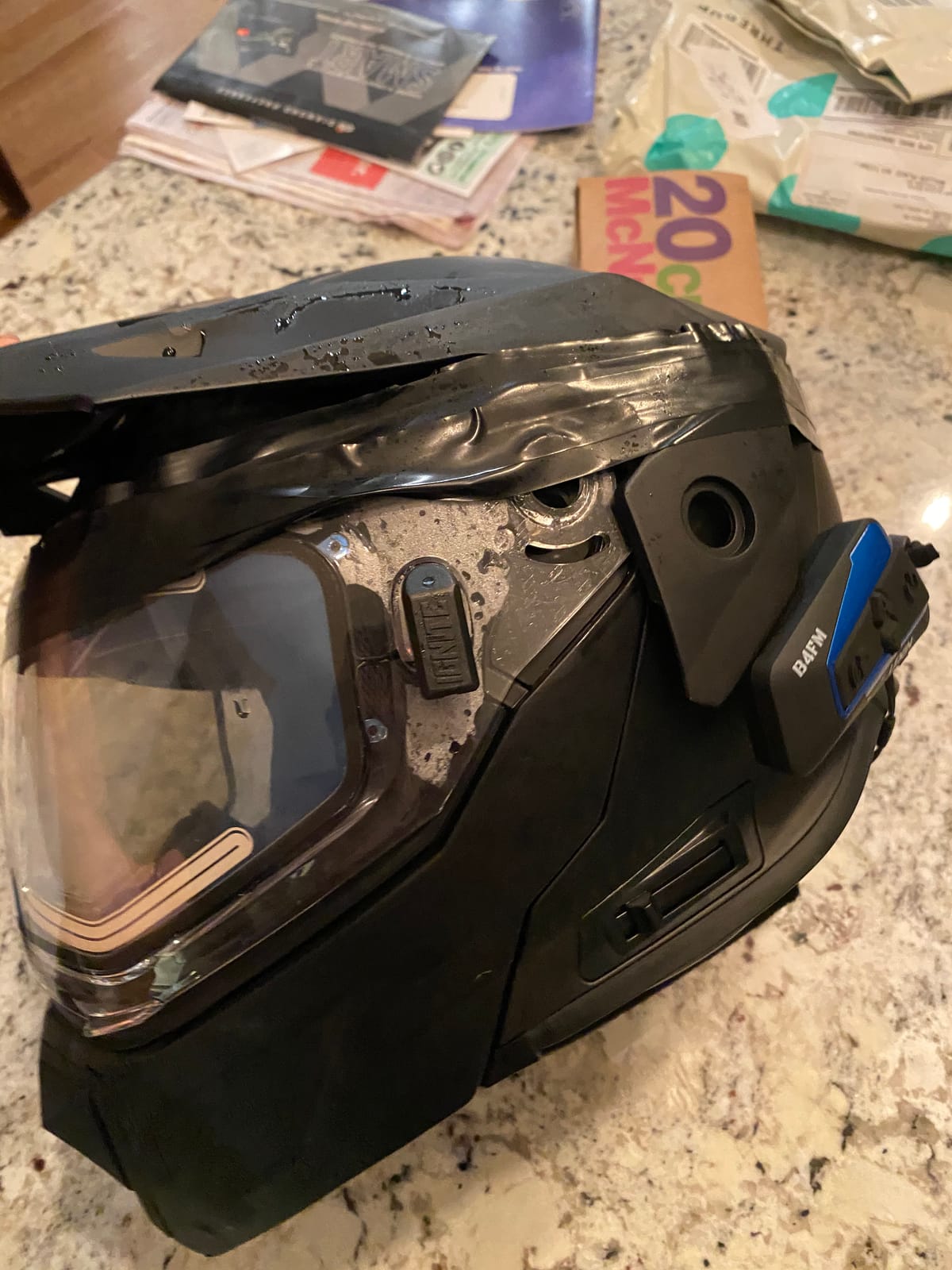
The blue LED indicator on the chin showing shield power is a small touch that tells you at a glance whether the system is live, which matters when you cannot see your connector under the chin curtain. Wiring the shield to your sled is part of the job, and it is worth doing properly rather than taping a connector somewhere that will chafe.
What the Delta R4 Ignite does better than anything here
It is the only helmet in this roundup where owners consistently describe a total absence of fog rather than a reduction. If you ride at dawn, stop often on a technical trail, or spend your winter in genuinely cold country, that difference is bigger than any of the fit or venting nuances you will read about in a spec list.
At 265 ratings and 4.3 stars, this is one of the better-evidenced picks on the list. If you ride with a group and want comms, the speaker integration is there, though the headset itself is a separate purchase.
What the Delta R4 Ignite costs you
Weight is the real tradeoff at 6 pounds. On a long day that adds up on your neck, and it is a big part of why mountain riders step away from the Delta line. The drop-down sun visor also fogs on its own when you flip it down, which is mildly annoying, and a few owners report a little air leakage around the chin area.
Magnetic chin closures can occasionally release, and the shield connection on older units has reportedly loosened. None of this is dangerous, but it is the reason this is our trail pick rather than our universal one.
3. Orthrus Halo Dual Sport Helmet – Best Budget Dual-Sport Pick
Orthrus Dual Sport Adventure Motorcycle Helmet DOT Certified for Adults, UV Protected Dual Visor & Intercom Slot, ATV UTV Dirt Bike Snowmobile Off Road Helmets (X100,L)
DOT certified
ABS EPS and polycarbonate
2.2 kg
Dual visor
Intercom slots
Pros
- Well reviewed at 4.5 stars from 261 ratings
- Lightest helmet in this roundup at 2.2 kg
- Dual visor covers bright and low light
- Plush removable washable liner
- Built in slots for Bluetooth intercoms
Cons
- Sizing runs large for some riders
- Visor lift reported above 50 mph
- Only a one year warranty
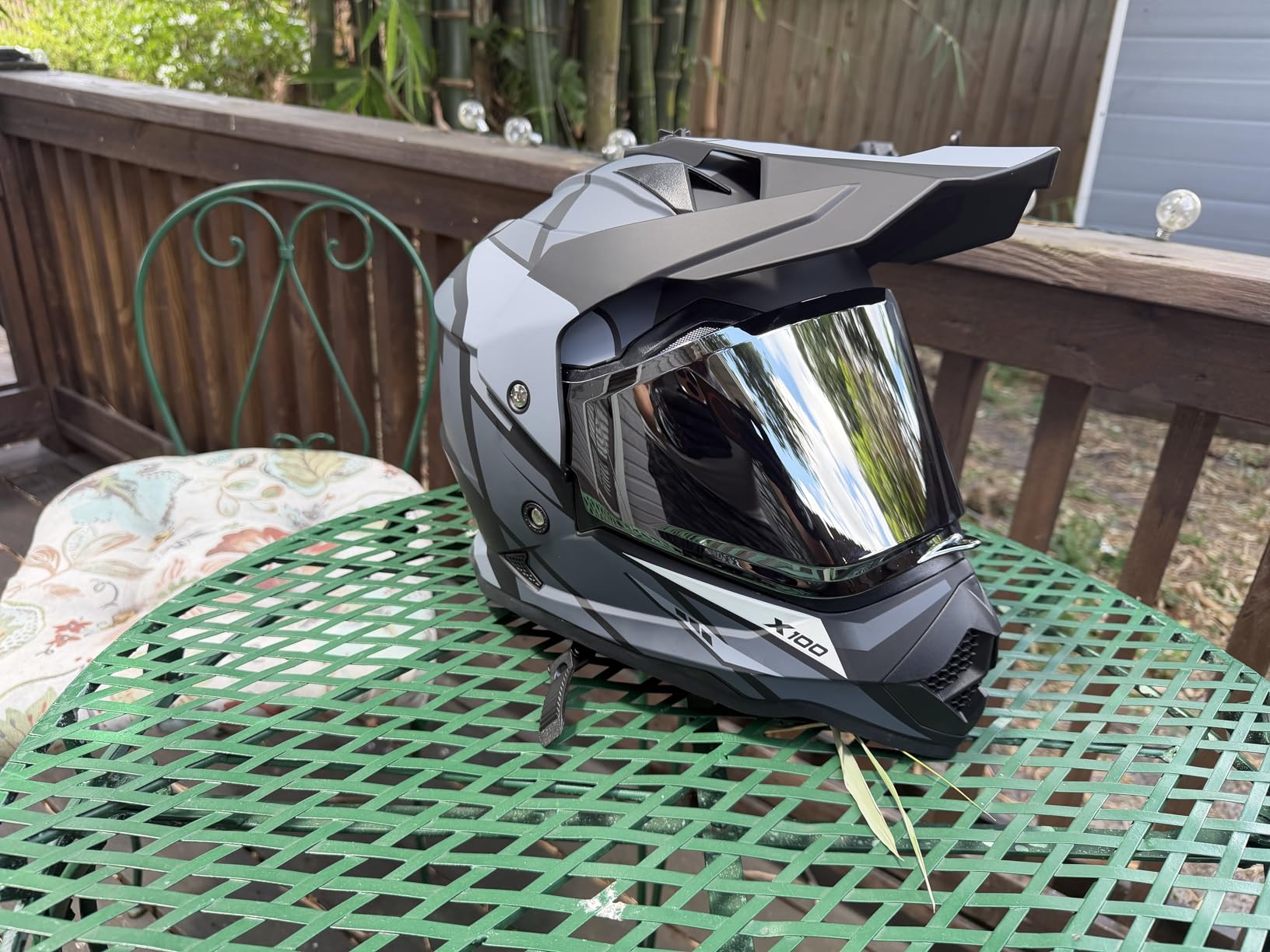
The Orthrus Halo is the value pick here, and at 4.5 stars from 261 ratings it sits comfortably among the best-rated helmets we reviewed. It is a dual-sport design rather than a purpose-built snow lid, and that is both its strength and its limitation.
What you are buying is a light, well-ventilated helmet with a UV-protected outer visor, a drop-down internal sun visor, an adjustable peak, and a plush liner that comes out and goes in the wash. At 2.2 kg it is by far the lightest helmet in the roundup, which matters on a long day or on a mountain where you are carrying the sled more than riding it.
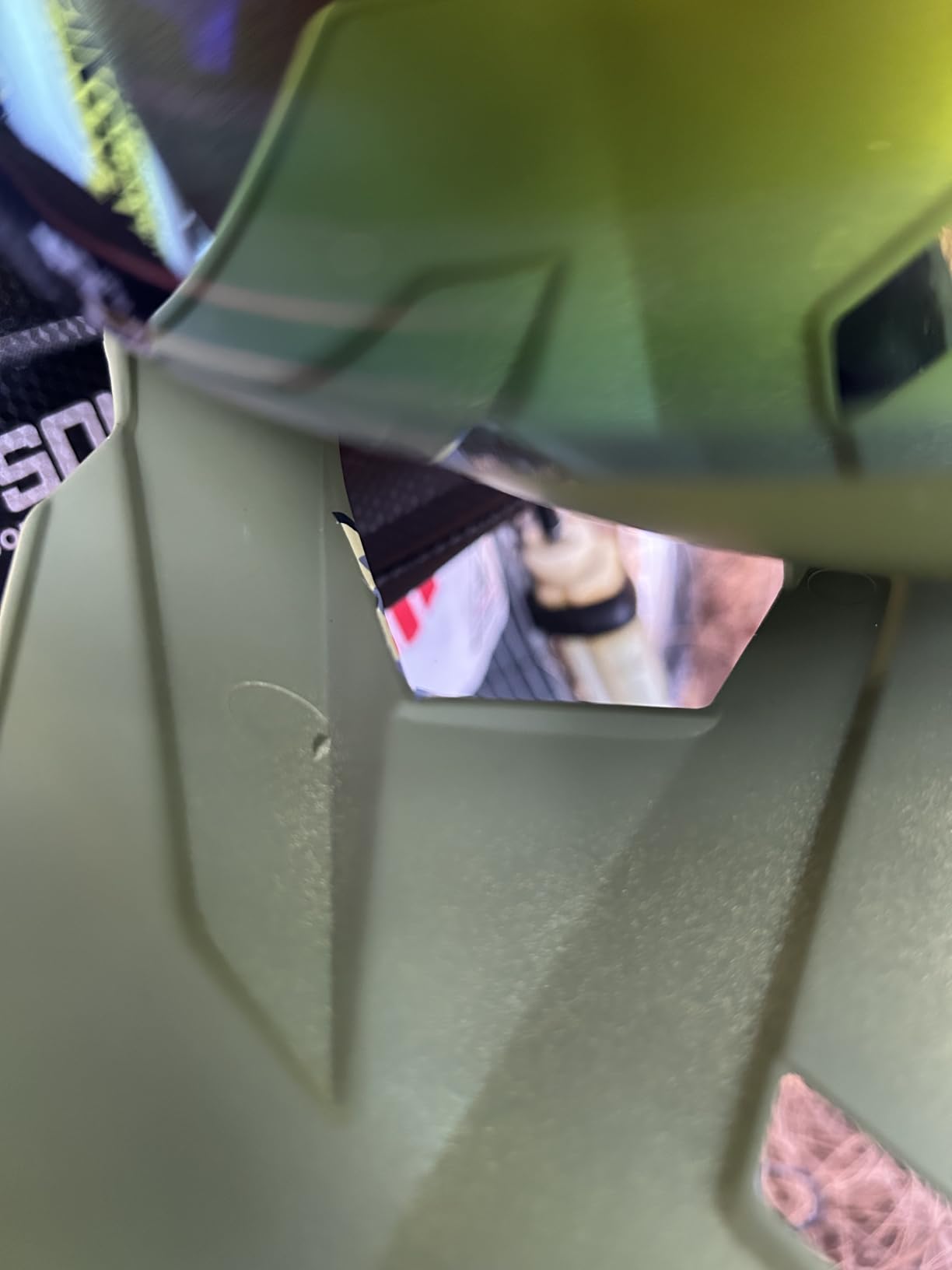
The dual visor system is the clever bit for variable light. Drop the sun shield down for a flat run across a frozen lake, leave it up for a wooded trail, and the outer visor keeps branches and spindrift out of your face. There are built in headphone slots for a Bluetooth intercom, and 73 percent of its reviews are five star, which is a strong signal for a helmet at this level.
It also doubles as an ATV, UTV or dirt bike lid, and the hook and loop closure is quick with gloves on. For a rider who wants one helmet for three machines, that versatility is genuinely useful. It pairs naturally with the off-road side of our dirt bike helmet picks.
Who should buy the Orthrus Halo
This is the pick for a weekend rider on a tight budget who mostly rides in moderate conditions, and for anyone who hates a heavy helmet. Dual visors and real ventilation are rare at this price in a helmet that carries proper DOT certification.
It is also a strong choice for a rider who wants a Bluetooth intercom, since the slots are built into the shell rather than retrofitted into foam. The ear areas are shaped to take speaker units without a fight.
Who should skip the Orthrus Halo
It has no heated shield and no dual-pane system, so fog control depends on an anti-fog insert alone. In sustained sub-zero conditions on a trail where you stop often, that is not enough, and this is not a deep-snow mountain helmet in any sense.
Some reviewers also report the visor lifting above 50 mph, the outer visor being clear when they expected a tint, and sizing running large enough that sizing down makes sense. The one year warranty is the shortest here, which is another reason we treat this as a value buy rather than a long term one.
4. 509 Delta R3L Ignite – Best Dual-Certified Heated Helmet
509 Delta R3L Ignite Snowmobile Helmet (Black Ops (2021) – Large)
DOT and ECE certified
Fiberglass shell
Heated ITO dual-pane
Three configurations
Pros
- Only helmet here certified to both DOT and ECE
- Fiberglass shell is lighter and stronger than ABS
- Heated dual-pane coated ITO shield
- Works as dual sport full face or open
Cons
- Heavier than the Altitude 2.0 at 6 pounds
- Hook and loop closure is less secure than Fidlock
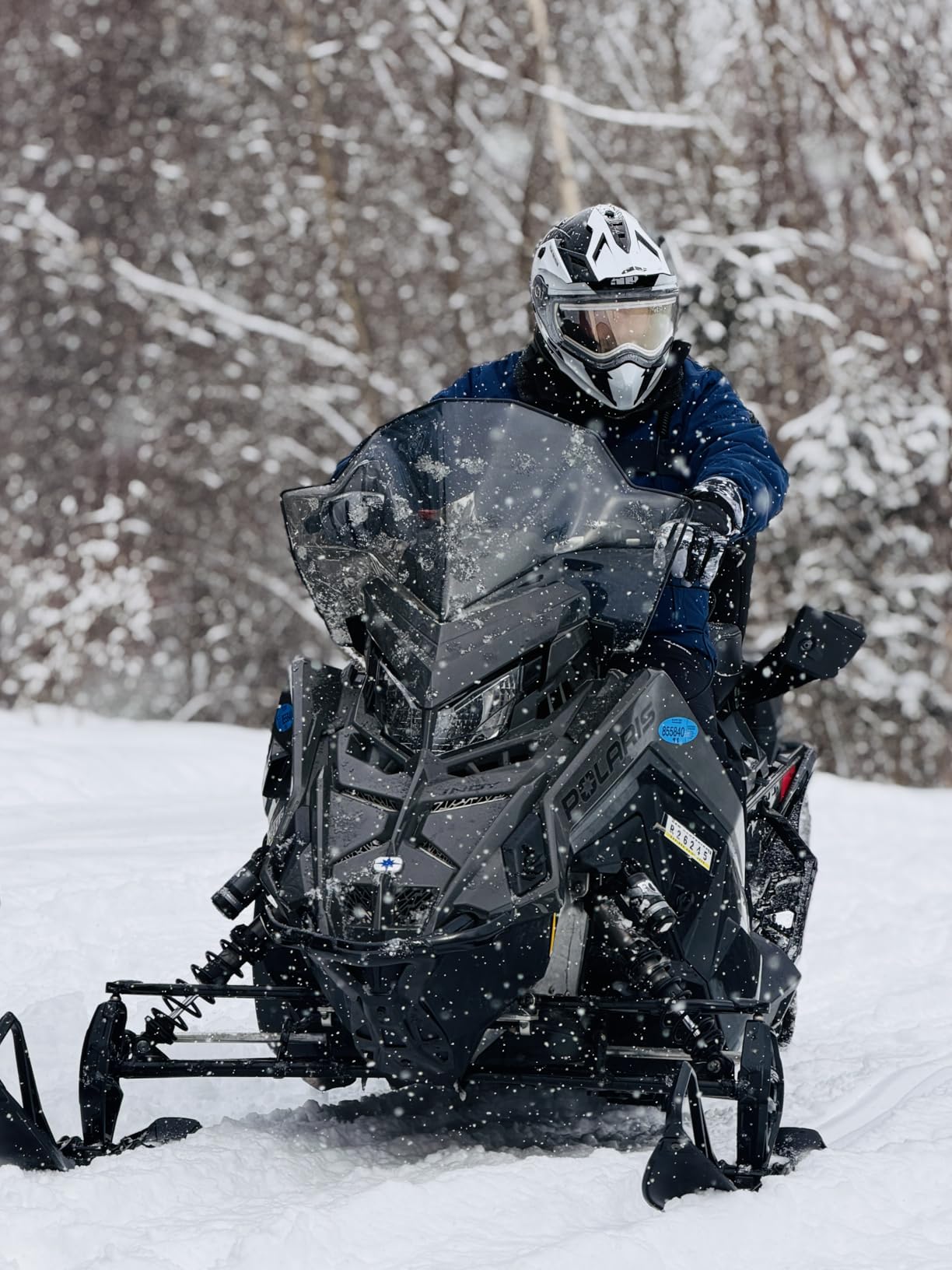
The 509 Delta R3L Ignite is the pick for a rider who wants a heated shield and a stronger shell than plastic. It carries both DOT and ECE certification, which makes it the most broadly certified helmet in this roundup and the only one that satisfies riders who care about meeting European standards as well as North American ones.
The fiberglass shell is the upgrade over the plastic competition, and it is meaningful in a sled crash, not just on a spec sheet. The heated dual-pane shield uses a coated ITO lens, which is the same heating approach as the Ignite system in the Delta R4 and gets the same zero-fog result when it is powered.
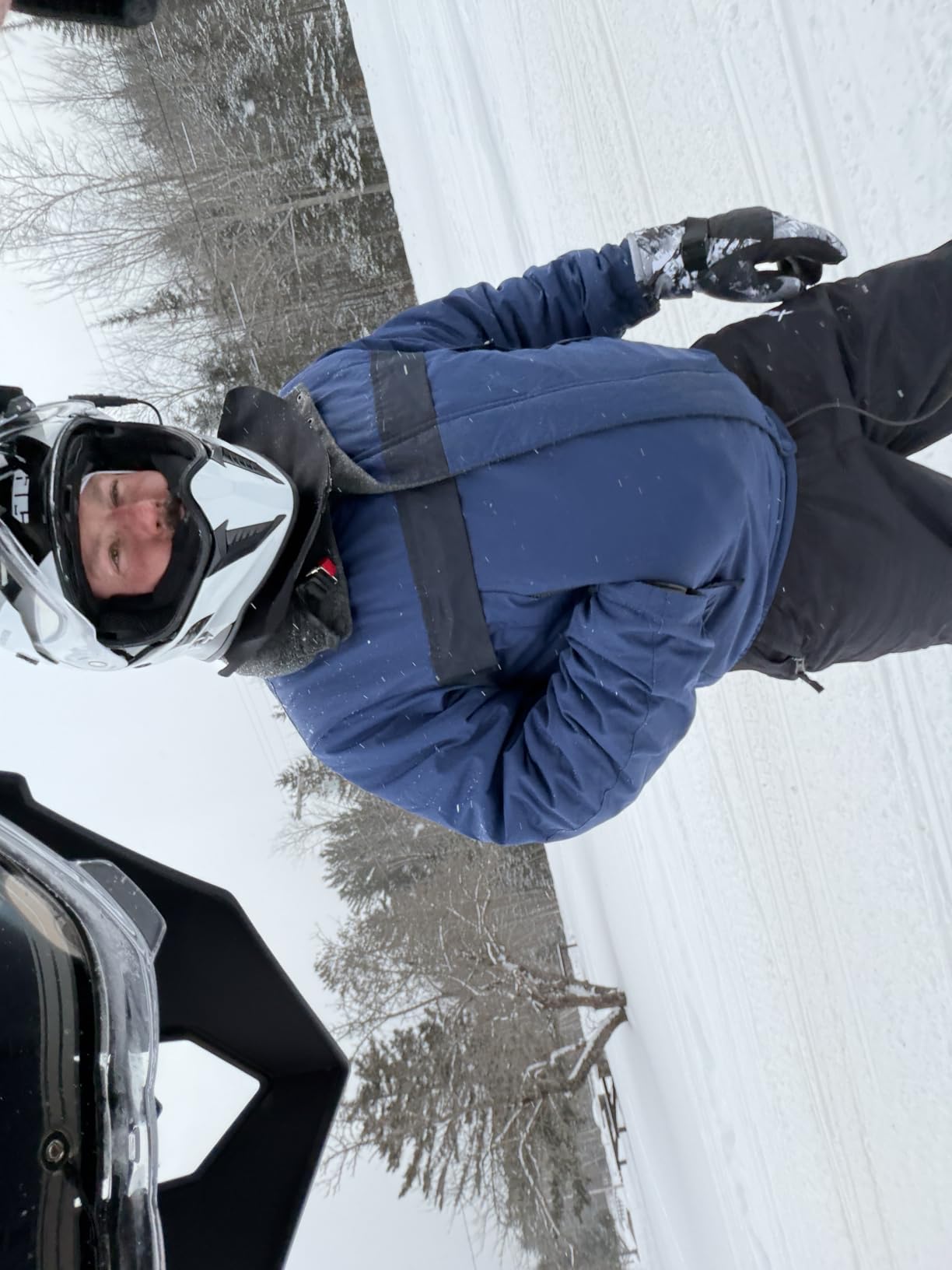
What makes this one versatile is the three-configuration setup. You can run it as a dual sport helmet with the peak, as a full face, or opened up, which covers trail riding, powder runs and the drive into a mountain hut. Upper vents have shutter control, and the Pro Series breath box comes out, so you can dial the seal depending on effort.
The Fidlock chin strap is the same magnetic clasp as the R4, which is the single most glove-friendly feature across all ten helmets here. A drop-down orange-tint sun visor handles low sun on a south-facing trail.
Where the Delta R3L Ignite earns its badge
At 4.6 stars from 148 ratings, with 79 percent of those being five star, this is one of the highest satisfaction scores in the group. Riders who move between sled and street, or who travel internationally with their gear, get more out of the dual certification than anyone else.
The heated shield also means you can ride in genuinely cold conditions without managing a breath box in a hurry, and the two shell sizes help with fit if you are between sizes.
Where it falls behind the R4
It is 6 pounds, and that weight is why some owners who like everything else about it end up choosing the lighter Altitude 2.0 for mountain work. The closure on this model is hook and loop rather than a Fidlock, which some riders find less secure and harder to adjust with wet gloves.
Color availability is thinner than the R4 in some sizes, which is a minor annoyance but a real one if you have a specific size already worked out. If weight is your main concern, this is not the Delta to buy.
5. 509 Altitude 2.0 – Best for Mountain and Backcountry Riders
509 Altitude 2.0 Snowmobile Helmet (Highlighter – X-Large)
DOT certified
Hand lay-up fiberglass
Goggle compatible
Removable breath box
Pros
- Highest rated helmet in the roundup at 4.8 stars
- Hand lay-up fiberglass is light and strong
- Built for mountain and off trail riding
- Fidlock magnetic buckle
Cons
- No integrated shield of any kind
- Requires separate heated goggles for cold riding
- One year warranty
The 509 Altitude 2.0 is the best helmet for mountain and backcountry riders, and the highest rated one we reviewed at 4.8 stars across 113 ratings, with 88 percent of those at five stars. It is also the clearest example of the goggle-first approach that shield helmets get wrong for deep-snow work.
The shell is hand lay-up fiberglass composite, which is lighter and better fitting than the standard fiberglass or ABS used elsewhere in this list, and that weight difference is exactly what you want on a climb where you are pushing a sled. There is no visor, no chin bar, and no face port. You wear goggles.
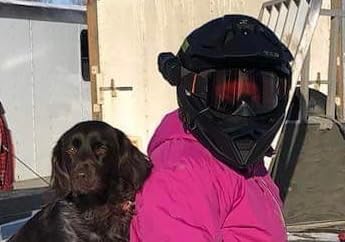
That absence is the point. When you are working hard, breath still comes from your mouth, but it is directed forward and down into the space between you and the goggle lens rather than straight onto glass, which is why riders in this category fight fog far less. The upper vents have on and off shutters and the Pro Series breath box is removable, so you can open things up as the temperature climbs.
It is compatible with 509 heated goggle systems, which is how you solve the cold problem in this category. Owners consistently praise the fit, the Fidlock buckle and the build quality, and the head shape is described as genuinely comfortable for long days in the saddle.
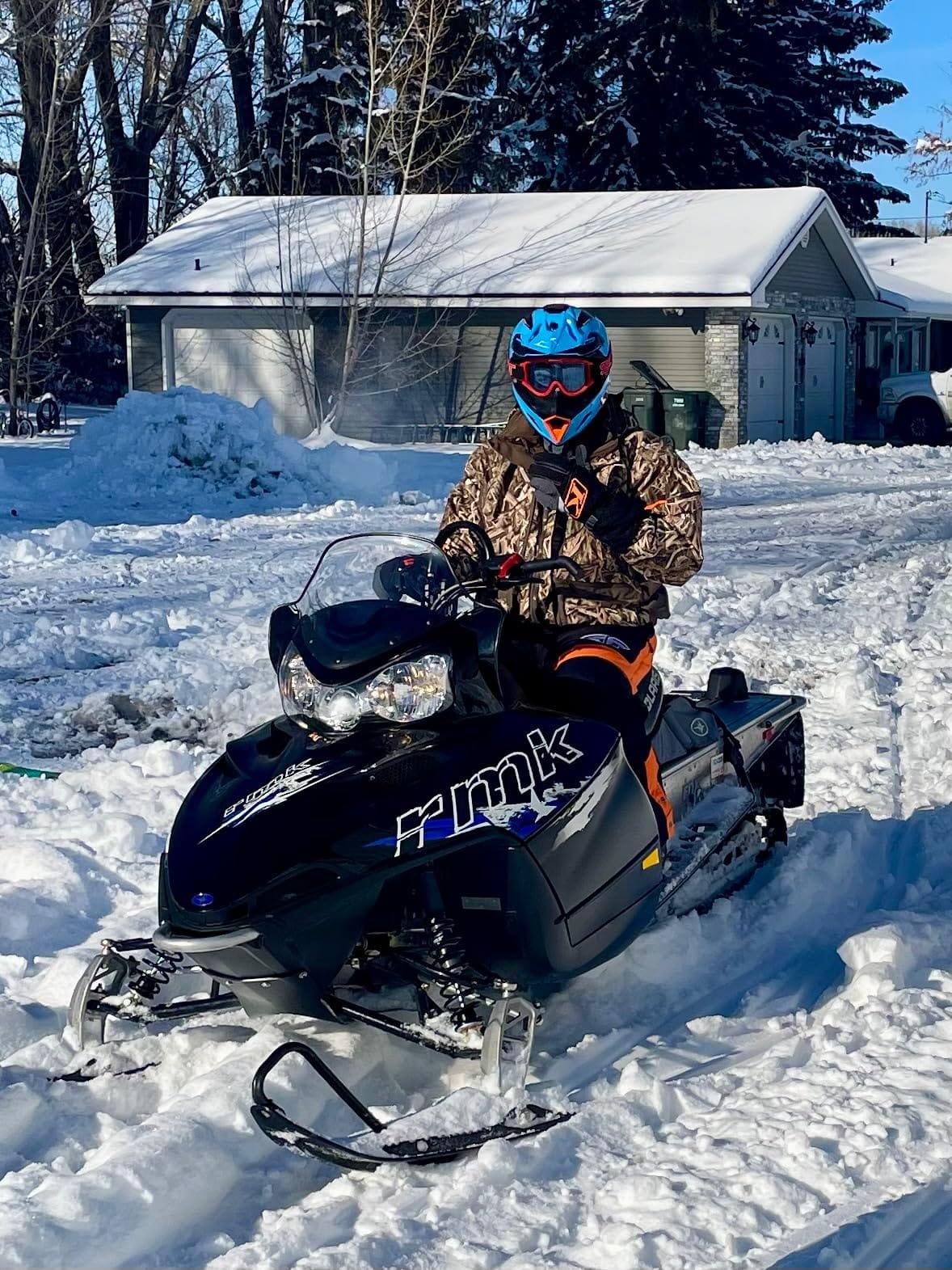
Why mountain riders should choose this
Because the shield-versus-goggles argument does not apply when you are climbing. Riders on r/snowmobiling and the sled forums argue about this constantly, and the consensus on the goggle side is straightforward: if your heart rate goes up and your ride takes ninety minutes, a sealed face port is a problem you do not want mid-climb.
This is the helmet we would put on for a long backcountry day, and it is the one we would buy for a rider who is new to mountain riding and needs a lid that will not cook them on the ascent.
Where the Altitude 2.0 is the wrong tool
There is no shield, and there is no sun visor. On a groomed trail with a lot of stop-start riding, that means wind noise across your face and no protection from spindrift, which is a genuine downgrade for a trail-only rider. Adding heated goggles is a separate purchase and part of the system cost.
The warranty is one year, the shortest on the Delta and Altitude models here, so treat the shell as a consumable with a lifespan rather than a lifetime purchase. If you only ever ride trails, the ILM 909F or the Typhoon TH158 is a more sensible buy.
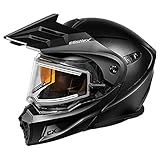
6. Castle X CX950 V2 Fierce – Best Premium Modular with Electric Shield
Castle X CX950 V2 Modular Electric Snow Helmet
DOT certified
LG polycarbonate
Electric dual-pane shield
Speaker pockets
Pros
- Single button flip-up chin bar
- Electric dual-pane shield supplied with power cord kit
- Breath box and cold weather chin curtain included
- Communication system speaker pockets
- Quick-release shield replacement
- Advanced LG polycarbonate shell
Cons
- Highest cost in the roundup
- Only 68 ratings to judge it by
- Polycarbonate shell is heavier than fiberglass
- Modular hinge is a potential failure point
The Castle X CX950 V2 is the premium modular take, and it is the most complete package in the roundup out of the box. You get the helmet, the electric dual-pane shield, the power cord kit, the breath box and the cold weather chin curtain in one purchase, which removes the most common complaint about heated helmets, namely the loose ends left for you to source.
The shell is advanced LG polycarbonate with expanded polystyrene inside, and the flip-up chin bar releases with a single button action. That single-handed release matters more than it sounds. You can drop the bar and adjust it without taking a glove off, and the quick-release shield system means a damaged lens is a quick swap rather than a return.
There are speaker pockets for a communication system built into the shell, and the shield is electric, so fog is handled by active heat plus the dual-pane gap. At 5 pounds it sits in the middle of the weight range here, heavier than the fiberglass options and lighter than the 6 pound Delta models.
The modular format is the whole appeal. At a fuel stop, a warming hut, or a restaurant, you drop the bar and talk without removing the helmet, then click it back up. For a trail and crossover rider who covers a lot of ground and does a lot of stopping, that convenience is hard to argue with.
Who the CX950 V2 is for
It suits a rider who wants a heated shield, wants the modular convenience, and would rather buy the whole system in one go than wire a shield into an existing helmet. It is a natural fit for sled-and-street dual use riders, and the comms pockets make it the pick if your group rides together often.
If you already own a comfortable shell, forum consensus generally favours retrofitting a heated shield to that rather than replacing a good lid, and that is a legitimate path here too. This helmet is for people who want the full package, not for people who only need the lens.
Who should pass on it
It carries the highest cost in the roundup, and with only 68 ratings the sample is thin, which makes the long term picture harder to judge than for the ILM or the 509 models. Polycarbonate is heavier than fiberglass, and a modular hinge is a mechanism that can and does fail over years of use.
If your budget is tighter, the CX935 Raid further down gives you the same core heated modular package for noticeably less. And for deep-snow mountain work, none of this helps you because a face port is the wrong tool.
7. VEGA V-Star Snowmobile Helmet – Best Lightweight Heated Helmet for Cold Nights
VEGA Helmets V-Star Snowmobile Helmet with Electric Heated Shield (Small 55-56 cm, Matte Black with Amber Drop-Down Shield)
DOT certified
Electric heated shield
3.6 pounds
Wic-dri liner
Balaclava
Pros
- Lightest heated shield helmet here at 3.6 pounds
- Nine foot RCA cord and fuse protection included
- Breath deflector and thin balaclava in the box
- Three adjustable intake vents plus rear exhaust
- Removable wic-dri liner
- Five year warranty
Cons
- Only 7 ratings on record
- Sizing runs small by one to two sizes
- Reported cord durability issues
- Narrower field of view
The VEGA V-Star is interesting for one reason above all: it puts an electric heated shield on your head at 3.6 pounds, which is lighter than most of the heated shells in this roundup. If cold nights and long days are your problem, that number matters a great deal.
The package is generous. You get a nine foot silver coated RCA cord with fuse protection, a breath deflector, and a thin balaclava, and there is a five year manufacturer warranty behind it. Three adjustable intake ports and a rear exhaust with multi-channel EPS give you more ventilation control than most snow helmets of this weight, and the amber drop-down sun visor handles glare.
The liner is a Comfort Tech wic-dri removable liner, so you can pull it out, wash it, and swap it rather than riding in a soaked liner that freezes by the afternoon. That is one of the most repeated requests in forum threads about long days, and having a genuinely removable liner answers it.
Everything works with any 12V battery, which makes the wiring job straightforward, and the quick-release buckle is easy to handle with gloves. The breath deflector included in the box is the single most effective anti-fog addition a rider can make, because it physically moves your exhale down and away from the lens.
What makes the V-Star worth a look
The weight to warmth ratio is excellent. If you ride at night, in winter, on a sled with no windshield to block the wind, a heated shield at under 4 pounds is a genuinely rare combination and it changes how long you can stay out.
For a rider on a strict budget who is still riding in real cold, this is an affordable route to an electrically heated shield, and the five year warranty is reassuring given the low review count.
What gives us pause
Seven ratings is not enough evidence for us to recommend this as a first choice, and we want to be honest about that. Multiple reviewers say sizing runs small by one or two sizes, and there are reports of the RCA cord not lasting. The field of view is also described as narrower than some competing helmets, which is a genuine safety consideration on a tight wooded trail.
Buy it if the weight and the heated lens at that cost are what you need, and order a size up. If you want more evidence behind your purchase, the 509 Delta R4 Ignite has 265 ratings telling you the same thing about heated shields.
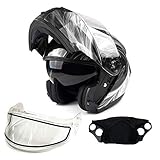
8. Typhoon TH158 – Best Budget Modular for Milder Winters
Typhoon TH158 Adult Dual Visor Modular Snowmobile Helmet DOT Full Face Flip-up (Whie/Black, Large)
DOT certified
ABS shell
Dual-pane anti-fog shield
Ratchet closure
Pros
- Includes both a single-pane summer shield and a dual-pane winter shield
- Free size and color exchange
- American owned company with over a decade in business
- Ratchet closure is more secure than a quick release
- Retractable tinted sun visor
- Adjustable breath box and chin skirt
Cons
- Dual-pane shield is not heated
- ABS shell is heavy for a modular
- Not sufficient in sustained extreme cold
- Modular hinge adds weight and complexity
The Typhoon TH158 is the budget modular, and the detail that makes it more useful than a typical entry-level snow helmet is that it ships with two shields. You get a single-pane shield for shoulder season and a dual-pane anti-fog coated shield for winter, so the same helmet covers a wider temperature range than a single-shield design.
It is DOT certified to FMVSS 218, has a ratchet closure rather than a quick release, and comes with an adjustable breath box and chin skirt. That ratchet is worth noting: a lot of budget helmets use a clip or a hook and loop strap, and on a sled in deep snow a ratchet is simply more secure. 66 percent of its 59 ratings are five star.
The company is American owned and has been in business for more than a decade, and they will exchange size or color at no charge, you pay the return postage. For a first snowmobile helmet bought online without the chance to try it on, that is a meaningful risk reduction and far more useful than a year of warranty on a shell you cannot exchange.
The retractable tinted sun visor, front flow ventilation with channels, and the flip-up chin bar round out a package that is hard to argue with at this price. The breath box is adjustable, which is more than many helmets in this roundup offer.
Who should buy the Typhoon TH158
A rider in a mild climate, or someone who rides the shoulder season and does not routinely go far below freezing, will get a lot out of this. The included dual-pane shield handles the fog that comes from moderate effort, and the exchange policy means the sizing gamble is cheap to reverse.
It is also a good first snowmobile helmet, because the ratchet closure and adjustable breath box are features usually found higher up the price range. Riders who like the flip-up convenience at a gas stop without paying modular money will be pleased.
Where the TH158 falls short
The shield is not heated, and that is the line. In sustained extreme cold with frequent stops, dual-pane plus anti-fog coating runs out of tricks, and reviewers note that fog and ice can still build. If you ride at minus 15 for a living, this is the wrong lid.
It is an ABS shell in a modular frame, so it is heavy for what it is, and the flip-up mechanism is both extra weight and the part most likely to fail over time. Riders who want a heated shield should look at the VEGA V-Star or a Delta Ignite model instead.
9. Castle X CX935 Raid – Best Modular Electric Helmet for Daily Riding
Castle X CX935 Raid Modular Electric Snow Helmet (Matte Charcoal/Silver – Large)
DOT certified
Polycarbonate shell
Electric dual-pane shield
Single button chin bar
Pros
- Electric dual-pane shield with power cord kit included
- Single button flip-up chin bar
- Breath box and cold weather chin curtain in the box
- Hard coated optically correct shield
- Quick-release shield replacement
- Communication system compatible
Cons
- Only 30 ratings
- Polycarbonate shell is heavier than fiberglass
- Modular mechanism adds weight
- Lower rating than the CX950 V2
The Castle X CX935 Raid is the same core idea as the CX950 V2 at a lower cost, and it is the version most daily riders should look at first. You get an electric dual-pane shield with a power cord kit, a single button flip-up chin bar, the breath box, the cold weather chin curtain and a hard coated optically correct lens. That is a complete snow package in one box.
The hard coating on the shield is a detail worth having. Snow, ice and the grit that comes off a groomed trail are what scratch a snow shield, and a coated lens holds clarity longer than an uncoated one, which matters when you are riding in falling snow for a full day.
It ranks better in its category than the more expensive modular Castle X models, which tells you something useful about demand. The quick-release shield system and the communication system compatibility mean you can refresh the lens or add comms later without replacing the helmet, and the adjustable strap keeps the fit workable under a liner.
At 5 pounds it is the same weight as the CX950 V2. If you want the modular electric format, the difference between these two models is the shell specification and the price, not the core technology.
Why a daily rider would pick this
Because it solves the two things that end a day early: fog and stops. The electric dual-pane shield keeps the lens clear, and the single button chin bar lets you drop the bar one-handed when you pull into a gas station. Commuters riding two hours each way get that convenience every single day, which is worth more to them than the top gram.
If you split your season between a sled and a motorcycle, this kind of modular snow helmet is easy to live with in both.
Where it is weaker than the CX950 V2
Thirty ratings is a small sample, and at 4.2 stars it sits below its bigger sibling, so treat the long term picture with some caution. The polycarbonate shell is heavier than the fiberglass shells used by the 509 mountain models, and the modular hinge is the same inherent weak point any flip-up design carries.
If you are buying the premium version instead, the CX950 V2 adds the LG polycarbonate shell and a longer feature list for noticeably more money. And again, none of the modular format helps a mountain rider who works hard on a climb.
10. Castle X CX200 Dual-Sport – Best for Glasses Wearers
Castle X CX200 Dual-Sport Snow Helmet, Matte Black, Large
DOT certified
Polycarbonate composite
Dual-lens anti-fog shield
Eyeglass friendly pads
Pros
- Eyeglass friendly cheek pads
- Integrated drop-down sun visor in smoke tint
- Dual-lens anti-fog shield with hard coating
- Removable washable moisture-wicking liner
- Breath box and chin curtain included
- Multi-density EPS with chin bar protection
Cons
- Not heated
- Smallest review sample in the roundup at 27 ratings
- Reported fogging and freezing in extreme cold
- Runs small according to reviewers
The Castle X CX200 is the pick for glasses wearers, and glasses fit is a real problem that almost no roundup on this topic covers properly. Snow helmet cheek pads are thick and close to the face, and a lot of them press the arms of prescription glasses down until the frame bends or the temple gets pinched. This model has cheek pads specifically shaped to leave room for eyewear.
Beyond the fit, it is a competent snow helmet. A dual-lens anti-fog shield with an anti-scratch hard coating does the passive fog work, an integrated drop-down sun visor in smoke tint handles glare, and the multi-density EPS liner includes lateral protection at the chin bar rather than a uniform block of foam.
The interior is removable, washable and moisture wicking, which is the thing that keeps a full day comfortable once you start working hard. Front to back ventilation channels help on a spring ride, and the breath box and cold weather chin curtain are both included, so there is nothing to add before your first trip.
This is a full face rather than a modular, and at 5 pounds it sits mid-range for weight. There is no heated shield option for this specific model, so the fog strategy here is entirely dual-lens plus anti-fog plus breath control.
Why eyewear fit changes the decision
Ask any rider who wears glasses on the sled and the complaint is always the same. Fogged lenses mean you take the glasses off, and taking glasses off on a moving sled is a bad idea. A helmet with eyewear friendly padding lets you keep your glasses on, and combined with a dual-lens shield it removes the single most common reason riders are riding blind.
The drop-down sun visor means you do not need to swap to a tinted pair of glasses either, so your everyday pair stays in all day. That is a better solution than carrying two pairs.
Where the CX200 falls short
About 10 percent of its ratings are one star, and the reason is fogging and freezing in extreme cold, which is the predictable consequence of a non-heated shield. In mild to moderate conditions it is fine. In sustained hard cold it is not enough, and we would not build a deep winter program around it.
At 27 ratings this is also the smallest sample here, and multiple reviewers say the sizing runs small, so order up. If you wear glasses and ride in serious cold, the goggle-first 509 Altitude 2.0 solves both problems at once.
How to Choose a Snowmobile Helmet: Shield, Fog, Fit and Certification
The ten picks above are spread across four brands because the useful differences are not brand differences. They are shield differences, fog control differences, and differences in what kind of riding the helmet was actually designed for. Here is how to make the call for yourself.
Shield system: single pane, dual pane or electric heat
This is the decision that matters most, and it comes down to how cold it is and how often you stop. Fog forms when warm exhaled air meets a shield colder than the dew point, so every strategy is a different way of stopping that heat from reaching cold glass. A single-pane shield with an anti-fog insert is the cheapest answer and works in mild conditions. A dual-pane shield traps an insulating air gap between two lenses and handles continuous riding and moderate effort well. An electric heated shield warms the lens itself, which is the only option that stays clear in sustained extreme cold, and it is what riders on the sled forums reach for.
Our rule of thumb: if you ride in cold conditions and stop often on technical terrain, go electric. If you ride long stretches at steady pace in cold, dual-pane is enough. If you ride shoulder season, single pane with an insert is fine. Riders on dootalk put it plainly, heated shield is what you want, and if a helmet already fits well and feels comfortable, adding a heated shield to it is often the smarter move rather than buying a new lid.
Fog control: the breath box does more than the shield
People credit the shield for fog control, but the breath box is the unsung part. It is a piece of foam or rubber that sits inside the chin area and blocks the gap between your mouth and the lens, forcing your exhale down and out instead of onto the glass. On a helmet with a removable breath box you can pull it out for a warmer day, and the best of them are adjustable. Every heated or dual-pane helmet in this roundup includes one, and so does the Typhoon TH158 despite being the budget option.
Vent control is the other half. Top vents, front intakes and a rear exhaust let you move air through the shell, and a chin vent helps clear fog from the lower edge of the shield where it usually starts. Liner choice matters too: a removable washable liner that you can dry overnight is the difference between a comfortable day ten and a miserable one, because a soaked liner that freezes is a real and frequently reported problem.
Fit, head shape and glasses
Sizing is the single most common complaint in the reviews, and it goes both ways. The ILM 909F, the VEGA V-Star and the Castle X CX200 all draw reports of running small, so if you are between sizes, order up. The Orthrus Halo draws reports of running large, so sizing down makes sense there. Every manufacturer publishes an actual head circumference, and measuring your own head beats trusting a size chart, because two brands rarely mean the same thing by a large.
If you wear glasses, this is not a detail. You need cheek pads that leave clearance for the temples, and the Castle X CX200 is the only helmet in this roundup that calls out eyeglass friendly padding. The alternative is to wear a goggle helmet and put your glasses under the goggle strap, which works but is warmer. Rounded and oval head shapes also fit differently across brands, so if a helmet pinches at the temples or rotates on your head at speed, it is the wrong shape and no amount of liner swapping will fix it.
Certification: DOT vs ECE vs Snell
Every helmet here is DOT certified to FMVSS 218, the North American standard, and that is the baseline you should insist on. ECE 22.06 is the European standard and is a separately performed test, so a helmet carrying both has been through two full test programmes. The 509 Delta R3L Ignite is the only one in this roundup certified to both. Snell is a race standard with a much higher impact threshold, and it is not something you will find on a snowmobile helmet, which is exactly the objection that shows up repeatedly on the hardcoresledder forum.
The modular question that comes with it is fair and worth answering directly. Modular helmets are typically DOT certified only because the flip-up chin bar and hinge cannot pass the same test as a full face shell, and a lot of riders read that as proof they are unsafe. It is not. DOT 218 is the legal standard for motor vehicle helmets in North America, the chin bar on every modular in this roundup is a structural part of the shell rather than a bolt-on, and the two lowest rated helmets in this roundup are both full face. If a modular bothers you, a full face with the same shield technology is one section below.
Modular vs full face, and where goggle helmets still win
Modular helmets buy you the ability to flip the chin bar up at a stop, which is a genuine quality-of-life gain on a long day with many fuel and food breaks. They cost you weight and they add a hinge, which is the component most likely to wear out. Full face helmets are quieter, lighter and have one fewer leak path around the chin, which matters more than people expect.
Neither of them is the right answer for mountain and deep-snow riding. Riders who work hard on a climb fog any sealed face port, and the r/snowmobiling consensus is that goggles beat a shield when you are exerting yourself. The goggle-first category is also faster and less claustrophobic when the sled slows to a near stop, and it handles spindrift better. The practical framework: trail and crossover means shield, mountain and deep snow means goggle. Riders who do both often keep two helmets, which is what the forum regulars do.
Wiring an electric shield to your sled
An electric shield is a 12V accessory, and most riders have never done this job before, so budget an afternoon for it. Feed shield power from a switched accessory circuit so the heating cuts out when the engine is off, add the inline fuse that most kits include, and route the cable along the existing harness rather than across a moving part. Keep the connector accessible under the chin curtain so you can check it at a stop instead of taking the helmet apart.
Do not run the heated shield off a battery that also has your running lights and accessories on it without checking, because a continuously drawing shield will pull that battery down on a long day. A heated shield that dies halfway up a mountain is a worse outcome than fog, so test the system at the trailhead first. Our snowmobile covers for winter storage guide covers protecting that wiring and battery over the off-season.
Helmet lifespan and EPS replacement
A snowmobile helmet is not a forever purchase. The EPS liner is single use, and it is designed to crush once so that it does not transmit the impact to your skull, which means any significant hit ends that helmet’s life even if it looks undamaged from the outside. If you have ever taken a real hit, replace the helmet rather than the liner.
Without an impact, expect three to five seasons of normal trail use, less if you ride in a region with salt and road salt on the trail, and replace the shield and liner before you replace the shell. A dry, unreadable shield and a crusty liner will make a good shell feel terrible. Check the date stamp inside the liner, and if you cannot tell how old it is, treat the helmet as due.
Frequently Asked Questions
What is the best helmet for cold weather snowmobile riding?
The ILM 909F modular is our overall pick because it has the largest body of owner feedback in the roundup and handles stopping, venting and fit well. If your priority is never seeing fog in hard cold, the 509 Delta R4 Ignite with its electric dual-pane shield is the better choice.
Are snowmobile helmets warmer than motorcycle helmets?
Yes. Snowmobile helmets are built with sealed eye ports, a breath box, chin curtains and warm removable liners that a standard street helmet does not have, because street helmets are designed to vent heat out on purpose. The trade-off is less airflow in mild weather.
Which snowmobile helmet is the best rated?
The 509 Altitude 2.0 is the highest rated at 4.8 stars from 113 ratings, with 88 percent of those at five stars. The highest rated with a large sample is the Orthrus Halo at 4.5 stars from 261 ratings, and the most reviewed helmet overall is the ILM 909F at 478 ratings.
What is the quietest snowmobile helmet?
Full face helmets are generally the quietest because they seal around the chin with no hinge to leak through, and lighter shells also ride quieter at speed. Modular helmets like the ILM 909F, Typhoon TH158 and Castle X CX935 Raid trade some wind noise at the chin bar for the convenience of flipping it up at a stop.
Do I need a heated shield or is dual-pane enough?
Dual-pane is enough for moderate cold on long continuous stretches, and it needs no wiring. If you ride below freezing and stop often on technical terrain, an electric heated shield is the upgrade, because dual-pane alone cannot keep a lens clear in sustained extreme cold.
How long does a snowmobile helmet last?
Expect three to five seasons of normal trail use for a shell with no impact history, and replace it immediately after any significant hit, because the EPS liner is single use by design. Replace the shield and liner well before you replace the shell, and check the date stamp inside the liner if you cannot remember when you bought it.
Bottom Line
If you want one helmet that covers trail riding, stopping in town and shoulder season with the best evidence base behind it, the ILM 909F is the pick. If you ride cold and want your shield to stay clear no matter what, the 509 Delta R4 Ignite is worth every gram. If you push into the mountains, the 509 Altitude 2.0 with heated goggles is the correct tool and no shield helmet will beat it.
Under a tight budget, the Orthrus Halo covers dual visors and real ventilation cheaply, and the Typhoon TH158 covers mild winters with a free size exchange. Remember that fit beats features: a slightly warmer helmet that fits your head shape properly will keep you safer than the one with the longest spec sheet. If you also ride a motorcycle in summer, our adventure riding jacket picks cover the other half of the gear list, and this roundup was updated for 2026.