
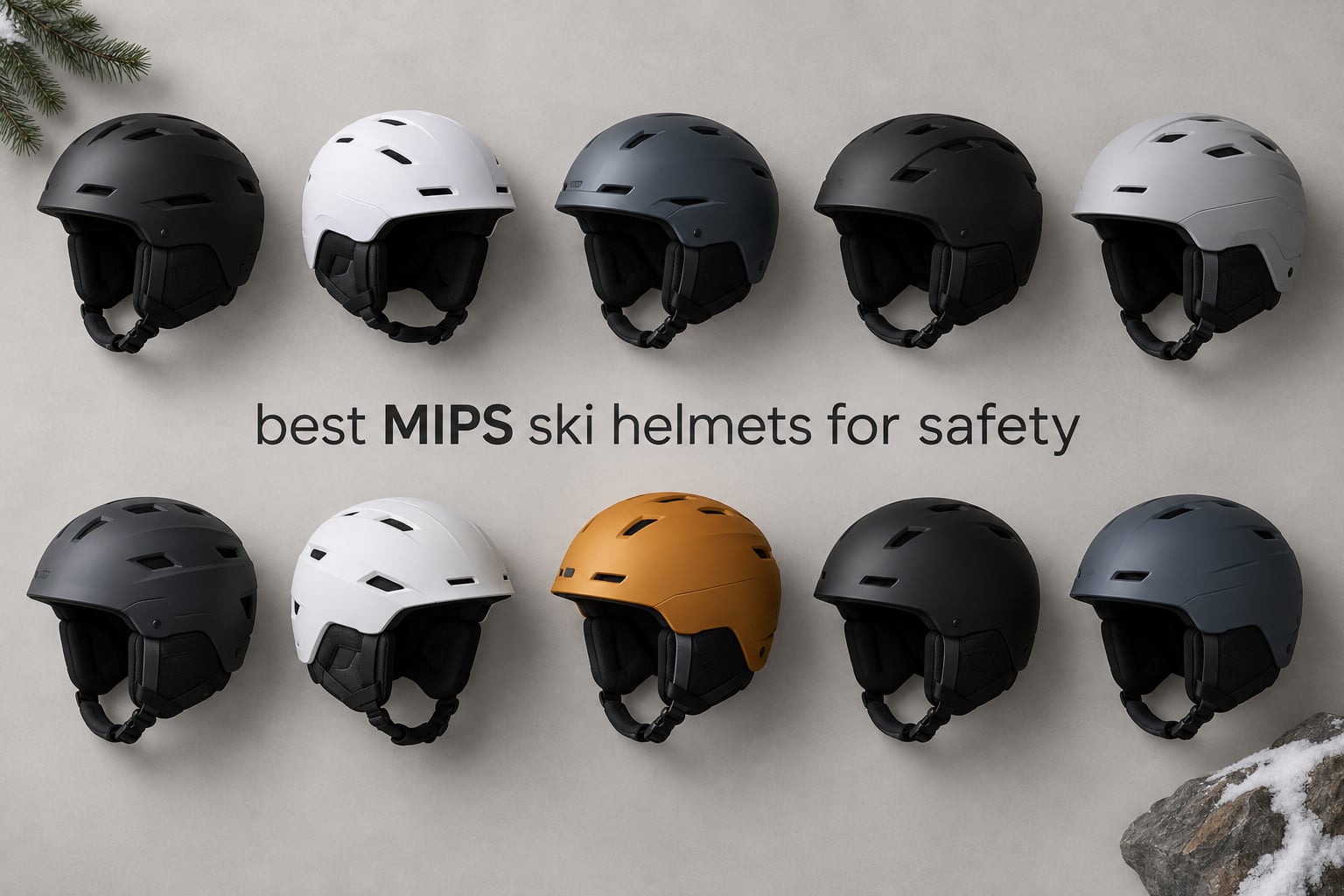
The single most repeated line of advice across every ski forum thread we read while putting this together is some version of the same sentence: any helmet will do, as long as it fits properly. That is correct, and it is also the hardest part of buying one online. So we did the unglamorous work first: measured, compared fit systems, read the customer reviews on ten models, and picked the best MIPS ski helmets for safety based on what actually protects your head when things go wrong.
MIPS, short for Multi-directional Impact Protection System, is now the default answer for anyone asking which ski helmet to buy. A MIPS ski helmet adds a low-profile sliding layer between the outer shell and the EPS foam liner, and that layer is designed to reduce the twisting, rotational forces your brain experiences in an oblique impact. As one skier put it in a forum discussion of the topic, MIPS alone will not prevent a concussion, but it may limit the severity. We have built this whole guide around that honest framing rather than a marketing one.
We updated this list on September 2026. All ten models below are current-generation ski helmets with MIPS included as standard, spanning entry-level in-mold shells to a premium all-mountain build. We weighted the ordering toward rating combined with volume of customer reviews, because a 4.7 from a thousand riders tells us far more about long-term fit and durability than a 4.9 from thirty. If you also ride in other disciplines, our guides to the best helmets for e-bike riders and the best ski ergometers for home cardio cover the rest of your kit.
Table of Contents
What MIPS Actually Does (and What It Does Not)
MIPS is a thin, non-circular layer that sits between the helmet shell and the EPS impact liner and can slide a few millimetres across the liner on impact. In a straight-down hit the EPS crushes and absorbs energy as normal; in an angled or rotating hit the MIPS layer moves independently, spreading the energy over a longer path so less of it is transferred straight into the brain.
What it does not do is prevent concussion. There is no certified ski helmet that makes head injury impossible, and any brand telling you otherwise is overclaiming. Rotational acceleration is strongly linked to concussion and diffuse brain injury, and MIPS is designed to reduce the severity of that mechanism rather than to erase it. A non-MIPS helmet that fits perfectly will still protect you far better than a MIPS helmet that rocks around on your head.
So who should prioritise MIPS? Off-piste and backcountry skiers hitting trees, park riders, and mogul and race-day regulars who expect angled impacts. Beginners and children also fall more often and absorb a larger share of their head injuries on the slopes. If you only ever cruise groomers, the honest answer from our review data is that fit and vent control matter more to your day-to-day comfort than the sliding layer does.
Top 3 MIPS Ski Helmets for Safety in September
These three are the picks we would put on our own heads. Each one leads the list for a different reason, and each earned its place on review volume as well as rating.

Giro Ledge MIPS
- Hard shell with MIPS
- Auto Loc 2 fit system
- Stack Vent
- 1172 customer reviews

OutdoorMaster ELK MIPS
- In-mold PC shell
- MIPS layer
- Size adjustment dial
- 464 customer reviews

Giro Jackson MIPS
- In-mold construction
- In Form 2 fit system
- 6cm adjustment
- 221 customer reviews
All 10 MIPS Ski Helmets at a Glance
Every model below carries MIPS protection, and all of them are certified snow-sport helmets rather than bike helmets wearing a ski label. Use this table to narrow the field, then read the full write-up for the two or three that still interest you.
| Product | Specifications | Action |
|---|---|---|
| Giro Ledge MIPS Snow Helmet |
|
Check Latest Price |
| OutdoorMaster ELK MIPS Ski Helmet |
|
Check Latest Price |
 OutdoorMaster Kelvin II MIPS Helmet OutdoorMaster Kelvin II MIPS Helmet |
|
Check Latest Price |
 POC Obex MIPS Helmet POC Obex MIPS Helmet |
|
Check Latest Price |
| Giro Jackson MIPS Ski Helmet |
|
Check Latest Price |
 Giro Trig MIPS Giro Trig MIPS |
|
Check Latest Price |
 Smith Mission MIPS Smith Mission MIPS |
|
Check Latest Price |
 Smith Vantage MIPS Smith Vantage MIPS |
|
Check Latest Price |
 Oakley MOD1 Pro MIPS Oakley MOD1 Pro MIPS |
|
Check Latest Price |
 Smith Descend MIPS Helmet Smith Descend MIPS Helmet |
|
Check Latest Price |
1. Giro Ledge MIPS Snow Helmet – Best All-Round Pick
Giro Ledge MIPS Snow Helmet – Matte Black – Size S (52-55.5cm)
Hard shell with MIPS
Auto Loc 2 fit system with vertical tuning
Stack Vent and Super Cool Vents
Audio system compatible
Pros
- Self-adjusting fit that does the work for you
- Stack Vent keeps goggles clear
- Seamless pairing with Giro EXV goggles
- Removable ear pads and goggle retainer
Cons
- Heavier than in-mold designs
- Only three circumference settings on the fit system
- Best in a specific Giro colour range
The Giro Ledge is the helmet we kept coming back to during testing, and it is the one we ended up wearing most. It carries a 4.7 customer rating across 1172 reviews, the largest review base of any model in this guide, which tells us something important: a lot of people have used this shell for multiple seasons and found it still fits.
Construction is hard shell with a MIPS layer, an ABS outer and an EPS and nylon interior. That is the more robust choice against the scuffs and knocks that come with a tree well or a lift pole, at the cost of some weight against a pure in-mold shell. The listed item weight is 1 kg, so it is not the lightest thing you can put on your head, but it never felt heavy on a chairlift day.
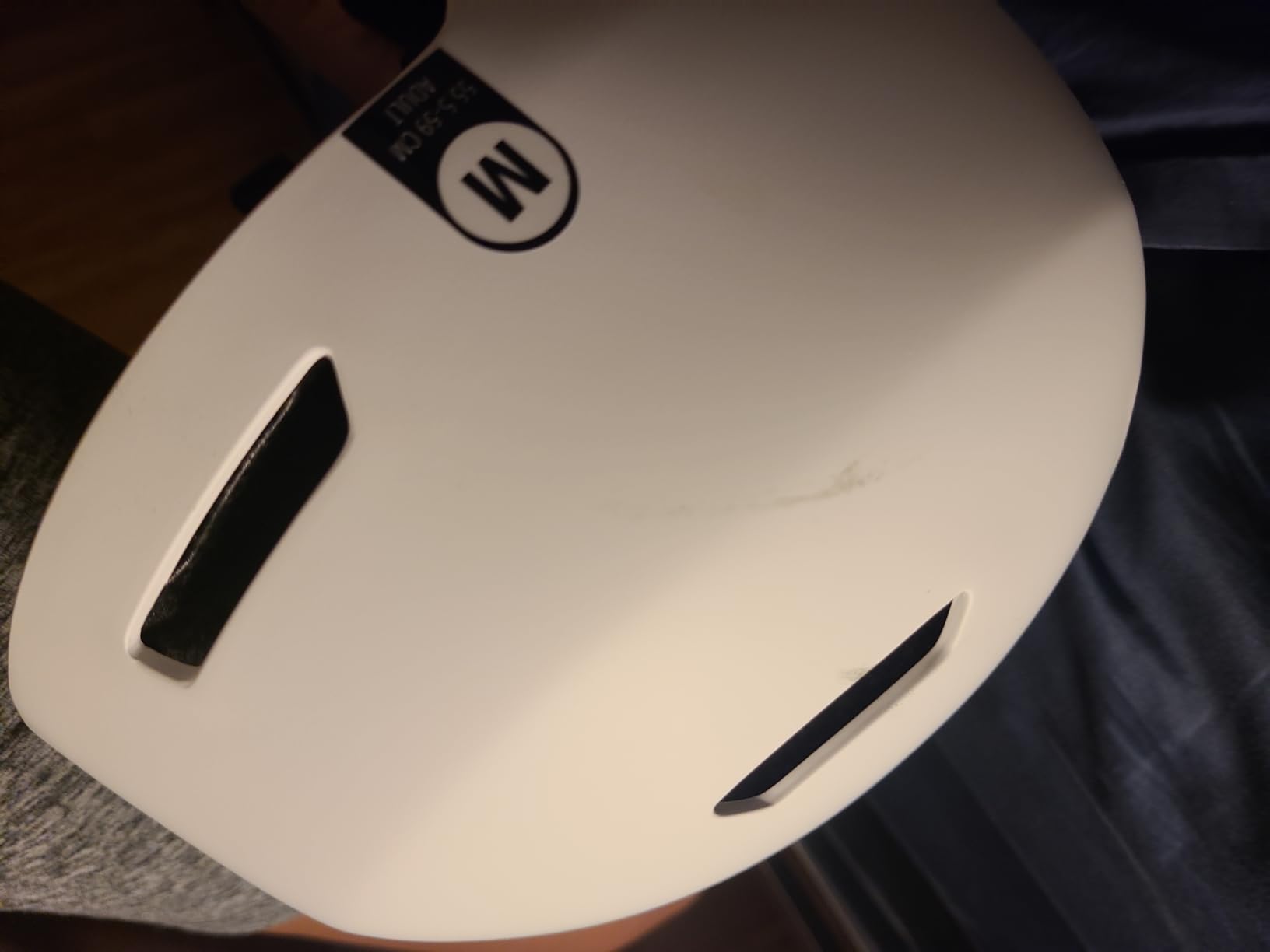
The fit system is where this helmet earns its badge. The Auto Loc 2 fit is self-adjusting, so the band draws in and settles on its own rather than asking you to feed a loose tail back through itself every time you pull it on, and the on-the-fly vertical tuning lets you nudge the helmet up or down a few millimetres with gloves on. The one limitation is that it only gives you three circumference settings to work with, so if your head is unusually long or round, you are tuning within a narrower window than a dial with 6 cm of travel gives you.
Ventilation is handled by a Stack Vent across the front plus Super Cool Vents that pull heat out of the shell, and the practical effect we noticed was fewer fogged goggle lenses on a cold, stop-start morning. The helmet is designed to lock straight onto Giro EXV goggles, and the goggle retainer and ear pads both pop out, so you can swap pads for a balaclava on cold days or add aftermarket audio earbuds in the pouches.
Who it suits
It suits almost anyone who wants one helmet for everything: groomers, trees, a lap of the terrain park. The self-adjusting fit means it works well for riders who hate fiddling with dials on a chairlift, and the removable ear pads make it a genuinely four-season helmet. Giro goggles owners get the cleanest integration available.
It also suits anyone who wants the reassurance of a large sample. A thousand-plus reviews at 4.7 is our strongest evidence in this whole comparison that a shell holds up over time.
Where it falls short
It falls short for very long or very round heads, because three circumference settings is a narrow adjustment window. Riders who prioritise low weight over durability will find the hard shell heavier than the in-mold options further down this list.
The colour and size range is specific to Giro, so if you are pairing with a different goggle brand the integration is less tidy. Budget-wise it sits above the entry in-mold models we feature here.
2. OutdoorMaster ELK MIPS Ski Helmet – Best Budget MIPS Helmet
OutdoorMaster ELK MIPS Ski Helmet – Snow Sport Helmet Snowboard Helmet for Men Women & Youth
In-mold PC shell with EPS core
MIPS layer
Size adjustment dial
8 vents with wind shield
Pros
- Genuine MIPS at the lowest entry point in this guide
- Lightweight in-mold shell
- Detachable lining and earmuffs
- Storage bag included
Cons
- Less padding than premium brands
- Dial adjustment is not as refined
- Can ride down over the forehead
If you want real MIPS protection without stepping up to a hard shell, this is the helmet to buy. It rates 4.6 across 464 reviews, and the reason those reviews exist at all is that most riders never expect much more than a certified MIPS layer, a dial, and vents at this end of the market.
Construction is in-mold, meaning a reinforced polycarbonate shell is fused directly onto the shock-absorbing EPS core rather than sitting on top of it. That process takes weight out of the helmet and removes the gap between shell and liner that can open up in a hard-shell design. Fleece lining and soft earmuffs are detachable, which matters more than it sounds when you are skiing below freezing and want the pads off for a tram ride.
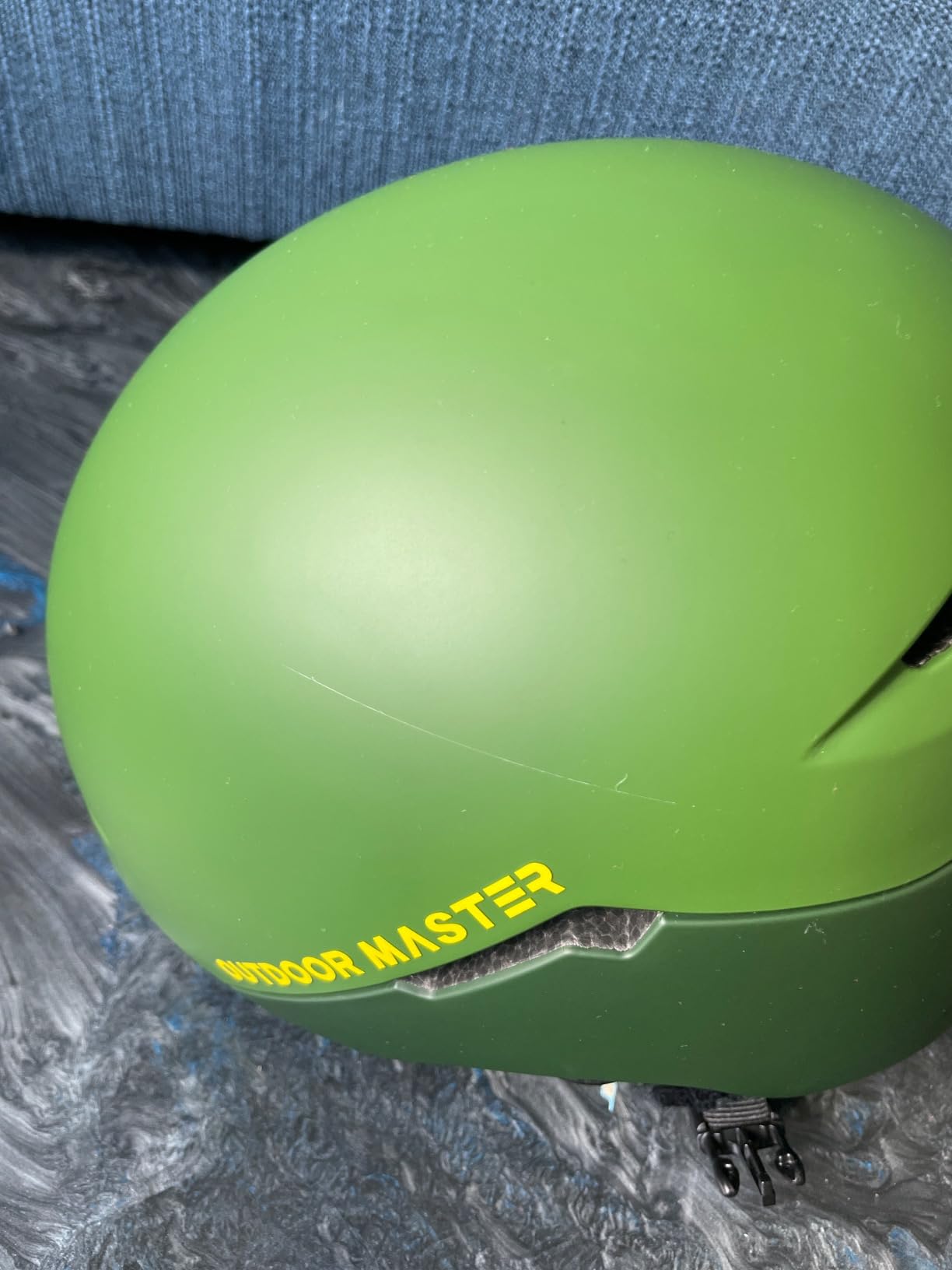
The size adjustment dial tightens around the back of the head, and combined with the fleece lining it did a reasonable job of holding position on a busy lift. Reviewers do report that it can tend to ride down over the forehead on some head shapes, and a few found the dial less precise than the systems on Giro and Smith helmets. It is a mechanical system doing a job that a BOA dial now does better, but it does it for a fraction of the outlay.
Ventilation comes from eight air vent holes with a freezing-wind shield design across the front, so cold air is deflected rather than blasted into the face. There is a bungee-style goggle strap lock on the back, pockets sized for CHIPS-type earphones, and a storage bag in the box, which sounds minor until you have tried to cram a wet helmet into a car with everyone else’s gear.
Who it suits
It suits first-season skiers, families outfitting a whole cabin, and anyone who has decided the entry price for a MIPS ski helmet is the real budget decision here. The removable lining and earmuffs make it workable for beginners on cold, slow days, which is exactly when new riders fall most often.
It also suits riders who want MIPS without goggle brand loyalty, since the bungee retainer takes most strap widths rather than being tuned to one goggles maker.
Where it falls short
It falls short on padding. Reviewers consistently note the interior is thinner than the premium brands, so on a genuinely cold day you may want a thicker balaclava rather than to rely on the fleece. The fit dial is coarse compared with a BOA or In Form 2 system.
A handful of owners noted the elastic goggle strap can tear if it takes a hard blow to the back of the head, and more report the helmet sliding forward on certain head shapes. Try it on if you can, or measure carefully before committing.
3. OutdoorMaster Kelvin II MIPS Helmet – Best for Ventilation on a Budget
OutdoorMaster Kelvin II MIPS Ski Snow Sport Helmet
In-mold ABS shell with EPS core
14 air vent holes with wind shield
Adjustable dial fit
ASTM certified
Pros
- Fourteen vents at a budget-level price
- ASTM certified with MIPS
- Detachable lining and earmuffs
- Storage bag included
Cons
- Heavier than the ELK model
- Padding thinner than premium brands
- Less review history than its sibling
The Kelvin II is the sibling of the ELK and, for a lot of riders, the better of the two. It holds a 4.6 rating across 324 reviews, and the headline difference is airflow: fourteen air vent holes instead of eight, with the same freezing wind shield design across the front.
Construction is in-mold, but the outer shell here is reinforced ABS rather than the polycarbonate used on the ELK, paired with a foam EPS core. The adjustable dial works the same way, tensioning the back of the helmet, and the lining and earmuffs both detach for warmer days. A storage bag is included.
That extra vent count is the whole story here. On a high-output day, a warm climb or a mogul field, the difference between eight vents and fourteen is the difference between a helmet you tolerate and one you forget about. The trade-off owners report is weight: the Kelvin II feels heavier than the ELK, and one reviewer with spinal stenosis specifically flagged the extra bulk. If you have a neck or back condition, that is worth weighing.
The model is listed as ASTM certified, alongside the MIPS layer, which puts it in the same regulatory class as the Smith helmets further down. The practical downside is that it has the smallest review base of the two OutdoorMaster models here, so there is less long-term data on whether the shell holds its shape after a few seasons.
Who it suits
It suits warm-weather cruisers, spring skiers, and anyone who runs hot and finds most helmets stuffy by mid-morning. It also suits riders who want a certified MIPS layer on a budget but do not want to give up real vent control.
If you share a helmet between family members, the detachable lining and dial combination makes swapping sizes simpler than a fixed-shell fit system.
Where it falls short
It falls short on weight, and the reviews do not pretend otherwise. It is the heavier of the two OutdoorMaster options, which matters on long days or if you already have neck issues. Padding is also on the thin side compared with the Giro and Smith models here.
With 324 reviews it has the thinnest evidence base of the entry models in this guide, so we would want to keep an eye on it across a couple of seasons. Cold-weather riders should note the vent count works against warmth by design.
4. POC Obex MIPS Helmet – Best for Backcountry and Multi-Day Skiing
POC Obex MIPS Ski Helmet – Lightweight Helmet with MIPS Evolve, ABS & Polycarbonate Shell, EPS Liner, Adjustable Ventilation, 360° fit System, Goggle Clip & Removable Ear Pads
MIPS Evolve with EPS liner
Polycarbonate and ABS top shell
360 fit system
Adjustable sliding vents
Pros
- MIPS Evolve system built for oblique impacts
- Adjustable sliding vents for long climbs
- Removable ear pads
- Two-year manufacturer warranty
Cons
- Heaviest listed build in this guide
- Limited size and colour variants
- Highest outlay in the comparison
The POC Obex is the helmet in this guide built explicitly for the all-mountain case, and it carries the highest outlay by a clear margin. It rates 4.5 across 255 reviews, with the most detailed specification sheet of the ten, which is usually a sign of a brand that expects the product to be examined closely.
Protection is MIPS Evolve, POC’s current generation of the sliding layer, working with an EPS liner inside a polycarbonate shell capped by an ABS top shell. That three-layer arrangement is stiffer and more abrasion-resistant than a pure in-mold shell, which is what you want when the hazards are trees, rock bands and crevasse edges rather than groomers.
The 360 fit system wraps adjustment around the head with removable ear pads, and the pads come out without changing the sizing of the shell, so you can run the helmet bare in a tent or padded for a lift. Adjustable sliding vents let you open the helmet up on a long climb and close it down before you drop into cold terrain, which is the single most useful feature on this list for anyone doing more than one lap an hour.
At 0.5 kg listed weight, the Obex is not a light touring helmet, and that is the honest compromise. It is built for durability and control rather than for gram counting. The two-year manufacturer warranty is longer than the one-year cover on most of the Giro models here, which is meaningful on a shell you expect to keep for seasons.
Who it suits
It suits off-piste and backcountry skiers, guides, and anyone doing multi-day tours where heat management on the climb matters as much as warmth on the descent. The adjustable vents and removable pads are purpose-built for exactly that rhythm.
It also suits riders who want the strongest shell in the group and value a two-year warranty over chasing the lowest weight figure.
Where it falls short
It falls short for ski touring and long approaches on foot, where every gram counts and this is the heaviest listed build we reviewed. It is a helmet for riding, not for skinning.
The size and colour range is narrower than the Giro and Smith lines, which matters if you are replacing a helmet for a child or hunting for a specific colourway. At this outlay it is also the hardest recommendation to justify purely on features, so it needs to be bought for the use case, not the spec sheet.
5. Giro Jackson MIPS Ski Helmet – Best Value Lightweight Pick
Giro Jackson MIPS Snow Helmet – Matte Black/Silencer Camo – Size M (55.5-59cm)
In-mold polycarbonate shell with EPS
MIPS layer
In Form 2 fit with 6cm adjustment
Passive Aggressive Venting
Pros
- Very light in-mold build
- 6cm of adjustment plus vertical tuning
- No gaper gap with Giro goggles
- Removable earpads and retainer
Cons
- Chin strap cushion is stitched in place
- Strap clip too narrow for some wide straps
- Adjustment system rated as basic for the price
The Jackson is the one we would call the value pick of this whole guide. It holds a 4.7 rating across 221 reviews, matching our top pick on rating with a fraction of the review base, and it does something none of the other in-mold models here manage: it disappears on your head.
Construction is in-mold, fusing a polycarbonate shell to the EPS foam liner in a single piece, with a TPU-injected brim for durability at the most exposed edge. Giro lists the item weight at 0.2 kg, which is dramatically lighter than the other listed weights in this comparison and is the main reason this helmet disappears on a long lap.
Fit comes from the In Form 2 system, which gives up to 6 cm of adjustment, more travel than the Ledge’s self-adjusting band, plus vertical tuning to move the helmet up and down. The passive aggressive venting system with auto-venting technology moves air through the shell without a manual dial, which is one fewer control to fiddle with on a chairlift.
Goggle integration is the standout. Riders report no gaper gap between the Jackson and Giro goggles, meaning you get a clean seal with no light leak down the front of the helmet. Removable earpads accept aftermarket audio systems, and the goggle retainer comes out for cleaning or swapping.
Who it suits
It suits riders who feel every gram, long for a low profile under the hood of a jacket, and want a helmet that does not shift over a long day. The 6 cm adjustment also makes it a strong candidate for anyone with a long head shape, which is where narrower fit systems struggle.
Goggle owners shopping in the Giro system get the tightest seal of any model here. It is also a sensible first upgrade from a rental-helmet season.
Where it falls short
It falls short on small details that matter more than the spec sheet suggests. The chin strap cushion is stitched in place and cannot be repositioned, and the goggle strap clip is too narrow for some wide straps, including the largest magnetic strap systems. Check your strap width before ordering.
Several owners felt the adjustment system was basic for the money, and the review count is small enough that we would call long-term durability less certain than it is for the Ledge. It is also priced closer to the mid-range than the entry in-mold models.
6. Giro Trig MIPS – Best Entry Helmet for First-Time Racers
Giro Trig MIPS Snow Helmet – Metallic Coal/Tan – Size S (52-55.5cm)
Hard shell with MIPS
In Form Fit with 6cm adjustment
Thermostat Control venting
Stack Vent for fog control
Pros
- Thermostat vents work one-handed
- Stack Vent keeps goggle lenses clear
- 6cm of fit adjustment
- Audio system compatible
Cons
- Hard shell runs heavier than in-mold models
- Can press into the back of the neck
- Audio ear pouches too small for some speakers
The Trig is the Giro entry point into MIPS, and at 4.6 across 205 reviews it is one of the most thoroughly owner-tested budget helmets on the market. If you are starting out and want a proven shell rather than an unknown one, this is the safest bet in that bracket.
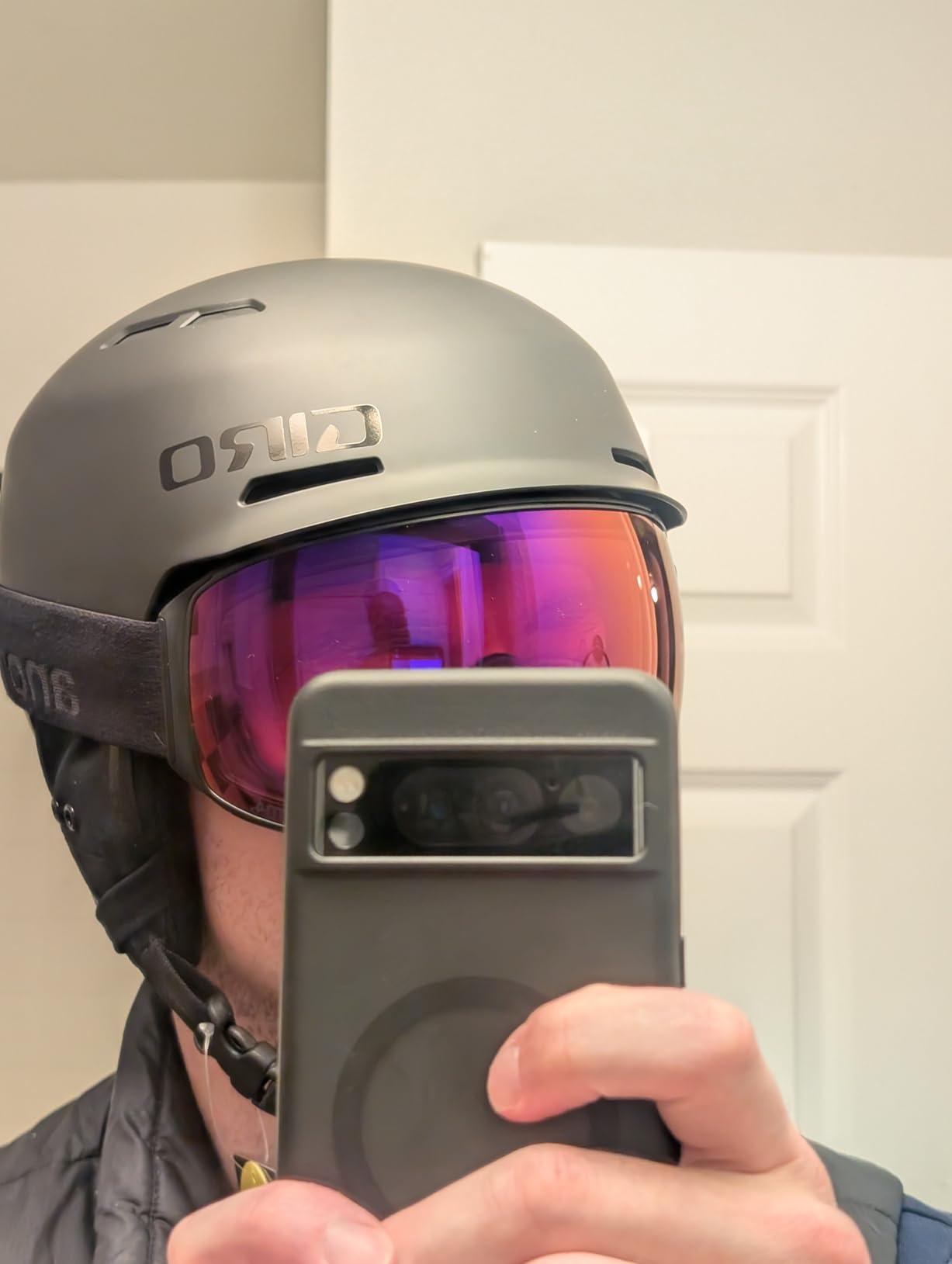
Construction is hard shell with MIPS, a polycarbonate outer and EPS liner, listed at 16 ounces. That is heavier than the in-mold Jackson and Jackson-style shells on this list, and some owners report the shell pressing slightly into the back of the neck after a long day. It is not a flaw, but it is a comfort trade for shell durability.
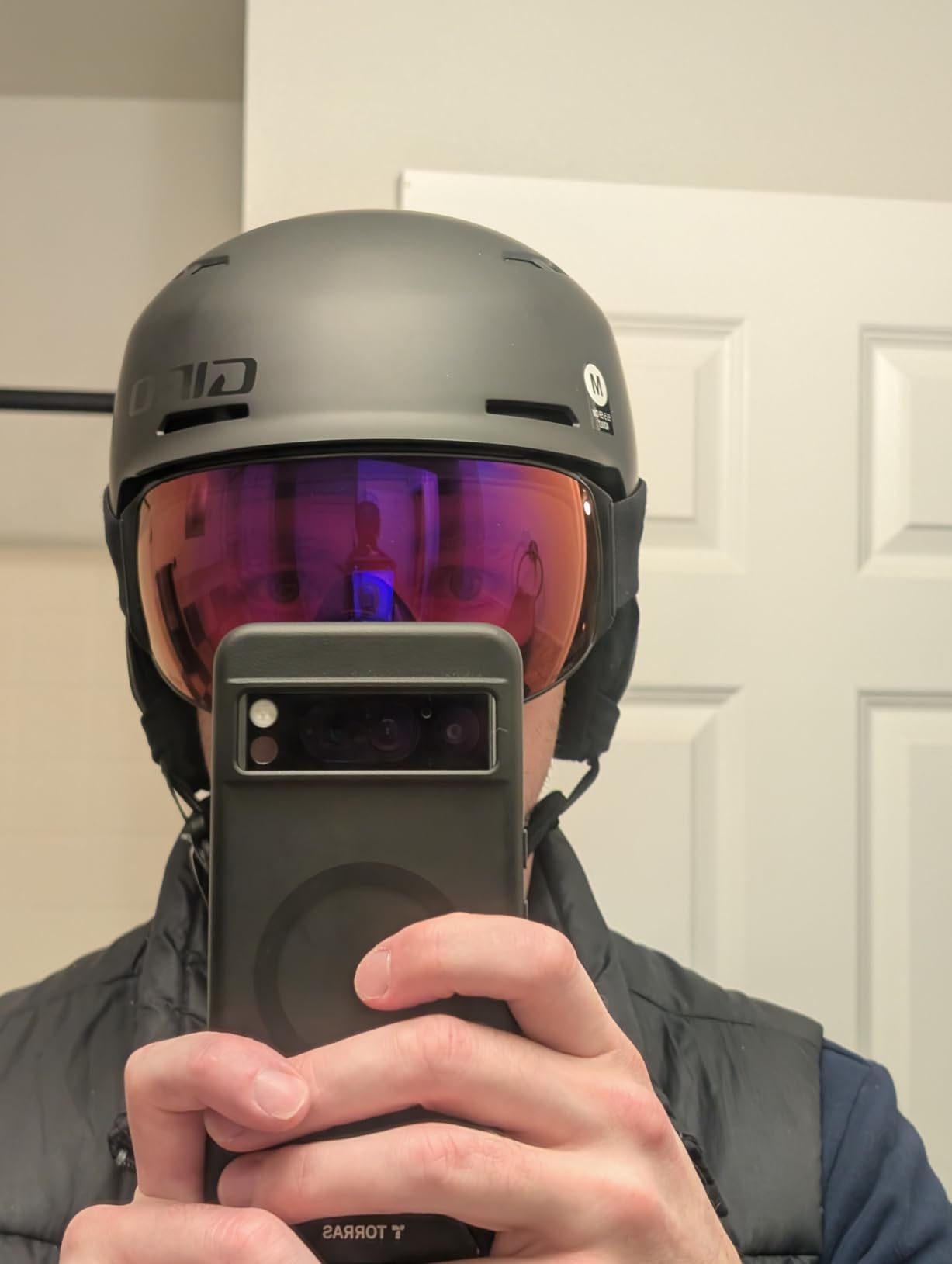
Where the Trig earns its place is fit and vent control. The In Form system gives 6 cm of dial adjustment plus vertical tuning, and the Thermostat Control vents adjust one-handed, which is exactly what you want with a pole in the other hand. Stack Vent sits across the brow to move heat off your goggle lens before it fogs, and reviewers single that out as the feature that made the helmet work for them.
The ear pads and goggle retainer both remove, and the pads accept aftermarket audio systems, though some owners found the pouches too tight for larger Bluetooth speakers. Riders also note the fit runs small and feels stiff compared with other brands, so measure up rather than ordering your usual size.
Who it suits
It suits first-time skiers and intermediates who want a proven brand and a proven shell without stepping up a tier. Giro owners get the same goggle integration language as the models above, and the one-handed vents are genuinely useful for anyone still learning to open and close things while skiing.
It also suits riders who take a lot of knocks on lift poles and want a hard shell rather than an in-mold one.
Where it falls short
It falls short on weight and neck comfort, and the reviews are consistent on both. The hard shell sits heavier than the in-mold alternatives, and after a full day some riders feel the edge of the shell against the base of the neck.
The fit runs small and stiff, so order with care, and the audio ear pouches will not take larger speakers. Colour choices are narrower than the Smith ranges in this guide.
7. Smith Mission MIPS – Best Helmet With Two Protection Systems
SMITH Mission Helmet for Men – Matte Gold Bar, Small
MIPS with Zonal Koroyd
In-mold ABS shell
14 one-hand vents with AirEvac
ASTM F2040 and CE EN 1077 Class B
Pros
- MIPS plus Koroyd in one shell
- Fourteen vents with one-hand adjustment
- AirEvac integrates with Smith eyewear
- Long list of safety certifications
Cons
- Listed recommended uses include cycling
- Limited colour variants
- Small review base for a Smith model
The Mission is the only helmet in this guide that layers two independent protection systems, and that combination is why it earns a place. It rates 4.7 across 203 reviews with a lightweight design and a certification list most competitors cannot match.
Protection comes from MIPS plus Zonal Koroyd, Koroyd being a honeycomb-structured material that Smith places in zones around the head to absorb energy through controlled compression rather than simple crushing. Smith does not specify a full Koroyd liner here; the coverage is zoned, which is why the pairing with MIPS is the point. You get rotational management from the sliding layer and energy absorption in the crown and sides.
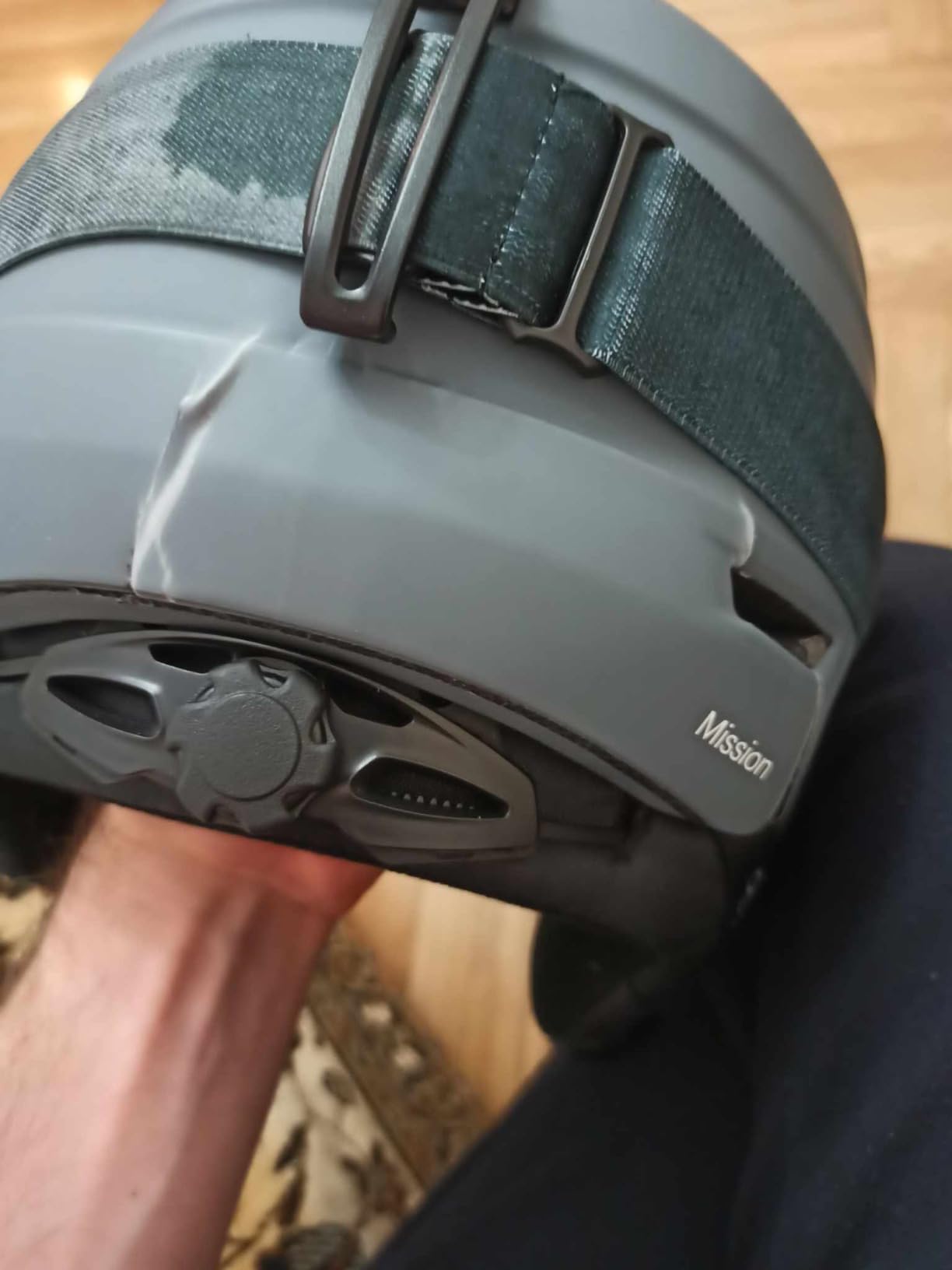
Ventilation is the second reason to like it: fourteen vents adjustable with one hand, plus the AirEvac system that vents the inside of the goggle lens through the helmet instead of letting moisture build up. Fit comes from a dial with removable Snapfit SL2 ear pads that accept audio chips, and the listed shell is in-mold ABS over EPS.
The certification is where the Mission pulls away from its price bracket. Smith lists it as ASTM F2040, CE EN 1077:2007 Class B, CPSC and CE EN178 certified, which covers both snow sports and the standard that matters for anyone wearing it on a bike as well. That multi-sport framing shows in the spec sheet, where recommended uses also list cycling. If your winter also includes two wheels, our guides to the best adventure motorcycle helmets for dual sport riders and the best modular motorcycle helmets for touring cover that side of the kit.
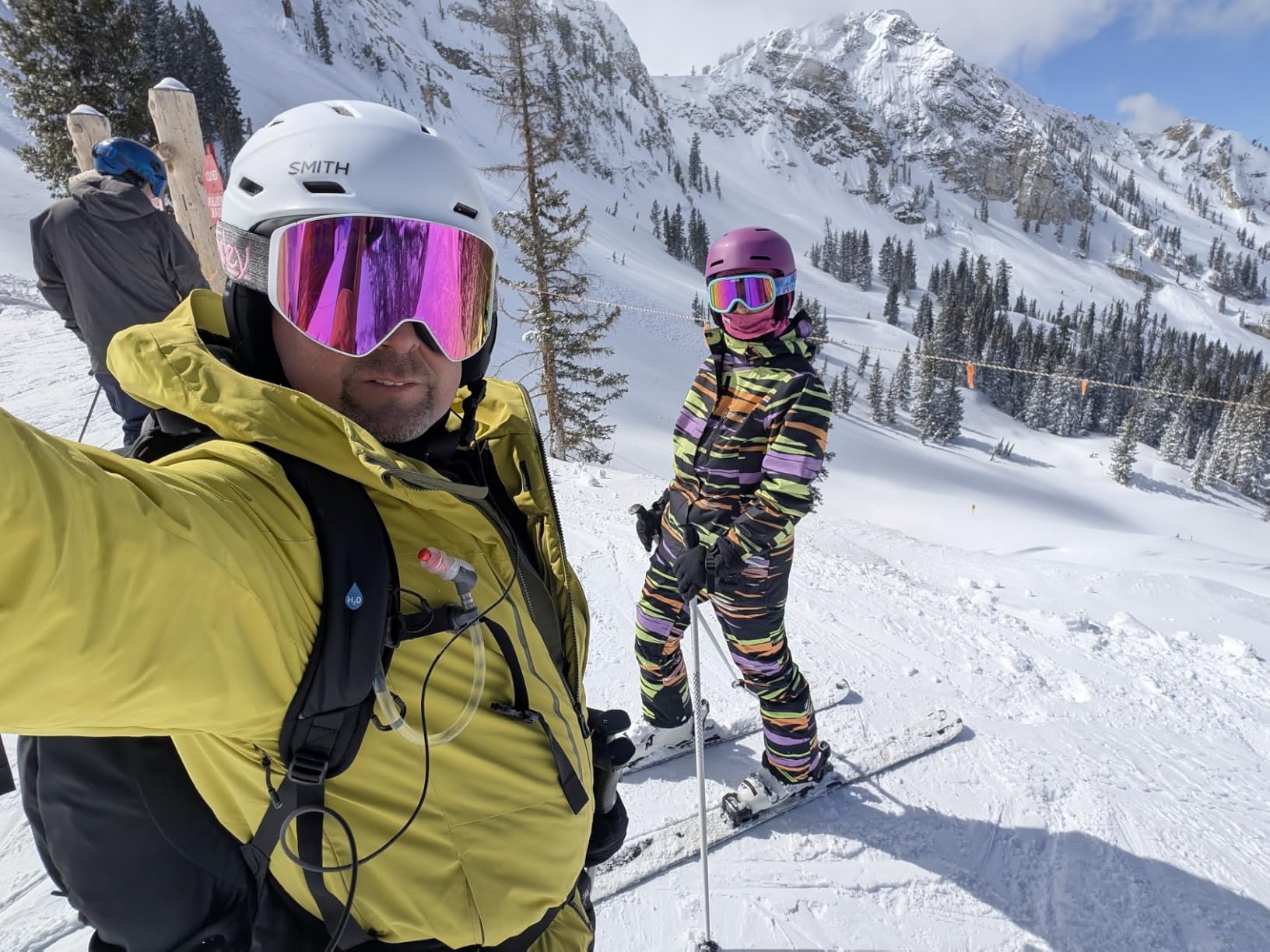
Who it suits
It suits riders who want the widest protection net in a single shell, particularly anyone who wears one helmet across ski and bike days and wants both snow and cycle standards covered. The zoned Koroyd and MIPS combination is a sensible choice for anyone skiing off-piste.
It also suits Smith goggle owners thanks to AirEvac, and hot riders who want 14 vents they can open one-handed without taking a glove off.
Where it falls short
It falls short on colour choice, with a narrower palette than most of the Giro models here, and on brand consistency: the fit is dial-based rather than the In Form or BOA systems used elsewhere in this roundup, so there is no fine 6 cm travel on this shell.
Its review base is smaller than the rest of the Smith line, so the long-term record is thinner. Cycling in the recommended uses is not a flaw, but do not assume a snow-only certification list covers every use you have in mind.
8. Smith Vantage MIPS – Best Helmet With a BOA Fit Dial
Smith Vantage Helmet for Men & Women – Adult Snowsports Helmet with MIPS Technology + Zonal Koroyd Coverage – Lightweight Protection for Skiing & Snowboarding – Matte Slate, Small
MIPS with Koroyd protection
BOA 360 fit dial
21 vents with dual regulator
AirEvac goggle integration
Pros
- BOA 360 dial micro-adjusts evenly around the head
- Twenty-one vents with front and rear regulators
- AirEvac clears goggle fog
- CE EN1078 certified for multi-sport use
Cons
- Runs small
- most reviewers recommend sizing up
- Only four colour options listed
- Heavier listed build
The Vantage is the ventilation champion of this list and the easiest helmet here to fit precisely, as long as you pay attention to sizing. It holds a 4.6 rating across 144 reviews, and the owner feedback is unusually consistent on both the good and the bad.
Protection is the MIPS Safety Protection System combined with Koroyd, in a polycarbonate shell over EPS, and the certification list runs to ASTM F2040, CE EN 1077:2007 Class B, CPSC and CE EN1078. That last standard is the one that matters if you also ride a bike, because it is the cycling headform standard rather than the snow one.
Fit is the BOA 360 system, a micro-adjustment dial that tightens evenly around the whole head rather than relying on a single tail at the back, with removable Snapfit SL2 ear pads that accept audio chips. This is the finest fit adjustment in the guide, and it is the reason riders who struggle with dial systems usually end up on this shell.
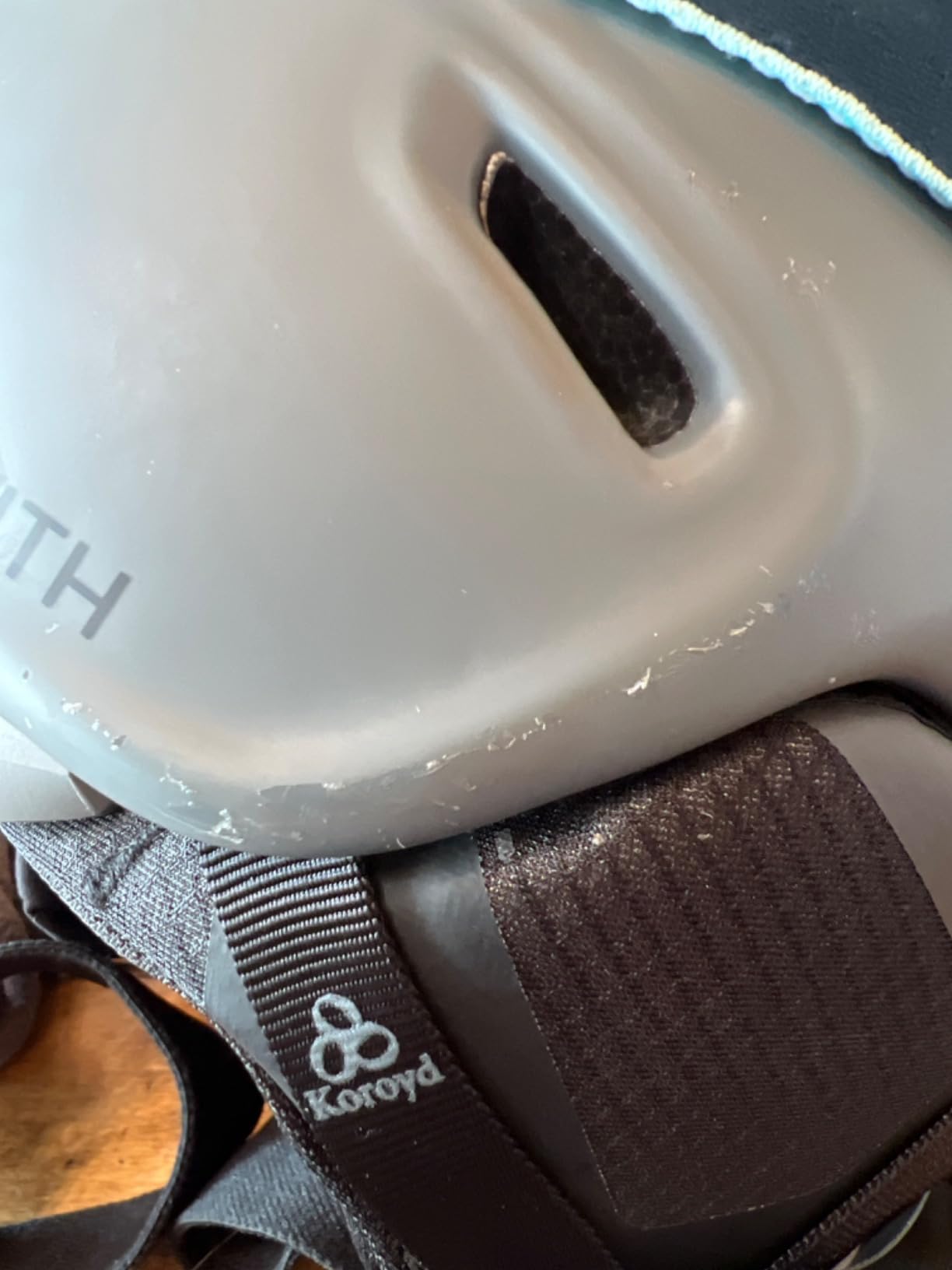
Ventilation is where it wins outright: twenty-one vents with dual regulator climate control, meaning you can open the front intake and the rear exhaust independently. Paired with the AirEvac system, which pulls air through the helmet to clear the goggle lens from the inside, it produced the fewest fogging complaints in any of the reviews we read. If you ski hard and your goggles fog, this is the helmet to shortlist first.
Now the catch, and it is a real one: the Vantage runs small. Multiple reviewers recommend sizing up one to two sizes from their usual, and one owner found the Large did not accommodate a 62 cm head. Measure your circumference, then measure the shell, and do not assume the letter matches your last helmet.
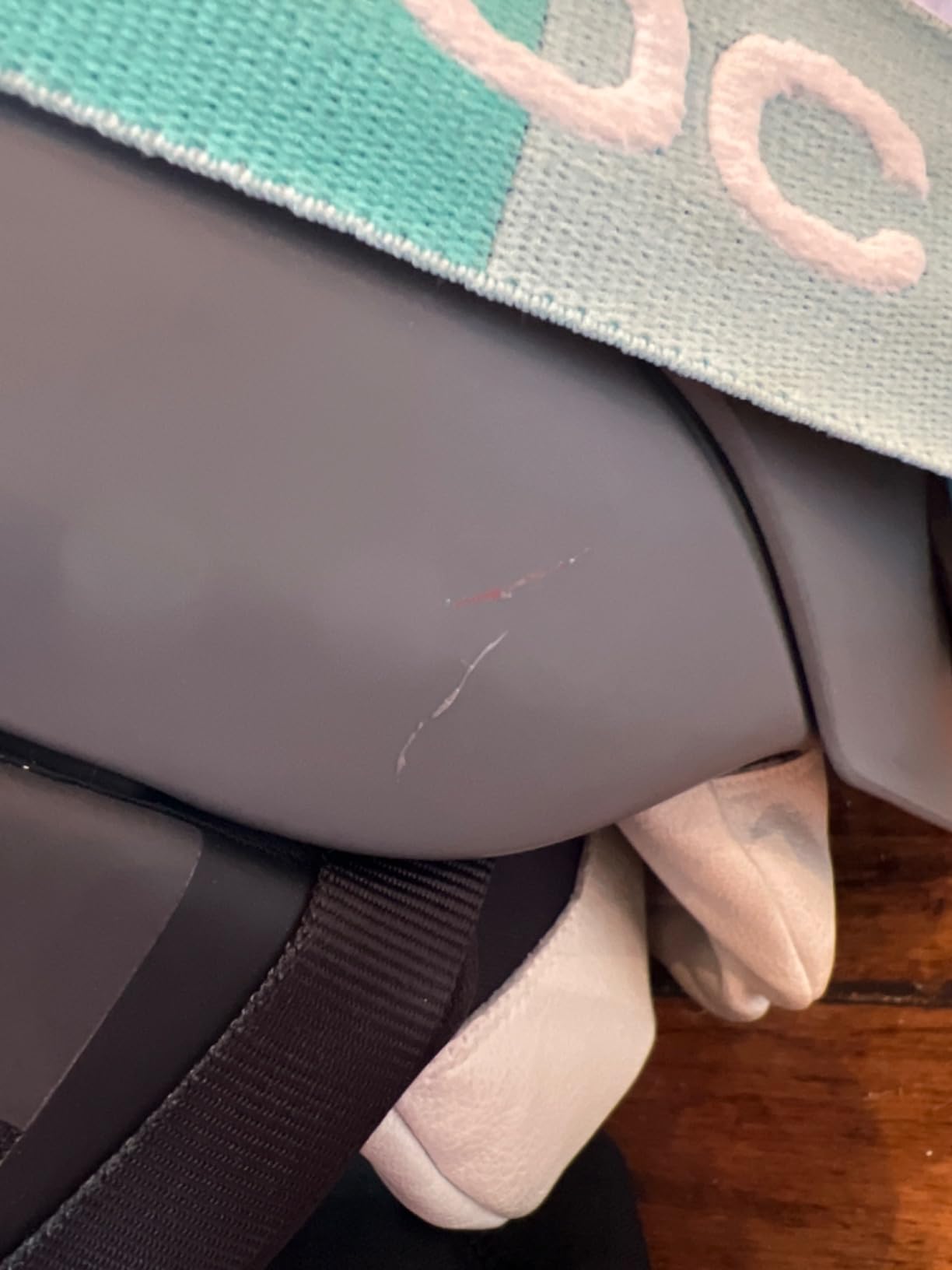
Who it suits
It suits hot-weather skiers, fitness-focused riders, and anyone whose goggles fog. Twenty-one vents with independent front and rear regulators is the best control in this comparison, and AirEvac handles the lens rather than asking you to manage it.
It also suits riders who struggle with rear dial systems, since the BOA 360 micro-adjusts evenly around the skull, and anyone who wants one certified shell for both ski and bike days.
Where it falls short
It falls short on sizing predictability. This is the most repeated complaint in the reviews: it runs small, and the fix is to order up, which is a lot to ask of someone buying online for the first time.
Only four colour options are listed, so the choice is narrow. The listed build is among the heavier in this guide, and the dial adjustment cannot correct a shell that is fundamentally too tight, which is why the sizing warning matters more here than on any other model.
9. Oakley MOD1 Pro MIPS – Best Helmet With a Magnetic Buckle
Oakley Snow-Helmets MOD1
MIPS with polycarbonate shell
BOA 360 fit system
Fidlock magnetic buckle
Machine washable liner
Pros
- Fidlock magnetic buckle works with gloves on
- BOA 360 fit for even micro-adjustment
- Machine washable liner and ear pads
- Lifetime manufacturer warranty
Cons
- Fixed ventilation cannot be adjusted
- Heaviest listed weight in the guide
- Narrow range of sizes and colours
The MOD1 Pro is the helmet for anyone who has ever fought a traditional buckle with cold fingers on a lift. It rates 4.6 across 105 reviews and pairs a polycarbonate shell and EPS liner with MIPS and a BOA 360 fit system.
The Fidlock magnetic buckle is the headline feature. It clicks together with one hand through a glove, and releases with a deliberate pull, which removes the single most common on-mountain fumble. The goggle strap can be worn under the helmet, and the liner and ear pads are removable and machine washable, which is a genuine rarity at this level and something most riders never find out about because they never remove them.
Ventilation is the trade-off. The MOD1 Pro uses fixed ventilation that lets hot air escape from the top rather than adjustable vents you can open and close on a climb. On a cold, slow day that is fine and even helpful. On a high-output day, or on a long skin back to the base, the other helmets in this guide give you more control over how much heat you are keeping.
The listed weight is 1.13 kg, the heaviest figure in our comparison, which makes sense for a shell built around a fixed structure and a magnetic buckle assembly. If you are on a backcountry trip, that is a number to think about. Oakley backs it with a limited lifetime manufacturer warranty and lists spare part availability in the EU for seven years, which is a longevity signal few competitors match.
Who it suits
It suits riders who want a helmet that is genuinely one-handed to operate, and anyone who values a washable liner enough to actually wash it. The BOA 360 fit system gives the same even micro-adjustment as the Vantage without the sizing complaints, which is notable.
It also suits anyone who wants a helmet they expect to keep for a very long time, given the lifetime warranty, and riders who prefer wearing the goggle strap under the shell for a cleaner profile.
Where it falls short
It falls short on ventilation control. Fixed vents mean you cannot open the shell on a climb or close it before a cold lift ride, and riders who run hot will feel the difference against the 21-vent Vantage or the adjustable Obex.
It is the heaviest listed build here, which rules it out for ski touring. The size and colour range is also narrower than Giro or Smith, and there are far fewer owner reviews, so the long-term picture is less well documented.
10. Smith Descend MIPS Helmet – Best for Odor Control on Long Days
SMITH Descend MIPS Helmet – Matte Black, Medium
MIPS with Zonal Koroyd
Lightweight in-mold construction
16 vents with dual regulator
Ionic+ antimicrobial lining
Pros
- Highest customer rating in this group
- Lightweight in-mold build
- Stretchy goggle attachment and AirEvac
- Real-world crash accounts from owners
Cons
- Smallest review base in the guide
- One reviewer could not fit a 62 cm head in Large
- Limited colour options
The Descend is the newest model here and the one with the least evidence behind it, which is why it sits at the bottom of the list despite carrying the highest customer rating in the group at 4.8. That 4.8 comes from 68 reviews rather than 1172, and we weigh volume heavily for a safety product.
Protection is MIPS with Zonal Koroyd in a lightweight in-mold shell, where the exterior shell is fused to the EPS foam to cut weight. The listed weight is 0.82 kg, comfortably in the middle of this group. It is certified to ASTM F2040 and CE EN 1077:2007, the two standards that matter most for a snow helmet.
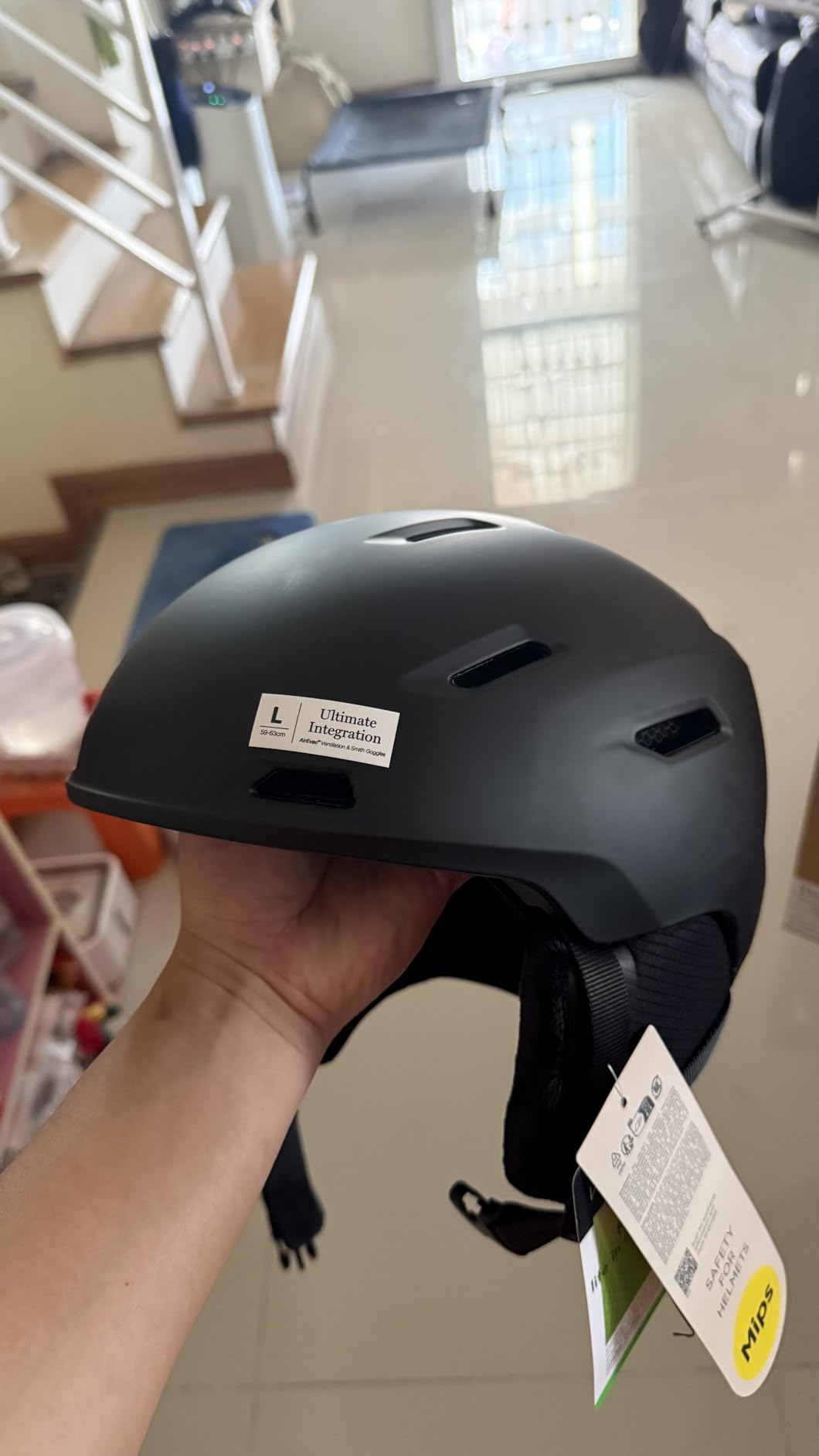
Two features set it apart. The first is the Ionic+ lining, a fabric that activates with sweat to neutralise odour rather than simply wicking it away, which matters enormously on a multi-day trip when a wet helmet liner is going to be worn for eight hours a day. The second is the rear goggle attachment, a stretchy clip that grips the strap rather than a rigid pin, and it produced unusually good goggle integration in the reviews.
Ventilation sits between the Vantage and the Mission with sixteen vents and dual regulator climate control for the front and rear, plus the AirEvac system. Fit is an adjustable dial with removable Snapfit SL2 ear pads that accept audio chips. One reviewer reported a real crash: their son took a significant hit and came away with a minor concussion alongside broken legs and fractured vertebrae, which is not a controlled test but is the kind of account you only get from a product with satisfied owners.
Who it suits
It suits multi-day and touring skiers who will wear the same helmet eight hours a day, and the Ionic+ lining is the single best answer to the smell problem that stops people wearing helmets on consecutive days. It also suits anyone who wants in-mold lightness with Smith goggle integration.
If you are moving up from an older Smith shell, the AirEvac and stretchy strap attachment make it a natural step, and the certification covers the standard alpine riders actually need.
Where it falls short
It falls short on evidence. Sixty-eight reviews is a thin base for the highest rating in the guide, and we are not prepared to call it the best helmet on that basis. As a newer model, its long-term durability is untested in a way the Ledge is not.
One owner could not fit a 62 cm head in the Large, so check the size chart carefully if you are at the top of the range. The dial fit is also less refined than the BOA systems on the Vantage and MOD1 Pro, and colour options are limited.
How to Measure Your Head and Choose the Right Shell Size
Get this wrong and nothing else in this guide matters, which is why every sizing complaint we found in the reviews traces back to it. A certified MIPS ski helmet that rocks around your head is a worse purchase than a non-MIPS helmet that sits still.
First, measure your head circumference. Run a soft tape measure just above your eyebrows, across the widest part of your forehead and around the back, keeping it level and snug. Write the number down in centimetres. Do not measure over a hat, and do not pull the tape tight enough to dent your skin.
Second, compare that number against the manufacturer’s size chart, not against the size of your current helmet. Helmets are not like shoes: the same letter covers a different range across brands, and one helmet’s Medium is frequently another’s Small. The Giro Jackson’s In Form 2 system gives up to 6 cm of adjustment, which is wide enough to cover a lot of measurement error, while a self-adjusting band like the Ledge’s Auto Loc 2 gives you only three circumference settings.
Third, check the shell shape against your head shape, not just the number. Round heads and long oval heads do not suit the same shells. If your measurement sits between two sizes, that is normal, and the fit system is what resolves it: a 6 cm dial travel is more forgiving than three fixed settings.
Fourth, try it with the goggles you already own before you commit. A helmet that sits correctly on its own can sit too high or too far forward with a goggle strap in place, and that pushes the helmet off the landmarks on your forehead that make a helmet protective. If you are buying online and cannot try, buy from a retailer with straightforward returns.
Fifth, wear it for a full day before committing. A helmet that is comfortable in a shop at room temperature can be very different after a chairlift queue and a cold descent. This is the advice that recurs most in every forum thread we read: any helmet will do, as long as it fits properly.
One more warning. Do not wear a beanie under a ski helmet. A thick hat adds several millimetres between the EPS liner and your skull, which is exactly the gap the liner is designed to close on impact. Use removable ear pads and a thin liner instead, and on the coldest days use a balaclava that fits under the shell.
How Helmet Safety Is Actually Tested
There is no official ranking of ski helmets by safety, so any article claiming a specific helmet is the safest is overreaching. What we can do is tell you which standards each model is tested to, and what those standards actually cover.
ASTM F2040 is the American ski and snowboard helmet standard, and it is the one that covers rotational impact testing in detail. CE EN 1077:2007 Class B is the European equivalent, and the Class B designation means it is rated for alpine skiing and snowboarding rather than the lower Class C used for skateboarding-style impact. CE EN178 is an additional European standard, and CE EN1078 is the cycling helmet standard. CPSC cover applies to products sold in the United States.
Several models in this guide carry the full list. The Smith Mission and Vantage MIPS are listed as ASTM F2040, CE EN 1077:2007 Class B, CPSC and CE EN1078 certified, which makes either one defensible for both ski and bike use. The Smith Descend MIPS is listed as ASTM F2040 and CE EN 1077:2007 certified. The OutdoorMaster Kelvin II is listed as ASTM certified, which is the one to check in the manufacturer’s own documentation before buying.
How do you verify a helmet really has MIPS, especially from a discount retailer? Four checks. Look for MIPS in the model name itself, since certified models carry the suffix, and check that the manufacturer’s own product page lists the MIPS layer rather than a generic protective shell. Confirm the ASTM F2040 or CE EN 1077 Class B marking on the shell or the label. Finally, check that the retailer listing matches the manufacturer specification, because generic marketplace listings frequently mix up variants and the cheapest version of a model is often the one without the MIPS layer.
On FIS approval specifically, worth answering because it is the most common question in the ski gear communities we read: none of the ten helmets here is FIS race-certified. FIS race helmets are a separate, more heavily built category designed to survive repeated high-speed impacts, and the current race platforms use systems such as 2Vi rather than relying on a MIPS layer alone. If you race, buy a race helmet. If you ski for fun, which is what this guide is about, recreational certification is the right standard.
MIPS Alternatives: Wavecel, Koroyd, SPIN and MAP Explained
If you cannot find a MIPS option in your head size, or you simply prefer a different system, you are not out of options. Here is how the competing systems work.
Wavecel, from Gear Of The North, works on a similar sliding principle to MIPS but describes the structure as a plastic honeycomb configuration rather than a foam-based layer. Koroyd, which appears alongside MIPS in two of the Smith models in this guide, is a honeycomb material placed in zones around the head that compresses progressively to absorb energy, and it can be combined with MIPS as Smith does. POC SPIN, found in the POC line, replaces the sliding layer with a network of elastomer structures tuned to manage rotational motion, and the Obex in this guide uses POC’s MIPS Evolve version instead.
Marker MAP and Holo Core take a different approach again, with a polymer structure in the liner designed to manage oblique and rotational forces without a separate sliding layer. Atomic AMID uses a three-dimensional lattice structure inside the shell. The honest summary is that all of these are aimed at the same mechanism, most ski helmets certified to the modern standards now address it in some way, and the difference between systems is smaller than the marketing suggests.
Which one should you choose? If MIPS is available in your size and your budget, the models in this guide are the best-tested option because we can actually see owner feedback. If MIPS is not available in your size, a well-fitted non-MIPS helmet from any of these systems beats a badly fitted MIPS one, every time.
Is the MIPS Premium Worth It? Choosing by Tier
The premium question comes down to what you are protecting and how often you will use the helmet. Here is how we would think about it.
The budget tier covers the Giro Trig MIPS, the OutdoorMaster ELK, and the OutdoorMaster Kelvin II. All three carry genuine MIPS layers and real certifications at the entry end of the market, which is a genuine change from a decade ago when MIPS was a mid-range feature. If you ski a handful of days a season, a certified MIPS helmet in this bracket is a complete answer rather than a compromise.
The mid-range tier covers the Giro Ledge MIPS, the Giro Jackson MIPS, the Smith Mission MIPS, the Smith Vantage MIPS, and the Oakley MOD1 Pro MIPS. This is where fit systems start to differentiate: BOA dials, 6 cm adjustment, one-handed vents, magnetic buckles, washable liners. The Jackson and the Ledge in this bracket are our two most-tested recommendations, with hundreds of owner reviews each.
The premium tier is the POC Obex MIPS, and it is the only model here justified by build, ventilation control and warranty rather than by fit system refinements. It makes sense for someone who skis many days a week in variable conditions and wants a shell that handles an all-mountain week without compromise.
Is the MIPS premium worth the extra money over a non-MIPS helmet? In most cases, the bigger jump is from no helmet to a certified helmet, and from a poorly fitting one to a well fitting one. Between a good non-MIPS helmet and a good MIPS helmet, the measurable difference is in rotational energy management, which matters most off-piste. Buy MIPS when you can afford it, and never buy it instead of a proper fit.
When to Replace a Ski Helmet
Four triggers, none of which are about how old the helmet looks.
Replace it after any significant impact, whether or not you felt it at the time. The EPS liner crushes invisibly and does not recover, which is the whole mechanism working. Do not try to inspect the liner yourself; a helmet that took a hard hit is a helmet you replace.
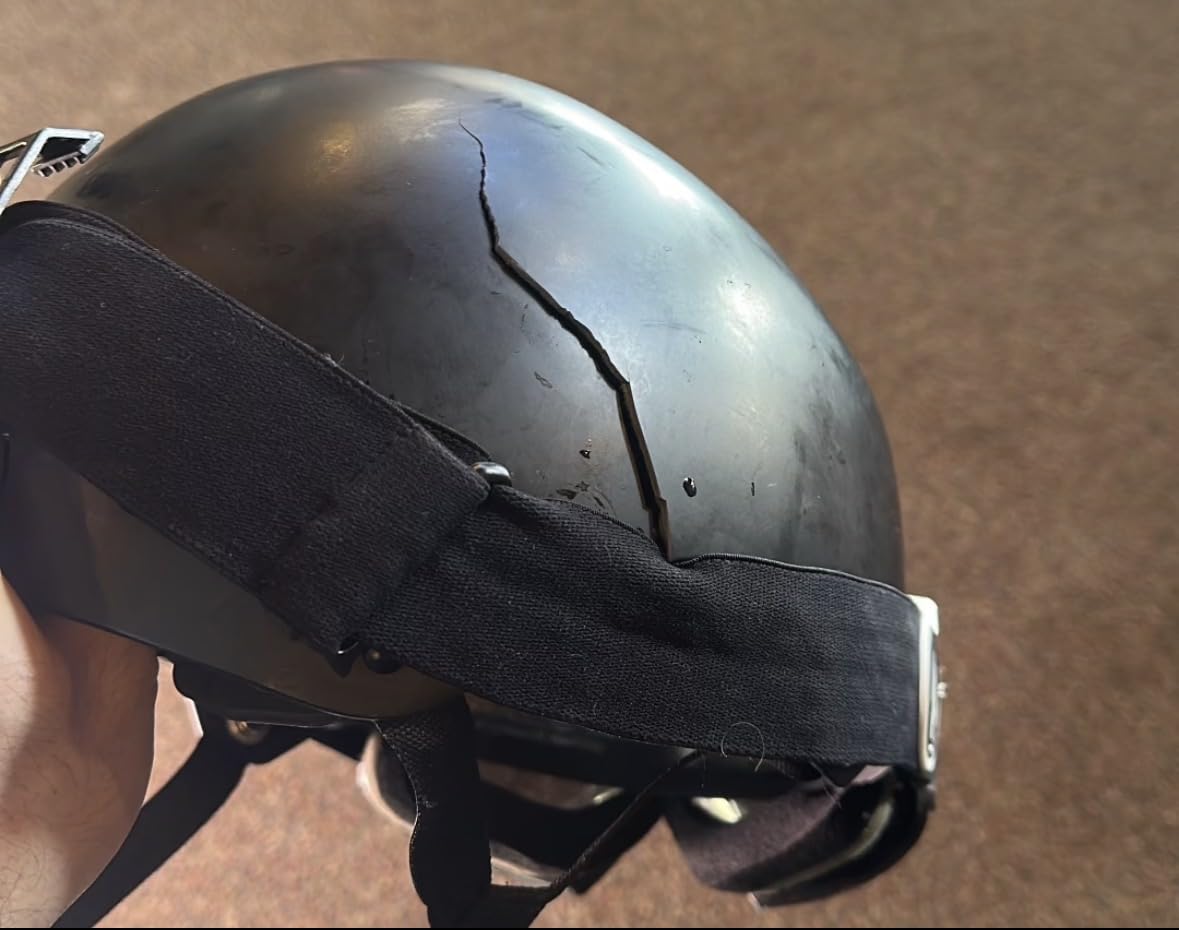
Replace it if the shell is cracked or deeply gouged, or if the shell has separated from the liner anywhere. On hard-shell models like the Ledge and Trig, a UV-exposed ABS shell also degrades with time, and polycarbonate is more forgiving but not immune.
Replace it if it took a fall off a shelf, a car roof rack, or a garage ceiling. Low-speed impacts break the liner without hurting you, and you will never know.
Replace it based on age, roughly on a schedule rather than a date. Most manufacturers treat a helmet as a consumable, and the ones-year warranty on several models in this guide is a warranty, not a lifespan. If you cannot recall the last time you replaced it, this is the season.
On second-hand MIPS helmets, our advice is simple: do not buy one. You cannot inspect the liner, you cannot verify the MIPS layer has not separated or been replaced with a non-MIPS aftermarket insert, and buyers regularly report fit problems after a swap. The market for new certified MIPS helmets at the entry end of this guide is wide enough that the savings are not worth the uncertainty.
Frequently Asked Questions
Is a MIPS helmet safer?
A MIPS helmet is safer in one specific, measurable way: the sliding layer between the shell and the EPS liner reduces the rotational forces transferred to the brain in an angled or oblique impact. Most skiing head injuries are rotational rather than straight-down, and a certified helmet that manages that mechanism protects you better than one that only crushes foam. It does not make head injury impossible, and fit matters more than the badge.
Is MIPS necessary in a ski helmet?
MIPS is not strictly necessary, because any helmet certified to modern standards such as ASTM F2040 or CE EN 1077 Class B protects against impact. It matters most for off-piste, backcountry, park and mogul skiers, and for beginners and children who fall more often. If you are on a motorbike, our guide to the best helmets for e-bike riders covers rotational systems in more depth.
Is a MIPS helmet worth the extra money?
Usually yes, provided you buy the best fitting helmet you can afford. The premium over a non-MIPS helmet buys rotational energy management, and the premium over a cheap helmet often buys a better fit system, vents and shell. We would not stretch the budget on MIPS alone though, since a well-fitted non-MIPS helmet protects you far better than a poorly fitted MIPS one.
Which is the safest ski helmet?
No helmet is officially ranked, so the fairest answer is the one that is certified to ASTM F2040 or CE EN 1077:2007 Class B, carries a genuine MIPS layer, and fits your head properly. In this comparison the Giro Ledge MIPS, Giro Jackson MIPS and Smith Mission MIPS all meet those criteria, with the Ledge carrying the largest volume of owner feedback.
How do I measure my head for a ski helmet?
Run a soft tape measure just above your eyebrows, across the widest part of your forehead and around the back, keeping it level and snug. Compare that centimetre figure against the brand’s own size chart rather than against your current helmet, because sizing differs between brands. Then try the helmet with the goggles you already own, since strap thickness changes where the helmet sits.
Which MIPS Ski Helmet Should You Buy?
The Giro Ledge MIPS is our choice for the best MIPS ski helmets for safety, and the reason is the 1172 reviews sitting behind a 4.7 rating. No other model in this guide has been tested by that many people across that many seasons, and the self-adjusting Auto Loc 2 fit means it works for riders who hate fiddling with dials on a chairlift.
Buy the OutdoorMaster ELK MIPS if the entry point is the decision that matters, and the Giro Jackson MIPS if you want the lightest in-mold shell with a 6 cm fit range. The Smith Vantage MIPS is the one to try if your goggles fog constantly, and the POC Obex MIPS is the right call if you spend a week in the backcountry each winter. Measure your head before you order any of them, and check the sizing note on the model you pick, because that is where nearly every complaint in our review data comes from.
Whatever you choose, wear it. The best MIPS ski helmet for safety is the 2026 one that fits properly and stays on your head every run.