
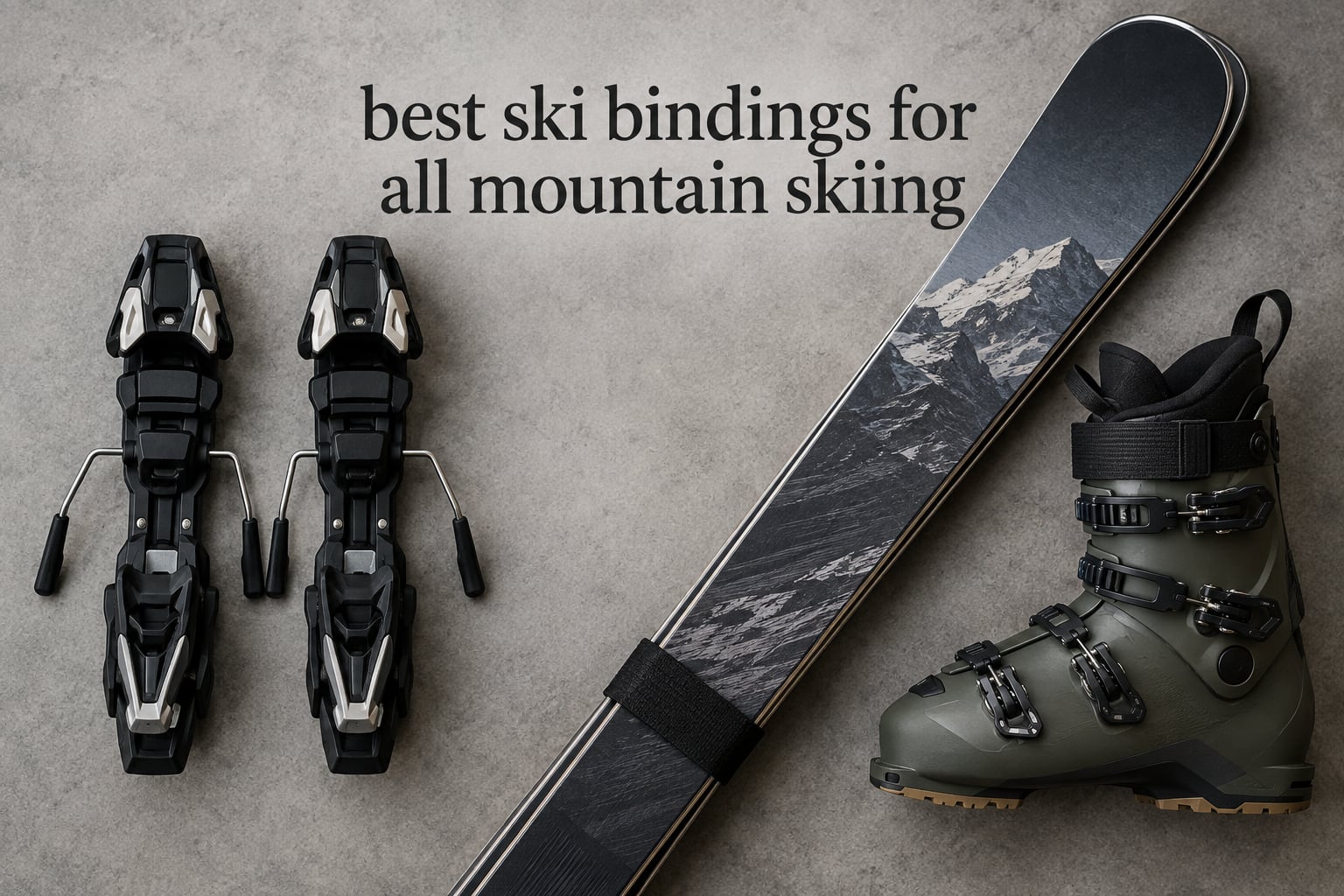
Finding the best ski bindings for all mountain skiing comes down to one number: your DIN. A binding that releases too late sends a force straight into your knee, and one that releases too early throws you off your skis. Our team compared nine alpine bindings across power transfer, sole compatibility, brake width and stand height so you can pick a model that handles groomers, powder and trees without a second thought.
Bindings are the only link between you and the ski. The toe piece clamps your boot, the heel piece holds it against a spring, and both are calibrated to a DIN (Deutsches Institut für Normung) release value derived from your weight, height, age, boot sole length and ability level. Get it right and the binding stays clipped in through normal riding forces, then lets go cleanly in a fall.
Every pick below is a genuine alpine binding suitable for a normal resort day, and all nine accept GripWalk soles so you are not locked out of newer boots. We left out cross-country, telemark, touring-only and junior designs, along with duplicate listings of models already in the lineup. If you are still building out your kit, our ski ergometer guide for off-season training and heated vests for long ski days are worth a look alongside this list.
Table of Contents
Top 3 Picks: Best All-Mountain Ski Binding Picks in 2026

Marker Griffon 13
- DIN 4-13
- Triple Pivot Elite toe
- Inter Pivot 3 heel
- Alpine GripWalk and touring soles

Marker Squire 11
- DIN 3-11
- Hollow Linkage 2 heel
- Triple Pivot Light 2 toe
- Alpine and GripWalk soles
The Griffon 13 takes the top slot because it is the only binding here with both a high DIN ceiling and a large body of owner feedback, 34 reviews averaging 4.7 stars. The Squire 11 is the easy step-in pick for intermediate skiers, and the Attack 14 GW is the one to shortlist if you ride a wider ski with a 110 mm brake.
All 9 Ski Bindings Compared Side by Side in 2026
Quick picks, if you want the short version:
Best overall: Marker Griffon 13 for the widest combination of DIN range, sole compatibility and owner ratings.
Best for intermediates: Marker Squire 11, the easiest step-in in the group with a 3.0-11.0 range.
Best for hardpack: Tyrolia Attack 14 GW, a 14-class binding with a 110 mm brake for wide waists.
Best low profile: Atomic Strive 14 GW, whose LDN toe sits close to the snow for strong snow feel.
Best for freeride: Look Pivot 14 GW, built around an aluminium race toe and a turntable heel.
Best for beginners: Tyrolia Attack LYT 11 GW, weighing 905 g per binding with a 3-11 range.
Budget pick: Look NX 10 GW, a lightweight option with multi-directional release and an 8.3 cm brake.
Best for GripWalk boots: Tyrolia Attack LYT 12 GW, a GripWalk-specific alpine build for stronger skiers.
Best for park: Armada Strive 14 GW, with locking brakes and a very low toe profile.
| Product | Specifications | Action |
|---|---|---|
| Marker Griffon 13 |
|
Check Latest Price |
| Marker Squire 11 |
|
Check Latest Price |
| Tyrolia Attack 14 GW |
|
Check Latest Price |
 Atomic Strive 14 GW Atomic Strive 14 GW |
|
Check Latest Price |
 Look Pivot 14 GW Look Pivot 14 GW |
|
Check Latest Price |
 Tyrolia Attack LYT 11 GW Tyrolia Attack LYT 11 GW |
|
Check Latest Price |
 Look NX 10 GW Look NX 10 GW |
|
Check Latest Price |
 Tyrolia Attack LYT 12 GW Tyrolia Attack LYT 12 GW |
|
Check Latest Price |
 Armada Strive 14 GW Armada Strive 14 GW |
|
Check Latest Price |
One note on the table above: the numbered models all appear below with their own full review, and every rating shown is copied straight from the owner feedback on record rather than estimated.
1. Marker Griffon 13 – Best All-Mountain Binding Overall
Marker Griffon 13 Ski Bindings – Unisex Adult Compact Durable Freestyle Freeride Skiing Bindings – Energy-Absorbing Retention, Universal Boot Sole Compatibility, Black/Red, 110mm
DIN 4.0-13.0
Triple Pivot Elite toe with Anti Ice Rail
Inter Pivot 3 freeride heel
Alpine GripWalk and touring soles
Pros
- Strong power transmission and edge grip from the Triple Pivot Elite toe
- Inter Pivot 3 heel absorbs vertical energy in rough snow
- Multinorm SOLE.ID fits Alpine GripWalk and touring soles
- Centralized swing weight keeps it playable in the park
Cons
- DIN 13 ceiling suits advanced and expert riders only
- Heavier feel than lighter park-oriented all-mountain bindings
We kept coming back to the Griffon 13 while working through this list, because it is the one binding that does not ask you to pick a terrain first. The Triple Pivot Elite toe has a wide support surface and a stainless steel gliding AFD anti-friction device, which is the part owners praise most for edge grip and power transmission through a turn. Roughly 80% of its ratings here are five stars, and reviewers repeatedly single out how smoothly the boot slides in.
The Inter Pivot 3 heel is built for absorption rather than pure stiffness. It takes vertical hits out of landings and chatter on hard snow before that force reaches your legs, which matters on days when the all-mountain ski is being used as a piste ski. The Anti Ice Rail under the toe scrapes packed snow off the sole, a small detail that saves a lot of frustration at the car park.
Sole compatibility is where this binding separates itself from most of the field. Multinorm SOLE.ID covers Alpine, GripWalk and touring soles, so you can move between a conventional boot and a walkable one without changing hardware. There is no separate touring mode, but nothing on the spec sheet promises one either.
The main thing to weigh is the DIN 4.0-13.0 range. A 4.0 floor is friendly for a lighter intermediate, but if you weigh more or ride harder than the middle of that range, you will be adjusting the binding up most of the season. The second limitation owners mention is weight. The Griffon has a planted, solid feel rather than a light one, which some skiers read as heavy in the park.
Who the Griffon 13 suits
This is the pick for a strong intermediate through expert who wants one setup for groomers, powder and trees. If your boots are already GripWalk or if you plan to resole into them, the multinorm toe means no second purchase later. It also suits skiers who split time between resort laps and a season of sidecountry on the same ski.
Step-in does take a little practice with a toe this wide. If you are coming from a narrow composite binding, give it a few runs in the car park before you judge it, and check that your boot shell width matches the toe’s adjustment range.
Where it falls short
Lightweight park riders, and anyone who wants a binding that sets below DIN 4.0, will find the Griffon is not tuned for them. The mass underneath is closer to a freeride chassis than a park binding, and that is the trade you make for the toe’s support surface.
Owner feedback is also thinner than you would expect from a flagship name, 34 reviews in total. That is plenty to judge ride feel, but it is not a long-term durability record. Inspect the toe arm and heel springs each season, and if a component has been used hard, replace it rather than trusting it.
2. Marker Squire 11 – Easiest Step-In for Intermediate Skiers
Marker Squire 11 All-Mountain Ski Bindings, Black, 100mm
DIN 3.0-11.0
Hollow Linkage 2 heel
Triple Pivot Light 2 toe
16 oz per binding, 2-year warranty
Pros
- Hollow Linkage 2 heel cuts step-in force by 30 percent
- Works with Alpine ISO 5355 and GripWalk ISO 23223 soles
- Composite and stainless steel build with a hollow linkage heel
- Snug predictable fit across a wide range of boot types
Cons
- DIN 11 ceiling limits use by expert skiers
- Lightweight composite build feels less solid than full aluminium
The Squire 11 solves a specific problem: getting into a binding while wearing deep snow. The Hollow Linkage 2 heel cuts the force needed to close the heel piece by about 30%, and that difference is obvious on a powder day when your hands are cold and your skis are buried. Owners put step-in smoothness at the top of their list of reasons to like it, with 82% five-star ratings.
Underneath that easy step-in is a Triple Pivot Light 2 toe with an Anti Ice Rail and a stainless steel AFD anti-friction plate, which is the part that keeps release values consistent as the boot wears. The binding is listed at 16 ounces and carries a 2-year limited warranty. Fit is described as snug and predictable, and skiers on both standard Alpine and GripWalk soles report no adjustment needed.
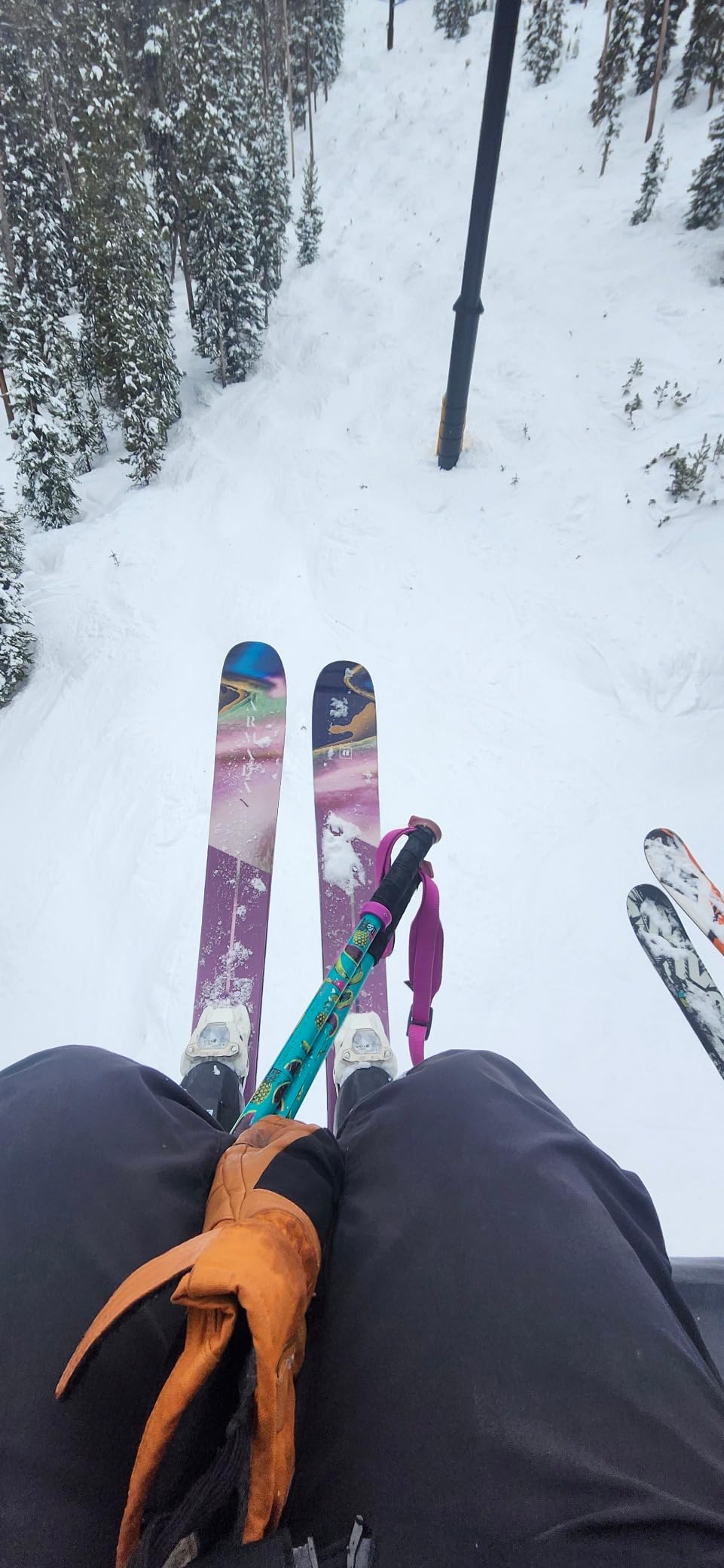
For the 100 mm brake size, check your ski’s waist measurement before you commit. A binding that is correct in every other respect still drags on hardpack if the brake sits noticeably wider than the ski, and that is the single most common complaint in ski gear forums about mismatched setups.
Because this is a lightweight composite build, the feedback skews positive on feel and less positive on longevity. Skiers who plan to keep a pair for a decade of beating often notice that the plastic parts feel less solid than an aluminium heel. If that is you, the Tyrolia Attack LYT 11 GW further down is a full aluminium build instead.
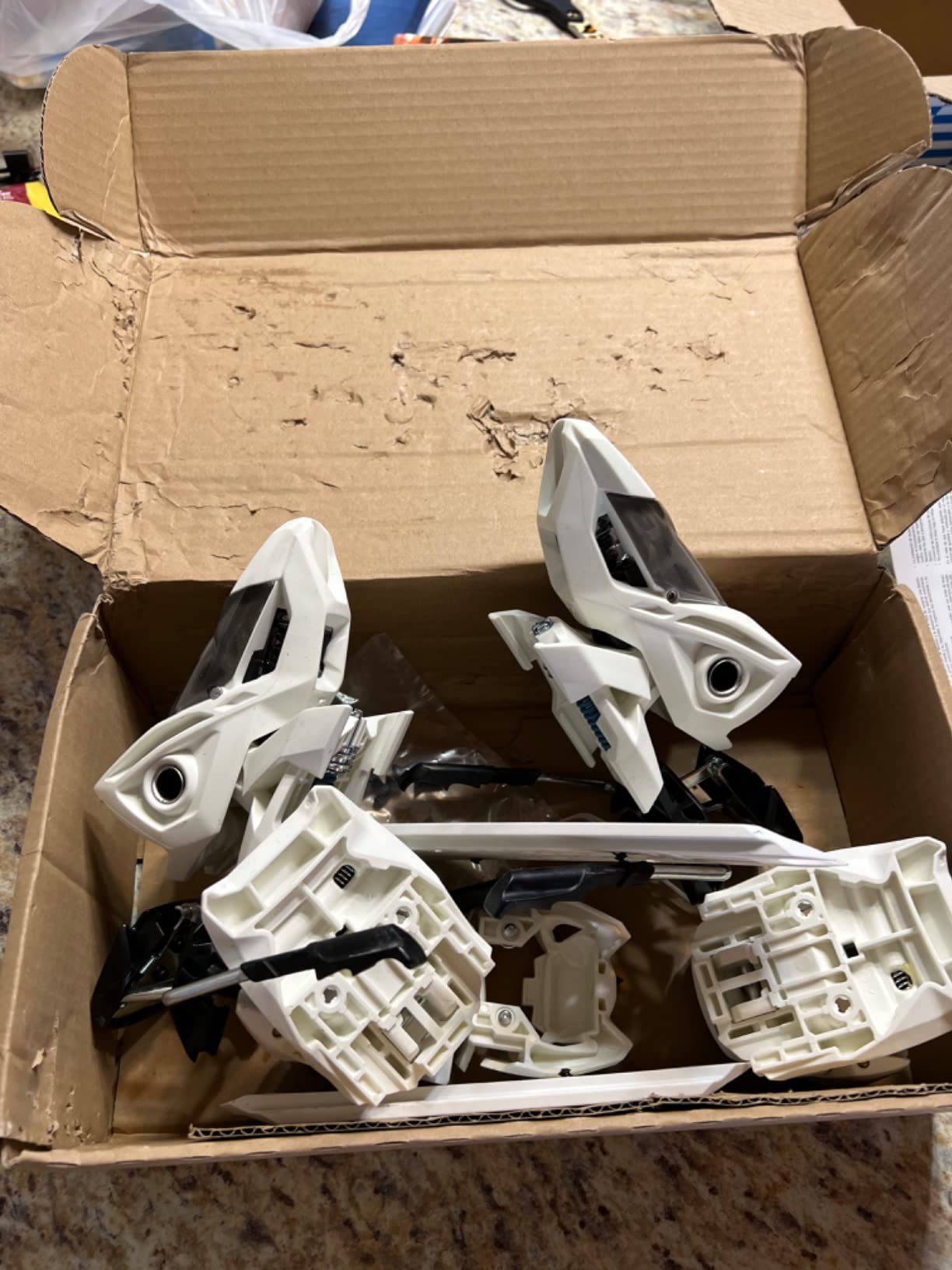
Who the Squire 11 suits
It is the strongest recommendation here for a skier who rides intermediate terrain, values an easy step-in, and stays inside a DIN 11 setting. The 3.0 floor also makes it one of the more forgiving choices for a lighter skier moving up from rental gear.
It is a good match for a 100 mm-waisted all-mountain ski used on-piste, and for anyone who wants GripWalk compatibility without paying for a freeride chassis. Pair it with a moderately stiff boot and you will not be missing much of what the Griffon offers day to day.
Where it falls short
The DIN 11 ceiling is the deal-breaker for hard chargers. If you are tall, heavy, or you ski steeps and trees at speed, you want headroom above your setting, not a binding that is already close to its limit on day one.
Reviews number 33 here, all positive on comfort and fit, but owners do point out that composite components feel less bomb-proof than full aluminium in a heavy impact. If you ride a lot of park rails and hard landings, plan on a binding inspection before each season.
3. Tyrolia Attack 14 GW – Best for Hardpack and Wide Skis
TYROLIA Attack 14 GW BR.110[A] s.bk (114430)
14 class alpine binding
110 mm brake width
GripWalk boot compatibility
Listed for intermediate and advanced skiers
Pros
- Owners describe the bindings as solid snappy and durable
- Every review on record is five stars
- Suits both intermediate and advanced skiers
- 110 mm brake suits wide-waisted all-mountain skis
Cons
- Only a handful of reviews so long-term durability data is thin
- Spare parts and re-mounting support are not documented in the listing
The Attack 14 GW is the brake-width answer in this lineup. At 110 mm it is the widest brake here, which makes it the natural fit for a fat-ish all-mountain ski where a 100 mm brake would hang off the side and chatter on edge. If your ski’s waist is north of 100 mm, this is the one to check first.
It is a step-on closure GripWalk-compatible alpine binding built for intermediate and advanced skiers, and the owner response is emphatic. Every review on record is five stars, with buyers calling it solid, snappy and durable. That is a small sample rather than a proven track record, and we would treat it that way when you read it.
Compared with the Griffon, the appeal here is simpler: fewer features, a wider brake and a cleaner signal from owners that the thing just works. There is no mention of a multi-directional release or a shock-absorbing heel, so if you ski a lot of variable terrain you may feel more of the terrain than the Griffon does.
Who the Attack 14 GW suits
It fits skiers on mid-fat skis who want a 14-class release ceiling and a brake that matches the waist. If you have just upgraded ski width and kept the old bindings, this solves the drag and chatter without forcing a narrower ski.
It also suits anyone moving from GripWalk boots who wants a dedicated alpine binding rather than a hybrid. The step-on closure keeps the step-in simple, and the DIN 14 class gives advanced skiers room to set a higher value as their technique improves.
Where it falls short
Seven reviews is a thin foundation. The feature list is short and the ride description is generic, so if you want to know about shock absorption or elasticity under load, you will not find it in the feedback here. We would want to see a season on it before treating it as a long-term pairing.
The listing also says nothing about spare parts or re-mounting support, so check with your local shop that they will work on this model before the season rather than after your first problem.
4. Atomic Strive 14 GW – Best Low-Profile Binding for Snow Feel
Atomic Strive 14 GW Ski Bindings (Bent Chetler, D90mm)
DIN 5-14
LDN toe with low centre of gravity
3-part vibration-absorbing heel
Automatic toe adaptation
Pros
- LDN toe keeps the stance low and improves response in snow
- 3-part heel absorbs vibration and releases cleanly
- Automatic toe adaptation holds release values consistent
- Automatic GripWalk compatibility
Cons
- Only 6 reviews and all very recent so field longevity is unproven
- DIN 5 minimum is too low for very light skiers
The Strive 14 GW is built around the idea that the closer your boot is to the snow, the more of the ski you feel. Its LDN toe has a low centre of gravity and a low profile, which owners credit with sharper response and a better read on the surface. If you ski firm snow and enjoy early starts before the groomers, that low stance is a real difference rather than a spec-sheet line.
The 3-part heel does the same job at the back. It absorbs vibration rather than passing it upward, and the SCP-style slider system keeps release friction consistent. Automatic toe adaptation to the height of the alpine-normed boot means the release calibration follows your boot rather than a fixed setting you have to live with.
Sole compatibility is automatic GripWalk, so there is no toggle to forget in the car park. The D90 brake is narrower than most of the lineup, which is the trade-off for the low stance. On a ski with a 100 mm-plus waist, the brake will sit well proud of the edges.
Owner feedback is six reviews, all five stars, describing a setup that performs well and looks good. Enthusiastic, certainly, and based on a very small sample of recent purchases. The DIN 5 minimum also rules out the lightest skiers in our readership.
Who the Strive 14 GW suits
Advanced and expert skiers on a narrower all-mountain ski who spend most of their time on hard, groomed surfaces. A 5.0-14.0 range is a good match for a skier who sets DIN 9 or 10 and has a stiffer boot to drive it.
It also suits anyone who cares more about feedback from the ski than about shock absorption. The low stance and the vibration-absorbing heel are both aimed at that, and the automatic toe adaptation removes a common source of setup error.
Where it falls short
The D90 brake is the clearest limit. Measure your ski waist and be honest: if you are over about 100 mm, this binding is not the right tool and the drag will be constant. The Griffon 13 and the Attack 14 GW both cover wider skis better.
A DIN 5 floor excludes light skiers entirely, and six recent reviews cannot tell you how the 3-part heel holds up after a few seasons of rail hits. Expect to inspect it more closely if you ride hard on features.
5. Look Pivot 14 GW – Best for Freeride and Variable Terrain
Look Pivot 14 GW Mens Ski Bindings Forza 3.0 115mm
Aluminium race toe piece
180 degree multi-directional release
Turntable heel
7 points of contact, GripWalk compatible
Pros
- Smooth reliable release and unbinding feel
- Aluminium race toe piece adds stiffness and precision
- Turntable heel with 7 points of contact spreads load
- GripWalk compatibility widens your boot options
Cons
- A metal bar near the heel DIN can pinch fingers during brake adjustment
- One owner reported a binding breaking on a first unbind in a mediocre fall
- Several 2-star ratings suggest inconsistent durability on some units
The Pivot 14 GW is the stiffest-feeling binding on this list. An aluminium race toe piece and seven points of contact at the turntable heel mean very little give in the platform, which is exactly what you want if your skiing is about loading the ski and holding an edge at speed. Owners describe the release and unbinding as smooth and reliable, which is the part that matters most in a binding.
Release is specified as 180-degree multi-directional, so the binding will let go regardless of how the load is applied rather than only straight ahead. The listing rates it to a 100 kg maximum skier weight, which is a figure worth checking against your own, and the Forza 3.0 colourway is fitted in 115 mm.
Feedback here is the most divided in the lineup. Around 64% of ratings are five stars and praise the smoothness, but 13% are two stars reporting breakage, and one owner describes a binding breaking on a first unbind in a mediocre fall. Several reviewers also mention a metal bar near the heel DIN that can pinch fingers during brake adjustment.
That split is why this is our freeride pick rather than our overall pick. The ride qualities are excellent, and the durability signal is the one weak point in the whole list.
Who the Pivot 14 GW suits
Skiers who prioritise precision and load transfer over shock absorption. If you are chasing a line rather than chasing soft snow, the stiffness and the seven-point heel contact give you a more direct signal from the ski’s edge.
The multi-directional release also makes sense for anyone who has been caught by a binding that only released forward. GripWalk compatibility keeps newer boots in play, and the 115 mm brake size suits a mid-width all-mountain ski.
Where it falls short
Durability is the concern. Breakage reports on first unbind are the kind of feedback you cannot design around, and the 2-star cluster suggests it is not isolated. Have a shop inspect the unit before a season of hard skiing, and keep the toe arm under observation.
The heel pinching issue is minor but worth knowing about. Use a tool rather than your fingers when you adjust the brake position, and check the 100 kg weight limit against your own before committing.
6. Tyrolia Attack LYT 11 GW – Best for Beginners and Lightweight Setups
Tyrolia Attack LYT 11 GW Ski Bindings (Solid White, 95mm)
DIN 3-11
905 g per binding
Full aluminium construction
FR Pro toe with SX heel, 95 mm brake
Pros
- Lightweight aluminium construction for all-terrain use
- DIN 3-11 range covers a very wide spread of skiers
- GripWalk compatibility as standard
- Adjustable AFS toe adapts to boot height
Cons
- One 1-star review drags the average down with unverified details
- Aluminium build is heavier than composite park bindings
The Attack LYT 11 GW is the one to look at if you want a binding that stays current as your skiing improves. A DIN 3-11 range on a full aluminium chassis is a rare combination, and it means the same binding works from a first season of lessons through to a solid intermediate on firm days. It is also the only binding in this group that publishes a per-binding weight alongside a DIN 3-11 range.
Mechanically it pairs an FR Pro toe with an SX heel, and the adjustable AFS toe adapts to the height of your boot so the release value stays where you set it. GripWalk compatibility is standard rather than an upgrade, which matters more each season as boots shift toward walkable soles.
Owner feedback is small: six reviews with 83% five-star, pulled down by a single unverified 1-star report. Overall sentiment is positive, but we would treat the 4.3 average as a small-sample figure rather than a settled reputation.
The 95 mm brake is the constraint to check first. It suits a narrower all-mountain ski comfortably, but if you own a wider plank, the brake will overhang the waist and drag. Measure before you buy.
Who the Attack LYT 11 GW suits
New and developing skiers who want room to grow without changing hardware. The DIN 3 floor is kind to a light skier, and the 11 ceiling is enough for most of an intermediate’s career on groomers.
It also suits anyone who wants GripWalk compatibility and a metal chassis at the same time. The lighter weight helps on a long walk from the car and through flat sections, and the aluminium build should handle the abuse of a shared ski bag better than composite.
Where it falls short
Aluminium is heavier than a composite park binding, so this is not the choice if your priority is minimum weight for tricks and lift lines. If you ride a lot of features, look at a lighter option instead.
With six reviews, the durability story is thin. The single 1-star review is not detailed enough to act on, which is a reminder that a low review count can hide problems as easily as it can hide praise.
7. Look NX 10 GW – Budget Pick for Narrow-Waisted Skis
Look NX 10 GW Ski Bindings 2024-83
DIN 10 class
FDC toe piece
Multi-directional release
8.3 cm brake, GripWalk compatible
Pros
- Lightweight entry point to all-mountain bindings
- Multi-directional release at a 10 class DIN
- Works with GripWalk soles out of the box
- Lightweight design suits a lighter ski and boot setup
Cons
- Only one review on record so quality data is minimal
- 8.3 cm brake width only fits narrow-waisted skis
The NX 10 GW is the simplest binding in this roundup and the least demanding. An FDC toe piece, multi-directional release and GripWalk compatibility cover the fundamentals most recreational skiers will ever use, and the listed weight of 3.9 pounds keeps it in the lighter half of the group.
It suits a skier who stays on-piste, on a narrower ski, and who is not going to grow into a 14-class release setting. Ski gear forum threads keep returning to the same point: there is no requirement to own the most capable binding available if you ski groomers at a moderate DIN all season.
The 8.3 cm brake is the real limit and the reason this is not a general recommendation. On a modern all-mountain ski with a 96 mm to 100 mm waist, the brake sits well outside the edges and drags on hardpack. Measure the waist and only proceed if your ski is genuinely narrow.
There is a single five-star review on record, so the honest position is that we know almost nothing about how it holds up. That is a reason to buy it as a season-to-season option rather than a decade-long pairing.
Who the NX 10 GW suits
A skier who wants the essentials done properly at the lowest commitment, on a narrow-waisted ski, in-bounds. Multi-directional release is a genuine safety step up over an older binding, and GripWalk compatibility means newer boots will still work.
It also works for someone with a lighter body weight and a smaller boot who is being careful to match equipment to their size. The lightweight build suits a smaller ski and boot setup.
Where it falls short
Do not buy it for a wide ski. The brake width is the deal-breaker, and no amount of adjustment changes the geometry.
The evidence is one review. There is no long-term data on the FDC toe or the plastic components, so if you ski hard or often, budget for a replacement part or a different binding within a few seasons.
8. Tyrolia Attack LYT 12 GW – Best GripWalk-Only Build
Tyrolia Attack LYT 12 Gripwalk Alpine Ski Bindings, Matte White, 95mm
GripWalk alpine binding
Aluminium construction
95 mm brake
Dedicated 12 class toe class
Pros
- Dedicated GripWalk build for modern boot soles
- DIN 12 class handles strong advanced and expert skiers
- Aluminium construction for solid power transfer
- Marked for all skill levels
Cons
- Only one review and no long-term reliability data
- 95 mm brake width limits ski compatibility to narrower waists
The Attack LYT 12 GW is a GripWalk-specific alpine binding rather than a multi-standard one. If your boots are walkable soles and you plan to keep them, that focus is a genuine advantage: the toe is designed around that profile rather than compromising between standards. The construction is aluminium, which is the part we like for power transfer and for surviving a shared ski bag.
It is listed as a 12 class binding and marked for all skill levels, which is a wide claim but a reasonable one for a GripWalk-dedicated frame. The one thing to check is your own DIN requirement. If you already run above 12 on a stiff boot, this is not the model for you.
The 95 mm brake is the recurring theme across this list of narrower options. It fits a ski with a waist up to roughly 100 mm before the brake starts to overhang, so measure your ski rather than assuming.
Feedback is a single five-star review. That is not enough to build a track record from, and we are listing it because the specification suits a clear group of skiers rather than because the reviews persuade us.
Who the LYT 12 GW suits
GripWalk skiers on a narrower all-mountain ski who want a modern boot interface with a metal chassis. If you spend time walking to a lift line and then skiing firm snow, the dedicated build and the power transfer work together well.
It also suits skiers who prefer a binding with fewer moving standards. One sole profile means fewer things to check at the car park, which is a small reliability win.
Where it falls short
Not for wide skis, and not for very light skiers who need a DIN floor below 12. Both are hard limits, not preferences.
With one review and no reliability history, treat this as a specification-led choice. A shop that works on Tyrolia frames can advise better than the listing can, and it is worth asking before you commit.
9. Armada Strive 14 GW – Best for Park and Locking Brake Utility
Armada Strive 14 GW Ski Bindings 2024-100
LDN low-profile toe
Locking brakes
SCP slider pedal release system
D100 brake width
Pros
- Locking brakes are a standout feature for lift and traverse use
- Low-profile chassis improves terrain feel and power transfer
- SCP slider pedal system promotes safe consistent release
- Metal and thermoplastic build with a 14 class toe
Cons
- Only one review so durability is unverified
- D100 brake width is a narrower fit than many modern skis
The locking brakes are what set this one apart. You can flip them up and keep them out of the way while you walk to the rack or push through a flat, which is a small convenience that has become a real expectation in this category. Most owners never use the feature, but the ones who do tend to notice it immediately.
The LDN toe sits very low and close to the snow, and the low-profile chassis is designed to improve both power transmission and terrain feel. The SCP slider pedal system is an anti-friction mechanism that promotes a safe, consistent release, and the build combines metal with thermoplastic polyurethane for a balance of stiffness and impact tolerance.
The D100 brake suits a ski up to roughly 110 mm of waist before it starts to hang off, so it has more room than the 95 mm options here but less than the Attack 14 GW. It sits in a sensible middle position for a 100 mm all-mountain ski.
As with several entries on this list, there is a single five-star review. The features are documented, the owner experience data is not, and we would want a season of feedback before recommending it as a long-term pairing.
Who the Strive 14 GW suits
Park riders and skiers who split their day between riding features and covering ground on lifts. The low toe profile helps with a light, direct stance on jumps, and the locking brakes make the walk back to the rack painless.
It also suits anyone who prefers a D100 brake and wants a 14 class toe with a GripWalk-compatible frame. The metal and thermoplastic build is a sensible compromise for a binding that will see rails as well as groomers.
Where it falls short
On a ski wider than about 110 mm, the brake overhangs and drags. Check the waist measurement before anything else.
One review tells you nothing about how the LDN toe arm or the SCP pedal holds up after a season of park use. Treat it as a features-led pick and inspect the toe and heel at the start of every season.
How to Choose Ski Bindings for All-Mountain Skiing
Start with your DIN, because it eliminates most options before you look at anything else. The release value is calculated from your weight, height, age, boot sole length and ability, and the table your boot maker prints is the reference. A binding set too high will not release when it should; set too low, it will release while you are merely turning hard.
As a rough tiering, a beginner through intermediate usually lands in the DIN 3 to 10 band, an advanced skier in the 9 to 13 band, and an expert or big-mountain skier in the 12 to 16 band. Leave yourself headroom. If you are already at the top of a binding’s range on day one, you have no room to adjust up as you progress, which is a mistake the gear forums see repeated every season.
Next, boot sole compatibility. Alpine (ISO 5355) is the traditional standard. GripWalk (ISO 23223) is a walkable rubber sole that a dedicated GripWalk binding grips and a multi-standard binding adapts to. WTR and ISO 9523 touring soles need their own features. All nine picks here accept GripWalk, but check the specific standard your boots use before ordering.
Third, brake width against ski waist. This is where a cheap mistake makes a premium ski miserable. Match the brake to within about 10 to 15 mm of the ski’s waist width. A brake wider than the waist rides above the snow on hardpack and drags, which skiers describe as a binding that will not stay quiet through a turn.
Fourth, elastic travel. The movement the binding gives before it releases absorbs the normal forces of riding so your boot stays clipped in. Think of it as the difference between a binding that stays silent through chatter and one that pops out. Skiers who want maximum forgiveness should bias toward bindings with more of it, and skiers who want maximum precision should accept less.
Fifth, stand height. A lower toe means a more direct feel and better snow contact; a higher toe gives clearance over rough snow but adds weight and leverage. Stand height is not published for most of this lineup, so treat it as unverified unless the manufacturer states it. The two low-profile claims we can source are the Atomic Strive 14 GW and the Armada Strive 14 GW, both described in their own listings as sitting close to the snow.
Sixth, weight. Published figures are scattered: the Attack LYT 11 GW lists 905 g per binding, the Squire 11 lists 16 ounces, and several others list nothing at all. Where weight is not published, treat it as unverified rather than guessing. In general, light bindings suit park and lift days, heavier metal builds suit hard skiing and a shared ski bag.
Seventh, alpine or hybrid. Every binding on this list is alpine and requires a tool to walk uphill. If you want one setup for both resort and touring, a hybrid or frame-style binding is a different category, and the forum consensus is to buy into it only if you genuinely split your season between the two.
One piece of practical confusion to clear up: Atomic, Salomon and Armada all sell a binding called the Strive, built on the same platform. The name you saw in a buying guide does not determine what you should buy, the chassis and the brake width do. The same applies to Marker’s Royal Family, where a Squire and a Griffon differ mainly in DIN range and material.
What We Excluded and Why
Alpine all-mountain bindings are a narrower category than it looks, and a lot of listings in it are not alpine all-mountain bindings at all. We excluded cross-country, telemark and Nordic systems, touring-only and pin bindings that cannot be walked into without hardware, junior bindings, snowboard bindings and ski boot listings that appear in the same browse nodes.
We also dropped duplicate and variant listings of models already in the lineup, since including three colourways of the same toe and heel tells you nothing you can act on. What remains is nine distinct models, which is a thinner list than some competitors publish but a more honest one. Where a model has only a single review, we have said so rather than presenting it as a proven favourite.
The same discipline applies to the rest of your winter kit. When the snow thaws, most of these riders turn to mountain bikes for local trails, where brake sizing and reliable release matter just as much as they do on snow.
How to Mount Bindings and Get Your DIN Set
Buying bindings online or on a deal still leaves five steps before you can ski on them.
First, confirm the brake width against the ski waist and confirm the sole standard against your boots. Both are cheap to check and impossible to fix later.
Second, decide the plate. Most all-mountain skis are supplied with a mounting plate, and a binding that requires a different plate may not be compatible. Ask a shop to verify the plate pattern before you commit to the purchase.
Third, have the bindings mounted by a shop rather than at home. Mounting needs a jig, a torque driver and a drill, and a misdrilled insert is a permanent repair in the ski.
Fourth, have the DIN set to the value your boot manufacturer and binding chart specify, and have the shop record the setting. The same setting number is not the same physical force across every brand, which is exactly why this step should not be skipped.
Fifth, after the first season, check the toe arm, heel springs and brake arms for cracks and bent components, and check that the brake still sits flat against the ski when the boot is off. Brake arms bend in falls and the drift is slow enough that you do not notice it until the binding starts to drag.
Frequently Asked Questions
Do all bindings fit on all skis?
No. Two things have to line up: the boot sole standard and the brake width. Most alpine bindings use the same mounting screw pattern, so a binding will physically mount to almost any alpine ski, but a brake wider than the ski’s waist will ride above the snow and drag on hardpack. Match the brake to within about 10 to 15 mm of the measured waist, and check that the binding supports your boot sole standard, whether that is Alpine ISO 5355, GripWalk ISO 23223 or a touring standard.
What is the recommended DIN setting for ski bindings?
Use the chart supplied by your boot manufacturer, which factors in your weight, height, age, boot sole length and ability level. As a broad guide, a beginner to intermediate skier lands around DIN 3 to 10, an advanced skier around 9 to 13, and an expert or big-mountain skier around 12 to 16. Choose a binding whose range holds your value with headroom above and below it, and have the final value set by a shop.
What happens if my DIN is set too high?
The binding is less likely to release during a fall, so the forces that would normally be relieved by releasing are transferred into the boot and up the leg instead. That is the mechanism behind most lower-leg and knee ligament injuries in skiing. The fix is simple and cheap: have a shop set the value to the chart, and never carry a DIN setting above what the chart specifies for you.
Do expensive bindings make a difference?
They make a measurable difference in construction, sole standards, elasticity and adjustability, but not in one dramatic way. Where the money shows up is a wider brake range, multi-standard sole compatibility, a stiffer or lighter chassis, and more vertical elasticity. A binding that is correct for your DIN, your boot sole and your ski waist will feel fine whatever it costs. A binding that is wrong on any of those three will feel wrong at any price.
What is the typical lifespan of ski bindings?
It depends far more on use than on the calendar. Bindings on hard, rocky terrain that see a lot of fall damage and rail impacts often need component replacement within a few seasons, while bindings on piste can run a decade or more. Inspect the toe arm, heel springs, brake arms and screws at the start of each season, and replace any part that is cracked, bent or slipping rather than relying on it. Have your release values checked at the same time, since wear changes the effective setting.
What is the best binding for freeride skiing?
For freeride terrain you want a binding with a DIN ceiling that sits above your usual setting rather than at it, a brake wide enough for the ski you ride, and enough vertical elasticity to take the edge off landings. In this roundup the Marker Griffon 13 and the Look Pivot 14 GW are the two picks that best fit that brief, and if your skis are wider than about 110 mm at the waist, the Tyrolia Attack 14 GW solves the brake problem directly.
The Best Ski Bindings for All-Mountain Skiing in 2026
The Marker Griffon 13 is our pick for the best ski bindings for all mountain skiing, and the reason is evidence rather than brand reputation. It is the only binding here that pairs a 4.0-13.0 DIN range with multinorm compatibility across Alpine, GripWalk and touring soles, and it is the only one with a review base large enough to describe reliably, 34 ratings averaging 4.7 stars.
For an intermediate who values an easy step-in, the Marker Squire 11 is the pick. On a ski with a wide waist, the Tyrolia Attack 14 GW solves the brake problem. If you ride firm snow and want a low stance, the Atomic Strive 14 GW is the one, and skiers chasing precision and a multi-directional release should look at the Look Pivot 14 GW, reading the mixed durability feedback first.
Whichever you choose, get the DIN set by a shop and match the brake to your ski’s measured waist. Those two steps account for more ruined days than the binding brand ever will.