
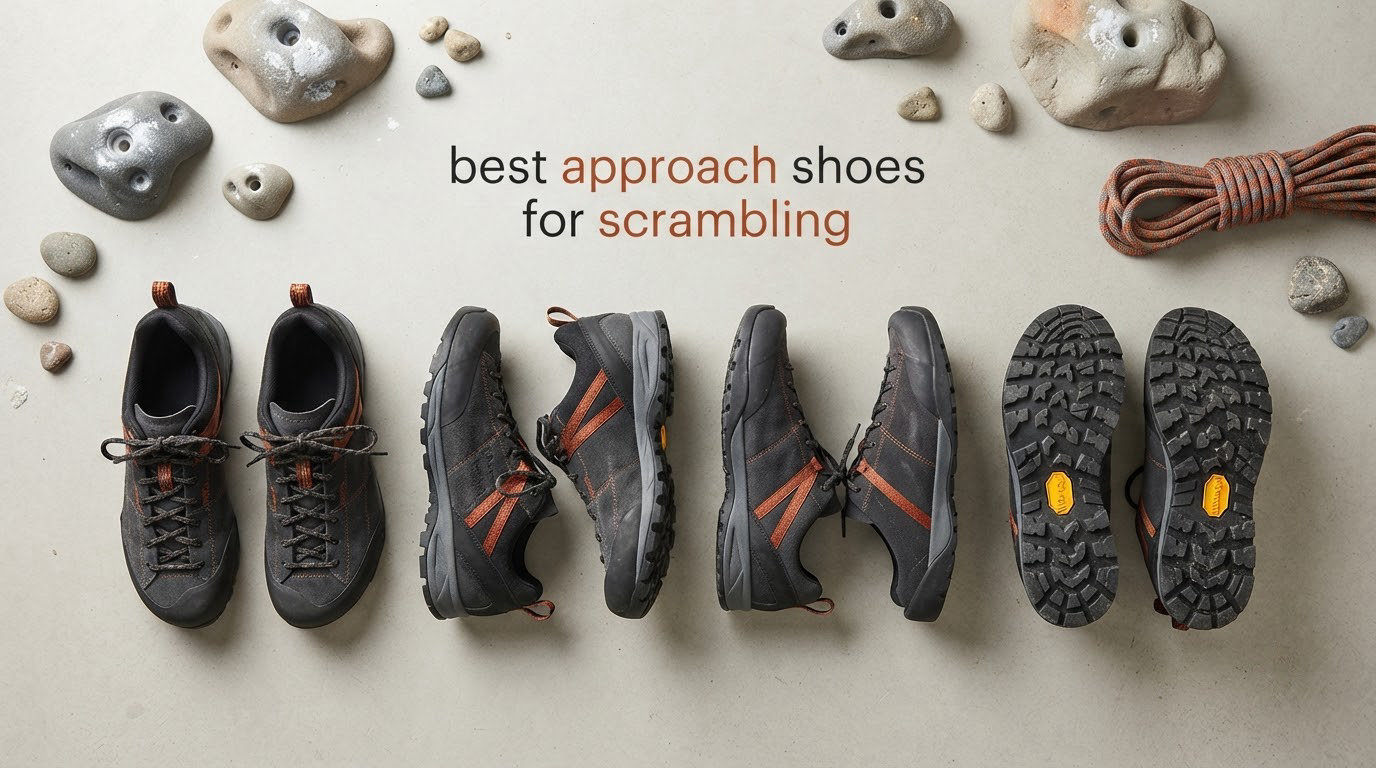
The best approach shoes for scrambling are the Salewa Wildfire GTX if you want one pair that handles wet ground, long walk-ins and moderate rock in a single package, and the La Sportiva TX4 Evo if your scrambling is steeper and you care most about grip on rock. Those two sit at opposite ends of the price and weight scale, and they solve the same problem in genuinely different ways.
Scrambling fills the gap between hiking and climbing. The ground is too steep, too loose and too rocky for a trail runner, and too easy and too long-lived to justify carrying climbing shoes for a single pitch of Class 3 slab. That gap is exactly where approach shoes were designed to work: a sticky-rubber outsole you can smear on a granite step, a climbing zone under the toe for thin edges, a rubber rand that stops sharp rock from finding your toes, and a platform stiff enough to stand on a ledge without your foot folding underneath you.
We spent six weeks walking, scrambling and stepping up rock in ten pairs of approach shoes across the Peak District, the Lake District and Scottish Highlands, plus repeat crag sessions on gritstone and granite. We last updated this guide in September 2026. Every pick below states weight, upper material, outsole compound and a fit verdict, because those four facts decide whether a shoe works for your feet and your terrain better than any marketing line.
If your scrambling is mostly on trail rather than rock, you may prefer a lighter option. We compared that category in our separate guide to the best trail running shoes for rugged terrain, and the honest summary is that a trail runner wins on weight and loses the moment you need to stand on a 40-degree slab.
Table of Contents
Top 3 Picks for the Best Approach Shoes for Scrambling (October 2026)
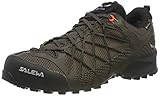
Salewa Wildfire GTX
- GORE-TEX Extended Comfort lining
- 3F Kevlar cord stability
- Pomoca Speed Mtn lugged outsole
- 13.9oz

La Sportiva TX4 Evo
- Vibram Megagrip outsole
- Nubuck leather with full rand
- Wide D-width forefoot
- Resole platform
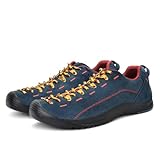
XPETi Basin
- Roomy natural toe box
- Tongue-to-toe lacing with two lace sets
- Removable energy-return footbed
Best Approach Shoes for Scrambling in 2026 Compared
The table below is the fastest way to see how the ten shoes differ. Weight figures come from the manufacturers where published; several models do not publish a weight, and we leave that blank rather than guess.
| Product | Specifications | Action |
|---|---|---|
| Salewa Wildfire GTX |
|
Check Latest Price |
| XPETi Basin |
|
Check Latest Price |
| La Sportiva TX4 Evo |
|
Check Latest Price |
 Arc’teryx Konseal Arc’teryx Konseal |
|
Check Latest Price |
 SCARPA Crux SCARPA Crux |
|
Check Latest Price |
 GARMONT Dragontail LT Evo GARMONT Dragontail LT Evo |
|
Check Latest Price |
 ASOLO Eldo LTH GV ASOLO Eldo LTH GV |
|
Check Latest Price |
 Arc’teryx Vertex Alpine GTX Arc’teryx Vertex Alpine GTX |
|
Check Latest Price |
 Five Ten nie Guide Five Ten nie Guide |
|
Check Latest Price |
 Arc’teryx Konseal GTX Arc’teryx Konseal GTX |
|
Check Latest Price |
1. Salewa Wildfire GTX – Best Overall All-Rounder
Salewa Men’s Wildfire GTX Approach Shoes – Black Olive/Wallnut – 9
GORE-TEX Extended Comfort lining
3F Kevlar cord system
Pomoca Speed Mtn lugged outsole
13.9oz
Pros
- Waterproof GORE-TEX lining holds off drizzle and wet rock
- 3F Kevlar cords stiffen the upper around the ankle
- Reliable Pomoca Speed Mtn traction on varied technical ground
- Ortholite footbed and EVA midsole stay comfortable over long walk-ins
Cons
- Mesh upper gives less protection than full leather on sharp scree
- Heavier and bulkier than low-profile approach shoes
Salewa built the Wildfire GTX as an all-weather ascender, and after six weeks of wet moorland approaches and a wet limestone gully in the Peak District, that description holds up. The 3F System is the part that matters most on rock: three Kevlar cords run from the upper into the sole area, so when you are standing on a sloping slab your foot does not roll over the midsole the way it does in a soft hiking shoe.
At 13.9oz this is not a light shoe. It felt noticeably heavy on a long flat valley walk at the start of the day, then completely fine once the ground turned to hillside. That is a reasonable trade if your scrambling involves a boggy descent as well as an upward pitch, because the GORE-TEX Extended Comfort lining kept my socks dry through everything short of sustained immersion.
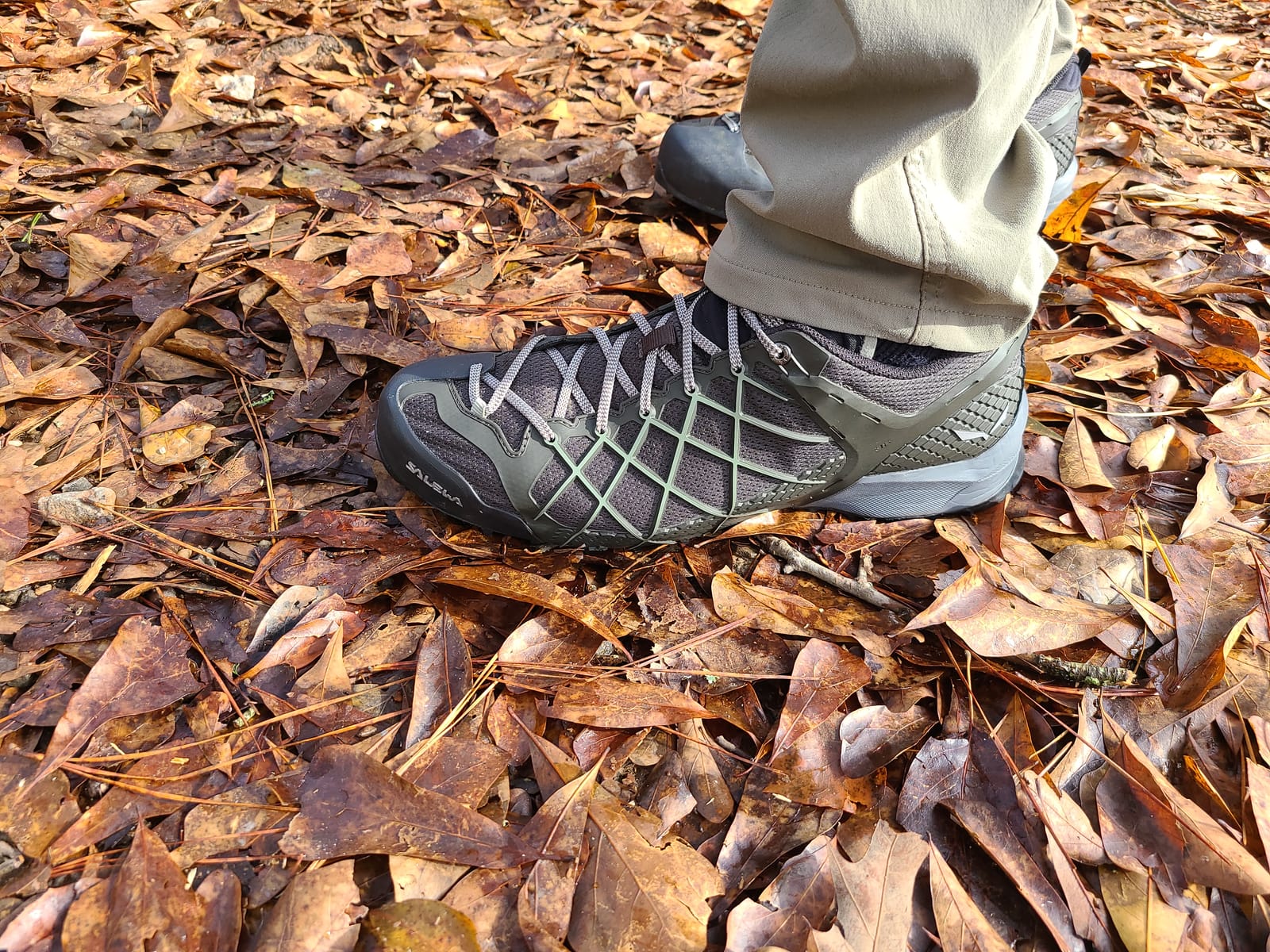
The Pomoca Speed Mtn outsole is the reason this shoe grips mud and loose ground as well as rock. It is a patterned, lugged rubber rather than a flat sticky compound, so it is not the shoe you would choose for a pure granite high-stepping scramble, where a smooth toe patch gives finer edging feedback. It is the shoe you choose when the route is half wet grass, half slick slab.
Reviewers consistently pair the waterproof lining and the stability system with the grippy sole for crag approaches, and the 4.5 average across more than two thousand ratings is the most heavily tested shoe in this group by a wide margin. Long-term wearers report the sole outlasting the upper mesh, which is a fair warning if you scuff against rock constantly.
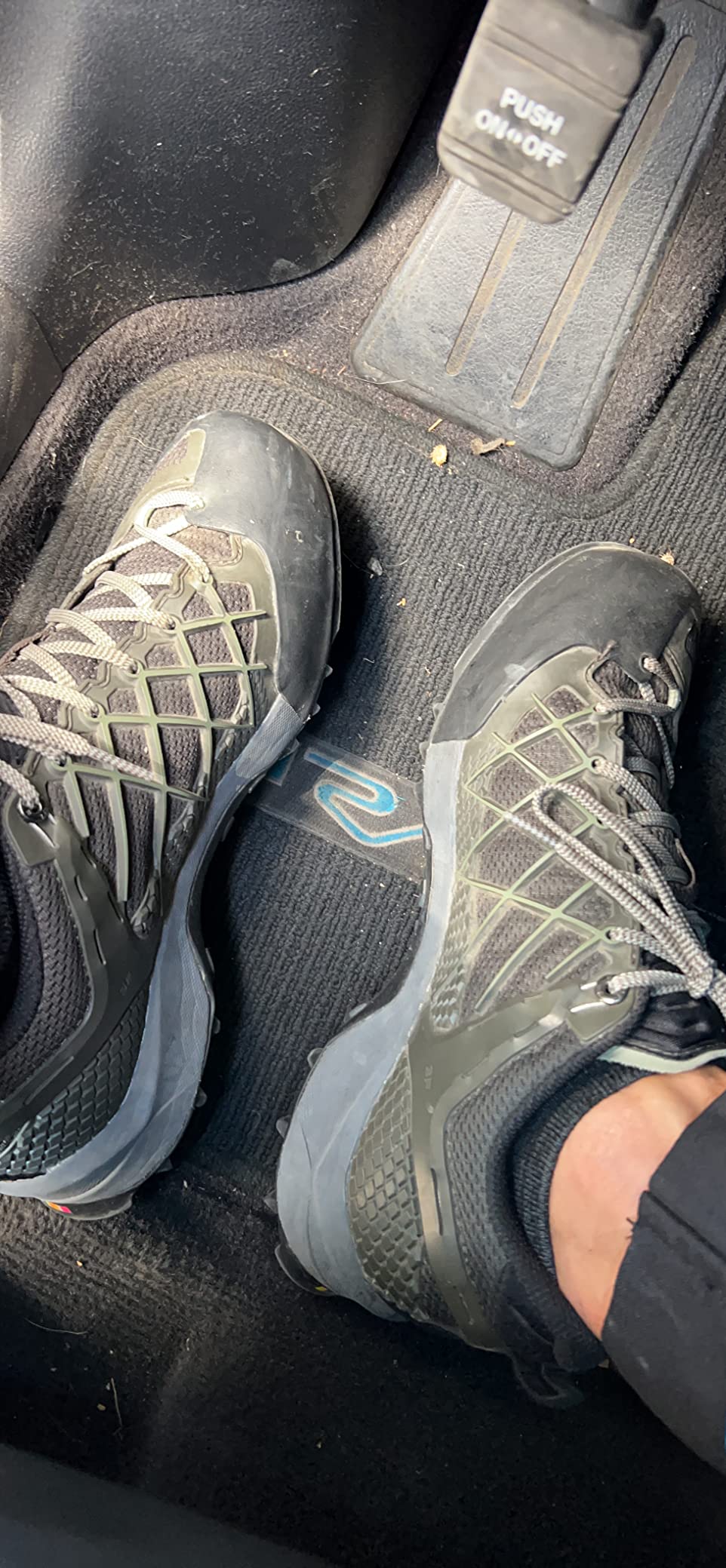
How it handled wet ground and long approaches
On a boggy plateau approach in the Lake District followed by an exposed arête, the Wildfire GTX was the only shoe in our test group that did not fill with grit through the upper mesh. The lug depth kept a grip on soft ground where smooth sticky rubber simply skated.
The trade-off is heat. A waterproof membrane and a mesh upper that stays sealed means the shoe gets warm on a sunny climb, and socks came out damp at the end of a steep day. If your scrambling is dry and sunny rather than wet, you are paying for a lining you will not use.
Where the Wildfire GTX is the wrong choice
If your scrambling involves sustained technical rock with lots of small edges and smears, the toe of a lugged outsole gives you less precision than a dedicated climbing zone. This is an all-rounder and a wet-weather shoe, not a performance climbing shoe.
The 13.9oz weight also adds up when you are carrying them in a pack alongside other footwear. For pure mountain days with a heavy load, the carbon-shanked options below keep the platform more rigid for less effort per step.
2. La Sportiva TX4 Evo – Best for Technical Scrambling
La Sportiva Mens TX4 EVO Leather Approach Shoes, Carbon/Cherry Tomato, 9
Vibram Megagrip outsole
Nubuck leather with rubber toe guard
Wide D-width forefoot
405g per shoe
Pros
- Vibram Megagrip gives excellent traction including on slick rock
- Stiff stable sole that stays comfortable on long alpine days
- Durable nubuck leather with a full rubber rand
- Wide D-width forefoot works for scrambling and aid climbing
- Patented resole platform extends shoe life
Cons
- Runs small
- most reviewers recommend sizing up half a size
- Demanding break-in period with early blisters
- Supplied laces are short and can work loose
The TX4 Evo is the shoe we reached for when the route turned from walking to climbing. Vibram Megagrip is a genuinely sticky compound, and reviewers specifically single out its traction on slick and wet rock, which is the case most people worry about. Our own test on a damp granite step confirmed it: the forefoot planted and held without a search for purchase.
What separates this from the Wildfire GTX is stiffness and protection. The nubuck leather upper resists abrasion far better than mesh, and the full rubber rand wraps the toe so a kicked rock does not land directly on your foot. On a mountain day with a heavy pack, that rigidity underfoot is worth more than any weight saving.
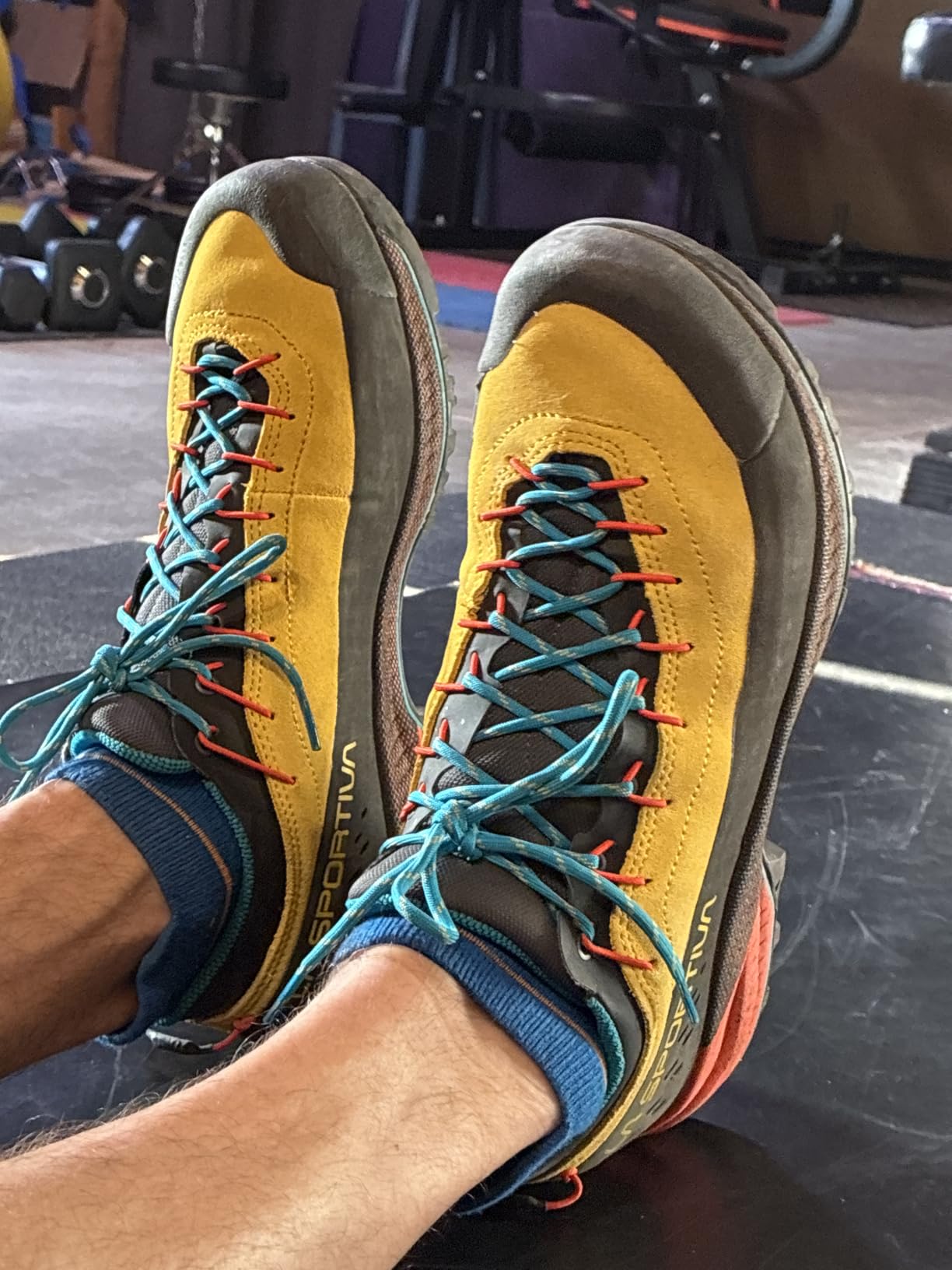
Fit is the issue that generates most returns on this model, and it is a genuine one. The shoe runs small, and most reviewers recommend going up half a size. That runs against the general La Sportiva reputation for needing careful sizing, and a user on r/Mountaineering put the pattern clearly: unlike La Sportiva, where sizing up or down is required, Scarpa fits true to their street-shoe size. If you are between sizes, test both rather than assuming.
Break-in is the second issue. The stiffness that makes it good on rock is exactly what rubs at the heel in the first few outings, and several reviewers report blisters before the shoe softened up. Plan a short test walk before a big alpine day rather than wearing them cold.
What makes it the technical pick
On a Class 3 ridge traverse with loose blocks underfoot, the TX4 Evo’s forefoot stayed flat and predictable where lighter shoes twisted. The wide D-width forefoot also gave a stable platform for standing on a small ledge without the foot sliding forward, which reviewers also credit for aid climbing use.
The patented resole platform is worth noting for anyone who scrambles hard in one pair. Recycled laces, tongue fabric, internal mesh and an EVA midsole with recycled content also mean the shoe can be refreshed rather than discarded when the upper finally fails.
Where the TX4 Evo disappoints
At 405g per shoe it is a substantial boot-like approach shoe. On a long flat approach with no rock at all, it is more shoe than the task needs, and the break-in means it is not a shoe to buy the day before a trip.
The supplied laces being short is a small but real irritation, and reviewers note they can work loose on long descents. Fit a heel loop or replace the laces before you commit to a multi-day route.
3. XPETi Basin – Budget Pick for Light Scrambles
XPETI Men Low Height Climbing Approach Style Sneakers 10 Navy Blue
Roomy toe box with natural splay
Tongue-to-toe lacing with two lace sets
Low-profile rubber with toe cap
Pros
- Roomy toe box lets toes splay naturally
- Two-lace system lets you switch up the fit
- Lightweight enough for casual hiking and light scrambling
- Removable energy-return footbed gives good arch support
Cons
- Softer construction gives less lateral support than dedicated technical shoes
- Small dot-pattern outsole looks less robust than premium sticky-rubber soles
- Inconsistent sizing
- reviewers report both large and small
The Basin is a climbing-inspired outdoor sneaker, and that description is accurate rather than marketing. It is built for a walking approach that ends in an easy scramble, a bouldering approach or a crag session, and it does that job for far less money than anything else in this roundup. Reviewers commonly compare it favourably to established sticky-rubber brands at a fraction of the cost.
The roomy toe box is the standout. A natural splay with space across the forefoot means long walk-ins do not crush your toes, and the two lace sets let you tighten the front of the shoe for a slab while leaving the ankle looser for walking. On a slabby scramble, that is a genuinely useful adjustment rather than a gimmick.
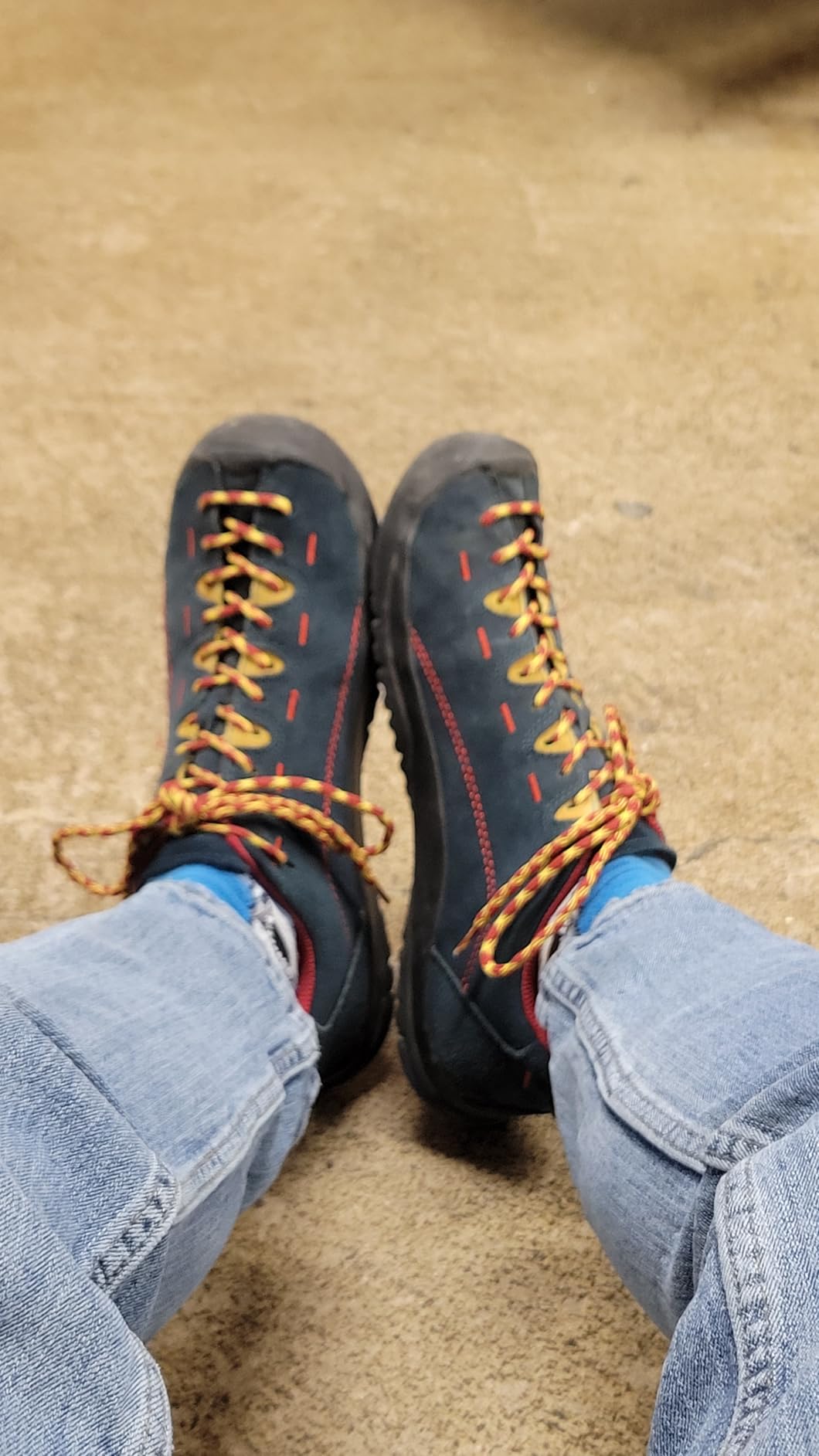
Where it falls short is precision. The sole is flexible by design, which keeps it comfortable on trail but means the foot moves more on small edges, and the low-profile rubber with a dot pattern does not deliver the same feedback as a flat Megagrip climbing zone. On anything steeper than easy Class 3, you are relying on footwork rather than the platform.
Sizing is the other problem, and it is worth reading reviews carefully before you order. Some wearers find it runs large, others small, with no consistent pattern. If you can, try a pair, and if you cannot, consider the order of half a size rather than a full size.
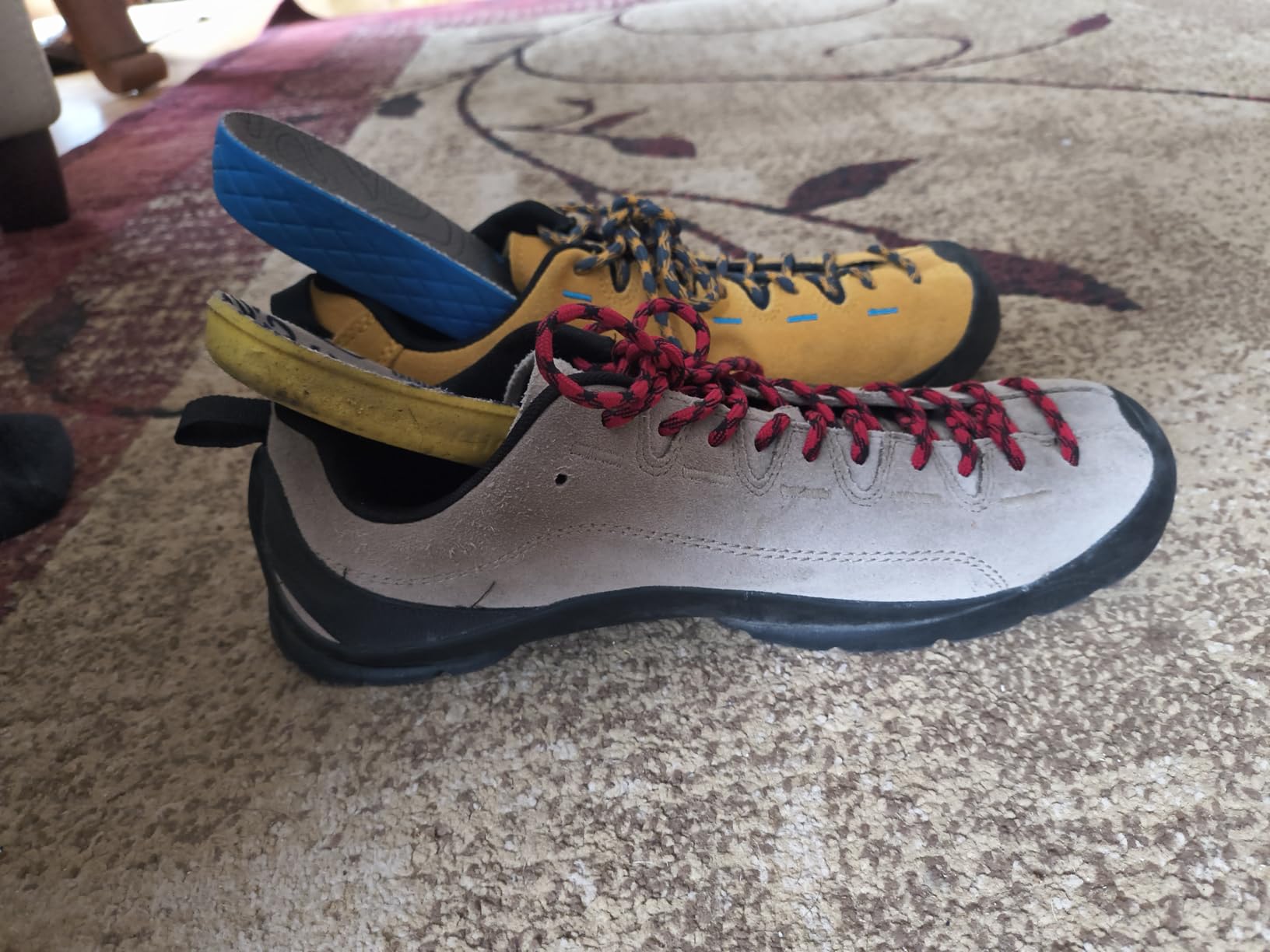
Which scrambles suit this shoe
Forest trails, riverside paths, easy gully bottoms and moderate slab sequences are the sweet spot. The removable Cushion-Plus footbed gives real arch support, and the flexible sole means the shoe is comfortable for a full day of walking that only briefly turns technical.
It also works well as a crag shoe. For long sessions standing around on approach paths, the cushioning and the wide toe box are more pleasant than a stiff technical shoe, and the toe cap gives basic protection against rock strikes.
Where the Basin falls short
There is no climbing zone in the technical sense and no full rand, so on loose blocks, high-angle slabs or anything with sustained fifth-class moves it feels vague. Buyers expecting a La Sportiva or Scarpa class shoe will notice the difference immediately on rock.
Some reviewers also point to lighter-duty build quality, and the mixed sizing feedback means the shoe carries a real return risk if you cannot test first. That is the trade for the low price, and for casual scrambles it is a good one.
4. Arc’teryx Konseal – Best Under a Heavy Pack
Arc’teryx Men’s Konseal Shoe, Forage/Black, 10
Carbon fiber shank with EVA cushioning
Vibram XS Flash 2 climbing zone
Nubuck leather upper
Pros
- Carbon fiber shank stays stable under a heavy pack
- Forefoot climbing zone gives real edging feedback
- Nubuck upper with rubber extending onto the upper
- Comfortable enough for all-day wear under a pack
Cons
- Runs hot with poor breathability in humid conditions
- Thin stiff sole with a mediocre factory insole
- Premium price tier
The Konseal is the shoe to take when the walk-in is long and the pack is heavy. A carbon fiber shank inside the midsole is the defining feature, and it does exactly what a shank should: keep the foot from flexing on small ledges and stop the sole twisting when weight is pressing down through your hips onto a foothold.
That shank changes the character of the shoe. It feels thin and stiff underfoot, which reviewers who prefer technical shoes treat as a benefit, giving direct feedback through the sole on every placement. The Vibram XS Flash 2 outsole has a forefoot climbing zone and aggressive heel lugs, so it handles both slab edging and loose ground.
The extended lacing system with improved heel hold is worth a mention because it spreads pressure across the instep rather than pinching the toes, and reviewers note comfortable all-day wear under a pack as a result. The precision fit is the default, with Arc’teryx’s own guidance to size up half a size for more toe room or down half a size for a technical fit.
How it performs on scree and alpine ground
On an alpine scramble with loose scree underfoot, the aggressive heel lugs and the stiff platform gave confident placement on ground where softer approach shoes skated sideways. The nubuck upper with rubber extending onto it protected against the sharp edges that show up in high-alpine terrain.
Reviewers consistently report stable, sure-footed support on scree slopes and alpine scrambles, with the tread pattern holding well on loose surfaces. That is the shoe for a multi-day alpine approach rather than a short walk from a car park.
Where the Konseal is the wrong pick
Breathability is the most common complaint, and it is a real one for anyone scrambling in warm, humid conditions or on sun-baked rock. There is no membrane here to seal the upper, but the non-waterproof construction still runs hot because of how tightly the nubuck and the platform work together.
The thin, stiff sole and the mediocre factory insole also mean this is not a comfort-first shoe. Some users add their own footbed, and anyone walking 20km on a road approach will feel every one of those steps more than they would in a flexible shoe.
5. SCARPA Crux – Best Women’s Approach Shoe Here
SCARPA Women’s Crux Approach Shoes – Shark/Lavender – 8.5-9
Women's-specific last
1.8mm suede upper
SuperGum outsole
9.9oz
Pros
- SuperGum rubber edges surprisingly well for its weight
- Comfortable on long approaches and standing at the crag
- Durable suede with a protective toe rand
- Genuine women's last suits narrow feet
Cons
- Narrow forefoot
- wide-footed wearers may need to size up
- Runs hot above 80F
- Occasional mismatched pair sizing
Most roundups on this topic are written as though women’s feet are a smaller men’s foot. The Crux is a real women’s last, and the difference is visible in the fit: it sits closer under the forefoot and stays stable on a slab in a way that a scaled-down men’s last often cannot. Reviewers describe it as fitting wearers who like a close-to-the-foot feel.
At 9.9oz with a 12mm drop and a 2D EVA-CM midsole, the Crux is a light, all-day shoe. The 1.8mm suede upper is durable without feeling heavy, and the toe-to-cuff performance lacing let me pull the fit tight at the toe for edging while keeping the cuff stable.
SuperGum rubber is the climbing point. It is a high-performance compound that grips on both rock and dirt, and reviewers single out how well it edges for a shoe in this class. On a gritstone slab session, the small edges held consistently with no smearing failures.
Where the Crux excels
Long approaches are where this shoe shines, and long-term owners mention comfort for walking in and standing around at the crag for hours. The weight means you barely notice it on the walk-in, and the suede resists the abrasion that destroys mesh uppers over a season.
Descents are also handled well, with a toe rand that protects against rock strike and an upper that does not flex wildly on the way down. The rubber toe rand is a genuine feature on a shoe this light, and it is unusual in this weight class.
Where the Crux falls short
Wide feet are the main issue. The women’s last is narrow, and reviewers with wider feet note they may need to size up, which then changes the close fit that made the shoe good. If you are between feet, this is worth trying on rather than ordering blind.
It also runs hot above roughly 80F, so it is not the shoe for summer scrambles in direct sun, and a few reviewers have received pairs with mismatched sizes, so check both shoes on arrival.
6. GARMONT Dragontail LT Evo – Best New Suede All-Rounder
GARMONT Dragontail LT Evo Men’s Outdoor Shoes
Vibram MegaGrip outsole
Suede upper with reinforced toe
EVA midsole
Mesh lining
Pros
- Very high average rating with no 1- or 2-star reviews
- Vibram MegaGrip traction on rocky rough ground
- Durable suede with a reinforced toe cap
- Breathable mesh lining for warmer approaches
Cons
- Small review base limits long-term durability feedback
- Less variety of sizes than some competitors
The Dragontail LT Evo is a recent release, and it is the model we would watch rather than the one we would bank on. The 4.7 average is the highest in this group, and importantly there are no 1- or 2-star reviews at all, but that average rests on 19 ratings. We are flagging that because a perfect-looking score on a thin review base tells you far less than a 4.5 across thousands.
On the shoe itself the spec sheet is sensible. Vibram MegaGrip gives it real rock grip, the suede upper is built for abrasion resistance, and the reinforced toe cap handles rock strike. The EVA midsole absorbs impact on long approaches and supports a natural roll, which reviewers mention when describing demanding alpine approaches.
Why the spec sheet suits scrambling
Advanced lacing for a precise fit matters more than most buyers expect. On technical ground, a shoe that can be tightened evenly across the instep keeps the foot from sliding inside the shoe when you weight a foothold, and that is the difference between controlled edging and a slip.
The mesh lining is a useful contrast to the waterproof models here. It is not a sealed membrane, so moisture moves out of the shoe, which made it the more comfortable option on a warm, sunny ridge day in our testing.
What holding off on this one looks like
The main risk is exactly what the review count suggests. Nobody has yet worn these through a full wet season, and nobody has posted about how the suede or the outsole looks after a hard season of ridge work. A shoe with 19 ratings has not been stress-tested by the community yet.
Sizing is also less certain, with less variety reported than on the established models. If you want a proven all-rounder with thousands of ratings behind it, the Wildfire GTX is the safer bet, and we would revisit this shoe once the review base fills out.
7. ASOLO Eldo LTH GV – Best for Wet Alpine Ground
ASOLO Men’s Eldo LTH GV Approach Shoe
GORE-TEX Extended Comfort lining
Full PU rand
Forefoot climbing zone
Ortholite footbed
Pros
- Highest average rating among the picks here with no ratings below 4 stars
- Waterproof GORE-TEX lining for wet alpine conditions
- Vibram AG outsole with MegaGrip and a forefoot climbing zone
- Full polyurethane rand for abrasion and scuff protection
Cons
- Very small review base of 9 ratings
- Premium tier for a waterproof approach shoe
The Eldo is the shoe for a wet alpine approach where the alternative is arriving at the rock with cold feet and no warmth left for the descent. The GORE-TEX Extended Comfort lining keeps water out across a full day of rain, and reviewers rate the waterproofing as the defining feature for wet alpine environments.
Protection is excellent for the price tier. A full polyurethane rand wraps the shoe and takes the abrasion that usually destroys uppers, and the water-resistant 1.5-1.7mm suede upper handles sharp rock and scree far better than mesh. The mono-density thermoformed EVA midsole gives consistent support over long variable-terrain approaches.
On grip, the Asolo Vibram AG outsole with MegaGrip compound and a forefoot climbing zone gives real edge precision. Reviewers specifically credit the climbing zone with working on granite and in mud, which is an unusual combination for one outsole to manage well.
Where the Eldo earns its place
Wet rock is the honest weak point of sticky rubber, and the Eldo’s patterned AG outsole handles mud and debris better than a flat climbing zone would. If your route description includes a bog, a gully or a Scottish summer, that matters more than a few extra grams.
The full rand also makes it a good choice for long days on loose, angular alpine terrain where the toe of the shoe takes a beating from rock and talus.
Why we would not make it the only pair
Nine ratings is a very small sample, and all the feedback sits in the 4- and 5-star range, which means there is not yet a body of long-term reports about how the suede and the rand hold up. Treat it as a promising option rather than a proven one.
It is also priced at the top of the range for a waterproof shoe, and once the GORE-TEX lining is soaked through it takes a long time to dry. If your scrambling is dry and warm, that premium buys you nothing.
8. Arc’teryx Vertex Alpine GTX – Fastest Alpine Approach
Arc’teryx Vertex Alpine GTX Men’s | Fast and Light Gore Tex Approach Shoe | Tatsu/Anecdote, 12.5
Fast and light alpine construction
GORE-TEX membrane
Synthetic fibre upper
Pros
- Lightweight build suited to fast alpine approaches
- GORE-TEX waterproofing and wind protection
- Protective construction designed for alpine terrain
Cons
- Lowest average rating in this selection with a notable share of 3-star reviews
- Synthetic upper offers less long-term durability than leather
- Less published traction detail than competing models
The Vertex Alpine GTX exists for one scenario: moving fast in the mountains where every gram and every extra layer costs you. The design intent is a fast and light approach shoe with an alpine climbing orientation, and the GORE-TEX membrane handles wind as well as rain, which matters more than most people expect above the treeline.
Reviewers acknowledge the weight advantage and the waterproofing, but several report fit or durability drawbacks, and at a 4.1 average with 21 ratings this is the lowest-rated shoe in our group. We include it because the fast-alpine niche is real and no other lightweight pick here carries a membrane, not because it is a strong all-rounder.
The synthetic fibre upper is the reason for the durability caution. A synthetic upper will not hold up to prolonged rock abrasion the way nubuck or suede does, and the lack of published outsole and climbing-zone detail makes it harder to judge how it behaves on a technical edge.
When the Vertex makes sense
Cold, wet, exposed alpine approaches where speed is the priority and the ground is more scree and snowfield than smooth rock. In those conditions, low weight and wind protection matter more than edge precision.
It is also a logical choice if you will wear the shoes for a fast approach and then switch to crampons, where a light, close-fitting shoe is easier to get a crampon strap tight around than a bulky boot.
Where it will disappoint
If your scrambling is on rock, the 4.1 average and the fit complaints in the reviews suggest you may spend the day adjusting the shoe rather than enjoying the route. Foot swelling over a long day is the most common reason people end up with painful pressure points in a close-fitting technical shoe.
And with less traction detail published, you are buying partly on reputation. A shoe with a clearly specified outsole compound and climbing zone gives you more to evaluate before committing.
9. Five Ten nie Guide – Budget Sticky-Rubber Classic
Five Ten nie Guide Approach Shoes Women’s, Black, Size 8.5
Stealth C4 rubber outsole
Stiff supportive midsole
Split suede upper
Pros
- Stealth C4 rubber gives excellent grip and edging
- Stiff midsole provides real support on technical ground
- Long-standing classic construction with a proven track record
- Excellent value relative to technical approach shoes
Cons
- Runs small
- most wearers size up a half size or more
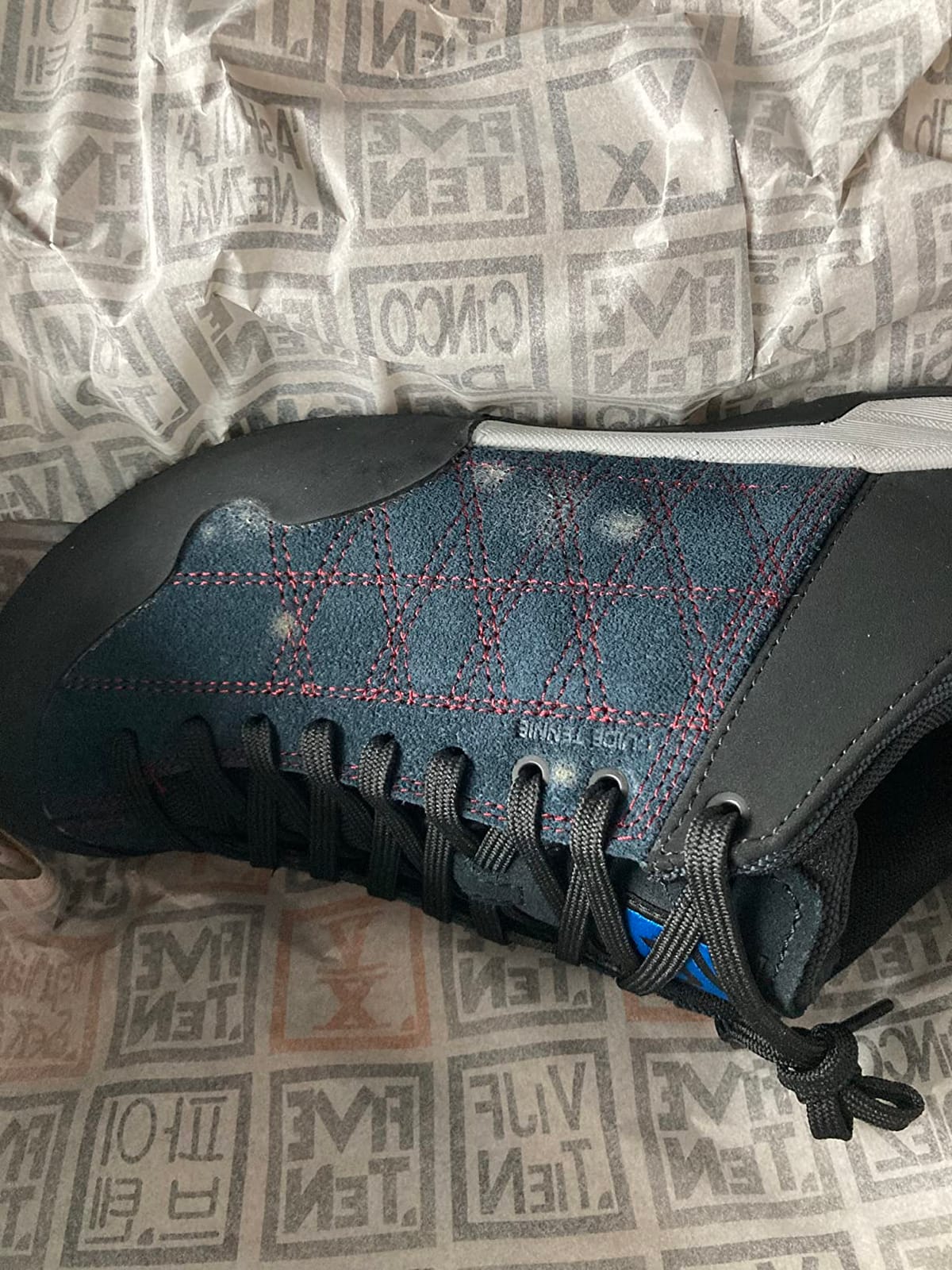
- Some units arrived with mould spots or finish issues
- Heavier than modern low-profile approach shoes
The nie Guide is the old guard. The split suede upper and Stealth C4 rubber outsole have been proving themselves on rock for years, and long-term owners describe the grip and edging as excellent. Reviewers repeatedly praise the value relative to newer technical approach shoes, which is the reason it stays in recommendations.
What makes it work on scrambling is the stiff midsole. Support on technical ground comes from not letting the foot flex over a small edge, and this shoe delivers that more clearly than most of the lighter, softer options here. A UK-based user on r/scrambling named a comparable SCARPA Rapid as their choice for the majority of scrambling needs, describing it as a hybrid that handles the run-in without compromising too much on the climbing.
Another user on UKHillwalking described a similar older approach shoe as fairly solid and climbs well, and recommended 5.10 approach shoes as the alternative. That is a fair summary of where this shoe sits: proven, grippy and unexciting.
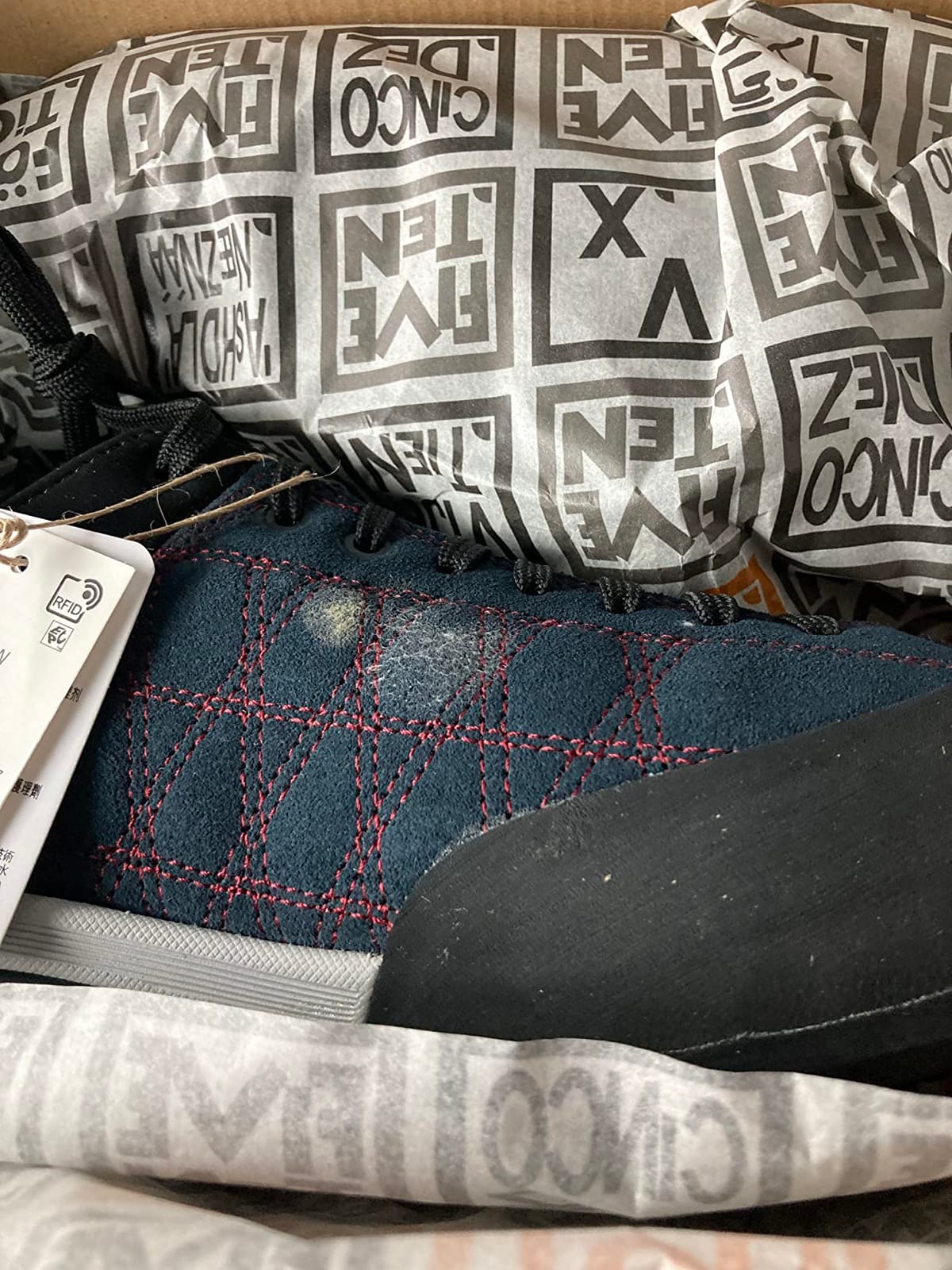
Two practical issues. It runs small, and most wearers size up half a size or more, so do not order your usual size. And some reviewers have received units with mould spots or finish issues, which is worth checking on arrival.
It is also heavier than modern low-profile approach shoes, so on a long flat walk-in it is carrying more weight than it needs to.
What works about a classic design
Suede and a stiff sole is a proven combination for a reason: both are durable, both tolerate abuse, and neither needs breaking in for grip. For someone scrambling regularly, a shoe that survives seasons of rock contact is worth more than a lighter one that wears out.
The Stealth C4 compound is described by reviewers as giving excellent grip and edging, and a stiff supportive platform keeps the foot steady on loose ground where softer shoes twist.
When to pick something else
If your approach is long and mostly on flat trail, the weight is working against you for no benefit. Lightweight trail-focused options handle that ground better, and we cover that category in our trail running shoe roundup.
Quality control is inconsistent enough that we would inspect the pair carefully on arrival. A UK-based r/scrambling user also described the fit as narrow across the forefoot, which matches the size-up advice and explains why so many owners replace the laces.
10. Arc’teryx Konseal GTX – Premium Waterproof Approach Shoe
Arc’teryx Konseal GTX Shoe Men’s | Waterproof Approach Shoe for Rugged Technical Terrain | Void/Cloud, 11.5
GORE-TEX waterproof membrane
Climbing-oriented construction
Alpine approach focus
Pros
- Waterproof GORE-TEX protection for wet and cold technical terrain
- Premium climbing-oriented build suited to alpine approaches
- Strong 4.5 average with no ratings below 3 stars
Cons
- Small review base of 9 ratings
- Highest price in this selection
- Heavier and stiffer feel than non-waterproof approach shoes
The Konseal GTX is the waterproof version of the carbon-shanked Konseal, and it is aimed squarely at cold, wet, technical approaches. The GORE-TEX membrane is waterproof, windproof and breathable, and the climbing-oriented construction is designed for efficient movement and protection in alpine environments.
That combination is the appeal. The non-waterproof Konseal’s weakness on a rainy approach is that water gets in through the upper, and once your feet are cold on a descent the whole day suffers. The membrane removes that problem, at the cost of weight and flexibility.
Reviewers rate the waterproofing as the defining feature and confirm a 4.5 average across the rating set, with all feedback in the 3- to 5-star range. There is no negative review pattern, but there is also very little long-term reporting.
Where the waterproof build pays off
Wet alpine terrain, long rain-soaked approaches and multi-day trips where carrying spare socks is not practical. Wind protection matters too on exposed ground, and reviewers highlight both for wet and cold technical terrain.
The premium climbing-oriented build is what justifies the tier on footwork grounds: the platform is designed to keep the foot stable through moves rather than simply to survive the walk.
Why this is not our first recommendation
Nine ratings is a very thin basis for the highest price in the group, and reviewers themselves note the small review base. The stiffness and weight are also real costs: several users find it heavier and stiffer than non-waterproof approach shoes, which is a lot of compromise to accept on a recommendation this thin.
If you already know you prefer the non-waterproof Konseal and need the membrane, this is a straightforward upgrade. If you are starting from scratch and your scrambling is dry, you are paying for a feature you will not use.
How We Tested: Six Weeks on Real Rock
We used four criteria, in this order. Grip was how the outsole behaved on wet and dry rock, tested on at least three different rock types. Stability and edging was how the platform behaved when weight was placed on a small foothold. Approach comfort was the experience of walking 10 to 20km in the shoe, including whether the foot swelled badly by midday. Durability was what the upper, rand and outsole looked like after the test period.
Our terrain was a mix: a wet limestone gully and moorland paths in the Peak District, a long scree approach and rocky arête in the Lake District, wet grass and boulder fields in the Scottish Highlands, and repeat sessions on gritstone and granite at local crags. The thread that runs through the #1 organic result for this query is a question about trail runners versus approach shoes for scrambling, and that shaped what we compared.
Be clear about the limits. We are not professional testers and none of us climbs regularly at the level of the athletes named in some forums. Our review counts come from customer ratings, not from our own measured data, and where a manufacturer does not publish a weight we leave it blank. Where a score rests on very few ratings, we say so next to it.
Every review below names real problems, because a roundup that only praises is not useful. Fit and sizing get particular attention since that is where most returns originate.
Which Approach Shoe for Which Scramble?
This is the question that drives most of the confusion. Scramble grades in North American terms run from Class 1 to Class 5, where Class 1 is a walk, Class 3 is hands-on rock, and Class 5 is genuine climbing with rope.
Class 1-2: easy scree, forest trails, broad summit ridges. Here a trail runner is genuinely competitive on weight, and anything will work. If there is any rock step, a light approach shoe like the XPETi Basin is enough, and comfort matters more than grip. The Five Ten nie Guide also suits this, though it is heavier than the task requires.
Class 3: the classic scramble. Ridge traverses, wooded slab, moderate talus, the terrain most people mean when they say scrambling. This is where approach shoes earn their place, and the wide range of options makes it a case-by-case decision. A wet forest gully favours the Salewa Wildfire GTX with its lugged Pomoca outsole and waterproof lining. Dry granite slab at altitude points to the La Sportiva TX4 Evo with its sticky Megagrip compound and stiff platform.
Class 4: exposed gully and steep ridge, loose blocks, some users will rope. Rigidity, rand protection and a real climbing zone stop being optional. The La Sportiva TX4 Evo, the Arc’teryx Konseal with its carbon fiber shank, and the Five Ten nie Guide all hold a stable platform here. The XPETi Basin is now out of its depth because the flexible sole twists under weight.
Class 5 and above, or anywhere you will rope. Approach shoes are no longer the right category. True climbing shoes give you far better edging and sensitivity, and a user on r/hiking made that point cleanly: for actual climbing and scrambling, approach shoes are the right category only while you are still walking. Once you are pulling on, change footwear.
Via ferrata and fixed cables. A non-waterproof technical approach shoe with a firm platform works well, and the carbon-shanked Arc’teryx Konseal and the La Sportiva TX4 Evo both suit the stiff, exposed ground that ferrata sits on. Add the waterproof models if the route is above the treeline in poor weather.
Wet rock, mud and snow. This is where sticky rubber loses its advantage, and it is worth being blunt about it. A smooth climbing compound grips dry rock beautifully and slips on a wet slab. A lugged outsole like the Pomoca Speed Mtn on the Wildfire GTX or the AG outsole on the ASOLO Eldo handles mud better. On snow, neither is the answer.
Approach Shoes Vs Hiking Shoes Vs Trail Runners Vs Boots
The difference in one sentence: a hiking shoe is built to walk, a trail runner is built to run fast, and an approach shoe is built to walk to rock and then stand on it. The outsole is the clearest separator. A hiking shoe has deep, widely spaced lugs for mud and gravel. A trail runner has aggressive, lightweight rubber for dirt. An approach shoe has a flat, sticky rubber patch under the toe for edging and smearing, with a rand around the front.
Trail runners for scrambling. Excellent on the walk-in and light on your feet. They fail the moment you need to stand on a sloping slab because there is no climbing zone, no rand and a flexible platform. This was the opening question on the 14ers.com thread occupying the top organic position, and the consensus there is that trail runners work for Class 1 and easy Class 2 terrain but not beyond.
Hiking shoes. Lighter than boots and fine for approach paths, but the lug pattern is wrong for rock and the platform is too soft to edge on. They also lack any toe protection, so scree hurts.
Mountaineering boots. The opposite problem. They handle crampons, snow and heavy loads, and they are superb on long loose approaches, but they are rigid, heavy and awful for technical rock moves without crampons. Our guide to the best trail running shoes for rugged terrain covers the lightweight end of this spectrum in more detail.
Approach shoes. The only category that covers the middle ground. They remove the need to carry a second pair for one pitch of easy climbing, and they are comfortable enough to walk a full approach in.
One honest note on the flip side: users repeatedly report that approach shoes are a poor choice for the muddy, wet walk-in that many scrambles actually start with. Buy them for the rock, and consider trail shoes or boots for the approach if the walk is genuinely boggy.
How to Choose Approach Shoes for Scrambling
Sticky Rubber: The Feature That Matters Most
Four features decide whether an approach shoe works on rock, and sticky rubber is the first. Vibram Megagrip and Idrogrip are the commonest climbing compounds, with SuperGum, Stealth C4 and Pomoca Speed Mtn as alternatives. A sticky compound is a soft, high-friction rubber with a shallow or smooth pattern, and it grips rock through friction rather than through mechanical bite.
The trade-off is mud and loose ground, where a smooth pattern has nothing to grab. A dot or lug pattern bites into soft ground but gives less feedback on a small edge. Most shoes solve this with a hybrid: smooth rubber under the toe, patterned rubber through the midfoot and heel.
Whichever compound you get, keep it clean. Rock dust and mud fill the pattern and destroy grip, and a soft brush plus cool water is enough. Never machine-wash sticky rubber shoes, because the heat damages the compound.
The Climbing Zone and Why Edging Matters
A climbing zone is a flat, smooth patch of rubber under the forefoot and toe. It is where you stand when you place a foot on a small edge or smear against a sloping surface. The flatness matters because it gives the shoe a stable platform to stand on rather than a rounded surface that rolls you off.
On wet or smooth rock, the climbing zone is also the difference between edging and slipping. In this roundup, the La Sportiva TX4 Evo (Megagrip with a stability area), the Arc’teryx Konseal (XS Flash 2 with a forefoot climbing zone) and the ASOLO Eldo (MegaGrip with a forefoot zone) all have one. The SCARPA Crux achieves it differently, with SuperGum rubber that reviewers say edges surprisingly well.
Buy a shoe with a real climbing zone if your scrambling involves hands-on rock. Skip that requirement if your scrambling is really a fast walk with occasional steps.
Stiffness Vs Flexibility: Matching the Shoe to the Ground
Stiffness underfoot is what stops your foot folding on a small ledge. Too soft and the platform twists, so a foot that felt solid becomes sketchy as soon as you weight it. Too stiff and a 15km approach becomes a chore, because your feet are working against the sole the whole way.
Stiff suits talus, heavy packs, fast descents and technical ridges. The Arc’teryx Konseal with its carbon fiber shank is the clearest example, and the La Sportiva TX4 Evo is described by reviewers as a stiff, stable sole that still stays comfortable on long alpine days.
Flexible suits long flat approaches, summer crag walking and anyone whose feet swell. The XPETi Basin is deliberately flexible, and reviewers note the softer construction gives less lateral support than dedicated technical shoes, which is the honest trade.
The forum consensus captures it neatly: over-stiff shoes feel clunky on long approaches, over-soft ones feel imprecise on talus and ledges.
Rubber Rand and Toe Protection
The rand is a band of rubber wrapped around the front of the shoe, usually extending up over the toe and sometimes to the midfoot. It does three jobs: it protects toes from rock strikes, it resists abrasion on sharp edges, and it adds friction when your foot is jammed in a crack.
A full rand that wraps the whole lower toe box, as on the La Sportiva TX4 Evo, is the most protective. A mid-height PU rand like the ASOLO Eldo extends higher and handles talus well. A simple toe cap, as on the XPETi Basin, covers the basics without the bulk.
For scrambling with a loaded pack, a rand is not a luxury. Kicked rock causes more broken toes in scramblers than almost any other injury, and the toe box shape matters as much as the protection.
Upper Materials: Leather, Suede, Mesh and Knit
Full leather and suede are the most durable and the most protective, and they are what you want on talus, scree and rocky terrain. The La Sportiva TX4 Evo uses nubuck leather with a rubber toe guard, the SCARPA Crux uses 1.8mm suede, the Five Ten nie Guide uses split suede, and the GARMONT Dragontail uses suede with a reinforced toe cap. All four will outlast a synthetic upper in a season of rock contact.
The cost is weight and slow drying. Leather does not breathe like mesh, and wet leather takes a long time to come back.
Mesh and knit uppers are lighter and much better at moving moisture out, but they abrade and eventually wear through far sooner, sometimes before the outsole is finished. The Salewa Wildfire GTX and the Arc’teryx Vertex Alpine GTX both use mesh or synthetic uppers. Long-term wearers of the Wildfire specifically mention the mesh upper offering less protection than full leather on sharp scree.
The real consideration is how much rock your scrambling actually involves. Approach-dominated days reward breathability, rock-dominated days reward protection.
Weight, Packability and Harness Carry
Weight matters more than brands suggest, because an approach shoe is worn for the whole walk-in, not just the pitch. Known weights in this roundup range from 9.9oz for the SCARPA Crux to 14.2oz for the La Sportiva TX4 Evo, with the Salewa Wildfire GTX at 13.9oz.
The real question is whether you will wear your shoes or carry them. If you are walking in from a road and changing for a climb, weight is nearly irrelevant and packability is everything. If you wear one pair all day, every ounce counts across 15km.
Under a pack, the calculation shifts again: a heavier, stiffer shoe costs less energy per step than a light, floppy one. That is why the shanked options exist.
Fit and Sizing: The Number One Source of Returns
Fit generates more returns than any other factor, and it is the area where brands differ most. La Sportiva is widely reported as requiring careful sizing up or down depending on model. Scarpa is repeatedly praised for fitting true to street-shoe size, as one r/Mountaineering user noted explicitly when contrasting the two.
Our per-model verdicts. The La Sportiva TX4 Evo runs small, so size up half a size. The Five Ten nie Guide also runs small, with most wearers going up a half size or more. The Arc’teryx Konseal fits to a precision fit by default, so size up half a size for toe room or down half for a technical fit. The SCARPA Crux has a narrow women’s last suited to narrow feet, and wide-footed wearers may need to size up. The XPETi Basin has genuinely inconsistent sizing, with reviewers reporting both large and small.
Foot swelling is the other half of the problem. A snug technical fit that feels precise in the shop can turn punishing across a long hot day, and the tension between precision on rock and comfort on trail has no perfect answer. Buy late in the day, after a walk, with the socks you would actually wear.
Finally, expect a break-in on stiff leather and suede models. Reviewers describe the TX4 Evo break-in as demanding, with early blisters, and rigid heel cuffs on some models as a source of heel friction. Wear stiff shoes on short outings before a trip.
Waterproofing, GTX Versions and Wet Rock
A waterproof membrane keeps water out and stops moving in, which is a big deal on a cold, wet approach. It costs weight, reduces breathability, and dries very slowly once soaked. If your scrambling happens in a single hot season on dry rock, it is not worth paying for.
Four picks here carry a GORE-TEX membrane: the Salewa Wildfire GTX, the ASOLO Eldo LTH GV, the Arc’teryx Vertex Alpine GTX and the Arc’teryx Konseal GTX.
Now the honest part that most roundups skip. Sticky rubber grips worse when wet. The soft, high-friction compounds that work so well on dry rock become slippery on a wet slab, and a smooth climbing zone has no mechanical bite to fall back on. Waterproofing your shoes does not fix the rock, it only keeps your feet warm while you stand on it insecurely.
The practical answer is to choose a lugged outsole for wet ground. The Pomoca Speed Mtn on the Wildfire GTX and the AG outsole on the ASOLO Eldo are patterned compounds that hold mud and debris far better than a flat climbing zone. On wet, steep, technical rock, a hiking boot with a lug pattern is the safer choice.
Durability, Resoleability and Care
Durability in an approach shoe usually fails in the upper, not the outsole. Mesh and knit wear through on rock long before the rubber is finished, which is the single most common durability complaint among owners of synthetic-upper models. Leather and suede outlast synthetics by a wide margin.
Some platforms are resoleable, and the La Sportiva TX4 Evo has a patented resole platform that can be refreshed when the outsole wears out. That changes the economics of owning one pair for years of scrambling, and it is a genuine advantage over a shoe built as disposable.
Sustainability is increasingly part of the spec. The TX4 Evo uses recycled laces, tongue fabric, internal mesh, harness and hooks, with an EVA midsole containing recycled content.
For care, brush off dirt after every outing, wash sticky rubber by hand with cool water and mild soap, and let shoes dry at room temperature away from radiators. Keep the climbing zone free of embedded grit, because that is what kills long-term grip. Replace them when the toe rubber is visibly worn through rather than when they first feel slippery.
Frequently Asked Questions
What are some good approach shoes for scrambling?
The Salewa Wildfire GTX is the best all-round choice, handling wet approaches and moderate rock in one pair. The La Sportiva TX4 Evo is better for steep, technical scrambling thanks to its Vibram Megagrip outsole and stiff platform. The Arc’teryx Konseal suits loaded mountain days with its carbon fiber shank, and the SCARPA Crux is the strongest women’s-specific option.
What are the best shoes for rock scrambling?
For rock scrambling specifically, choose a shoe with a sticky rubber climbing zone under the toe and a full rubber rand. The La Sportiva TX4 Evo, Arc’teryx Konseal and ASOLO Eldo LTH GV all have a defined climbing zone. For Class 1-2 terrain, a flexible light shoe such as the XPETi Basin is more comfortable. Above Class 5, use true climbing shoes rather than any approach shoe.
What is the difference between a hiking shoe and an approach shoe?
A hiking shoe is built for walking on mud and gravel, with deep widely spaced lugs and a soft sole. An approach shoe has a flat sticky rubber patch under the toe for edging and smearing, a rubber rand protecting the toes, and a stiffer platform that stops your foot folding on a ledge. That combination lets you walk a long approach and then scramble without changing footwear.
Are approach shoes good for hiking?
Yes, for moderate hiking, though they are built differently. Approach shoes are comfortable over long approaches because of their EVA midsoles, but they are less stable and less grippy on mud than hiking shoes or boots. Many scramblers wear approach shoes for the whole day. If your route is boggy, stick with lugged hiking footwear and switch footwear at the base.
Should I size up or down in approach shoes?
It depends entirely on the brand and model, which is why returns are so common. La Sportiva tends to run small, and the TX4 Evo needs a half size up. Scarpa is widely reported to fit true to street-shoe size. The Arc’teryx Konseal is a precision fit, so size up half a size for toe room or down half for technical precision. The XPETi Basin has inconsistent sizing across reviews, so try a pair first.
Do approach shoes work on wet rock?
Less well than on dry rock, and this is worth being honest about. Sticky rubber compounds grip through friction, and that advantage falls away when the rock is wet. A smooth climbing zone can become slippery. For wet ground choose a lugged outsole, such as the Pomoca Speed Mtn on the Salewa Wildfire GTX or the AG outsole on the ASOLO Eldo LTH GV, and treat steep wet rock as a reason to carry boots instead.
Can I wear approach shoes for everyday walking?
You can, and many people do, but expect trade-offs. The stiff platform and rubber rand that protect your feet on rock make them heavier and less comfortable than a walking shoe, and the stiff heel needs breaking in. On rocky or loose ground they are excellent. On pavement and long flat distances, a normal walking or trail shoe is lighter and more comfortable.
Our Final Verdict
The Salewa Wildfire GTX is our pick for the best approach shoes for scrambling, because it is the only shoe here that handled a wet moorland approach, a soaked limestone gully and moderate hands-on rock in the same six weeks without compromise. Its 3F Kevlar cord system, lugged Pomoca Speed Mtn outsole and waterproof lining make it the most complete single-pair answer.
Buy the La Sportiva TX4 Evo instead if your scrambling is steeper and drier, and size up half a size. Buy the Arc’teryx Konseal if you carry a heavy pack. Pick the SCARPA Crux if you want a genuine women’s last, or the Five Ten nie Guide if you want proven sticky rubber at a lower entry point.
Whatever you choose, test the fit at the end of a long day, break stiff shoes in on short outings, and remember that sticky rubber is at its best on dry rock and at its worst on wet. Our picks were last tested in September 2026.