
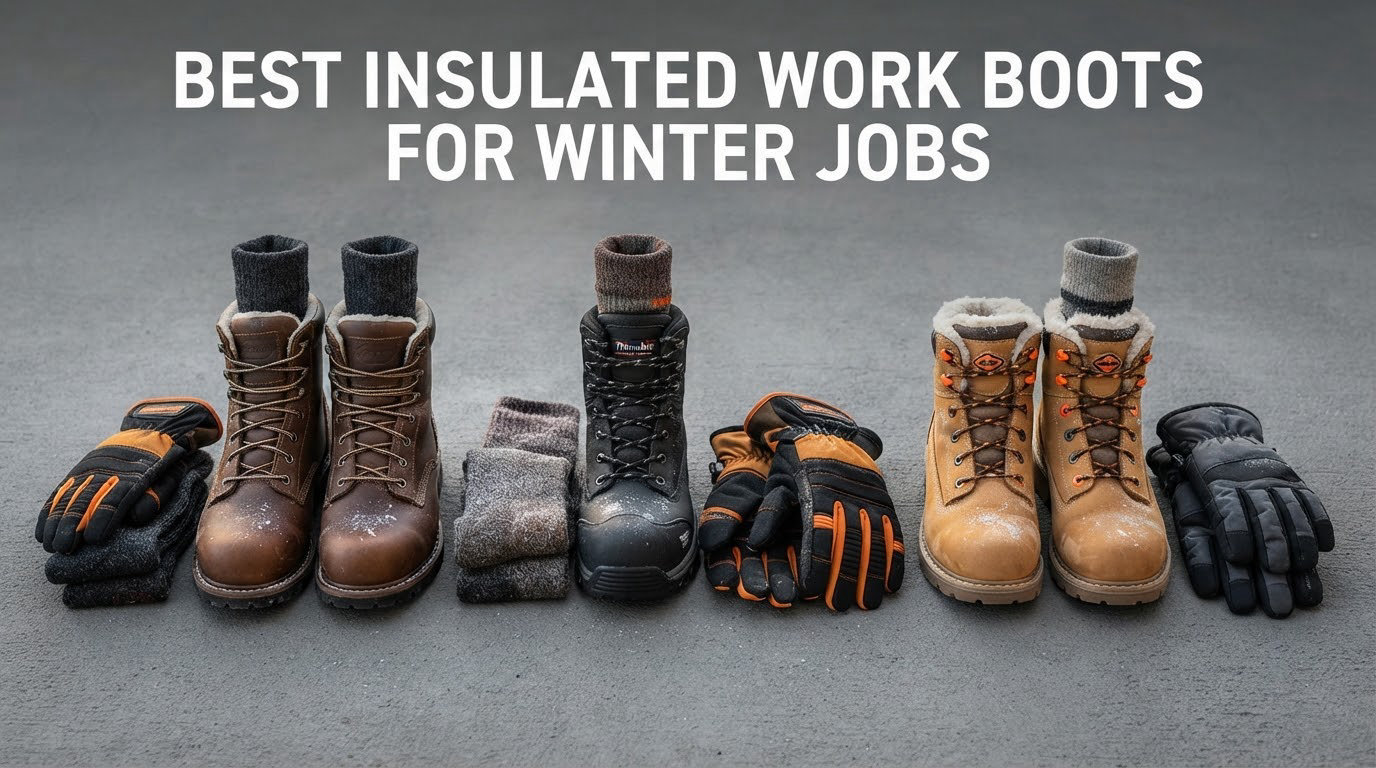
Buying the best insulated work boots for winter jobs is easy to get wrong in one specific way: buying far more insulation than your job actually needs. Most workers wearing 1000g insulated work boots for active outdoor work would be warmer in a 400g pair, because heavy fill makes you sweat and wet insulation gives up most of its rated warmth. The gram number on the label is the weight of insulating material per square meter, not the weight of the boot, and it only means something once you match it to how cold it is and how much you move.
We spent weeks going through the current crop of insulated work boots, the safety ratings, the waterproofing methods, the outsoles, and thousands of owner reports from people who wear them on real winter sites. The ten boots below came out of that process, and the ordering follows activity rather than gram count, because a boot rated for a freezer dock and a boot rated for a framing crew in moving air are not the same product.
Two things shape almost every recommendation here. First, composite toe over steel toe for cold work, which is the single most consistent piece of advice that comes back from cold-weather trades like plumbing, construction and plow driving. Second, fit, because tight toes cut circulation faster than any gram rating can replace. If you want the short version, our top pick is the Muck Arctic Pro for static deep cold and the Timberland PRO Boondock for cold active trades, and everything else slots in around those two.
Table of Contents
Top 3 Insulated Work Boots for Winter Jobs in 2026
These three carry the most weight in this roundup. Each one has a documented safety rating, real owner evidence in winter conditions, and a clear job type it suits better than the alternatives.
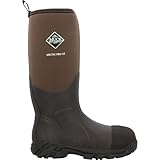
Muck Arctic Pro
- Fully waterproof neoprene upper
- Bob-Tracker outsole for ice and snow
- Stretch-fit topline seals out snow

Muck Arctic Sport Steel Toe
- ASTM F2413 steel toe
- 8mm CR flex-foam waterproof bootie
- Removable insole for custom orthotics

Timberland PRO Boondock
- Composite toe never reads cold
- ASTM F1671-07 waterproof membrane
- All-weather TPU outsole for frosted ice
Best Insulated Work Boots Compared in 2026
Every boot below is ASTM rated for toe protection unless we say otherwise, and each row lists the feature that actually decides the purchase for most winter trades. Insulation weight is given where the manufacturer publishes it, and left off where it does not, which is common among membrane boots.
| Product | Specifications | Action |
|---|---|---|
| Muck Arctic Pro Insulated Boot |
|
Check Latest Price |
| Muck Arctic Sport Steel Toe |
|
Check Latest Price |
 Timberland PRO Direct Attach 6 Inch Timberland PRO Direct Attach 6 Inch |
|
Check Latest Price |
 Carhartt Rugged Flex Insulated Carhartt Rugged Flex Insulated |
|
Check Latest Price |
 Carhartt Heritage 11 Inch Wellington Carhartt Heritage 11 Inch Wellington |
|
Check Latest Price |
| Timberland PRO Boondock Composite Toe |
|
Check Latest Price |
 KEEN Utility Evanston Composite Toe KEEN Utility Evanston Composite Toe |
|
Check Latest Price |
 Dryshod Megatar Met Guard Steel Toe Dryshod Megatar Met Guard Steel Toe |
|
Check Latest Price |
 ROCKY Blizzard Stalker 1200G ROCKY Blizzard Stalker 1200G |
|
Check Latest Price |
 ROCKY Ranger GORE-TEX Insulated ROCKY Ranger GORE-TEX Insulated |
|
Check Latest Price |
How Much Insulation Do You Need in 2026?
Pick your gram rating by temperature and activity, in that order. 200g suits active work between roughly 30F and 50F, 400g covers moderate movement down to about 10F, 600g to 800g handles standing and low-activity shifts between 20F and 10F below, and 1000g to 1200g is for static work at 20F below and colder.
Activity matters more than the thermometer. A worker climbing ladders, running generators and walking a site generates enough heat that 1000g fill becomes a liability, and sweat-soaked insulation is the fastest route to cold feet. Someone standing on a frozen dock for a four-hour block generates almost nothing, and the same 1000g fill that felt like an oven in the morning feels right by lunch.
There is a second number people confuse with insulation weight. The grams figure is the mass of the fill material per square meter, which is why a 400g boot and a 600g boot can weigh the same overall. If a manufacturer does not publish a gram figure, that is not a warning sign by itself, but it does mean you are guessing between the neighbouring tiers.
One more honest note: wet insulation loses 40 to 70 percent of its rated thermal value, because water carries heat away far faster than trapped still air. A boot that leaks once will underperform a drier boot with a lower rating, which is why waterproofing and drainage matter as much as the fill.
1. Muck Arctic Pro Insulated Boot: Best Overall for Static Deep Cold
MUCK Men’s Arctic Pro Steel Toe Insulated Boot, Brown, Size 13(M)
Fully waterproof neoprene upper
Bob-Tracker molded outsole
Stretch-fit comfort topline
Pull-on design
Pros
- Rated warmth holds to roughly -20 C per owners
- Sealed neoprene construction is genuinely waterproof
- Wide toe box accepts thick socks and heated insoles
- Aggressive tread grips snow ice and mud
- Slip-on design saves time on a wet site
Cons
- No breathability at all so socks stay damp
- Bulky profile restricts ankle movement
- Hard to remove without a heel wedge
- Rubber can crackle after three to four years
This is the boot we keep coming back to for anyone standing still in genuinely cold air. It has the highest owner rating and the largest review base of anything in this roundup, and the praise is consistent: people take it into freezers, snow and standing water and describe it as the warmest insulated rubber boot they have owned.
What makes it work is the sealed neoprene upper. There is no membrane to fail and no stitch line to leak, so the waterproofing is structural rather than a coating. The stretch-fit topline seals the calf against snow and debris, which matters more than people expect once the shaft sits above a snowbank.
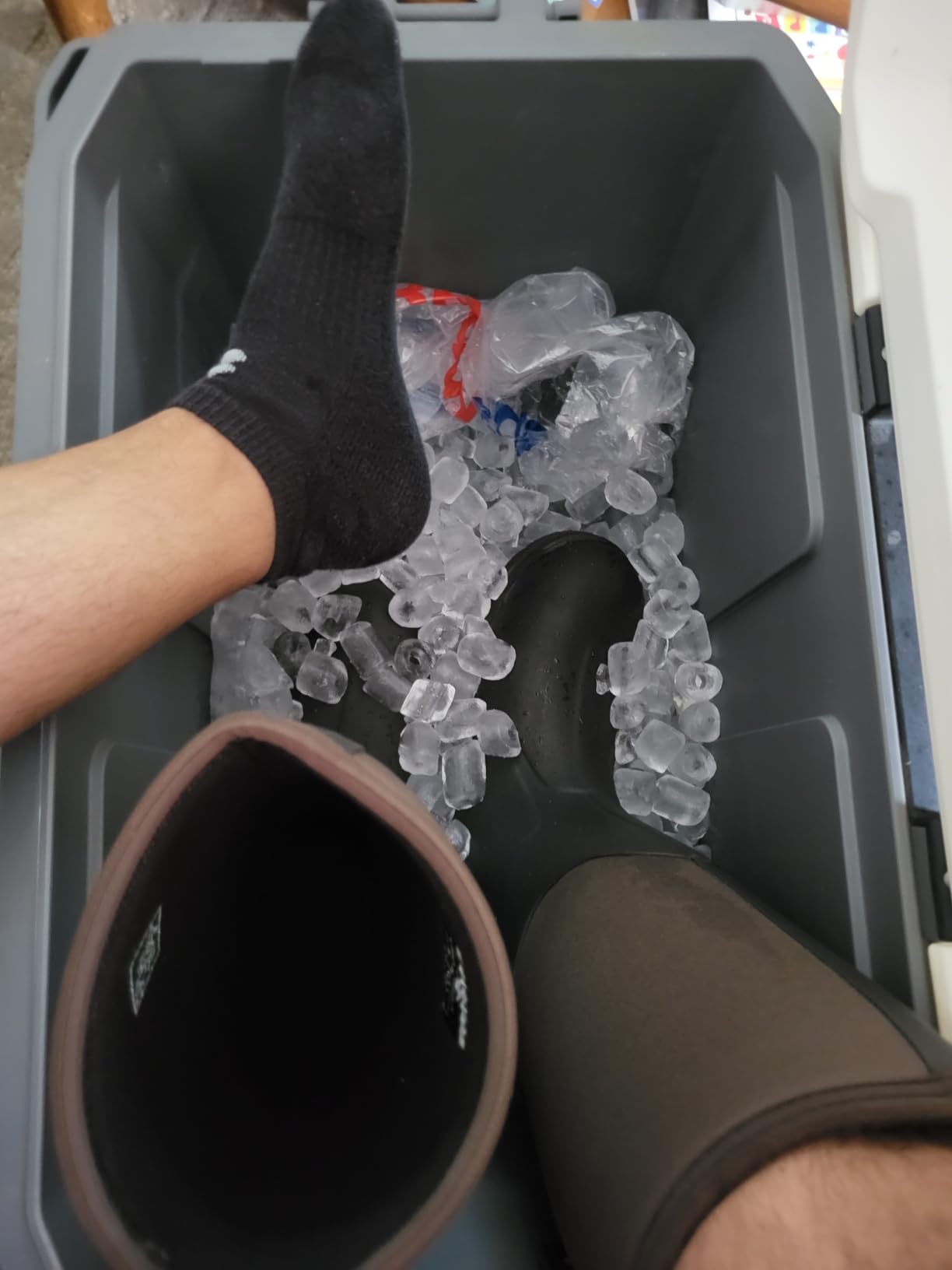
The Bob-Tracker outsole is aggressive and the traction shows up on packed snow, ice and mud, which is where most winter failures actually happen. Owners also call out the wide toe box as the reason they can wear two pairs of socks without the fit collapsing, and the interior has room for a custom insole.
Sizing runs snug, and the majority of buyers recommend going a half size up. That advice matters more here than on a lace-up boot, because a rubber upper that is tight at the start stays tight.

Who this boot suits
Static outdoor work in deep cold is the sweet spot: snow removal, farm and ranch chores, utility and site inspection, and long periods standing at a plow or a truck tailgate. For low output in very cold air, nothing else in this list holds rated warmth as consistently.
Who this boot does not suit
It is not a driving boot, and it is not for continuous walking or ladder work. The bulk limits ankle mobility, the lack of breathability means damp socks after a full day even in cool weather, and the thick ankle cuff stops most snowshoe straps from seating properly.
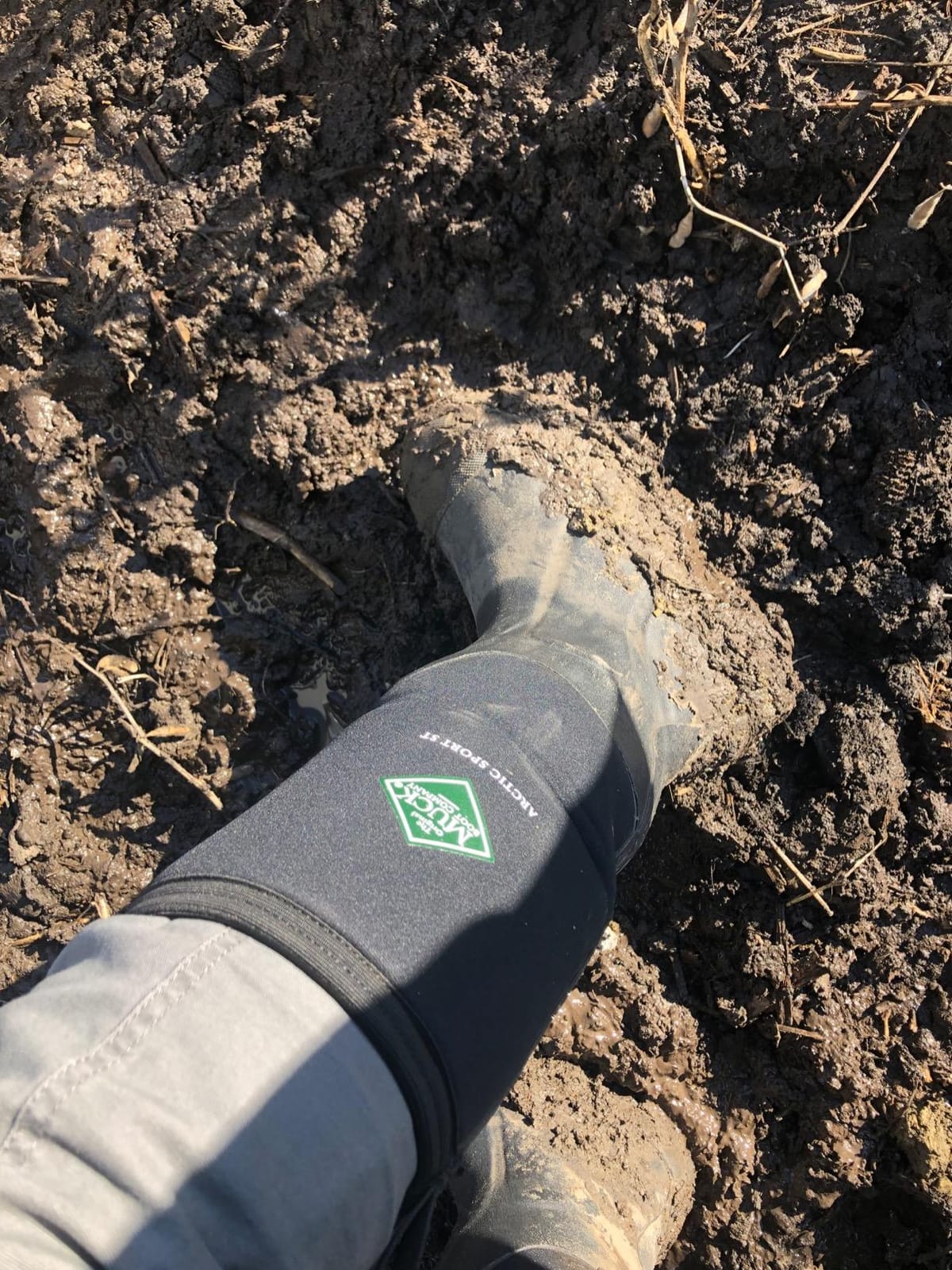
2. Muck Arctic Sport Steel Toe: Best Value Safety-Rated Winter Boot
MUCK Arctic Sport Steel Toe Waterproof Insulated Work Boot, Black, Size 11(0)
ASTM F2413 steel safety toe
Fleece lining with 2mm thermal foam
8mm CR flex-foam waterproof bootie
Wrap-up toe bumper
Pros
- ASTM F2413 steel toe that does not crowd the fit
- Owners report dry warm feet near -30 F
- Removable insole accepts custom orthotics
- Easy slip-on neoprene collar
- Simple to hose clean
- Small men's sizes fit many women
Cons
- Very difficult to pull off without a boot jack
- Soles can be slick on ice and wet clay
- Feet run hot above freezing
- Soles can separate after heavy abuse
- Stiff through the first break-in period
If you need a safety-rated winter boot with a sealed waterproof shell that still handles real cold, this is the one most buyers end up recommending to each other. The 8mm CR flex-foam bootie is waterproof and flexible, and the fleece lining plus 2mm thermal foam underlay keeps it warm well below freezing.
Two decisions separate this from the plain Arctic Sport. The wrap-up toe bumper and the ASTM F2413 steel toe make it job-site legal, and the removable insole means you can drop in custom orthotics or a heated insole for a freezer shift without replacing the boot.
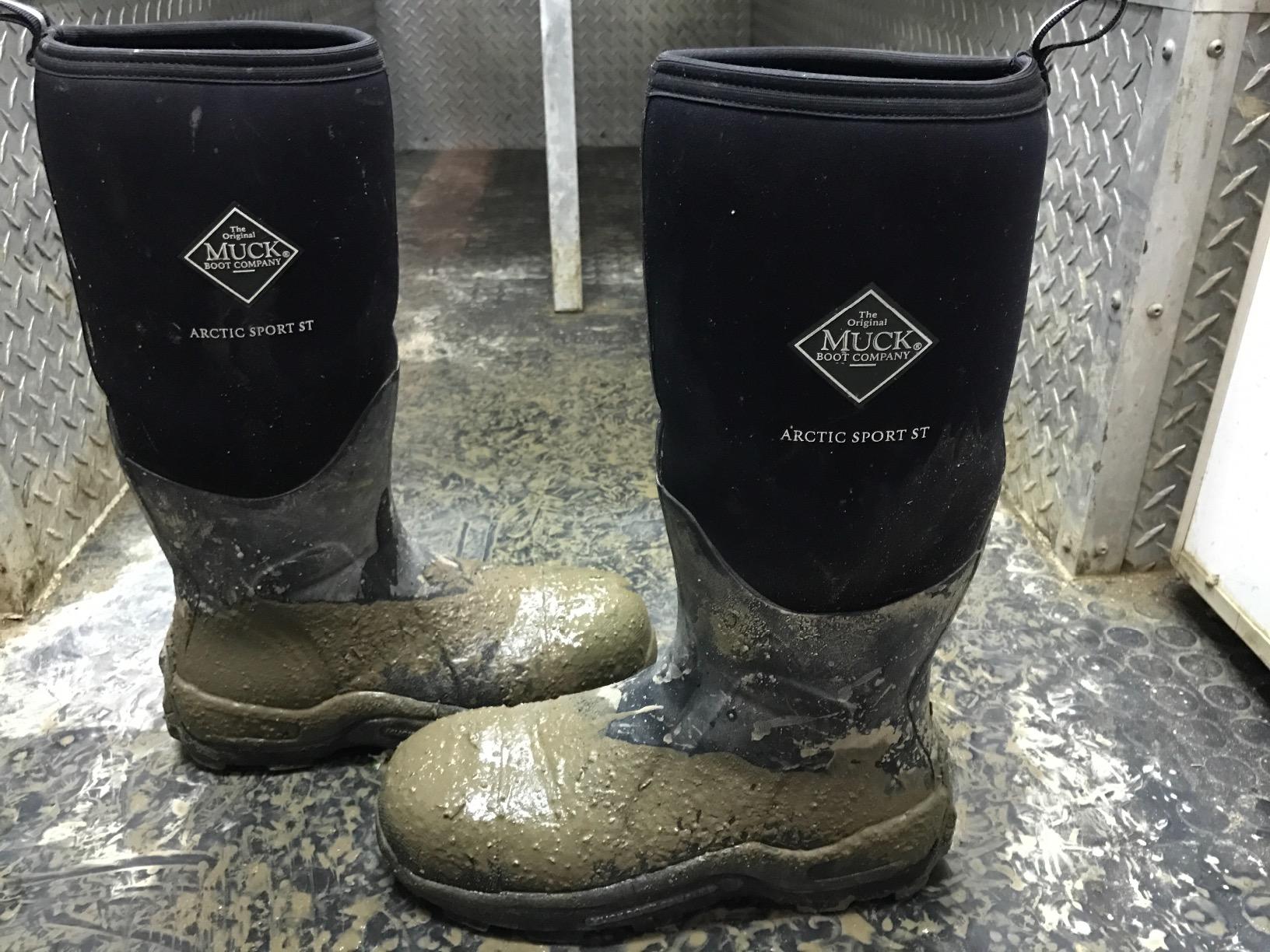
Owners treat it as the everyday winter work boot rather than an extreme-cold specialist. They talk about slipping it on at 4am without lacing anything, hosing the mud off afterwards, and wearing it through a full shift without thinking about it.
The size range runs wider than most insulated rubber boots, including smaller men’s sizes that work for a lot of women. That has made it one of the few picks here that answers the search for insulated work boots for women with an actual product rather than a note about sizing.
Who this boot suits
Utility, delivery, warehouse and outdoor crews who need a rated toe, a waterproof shell and a boot that goes on and comes off fast in slush. It is also the pick to shortlist if you work a mix of mild and freezing conditions and cannot justify a permanent heavy boot.
Who this boot does not suit
It is not for driving, since the shaft is awkward in a pedals footwell, and it overheats above freezing. If your site involves a lot of walking on polished or icy ground, the tread pattern is not the strongest here, and pulling the boots off at the end of a shift takes real effort.
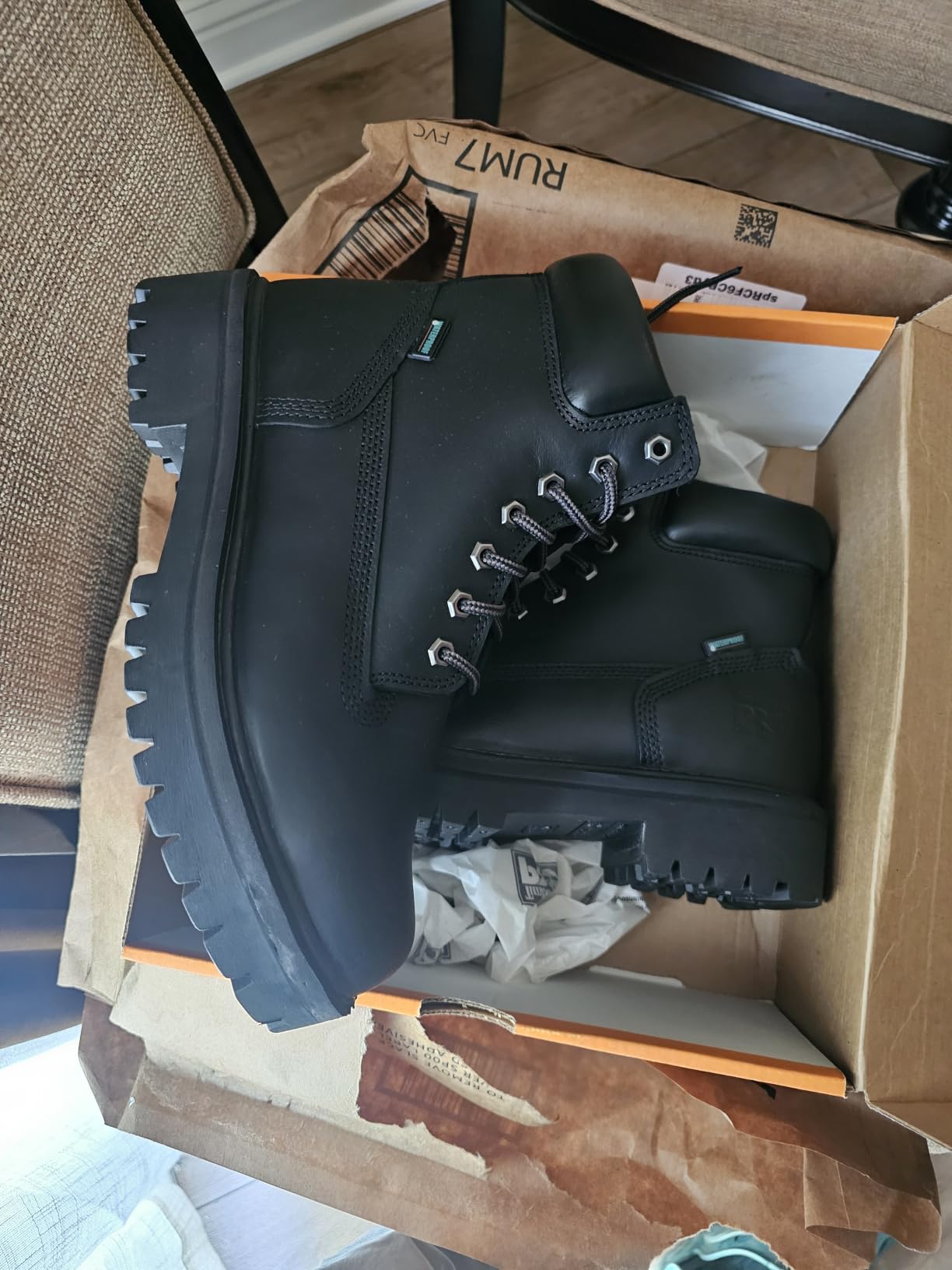
3. Timberland PRO Direct Attach 6 Inch: Best for Electrical and Wet Utility Work
Timberland PRO Men’s Direct Attach 6 Inch Steel Safety Toe Insulated Waterproof Industrial Work Boot, Brown-2024 NEW,7 M
ASTM F2412-18a steel safety toe
Seam-sealed waterproof leather
Electrical hazard protection
Anti-Fatigue midsole
Pros
- Anti-fatigue midsole carries long standing shifts
- Seam-sealed waterproof leather holds out mud and standing water
- Heat-resistant outsole resists oil and abrasion
- Electrical hazard rated underfoot
- Standard and wide widths available
Cons
- Steel toe reads colder than a composite cap
- One-star share is higher than the composite-toe Timberland
- No published gram rating for the fill
This is the boot for electricians, HVAC service techs and anyone who needs the electrical hazard rating on paper as well as on the sole. It meets ASTM F2892 standards for incidental contact with live circuits, and the safety toe meets both impact and compression classifications.
The waterproofing is seam-sealed leather with a special tanning treatment that repels moisture, which handles the rain-to-snow transitions that wreck ordinary work boots. The 6-inch height keeps it under a truck bed and out of the way when you are on a roof or in a crawl space.
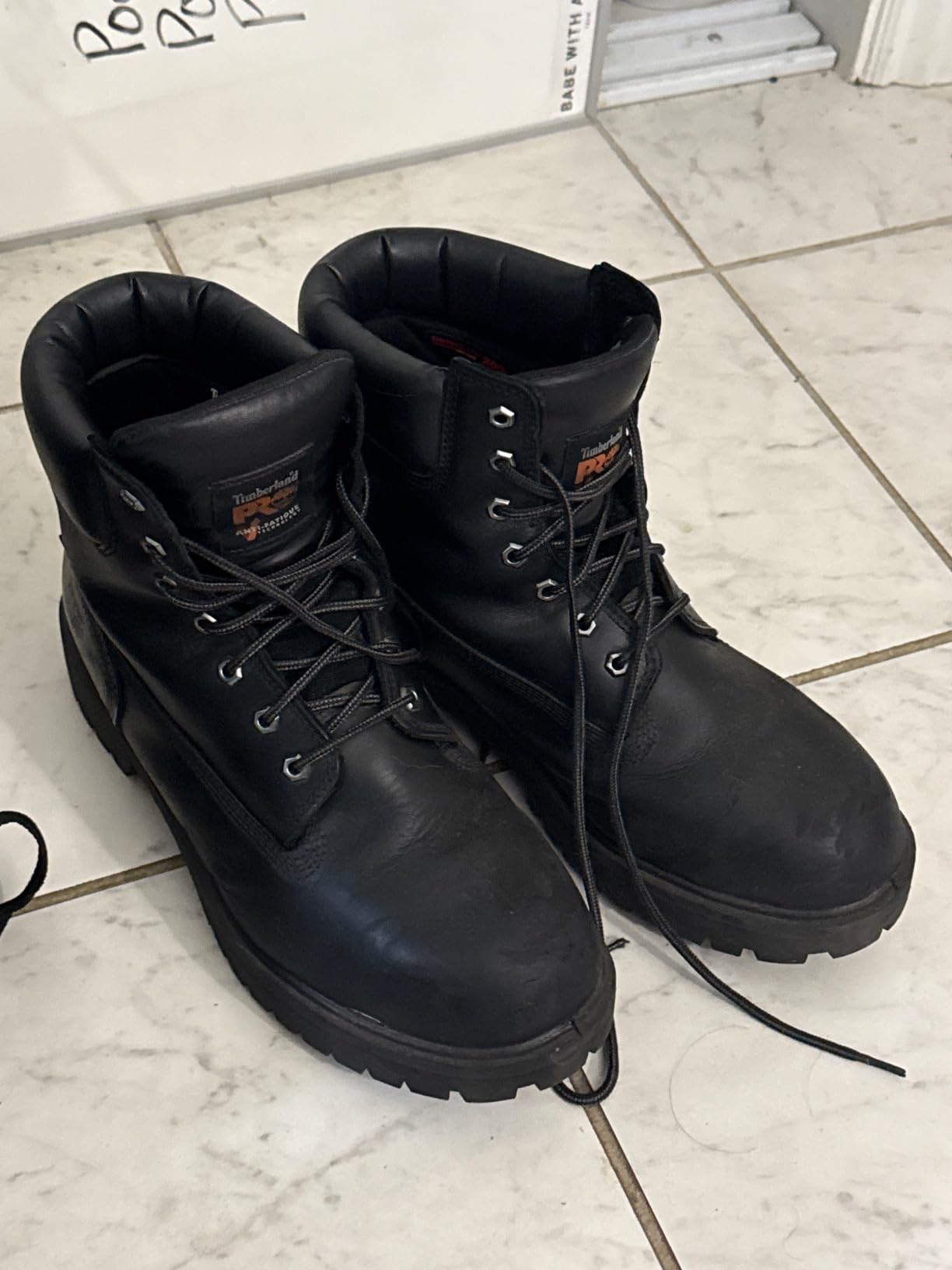
The Anti-Fatigue Technology midsole is the reason most owners describe it as comfortable through a long standing shift. It is a geometric shock-absorbing system that returns energy rather than letting it dissipate into the concrete, which is exactly what you want on a job where you are on your feet for ten hours.
This is also one of the highest-volume listings in the category, with a 4.4 average across more than four thousand ratings. That scale is useful in itself, because it means fit is well characterised across a lot of feet and the failure pattern is known rather than mysterious.
Who this boot suits
Service work where the electrical hazard rating is a requirement, and general construction where a seam-sealed leather upper handles wet ground better than a coated fabric boot. It is a strong choice for a twelve-hour shift spent mostly standing on a slab.
Who this boot does not suit
It is a steel toe boot, so in sustained cold the cap can feel colder than a composite alternative, and that is the most common reason cold-focused workers skip it. Inspect the stitching and outsole bond carefully when a pair arrives, since a share of owners report quality that does not match the brand’s usual standard.
4. Carhartt Rugged Flex Insulated: Best for Long Shifts on Your Feet
Carhartt Men’s CMF8389 8″ Rugged Flex Waterproof Insulated Comp Toe Boot, Dark Brown – 9 W
Composite safety toe ASTM 2413-24
400g 3M Thinsulate
Storm Defender waterproof membrane
Rugged Flex lug outsole
Pros
- Comfortable through 13-hour shifts climbing trailers
- Composite toe is thermally non-conductive
- Storm Defender keeps feet dry in negative temperatures
- Rugged Flex outsole stays flexible for crouching and kneeling
- Standard and wide widths
- Buyers switching from cheap boots report fewer blisters
Cons
- Outsole and tread can separate from the upper within months
- Some units stay deformed after getting soaked
- Supplied laces wear out quickly
- Heels wear through fast on abrasive pavement
- Some meltwater enters through the lace area
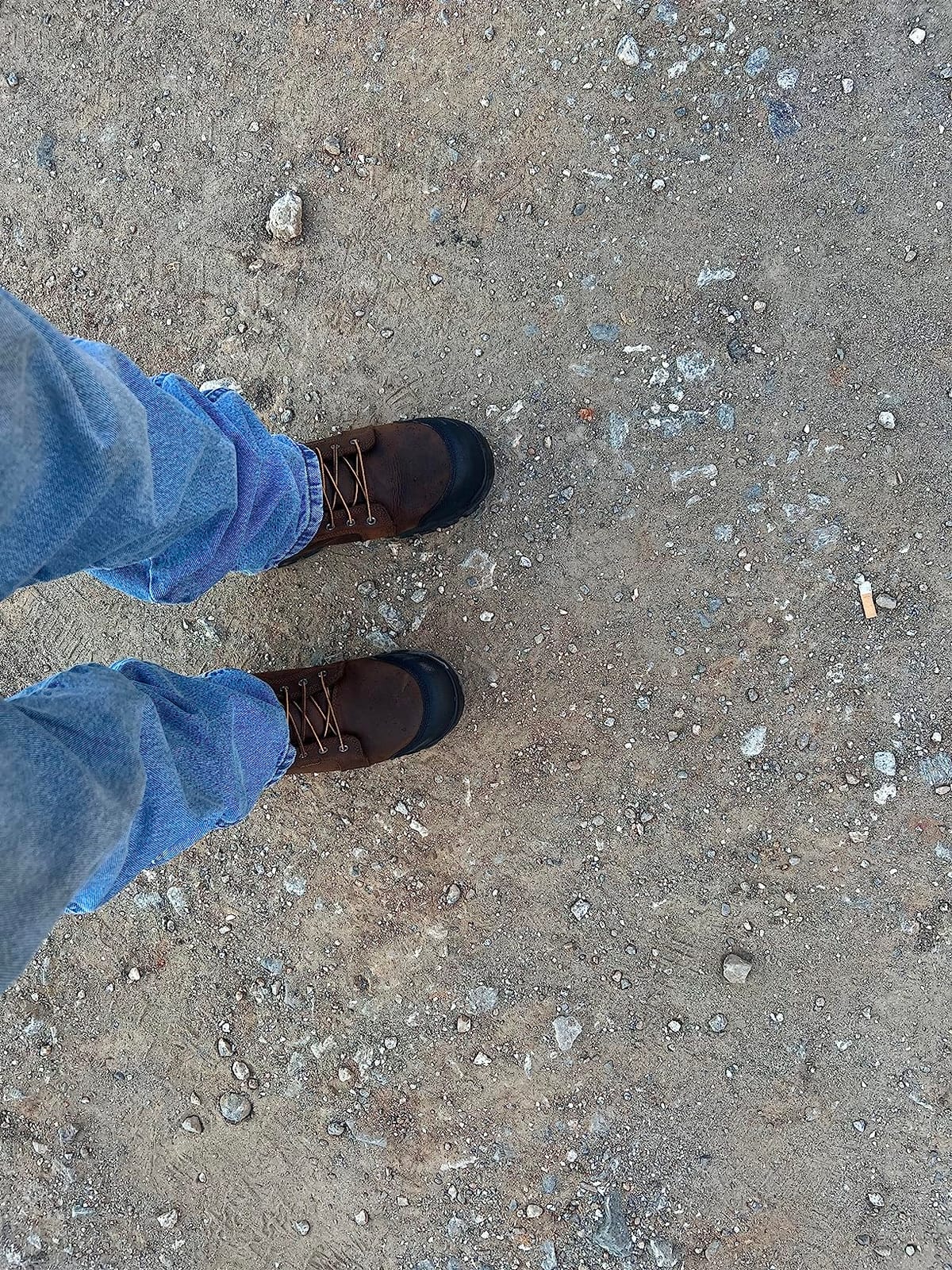
The Carhartt is the polar opposite of the rubber picks on thermal comfort, and that is exactly why it appears here. Construction, farm and HVAC workers call it the most comfortable footwear they own, and the composite toe is a large part of why nobody mentions cold feet.
At 400g of 3M Thinsulate with a Storm Defender membrane, this is a moderate-activity boot, and it is built to flex. The Rugged Flex outsole stays soft enough to crouch, kneel and crawl, and the defined heel carries ladder lock grooves for working at height.
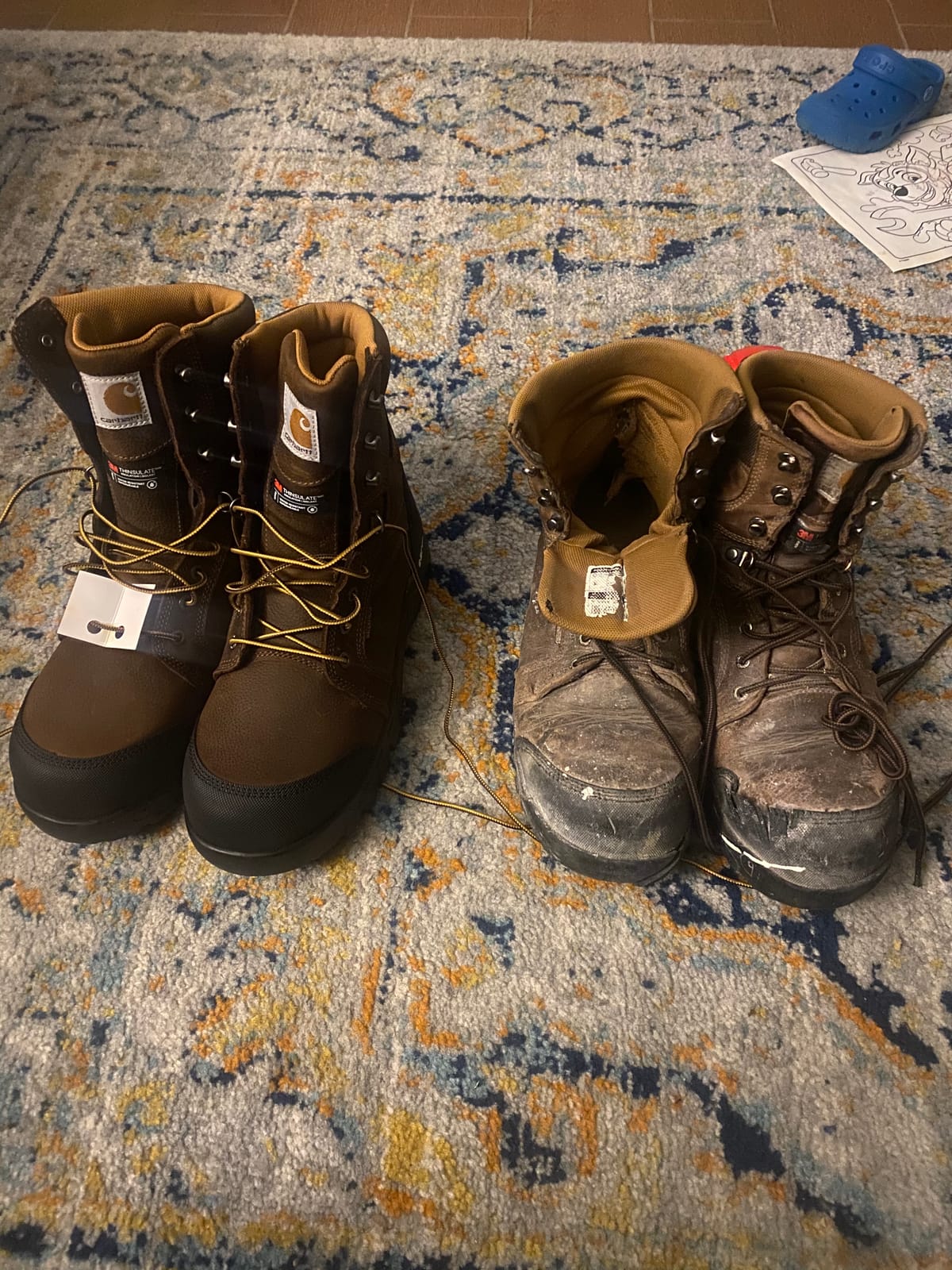
Owners consistently advise sizing up a half size and swapping the laces early. The first pair establishes whether the fit works for you, and because the composite toe runs thermally neutral, most people find the boot needs no explanation once it is broken in.
The Storm Defender membrane is worth the note that it is breathable. On a moving job in the cold, that difference is what separates this from a fully sealed rubber shell that traps moisture all day.
Who this boot suits
Framing crews, installers and service techs who are active all shift and spend more time walking and crouching than standing still. It is the pick for anyone who has been in cheap insulated boots and finished a winter with blisters.
Who this boot does not suit
Durability is the honest weak point. A noticeable share of owners report the tread separating from the upper within a few months, the heel wearing through on paved sites, and boots that do not recover once saturated, so treat it as a seasonal work boot rather than a keeper unless your site is abrasive.
5. Carhartt Heritage 11 Inch Wellington: Best Pull-On for Laces Are a Liability
Carhartt Men’s Heritage 11″ Insulated Waterproof Wellington Boot – Steel Toe, Helcor Leather, TPU Heel Guard and Achilles Flex Joint, Dark Brown/Black – 10.5 W
Helcor abrasion-resistant leather
Storm Defender waterproofing
EH-rated outsole ASTM F2892-24
11-inch pull-on shaft
Pros
- Genuinely waterproof in slush mud and sprayed floors
- Helcor leather and TPU heel guard take rocky ground
- Steel toe and defined heel for unstable terrain
- No laces to freeze or snag in snow
- Cushion Comfort PU insole cuts fatigue
- Works above freezing without overheating
Cons
- Very stiff leather with a long break-in
- Runs small and short so size up
- Heel strap and collar blister before break-in
- Hard to pull on and off with no side zip
- Not rated for extreme cold below about 28 F
Some jobs make laces a genuine problem. Snow fills the eyelets, a frayed lace snags on rebar, and a boot you have to lace in a freezing parking lot is a boot you will rush. This Wellington removes the variable entirely, and the 11-inch shaft keeps snow out to the knee.
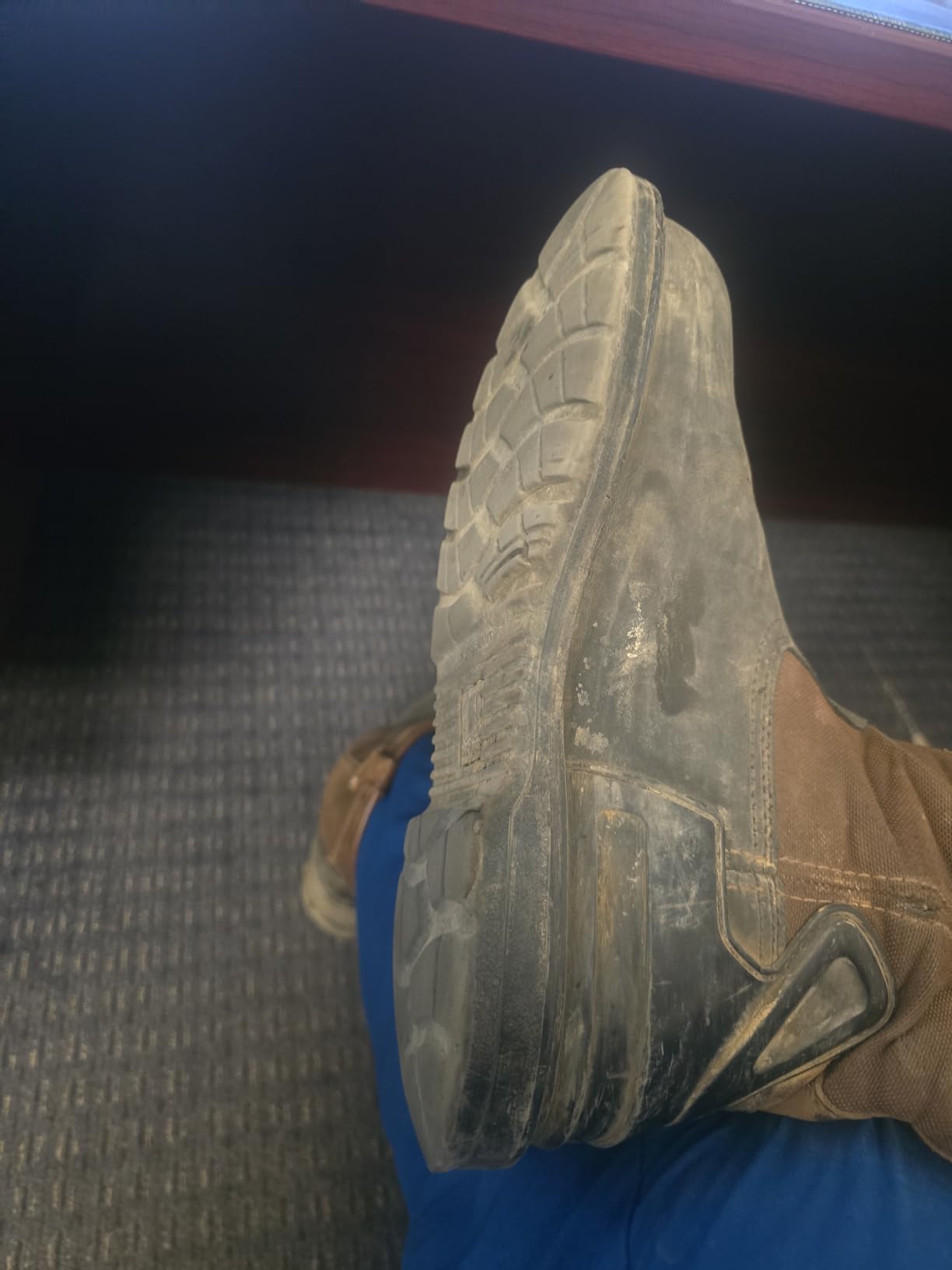
The build is about protection rather than warmth. Helcor abrasion-resistant leather over a TPU heel guard with an Achilles flex joint takes uneven and rocky ground, and one owner credits the rigid steel-toe shell with preventing an ankle fracture in a fall.
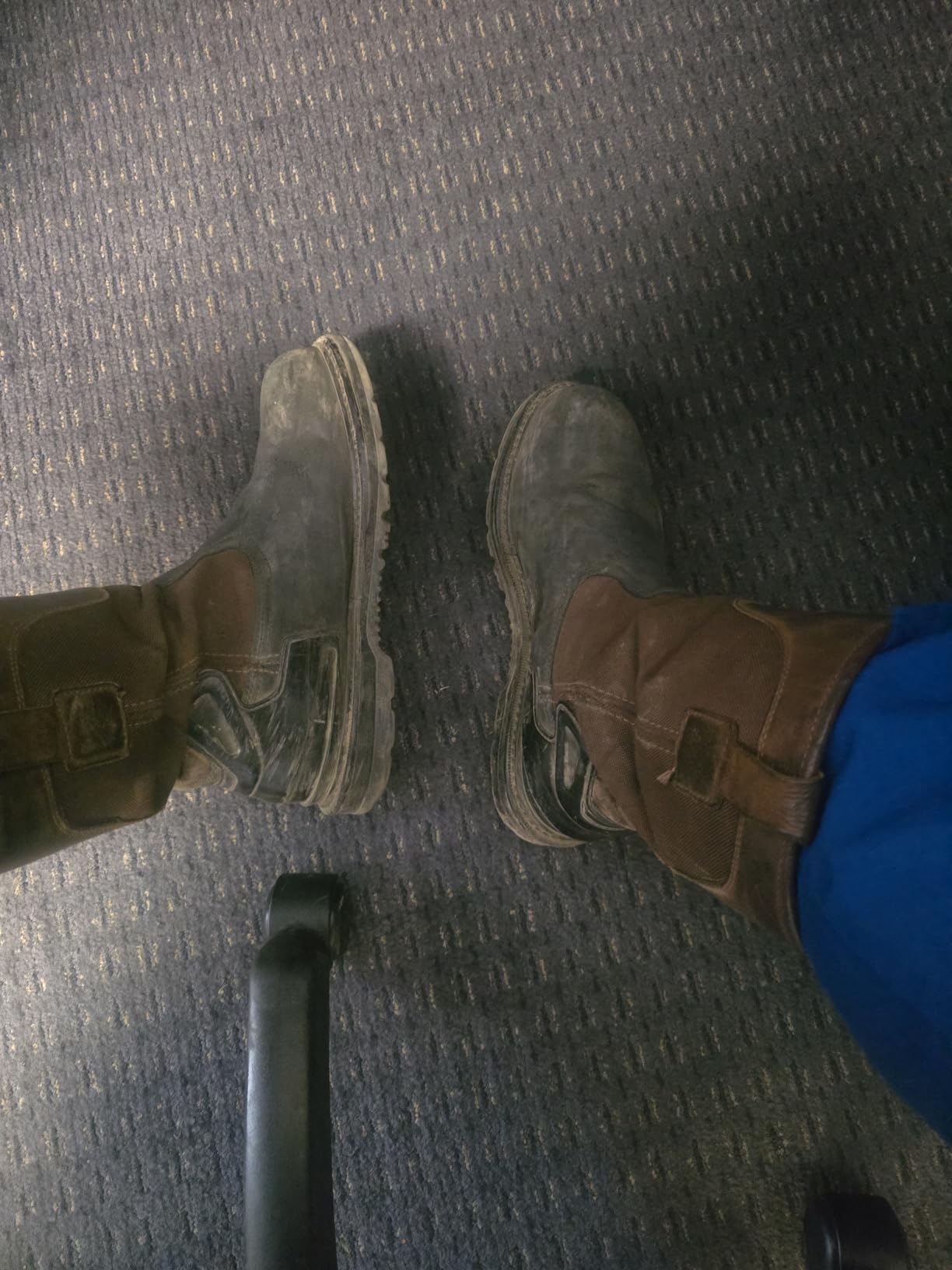
Waterproofing is the standout feature and the reason it survives slush, mud and wet shop floors where treated leather gives up. The Cushion Comfort PU insole with EVA filler and FastDry lining are what keep a long shift tolerable, and the outsole is EH-rated to 18,000 volts under dry conditions.
Sizing is the thing to get right. It runs small and short, so most buyers exchange for a larger size, and interior seams can scratch the leg unless you wear long socks or tuck your trousers in.
Who this boot suits
Landscape installation, farm and yard work, wet shop floors and any crew that prefers pull-ons. It is described as good winter work down to around freezing, and several owners say it performs above freezing without cooking your feet.
Who this boot does not suit
It is not a deep cold boot. Warmth thins out below roughly 28F, the leather is stiff for weeks before it breaks in, and the reinforced toe is short on the little-toe side, which presses on the fifth toe for anyone with a long fifth toe.
6. Timberland PRO Boondock Composite Toe: Best for Cold Active Trades
Timberland PRO Men’s Boondock 6 Inch Composite Safety Toe Insulated Waterproof Industrial Work Boot, Brown-2024 New, 7.5
Composite safety toe ASTM F2413-18
400g insulated construction
ASTM F1671-07 waterproof membrane
All-weather TPU outsole
Pros
- Owners report warm dry feet through freezing days
- Composite toe never reads cold the way steel does
- Anti-fatigue midsole makes 10-hour days comfortable
- Waterproofing verified standing in water
- TPU outsole grips snow slush and frosted ice
- Owners still wear them after two years of site work
Cons
- Heavier than expected for a composite toe boot
- Bulky insulated profile
- Runs about a half size large with a multi-day calf break-in
- Toes can feel cool when sitting still
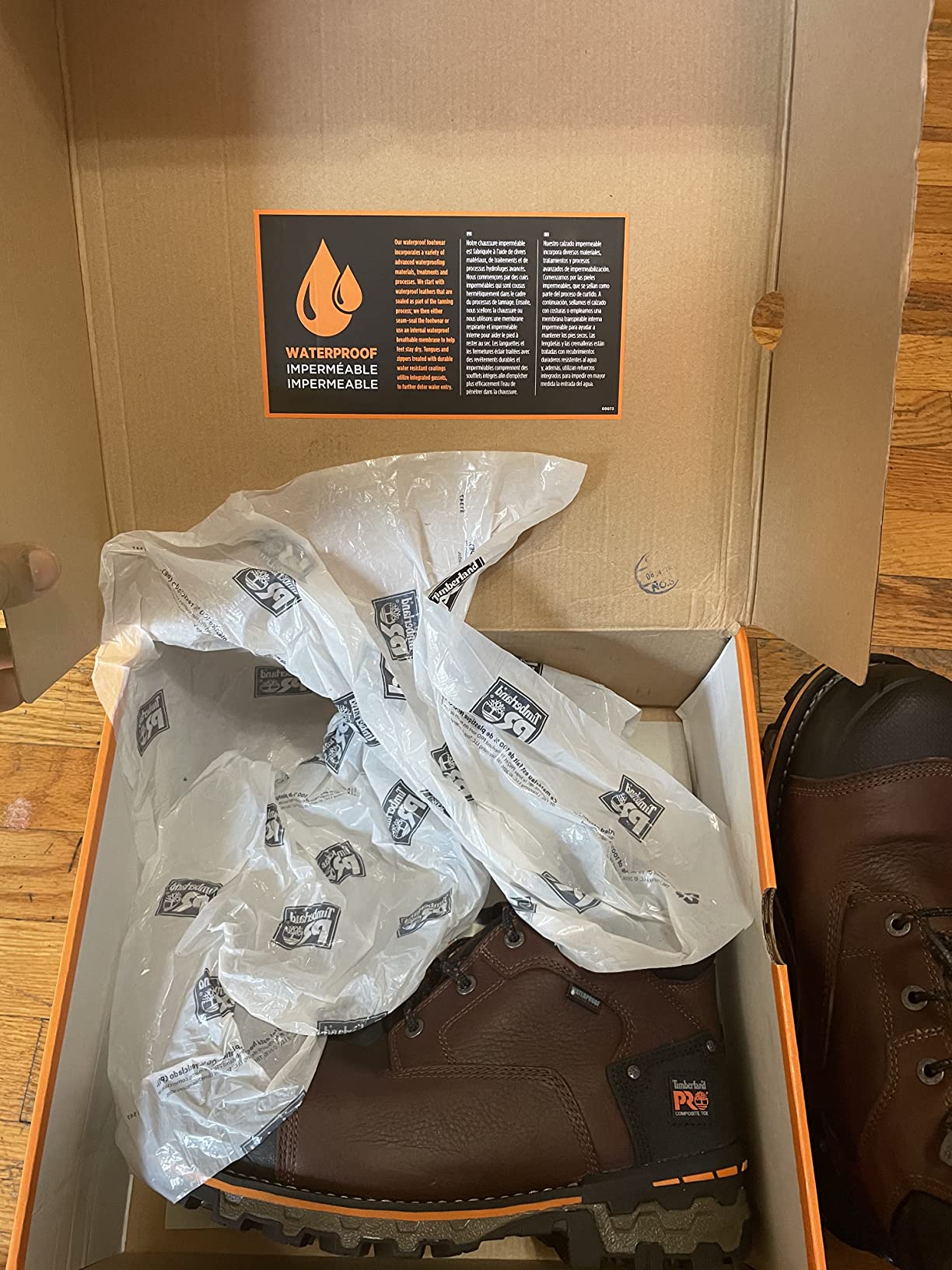
If you have moved from a steel toe to a composite toe in winter and wondered why the difference was so obvious, this is the boot that explains it. Owners describe the toe as simply never reading cold, and that single change is often worth more than adding 200g of fill.
Underneath, the waterproof membrane meets the ASTM F1671-07 standard, and the all-weather TPU outsole is designed to stay flexible across temperature swings with enhanced traction on wet and frosted ice. That is a meaningfully different compound from a winter rubber sole.
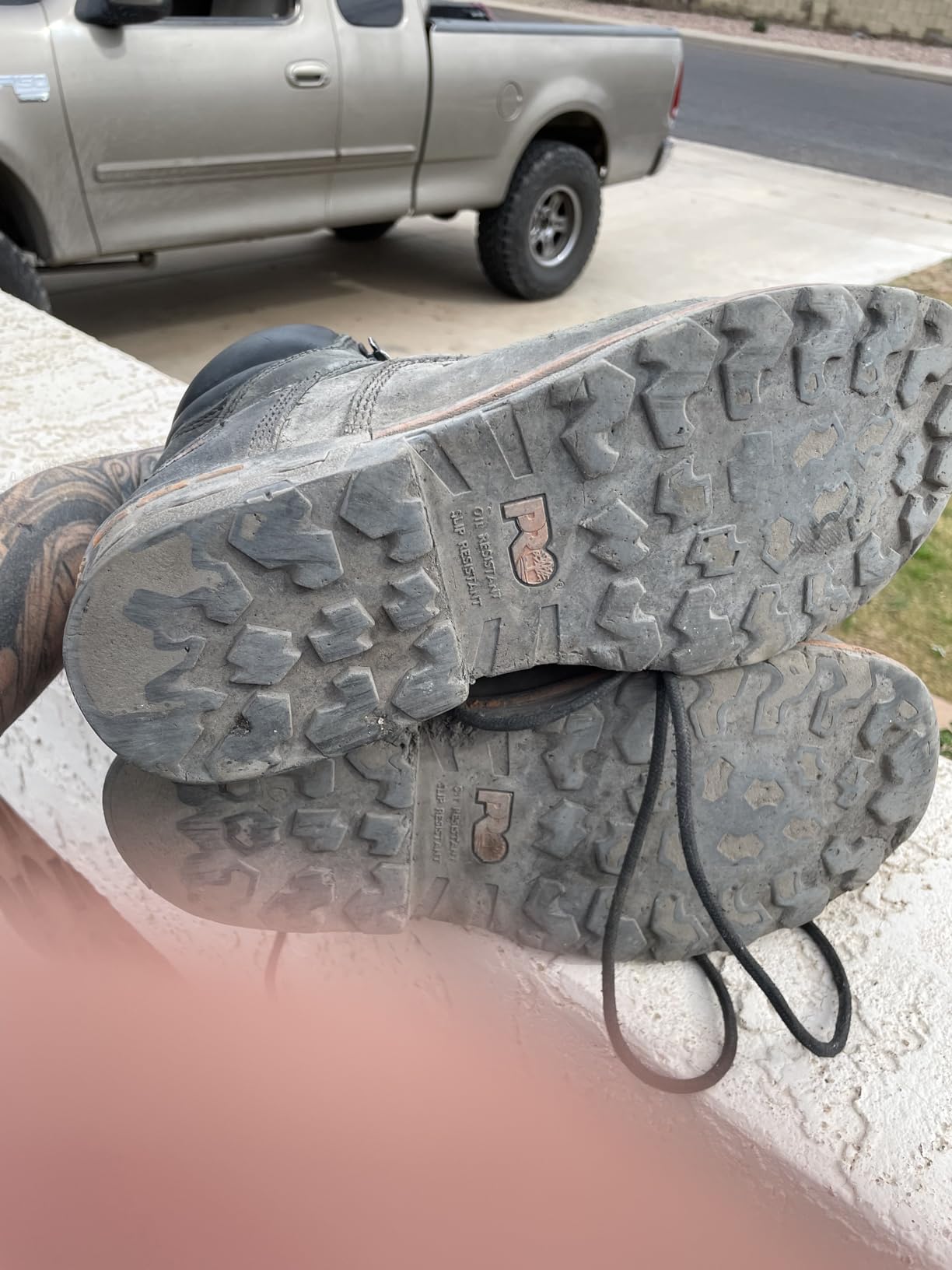
Warmth and dryness are repeatedly verified in real conditions rather than claimed. Owners describe standing in water with no seepage, and wading a creek in two pairs of socks with warm feet afterwards, which is the strongest single test a winter work boot can pass.
Durability is the standout long-term claim here. Multiple owners report two years of building-site wear with the original laces intact, which is unusual in a category where laces and insoles usually fail long before the upper does.
Who this boot suits
Outdoor construction in cold weather, especially crews who are walking and climbing rather than standing still. If you want composite toe, a real waterproof membrane and a compound that works on frosted ice, this is the most complete package in the roundup.
Who this boot does not suit
It runs about a half size large and the calf cuff needs several days to break in, which matters if you are on ladders immediately. It is also bulkier and heavier than a comparable composite boot, and toes can feel cool in the first few minutes of sitting still before the circulation picks up.
7. KEEN Utility Evanston Composite Toe: Best for Cold Storage and Rated to Minus 40
KEEN Utility Men’s Evanston 6″ Composite Toe Waterproof Insulated Durable Construction Work Boots, Bison/Black, 10.5 EE
400G KEEN.WARM rated to -40 F
Asymmetrical carbon composite toe
KEEN.DRY waterproof membrane
KEEN.ReGEN energy-return midsole
Pros
- Published -40 F / -40 C insulation rating
- Asymmetrical carbon composite toe 15 percent lighter than steel
- Fully non-metallic so it passes metal detectors
- KEEN.ReGEN midsole returns 50 percent more energy
- KEEN.DRY membrane with barnyard-resistant leather
- Nylon shank for midfoot support
Cons
- Thinnest evidence base in the roundup at 116 ratings
- One-star share of nine percent
- No owner review text returned to document specific durability complaints
This is the only pick in the roundup with a published temperature rating attached to its insulation, and that makes it the one to shortlist for a real freezer. The 400G KEEN.WARM layer is specified at minus 40F, which is a documented claim rather than a marketing adjective.
Everything else is aimed at standing work. The KEEN.ReGEN midsole resists compression and returns 50 percent more energy than standard foam, which directly addresses the insole compression that makes insulated boots feel worse by month four, and the nylon shank supports the midfoot on a long shift.
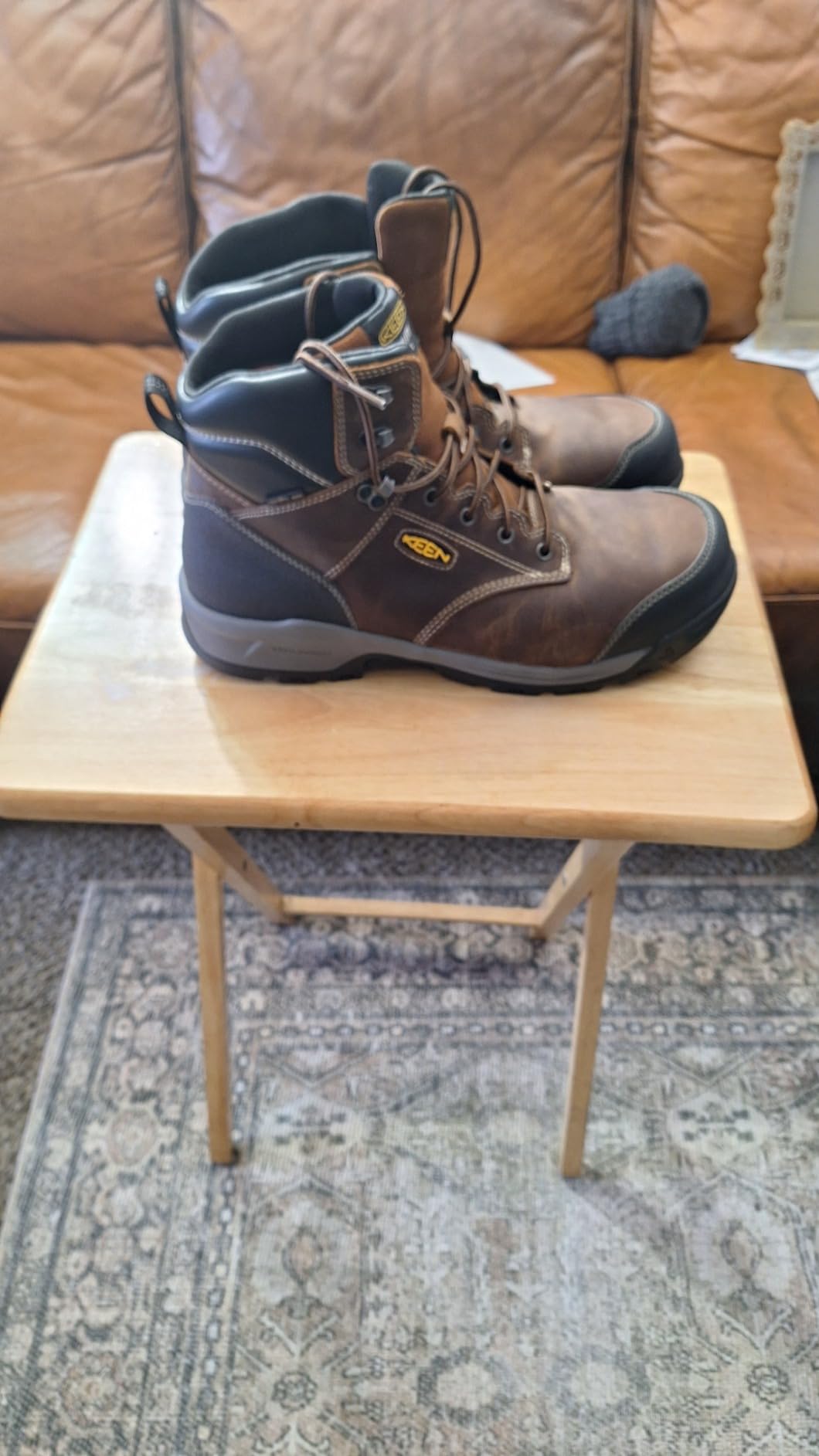
Two features will matter enormously on specific sites. The whole boot is non-metallic, so it passes through a metal detector without being removed, and the full-grain leather is rated against oleic acid, urea, sodium chloride and ammonium hydroxide, which is what makes it a credible farm and wash-down boot.
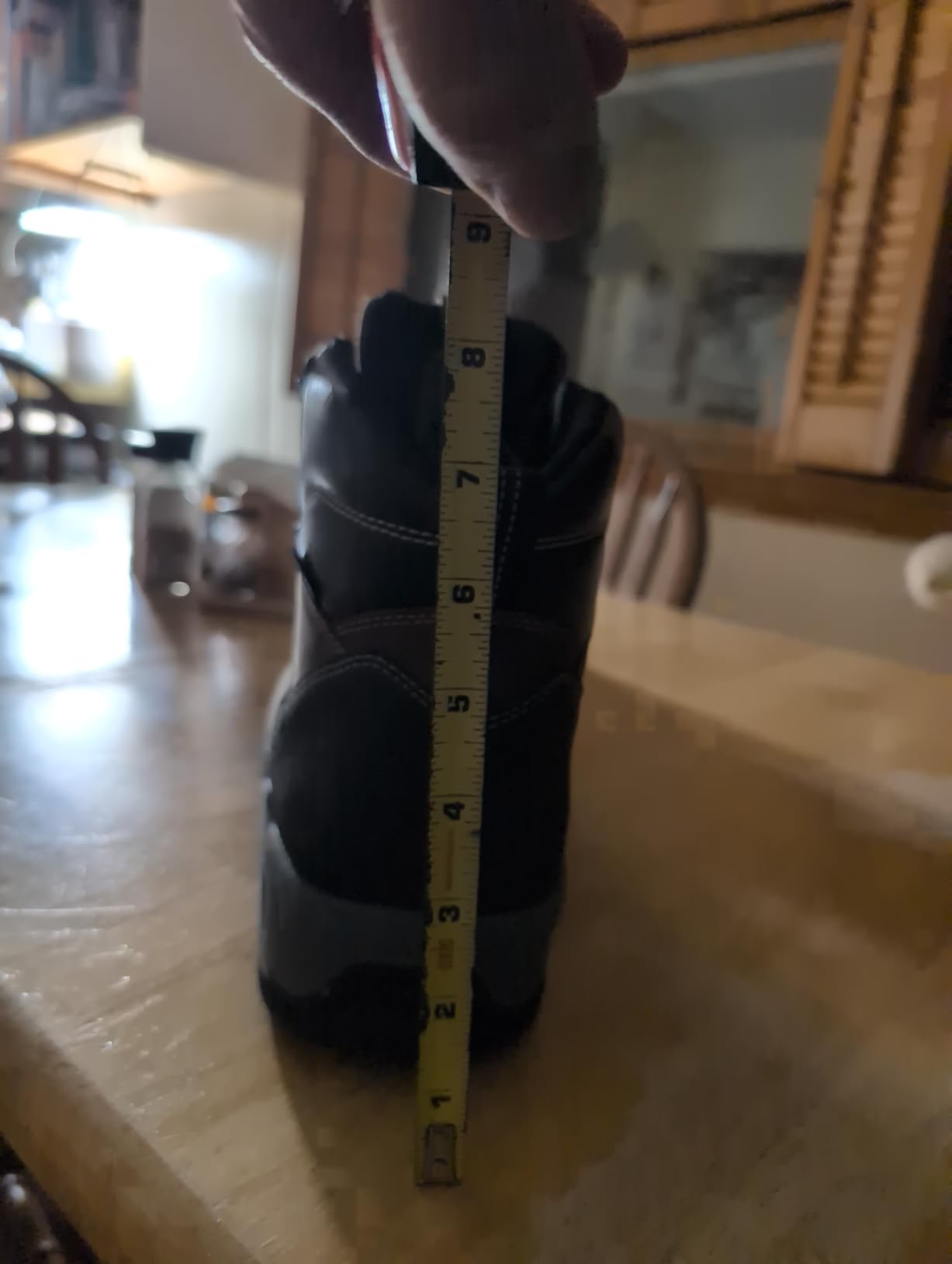
The outsole meets the ASTM F1677 MARK II slip standard and a SATRA abrasion standard, and it is non-marking with a 90-degree heel for grip when the floor is wet or greasy.
Who this boot suits
Cold storage and freezer warehouse shifts, farm and wash-down environments, and any site with a metal detector or a chemical exposure requirement. It is the specification-led choice when you need a number in writing rather than an impression.
Who this boot does not suit
The evidence base is thin. At 116 ratings this is the least-reviewed boot in the group, and a nine percent one-star share is worth weighing, so if you want a proven multi-season track record rather than the strongest spec sheet, choose one of the Timberland models instead.
8. Dryshod Megatar Met Guard: Best for Impact and Puncture Protection
Dryshod Mens Megatar Met Guard Steel Toe Rubber Work Boot Black Size 12
Internal metatarsal impact plate
ANSI steel toe ASTM F2413-18 EH
CSA puncture-resistant sub-sole
Solid rubber oil-resistant outsole
Pros
- Only pick in the roundup with an internal metatarsal plate
- Warm and dry through snow ice mud and standing water
- Rigid build supports the ankle on broken ground
- Steel toe and EH rating for compliance
- Roll-down gusset top vents heat on warmer days
- Runs generous for wide feet
Cons
- Heavy and clumsy to walk in
- Rigid build unsuited to driving or long walking
- Waterproofing has failed on some units within a few months
A safety toe protects the toes. A metatarsal guard protects the whole forefoot from something dropping on it, and if you work under equipment, in a mine, or in demolition-adjacent conditions, that is the difference between a bruise and a broken foot.
This is the only boot here with a semi-rigid internal metatarsal impact-resistance plate, and it pairs that with a CSA approved full-foot puncture-resistant sub-sole. A steel toe rated to ASTM F2413-18 for impact, compression and electrical hazard covers the rest of the standard, and the outsole is rated for oil resistance and slip resistance separately.
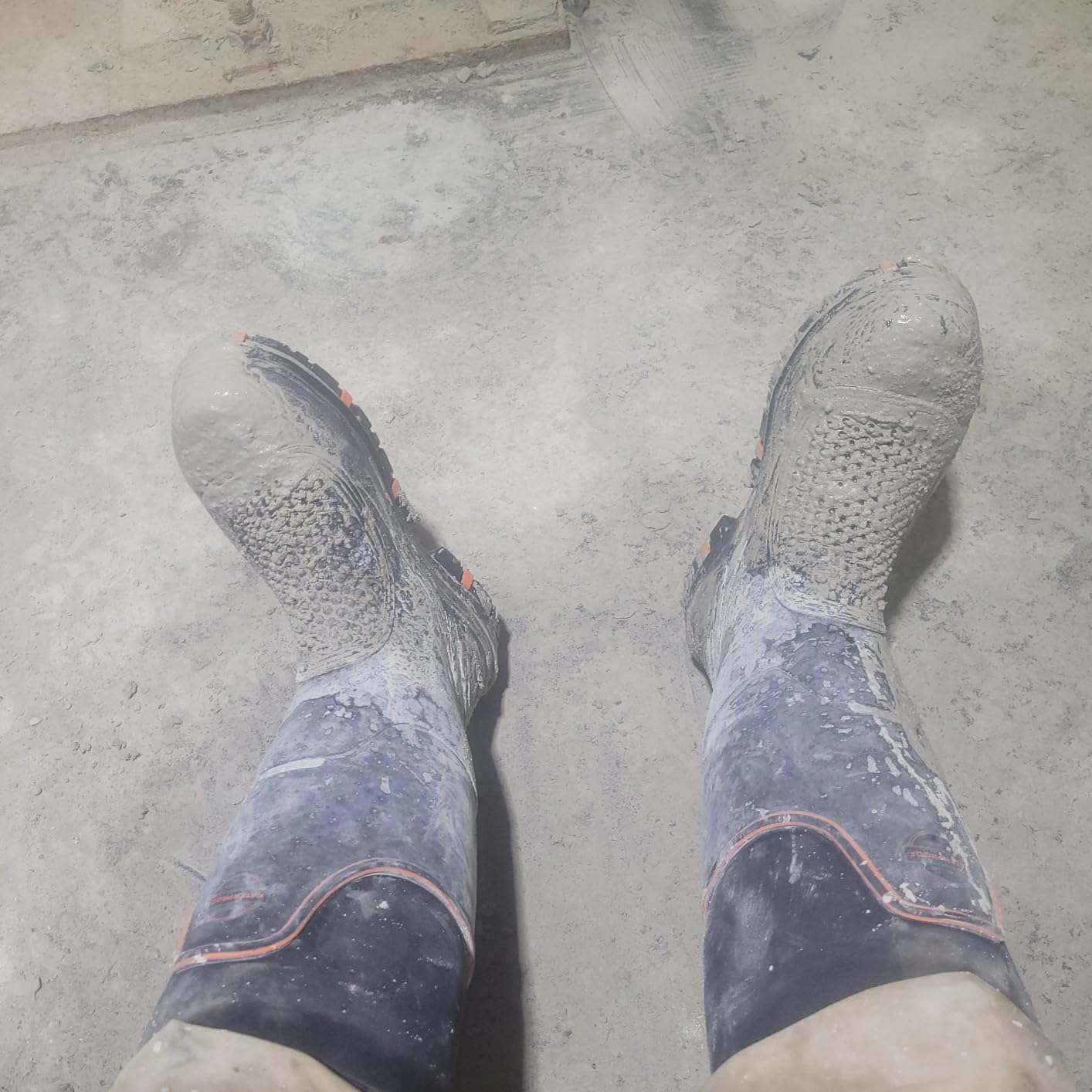
Owners working underground and on farms call it the toughest boot they own, and the rigid triple-layer toe and heel reinforcements are why. The roll-down gusset top is a small touch that matters in spring, letting you vent heat on a warm day without changing boots.
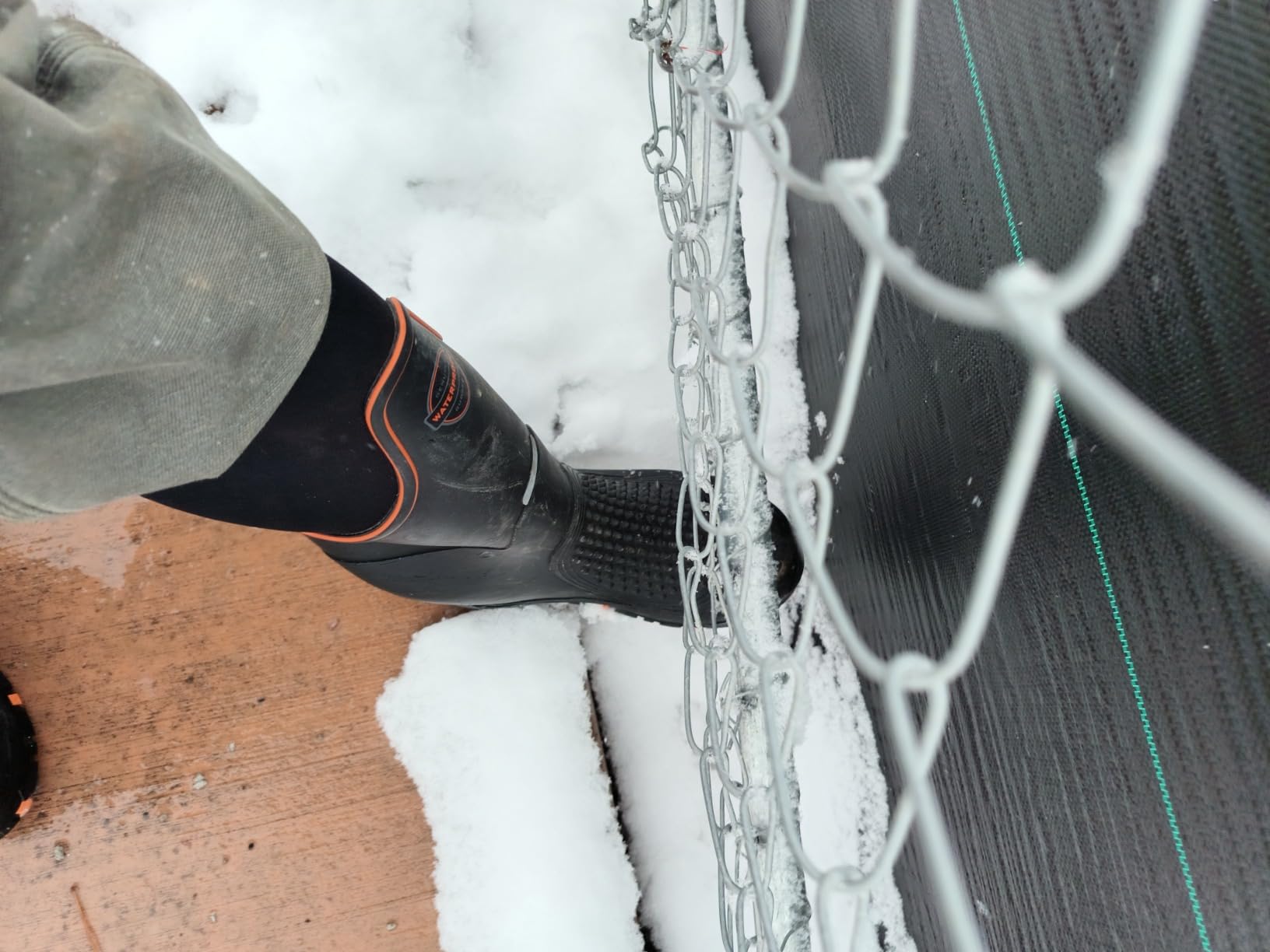
Thermal performance is genuinely good for a rigid boot. Users report staying warm in cold snow without overheating in mud and standing water, and the sizing was reported as spot on and generous for wide feet.
Who this boot suits
Anyone whose site risk assessment calls for metatarsal protection, plus utility and farm crews working on broken or unstable ground. It is a strong choice where ankle support matters more than walking efficiency.
Who this boot does not suit
It is heavy and clumsy for long walks, and the rigid build makes it a poor driving boot. The most serious reported problem is inconsistent waterproofing, with one owner describing a first pair lasting a year and a second failing at the toe within two to three months with no visible crack, so keep the return route in mind.
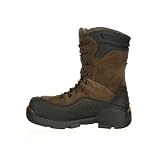
9. ROCKY Blizzard Stalker 1200G: Best for Deep Cold on a Budget
ROCKY Blizzard Stalker Steel Toe Waterproof 1200G Insulated Work Boot, Brown, Size 10(MEN)
1200g insulation for extreme cold
ASTM F2413 steel toe with EH
Guaranteed Rocky Waterproof construction
Removable mesh PU footbed
Pros
- Heaviest insulation in the roundup at 1200g
- Guaranteed waterproof construction for snow slush and mud
- ASTM F2413 steel toe with electrical hazard protection
- Removable footbed accepts custom insoles
- Rubber vamp hoses clean and resists barnyard chemicals
- Cheapest entry point to a safety-rated 1200g boot
Cons
- 9-inch height adds bulk above the ankle
- Rubber-over-vamp build differs from modern membrane boots
- No owner review text returned to document specific weaknesses
At 1200g this carries the heaviest fill of any boot in the roundup, and it is the one to look at when the temperature is genuinely brutal and you are not moving. Combined with guaranteed waterproof construction and an ASTM rated steel toe, it covers the three things a deep cold job site demands.
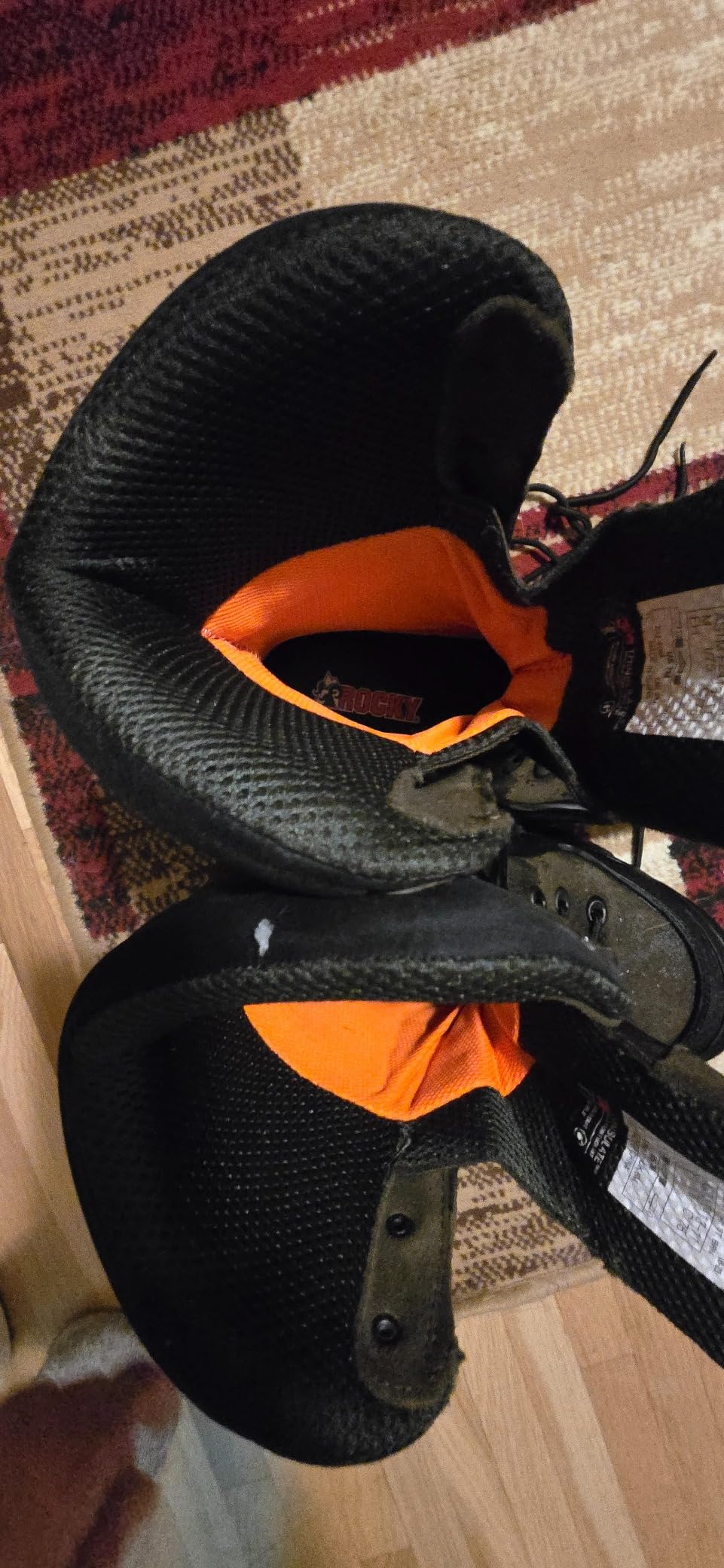
The removable mesh PU footbed with a TPU heel stabilizer is the quietly useful part. On a long freezer or plow shift you can swap in a higher thermal insole, and the heel stabilizer keeps the foot from sliding forward in a boot with a lot of insulation in it.
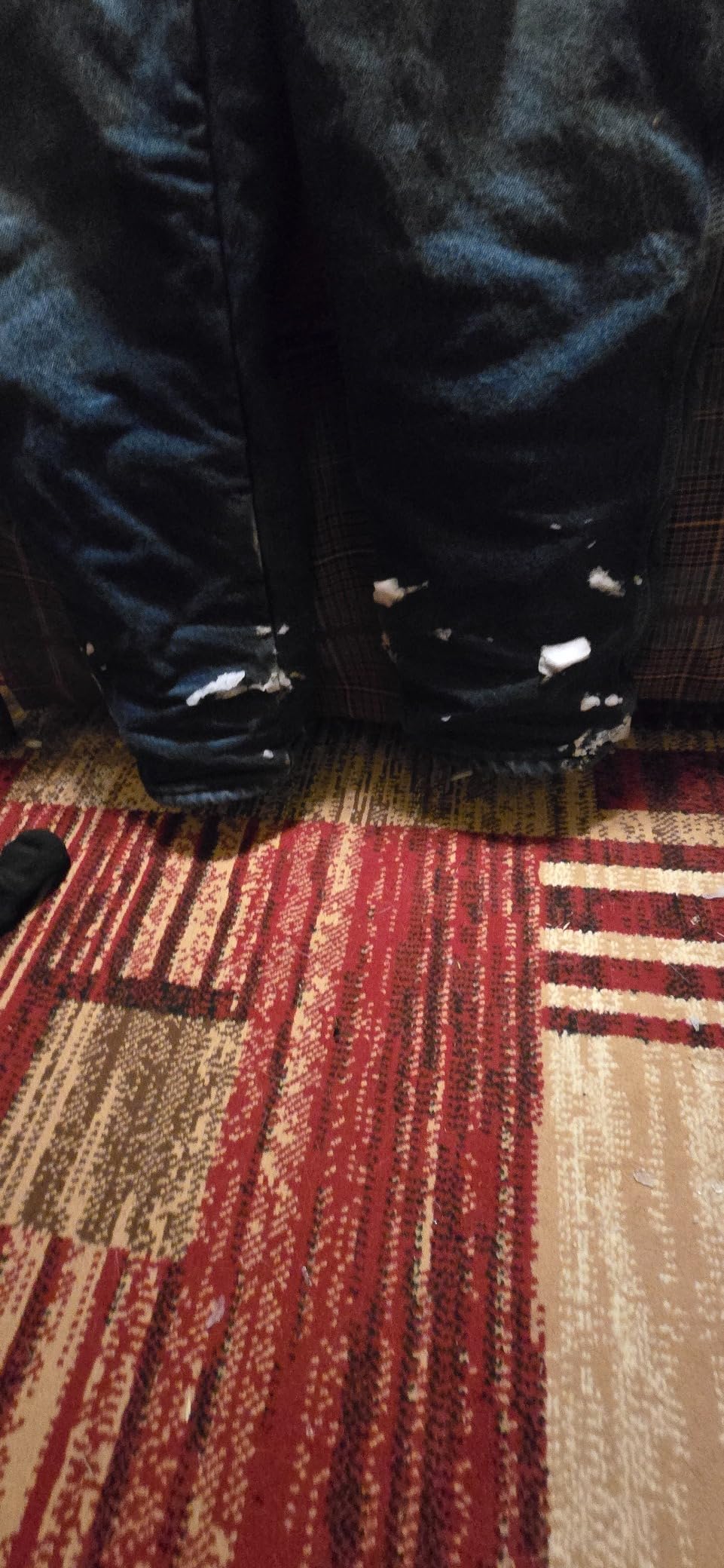
The rubber-over-the-vamp build is the old-school approach and it works: the vamp hoses clean, resists barnyard chemicals and does not need a break-in period. That makes it practical for crews who move between a muddy yard and a freezer without changing footwear.
The electrical hazard rating is a genuine addition at this insulation level, since most hunting-style boots in the 1000g and up range are not safety rated and are not legal on many job sites. This one carries a protective toe classification and an EH standard.
Who this boot suits
Static work in serious cold: plow and snow removal support, frozen construction sites, unheated sheds and any post where you are standing in one spot for hours. It is also the pick when deep cold protection has to fit a tight budget.
Who this boot does not suit
The 9-inch height is bulkier than a 6-inch boot and harder to drive in, and 1200g of fill is genuinely heavy if you are climbing or walking all day. The rubber-over-vamp construction is not a modern sealed membrane, so treat it as tough rather than ultralight.
10. ROCKY Ranger GORE-TEX 600G: Best Resoleable Boot for Wet Conditions
ROCKY Ranger Steel Toe GORE-TEX® Waterproof 600G Insulated Work Boot, Brown, Size 11(ME)
GORE-TEX waterproof liner
600g 3M Thinsulate Ultra
Goodyear welt construction
Vibram outsole
Pros
- GORE-TEX liner keeps feet dry at the end of a snow day
- 600g Thinsulate Ultra holds warmth in deep winter
- Vibram outsole gives strong snow and slush traction
- Goodyear welt makes it the most resolable boot here
- Speed lacing loops work with gloves on
- Rear pull tab
- Minimal break-in
- Extremely strong repeat purchase history
Cons
- Runs about a size large
- Toe box can be narrow even in the wide width
- Lengthy break-in on some pairs
- Newer production reported stiffened versus earlier versions
This is the durability answer. Goodyear welt construction means a bootmaker can replace the entire outsole when it wears through, so instead of buying new boots every second winter you resole them, and nobody else in this roundup offers that.
The 600g of 3M Thinsulate Ultra sits in the sweet spot for winter work: warm enough for deep cold static periods without tipping into the over-insulated zone on an active shift. Owners report strong traction through snow and slush from the Vibram outsole.
The GORE-TEX liner is a real membrane rather than a surface treatment, and owners describe the difference plainly: feet only get wet when they wade above the boot, even at the end of a snow-covered day. A treated-leather rival on the same shift soaks through.
Loyalty is the strongest signal in the reviews. One owner is on his 14th pair, another reports his son has owned eight, and several buyers deliberately buy two at a time in case the style is retired. That is the behaviour you see when a boot has survived multiple real winters.
Who this boot suits
Crews in slush, wet snow and standing water who want one pair that survives a decade. The Goodyear welt makes it the pick for anyone who wears out outsole rather than uppers, and the speed lacing loops let you get it on with gloves.
Who this boot does not suit
Sizing runs about a size large, and the toe box can stay narrow even in the wide width, so consider a half size down with two pairs of socks rather than assuming a size up. Some buyers report the leather arriving stiffer than earlier production, and a few pairs turn up with a small dent in the steel toe.
Insulated Work Boots Buying Guide: Toe Type, Waterproofing, Sizing and Socks
Composite toe is the colder-work answer, and it is not a myth. Steel conducts heat away from your foot far more readily than a non-metallic composite cap, which is why crews in plumbing, construction and plow driving keep converging on composite for winter work. The protection side is equivalent: this roundup includes both an ASTM F2413 steel toe boot and composite boots meeting F2413 and the newer F3445 standard at the same impact and compression classes, so you are trading metal for insulation, not protection. If your risk assessment names a specific standard, check the label rather than the marketing name.
Waterproof beats water-resistant, and dryness beats fill weight. A water-resistant upper blocks a shower. A GORE-TEX or KEEN.DRY membrane, or a sealed neoprene shell like the Muck Arctic Pro, blocks a slush puddle you are standing in for forty minutes. Since wet insulation gives up 40 to 70 percent of its rated value, and since most winter boot failures are moisture failures rather than cold failures, the waterproofing decision matters more than the gram rating. The counterweight is breathability: a fully sealed boot with no venting will make your socks damp anyway, so look for a breathable membrane or a roll-down gusset if you work in variable conditions.
Outsole compound decides your ice risk, and cleats are a supplement. Winter rubber and TPU compounds such as the one on the Boondock hold flexibility and grip on frosted and wet ice. Clear sheet ice defeats all of them, and slip incidents in winter are usually blamed on under-insulated feet when the real cause is a hardened or glazed outsole. For genuine ice work, add removable traction over the winter boot rather than replacing it, and our guide to the [best winter traction cleats for boots](https://ijate.net/best-winter-traction-cleats-for-boots/) covers how to size and fit them.
Size for the socks you will actually wear, and protect the toes. Most insulated boot reviews in this roundup converge on sizing up a half size, but that advice assumes thick socks. If you run a narrow toe box, a half size up can be worse than your normal size. The circulation point is the one that matters most: tight toes cut blood flow, and cold feet are far more often a fit problem than an insulation problem. Measure your feet in the evening with the socks on, and check whether the width you need is offered, since extra-wide sizing is thin on the heavily insulated models.
Run two socks, never cotton. The system that consistently beats a single thick sock is a thin synthetic or merino liner against the foot with a mid-weight merino blend sock over it. Cotton holds moisture against your skin and is the most consistently criticised material in cold-weather boot advice. Keep a spare pair mid-shift, because a damp sock costs more warmth than any gram rating you can buy, and pack one of our [best insulated water bottles for hydration](https://ijate.net/best-insulated-water-bottles-for-hydration/) so you are not drinking half-frozen water through a shift.
Keep them dry or lose the rating. Wet insulated boots dry slowly and stay damp for days without help, which is the most common maintenance complaint in the category. Six steps handle it: use a boot dryer overnight, de-salt within 24 hours so the membrane and upper are not slowly corroded, brush lugs and the welt line out of packed mud, condition leather twice a season, replace insoles when they compress rather than when the boot fails, and rotate two pairs so each gets a full drying cycle. Two-pair rotation matters more in winter than in any other season, and a second pair of insulated work boots doubles as cold weather gear when you are not on site. If you ever sit on frozen ground during a break, one of our [insulated sitting pads for cold ground](https://ijate.net/best-insulated-sleeping-pads-for-cold-ground/) beats any boot change.
Match the boot to the job in one line. Plow and snow removal support means static cold plus a rated toe, which points to the Blizzard Stalker or the Muck Arctic Pro. Utility line and electrical work means an EH rating, which points to the Timberland Direct Attach or the Carhartt Heritage Wellington. Cold storage and freezer work means a documented temperature rating, which points to the KEEN Evanston. Frozen concrete and wet docks mean a sealed waterproof shell, which points to the Muck Arctic Sport Steel Toe or the ROCKY Ranger. Active outdoor framing in the cold means a composite toe and a flexible compound, which points to the Timberland PRO Boondock. Deep snow and rural work means maximum fill and a tall shaft, which points to the Blizzard Stalker. Roofing in rain-to-snow transitions means waterproofing first and insulation second, which points to the ROCKY Ranger or the Boondock.
Frequently Asked Questions
How warm is 1000g of Thinsulate?
A 1000g fill is specified in grams per square meter of insulation, not boot weight, and it is the heaviest tier most work boots offer. In practice it suits static work around 20F below zero and colder, and it is genuinely too warm for active outdoor trades. Most workers doing moving work at 20F are warmer in a 400g to 600g boot.
Why are my feet still cold in 1000g insulated boots?
Work through the causes in order. First fit: tight toes cut circulation faster than any fill can replace. Second moisture: if your socks are damp, wet insulation has already lost most of its rated value. Third dryness: a saturated boot needs 24 to 48 hours with a dryer. Fourth the insole, which compresses after a few months and stops insulating. Fifth the ground, since frozen concrete pulls heat out of the sole continuously.
Are composite toe boots warmer than steel toe?
Yes, and the reason is thermal conductivity rather than marketing. Steel draws heat away from the foot noticeably faster than a non-metallic composite cap, which is why cold-weather crews keep switching. The protection is comparable, since composite models in this roundup meet the same ASTM F2413 and F3445 impact and compression classes as the steel toe boots listed here.
Should I size up for insulated boots and thick winter socks?
Usually a half size up, but only if the boot already fits snug in thin socks. An insulated upper is bulkier than the same boot uninsulated, so extra room prevents the toes being compressed once the fill compresses. If you already run wide, size to your normal size and change the socks instead, since tight toes restrict circulation and cost more warmth than the extra fill gains.
Which brand of insulated work boots is best for cold weather?
No single brand wins every condition, so match the construction to the job. Muck builds the waterproof neoprene shells for static deep cold, Timberland PRO and Carhartt make the composite toe leather boots suited to active trades, KEEN Utility publishes a minus 40F rating for cold storage, Dryshod covers impact and puncture risk, and Rocky supplies the heaviest fills and the only resolable welted build in this roundup.
Do insulated hunting boots work on a job site?
Only if they carry an ASTM F2413 safety toe rating. Many of the warmest 1000g boots sold for hunting are not safety rated, which makes them illegal on most job sites regardless of how warm they are. Check the toe label before you buy. Every boot in this roundup except the Muck Arctic Pro carries a protective toe classification, and the Arctic Pro is listed here as a cold-weather option rather than a safety boot.
Final Verdict: The Best Insulated Work Boots for Winter Jobs in 2026
The Muck Arctic Pro is our top pick for 2026 and the one boot here with the strongest combination of owner rating, review volume and cold performance, so start there if you are standing still in deep cold. For active winter trades, the Timberland PRO Boondock composite toe is the better answer, and the Muck Arctic Sport Steel Toe covers the rated-toe waterproof job without a premium construction.
Whatever you choose, match the gram rating to your activity, prefer a composite toe where your risk assessment allows it, and keep the boots genuinely dry with a two-pair rotation. That combination does more for your feet over a winter than any specification on the box.