
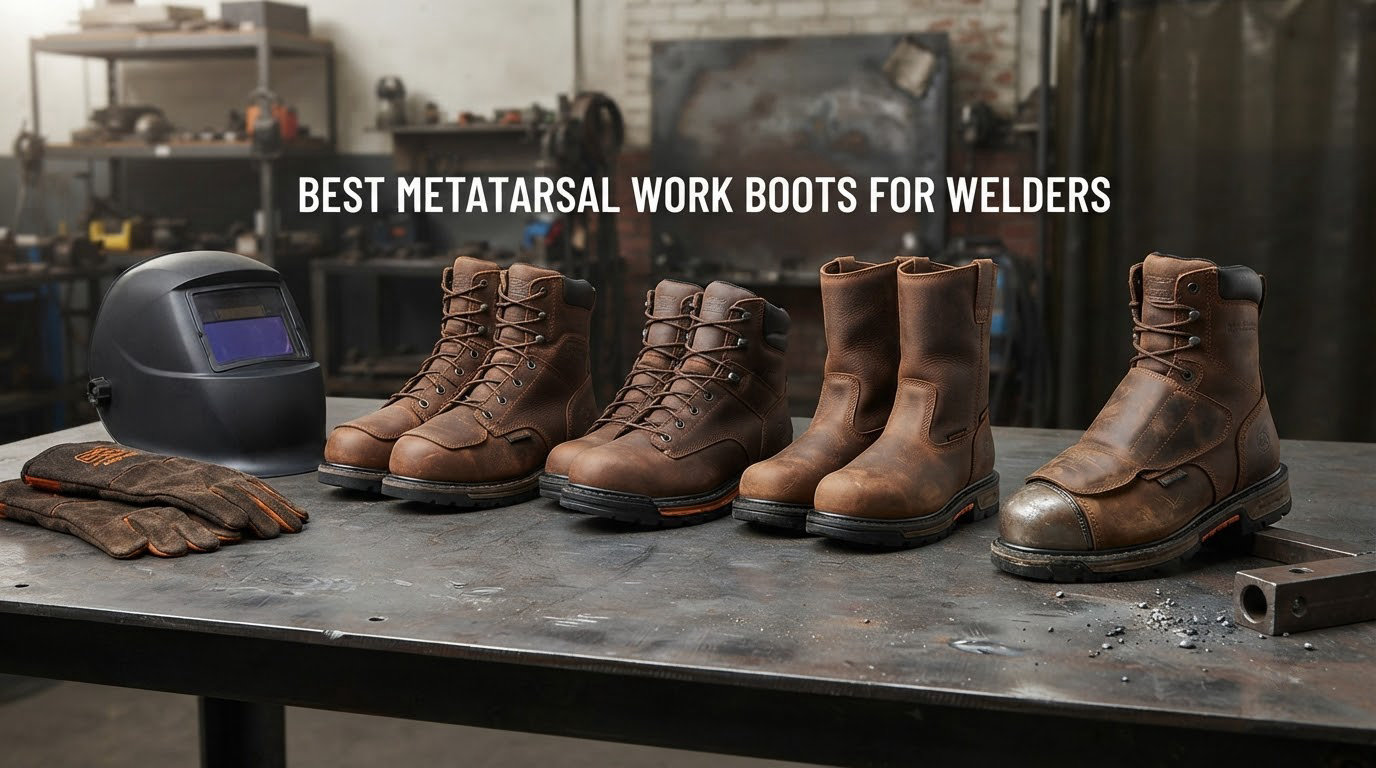
Short answer: the Ariat Workhog Wide Square Toe Metguard is the best metatarsal work boot for welders overall in 2026, the Timberland PRO 6-inch External Met Guard is the pick for heavy spark and spatter exposure, and the DUNLOP Acifort MetMAX is the budget choice if you need an ASTM-rated met guard without the leather price. All three carry a genuine metatarsal rating, which is the part most “welding boots” online quietly skip.
I have spent more time reading owner reports on shop boots than I care to admit, and the pattern is consistent. Welders do not need a soft toe or a fashion boot with a steel cap. They need a high-cut, full-grain leather or rubber shell with a metatarsal guard across the top of the foot, a heat-rated outsole, and no exposed eyelets near the ankle where spatter travels.
That is exactly what this roundup covers. I compared twelve metatarsal-rated boots across guard type, shaft height, upper material, toe cap, outsole heat rating, sizing reports, and real durability complaints from owners. If you are still choosing a machine, our [beginner welder guide](https://ijate.net/best-welders-for-beginners/) covers the gear side of getting started, and our [MIG welder picks for auto body work](https://ijate.net/best-mig-welders-for-auto-body-work/) go deeper on the process side.
Table of Contents
Top 3 Picks for the Best Metatarsal Work Boots for Welders (October 2026)

Ariat Workhog Metguard
- Waterproof Pro construction
- ATS Max stability platform
- Composite safety toe
Timberland PRO External Met Guard
- Hinged external ABS met guard
- Asymmetrical steel safety toe
- Electrical hazard rated

Dunlop Acifort MetMAX
- ASTM F2413-24 metatarsal guard
- Steel toe and midsole
- Chemical resistant upper
All 12 Boots at a Glance in 2026
Every boot below carries a metatarsal rating under ASTM F2413. The differences that matter in a hot shop are guard type, shaft height, upper material, and how the outsole handles heat.
| Product | Specifications | Action |
|---|---|---|
| Ariat Workhog Wide Square Toe Metguard |
|
Check Latest Price |
| Timberland PRO 6 Inch External Met Guard |
|
Check Latest Price |
 Ariat Work Groundbreaker Metguard Ariat Work Groundbreaker Metguard |
|
Check Latest Price |
 Ariat Catalyst VX 8 Inch Met Guard H2O Ariat Catalyst VX 8 Inch Met Guard H2O |
|
Check Latest Price |
 Dryshod Megatar Met Guard Dryshod Megatar Met Guard |
|
Check Latest Price |
 Timberland PRO Helix Met Guard Timberland PRO Helix Met Guard |
|
Check Latest Price |
 KEEN Utility Louisville 6 Inch KEEN Utility Louisville 6 Inch |
|
Check Latest Price |
 Wolverine Warrior 8 Inch Wolverine Warrior 8 Inch |
|
Check Latest Price |
 Carhartt Rugged Flex 6 Inch Met Guard Carhartt Rugged Flex 6 Inch Met Guard |
|
Check Latest Price |
 Timberland PRO Endurance 6 Inch Timberland PRO Endurance 6 Inch |
|
Check Latest Price |
| DUNLOP Acifort MetMAX |
|
Check Latest Price |
 KEEN Utility Vista Energy Mid KEEN Utility Vista Energy Mid |
|
Check Latest Price |
Why Welders Need Metatarsal Protection
A steel or composite toe cap only protects the front of the foot. A metatarsal guard covers the five metatarsal bones across the middle and top of the foot, which is where a dropped piece of plate, a falling electrode holder, or a slipped gas cylinder actually lands.
That distinction is the whole reason metatarsal boots exist as a category. Welders who insist on a soft toe for comfort, and plenty of experienced hands do, need a way to keep impact protection on the top of the foot without the weight and cold conduction of a steel cap. The met guard is that compromise.
Heat is the second reason. Welders report spatter reaching well above the toe, into the lace and ankle area. A synthetic or mesh panel chars and melts at that range, which is why every boot in this roundup uses leather, rubber, or a chemical-resistant polymer upper with no ventilation mesh on the outside.
Welders on weldingweb.com and practicalmachinist.com raise the same two questions over and over. Should a welder wear a steel toe at all, and does a metatarsal guard actually block sparks. The honest answer to the second one is no. A guard protects the top of the foot from impact; it does not filter spatter. What actually stops spatter is full-grain leather that chars into a barrier, a high shaft, and closure hardware that does not leave an open entry point.
OSHA 29 CFR 1910.252 requires protective footwear for welding operations, and most plant sites mandate metatarsal-rated boots outright. Reddit r/Ironworker threads describe inspectors asking for the rating, not the brand, so check the ASTM stamp on the tag before you buy anything.
1. Ariat Workhog Wide Square Toe Metguard – Best Overall Metatarsal Work Boot for Welders
ARIAT mens Workhog Wide Square Toe H2o Metguard Work Boot, Bruine Brown/Crazy Black, 10.5 US
Waterproof Pro construction
ATS Max stability platform
Composite toe met guard
Duratread outsole
Pros
- Waterproof Pro construction holds out standing water
- ATS Max platform cuts foot fatigue on long standing shifts
- Duratread outsole grips oily and slippery shop floors
- U-Turn Entry System makes pull-on entry easier
Cons
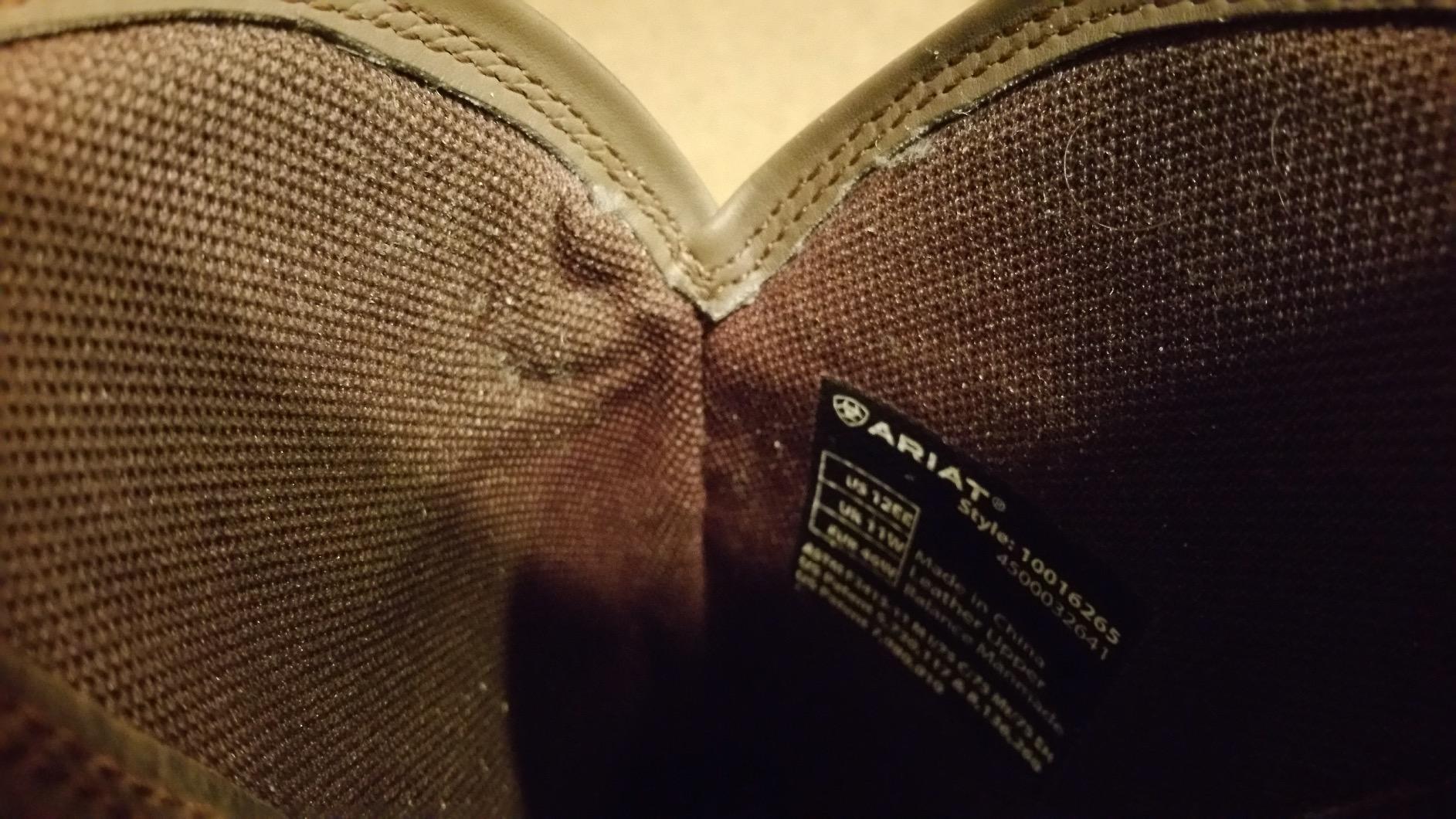
- Wide square toe feels roomy for narrow feet
- Composite toe transmits less heat than steel in extreme spark zones
This is the boot I keep coming back to. It rated 4.6 out of 5 across 272 owner reviews, with 77 percent giving it five stars, and that consistency is why it takes the top slot here. The met guard sits under a wide square toe platform, so the protection covers more of the forefoot than a standard round-toe guard.
What owners keep mentioning is the ATS Max platform. On a ten-hour shift standing on a steel grate, that side-by-side stability setup is the difference between feet that ache at four in the afternoon and feet that do not. The Duratread outsole also shows up repeatedly in reviews as reliable on shop floors with oil and coolant residue.
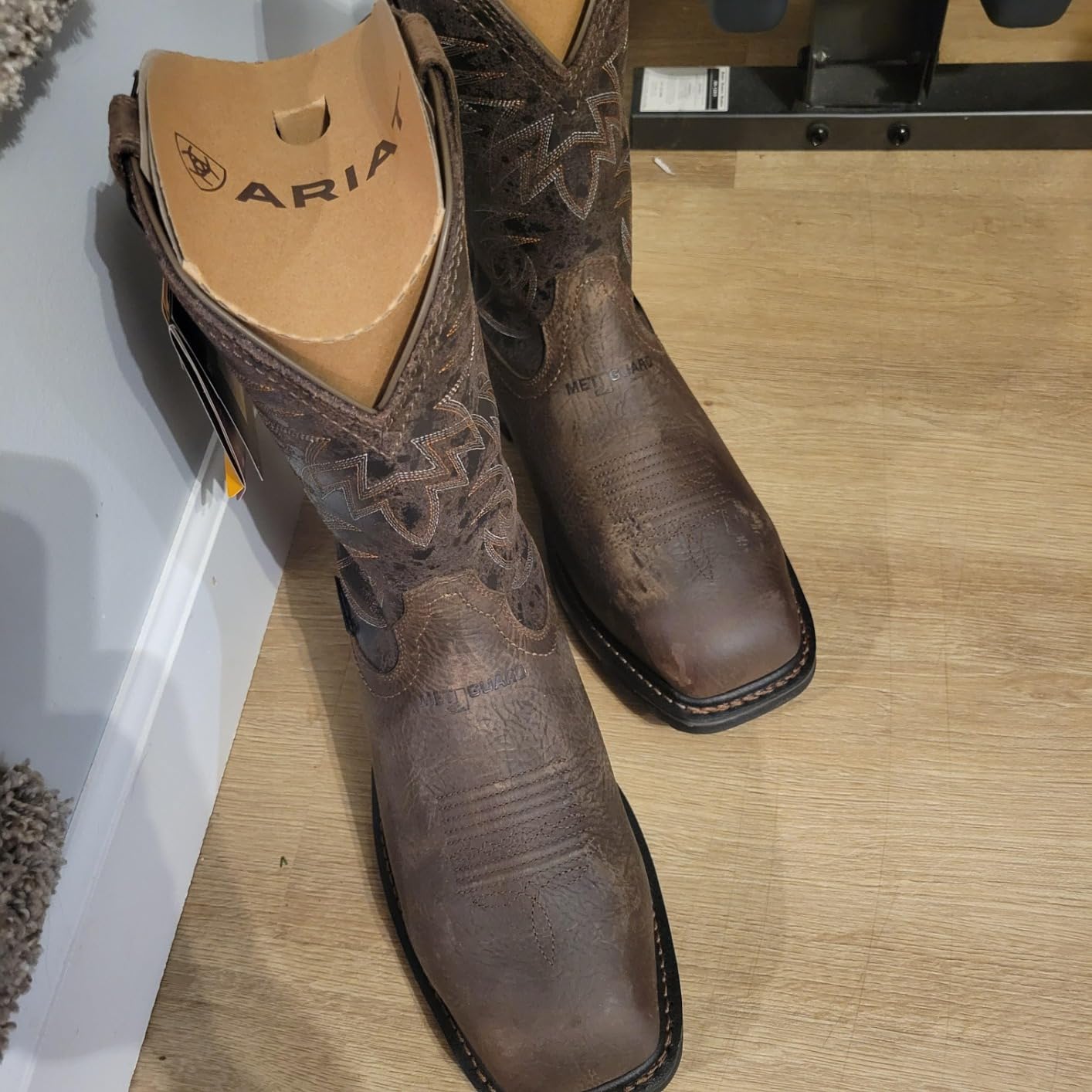
The waterproof Pro construction is a genuine advantage if your shop floor gets wet, or if you are doing field work in 2026 weather. It is a sealed membrane rather than a coated leather, so it stays put even after months of hose-downs.
Two trade-offs are worth naming plainly. The wide square toe profile is roomy, and owners with narrow feet say it feels loose across the instep. The composite toe also transmits less heat than steel, which matters if you are working close to hot stock all shift.
Who the Workhog suits best
This is the right pick for fabrication shop welders standing long shifts on concrete or plate, and for anyone who works somewhere both wet and greasy. The stability platform and grip combination is a strong one for stationary work, and the pull-on entry system means no laces to catch spatter at the ankle.
Where it falls short
Skip it if you have narrow feet and cannot try the boot in person, since the wide square last is not adjustable. It is also a heavier, taller boot than a lace-up model, which some people find awkward when climbing ladders or working in tight bays.
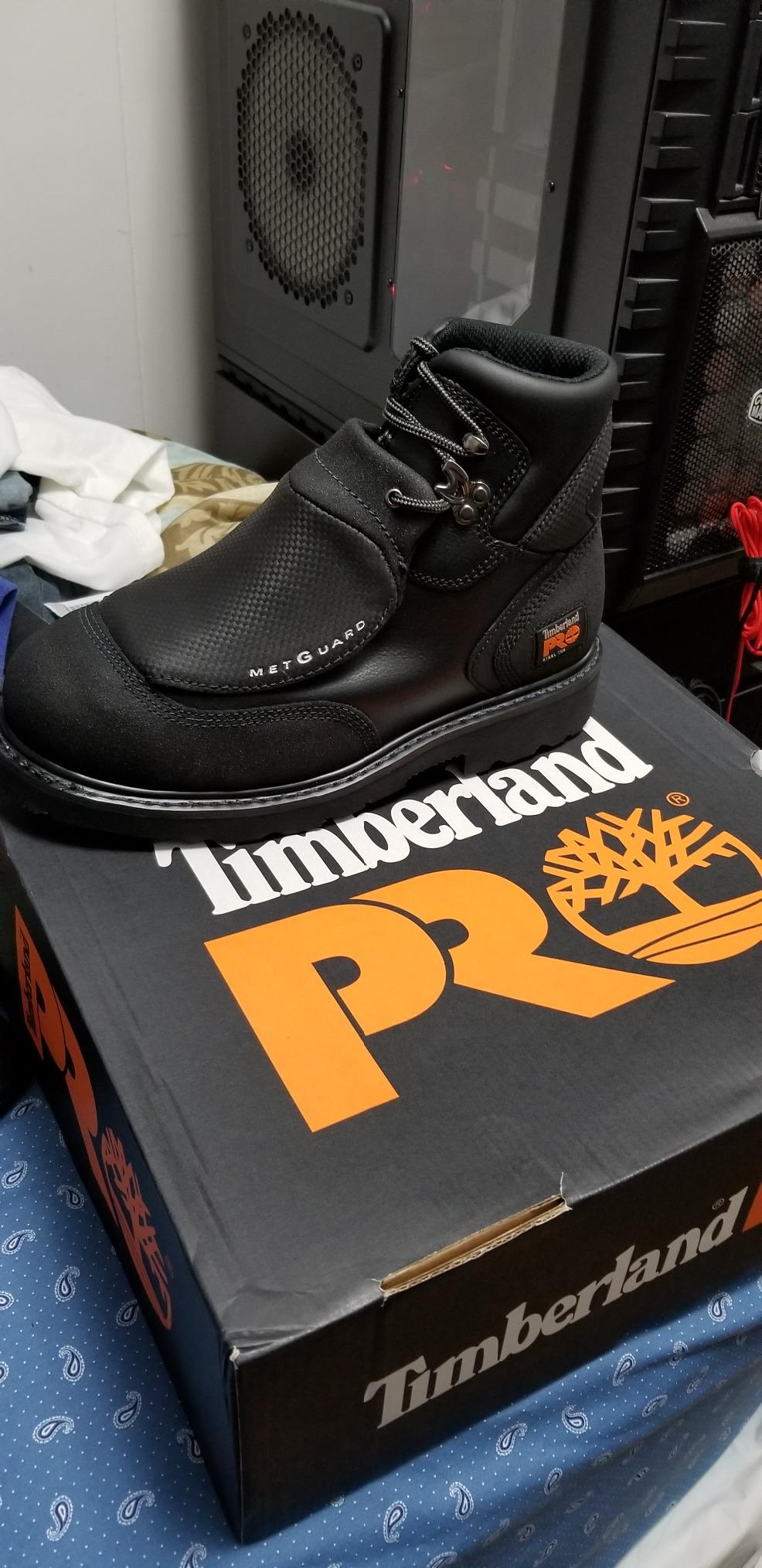
2. Timberland PRO 6 Inch External Met Guard – Best Value for Heavy Spatter
Timberland PRO Men’s External Metguard 6 Inch Steel Safety Toe Industrial Work Boot, Black, 11 M
External hinged ABS met guard
Asymmetrical steel safety toe
Electrical hazard rated
Rubber outsole
Pros
- Largest review base in the roundup at over 1200 reviews
- Welders report the guard deflects spark and spatter off the top of the foot
- Guard has survived heavy impacts without tearing off
- EH rated with oil and slip resistant outsole
Cons
- Heaviest listed weight in the roundout at nearly six pounds for the pair
- Laces break early and need periodic replacement
- External guard stitching can fail after about five months of heavy spark exposure
- Runs small so some owners size up
With 1,242 owner reviews at 4.5 stars, this is the most battle-tested boot on the list by owner history alone. The guard is external, moulded in ABS, and hinged so it flexes when you squat. That hinge matters more than it sounds, because a rigid external plate that cannot move will ride up your instep the first time you kneel to fit a joint.
Welders and foundry workers report in reviews that the guard deflects spark and spatter off the top of the foot effectively and survives dropped stock. One welder on a weldingweb.com thread made the point that a met guard also protects the laces, which is an under-rated benefit when spatter travels up toward the ankle.
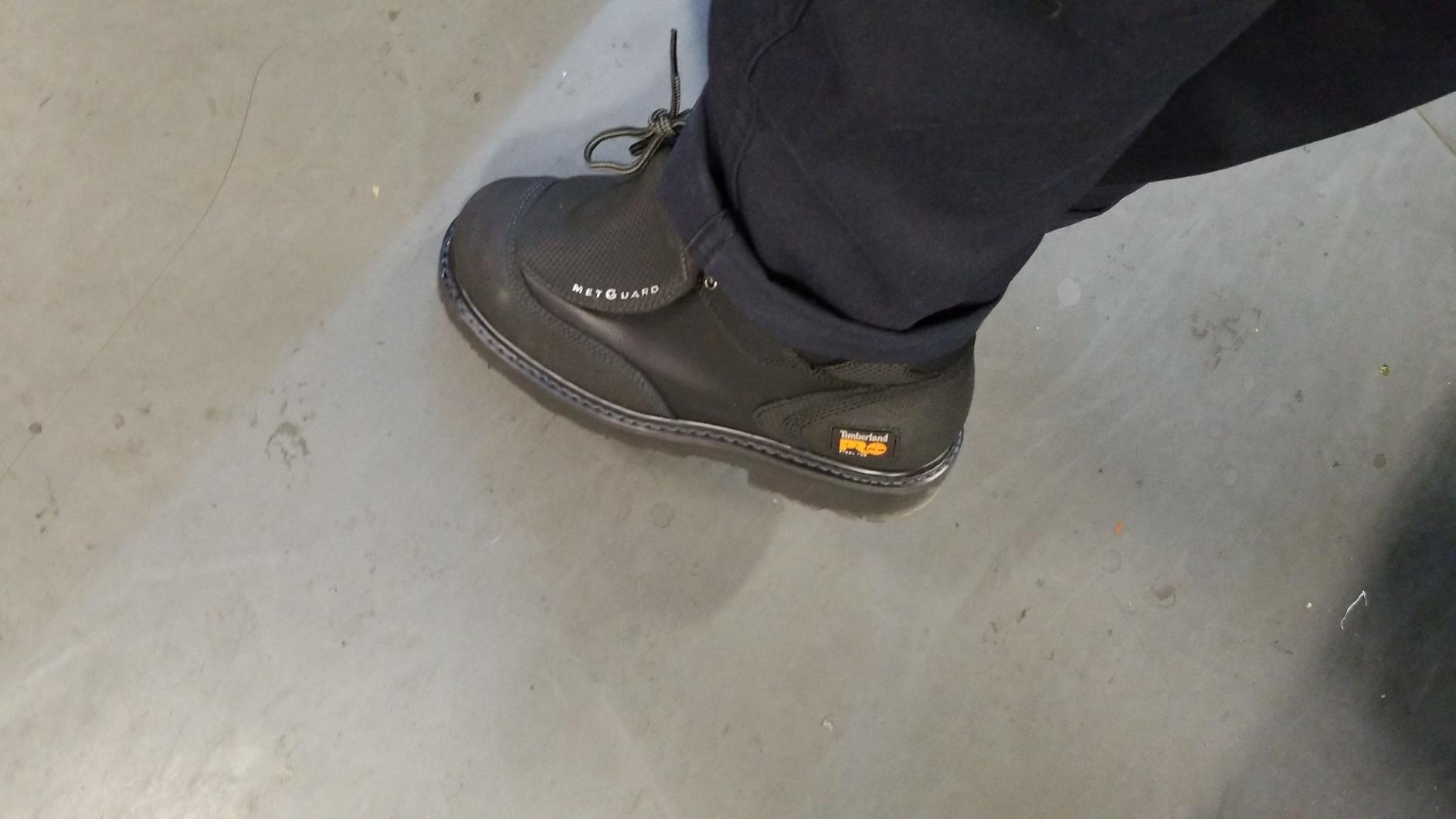
The boot is genuinely heavy at just under six pounds for the pair, and owners describe it as the heaviest in their own rotation. If you are on your feet all day, that weight is real, and it is the main reason this boot sits at number two rather than number one despite the bigger review base.
Durability reports are mixed in an honest way. Foundry workers report roughly two years of service. Other owners report the external guard stitching failing after about five months of nonstop spark exposure, and sole stitching blowing out in fast-paced work.
Who the Timberland PRO suits best
Pick this one if your work is heavy on radiant heat and spatter, or if you are around foundry and hot-metal work. The external guard covers a wide area of the top of the foot, and the steel toe plus electrical hazard rating makes it a sound choice for plant environments with live circuits nearby.
Where it falls short
It runs small, so size up if you are between sizes, and expect to replace the laces. If you are climbing or walking long distances, the weight will tell you quickly. It is a shop boot, not a hiking boot.
3. Ariat Work Groundbreaker Wide Square Metguard – Best for Pipe and Overhead Welding
Ariat Groundbreaker Wide Square Toe MetGuard Steel Toe Work Boots – Men’s Safety Toe Western Boot
ASTM F2413-11 Mt 75 met guard
Steel safety toe
Full-grain leather and suede upper
Duratread outsole
Pros
- ASTM F2413-11 Mt 75 rated internal metatarsal protection
- Sells strongly across the industrial and construction boot category
- Mesh lining moves perspiration out and keeps feet dry
- Duratread outsole grips oily shop surfaces
- Four-row stitch pattern in the leather
Cons
- Internal guard is less effective against overhead impact than an external shell
- Suede upper stains and shows wear in a hot shop
This is the boot that shows up most often when pipe welders and structural hands ask peers for a recommendation, and it ranks in the top tier of the category by sales volume. The internal guard is rated Mt 75 under ASTM F2413-11, which is a real test rating rather than a marketing claim.
Internal protection has a specific strength: it cannot snag on ladder rungs, scaffold, or angle iron the way an external plate can. For overhead and vertical-up work, or anywhere you are climbing into a vessel, that is a real advantage. The guard also stays put and cannot be knocked off.
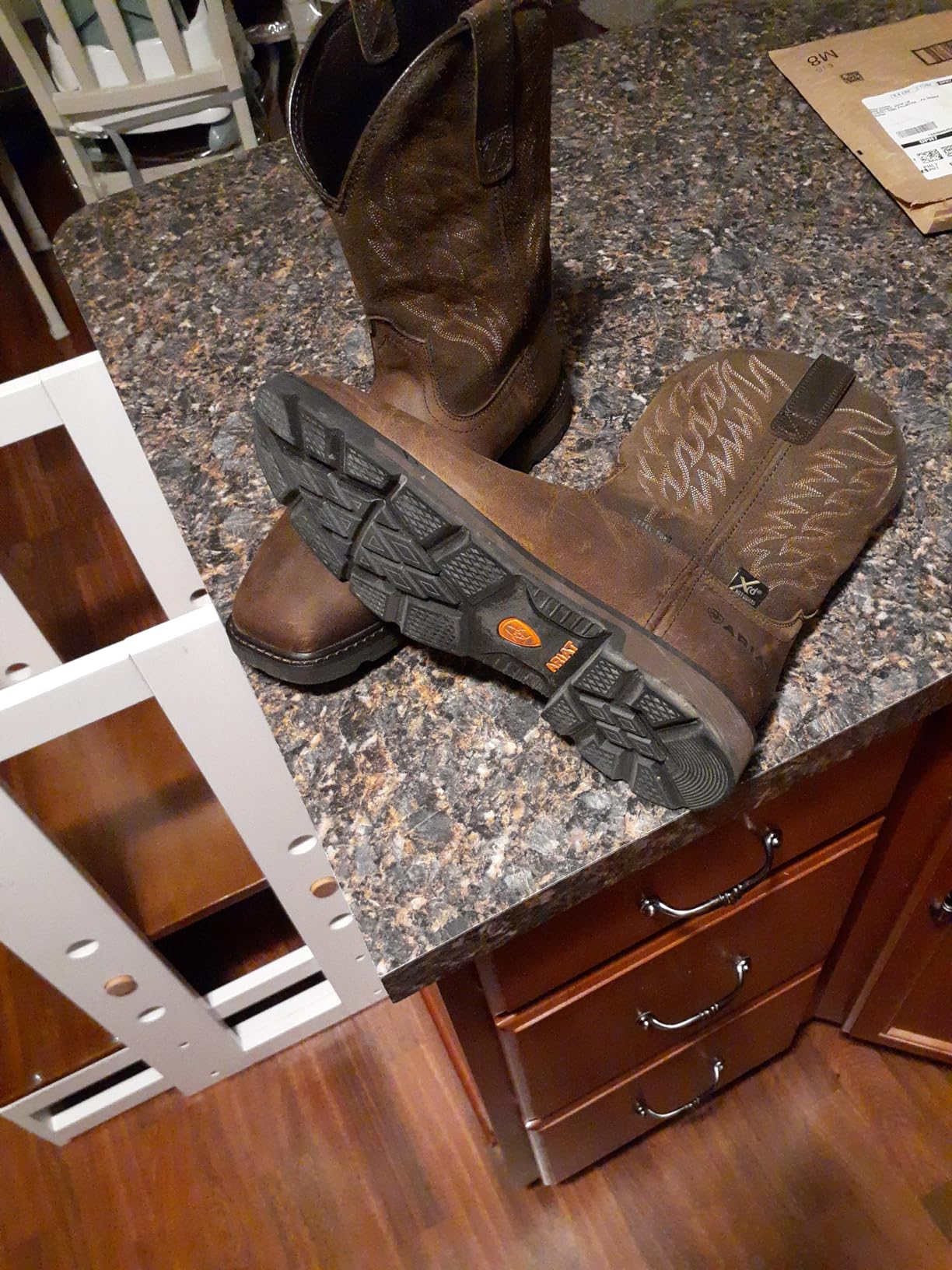
The Ariat 4LR footbed is what most owners mention first. It cushions through a full shift and stays comfortable without the two to three week break-in that stiff full-grain leather usually demands. The mesh lining moves perspiration out, which matters more in a fabrication shop than you would expect.
The oil-resistant Duratread outsole holds grip on residues and contaminated ground, which is common in steel-on-steel shops. The four-row stitch pattern is a durability detail you can see and verify before you buy.
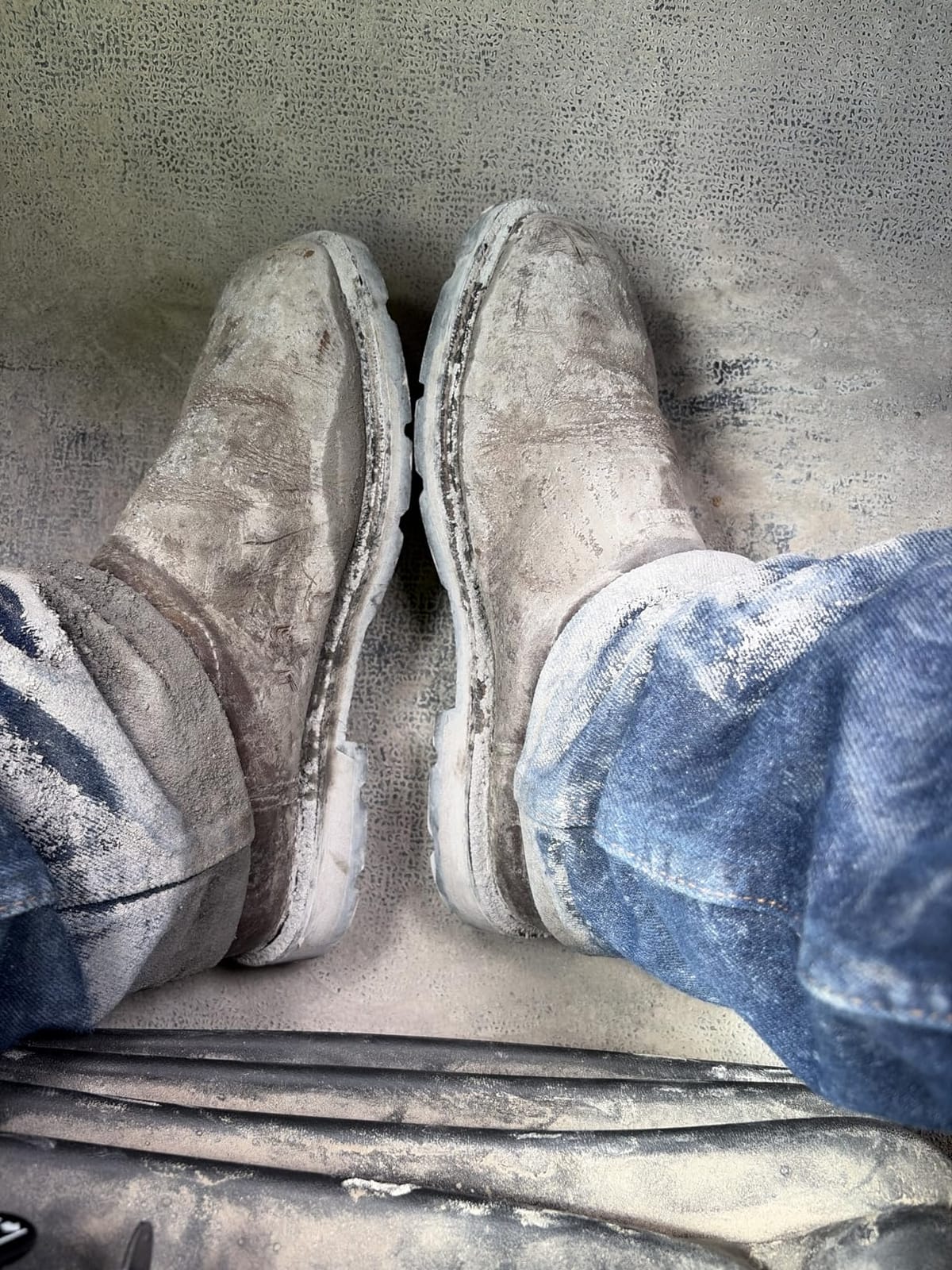
Who the Groundbreaker suits best
This is the pick for pipe welders, structural welders, and anyone working inside a vessel or on a scaffold where a protruding guard plate is a hazard of its own. The full-grain leather foot and suede upper handle spatter far better than any synthetic mesh panel, and the wide square toe gives you room to wear thicker socks in winter.
Where it falls short
If your biggest risk is material dropping from directly above onto the top of your foot, an internal guard is the wrong architecture. Owners also flag that the suede upper stains easily and will not look new for long in a dirty shop.
4. Ariat Catalyst VX 8 Inch Met Guard H2O – Best for Wet and Outdoor Fabrication
ARIAT Men’s Catalyst VX 8” Waterproof MetGuard Composite Toe Work Boot
DRYShield waterproof membrane
Composite safety toe
Cobalt VX stability
8 inch shaft
Pros
- DRYShield waterproof breathable membrane keeps feet dry
- Composite toe is lighter and thermally non-conductive
- Cobalt VX stability reduces fatigue across long shifts
- X-Static mesh lining controls odor in enclosed shops
- Reinforced ExGuards protect heel and toe wear points
Cons
- Most expensive boot in the roundup
- 8 inch shaft adds bulk compared with 6 inch models
The Catalyst VX is the boot I would pick for outdoor field welding, dock work, or any job where the steel gets wet. The DRYShield waterproof breathable construction is the headline feature, and owners with 4.4 stars across 283 reviews consistently mention that it keeps feet dry in genuinely wet conditions.
The composite toe is worth attention here. It is lighter than steel and thermally non-conductive, which means it will not become a heat sink against your foot when you are crouched near hot work. For welders who chose composite specifically to avoid steel toe fatigue, this delivers on that.
Cushioning is the other strength. The midsole plus Cobalt VX stability technology is designed for long hours on hard ground, and the X-Static mesh lining controls odor, which is a real concern in enclosed fabrication environments where two people share a small shop. Reinforced ExGuards protect the heel and toe, the two wear points that usually fail first on a work boot.
It also carries the full ASTM F2413 package for metatarsal protection and electrical hazard resistance, so it works on sites that require both ratings in one boot. At 8 inches it also covers more of the lower leg, which is the right call for outdoor work in brush or debris.
Who the Catalyst VX suits best
Outdoor welders, pipefitters, and anyone working around water, rain, or standing mud will appreciate the waterproof membrane and composite toe most. The 8-inch shaft also gives strong ankle support on uneven ground, and owners report good sizing accuracy.
Where it falls short
This is the most expensive boot in the roundup, and the 8-inch shaft adds real bulk. In a hot shop with no water exposure, you are paying for a membrane and extra height you do not need. Shop welders on concrete will find lighter options just as comfortable.
5. Dryshod Megatar Met Guard – Best for Cold, Muddy and Underground Sites
Dryshod Mens Megatar Met Guard Steel Toe Rubber Work Boot Black Size 12
External deflective plate plus internal metatarsal plate
Waterproof rubber construction
ASTM F2413-18 steel toe
Pros
- Dual protection with an external deflective plate and a semi-rigid internal plate
- Waterproof rubber build for mud snow and standing water
- Roll-down shaft lets you vent heat in warm conditions
- CSA approved puncture resistant sub-sole plus ASTM F2413-18 steel toe
- Strong ankle support on uneven ground
Cons
- Heavy and described as big and clumsy by some owners
- One owner reported waterproofing failing within two months on a second pair
- Rubber upper is less breathable than leather indoors
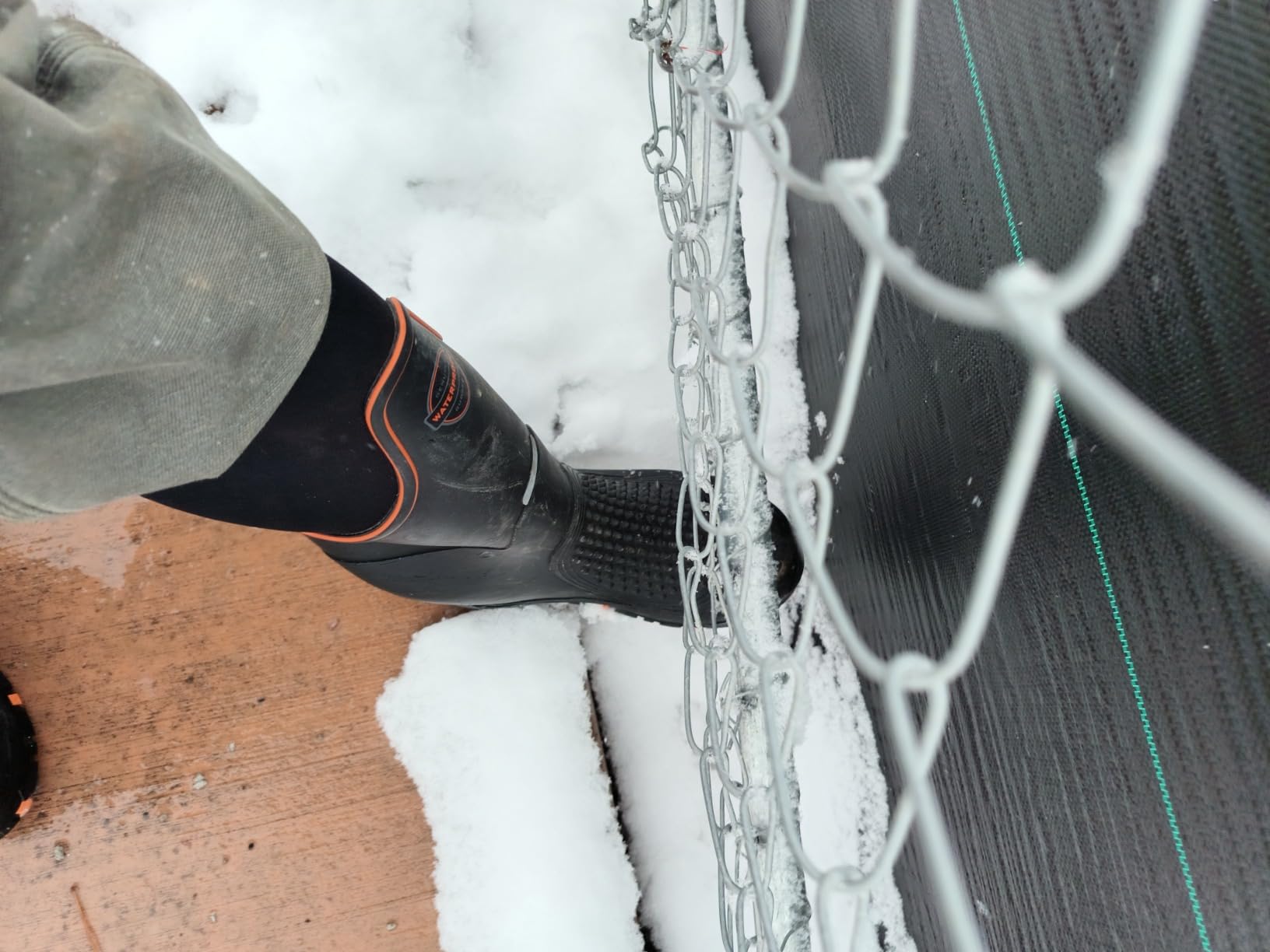
The Megatar is the only boot here with protection at both layers. A patent-pending external Flex-Tipped deflective plate sits over a semi-rigid three-dimensionally moulded internal metatarsal plate, rated at 70 degrees. Nobody else on this list does both, and for genuinely harsh environments that redundancy is worth paying for.
Its specification sheet is also unusually thorough. The steel toe is ANSI rated to ASTM F2413-18, the full-foot sub-sole is CSA approved and puncture resistant, the outsole passes ASTM F471 for oil resistance and ASTM F1677 for slip resistance, and there are triple-layer toe and heel reinforcements.
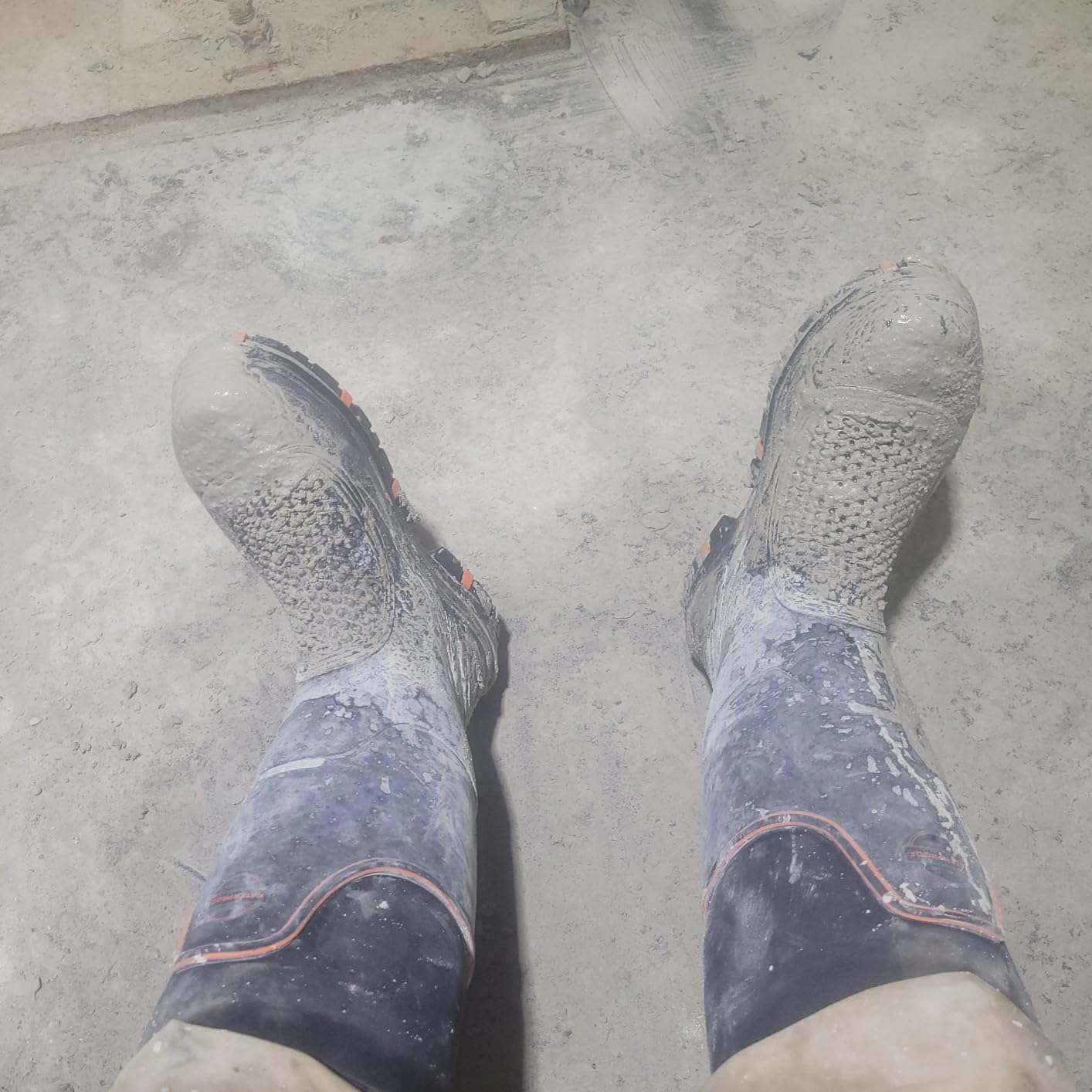
Owners like the roll-down shaft because it lets you vent heat in warm conditions without removing the boot, which solves the classic rubber boot problem in a hot shop. Ankle support is consistently praised, and multiple owners report the sizing runs true, which is rarer than it should be.
Reviewers also report roughly a year of service in underground work, so this is a seasonal field boot rather than a forever boot.
Who the Megatar suits best
This is the boot for water and mud, cold-weather site work, and anyone who welds outdoors in bad conditions. It is also a good choice for oil and gas field crews and utility work, where the oil-resistant, slip-resistant outsole and puncture-resistant sub-sole are doing more for you than the met guard is.
Where it falls short
At over four pounds for the pair, it is heavy, and some owners call it clumsy in a shop with tight floor plans. Indoors, the rubber upper traps heat badly, and one owner reported waterproofing failing within two months on a second pair, so inspect it early.
6. Timberland PRO Helix Met Guard – Best for Ladder and Rigging Work
Timberland PRO Men’s Helix 6″ Composite Safety Toe Internal Metguard Boot, Brown, 11 M US
Premium full-grain leather
EH compliant metatarsal guard
Ladder Lock shank
Slip resistant outsole
Pros
- Full-grain leather resists abrasion and heat better than rubber
- EH compliant for electrical environments
- Ladder Lock shank improves stability on rungs and uneven footing
- Lightest listed weight in the roundup at 2.11 pounds
- Slip resistant outsole for shop floors
Cons
- Leather upper is less waterproof than rubber construction
- Met guard has a slim profile with less impact volume than bulkier models
The Helix carries the lightest listed weight in this roundup at just over two pounds for the pair, and that is not a spec-sheet trick. It is the one I would pick for anyone doing structural and rigging work who spends real time on ladders. Ladder work plus heavy boot equals tired legs by the afternoon.
The Ladder Lock shank is the feature that matters for that use case. It is a rigid plate under the arch that stops the foot from flattening and rolling when you are on a rung or standing on uneven steel, which is a genuinely common injury mechanism on ironwork crews.
Full-grain leather is the right upper for this job. It handles abrasion from grating and sharp stock far better than any coated synthetic, and it resists radiant heat in a way that polymer uppers do not. It is also EH compliant for electrical hazard, which matters if you are working around energised equipment or on a plant site that requires the rating.
One thing to set expectations on: with 164 reviews this is among the thinner owner histories in the group, so fewer people have reported long-term durability. The people who have reviewed it like what they got, with 69 percent giving it five stars.
Who the Helix suits best
Structural welders, ironworkers, and riggers who spend their day climbing will appreciate the low weight, the shank, and the full-grain leather upper. Leather handles abrasion and radiant heat better than synthetic, and it will last considerably longer on dry work than a rubber boot of similar rating.
Where it falls short
Leather is not waterproof, so this is the wrong boot for standing water or mud. And the met guard is a slim-profile design, so if your real risk is heavy material landing on the top of your foot, you want more impact volume than this boot offers.
7. KEEN Utility Louisville 6 Inch – Best for All-Day Comfort on Concrete
KEEN Utility Men’s Louisville 6″ Steel Toe Internal Metatarsal Guard Waterproof Work Boot, Slate Black/Slate Black, 10.5 Medium US
ASTM F2413 Mt 75 internal met guard
Asymmetrical steel toe
keen.Dry membrane
Outsole rated to 572F
Pros
- Owners report exceptional ankle and foot support
- Internal met guard stays flexible while walking and hardens on direct impact
- keen.Dry waterproof membrane keeps feet dry
- Heat resistant outsole rated to 572F
- Runs 10 to 12 hour days with minimal break in
Cons
- Runs small so most owners size up a half size or more
- Met guard can creak audibly against the tongue
- Laces break early and need frequent replacement
- Thin plastic toe section can crack after extended crouching
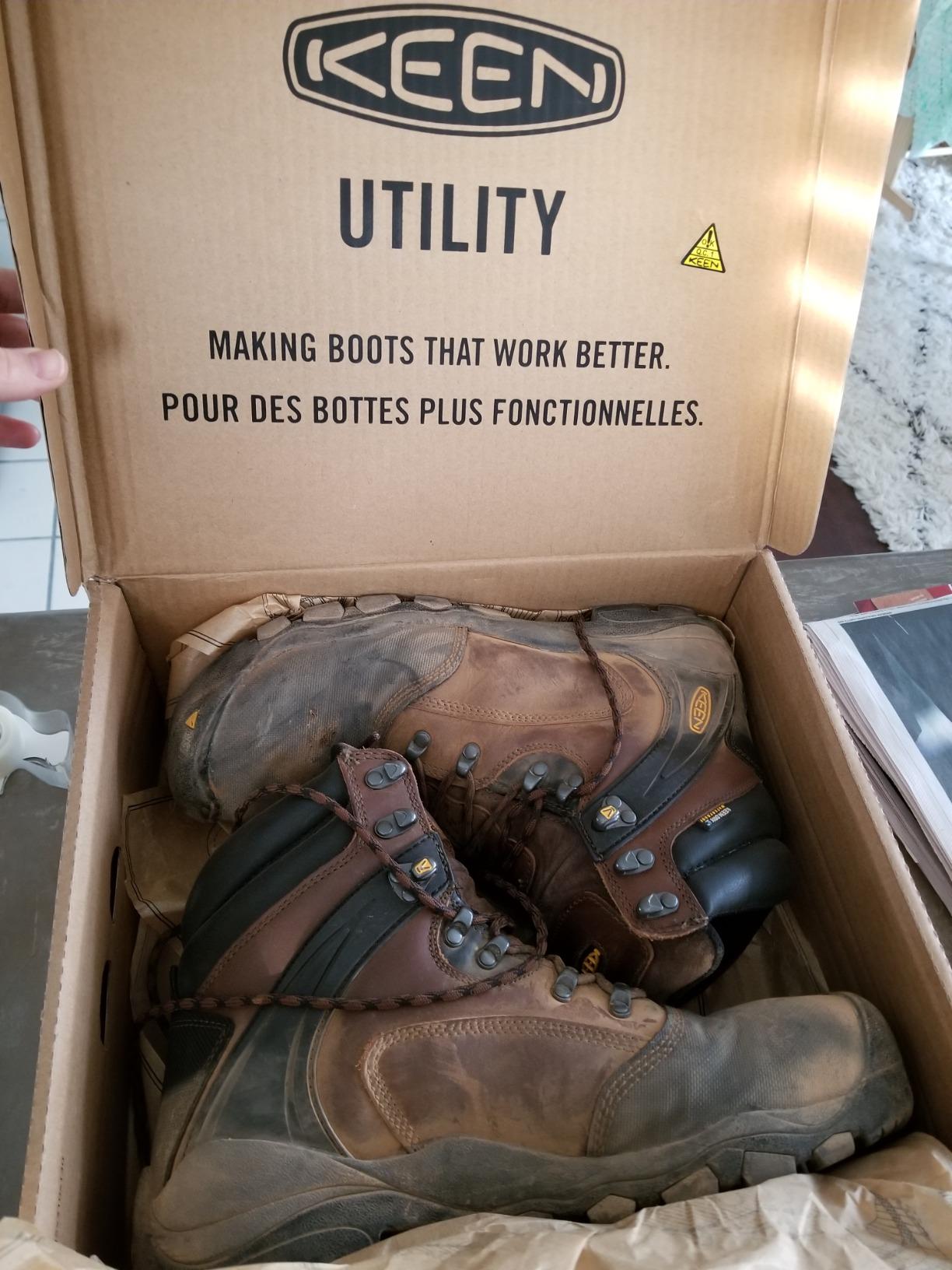
This is the comfort answer in the roundup, and the owner reports are unusually specific about it. Multiple reviewers say the ankle support is good enough that they stopped wearing ankle braces. For welders standing on concrete all day, that is the metric that decides the purchase.
The internal met guard is designed to stay flexible while you walk and harden only on direct impact. That is the whole point of a flexible-until-loaded plate, and it is why this boot feels less clumsy than most met guard boots while still carrying a genuine ASTM F2413 Mt 75 rating.
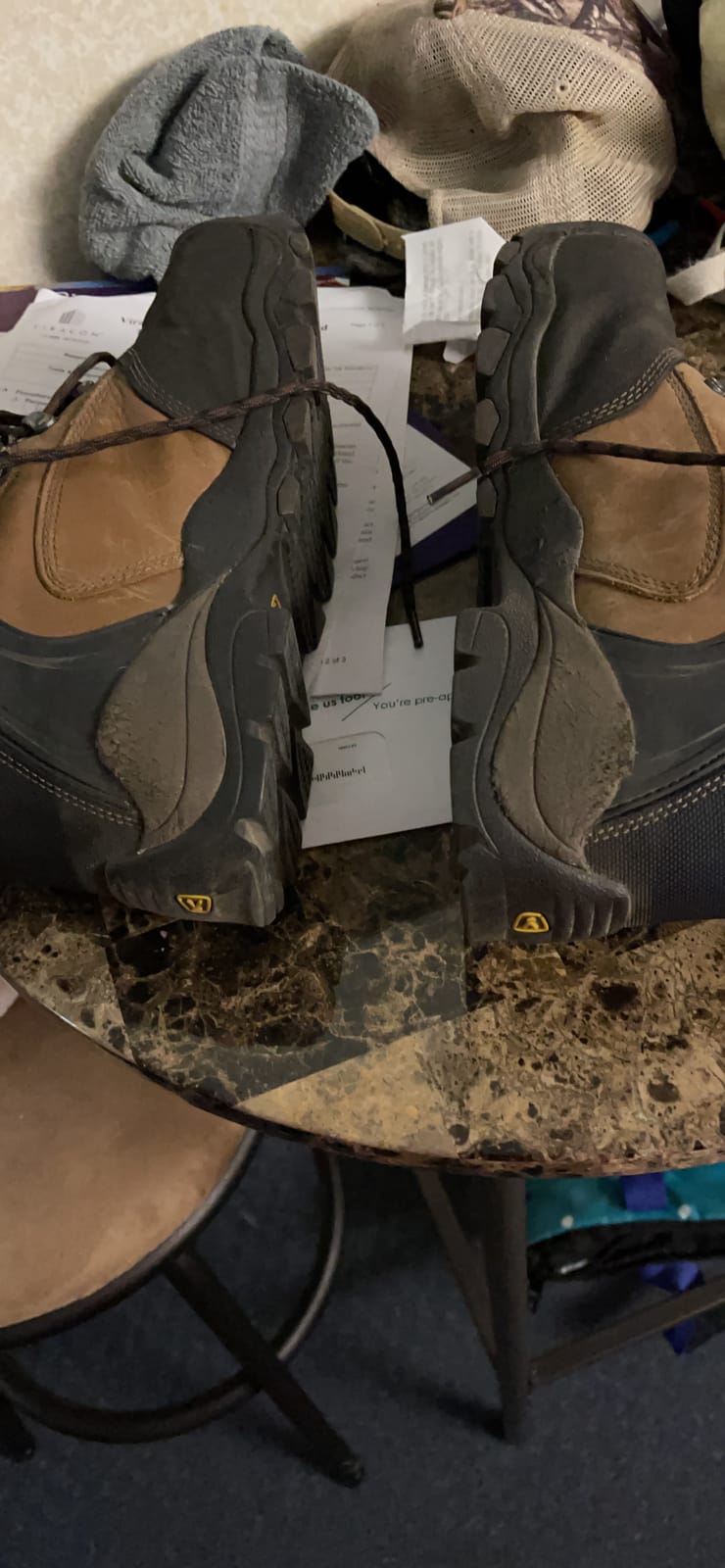
The outsole heat rating of 572F is one of only two stated outsole heat figures in this group, and it is specified as heat resistant, which makes the boot more appropriate for welding than its synthetic construction might suggest. The asymmetric steel toe gives a roomier toe box, and the rubber toe cap protects the leather from impact cracking right at the steel.
Sizing is the big warning here. Owners consistently report this boot runs small, and most size up a half size or more. The 90 degree five-eighth inch heel is unusual and does add real stability on a shop floor.
Who the Louisville suits best
This is the pick for welders whose feet hurt, and for anyone who spends most of the shift standing in one spot. It is also a strong option for pipefitters and field service techs who need steel toe protection without the cold weight of a full steel build, and the waterproof membrane handles wet plant floors well.
Where it falls short
It runs small, and a lot of owners return for sizing. The internal guard creaks against the tongue while walking, which is minor but noticeable on a quiet shop floor. Owners also report the laces breaking early and the thin plastic toe section cracking after extended crouching, which matters if you spend a lot of time in that position.
8. Wolverine Warrior 8 Inch – Best Heat-Resistant Outsole
Wolverine Warrior, Men’s, Brown, Comp Toe, EH, Mt, WP, 8 Inch Boot (13.0 EW)
Outsole heat resistant to 932F
Waterproof full-grain leather
Internal met guard
8 inch shaft
Pros
- Outsole heat resistance to 932F is the highest in the roundout
- Waterproof full-grain leather stayed watertight after a year of outdoor work
- Tall 8 inch shaft gives strong ankle support
- Sizing runs true with X-Wide options available
Cons
- Rough plastic component seams make the boot look cheap
- About a two-week break in period
- One owner reported missing stitching and manufacturing defects
- Composite toe carries the lowest protection level here
Two numbers make this boot interesting. The outsole is rated heat resistant to 932F, well above the other stated outsole ratings in this group, and the internal met guard is ASTM F2413-18 compliant for impact, compression, electrical hazard, and metatarsal protection.
For a welder, a hot outsole is a specific and underrated failure mode. Glue-down soles soften, then lose their bond, when they spend hours near hot plate. A high-rated rubber outsole is one of the few things in this list that directly targets that, which is why this boot earns a place even though its rating is only middling.
The waterproof full-grain leather held up well in owner reports after a year of asphalt and concrete work, and the 8-inch shaft provides real ankle support. Owners also praise the outsole tread for traction and confirm the sizing runs true, including X-Wide options, which is a genuine advantage for wide feet.
Construction is direct attached with a PU midsole and a raised heel upkick with a toe overlay, which is a solid mid-tier build rather than a lightweight glue-only shoe.
Who the Warrior suits best
This is the pick if you are welding hot plate and heavy structural work where radiant heat comes up through the floor, or if you work outdoors where a waterproof leather upper and a high outsole heat rating both matter. Wide-footed welders will appreciate the X-Wide availability more than almost anything else on this list.
Where it falls short
The composite toe carries a mid-tier impact rating, so if you want maximum toe impact protection, choose a steel-toe model instead. Owners also flag the rough plastic component seams, roughly a two-week break in, and one report of missing stitching on arrival, so inspect the boot before you wear it.
9. Carhartt Rugged Flex 6 Inch Met Guard – Best for Oily Shop Floors
Carhartt Men’s Rugged Flex 6″ Waterproof Met Guard Comp Toe Work Boot CMF6720, Brown, 13W
Poron XRD internal metatarsal guard
Composite safety toe
Storm Defender waterproof
Rugged Flex lug outsole
Pros
- Composite toe is non-conductive to heat and cold
- Storm Defender waterproof membrane blocks rain and standing water
- Poron XRD met guard is soft enough for all-day comfort
- Oil-tanned leather upper resists abrasion and holds shape
- Rugged Flex lug outsole gives reliable slip traction
Cons
- Soft-composite met guard blocks less rigid impact than a steel or hard plate
- Sits in the mid range rather than the budget tier
The Carhartt takes a different approach to metatarsal protection. The guard is Poron XRD, a soft open-cell foam, and it still meets the ASTM F2413-24 MT standard. That is worth understanding: you get a metatarsal rating without the hard plate digging into the top of your foot all shift.
Because there is no rigid plate, this is the gentlest met guard in the roundup for long shifts, and 65 percent of owners gave it five stars. The trade-off is straightforward. A soft composite guard spreads and absorbs less than steel or hard plastic, so for dropped heavy stock you would be better served by a rigid guard model.
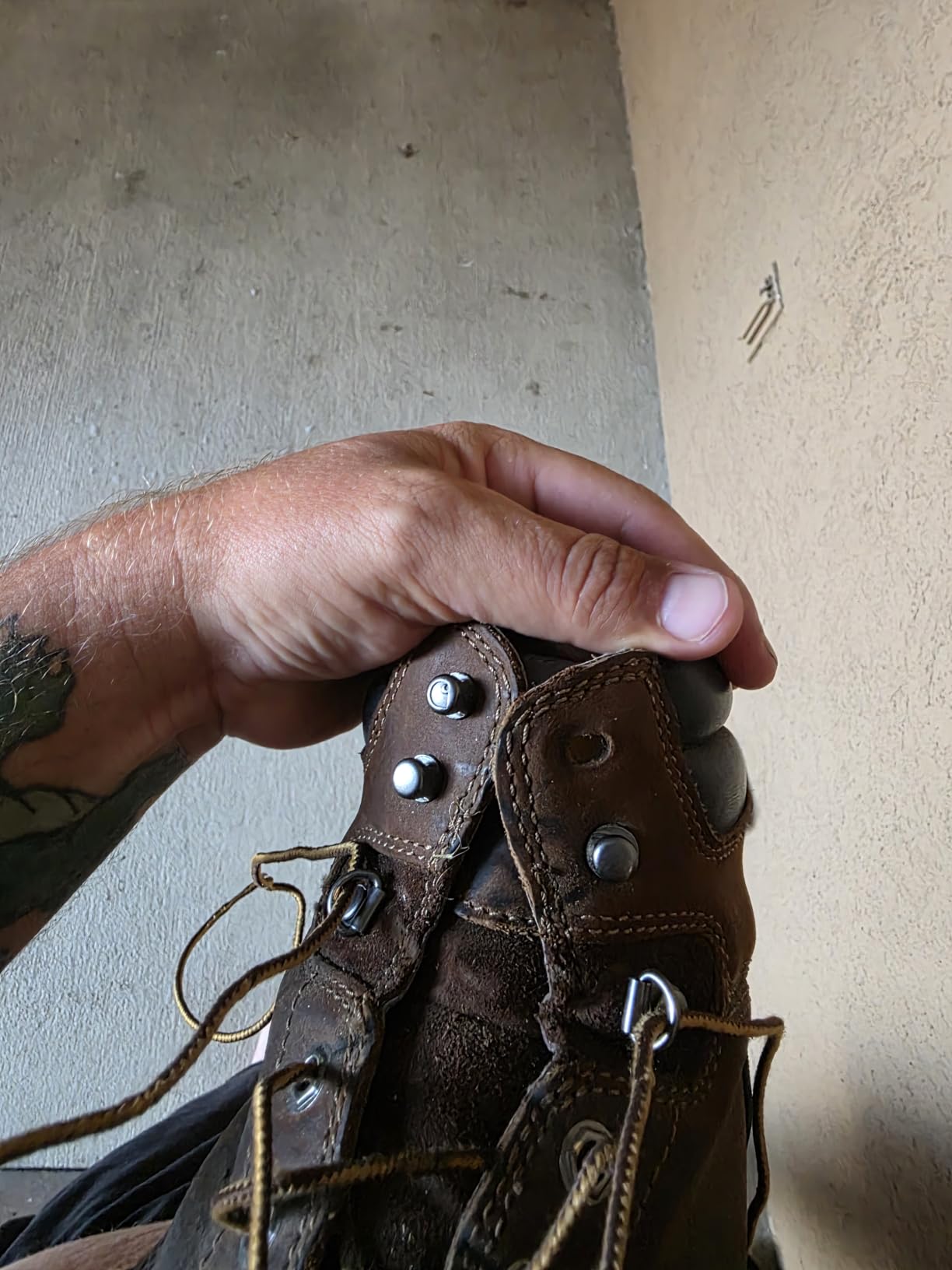
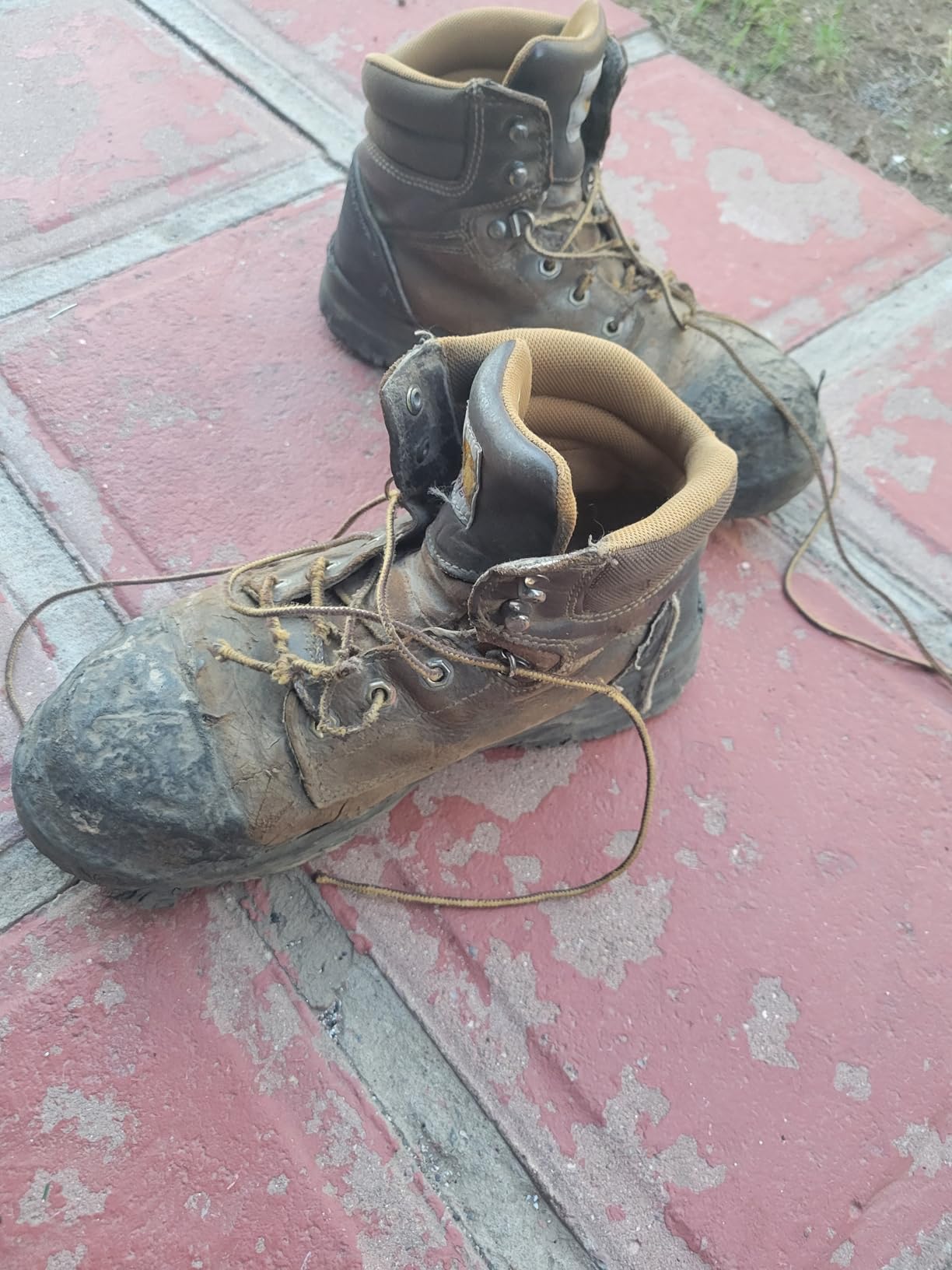
The oil-tanned brown leather is a genuinely good choice for a shop. It resists abrasion, holds its shape, and takes spatter better than coated synthetics. The composite safety toe is non-conductive to both heat and cold, which is a real benefit around welding equipment.
Storm Defender waterproof protection handles rain and standing water, and the Rugged Flex lug outsole is built for slip traction on shop floors where oil and coolant collect.
Who the Carhartt suits best
Pick this one for a fabrication shop with oily or wet floors, for pipefitters, and for welders who find rigid met guards uncomfortable after a few hours. If you have a history of foot pain from pressure points, the soft guard is the most forgiving option that still carries a rating.
Where it falls short
It is not the boot for a fabrication bay where heavy plate is dropped on the floor directly at your feet. It also sits in the middle of the price range rather than at the value end. Check the tag for the ASTM F2413-24 stamp, since the metatarsal rating applies to specific models in this line.
10. Timberland PRO Endurance 6 Inch – Best for Long Shifts on Hard Floors
Timberland PRO Men’s Endurance 6 Inch Steel Safety Toe Puncture Resistant External Met Guard Industrial Work Boot, Brown-2024 NEW, 12 M US
ASTM F2413-18 metatarsal guard
Steel safety toe
Anti-Fatigue midsole
Puncture resistant plate
Pros
- A welder reports spatter no longer burns through the tongue or laces
- Roomy toe box stops toes compressing on long shifts
- Anti-Fatigue midsole and flexible shank reduce foot fatigue
- Puncture resistant plate blocks screws and nails
- Insoles reportedly outlast the boot
Cons
- Heavy and better suited to flat ground than long climbs
- Some owners reported early failure and leaking after about seven months
- One-star review share of 12 percent is the highest in the roundup
This is the most direct owner endorsement in the group. A welder reports that weld spatter no longer burns through the tongue or laces, which is the exact failure mode people describe with cheaper boots. The guard is rated to ASTM F2413-18 and CAN/CSA-Z195-14, so the protection is certified, not anecdotal.
The Anti-Fatigue midsole is a shock-absorbing geometric system that returns energy to the foot, and owners consistently mention reduced fatigue on hard floors. The roomy toe box is also widely praised, since a cramped toe box is the most common cause of misery in a long shift.
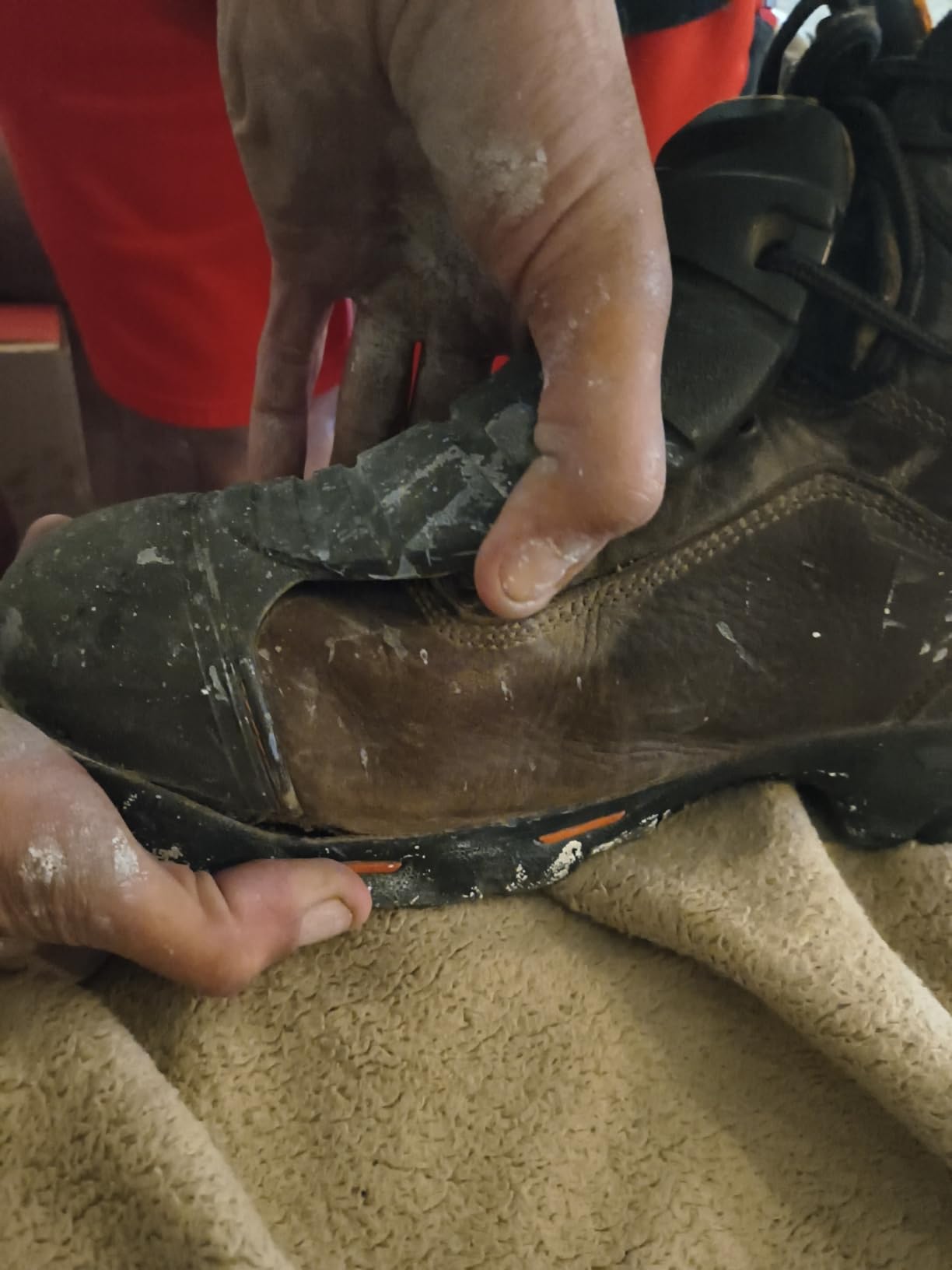
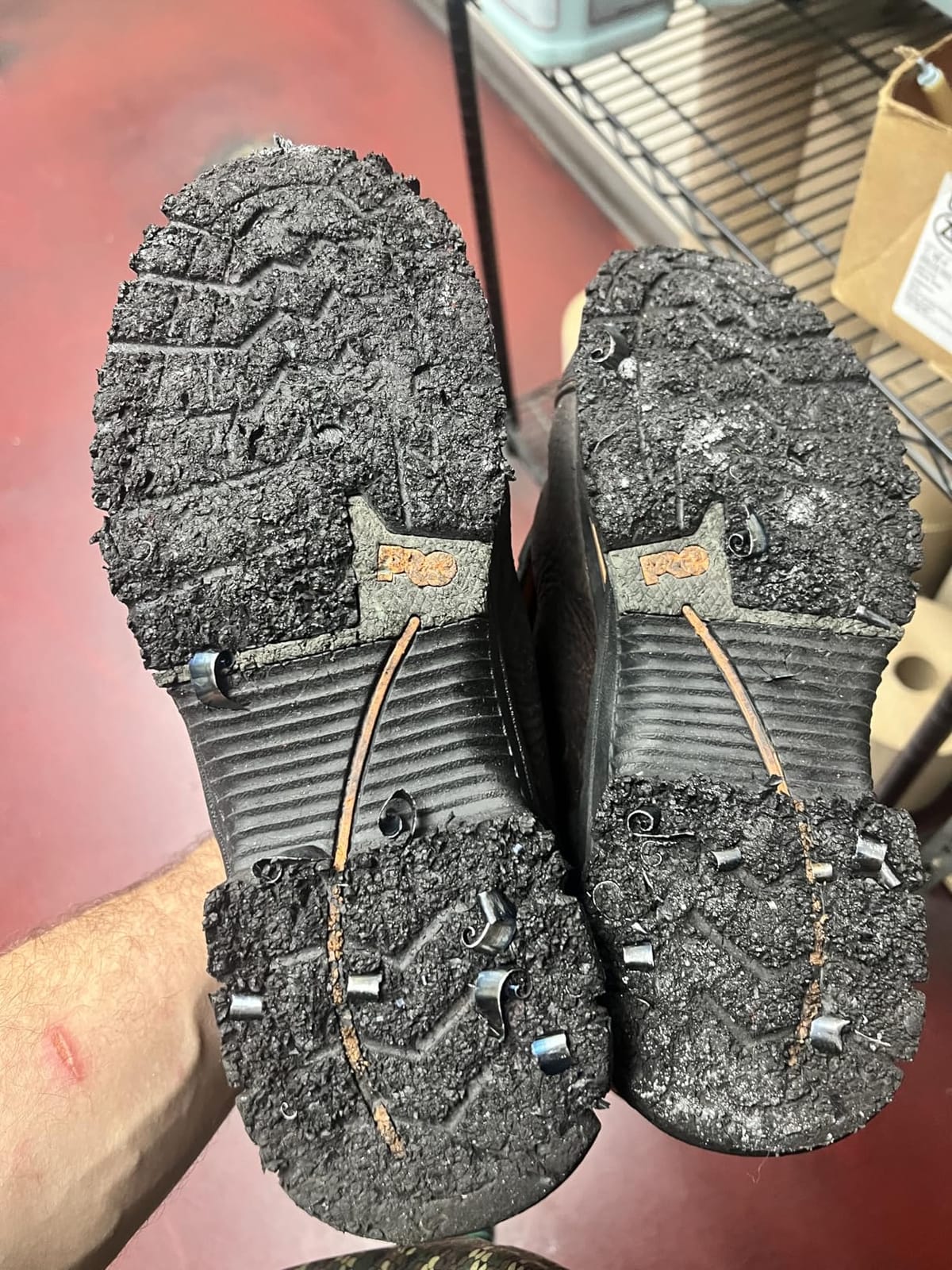
There is a flexible steel puncture plate inside rated to ASTM F2892-18, which protects against screws, nails, and scrap on site work. Several owners report the factory insole outlasting the boot itself, which tells you where the durability sits.
Durability is the mixed part. The average is 4.2 stars across 214 reviews, and the 12 percent one-star share is the highest in the roundup. Some owners report early failure and leaking after about seven months, so this is a boot to watch closely in its first months of service.
Who the Endurance suits best
This is the pick for fab shop welders whose top problem is spatter eating laces and tongues, and for anyone on a flat shop floor who wants a fatigue-reducing midsole. The puncture plate also makes it a good crossover for site work where scrap metal and fasteners are on the ground.
Where it falls short
At over four pounds it is heavy, and owners say it suits flat ground better than long climbs or distances. The 12 percent one-star share is a genuine durability flag, so if you buy it, check the stitching and the outsole bond at the two-month mark.
11. DUNLOP Acifort MetMAX – Best Budget ASTM-Rated Met Guard
DUNLOP MetMAX Metatarsal Guard Boots, Steel Toe, Size 10
ASTM F2413-24 metatarsal guard
Steel toe and midsole
Chemical resistant Acifort upper
Waterproof
Pros
- Genuine ASTM F2413-24 metatarsal rating at the value end of this roundup
- Chemical resistant upper suits industrial and fabrication settings
- Reinforced steel toe and midsole block liquids and mud
- Sneaker style comfort insole reduces fatigue versus a rigid shank boot
- Sizes 4 through 16 for a very wide fit range
Cons
- Non-leather upper offers less heat shielding than full-grain leather
- Sneaker style construction gives less ankle support than a tall shaft
If your shop has a budget code, this is the boot to look at first, because it carries a real ASTM F2413-24 rating with impact, compression, metatarsal, puncture resistance, electrical hazard, and slip resistance all certified, at a fraction of what leather models cost. 70 percent of owners gave it five stars.
The Acifort material is chemical resistant, which is why the manufacturer has outfitted industrial crews in more than 75 countries with it. In a shop that handles solvents, degreasers, and plating chemistry, that is arguably more valuable than spatter resistance.
The steel toe and midsole are reinforced, so this is not a soft shell with a cosmetic guard. It is a real industrial boot at a price that makes sense for a crew of ten.
Who the MetMAX suits best
This is the best budget metatarsal work boot for welders, full stop, but it suits specific conditions. Chemical and industrial environments, wet floors, and crews working outside in mud are exactly where a polymer upper beats leather. It is also available from size 4 to size 16, so it is one of the few on this list with a genuine women’s fit range.
Where it falls short
It is not the boot for heavy radiant heat or heavy stock landing on your foot. A non-leather upper gives less heat shielding than full-grain leather, and the low sneaker-style profile gives noticeably less ankle support than an 8-inch shaft. If your work is mostly hot metal, spend more.
12. KEEN Utility Vista Energy Mid – Best Lightweight Protection
KEEN Utility Vista Energy Mid Int. Met Black/Raven 8 D (M)
Carbon fiber composite toe
Internal metatarsal guard
Padded tongue and collar
Mid-height cut
Pros
- Carbon fiber composite toe is featherlight and thermally non-conductive
- Meets ASTM F2413-18 for impact compression EH and MT in one package
- Padded tongue and collar reduce pressure points on long shifts
- Mid-height cut gives ankle coverage without bulk
- Lace-up closure allows precise fit adjustment
Cons
- Lowest average rating among these picks at 4.1 stars
- Highest one-star review share at 11 percent
- Composite internal met guard blocks less rigid impact than a hard shell
This is the pick for protection without weight, and the carbon fiber toe is the reason. Carbon fiber composite is featherlight and thermally non-conductive, so it will not get hot against your foot and it will not drag down your pace the way a steel cap can. If cold steel toes are the reason you have been avoiding safety boots, this is the answer.
It covers a lot of ground in one specification. ASTM F2412-18 and F2413-18 impact and compression, electrical hazard, and metatarsal protection are all met, which means it is a legitimate safety boot and not a lightweight shoe with a toe sticker.
The padded tongue and collar reduce pressure points during long shifts, and the lace-up closure gives you fit adjustment that pull-on boots cannot. The round toe silhouette also sits cleanly under a welding apron or pant leg, with no bulky toe spring to catch on a pant cuff.
Worth noting on fit: the padded collar and tongue are doing a lot of work here, and owners who swap in rigid corrective insoles report that the interior lining is unforgiving. If you use orthotics, try the boot with them before you commit.
Who the Vista Energy Mid suits best
Pick this for a shop where you move around a lot rather than standing, for anyone who finds steel toe boots exhausting, or for a welder who needs a met rating and electrical hazard protection without the weight. The mid-height cut is a sensible middle ground between a low shoe and a tall shaft.
Where it falls short
It rated 4.1 stars across 226 reviews, with an 11 percent one-star share, and some owners report durability and protection shortfalls relative to what they paid. The composite internal met guard is also less rigid than a steel or hard-shell guard, so it is not the choice for heavy dropped stock.
Internal vs External Metatarsal Guards: Which One Welders Should Buy
Internal guards sit inside the boot under the laces or under a tongue. External guards are moulded plates that strap or hinge over the top of the boot. Both can carry a real ASTM rating, and the forum consensus on weldingweb.com and r/Ironworker is that experienced tradespeople genuinely use both, for different reasons.
Internal guard: what you gain
Nothing to snag. An internal guard cannot catch on a ladder rung, a scaffold clamp, or a piece of angle iron, which removes a whole class of trip and ankle hazard. It also stays in position and cannot be knocked off, and it usually feels more comfortable because there is no plate pressing on the instep.
External guard: what you gain
Wider coverage and better deflection. An external plate covers more of the top of the foot and, because it is raised above the leather, it deflects spark and spatter rather than letting it sit on the surface and burn in. The hinged models flex when you squat, which keeps them usable in the position welders spend hours in.
Which one is safer for welding specifically
For spark and spatter exposure, external wins, because the raised plate creates an air gap. For climbing and vessel work, internal wins, because nothing protrudes to catch. For dropped stock from above, external wins again, because the coverage area is larger. The honest summary is that most welders end up owning both eventually, which is also why a two-pair rotation works so well here.
Pull-On vs Lace-Up Welding Boots for Spatter Safety
Pull-on boots have no eyelets. Lace-up boots have four to six of them plus a tongue seam. In a hot shop, that is the entire argument, and it is a bigger one than most boot marketing suggests.
Where pull-on wins
There is no eyelet, no lace, and no gap for spatter to enter. A high-cut pull-on also covers the ankle, and spatter reaching well above the toe has nowhere to get in. Donning speed is a genuine advantage when you are moving in and out of a hot shop all day, and the Ariat Workhog U-Turn Entry System is a good example of solving the usual stiff pull-on problem.
Where lace-up wins
Fit control. Laces let you adjust the boot through the day, which matters if your feet swell, and they hold the heel in place far more securely. A loose boot is a hazard in itself. Lace covers and leather laces reduce the spatter problem, but they never eliminate it.
What experienced hands do
The pattern on the forums is that shop welders who work with heavy spatter gravitate to pull-on, and fabricators who need precise fit or who climb choose lace-up with lace covers. If your employer issues steel-toe-only boots, keep them for site work and buy a separate met guard boot for the bay.
How to Choose: Leather, Height, Outsole Heat, Toe Cap and Sizing
Leather beats synthetic for spatter, almost every time
Full-grain leather chars rather than melts. When hot spatter lands on it, the surface carbonises and forms a barrier that protects what is underneath, and the damage is visible so you can see when the area is no longer protecting you. Synthetic mesh and nylon panels are the deal-breaker on any boot sold as a welding boot, and rubber is the middle ground. It will not burn, but it does not breathe, so it is a field and wash-down boot rather than a shop boot.
Match shaft height to your work
Six inches covers most fab shop work and is less bulky when you are crouched or climbing. Eight inches add real ankle support and cover more of the lower leg, which is the right call for outdoor, shipyard, and structural work. Whatever the height, spatter travels high, so do not go low-cut.
Read the outsole heat rating, not just the marketing
This is the number most people ignore. A glue-down sole softens near hot plate and then loses its bond, which is how boots fail from the bottom up. The Wolverine Warrior outsole is rated to 932F and the KEEN Louisville to 572F, both genuinely useful figures. Anything without a stated heat rating should make you ask.
Steel toe or composite toe
Steel gives the highest impact protection and conducts heat, which some welders dislike. Composite and carbon fiber toe are lighter and thermally non-conductive, which is why the Ariat Workhog, Catalyst VX, Carhartt, and KEEN Vista all use them. r/Ironworker threads describe employer-mandated steel toe on plant sites, so check what your site actually requires before you decide.
If you are still working out what process suits your shop, our [MIG welder guide for beginners](https://ijate.net/best-mig-welders-for-beginners/) covers the machine side of that decision, and the [home hobbyist welder picks](https://ijate.net/best-welders-for-home-hobbyists/) are a reasonable starting point for a garage setup.
Sizing is where most returns happen
Size up half a size on the KEEN Louisville and Timberland PRO External Met Guard, both of which owners report running small. Most met guard boots run a size large because of the guard taking up room, so consider sizing down half a size and confirm the width. Width codes matter more than people expect: D is standard, EE is wide, and EEE is extra wide. Wolverine offers X-Wide options, which is unusual.
Narrow-footed welders should skip the Ariat Workhog wide square toe unless they can try it on. Narrow-footed owners report problems with wide lasts across several brands on the forums, and no amount of lacing fixes a last that is too wide.
Women’s fit and where to start
The search data shows explicit interest in women’s metatarsal welding boots, and very little editorial coverage. The practical advice is the same as for men: most brands scale up from a men’s last rather than offering a true women’s last, so you are better served by a brand with real width options than by one that merely offers a size 6. The DUNLOP MetMAX is listed from size 4 to 16, the widest size range we found. And if you are closing out a garage or shop build, our [TIG welder picks for aluminum](https://ijate.net/best-tig-welders-for-aluminum-welding/) cover the thinner-gauge work that punishes shaky hands.
Best Metatarsal Boot by Welding Process and Job Type
Your process matters more than most guides admit. MIG, TIG, and stick welding throw different amounts and directions of spatter, and the job setting decides whether weight or waterproofing is the constraint. This is how the twelve boots map onto real work.
MIG welding in a fab shop
MIG throws a moderate amount of spatter, most of it forward and down from the arc, so the top of the foot and the toe are the exposed zones. A boot with an internal guard and a full-grain leather upper handles this well without adding bulk. The Ariat Groundbreaker is the pattern here, and the Timberland PRO Endurance is the alternative for anyone whose specific problem is spatter eating laces.
TIG welding, especially aluminium
TIG throws the least spatter of the common processes, but the work is precision work, usually in AC power and often at awkward positions on thin material. Comfort and a precise fit matter more than impact coverage. The KEEN Utility Louisville wins here, because owners report full ten and twelve hour days in it, and the lace-up fit adjustment of the KEEN Vista Energy Mid helps on thin-gauge work where a heavy toe can pull your hand.
Stick and structural work
Stick produces more spatter than MIG and often sends it further, particularly on vertical-up and overhead joints where the arc spits outward. This is where an external guard earns its extra bulk, and the Timberland PRO External Met Guard or the Ariat Workhog are the picks. The Wolverine Warrior also belongs in this group if radiant heat comes up through the floor.
Pipe welding, spool work, and vessel work
Inside a vessel or on a spool, you will be climbing, kneeling, and reaching overhead in a confined space. An internal guard is the right architecture because nothing protrudes to snag, and a high shaft keeps the lower leg covered. The Ariat Groundbreaker leads here, with the Timberland PRO Helix as the lighter option for anyone who climbs a lot.
Field, outdoor, and site work
Outdoor work changes the priority from spatter to water. The Dryshod Megatar is the pick when it is cold, wet, and muddy, and the Ariat Catalyst VX is the pick when it is wet but not cold, or when you want a composite toe for a full shift. The Wolverine Warrior serves the same role for anyone who prefers leather over polymer and wants the higher outsole heat rating.
Apprentice, hobbyist, and crew-budget buyers
The DUNLOP Acifort MetMAX is the honest answer for a crew that needs certified metatarsal protection on a budget, because the rating is real and the size range is genuinely wide. For a single hobbyist, the Timberland PRO Helix is a better long-term value if you can keep your work dry. Pair either one with our [home hobbyist welder guide](https://ijate.net/best-welders-for-home-hobbyists/) to get the rest of the bay sorted.
Boots We Would Skip, and Why
Most of the disappointment we see in this category comes down to a boot being advertised as a welding boot without doing the work. Four things disqualify a boot from this list, and all four are things you can check on a product page in about a minute.
Mesh and synthetic ventilation panels
This is the number one deal-breaker. A ventilated safety boot exists for a reason, and that reason conflicts directly with welding. Spatter that reaches a leather upper chars the surface and stops there, but the same spatter landing on a nylon mesh panel melts straight through it and into the foot. If a boot is marketed as a welding boot and it has a mesh panel anywhere on the upper, skip it.
Cement-only construction with no welt
A cement-only boot cannot be resoled. Over a career, that is the difference between a boot that lasts a few years of daily shop use and one that has to be replaced each time the outsole wears. Look for a visible stitch line where the upper meets the sole, since a stitched construction is the single best predictor of whether a boot can be rebuilt once the outsole is gone.
Spats sold as a substitute for boots
Welding spats are leg coverings meant to be worn over clothing to shield the trouser leg from sparks. They protect a garment, not a foot, and they carry no impact rating of any kind. They are a good accessory for the shins, and they are not a substitute for a certified metatarsal boot. Several listings for spats appear alongside boot roundups because searchers bundle the terms together, which is how people end up thinking the two are interchangeable.
Boots with no ASTM rating at all
The most common problem is not a bad boot, it is a boot that does not do the job. Plenty of general work boots are sold in welding contexts without any metatarsal rating, and plenty of listings use the words welding boot while describing a standard safety shoe. If there is no ASTM F2413 stamp, there is no metatarsal protection, regardless of how the product is titled.
What to Expect From Each Price Tier Over Time
Cost per year matters more than cost per pair, and for welding boots the difference is driven almost entirely by outsole and upper durability. Owners in this roundup give us enough long-run data to be honest about what each tier delivers, without any need to guess.
Budget tier: the first year is the test
Budget boots in this category deliver a real ASTM rating, which makes them legitimate PPE, but they rarely survive daily spatter exposure. Owners of budget boots commonly report a year of service in ordinary site work and considerably less if the boot is in the weld booth every day. A realistic budget expectation is somewhere in the eight to twelve month range, and the failure mode is usually the outsole bond or the stitching rather than the met guard.
Mid tier: the sweet spot for daily shop work
The mid tier, where most of this roundup sits, is where a welder gets the best return. Leather uppers with triple or four-row stitching, oil and slip resistant outsoles, and a certified internal or external guard typically hold up for two to three years of daily shop use, and several owners of boots in this group report replacing the insole long before the boot itself. Because the guard is integrated rather than bolted on, a mid-tier boot that loses its outsole can sometimes be resoled and keep working.
Premium tier: paying for the membrane and the shank
Premium boots add waterproof membranes, stability platforms, and shank systems, not stronger guards. The Ariat Catalyst VX is the clearest example, where the spend goes into DRYShield waterproofing and Cobalt VX stability. That spend only pays off if your work is genuinely wet, or if you stand for a full shift every day. On dry indoor work, a premium boot is paying for a feature you will not use, and a mid-tier leather boot is the more rational purchase.
How to Test a Boot in the Shop Before You Commit to a Pair
You do not need a laboratory to find out whether a boot works for you. Most shops will let you buy a pair, wear them indoors for a week, and return them if the fit is wrong, and a week of real shop time tells you more than any spec sheet. Here is the sequence we recommend.
The first-day fit test
Wear both boots for a full shift in thin shop socks before you decide anything. The three things to check on day one are heel lift when you walk, pressure at the instep over the met guard, and toe room. Heel lift means the last does not match your foot and lacing will not fully fix it. Pressure at the instep means the guard is too high or the boot is a half size too small. Cramped toes on a full-grain leather boot will only get worse as it breaks in.
The squat and kneel test
Squat down into the position you actually weld in and stay there for a few minutes. This is where external guards and rigid internal plates reveal themselves. A hinged guard like the one on the Timberland PRO External Met Guard should fold with you. A rigid plate that pushes hard into your instep in a squat will be unbearable in an overhead position an hour in.
The spatter proximity check
Hold the boot at arm’s length, roughly where the spatter would land from a running arc, and look at where it would strike. If the arc lands on the eyelet row or the tongue seam, that is your weak point regardless of the guard rating. A pull-on, or a lace-up with leather laces and lace covers, is the answer if the arc hits the closure.
The outsole flex check
Flex the boot hard at the ball of the foot, the way you would when repositioning a workpiece. Cement-only boots show a visible flex line and often feel dead. Welted stitch-down boots flex at the stitch line instead and usually recover their shape. Spend two minutes on this and you will immediately understand which boot will still be comfortable in year three.
Boot Care and Spatter Removal in the Shop
Let the spatter cool first. Do not scrape a hot hot-work area. Once the metal is cool and the shop is cool, a wooden scraper and a stiff nylon brush will lift spatter off full-grain leather without cutting the grain.
Condition the leather on a schedule. Once a month, or after heavy spatter, wipe it clean, apply a neutral shoe conditioner, and let it dry. Conditioned leather keeps its water resistance and stays flexible, which is what stops seams from cracking.
Use a water repellent before the season. One coat on a clean, dry upper pays for itself on any boot with exposed stitching. Reapply every few months if you work outdoors.
Check for penetration, not just surface charring. Once a month, flex the toe box and press the top of the foot where the met guard sits. If you can feel a crack through the leather, the boot has done its job and needs replacing.
Resole when the tread goes, not when the upper goes. Welted construction can be resoled. Cement-only builds cannot. This is the single biggest cost difference over five years, and it is the value metric the forums keep coming back to.
Two-pair rotation is the other lever nobody mentions. Leather and outsole midsoles recover between shifts, and alternating two pairs is a cheap way to stretch calendar life compared with wearing one pair daily into wet and spatter.
Safety Standards: What ASTM F2413 and OSHA Actually Require
ASTM F2413 is the specification for protective footwear, and the letters on the tag are not marketing. The performance codes you will see on these boots mean specific things.
I is impact resistance, and the number after it is the joules of absorbed impact energy. I/75 is the common rated level.
C is compression resistance, and C/75 resists a load dropped on the toe.
Mt is metatarsal impact protection, which is the rating that makes a boot a metatarsal boot. Mt/75 is the common level and appears on the Ariat Groundbreaker, KEEN Louisville, and KEEN Vista.
EH is electrical hazard resistance, tested against an 18,000 volt contact. It is not the same as being intrinsically safe around every electrical situation.
PR is puncture resistance. The Timberland PRO Endurance and DUNLOP MetMAX both carry it.
SRO is oil and slip resistance. The Dryshod Megatar and DUNLOP MetMAX are tested to ASTM F1677.
OSHA 29 CFR 1910.252 and 1910.253 require protective footwear for welding and cutting operations, and the enforcement reality is simpler than the regulation text. Inspectors and site supervisors ask for the ASTM stamp, not the brand name, and on plant sites a metatarsal rating is frequently mandatory. Keep the tag, or a photo of it, in your tool tote for inspection days.
One more note on terminology. The term foundry boot, used constantly on forums, generally means a high-cut leather or rubber boot with a metatarsal guard intended for hot metal work, so it overlaps heavily with the boots above. The term welding spat, however, is a leg covering for welding over clothing, and a spat is not a substitute for a rated boot.
Frequently Asked Questions
What are the most comfortable work boots for welders?
The KEEN Utility Louisville 6 Inch is the comfort leader here, with owners reporting they stopped wearing ankle braces. The Carhartt Rugged Flex is the softest option because its Poron XRD metatarsal guard does not dig in. The Ariat Groundbreaker also wins on comfort thanks to its 4LR footbed and minimal break-in.
Are metatarsal boots the same as steel toe boots?
No. A steel toe cap protects only the toes, while a metatarsal guard covers the metatarsal bones across the top and middle of the foot. A steel toe boot with no metatarsal rating gives you almost no protection from dropped plate or a falling cylinder landing mid-foot.
What is the purpose of metatarsal boots?
A metatarsal guard spreads and absorbs the impact of dropped plate, angle iron, and falling tools across the top of the foot instead of letting it concentrate on the metatarsal bones. For welders it also adds a high shaft and non-melting upper, which stops spatter from entering at the eyelets and ankle.
Are external metatarsal guards better?
External guards cover a wider area and sit above the leather, so they deflect spark and spatter better and handle overhead impacts more effectively. Internal guards never snag on ladders or scaffold and feel more comfortable. Experienced welders usually end up owning both, with the external guard for hot shop work and the internal one for climbing.
Can metatarsal guards be internal?
Yes. Most metatarsal boots on the market use an internal guard, and many carry a genuine ASTM F2413 Mt rating that way, including the Ariat Groundbreaker, KEEN Louisville, Wolverine Warrior, and Timberland PRO Endurance. Internal guards are less visible, cannot be knocked off, and cannot snag on rungs.
What type of boots should a welder wear?
A high-cut boot of full-grain leather or rubber with a certified ASTM F2413 metatarsal rating, a heat-rated outsole, and either no eyelets or lace covers. Composite toe is a good choice for anyone who finds steel toes heavy and cold. Avoid any boot with mesh or synthetic ventilation panels, because spatter melts them.
What work boots do podiatrists recommend?
For comfort across long standing shifts, the advice that matches owner experience is a wide toe box, a cushioned footbed, and a flexible internal met guard rather than a hard plate digging into the top of the foot. The KEEN Louisville and Carhartt Rugged Flex fit that description, and both carry real metatarsal ratings.
Final Verdict: The Best Metatarsal Work Boots for Welders in 2026
The Ariat Workhog Wide Square Toe Metguard is the best metatarsal work boot for welders overall, with the highest owner rating in this roundup, a waterproof build, and a very stable platform for long standing shifts. The Timberland PRO 6-inch External Met Guard is the choice for heavy spatter and foundry work, where the hinged external plate deflects sparks and covers more of the top of the foot.
For pipe and overhead welding, take the Ariat Groundbreaker, because an internal guard never snags. For cold and muddy sites, the Dryshod Megatar carries protection at both layers. For budget, the DUNLOP Acifort MetMAX still holds a real ASTM F2413-24 metatarsal rating, which is more than most boots sold as welding boots can say.
Whatever you choose, confirm the ASTM stamp on the tag, buy full-grain leather or rubber with no mesh panels, and size for the guard. If you are still building out a garage shop, our [MIG welder guide for beginners](https://ijate.net/best-mig-welders-for-beginners/) is the natural next stop.