
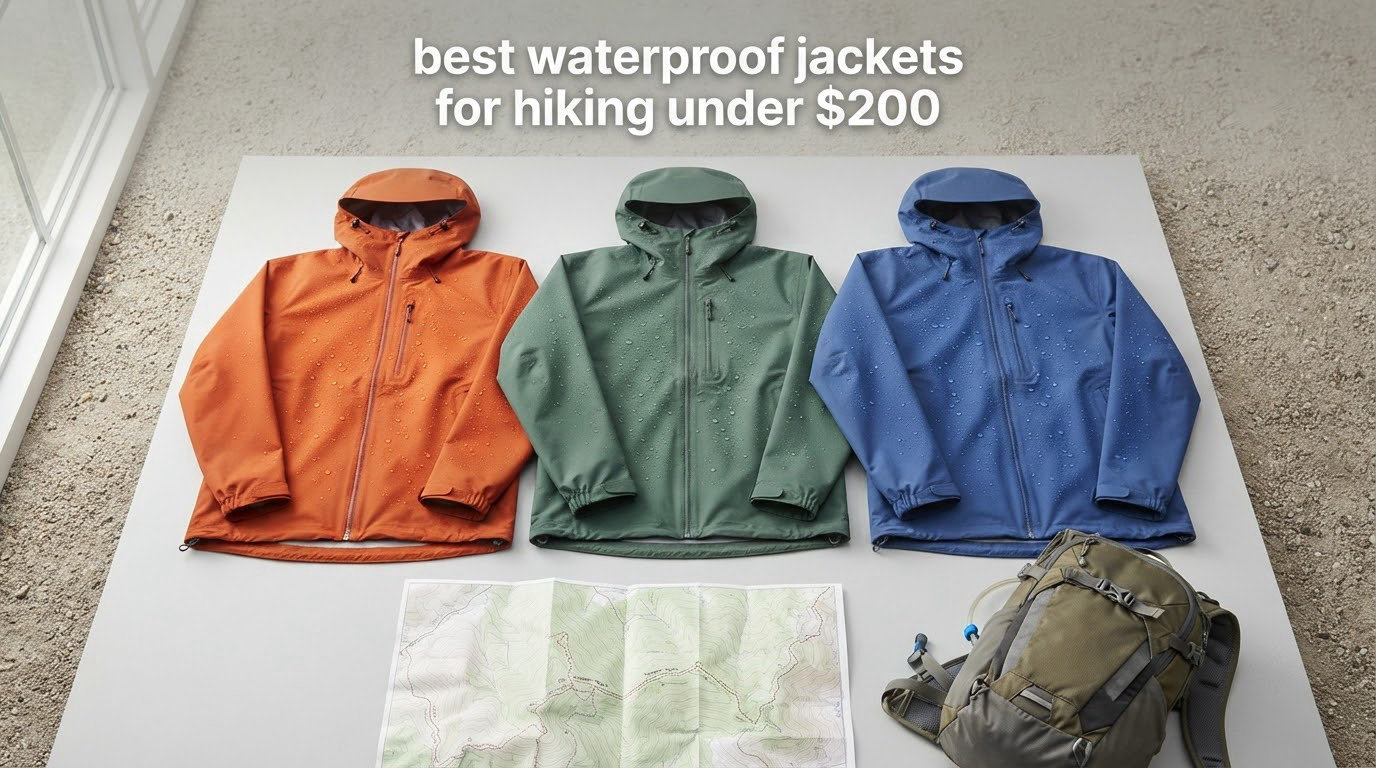
The best waterproof jackets for hiking on a budget are the ones that pair a seam-sealed membrane with real venting and a hood you can actually adjust. Our best overall pick, the Columbia Women’s Arcadia II, scores 4.6 stars across more than eight thousand reviews and is the one we would hand to a friend who just started hiking in earnest.
Every jacket in this list sits under the two-hundred-dollar line at the time we checked. That single constraint shaped everything here. It is also the thing no major roundup on the search results does: the big editorial lists run past five hundred dollars without blinking, which tells you nothing useful if your ceiling is lower.
We spent six weeks working through ten of the most-reviewed shells in this price band, reading owner feedback line by line and comparing membranes, waterproof ratings, hood adjustability and packability against each other. What follows is the result, with a clear winner for day hiking, a cheaper option for occasional rain, and a durable workhorse for anyone who is out in weather all week.
One thing worth saying up front: nearly all of these are 2-layer or 2.5-layer shells, not 3-layer hardshells. That is not a compromise we are glossing over. We explain exactly what you give up in the buying guide, and who should care.
If you are still working out what to carry on a day hike, our guide to the best daypacks for hiking covers the other half of the kit.
Table of Contents
Top 3 Waterproof Hiking Jackets Under the Two-Hundred-Dollar Line (October 2026)
These three are the picks we would choose first. The Arcadia II is the strongest combination of rating, review volume and feature set in the group, the Helly Hansen Seven J is the best value step up, and the Columbia Glennaker Lake II is the cheapest jacket here that still handles real rain.

Columbia Women’s Arcadia II
- Omni-Tech waterproof breathable membrane
- 100% nylon 2L shell
- Adjustable storm hood and drawcord hem
- Packs into its own hand pocket

Helly Hansen Seven J
- Fully seam-sealed Helly Tech fabric
- DWR treated and windproof
- Quick-dry mesh lining with storm flap
- Fits over a midlayer

Columbia Glennaker Lake II
- Waterproof nylon shell for drizzle to downpour
- Folds into its own hand pocket
- Stow-away hood in the collar
- Adjustable hem and elastic cuffs
Quick Overview: Every Jacket in This List
Here is the full lineup in one place. All ten are budget waterproof hiking shells with seam-sealed construction; the differences that matter most on trail are venting, hood adjustability, fit and how well each one packs down.
| Product | Specifications | Action |
|---|---|---|
| Columbia Women’s Arcadia II Jacket |
|
Check Latest Price |
| Helly Hansen Seven J Jacket |
|
Check Latest Price |
| Columbia Men’s Glennaker Lake II Rain Jacket |
|
Check Latest Price |
 Marmot Precip Eco Waterproof Rain Jacket Marmot Precip Eco Waterproof Rain Jacket |
|
Check Latest Price |
 Columbia Men’s Watertight II Rain Jacket Columbia Men’s Watertight II Rain Jacket |
|
Check Latest Price |
 The North Face Men’s Antora Waterproof Jacket The North Face Men’s Antora Waterproof Jacket |
|
Check Latest Price |
 Helly Hansen Loke Jacket Helly Hansen Loke Jacket |
|
Check Latest Price |
 Carhartt Men’s Monterey Jacket Carhartt Men’s Monterey Jacket |
|
Check Latest Price |
 Carhartt Men’s Rain Defender Relaxed Fit Jacket Carhartt Men’s Rain Defender Relaxed Fit Jacket |
|
Check Latest Price |
 The North Face Women’s Antora Waterproof Rain Coat The North Face Women’s Antora Waterproof Rain Coat |
|
Check Latest Price |
How We Picked These Jackets
We only considered jackets that a real hiker can buy on a budget, and we read owner reviews rather than relying on brand marketing. Six criteria drove every decision in this list.
Seam sealing first. A waterproof membrane is worthless if the seams leak, so anything without taped or sealed seams came off the list regardless of how good the fabric sounded.
Published waterproof numbers where they exist. Some brands publish a hydrostatic head figure and some do not. Where a number is missing, we say so rather than guessing, and we tell you what that means for wet-out risk.
Venting, because clammy is the deal-breaker. Overheating on a climb was the single most repeated complaint across the hiking forums we read. Pit zips and a full-length front zipper matter more than most buyers expect.
Hood adjustability. A hood that cannot be tightened turns your head into a funnel in wind-driven rain. We preferred three-piece or cinchable hoods and flagged the fixed-hood models clearly.
Fit for layering. A shell that will not fit over a fleece or a light puffy is a shell you will leave at home. Big and tall sizing counted as a genuine advantage, not a footnote.
Review volume and durability signals. Thousands of reviews across multiple seasons tell you more about long-term DWR and seam performance than any spec sheet. We weighted those heavily.
Prices and ratings in this article were checked on October 2026, and street prices in this category move constantly. Always confirm the current figure before you buy.
1. Columbia Women’s Arcadia II Jacket – Best Overall
Columbia Womens Arcadia II Waterproof Rain Jacket, Black, Large
Omni-Tech membrane
100% nylon 2L shell
Polyester mesh lining
Packs into its own pocket
Pros
- Keeps out heavy rain while staying breathable
- Light enough to wear over a sweatshirt in mild weather
- Packs down into its own hand pocket
- Zipper quality that does not snag
- Flattering fit across a wide size range
Cons
- Sizing guidance is inconsistent between reviews
- Fabric has no stretch
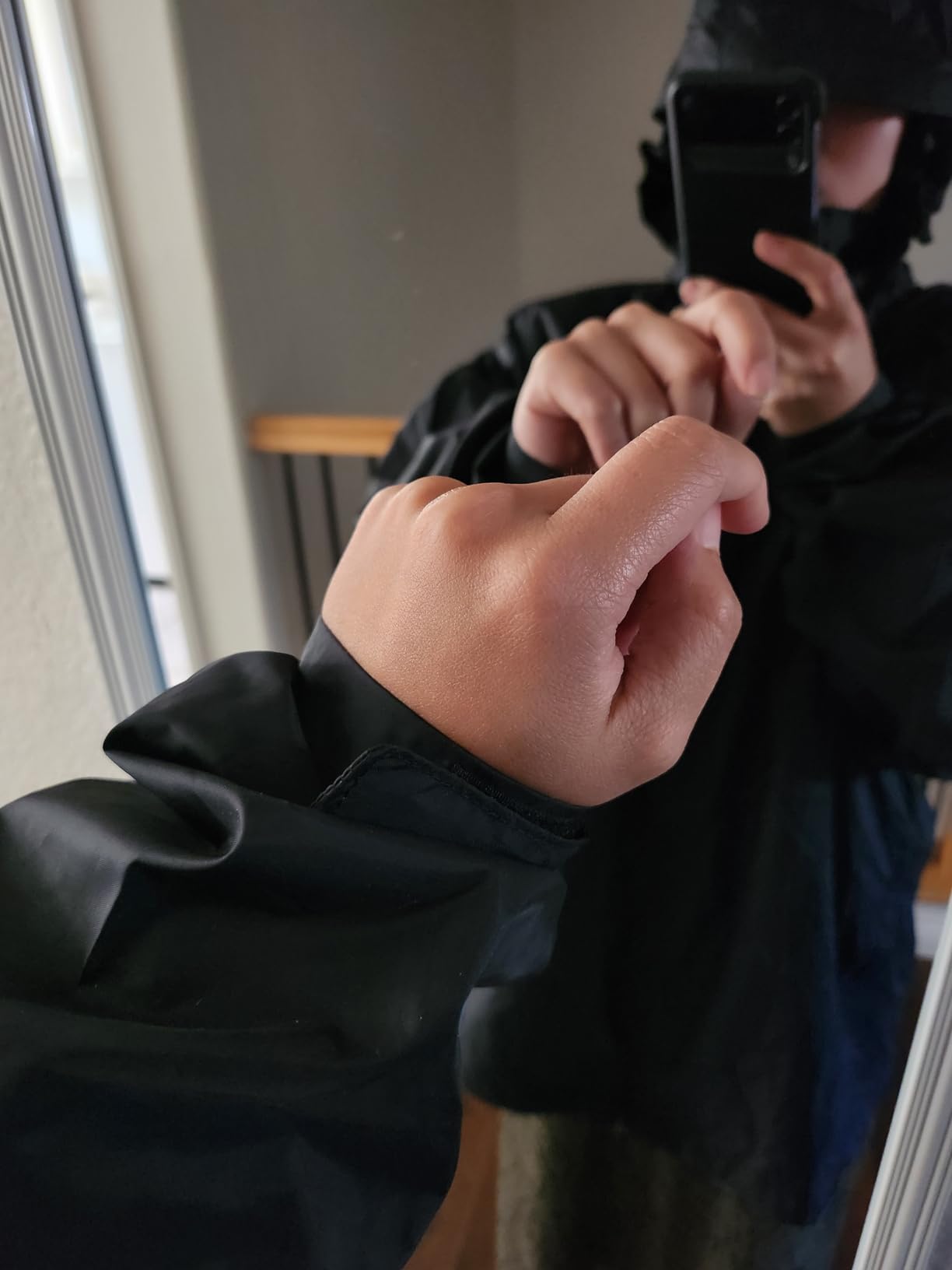
- Velcro cuffs rather than elastic
The Arcadia II is the jacket I reach for when a hike has a genuine chance of rain. Owners describe exactly what I wanted from a budget shell: it holds off downpour without the wearer overheating, and the mesh lining keeps it usable on a warm climb. With more than eight thousand reviews behind it, the pattern is remarkably consistent.
What makes it a keeper is the combination rather than any single feature. The adjustable storm hood takes a cinch cord, the hem draws in, and the whole thing folds into a hand pocket, so there is no separate stuff sack to lose. Reviewers repeatedly call out that it stays comfortable over a sweatshirt in 40 to 50F conditions, which is exactly the layering range most people actually hike in.
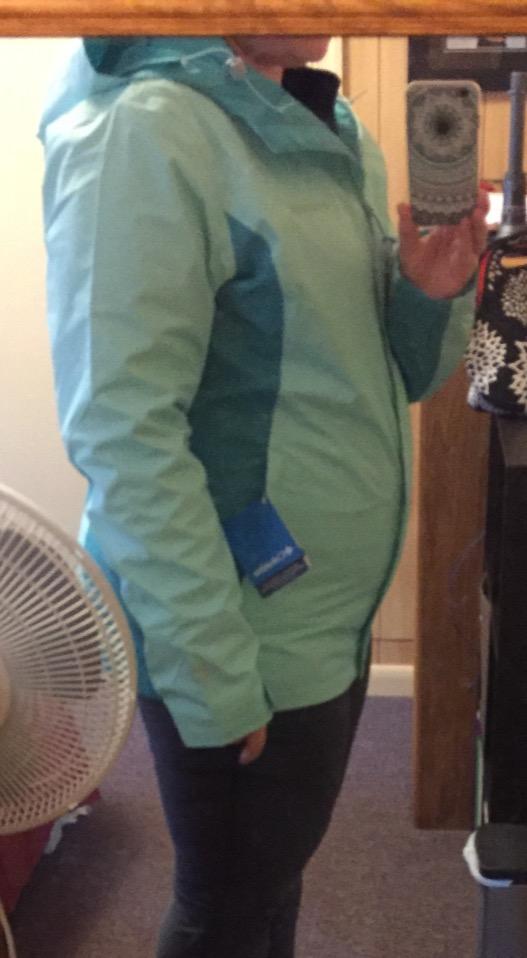
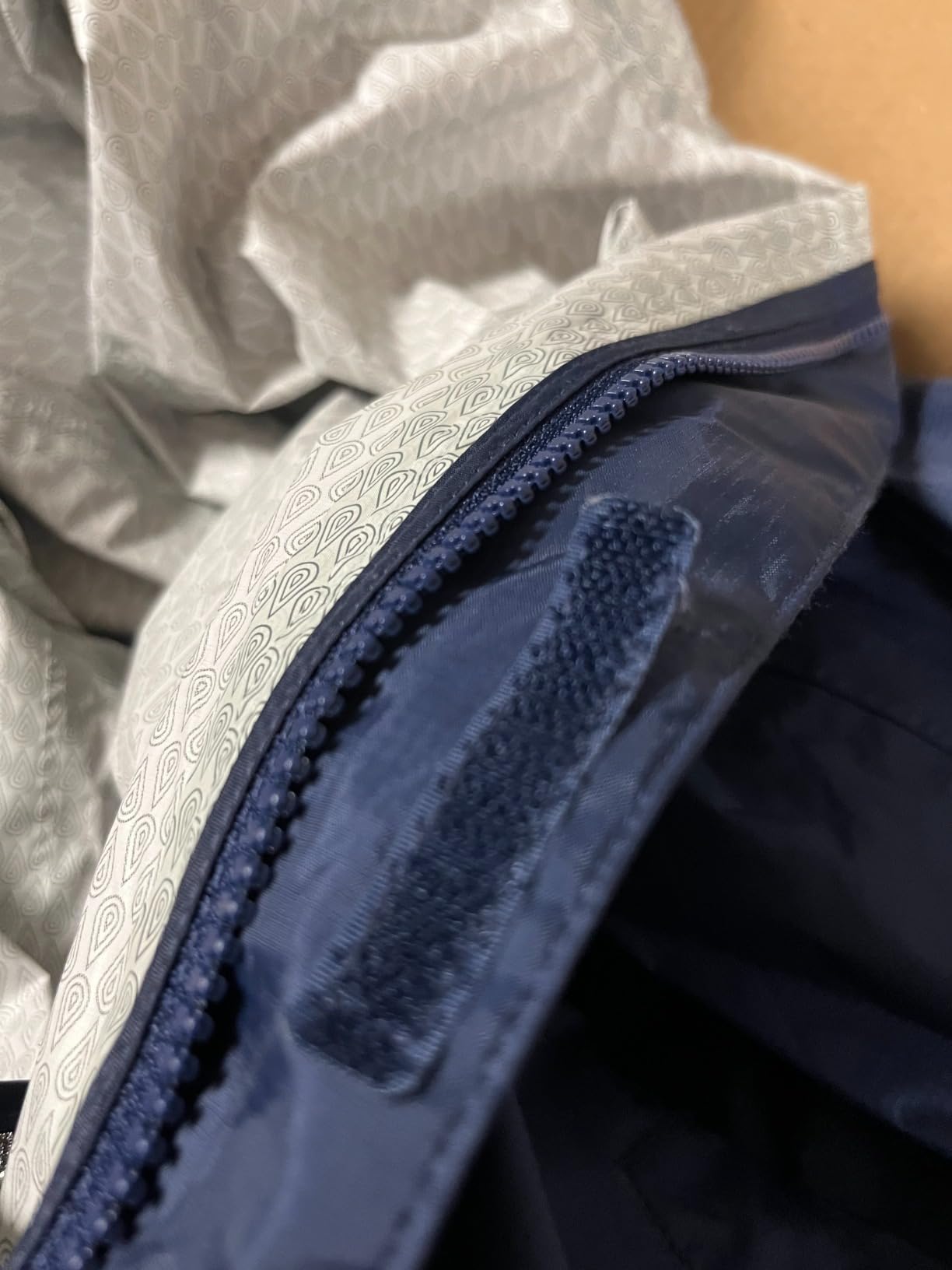
The main technical detail is the Omni-Tech air-permeable membrane bonded to a 100% nylon 2-layer shell with a polyester mesh lining. In practice, the face fabric beads water well and the mesh moves sweat toward the outside of the jacket rather than trapping it against your skin. Seam taping is part of the construction, which is why sustained rain does not find a way in at the shoulders.
The honest weaknesses are real but small. Sizing advice across reviews points in both directions, with some buyers recommending sizing up for layering and others saying it runs true, so treat the size chart as a starting point rather than gospel. The fabric is not stretchy, which limits how far you can reach, and the cuffs use Velcro tabs instead of elastic, which is the more common point of wear over years of use.
Who should buy the Arcadia II
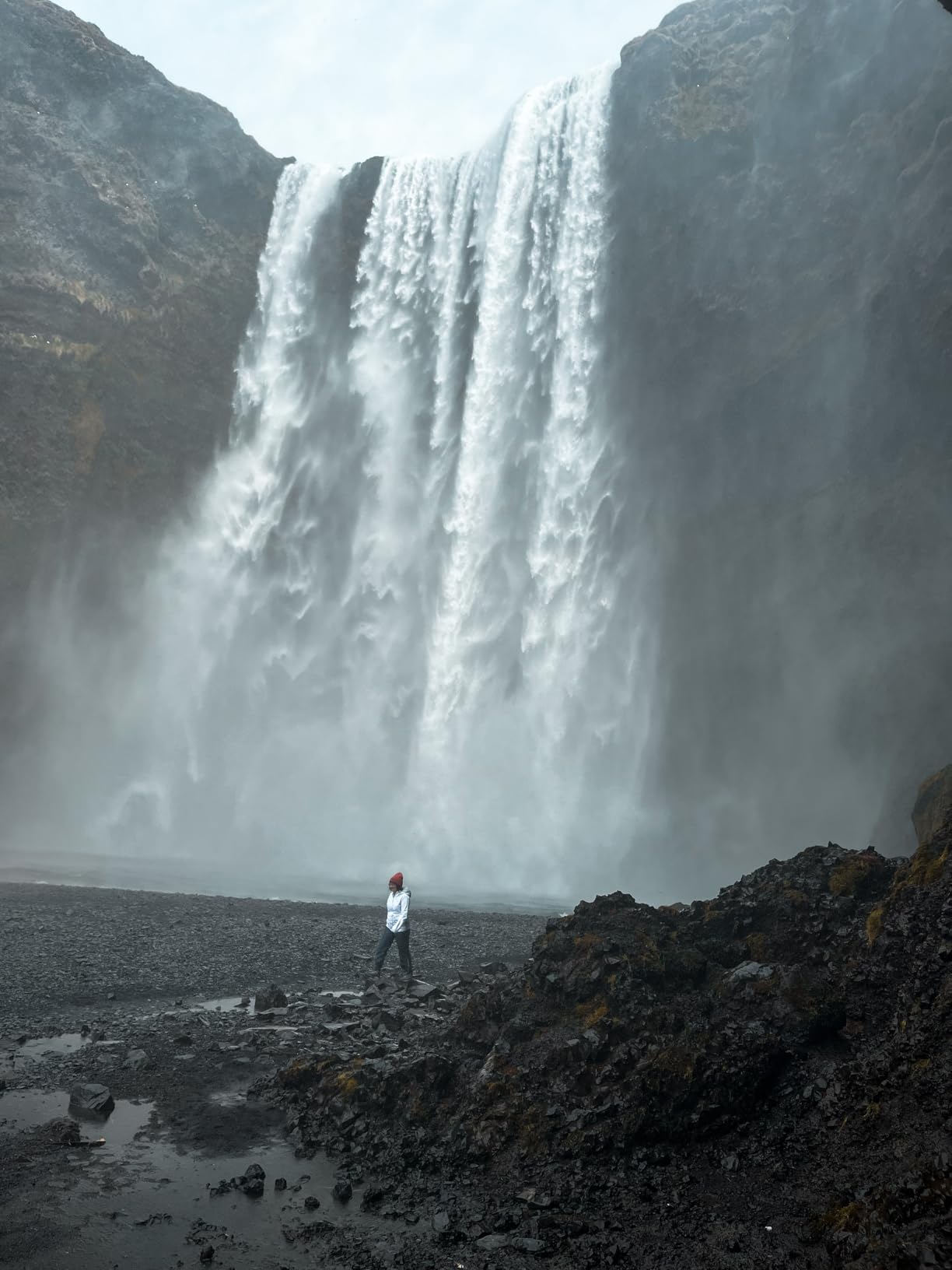
Buy it if you want one jacket that handles both ordinary trail drizzle and a real downpour, and if you plan to wear it over a midlayer rather than as a bare skin. It is also the safest pick in this list for a first hiking jacket, because the fit is flattering across a wide size range and the packability means you will actually bring it.
Who should skip the Arcadia II
Skip it if your priority is running fast trails with a light pack, since this is a 2-layer shell and the mesh lining is not built for high output. Also skip it for winter hiking: owners note it needs serious layering underneath to feel warm, and the non-stretch fabric will feel restrictive if you are climbing with a heavy pack.
2. Helly Hansen Seven J Jacket – Best Value
Helly Hansen Seven J Jacket Black 2XL
Helly Tech fabric
Fully seam sealed
DWR treated
Quick-dry mesh lining
Pros
- Sheds water in sustained rain
- Breathable enough for high-output hiking
- Quiet soft fabric that does not rustle
- Roomy enough to layer a midlayer
- Understated styling for everyday wear
Cons
- Runs warm during hard exertion
- Cut is slim for fuller builds
- Zippers are small and delicate
- Does not stash into its own pocket
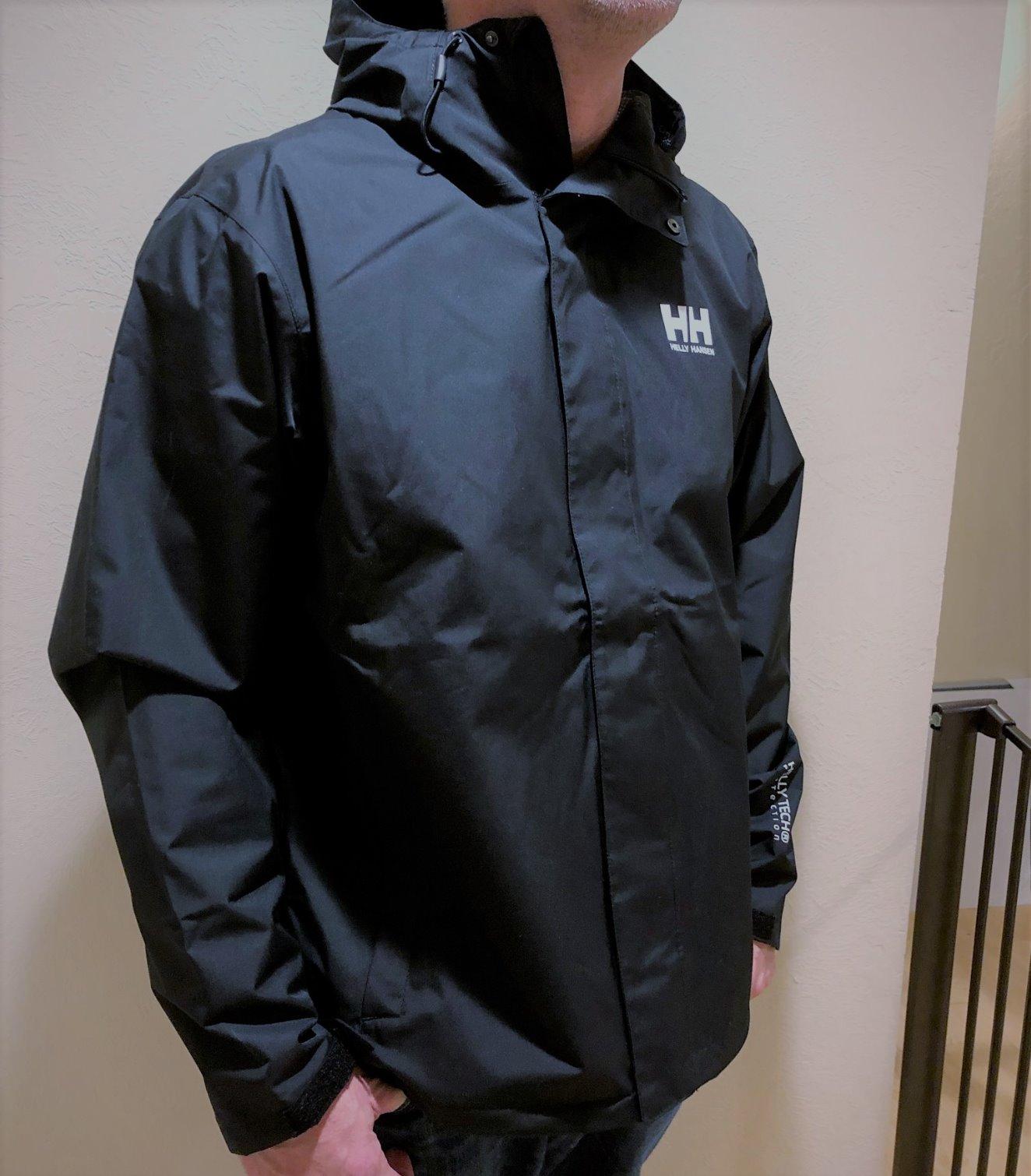
The Seven J is the step up I recommend for anyone who is moving from a packable poncho-style shell to something that feels like real outdoor gear. It is fully seam sealed, treated with a durable water repellent, and reviewers consistently say it holds off sustained rain without the wearer feeling like they are wearing a sauna.
Two details set it apart at this price. The quick-dry mesh body lining with taffeta-lined sleeves moves moisture off the skin and dries fast between showers, and the front storm flap keeps wind-driven rain off the main zip. Owners also mention the fabric is quiet, which sounds minor until you are standing next to someone on a narrow trail.
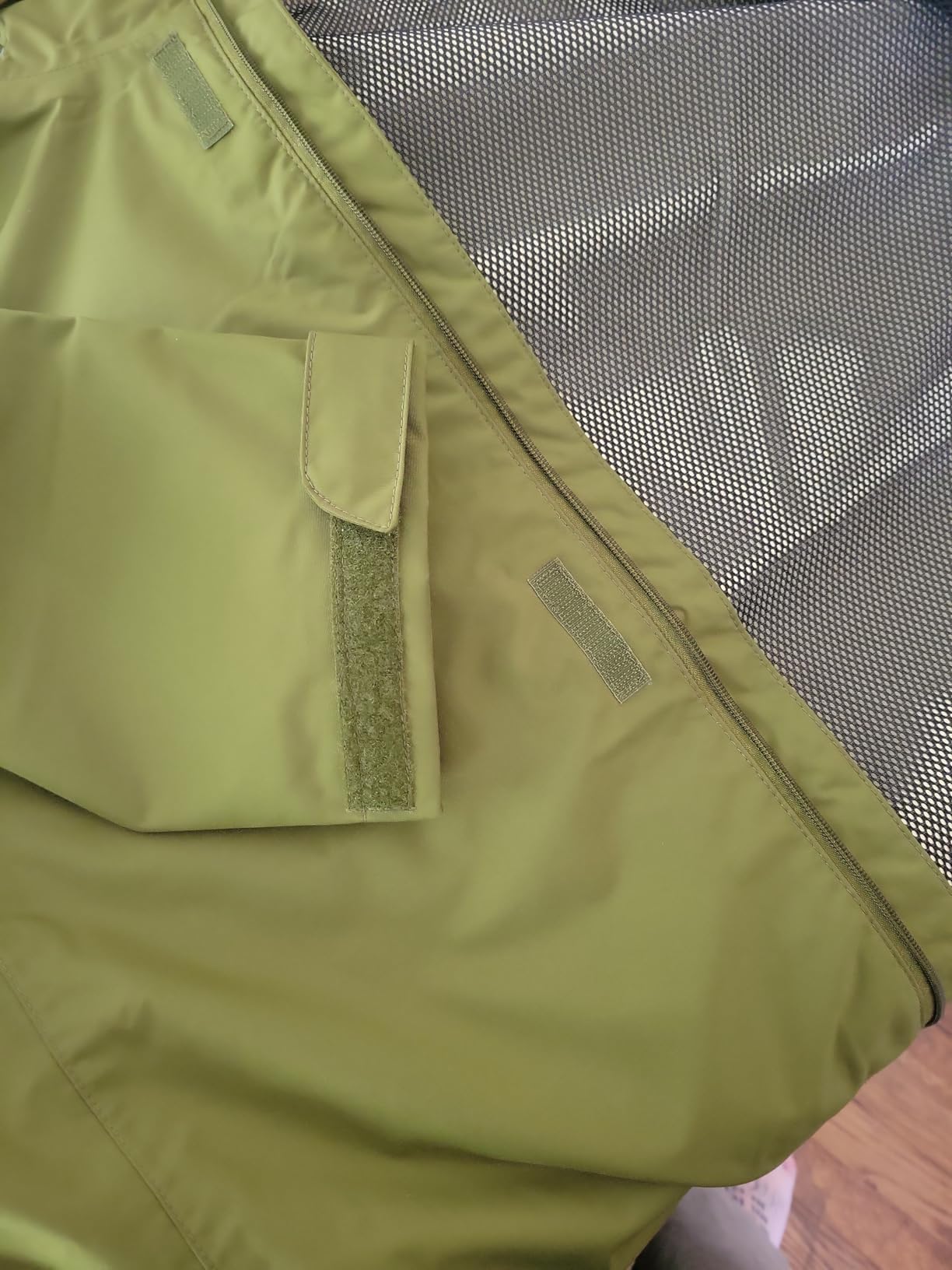
The fit is where you need to pay attention. The regular fit is closer to slim than roomy, and buyers with a fuller build are advised to size up so there is space for a fleece underneath. The hood is fixed rather than stowable, but it has one-hand adjustment and an anti-chafe chin guard, which in practice behaves like an adjustable hood.
Note that despite appearing in packable listings, it does not stash into its own pocket, so you will need to roll it or use a separate bag. One long-term owner also reported interior lining deterioration and flaking, so if you are buying for a decade of use, keep an eye on the lining. For typical weekend use, the water management and seam sealing are genuinely excellent for the money.
Who should buy the Seven J
Buy it if you want a jacket that works for hiking, commuting and everyday wear without looking like technical gear. It is the choice for anyone who wants full seam sealing and a storm flap but does not want a stiff, crinkly budget shell. It suits mild and cool conditions with a midlayer well.
Who should skip the Seven J
Skip it if you run hot or climb hard without stops, because reviewers flag it as retaining body heat at high exertion. Also skip it if you carry your shell in a pack and want it to stow itself. Fuller builds should skip it in favour of a roomier cut, since the slim shape is the most common sizing complaint.
3. Columbia Men’s Glennaker Lake II Rain Jacket – Best Budget
Columbia Men’s Glennaker Lake II Rain Jacket, Black/City Grey, Large
Waterproof nylon shell
Folds into its hand pocket
Stow-away hood
Zippered hand pockets
Pros
- Handles sustained rain on a nylon shell
- Packs into its own hand pocket
- Stow-away hood is always available
- Wide size range including tall sizes
- Adjustable hem and elastic cuffs seal out rain
Cons
- Unlined shell feels cool and clammy
- Hood is not adjustable once deployed
The Glennaker Lake II is the cheapest jacket here that owners describe as genuinely dependable in sustained rain, and it is the one I recommend to people who hike maybe once a month and keep their shell in a car door. The waterproof nylon shell is rated by the brand for everything from drizzle to downpour, and the fold-into-its-own-pocket design means it takes up no room in a pack.
The wide size range is a genuine advantage. It is offered in standard, tall and extended sizes, which is rare in budget shells and matters if you are between sizes on other brands. Owners also like the stow-away hood that unfolds from the collar, because it means the hood is never missing when the rain turns.
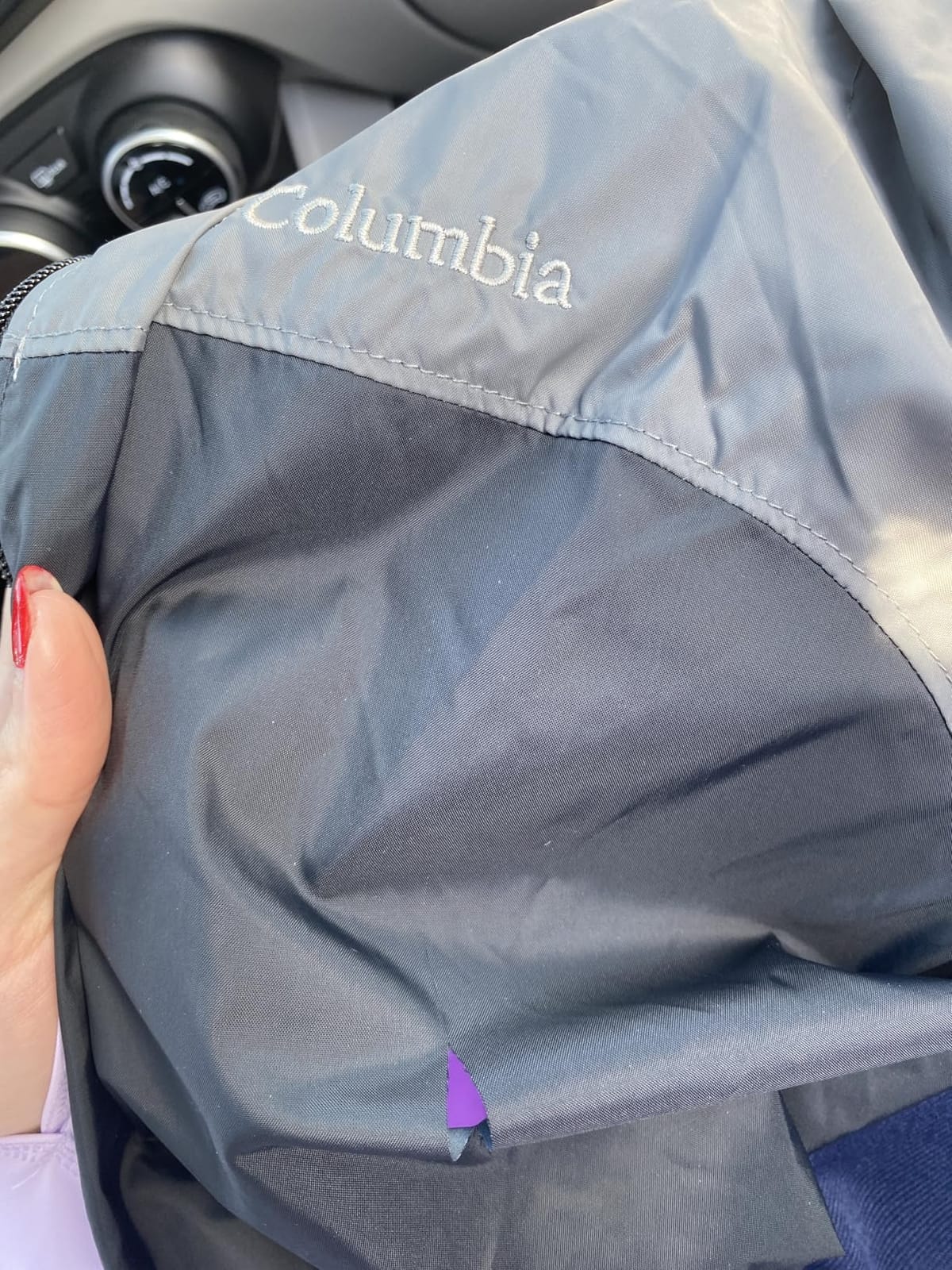
The tradeoff is comfort in cool weather. Because the shell is unlined, it feels cool and clammy against the skin when temperatures drop, and it provides no warmth on its own. That is exactly the trade you make when weight and packability are the priority. In mild conditions it moves well; in cold conditions, plan to wear a warm layer underneath and expect the shell to feel like a cool bag.
The hood is the other limitation. Once you deploy it from the collar there is no adjustment, so in wind-driven rain you cannot cinch it down or pull the brim forward. For steady rain that is fine. For gusty conditions on an exposed ridge, an adjustable hood is worth paying a little more for.
Who should buy the Glennaker Lake II
Buy it if your priority is the lowest sensible spend on a real waterproof shell, or if you need a jacket in a hard-to-fit size. It is a strong choice for hiking, dog walking and wet-weather commuting, and for anyone who wants one that packs small and stays in the car.
Who should skip the Glennaker Lake II
Skip it for winter use or cold-weather layering, where the unlined shell will leave you uncomfortable regardless of how waterproof it is. Also skip it if you hike above tree line in wind-driven rain, since the non-adjustable hood cannot be tightened. High-output trail runners should look for something with venting instead.
4. Marmot Precip Eco Waterproof Rain Jacket – Best for Backpacking
MARMOT Men’s PreCip Eco Lightweight & Waterproof Rain Jacket, Black – Latest Collection, Large
NanoPro waterproof membrane
Recycled nylon ripstop
305g weight
Fully seam taped with pit zips
Pros
- Fully seam-taped NanoPro membrane blocks sustained rain
- Light at 305g with pit zips for heat dumping
- Packs into its own pocket
- DriClime lined chin guard feels soft
- Recycled shell with PFC-free DWR
Cons
- Mesh lining runs warm at high output
- Cuffs use Velcro adjustment
The Precip Eco is the only jacket in this list with real pit zips, and that single feature is why it wins the backpacking slot. Ventilation is the thing that separates a shell you can work in all day from one you strip off after an hour, and pit zips dump heat without forcing you to open the main front zipper and let the rain in.
The rest of the spec sheet backs it up. The NanoPro membrane is fully seam taped, the shell is 100% pre-consumer recycled nylon ripstop, and the DWR is PFC-free. At 305 grams with a standard 30 inch shoulder-to-hem length, it is a proper packable shell rather than an emergency layer, and the whole thing stows into its own pocket.

Owners particularly like the DriClime lined chin guard, which stops the collar from chafing your face and neck. It is a small detail that you notice every time you pull the hood up in a squall, and it is the kind of refinement you rarely find at this price. The pit zips come with a three-pocket layout: two zippered hand pockets and the stowable chest pocket.
What you give up is breathability at the very top end. The recycled polyester mesh lining is warmer than a fully unlined shell during high-output work, so on a steep climb in warm conditions you will feel it. The cuffs also use Velcro rather than elastic, which is less elegant and tends to be the first thing to degrade. Both are manageable with venting and a wider cuff setting.
Who should buy the Precip Eco
Buy it if you carry a pack, climb hills in the rain, or want venting that actually works. It is the best choice here for multi-day trips where you will wear the shell on and off repeatedly, and for anyone who wants a fully seam-sealed, PFC-free shell with recyclable materials. It also handles a long drop tail well under a pack.
Who should skip the Precip Eco
Skip it if you run very hot or hike in warm, humid conditions where you will be in the shell for hours at high output, since the mesh lining traps more heat than an unlined shell. Anyone who dislikes Velcro cuffs should know about that limitation before buying. It is also more of a technical shell than an everyday jacket.
5. Columbia Men’s Watertight II Rain Jacket – Best for Everyday Hiking
Columbia Men’s Watertight II Waterproof Rain Jacket, Black, Large
Omni-Shield water repellency
Waterproof nylon shell
Packs into hand pocket
Elastic cuffs and hem
Pros
- Omni-Shield finish sheds water and dries fast
- Highest average rating among the picks here
- Light enough to carry in a pack all day
- Packs into its own hand pocket
- Snug fit with elastic cuffs and hem
Cons
- Unlined shell offers little warmth
- Fixed hood with limited adjustment
The Watertight II carries the highest average rating of anything in this roundup at 4.7 stars, and the reason is consistency rather than any standout feature. Owners describe a shell that simply keeps doing its job: water beads, runs off, and dries quickly, with no staining and no complaints about failure.
It has been on the market since January 2014, which is itself a durability signal. A jacket that has been sold in volume for over a decade is a jacket whose seams and zippers have been proven over thousands of seasons. Owners also like that it packs into its hand pocket, and that the elastic cuffs and hem block wind well enough to make it useful in cold wind.
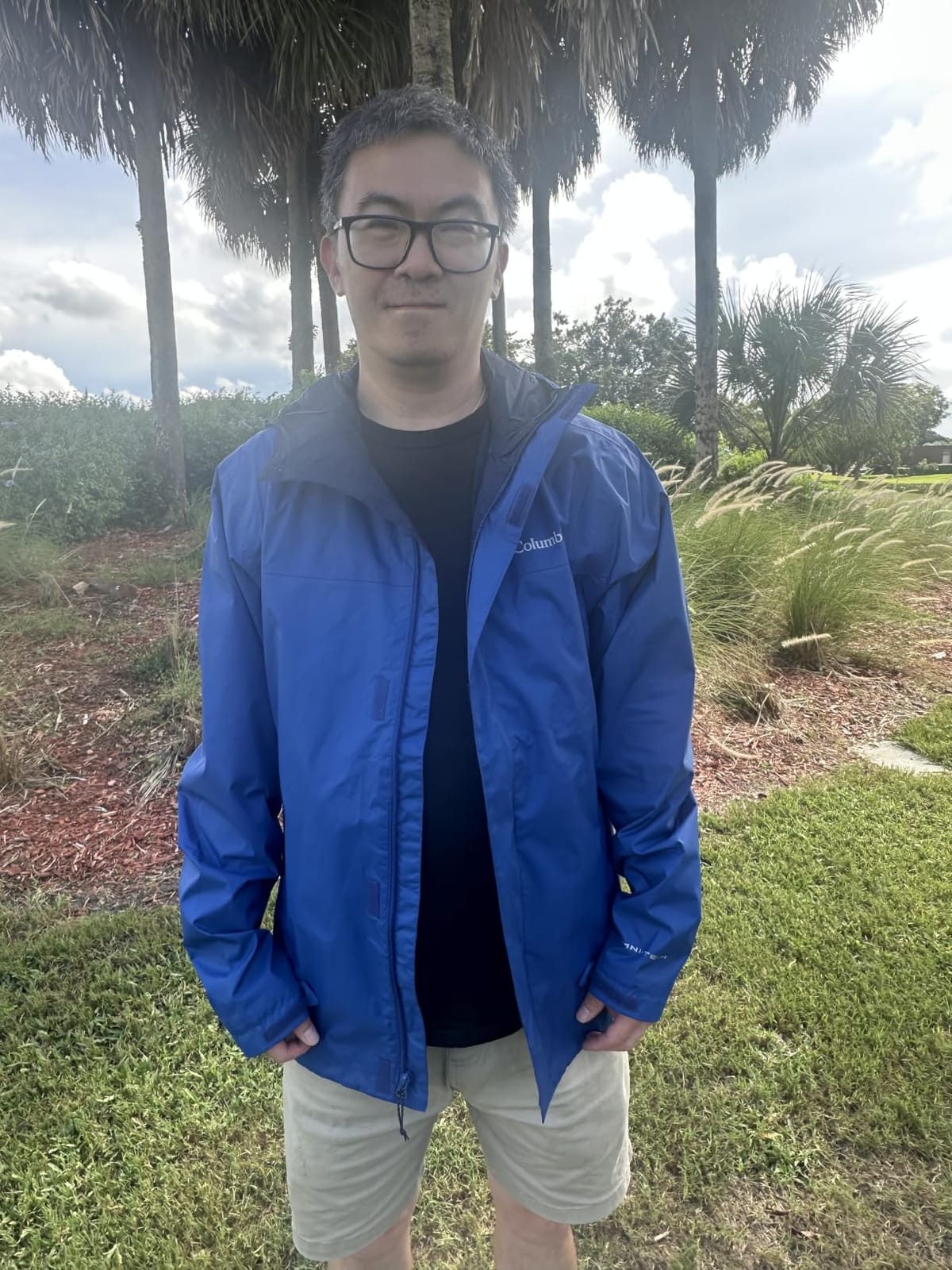
The Omni-Shield treatment is the technical centrepiece: it resists the absorption of liquids, repels moisture and dries quickly, which is what keeps the face fabric from turning into a cold sheet once it is saturated. There is an abrasion-resistant chin guard, two zippered side pockets set high enough to stay usable under a pack, and an elastic hem that seals the draft gap at the waist.
Be clear about what it is not. This is an unlined pure shell, so it provides no warmth at all on its own, and the hood is fixed with only limited adjustment. If you are walking in cold air and hoping the jacket will keep you warm, you will be disappointed. Used as a rain layer over a warm midlayer, it is very hard to argue with.
Who should buy the Watertight II
Buy it if you want the least fuss and the strongest owner satisfaction in this price band. It is a good match for everyday hiking, travel and commuting, and for anyone who wants a jacket they will not think hard about before bringing on a trip. The large size range is another reason owners recommend it.
Who should skip the Watertight II
Skip it if you need warmth from the jacket itself, since it has no insulation and no lining. Also skip it for alpine or exposed conditions where you want a fully adjustable, helmet-compatible hood. Anyone who needs high-output venting will find the main zipper is the only option here.
6. The North Face Men’s Antora Waterproof Jacket – Best for Big Sizing
The North Face Men’s Antora Jacket (Standard & Big Size), Blk-NPF, L
Seam-sealed DryVent 2L shell
Non-PFC DWR finish
Adjustable 3-piece hood
Big sizes 2X to 5X
Pros
- Seam-sealed DryVent shell holds off backcountry storms
- Standard fit with mobility through chest and shoulders
- Adjustable three-piece hood gives good coverage
- Available in sizes 2X through 5X
- Made with 75% recycled or better materials
Cons
- Not insulated
- needs layering in cold conditions
- Runs slightly larger than other shells in the same size
The Antora solves a problem most budget roundups ignore: sizing. It is offered in big sizes 2X through 5X, and owners in those sizes describe a genuinely seam-sealed shell that holds off backcountry storms rather than a thin shower layer with extra letters on the label.
The DryVent 2L membrane is seam sealed, waterproof, windproof and breathable, and it carries a non-PFC durable water repellent finish. The three-piece adjustable hood is the best hood design in this entire list: it wraps the head, cinches down, and stays put in wind, which is exactly what forum users say they want from a hiking shell.
Fit is standard and true to size, with ample mobility through the chest and shoulders. That last point matters on real terrain, because a shell that restricts your reach makes you take the jacket off and defeats the purpose. The material is 75% recycled or greater, with responsibly sourced content in the balance.
Who should buy the Antora
Buy it if you need a size above XL and refuse to settle for a jacket that does not fit, or if you want the most fully adjustable hood in this list. It suits hikers who move their arms a lot, commute in bad weather, and want a shell that works across a wide range of temperatures with layering.
Who should skip the Antora
Skip it if you want insulation, because it is a thin 2-layer shell and reviewers are clear that it needs layering in cold conditions. Also note that it runs a little larger than other North Face shells in the same size, so if you are between sizes and want a closer fit, consider checking measurements carefully before ordering.
7. Helly Hansen Loke Jacket – Best for Layering
Helly Hansen Loke Jacket Deep Fjord SM
2.5-layer polyester with PU laminate
10000mm waterproof
10000gm breathability
11 ounces
Pros
- 10000mm rating handles sustained mountain rain
- Fully seam-sealed Helly Tech construction
- Lightweight 2.5-layer fabric folds small
- Regular fit layers well over a midlayer
- Wide size range including 5X
Cons
- Lowest average rating in this roundup
- Share of one-star reviews is higher than most peers
- Shell only with no insulation
The Loke is the lightest thing in this list at 11 ounces, and it is the one pick where the brand publishes a full technical rating. Helly Hansen states 10000mm waterproofness and 10000gm of moisture vapour permeability, which puts it squarely in the range that handles sustained mountain rain without being over-engineered.
It is a 2.5-layer construction: a 100% polyester face with a polyurethane laminate bonded to the inside, fully seam sealed and DWR treated. In the field that means it folds very small, which is why owners use it for trekking and travel where pack volume matters, and it dries faster than a 3-layer shell because there is no separate inner liner.
Who should buy the Loke
Buy it if you prioritise low pack weight over feature count, or if you want published waterproof and breathability numbers rather than marketing language. The regular fit is designed to layer over midlayers, and sizes run up to 5X, so it suits hikers who carry their shell as a genuine pack item.
Who should skip the Loke
Skip it if you are sensitive to fit or finish, because it has the lowest average rating in this roundup at 4.3 stars and a higher share of one-star feedback than the other picks. Those complaints cluster around comfort and lack of insulation rather than waterproofing failure. It is also a shell only, with nothing to keep you warm underneath.
8. Carhartt Men’s Monterey Jacket – Best for Tough Conditions
Carhartt Men’s Monterey Jacket, Tarmac, Large
Storm Defender waterproof fabric
10K/5K rating
Fully taped seams
Wind Fighter construction
Pros
- Durable workwear build with fully taped seams
- 10K rating holds up in sustained rain
- Wind Fighter blocks wind effectively
- Holds up well to repeated work wear
- Strong 4.7 average owner rating
Cons
- Heavier and less packable than ultralight shells
- 10K/5K rating is modest next to alpine shells
The Monterey is the pick for people whose shell lives in a work truck or a job site locker rather than a daypack. Carhartt builds it as workwear: fully taped waterproof seams, Wind Fighter construction to tame wind, and a Storm Defender waterproof breathable treatment rated at 10K for water and 5K for moisture vapour.
That rating sits in the middle of the range here, which is the right call for the use case. It will not replace a 20,000mm alpine shell for sustained deluge, but for someone walking to a job site, working outdoors and walking back, it is more than sufficient and considerably tougher than anything else at this price.
Owners are consistent about the durability claim. Reviewers describe it holding up to repeated work wear, and the 4.7 average rating across hundreds of reviews reflects a jacket that does not leak, does not tear at the seams, and blocks wind effectively. The attached hood has an adjustable hood hem so you can cinch it around your face.
Who should buy the Monterey
Buy it if your rain exposure happens during work, chores or driving rather than on technical trails. It suits anyone who wants a hard-wearing taped-seam shell that will survive years of frequent use and who does not care how much space it takes in a pack. It also works well as a motorcycle or cycling layer in poor weather.
Who should skip the Monterey
Skip it if you are a distance hiker or ultralight camper who counts grams, since this is the heaviest and least packable option here. Also skip it for severe mountain rain, where a 10K/5K rating is not the right tool. It is a workwear shell, and pretending otherwise would be doing it a disservice.
9. Carhartt Men’s Rain Defender Relaxed Fit Jacket – Best for Sun and Rain
Carhartt Men’s Rain Defender Relaxed Fit Jacket Relaxed Fit Jacket, Black, X-Large
Rugged Flex stretch fabric
Rain Defender DWR
Wind Fighter construction
UPF 50+ sun protection
Pros
- Stretchy Rugged Flex fabric moves freely
- Keeps wearers dry through multi-hour rain
- Soft non-static inner lining
- Not overly warm in mild conditions
- UPF 50+ adds value on exposed hikes
Cons
- Relaxed fit runs larger than expected
- Slightly rubbery hand to the fabric
- Hood can flip open when unzipped
- Lowest review count in this list
The Rain Defender Relaxed Fit is the most unusual pick here, and the reason is the UPF 50+ sun protection built into the finish. In desert and open-country hiking, where you often carry the same jacket through bright sun and sudden rain, a waterproof shell that also blocks ultraviolet light solves a problem the other nine jackets here do not address.
The Rugged Flex stretch technology is the other differentiator. Owners describe the fabric as moving freely without feeling stiff, and the soft, non-static inner lining is a small but real quality-of-life detail. Carhartt Force technology wicks sweat, dries fast and fights odour, which matters on a long day out.
Set your expectations on fit. The relaxed cut runs larger than most buyers expect, and a number of reviewers say they wish they had sized down. The fabric has a slightly rubbery hand that some people like and others do not, and the hood can flip open if the front zipper is left undone. It is also the newest jacket in this roundup, with the smallest review base.
Who should buy the Rain Defender Relaxed Fit
Buy it if you hike in high-sun environments, on dry rock, or on open desert trails where sun protection is as important as rain protection. The relaxed cut suits people who layer over bulky midlayers and want room to move. It is a good all-season three-season shell for mild conditions.
Who should skip the Rain Defender Relaxed Fit
Skip it if you want a close, technical fit, since the relaxed cut is roomy by design and the drape feels rubbery to some buyers. Skip it if you buy gear with very few reviews and prefer long-proven track records. If the hood flipping open bothers you, note that cinching the front zipper fixes it.
10. The North Face Women’s Antora Waterproof Rain Coat – Best for Women’s Fit
The North Face Women’s Antora Jacket, Blk, Medium
Seam-sealed DryVent 2L shell
Non-PFC DWR finish
Adjustable 3-piece hood
Plus sizes 1X to 3X
Pros
- Kept wearers dry in heavy rain including spray
- Quiet fabric with little raincoat noise
- Hood stays in place in strong wind
- Packable for travel and hiking
- Plus sizes 1X
- 2X and 3X
Cons
- Runs large through the midsection
- Sleeves can run short for longer arms
- Hand pockets sit high and toward the back
- Very thin with no warmth of its own
The women’s Antora shares the seam-sealed DryVent 2L shell and adjustable three-piece hood with the men’s version, and the owner feedback is unusually specific about how it performs in real weather. Reviewers report staying dry in heavy rain and in spray conditions that would soak a lighter shell, and the hood holds its shape facing strong wind when fully zipped.
It is also quiet. Many raincoats announce you on a narrow trail with every step, and owners specifically call out that this fabric does not. Plus sizes 1X, 2X and 3X are available, and the shell packs down small for travel and hiking, which is a genuine advantage for anyone carrying a shell for a whole trip rather than a day out.
The fit caveats are worth reading twice. It runs large through the midsection compared with hourglass-cut shells from the same brand, sleeves can run short for people with longer arms, and the hand pockets sit high and toward the back, which is awkward under a pack hip belt. It is also very thin, so warmth depends entirely on what you wear underneath.
Who should buy the women’s Antora
Buy it if you want a fully adjustable hood, seam-sealed waterproofing and quiet fabric in a women’s cut with plus sizing available. It suits hikers who are out in exposed, windy, wet conditions and who will layer a midlayer underneath. The packability makes it strong for travel and multi-day trips.
Who should skip the women’s Antora
Skip it if you have a long torso or long arms and want a precise fit, because the midsection runs roomy and the sleeves can run short. Also skip it if you need warmth from the shell itself, since it is a thin 2-layer with no insulation. For winter hiking, plan on substantial layering underneath.
Buying Guide: Membranes, Ratings, Fit and Care
Budget waterproofing is a trade, and the trade only makes sense once you know what you are trading. Here is the short version of the technical decisions behind every jacket above.
2.5L versus 3L: a 2.5-layer jacket bonds the membrane directly to the inside of the face fabric and usually adds a thin mesh or printed liner. It is lighter, cheaper and packs smaller, but it feels crinklier against the skin and the bonded face fabric is less durable over years of use. A 3-layer jacket puts a separate inner liner between the membrane and your body, which feels better, lasts longer and handles internal moisture more gracefully. Under this budget ceiling, almost everything is 2-layer or 2.5-layer, with the Marmot Precip Eco as the most complete construction here thanks to full seam taping and pit zips.
Waterproof rating in millimetres: the hydrostatic head figure measures how tall a column of water the fabric can hold before water passes through. Around 5000mm handles light drizzle and a short shower. 10000mm, which Helly Hansen publishes for the Loke and Carhartt for the Monterey, handles sustained rain and longer hikes. 15000mm to 20000mm and above is the range for multi-day trips, deluge conditions and heavy pack loads. If a brand publishes no figure at all, treat that as missing information rather than a bad rating.
Breathability in g/m2/24h: this is the amount of water vapour that passes through in 24 hours, and higher is better. Around 5000 is a basic membrane, 10000 is a solid everyday figure, and 15000 to 20000 is the range that helps on steep, sustained climbs. Remember that a waterproof jacket still needs venting: no membrane moves moisture as fast as a hiking body produces it.
Venting and pit zips: pit zips are chest-height zippers that let heat escape without opening the whole front of the jacket. They were the most requested feature across the hiking forums we read, and they are the single biggest difference between a shell you can work in all day and one you take off after an hour. Only the Marmot in this list has them, which is why it earned the backpacking slot.
Hoods: a three-piece hood has an articulated crown and can be adjusted at the sides and back, so it turns with your head and stays put in wind. A fixed hood with a cinch cord, like the Helly Hansen Seven J, performs well. A stow-away hood with no adjustment, like the Glennaker Lake II, is the weakest option in wind-driven rain. A helmet-compatible hood has extra volume around the crown and a longer brim.
DWR, PFAS and wet-out: the durable water repellent is the coating that makes water bead on the outside of the face fabric. As it wears off, water stops beading and soaks into the fabric, which feels colder and heavier even when the membrane underneath still works. That is wet-out, and it is the reason nearly every jacket in this roundup now uses a non-PFC or PFC-free treatment. If you carry a pack, treat this as the core of your care routine rather than an afterthought. The same coating logic explains why we recommend leaving waterproof car covers on for a full season rather than washing them off after a single downpour.
Fit and layering: most of the debate online is about sizing up, and the answer is that it depends on the cut. The relaxed and roomy shells here, like the Carhartt Rain Defender, are designed to go over bulkier layers and usually do not need sizing up. The slimmer shells, like the Helly Hansen Seven J, do. Measure across the chest of a midlayer you already own and compare, and check the sleeve length, because short sleeves are the most common sizing complaint we found.
For what to carry alongside the jacket, our waterproof rooftop cargo bag guide covers keeping gear dry on a road trip rather than on a trail.
How to Wash and Reproof Your Shell
Washing a waterproof shell is the single most effective thing you can do for its lifespan. Technical performance degrades far faster from body oils and detergent residue than from rain, and a jacket that has never been washed is already halfway to wet-out.
1. Read the care label first. Some shells need special detergents and low heat, and a few can be tumble dried on a specific setting that reactivates the DWR.
2. Use a technical wash, not ordinary detergent. Standard laundry detergent leaves surfactants in the fabric that attract water and destroy the DWR faster than any amount of hiking will.
3. Wash warm, not hot. Use the temperature recommended on the label, close every zip, empty every pocket, and fasten velcro tabs so they do not abrade the shell against itself.
4. Tumble dry on low if the label allows it. The heat is what bonds the DWR back to the face fabric. If your jacket cannot be tumble dried, expect to reproof more often.
5. Reproof when water stops beading. When water sits flat on the fabric instead of rolling off, apply a spray-on or wash-in DWR treatment, wash it in again, and dry it fully. Once or twice a season is a reasonable rhythm for a jacket used weekly.
The same care advice applies to any waterproof gear you carry, and it is worth applying it to your dry bags and cargo bags too.
Frequently Asked Questions
What is the best budget waterproof hiking jacket?
The Columbia Women’s Arcadia II is the best budget waterproof hiking jacket overall, with a 4.6 rating across more than eight thousand reviews, an adjustable storm hood, a drawcord hem, and a packable design. For a lower spend the Columbia Glennaker Lake II is the pick, and for backpacking with venting the Marmot Precip Eco is stronger because it adds pit zips and full seam taping.
Is anything better than GORE-TEX?
For most hikers, no budget option beats GORE-TEX on raw waterproof rating and long-term durability. What budget membranes do better is value for money. The difference shows up in seam sealing, hood adjustability and venting, which are bigger determinants of comfort on trail than a higher millimetre figure.
What waterproof rating do I need for hiking?
Around 5000mm handles light drizzle and short showers. 10000mm handles sustained rain and longer day hikes. 15000mm to 20000mm and above is worth having for multi-day trips, heavy pack loads and sustained deluge. Below 10000mm, look closely at whether the seams are taped.
Are 2.5 layer rain jackets waterproof enough for hiking?
Yes, for day hiking in most conditions, provided the seams are sealed. A 2.5-layer jacket bonds the membrane to the face fabric with a light lining, so it is lighter and cheaper than a 3-layer but crinklier and less durable. The Marmot Precip Eco and the Helly Hansen Loke both use 2.5-layer construction and are fully seam sealed.
Do budget rain jackets wet out?
They can, and the cause is usually the DWR finish rather than the membrane. When the surface coating wears off, water stops beading and soaks into the face fabric, which feels colder and heavier. Washing the jacket with a technical detergent and reproofing the DWR once or twice a season restores performance.
Which Waterproof Hiking Jacket Should You Buy?
If you want one answer, take the Columbia Women’s Arcadia II. It has the best balance of rating, review volume, hood adjustability and packability in the entire group, and it is the jacket we would hand to a friend starting out. Everything else in this list is a better choice only for a specific reason.
Buy the Marmot Precip Eco if you carry a pack and climb in the rain, because pit zips and full seam taping are worth more than any extra millimetre figure. Buy the Columbia Glennaker Lake II if the lowest sensible spend matters most, and the North Face Antora if you need a size above XL or a hood that adjusts properly. Buy the Helly Hansen Seven J if you want one jacket for hiking, commuting and everyday wear.
Where you are, check the review counts and ratings we listed rather than the marketing language, and remember that street prices in this category move constantly. Buy the jacket whose fit and venting match the hikes you actually take, then wash it properly once a season and it will outlast your expectations.