
If you have a school-aged child, you have probably seen a Lexile measure on a report card or a sticker on the back of a library book. That small number with an “L” after it carries a lot of weight in classrooms across the country. Understanding how Lexile measures work for reading level can help you support your child’s reading growth at home and make smarter book choices.
Our team has spent months researching reading assessment systems, talking with teachers, and digging through parent forums to break down what these scores actually mean. Whether you are looking at a 600L score for a second grader or a 1400L score for a high schooler, this guide will walk you through the entire system in plain language.
We will cover how the numbers get calculated, what the different codes mean, how Lexile levels map to grade levels, and where the system has real limitations you should know about.
Table of Contents
What Is the Lexile Framework for Reading?
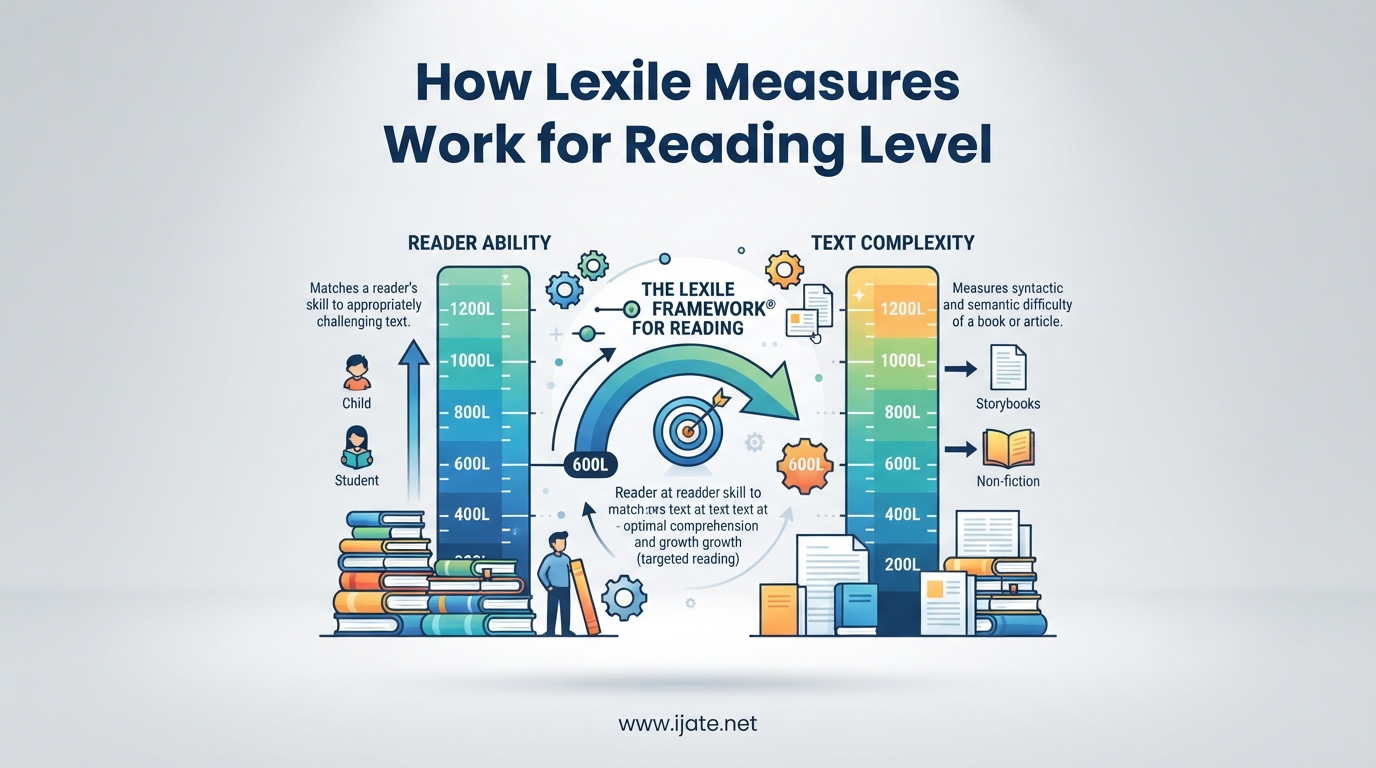
The Lexile Framework for Reading is an educational tool developed by MetaMetrics, a company based in Durham, North Carolina. It puts both a reader’s ability and a text’s difficulty on the same scale, which makes it possible to match a child with books that are neither too easy nor too hard.
A Lexile measure is expressed as a number followed by an uppercase L. For example, a book might have a Lexile text measure of 820L, and a student might have a Lexile reader measure of 850L. Because both numbers use the same scale, you can compare them directly. This is what makes the system different from most other reading assessments, which only measure one side of the equation.
The framework was created in the late 1990s by Dr. A. Jackson Stenner and Dr. Malbert Smith III. Since then, it has been adopted by all 50 states and is integrated into many popular reading assessments, including Scholastic Reading Inventory, NWEA MAP Growth, and several state-level standardized tests.
Schools use Lexile measures to track reading progress over time, set goals, and communicate with parents about where a student stands. Libraries and book publishers use them to label books so families can find titles at the right level. The goal is simple: keep kids reading in what MetaMetrics calls the “sweet spot” where comprehension is high but the text still offers enough challenge to promote growth.
How Lexile Measures Work for Reading Level
To understand how Lexile measures work for reading level, you need to look at both sides of the system: how text measures are generated and how reader measures are determined. The two halves come together to create a match.
How Text Measures Are Calculated
When MetaMetrics assigns a Lexile measure to a book or article, the text is run through a software program called the Lexile Analyzer. This program evaluates the full text, not just a sample paragraph. It looks at two main factors.
The first factor is word frequency. The analyzer checks how often each word appears in a massive database of published texts. Words that appear frequently across many texts, like “house” or “walk,” are considered easier. Rare words, like “obfuscate” or “perpetual,” increase the difficulty score.
The second factor is sentence length. Longer sentences generally signal more complex syntax, with more clauses and harder grammatical structures. Short, punchy sentences are flagged as easier. The analyzer combines these two data points to produce a single Lexile measure for the entire text.
It is worth noting that the Lexile Analyzer does not evaluate content, theme, or maturity level. A book with simple sentences about a dark or adult topic can still receive a low Lexile score. This is one of the most common points of confusion we see in parent forums, and we will address it more in the limitations section.
How Reader Measures Are Determined
A student’s Lexile reader measure comes from a standardized reading assessment. When a child takes a test like the Scholastic Reading Inventory or NWEA MAP Growth, the test includes reading passages followed by comprehension questions. The difficulty of the passages the student successfully handles determines their Lexile measure.
If a student scores 850L, it means they can read and comprehend approximately 75 percent of material at that level. This 75 percent benchmark is important because it represents the point where a reader understands the text well enough to follow along but still encounters enough challenge to learn from it.
The Sweet Spot: 100L Below to 50L Above
MetaMetrics recommends that students read within a range of 100L below to 50L above their Lexile reader measure. For a student with an 850L measure, that means books between 750L and 900L. Texts in this range are considered the optimal zone for growth.
Books below the range tend to be too easy and offer little challenge. Books above the range can cause frustration, which research shows actually slows reading development. The idea is to keep kids in that productive middle ground where they feel confident but still stretch their skills.
The Lexile Scale Explained (BR to 2000L+)
The Lexile scale runs from below 0L to over 2000L. It is a continuous scale, which means there are no distinct jumps or levels. A book rated 500L is meaningfully easier than one rated 600L.
For very early readers, the scale uses negative numbers written as BR, which stands for Beginning Reader. A measure of BR200L means the text is 200 units below 0L on the scale. These are the simplest texts available, designed for children who are just starting to decode words.
Most picture books fall between BR100L and 500L. Early chapter books typically land between 400L and 700L. Middle grade novels often range from 600L to 900L. Young adult and adult fiction generally sit between 700L and 1000L, though there is wide variation. Academic and technical texts can climb well above 1200L, and the most dense professional materials reach beyond 1600L.
For context, the first Harry Potter book has a Lexile measure of 880L. The first Hunger Games book measures at 810L. Charlotte’s Web comes in at 680L. On the higher end, dense classics like Crime and Punishment can exceed 1000L.
Lexile Levels by Grade: A Quick Reference
Based on data from MetaMetrics, here is how Lexile measures typically correspond to grade levels. Keep in mind these are ranges, not hard cutoffs. Many students read above or below their grade band.
Kindergarten: BR to 200L. First grade: 100L to 450L. Second grade: 200L to 550L. Third grade: 350L to 750L. Fourth grade: 500L to 850L. Fifth grade: 650L to 950L. Sixth grade: 750L to 1050L. Seventh and eighth grade: 850L to 1150L. Ninth and tenth grade: 950L to 1200L. Eleventh and twelfth grade: 1050L to 1350L.
So if you are wondering what grade is a 600 Lexile level, that falls squarely in the third grade range. A 900 Lexile score sits around sixth to seventh grade. A 1025 Lexile corresponds to roughly eighth grade. A 1400 Lexile score is well above the typical high school range and indicates a very advanced reader.
Lexile Codes and What They Mean
Not every book gets a plain number. The Lexile system includes several two-letter codes that provide additional context about a text. Understanding these codes helps you interpret a score more accurately.
BR (Beginning Reader): Used for texts below 0L. These are designed for children who are learning basic decoding skills. Picture books with single words or very short sentences often carry a BR designation.
AD (Adult Directed): These books are typically read aloud to a child rather than read independently. Many popular picture books carry this code because the vocabulary and sentence structure may be too complex for a young reader to handle alone, even though the story is intended for children.
NC (Non-Conforming): This code indicates a book whose Lexile measure does not match its intended audience. A common example is a middle grade novel with a surprisingly high Lexile score. The content is appropriate for younger readers, but the text complexity is higher than expected.
HL (High-Low): These books have lower Lexile measures but are aimed at older students who read below grade level. They offer age-appropriate content with simpler language, which is valuable for struggling readers who do not want to read “baby books.”
IG (Illustrated Guide): Used for nonfiction books that rely heavily on visual elements like diagrams, charts, and infographics. The text itself may be sparse, with much of the information conveyed through images.
GN (Graphic Novel): Indicates a graphic novel or heavily illustrated text. The Lexile measure reflects the text portions, but the visual storytelling adds context that can make the book easier to understand than the number alone suggests.
NP (Non-Prose): Used for books that are primarily written in verse, poetry, or non-standard formats. The Lexile Analyzer struggles with these texts because the sentence-length calculation does not apply cleanly, so the measure should be treated with caution.
Practical Application: Matching Readers to Books
Knowing the theory behind Lexile measures is one thing. Using them effectively is another. Here is how parents and educators can put this system to work.
Step 1: Find Your Child’s Lexile Measure
The most reliable way to find a child’s Lexile measure is through a school-administered reading assessment. Ask your child’s teacher if they have a recent score from tests like NWEA MAP, Scholastic Reading Inventory, or your state’s standardized test. Many schools send Lexile measures home on report cards or progress reports.
Step 2: Use the Find a Book Tool
MetaMetrics offers a free tool called Find a Book on the Lexile Hub website. You enter your child’s Lexile measure, and the tool generates a list of books within their recommended range. You can filter by genre, topic, and age range to find titles your child will actually want to read.
Step 3: Balance Lexile With Interest and Maturity
This is where many parents go wrong. A high Lexile score does not automatically mean a book is appropriate for your child. Teachers in parent forums frequently point out that Diary of a Wimpy Kid has a higher Lexile measure than some classic novels, but the content is clearly aimed at younger readers. Use the Lexile number as a starting point, then consider your child’s interests, emotional maturity, and background knowledge when making a final selection.
Step 4: Monitor Progress Over Time
Because the Lexile scale is continuous, you can track growth across multiple years. MetaMetrics also offers the Lexile Growth Planner, a free tool that plots a student’s reading trajectory and compares it to grade-level expectations and college readiness benchmarks. This can be a useful conversation starter with teachers at parent conferences.
Limitations and Criticisms of the Lexile Framework
The Lexile system is widely used, but it is not without criticism. We would be doing you a disservice if we did not address the limitations.
The most common complaint from teachers and literacy experts is that Lexile measures only account for quantitative factors, specifically word frequency and sentence length. They do not evaluate qualitative aspects like theme, narrative structure, figurative language, or cultural relevance. A book with simple sentences about a complex emotional topic can receive a deceptively low score.
Content maturity is another blind spot. A text with a 700L score could be a gentle middle grade novel or a gritty young adult book dealing with heavy themes. Parents on Reddit frequently share stories of being surprised by content in books that appeared appropriate based on the Lexile number alone.
Finally, some educators worry that schools over-rely on Lexile measures at the expense of other important factors. Reading engagement, background knowledge, vocabulary depth, and critical thinking all play roles in reading success. A Lexile score is a useful data point, but it should never be the only one.
FAQs
What grade level is 1025 Lexile?
A 1025 Lexile score corresponds to approximately eighth grade reading level. This falls in the upper end of the middle school band, which typically ranges from 850L to 1150L for seventh and eighth graders.
What grade is a 600 Lexile level?
A 600 Lexile level aligns with approximately third grade. The typical third grade Lexile range is 350L to 750L, so 600L falls right in the middle of that band.
What grade is a 1400 Lexile score?
A 1400 Lexile score is well above the typical high school range. The standard eleventh and twelfth grade band tops out around 1350L, so a 1400L reader is considered highly advanced, often reading at a college level.
What grade is a 900 Lexile score?
A 900 Lexile score corresponds to approximately sixth to seventh grade. The typical sixth grade range is 750L to 1050L, so 900L sits in the upper portion of that band.
Conclusion
Understanding how Lexile measures work for reading level gives you a practical tool for supporting your child’s reading journey. The numbers are not perfect, and they should never be the only factor in book selection. But when combined with your knowledge of your child’s interests and maturity, they provide a useful framework for finding books that build confidence and promote growth.
Start by asking your child’s teacher for their most recent Lexile measure. Then use free tools like Find a Book on the Lexile Hub to build a reading list. Keep the sweet spot range in mind, trust your judgment on content, and watch your child’s reading skills climb.