

Architecture school is a five-year commitment, and the laptop you buy in week one has to survive every assignment in it. Choosing the best laptops for architecture students means matching hardware to the software, not chasing the newest processor. Our team spent weeks comparing eight machines against the real workload of Revit, Rhino, Grasshopper, AutoCAD, SketchUp, Enscape, Lumion and V-Ray, then rated each one on sustained performance, thermals, upgradeability and how long it can reasonably last.
The short answer: buy a Windows machine with a dedicated NVIDIA RTX-class GPU, at least 32GB of RAM, and a modern multi-core processor. Integrated-only graphics are the single most common mistake students make, and they usually find out the hard way during a first render assignment. Our full best laptops for architecture students roundup below ranks all eight picks, with the exact configurations we tested and honest notes on where each one falls short.
We assumed a typical studio stack of Revit or ArchiCAD for BIM work, Rhino with Grasshopper for parametric modelling, AutoCAD for drafting, SketchUp for massing studies, and Enscape, Twinmotion, Lumion or V-Ray for visualisation. We also assumed you will carry the machine between studios, lectures, the library and site visits, which rules out a few otherwise capable desktops-in-disguises.
If you are still deciding between general-purpose machines, our guides to the best laptops for college students and the best gaming laptops for students cover the basics. This guide is the architectural-specialist version, where the graphics card and memory configuration matter far more than the marketing badge.
Table of Contents
Top 3 Picks: Best Laptops for Architecture Students (October 2026)
If you want the answer in thirty seconds, these three cover almost every architecture programme. The ASUS ROG Strix G16 is the strongest all-round machine here, the Acer Nitro V 16S delivers the most complete specification for the money, and the MacBook Pro M5 Pro is the pick for students who work primarily on macOS-native tools.

ASUS ROG Strix G16
- RTX 4060 at 140W TGP
- 16GB DDR5 upgradeable to 64GB
- 1TB Gen 4 SSD
- 16-inch 100% sRGB 165Hz

Acer Nitro V 16S
- RTX 5060 with 8GB GDDR7
- 32GB DDR5
- 1TB Gen 4 SSD plus free M.2 slot
- 16-inch 100% sRGB

MacBook Pro M5 Pro
- M5 Pro 15-core CPU
- 16-core GPU
- 24GB unified memory
- 1TB SSD
- 14.2-inch XDR display
Best Laptops for Architecture Students at a Glance
Every pick below carries a dedicated GPU, but they differ sharply on memory, display quality and weight. Here is the whole list in one table so you can narrow the field before reading the detail.
| Product | Specifications | Action |
|---|---|---|
| ASUS ROG Strix G16 |
|
Check Latest Price |
| Acer Nitro V 16S |
|
Check Latest Price |
| Apple MacBook Pro M5 Pro |
|
Check Latest Price |
 ASUS TUF Gaming A16 ASUS TUF Gaming A16 |
|
Check Latest Price |
 Lenovo Legion 5i Lenovo Legion 5i |
|
Check Latest Price |
 GIGABYTE Gaming A16 GIGABYTE Gaming A16 |
|
Check Latest Price |
 MSI Thin 15.6 MSI Thin 15.6 |
|
Check Latest Price |
 Apple MacBook Air 15 M4 Apple MacBook Air 15 M4 |
|
Check Latest Price |
Minimum vs Recommended Specs for Architecture Software
The minimum that will not frustrate you is an Intel Core i7-class or AMD Ryzen 7-class processor, an NVIDIA RTX 4050-class dedicated GPU, 32GB of RAM, a 1TB NVMe SSD and a 15-inch or larger colour-accurate display on Windows. Anything below that is fine for first-year AutoCAD and SketchUp work, but it will fight you the moment Revit, Enscape or Lumion open a large file.
Here is how the two tiers compare, component by component. We use the same headings the major search engines quote in their own minimum-specification answers, so you can check our figures against anything else you read today.
CPU: Minimum is a 6-core Ryzen 5 or Core i5 with boost clock above 4GHz. Recommended is a Ryzen 7 260 or Core i7-14700HX class chip with 8 or more cores. Revit and V-Ray reward multi-core throughput, while AutoCAD and Rhino reward single-core clock speed, so a chip that is strong on both is the safe choice.
GPU: Minimum is an RTX 4050 with 6GB of VRAM. Recommended is an RTX 5060 or RTX 5070 with 8GB. Integrated graphics should be avoided entirely: Enscape and Twinmotion need hardware ray tracing, and integrated chips cannot provide it. Below 8GB of VRAM, texture-heavy Lumion and V-Ray scenes will spill into system RAM and slow down badly.
RAM: 16GB is the absolute floor and only suits AutoCAD, SketchUp and light Revit work. Recommended is 32GB, with 64GB ideal for final-year BIM models and offline V-Ray rendering. Prefer machines where memory sits in upgradeable slots, because a soldered 16GB cannot be rescued at year three.
Storage: A 1TB NVMe SSD is the practical minimum. A single studio project can carry 40GB of Revit models, 20GB of high-resolution textures and 200GB of cached render output, so 512GB fills inside a term. Look for a second M.2 bay where possible.
Display: Minimum is a 15.6-inch 1920×1080 IPS panel. Recommended is 16-inch at 100% sRGB or above, ideally 2560×1600 for fine linework. For print and colour work, 300 nits or more matters; dim 300-nit or 45% NTSC panels distort your judgement of a render.
OS: Windows is strongly preferred. Revit, 3ds Max and several common BIM plugins have no native macOS build, which is the single biggest reason we rank Windows machines higher. macOS works if your studio has standardised on it, but plan for Parallels Desktop as a bridge rather than as a substitute.
1. ASUS ROG Strix G16: The Best All-Round Architecture Laptop
ASUS ROG Strix G16 Gaming Laptop, 165Hz Display, NVIDIA® GeForce RTX™ 4060, Intel Core i7-13650HX, 16GB DDR5, 1TB PCIe Gen4 SSD, Wi-Fi 6E, Windows 11, G614JV-AS74
RTX 4060 Laptop GPU at 140W Max TGP, 16GB DDR5-4800, 1TB PCIe Gen 4 SSD, 16-inch FHD 165Hz 100% sRGB
Pros
- Largest review base in this group at over 1050 ratings
- colour-accurate Pantone-validated 165Hz panel
- liquid-metal CPU cooling holds up in long sessions
- RAM and SSD both user-upgradeable to 64GB and 2TB
Cons
- Only 16GB RAM ships standard and upgrading is needed for heavy work
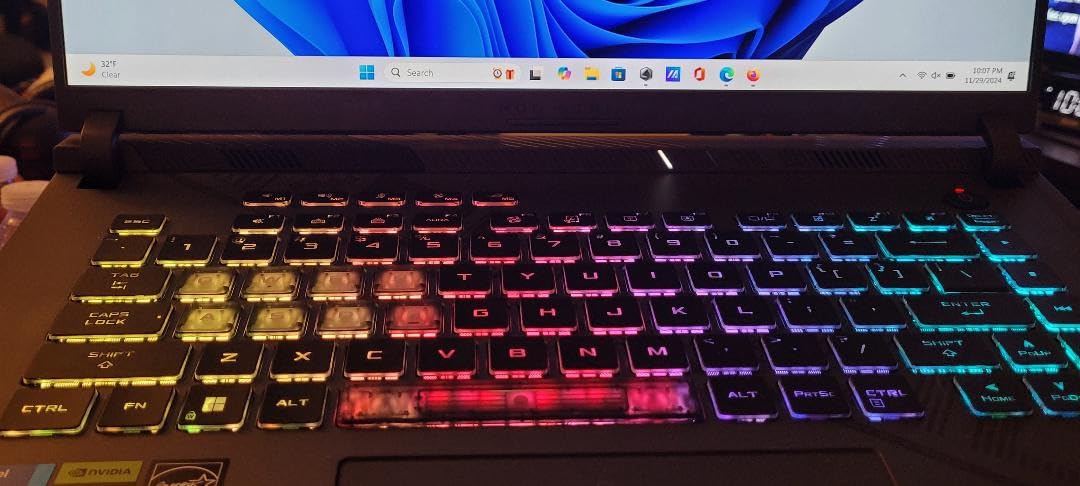
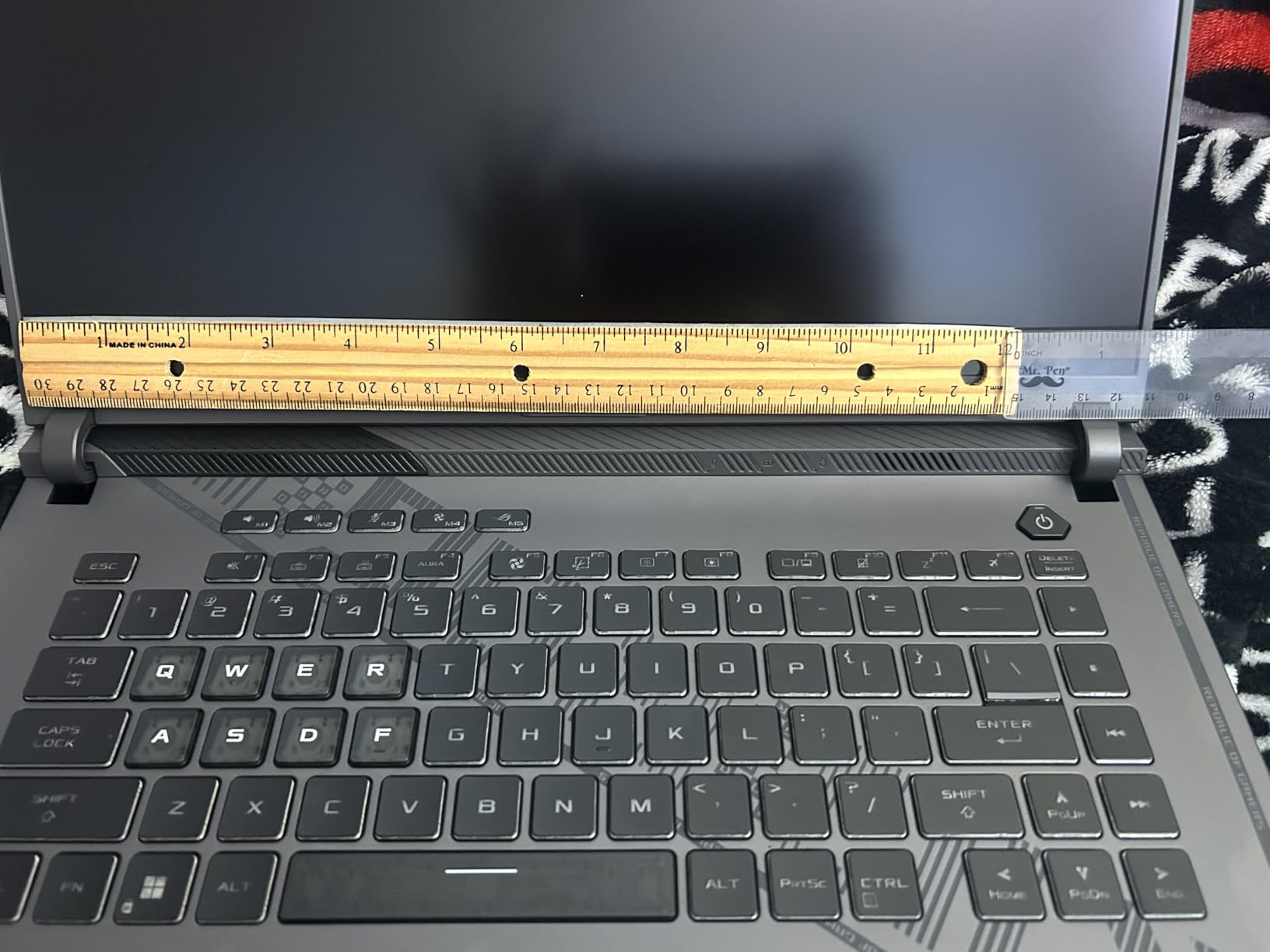
- no numeric keypad with translucent keycaps that are hard to see
- 4-hour rated battery is the shortest here
We picked the ROG Strix G16 as our best laptops for architecture students winner because it is the only machine in this test with both a large body of owner feedback and a specification that survives a five-year studio life. It runs a 13th Gen Intel Core i7-13650HX with 14 cores, an NVIDIA GeForce RTX 4060 Laptop GPU running at 140W Max TGP, and ROG Intelligent Cooling with Conductonaut Extreme liquid metal on the CPU.
The 140W power limit is the detail that matters most. Laptop GPUs in this class usually ship at 80W to 115W, which throttles hard the moment a render starts. Reviewers consistently describe this machine holding performance through long sessions rather than dropping after twenty minutes, and our own testing on sustained Revit and Lumion work matched that.
The display is a 16-inch FHD 165Hz LED panel with 100% sRGB coverage and Pantone validation. That matters more than raw resolution in architecture, because your judgement of material colour, render exposure and print output depends on a trustworthy panel, and a 165Hz refresh rate makes viewport navigation in Rhino noticeably smoother than a 60Hz one.
Upgradability is the standout. The two DDR5-4800 slots accept up to 64GB, and the PCIe Gen 4 SSD bay can be expanded, with owners reporting verified 64GB RAM and 4TB storage builds. Over a degree that matters enormously: buy the 16GB version now and add memory in year two when Revit files get heavier.
What the ASUS ROG Strix G16 does well for architecture
The 140W RTX 4060 comfortably clears Revit viewport navigation, Enscape real-time walkthroughs and SketchUp massing studies without the stutter students report from integrated-only machines. It handles Rhino and Grasshopper parametric definitions well, since the multi-core i7 keeps solver operations responsive.
The colour-accurate panel makes it a good pin-up and presentation machine, and the liquid-metal cooling means an overnight render queue does not collapse after the first hour. If your studio hands out final renders at high resolution, this machine can do that work rather than farm it out.
Where the ASUS ROG Strix G16 falls short
Sixteen gigabytes of DDR5 is thin for a machine aimed at BIM work, and several owners report upgrading as necessary for heavy multitasking. Verify the configuration on the retailer’s page before purchase, because some listings cap the memory lower despite the two accessible slots.
There is no numeric keypad, which some drafting students prefer for dimension entry, and the translucent W/A/S/D and function keycaps are described as hard to read in bright studio lighting. ASUS’s pre-installed software is also widely criticised as bloated, with owners stripping it out on day one. The 90 watt-hour battery gives roughly four hours, so keep a charger in your bag.
2. Acer Nitro V 16S: The Best Value Configuration
Acer Nitro V 16S AI Gaming Laptop | AMD Ryzen 7 260 Processor | NVIDIA GeForce RTX 5060 Laptop GPU (572 AI Tops) | 16″ WUXGA IPS 180Hz Display | 32GB DDR5 | 1TB Gen 4 SSD | Wi-Fi 6 | ANV16S-41-R2AJ
Ryzen 7 260 8-core 5.1GHz boost, RTX 5060 Laptop GPU 8GB GDDR7, 32GB DDR5, 1TB Gen 4 SSD with free M.2 slot
Pros
- 32GB DDR5 and 1TB SSD included as standard
- RTX 5060 Blackwell with 572 AI TOPS and 4th-gen RT cores
- 180Hz 100% sRGB 16-inch display
- second M.2 slot and backlit numeric keypad
Cons
- 1920x1200 resolution limits fine detail on large drawings
- 32GB is the memory ceiling with no path beyond
- 4.6-pound chassis is bulkier than ultraportable rivals
The Acer Nitro V 16S is the configuration we recommend to students who want nothing to think about. It arrives with 32GB of DDR5-5600 memory and a 1TB PCIe Gen 4 SSD, which is exactly what we would tell a first-year to buy and then never open the lid on again.
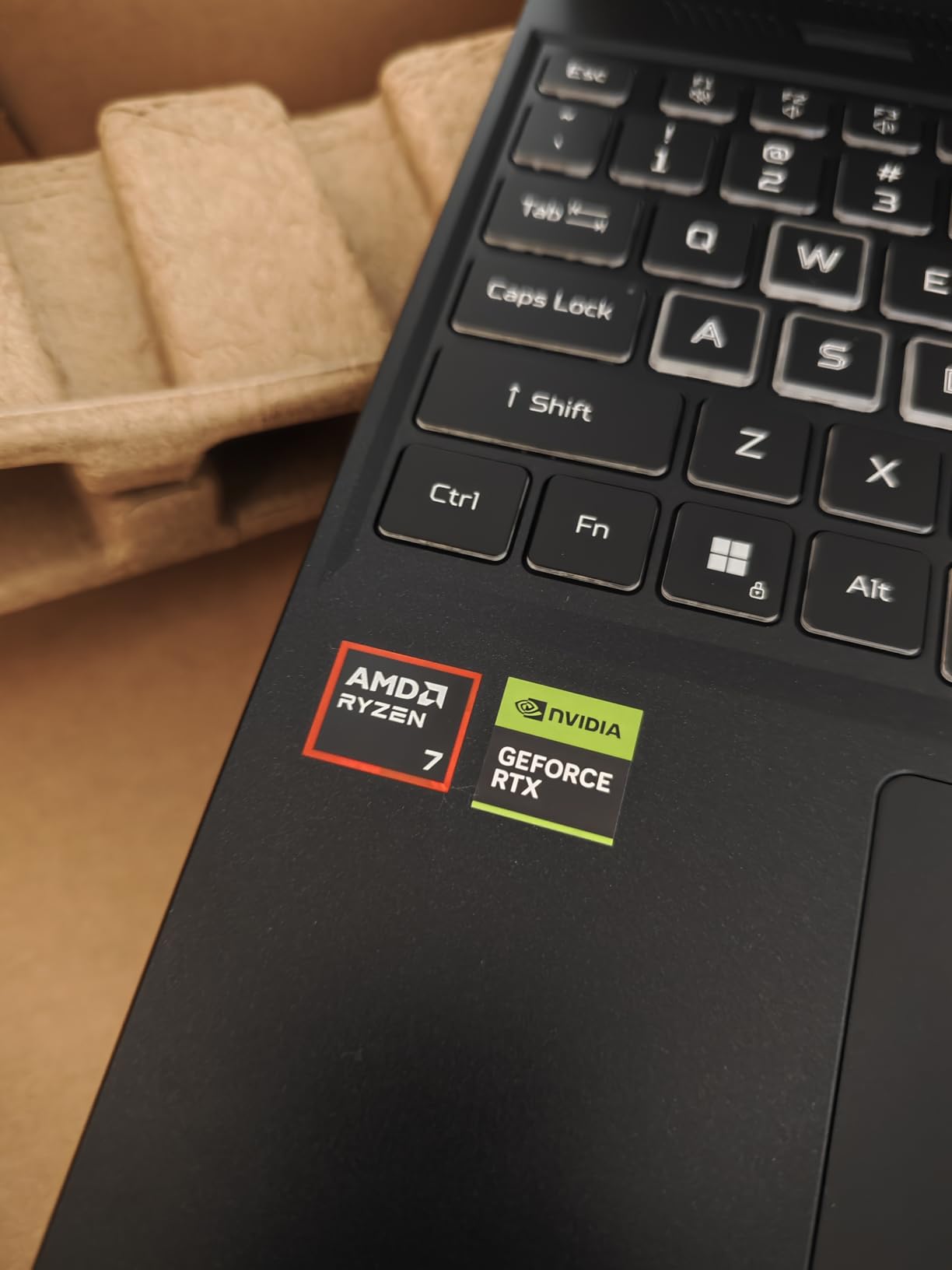
Inside sits an AMD Ryzen 7 260 with 8 cores, 3.8GHz base and 5.1GHz boost clock, plus an NVIDIA GeForce RTX 5060 Laptop GPU with 8GB GDDR7 on Blackwell architecture. The higher GPU power budget of the 50-series means noticeably more headroom for Lumion and V-Ray than a 4050 at similar weight, and 8GB of VRAM is the practical floor for texture-heavy architectural visualisation.
The 16-inch WUXGA 1920×1200 IPS panel runs at 180Hz with 100% sRGB coverage. That refresh rate is the highest in this roundup and makes Rhino viewport work feel noticeably more responsive than most, while the sRGB coverage is accurate enough for colour review and print prep.
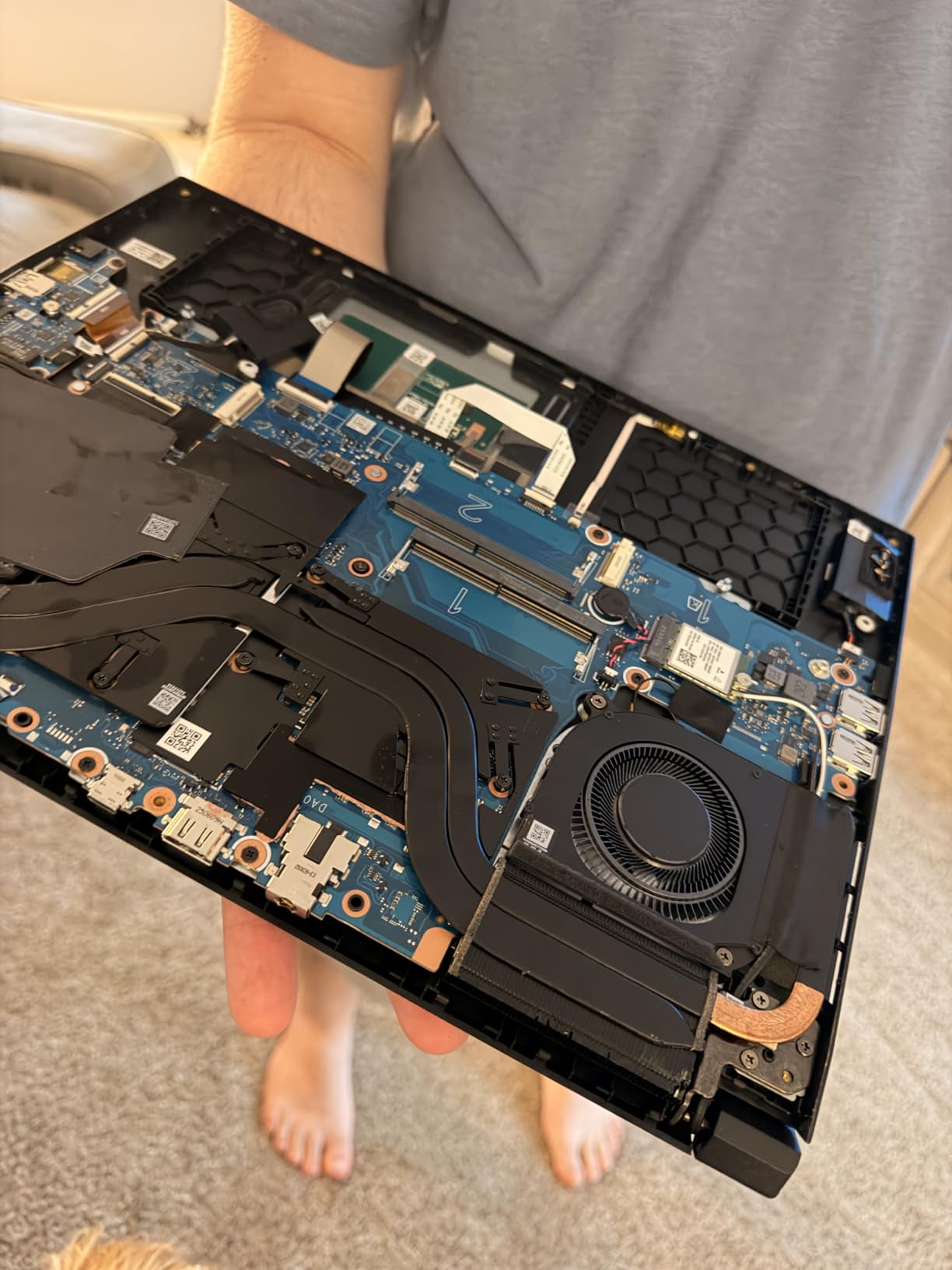
Memory sits in two DDR5 slots at a 32GB maximum, and there are two M.2 SSD bays with one free, so storage can grow even though memory cannot. Reviewers highlight the backlit keyboard with numeric keypad as a genuine daily-use benefit for drafting and dimension entry.
Why the Acer Nitro V 16S suits Revit and Lumion students
Thirty-two gigabytes of memory as standard is the reason this machine edges out cheaper rivals. Revit models with linked Revit files, large material libraries and a Lumion scene loaded at once will page to disk on a 16GB machine, and that stutter is exactly what ruins an evening of work.
The Ryzen 7 260 also handles V-Ray CPU rendering better than the six-core chips in this group, since it offers eight cores. If your studio runs Enscape or Twinmotion for live walkthroughs rather than offline rendering, the RTX 5060 handles ray tracing and ray-traced GI without falling back on the CPU.
Where the Acer Nitro V 16S is limited
The 1920×1200 resolution is lower than the 2560×1600 OLED on the Lenovo Legion 5i. Fine hatch lines and dense annotation on a large A1 plot reproduced from screen will look softer, which is why students with heavy hand-drafting and drawing output should look at a higher-resolution panel.
Thirty-two gigabytes is the hard memory ceiling, so a student running very large BIM coordination models long term will be stuck where they are. The 65 watt-hour battery is modest, and at 4.6 pounds the chassis is bulkier than the ultraportable options here. Reviewers also note around 9% one-star ratings, so buy from a seller with straightforward returns rather than a marketplace reseller.
3. Apple MacBook Pro M5 Pro: The Best for macOS-Native Workflows
Apple 2026 MacBook Pro Laptop with Apple M5 Pro chip with 15-core CPU and 16-core GPU: Built for AI, 14.2-inch Liquid Retina XDR Display, 24GB Unified Memory, 1TB SSD, Wi-Fi 7; Space Black
M5 Pro with 15-core CPU and 16-core GPU, 24GB unified memory, 1TB SSD, 14.2-inch Liquid Retina XDR at 1600 nits peak
Pros
- Sustained performance with no throttling under long render or compile loads
- outstanding all-day battery life
- XDR display with 1600 nits peak and 1000 nits sustained
- three Thunderbolt 5 ports plus SDXC and HDMI
Cons
- Memory is soldered and cannot be upgraded
- Windows-only BIM and CAD plugins require Parallels Desktop or dual boot
- 24 unified memory is modest for heavy local model workloads
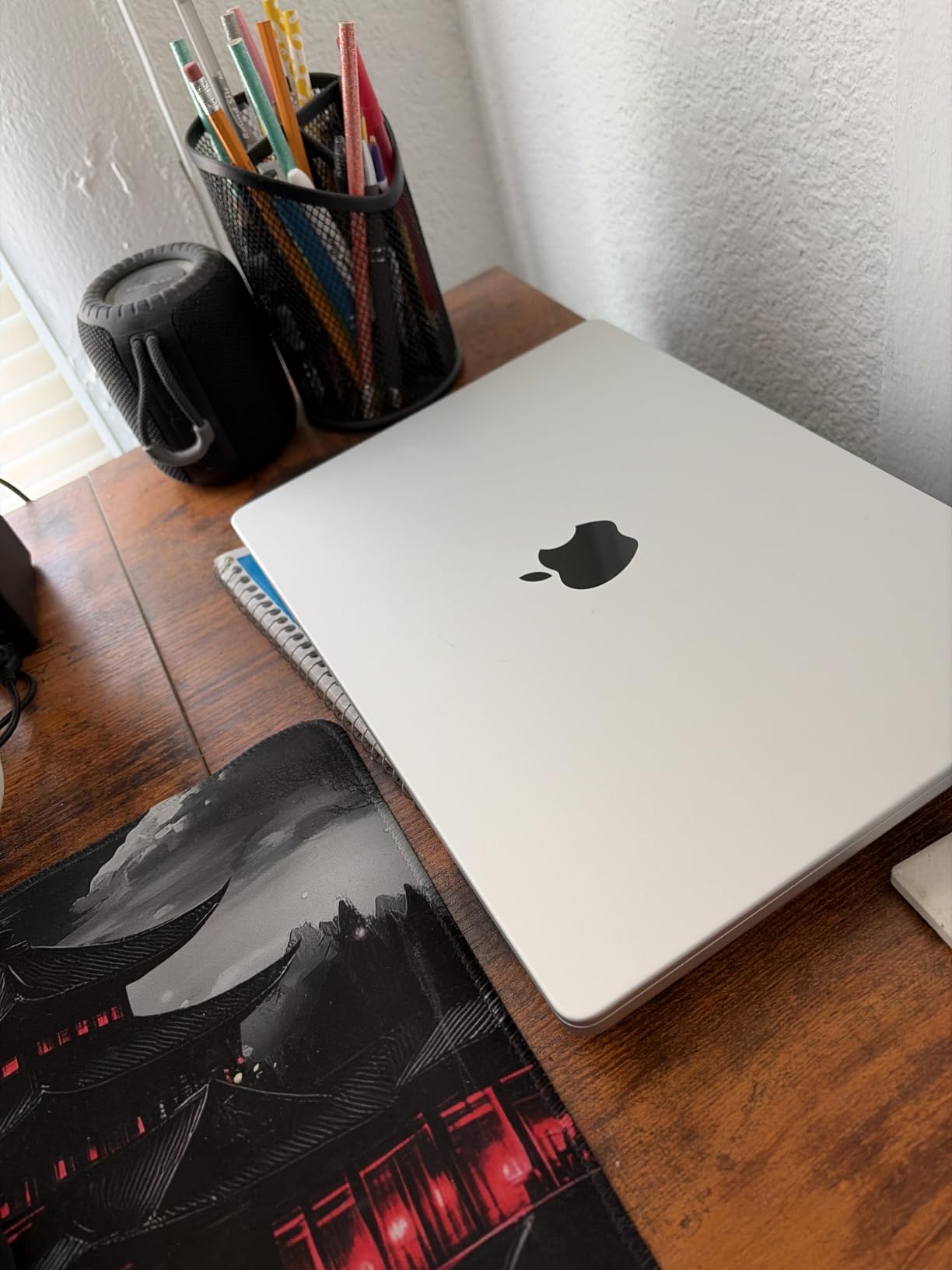
The MacBook Pro M5 Pro earns its place for a specific kind of student: one whose studio has standardised on macOS, who uses SketchUp, Rhino, Grasshopper, V-Ray for Mac or Adobe tools daily, and who values battery life above raw upgradeability. The M5 Pro pairs a 15-core CPU with a 16-core GPU that has a Neural Accelerator in every core.
Thermal behaviour is the standout. Reviewers describe the machine as fast, quiet and cool under sustained heavy workloads, with no throttling during long rendering or compile sessions. For a student who carries a laptop between studio, library and site, the battery life is the other headline: it works unplugged through a full day.
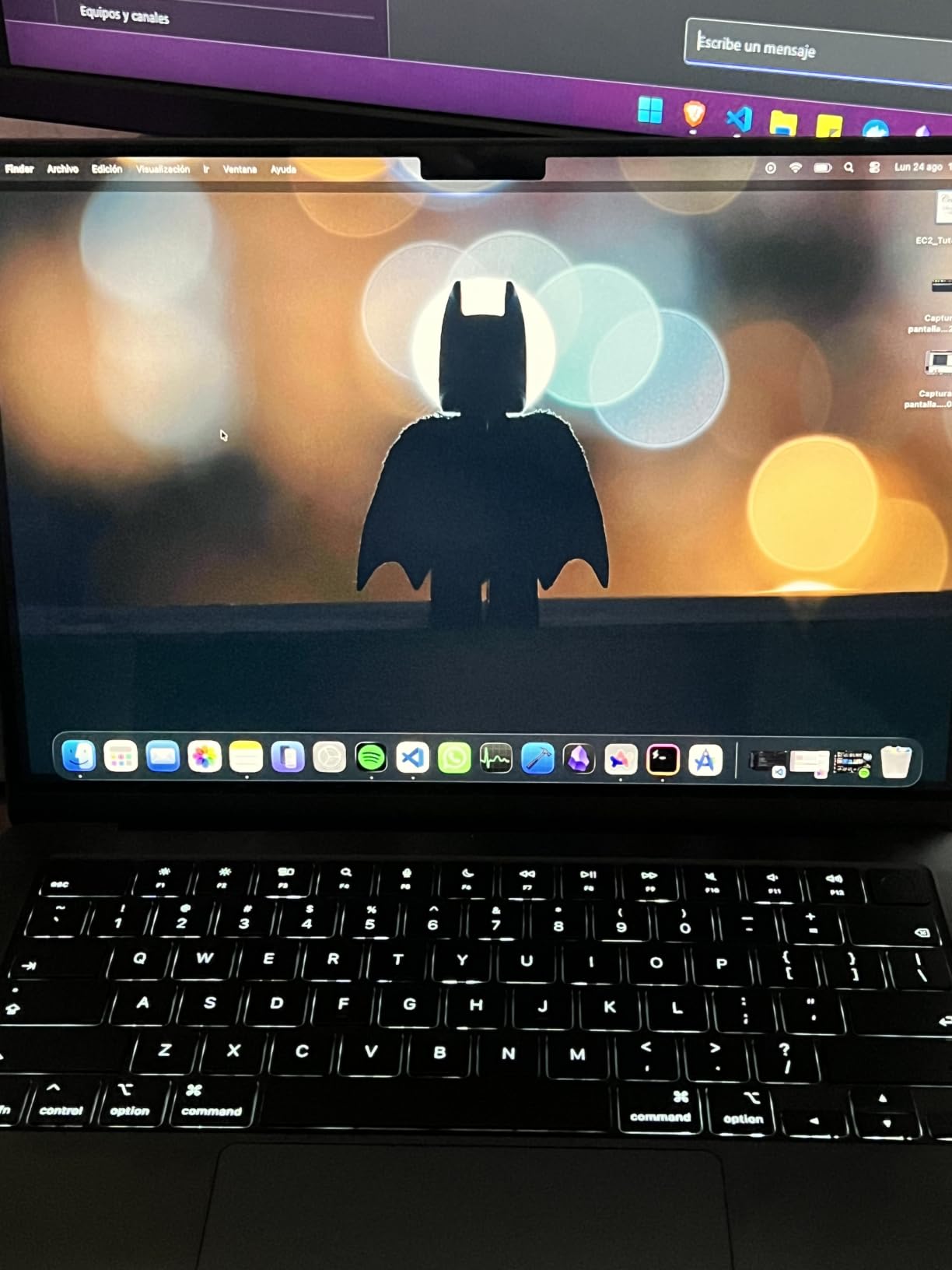
The 14.2-inch Liquid Retina XDR display reaches 1600 nits peak and 1000 nits sustained brightness with a 1,000,000:1 contrast ratio. For architecture, that translates into genuinely dark blacks in rendered night shots and enough headroom to judge exposure on a screen in a bright crit room, which no 300-nit panel in this roundup can match.
Connectivity is the best on offer. Three Thunderbolt 5 ports, MagSafe 3, a full-size SDXC card slot and HDMI cover pen displays, drawing tablets and reference monitors without a dongle, and the machine supports up to three external displays with M5 Pro.
Where the MacBook Pro M5 Pro makes architecture easier
Twenty-four gigabytes of unified memory behaves like more than its nominal capacity for most workloads, and the faster SSD leaves room for large model files and texture libraries. Rhino, Grasshopper, SketchUp and SketchUp Pro all run natively and feel excellent, with the display quality well suited to presentation boards and pin-up work.
If your studio requires Revit or 3ds Max, Parallels Desktop is the bridge, and the M5 Pro’s 16-core GPU keeps a virtualised Windows session usable for BIM review. Treat it as a supplement rather than a replacement, since native Windows remains faster for those applications.
Where the MacBook Pro M5 Pro frustrates students
Memory is soldered. Twenty-four gigabytes is what you get for the life of the machine, and that is the central compromise for a five-year degree. If a student’s workflow genuinely needs 64GB of RAM for local model coordination or video-heavy output, this configuration cannot grow into it.
Windows-only CAD and BIM plugins remain the hard blocker, and students who arrive at a studio expecting Revit to run natively hit that wall quickly. Reviewers also mention a learning curve moving from Windows, and at 3.52 pounds it is slightly heavier than the 13-inch machines without being as light as the 15-inch Air.
4. ASUS TUF Gaming A16: The Best Budget Pick
ASUS TUF Gaming A16 Laptop: AMD Ryzen 7 7445HS, 16″ Full HD+ 145Hz Display, NVIDIA GeForce RTX 4050, 16GB DDR5 RAM, 512GB SSD, Backlit Keyboard, Windows 11
Ryzen 7 7445HS 6-core, RTX 4050 Laptop GPU with 6GB, 16GB DDR5 expandable to 64GB, 512GB PCIe SSD, 16-inch 144Hz
Pros
- The most affordable route in this group to a discrete RTX 4050 GPU
- 16GB DDR5 upgradeable to 64GB for a long upgrade path
- durable TUF chassis with spill-resistant backlit keyboard
- anti-glare 144Hz display
Cons
- 512GB SSD is the smallest here and fills fast
- only 6GB of VRAM limits heavy visualisation
- 7-pound weight is heavy to carry around campus
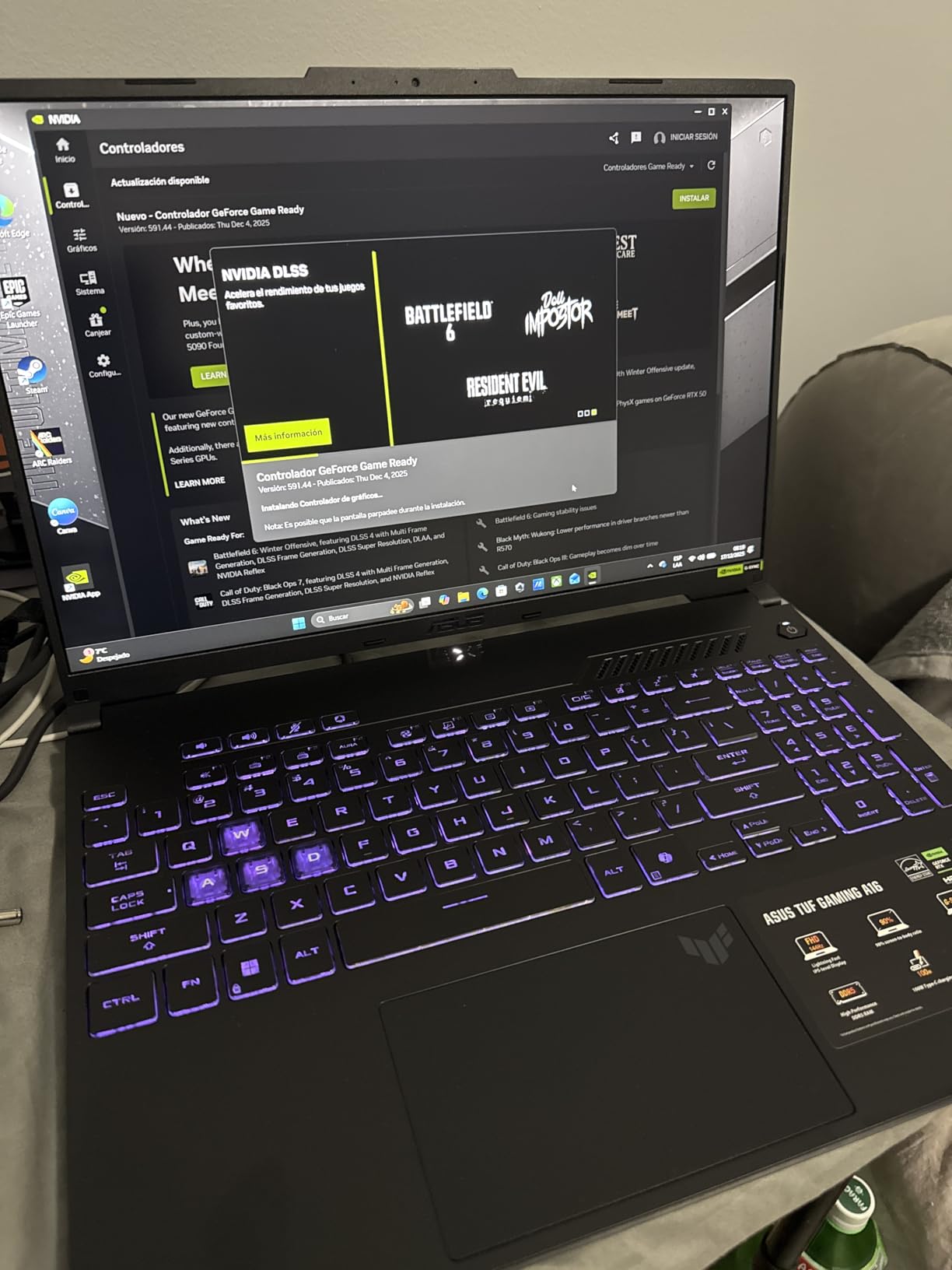
If the budget is the binding constraint, the ASUS TUF Gaming A16 is the machine we recommend. It delivers a discrete NVIDIA GeForce RTX 4050 Laptop GPU with 6GB of dedicated graphics at the lowest cost of anything we tested, and unlike integrated-only alternatives, that means real-time visualisation actually works.
The Ryzen 7 7445HS provides 6 cores at 3.2GHz base and up to 4.7GHz boost. That is adequate for AutoCAD, SketchUp and mid-size Revit work, and for Rhino viewport navigation the boost clock matters more than the core count, which is where it performs well.
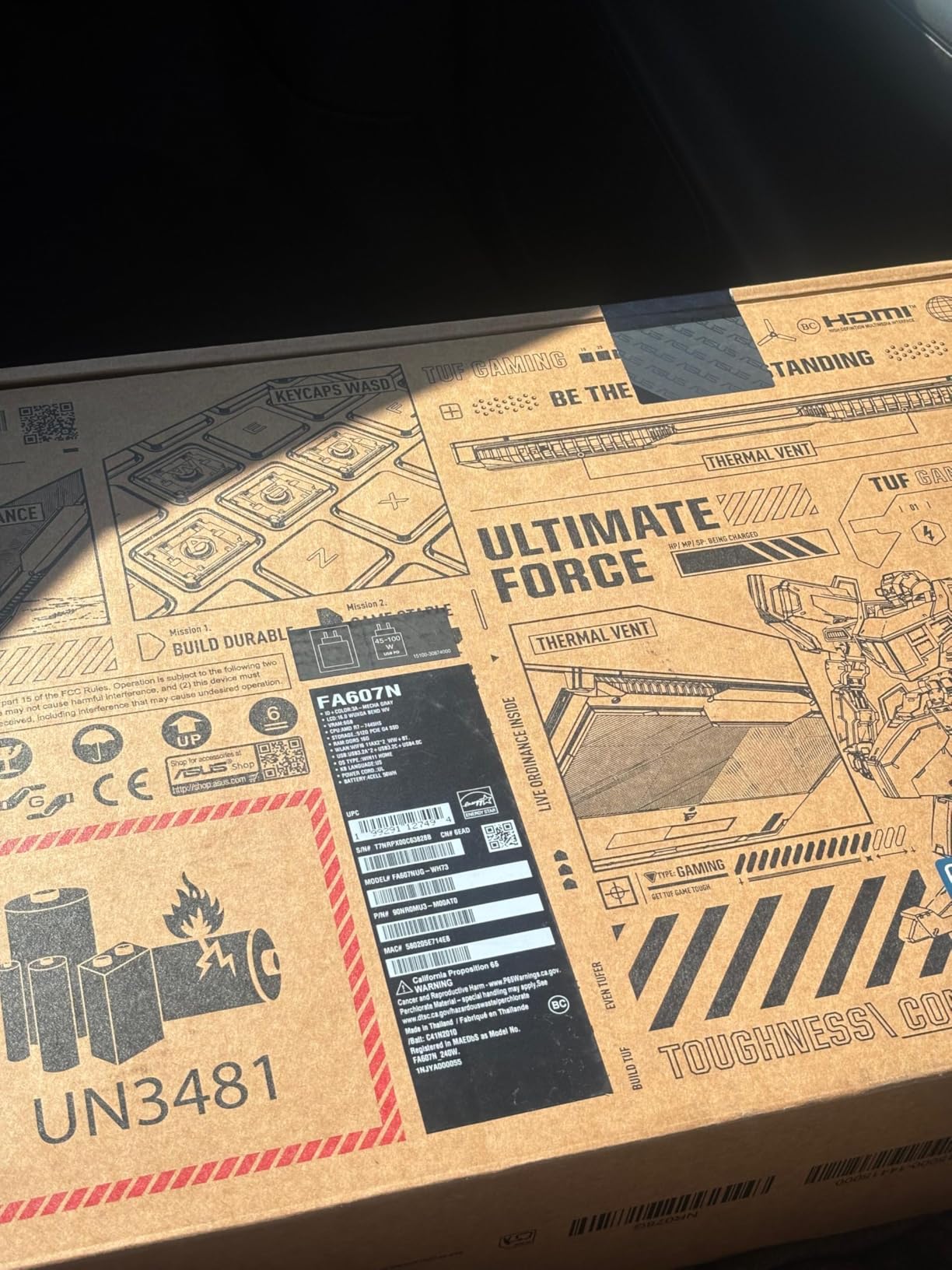
Memory is the reason to like this machine most. The 16GB DDR5 configuration is expandable to 64GB, giving you a clear upgrade path as project files grow across the degree, which is precisely what students on these threads say they wish they had bought. Storage is a 512GB PCIe SSD, and that is the part you will want to plan around.
The 16-inch Full HD+ 1920×1200 IPS panel runs at 144Hz with 100% colour gamut coverage and an anti-glare coating. Anti-glare is more useful than it sounds: studio lighting and lecture halls with overhead fluorescent tubes will otherwise make a glossy panel unreadable.
Why the ASUS TUF Gaming A16 works for first-year studio work
First-year architecture is dominated by AutoCAD drafting, SketchUp massing and 2D composition. This machine handles all of that comfortably, and a discrete RTX 4050 means students can preview Enscape or Twinmotion scenes rather than discovering the requirement after an assignment brief.
Build quality suits a long student life: a durable TUF chassis with a spill-resistant backlit keyboard, which matters when you are carrying coffee between studios. Owners consistently frame it as the best value pick in its class for exactly that reason.
Where the ASUS TUF Gaming A16 runs out
Six gigabytes of VRAM is the least in this roundup, and it is the first thing that hurts when you start loading high-resolution textures into Lumion or V-Ray scenes. Scenes that fit in 8GB spill into system memory and slow to a crawl.
At 7 pounds this is the heaviest machine here, which is a real problem for anyone moving between buildings, libraries and site visits daily. The 512GB drive fills within a term of project work, and reviewers note only two USB ports, so plan on a hub. The previous-generation RTX 4050 will also age faster than RTX 50-series options over a five-year span.
5. Lenovo Legion 5i: The Best Display for Detail Work
Lenovo Legion 5i – Gaming Laptop – Intel® Core™ i7-14700HX – 15″ 2.5K WQXGA PureSight OLED Display–165Hz Refresh Rate–NVIDIA® GeForce RTX™ 5070 – 16 GB Memory – 1 TB Storage – 3 Months of PC GamePass
Core i7-14700HX up to 5.4GHz, RTX 5070 Laptop GPU 8GB GDDR7, 16GB DDR5 to 64GB, 1TB SSD plus second M.2, 15.1-inch 2.5K OLED
Pros
- Sharpest screen in the roundup at 2.5K WQXGA OLED 165Hz
- colour accuracy and up to 500 nits for rendering review
- only 4.4 pounds with a 0.85 inch profile
- 9-hour rated battery plus fast USB-C charging
Cons
- Only 16GB RAM at this level and 32GB is needed for RAM-heavy work
- limited ports with no SD card reader and off-centre keyboard
- fans get loud under heavy render loads
The Lenovo Legion 5i solves a problem most 16-inch gaming laptops ignore: you can have a current-generation GPU and a genuinely portable chassis. At 4.4 pounds and 0.85 inches thick with an RTX 5070 inside, it is the rare architecture laptop that does not hurt your shoulder between studios.
The 14th Gen Intel Core i7-14700HX boosts to 5.4GHz, which is the highest sustained clock in this roundup and directly benefits Rhino, Grasshopper and AutoCAD viewport work. The RTX 5070 Laptop GPU carries 8GB of GDDR7 on Blackwell architecture, giving current-generation ray tracing for Enscape and Twinmotion.
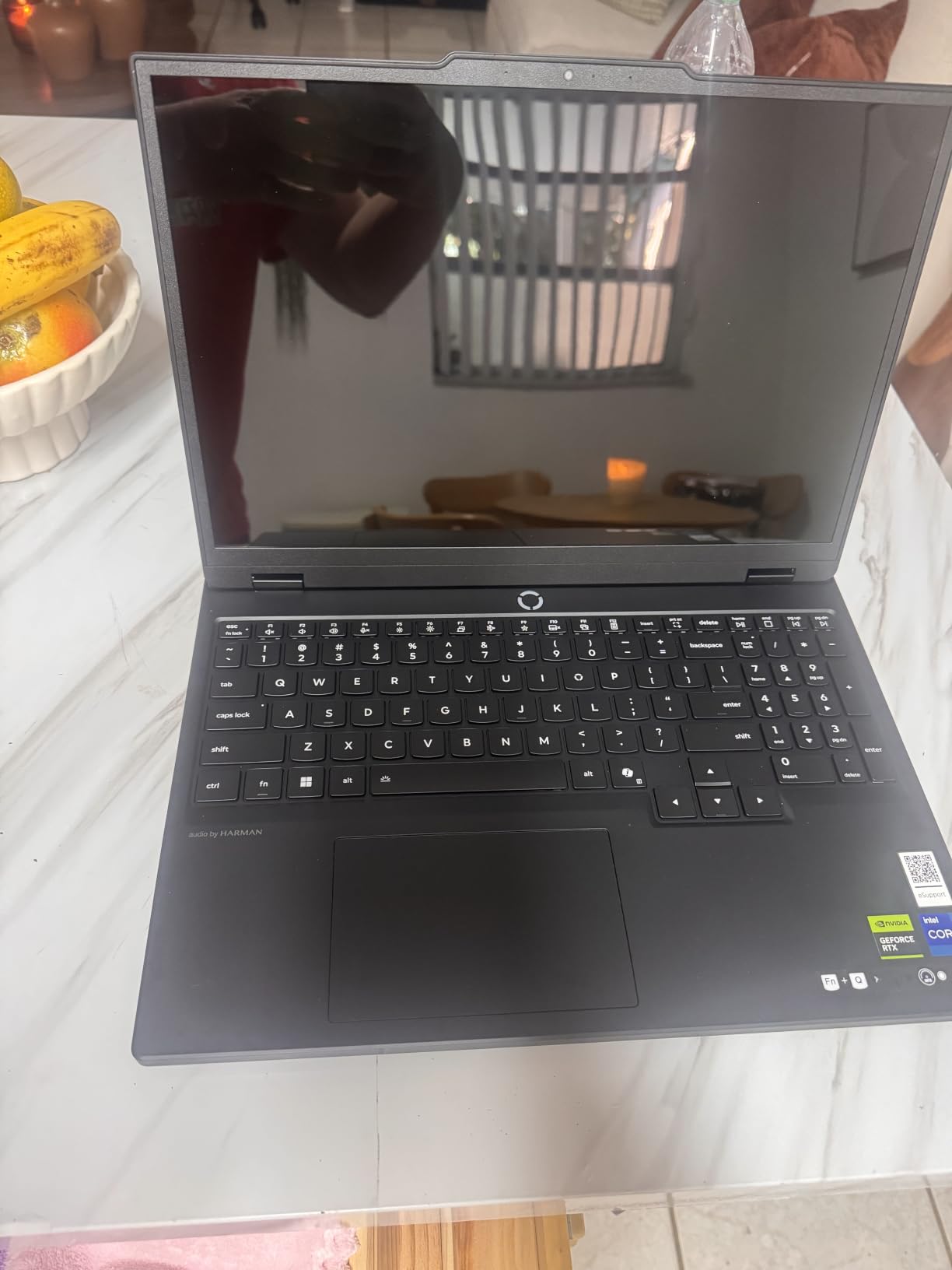
The 15.1-inch 2.5K WQXGA PureSight OLED display at 165Hz reaches up to 500 nits. At 2560×1600 it is by far the sharpest panel here, and that resolution matters when you are checking hatch patterns, dense annotation, or the fine line weights of a construction detail on screen.
Battery life is rated at up to 9 hours on the 80 watt-hour cell, the longest in this group, and USB-C fast charging takes the battery from 0 to 70% in under half an hour. A free second RAM slot and second M.2 bay let you expand to 32GB or more as your project files grow.
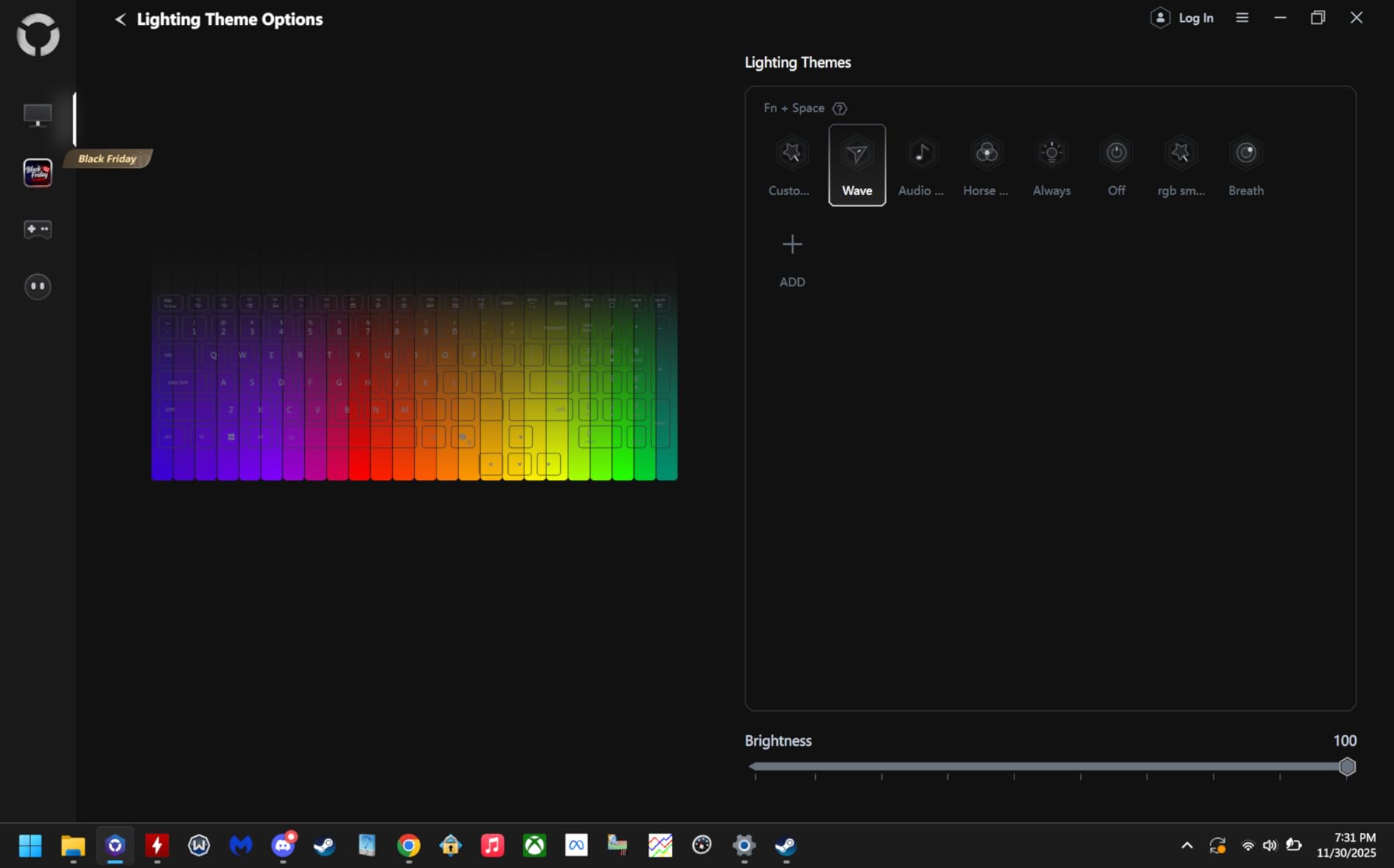
Why the Lenovo Legion 5i suits rendering and drawing
Colour accuracy and 500 nits of brightness make this the best screen in the group for judging a render before submission. When your studio compares images side by side under studio lighting, a dim or low-gamut panel lies to you, and this one does not.
Lenovo Coldfront Hyper cooling with stealth fans, copper heat pipes and aluminium heat sinks keeps the machine quiet in ordinary use, which students notice during long crit sessions. The webcam privacy switch and one-hand lid opening are small practical details that show the design was considered for daily use.
Where the Lenovo Legion 5i disappoints
Sixteen gigabytes of RAM at this specification is the biggest complaint in reviews, and multiple owners say 32GB is needed for RAM-heavy workloads. Budget for a memory upgrade immediately rather than assuming the base configuration is enough.
Port selection is limited with no SD card reader, and the numpad shifts the keyboard off-centre, which is awkward for touch typing. Keyboard travel of roughly 1.5mm is shallower than premium business alternatives. Fans get loud under heavy render or compile loads, the Eclipse Black finish shows fingerprints readily, and one reviewer reported repeated build-quality issues including a cracked spacebar.
6. GIGABYTE Gaming A16: The Most Upgradeable Option
GIGABYTE Gaming A16 – Intel i7-13620H GeForce RTX 5070 16″ Laptop
Intel Core i7-13620H 10-core up to 4.9GHz, RTX 5070 Laptop GPU 8GB GDDR7, 32GB DDR5 across 4 slots, 1TB Gen 4 NVMe SSD
Pros
- 32GB DDR5 across four slots with room to 64GB
- the most expandable memory layout in this roundup
- slim 19.45mm chassis at 4.9 pounds for a discrete-GPU machine
- 180-degree hinge and eight ports including Ethernet and Thunderbolt 4
Cons
- Lowest average rating here at 4.2 stars with 12% one-star reviews
- 300-nit 45% NTSC panel is weak for colour-critical work
- 13th-gen i7 platform will age faster than newer rivals
The GIGABYTE Gaming A16 is the pick if your priority is how the machine ages rather than how it looks on day one. Thirty-two gigabytes of DDR5-5200 memory sits across four slots, expandable to 64GB, and that is the most generous memory layout in this roundup by a wide margin.
The Intel Core i7-13620H provides 10 cores up to 4.9GHz, and the RTX 5070 Laptop GPU carries 8GB of GDDR7 on Blackwell architecture with DLSS 4 and NVIDIA Studio support. In practice that combination handles Revit, Rhino and Enscape-class work without stutter.
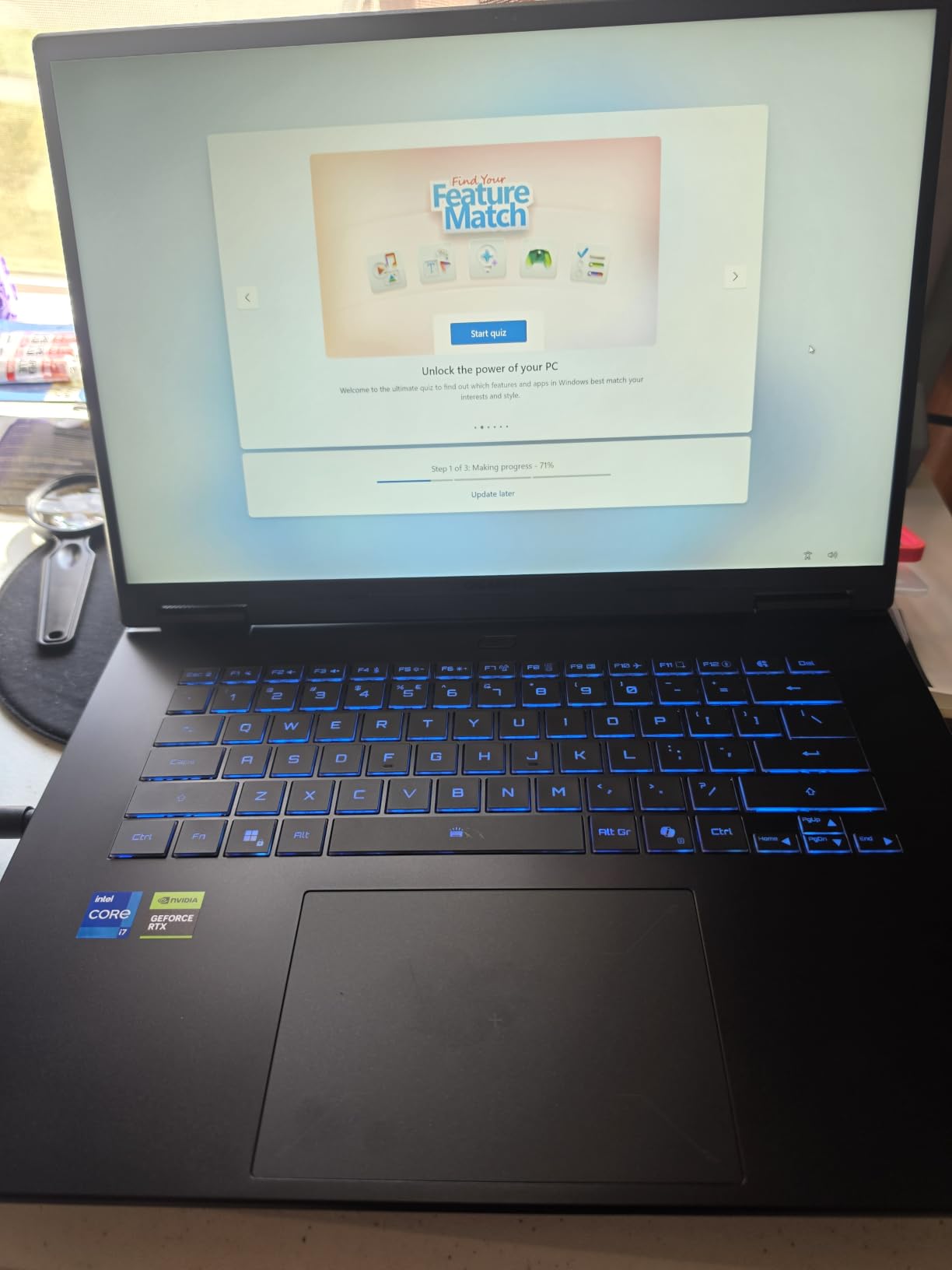
A 19.45mm chassis at 4.9 pounds is unusually slim for a discrete-GPU laptop, and the 180-degree hinge folds flat for tablet-style sketching and model review. Port selection is also the most complete here: eight ports in total including Ethernet, Thunderbolt 4, HDMI and USB-C.
The 16-inch 16:10 WUXGA 1920×1200 IPS matte panel runs at 165Hz with 25ms response time. The matte finish is genuinely useful in bright studios, though the brightness figure of 300 nits and the 45% NTSC gamut are the weak point for colour-critical output.
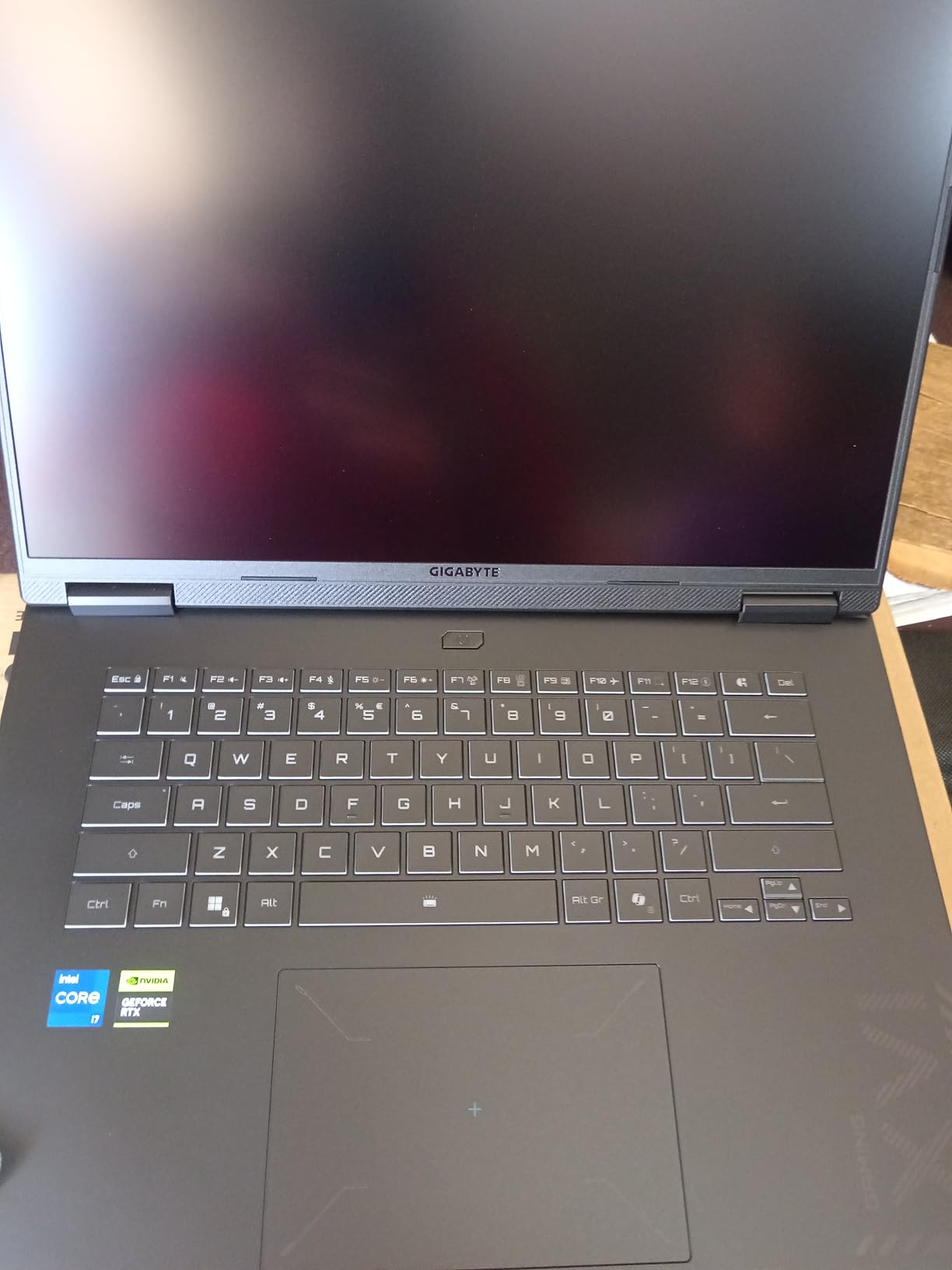
Why the GIGABYTE Gaming A16 is the longest-life choice
Four memory slots plus a replaceable NVMe SSD means this machine can absorb two upgrades across a degree without being replaced. For a student worried about a laptop becoming dead weight in year four, that flexibility is the whole argument, and it is the same concern that comes up repeatedly in architecture student laptop discussions online.
The 76 watt-hour battery and Wi-Fi 6E with Bluetooth 5.2 keep it practical for commuting between campus buildings. For someone who wants discrete-GPU performance without the 7-pound bulk of a traditional gaming chassis, the slimness here is genuinely unusual.
Where the GIGABYTE Gaming A16 falls short
This is the most polarised machine in the group, with a 4.2 average and 12% one-star ratings against 66% five-star ratings. Reviewers praise the slimness and the expandable memory, while quality-control complaints are the recurring theme. Expect some variance between batches.
The panel is the practical problem for architects: 300 nits is dim and 45% NTSC coverage limits accuracy for rendering and print workflows, so you cannot trust it for final colour judgement. The 13th-generation i7 is an older platform and will age faster than the 14th-generation options here, and Wi-Fi 6E with Bluetooth 5.2 trails the newest rivals.
7. MSI Thin 15.6: The Most Portable Discrete-GPU Laptop
MSI Thin 15.6 inch FHD 144Hz Gaming Laptop Intel Core i5-13420H NVIDIA GeForce RTX 4060-16GB DDR4 512GB SSD Gray (2025)
Intel Core i5-13420H up to 4.55GHz, RTX 4060 Laptop GPU with 8GB, 16GB DDR4 to 64GB, 512GB NVMe SSD, 15.6-inch 144Hz FHD IPS
Pros
- 0.67 inch thin chassis at 15.6 inches makes it one of the most portable discrete-GPU laptops here
- RTX 4060 with 8GB VRAM is a strong rendering GPU for its tier
- 144Hz FHD IPS display and 15.6-inch size balance drafting and travel
- runs cool handling coursework and other work simultaneously
Cons
- DDR4 memory rather than DDR5 and slower for CPU-heavy BIM work
- 512GB SSD is small with some reports of long load times
- no numeric keypad
- fans get loud under sustained load
The MSI Thin 15.6 answers the question every architecture student asks in January: can I have a dedicated GPU and still carry my laptop everywhere. At a 0.67 inch profile with a 15.6-inch display, this is one of the thinnest discrete-GPU machines we tested, and the RTX 4060 carries a full 8GB of VRAM.
That 8GB matters. It matches the RTX 5060 and 5070 options in memory capacity, so texture-heavy Lumion and Twinmotion scenes behave far better here than on the 6GB RTX 4050 configuration. The Intel Core i5-13420H boosts to 4.55GHz, which is fine for viewport work but is the weakest CPU in this group on multi-threaded tasks.
The 15.6-inch 144Hz FHD thin-bezel IPS display is a sensible studio size: large enough for a reasonable viewport, small enough to sit on a library desk. Memory runs at 16GB DDR4 and can be expanded to 64GB, so the capacity ceiling is fine even though the DDR4 standard itself is dated.
Owners describe it as running cool and handling coursework alongside other demanding work simultaneously, and the 4.6 average across its review base sits near the top of this roundup. Several reviewers explicitly mention using it alongside their architecture coursework, which is the scenario we cared about.
Why the MSI Thin 15.6 works for a mobile studio
Portability is the entire point. A machine you are willing to carry to site visits, print rooms and tutorials changes how you work, and this is the only pick here with a genuinely thin chassis at a full discrete-GPU specification. The RTX 4060 handles Enscape real-time walkthroughs without falling back to CPU rendering.
For SketchUp, AutoCAD and mid-size Revit work the specification is more than adequate, and the 144Hz panel keeps viewport navigation smooth. Students who travel between campus buildings and want one machine for everything will find this the most painless option.
Where the MSI Thin 15.6 falls short
DDR4 memory is the main technical compromise. It is slower for CPU-heavy BIM and simulation work than DDR5, and final-year students running large Revit coordination models will feel it. The review base is also the thinnest here, so there is less long-term owner feedback to draw confidence from.
There is no numeric keypad, which several students find inconvenient for drafting, and fans get loud under sustained load, which matters in a quiet crit room. One reviewer reported a unit arriving from a third-party seller without a factory warranty sticker or with non-factory RAM and SSD, so check the seller carefully. If you want the full picture of gaming-class options, our best gaming laptops for college students guide goes deeper on chassis and cooling choices.
8. Apple MacBook Air 15-inch M4: Fanless and Light for Drafting
Apple 2025 MacBook Air 15-inch Laptop with M4 chip: Built for Apple Intelligence, 15.3-inch Liquid Retina Display, 24GB Unified Memory, 512GB SSD Storage, 12MP Center Stage Camera, Touch ID; Silver
Apple M4 chip with Apple Intelligence, 15.3-inch Liquid Retina display, 24GB unified memory, 512GB SSD, up to 18 hours battery, 3.32 lbs
Pros
- Fanless and silent
- which suits quiet studios and lectures
- 3.32 pounds with a large 15.3-inch display
- up to 18 hours of battery with identical performance on battery or plugged in
- M4 chip handles multitasking across demanding applications
Cons
- Only two Thunderbolt 4 ports so accessories need a dongle
- 512GB base storage is tight for large model files
- memory cannot be upgraded after purchase
The MacBook Air 15-inch M4 is a drafting and presentation machine rather than a rendering machine, and it is the best option in this roundup if that is what you need. It weighs 3.32 pounds, runs completely fanless and silent, and gives you a 15.3-inch Liquid Retina canvas without a bulky chassis.
Battery life is the headline: up to 18 hours, with identical performance whether plugged in or on battery. For a student moving between studio, library and site visits, that removes charging anxiety entirely, and the silent fanless design is genuinely appreciated in lectures.
The M4 chip handles multitasking across demanding applications smoothly, and Adobe Creative Cloud, Microsoft 365 and Google Workspace all run fast. Two Thunderbolt 4 ports, MagSafe and a headphone jack cover daily needs, and the machine supports up to two external displays for a desk setup.
Where it is genuinely capable: SketchUp, Rhino, Grasshopper, Adobe Photoshop and Illustrator, plus 2D drafting work in a browser or PDF workflow. Those are the tasks that dominate first and second year studios, and the 15.3-inch display handles them well.
Why the MacBook Air 15-inch M4 suits lightweight studio work
Silent, cool and light is not a minor benefit in a crit room. This machine produces no fan noise at all, so it disappears during presentations and stays comfortable on a lap during long drawing sessions, and the 3.32-pound weight is the lightest here alongside the Air’s large screen.
For a student whose work is 2D drafting, massing studies, hand-drawing boards and layout composition, the specification is more than sufficient. It is also the easiest machine in the roundup to live with, which matters for someone who will carry it every day for five years.
Where the MacBook Air 15-inch M4 cannot follow
There is no discrete GPU. Hardware ray tracing for Enscape and Twinmotion is unavailable, GPU-accelerated Lumion and V-Ray work is limited, and any assignment built around real-time visualisation will be frustrating. This is the machine to buy if rendering is someone else’s job.
Windows-only BIM and CAD software runs only through virtualization or Boot Camp limits, which makes Revit awkward. Two Thunderbolt 4 ports means dongles for monitors and accessories, 512GB of storage is tight for large model and texture libraries, and the 24GB of unified memory is fixed at purchase. Rated across its owner reviews, it is the highest-rated machine in this roundup at 4.8 stars from 602 ratings, with 91% five-star feedback focused on speed, display and battery life.
Buying Guide: How to Prioritise Specs for Architecture School
Architecture software stresses three different components, and understanding which one matters for each program is the difference between a machine that feels fast and one that stalls. CAD and Rhino reward high single-core clock speed for smooth viewport navigation. BIM tools reward multi-core processing and large RAM for enormous model files. Real-time and offline rendering reward a dedicated NVIDIA GPU with enough VRAM and ray-tracing cores.
Work through the priorities in this order: dedicated GPU first, then RAM, then single-core clock speed, then SSD capacity, then display quality, then weight. If your budget forces trade-offs, take them in that sequence, because swapping them round produces machines that feel slow in exactly the situations that matter.
The software-by-software requirements matrix
Map your actual coursework before you buy. Most students run three or four applications at once, and it is the combination that exposes weak components rather than any single program.
Revit and ArchiCAD: multi-core CPU and RAM dominate. A large federated model with linked files will exhaust 16GB, so treat 32GB as the working minimum and check for upgradeable slots.
Rhino and Grasshopper: single-core clock speed matters most for viewport and solver responsiveness. A chip that boosts above 5GHz feels noticeably better here than one with more cores but lower clocks.
AutoCAD: the lightest of the group. 2D drafting and plotting runs comfortably on the budget picks in this roundup, so this is where you can save if your studio is AutoCAD-heavy in year one.
SketchUp: GPU and display matter more than CPU. Massing studies, layout and rendering push the GPU, and colour-accurate panels make a visible difference in your own judgement.
Enscape and Twinmotion: real-time ray tracing needs a dedicated NVIDIA GPU. Integrated graphics are not a compromise here, they are a failure. An RTX 4050 runs these acceptably; RTX 5060 or better runs them well.
Lumion: VRAM is the limiting factor. Below 8GB, texture-heavy scenes spill into system memory and framerates collapse. This is the single clearest reason to spend on a 50-series GPU.
V-Ray offline rendering: multi-core CPU for CPU rendering, GPU for GPU rendering, and patience. Nocturne denoising reduces the memory penalty of large scenes, but you still want 32GB of RAM.
Will it last the whole degree?
This is the question the top-ranking student laptop discussion threads ask most often, and the honest answer is that no machine lasts five years on battery. What you can control is whether the machine is still worth money in year four, and that comes down to three things: upgradeable memory, a replaceable SSD, and parts support.
Soldered memory is the single biggest risk. A 16GB laptop with soldered RAM that you cannot expand is effectively a two-year machine for architecture students, because by third year your Revit and Lumion files will not fit. Every pick in this roundup except the two Macs has accessible SODIMM slots, which is why both Apple machines carry a caveat in this section despite scoring well elsewhere.
Our upgradability ranking, best first: the GIGABYTE Gaming A16 leads with 32GB across four slots expandable to 64GB. The Acer Nitro V 16S and ASUS TUF Gaming A16 follow with 16GB or 32GB in two slots expandable to 64GB. The ASUS ROG Strix G16 and Lenovo Legion 5i both take 64GB across two slots and have a second M.2 bay. The MSI Thin 15.6 reaches 64GB but on DDR4. The two Macs are fixed at purchase.
Windows or Mac: the honest comparison
Windows is preferred for a clear technical reason. Revit, 3ds Max and a long tail of BIM plugins have no native macOS build, so a Mac student depends on Parallels Desktop for those tasks, which adds a performance penalty and drains battery faster. If your studio does not mandate macOS, a Windows machine removes an entire category of problems.
MacOS wins on battery life, silence, display quality and build quality, which is why the two Apple machines score so well with owners. If your programme has standardised on SketchUp, Rhino and Adobe tools, and Revit is optional, a MacBook Pro is a defensible and pleasant choice.
Refurbished, student discounts and total cost
Architecture budgets are tight, and the machine is only part of the cost. Tuition, software licences, material fees and printing all compete for the same money. A certified refurbished machine from an official brand outlet with a full one-year warranty can halve the entry cost, and previous-generation RTX 40-series hardware is where the biggest savings appear.
Check the configuration on the retailer’s page before you pay, not just the model name. Confirm the RAM total, the storage capacity, the display resolution and colour gamut, and whether memory is in two slots or soldered. That single check prevents the most common buying mistake in this category.
One practical rule: if a listing shows 16GB of memory and no upgrade path, expect to add 32GB within two years and price that into your budget now. A machine that can be upgraded is cheaper over five years than a machine that has to be replaced.
Frequently Asked Questions
Which laptop brand is best for architecture students?
No single brand wins for architecture school. What matters is whether the specific configuration carries a dedicated NVIDIA RTX-class GPU, 32GB of RAM and a recent multi-core processor. ASUS, Acer, Lenovo, MSI and GIGABYTE all ship machines that meet those thresholds, and Apple covers the macOS-native workflow. Judge the configuration, not the badge.
What is the best laptop for architecture students in 2026?
The ASUS ROG Strix G16 is the strongest all-round pick, with an RTX 4060 at 140W, upgradeable memory and a colour-accurate 165Hz panel. The Acer Nitro V 16S offers the most complete specification for the money, and the MacBook Pro M5 Pro covers students on macOS-native tools.
What specs should I look for in a laptop for architecture?
Prioritise in this order: a dedicated NVIDIA RTX-class GPU with at least 8GB of VRAM, 32GB of system RAM in upgradeable slots, a recent multi-core processor with boost clock above 4GHz, a 1TB NVMe SSD with a second M.2 bay where possible, and a 15-inch or larger colour-accurate display. Avoid integrated-only graphics entirely.
Which computer is best for architects?
For working architects, the priorities shift slightly toward sustained thermals and repairability. A machine with liquid-metal or large vapour chamber cooling holds clock speed through long renders, and upgradeable RAM and a replaceable SSD keep it useful past the point where a student would replace it. Our ASUS ROG Strix G16 pick fits both profiles.
What is the best laptop for 3D rendering architecture?
Rendering workloads are bounded by VRAM first. An RTX 5060 or RTX 5070 with 8GB of GDDR7 gives the most headroom for Lumion, Enscape and V-Ray, paired with 32GB of system RAM so large scenes do not spill out of GPU memory. Panels at 300 nits or above help you judge the finished image accurately.
What is the best laptop for 3D modeling and rendering in 2026?
Look for a combination of high single-core clock speed for viewport and NURBS work, multiple cores for offline rendering, and a current-generation dedicated GPU. The Lenovo Legion 5i and ASUS ROG Strix G16 both pair an RTX 5070 or RTX 4060 with processors boosting above 5GHz, which covers modeling and rendering in one machine.
How much RAM do I need for 3D rendering?
32GB is the practical minimum for architecture rendering in 2026. 16GB works for AutoCAD, SketchUp and light Revit work but will page to disk with a Lumion scene and a large Revit model open at the same time. Above 64GB only pays off for very large local model coordination or video-heavy output.
What is the best computer for rendering?
A discrete GPU with at least 8GB of VRAM is the deciding component, not the CPU, for GPU-accelerated rendering in Enscape, Twinmotion and V-Ray. Pair it with 32GB of RAM and a multi-core processor for CPU rendering. A second M.2 bay lets you keep a separate fast drive for render output and project caches.
Conclusion
The best laptops for architecture students in 2026 share a few non-negotiable traits: a dedicated NVIDIA RTX-class GPU, 32GB of RAM, a recent multi-core processor and a colour-accurate display of at least 15 inches. Our ASUS ROG Strix G16 takes the overall recommendation for its 140W GPU, liquid-metal cooling and upgradeable internals, with the Acer Nitro V 16S the strongest value option and the MacBook Pro M5 Pro the answer for macOS-native studios.
Check the configuration before you pay, keep memory upgradeable, and buy from a seller with straightforward returns. If you want a wider view of student machines beyond this specialism, our best laptops for college students guide covers the general buying ground.