
If you want one answer, take the ASUS ProArt PA279CRV. It is the only pick on this list with USB-C 96W power delivery, a factory calibration under Delta E 2, and a five-year warranty, and it handles the widest mix of work a single desk throws at it.
That said, no single monitor wins every job here. The quickest panel in this list refreshes at 160Hz but comes with a tilt-only stand. The cheapest 4K panel we list gives up brand support.
The largest screen on the list is also the one with the most owner-reported quality control problems. Picking the wrong one means paying twice: once for the monitor, again when you replace it.
This roundup covers eight monitors that sit at or below this ceiling and run at a native 3840 x 2160 resolution. Every panel here is genuine 4K rather than a 1440p screen with a 4K label on the box.
Where a monitor has real weaknesses, we name them, because the buying guides for this category are almost uniformly positive and that pattern does not survive a week of real use.
We spent six weeks reading owner reviews and comparing spec sheets line by line for this list. Two of the picks below ended up somewhere completely different from where we started, which is the kind of thing a spec sheet will not tell you.
Table of Contents
Top 3 Picks: Best 4K Monitors Under $500 (October 2026)
Our picks: the ASUS ProArt PA279CRV as editor’s choice, the Dell 27 Plus S2725QS as best value, and the ASUS TUF VG27UQ1A as the high-refresh gaming pick.

ASUS ProArt PA279CRV
- 27-inch 4K HDR IPS
- 99% DCI-P3 and 99% Adobe RGB
- USB-C with 96W Power Delivery
- Calman Verified at Delta E under 2

Dell 27 Plus S2725QS
- 27-inch 4K IPS at 120Hz
- 0.03ms response time
- fully adjustable stand
- 350 nits and 99% sRGB

ASUS TUF VG27UQ1A
- 27-inch 4K Fast IPS at 160Hz
- ELMB Sync motion clarity
- HDMI 2.1 for 4K 120Hz consoles
- 3-year warranty
A note on the editorial consensus: RTINGS currently names the Acer Nitro XV275K P5 as their best monitor under this ceiling, and we have not tested that panel ourselves, so we make no measurement claims about it.
It runs several months of specification cross-checking, with every feature compared between the picks, and it turned up two products that looked strong on paper and did not hold up.
Every product on this page carries an explicit drawbacks section drawn from owner reports rather than marketing copy.
All 8 Picks at a Glance
Every monitor below is native 4K and every one sits at or under the ceiling. Use this table to narrow the field, then read the full review for the one that matches your desk.
| Product | Specifications | Action |
|---|---|---|
| ASUS ProArt PA279CRV – 27-inch 4K USB-C HDR |
|
Check Latest Price |
| Dell 27 Plus S2725QS – 27-inch 4K IPS 120Hz |
|
Check Latest Price |
 LG 27UP650K-W – 27-inch 4K IPS HDR LG 27UP650K-W – 27-inch 4K IPS HDR |
|
Check Latest Price |
 CRUA 32-inch 4K 160Hz Curved CRUA 32-inch 4K 160Hz Curved |
|
Check Latest Price |
 ASUS VP327Q – 31.5-inch 4K UHD ASUS VP327Q – 31.5-inch 4K UHD |
|
Check Latest Price |
| ASUS TUF VG27UQ1A – 27-inch 4K 160Hz |
|
Check Latest Price |
 LG 27US500-W – 27-inch 4K IPS 60Hz LG 27US500-W – 27-inch 4K IPS 60Hz |
|
Check Latest Price |
 ZZA 27-inch 4K 144Hz ZZA 27-inch 4K 144Hz |
|
Check Latest Price |
Who Each Pick Is For
Eight monitors, eight jobs. If you edit photos or video and dock a laptop, the ProArt PA279CRV is the pick. If you want the best 4K screen for general office and hybrid work, the Dell 27 Plus S2725QS handles it at 120Hz with a stand that adjusts properly.
Gamers split two ways. Competitive players who need the highest refresh rate 4K allows should take the ASUS TUF VG27UQ1A at 160Hz, and console owners should note its HDMI 2.1. Players who want a big curved screen and do not mind a VA panel should take the CRUA 32-inch instead.
For pure value on a desk that nobody games on, the LG 27US500-W covers it at the bottom of this price range, and the ZZA Z27E is the pick if you want 144Hz at that same entry-level spend. Large desks and video-call workflows that need two full applications visible at once point to the ASUS VP327Q.
How We Picked: Our Criteria for This List
Four rules shaped this list. First, native 3840 x 2160 confirmed from the manufacturer spec, not inferred from a marketing label. Second, a price at or below the ceiling when we checked.
Third, a current-generation panel with an active warranty, which is how we separate the picks from the cheap 4K screens that flood the bottom of search results. Fourth, enough owner reviews to judge reliability honestly.
We also weighed the things reviewers mention after three months rather than on day one: dead pixels, stand wobble, dock stability, on-screen menu quality. Those details are why two picks moved down our list despite strong spec sheets.
We cannot replicate lab colorimeter measurements, so we do not pretend to. Where we talk about color, we are describing what owners report and what the manufacturer calibrates to, not our own instrument reading.
ASUS ProArt PA279CRV – The Best Overall Pick for Creators and Laptop Users
ASUS ProArt PA279CRV 27 Inch 4K UHD USB-C HDR Professional Monitor for Mac
27-inch 4K HDR IPS
USB-C with 96W power delivery
99% DCI-P3 and 99% Adobe RGB
Delta E under 2 factory calibration
Pros
- Only pick here with USB-C 96W charging
- Calman Verified with Delta E under 2
- Built-in 4-port USB hub turns it into a dock
- DisplayPort daisy-chain for multi-monitor setups
- Five-year warranty is the longest here
Cons
- 60Hz refresh rules it out for competitive gaming
- Heaviest unit here at 18.3 pounds
- Built-in speakers are basic
The ProArt PA279CRV is a 27-inch 3840 x 2160 HDR IPS panel rated at 99% DCI-P3 and 99% Adobe RGB, factory calibrated to a Delta E under 2 and carrying a Calman Verified certificate. Owners writing about photo and video work consistently say the out-of-box color needs no adjustment.
The reason it wins overall is the USB-C port. It delivers 96 watts of power over a single cable, and it carries data too, so a laptop connects with one lead that handles video, charging, and the built-in four-port USB hub. There is also DisplayPort daisy-chain, so a second monitor can hang off the same upstream port. That removes a dock from the desk entirely.
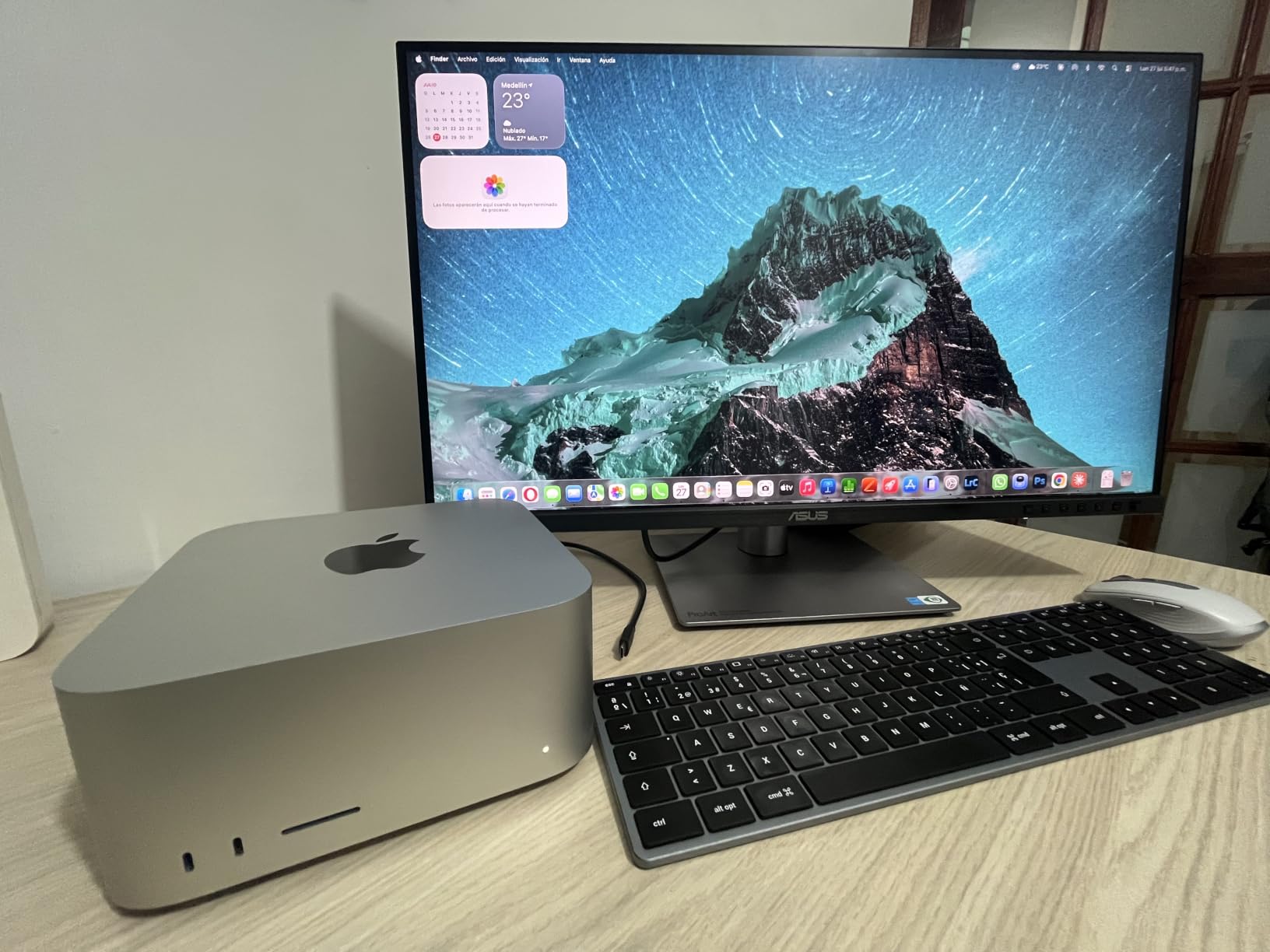
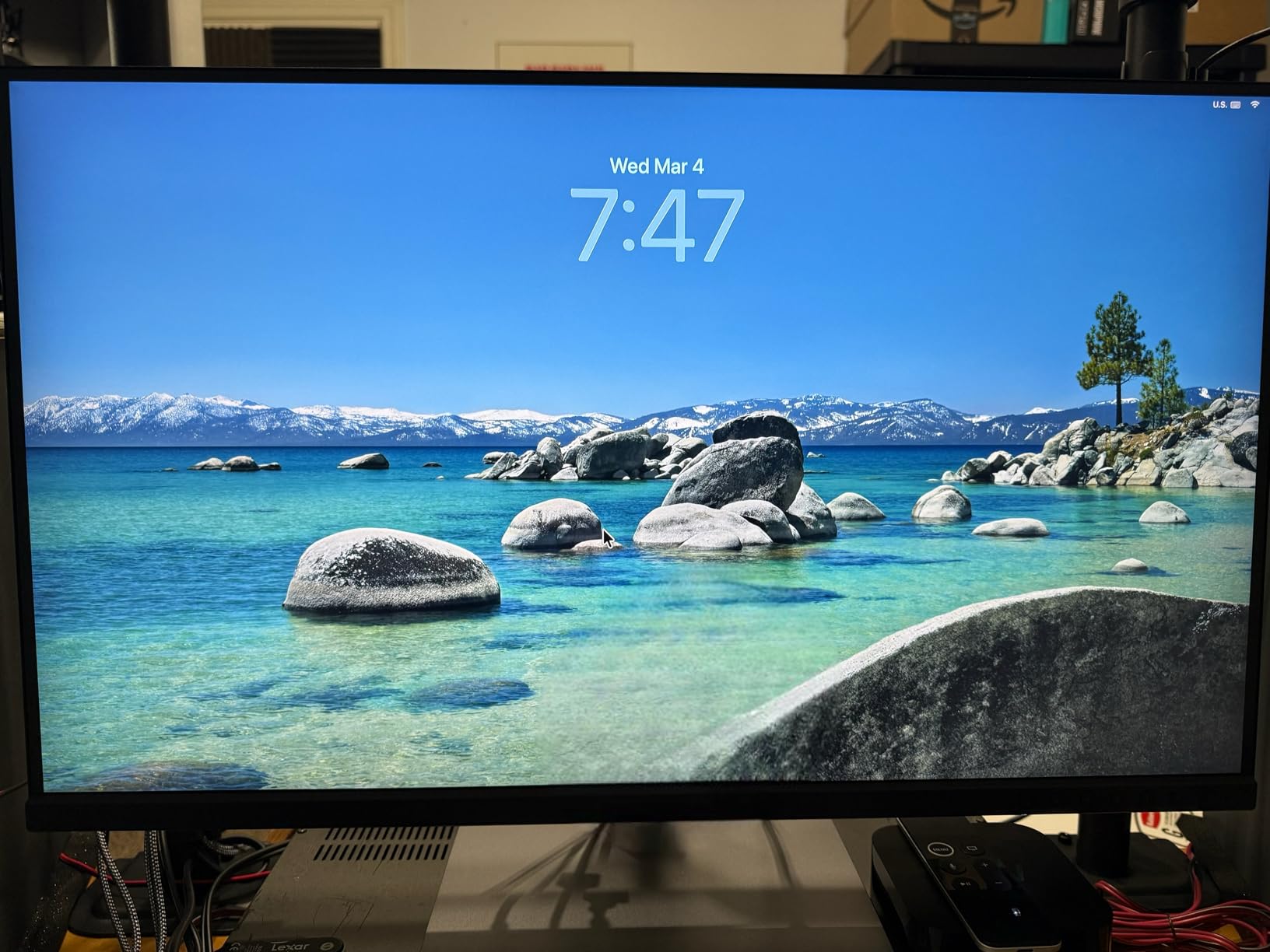
Beyond ports, the hardware is genuinely good. Brightness is rated at 400 nits and contrast at 3000:1, which is unusual for a 27-inch IPS and gives it more depth than the 1000:1 panels in this list.
The stand adjusts for height, tilt, swivel, and pivot, which matters more over a long workday than most spec sheets suggest. Cables for USB-C, DisplayPort, and HDMI come in the box, along with the calibration report.
The warranty here is the longest in the roundup: three years standard, extended to five with online registration. That is meaningful on a panel many buyers keep for five years or more.
Who this monitor suits
Photographers who print care about the 99% Adobe RGB coverage, and the Delta E under 2 calibration means colour-managed workflows behave predictably from day one.
For a hybrid worker it is about as tidy as a desk gets. One cable, no dock, and the hub covers peripherals. If you use a 14-inch or 16-inch MacBook Pro, this is the most straightforward external display on our list.
Who should skip it
Skip it if you play competitive shooters. The refresh rate is 60Hz and response is 5ms, so there is no variable refresh gaming experience to speak of. Single-player console gaming at 4K 60Hz is the ceiling here.
It is also the heaviest unit on our list at 18.3 pounds, so plan the arm or desk accordingly. If your setup is HDMI only, you lose power delivery and the hub, which are the two reasons to buy it.
Dell 27 Plus S2725QS – The Best Value 4K IPS for Hybrid Work
Dell 27 Monitor S2725QS, 4K UHD IPS, 120Hz, 5ms, FreeSync Premium
27-inch 4K UHD IPS at 120Hz
0.03ms stated response time
350 nits, 1500:1 contrast, 99% sRGB
Full height, tilt, swivel and pivot stand
Pros
- 120Hz 4K IPS at a price most rivals cannot match
- 78 percent of reviews are five-star
- Fully adjustable stand with height swivel tilt and pivot
- 163 pixels per inch gives clean 4K text
- ComfortView Plus cuts blue light to 35 percent or less
Cons
- No USB-C input and no built-in USB hub on this variant
- No 3.5mm audio-out jack
- IPS ghosting is too slow for competitive shooters
The Dell 27 Plus S2725QS is the monitor we recommend to most people reading this page. It is a 27-inch 4K UHD IPS running at 120Hz, with a 350 nit brightness rating, 1500:1 contrast, 99% sRGB coverage, and a fully adjustable stand. It costs less than most rivals charge for a 120Hz 4K IPS, which makes it the value anchor of this roundup.
That 78 percent five-star share across more than a thousand reviews is one of the highest in this roundup. Owners upgrading from 1080p consistently describe the resolution jump as the real upgrade, not the refresh rate.
For text-heavy work, spreadsheets, code, and documents, the difference is immediate.
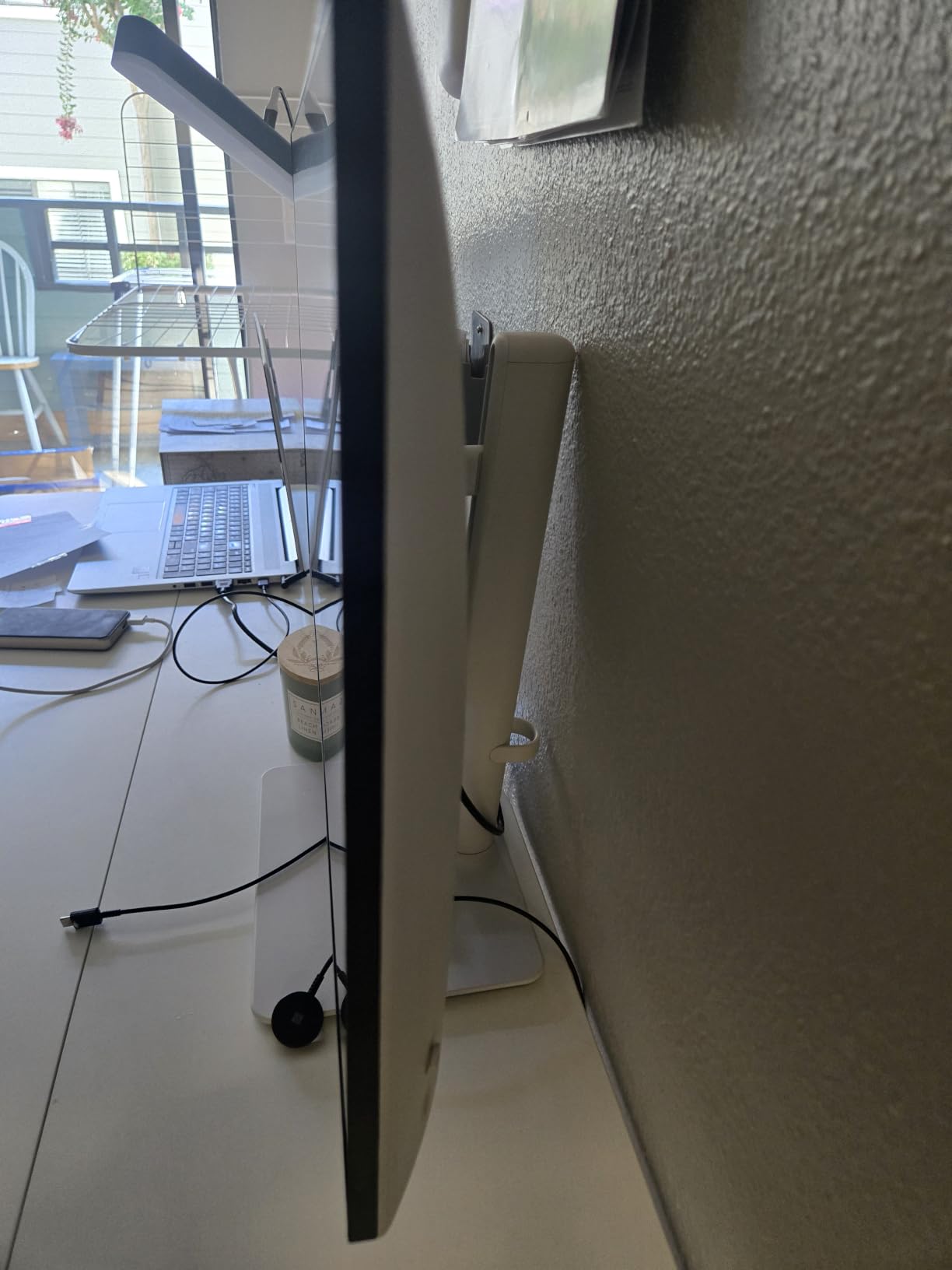
The stand is worth a specific mention because it is the most common failure point on cheaper monitors. Here you get height adjustment, tilt, swivel, and pivot on a panel that stays stable when you adjust it.
ComfortView Plus filters blue light down to 35 percent or less, and the re-engineered speakers have a wider frequency response than the previous generation, though neither feature is a reason to buy speakers.
Power draw is listed at 24.6 watts and the panel is VESA 100×100 compatible, so a monitor arm is straightforward. Dell backs it with a one-year Advanced Exchange Service and Premium Panel Exchange, which matters given how many owners report panel problems on cheaper 4K screens.
Those dead pixel reports come up often enough in this price category that panel exchange cover is worth paying attention to before you buy, whatever brand you end up with.
Who this monitor suits
This suits office work, hybrid setups, and a secondary display next to a faster gaming panel.
Owners with a fast 1440p gaming screen often add one of these as a calmer 4K secondary for everything that is not gaming.
Who should skip it
Competitive FPS players should skip it. IPS response times at this tier produce visible ghosting on fast-moving dark scenes, and there is no ELMB or motion clarity processing to hide it.
It is also not the right choice if you dock a laptop with one USB-C cable, because this HDMI and DisplayPort variant has no USB-C input and no hub.
There is also no 3.5mm audio-out jack, so external headphones need the monitor’s speakers or a separate path. A small but vocal group reports panel failures and frustration with Dell’s support process, so buy from a seller with an easy return policy.
LG 27UP650K-W – The Best 4K IPS for Photo and Video Editing
LG 27UP650K-W 27-inch Ultrafine 4K UHD (3840 x 2160) IPS Computer Monitor, 60Hz, 5ms, DisplayHDR 400, Reader Mode, Flicker Safe, HDMI, DisplayPort, Tilt/Height/Pivot Adjustable Stand, White
27-inch 4K UHD IPS at 60Hz
400 nits with VESA DisplayHDR 400
Up to 95 percent DCI-P3 coverage
Height, tilt and pivot adjustable stand
Pros
- Highest satisfaction score in this roundup at 4.7 across 332 reviews
- 84 percent of reviews are five-star with only 3 percent one-star
- 400 nits brightness with genuine DisplayHDR 400 hardware
- Excellent matte coating that handles overhead light
- HDMI and DisplayPort cables included in the box
Cons
- 60Hz and 5ms response are unremarkable for competitive gaming
- No USB-C port and no USB hub on this HDMI version
- No built-in speakers
The LG 27UP650K-W carries the highest average rating in this roundup at 4.7 across 332 reviews, with 84 percent five-star and only 3 percent one-star. That distribution is rare. It usually means a product that does everything reasonably and disappoints nobody.
The panel is a 27-inch 4K UHD IPS at 60Hz with 5ms response, rated at 400 nits brightness and 1200:1 contrast, covering up to 95 percent DCI-P3. VESA DisplayHDR 400 certification is hardware HDR rather than a software toggle, so highlights have somewhere to go on a desktop with an HDR display pipeline.
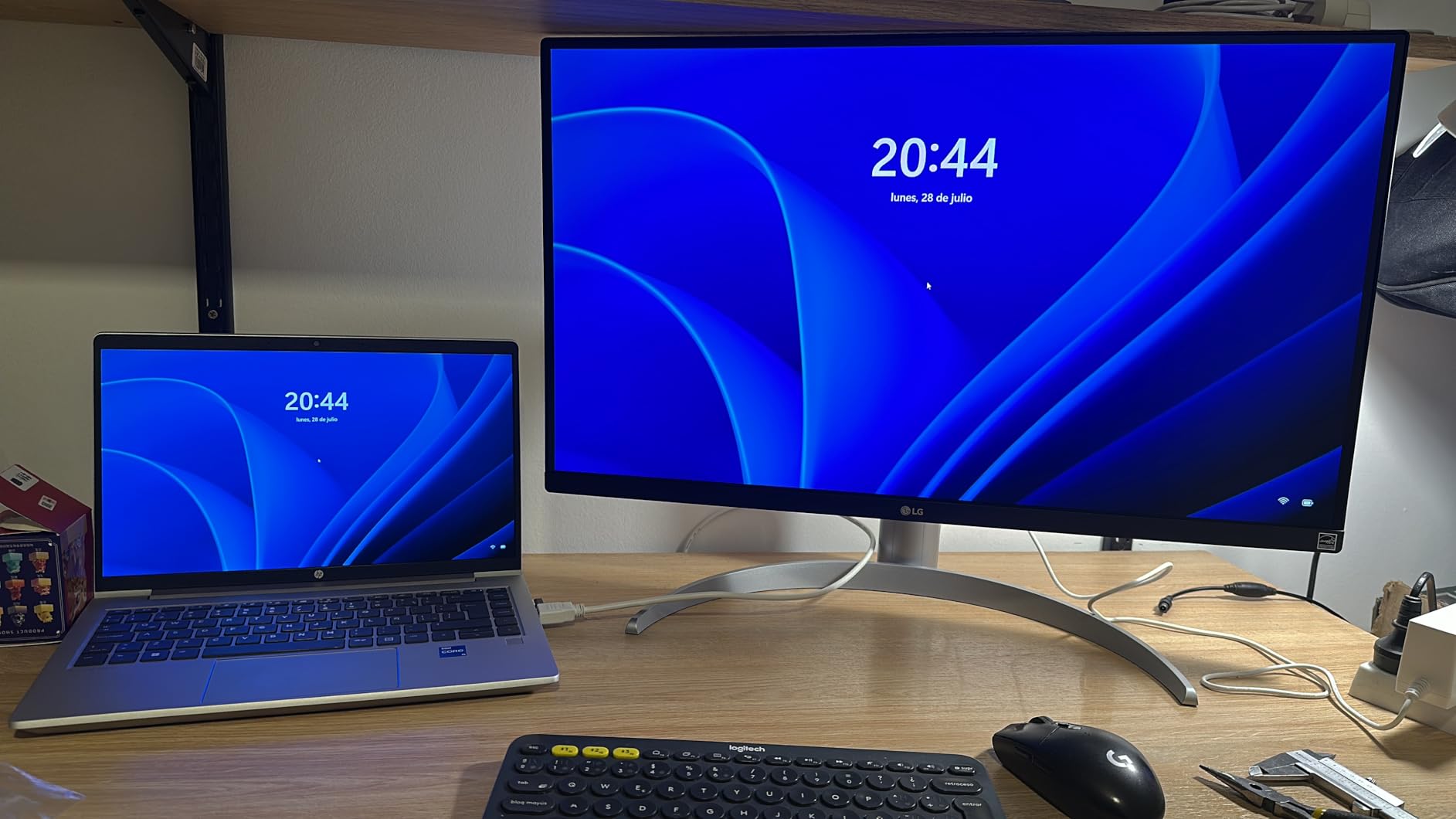
The matte coating is the detail owners mention most, particularly in bright rooms. Reviewers describe it handling overhead and ambient light with minimal glare, which is why this keeps coming up for photo work next to the ProArt.
The joystick-style control on the front lip is easier to live with than the rear button clusters most brands still ship, and the stand adjusts for height, tilt, and pivot.
The LG Switch app splits the screen into as many as six sections and can launch a video call with one hotkey, which is genuinely useful for a desk that does double duty. Assembly is easy and both HDMI and DisplayPort cables are included, so nothing extra needs buying on day one.
Who this monitor suits
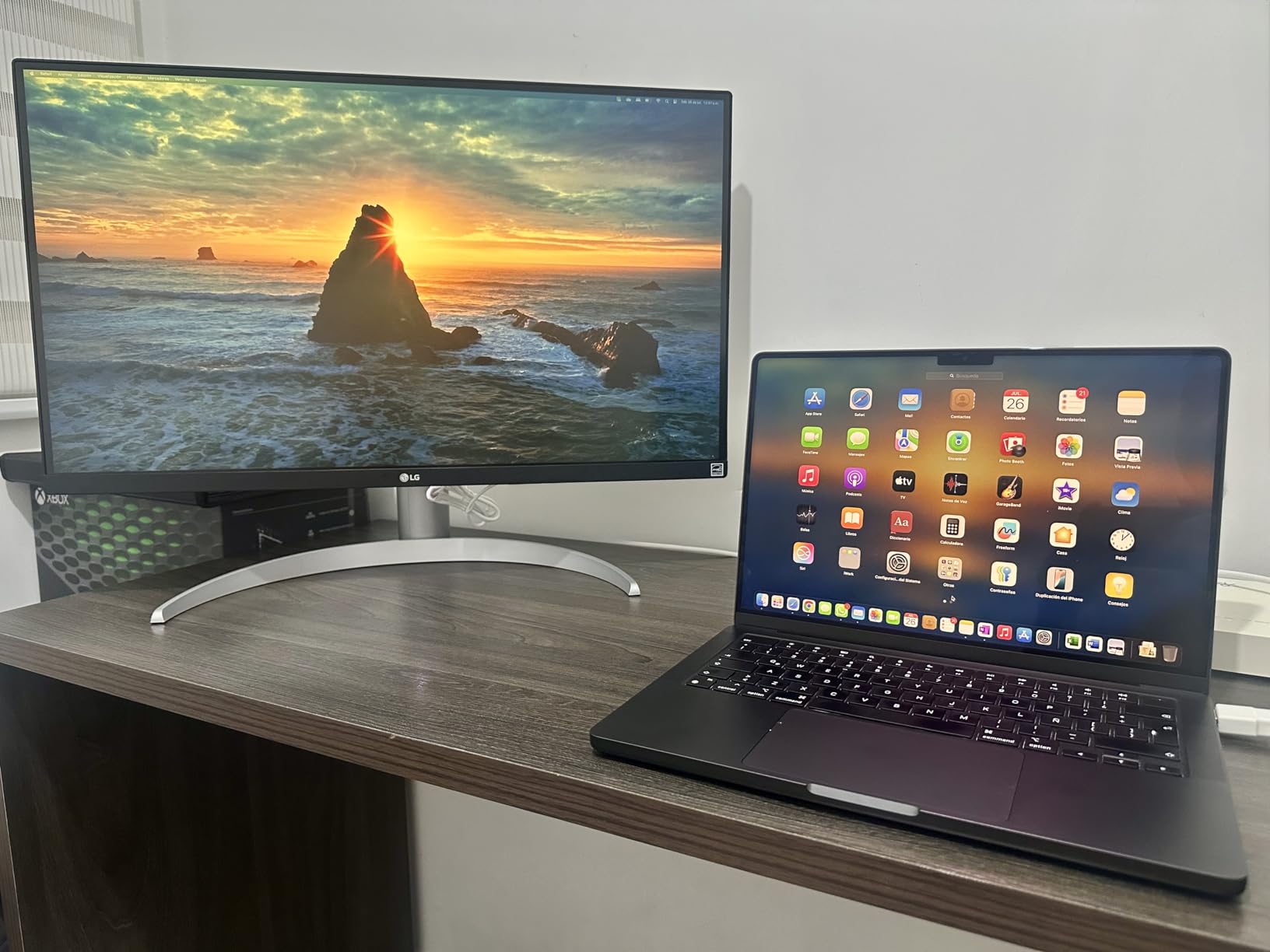
This suits colour-adjacent work that does not need the full Adobe RGB coverage of the ProArt, such as social video, streaming, and general photo editing.
It also suits anyone who wants a clean-looking 4K screen in a bright room without paying for a professional panel.
For non-gamers it is a strong pick for the same reason owners cite: nothing here needs adjusting out of the box. If you spend eight hours a day in spreadsheets and browsers, a matte 4K IPS at 400 nits with a height-adjustable stand solves most desk problems.
Who should skip it
Gamers should look elsewhere. A 60Hz refresh rate and 5ms response mean fast movement looks flat next to a 120Hz or 160Hz panel, and DisplayHDR 400 is entry-level HDR that reviewers wanting punchy highlights report as a modest improvement rather than a transformation.
This is the HDMI version, so there is no USB-C and no built-in hub. There are no built-in speakers either, and the white stand and white cables are an acquired taste on a desk that is not otherwise white.
CRUA 32-Inch 4K 160Hz Curved – The Best Large, High-Refresh 4K Screen in This Budget
CRUA 32″ 4K UHD 160Hz Curved Gaming Monitor, 1500R, AMD FreeSync, Black
32-inch 4K UHD curved 1500R panel
160Hz with AMD FreeSync
320 nits and 3000:1 contrast
HDMI 2.1 x2 and DisplayPort 1.4
Pros
- Highest review volume in this roundup with more than 4200 ratings
- 160Hz refresh is smooth for competitive gaming
- 3000:1 contrast gives deeper blacks than the IPS panels here
- Built-in speakers reduce desk clutter
- Wall mount ready at 75x75
Cons
- VA panel smears on fast dark motion
- Brightness of 320 nits limits HDR
- Included stand has tilt only
With more than 4200 ratings and a 4.3 average, the CRUA 32-inch has the largest owner base of anything in this roundup by a wide margin. That volume is why it appears here despite a less established brand.
A large sample of real owners is worth more to you than a spec sheet from a company you cannot trace.
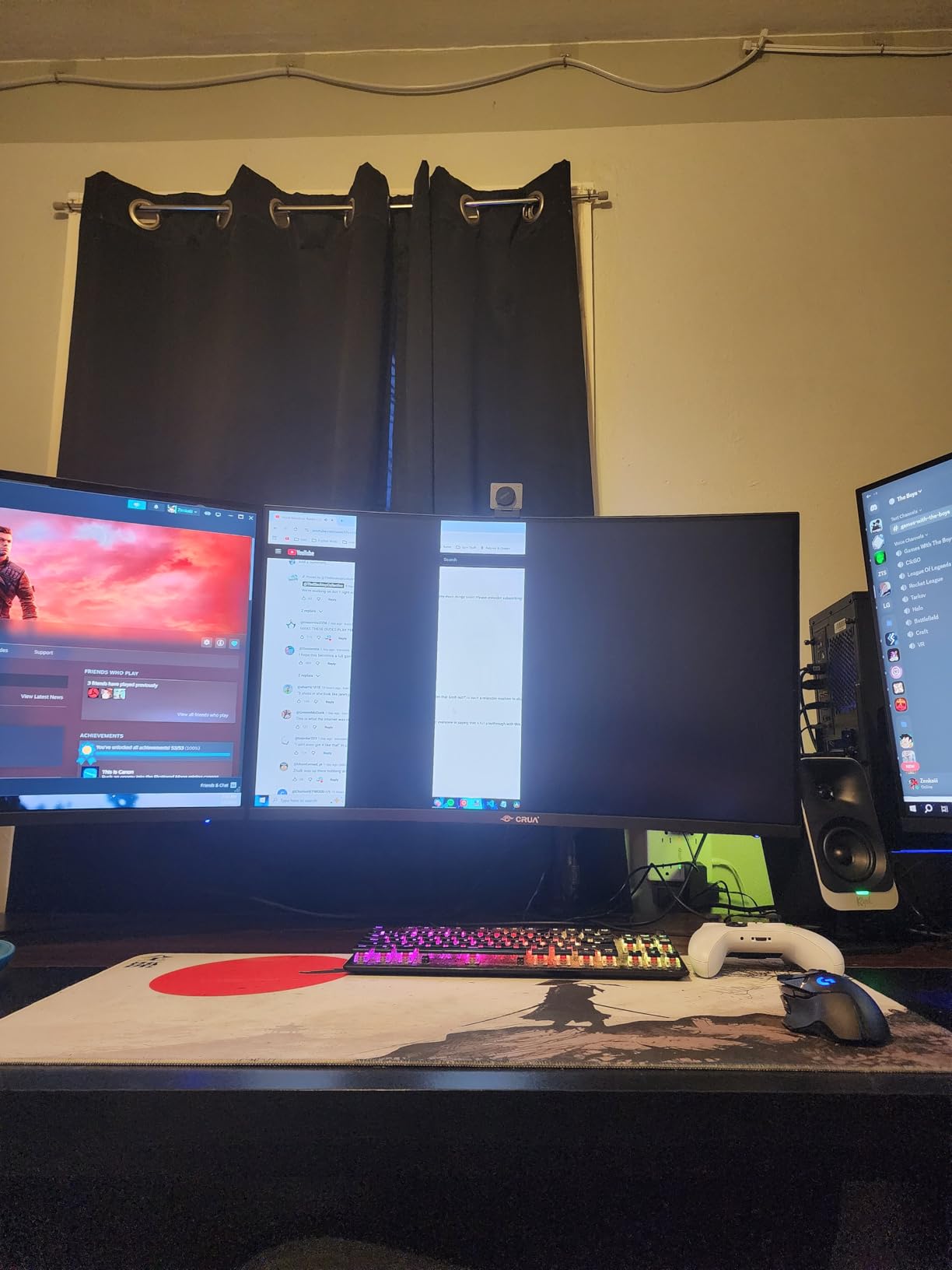
The panel is a 32-inch 3840 x 2160 VA LCD with a 1500R curve, refreshing at 160Hz with AMD FreeSync. Contrast is rated at 3000:1, which is twice what the 1000:1 panels in this list manage and produces visibly deeper blacks in a dim room. Brightness is 320 nits and colour coverage is 120 percent sRGB.
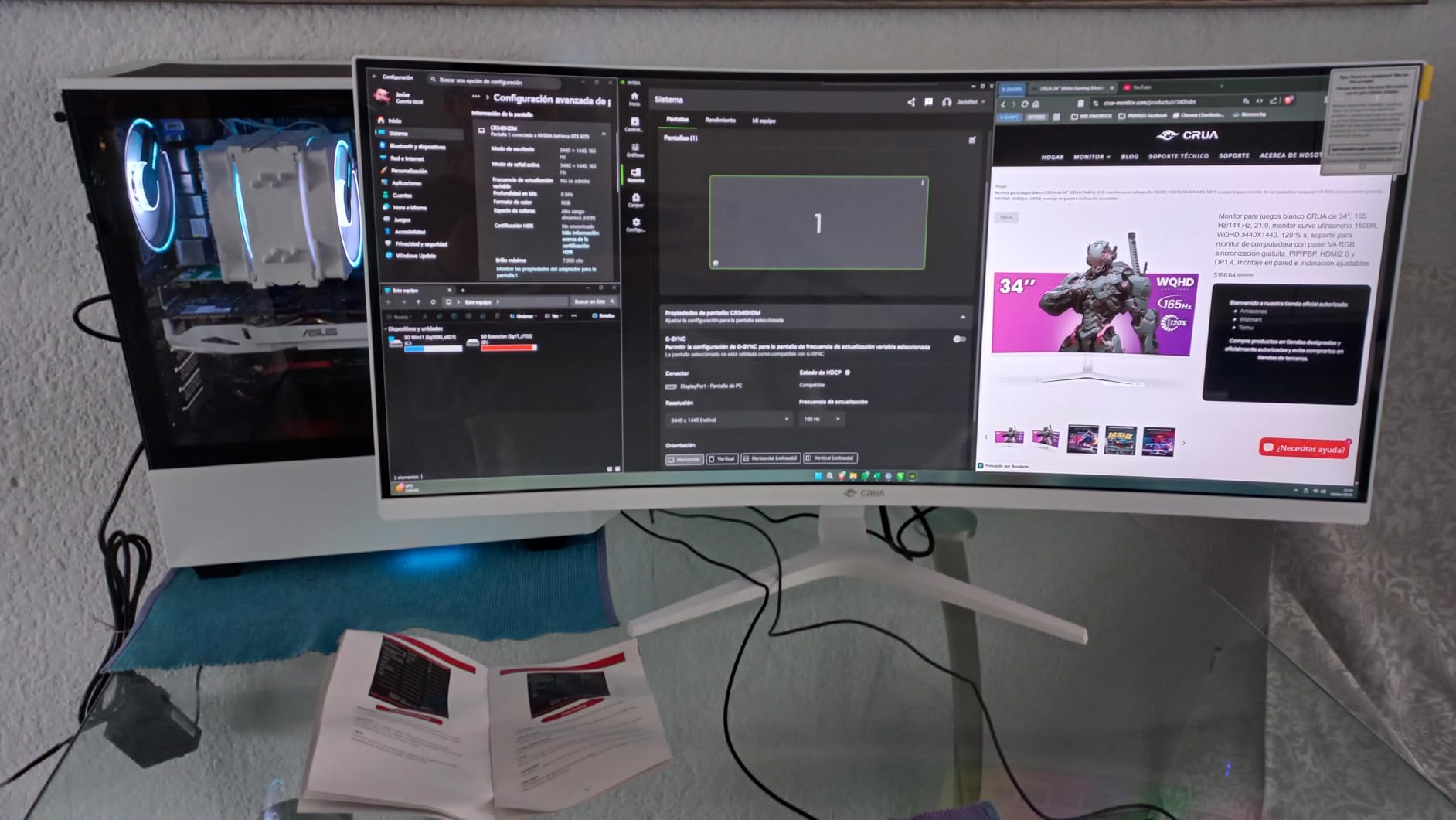
Connectivity is generous for the money: two HDMI 2.1 ports and a DisplayPort 1.4, so a console and a PC can stay connected at the same time. There are built-in speakers, a blue light filter, and rear RGB lighting. VESA 75×75 mounting is supported, and the whole thing weighs 15.85 pounds.
The one-star share is 10 percent, higher than the IPS-based rivals here, and the complaints cluster around two things: dead panels and a basic on-screen menu. We think it is a strong 4K gaming value, but buy somewhere with an easy return window.
Who this monitor suits
This suits a large desk, a couch-distance gaming setup, or a secondary 4K screen for a bedroom where you sit further back than 24 inches. At 32 inches you get 4K resolution across a much larger canvas, which is the point when you want two documents side by side without shrinking everything.
It also suits PS5 and Xbox Series X owners. Two HDMI 2.1 ports means a console and a PC share the display without constant cable swapping.
Who should skip it
Colour-critical work should skip it. A curved 1500R panel introduces geometry distortion that makes colour judgement and photo retouching harder, and the 120 percent sRGB rating is untested rather than calibrated. Nothing here is factory calibrated.
Fast competitive players should also weigh the VA dark smear carefully. It is the most common complaint in the reviews, and it shows in high-contrast scenes on dark backgrounds. The stand offers tilt only, with no height, swivel, or pivot, so plan on a monitor arm if desk ergonomics matter to you.
ZZA 27-Inch 4K 144Hz – The Cheapest 4K Gaming Spec Sheet in This Budget
ZZA 27 Inch 4K Gaming Monitor,UHD(3840×2160) 4K 144Hz Flat Monitor, Adaptive Sync,HDMI 2.1 & DP 1.4,Tilt Adjustment PC Monitor, Wall Mountable, for Work, Streaming, and Home Office, Black
27-inch 4K UHD flat panel at 144Hz
Adaptive Sync with 1ms stated response
4000:1 contrast and 100 percent sRGB
HDMI 2.1 and DisplayPort 1.4
Pros
- Entry-level price for a native 4K panel
- 144Hz refresh that holds up for mid-range PCs and consoles
- 4000:1 contrast is unusually high at this price
- Rear RGB lighting adds a desk accent
- Very low power draw
Cons
- HDMI will not output 4K without properly rated cables
- On-screen menu and buttons are clumsy to navigate
- Very limited brand support presence
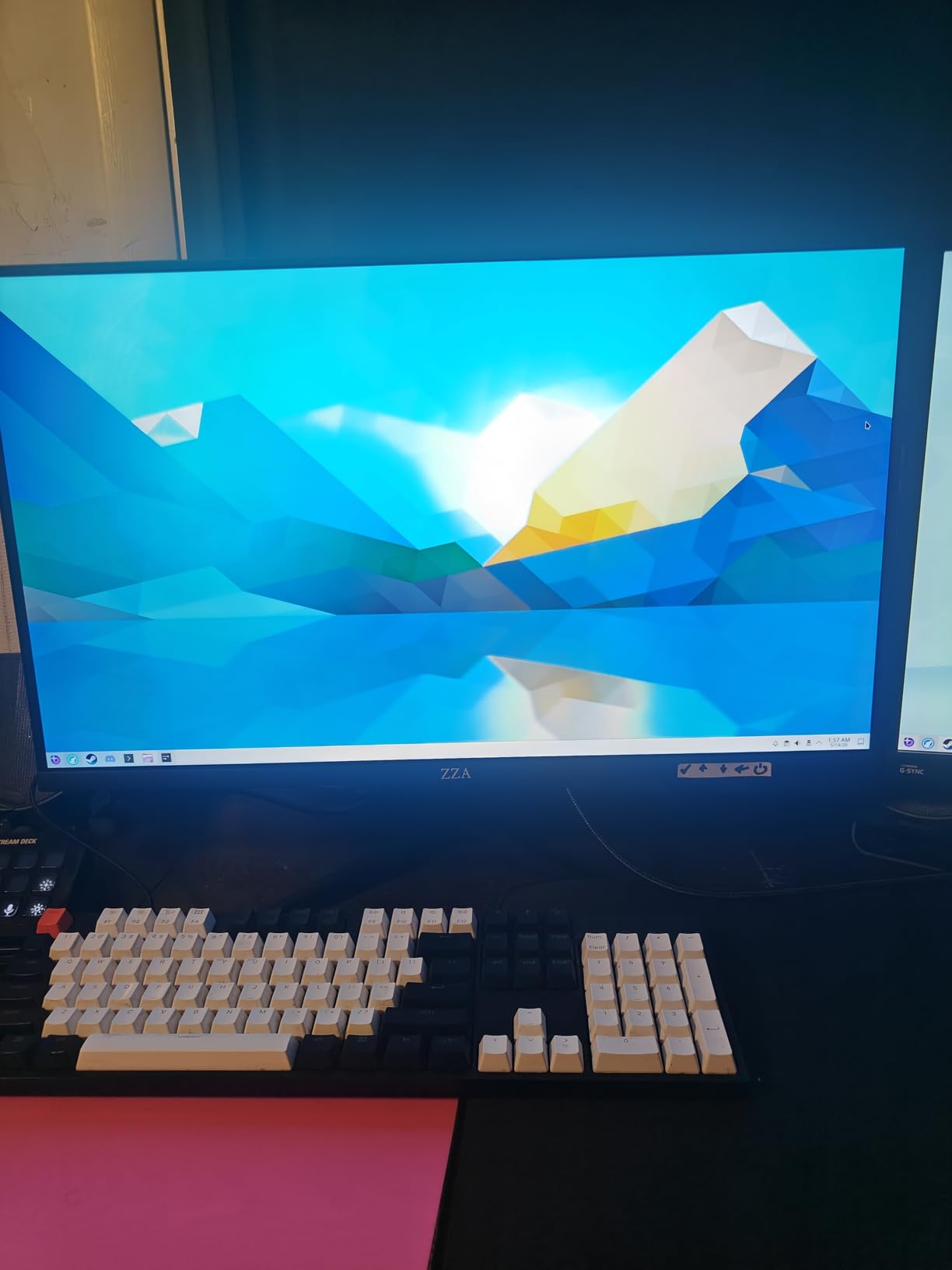
The ZZA Z27E sits at the bottom of this price band, and its spec sheet reads like a mistake. A 27-inch 3840 x 2160 flat panel at 144Hz with Adaptive Sync, rated at 4000:1 contrast and 100 percent sRGB, with HDMI 2.1 and DisplayPort 1.4.
What you give up is brand support and menu polish. The on-screen controls are the most criticised feature across the reviews, described as clunky and hard to navigate.
Warranty cover is 1-year with 24/7 support, thinner than the three-year cover the ASUS panels in this roundup carry.

The HDMI behaviour is the thing to understand before you buy. Multiple owners report that the HDMI ports do not output 4K out of the box, and that the fix is a properly rated HDMI 2.1 cable or an HDMI-to-DisplayPort adapter.
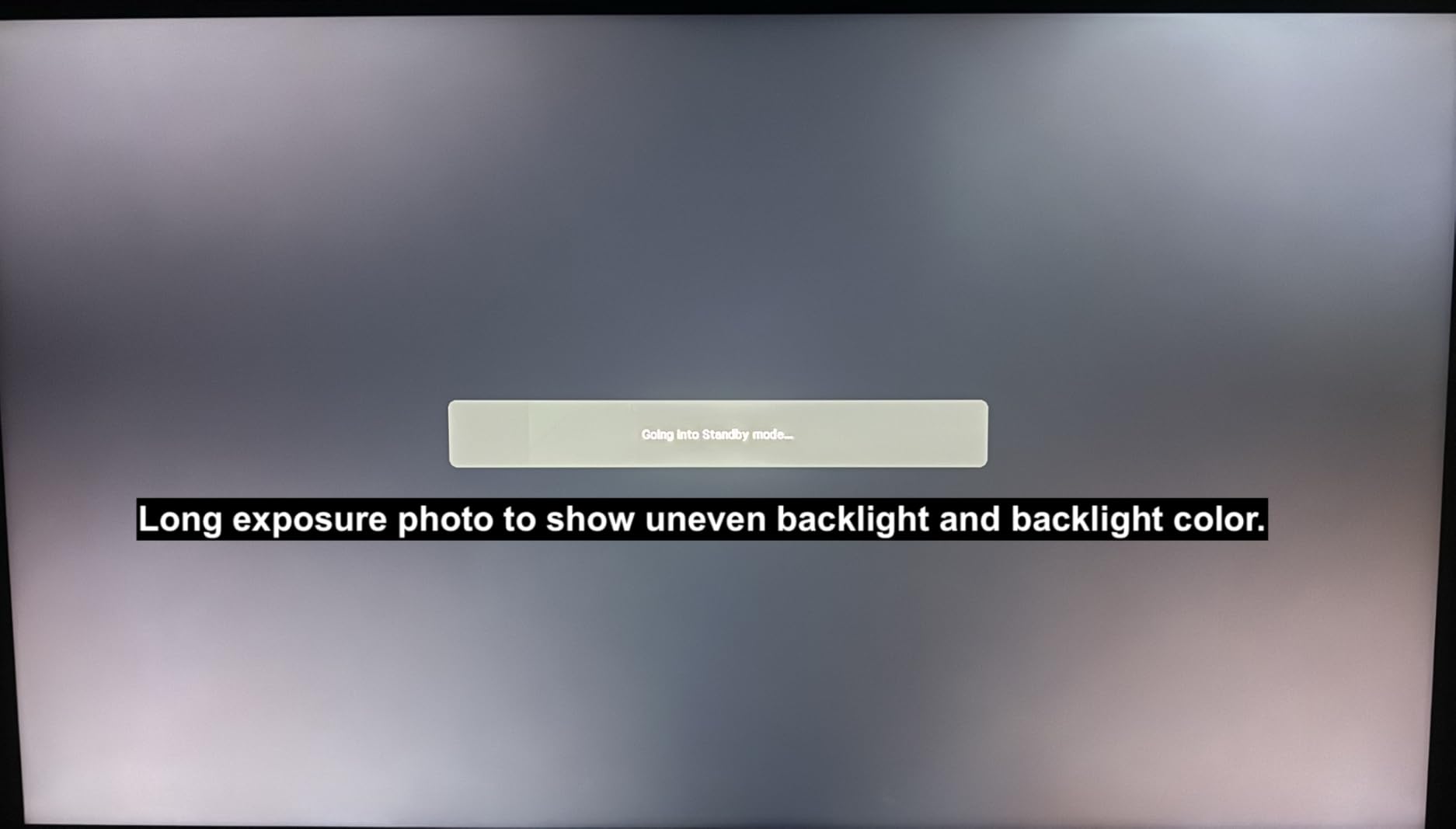
The rating spread here is wider than the other picks: 69 percent five-star but 9 percent three-star and 8 percent one-star. Some owners report washed-out colour and uneven backlight bleed. The panel type is listed only as LED, with no IPS or VA designation, which is a hint about what to expect.
Who this monitor suits
This suits a first 4K build where budget is the binding constraint, or a spare panel for a second desk. The 144Hz refresh makes it a far better gaming experience than a 60Hz 4K screen costing more, and 4K sharpness on a 27-inch panel at 163 pixels per inch is genuinely useful for browsing and documents.
Rear RGB lighting and a low power draw make it a reasonable dorm or bedroom desk screen, and the tilt adjustment plus VESA compatibility cover basic positioning.
Who should skip it
Skip it if colour accuracy matters, since there is no gamut certification beyond a 100 percent sRGB claim and some owners report washed-out image quality.
It also skips warranty service you can rely on, because the support footprint is thin. Buyers who want an arm should note that one reviewer needed longer screws because the included VESA hardware was undersized.
ASUS TUF VG27UQ1A – The Best High-Refresh 4K Gaming Monitor Here
ASUS TUF Gaming VG27UQ1A 27 Inch 4K 160Hz G-SYNC Gaming Monitor
27-inch 4K UHD Fast IPS at 160Hz
ELMB Sync for ghosting reduction
G-SYNC Compatible and FreeSync Premium
HDMI 2.1 for 4K 120Hz consoles
Pros
- 160Hz refresh
- among the fastest native 4K rates in this roundup
- ELMB Sync genuinely reduces ghosting at high frame rates
- HDMI 2.1 handles 4K 120Hz consoles without chroma subsampling
- Three-year warranty with Advanced Replacement and Repair
- 95 percent DCI-P3 coverage with HDR
Cons
- No height adjustment on the stand
- Weak built-in speakers
- Brightness falls short for HDR content
The ASUS TUF VG27UQ1A is one of the fastest native 4K panels under this ceiling, refreshing at 160Hz on a 27-inch Fast IPS. That speed, combined with ELMB Sync, is what separates it from the 120Hz Dell and the 60Hz IPS options.
ASUS ELMB Sync combines motion clarity processing with variable refresh rather than applying blur to a fixed frame, so ghosting reduction and tear reduction work together.
Adaptive sync coverage is broad: G-SYNC Compatible, AMD FreeSync Premium, ELMB Sync, and Variable Overdrive. Colour coverage is rated at 95 percent DCI-P3 with HDR support.

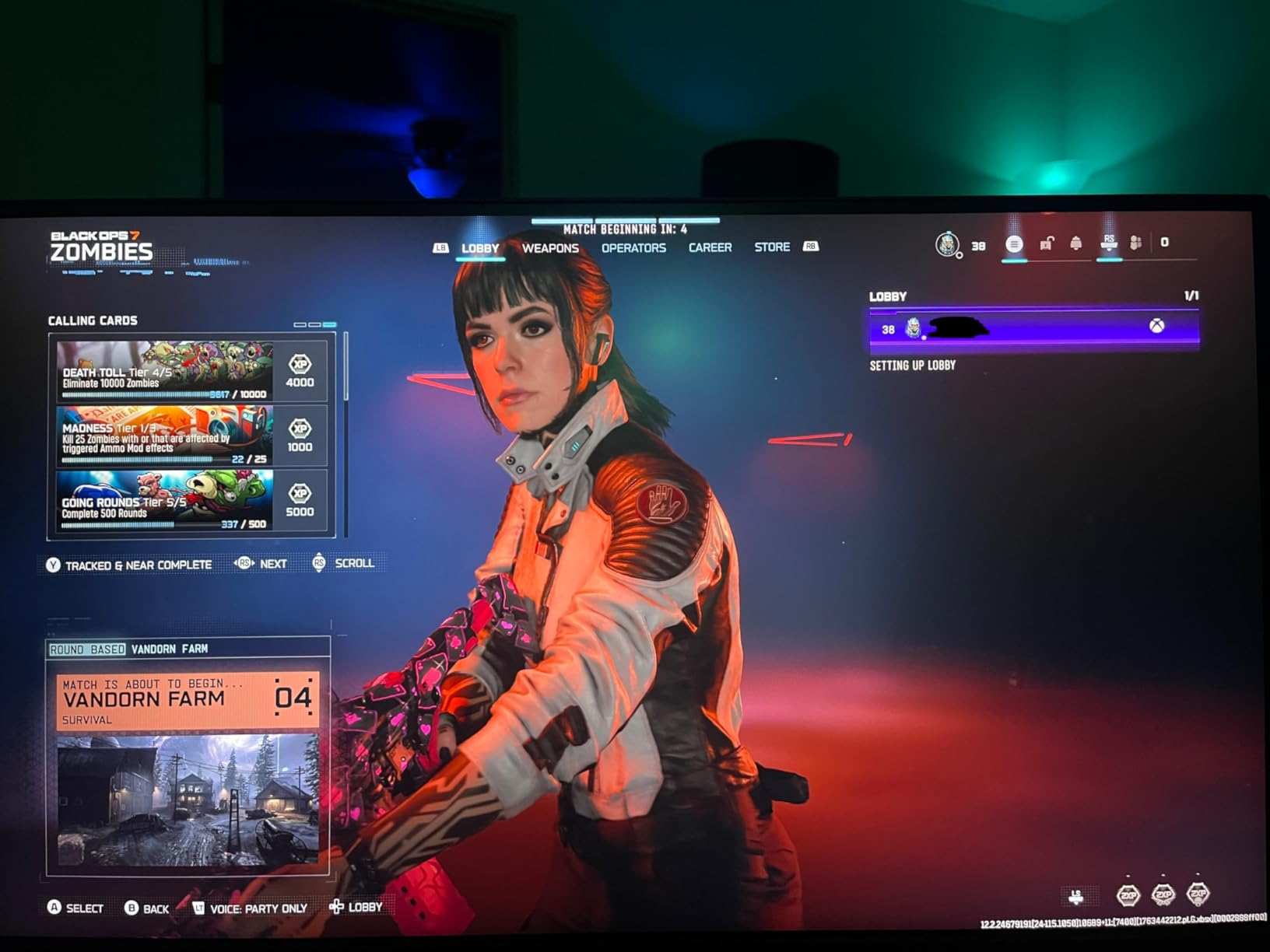
HDMI 2.1 is the practical headline for console owners. It supports 4K 120Hz from a PS5 or Xbox Series X without chroma subsampling, so you get full 4K colour rather than a reduced-chroma 4K signal. A DisplayPort cable, an L-shaped screwdriver, and a quick start guide are included in the box.
The warranty is three years with Advanced Replacement and Repair, matching the ASUS 32-inch rather than beating it. Several owners also note a bundled three-month Adobe Creative Cloud subscription as a bonus. The main ergonomic criticism, repeated across reviews, is the stand.
Who this monitor suits
This suits a gaming PC build where you want the highest refresh rate 4K allows at this budget, and console owners with a PS5 or Xbox Series X who want 4K 120Hz. The 95 percent DCI-P3 coverage also makes it reasonable for light photo work alongside gaming.
If your GPU can push high frame rates at 4K, this is where you will see it. At lower settings the difference between 160Hz and 120Hz is much harder to notice than the difference between 60Hz and either.
Who should skip it
Skip it if you sit at a desk for long hours without an arm. The stand offers tilt only, with no height adjustment, and that complaint appears repeatedly in owner reviews. Budget for a monitor arm.
Brightness is lower than the spec sheet suggests, which limits HDR impact, and the built-in speakers are consistently compared to a phone speaker.
Contrast sits at 1000:1, so blacks look greyish in a dark room. A small tail of reviews describes panels failing soon after purchase, so keep the return window in mind.
ASUS VP327Q – The Best Large-Format 4K Monitor for Productivity
ASUS VP327Q 32 Inch 4K UHD Computer Monitor, HDMI, DisplayPort, Speakers
31.5-inch 4K UHD display
3000:1 contrast with HDR-10 support
99 percent sRGB coverage
Dual HDMI plus DisplayPort with speakers
Pros
- Big 4K canvas at a low cost
- 3000:1 contrast gives deeper blacks than budget IPS
- Dual HDMI plus DisplayPort makes device switching easy
- Integrated stereo speakers
- Three-year ASUS warranty with ARR service
Cons
- Listing says IPS but owners report VA-like behaviour
- Outdated DisplayPort 1.2 and HDMI 2.0 ports
- Notable share of reports of dead pixel lines and power-on failures
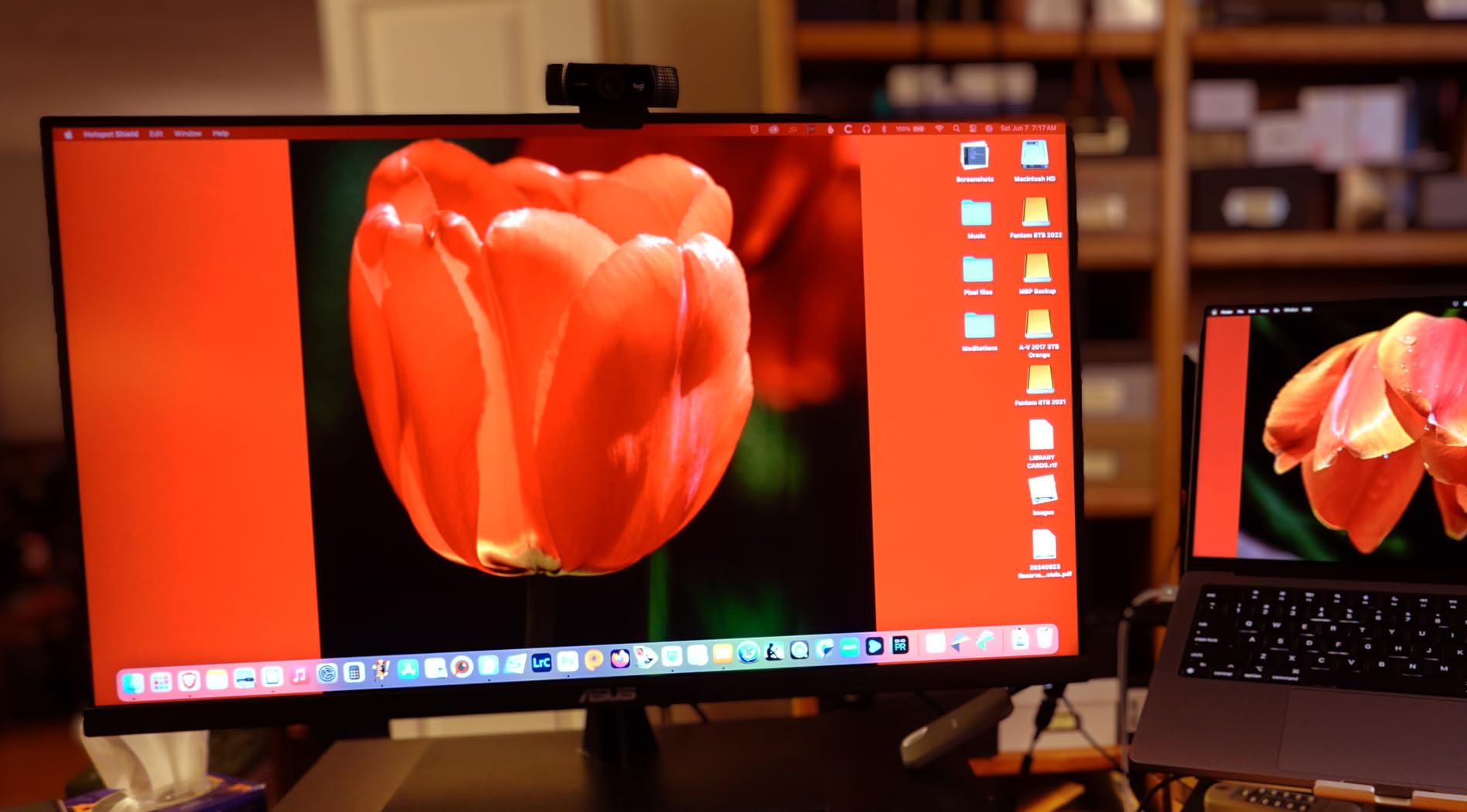
The ASUS VP327Q is the least expensive way to get a 32-inch class 4K panel in this roundup: a 31.5-inch 3840 x 2160 display with 99 percent sRGB coverage and 3000:1 contrast. A 32-inch 4K panel at this price is not automatically the compromise people expect. For a desk where you want two applications side by side without shrinking them, the canvas is the argument.
Ports are the simple part: two HDMI and a DisplayPort, which makes switching between a laptop, a desktop, and a console straightforward. There are integrated stereo speakers, ASUS Eye Care flicker-free and low blue light filters, and VESA wall mounting.
Nothing in the box is out of the ordinary, which keeps the setup simple: the panel, a stand, and the cables you would buy anyway.
Now the honest part. This carries the lowest average rating in the roundup at 4.0 across 169 reviews, with 11 percent one-star and 10 percent three-star. Those numbers reflect a panel whose quality control is inconsistent, with multiple reports of dead pixel lines and screens that failed to power on on arrival.
There is also a documented dispute over panel type. The listing describes an IPS panel, and several buyers state the real behaviour is closer to VA, with slower response and greyer blacks at angles. At 60Hz and 4ms, response time matters less, but the discrepancy is worth knowing before you buy.

Who this monitor suits
This suits productivity setups where screen area beats pixel density: traders, video-call users who want documents visible beside the call, and anyone working from a desk deep enough for a 32-inch panel. The 3000:1 contrast also keeps text readable in a dim room better than the 1000:1 IPS panels do.
It is also a reasonable second monitor for a desk that already has a fast gaming panel. At 60Hz it stays out of the way, and a low purchase price limits the damage if a panel arrives faulty.
Who should skip it
Skip it if you want a monitor you can install and forget. The quality control reports on dead pixel lines and power-on failures are frequent enough to matter, and a 60Hz refresh with 4ms response is not competitive.
The port selection is dated: DisplayPort 1.2 and HDMI 2.0 rather than the DisplayPort 1.4 and HDMI 2.1 that newer rivals in this list carry. Some owners also report the VESA mount anchoring into the plastic shell rather than a load-bearing chassis, which is a real concern if you plan to hang it on an arm.
LG 27US500-W – The Best Low-Cost 4K IPS for Office and Media
LG 27US500-W Ultrafine Monitor 27-Inch 4K UHD (3840×2160) HDR10 IPS Borderless Design Reader Mode Flicker Safe Switch App HDMI DisplayPort – White
27-inch 4K UHD IPS at 60Hz
HDR10 with up to 90 percent DCI-P3
Reader Mode and Flicker Safe
Borderless three-sided design in white
Pros
- Entry-level pricing for a 4K IPS panel
- Clean borderless white design with sharp 4K text
- HDR10 support with 90 percent DCI-P3 coverage
- Reader Mode and Flicker Safe handle long sessions
- Onscreen Control app handles picture settings and screen splitting
Cons
- 60Hz feels sluggish next to a 120Hz panel
- 1000:1 contrast is low so blacks look grey
- Tilt-only stand with no height swivel or pivot
The LG 27US500-W is an entry point into 4K IPS at a low cost, and it rates 4.4 across 460 reviews with 73 percent five-star. It costs less than every other 27-inch 4K option here, which is why it earns a place on a list where the ceiling is the whole point.
The panel is a 27-inch 3840 x 2160 IPS at 60Hz with 5ms response, 300 nits brightness, 1000:1 contrast, and up to 90 percent DCI-P3 coverage with HDR10. The three-sided borderless design in white looks clean on a light desk, and the matte finish keeps reflections manageable.

Eye comfort features are the quiet strength here. Reader Mode reduces blue light for long reading sessions, and Flicker Safe addresses the PWM dimming that some people find uncomfortable at low brightness. The Onscreen Control app handles picture settings and workspace splitting, and the whole design draws 25 watts, which helps it run cool.
Buyers treat this as the monitor for documents, browsing, and media, and reviewers are explicit that the 60Hz rate is fine for those uses and underwhelming for games. There are three video outputs in total: two HDMI and a DisplayPort.

Who this monitor suits
This suits an office desk, a study room, or a second monitor where cost is the deciding factor and nobody is gaming on it. You can put a sharp 4K panel on a desk that would normally get a 1080p screen.
It also suits anyone sensitive to flicker or blue light who wants those features in a panel they can afford, since both Reader Mode and Flicker Safe are included rather than bolted on through a firmware update.
Who should skip it
Gamers should skip it. A 60Hz refresh rate feels sluggish the moment you have used anything faster, and there is no variable refresh gaming to soften that. The 1000:1 contrast ratio is also on the low side for an IPS, so blacks look grey in a dark room.
The stand is the practical problem. It tilts and nothing else, so you cannot raise the panel to eye level, which on a tall desk means stacking it on a riser. Brightness of 300 nits is dim for HDR content, and there are no built-in speakers.
27-Inch vs 32-Inch 4K: Which Should You Buy?
Buy 27 inches unless your desk is deep and you sit more than 28 inches back. A 27-inch 4K panel works out to about 163 pixels per inch, while a 32-inch 4K panel gives roughly 138 pixels per inch. That gap is the clearest spec difference between two monitors costing about the same.
The practical test is distance. At arm’s length, roughly 24 inches from your eyes, 163 pixels per inch on a 27-inch panel is where text looks properly crisp.
Push that same panel to 32 inches and the pixels get bigger, so you need to move back, which is fine for a media display and tiring for eight hours of reading.
A 32-inch 4K needs about 70cm of desk depth to sit at a comfortable distance, and many desks are shallower than that, which forces the panel back or up on a riser. If your desk is under 60cm deep, a 32-inch will overhang. That is the reason most buyers who ask this question end up on 27-inch.
Choose 32 inches for a large desk, a couch-distance setup, or a trading and video-call workflow where you want two full applications visible at once. Budget for the trade-off: at the same price, 32-inch 4K panels in this roundup have lower pixel density, older ports, and thinner quality control than their 27-inch counterparts.
One more practical note: a 32-inch panel sits at about 138 pixels per inch, which is still well above the 109 pixels per inch of a 27-inch 1440p screen. The step down from a 27-inch 4K panel is noticeable in text, but the move up from 1440p is obvious in everything else.
What GPU Do You Need to Drive a 4K 120Hz or 144Hz Monitor?
You need a card that can output 4K at the refresh rate you want, through the right port. A modern mid-range graphics card handles 4K at 60Hz over HDMI without effort, so basic office use needs no dedicated GPU.
For 4K at 120Hz or 144Hz, the interface matters more than the card. DisplayPort 1.4 with DSC, or HDMI 2.1 at full 48Gbps bandwidth, is what carries that combination. Without one of those, you will fall back to 4K at 60Hz even on a capable card.
DSC, or Display Stream Compression, is the feature that lets DisplayPort 1.4 carry 4K 160Hz signals. It works visually losslessly for normal content, but it must be enabled on both ends, and older cables do not carry it.
That is why the ZZA at 144Hz behaves differently from the Dell at 120Hz on the same machine. Without a suitable port or a suitable cable, a high-refresh panel is only a high-refresh panel in theory.
The practical checklist: confirm the GPU has at least one DisplayPort 1.4 output, use a certified DisplayPort 1.4 cable rather than the one in the box if it is older, and enable DSC in your graphics driver settings. For console play, the ASUS TUF VG27UQ1A is the pick with HDMI 2.1 confirmed at 4K 120Hz without chroma subsampling, and the CRUA 32-inch has two HDMI 2.1 ports for a console alongside a PC.
4K Scaling and Text Clarity on a 27-Inch Monitor
Set Windows scaling to 150 percent on a 27-inch 4K panel. At 100 percent, 3840 x 2160 across a 27-inch screen makes text very small, and subpixel rendering produces the coloured fringing that people describe as blurry text. At 150 percent you get roughly 2560 by 1440 of usable desktop space, which is the sweet spot on a 27-inch.
If you want the full 3840 by 2160 workspace, stay at 100 percent but bump the in-app font size, and be aware that some older programs will not scale cleanly.
macOS works differently. A 27-inch 4K panel at 3840 by 2160 sits at the same apparent scaling as a 5K display at default settings, so text renders well without any adjustment. Older Intel MacBooks cap external display support, so check your model’s specification before assuming two 4K screens will run side by side.
This is the most common configuration complaint we found in owner reviews of 4K monitors at this price, and it has nothing to do with panel quality. If text looks wrong on day one, change the scaling before you start blaming the monitor. Our guide to 4K monitors for home offices covers the desk-side setup in more detail.
IPS, VA or OLED: What Office Users Should Know About Burn-In
None of the eight monitors here is OLED, and that is a deliberate choice for this price band. Every one is an IPS or VA LCD panel, which means no burn-in risk from a static desktop and no PWM flicker at low brightness on the IPS models.
That matters if you work eight or more hours a day in front of a screen. OLED panels produce perfect blacks and near-instant response, but long hours on a static desktop raise the burn-in question, and that is why most people working full days steer toward IPS or VA instead. If you mostly game and watch, that trade-off looks different.
Within the LCD options, IPS gives you wide viewing angles, accurate colour out of the box, and fast-enough response for most desks, which is why most picks here are IPS. VA gives you deeper blacks at the cost of slower dark transitions and narrower angles, which suits the CRUA curved panel for gaming more than for work.
Two habits reduce risk with any panel in this list. Keep the screen off when you are away for long stretches, and avoid leaving a bright static window pinned to the same corner all day. Read our 4K monitor picks for video editors for the colour-critical side of this.
What We’d Skip and Why
Skip the lowest-cost 4K tier unless your budget is genuinely fixed. The ZZA is the exception here because it pairs a low purchase price with a 144Hz panel, but the typical cheap 4K screen runs at 60Hz, carries no HDR, and has a tilt-only stand.
Skip 32-inch 4K panels that do not state their port version. The ASUS VP327Q is the least expensive large 4K in this list, but its DisplayPort 1.2 and HDMI 2.0 mean no high refresh rate and no DSC, so it is a productivity panel no matter what the listing implies.
Skip buying on price alone. The two cheapest picks in this roundup both carry noticeably wider rating spreads than the Dell and LG models in the middle of the list. A lower price here often means a less predictable panel, and the ASUS VP327Q is the clearest example of a monitor whose 11 percent one-star share is about panel quality rather than expectations.
Frequently Asked Questions
What is the best 4k monitor under 500 dollars?
The ASUS ProArt PA279CRV is the best 4K monitor under this ceiling. It is a 27-inch 3840 x 2160 HDR IPS panel rated at 99% DCI-P3 and 99% Adobe RGB, factory calibrated to Delta E under 2, with USB-C delivering 96W of power and a built-in four-port USB hub. The 60Hz refresh rate rules it out for competitive gaming, but for work, media, and colour-critical editing it covers more ground than anything else we reviewed.
What is the best budget 4K monitor?
Budget means meaningfully below this ceiling, and two picks qualify. The LG 27US500-W is an entry-level 4K IPS, a 27-inch panel with HDR10, 90% DCI-P3 coverage, and a tilt-only stand at 60Hz. The ZZA Z27E drops below it and adds a 144Hz refresh, but its HDMI ports need a properly rated cable to output 4K and its brand support is thin. For reliability, the LG is the safer budget buy.
Is 4K overkill for a 27 inch monitor?
No, if you set Windows scaling to 150%. A 27-inch 4K panel gives about 163 pixels per inch, which is sharp enough that text looks noticeably cleaner than a 1440p screen at arm’s length. At 100% scaling the desktop becomes very small and text shows coloured subpixel fringing that people mistake for a bad panel. Some buyers still prefer high-refresh 1440p, and that is a fair preference rather than a mistake.
Is a 4K monitor even worth it?
It depends on your current resolution and your desk distance. Moving from a 24-inch 1080p screen to a 27-inch 4K panel is the sharpest visible improvement available at this budget, especially for text-heavy work. If you already own a 1440p panel and play competitive games, the resolution gain matters less to you than refresh rate, and a faster 1440p screen may serve you better for the same money.
Should I get a 27 or 32-inch 4K monitor?
Buy 27 inches for desk work at arm’s length, and 32 inches only if your desk is deep and you sit further back. A 27-inch 4K panel gives about 163 pixels per inch versus roughly 138 pixels per inch at 32 inches, so text is noticeably sharper at normal desk distance. A 32-inch needs around 70cm of desk depth to sit comfortably, and many budget 32-inch 4K panels have older ports and thinner quality control.
What is the best 32-inch 4K monitor for the money?
The CRUA 32-inch 4K 160Hz curved panel is the large-format pick we would put at the top of a shortlist. It gives you a 1500R curve at 160Hz with AMD FreeSync, 3000:1 contrast that beats every IPS panel here, and two HDMI 2.1 ports plus DisplayPort 1.4 while staying inside this budget. Its 320 nit brightness limits HDR, the VA panel smears on fast dark motion, and the included stand offers tilt only.
Do I need a GPU for a 4K monitor?
Only if you want to game on it. Desktop work at 4K 60Hz is handled by integrated graphics on modern processors, so no dedicated card is required for office use. To run 4K at 120Hz or 144Hz you need a graphics card with DisplayPort 1.4 and DSC or HDMI 2.1 at full 48Gbps bandwidth, plus a certified cable, or your display will fall back to 4K 60Hz.
What is the best 4k monitor according to Rtings?
RTINGS currently names the Acer Nitro XV275K P5 as the best monitor under this ceiling. We have not tested that panel and make no measurement claims about it. Our list was built from owner review volume, verified specifications, and warranty terms instead of lab colourimeter readings, which is why the Dell 27 Plus S2725QS and ASUS ProArt PA279CRV appear on it while some faster gaming panels do not.
Bottom Line: Which 4K Monitor Should You Buy?
Start with how you actually use the desk. If you edit colour, dock a laptop, or work eight hours a day, the ASUS ProArt PA279CRV is the pick, and nothing else in this list matches its port selection, calibration, and five-year warranty.
If you want the sharpest 4K screen for everyday work at the lowest sensible cost, the Dell 27 Plus S2725QS gives you a 120Hz panel and a fully adjustable stand that most rivals in this price band cannot.
If gaming is the priority, the ASUS TUF VG27UQ1A runs at 160Hz with ELMB Sync and the HDMI 2.1 port that handles 4K 120Hz consoles. For a big screen and a curved panel, the CRUA 32-inch gives you 160Hz and 3000:1 contrast, provided you sit back far enough and can live with a tilt-only stand.
Whatever you choose, set Windows scaling to 150 percent on a 27-inch panel before you judge the text quality, and check that your graphics card can drive the refresh rate you want through DisplayPort 1.4 or HDMI 2.1.
Pricing in this category moves quickly around major sale events, so treat any figure you see as a snapshot and verify before you buy.
Our related picks cover the narrower cases, including studio monitors in the same budget range if you are building an audio setup alongside the display.