
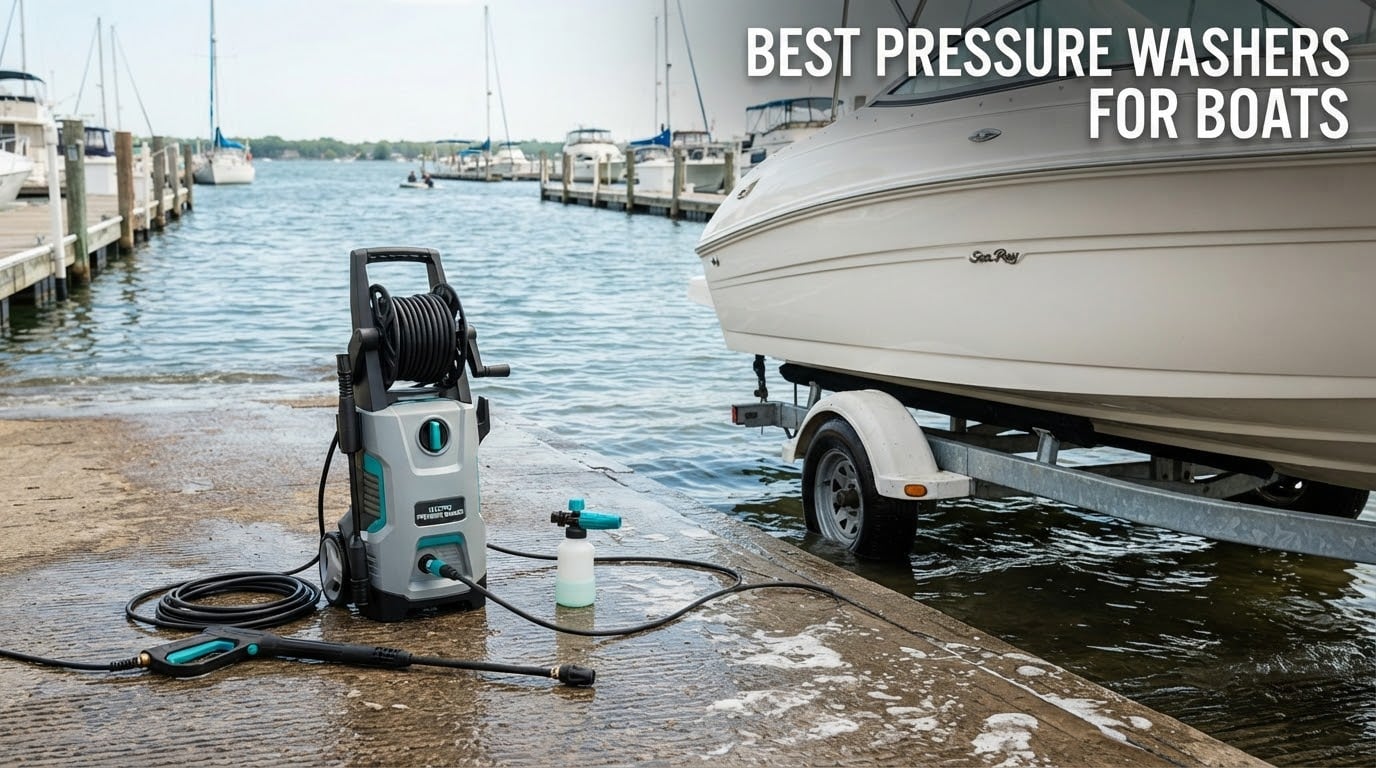
Every boat owner knows the moment the green slime shows up along the waterline. It arrives as a film, then a fuzz, then a crust that grips the gelcoat and keeps the finish from ever looking new again. That is why the right pressure washer matters more than the right wax. We spent weeks comparing ten machines specifically as pressure washers for boats, not as general home washers that happen to fit in a truck bed.
The core finding is simple. For gelcoat, non-skid decks and painted hulls, the useful band sits between roughly 1,500 and 2,000 PSI, paired with enough flow to move water and a detergent tank or foam cannon to lift growth before you touch the surface with pressure. Above about 2,700 PSI, owners on The Hull Truth report damage becomes likely even with a wide fan tip, and no amount of careful technique fully reverses that. Below about 1,200 PSI you are holding a hose and wishing you had more arm strength.
There is also a hard technical ceiling most buyers never hear about. Electric pressure tops out near 2,000 PSI because of the common 15-amp household circuit, which one owner on The Hull Truth explained plainly: those washers stop climbing at about 2,000 PSI no matter what the box claims. That single fact decides most of this roundup, because a boat never needs more than that. If you want a wider read on the machines themselves, our guides to the best electric pressure washers and the best pressure washers for home use cover the non-boat side of the market.
Table of Contents
Top 3 Picks: Best Pressure Washers for Boats (October 2026)
These three cover the widest range of real boating situations: a hull that has been in salt water for a season, a deck that needs detergent and reach, and a storage-limited boat that has to come out of a locker.

Sun Joe SPX3000
- 2500 max PSI
- 2030 rated|1.76 GPM max flow|Dual 0.9L detergent tanks|20 foot high-pressure hose
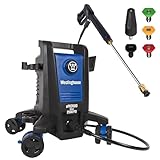
Westinghouse ePX3500
- 2500 max PSI
- 2000 rated|1.76 max GPM
- 1.2 rated|25 foot braided hose|19 pounds
- anti-tipping

Westinghouse ePX3100v
- 2100 max PSI
- 1800 rated|Detachable foam cannon included|17.6 pounds
- carry handle|20 foot braided hose
The Best Pressure Washers for Boats at a Glance
Quick answer: for most boat hulls, 1,500 to 2,000 PSI is the safe working range. That is enough to shift algae, green slime and water staining off gelcoat and non-skid decks without etching the finish. Above roughly 2,700 PSI damage becomes likely even with a wide fan nozzle, and an electric machine on a standard 15-amp circuit will not exceed 2,000 PSI anyway.
The ten models below all sit inside or near that band. Flow rate, detergent capability and weight separate them far more than the headline PSI figure does.
| Product | Specifications | Action |
|---|---|---|
| Sun Joe SPX3000 |
|
Check Latest Price |
| Westinghouse ePX3500 |
|
Check Latest Price |
 Karcher K1700 Karcher K1700 |
|
Check Latest Price |
 LWQ S5 LWQ S5 |
|
Check Latest Price |
| Westinghouse ePX3100v |
|
Check Latest Price |
 Karcher K 5 Premium Karcher K 5 Premium |
|
Check Latest Price |
 Westinghouse ePX3050 Westinghouse ePX3050 |
|
Check Latest Price |
 Greenworks GPW2003 Greenworks GPW2003 |
|
Check Latest Price |
 A-iPower E2800-FM A-iPower E2800-FM |
|
Check Latest Price |
 Ryobi 1800 PSI Ryobi 1800 PSI |
|
Check Latest Price |
1. Sun Joe SPX3000 (Best Overall Pressure Washer for Boats)
Sun Joe Pressure Washer, Electric Power Washer, 2500 Max PSI, SPX3000
2500 max PSI, 2030 rated
1.76 GPM max flow
Dual 0.9L soap tanks
20 foot hose, 24.3 lb
Pros
- Dual detergent tanks let you carry separate hull and deck cleaners
- Stainless lance with brass fittings resists saltwater corrosion
- Tens of thousands of owner reviews to draw on
- No fuel mixing or carb maintenance
Cons
- Split soap capacity halves volume per solution
- Light flow needs patience on heavy growth
- Some owners report hose inlet fitting leaks
This is the machine I keep coming back to, and the reason is the pair of 0.9-liter detergent tanks. Most washers give you one tank, which forces you to dump and refill every time you switch between hull cleaner and deck soap. On a boat, that switch happens constantly. Two onboard tanks mean a full hull wash and a full deck wash without a single trip to the spigot.
On paper it is also well placed for the job. The machine runs 2,500 max PSI with a 2,030 PSI working rating and moves up to 1.76 GPM, driven by a 13-amp motor that a standard household circuit handles without complaint. The 34-inch stainless lance with brass fittings is the part I appreciate most for salt water, since bare plated steel fittings are where corrosion starts.

The five quick-connect tips cover 0, 15, 25 and 40 degree patterns plus a soap applicator, and a needle clean-out tool ships in the box. That tool matters more than it sounds: a jet nozzle that begins to sputter is almost always a partially blocked orifice, and the needle clears it in seconds instead of you dismantling the gun at the dock.
Three owners on The Hull Truth independently named this specific model as the right answer for a boat, which is a stronger signal than any spec sheet. One of them, acme54321, put it plainly alongside two other posters who reached the same conclusion. Owners also report swapping it in for a gas machine and being content with the result, which is exactly the trade this roundup recommends.
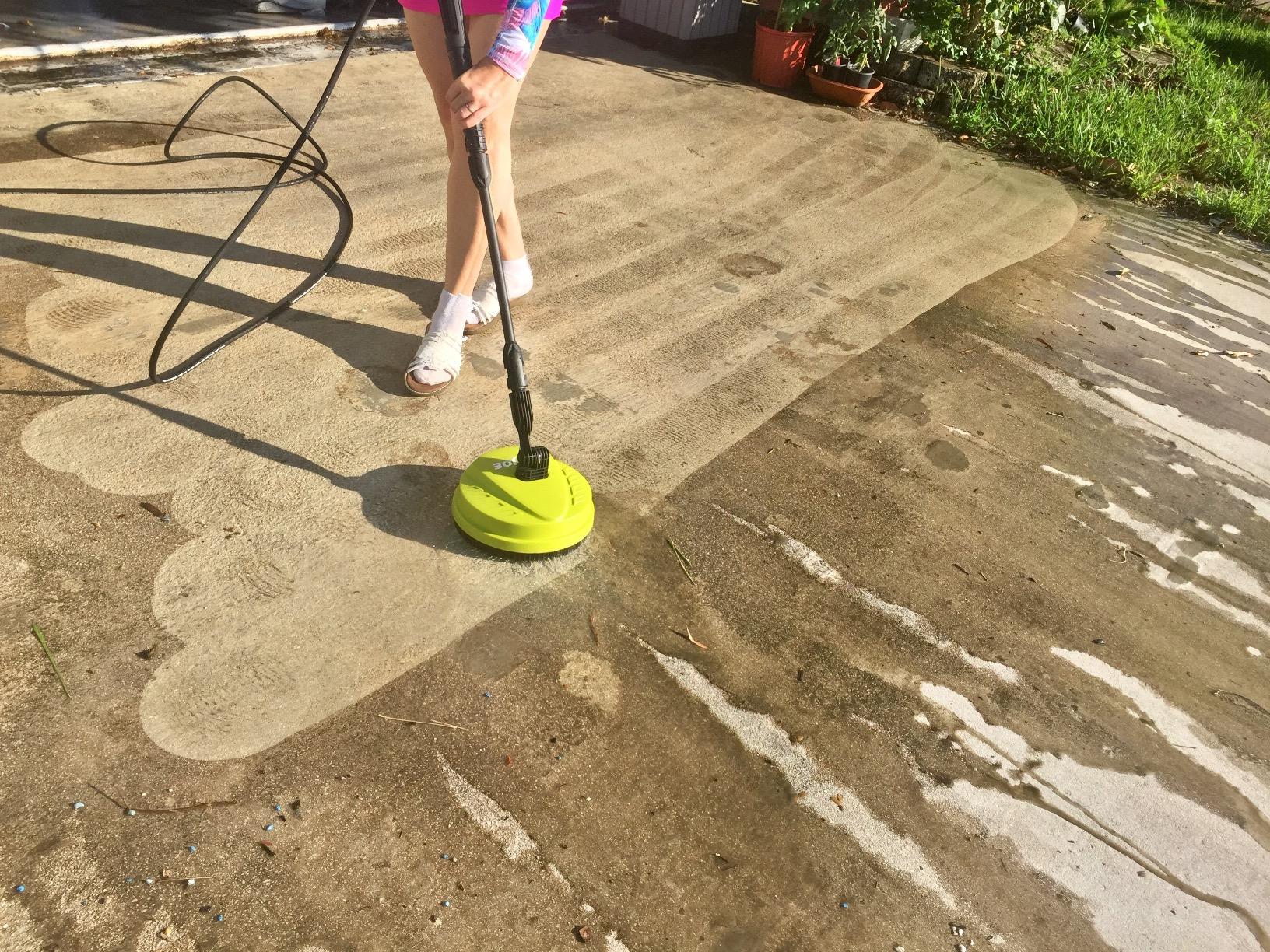
How the SPX3000 handles a real hull wash
At 24.3 pounds it is heavier than most of the electrics here, though the upright shape still moves on flat dock surfaces. The 20-foot hose gives you roughly 20 feet of working radius, enough to cover a runabout from a single water feed point without dragging the machine around a trailer parkway.
Owner reports consistently describe it as best suited to smaller craft and lighter grime rather than thick barnacle-scale growth. On a hull that has sat through one season of salt water with a foam cannon and a proper dwell time, it does the job well. On a boat that has been in the water for three years with no cleaning, you will be working in sections and moving the unit more often.
Where it falls short for boats
The two tanks are each 0.9 liters, so about 1.8 liters split between two solutions is not a lot of foam per hull on a larger boat. Owners who work big craft report refilling more often than they would with a single large tank plus an external foam cannon.
Flow rate is the other limit. This is a light-duty electric flow figure, and it means the rinse takes time. A minority of owners also report leaks at the hose inlet fitting or weak o-ring connections, which is worth checking in the first few minutes so you can return it while the return window is open.
2. Westinghouse ePX3500 (Best Electric Pressure Washer for Boats)
Westinghouse ePX3500 Electric Pressure Washer, 2500 Max PSI 1.76 Max GPM with Anti-Tipping Technology, Onboard Soap Tank, Pro-Style Steel Wand, 5-Nozzle Set, for Cars/Fences/Driveways/Home/Patios
2500 max PSI, 2000 rated
1.76 max GPM, 1.2 rated
25 foot braided hose
19 lb, 3-year warranty
Pros
- Highest rated in this group at 4.6 with 7350 reviews
- Anti-tipping low center of gravity handles uneven dock surfaces
- 25 foot braided hose gives wide reach
- Three-year warranty covers service labor and parts
Cons
- 20 ounce soap tank is small for a full hull
- Flow trails gas machines on heavy grime
- Foam cannon sold separately
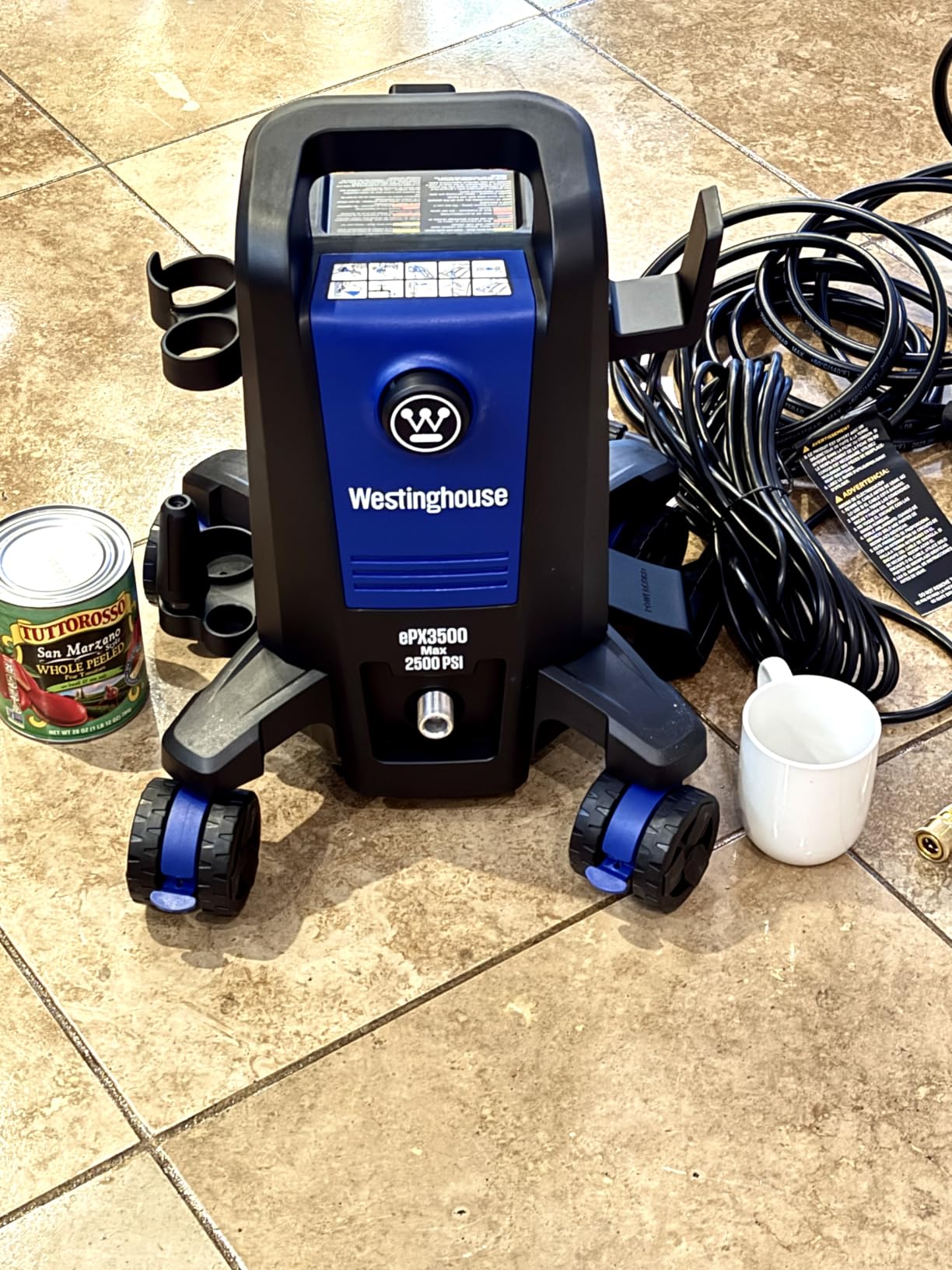
This is the one I would hand to a boat owner who wants the highest rating in the group and does not want to think about it. It sits at a 4.6 average across 7,350 reviews, carries a three-year limited warranty on service, labor and parts, and rates as the top-selling pressure washer in its category on Amazon right now. Those are not marketing lines, they are the numbers that decide a purchase when two machines look similar on a listing.
The anti-tipping chassis is the detail that matters most for boat work. A low center of gravity and four 360-degree quick-lock wheels mean the machine stays put on the uneven, wet, cracked concrete of a trailer parkway instead of walking downhill mid-wash. Small thing, big annoyance saved.
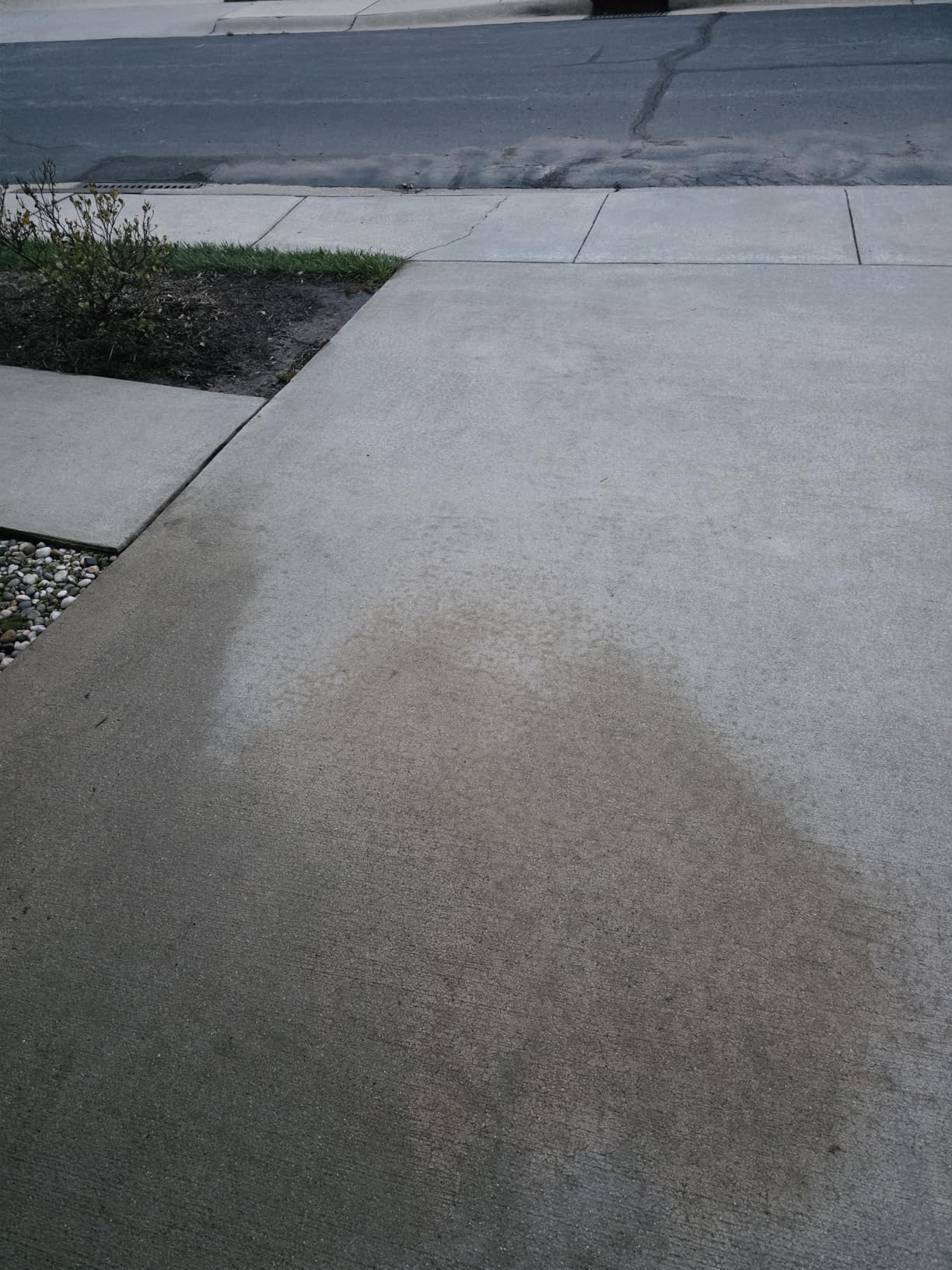
Specs read 2,500 max PSI and 1.76 max GPM, with an honest rated figure of 2,000 PSI and 1.2 GPM. That rated number is the one to plan around, and it lands precisely in the boat-safe band. A 17.5-inch extendable steel wand with quick-connect tips at 0, 15 and 25 degrees, a turbo and a soap applicator gives plenty of pattern choice for gelcoat work.
The total-stop system is worth noting because it is not universal. When you release the trigger the pump shuts down rather than running continuously, which reduces heat and wear during the many pauses that happen while you walk a hose around a hull.
Why the 25-foot hose changes the workflow
The easy-coil nylon braided hose is 25 feet, and that extra reach is what lets one person work a hull without shuffling the machine. Trailing a 20-foot hose around a 24-foot runabout means constant repositioning, and repositioning an electric washer means dragging a cord across wet concrete.
Braided construction also resists the abrasion that flat plastic hoses suffer when dragged along a trailer bower or a dock edge. Several owners in this category specifically praise hose durability, and it is a reasonable thing to notice before buying.
Where it falls short for boats
The 20-ounce onboard soap tank is small. For a hull and deck pass on a mid-size boat you will fill it more than once, and if you want thick foam you need to add a foam cannon separately since only a basic soap applicator is included.
At 19 pounds and 13.5 by 14 by 16.5 inches it is compact and easy to store, but electric flow still trails a gas machine on genuinely thick growth. If your boat has been in green water for a season or more, plan on working in sections rather than expecting one fast pass.
3. Kärcher K1700 (Best Gentle Pressure Washer for Boats)
Kärcher Pressure Washer K1700, CETA Certified, 3 Spray Nozzles, Detergent Tank, for Cars, Driveways, Siding, Patios, 1.2 max. GPM
1700 PSI TruPressure
1.2 GPM, CETA certified
0.5 gallon soap tank
20.7 lb, 2-year warranty
Pros
- CETA certified so the PSI and GPM figures are verified
- 1700 PSI is a gentle gelcoat-friendly range
- Long-term owners report years of service
- M22 fittings accept standard foam cannons
Cons
- 1700 PSI is light for stubborn marine scale
- 0.5 gallon tank makes thin suds rather than foam
- Hose is stiff with no storage hook
If your gelcoat is old, oxidised or has previously repaired filled pinholes, the argument for the gentlest machine on this list gets stronger, not weaker. This one delivers 1,700 PSI of TruPressure with 1.2 GPM, and unlike most listings the figure is independently CETA certified, so you know the number is real rather than measured at initial discharge.
Kärcher is the recognised standard in European yards, according to owners posting on The Hull Truth, and that institutional familiarity shows up in the design. The M22-14 high-pressure fittings accept third-party quick-connects and foam cannons, which matters more here than brand loyalty does, because the detergent tank on this machine is small.
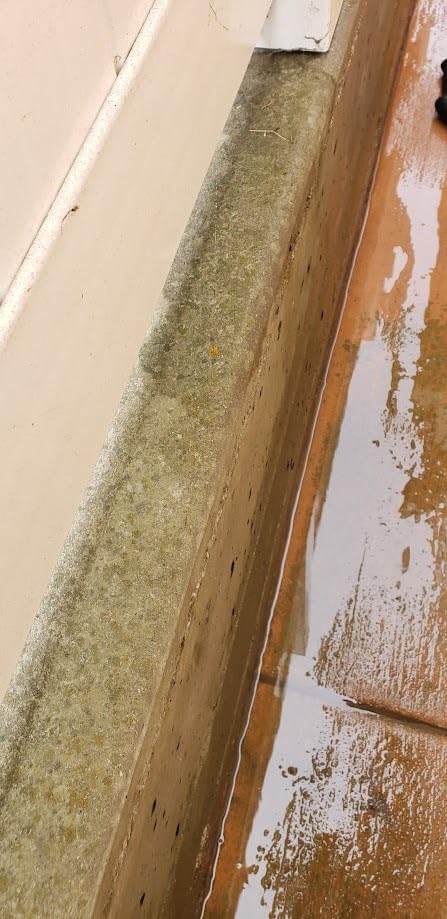
The three nozzles are a 15-degree all-purpose, a turbo and a 65-degree. For a boat you will live in the 15 and 65 degree tips and treat the turbo as a tool for the trailer frame rather than the hull. The on/off foot switch and automatic trigger-release shutdown let you work without holding your foot down, and the never-flat wheels roll over grass and dock boards without the air-topping hassle of rubber tires.
Long-term durability is the recurring theme in owner reports. Several people describe five years of service with only an o-ring replacement, which is the kind of track record you cannot get from a spec sheet.
Why gentler is the right call on an old hull
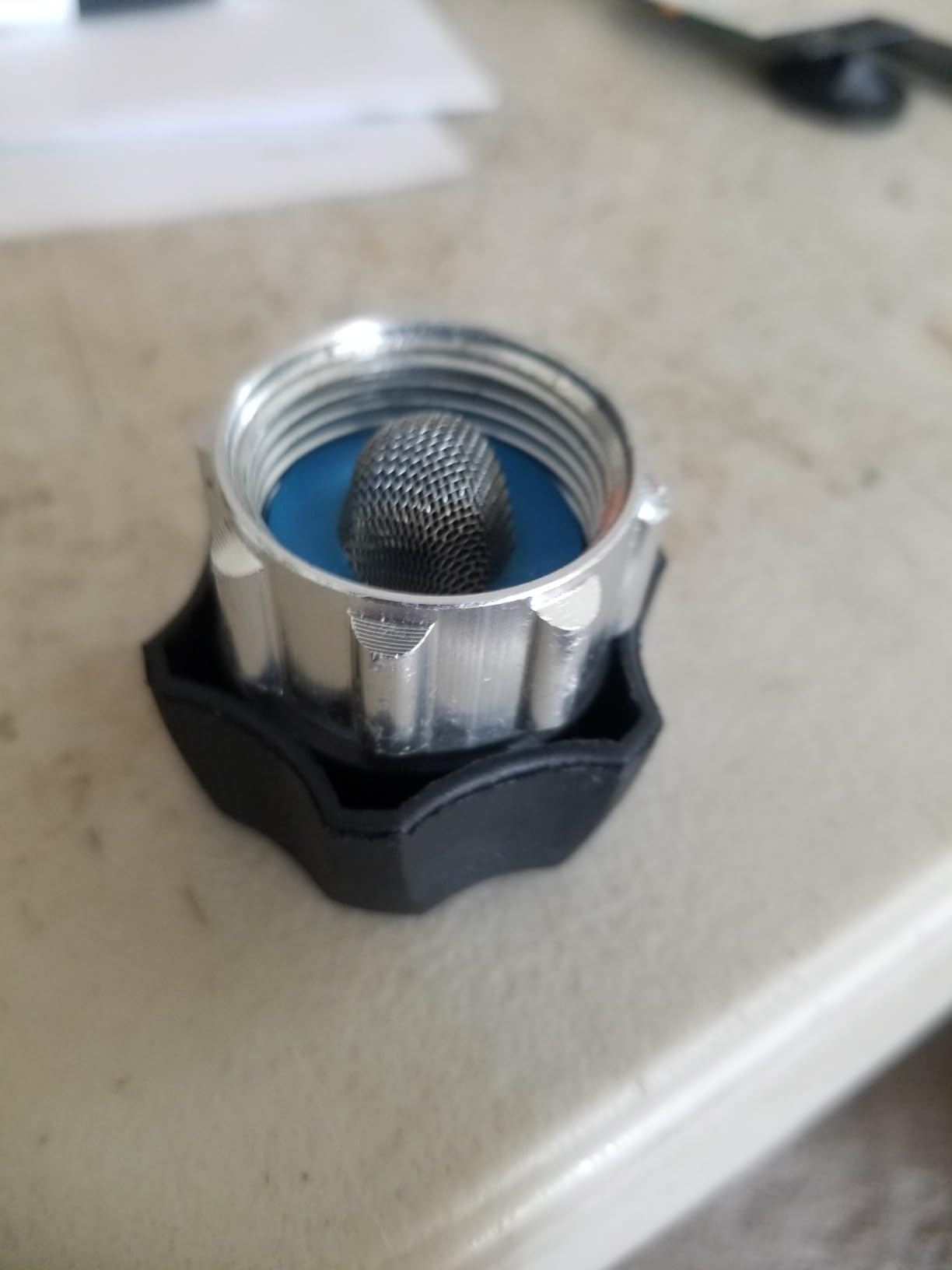
Oxidised gelcoat is chalky and thinner than new gelcoat, and the failure mode is not a dramatic gouge. It is a slow loss of gloss that shows up as dull patches where you aimed hardest. Keeping pressure in the 1,700 range with a 65-degree tip held back gives you removal without that.
There is a useful owner consensus on this point worth repeating: the tip you choose matters more than the maximum PSI printed on the housing. Several posters make that argument independently, and it is the single most transferable piece of advice in this whole article.
Where it falls short for boats
1,700 PSI at 1.2 GPM is essentially car-washer level pressure, and owners say so directly. It handles light surface dirt and moderate staining well but is not the tool for heavy marine growth or thick scale on a hull that has been neglected for seasons.
The 0.5 gallon detergent tank produces suds rather than foam, so plan on an external foam cannon if you follow the detergent-first method. The supplied hose is also stiff and has no storage hook, which makes it push out of the box and coil awkwardly in a dock locker.
4. LWQ S5 (Best High-Flow Pressure Washer for Boats)
Pressure Washer, Portable Power Washer, 4 Quick Connect Nozzles, High Pressure Cleaning Machine for Car Fence Driveway Patio Washing and More(Light Green)
2030 PSI
2.5 GPM rated flow
Foam cannon included
16.6 lb, bucket feed
Pros
- Highest flow rating in this group for fast rinsing
- Foam cannon included in the box
- Bucket or faucet feed works where no spigot exists
- Lightest chassis with anti-tipping base
Cons
- No brand-name pump or service network
- Lightweight plastic construction
- Only some industry standards met
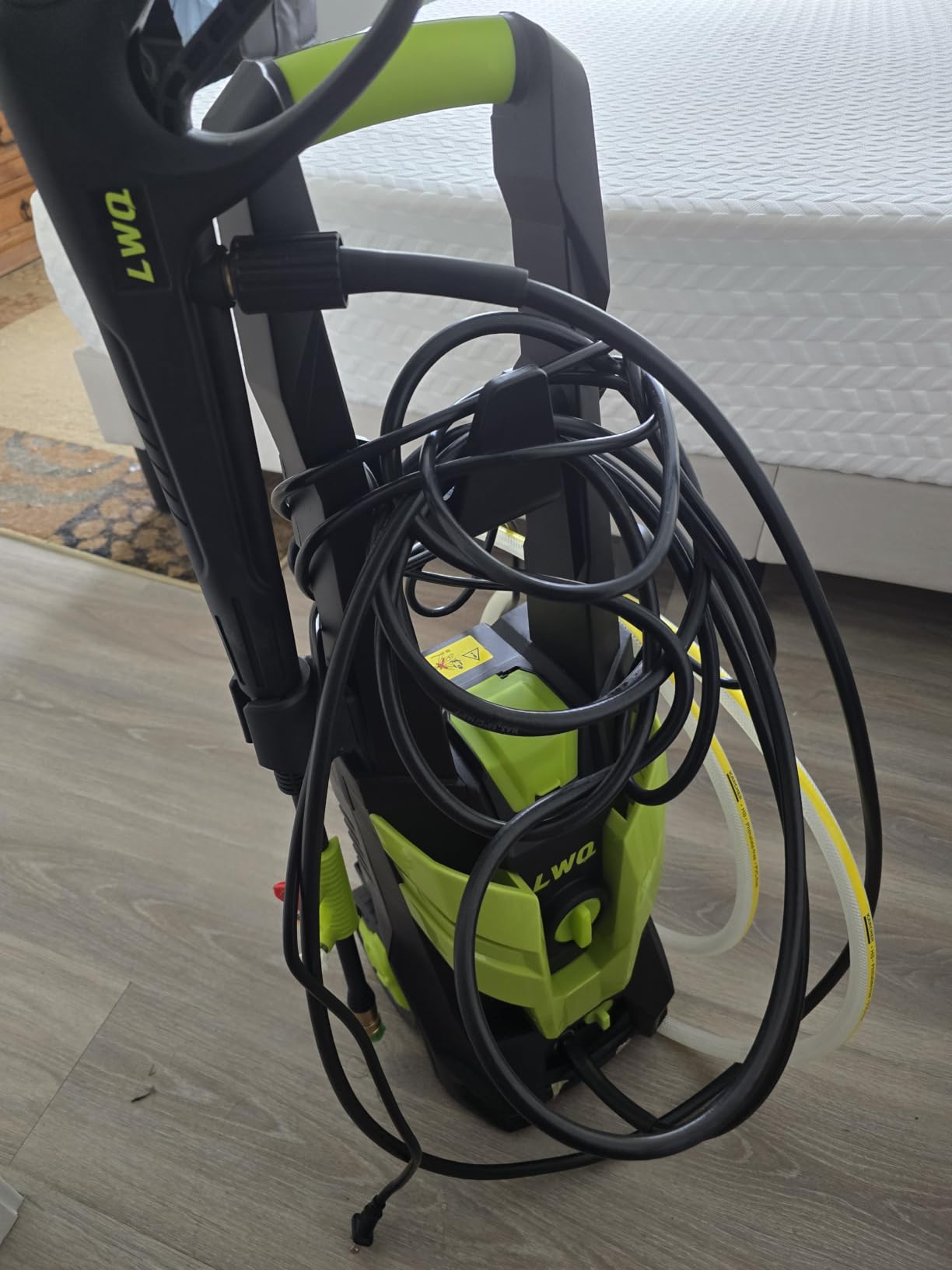
Flow rate is the number most shoppers ignore and most buyers regret ignoring. This machine carries up to 2.5 GPM, the highest rated flow in the group, at 2,030 PSI. For a boat, that combination means the rinse moves water off the deck and out of the non-skid texture instead of merely pushing soap around, and that is the difference between a wash that feels finished and one that leaves a film.
It also comes with a foam cannon in the box, which is unusual at this level and removes the most common accessory purchase. The detergent bottle accepts bleach-type cleaners without routing them through the pump, a detail that protects the seals when you are using an aluminum-safe boat wash concentrate.
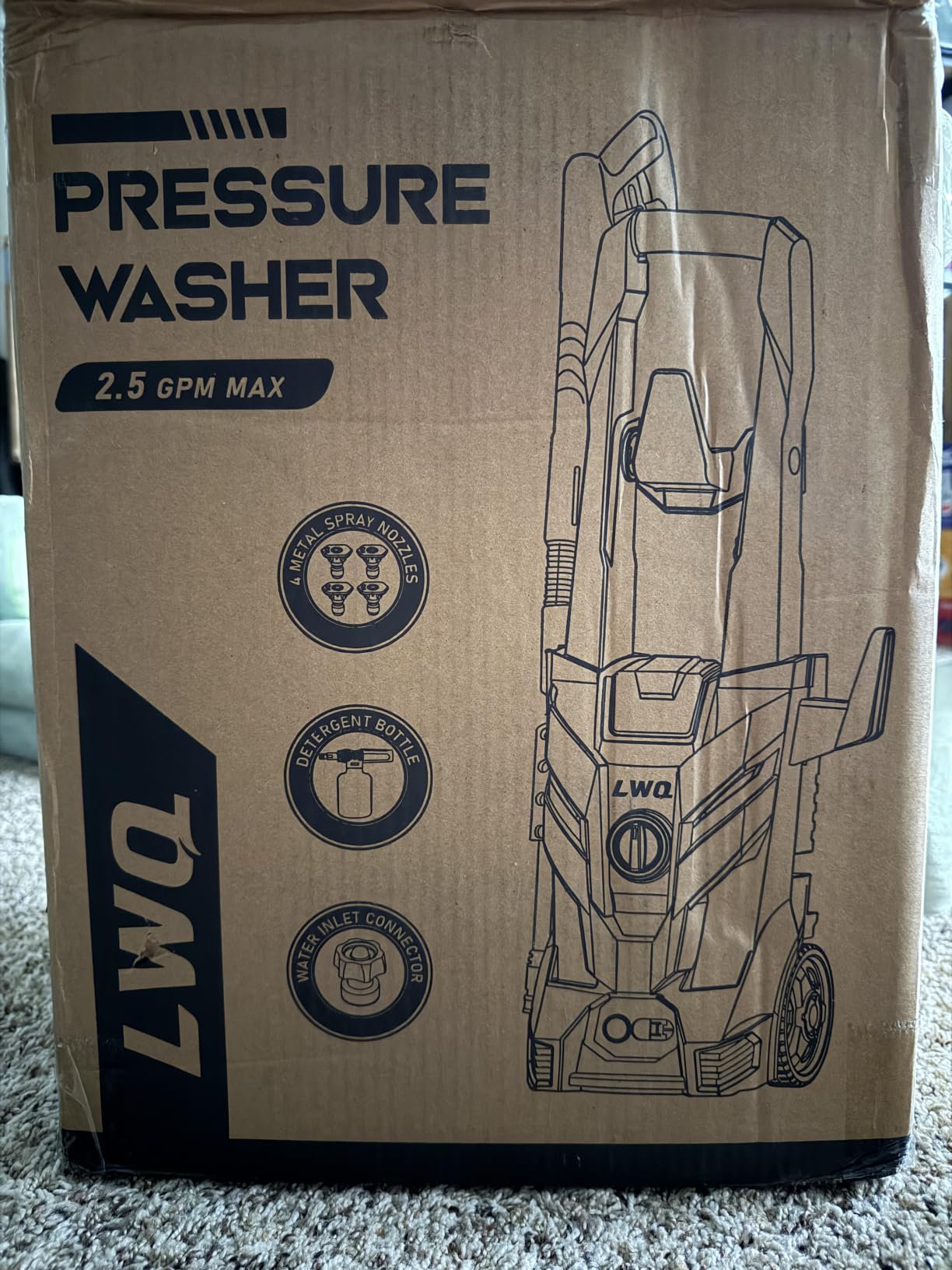
The faucet and bucket water collection system is the feature I would point a mooring or raft owner to. If there is no wall spigot at the dock, this machine will still run by drawing water from a five-gallon bucket or a faucet adapter. That removes the single most common reason people give up on washing a boat away from a slip.
At 16.6 pounds with an 18 by 14 by 11-inch body, it is the lightest chassis here and stores flat in a locker without taking a shelf away from anything else.
When high flow beats high pressure
There is a class of boat work where pressure is not the constraint. Removing a season of salt water from a large non-skid deck, rinsing detergent out of a full-length runabout, or washing down a trailer frame loaded with mud all depend on moving volume rather than impact. That is where a 2.5 GPM machine outperforms a 2,000 PSI one with half the flow.
Owners also point out that matching gallons per minute to pressure changes the felt cleaning power more than the headline PSI number suggests. Two numbers that look unimpressive together can beat one impressive number on its own.
Where it falls short for boats
There is no brand-name pump or national service network behind it, so parts support is limited and long-term repairability is less certain than the branded alternatives. The lightweight plastic construction also feels less substantial than a metal-framed machine when you drag it across a dock.
One more caution: four metal nozzles graded 0 through 40 degrees means the aggressive tip is in the box. Use the 25 and 40 degree tips on gelcoat and keep the zero-degree jet for trailer frames and very stubborn non-boat jobs.
5. Westinghouse ePX3100v (Best Portable Pressure Washer for Boats)
Westinghouse ePX3100v Electric Pressure Washer, 2100 Max PSI 1.76 Max GPM, Built-in Carry Handle, Detachable Foam Cannon, Pro-Style Steel Wand, 3-Nozzle Set, for Cars/Fences/Driveways/Home/Patios
2100 max PSI, 1800 rated
1.76 max GPM, 1.2 rated
17.6 lb with carry handle
Foam cannon included
Pros
- Highest average rating in the group at 4.7
- Built-in carry handle at 17.6 pounds
- Foam cannon included out of the box
- Compact footprint stores on a shelf
Cons
- No onboard soap tank
- Detergent must feed through the foam cannon
- Modest rated flow for heavy growth
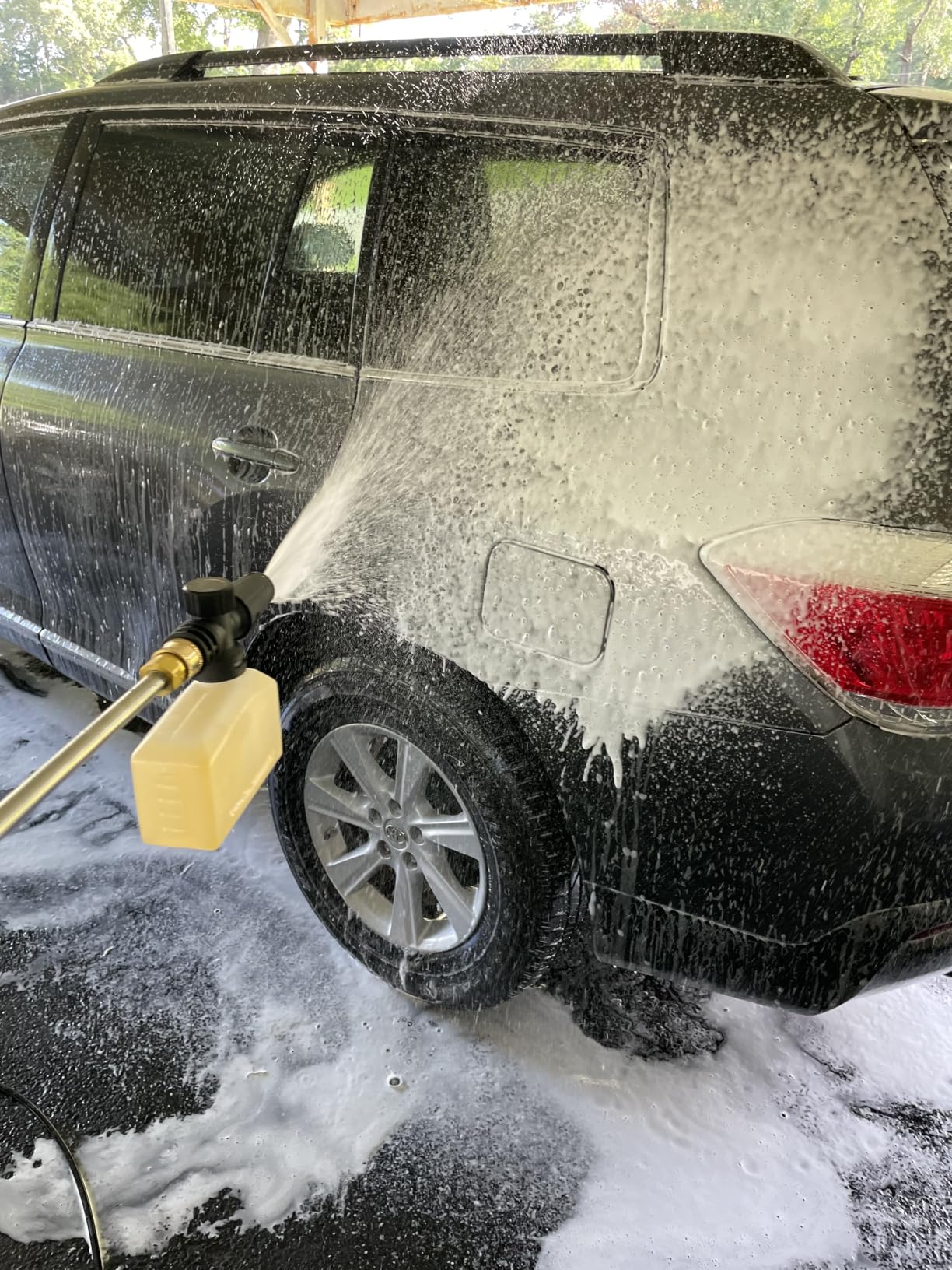
This is the highest-rated machine in the group at 4.7 across 4,913 reviews, with 81 percent of owners giving it five stars. On a list where two models sit at 4.2 and 4.3, that gap is meaningful, and it comes from owners describing the same three things: sensible power, easy portability and a detachable foam cannon in the box.
Portability is the headline here. At 17.6 pounds with a built-in carry handle and a 15 by 8.5 by 11-inch body, this is the machine I would actually carry down a dock ladder onto a trailer. It stows on a garage shelf without claiming floor space, which matters if you already store a boat in the same building.
Specs read 2,100 max PSI and 1.76 max GPM with a rated figure of 1,800 PSI and 1.2 GPM. Rated lands right in the middle of the boat-safe band, and the pro-style steel wand carries three quick-connect nozzles to go with the detachable foam cannon.
Like the other Westinghouse units here, the total-stop pump idles the moment you release the trigger, so the machine cools during the pauses that are unavoidable when you are walking a hose around a hull.
What a 4.7 rating actually reflects
High scores on small machines usually come from buyers whose expectations matched the machine. Owners here describe using it for decks, siding, bins and small craft and being satisfied. The rating is not inflated, it is a well-matched product rather than an overhyped one.
That matters when you are choosing a pressure washer for boats, because the worst outcome is buying a headline pressure figure that disappoints on a hull. Here the headline and the rated figures are close together, and the foam cannon means the detergent step is ready to go.
Where it falls short for boats
There is no onboard soap tank, so detergent has to be fed through the detachable foam cannon. That is fine on a small boat and mildly annoying on a large hull, because you end up carrying the cannon around instead of filling a tank at the machine.
The listing also shows conflicting hose lengths, with 25 feet in one field and 20 feet in the feature copy. Treat the shorter figure as the working number and measure around your hull before you rely on reach. Owners also note the foam cannon and wand do not lock as firmly as on higher-end machines.
6. Kärcher K 5 Premium (Best Built Pressure Washer for Boats)
Kärcher Pressure Washer K 5 Premium, 1.4 GPM with Hose Reel
2000 PSI and 1.43 GPM
Water-cooled induction motor
Onboard pressurized hose reel
32 lb, 1.4 gal soap tank
Pros
- Induction motor and N-COR pump outlast universal motors
- Exceptionally quiet for a machine this size
- Vario Power wand dials pressure down safely
- Onboard hose reel keeps 25 foot hose coiled
Cons
- Highest cost in this group with the lowest rating at 4.0
- Proprietary fittings block most third-party accessories
- 32 pounds is the heaviest chassis here
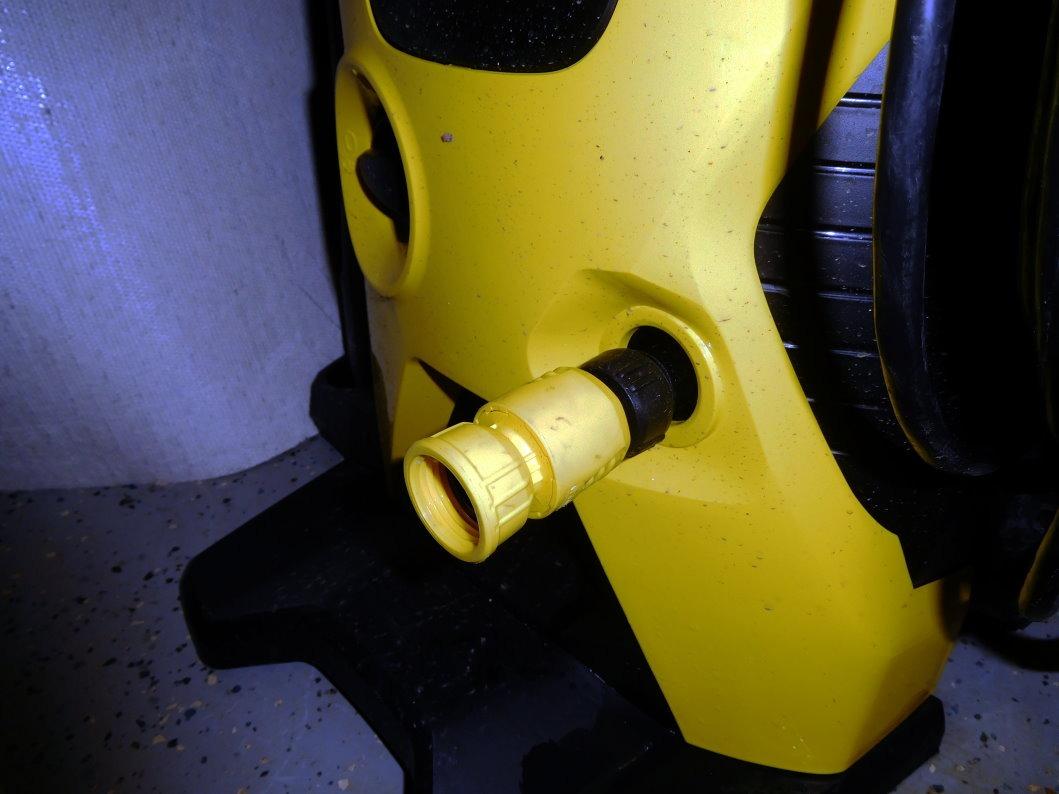
This is the build-quality answer, and the reason is mechanical rather than cosmetic. It uses a water-cooled brushless induction motor with a non-corrosive N-COR pump, which is a fundamentally different powerplant from the universal motors used in every other machine on this list. Owners who value longevity rate it highest of anything they have owned.
The Vario Power spray wand is the feature I would underline for boats. You can dial pressure down continuously to a gelcoat-safe setting at the wand instead of swapping tips or hoping you picked the right one. On a hull with mixed surfaces, that control is worth more than the extra headroom.
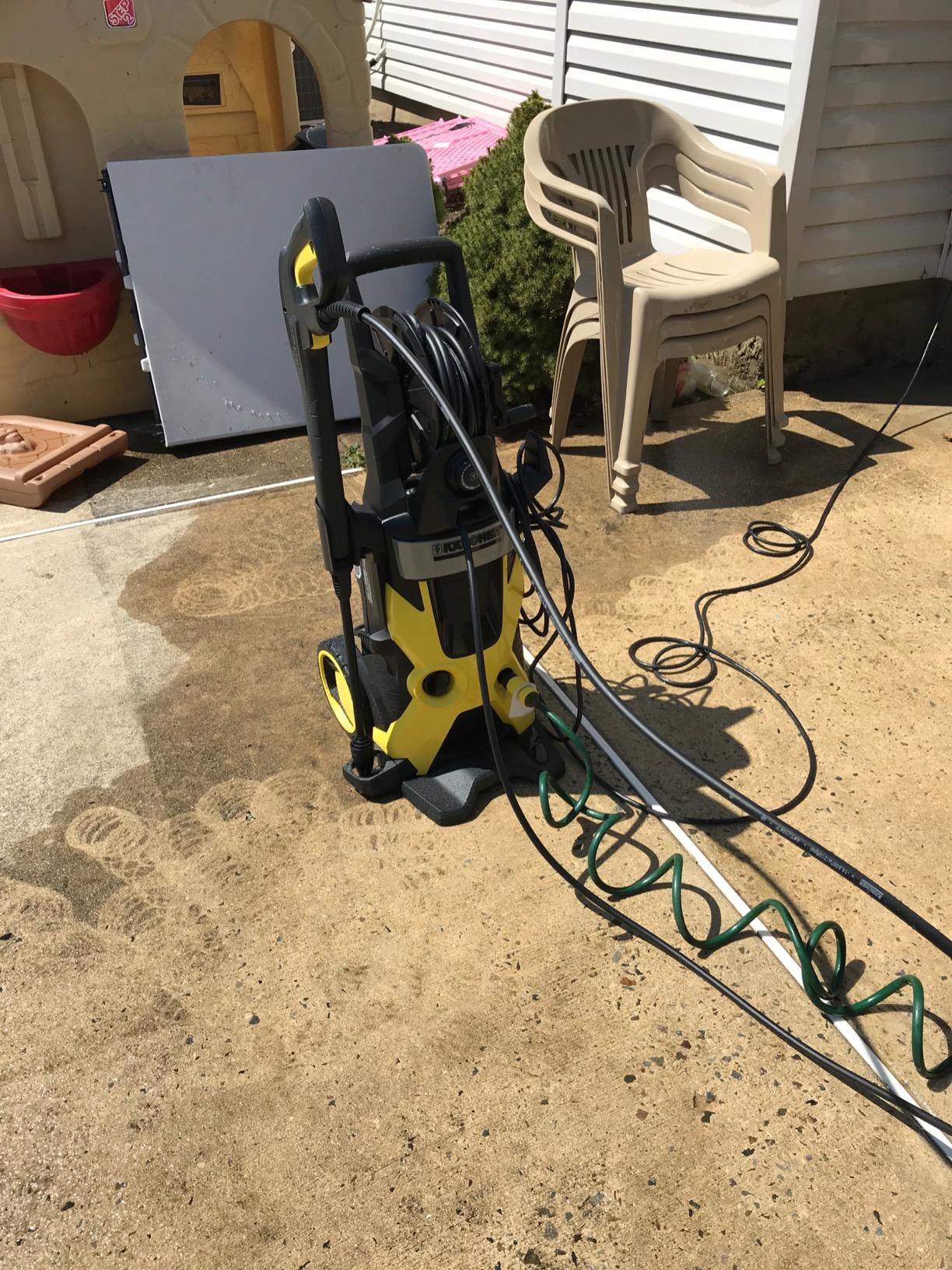
It is also the quietest machine here, reported at roughly a third as loud as a gas washer, which makes early morning work in a residential marina or a shared slip far less disruptive. The pressurized onboard hose reel coils the 25-foot hose neatly after each use, and the removable 1.4 gallon detergent tank is the largest in the group with an adjustable flow dial.
Kärcher customer service has shipped full replacement units for defects according to owners, which is part of why the build quality matters less urgently on this machine than on others.
Why the induction motor changes the service life
A universal motor wears through brushes and overheats under sustained load. An induction motor runs cool and has no brushes to replace, which is why this machine keeps working when cheaper electrics with similar headline numbers are being repaired or returned.
For a boat owner washing twice a season for a decade, that difference is the whole calculation. The purchase cost per useful year on this machine is lower than the sticker suggests, even though it is the most expensive unit we reviewed.
Where it falls short for boats
It carries the lowest average rating in the group at 4.0, and the reason is consistent: 1.43 GPM is light flow for tough work, and the proprietary Kärcher quick-connect fittings mean most third-party hoses and foam cannons will not fit. If you already own accessories, that is a real limitation.
At 32 pounds with a 34-inch tall body it is also the least portable option here, which matters when the boat is at the end of a dock rather than in your driveway. Some owners also report the hose springs back against the hull as it unwinds from the reel.
7. Westinghouse ePX3050 (Best Budget Pressure Washer for Boats)
Westinghouse ePX3050 Electric Pressure Washer, 2100 Max PSI 1.76 Max GPM with Foam Cannon and Turbo Nozzle, for Cars/Fences/Driveways/Home/Patios
2100 max PSI, 1800 rated
1.76 max GPM, 1.2 rated
Foam cannon and turbo tip
17 lb, 3-year warranty
Pros
- Foam cannon and turbo nozzle both included
- 17 pounds with a 26 inch vertical profile
- 35 foot GFCI cord reaches most dock spigots
- Owners report stripping moss from wood decks
Cons
- 20 foot hose is shorter than the ePX3500
- Small 20 ounce soap tank
- Stiff plastic hose can kink
This is the value pick, and the reason is the box contents. You get 2,100 max PSI with a 1,800 rated figure and 1.76 max GPM, plus a foam cannon and a turbo nozzle, at the lowest cost of any machine in this group. Most competitors at this spec level sell the foam cannon separately or not at all.
One owner in the review set reported stripping moss and slime from three mahogany decks in a single session with this machine. That is the strongest kind of use case evidence there is, because mahogany decks are the surface most likely to be damaged by a careless wash, and the owner went the other way.
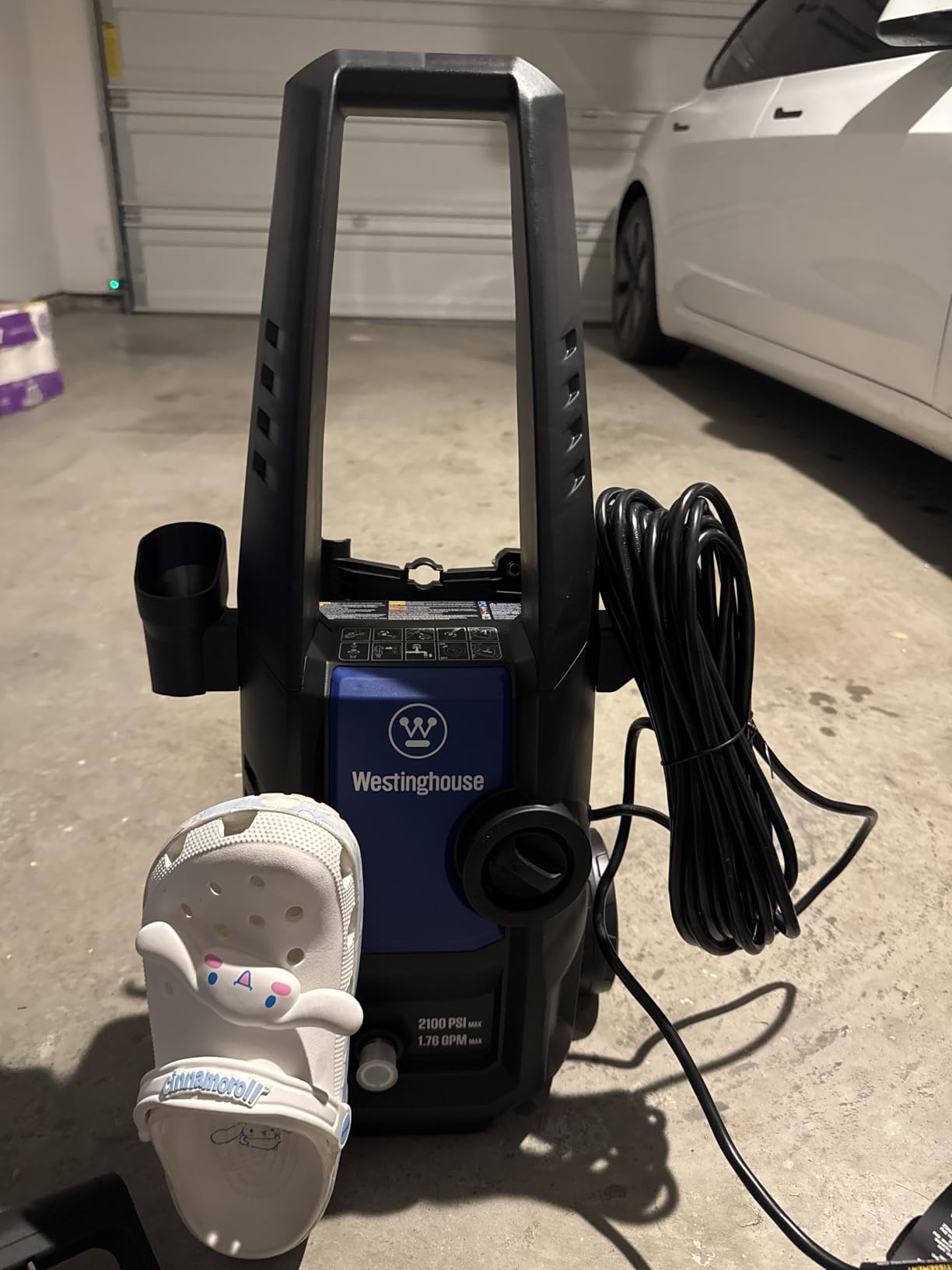
The 35-foot GFCI-protected cord is longer than most and means you rarely need an extension to reach a dock or yard spigot. That single detail removes the most common trip hazard in boat-yard washing, and the GFCI protection matters in damp environments where a fault would be dangerous.
The maintenance-free axial pump with automatic total-stop shutoff is a sensible design for intermittent use. Five-inch never-flat wheels and a 25.8-inch vertical profile keep it upright and rolling over rough ground.
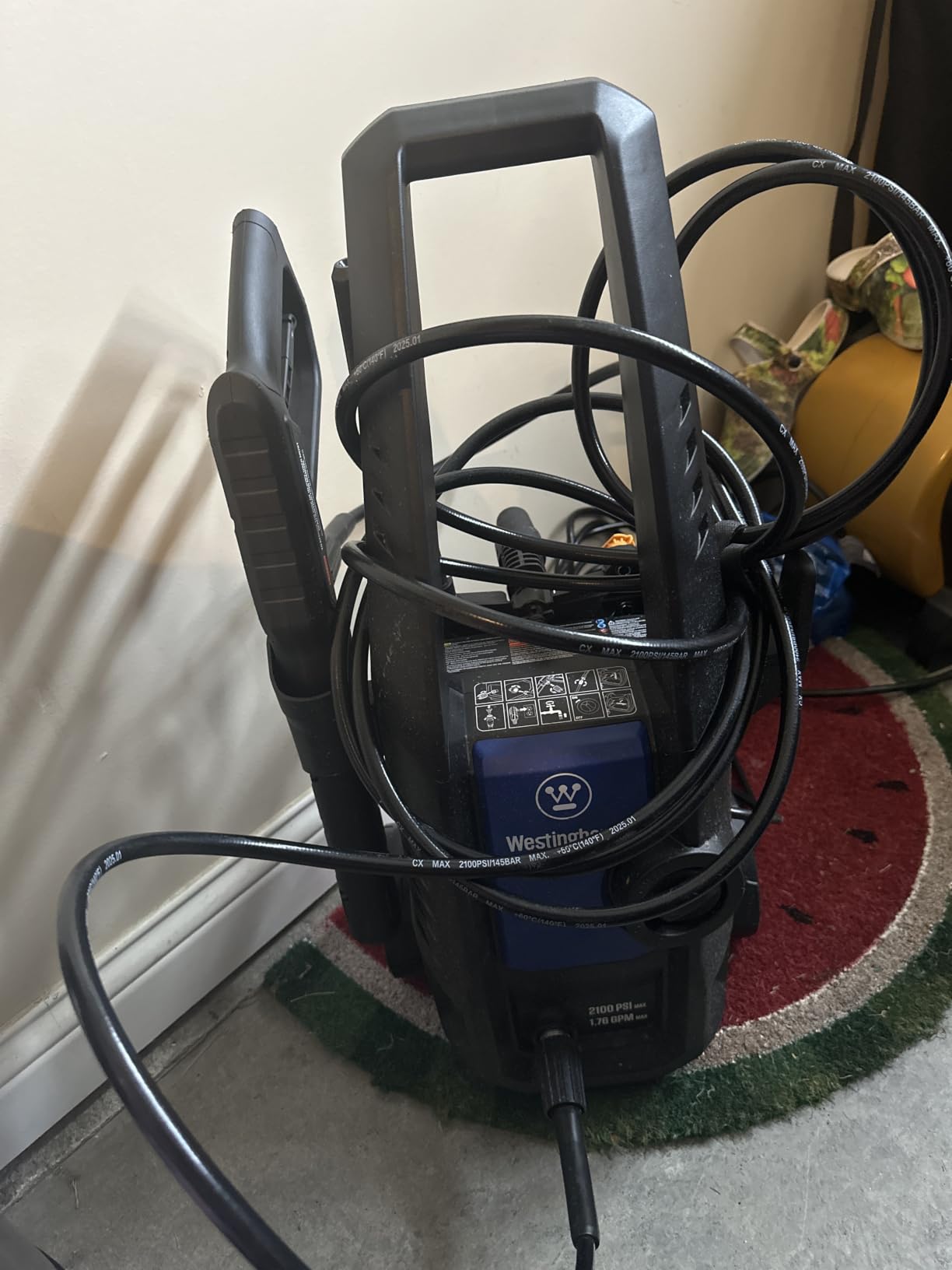
Why the foam cannon matters more than the tip
Boat owners consistently describe detergent-first washing as the step that makes the rinse work instead of the pressure. Soaping from the bottom up and letting it dwell lifts marine growth off gelcoat and out of non-skid, so the water only has to carry away what is already loose.
Having that foam cannon in the box is the difference between following that method and skipping it. A basic soap nozzle produces suds that sit in the tank instead of clinging to a vertical hull.
Where it falls short for boats
The 20-foot hose is shorter than the ePX3500 in this same line, and it is the constraint most likely to annoy you on a longer hull. You will move the machine more often, and moving an electric washer means moving its cord too.
The high-pressure hose is stiff plastic and can kink if handled roughly, which matters if you plan to coil it in a locker rather than hang it. Some buyers also report a missing wheel in the box, so check the package before you head for the water.
8. Greenworks GPW2003 (Best Verified-Spec Pressure Washer for Boats)
Greenworks 2000 PSI (1.2 GPM) Electric Pressure Washer
2000 PSI and 1.2 GPM
PWMA rated performance
1.2 gallon soap tank
Removable handle, 3-year warranty
Pros
- PWMA rating means the figures are standardised
- 14 amp motor delivers real pressure for a boat
- Large onboard soap tank for its size
- Removable handle stores flat on a shelf
Cons
- Aluminium fittings can corrode against brass
- Wire-clip wheels can detach during use
- 25 foot hose is short for long hulls
The 2,000 PSI and 1.2 GPM figures on this one are PWMA rated, which means they follow an industry standard rather than being measured at initial discharge. That distinction matters when you are comparing listings, because headline max PSI is frequently the inflated number and rated PSI is the one you will actually feel.
At 2,000 rated PSI it sits squarely in the boat-safe band, driven by a 14-amp motor with push-button start and automatic start-stop when you release the trigger. The 1.2 gallon onboard soap tank is among the largest in this group, which reduces refills during a full hull pass.
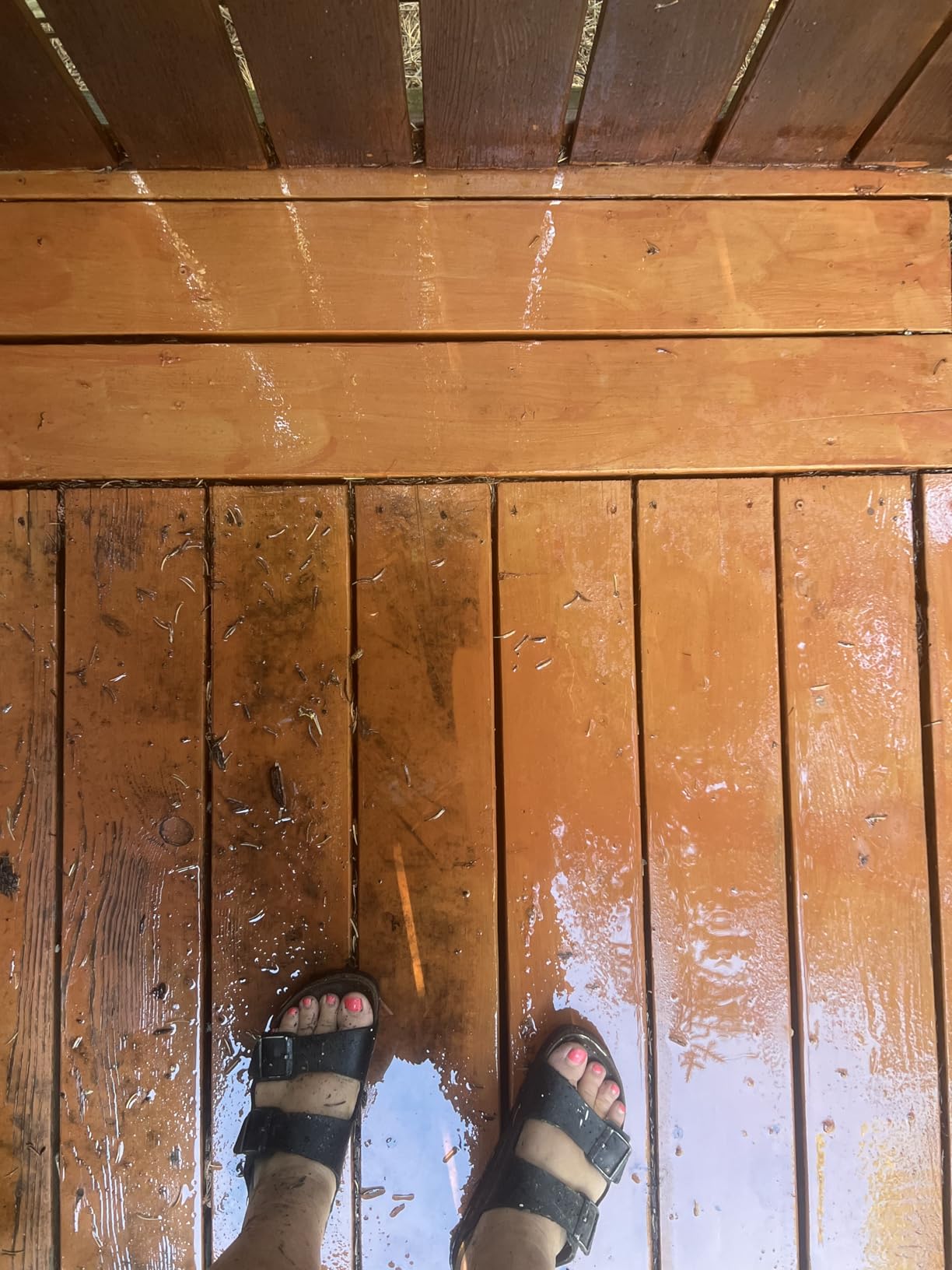
The removable handle is the feature I would call out. Detach it and the machine stores flat on a garage shelf, freeing dockside storage space that is genuinely hard to find in a crowded slip or a small trailer garage.
Owners also note it is quiet enough for residential neighborhoods, which matters if you wash early or on weekends. The GFCI-protected cord with a short pigtail suits covered outdoor outlets.
The fitting problem nobody mentions in the listing
Owners consistently flag that the connectors are brass-coloured anodized aluminium rather than solid brass. In salt water or in a wet dock locker, galvanic corrosion between aluminium and any brass part you connect can seize a fitting over a season or two.
If you buy this machine, rinse the fittings with fresh water after each use and dry them before storage. It is a five-minute habit that prevents the single most common long-term complaint about this unit.
Where it falls short for boats
The 25-foot hose is not long enough to walk the length of a bigger boat without moving the unit, and the stock hose and nozzles feel cheap. Owners report that upgrading to a better hose and nozzles restores noticeably more usable pressure.
Two other recurring items: the wire-clip wheels can fall off during use and are worth zip-tying or replacing with bolts, and the instructions tell you to run supply water fully open, which some owners say damaged their unit. A minority also report motor failure or pump leaks inside the warranty period, so keep the receipt.
9. A-iPower E2800-FM (Best High-Max-PSI Pressure Washer for Boats)
A-iPower Electric Pressure Washer 2800 Max PSI 1.7 Max GPM Follow Me
2800 max PSI, 2000 rated
1.7 max GPM, 1.2 rated
Five nozzles including 0 degree
18.2 lb, 35 foot cord
Pros
- Highest max PSI figure in this group
- Five nozzles give the widest pattern choice
- Four quick-lock steering wheels with anti-tipping base
- 25 foot hose plus 35 foot cord for reach
Cons
- Rated 1.2 GPM means max PSI overstates real power
- Zero degree nozzle is aggressive on gelcoat
- No long brand history for parts support
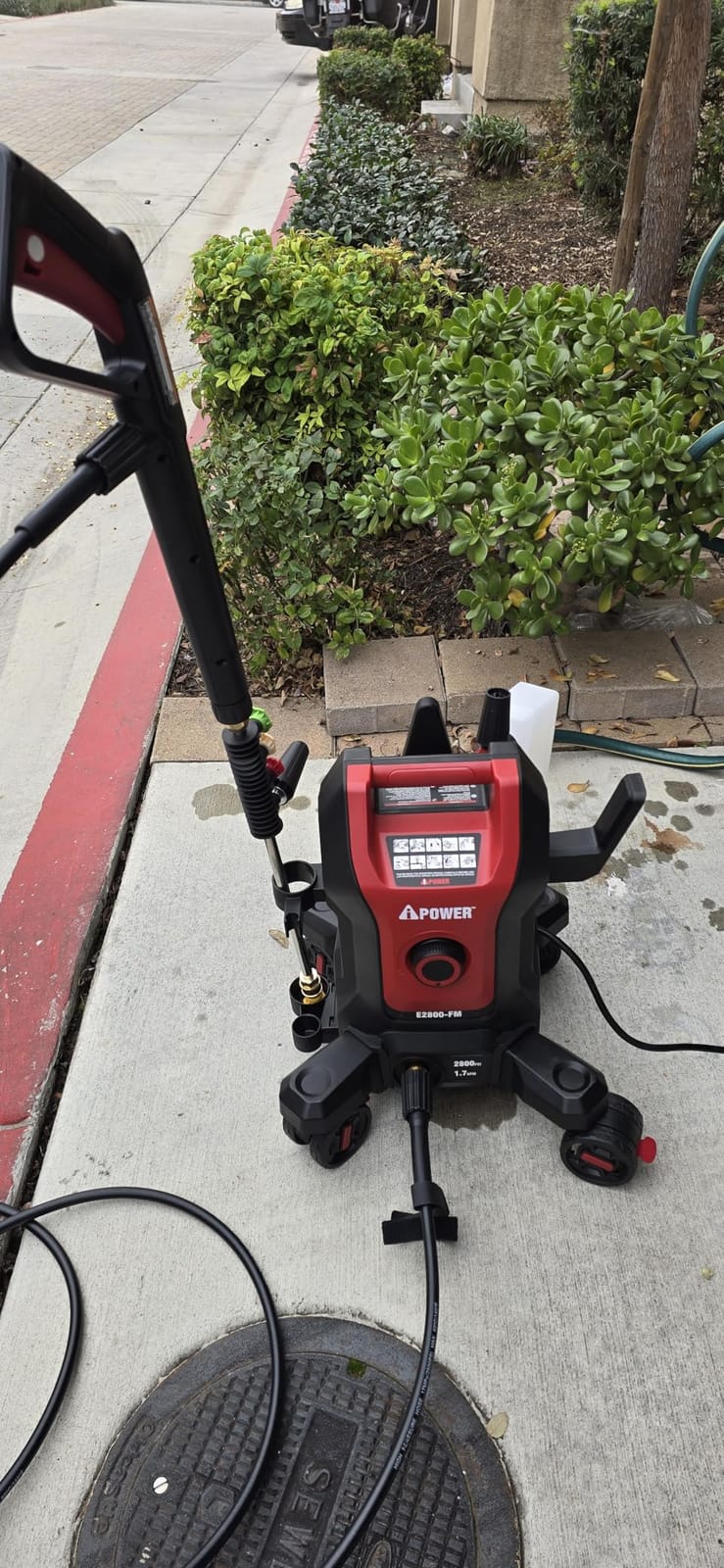
This machine leads the group on headline pressure at 2,800 max PSI, and I want to be direct about how to read that. Its rated figure is 2,000 PSI, which is the number that matters and which sits right at the top of the boat-safe band. The 2,800 number is measured at initial discharge and does not reflect sustained output.
Where it does stand out is tip selection. Five nozzles are included, 0, 15, 25, 40 and turbo, which is the widest choice here and gives you real control over impact pressure at the surface. For a boat, that range is the whole safety argument: you can choose a wide fan rather than dialing the machine down.
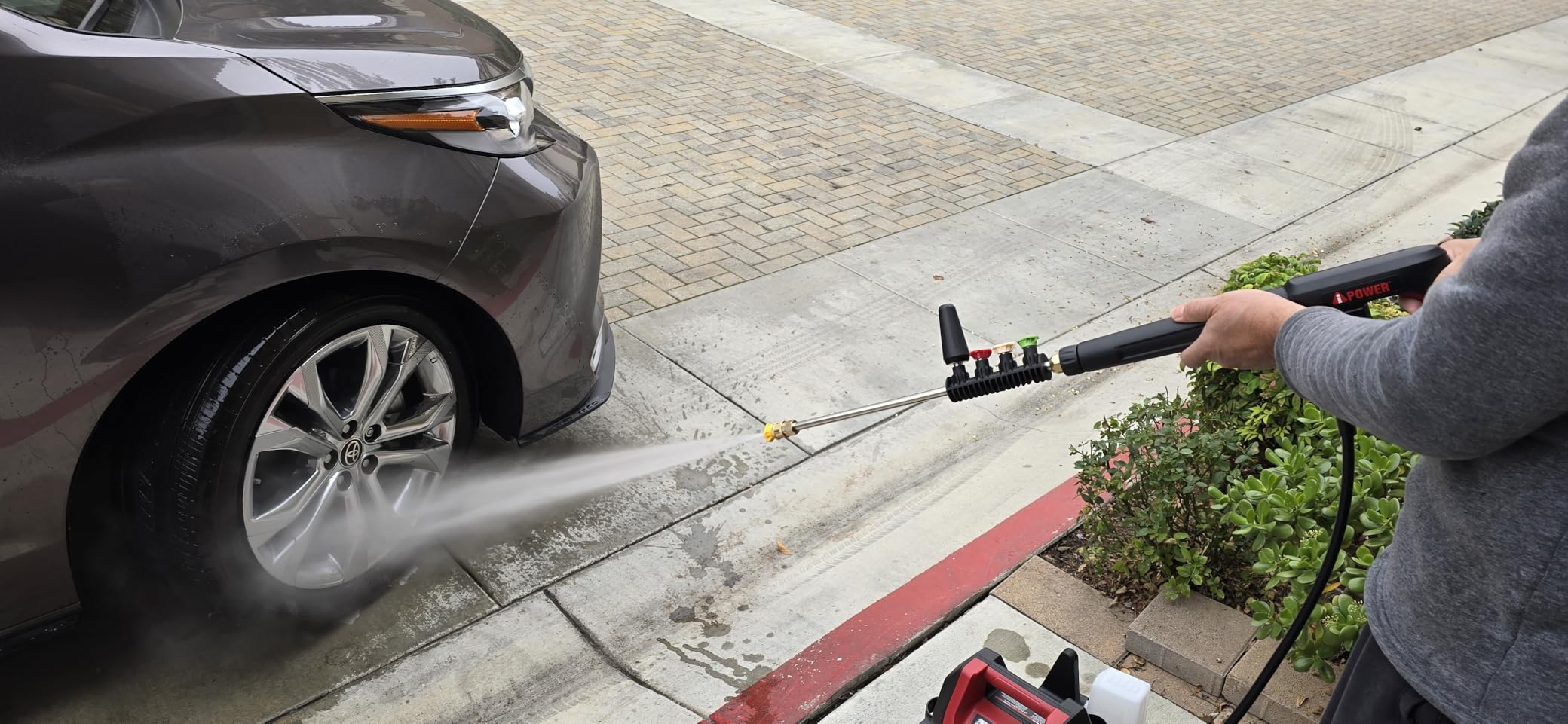
Mobility is handled well. Four quick-lock wheels with 360-degree steering and a low center of gravity keep it stable on uneven ground, and owners describe it as quiet, compact and easy to assemble. The 25-foot pressure hose plus a 35-foot power cord means one water feed point and one outlet covers most dock layouts.
Owners report using it effectively on composite decks, siding and pontoon carpet, which tells you it handles textured surfaces without being limited to smooth gelcoat work.
Read rated GPM, not max PSI
Rated flow here is 1.2 GPM, which is joint-lowest in the group. That is the reason max PSI overstates real cleaning power on this machine, and it is why a lower-PSI machine with more flow can finish a deck faster.
The practical rule is to plan around the rated pair, 2,000 PSI and 1.2 GPM. That combination suits routine maintenance washes on a hull that gets cleaned each season. It is not the pairing for stripping old bottom paint or moving thick growth off a boat that has been neglected for years.
Where it falls short for boats
The zero-degree nozzle in the box is genuinely aggressive on gelcoat, and it is the tip most likely to cause damage if picked up by someone who has not been told otherwise. Keep it off the hull.
Soap dispensing is a basic tank rather than a thick-foam cannon, so you would add an accessory to follow the detergent-first method properly. There is also no long brand history behind the machine, which makes long-term parts availability less certain than the established names.
10. Ryobi 1800 PSI (Best Compact Pressure Washer for Boats)
1800 PSI Electric Pressure Washer
1800 PSI and 1.2 GPM
1.2 gallon soap tank
12.5 by 10 by 9 inch body
M22 fittings, 20 foot hose
Pros
- Smallest footprint here
- fits a locker or closet shelf
- 1800 PSI sits in the safe gelcoat range
- Standard M22 fittings accept foam cannons
Cons
- 1800 PSI at 1.2 GPM is light for heavy growth
- No wheels so it must be carried
- Thinnest review base in the group
When storage space is the binding constraint, this is the machine that solves it. At 12.5 by 10 by 9 inches it is the smallest body in the group by a wide margin, and owners put it on a closet shelf or in a cabin locker where nothing else fits.
On pressure it lands in exactly the right place for a boat. 1,800 PSI with 1.2 GPM is a safe gelcoat range that will not strip wax or etch finish, which is what you want on a small runabout, a personal watercraft or a boat that gets washed every few weeks rather than once a season.
The M22 connections are a genuinely good sign at this size, because they accept the common quick-connects, foam cannons and aftermarket nozzles rather than locking you into one brand. The included foam cannon and wand can be swapped for better ones if you want more foam.
Several owners report swapping it in for a gas washer and being pleased with the result, which is the clearest endorsement available for a compact unit. It runs quietly and needs no fuel mixing or carburetor maintenance.
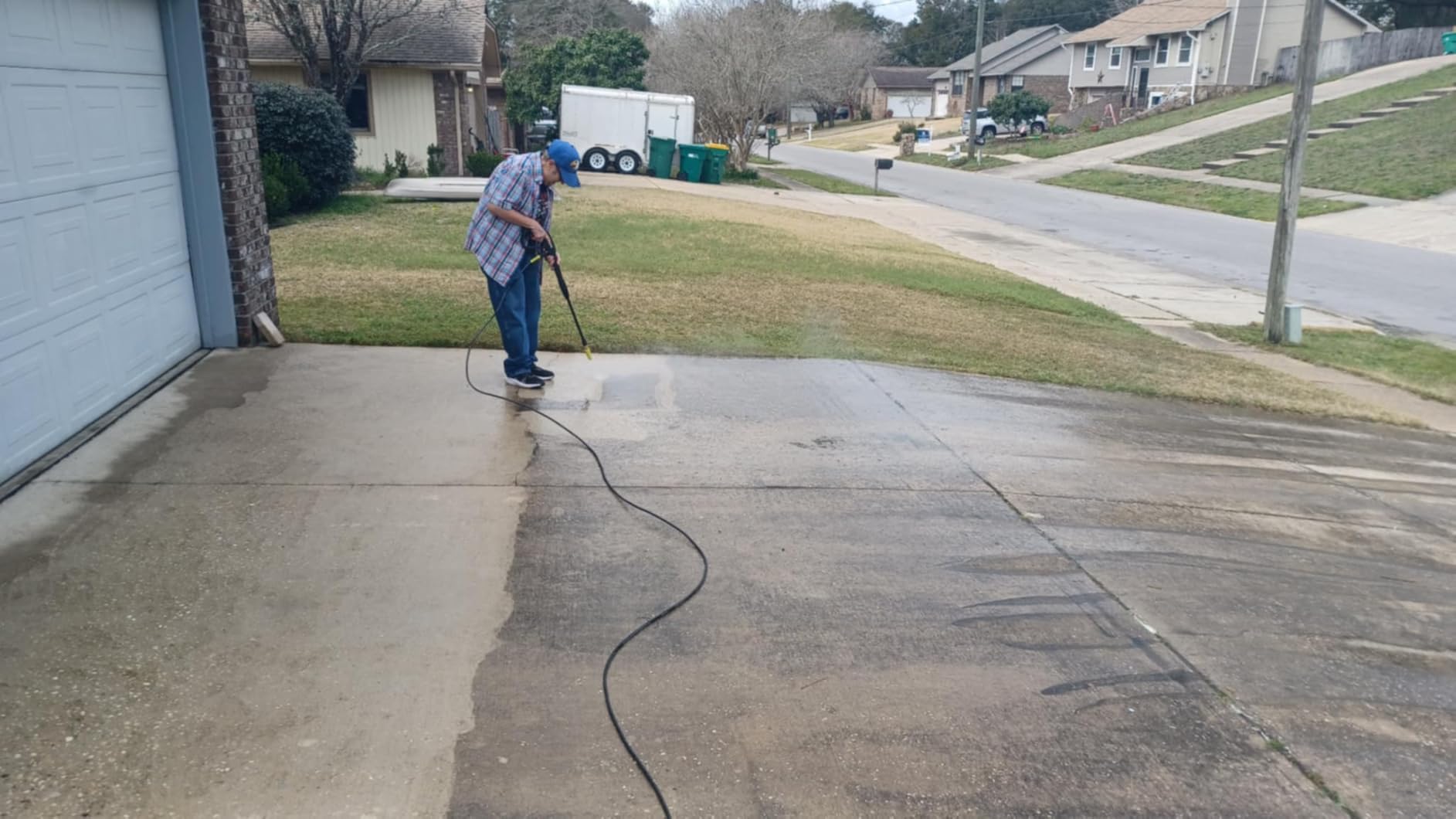
When small is the right answer
A small boat in a slip, a mooring with no power, or a hull that only needs a rinse after each outing does not need 2,500 PSI. It needs something you will actually store aboard and pull out without thinking about it, which is the smallest machine.
The absence of wheels is a real limitation here, so the carry distance matters. If the washer lives in a locker a few steps from the wash point, this works well. If it has to cross a yard, pick something on a wheeled chassis.
Where it falls short for boats
1,800 PSI at 1.2 GPM is underpowered for heavy marine growth, thick scale or concrete work, and the review base of 710 is the thinnest of any machine here, which means less long-term history to lean on.
Some one-star reports describe units failing to power up or smoking on first use, so test it as soon as you unwrap it and keep the packaging until you have confirmed it runs. Units sold in bulk by third-party resellers also fall outside Ryobi direct warranty support, which is worth checking before you buy.
How to Choose a Pressure Washer for Boats (Buying Guide)
Start with the PSI ladder rather than the brand list, because the ladder tells you which category of machine you can even consider.
Under 1,500 PSI is light duty. Fine for a rinse on a small boat, too slow for anything with growth on it.
1,500 to 2,000 PSI is the boat band. This is where gelcoat, topsides and non-skid decks are safely cleaned.
2,000 to 2,800 PSI is medium duty. Usable on a hull with a wide fan tip held back, risky on oxidised gelcoat, decals or trim.
Above 2,800 PSI is heavy duty and generally not for a boat. Owners on The Hull Truth describe anything past roughly 2,700 PSI as very destructive regardless of which tip is fitted.
Within that ladder, flow rate is the underrated number. Gallons per minute determines how fast you move water off the surface, and on a non-skid deck it is often the difference between clearing grit and merely relocating it. Match your flow to your pressure: a high-PSI machine with 1.0 GPM feels underwhelming next to a moderate-PSI machine with 1.8 GPM doing the same job twice as fast.
The second hard constraint is electrical. An electric washer is capped by the common 15-amp household circuit, which is why almost every electric machine sold for home use stops at about 2,000 PSI no matter how the box is worded. That is not a weakness for boat work, since 2,000 rated PSI is already at the top of the safe band. It only becomes a problem if you have some other heavy job that needs more.
Electric versus gas is the comparison every buyer asks about. Electric is quieter, lighter, starts instantly, needs no fuel draining before storage and costs nothing to run. Gas delivers more flow and far more pressure, but at 55 pounds or more it is awkward to move around a cramped yard, loud enough to annoy neighbours, and you have to run the tank dry before winter storage or you will find rust where the fuel sat. Our take matches the forum consensus: electric is the correct default for a boat, and gas only earns its place if you are stripping bottom paint or doing heavy non-boat work as well. If you want the broader picture on gas machines, our review of the best gas pressure washers for contractors covers that category in detail.
Detergent capability is not optional. Owners across every forum we read describe the same sequence: pre-rinse, foam from the bottom up, let it dwell, rinse from the top down. A machine without a usable detergent path forces you to do that step with a bucket and a sponge, which is the slowest part of the job by a wide margin. Look for a foam cannon in the box or an inline tank, and check that the fittings accept a standard M22 foam cannon.
Nozzle choice is the variable that decides whether you damage a hull. Owners repeatedly make the point that the tip matters more than the maximum PSI. A 40-degree fan at 12 inches does far less damage than a 15-degree at the same range, and a zero-degree turbo tip should not touch a fiberglass hull at all. Keep the zero-degree tip for the trailer frame.
Now think about where the washing actually happens. At a slip with a shore-power GFCI outlet, any of the corded electrics here work. At a mooring with no power at all, you need a battery machine, and our guides to the best cordless pressure washers and the best battery-powered pressure washers cover that category properly. Battery platforms on the market now cover roughly 1,000 to 2,000 PSI, which is the right band for a hull, and the bucket-draw feature lets them run from a five-gallon jug.
Storage deserves a paragraph of its own. Salt water corrodes fittings, quick-connects and hose clamps faster than most people expect. Rinse every fitting with fresh water after a wash near the water, dry before you close the locker, and lay the hose loosely rather than tight-coiling it. Gas units need the fuel tank run dry. Anything you store outdoors or onboard benefits from a breathable cover rather than a sealed plastic one.
Finally, consider renting instead of buying for a one-off spring clean. Owners raise this option repeatedly and it is entirely legitimate if you will wash once a year. A rental removes the storage problem, the corrosion problem and the purchase cost at once, and it lets you try a high-flow machine you would not want to own. If you will wash twice a season or more, buying wins quickly.
How to Pressure Wash a Boat Without Damaging It
The method matters more than the machine, and it is the part most owners get wrong on their first attempt.
Pre-rinse from the top down. Knock off loose dirt and salt with plain water before any detergent goes on. Washing dirt into gelcoat under pressure is how finishes get scratched.
Foam from the bottom up. Work the detergent upward so the cleaner lifts marine growth as you go. Applying soap from the top down just runs it back down into the clean section.
Let it dwell. Give the foam five to ten minutes to break the growth down. This is the step owners call the single most useful part of the whole wash, because it lets the water do the work.
Rinse top down. Reverse the direction so you are always pushing loosened dirt into areas that are still clean, not over finished sections.
Hold the wand back. Keep at least 6 inches of standoff, use a 25 or 40 degree fan, and never sweep a spray pattern sideways across a hull. Direct spray straight at the surface.
Dry it. Rinse, dry, then wax or polish while the gelcoat is still warm. A pressure wash without wax leaves the finish clean but unprotected.
Per-surface limits are where boats get damaged, and the numbers are lower than most people expect.
Smooth gelcoat topsides: up to 2,000 PSI with a 25 or 40 degree fan at 6 inches or more. Drop to 1,500 for oxidised or chalky finishes.
Non-skid textured decks: 1,500 to 2,000 PSI with a 40 degree fan only. A turbo tip will punch the texture out and leave the embedded dirt underneath.
Below the waterline and antifouling: keep it at 1,500 to 2,000 PSI. Do not point high pressure at a hull to strip bottom paint unless you intend to sand it back afterward.
Decals, graphics and vinyl lettering: under 1,500 PSI, wide fan, and never a turbo tip. Edges lift before the middle gives.
Wood trim and varnished surfaces: under 1,000 PSI. Water and pressure strip varnish quickly.
Canvas, covers and upholstery: under 1,000 PSI or use the soap setting only.
Stainless fittings and hardware: low pressure. Grit blasting stainless leaves permanent pitting.
One real-world data point worth repeating: a poster with a 40-foot sailboat and an all non-skid deck, no wood, uses a low-powered pressure washer about three times in 18 months and says it does such a good job that they feel like they are cheating. The question that followed was whether any harm comes from it. With a 40 degree fan and detergent first, the answer is generally no.
Frequently Asked Questions
What is the recommended pressure washer PSI for a boat?
For most boat hulls, 1,500 to 2,000 PSI is the safe working range. That is enough to shift algae, green slime and water staining off gelcoat and non-skid decks without etching the finish. Above roughly 2,700 PSI, damage becomes likely even with a wide fan nozzle, and an electric machine on a standard 15-amp household circuit will not exceed about 2,000 PSI anyway.
Is it safe to use a pressure washer on a boat?
Yes, if you stay in the 1,500 to 2,000 PSI band, keep a 25 or 45 degree fan nozzle at least 6 inches from the surface, and work with detergent from the bottom up and rinse from the top down. Non-skid decks, decals, wood trim and canvas all need less pressure, not more.
Which brand of pressure washer is the most reliable?
Reliability tracks the motor and pump rather than the badge. A water-cooled brushless induction motor with a non-corrosive pump, as used in the Kärcher K 5 Premium, outlasts universal-motor machines. Kärcher is the recognised yard standard in Europe, while Westinghouse leads this group on warranty length and Kärcher and Greenworks offer independently certified or standardised performance figures.
Is it okay to power wash a fiberglass boat?
Yes, with the right pressure. Fiberglass and gelcoat tolerate 1,500 to 2,000 PSI from a wide-angle fan nozzle held back, but older oxidised gelcoat, filled pinholes and previously repaired areas are the weak points. Never use a zero-degree turbo tip on a hull.
Do I need gas or electric for my boat?
Electric is the right default for boats. It is quieter, lighter, needs no fuel draining and it tops out near 2,000 PSI anyway because of the 15-amp circuit. Choose gas only for bottom-paint stripping or heavy non-boat work, and a battery machine when you have no shore power at a mooring or dock.
Our Verdict on the Best Pressure Washers for Boats
After working through all ten, the Sun Joe SPX3000 is our pick as the best pressure washer for boats overall. The dual 0.9-liter detergent tanks let you carry a hull cleaner and a deck cleaner at once, the stainless lance with brass fittings suits salt water, and 2,030 PSI rated sits at the top of the safe band without ever pushing toward damage. It is also the most widely owned machine on this list, which means parts, tips and advice are easy to find.
The Westinghouse ePX3500 is the pick if you want the strongest ownership package, with the best rating paired with the longest warranty and a 25-foot hose that lets you work a hull without moving the machine. The Westinghouse ePX3100v takes the portability crown at 17.6 pounds with a foam cannon in the box, and the Kärcher K1700 remains the right answer for an old, oxidised hull where gentleness outranks power.
Whichever you choose, the band stays the same in 2026: roughly 1,500 to 2,000 rated PSI, a wide fan tip held back at least 6 inches, and detergent applied from the bottom up before any pressure touches the gelcoat. Get those three things right and a fairly ordinary machine will keep a boat looking new for years.