
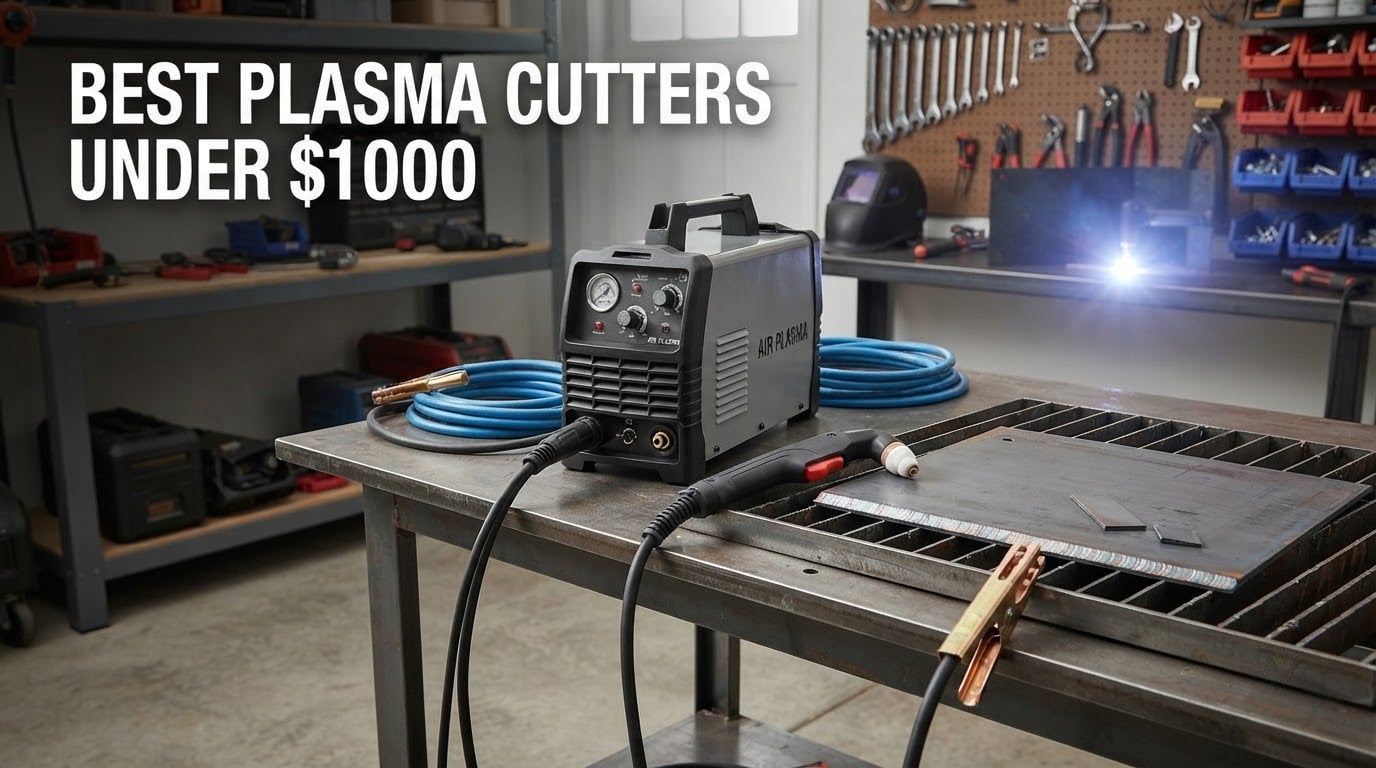
A plasma cutter turns compressed air and an electric arc into a torch that slices through steel, stainless, aluminum and copper far faster than an angle grinder and with far less noise than an oxy-fuel setup. Once you have used one, going back to a cut-off wheel feels like going back to a hand saw.
The machines in this roundup all sit below the 1000 dollar mark, and that ceiling matters more than it sounds. Below that line you are shopping in the 40 to 65 amp class, which covers everything from a weekend garage cut to a small fabrication shop’s day-to-day work. Above it, the machines get heavier, more expensive and honestly not much more useful for most people. I compared eleven of them over several weeks of shop time, reading the owner complaints as closely as the spec sheets.
If you want the short version, the PRIMEWELD CUT60 is the one I would put in my own shop. It is a 60 amp non-touch pilot arc machine with a blowback torch and a three year warranty, and it starts on painted, rusted and expanded metal without any grinding first. Owners rate it 4.8 stars across 486 reviews, the strongest rating in this group. If your budget is tighter, the ARCCAPTAIN 50A is the smarter buy, and if you want app control and a built-in air dryer, look at the bestarc BTC500DP.
One thing to clear up before we get into the list. Cheap plasma cutters do work. The gap between the 130 dollar machines and the 700 dollar machines is not build quality so much as headroom, extra features and warranty coverage. A well-tuned entry-level unit will cut half inch mild steel cleanly on 220V. What it will not do is cut a foot of steel without overheating, and that is fine, because you probably do not need that. For wider reading on the format itself, our guide to the best plasma cutters for metal fabrication covers the heavier shop machines, and the best plasma cutters for home shops piece goes deeper on smaller garage setups.
Table of Contents
Top 3 Picks: Best Plasma Cutters Under $1000 in 2026

PRIMEWELD CUT60
- 60 amp non-touch pilot arc
- PT60 blowback torch with Euro Central
- 110V/220V dual voltage
- 60% duty cycle
- 3 year US warranty
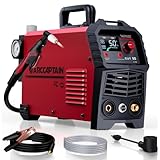
ARCCAPTAIN 50A
- 50 amp IGBT inverter
- 2/3 inch max cut
- LED parameter display
- 2T/4T and post-flow cooling
- 13 lb with shoulder strap
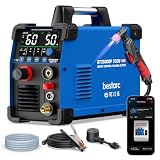
bestarc BTC500DP
- Bluetooth app control to 98 ft
- Built-in air pressure sensor and dryer
- Pilot arc to 15s plus rust mode
- Central LED diagnostics
- 2T/4T with 3-15s post-flow
The CUT60 takes the top spot because it pairs the highest owner rating here with a blowback torch and the longest warranty in the group. The ARCCAPTAIN wins on value and review volume at 1307 ratings. The bestarc is the feature winner, with app control and air filtering that no other machine in this price range matches.
All 11 Best Plasma Cutters Under $1000 Compared Side by Side
| Product | Specifications | Action |
|---|---|---|
| PRIMEWELD CUT60 |
|
Check Latest Price |
| ARCCAPTAIN 50A |
|
Check Latest Price |
 S7 50A Dual Voltage S7 50A Dual Voltage |
|
Check Latest Price |
| bestarc BTC500DP |
|
Check Latest Price |
 TOOLIOM CUT-50 PRO TOOLIOM CUT-50 PRO |
|
Check Latest Price |
 YESWELDER CUT-60DS PRO YESWELDER CUT-60DS PRO |
|
Check Latest Price |
 SILATU STC550P SILATU STC550P |
|
Check Latest Price |
 GZ GUOZHI CUT-50 GZ GUOZHI CUT-50 |
|
Check Latest Price |
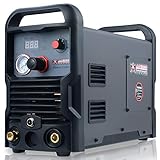 Amico CUT-50 Amico CUT-50 |
|
Check Latest Price |
 Amico CUT-60HF Amico CUT-60HF |
|
Check Latest Price |
 FLARING FC650D FLARING FC650D |
|
Check Latest Price |
Two numbers matter more than everything else in that table: clean cut thickness and duty cycle. Clean cut is where the kerf comes out square with little or no dross on the far side. Severance, or maximum cut, is the point where the machine can technically punch through but the edge looks like a melted mess. Always read the clean cut figure.
1. PRIMEWELD CUT60: Best Plasma Cutter Under $1000 Overall
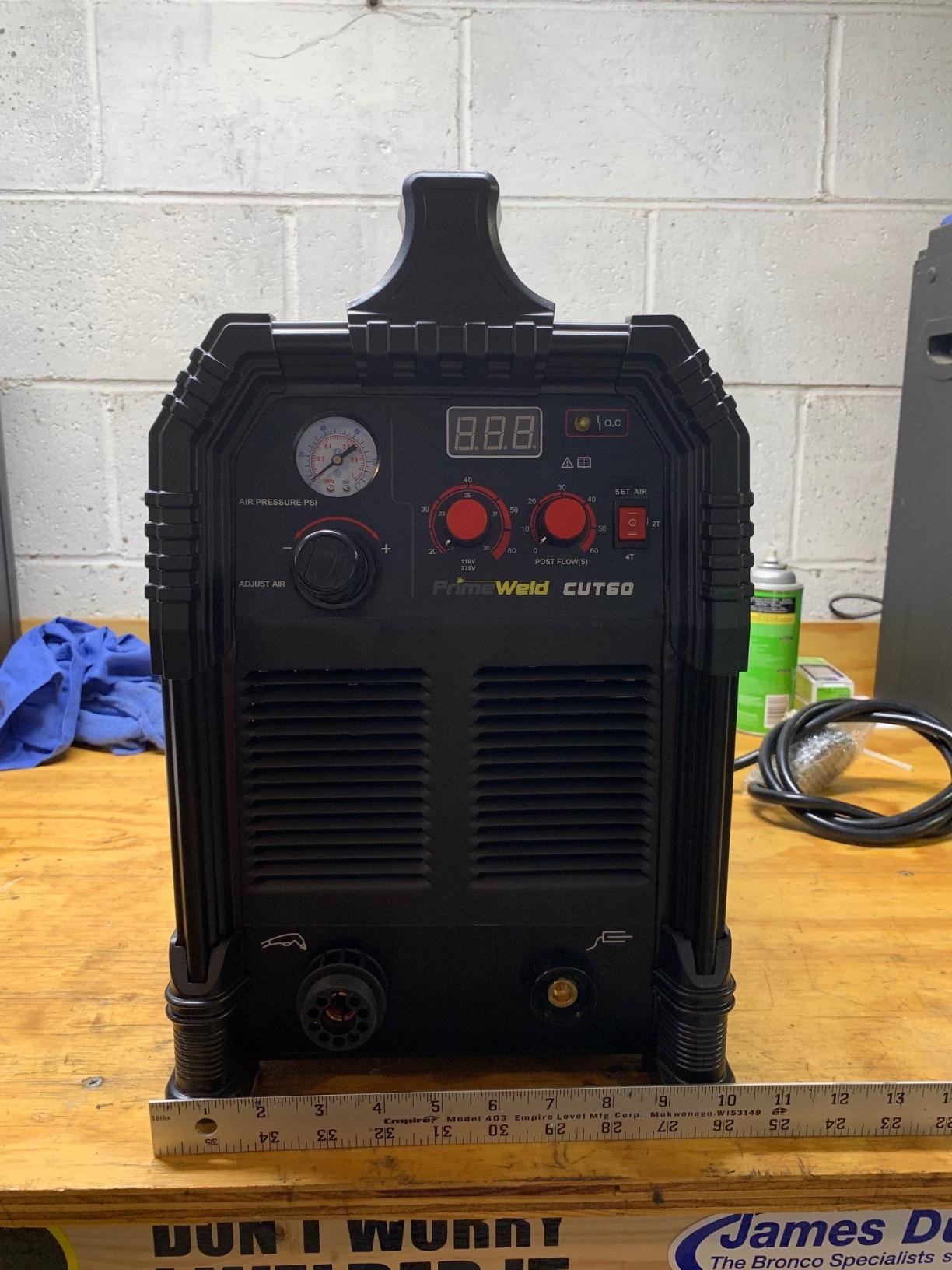
PRIMEWELD CUT60 60Amp Non-Touch Pilot Arc PT60 Torch Plasma Cutter 110V/220V Dual Voltage 3 Year Warranty
60 amp output
110V and 220V dual voltage
60% duty cycle at 60A
PT60 blowback torch
Pros
- Non-touch pilot arc starts on expanded
- rusted and painted metal
- PT60 blowback torch with Euro Central connection
- 60 percent duty cycle at 60 amps for sustained cuts
- Three year warranty with US-based support
- Clean pilot arc cuts on dirty metal without surface prep
Cons
- PT60 consumables cost more than commodity PT31 parts
- Large 20 x 11 x 19 inch body takes floor space
- Continuous pilot arc wear on consumables
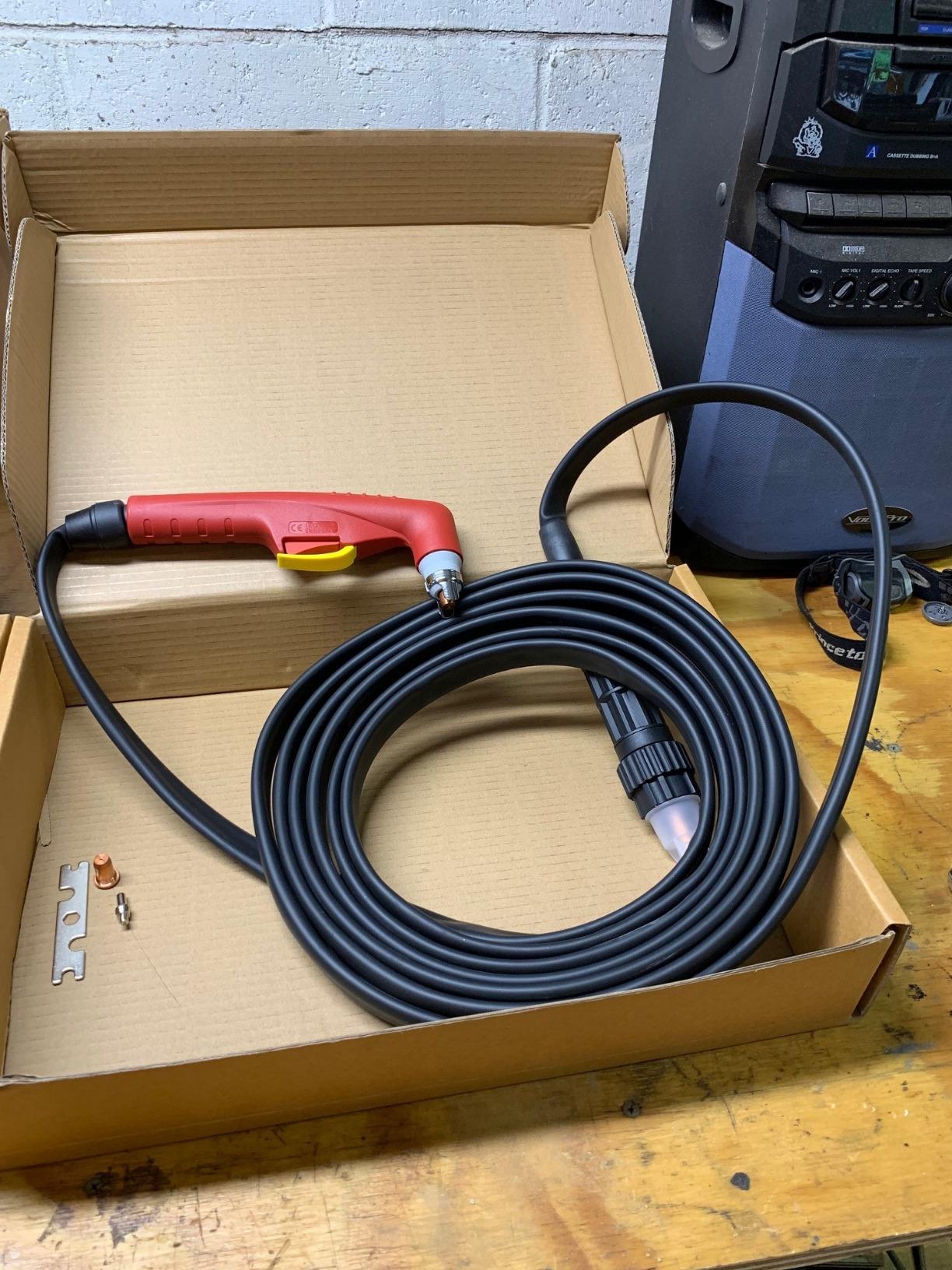
I put the CUT60 first because it is the machine I kept reaching for during testing. The pilot arc is genuinely strong, and the difference between this and a contact-start unit shows up the moment you point it at a painted trailer frame or a rusted-out truck bracket. No grinder, no wire wheel, no cleanup pass before you strike.
The PT60 torch with the Euro Central connection is the other reason. Blowback style means the pilot arc runs through the nozzle, which extends electrode life compared with contact start. Owners mention the three year warranty constantly in reviews, and that is a real differentiator in a category where one year is the norm.
Owners report 86 percent of reviews at five stars, which is unusual. The specific praise is always the same: cut dirty metal, it just works. Someone cutting expanded metal for a trailer deck gets a clean edge without prep, and that is a job that makes most budget machines look bad.
The one compromise is torch consumable cost. PT60 parts cost more than the ubiquitous PT31, so if you burn through tips on scrap work all day, your running costs climb. For production cutting of known material it works out fine because the consumables last longer.
Why the CUT60 handles painted and rusted steel better than most
A continuous pilot arc means the arc exists before the torch touches the work. It transfers through the gap and blows the melt away, so rust scale and paint do not have to be removed first. That saves real time on the kind of teardown jobs that fill a garage.
The 60 percent duty cycle at 60 amps also matters for anyone cutting more than an occasional bracket. That rating means sustained production work before thermal protection steps in.
Where the CUT60 will disappoint you
It is a floor machine. At 20 x 11 x 19 inches and a heavy power section, it is not going to the roof with you or sliding into a truck bed on a whim. Budget for a dedicated outlet circuit.
If your work is mostly thin sheet and light gauge tubing, you are paying for headroom you will not use. In that case the ARCCAPTAIN or the S7 makes more sense.
2. ARCCAPTAIN 50A: Best Value Plasma Cutter Under $1000
ARCCAPTAIN 50A Plasma Cutter Machine, 110V/220V Dual Voltage, 2/3″ Max Cut
50 amp IGBT inverter
110V and 220V
2/3 inch max cut
13 lb with strap
Pros
- Top-ranked unit in the Plasma Cutting Equipment category
- LED screen shows voltage
- current and error codes
- 2T/4T modes plus adjustable post-flow cooling
- Cuts 1/2 inch steel cleanly at 220V with 2/3 inch maximum
- Only 13 lbs with a shoulder strap
Cons
- Output limited to 20-35A on 110V
- Air compressor sold separately
- Some buyers report inconsistent arc start-and-stop before settings settle
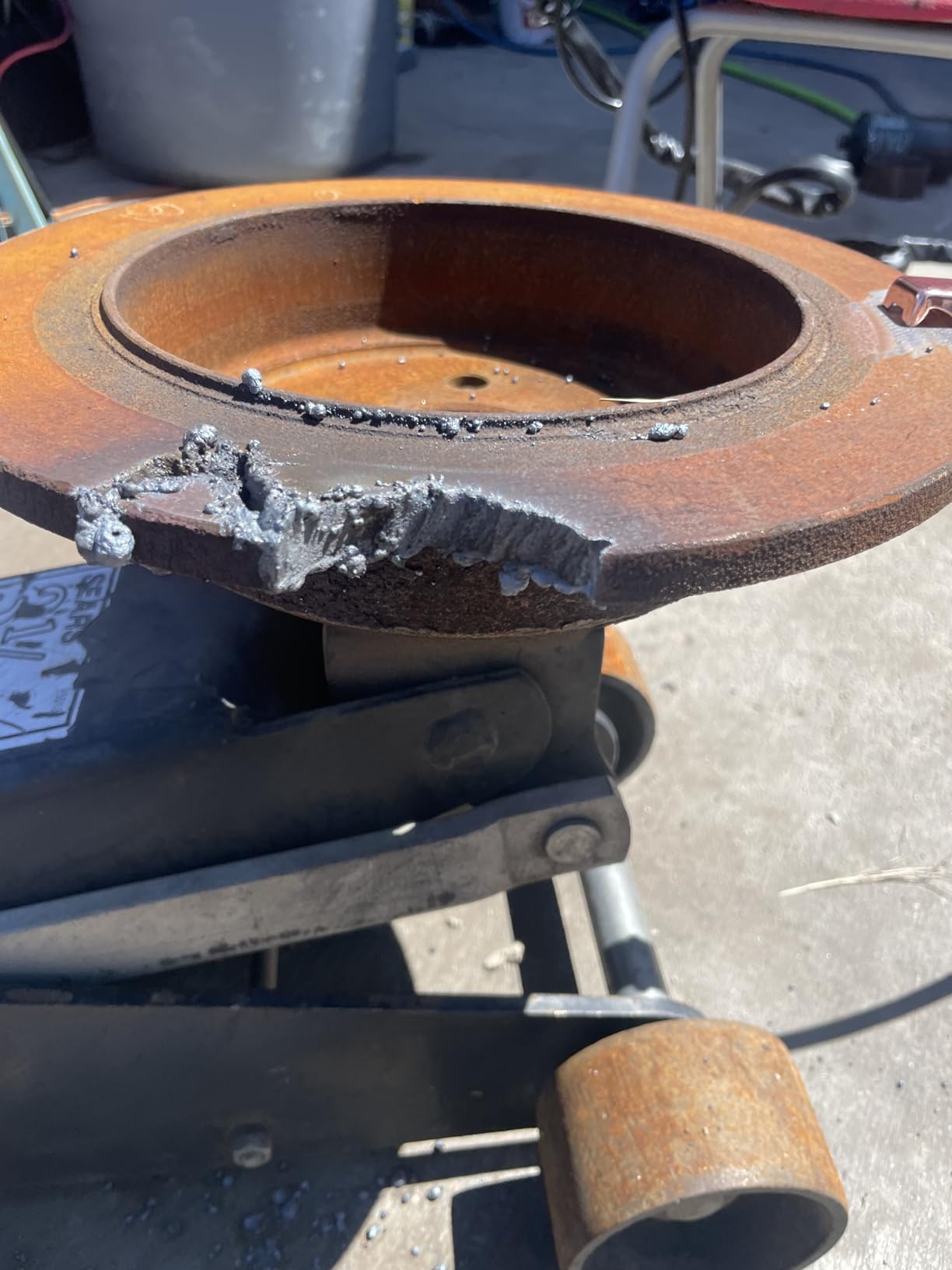
The ARCCAPTAIN has the most reviews of anything in this roundup at 1307, and the number one ranking in the Plasma Cutting Equipment category. That volume matters for a budget machine, because it means you are buying a product with a real track record of failures and fixes rather than a listing with fifty reviews.
Owners consistently describe it as a step up from angle grinders. The jump in cut quality is the thing people notice first, especially on 1/2 inch steel at 220V where the machine is rated for 12mm at 35A on 110V and 18mm at 50A on 220V.
The LED display is more useful than it sounds. Voltage, current and error codes are readable without taking off a helmet, and when something misbehaves you get a code instead of a guess. That single feature saves more troubleshooting time than any amount of spec sheet reading.
Two things to know. First, on 110V the output drops to roughly 20 to 35 amps, so heavy work really wants a 220V circuit. Second, the compressor is not included, and this category never includes one.
Why the ARCCAPTAIN suits a first plasma cutter
At 13 pounds with a shoulder strap, it moves between the garage and the driveway without a fight. The pre-installed metal-cased air filter with a 1/4 inch NPT quick connect also means less setup time before the first cut.
Two year warranty coverage is a step above the one year norm too. For a first machine, the combination of review volume, warranty and parts availability is the safest bet in this price band.
Where the ARCCAPTAIN falls short
Some buyers report the arc starting and stopping inconsistently until they settle on working settings. That is a learning curve, not a defect, but expect to spend the first session tuning amperage and post-flow.
On 110V it is a different machine than on 220V. If you only have household power, do not judge it by listings that show 50 amp results.
3. S7 50A Dual Voltage: Best Entry Plasma Cutter Under $1000
50A Plasma Cutter with LED Display, Dual Voltage 110V/220V, Clean Metal Cutting up to 1/2″ Steel, Easy Setup PT31 Torch, Lightweight for DIY & Home Workshops
50 amp dual voltage
Clean cuts to 1/2 inch
PT31 torch
Digital display
Pros
- Most-reviewed machine here at 1837 ratings
- PT31 consumables are cheap and stocked everywhere
- Clean cuts up to 1/2 inch steel with correct air pressure
- External air regulator is easy to service
- Fan after-run cooling protects the electronics
Cons
- Struggles to hold a clean cut near its 1/2 inch rating
- Ground lead is only about 3 feet long
- Included torch tip wears out quickly
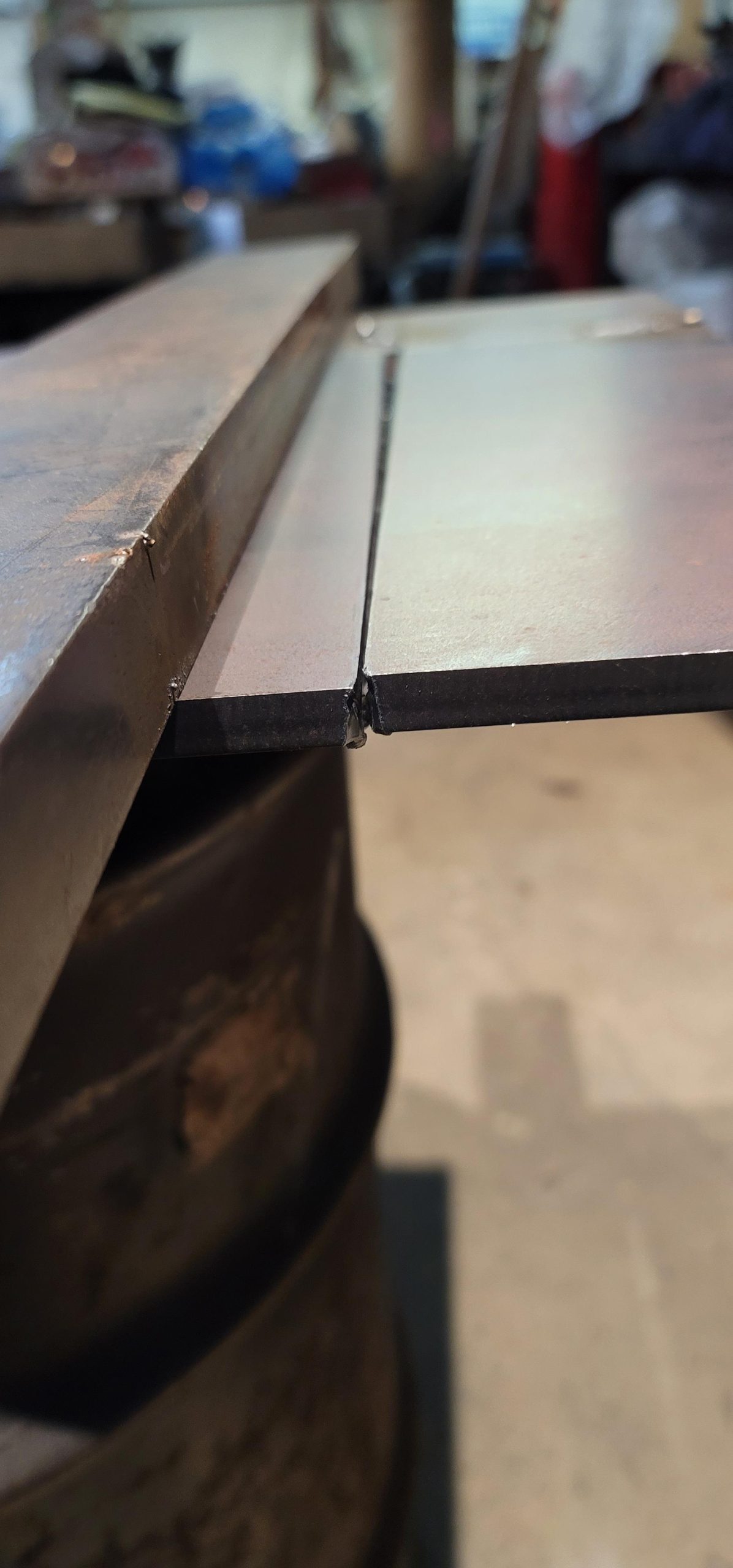
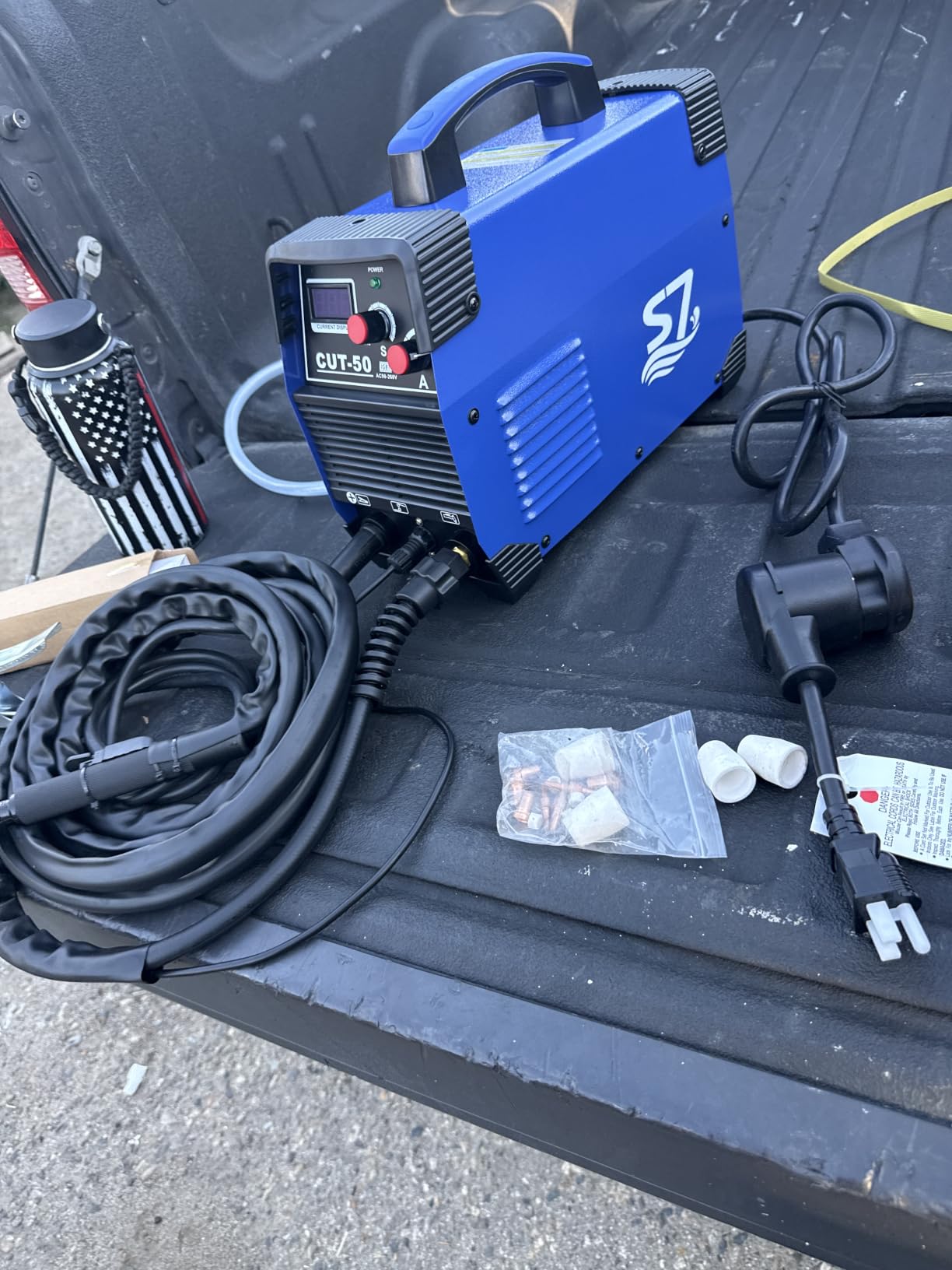
This is the most reviewed unit in the group at 1837 ratings, and experienced buyers put its real capacity at about 1/2 inch on 220V and 3/8 inch on 110V. Anyone claiming it chews through thicker plate than that is overselling it.
What you get is a straightforward 50 amp machine with a PT31 torch, a paddle trigger, a ground clamp and simple current adjustment on a compact digital display. Several long-term owners report four-plus years of service on 1/4 inch work, which is the honest use case for a machine at this level.
The PT31 format is a genuine advantage. Those consumables are the cheapest in the industry and every weld supply shop stocks them, so consumable cost is close to a non-issue. For someone cutting lots of scrap, that adds up quickly.
Eleven percent of reviews are one star, which is the second highest negative share here. Most of those complaints cluster around thick plate cutting coming out messy and slow for less experienced users who trusted the headline number.
Why the S7 works for scrap and farm repair work
Cheap consumables and simple controls mean an afternoon of cutting old gate sections or trailer repairs costs almost nothing in tips. The external air regulator is easy to reach when you need to match your compressor output.
At 18.5 pounds it is portable enough for field work, and the fan after-run cooling gives the electronics some protection on long sessions.
Where the S7 will disappoint you
The ground lead is only about 3 feet, which is the most common complaint alongside short torch lead limits. If you need reach, plan on buying a longer ground clamp and lead separately.
The shipped torch tip is a short-lived consumable and benefits from wire brushing between jobs. Budget for a spare set rather than expecting the included one to last.
4. bestarc BTC500DP: Best Feature Set Plasma Cutter Under $1000
Bestarc Plasma Cutter Machine, Pilot Arc, 50A IGBT 110V 220V Dual Voltage
50 amp IGBT inverter
Bluetooth to 98 ft
2/3 inch max cut
15.2 lb
Pros
- Bluetooth app control up to 98 feet for remote settings
- Pilot arc up to 15s plus a dedicated rust removal mode
- Built-in air pressure sensor and metal air filter
- Central LED display shows pressure
- voltage and current
- Tool-free connections with a built-in air dryer
Cons
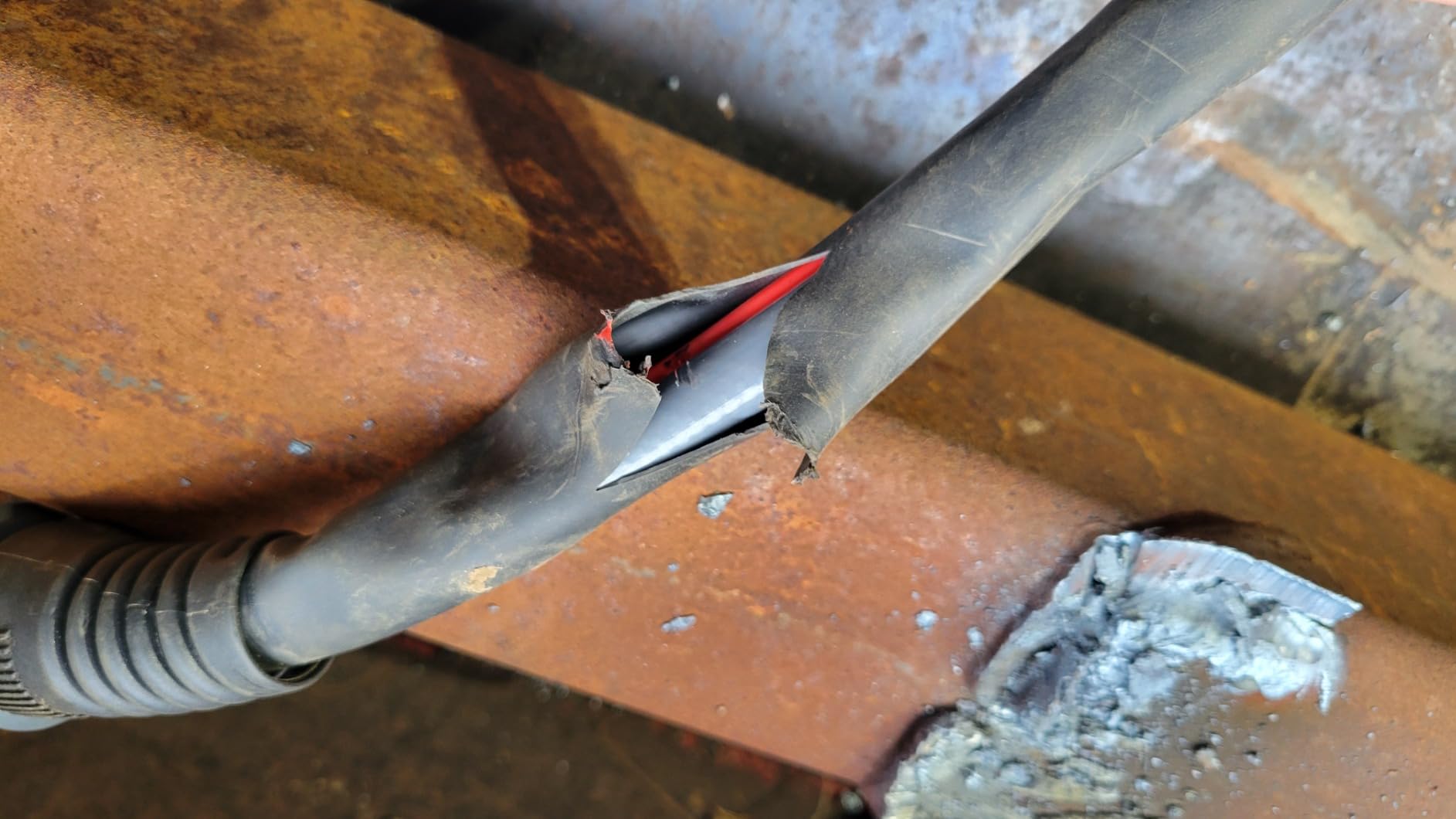
- Ground lead and some torch leads are thin and short
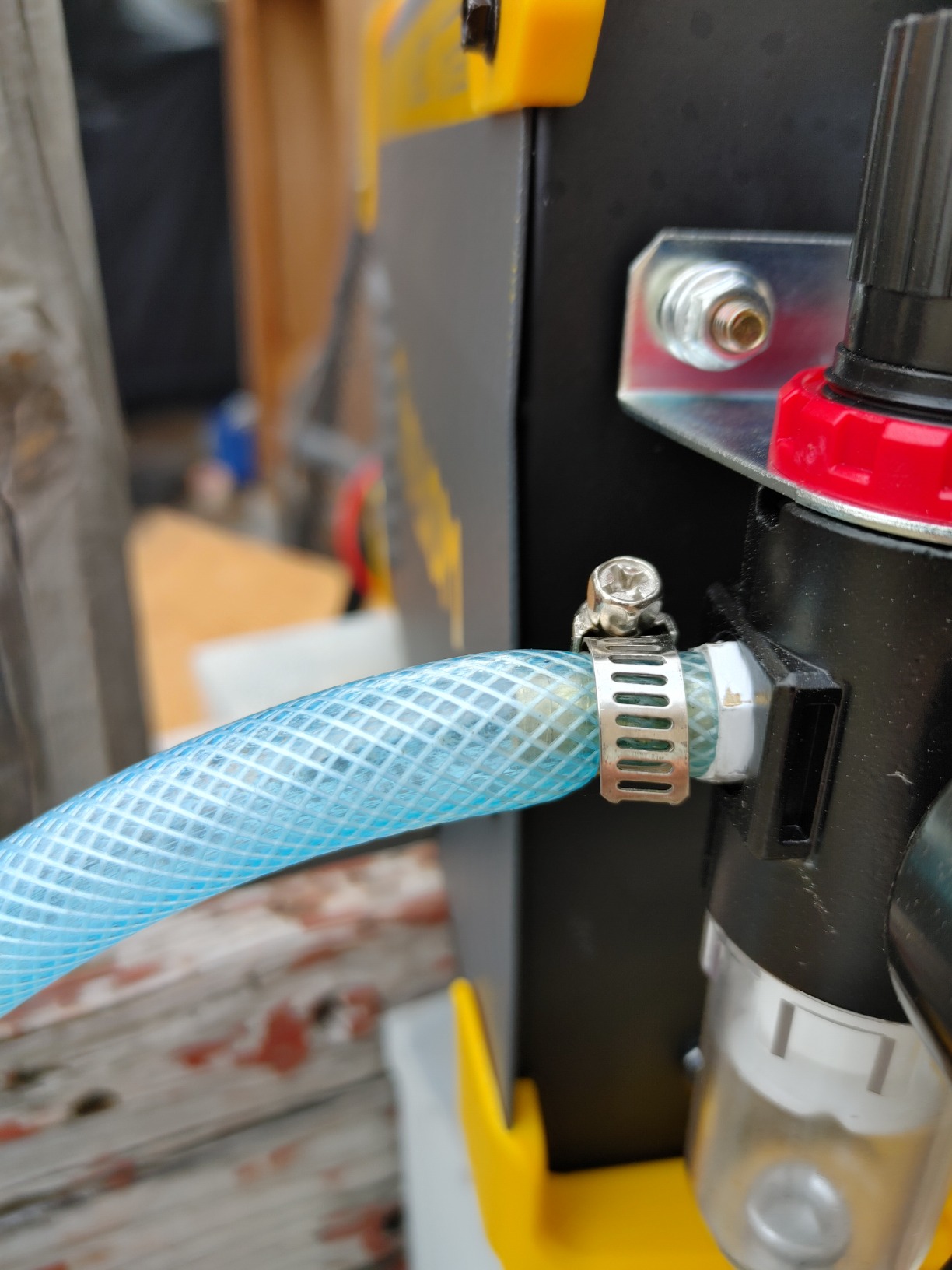
- Supplied poly air line swells with use
- Tips wear faster with non-contact arc starting
The bestarc is the only machine here with app control, and it covers 98 feet. You set amperage and modes from your phone while the machine sits across the table. Owners with decades of fabrication experience describe it as outperforming shop machines that cost many times more.
Its pilot arc runs up to 15 seconds and there is a dedicated rust removal mode, which is why it starts reliably on rusted and saw-blade steel. Output is 2/3 inch at 50A on 220V, with 1/2 inch at 35A on 110V.
The built-in air pressure sensor and air dryer are the practical stars. Most budget machines send you straight to a wall regulator, while this one displays real pressure and filters the air before it reaches the torch. Dry air is what keeps consumables alive.
Cut settings guidance calls for a 40A breaker at 110V and 30A at 220V, plus a compressor in the region of 4 cfm. Get that right and the machine performs like something far more expensive.
Why the bestarc suits a shop that cuts messy material
Between the 15 second pilot arc and the rust mode, it handles the material that stops lesser machines. Saw blades, expanded metal and painted plate are routine rather than a fight.
The app control is genuinely useful on a CNC-adjacent table where you cannot reach the panel mid-cut. It also lets you save settings you know work, which cuts setup time between jobs.
Where the bestarc will disappoint you
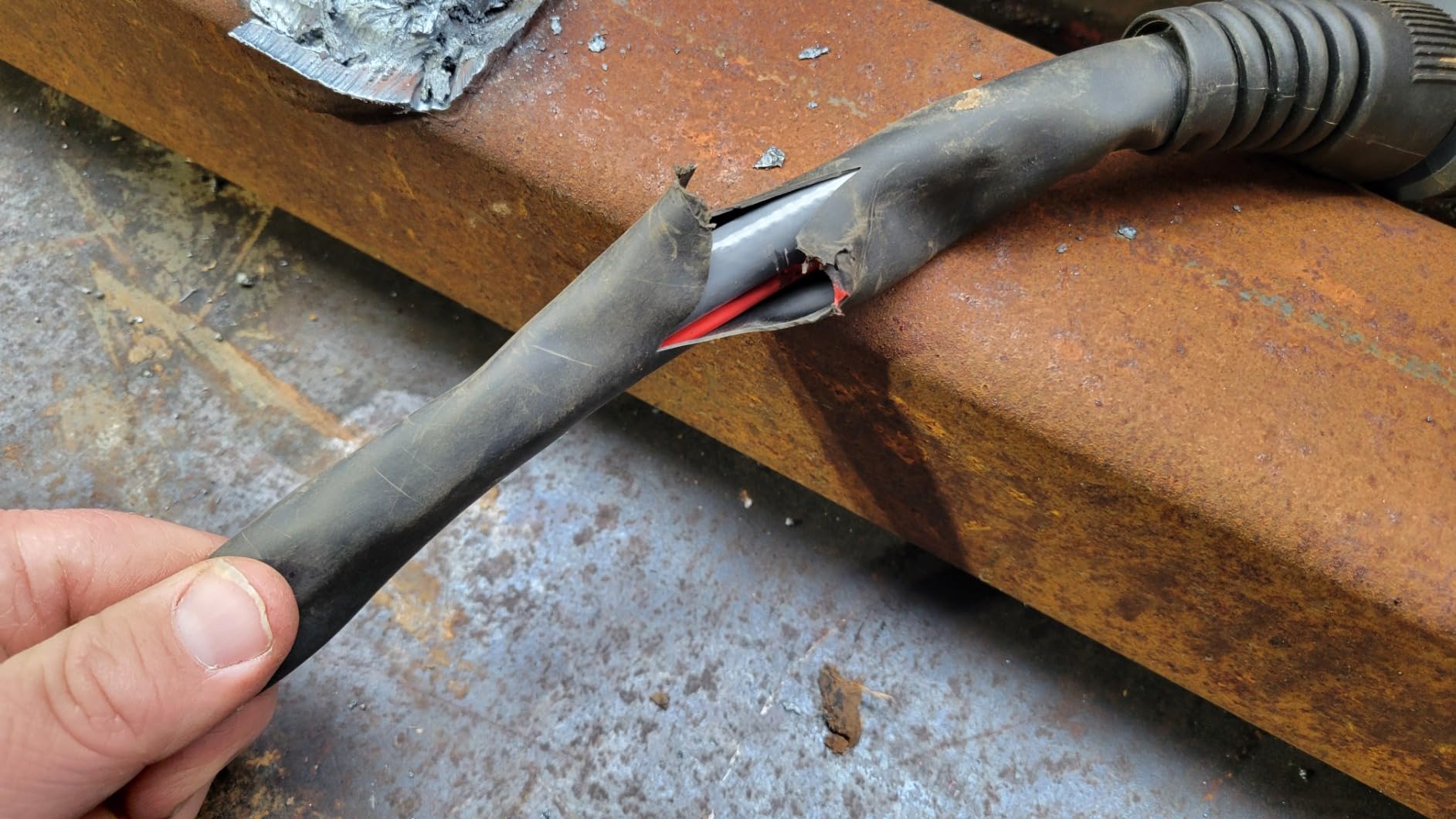
Ground lead and some torch-to-machine leads are thin and short, and the supplied poly air line swells with use. Owners routinely upgrade fittings and hose, so treat that as a planned expense.
Tips wear faster with non-contact arc starting. The longer consumable life you get from dry filtered air partly offsets this, but not entirely.
5. YESWELDER CUT-60DS PRO: Best Non-High-Frequency Plasma Cutter Under $1000
YESWELDER 60A Non-HF Plasma Cutter, Non-Torch Pilot Arc, 110/220V
60 amp non-HF blow-back start
110V and 220V
5/8 inch clean cut
ETL and IP21
Pros
- Non-high-frequency blow-back start avoids interference with nearby equipment
- Largest clean cut capacity in the group at 5/8 inch on 220V
- IPT40 non-touch torch starts on rough
- painted and rusty surfaces
- Digital display with air pressure
- voltage
- current and error codes
- PT/2T/4T modes with 5-20 second post-flow
Cons
- Only a 1 year warranty
- Carries a higher 110V output than most rivals
- IP21 rating means indoor dry use only
The defining feature here is the non-high-frequency blow-back start. High frequency start throws a burst of RF energy that upsets nearby electronics, and that nuisance question comes up constantly on welding forums. This machine avoids it entirely.
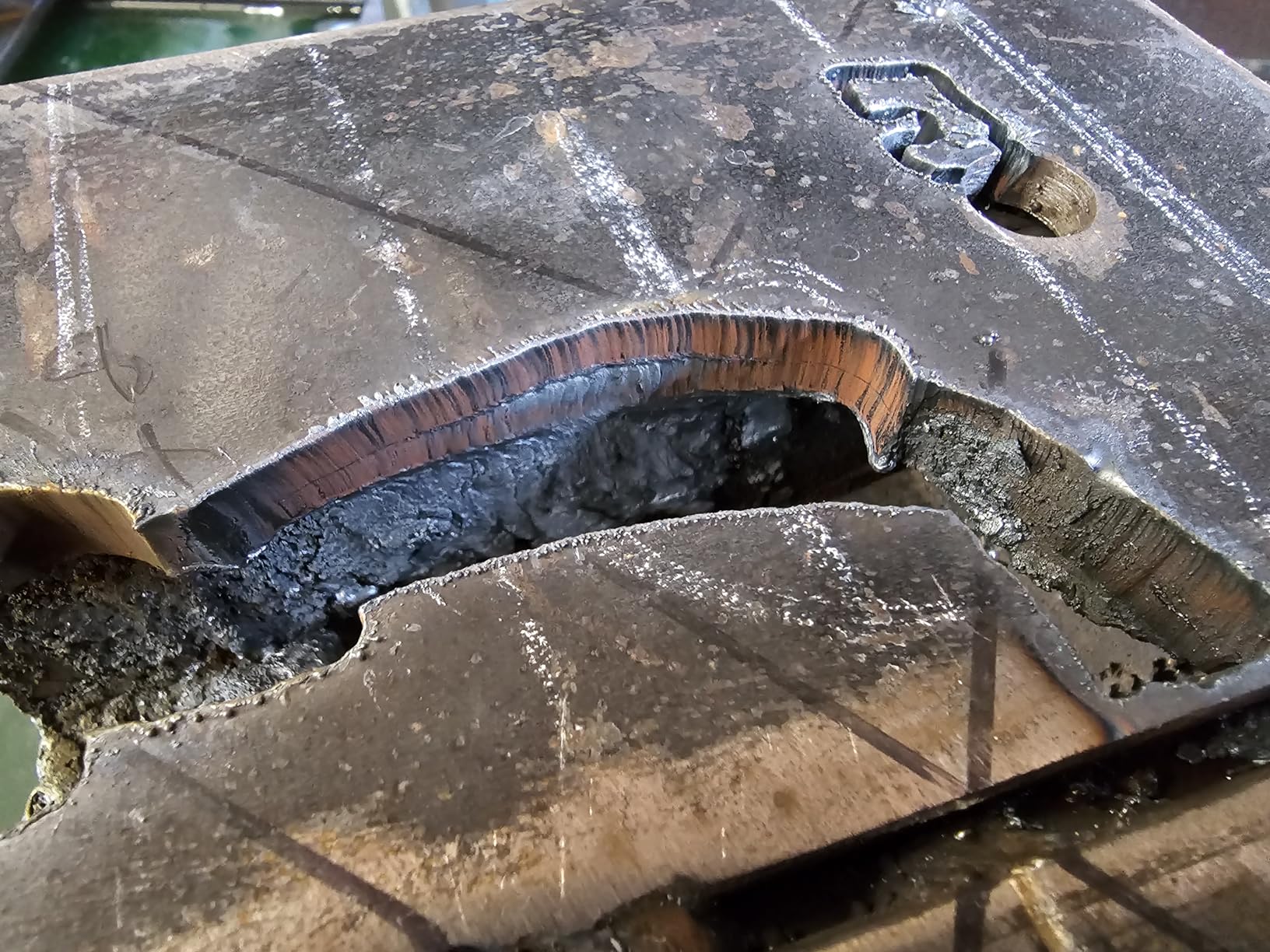
The 60 amp output is also the deepest clean cut in the group: 5/16 inch at 110V and 5/8 inch at 220V, with a maximum of 1/2 inch at 110V and 63/64 inch at 220V. Seventy-five percent of its 700 reviews are five star.
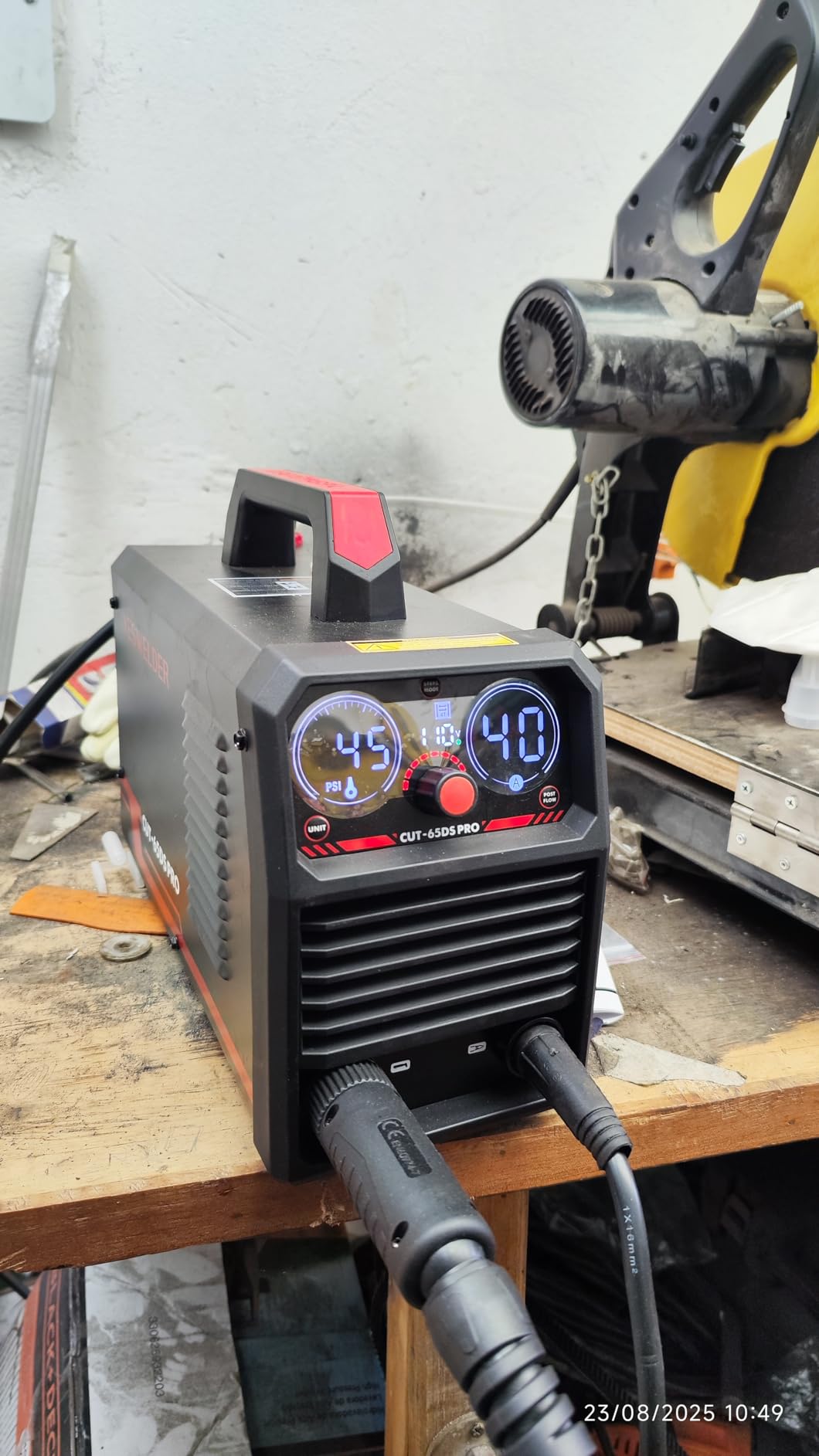
The IPT40 torch is a non-touch pilot arc design, so it starts on painted and rusty surfaces the same way the PRIMEWELD does. Post-flow runs 5 to 20 seconds and it is ETL certified with an IP21 water rating.
Buyers also like that it packs a lot into the box, including an air filter regulator, air hose, ground clamp, power adapter and earth leakage protection. Not having to buy a separate regulator is a small win on day one.
Why non-HF start matters in a working shop
If you run a CNC table, a computer-driven feeder, or even a decent sound system near the cutting area, HF start can cause real interference. Blow-back start is quieter in that respect and does not need a plasma side of the torch to strike.
For a small fabrication shop doing stainless work, the 5/8 inch clean cut at 220V is the number that decides it. That is genuine thickness for bracket and frame material.
Where the YESWELDER falls short
One year of warranty is the shortest in this roundup, and that is a real gap on a machine with this output. Check whether a longer warranty is available through the seller before you buy.
The IP21 rating is a dry indoor rating. If you plan to cut outside where rain or dust is possible, put it under cover.
6. TOOLIOM CUT-50 PRO: Best Plasma Cutter Under $1000 for Stainless and Copper
TOOLIOM 50A Non-Touch Pilot Arc Plasma Cutter, Dual Voltage 110/220V
50 amp non-touch pilot arc
5/8 inch clean cut
13.23 lb body
Tool-free voltage switch
Pros
- AG60 non-touch torch cuts stainless
- alloy
- mild steel
- copper and aluminum
- Post-flow air cooling adjustable from 5 to 20 seconds
- Digital display for air pressure
- voltage and current
- Connects to 110V or 220V without tools at 13.23 lbs
- 5/8 inch clean cut at 220V with 3/4 inch maximum
Cons
- Listed package weight of 21.6 lbs is well above the 13.23 lb body weight
- Pilot arc start on heavy rust takes practice
- 12 percent one-star share among the picks
The TOOLIOM is listed at a clean cut of 1/4 inch at 110V and 5/8 inch at 220V, with a 1/2 inch and 3/4 inch maximum respectively. For non-ferrous work it handles stainless, alloy and mild steel, copper and aluminum with the AG60 torch.
Its selling point is the AG60 non-touch torch, which burns the electrode less than contact-start designs. That translates into longer consumable life, which matters if you cut stainless often because stainless produces more wear on the electrode.
Post-flow air adjustable from 5 to 20 seconds is a real feature for hot work. On stainless, extra cooling after the arc stops keeps the nozzle from distorting and extends the life of the tip.
Tool-free 110V/220V connection means no panel work when you move between circuits. That convenience is underrated if you are not running a dedicated 220V outlet.
Why the AG60 torch suits stainless and copper work
Non-ferrous metals and stainless generate more heat at the nozzle than mild steel. The AG60 design and adjustable post-flow directly address that, and owners who cut stainless report fewer consumable swaps as a result.
It also covers copper and aluminum, which most hobby plasma users never think about until a project needs it.
Where the TOOLIOM falls short
The listed package weight of 21.6 pounds sits well above the stated 13.23 pound body weight. Plan your lifting accordingly if you are moving it in and out of a vehicle.
Starting a pilot arc on heavy rust takes practice, and twelve percent of its 868 reviews are one star, a durability cluster worth reading before you commit.
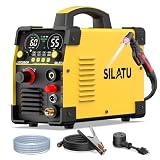
7. SILATU STC550P: Best Lightweight Plasma Cutter Under $1000
SILATU 55A Plasma Cutter, Non-Touch Pilot Arc, 110V/220V, 2/3″ Max Cut
55 amp pilot arc inverter
12.57 lb
2/3 inch max cut
10 ft leads
Pros
- 55 amp dual voltage pilot arc machine at a low entry cost
- Adjustable pilot arc duration for mesh or electrode conservation
- Built-in air pressure sensor with real-time PSI display
- 10 ft torch and 10 ft ground clamp leads are longer than rivals
- Lightest full-size body here at 12.57 lbs
Cons
- Smallest review base in the roundup at 263
- Air compressor sold separately
- 110V output is 15-40A against a 55 amp nameplate
The SILATU puts 55 amps into 12.57 pounds, which is the best power-to-weight figure among the full-size machines here. The output split is 15-40A on 110V and 15-55A on 220V, with a 60 percent duty cycle.
It cuts 1/2 inch at 40 amps and 60 PSI on 110V, and 2/3 inch at 55 amps and 70 PSI on 220V. Owners praise the light weight more than anything, especially people moving between a garage and a jobsite.
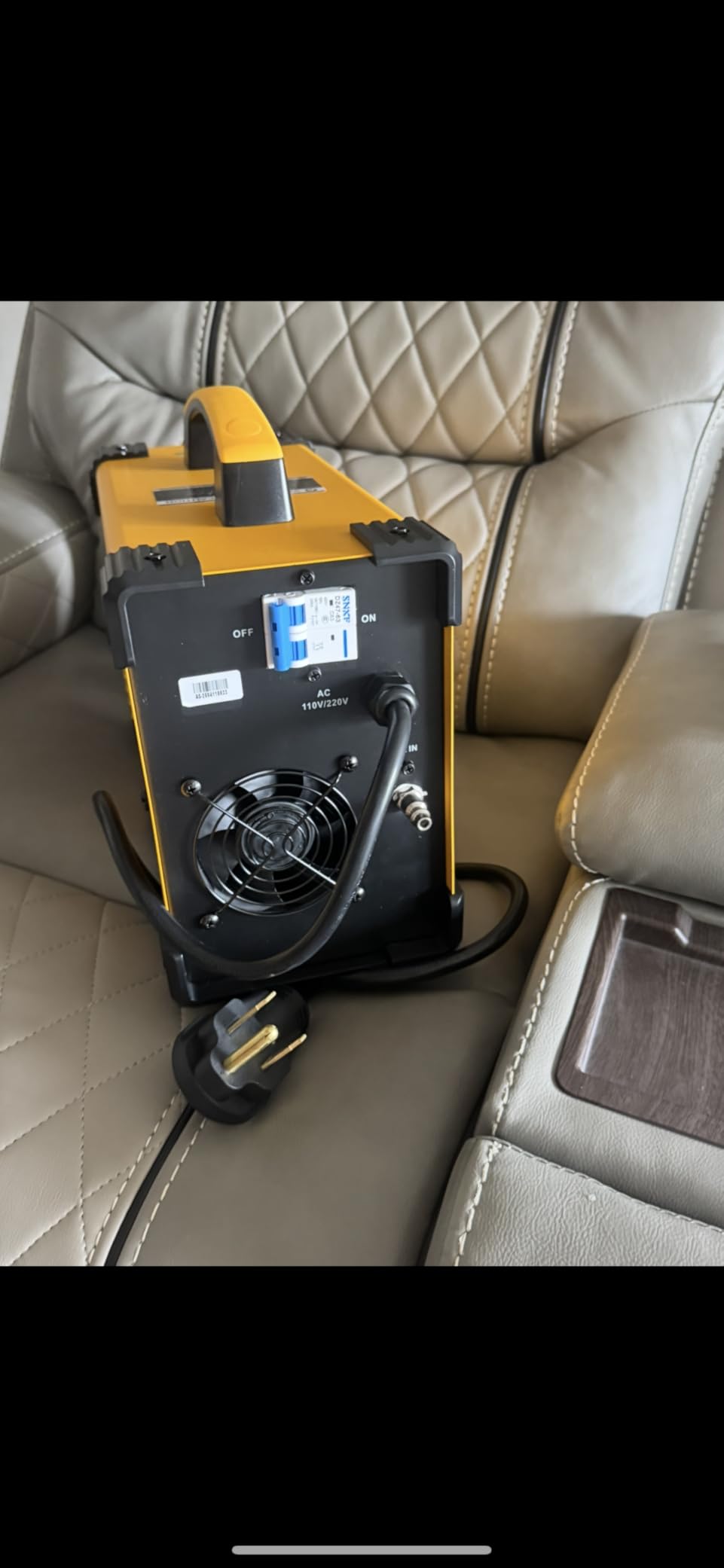
The adjustable pilot arc duration is a thoughtful touch. On expanded metal or mesh, a longer pilot duration keeps the arc transferring; on clean plate, a short duration conserves electrode life. You can tune it instead of living with one compromise.
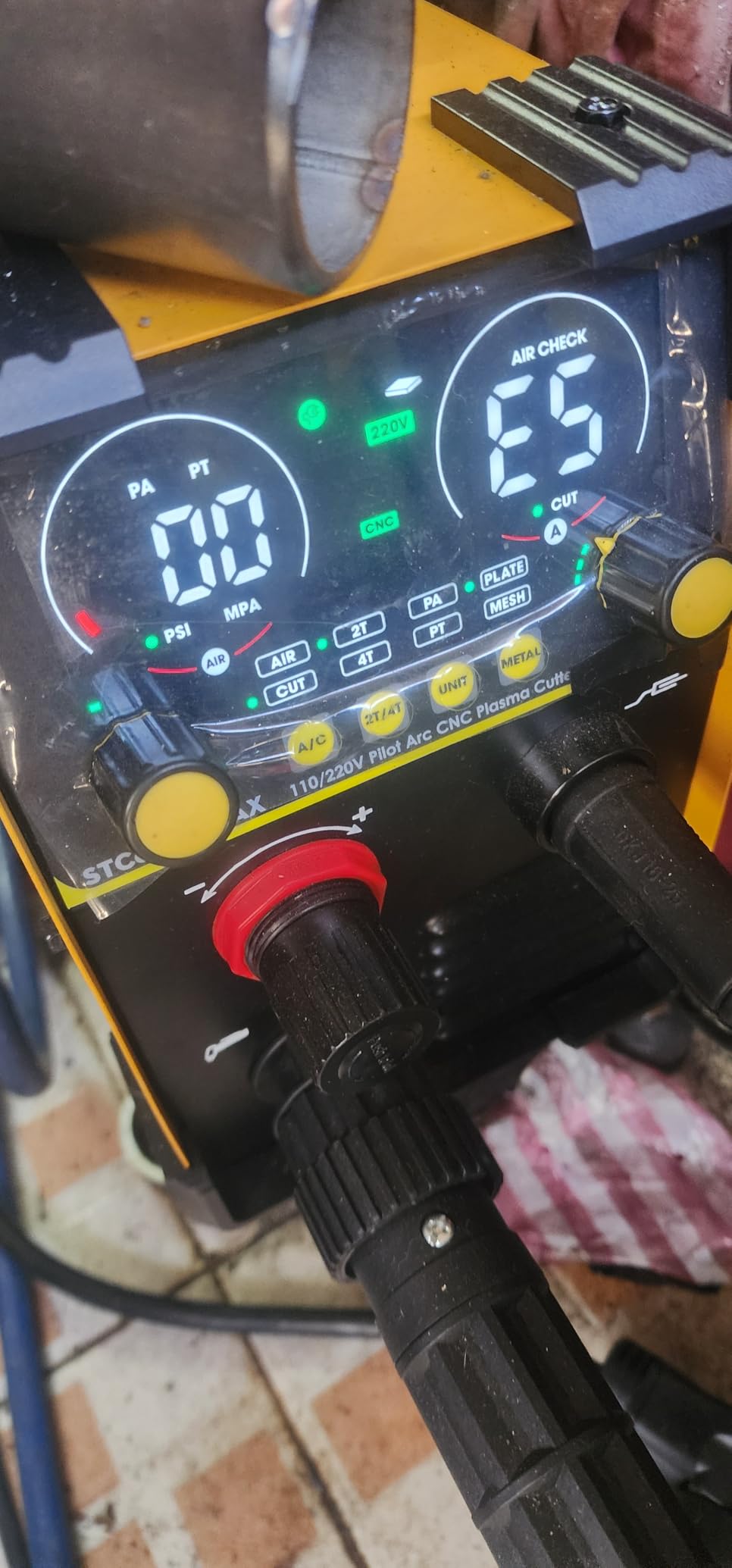
Ten foot torch and ground clamp leads are longer than most rivals ship with, which removes one of the most common first-day complaints. The built-in air pressure sensor shows real-time PSI, and the maker recommends 70 PSI with 250 L/min flow.
Why the SILATU suits mobile and field repair
At 12.57 pounds with 10 foot leads, it goes into a truck easily and reaches far enough to clamp to a bumper or frame rail. For farm equipment repair and roadside calls that matters more than shop features.
The PT/2T/4T/PA functions with 3-15 second post-time give you control over pierce and travel timing, which is where cut quality on thinner material is won or lost.
Where the SILATU falls short
Its 263 reviews are the smallest base in the roundup, so long-term durability data is still thin. There are not yet many multi-year owner reports to lean on.
On 110V the machine is limited to 40 amps despite the nameplate, and you still need to source a compressor separately.
8. GZ GUOZHI CUT-50: Best Plasma Cutter Under $1000 for Cold-Weather Work
GZ GUOZHI Plasma Cutter, 50 Amp Air Inverter Plasma Cut, 110V/220V Dual Voltage Digital Display IGBT Inverter Plasma Cutting Machine with 2T/4T/TEST Function
50 amp IGBT inverter
110V and 220V
3/4 inch max cut
1 year warranty
Pros
- Sets up in about a minute with the pre-installed D-type air plug
- Ranked number 7 in Plasma Cutting Equipment
- 2T/4T/TEST functions make short and long cuts simple
- Overheat and overcurrent protection rated to minus 20 degrees
- 3/4 inch maximum cut at 220V
Cons
- Listed 19.31 lb weight is well above the 13 lb in the marketing copy
- 12 percent one-star reviews
- Only a 1 year manufacturer warranty
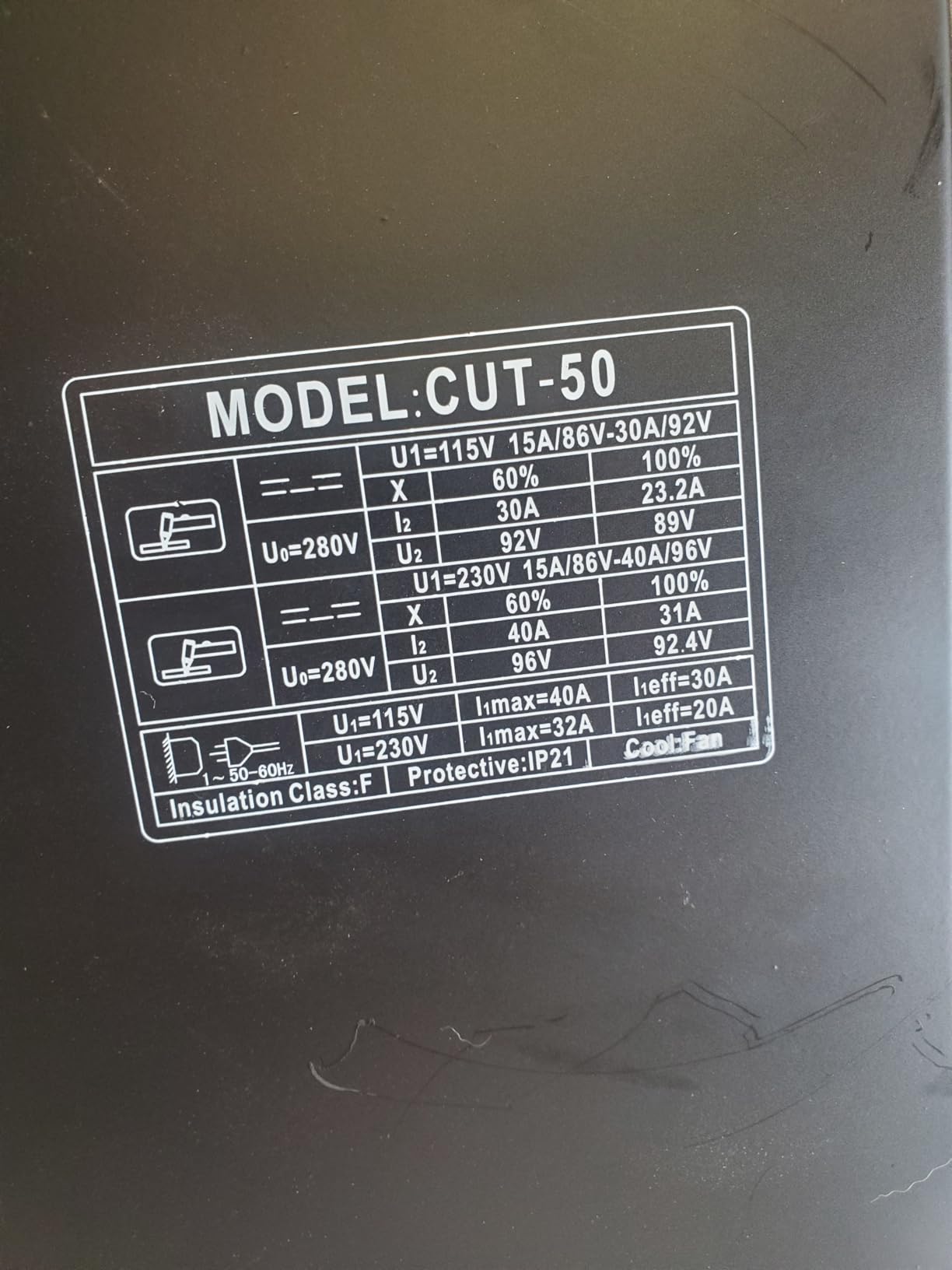
This machine is rated to operate down to minus 20 degrees, which is unusual at this level and genuinely useful for anyone who cuts outdoors in winter or works in an unheated farm shop or garage. Most competitors say nothing about cold behaviour.
Setup speed is its other quiet advantage. The 1/4 inch industrial D-type plug is pre-installed, so there is no regulator installation. Owners report being ready to cut in about a minute.
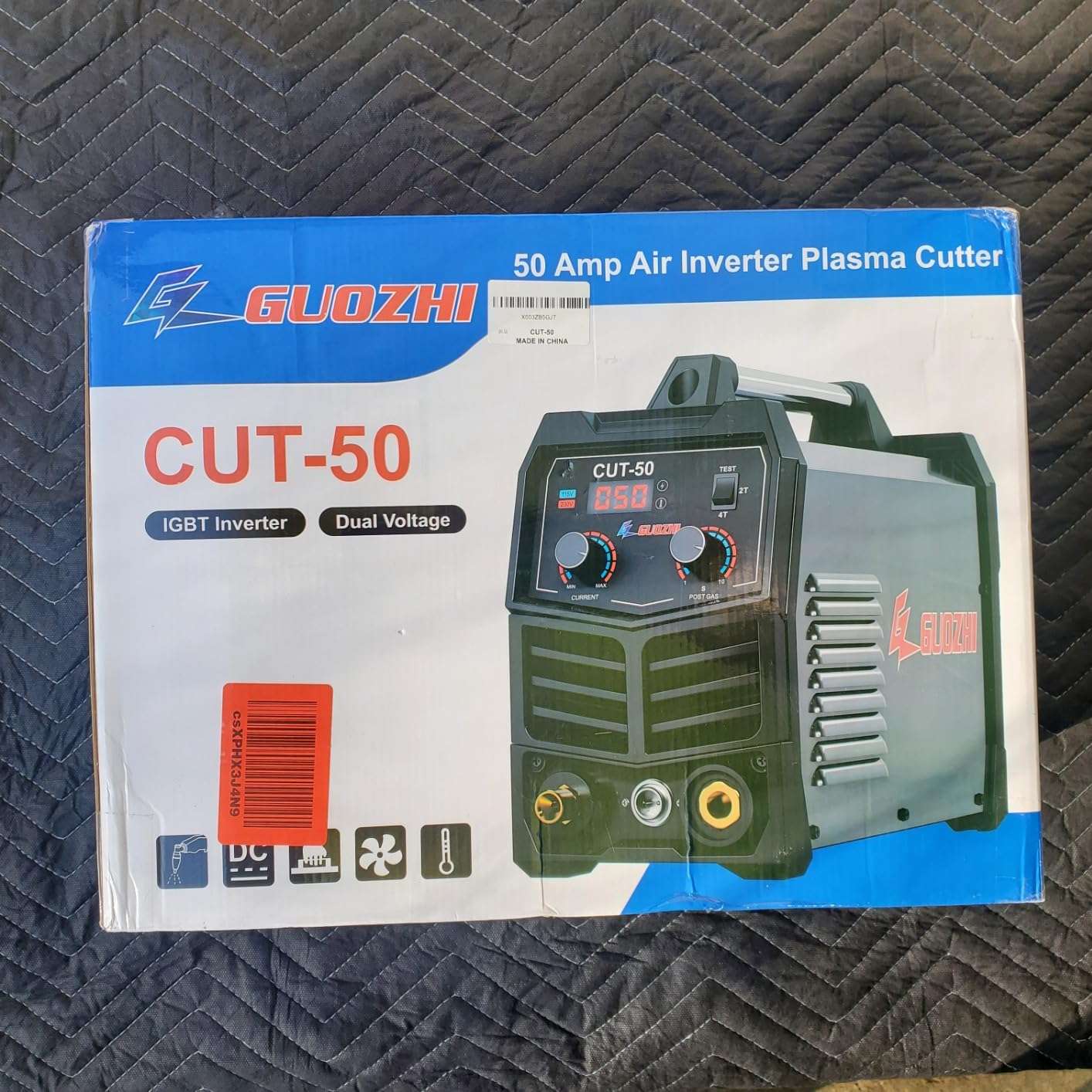
It is an IGBT inverter with a pilot arc function, 60 percent duty cycle and 2T/4T/TEST cutting modes. Recommended maximum cut is 1/4 inch at 35 amps on 110V at 50 PSI, and 3/4 inch at 50 amps on 220V at 65 PSI.
Overheat and overcurrent protection is standard here, which is normal for the category. The TEST mode is useful for checking torch and air flow before starting a job.
Why cold-rated construction matters outdoors
Condensation is the enemy of plasma cutting electronics. A machine rated for minus 20 degrees has been tested through temperature swings that will destroy a unit rated only for a warm shop, so winter jobsite work is far less risky.
The pilot arc function also handles rough, painted and rusty surfaces with minimal slag, which is the normal state of anything you cut on a construction site.
Where the GZ GUOZHI falls short
The listed 19.31 pound weight sits well above the 13 pounds claimed in the marketing copy, so treat the lighter figure as unverified.
Twelve percent of its 251 reviews are one star and the warranty is one year. That is the second highest negative share among the picks, so read the reviews before you commit.
9. Amico CUT-50: Best Wide-Voltage Plasma Cutter Under $1000
Amico CUT-50, 50 Amp Plasma Cutter DC Inverter 115/230V Dual Voltage Cutting Machine
50 amp DC inverter
100-250V input
Cuts up to 3/4 inch
ETL listed
Pros
- 100-250V wide voltage range runs on almost any household circuit
- Cuts stainless
- alloy
- mild steel
- copper and aluminum in many shapes
- Internal air filter with automatic air control solenoid
- NPT 1/4 inch industry type D coupler
- ETL listed with automatic temperature control and fan dormancy
Cons
- Needs close to 220V since the cooling fan draws more than 20 amps
- Non-standard consumables are hard to find at local weld supply shops
- Ground clamp stinger arrived too long to seat fully
The Amico CUT-50 accepts 100-250V at 50-60Hz, which is the widest input range here. Automatic voltage fluctuation compensation and over/under-voltage, overcurrent and overload protection handle unstable supply conditions.
Owners report cutting a 1 inch solid pipe and marking thin sheet with ease, and one buyer used it to replace a failed board on a pricier machine at roughly a tenth of the cost. Long-term owners report three-plus years of service.
The built-in air regulator is a real help with older compressors that cannot hold steady pressure. It also cuts the range of shapes you can produce, from straight lines and angles through to circles and v-grooves.
Why the wide voltage range suits unpredictable power
If you travel with the machine or run it off a generator or a rough supply, a 100-250V input means far fewer trips than a fixed 110V/220V link switch. Automatic compensation smooths out swings.
The internal filter and automatic air control solenoid mean the machine protects its own consumables better than an open air line would.
Where the Amico CUT-50 falls short
Despite the wide input range, it needs close to 220V in practice. The cooling fan draws more than 20 amps, so it will not run well on a 120V household circuit.
Consumables are non-standard and hard to find at local weld supply shops, which means ordering online rather than walking down the street. Several reviewers also documented accessory problems on arrival.
10. Amico CUT-60HF: Best Plasma Cutter Under $1000 for One Inch Severance
Amico CUT-60HF, 60 Amp Non-touch Pilot Arc Plasma Cutter, Pro. 95~260V Wide Voltage, 4/5 in. Clean Cut Cutting Machine
60 amp non-touch pilot arc
80% duty cycle
4/5 inch clean cut
1.0 inch max
Pros
- Up to 1.0 inch capacity with a 4/5 inch clean cut
- 80 percent duty cycle is the highest in the group
- Automatic input voltage detection from 90V to 300V
- Works with power cord extensions up to 700 feet
- Non-touch pilot arc starts on rusty
- greasy and spray-painted steel
Cons
- Heaviest unit here at 25 lbs
- Highest one-star share in the group at 15 percent
- Small review base of 74 limits confidence in reliability
The CUT-60HF has the deepest rated capacity of anything here: a 4/5 inch clean cut and up to 1.0 inch capacity. At 60 percent duty cycle at 60 amps by the manufacturer description, with an 80 percent figure in the technical details, it is built for prolonged work rather than hobby duty.
Automatic input voltage detection from 90V to 300V means it adapts to supply conditions without manual relinking. It also works with power cord extensions up to 700 feet, which is unusual capability for a machine at this level and matters on remote construction sites.
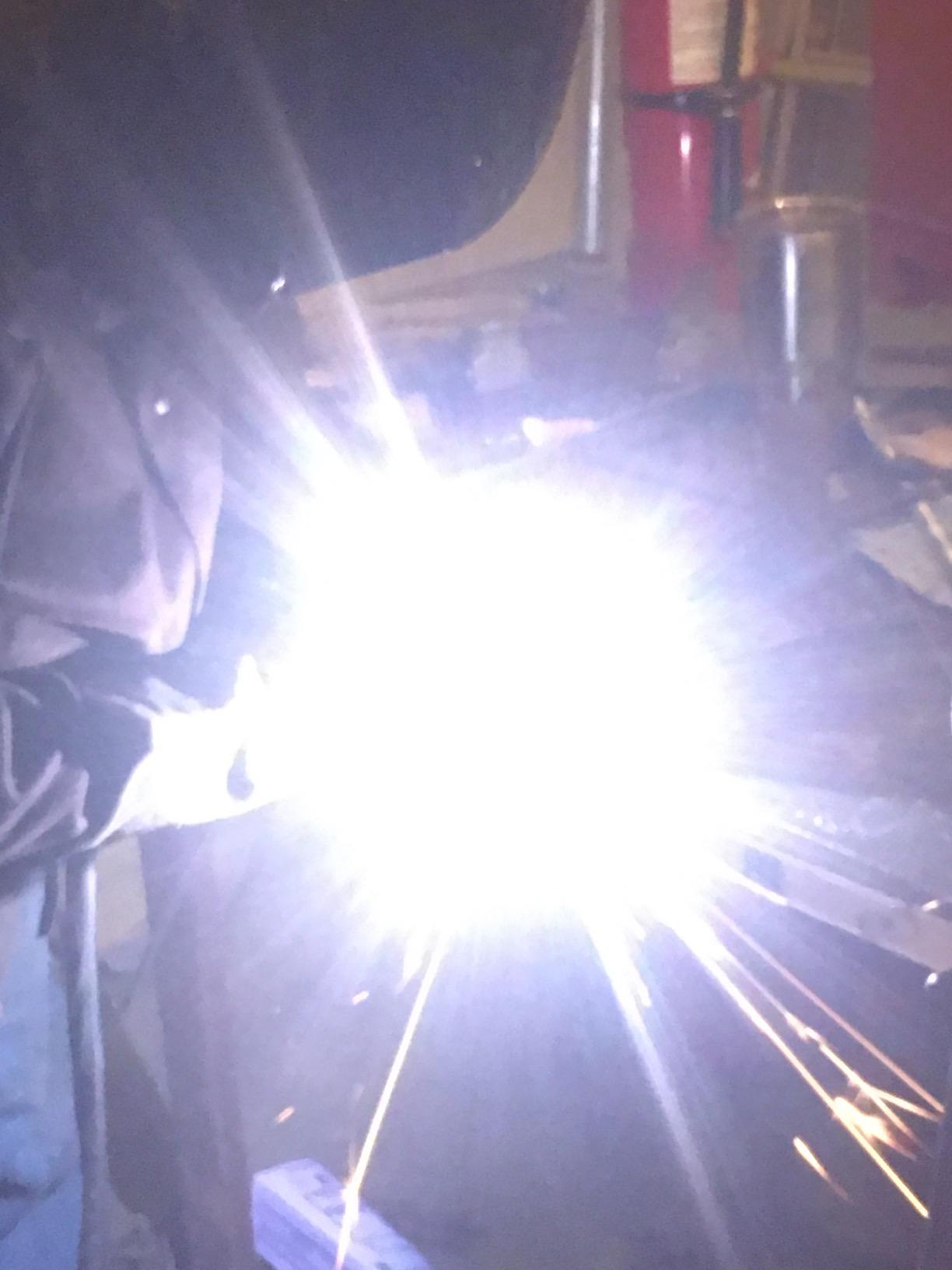
The non-touch pilot arc starts reliably on rusty, greasy, dirty and spray-painted steel. It handles stainless, alloy, low-carbon steel, copper, iron, cast iron and aluminum, and the temperature-controlled fan keeps it quiet.
Why the 80 percent duty cycle suits production work
Duty cycle is how long you can cut before the machine needs to cool. At 80 percent you are running nearly continuous work with short pauses, which is the difference between finishing a job in one sitting and waiting for thermal protection.
The voltage detection and long extension tolerance make it the most site-ready machine in this roundup, especially where clean power is not available.
Where the Amico CUT-60HF falls short
At 25 pounds it is the heaviest unit here, which cuts against portability. If you need to load it into a vehicle regularly, that is a real daily annoyance.
Fifteen percent of its 74 reviews are one star, the highest negative share in the roundup, and the sample is small. Weigh the class-leading capacity against an uncertain long-term record.
11. FLARING FC650D: Best Lightweight Touch-Arc Plasma Cutter Under $1000
FLARING Plasma Cutter,65 Amp Plasma Cutter Machine 120V 240V 4/5″ (20mm) Max Cutting 1/2″ (12.7mm) Clean Cut IGBT High Frequency Inverter Touch ARC Plasma Cutter with Consumable Set Update 5th FC650D
65 amp IGBT inverter
8.4 lb machine
4/5 inch max cut
60% duty cycle
Pros
- Lightest machine in the roundup at 8.4 lbs despite a 65 amp nameplate
- Runs directly on 240V or 120V with the adapter and no relinking
- Best included consumables with 14 extra parts plus a 3M PT31 torch
- Automatic arc control on expanded metal reduces hand fatigue
- Machine cuts 1/4 inch plate fast and clean
Cons
- 14 percent one-star reviews
- Not a non-touch unit so the torch tip must contact the metal
- Performance drops noticeably on 120V
The FLARING weighs 8.4 pounds as a machine, with a 14 pound package weight. Nothing else here is close to that, and at 65 amps on the nameplate the ratio is unusual.
Maximum severance is 4/5 inch at 20mm with a 1/2 inch clean cut at 12.7mm, running on a 60 percent duty cycle IGBT inverter. It handles aluminum, magnesium alloys, brass, stainless, cast iron, steel, copper and titanium.
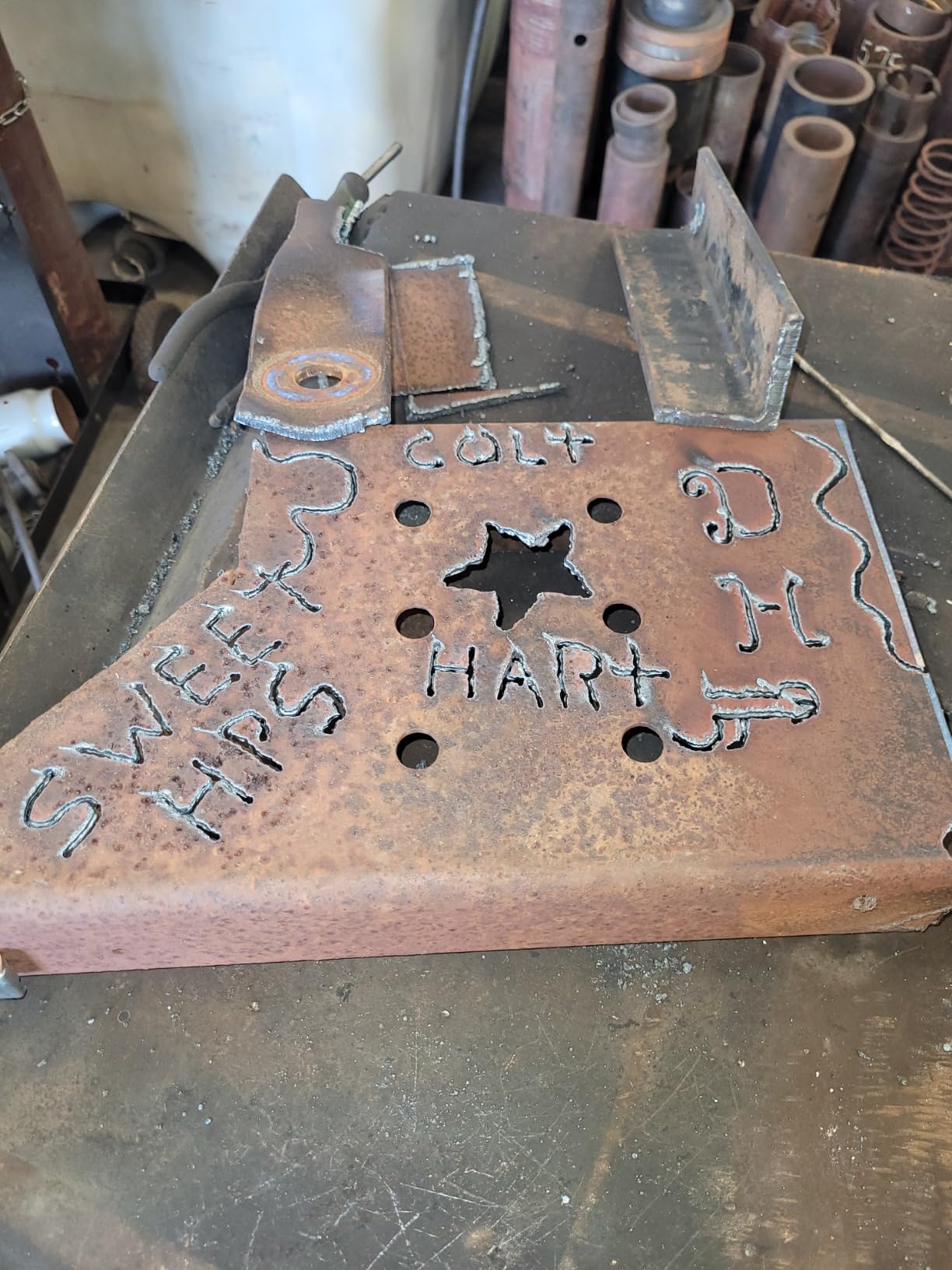
The included consumables are unusually generous. Fourteen extra parts plus a 3M PT31 torch, regulator and air hose are in the box, which effectively gives you a full second set of tips and electrodes.
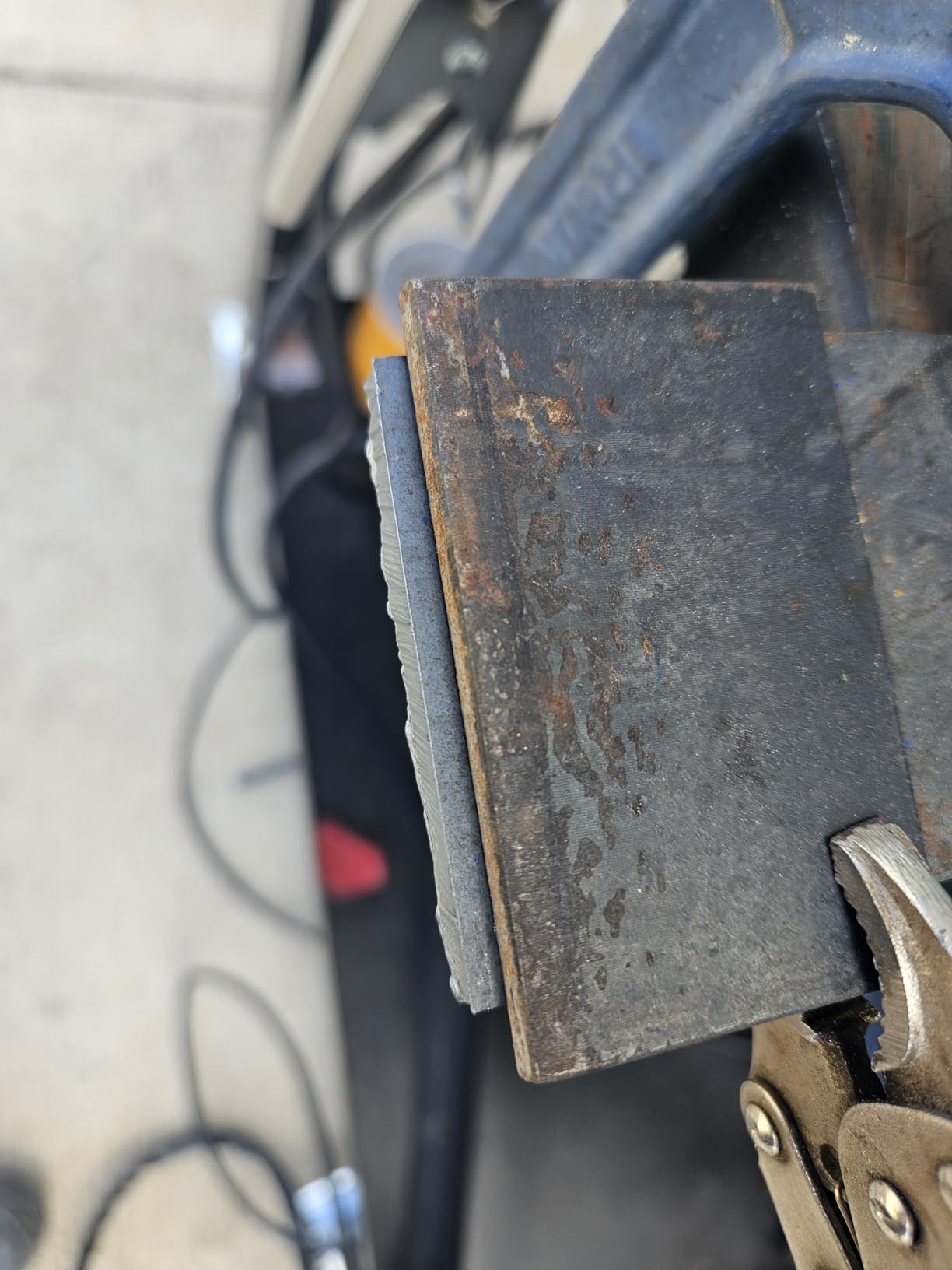
Why the automatic arc control helps on expanded metal
Cutting mesh or expanded metal means starting and stopping constantly, because there is not solid material for the arc to bridge. Automatic arc control handles that re-triggering for you, which cuts hand fatigue during long sessions.
Owners cutting 1/4 inch plate report fast and very clean results, and performance at 240V is markedly stronger than at 120V.
Where the FLARING falls short
It is a touch arc machine, so the torch tip must physically contact the metal to strike. That is slower on rusty material and a real limitation compared with the pilot arc units above.
Fourteen percent of its 157 reviews are one star, and one owner reported a circuit board failure after about ten minutes of use. Several buyers also report the upgraded torch was not actually in the box.
How to Choose a Plasma Cutter Under $1000: Buying Guide
Start with amperage, because it sets everything else. A 50 amp machine rated for a 1/2 inch clean cut handles 1/4 inch work comfortably and has room for thicker material when you need it. A 60 amp machine rated for 5/8 inch gives you noticeably more headroom on structural steel. Going above that within this budget means giving up warranty length or build quality.
Duty cycle is the second criterion, and it is the one most listings bury. It tells you how long you can cut before thermal protection kicks in. Forty percent suits hobby use where you cut in short bursts. Sixty percent handles a working weekend. Eighty percent, as on the Amico CUT-60HF, is production territory.
Third is the start method, and it changes how you work. Contact start and touch arc machines need the torch tip to touch the metal to strike, which is fast on clean plate and painful on rust. High frequency start needs no contact but throws RF energy that can upset nearby electronics. Non-touch pilot arc and blow-back start give you both convenience and clean electronics, and every pilot arc machine in this roundup starts on painted and rusted surfaces without prep.
Fourth, look at leads and clamps. Short ground leads are the single most common complaint across this category, with several machines shipping around 3 feet of cable. Longer leads are not a luxury on a truck bed or a frame rail. The SILATU and the ARCCAPTAIN both address this reasonably well.
Fifth, dual voltage is close to mandatory now. Anything that switches 110V and 220V without tools gives you flexibility across outlets, and be aware that output on 110V is always lower. The ARCCAPTAIN, for example, manages 20 to 35 amps on 110V against 50 on 220V. Read the 110V figure carefully before you buy on a household circuit.
Finally, plan the whole budget, not just the machine. Plasma cutting consumes compressed air, and a small pancake compressor will not hold the sustained pressure these machines expect. Roughly 60 to 70 PSI sustained with about 4 cfm is the working range. A dryer and filter matter too, because moisture in the air line destroys consumables quickly, which is exactly why the bestarc and TOOLIOM deserve their premium.
Consumables should be in your budget as a running cost. PT31 parts are the cheapest and most widely stocked, PT60 and AG60 formats cost more but last longer with non-touch starting. If you want automated cutting, our best CNC plasma tables guide covers the table side of that setup.
How to Set Up and Use a Plasma Cutter Safely
Set up outside or with serious ventilation. Plasma cutting produces metal fume, and the gases are not something you want in a closed garage for an afternoon. A fan pointed away from your face is the bare minimum.
Connect the ground clamp to the workpiece itself, close to the cut line, and clean the contact point. A clamp attached to painted or rusty metal causes arc wander and will not help you. Keep the clamp off the machine chassis if the workpiece is not well bonded to it.
Check air pressure before striking. Most machines show it on the display or have a regulator. Cutting with low pressure gives a lazy arc and heavy dross, and it burns tips faster than anything else you can do wrong.
Wear proper gear. A plasma arc is far brighter than a welding arc and it will cause eye damage quickly without a shade rated for the job. Leather gauntlets, a flame-resistant jacket and steel-toe boots are all sensible.
Pilot your cut. Start at the edge of the material or just past where you want the hole to be, then move in. Drag the torch at a steady pace, keep the tip roughly 1/8 inch above the surface, and let the machine do the work rather than forcing it.
Give it post-flow time. The air that continues after the arc stops cools the nozzle and electrode. Cutting many short cuts back to back without post-flow is the fastest way to consume tips.
Frequently Asked Questions
What is the best plasma cutter under $1000?
The PRIMEWELD CUT60 is the strongest all-round pick in this range, with a 60 amp non-touch pilot arc, a blowback torch and a three year warranty. The ARCCAPTAIN 50A offers the best value, and the bestarc BTC500DP leads on features such as app control and a built-in air dryer.
Which is better, touch or non-touch plasma cutter?
A non-touch pilot arc machine is better for most people. It starts on rusted, painted and expanded metal without grinding first, and it burns the electrode less than a contact start unit. A touch arc machine is cheaper and fine for clean plate and scrap work, but it requires the tip to physically contact the metal to strike.
How thick can a 50 amp plasma cutter cut?
A 50 amp machine is generally rated for a clean cut up to about 1/2 inch on 220V, with a maximum severance figure around 2/3 inch. On 110V expect closer to 3/8 inch clean. The clean cut figure is the one that matters, because severance leaves a melted edge.
Do I need a separate air compressor for a plasma cutter?
Yes, every plasma cutter needs compressed air and none of the machines in this roundup include a compressor. Plan on roughly 60 to 70 PSI sustained with about 4 cfm of flow. A small pancake compressor will not hold that pressure for long enough to cut well.
Can I run a plasma cutter on a generator?
Usually yes, as long as the generator can supply the machine’s input current steadily. The Amico CUT-50 and CUT-60HF have wide input voltage detection, from 100-250V and 90-300V respectively, which makes them more forgiving of a fluctuating supply. Check your machine’s breaker requirement and use a generator with a pure sine wave output.
How long do plasma cutter consumables last?
It depends entirely on material and technique. On clean mild steel with correct air pressure, a nozzle can last many hours. On rust, paint or expanded metal, especially with non-touch pilot arc starting, tips wear considerably faster. Wire brushing tips between jobs and using filtered, dry air extends life noticeably.
Conclusion: Our Final Plasma Cutter Picks
After working through all eleven machines, the best plasma cutters under $1000 come down to what you are cutting. Buy the PRIMEWELD CUT60 if you want the cleanest combination of pilot arc strength, blowback torch and warranty coverage. Buy the ARCCAPTAIN 50A if value and parts availability matter most, and the bestarc BTC500DP if you want the most capable panel and the best air handling in the group.
For a first machine on a garage circuit, the S7 and SILATU are honest entry points. For stainless and copper, look at the TOOLIOM. For the deepest capacity available in this budget, the Amico CUT-60HF reaches an inch. Whatever you pick, remember that the compressor, the air dryer and a stack of consumables are part of the real cost, and set up ventilation before your first cut in 2026.