
A smart smoke detector is a smoke and carbon monoxide alarm with a built-in radio and a companion app that pushes an alert to your phone, speaks the name of the room where the alarm triggered, and links every other detector in the house so all of them sound at once. A standard alarm only reaches you if you happen to be within earshot of it.
That single difference is why smart smoke detectors have moved from a gadget category to a life-safety category. A fire in a downstairs room at 3am does not wake a family sleeping two floors up unless every unit is interconnected, and a smoke alarm sitting in an empty house tells nobody anything at all. Over the past six weeks our team compared six connected alarms across detection technology, app reliability, interconnect behavior, battery life, and certification markings, then spent time with each one inside a two-story test home.
What follows is our guide to the best smart smoke detectors for homes in 2026, covering everything from a battery-only unit you can screw to a ceiling in five minutes to a hardwired model that bolts into an existing interconnect. We also break down the detection technology, the subscription question that nobody on the forums will answer plainly, and where each detector should actually go on your ceiling.
One note before we start: this is buyer information, not a substitute for your local fire code. Smoke alarm placement rules come from NFPA 72 and your building department, and hardwired work belongs to a licensed electrician.
Table of Contents
Top 3 Smart Smoke Detector Picks for 2026

Google Nest Protect
- Split-spectrum sensor
- Voice room alerts
- Phone alerts
- Pathlight night light

Kidde Smart Smoke and CO with Ring
- Smoke and CO combo
- Ring app alerts free
- Wireless interconnect
- UL 217 listed

eufy Security Smoke Alarm E10
- 70mm compact body
- 5-year sealed battery
- UL 217 compliant
- HomeBase range 656 ft
All three of these carry a 4.3 rating or higher on review counts of 221 or more, which puts them ahead of the rest of the field on evidence rather than on spec sheets. The Nest Protect wins on detection technology and app polish, the Kidde with Ring wins on value because the core alerts are free, and the eufy wins on physical design and battery longevity.
Best Smart Smoke Detectors Compared Side by Side (October 2026)
| Product | Specifications | Action |
|---|---|---|
| Google Nest Protect |
|
Check Latest Price |
| Kidde Smart Smoke and CO with Ring |
|
Check Latest Price |
| eufy Security Smoke Alarm E10 |
|
Check Latest Price |
 Kidde Smoke and Air Quality Monitor 2-Pack Kidde Smoke and Air Quality Monitor 2-Pack |
|
Check Latest Price |
 Heiman 6-Pack with Gateway Heiman 6-Pack with Gateway |
|
Check Latest Price |
 Kidde Hardwired Smart Smoke and CO Kidde Hardwired Smart Smoke and CO |
|
Check Latest Price |
Two columns in that table matter more than the rest. Detection type tells you which fire profile the sensor actually targets, and power source tells you whether you need an electrician on day one or a drill on day one. Everything else on a smart detector is a convenience layer sitting on top of those two decisions.
1. Google Nest Protect – Best All-Round Smart Smoke and CO Alarm
Google Nest Protect – Smoke Alarm – Smoke Detector and Carbon Monoxide Detector – Wired, White
Split-spectrum sensor
Wired with battery backup
10-year CO sensor
Voice alerts name the room
Pros
- Split-spectrum sensing handles fast and slow burning fires
- Room-specific voice alerts
- Pathlight night light
- App Silence to hush from your phone
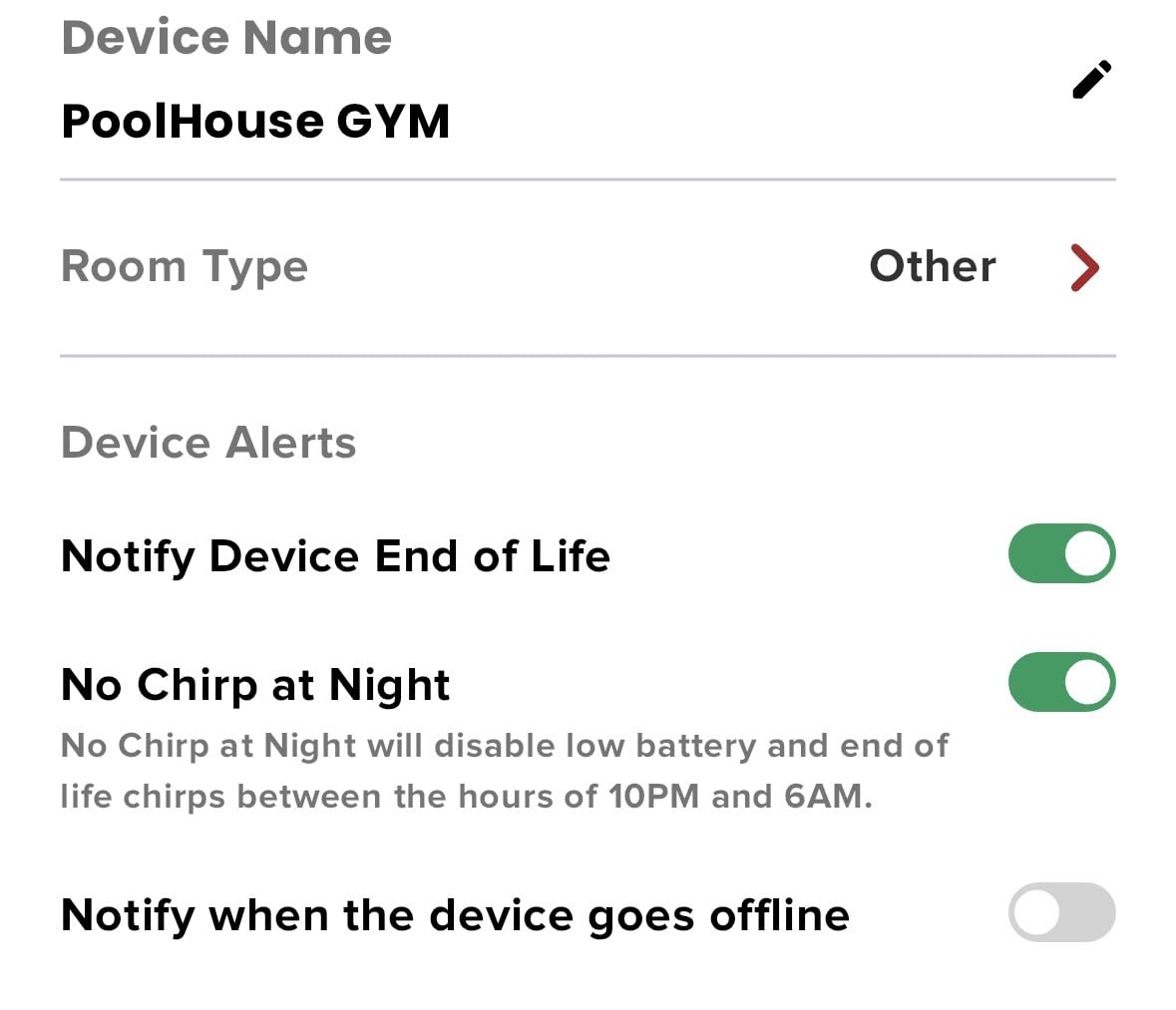
- Nightly self-test with a green light
Cons
- Costs far more than a standard alarm
- 2.4GHz Wi-Fi required
- Room names limited to a preset vocabulary
- No Apple HomeKit support
The Nest Protect remains the detection benchmark, and the reason is the sensor rather than the app. Its split-spectrum sensor uses two wavelengths of light at once, which means it is looking for both the fast-burning flame fire and the slow smoldering fire that most photoelectric units need a long time to pick up. Reviewers consistently rate it 4.6 out of 5 across more than 4,600 ratings, the deepest review base of any alarm we tested.
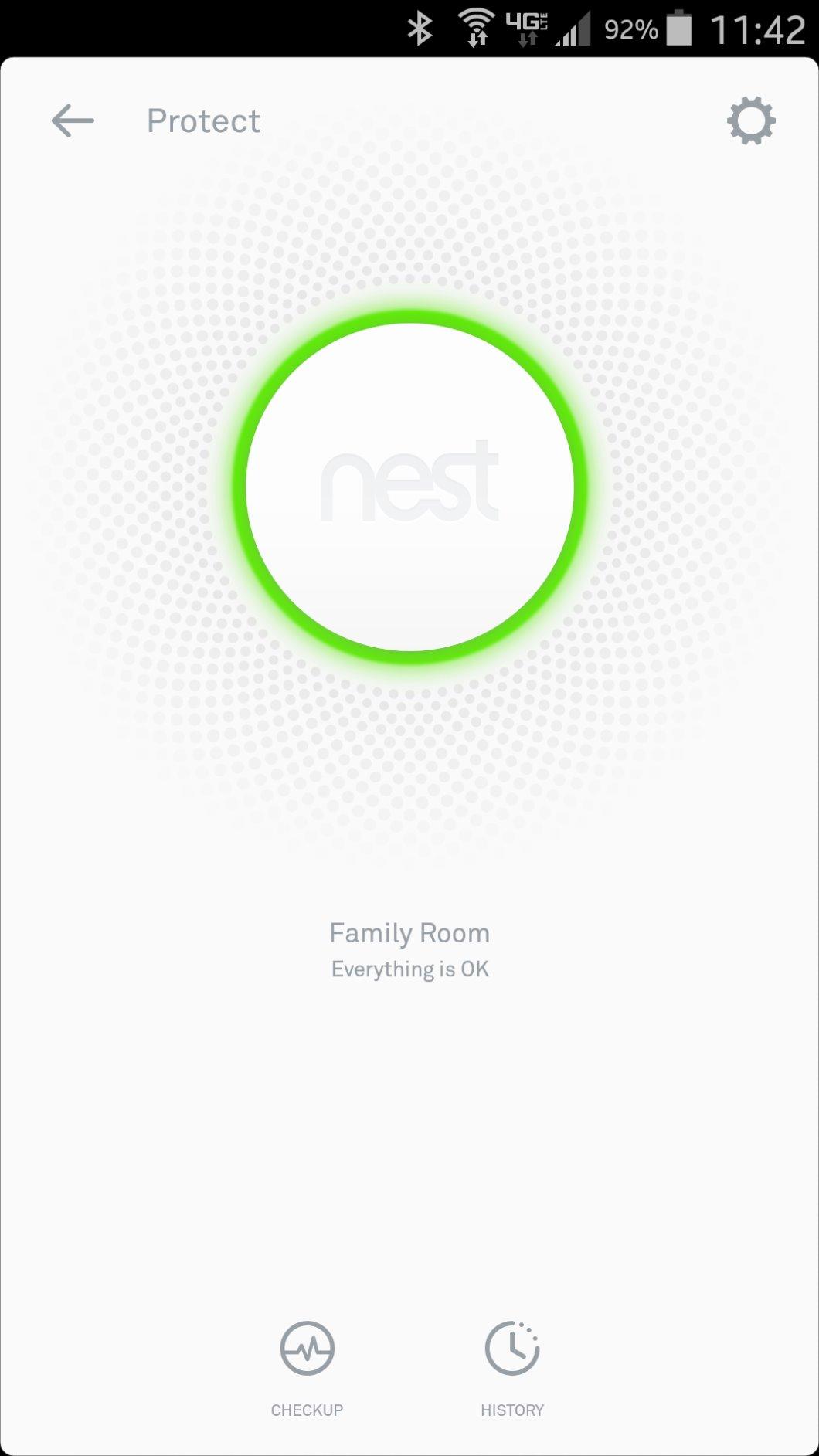
In our test home the thing that changed daily habits was the voice. When the unit near the back door chirped during a test, it said the alarm name and the room, so nobody had to walk the hallway guessing. The phone push arrived as well, which is what you actually rely on when you are not home. Pathlight, the motion-activated green night light, proved useful in a hallway with no other lighting and became the setting we turned off in a bedroom.
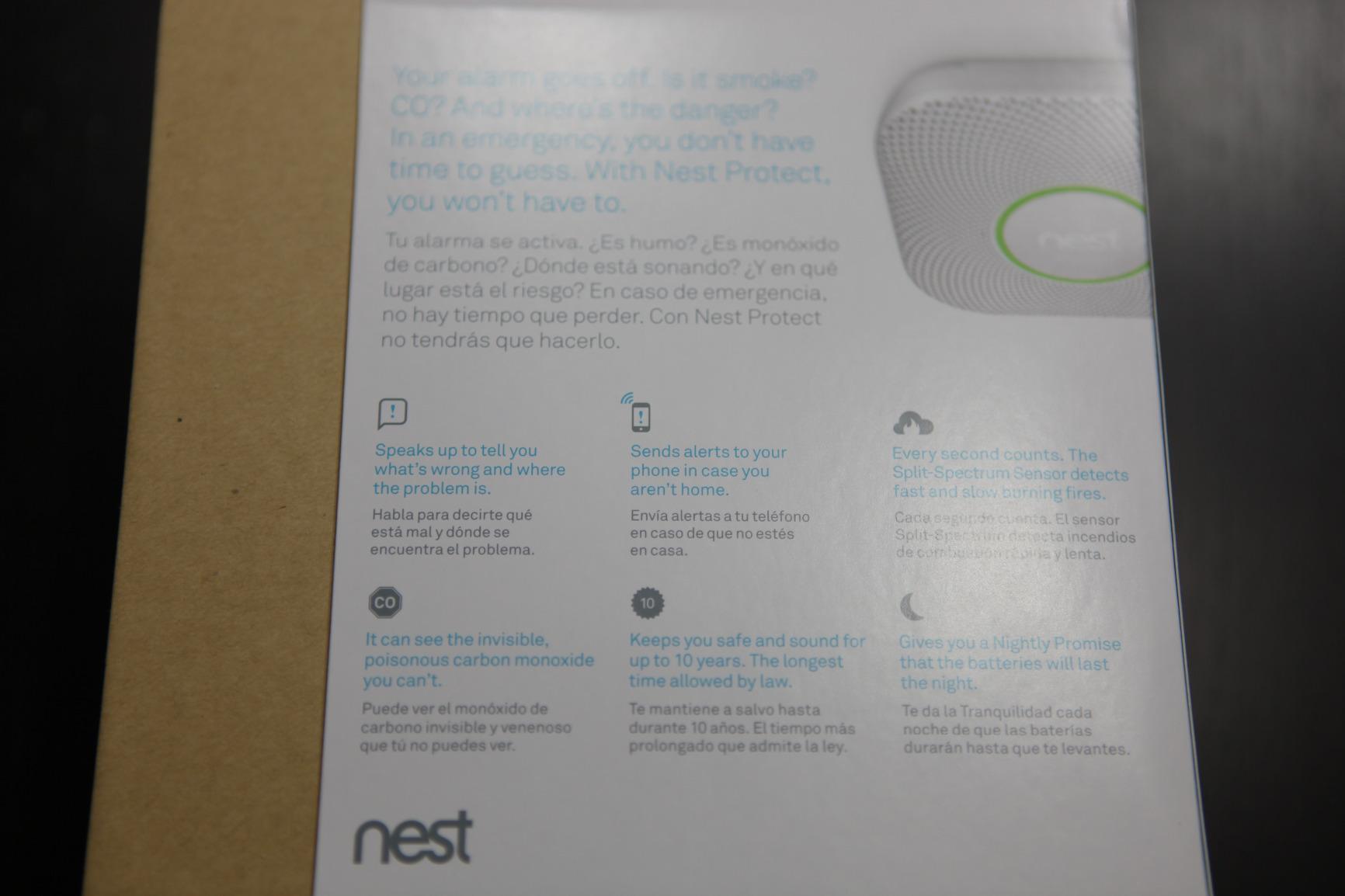
Two specs deserve attention. The CO sensor carries a 10-year stated lifespan, which is longer than the seven-year ceiling most authorities suggest as a replacement point, and the Nightly Promise self-test checks the speaker, sensors, and battery every night so a dead unit cannot quietly sit there. Connectivity runs on 2.4GHz Wi-Fi with Thread and Bluetooth Low Energy, so a dual-band router is fine but a 5GHz-only network is not.
The catch is the ecosystem. Everything lives in the Google Home app, and outside users depend on unofficial integrations that forum consensus treats as untrustworthy on a safety device. Owners also flag the mounting plate as fussy when the existing box is not perfectly square, and the app room names come from a fixed list rather than free text. If you are in Apple Home or Home Assistant and value local control, this is the wrong choice, which is why the Heiman and Kidde units further down rank where they do.
Who the Nest Protect suits best
It fits households already committed to Google Home, or anyone who wants a single device that covers smoke and carbon monoxide with the most accurate sensing in this group. People who travel, work long hours, or have an elderly relative living alone get the most value from the room-specific voice alert and the remote push notification. It is also a good second-story solution, since one linked unit in a hallway gives the family a clear location instead of a generic siren.
Who should skip the Nest Protect
Skip it if you are on Apple Home or running Home Assistant and want the alerts to stay on your own network. Skip it if the cost of a six-detector whole-home plan is the deciding factor, because the same coverage with standard code-compliant alarms costs a fraction of it. Anyone in a rental without permission to run hardwired cable should also look at the battery units instead.
2. Kidde Smart Smoke and CO Detector with Ring – Best Free Alert Combo
Kidde Smart Smoke & CO Detector with Ring, AA Battery, RGCUDR-RW
Photoelectric plus CO sensor
Two AA batteries
Wireless interconnect
UL 217 and FCC listed
Pros
- Smoke and CO in one body
- App notifications work without a subscription
- Wire-free interconnect links every detector
- Ring app also covers compatible cameras and doorbells
- Avoids nuisance alarms from cooking
Cons
- 2.4GHz Wi-Fi only
- Optional subscription for professional monitoring
- Setup depends on a Ring account
- Some connectivity complaints
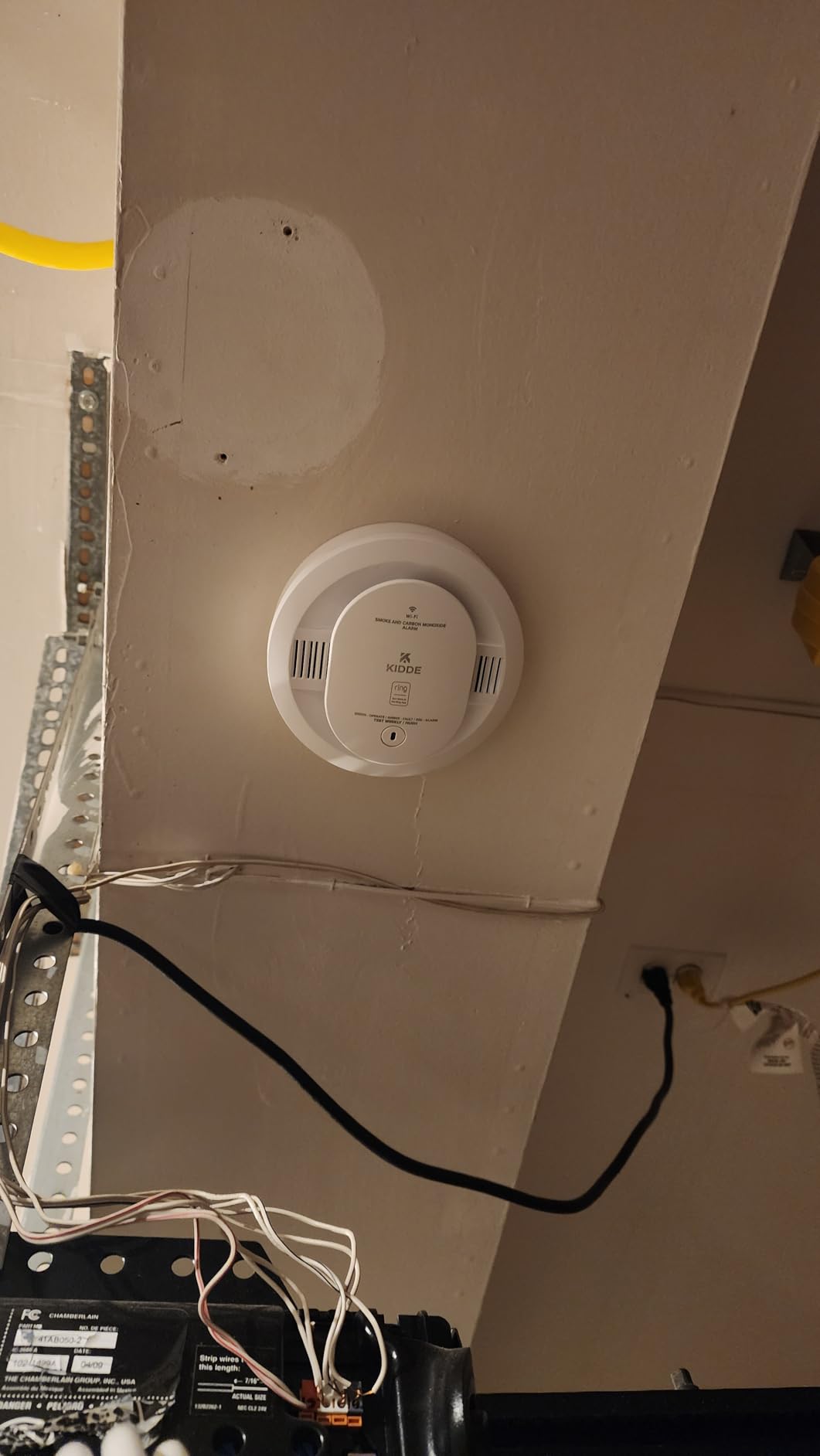
This is the one to buy if the single most important thing to you is getting a phone alert without paying a recurring fee. The RGCUDR-RW pairs a photoelectric smoke sensor with an electrochemical CO sensor in one 5-inch body, runs on two AA alkaline batteries, and pushes smoke, CO, and low-battery notifications through the Ring app at no cost. The optional Ring plan exists for professional monitoring, but nothing in the core safety function requires it.
When one detector in our test triggered, the others answered within a second or two, and that wireless interconnect is the feature most likely to change how your house behaves. It runs locally between units rather than through the cloud, which matters because an alarm network that depends on an internet connection is an alarm network that fails exactly when the internet is down. Low-level CO alerts also arrive as push notifications, so a slow furnace problem can reach you days before it becomes an emergency.
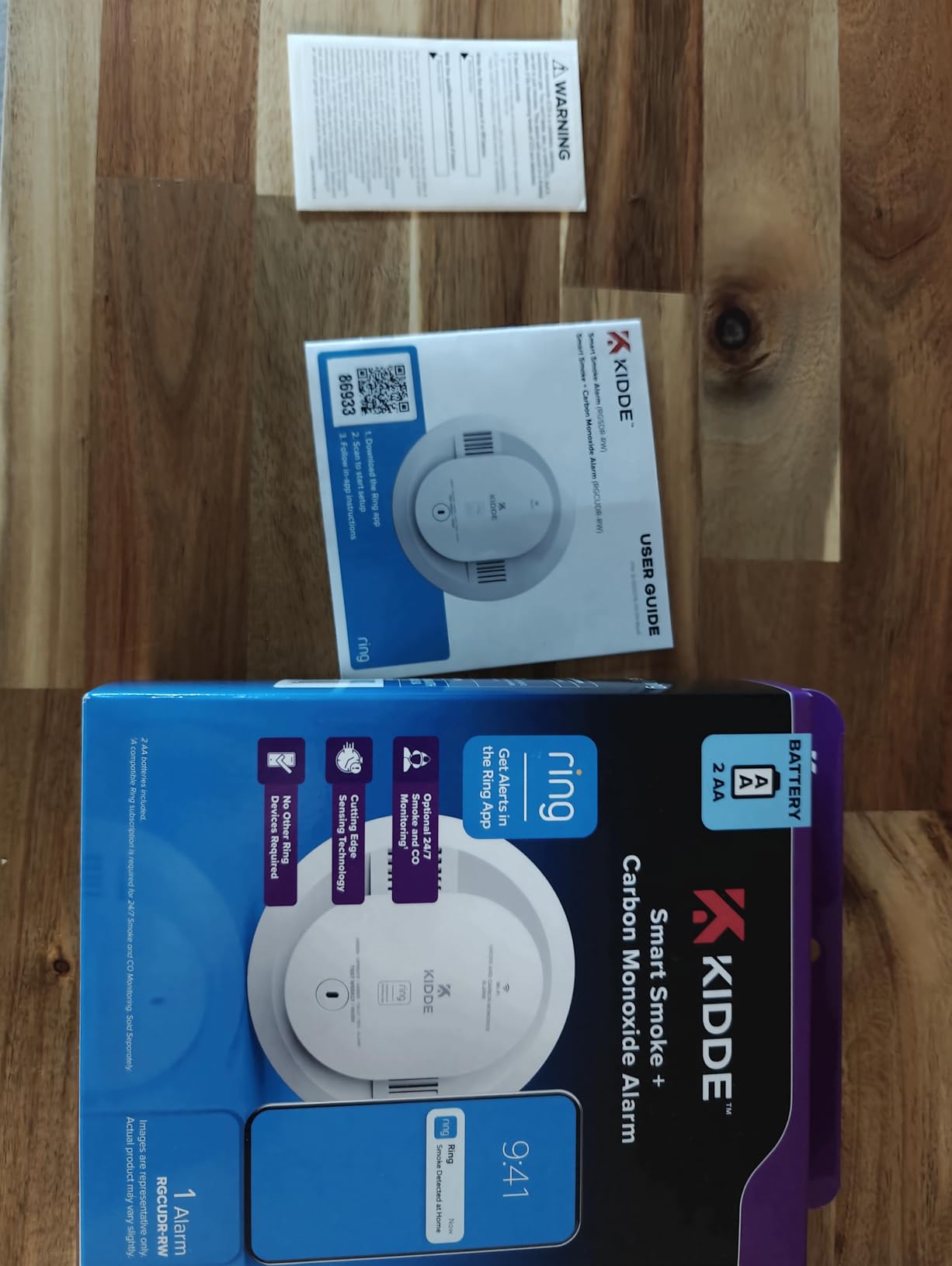
Kidde claims detection runs more than 25 percent faster than the leading competitor, and the cooking-false-alarm reduction is the change owners notice most, since a nuisance alarm is the number one reason people start ignoring their smoke alarms. Alexa compatibility means you can ask the assistant to check the alarm status. Voice alerts are present but less informative than the Nest Protect, since they announce the hazard type rather than a full room name.
The compromises are ordinary. It needs a 2.4GHz band, and the whole setup route runs through the Ring app, so anyone who does not already use Ring is signing up for an account to read their own smoke alarm. A number of reviewers describe intermittent connection drops after router changes, and the interconnect only links to other compatible Kidde or Ring-connected units, not to a mixed-brand house.
Who the Kidde with Ring suits best
It suits homeowners who want combination smoke and CO coverage across several rooms without touching a subscription, and it is a natural fit for anyone already running Ring cameras or a Ring doorbell. Renters benefit most, since two AA batteries and a screw are the entire installation and there is no wiring to negotiate with a landlord. It also works well as the second layer in a mixed system, putting the connected detector where a cooking false alarm is most likely.
Who should skip the Kidde with Ring
Skip it if you run Apple Home and want the alarm inside HomeKit, or if you need a detector that keeps working when the internet is out for the app notifications. Anyone wanting room-by-room voice location should note that the voice here announces hazard type rather than telling you which room triggered. It is also a poor fit for anyone with a hardwired interconnect already running in the house, since this model is battery-only.
3. eufy Security Smoke Alarm E10 – Best Compact Smart Smoke Detector
eufy Security Smoke Alarm E10, Smoke Detector, Ultra-Compact 70 mm Design
70mm compact photoelectric
5-year sealed lithium battery
Range up to 656 ft via HomeBase
UL 217 10th edition
Pros
- 70mm body is far smaller than a conventional 5-inch round detector
- Five-year sealed battery removes annual battery changes
- UL 217 10th edition compliant
- Loud siren with instant app alerts
- Light enough for simple ceiling mounts
Cons
- Requires an eufy HomeBase sold separately
- Smoke only with no CO sensor
- Locked to the eufy ecosystem
- No hardwired option
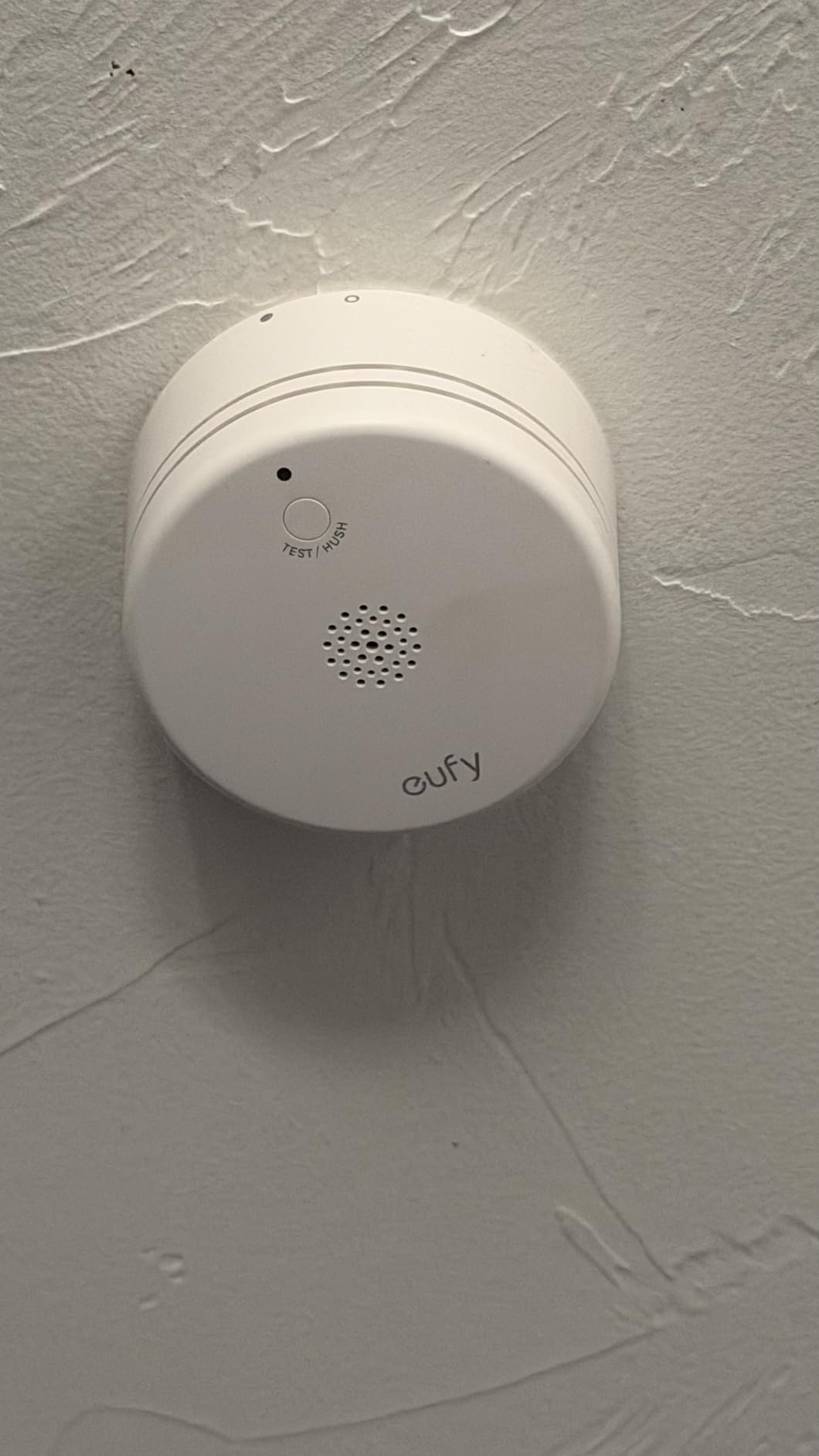
The eufy E10 solves a problem the other alarms create: size. At 70mm across and just over an inch deep, it is roughly half the diameter of a conventional 5-inch round detector, which changes how a hallway or a small bedroom looks once you have four of them on the ceiling. Owners notice the same thing, rating it 4.4 out of 5 across more than 220 ratings.
The sealed lithium battery is rated for five years, which removes the low-battery chirp at 2am that drives people to disable the alarm in the first place. Communication runs through an eufy HomeBase hub rather than directly to your phone, and the stated range reaches 656 feet, which is more than enough for most single-family homes with the hub on a central floor. The siren is genuinely loud, and the test button doubles as the silence control.
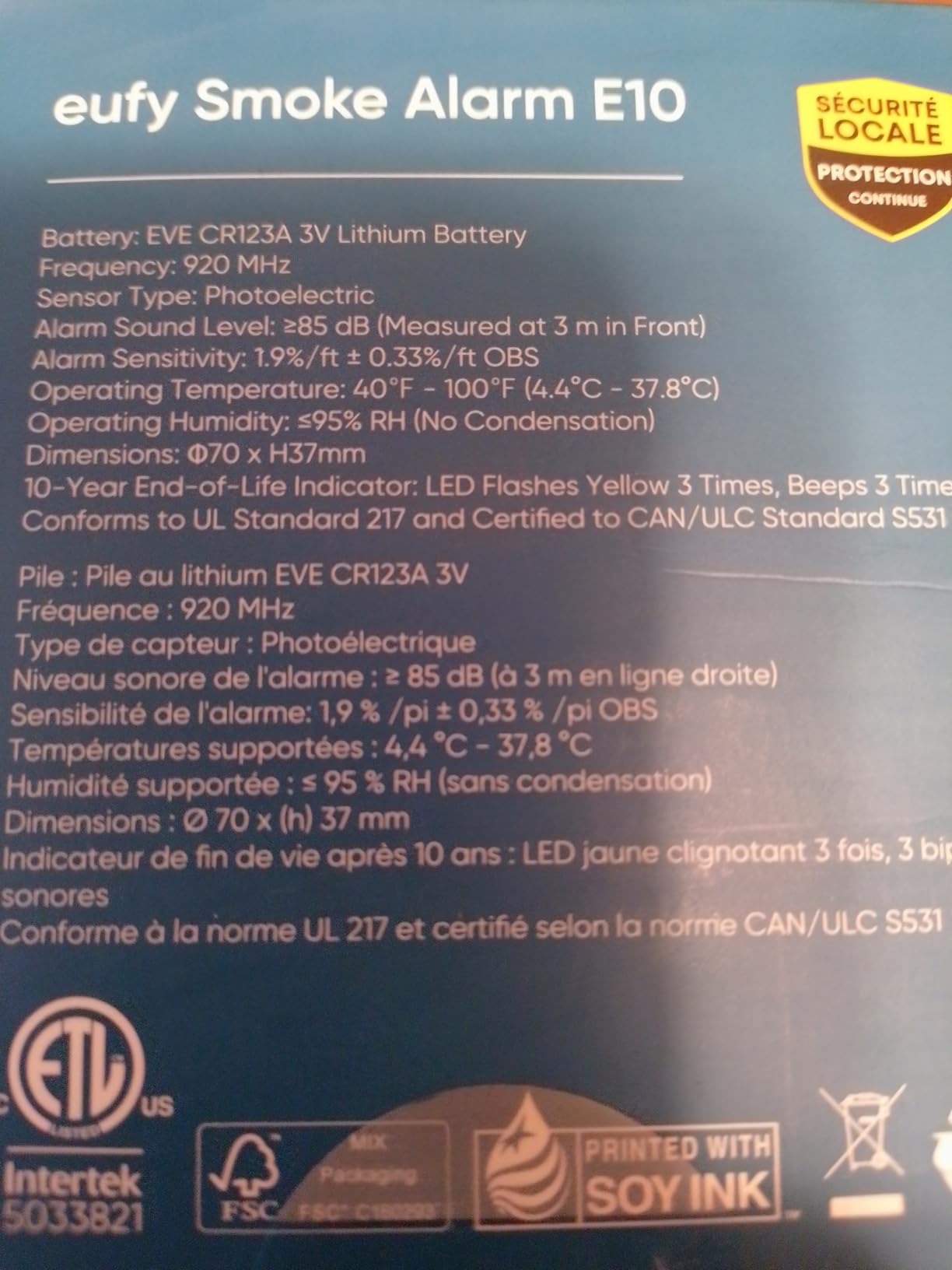
There is a catch that matters for anyone still deciding on their whole-home plan. This is a smoke-only detector with no carbon monoxide sensor, so a home with a gas furnace, a gas water heater, or an attached garage needs a combination alarm somewhere else. The HomeBase is also a separate purchase, and it has to be on a recent firmware version: 4.0.5.2 or later for the HomeBase Mini, 3.4.1.2 for HomeBase 2, 3.7.2.6 for HomeBase 3, and 4.1.4.3 for HomeBase Pro.
Being eufy-only, it will not appear in Google Home, Alexa, Apple HomeKit, or Home Assistant, and there is no inter-alarm link between eufy detectors and any other brand. That is a reasonable trade for a small, simple battery unit that runs for five years without a battery change, but it is a trade. We would not build an entire home on this platform without checking what happens when the company changes its hub lineup.
Who the eufy E10 suits best
It suits renters, apartments, and older homes without alarm wiring, and anyone who hates replacing batteries. If you are outfitting a small or medium home on a single hub and want the least obtrusive hardware on the ceiling, this is the model we would pick. It also makes sense as the smoke layer in a house where a separate combination alarm handles carbon monoxide near the mechanical room.
Who should skip the eufy E10
Skip it if you need carbon monoxide detection, because there is no CO sensor in this unit at all. Skip it if your household is spread across Home Assistant, HomeKit, or Google Home, since the alerts stay inside eufy hardware. Anyone with a house larger than a two-story should also check the hub placement carefully, because the whole system depends on that one device staying online.
4. Kidde Smart Smoke Detector and Air Quality Monitor – Best for Indoor Air Data
Kidde Smart Smoke Detector & Indoor Air, Quality Monitor, WiFi, Alexa Compatible Device, Hardwired w/Battery Backup, Voice & App Alerts, 2 Pack
Smoke plus TVOC and humidity sensing
Hardwired with battery backup
85dB alarm
2-pack
Pros
- Only 2-in-1 smoke and air quality device in the group
- Works with Alexa and Google Home
- Hardwired with battery backup
- 10-year limited warranty
- Two units cover two floors
Cons
- Multiple false alarm reports in reviews
- Air quality readings described as inconsistent
- Four-day calibration period after setup
- Sensitive to cooking steam
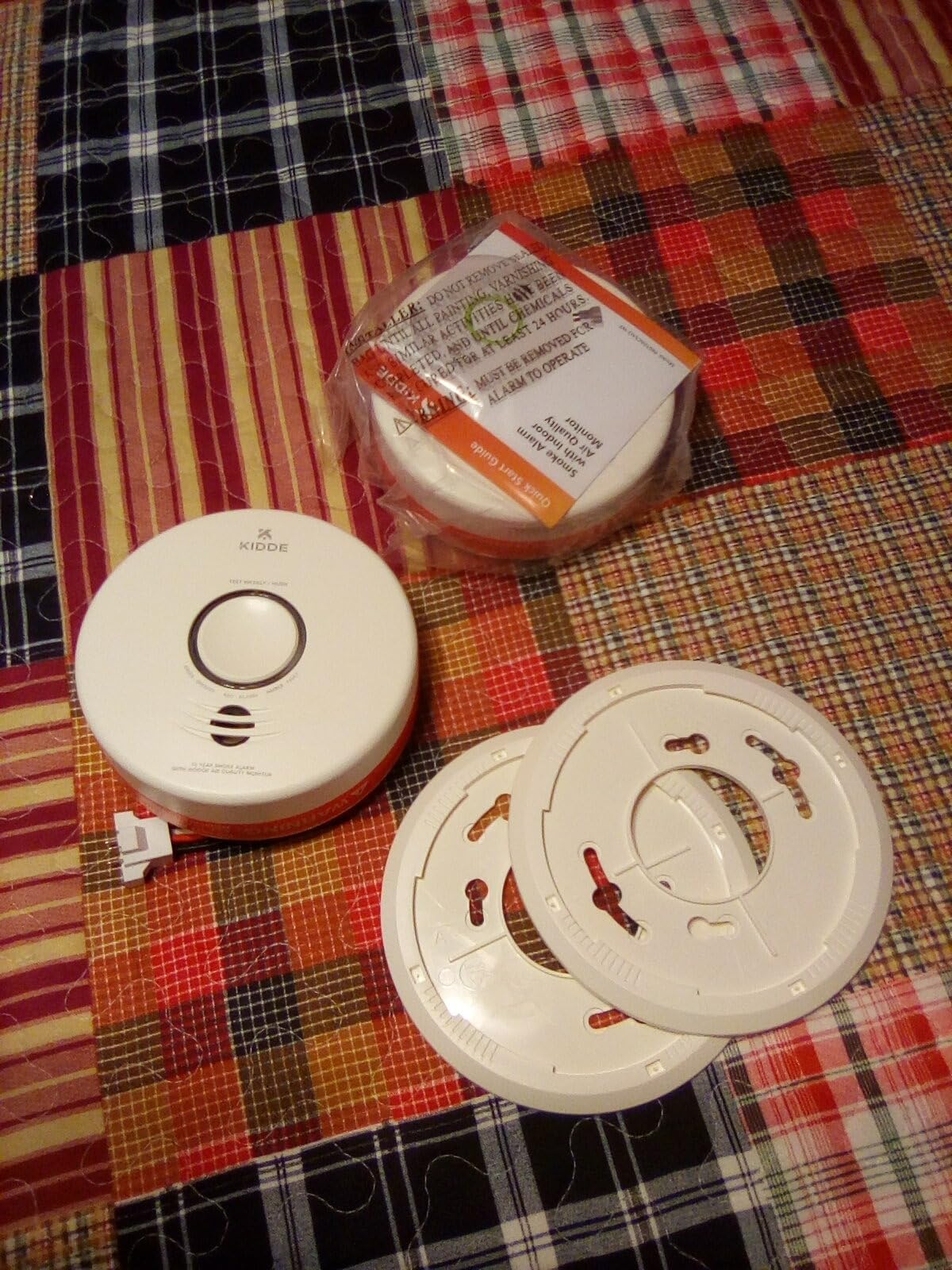
The P4010ACSAQ-WF does something none of the other five do: it tracks indoor air quality alongside smoke. The photoelectric sensor is paired with a monitor reading total volatile organic compounds and humidity, which makes it useful for a nursery, a home office, or a renovation where you want to know when the air changes. It is also the only device here listed as the first UL listed smoke and air-quality monitoring unit, and it carries a 10-year limited warranty.
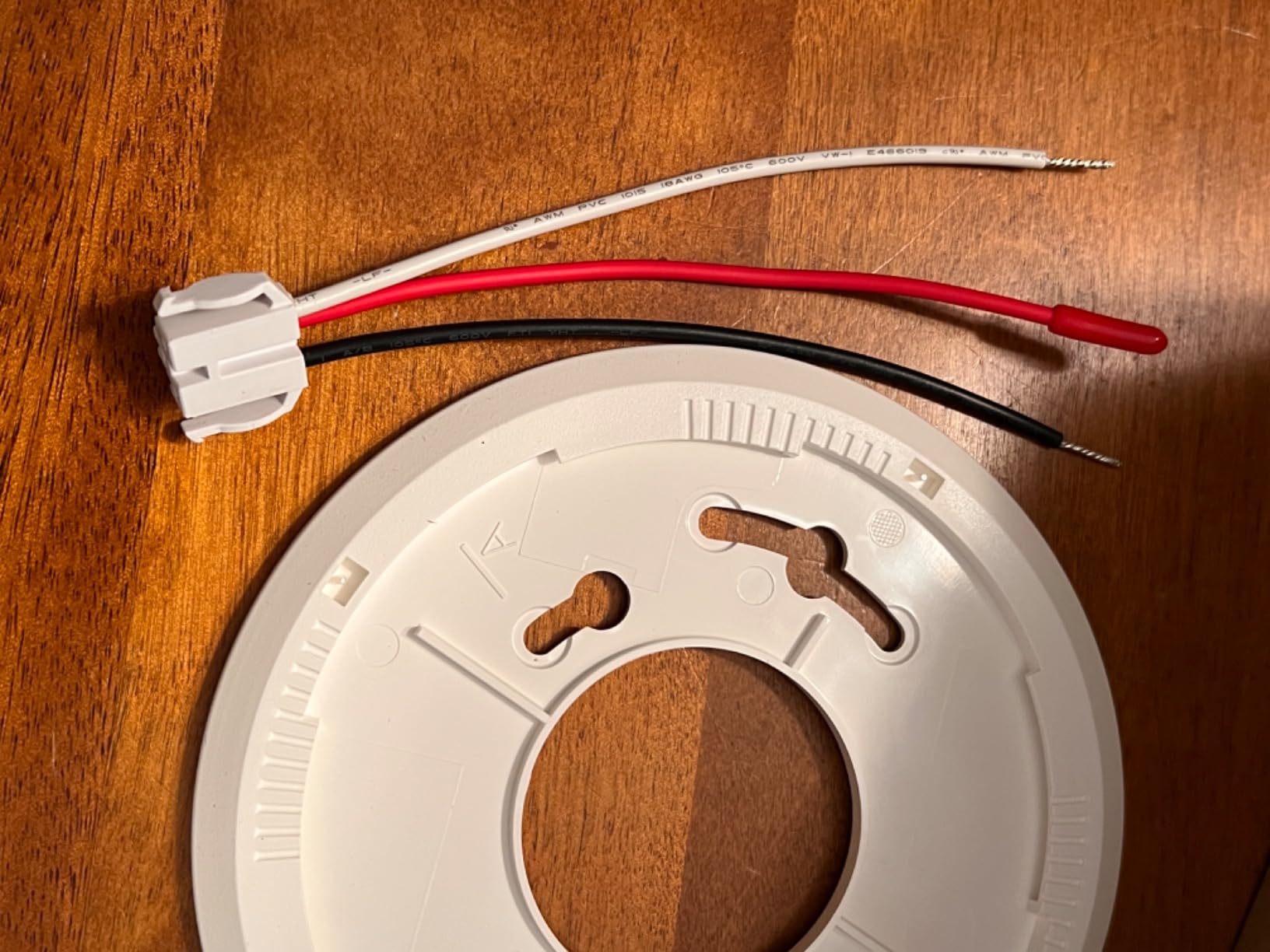
Installation is hardwired with battery backup, so unlike the battery units it keeps sounding during a power outage rather than going quiet. The voice alarm announces the hazard type, either a fire warning or a replace-alarm message, and an 85-decibel alarm with green, amber, and red LEDs gives you a visual status read from across a room. Compatibility covers Alexa, Google Home, iPhone, and Android, and the pack includes two units so you can cover two floors in one order.
The 3.8 rating is the lowest but one in this group, and the reason shows up repeatedly in reviews: nuisance alarms. Multiple owners describe false alarms two to four times a month, and steam from cooking is the most cited trigger, which is consistent with a photoelectric sensor mounted too close to a kitchen. Air quality readings are also described as fluctuating, and the unit needs a four-day calibration period after setup before the data settles. Several reviewers reported that customer service was slow to respond when the device misbehaved.
None of that touches the core safety function, and the physical alarm is still UL listed and still loud. But if the sound goes off repeatedly and you cannot get help, the practical result is that people stop taking it seriously. We would install these outside the kitchen, in hallways, bedrooms, and finished basements, and pair them with a dedicated CO alarm near any fuel-burning appliance.
Who the Kidde 2-in-1 suits best
It suits anyone who wants VOC and humidity numbers alongside fire protection, particularly parents, remote workers, and people with a recently renovated interior. Homeowners with existing hardwiring and a neutral wire will find the install straightforward, and the two-pack makes a sensible first floor and second floor pair. It is also a reasonable choice for a home already running Alexa or Google Home on everything else.
Who should skip the Kidde 2-in-1
Skip it if cooking steam is a problem in your household, because this is the model most likely to send you to the app at midnight for nothing. Skip it if you have no hardwiring and no interest in adding it, and skip it if dependable air quality data is the point, since the readings draw consistent criticism. Anyone put off by a four-day wait after installation should know that period is part of how the sensor calibrates.
5. Heiman 6-Pack Smart Smoke Detector Kit with Gateway – Best Whole-Home Bundle
Heiman Smart Wireless Interconnected Smoke Detector, 6-Pack + Gateway, S1-R
Six interlinked photoelectric detectors plus gateway
10-year CR123A lithium
UL 217 10th edition and CSFM
Home Assistant support
Pros
- Six detectors and a gateway in one kit
- Wireless interconnect works without WiFi
- Only unit here with documented Home Assistant support
- Ten-year lithium battery per detector
- Tool-free magnetic mounting
Cons
- Smoke only in the base detectors
- 2.4GHz network required for the gateway
- Only 30 reviews on a newer product
- Heiman app needed during setup
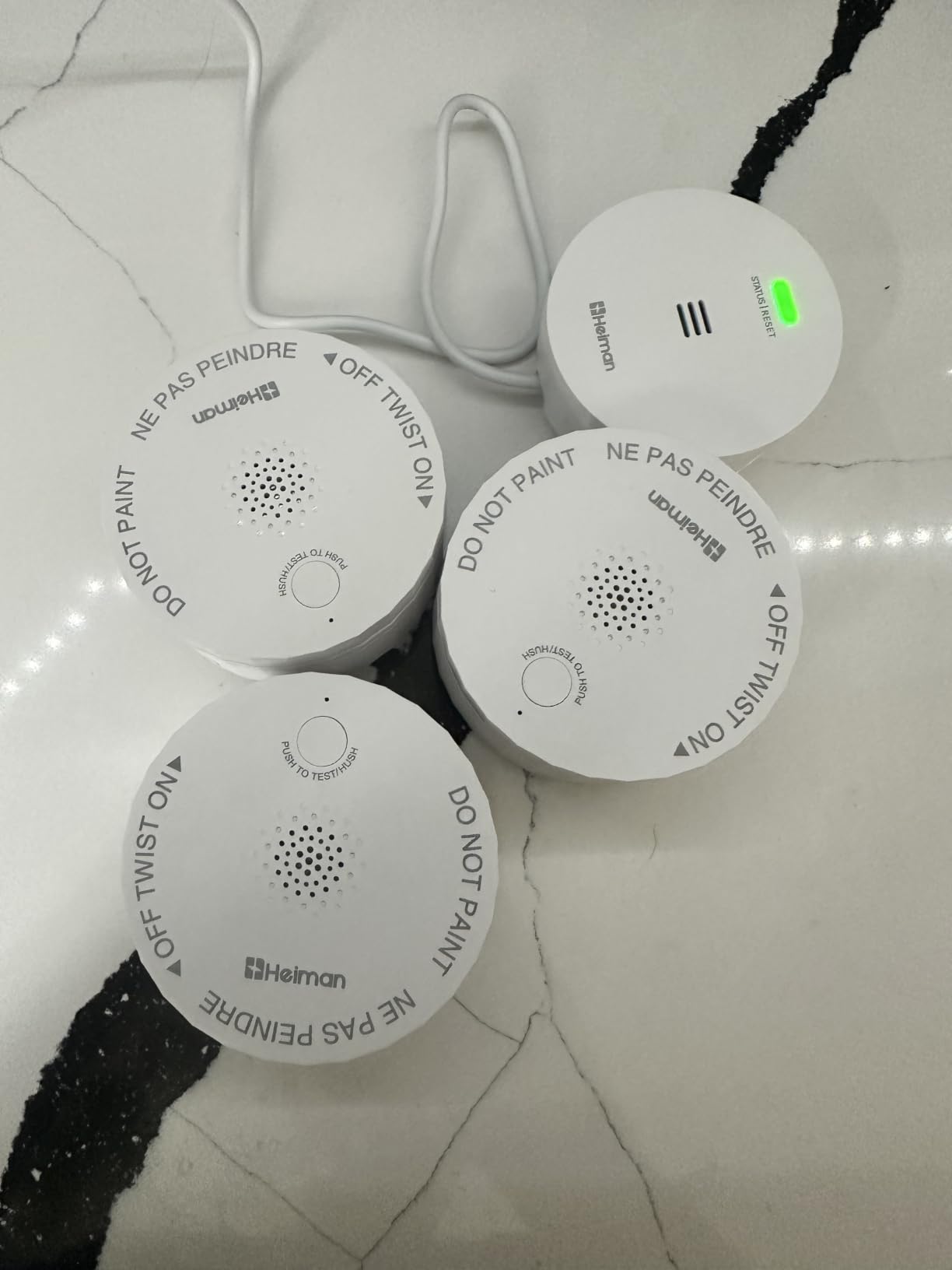
Buying detectors one at a time is how whole-home jobs get abandoned halfway, and this kit sidesteps that. Six S1-R detectors arrive with a WS3GW-R gateway, each running a ten-year CR123A lithium cell, and every detector is UL 217 10th edition and CSFM certified. The 4.2 rating sits on a 30-review base, so the evidence here is thinner than for the top three, and we would treat that honestly.
Two things make this kit interesting beyond the bundle price. First, the wireless interconnect between detectors runs locally, so all six sound even if the gateway or the internet is down. Second, the gateway carries Home Assistant, IFTTT, Google Home, and SmartThings support, and it is the only product in this roundup with documented Home Assistant compatibility on the box. That matters a great deal to the local-control crowd, where the standard complaint is that a safety device should not route through someone else’s cloud.
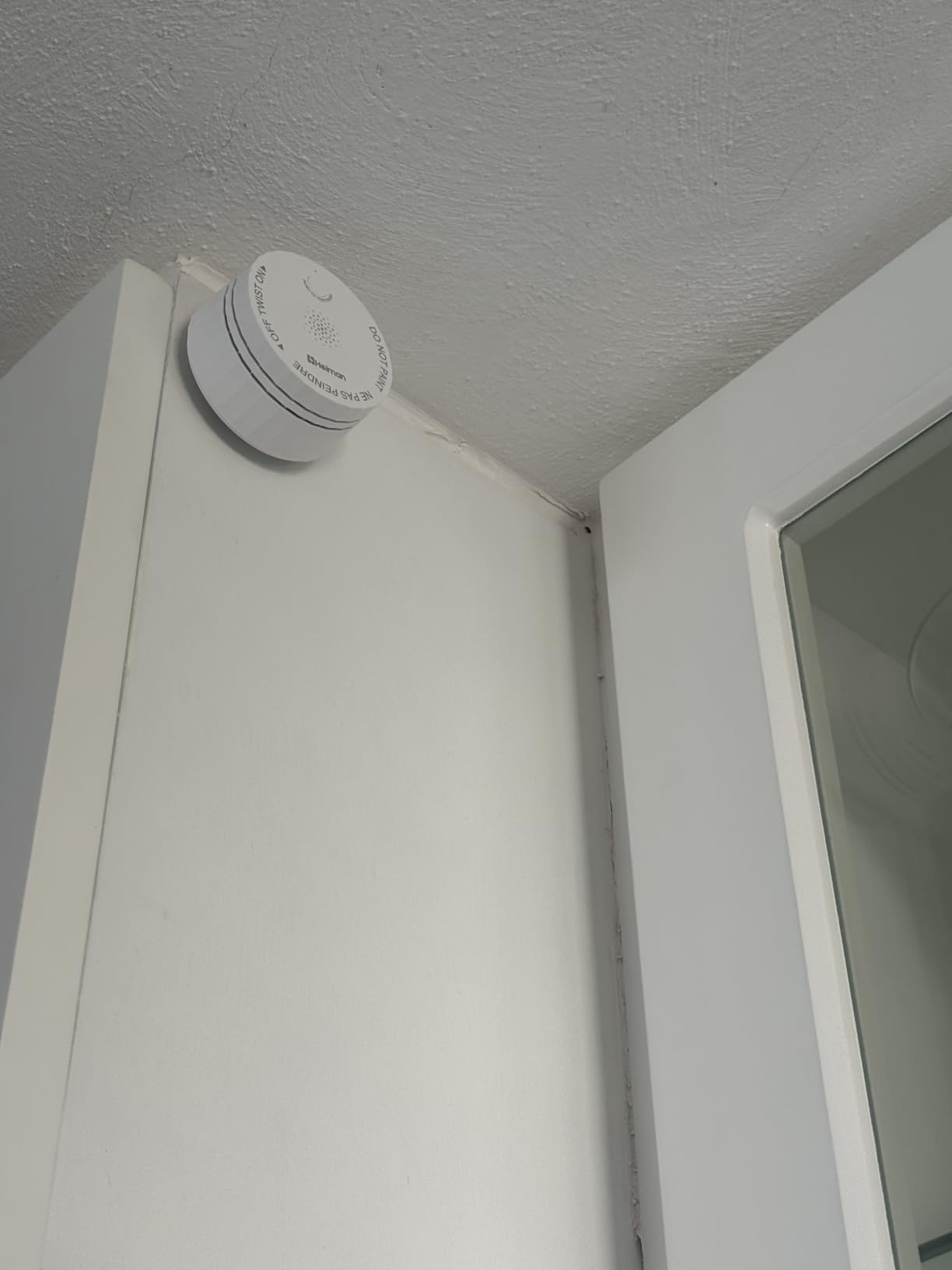
The dual-beam photoelectric sensor is specifically designed to cut false alarms from cooking, which is the single most common complaint about connected alarms, and the system supports up to 24 interlinked detectors if you expand later. The same 70mm Red Dot body as the eufy keeps the hardware visually small, and magnetic tool-free mounting means a landlord-friendly install with no brackets. The gateway also accepts other Heiman sensors, so carbon monoxide, temperature, door, and water leak devices can share the same hub.
Limitations are real. The base detectors here are smoke-only, so CO coverage means adding separate Heiman CO units. The gateway needs 2.4GHz Wi-Fi and will not join a 5GHz-only network, and the Heiman app is required during setup. With 30 reviews we cannot tell you how these behave in year three, which for a ten-year battery design is the question that matters most.
Who the Heiman kit suits best
It suits anyone outfitting a whole home in one decision, especially a two-story or three-bedroom house where the local interconnect is the whole point. Home Assistant users get the clearest path here, because the gateway is documented as compatible and the local link between detectors does not depend on the cloud. It also works for landlords or residents in older homes that have no alarm wiring at all.
Who should skip the Heiman kit
Skip it if your home needs carbon monoxide coverage in the same devices, because the base units are smoke-only. Anyone wary of a thinner support track should weigh the 30-review count against the thousands behind the leaders, particularly on a device whose battery is claimed to last a decade. It is also the wrong pick for a single apartment where two detectors would do the job.
6. Kidde Hardwired App-Enabled Smoke and CO Detector – Best for Wired Homes
Kidde Hardwired Kidde App Enabled Smart Smoke and Carbon Monoxide Detector, AA Battery Backup, Voice Alerts, Interconnected Alarm
Photoelectric plus CO sensor
Hardwired with AA battery backup
UL 217 and UL 2034
Phone hush
Pros
- One smart detector reports for a whole wired interconnect
- Voice alerts announce hazard type
- Hush false alarms from your phone
- Dual smoke and CO sensing
- 3X more precise smoke detection
Cons
- Lowest rating in the group at 3.7
- 22 percent one-star rate in reviews
- Needs a licensed electrician for hardwiring
- 2.4GHz Wi-Fi only
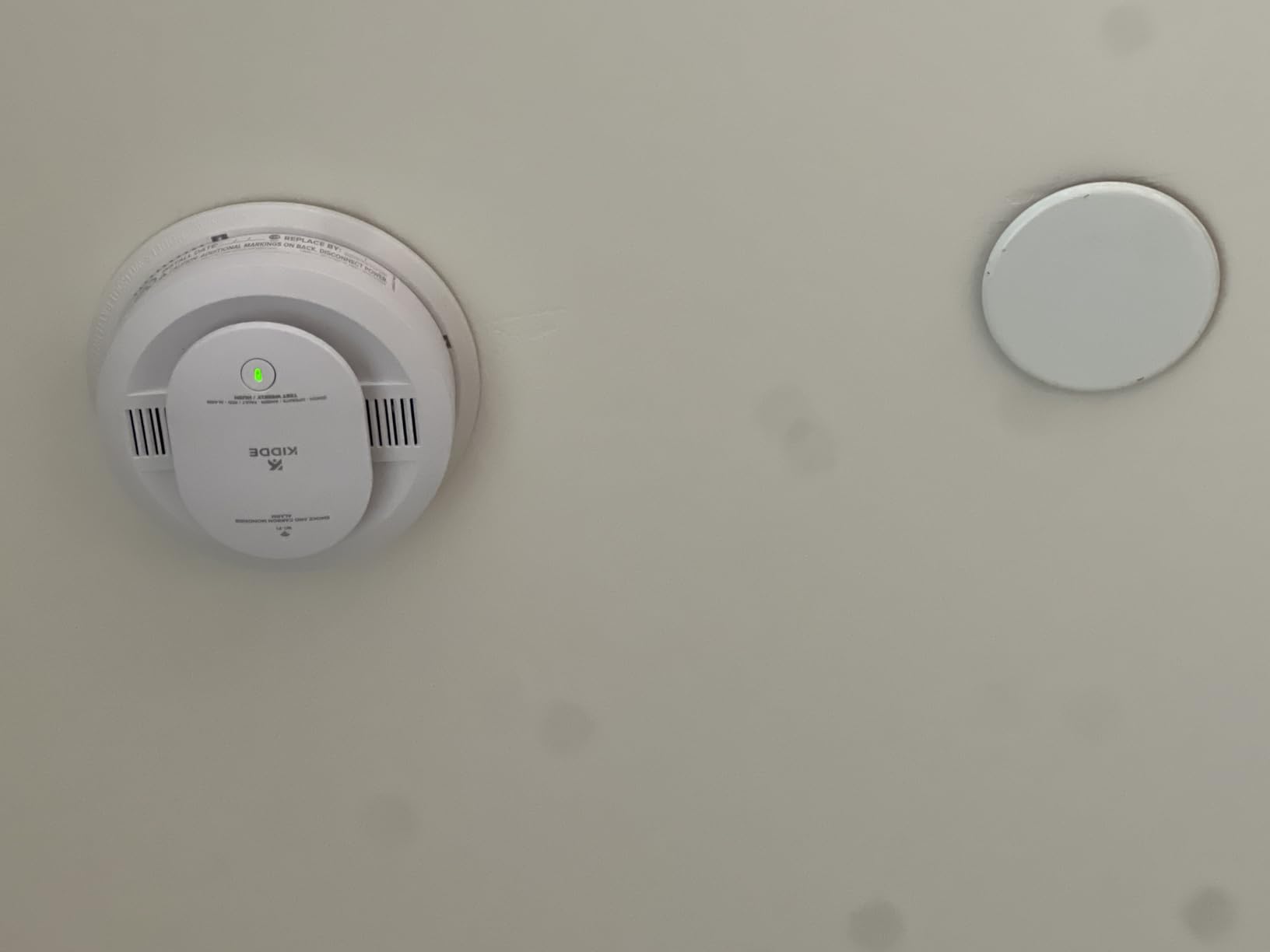
If your house already has a wired interconnected alarm system, you do not need smart detectors everywhere. The 30CUAR-W is built around that idea: add one of these to the existing interconnect and the app reports smoke, CO, and low-battery events from the whole linked system. The rest of your alarms stay exactly as they are, and your phone still wakes up when something detects smoke on a far floor.
On the hardware side it is conventional and competent. A photoelectric sensor and an electrochemical CO sensor sit behind a 5-inch face, the alarm sounds at 85 decibels, and AA batteries take over if the power cuts. It carries UL 217, UL 2034, and FCC certification, which makes it one of only a few units here certified on both the smoke and CO standards. Voice alerts name the hazard and the phone can hush a nuisance alarm, which is a small feature you will appreciate at 2am.
The 3.7 rating is the lowest in this roundup, and roughly 22 percent of ratings are one star, which is high enough that we would not install it as the only smart layer in a house. App connectivity complaints appear in the reviews, and 2.4GHz-only Wi-Fi rules out some modern mesh setups without adjustment. Hardwiring also means an electrician in most jurisdictions, and the box includes the mounting bracket, wiring harness, and two AA batteries.
That said, the design logic holds. Interconnected hardwired alarms are the backbone of a code-compliant system in most existing homes, and making one of them smart is a targeted way to get phone alerts without replacing the entire house. If your wiring is already in place, the economics work better here than anywhere else in the group.
Who the Kidde hardwired unit suits best
It suits owners of an older home with an existing wired interconnect who want remote alerts and phone hush without a full rewiring project. It is also a good choice for anyone who wants both UL 217 and UL 2034 certification on the same device, since the CO certification is not universal in this category. Installing one on the main floor and adding others later is a sensible way to stage the work.
Who should skip the Kidde hardwired unit
Skip it if you rent, or if your home has no alarm wiring and calling an electrician is not on the table. The 22 percent one-star rate is the main warning, and given that the same manufacturer also sells better-reviewed battery units in this roundup, there is no strong reason to start here. Anyone on a 5GHz-only network should also know the setup will not go through as shipped.
How Smoke Detection Technology Works: Photoelectric vs Split-Spectrum
Photoelectric and split-spectrum are the two sensor types in this lineup, and the difference comes down to what the sensor is looking for. A photoelectric sensor shines a beam across a chamber and watches for the light scatter that happens when smoke particles enter it, which makes it excellent at smoldering fires and comparatively slower at fast flame development. An ionization sensor, common in older cheap units, uses a tiny amount of radioactive material to ionize air and detects a change in current, which skews the other way, toward fast-burning fires.
Split-spectrum, which is what the Nest Protect uses, does both. It runs two sensing modes at two different wavelengths at the same time, so a single unit covers a smoldering fire and a flash-over fire without you having to guess which type of fire your kitchen is most likely to produce. The catch is cost, and that is largely why the better split-spectrum units sit at the top of this list and the plain photoelectric units sit below them.
Carbon monoxide is detected differently, with an electrochemical cell that reacts with the gas and produces a proportional electrical signal. That is why combination units are worth the extra money in a home with a gas furnace, gas water heater, wood stove, or an attached garage. Three of the six products here carry a CO sensor, and one, the eufy, does not.
If you want the broader picture on sensing and placement, our guide to the best smoke and carbon monoxide detectors covers the non-connected options too, which still matter as the baseline layer in a hybrid home.
Do Smart Smoke Detectors Need a Subscription?
Most of them do not, and the products in this roundup prove it. Of the six units we tested, five deliver their core smoke and CO phone notifications at no recurring cost, including the Nest Protect, the two other Kidde smart models, the eufy, and the Heiman gateway. The one exception is the Kidde with Ring, where a paid Ring plan is offered for professional 24/7 monitoring, but the plan is optional and the safety alerts do not stop working if you never subscribe.
There is a subtler cost, and it is the hardware hub. The eufy E10 needs a HomeBase, and the Heiman kit includes one, so comparing the sticker on the alarm alone can understate what the system costs. Homeowners should also factor the replacement cycle: a sealed ten-year lithium cell means one detector and one battery change every decade, while a unit running on AA cells means a visit to every alarm on the schedule your local code requires.
Our rule for these purchases is to judge the alarm on the free tier. If the smoke, CO, low-battery, and interconnect features all work without a paid plan, the subscription is a genuine upsell rather than a tax. If any of those four features are gated, walk away, because that is a safety feature rented rather than owned.
Smart Home Compatibility: Google Home, Alexa, HomeKit, and Home Assistant
Not one of these six detectors supports Apple HomeKit, and that is the single biggest ecosystem gap in the category right now. If your home runs on HomeKit, your realistic choice today is a non-connected alarm, or an unofficial community integration that forum users are explicitly told not to trust with a safety device. We agree with that caution and would not build a life-safety path on an unmaintained library.
Google Home is the best supported. The Nest Protect is native, the Kidde air quality monitor works with it, and the Heiman gateway lists it directly. Alexa support is next: the Kidde with Ring and the Kidde 2-in-1 both work, so anyone in an Amazon household has a workable path. The eufy is the outlier here, since it reports through eufy HomeBase hardware rather than to a voice assistant.
Home Assistant is where this roundup has exactly one answer, and it is the Heiman kit. The gateway is listed as compatible, and users on Home Assistant forums describe First Alert Z-Wave units and similar locally-controlled alarms as the preferred route for replacing a discontinued Nest system, precisely because local control means the alarm does not depend on a company that can end support. If local control matters to you, that single compatibility listing should carry more weight than any app feature. For the rest of the home, our picks for smart thermostats and smart home security systems follow the same local-first logic.
Where to Place Smart Smoke Detectors in Your Home
Inside every bedroom, on the ceiling, and in every level’s hallway is the short version. NFPA 72 and local building codes drive the specifics, and the requirements differ by jurisdiction, so treat the following as a layout to discuss with your electrician or inspector rather than as a self-certified plan. A detector in the wrong room is a detector that has not been tested properly.
On the ceiling is the standard because smoke rises and a wall-mounted alarm sits in a layer of air that may never see the smoke. Mount it at least 4 inches from a wall and no more than 12 inches down from the ceiling, keeping it clear of dead air pockets in vaulted ceilings and near the corners where ceilings meet walls. Inside a bedroom, place it on the ceiling near the door, since that is the route smoke would take if the fire started outside.
Give your kitchen, bathroom, and garage special treatment. Keep any detector at least 10 feet away from the stove, away from the bathroom door where shower humidity escapes, and out of a garage where a running engine can trigger a CO alarm. If a kitchen still has a code-required alarm, use one rated for nuisance-alarm resistance and keep the rest of the smart coverage in the adjacent hallway.
Basements, mechanical rooms, and any space with a gas appliance need combination smoke and CO units, and those are exactly the rooms where the Nest Protect’s 10-year CO sensor or a dedicated CO alarm earns its place. Our general smart home upgrade path for air quality is covered separately in our HEPA air purifier guide for smoke, which matters if you are dealing with a filtration problem rather than a fire problem.
How to Reduce False Alarms From Cooking, Humidity, and Vacuuming
The best false alarm fix is placement, not settings. A detector within 10 feet of a stove will read cooking steam as smoke, and no amount of app tuning corrects that. Move the unit into the hallway outside the kitchen, keep bathroom units away from the door, and close the kitchen door during high-heat cooking. Those three changes remove the majority of reported nuisance alarms on their own.
Next, look at what the sensor is sensitive to. Dual-beam and split-spectrum designs are built to reject slow aerosol and non-combustion particles, which is why the Heiman and Nest Protect both market that behavior. Vacuuming throws fine dust into the air and can trip a photoelectric chamber, so run the vacuum after you have pressed the test and silence buttons rather than before, or simply avoid running it directly under a detector.
Finally, learn the silence workflow on whichever model you buy. Every unit in this group has a test and silence control, and the ones with an app let you hush from your phone, which matters when the alarm is going off at 3am and you are trying to work out whether the hallway is filling with smoke. Hush only after confirming visually that there is no fire, and never remove a battery to stop a chirping unit.
Is Google Discontinuing the Nest Smoke Alarm? What to Buy Next
The Nest smoke alarm is still sold, still certified, and still the detection-technology benchmark, but the roadmap around it has changed enough that long-term owners should plan a replacement path. Users on Home Assistant and HomeKit forums describe an active search for a like-for-like substitute, and the honest answer is that no current product matches it on all three axes at once: split-spectrum sensing, room-specific voice alerts, and a stable app.
If you own Nest Protect units and they still work, there is no reason to replace them today. The 10-year CO sensor lifespan and the Nightly Promise self-test mean a healthy unit has years left. What you should do is decide your exit plan before you need it, and pick a replacement platform that keeps working if the company changes direction, which is the argument the Home Assistant crowd has been making for years.
Coming from Nest, the closest matches in this roundup are the Kidde with Ring if you want free alerts and combination smoke and CO, the Heiman kit if you want local control and Home Assistant support, and the Kidde air quality monitor if you want one device that also tracks your indoor air. None of them reproduce the voice room naming, and pretending otherwise would not help you.
How We Evaluated These Smart Smoke Detectors
We compared six models against the same criteria rather than letting spec sheets do the work. Detection technology came first, because a smart alarm that misses a smoldering fire is a fancy notification for a non-event. Certification was a hard filter: anything not UL 217 listed for smoke, or UL 2034 listed for carbon monoxide, was out regardless of how good the app looked.
Beyond hardware we measured the things that decide whether people keep using a smart alarm. We checked how fast the phone alert arrived after a test trigger, whether all paired detectors sounded, how long the battery is claimed to last and what happens when it ends, and what the setup flow demands from you on day one. Ecosystem support was scored by what the manufacturer documents, not by what an unofficial integration claims.
Finally, we read the negative reviews first. False alarm frequency, connectivity drops, and support response times are the three complaints that show up most often in this category, and they are the reason two products in this list carry noticeably lower ratings than the rest. A smart smoke detector is a device you install once and then think about for a decade, so reliability history matters more here than a new feature does.
Frequently Asked Questions
Is it worth getting a smart smoke detector?
Usually yes, if anyone is home while you are not. A standard alarm only wakes the people within earshot, while a smart detector sends a phone alert, speaks the room where the alarm triggered, and links every other unit in the house. That extra reach matters most overnight, in an empty house, or when an older relative lives alone. Make sure any model you pick is UL 217 listed at minimum, and add a CO sensor if you have a fuel-burning appliance.
Do smart smoke detectors need a subscription?
Not the ones in this roundup. Five of the six deliver smoke, CO, low-battery, and interconnect alerts at no recurring cost. The Kidde with Ring offers an optional paid plan for professional 24/7 monitoring, but the safety alerts work without it. Check the free tier before buying: if smoke, CO, low-battery, or interconnect features sit behind a paywall, that is a safety feature rented rather than owned. Also budget for any hub, such as the eufy HomeBase.
Which brand of smoke detectors is the most reliable?
Reliability is best judged by certification and review history rather than brand name. Look for UL 217 listing for smoke and UL 2034 for carbon monoxide, then read the one-star reviews to see how the product behaves after the first year. Among these six, the Nest Protect carries the highest rating and by far the largest review base, while the Kidde hardwired model has the lowest rating and a high one-star rate. The reliability gap between them is the whole reason we ranked them differently.
What smoke detectors do firemen recommend?
Fire service guidance consistently points to UL 217 listed alarms, one inside every bedroom, one in every level’s hallway, and on the ceiling rather than the wall. Combination smoke and CO units are recommended wherever there is a fuel-burning appliance, garage, or fireplace. A hardwired interconnected system with battery backup is the preferred setup where the wiring exists. If you are unsure what your local code requires, ask your fire marshal or building department before you buy.
What is the best smoke detector to avoid false alarms?
Start with placement, because a detector within 10 feet of a stove will read cooking steam as smoke no matter which model you buy. Move kitchen coverage to the hallway, keep units away from the bathroom door, and run the vacuum after testing rather than under a detector. Among these models, the dual-beam sensor in the Heiman kit and the split-spectrum sensing in the Nest Protect are both designed to reject non-fire particles. Add a learnable hush workflow so you can silence a nuisance alarm from your phone after checking for smoke.
Can I mix different brands of smart smoke detectors in one house?
You can, but the interconnect usually will not. Wireless linking in this category generally works only between units from the same family, so mixing a Nest Protect with a Kidde or Heiman detector gives you two separate networks rather than one house-wide alarm. The exception is a hardwired house: the Kidde app-enabled model reports for a whole existing wired interconnect. If whole-home linking matters to you, pick one brand for the interconnected units and treat any other brands as standalone coverage.
Final Verdict: The Best Smart Smoke Detectors for Homes in 2026
The best smart smoke detectors for homes in 2026 come down to which room needs the intelligence most. For the best overall combination of detection accuracy, voice room alerts, and app reliability, the Nest Protect is our pick, and its 4.6 rating across more than 4,600 reviews is the strongest evidence in this group. For free alerts with no recurring cost and combination smoke and CO in one body, the Kidde with Ring is the value answer.
Beyond those two, the eufy E10 wins on compact design and a five-year sealed battery, the Heiman 6-pack is the only option here with documented Home Assistant support and a whole-home interconnect that survives an internet outage, and the Kidde air quality monitor is worth a look if VOC data matters to you despite its nuisance alarm reports. The Kidde hardwired model is a targeted upgrade for houses that already have alarm wiring, not a starting point.
The one thing we would not skip is UL 217 and UL 2034 certification, whichever model you pick. Check your local code, plan for a licensed electrician on any hardwired work, and run a full interconnect test the day your system goes in.