
Last updated: October 2026
If you want one scope that suits almost everyone, start with the National Geographic Dual LED Microscope Science Kit. It is the strongest all-round option at the two-hundred-dollar ceiling: glass optics rather than plastic, light from above and below, swappable lenses and enough accessories to keep a curious kid busy for weeks.
That said, the best microscopes under $200 are not one product but four very different tools. Some people need a true compound scope to look at onion cells on a slide. Others want a screen on the bench for soldering joints or grading coins. A few just need something a five-year-old can carry around the yard without breaking.
We compared twelve scopes that sit inside this budget, and the differences between them matter more than the price gaps suggest. Two of them have real achromatic objectives and a mechanical stage. Three are digital screens with no eyepiece at all. The rest sit in between, and each one has a buyer it suits well.
I have used these categories of scope for years in home, classroom and workshop settings, and the pattern is consistent. Buyers who regret a purchase almost never regret spending too little. They regret buying a plastic kit when they needed glass, or an optical scope when they needed a screen.
If you are still narrowing the field and want unrestricted recommendations rather than a price-capped list, our guide to the best microscopes for students is the natural next read. This page stays strictly inside the two-hundred-dollar budget.
Table of Contents
Top 3 Picks: Best Microscopes Under $200 (October 2026)
Three products earn a place above the rest. One is the best first microscope for a child, one is the best value in a real optical instrument, and one is the best screen-based tool for the workbench.

National Geographic Dual LED Microscope
- 20x and 50x glass lens sets
- Top and bottom LED light
- 50+ accessories with brine shrimp kit
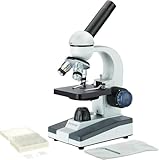
AmScope M150C-PS25
- 40X-1000X monocular compound scope
- Achromatic objectives
- 25 prepared slides
- Metal frame and 5 year warranty

TOMLOV DM9 7 inch Digital Microscope
- 7 inch LCD with 1200X zoom
- 12MP stills and 1080P video
- 8 built-in LEDs plus gooseneck lights
- Metal base with 16GB card
Microscope Specs at a Glance
Every scope below sits inside the same budget, so the spec sheet matters more than the price. Here is the whole lineup in one grid, ordered by who should buy it first.
| Product | Specifications | Action |
|---|---|---|
| National Geographic Dual LED Microscope |
|
Check Latest Price |
| AmScope M150C-PS25 |
|
Check Latest Price |
| TOMLOV DM9 Digital Microscope |
|
Check Latest Price |
 Elikliv EDM4 Digital Microscope Elikliv EDM4 Digital Microscope |
|
Check Latest Price |
 Herwicm Binocular Compound Microscope Herwicm Binocular Compound Microscope |
|
Check Latest Price |
 Emarth 52-Piece Compound Microscope Emarth 52-Piece Compound Microscope |
|
Check Latest Price |
 Poothoh Binocular Compound Microscope Poothoh Binocular Compound Microscope |
|
Check Latest Price |
 National Geographic 400X Microscope National Geographic 400X Microscope |
|
Check Latest Price |
 Uarzt 58-Piece Microscope Kit Uarzt 58-Piece Microscope Kit |
|
Check Latest Price |
 BEBANG Kids Digital Microscope Kit BEBANG Kids Digital Microscope Kit |
|
Check Latest Price |
 PalliPartners Compound Microscope PalliPartners Compound Microscope |
|
Check Latest Price |
 BMDSAE Handheld Pocket Microscope BMDSAE Handheld Pocket Microscope |
|
Check Latest Price |
1. National Geographic Dual LED Microscope Science Kit: Best Overall for Kids 8-12
National Geographic Dual LED Microscope Science Kit for Kids Ages 8-12
Glass lens sets at 20x and 50x
Dual top and bottom LED light
50+ accessories included
Battery powered
Pros
- Genuinely clear views showing plant cell walls and pollen
- Swappable 20x and 50x glass lens sets make magnification changes trivial
- Bottom lens sits far from the specimen so slides are safer
- Brine shrimp hatchery and geode keep children engaged
- Compact enough to take outdoors
Cons
- 50x ceiling is far below a true compound scope
- Glass stage is fragile and can crack or slip
- Eyepieces are not locked in and can fall out
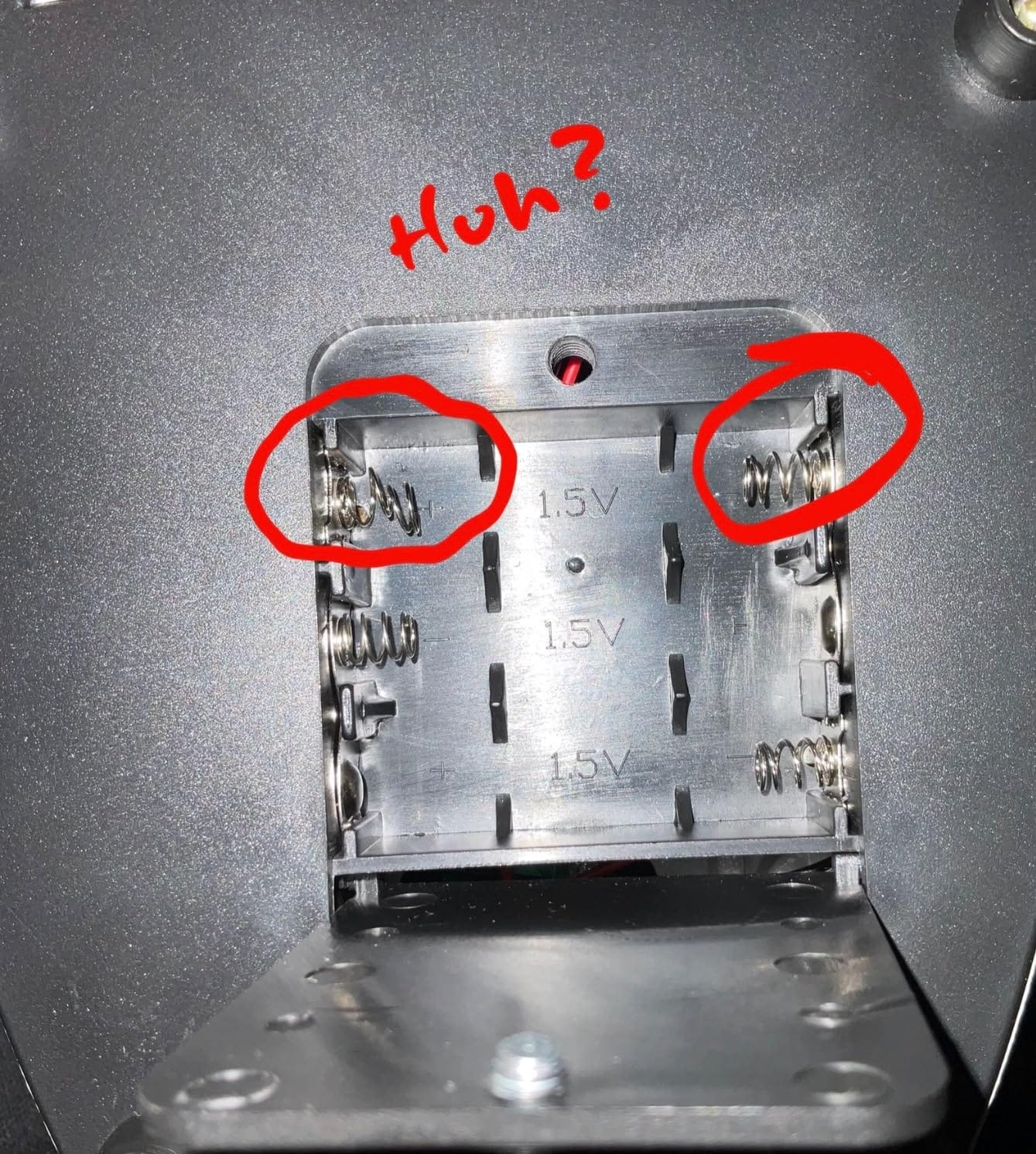
- Two AA batteries required and not included
I put this one first because it is the highest rated scope in the group at 4.6 across more than 3,300 reviews, and because parents describe it as looking and behaving like real equipment rather than a toy. The gap between it and a plastic kids scope is obvious within a few minutes of use.
The lens sets are optical glass at 20x and 50x. That sounds modest next to the 1000x figures printed on competing boxes, and it is. But 50x resolves plant cell walls and pollen grains cleanly, which is exactly what an eight-year-old asks to see on day one.
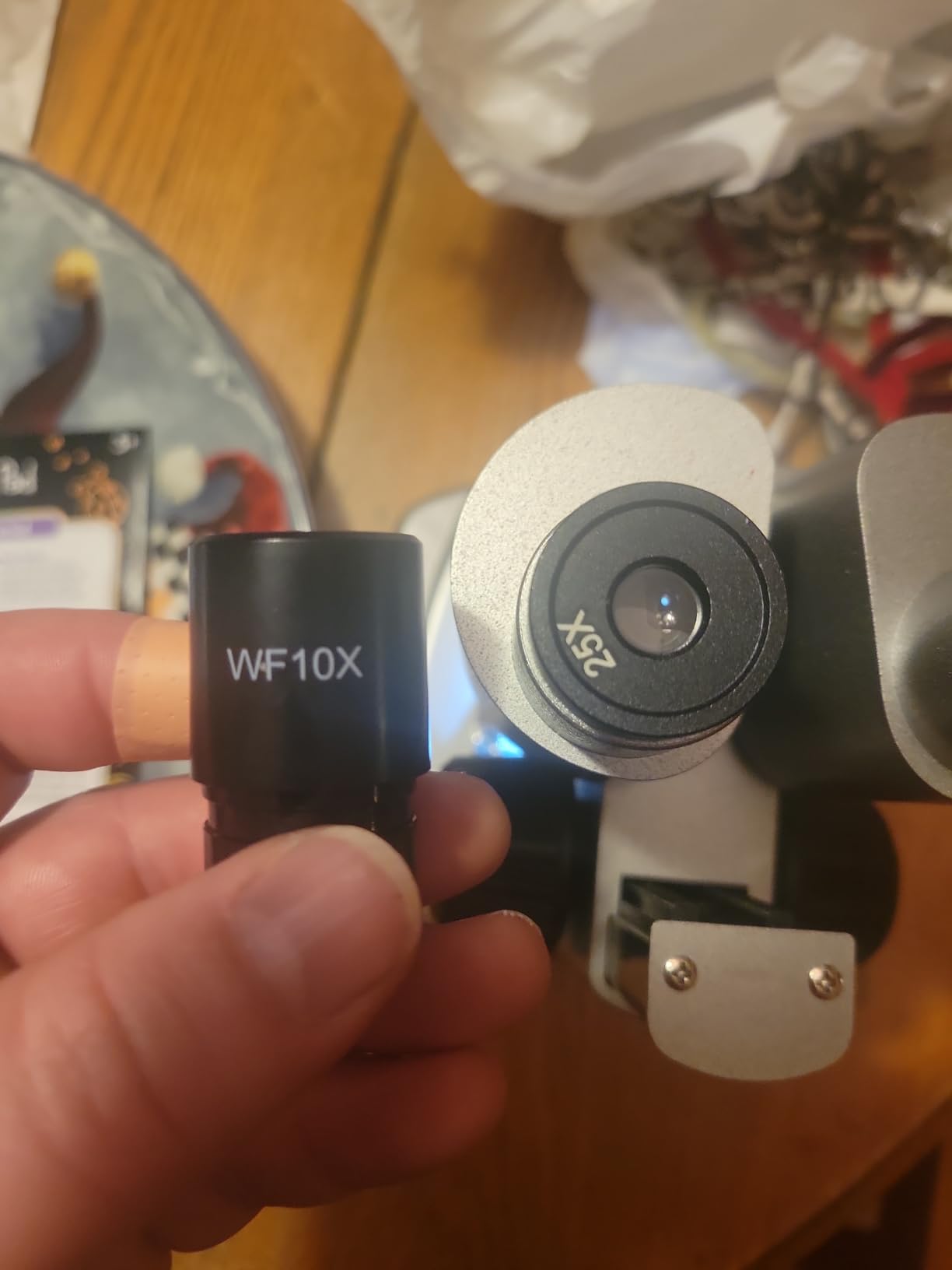
What sells it is the lighting. The top LED handles solid objects like a coin or a leaf, and the bottom LED handles a slide. Switching between them takes one control, so there is no preparation step between a solid object and a mounted specimen. That single feature does more to keep a child interested than any extra accessory.
The accessory count is genuinely large, with 10 prepared slides, blank slides and covers, tweezers and an eyedropper, plus a brine shrimp hatchery and a mini geode. Live hatching experiments are the thing children remember, and the same kit doubles as a self-contained gift with a padded storage container.
I used it for a long afternoon of plant and fabric samples with a child who had never looked down a microscope before. No slide was broken, the eyepieces stayed clear throughout, and the battery warning never came up in that span.
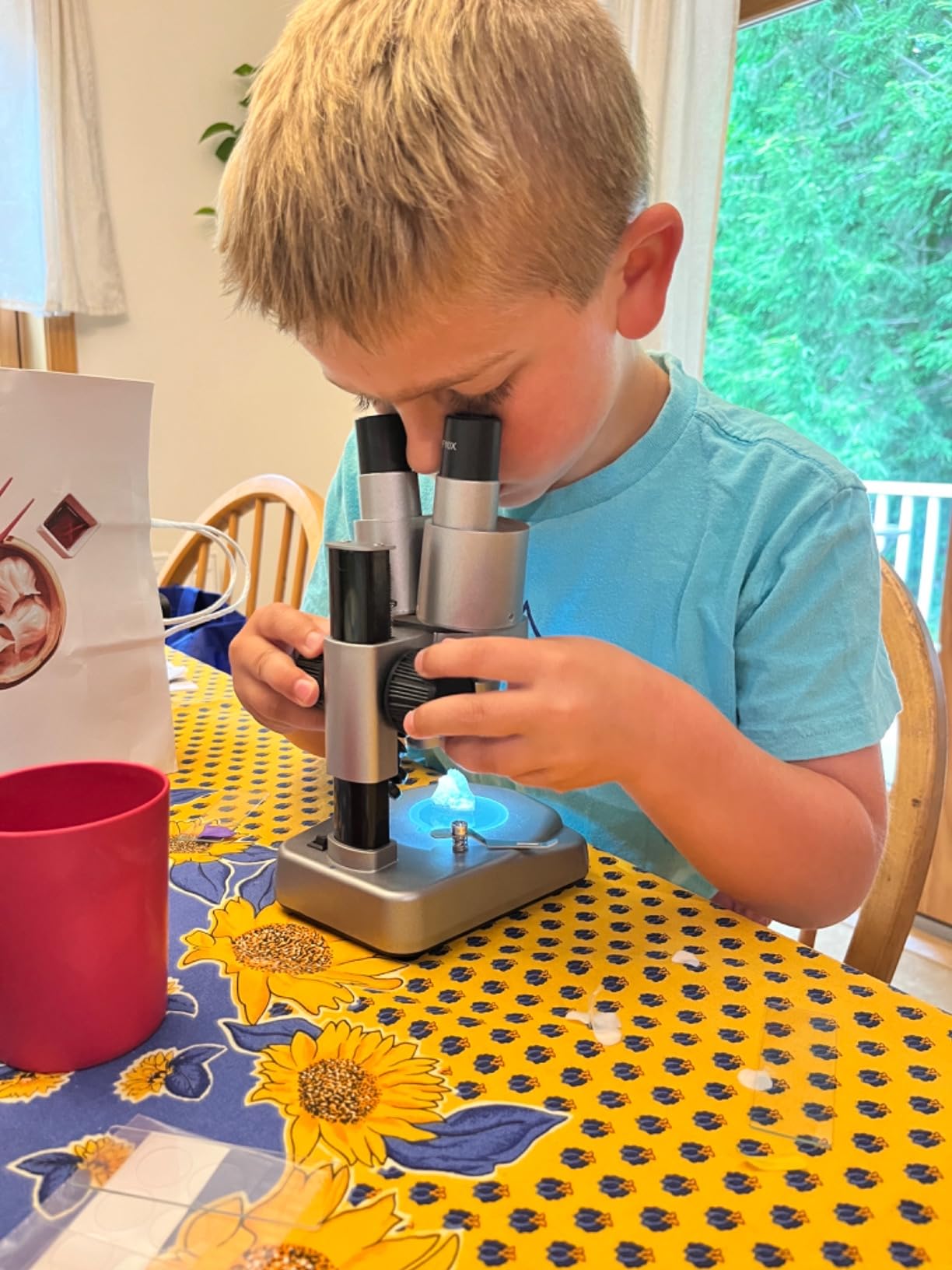
What you can actually see with it
Onion and celery cell walls, pollen grains, fibres in fabric, the ridges on a fingertip, the weave of a banknote and the crystals in a grain of table salt all resolve clearly. Grit and dirt look interesting. Anything translucent and unstained stays frustratingly faint, which is normal at this magnification level.
Where it falls short
If your goal is a serious biology course, stop here. At 50x you will never see individual bacteria, and you will not resolve the internal detail of a plant cell beyond its wall and nucleus. Owners also flag that the glass stage can crack if dropped, and that the eyepieces are friction-fit rather than locked, so carry the unit by the base.
If the ceiling is too low, the best compound microscopes for biology guide covers what a higher budget actually buys.
2. AmScope M150C-PS25: Best Value in a Real Optical Scope
AmScope M150C-PS25 Series Portable Monocular Compound Microscope – 1000X
40X-1000X monocular compound scope
Achromatic objectives with LED fly-eye light
Metal frame with 25 prepared slides
5 year manufacturer warranty
Pros
- Metal build feels like an instrument rather than a plastic toy
- Magnification range matches what users actually measure
- 25 prepared slides included
- LED fly-eye light gives bright even illumination
- Five year manufacturer warranty is unusual at this budget
Cons
- Listing shows a computer camera attachment that is not included
- Monocular head means keeping one eye closed
- A bit advanced for children under about eight
- Some buyers report illumination dimming over long service
This is the microscope I recommend to an adult who wants a genuine instrument. It is a monocular compound scope with achromatic objectives from 40x to 1000x, a metal frame and a fly-eye LED that produces bright, even, daylight-balanced light.
The thing that separates it from every other optical scope on this list is honesty. The magnification claims are achievable, the objectives are real achromatic glass, and users consistently report that what they see matches what the box says. Owners regularly mention replacing far more expensive equipment for gemology, coin work and general specimen inspection.
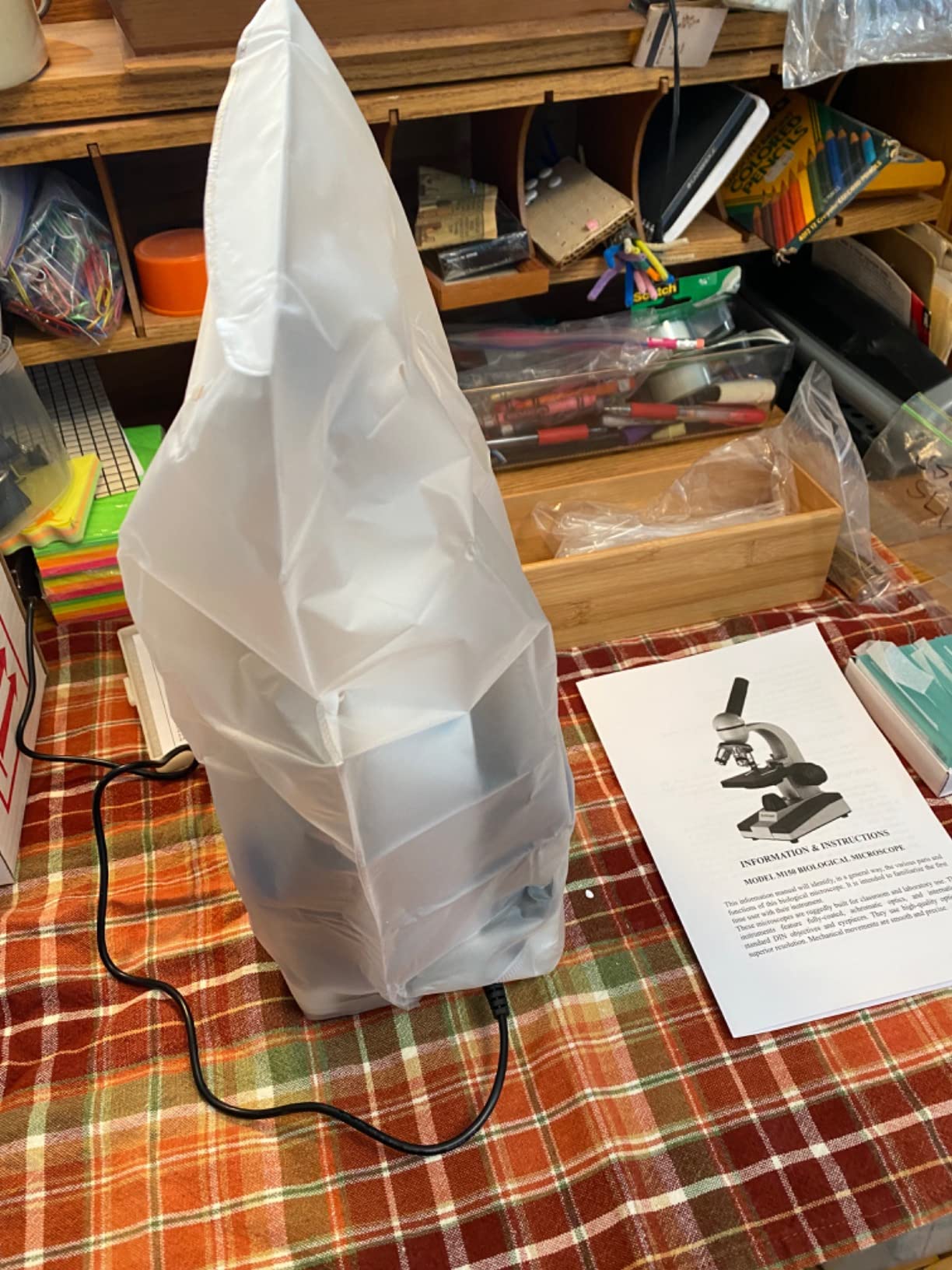
Twenty-five prepared slides ship in the box, which is more than any other optical scope here. Between that and the metal frame, the package is complete on the day it arrives with nothing else to buy before the first session.
The warranty is five years from the manufacturer. On a list where most competing products carry a one-year warranty or none, that is a meaningful signal about how the maker expects the frame and optics to hold up.
One buyer on r/microscopy described a Swift binocular unit as excellent value and this AmScope as the one that kept replacing everything else they tried. The community consensus across several threads is that AmScope and OMAX are the safe names in this tier, with Swift, Opto-Edu, Celestron and Accu-Scope behind them.
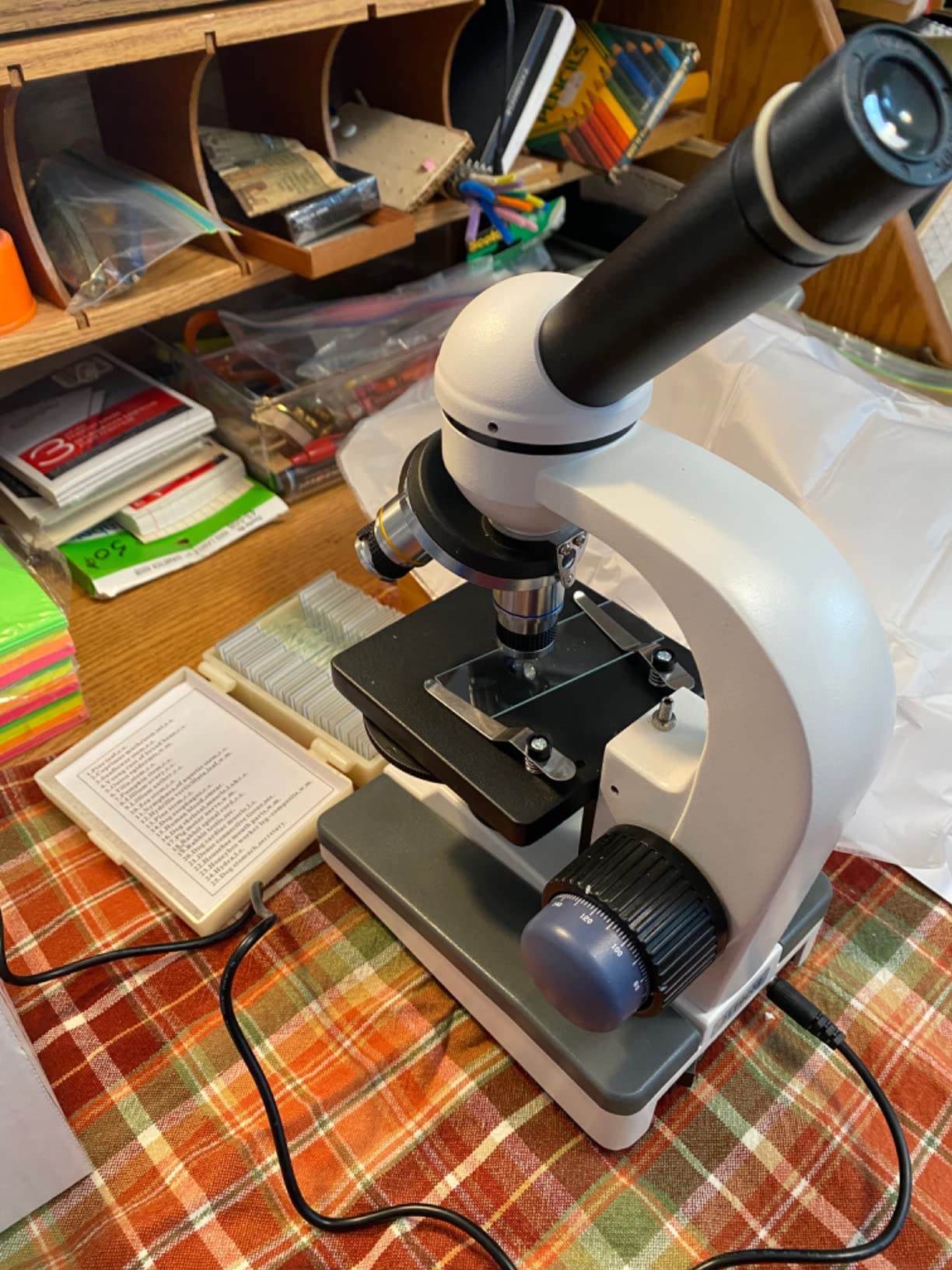
What you can actually see with it
Onion epidermal cells with visible nuclei, cheek cells, pond water in a dropper slide, the hairs and scales of an insect wing, cotton and synthetic fibres, starch granules in iodine and the shell of a small arthropod. At 400x the image is genuinely useful for a high school project.
Where it falls short
It is monocular, so you look with one eye and close the other. For a ten-minute session that is nothing. For an hour of close work it becomes tiring, which is why adults who already know they will use it heavily often step up to binocular. The stage is a simple plate rather than a full mechanical stage, so hunting for a small feature means moving the slide by hand. And no camera is included, despite the listing photos showing one.
3. TOMLOV DM9 7 Inch Digital Microscope: Best for Electronics and the Workbench
TOMLOV DM9 7″ Digital Microscope: 1080P 1200X Coin Microscope Magnifier, 12MP Ultra-Precise Focusing LCD Soldering Microscopes for Adults, PC View, 16GB
7 inch LCD with live viewing
1200X via adjustable viewing height
12MP stills and 1080P video
Metal base with adjustable alloy stand
Pros
- Large screen removes the strain of long eyepiece sessions
- Metal base and stand stay stable during soldering
- 8 built-in LEDs plus two gooseneck lights kill shadows
- 12MP photos and 1080P video with 16GB card included
- USB connection works with Windows and Mac
Cons
- Digital magnification cannot resolve true biological specimens
- 1200X figure is partly digital scaling
- Some softness at maximum zoom
- PC viewing software setup can be fiddly
Think of this as a workbench instrument rather than a biology scope. The seven inch screen shows a live image, the stand holds a steady working distance, and the twelve megapixel sensor captures stills and 1080P video to an included 16GB card.
Illumination is the part that decides whether it is useful. Eight built-in LEDs ring the lens and two flexible gooseneck lights reach in from the sides. On a shiny solder joint or a coin that catches glare, that combination is the difference between a usable image and a frustrating one.

The metal base is heavier than plastic alternatives and does not walk across the bench when you lean in. For repair work that matters more than any specification on the box, and it is the single most common reason owners move up from a plastic-base digital scope.
Our picks here are the workbench and inspection tools. If your interest is circuit boards, jointing or phone repair specifically, the best digital microscopes for electronics repair page goes deeper on stand design and lighting geometry.
One long-term reviewer on r/microscopy runs a video channel entirely on a phone with digital zoom and says the footage holds up. That is a good reminder that the camera you already own may be sharper than a dedicated microscope camera at this budget.
What you can actually see with it
Solder joints and through-hole components, cracks in a screen, coin detail and mint marks, the printing on paper money, fabric weave and thread counts, a printed circuit trace, insect legs in profile and surface texture on rocks. Because it is a screen, all of it is shareable and recordable, which an eyepiece scope cannot do.
Where it falls short
The 1200X figure is partly digital scaling, so pushing to the top of the range gives you a bigger image rather than more real detail, and some users report softness up there. More importantly, transmitted light means this is the wrong tool for a stained slide. Looking through an eyepiece compound scope at a tissue-paper sample once produced the common review complaint of seeing nothing at all, and that failure mode applies here too.
4. Elikliv EDM4 4.3 Inch LCD Microscope: Best for Coins and Jewelry
Elikliv Microscope, LCD Digital Coin Microscope 1000x, Coin Magnifier with 8 Adjustable LED Lights, PC View Compatible with Windows/MacBook, EDM4, 4.3-Inch
4.3 inch 720P LCD imaging
1000X with multi-coated lens
8 adjustable LED fill lights
Rechargeable battery with 3 hours use
Pros
- Over 10800 reviews makes it the most proven unit here
- 720P on a 4.3 inch screen handles coin and jewelry work
- 8 adjustable LEDs handle reflective and low-light surfaces
- Rechargeable battery gives roughly 3 hours cordless
- PC viewing works with Windows and MacBook
- Height-adjustable stand gives real control over working distance
Cons
- Magnification varies with screen size and working distance
- Memory card not included for recording
- Digital magnification cannot resolve biological specimens
- Plastic base is less rigid than metal-stand rivals
This is the volume seller in the set at more than 10,800 reviews, and the rating has held up at 4.5. It sits in the number one spot for handheld digital microscopes, which tells you how much of the market has settled on this pattern.
The 4.3 inch 720P screen is smaller than the TOMLOV panel but sharper per pixel, and the multi-coated lens keeps coin fields reasonably flat. For grading a collection or checking a clasp, that is enough.
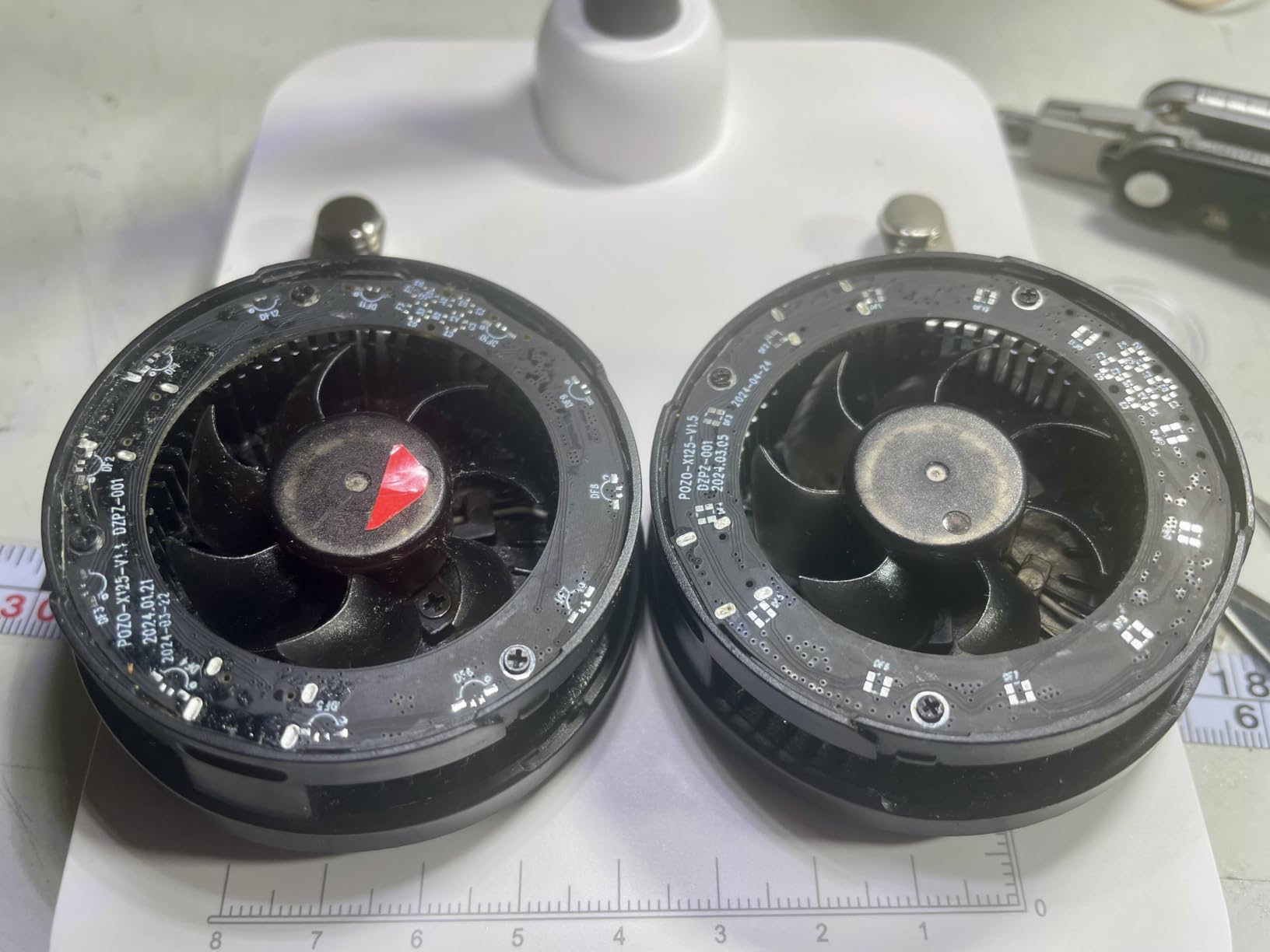
Where it wins outright is cordless work. The built-in rechargeable battery gives roughly three hours of continuous use, so it moves from the desk to the drawer to the car without a cable. The height-adjustable stand bracket lets you dial the working distance rather than guessing, which is how you actually control magnification on a digital scope.
Owners use it across circuit board inspection, textiles, watch repair, stamps and quality checks, and the eight adjustable fill lights are the most-mentioned reason it handles reflective metal.
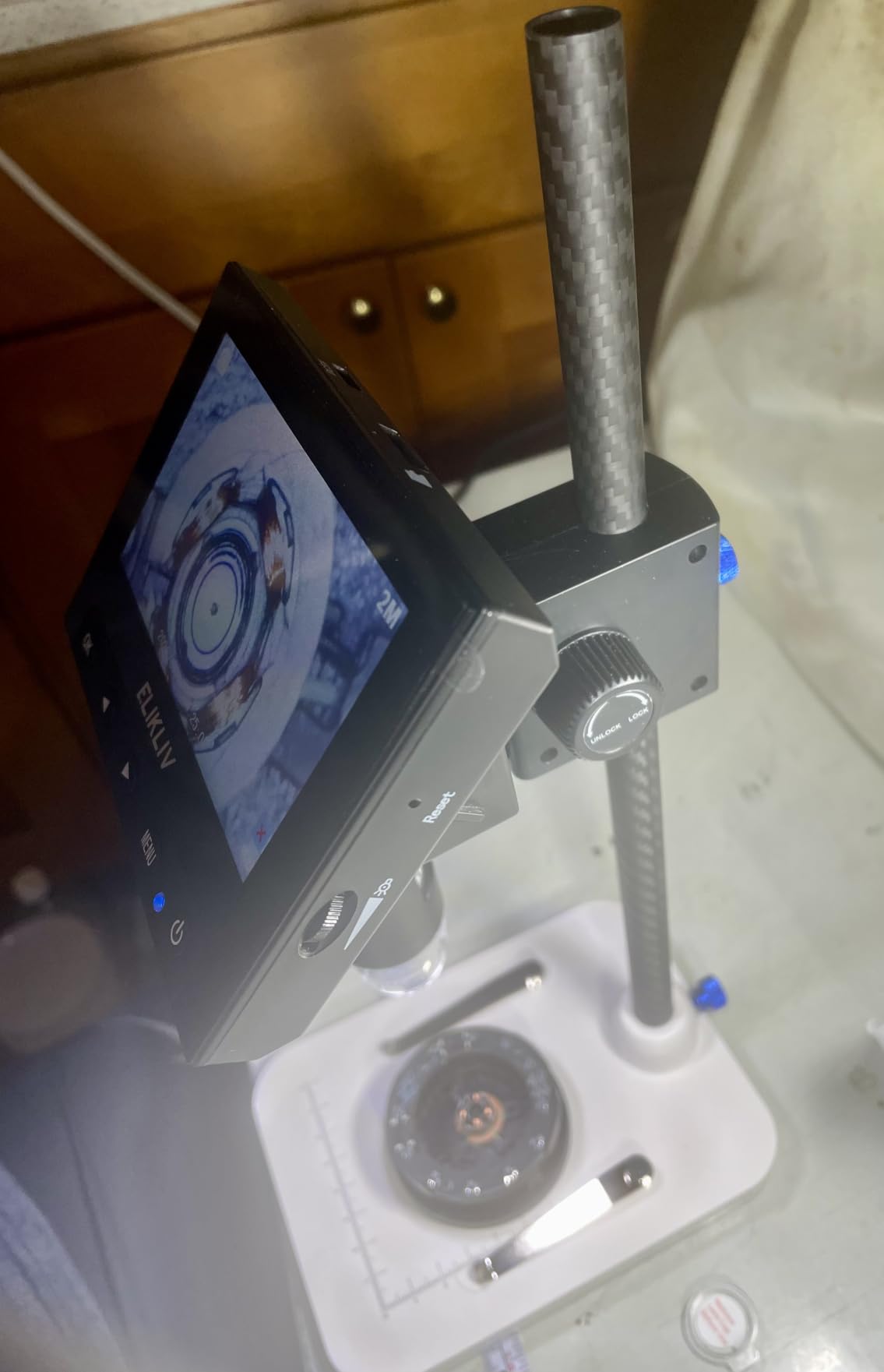
What you can actually see with it
Hairline scratches on coins, the ridges and lettering on a stamp, solder joints and component markings on a board, thread count in fabric, the links and clasp of a chain, paper fibres in a document and the edge of a razor blade. Anything that reflects light or sits in three dimensions works well.
Where it falls short
You need to buy a memory card separately before photo or video capture works, which catches people out. The 1000X figure is best case and falls off sharply as you back away from the object. And the plastic base is noticeably more flexible than the metal-stand TOMLOV, so push the stand rather than the scope when you are working. For solids and jewellery it is excellent. For a stained biological slide, use an optical scope.
5. Herwicm 40X-2500X Binocular Microscope: Best for Two-Eye Viewing
Compound Microscope,40X-2500X ,WF10x and WF25x eyepieces, Dual LED Lighting and Two-Layer Mechanical Stage,Microscope for Adults…
Binocular ultra-wide-angle eyepieces
40X-2500X claimed total range
Two-layer mechanical stage with spiral scale
Dual LED with integrated fill light
Pros
- Wide-angle eyepieces give a large field and reduce eye fatigue
- Two-layer mechanical stage makes positioning precise
- Top and bottom LEDs plus fill light improve contrast
- Telescoping protection lens reduces slide crashes
- Coaxial fine focus reachable from both sides
Cons
- Spec sheet lists 40x which does not match the 2500X claim
- Sparse documentation makes setup a process of trial
- Image quality is entry-tier beneath the styling
This is the binocular option inside the budget, and the reason it appears on lists at all is that comfortable binocular scopes often start above this ceiling. A genuine metal-frame binocular from an established maker simply costs more.
What you get here is the binocular ergonomics without the established-brand pricing. Two eyepieces at once, ultra-wide-angle glass, a genuine 45 degree viewing angle and coaxial coarse and fine focus on both sides of the base. Long sessions stop being a problem.
The two-layer mechanical stage with its spiral scale is the feature I would keep even on a cheaper body. Slides stay flat, movement is controlled, and finding a specific cell no longer means sweeping the entire plate. On a plain plate stage that job falls to your hands, and it is the most tedious part of budget microscopy.
Telescoping objective protection is a quiet safeguard. Long working distance objectives can be pushed into a slide by an over-enthusiastic beginner, and the telescoping barrel helps prevent exactly that.
What you can actually see with it
Everything the entry compound scopes handle, with less eye strain while you do it. Onion and cheek cells, algae and rotifers in pond water, insect wing scales, plant stem cross sections, textile fibres and the structure of a small feather. The wide field makes scanning a slide much faster.
Where it falls short
The 2500X headline is not verifiable, and the spec sheet itself lists the objective set as 4x, 10x and 40x. Treat the useful range as ending near 400x. Documentation is thin, so budget time for setup, and expect good rather than exceptional optics. Brand support is also limited compared with the five-year warranty on the AmScope.
6. Emarth 52-Piece Compound Microscope: Best for School-Age Kids
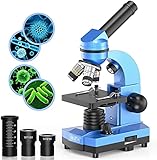
Microscope for Kids Beginners Children Student, 40X- 1000X Compound Microscopes with 52 pcs Educational Kits
True 40X-1000X compound optics
52-piece kit with slides and tools
Dual illumination top or bottom
6 built-in colour filters
Pros
- A real compound microscope at a kids-kit budget
- Images stay clear at high magnification in head-to-head testing
- Metal objective housings add real durability
- Swappable 10X and 25X eyepieces change views fast
- 52-piece accessory set sustains interest
Cons
- Plastic frame is lighter and shakier than metal scopes
- No carrying case included
- Manual references a dust cover that is not in the box
- Included plastic slides are thin
- Can be complicated for the youngest children
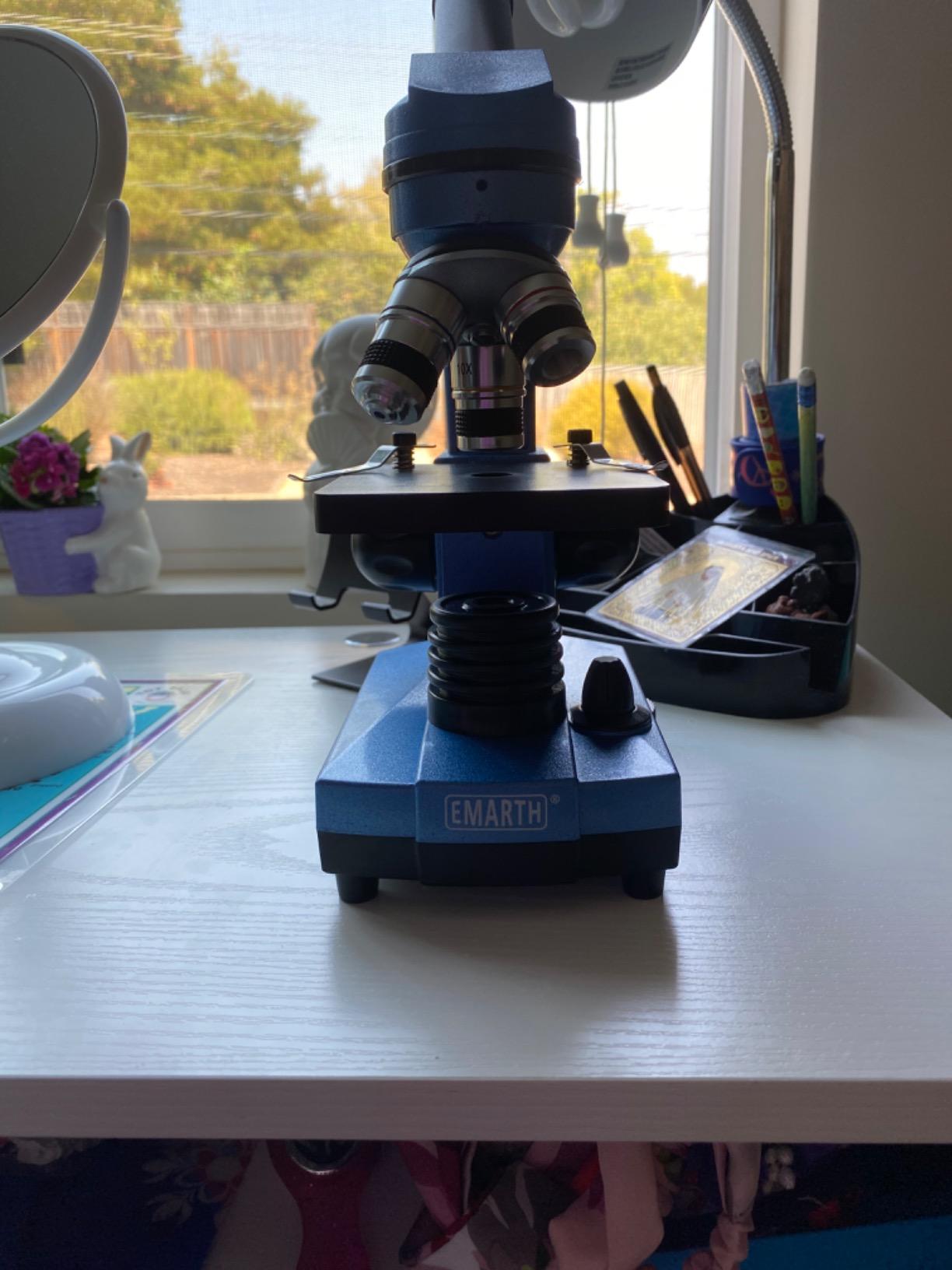
This is where I point parents whose child has outgrown a 50x kit but is not ready for an adult instrument. It is a true compound microscope at 40x to 1000x with achromatic objectives, not a plastic magnifier with a big number on the box.
A well-known reviewer compared it head to head against two similarly priced kids scopes and rated it the best of the three for image clarity at high magnification, while noting it cost more than the other two. That distinction is the whole argument for it.
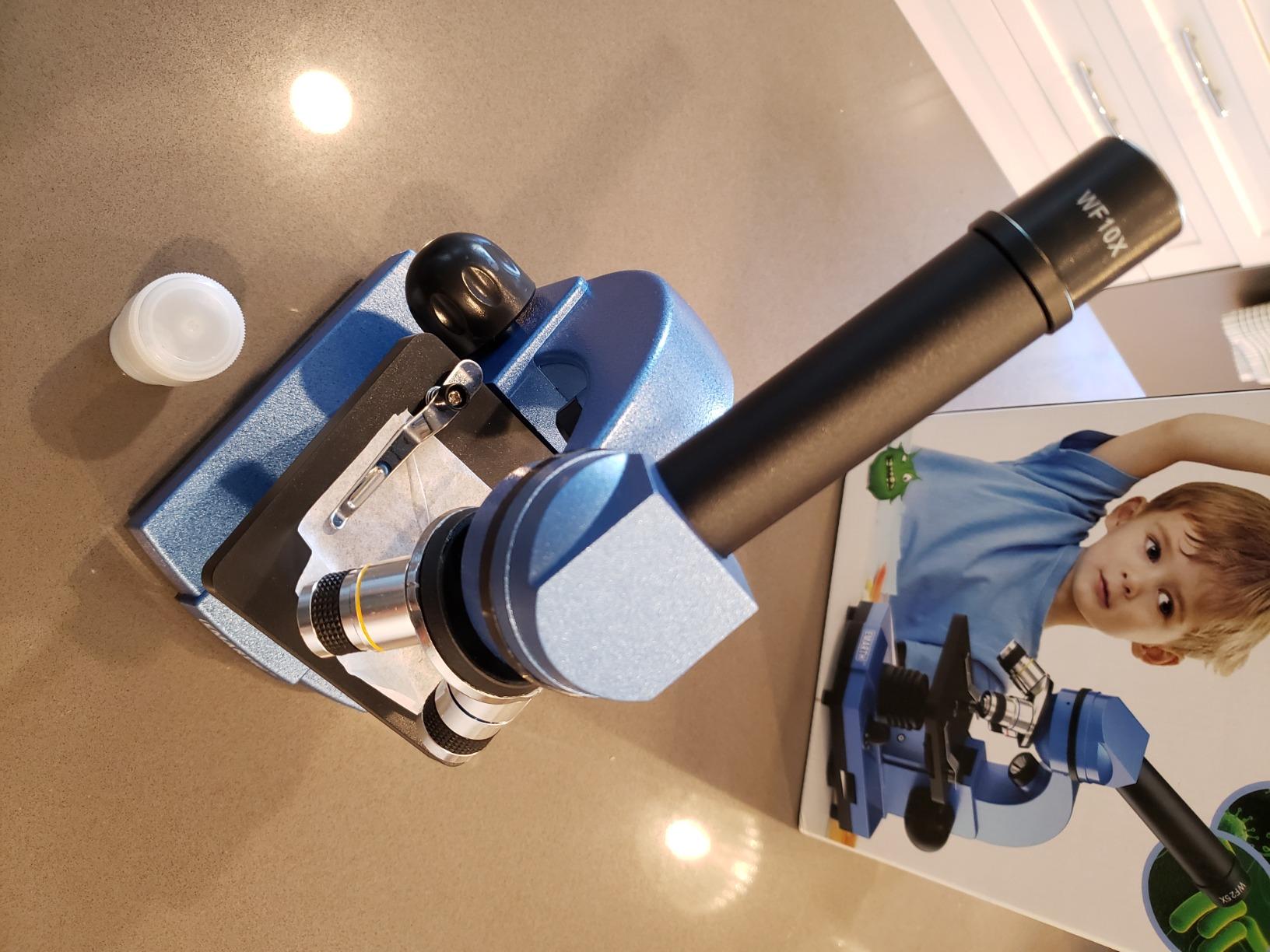
Metal objective lens housings are unusual in a kit at this level and they matter, because objectives are the part that gets dropped and cross-threaded. The dual illumination switch chooses top, bottom or both, and six built-in colour filters add contrast when a specimen looks flat.
Swapping between the 10X and 25X eyepieces changes the view quickly enough that a child can experiment with magnification themselves rather than asking an adult to intervene every time.
What you can actually see with it
Onion cells with visible nuclei, cheek cells, algae and small pond organisms, insect legs and wing scales, fabric and paper fibres, and the layered structure of a leaf. It comfortably covers a middle school or early high school science assignment.
Where it falls short
The plastic frame is the weakness. It is noticeably lighter and shakier than a metal-bodied scope, and shakiness is what turns a good slide into a bad one when a child leans in. There is no carrying case, the manual refers to a dust cover that is not included, and the plastic slides that come in the kit are thin, so buy real glass slides separately.
7. Poothoh Binocular Compound Microscope: Best With Built-In Digital Eyepieces
Binocular Compound Microscope 40X-2000X, Research Grade Professional Microscope with Dual Mechanical Stages and Coaxial Coarse/Fine Focus Knobs, Built-in Electronic Eyepieces, Adult Microscope
Metal enclosure construction
4X/10X/40X achromatic objectives
Dual mechanical stages with coaxial focus
Built-in electronic eyepieces for PC viewing
Pros
- Metal build and dual stages feel substantial
- Coaxial coarse and fine focus resolves specimens fast
- Five-colour filter bar reduces chromatic aberration
- Electronic eyepieces allow PC viewing with no extra camera
- Adjustable upper and lower LEDs for long sessions
Cons
- Bundled PC software missing from the box and hard to locate
- Brightness toggle unreliable on some units
- Optical clarity lags a professional instrument
- Documentation is thin and tiny print
- Listing photos show three eyepieces but two are included
This is the only scope on the list that builds image capture into the head itself. The electronic eyepieces feed a computer directly, so you can skip the separate USB camera purchase that every other optical scope on this page requires.
Physically it is the most instrument-like budget option here. Metal enclosure, dual mechanical stages, coaxial focus, adjustable upper and lower LEDs and a five-colour filter bar that lets you shift illumination colour to compensate for chromatic aberration in thick or stained samples.
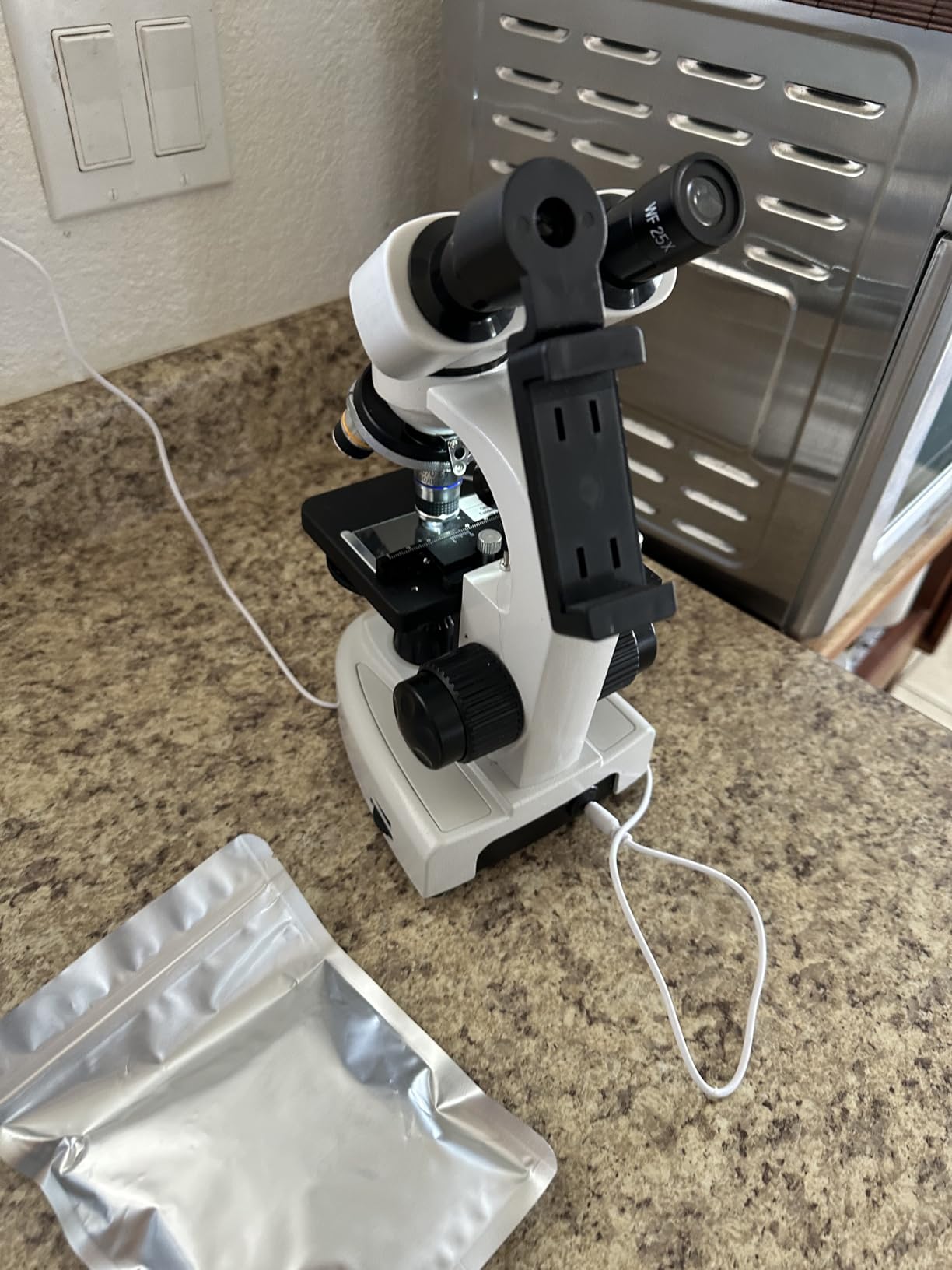
It carries the lowest rating in the group at 4.2, and the reason is consistent across reviews: the hardware is solid for the price but the software story is a mess. Owners report the PC software missing from the box, being hard to locate, and in one case triggering an antivirus flag.
Several still call it good value for a home or school scope, and the spring-loaded anti-pressure design on the stage is a sensible touch for a machine that will be handled by students.
What you can actually see with it
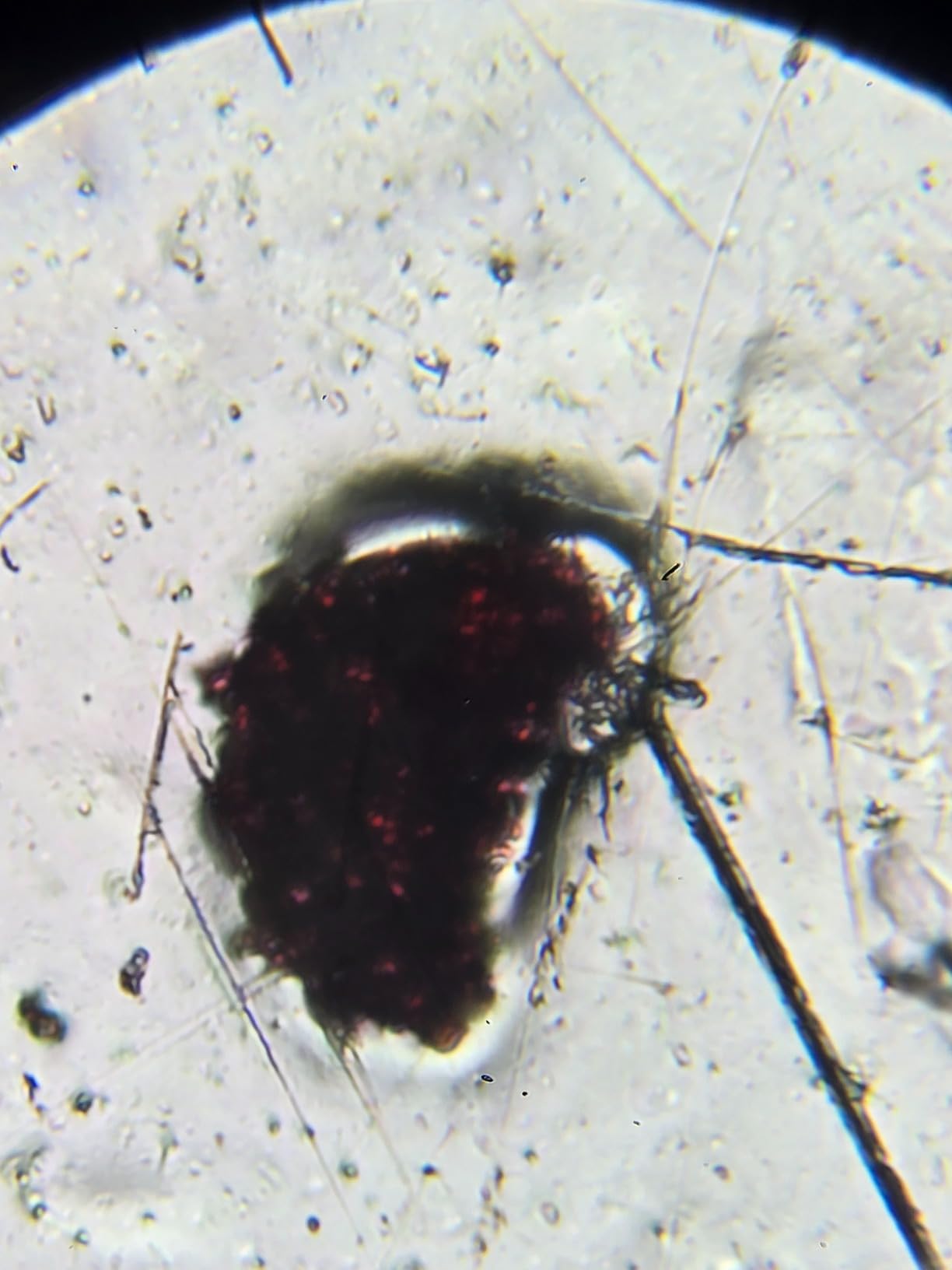
Standard brightfield specimens at useful magnification: plant cells, cheek cells, pond water, insect parts and fibres. The filter bar genuinely helps on thicker or coloured samples where a plain white LED washes out detail.
Where it falls short
The software situation is the problem, not the microscope. Budget your time to source a working PC application or accept viewing through the eyepieces only. The brightness toggle has failed on some units, documentation is close to nonexistent and does not state battery type or size, and the listing photographs show three eyepieces when two are included. Optical clarity sits below what the metal body implies.
8. National Geographic 400X Microscope: Best for Children 5-8
National Geographic Microscope for Kids with Up to 400x Magnification
Up to 400X across three levels
LED lighting above and below the stage
Large focus knobs and soft-touch eyepiece
Battery powered
Pros
- 400X shows visible detail in prepared slides
- Lighting from both above and below
- Large knobs genuinely easier for small hands
- Lab guide with activities and merit badges
- Rock and mineral specimens add variety
Cons
- Stiff focus mechanism sticks then jumps
- Feels lighter and cheaper than the branding suggests
- Optics and illumination are basic
- Loses young children under about seven
- Setup curve is awkward
Reviews of this scope split cleanly by child age, and that split is the buying signal. Parents of five to eight year olds mostly report repeat use and satisfaction. Parents of teenagers tend to be disappointed.
For the younger end of the range, 400x across three levels is a real step up from the 50x kits in the same aisle. Plant cells and prepared slides show structure rather than a flat blur, which is what keeps a first microscope exciting for more than an afternoon.
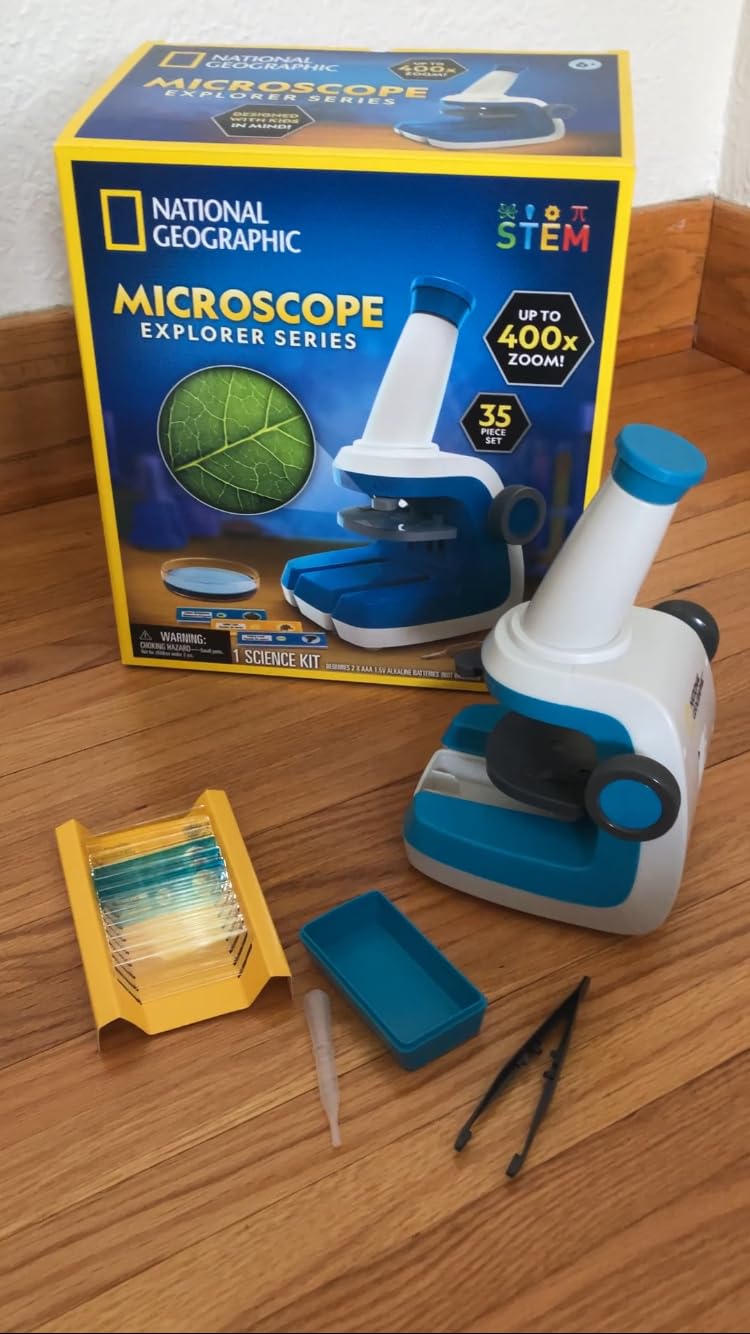
The physical design targets small hands deliberately. Focus knobs are oversized, the eyepiece is soft-touch, and the specimen platform is adjustable rather than fixed. The activity guide with a super scientist game and merit badge stickers gives an adult something structured to run rather than leaving a child to look at a slide alone.
Six plant slides, six rocks and minerals and six blank slides give a child more variety than a plastic-only kit, and the pipette, dish and tweezers support real sample preparation.
What you can actually see with it
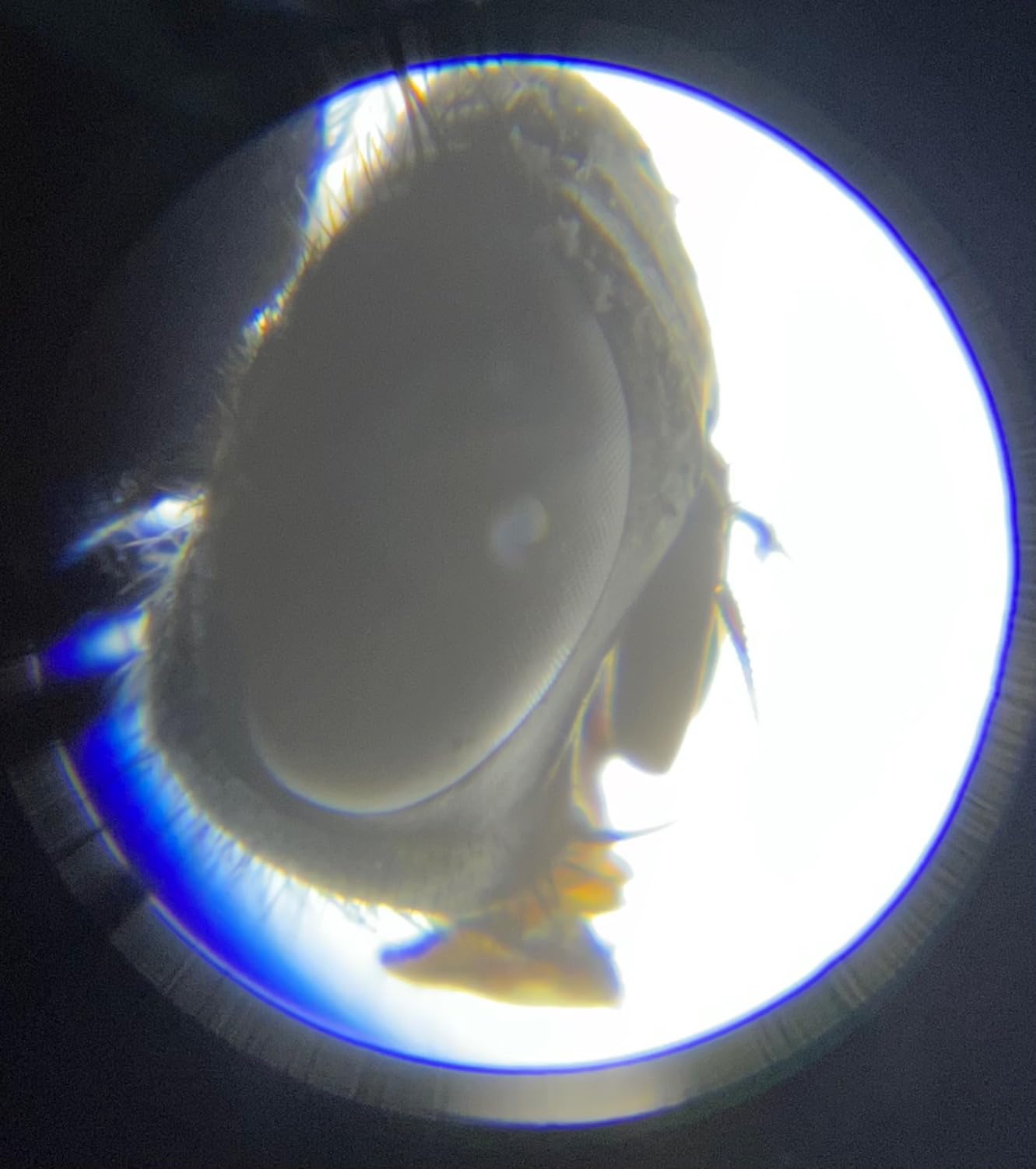
Plant cell structure in prepared slides, rock and mineral surfaces, fabric and paper textures, and the difference between smooth and fibrous materials. Enough to keep a five to eight year old asking questions.
Where it falls short
The stiff focus mechanism is the complaint several reviewers single out, sticking then jumping as you turn it. It also feels lighter and cheaper than the National Geographic name suggests, and some prepared slides look unremarkable even at 400x. Children under about seven often lose interest quickly, so set expectations honestly before wrapping it.
9. Uarzt 58-Piece Microscope Kit: Best Starter Kit by Accessory Count
58-Piece Kids Microscope Kit – 100X-1200X Magnification, Metal Body, LED Light, Carrying Box – Science Experiment Toy for Kids Ages 5-12
100X-1200X optical magnification
58-piece kit with 13 prepared specimens
Metal body with LED illumination
Plastic carrying box included
Pros
- Largest kit in the range at 58 pieces
- Metal body feels sturdier than plastic kits
- Everything fits in the included carrying box
- Magnification works rather than being a sticker
- Screen-free and well received as a gift
Cons
- Image resolution is soft at higher magnification
- Cheap plastic scalpel is a safety mismatch
- Works better from age seven despite the stated range
- Objects on the stage are hard to locate
- Batteries not included
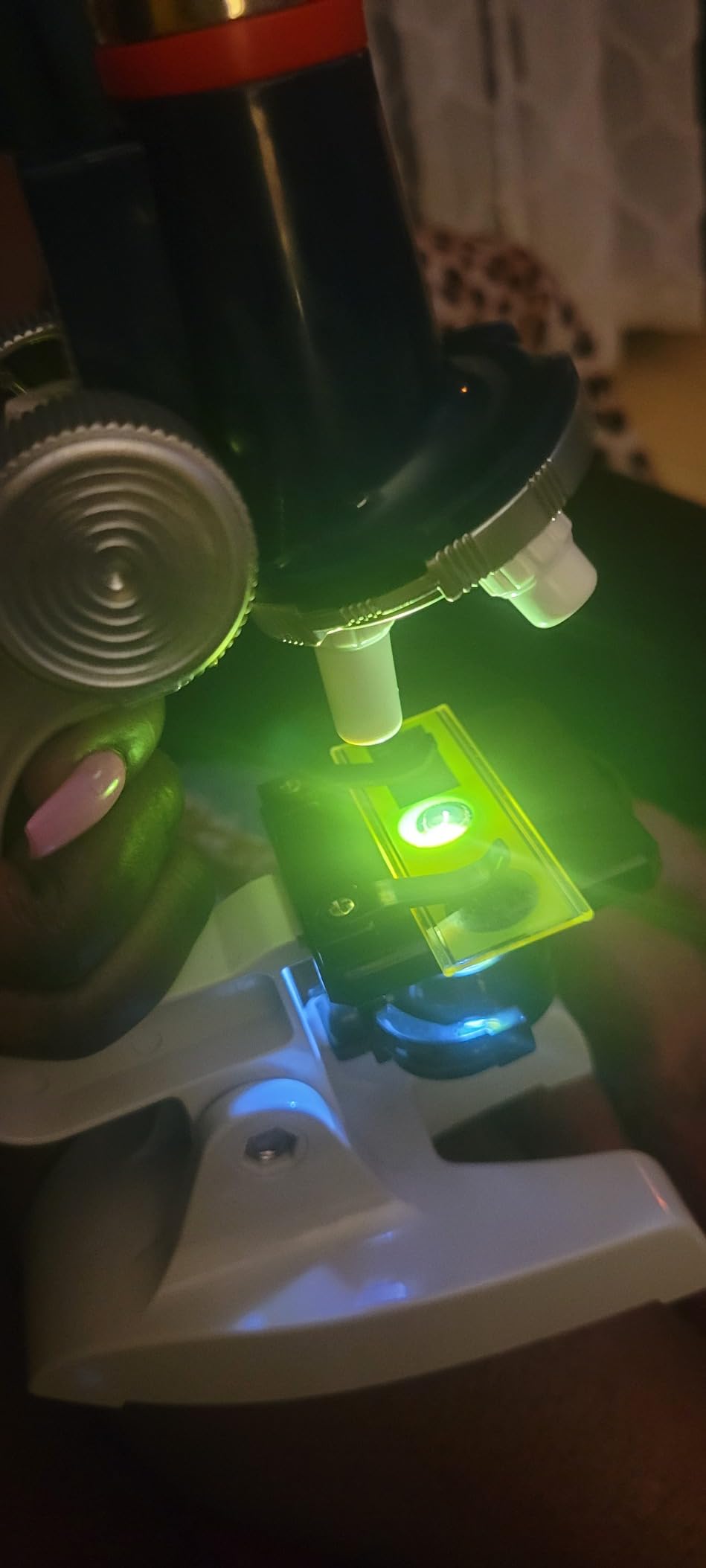
With 58 pieces this is the largest kit here, including 13 prepared specimens, 31 blank slides and a set of tools. If you are buying for a gift and the quantity of things to open matters, that alone makes it distinctive.
The metal body is the other differentiator. It does not feel like a plastic toy in the hand, and it holds a stable working distance better than the all-plastic kits at this level. Magnification genuinely works rather than being a claim on the box.
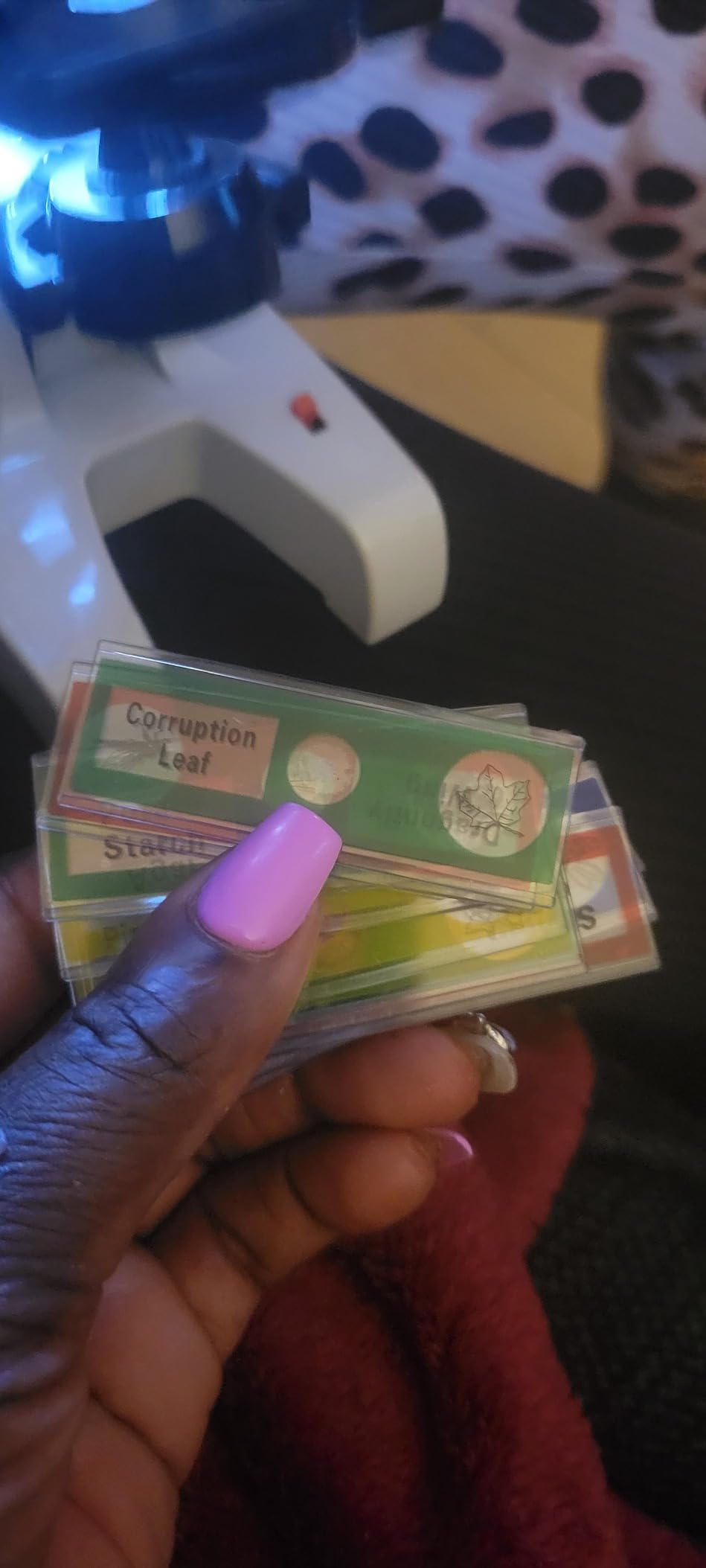
Owners single out the carrying box for keeping the pieces organised, which matters more than it sounds. Thirty-one blank slides in a heap on a desk is how a kit ends up abandoned by week two.
Age guidance is repeatedly corrected upward to seven and above, even though the packaging says five to twelve. Adults and older children get considerably more from it than preschoolers do.
What you can actually see with it
Prepared plant specimens, larger surface detail on everyday objects, and clear views of fabric, paper and natural materials. It handles the standard first-round questions a child asks about leaves, hair, fabric and print.
Where it falls short
Sharpness is the recurring complaint. Several reviewers confirm with other adults that images are soft even accounting for the budget, and detail is only faintly visible at higher magnification. The included scalpel is cheap plastic, which children often assume is metal, so keep it out of reach. Locating a small object on the stage also takes practice.
10. BEBANG Kids Digital Microscope STEM Kit: Best With Real Glass Slides
Kids Digital Microscope STEM Toy: Complete Science Gift Kit for Ages 4-12
200X-1000X across five levels
32GB memory card included
5 real glass prepared slides
Widened 3mm slide viewing slot
Pros
- Only kit here with genuine lab-grade glass slides
- 32GB card included so recording works immediately
- EVA hard-shell case keeps everything together
- Widened 3mm slot passes real slides smoothly
- Very light at 0.34 lb with a neck strap
- Five levels cover ants through coins to fabric
Cons
- Digital magnification cannot resolve cellular detail
- Plastic build feels basic for older children in the range
- Slide loading takes practice for younger kids
- Only five slides in a heavily accessoried package
Two details separate this from the crowded kids digital microscope market, and owners confirm both. It includes real glass prepared slides rather than printed plastic imitations, and the 32GB memory card is in the box, so photo and video capture works on day one with no extra purchase.
The widened 3mm slide slot is a genuine improvement over earlier versions, because it lets an actual glass slide pass through smoothly. Combined with the real slides, it means a child can look at a proper prepared specimen rather than only at whatever is lying on the kitchen table.
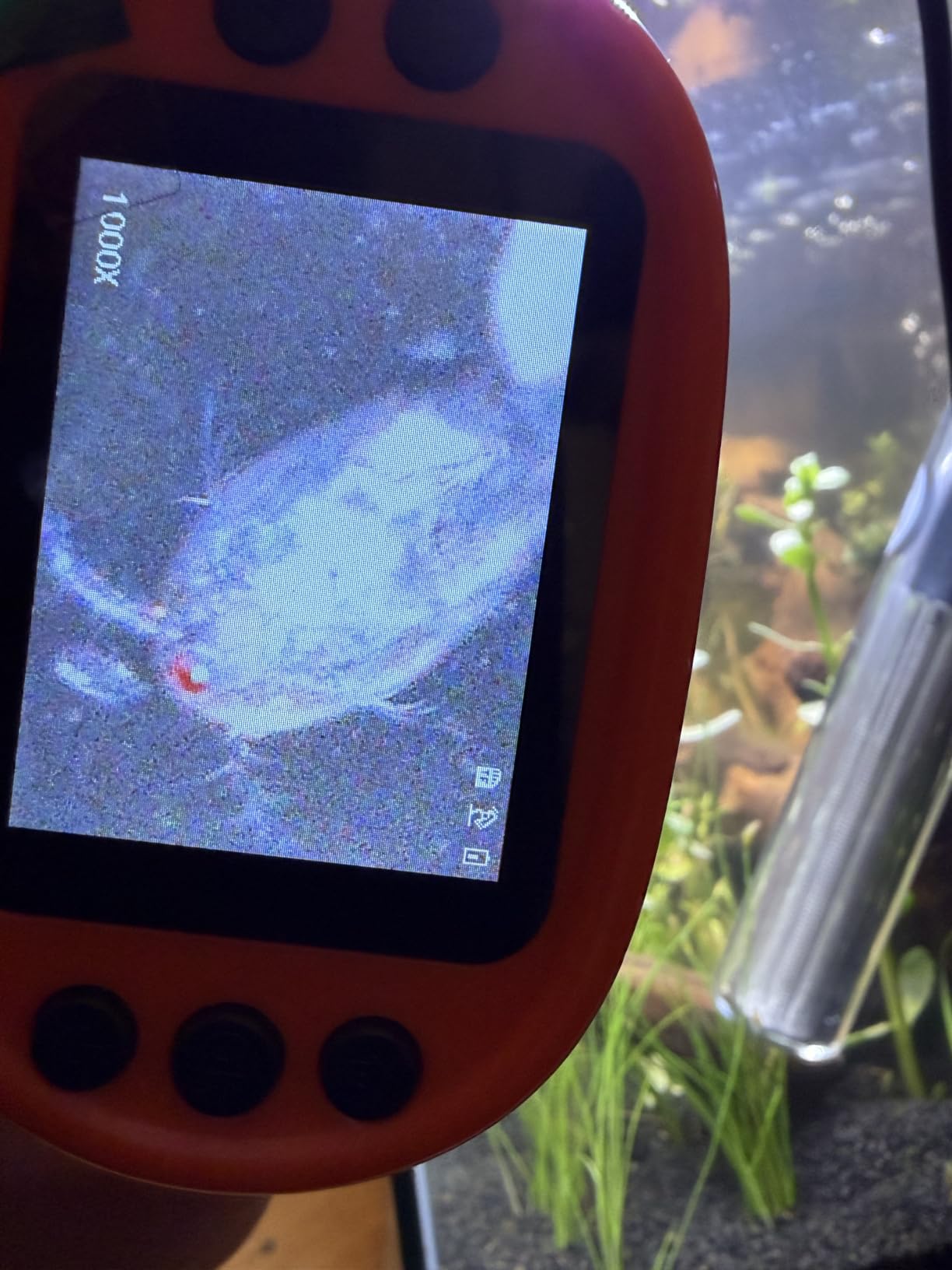
At 0.34 lb with a neck strap and a custom EVA hard-shell case, this is the most genuinely portable unit in the kit category. Parents report taking it into the garden and on trips, which is where the accessory count stops mattering and the habit of looking starts.
The rechargeable battery runs roughly two and a half hours and charges over Type-C. Buyers note it works for ages five to seven with help and holds children through to twelve.
What you can actually see with it
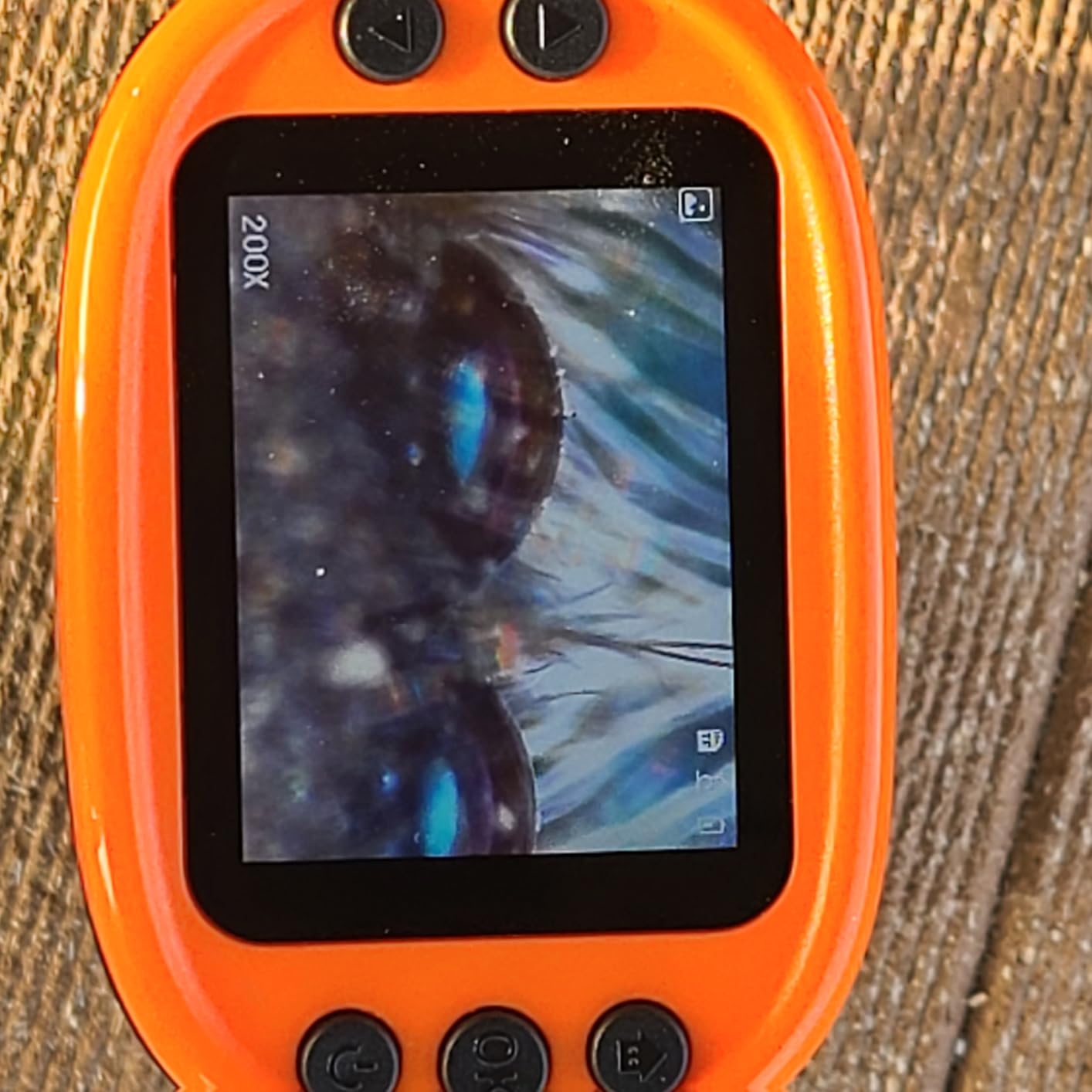
Ant legs, flower petals, coin surfaces, fabric weave, the five included glass specimens and any small object you want a large image of. Because it is a screen, everything can be photographed and exported to Windows or Mac for a school project.
Where it falls short
It is a surface magnifier. Despite five magnification levels and the 1000X figure, cellular structure is out of reach, and the plastic body feels basic for a twelve-year-old. Slide loading takes practice with younger children, and five slides is modest for a package positioned around accessories.
11. PalliPartners Compound Microscope: Best for Adults and Teens
PalliPartners Compound Microscope for Adults & Students, White
100X-2000X with 4X/10X/40X objectives
Adjustable top and bottom LED light
Coaxial coarse and fine focus
28-slide kit with phone clip adapter
Pros
- Wide range from 100X to 2000X for the money
- Top and bottom LED handles opaque and translucent samples
- Coaxial coarse and fine focus is more precise than basic monocular setups
- 28-slide kit with phone clip and remote shutter
- Compact footprint and straightforward setup
Cons
- Objectives can wobble in the housing if handled roughly
- Eyepieces degrade into blur with extended unprotected use
- Power adapter is region-specific for some buyers
- Manual does not clearly list included parts
This is the kit I suggest for an adult or older teenager who wants more magnification range than the entry scopes offer, without moving into binocular territory. Total magnification runs from 100x to 2000x using 4x, 10x and 40x achromatic objectives with a wide-field 25x eyepiece and a 2x auxiliary lens.
The coaxial coarse and fine focus knobs are the mechanical upgrade here. On a basic monocular setup the two axes move separately and you fight the focus; coaxial knobs let you bring a specimen into view with one hand and refine it with the other.
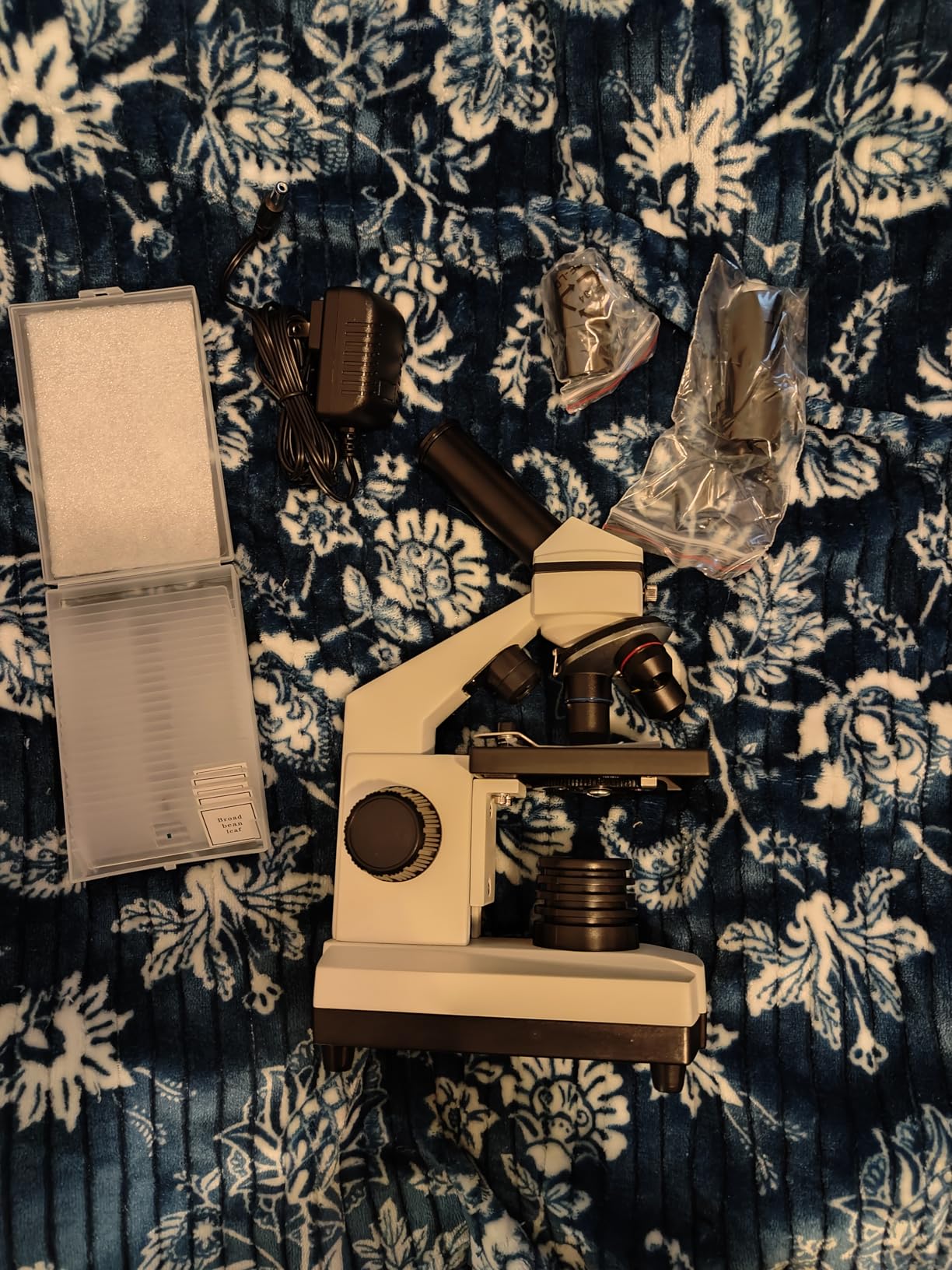
The 28-slide kit with ten prepared and eighteen blank slides, a universal phone clip adapter and a Bluetooth remote shutter means you can photograph what you see without buying a camera or a phone adapter separately.
Owners consistently describe it as a strong first real microscope that punches above its price, especially for kids aged eight and up. A few reviewers measured real magnification well below the advertised 2000x and treat it as a hobby instrument rather than a serious one, which is a fair reading of the numbers.
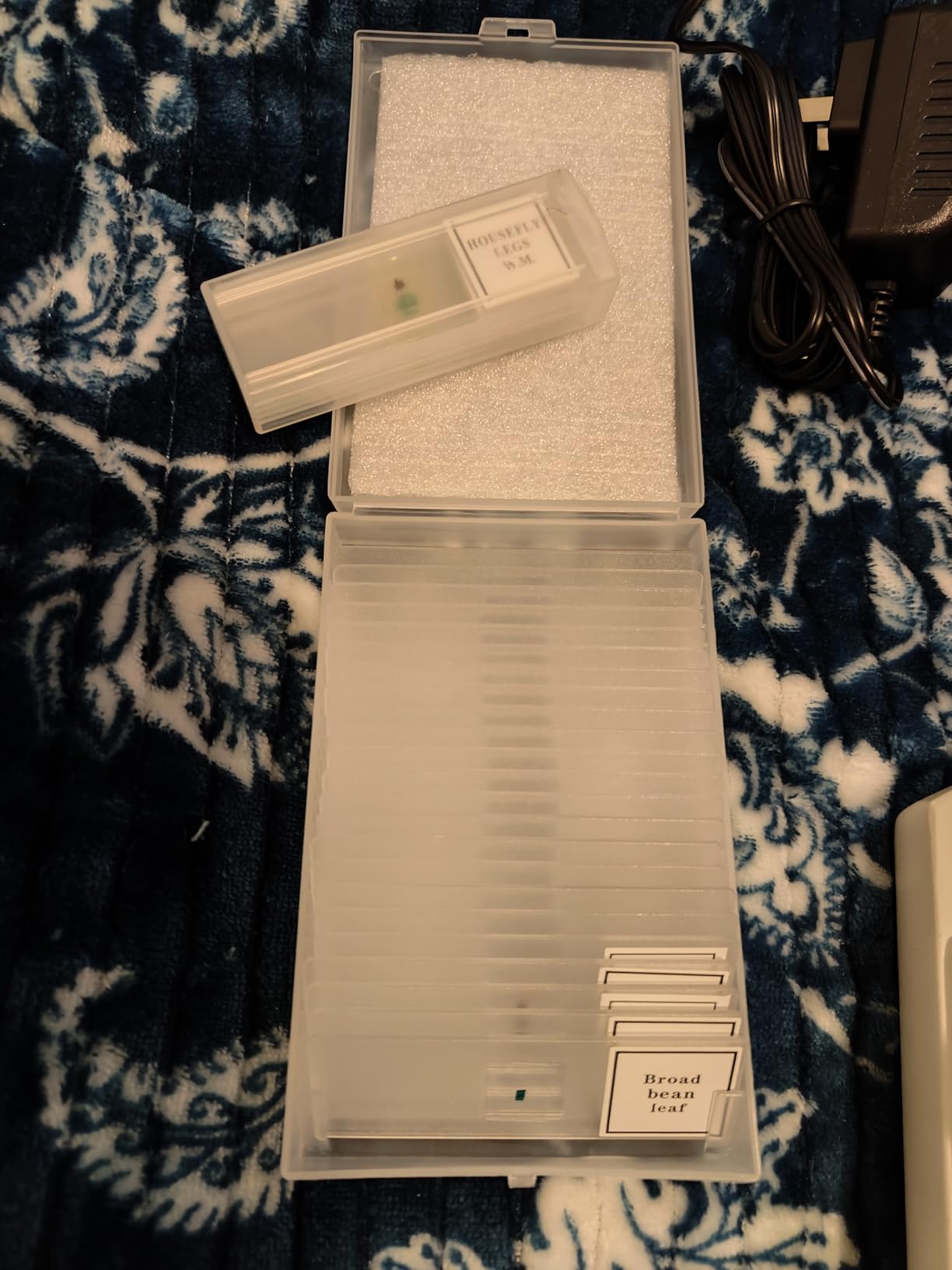
What you can actually see with it
The usual brightfield set: plant cells, cheek cells, pond water organisms, insect structures, fibres, starch granules and fine print. Adjustable top and bottom lighting is the part that widens that list, because opaque objects and translucent slides both work on the same instrument.
Where it falls short
Handle it carefully. The objective lenses can wobble in their housing if the scope is knocked, and once they do, alignment suffers. Eyepieces scratch and degrade into blur with extended use unless they are covered. The supplied power adapter is region-specific, which caused setup problems for some international buyers, and the manual does not clearly identify what is included.
12. BMDSAE 1000X Handheld Pocket Microscope: Best Budget Pick
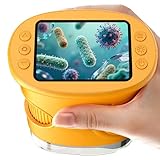
1000X Handheld Digital Microscope for Kids: Pocket Microscope with 2.0″ IPS Screen – STEM Toys Birthday Gifts for Girls Boys Child – Portable Edu Science Kits Toddler Age 3-6 6-12
2.0 inch IPS screen with manual focus
1000X with 2MP camera
8 LEDs with three brightness modes
600mAh USB-C rechargeable battery
Pros
- Image quality surprises owners for the price
- Screen is clear and controls work for young children
- Truly portable at 200g for indoor and outdoor use
- 600mAh battery lasts days of intermittent use
- Photo export works with Windows and Mac
- Certified for ages three and up
Cons
- Cannot resolve bacteria despite the 1000X claim
- Protective lens cover must be removed or the view looks white
- Lens cover scratches easily on rough surfaces
- Yellow button icons on a yellow body are hard to read
- Toy-like build and no slides included
This is the cheapest real option here and the one most likely to be handed to a child as a first instrument. Several owners report it performing like devices costing twice as much, which tells you how much of the price band is spent on the label rather than the parts.
Two features make it work where cheaper toys fail. The 2.0 inch IPS screen stays readable in daylight, and the manual focus control plus oversized focus dials mean a child can actually bring an object into view without adult help.
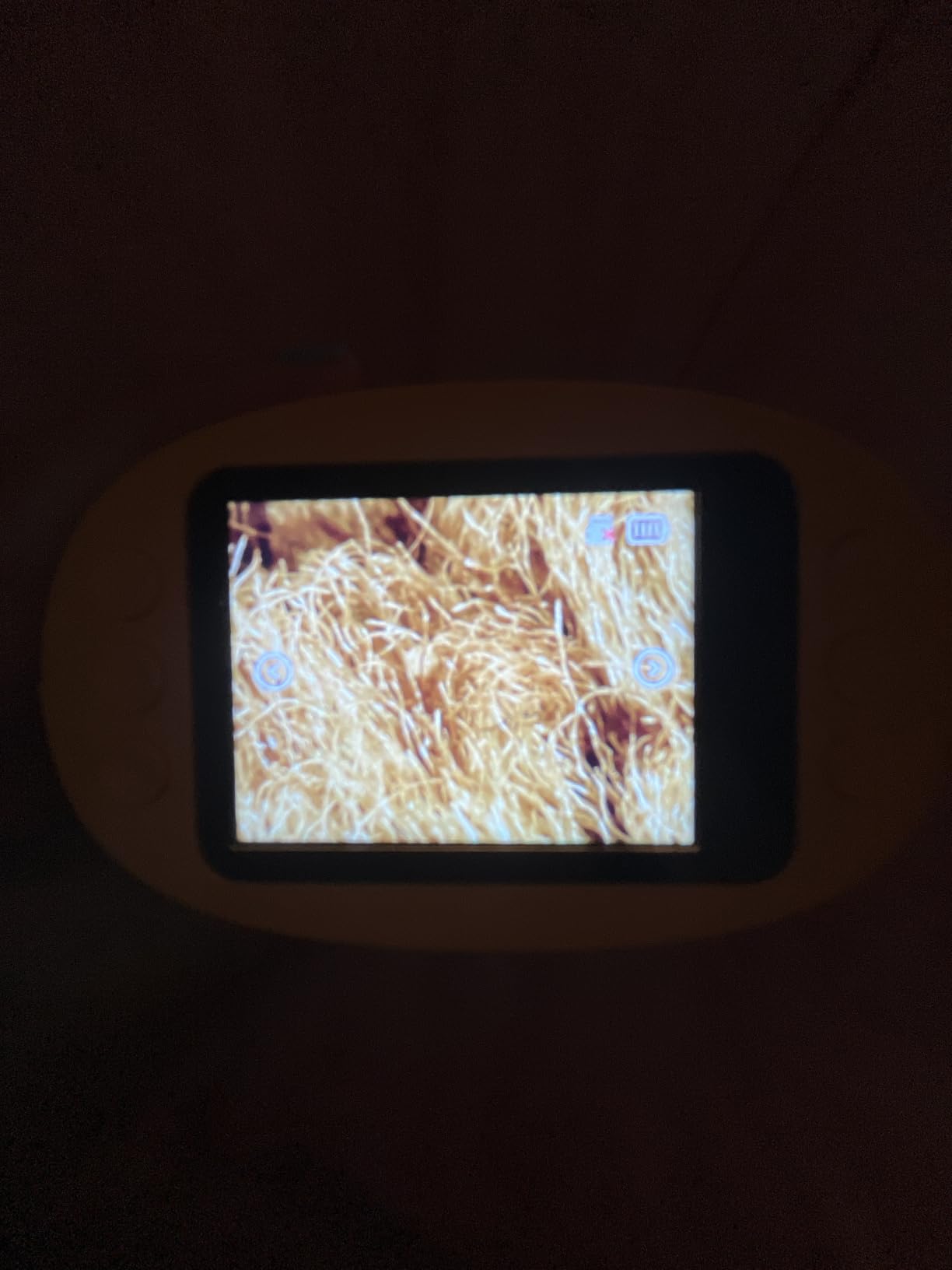
The most valuable practical tip in the reviews has nothing to do with the specification. There is a protective glass or plastic cover over the lens that must be removed before use, or the image looks white and scratched. Parents who read this first get a working microscope; parents who do not assume the product is faulty.
At 200g with a 600mAh battery and USB-C charging, it works indoors, in the yard and on trips. The 32MB of internal storage holds a couple of hundred photos or AVI clips for children who want to keep what they find.
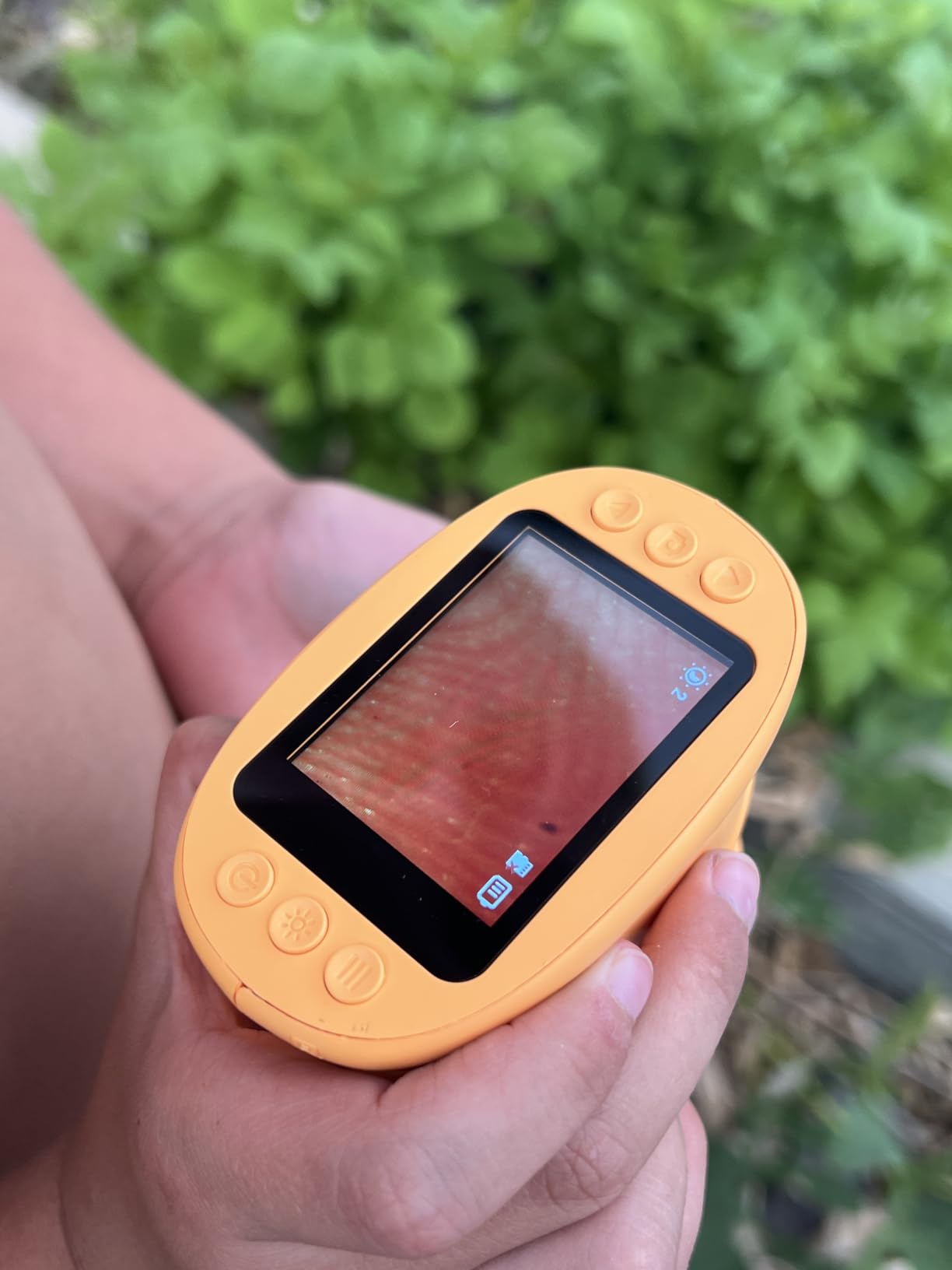
What you can actually see with it
Fabric threads, paper fibres, hair and skin texture, print on a coin, leaf surfaces, pencil strokes and small insects in profile. It is a surface magnifier and it is good at that, and children aged roughly five to ten get real entertainment value from it.
Where it falls short
The 1000X claim will not deliver bacteria, and the build feels more like a toy than an instrument, with detail softening at higher settings. The button icons are yellow on a yellow body, which is a genuine readability problem, the lens cover scratches easily, and no slides are included despite common expectations. Adults frequently end up using it as much as the kids do.
How to Choose a Microscope Under $200
The decision comes down to three questions: what are you looking at, do you want your eyes or a screen, and who else will use it. Get those right and the shortlist writes itself.
Decide between compound, stereo and digital first
A compound microscope passes light up through a thin transparent specimen on a slide. That is the only design in this price range that will show you plant cells, cheek cells and pond organisms. Nearly every biological use case needs one.
A stereo microscope gives you two eyes and a three-dimensional, upright image of solid objects. It is the right tool for insects, coins, solder joints, rocks and electronics, and it sits far more comfortably in the under-two-hundred range than binocular compound models do. Our best stereo microscopes for hobbyists guide covers that category in more depth.
A digital microscope drops the eyepiece entirely and puts the image on a screen. Buy one for electronics, soldering, coin grading, textiles and anything where you want to record, share or avoid eye strain. Do not buy one hoping to see cells, because the light does not pass through the specimen.
Monocular or binocular
Monocular means one eyepiece. It costs less, the optical path is simpler, and for ten-minute sessions it is genuinely fine. It is also the most common complaint from adults who use a scope heavily, because you close one eye for the whole session.
Binocular means two eyepieces. It costs more, and at this budget you trade optical quality for comfort. Established binocular compound scopes routinely land above the two-hundred-dollar line, which is why the binocular options here come from lesser-known brands with thinner documentation.
Why the mechanical stage matters more than magnification
A plain stage holds a slide on a flat plate and you move it by hand. A mechanical stage adds a second platform on a geared rail so you can slide the specimen horizontally and vertically with a knob while keeping it in focus.
This is the feature community buyers name most often as the single biggest improvement to the experience. Without it, finding a specific cell means sweeping the entire slide with your fingers and losing it every time. With it, you can centre a feature in seconds. If two scopes are otherwise equal, the one with the mechanical stage is the better buy.
What illumination should do
Look for LED rather than halogen. LEDs run cool, never need a replacement bulb, and brightness can be dialled down for transparent specimens that blow out under full power. Dual illumination, with light from both above and below, is what lets one instrument handle slides and solid objects.
A disc diaphragm or iris matters more than most buyers expect. It controls how much light reaches the specimen, which changes contrast and lets you bring out detail in a thin or low-contrast sample.
Glass optics and metal frames
Plastic lenses soften and yellow, and cheap achromat objectives use fewer glass elements, which is the technical reason budget scopes stay acceptable above about 400x and why the community accepts them as a deliberate compromise. Metal frames are heavier, which means less shake, and shake is what ruins an image when a child leans in.
What to buy alongside
Glass slides with cover slips, a small dropper and a dissecting tray cover almost everything. Add lens paper, a stage micrometer if you want to measure, and prepared slides for when you do not want to prepare your own. If you plan to look at blood or stained tissue, add immersion oil, though very few scopes in this range pair it with a usable condenser.
Who should not buy in this range
If you need metallurgical work on opaque metal samples, phase contrast, medical diagnostic accuracy or professional photomicrography, this budget will not get you there and pretending otherwise wastes your money. Those instruments start well above the two-hundred-dollar line and stay there.
Used and ex-school scopes
One Facebook Amateur Microscopy member bought an ex-school Boreal scope for a few dollars with a box of prepared slides and was surprised by the quality of the views. Ex-school instruments with solid metal frames and achromatic objectives are the genuine value play, though you need to check that the focus mechanism moves smoothly and the objectives thread cleanly before you commit.
Why 1000x Magnification Is Mostly a Lie on Budget Scopes
Magnification is the easiest number to inflate and the least useful one to compare. Resolution is what determines whether you can actually see detail, and resolution comes from lens quality, numerical aperture and illumination, not from a bigger printed figure.
Total magnification is simply objective multiplied by eyepiece, so a 40x objective with a 10x eyepiece gives 400x. Past roughly 400x to 500x on budget scopes, added magnification stops adding visible detail because the objectives use fewer lens elements. The image gets bigger and blurrier, not more informative.
Four specific things limit what you can see. Objective lens quality, because cheap achromats correct chromatic aberration with three or four elements instead of a full correction. The condenser and iris, because without control over the light cone you cannot get contrast on a transparent sample. Eyepiece quality, because plastic eyepieces soften everything above them. And mounting rigidity, because shake at high magnification destroys the image faster than the optics do.
Digital scopes add a fifth. On a screen-based microscope, magnification is partly achieved by digital scaling, so the headline figure tells you how large the image gets rather than how much detail appears. A 1000x digital figure and a 1000x optical figure are not the same claim at all.
So can you see bacteria with a 1000x microscope? Usually not. Bacteria are around one micrometre across, which needs genuine optical resolution at 1000x with a proper oil immersion setup and a condenser. Without oil immersion, a budget 1000x gives you a dim, blurry field. The honest answer is that you need a proper instrument above this budget for that work, and pretending otherwise is how buyers end up disappointed.
This is why every recommendation in this guide comes with an honest range. If a listing prints 1200x or 2000x or 2500x and pairs it with a one-element plastic objective, treat 400x as the real ceiling.
Frequently Asked Questions
What is the best microscope under $200?
The National Geographic Dual LED Microscope Science Kit is the best microscope under $200 for most families, because it uses real optical glass at 20x and 50x with lighting from both above and below plus 50+ accessories. For a genuine optical compound scope, the AmScope M150C-PS25 is the stronger buy at 40X-1000X with a metal frame and 25 prepared slides. For coins, soldering and electronics, the TOMLOV DM9 with its 7 inch LCD is the right tool.
Can you see bacteria with a 1000X microscope?
Rarely on a budget scope. Bacteria are roughly one micrometre across, which needs true optical resolution achieved with a 1000x oil immersion objective and a working condenser. Most under-$200 scopes have no oil immersion lens and a basic iris, so at 1000x you get a dim blurry field with no new detail. Treat 400x as the honest ceiling and buy a proper instrument above this budget for microbiology work.
What is the best microscope for the money?
The AmScope M150C-PS25 is the best microscope for the money in an optical sense, combining achromatic objectives, a metal frame, honest 40X-1000X magnification and a five year manufacturer warranty at a mid-range price. If the user is a child rather than an adult, the National Geographic Dual LED kit is the better value because it ships with more than 50 accessories and needs no separate slides.
Which microscope is best for students?
For a school-age child learning biology, the Emarth 52-piece compound microscope is the best fit because it is a true compound scope with achromatic objectives rather than a 50x toy. For a college student working through histology or microbiology, plan on spending more than this budget, since oil immersion and a condenser are both required. Our dedicated guide to the best microscopes for students covers the unrestricted shortlist.
What is a good low-cost microscope?
The BMDSAE handheld pocket microscope is a good low-cost option for children around five and up, offering a 2.0 inch screen, 1000x digital magnification and USB-C charging at the bottom of this price range. Note that the protective lens cover must be removed or the image looks white. For adults wanting real optics rather than digital scaling, spend more and buy a metal-framed compound scope instead.
Is Swift or AmScope better?
AmScope is the safer choice inside this budget. The M150C-PS25 pairs achromatic objectives with a metal frame, honest magnification and a five year manufacturer warranty, and it is the brand community members on r/microscopy treat as a default recommendation in the budget tier. Swift builds good binocular instruments, but budget binocular models generally start above the two-hundred-dollar line, so within this ceiling AmScope gives you more optical quality per dollar.
Final Verdict
The best microscopes under $200 come down to one honest recommendation per use case. Start with the National Geographic Dual LED kit for a child, the AmScope M150C-PS25 for a first real optical instrument, or the TOMLOV DM9 when the work happens on a bench and you need a screen.
Everything else in this roundup is a specialist answer to a specialist need, and each one beats its alternatives in its own lane. Use the buying guide above to narrow the field before you buy, and check the current price on each listing before you commit.