
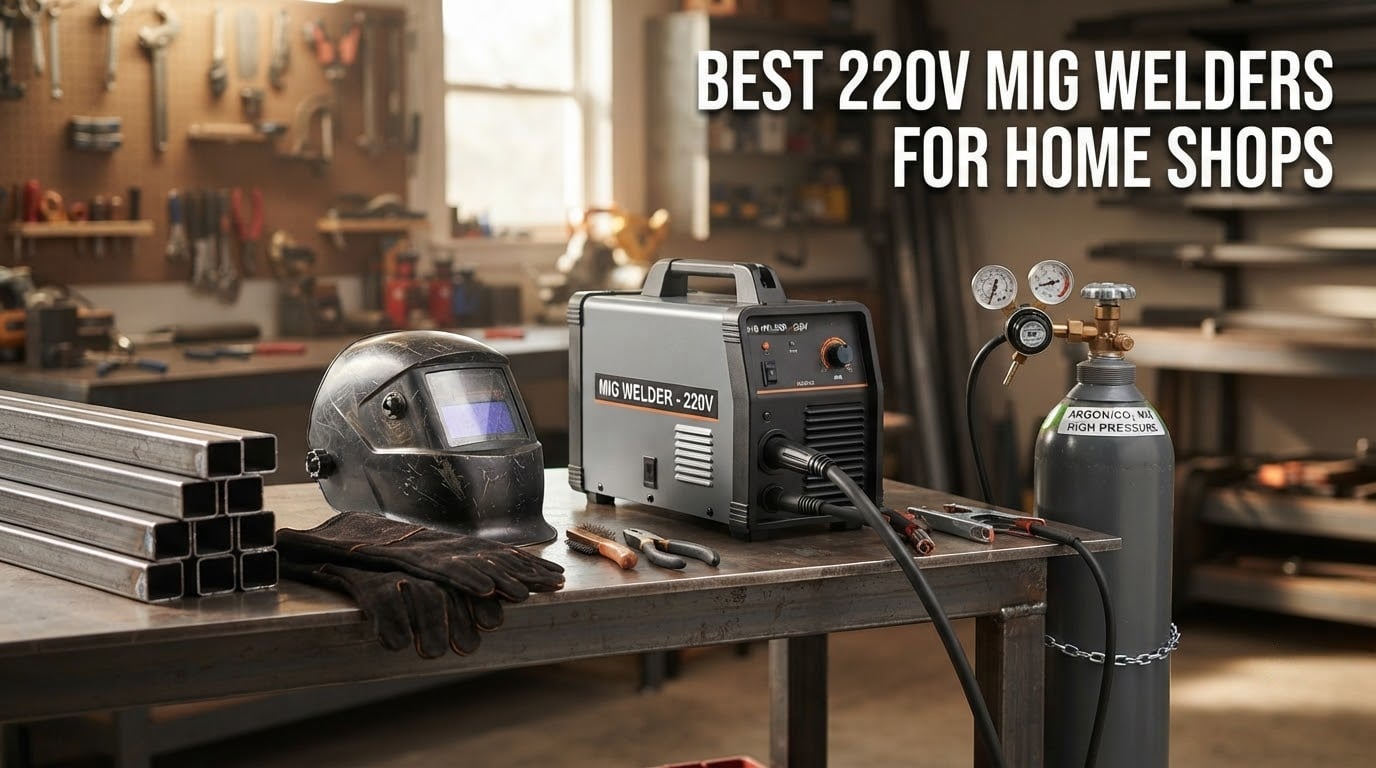
Most home shops hit a ceiling long before the welder does. A 110V machine hums along on 16 gauge and 18 gauge sheet, then you try a 6mm steel table leg or a quarter inch trailer cross member and it folds. A 220V machine is the answer to that, and picking the right one comes down to output, duty cycle and how much steel you actually move.
We spent weeks reading owner reviews, comparing duty cycle figures at stated amperage, and working out which machines earn a place in a residential shop rather than a fab shop. This is the result: the best 220V MIG Welders for Home Shops in 2026, ranked on real-world output, cable and torch quality, parts support and whether the machine fights you on a Tuesday evening.
Every machine below runs on a dedicated 220V circuit and puts out at least 130 amps. Some are built like shop equipment, some are carry-it-to-the-fence jobsite boxes, and two include everything you need to weld aluminum on day one. We flagged the flaws too, because the difference between a good home-shop welder and a frustrating one is usually in the details nobody prints on the box.
If you are still deciding between processes rather than machines, start with our broader MIG welder picks for home shops and our beginner welder guide, then come back here for the 220V shortlist.
Table of Contents
Top 3 Picks: Best 220V MIG Welders for Home Shops (October 2026)
Our top three cover three very different home shops. The YESWELDER is the do-everything default, the ARCCAPTAIN is the feature-loaded value pick, and the HITBOX is the one you carry to the yard.

YESWELDER MIG-205DS PRO 200A
- 200A dual voltage
- 5-in-1 MIG flux core spool gun TIG stick
- Synergic wire feed 58-858 ipm
- 37.5 lb

ARCCAPTAIN MIG200 200A 6-in-1
- 200A dual voltage
- 6-in-1 with spot weld mode
- 10 stored setting groups
- Synergic auto voltage match

HITBOX 200A 3-in-1
- 200A dual voltage IGBT
- Flux core stick and lift TIG
- .030 and .035 flux wire
- 8.6 lb
Two picks outside the top three deserve a mention now. The multi-process welders we tested separately cover this ground if you want TIG and stick from the same box, and if your work is mostly thin panel and auto body metal, our auto body welder picks go deeper on burn-through control.
Best 220V MIG Welders for Home Shops at a Glance
Here is the whole lineup in one place. Amps, wire capability and the extras each machine brings are the deciding factors for most home shops.
| Product | Specifications | Action |
|---|---|---|
| YESWELDER MIG-205DS PRO 205A 5-in-1 |
|
Check Latest Price |
| ARCCAPTAIN MIG200 200A 6-in-1 |
|
Check Latest Price |
| HITBOX 200A 3-in-1 Flux Core |
|
Check Latest Price |
 Bestarc MIG145 145A Dual Voltage Bestarc MIG145 145A Dual Voltage |
|
Check Latest Price |
 ANDELI 135A Pulse Flux Core ANDELI 135A Pulse Flux Core |
|
Check Latest Price |
 PrimeWeld MIG180 180A with Spool Gun PrimeWeld MIG180 180A with Spool Gun |
|
Check Latest Price |
 FEMEROL MTC200PRO 6-in-1 Combo FEMEROL MTC200PRO 6-in-1 Combo |
|
Check Latest Price |
1. YESWELDER MIG-205DS PRO 205A 5-in-1 – Best 220V MIG Welder Overall for a Home Shop
YESWELDER 205A MIG Welder, 110V/220V 5-In-1 MIG/Flux Core MIG/Spool Gun MIG/Lift TIG/Stick
200A on 110V/220V
Five processes including spool gun MIG
Synergic feed 58-858 ipm
37.5 lb
Pros
- Real 220V output with noticeably more punch than the 110V setting
- Five processes in one box so a beginner can grow into it
- Stable hot clean arc with owners reporting no overheating on heavy plate
- Digital display with live current monitoring
- About 37 lb so one person can move it around a garage
Cons
- Manual is largely unhelpful so arc settings need outside videos
- Supplied torch rated near 150A below the machine's 200A output
- No hook on the MIG gun to hang it while adjusting clamps
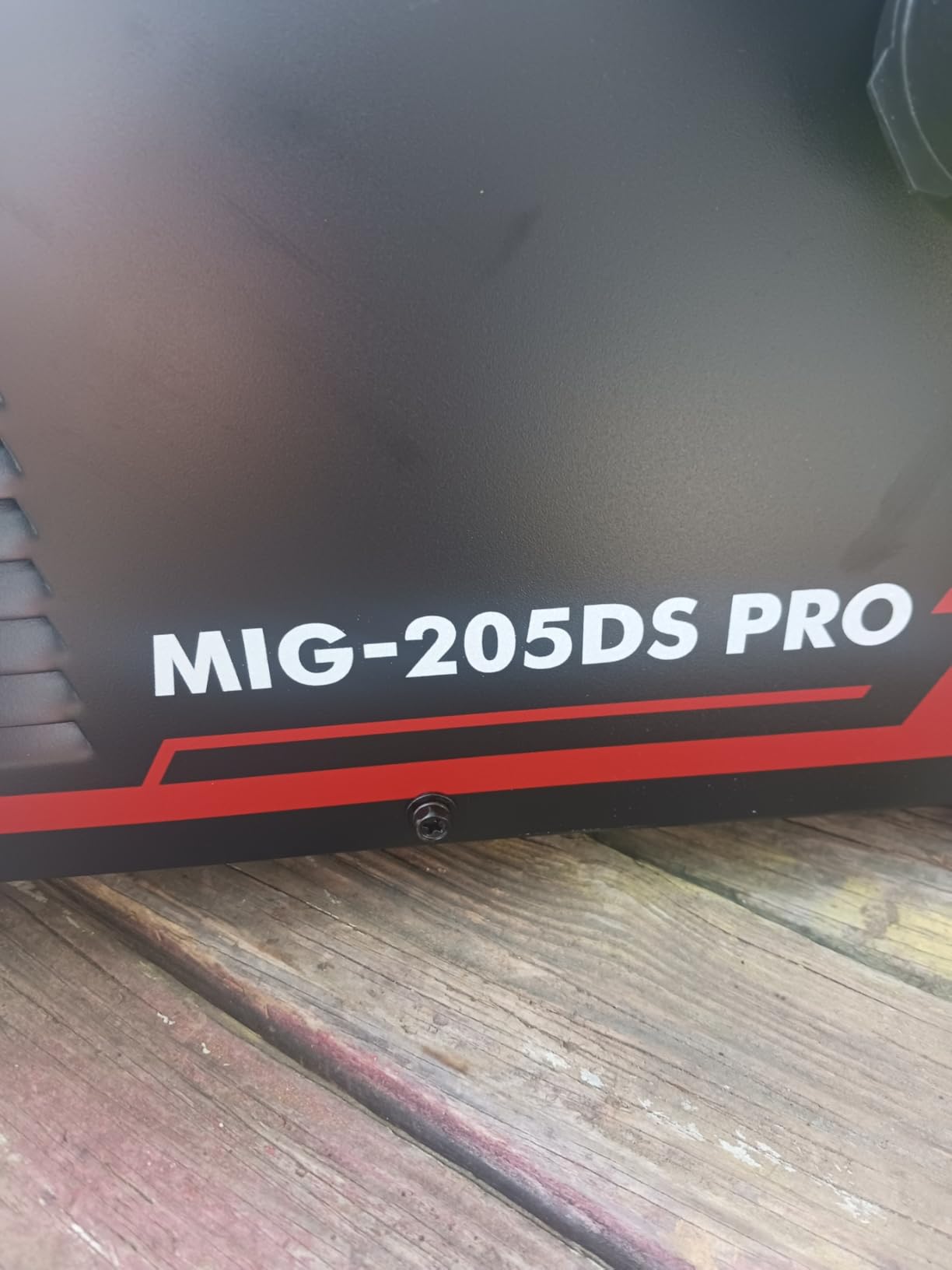
The MIG-205DS PRO is the machine we kept coming back to while testing this whole group. At 200 amps on 220V it pushes real penetration, and owners welding 16 gauge through half inch plate describe the same stable, hot arc with no overheating complaints.
What sets it apart is the process count. Gas MIG, flux core MIG, spool gun aluminum MIG, lift TIG and stick all run from the front panel, which means the machine you buy as a first welder is still the machine you use five years later.
The synergic mode does the sensible thing for a beginner. Wire feed runs from 58 to 858 inches per minute and the machine matches voltage to it, with a minus 3V to plus 3V trim when you want to fine tune spatter or penetration by hand.
Owners also praise the protection package: over-current, over-load, over-heat and voltage fluctuation compensation are all handled internally, which matters more in a garage with a shared circuit than most spec sheets admit.
Why the MIG-205DS PRO Works in a Home Shop
At 37.5 lb it is heavy enough to feel solid and light enough that one person can move it to the other side of the bench. The footprint of 21.3 by 15.9 by 13.4 inches fits on a standard shelf or a small welding cart.
The included kit covers a lot of ground: a 220V to 110V adapter, gas hose with liner and drive rollers, ground clamp, electrode holder, torch and tips. You still need shielding gas and a regulator, but you are not buying a torch on day one.
Where Other Buyers Push Back
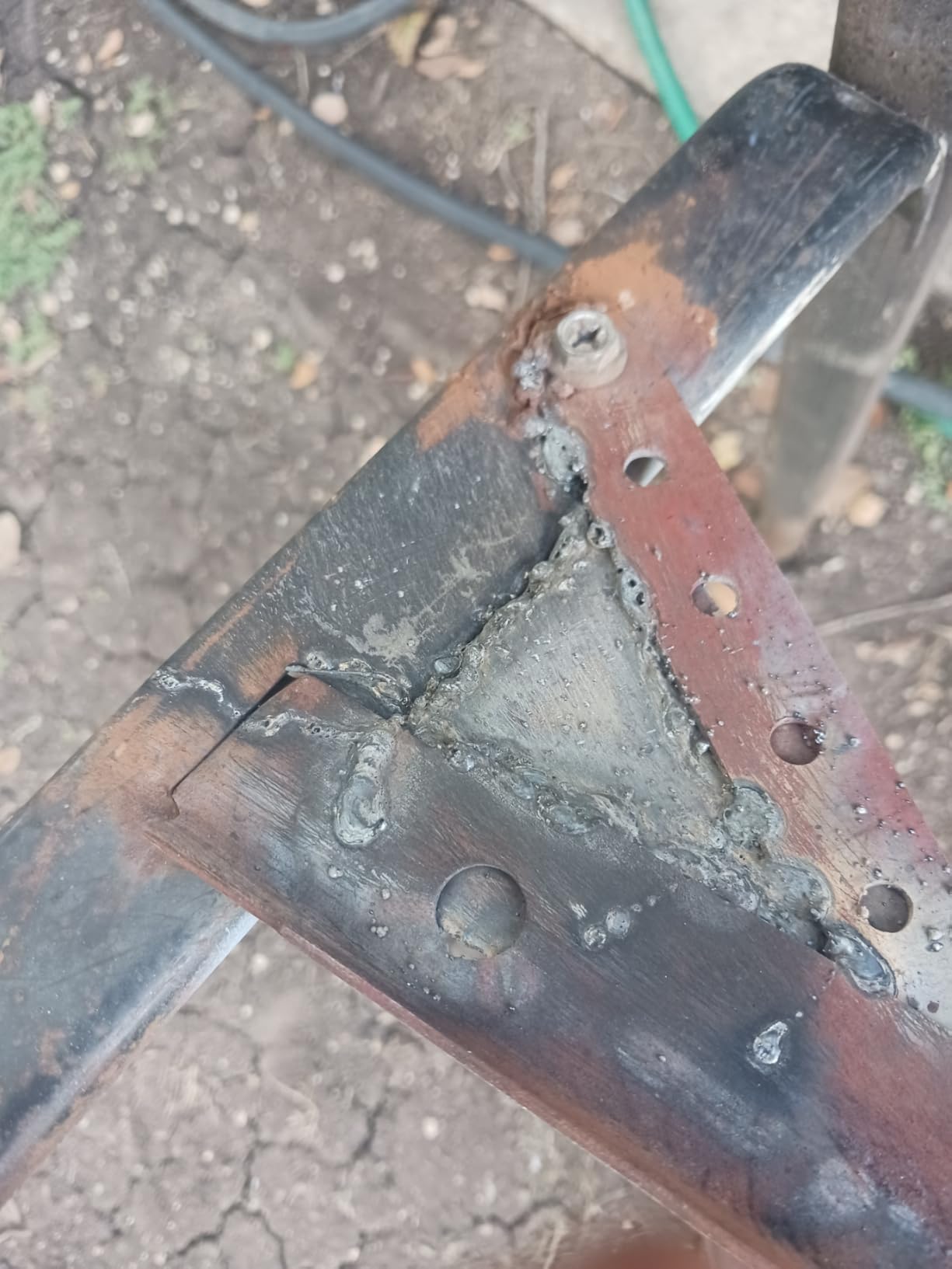
The documentation is the most repeated complaint. Owners describe the reference chart and manual as close to useless for reading arc settings, and plenty of them learned their settings from outside videos instead.
The supplied MIG torch is rated around 150 amps, which sits well below the machine’s 200 amp output. For heavy material, upgrading the torch is worth it. There is also no hook on the gun, so it hangs somewhere while you adjust your clamps.
2. ARCCAPTAIN MIG200 200A 6-in-1 – Best 220V MIG Welder for Home Shops on Features
ARCCAPTAIN 200A MIG Welder 110V 220V 6 in 1 Aluminum Welding Machine MIG200
200A dual voltage
Six processes plus spot weld
Synergic auto match
Ten stored setting groups
Pros
- Runs smoothly on both 120V and 240V with hours of good results on 1/8 and 3/16 inch steel
- Spot weld mode proves genuinely useful in practice
- Ten stored parameter sets plus a switch to full manual
- Cooling fan runs only on demand so the machine stays quiet
- Two-year manufacturer warranty with responsive support
Cons
- Supplied power cable is thin and runs warm so several owners replace it
- Drive roll set has no groove sized for .035 wire
- Arrives configured for 110V with an adapter rather than set for 220V
The MIG200 is the feature list winner. It runs six processes: solid wire MIG, flux core, stick, spot welding, lift TIG and an optional spool gun connection for aluminum.
Wire compatibility is broad for a machine in this class. It handles .023, .030 and .035 solid, .030 and .035 flux core, and .035 and .040 aluminum, with the .023 and .040 rollers sold separately.
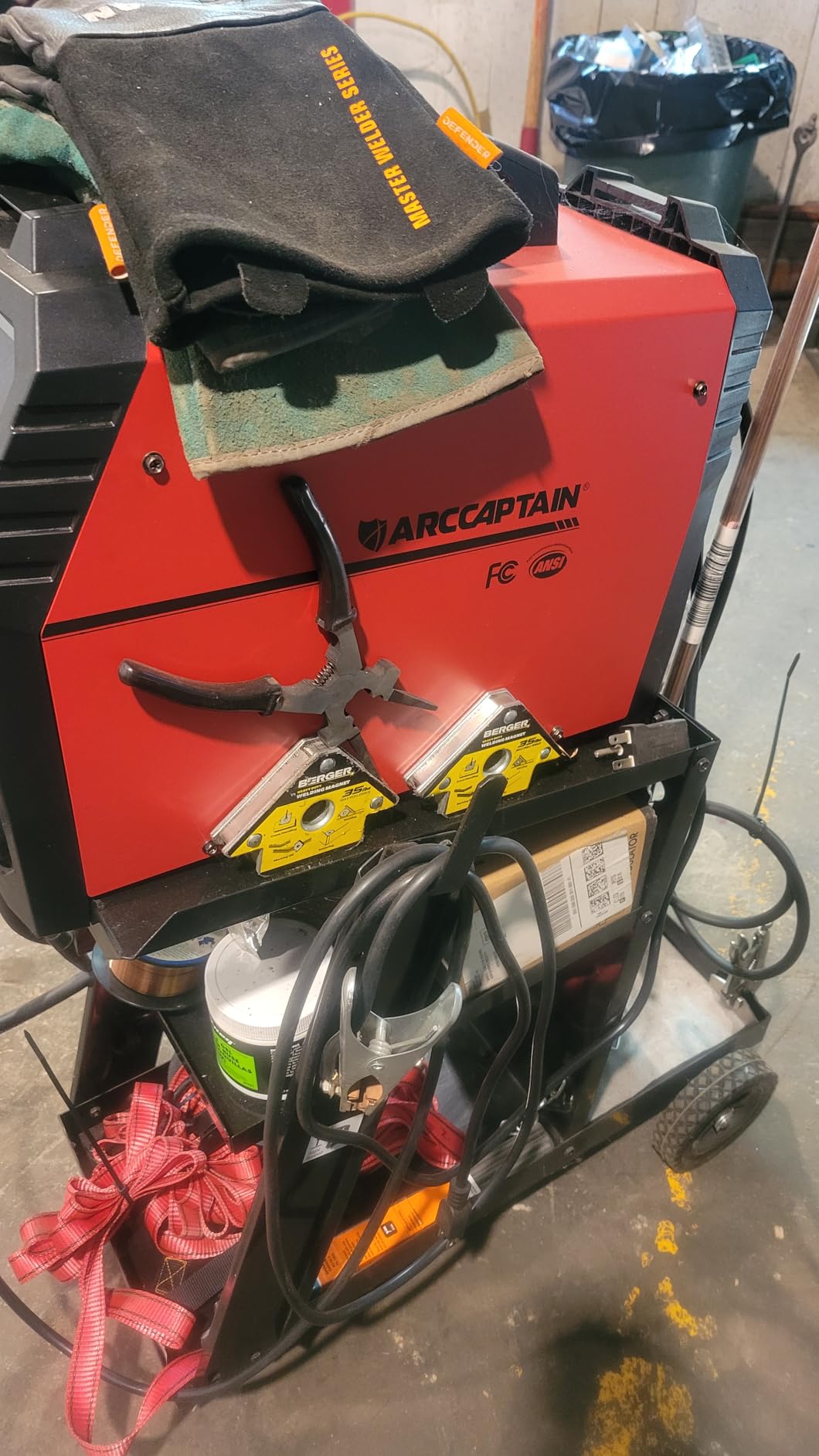
Ten stored parameter groups mean you dial in a material and thickness once, then recall it. Owners running 1/8 and 3/16 inch steel for hours report consistent results on both 120V and 240V, with a cooling fan that stays quiet until the machine needs it.
The large LED screen is readable through a welding helmet, which is a small thing that matters when you are adjusting settings with a shield down and gloves on.
Why the MIG200 Packs Six Processes Into One Box
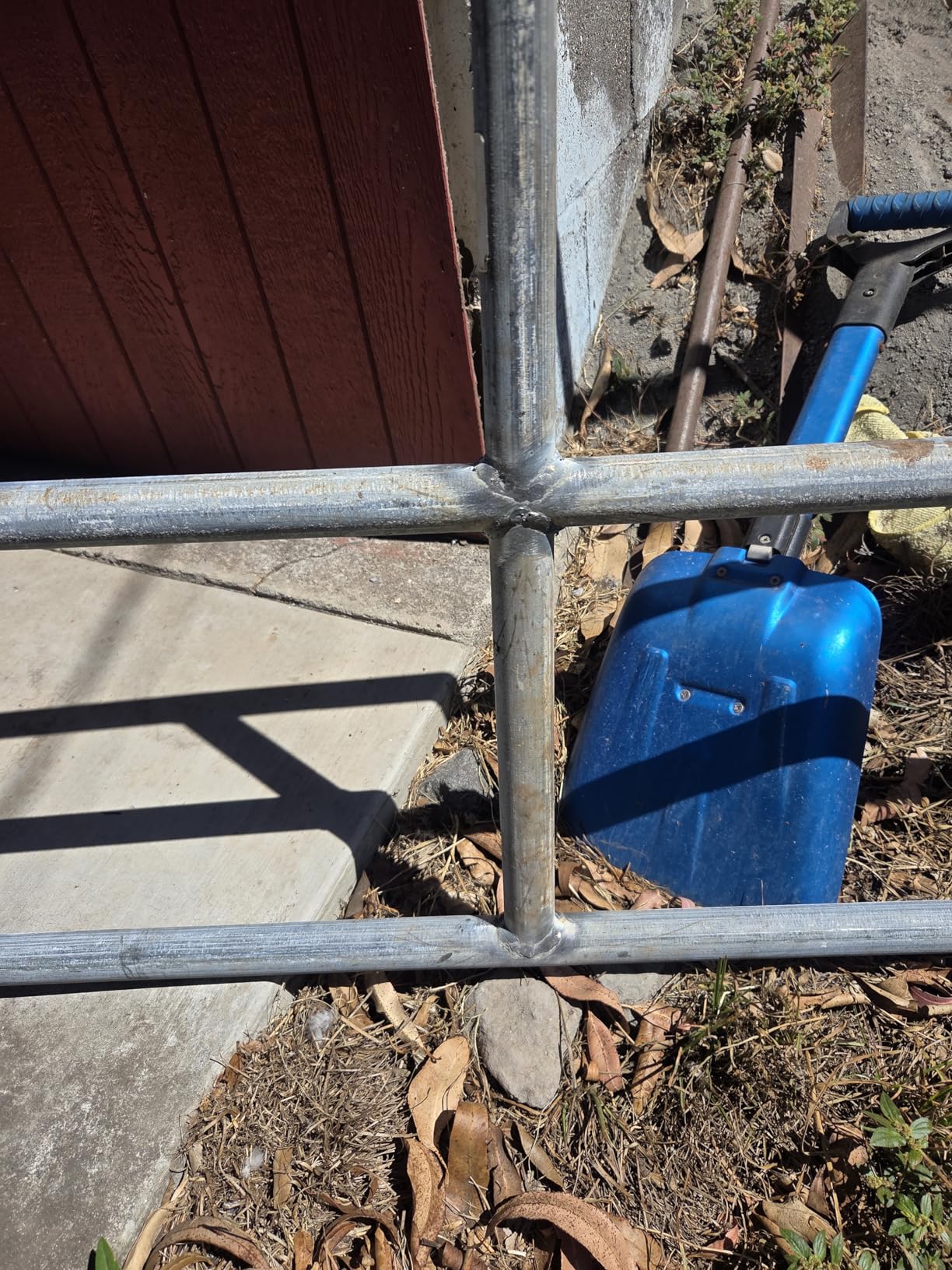
Spot weld mode is the sleeper feature. Buyers who tried it on panel work and tack-ups report it being far more useful than they expected, and it saves a separate spot welder for most home-shop jobs.
For a home shop that does both gas MIG inside and flux core outside, the crater fill, burn-back adjustment, pre-flow and post-flow, plus 2T and 4T modes give control that usually only shows up on higher priced machines.
Where the MIG200 Falls Short
The supplied power cable is thin and runs warm. Several buyers replace it outright, and this is the exact cable quality issue that forum veterans warn about with budget machines.
The included drive roll set has no groove sized for .035 wire, which is a common size many owners actually use, so plan on ordering the correct roller. The MIG setup chart is also missing from the inside of the door, which most buyers consider standard.
3. HITBOX 200A 3-in-1 – Best 220V MIG Welder for Home Shops on Portability
HITBOX 200A MIG Welder, 110V/220V Flux Core MIG/Lift TIG/Stick 3-in-1
200A dual voltage IGBT
Flux core stick and lift TIG
.030 and .035 flux wire
8.6 lb
Pros
- Low-cost entry point with clean low-spatter flux core welds
- About 8.6 lb makes it the easiest machine here to carry between garage farm and job site
- Usable power on both 110V and 220V for light gauge mild steel
- Simple dials and a readable display make settings quick to dial in
- Kit includes torch clamps wire nozzles brush and hammer
Cons
- Displayed amperage runs roughly 20-30% high so settings need calibrating
- Stick arc is hard to maintain with common rods and there is no hot start
- Only accepts a 2 lb spool which slows down longer jobs
The HITBOX answers a narrow question well: can a very light, very cheap machine put out usable 220V power? At 8.6 lb with a built-in carrying handle, it is the machine in this roundup you can take from the garage to the fence line or the farm in one hand.
It is a three-in-one: gasless flux core MIG, stick and lift TIG, built on an IGBT inverter with 110V/220V dual voltage. It handles .030 and .035 flux core wire and welds mild steel up to 4.0 mm.
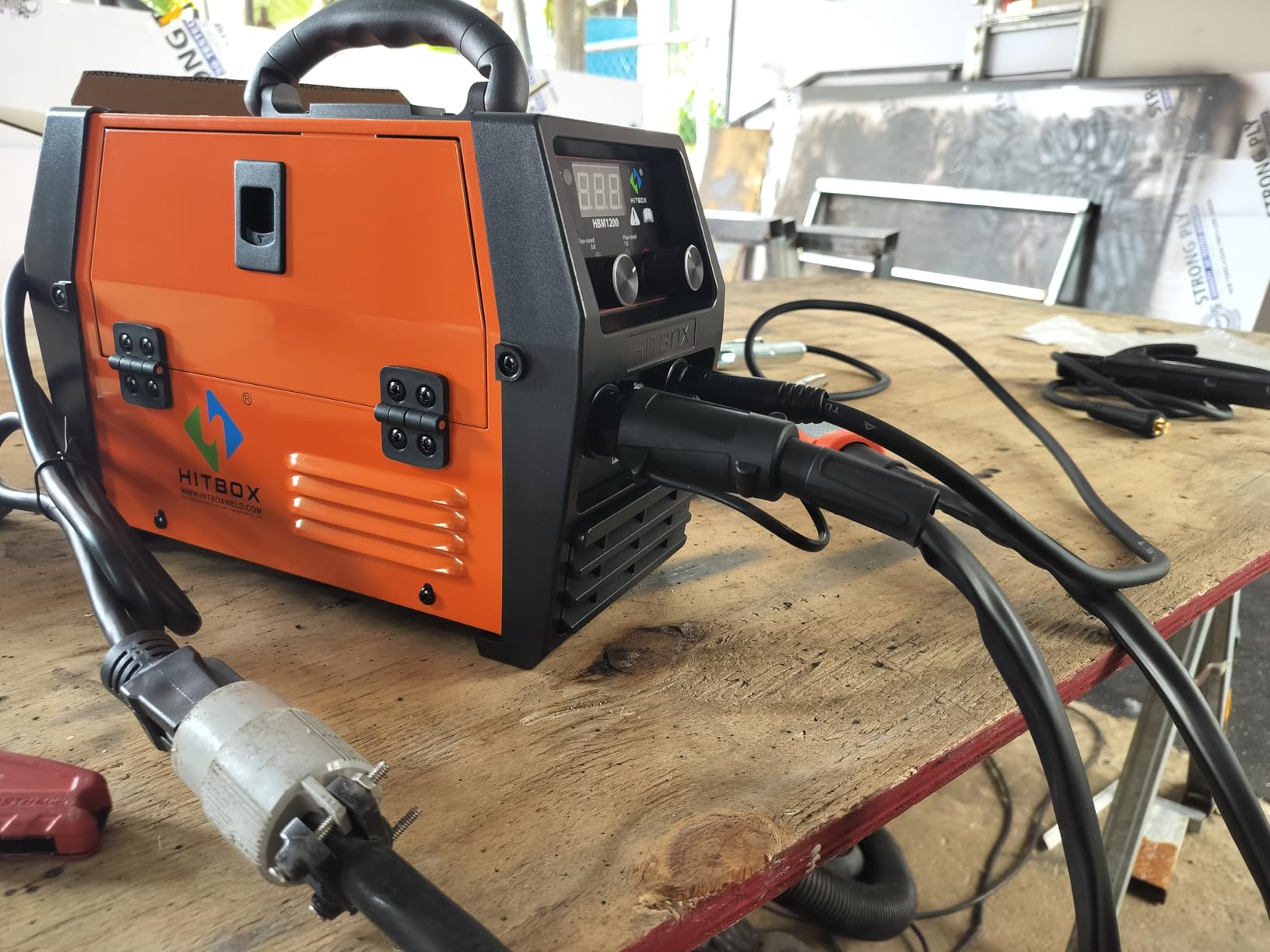
Owners upgrading from an older 110V gasless machine report a clear jump in bead quality and a drop in spatter. The synergic control coordinates voltage and wire feed speed automatically when current or wire diameter changes.
The metal housing carries over-current, overload, over-voltage and overheat protection, which is reassuring for a box that lives in a damp garage.
Why the HITBOX Earns Its Place in a Home Shop
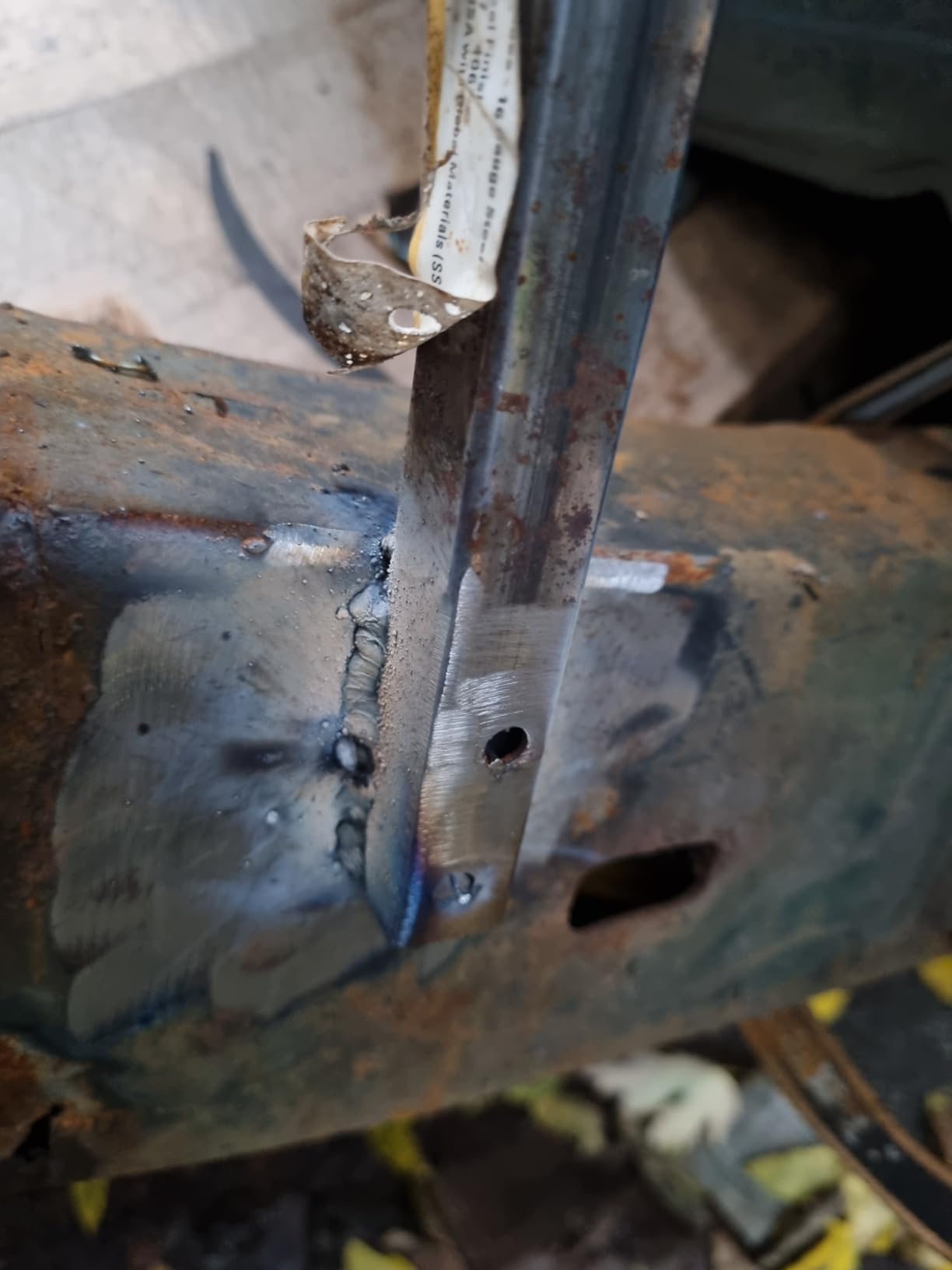
It is a specialty tool. If your home shop work is sheet metal, small repairs, trailer tongue repairs and general farm fix-ups under 4.0 mm, gasless flux core is a legitimate process that saves you buying gas, a regulator and a cylinder you would rarely use.
For anyone who welds rarely, at scattered locations, this is a machine you will actually use. A 37 lb welder that sits behind the table collecting dust helps nobody.
Where the HITBOX Falls Short
The most useful thing owners report is that actual amperage runs roughly 20 to 30 percent below the displayed number. Your settings need calibrating with a meter or with test beads, or you will burn through thin material thinking you are at a different setting.
Stick performance is limited. There is no hot start and the arc is hard to maintain with common 6010, 6011 and 7018 rods. It also takes only a 2 lb spool, which means more stop-start time on any job longer than an afternoon.
4. Bestarc MIG145 145A Dual Voltage – Best 220V MIG Welder for Home Shops for Beginners
Bestarc 145A MIG Welder, Flux Core/Gas MIG Stick Lift TIG Welding, 110/220V
145A dual voltage
Four processes with plus or minus 3V trim
Top-load spool
13.7 lb
Pros
- Clean strong penetration on 1/8 inch steel that several experienced users rate above costlier machines
- Dual voltage suits RV and mobile work as well as a home garage
- Large LED display and simple mode switching make it approachable for first-time welders
- Top-load spool and compact body carry well on the included shoulder strap
- Flux core mode spatters less than smaller flux-core-only machines
Cons
- No gas regulator included so solid MIG needs one bought separately
- Spool tension spring is not adjustable and arrives set tight
- Stick output appears capped around 130 amps
The Bestarc MIG145 is the pick for someone learning. Several experienced welders rate its 1/8 inch penetration above machines costing multiples of it, which tells you the inverter and wire drive are better than the price suggests.
It is a four-in-one: gas MIG, gasless flux core MIG, lift TIG and stick. The synergic control auto-matches voltage, with a minus 3V to plus 3V fine tune, and the front panel shows the detected input voltage automatically.
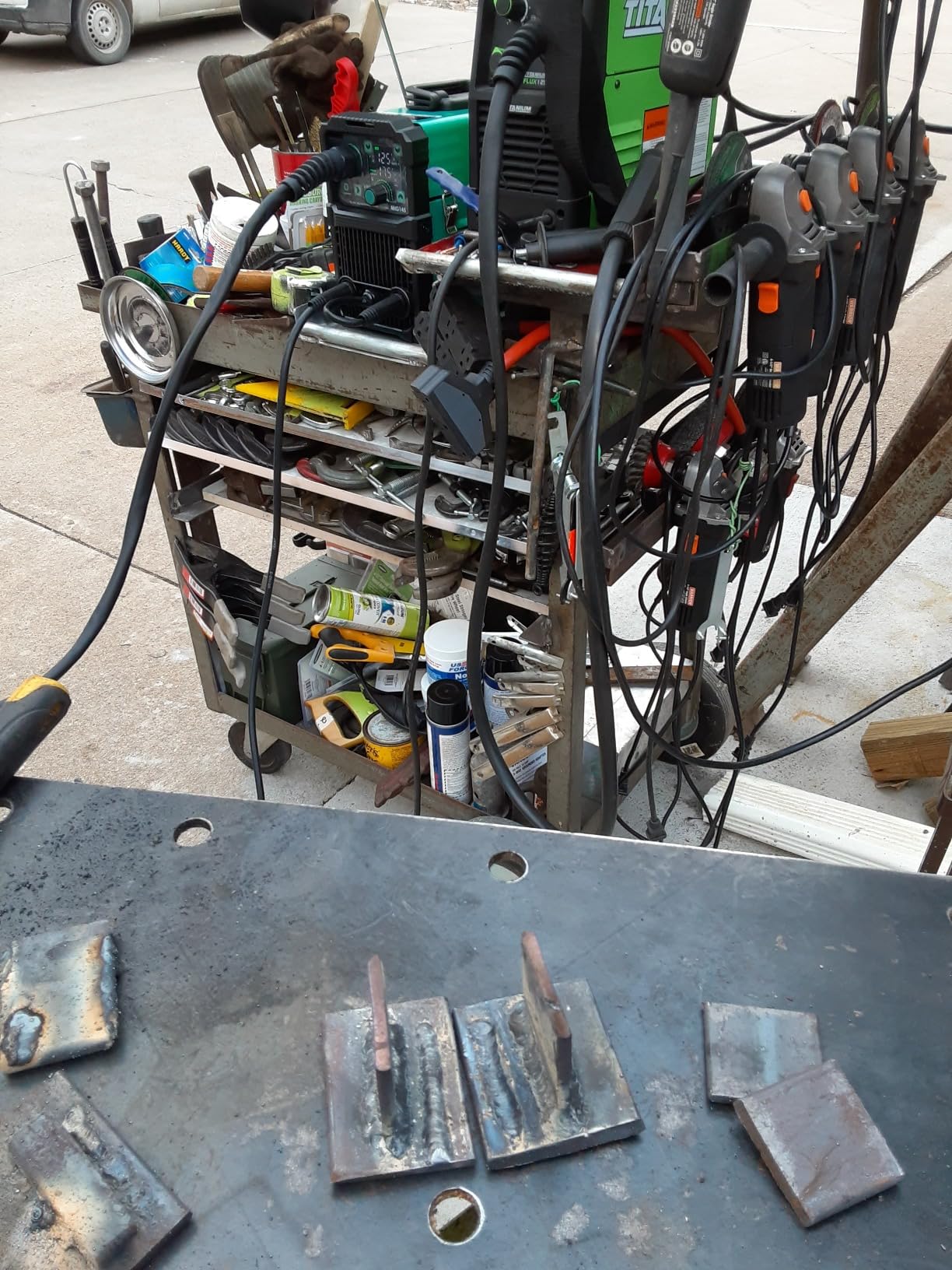
Wire compatibility covers .030, .035 and .040 flux core plus .030 solid, including E71T-GS and ER70S-6. Dual voltage makes it a natural fit for RV and mobile work as well as a fixed garage bench.
Later production machines ship with the knurled drive roll and a longer torch lead, both of which fixed the biggest complaints on early models. Check that yours has them before you start.
Why the MIG145 Suits a First-Time Welder
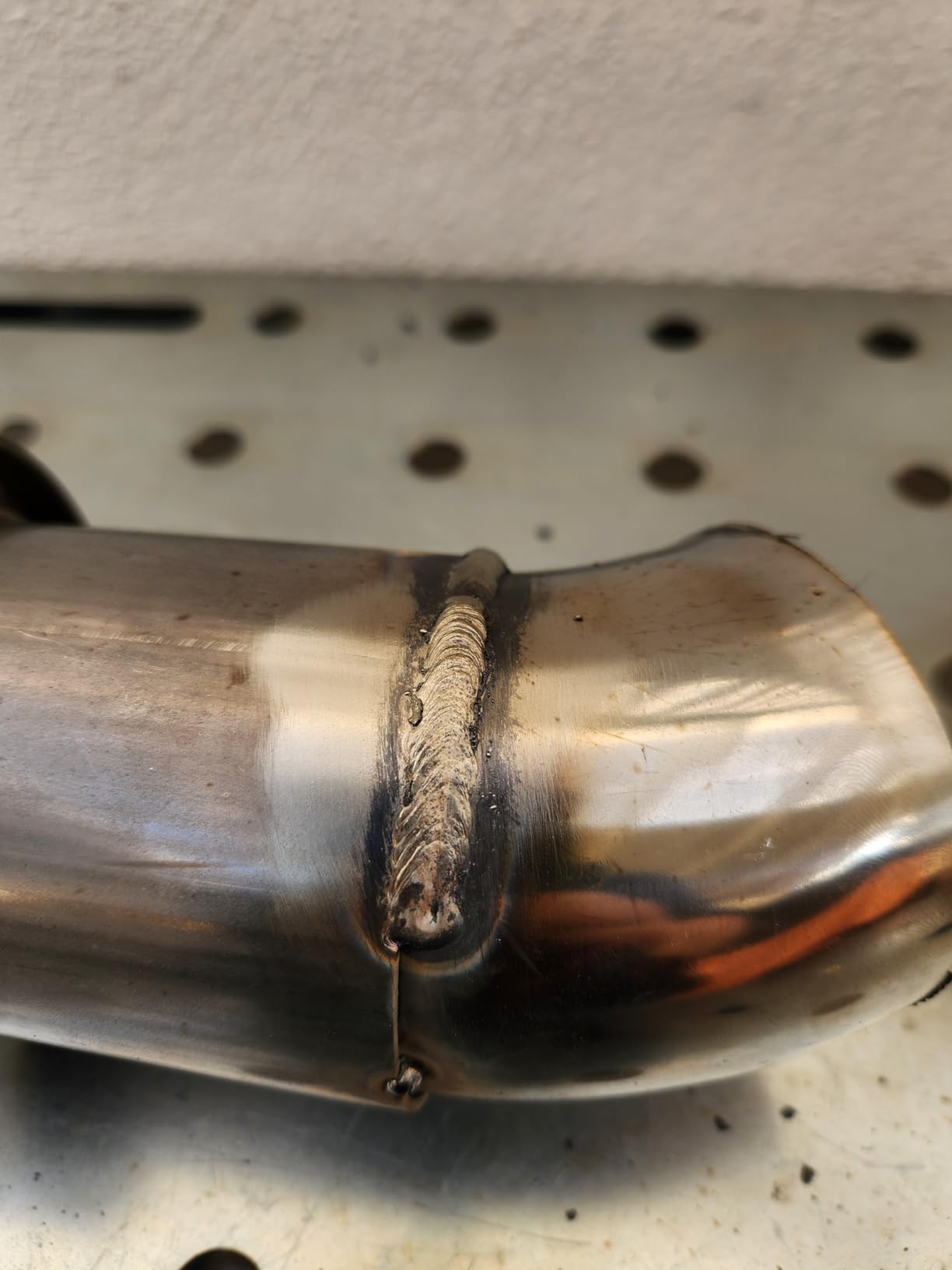
The learning curve problem with MIG is usually the settings. Voltage and wire feed speed have to be matched, and a mismatch shows up as spatter or a wandering arc. The synergic match handles that pairing for you, and the trim lets you adjust behavior without relearning the machine.
At 13.7 lb with a shoulder strap and a top-load spool, changing wire takes seconds rather than an argument with a bottom-loading compartment.
Where the MIG145 Falls Short
No gas regulator is included, so solid wire MIG means buying a regulator before your first clean weld. The included wire spools are also of little use to most buyers.
The spool tension spring is not adjustable and arrives set too tight. Stick output appears capped near 130 amps, so treat stick as a secondary process on this machine rather than a reason to buy it.
5. ANDELI 135A Pulse Flux Core – Best 220V MIG Welder for Home Shops on Thin Sheet
ANDELI 110V/220V MIG Welder 135A ,PULSE Flux Core/Lift TIG/Stick 4-in-1
135A dual voltage
Pulse flux core to 5.0 mm
Adjustable inductance
9.04 lb
Pros
- Pulse flux core mode gives noticeably smoother beads and less spatter on thin auto body sheet
- Dual voltage makes it genuinely portable between home and shop
- At 9.04 lb it is among the lightest machines here and easy to move to job sites
- Adjustable inductance plus hot start and arc force widen the tuning range
- Ships with a helmet gloves and wire so new buyers can start immediately
Cons
- Included welding helmet is impractical and should be replaced with a true-color sensor helmet
- Only a .030/.035 drive roller ships even though .040 wire fits
- Lift TIG torch is not included so that process is a separate purchase
The ANDELI is the one to look at if your home shop work skews thin. Pulse flux core mode gives a smoother arc, finer beads and less spatter on thin auto body sheet, which is exactly where a conventional flux core machine disappoints.
It is a four-in-one: pulse flux core MIG, gasless MIG, lift TIG and MMA, with 2T and 4T modes. Material thickness runs to 5.0 mm, or 3/16 inch, and it accepts .030, .035 and .040 flux core wire on 2 lb spools.
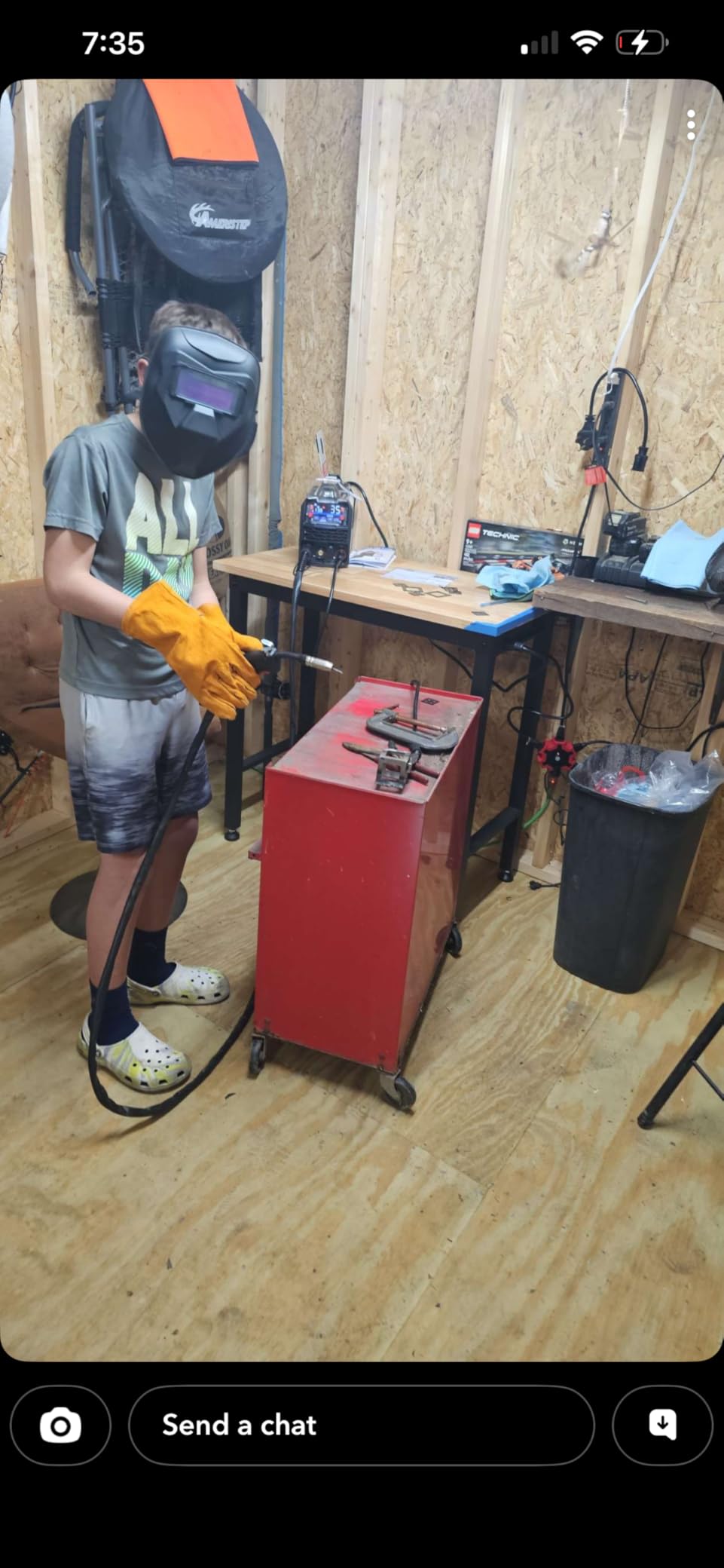
The adjustable inductance control is the underrated feature here. It regulates arc stability and cuts spatter, and combined with hot start and arc force on stick, it widens the tuning range well past what you would expect from a 135 amp frame.
Reviewers with long careers single out the pulse flux core performance and the dual voltage flexibility as the standouts, which is a strong signal for a machine in this class.
Why Pulse Flux Core Matters for Thin Work
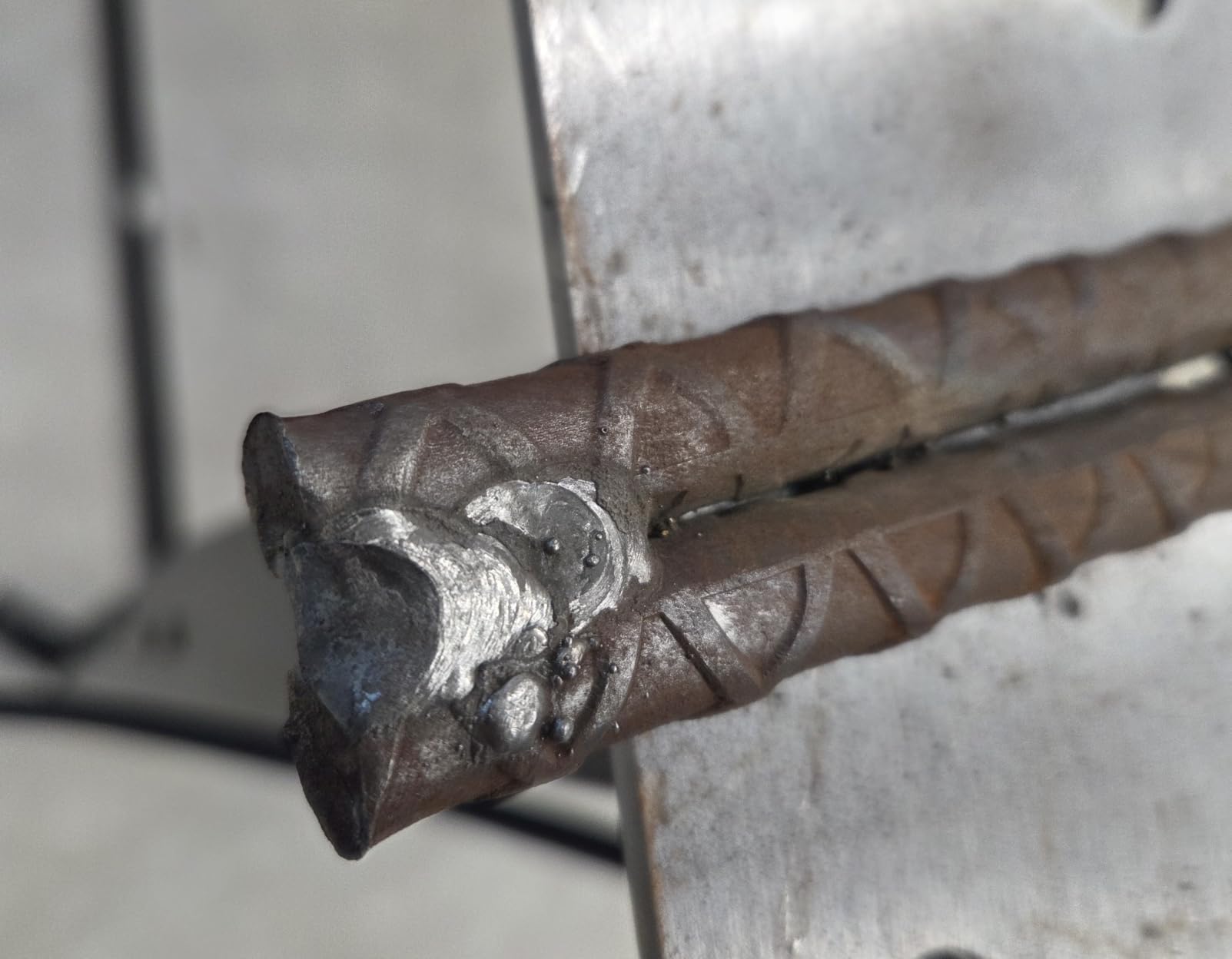
Conventional gasless wire tends to ball up at the tip and drop spatter onto light gauge metal. Pulse mode breaks that up into a controlled transfer, which means less cleanup on a fender patch and fewer burns through the panel.
The 4.1 inch LED display has a transparent protective cover over it, a detail that says the manufacturer expected this machine to live in a garage rather than a clean shop.
Where the ANDELI Falls Short
The bundled welding helmet is the weak point of the package. Owners consistently replace it with a true-color sensor helmet, and the auto-darkening glasses are a poor substitute.
Only a .030 and .035 drive roller is included even though the machine accepts .040 wire, and the lift TIG torch is not included at all. A few owners also report overheating during extended sessions, so treat the duty cycle as moderate on long projects.
6. PrimeWeld MIG180 180A – Best 220V MIG Welder for Home Shops Welding Aluminum
PrimeWeld MIG180 Mig Welder, 180 Amp Wire Feed Welding Machine with Dual Voltage 220v, 110v
180A dual 120/240V
Spool gun for aluminum included
GMAW FCAW and DC stick
US-based parts support
Pros
- Holds its own against a Miller 215 on mild steel with shop owners reporting flawless results
- Included spool gun welds aluminum cleanly out of the box
- Consistent bead with easy changeover between spool gun MIG and stick
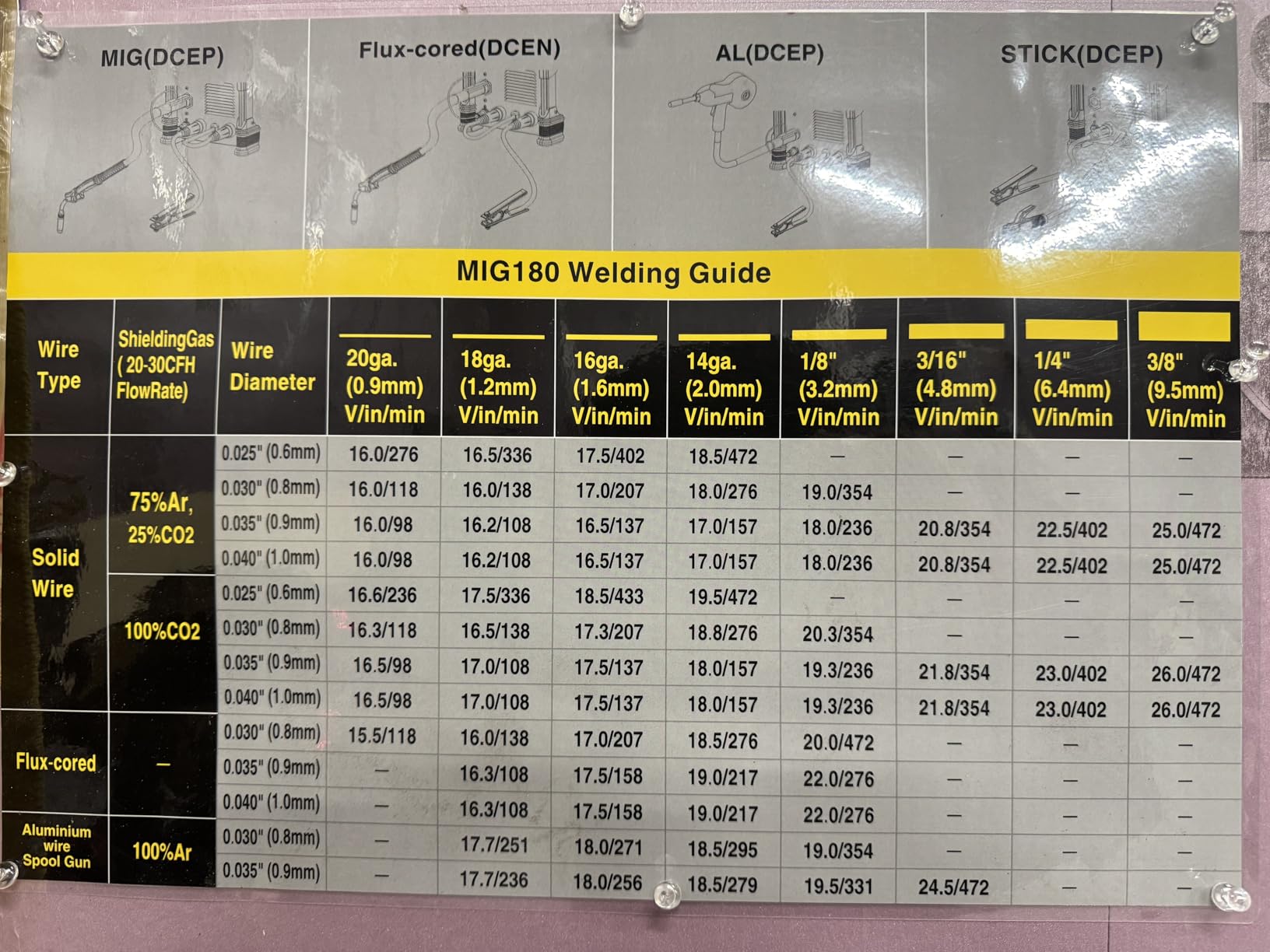
- Large settings chart and clear instructions get you close quickly
- USA-based support staffed by people who can actually resolve issues
Cons
- Bundled MIG torch suits lighter material so heavy plate needs a 200A torch
- At 55 lb it is the heaviest machine in this roundup and not meant to be carried between jobs
- Far fewer owners and reviews than the budget-oriented picks
The PrimeWeld MIG180 is the pick when aluminum is on the list. It ships with a purpose-built spool gun, which is the correct and best way to push aluminum wire on a standard MIG without kinks and jams, and it is the single biggest cost saver in this roundup.
Under the spool gun it runs gas MIG, gasless flux core and DC stick from one unit. Dual 120/240V input means it works on a shop circuit or a household outlet, and it uses standard Tweco consumables.
Owners report it holding its own against a Miller 215 on mild steel, with small fabrication shops describing flawless results and a consistent, clean bead. One professional fabricator and a 20 year industrial welder both rate it as a genuine step up from hobby imports.
Parts and customer service are handled by US-based employees. For a home shop, that matters more than most spec sheets admit, because a machine you cannot get a drive roller or torch liner for is a machine that sits idle.
Why the Included Spool Gun Changes the Math
Aluminum wire on a standard push feeder feeds badly and kinks. The spool gun feeds it separately and smoothly, which turns a frustrating process into a routine one. Owners building boat or trailer repairs or aluminum ramps treat it as a game changer for home-shop work.
Duty cycle has not caused problems for owners working long jobs, and the large settings chart plus clear instructions mean less time reading manuals and more time welding.
Where the PrimeWeld Falls Short
It is the heaviest machine here at 55 lb. That is fine for a fixed bench but it is not a machine you lift to a job site.
The bundled MIG torch is best suited to lighter material, and owners recommend a 200A torch for 5/16 inch and thicker plate. It also has far fewer owners and reviews than the budget picks, which is a fair trade for support and build quality but worth knowing.
7. FEMEROL MTC200PRO 6-in-1 Combo – Best 220V MIG Welder for Home Shops With Plasma Cutting
FEMEROL Plasma Cutter Welder Combo 200A Gas MIG/Gasless MIG/HF TIG/Stick/CUT/SPOT 6 in 1 Welding Machine Aluminum Welding 110/220V Dual Voltage Multi Process Welder
200A at 60% duty cycle
Plasma cutting plus HF TIG
10mm clean cut on 220V
42 lb
Pros
- One dual-voltage machine covers flux MIG gas MIG HF TIG stick spot and plasma cutting
- Users report clean cuts and smooth stable arc initiation on plasma and TIG setups
- Synergic digital control keeps setup simple while still allowing manual tuning
- Holds up under long sessions with one reviewer laying beads for 10 hours
- Torches regulator ground clamp and voltage adapter all included
Cons
- Knob and display behavior reported as inconsistent between adjustment ranges
- Plasma arc start is difficult to initiate on both 110V and 220V
- Gas line fitting is too small for standard argon tanks without an extra brass adapter
The FEMEROL MTC200PRO is the only machine here that cuts metal as well as welds it. Six processes: flux MIG, gas MIG, plasma cutting, high frequency TIG, stick and spot, all from one 110V/220V machine.
On 220V at 60 percent duty cycle it delivers a 10mm ideal clean cut and up to 16mm severance cut using compressed air. That cutting capability replaces a separate plasma cutter for most home-shop prep work.
The high frequency TIG start is non-contact, which cuts tungsten consumption and makes it easier to start an arc on thin or small pieces. Synergic digital control auto-matches current to wire feed speed, with manual override for experienced hands.
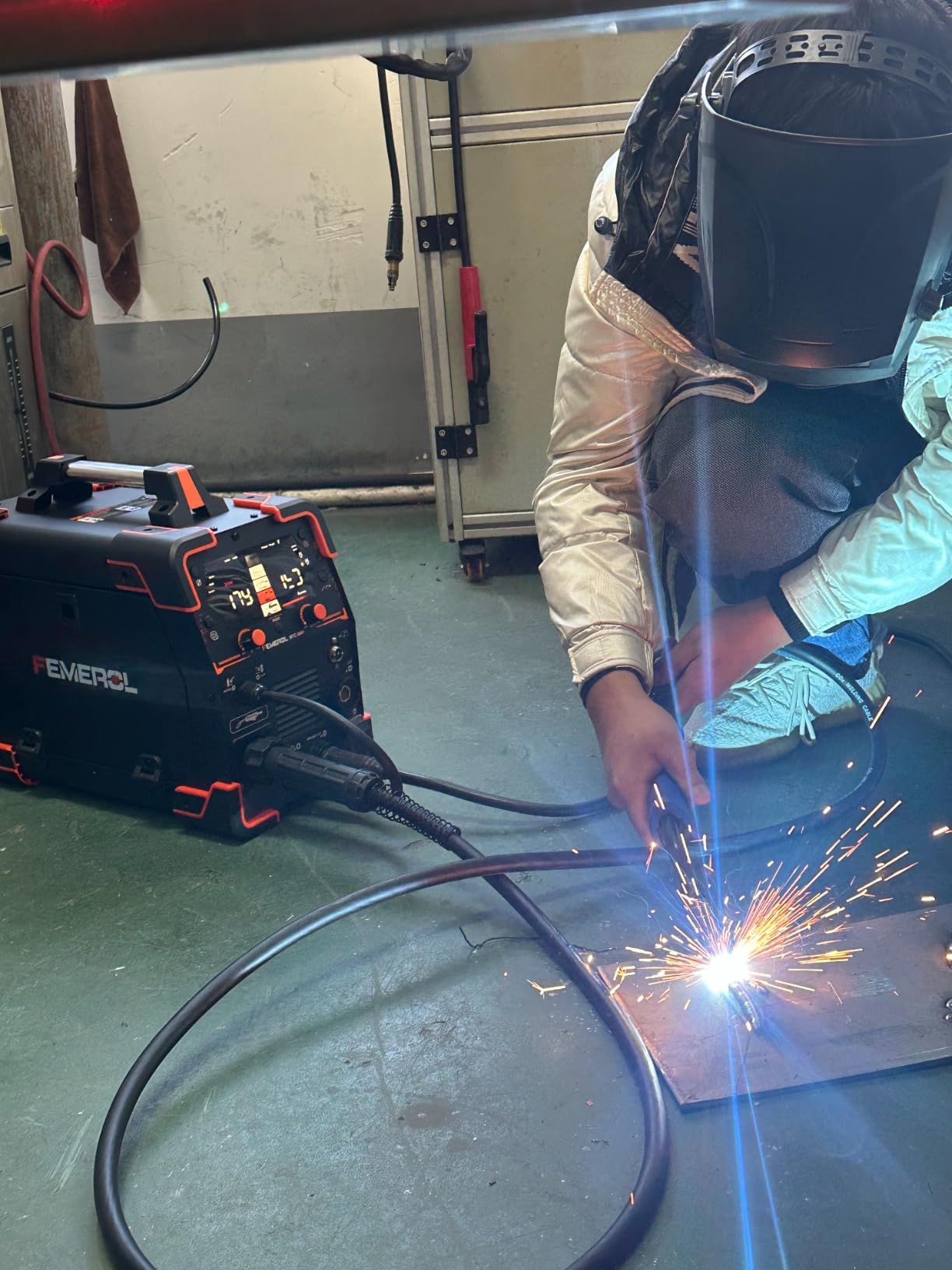
Owners report clean cuts and stable arc initiation when the machine works as intended, and one reviewer laid beads for 10 hours without trouble. At 42 lb it is a fixed-shop machine.
Why a Plasma Cutting MIG Machine Earns Space in a Garage
Prep work eats more hours than welding in most home shops. Having plate, tube and sheet cut on the same machine removes a trip to a rental shop or a trip across town with a torch and a cut-off wheel.
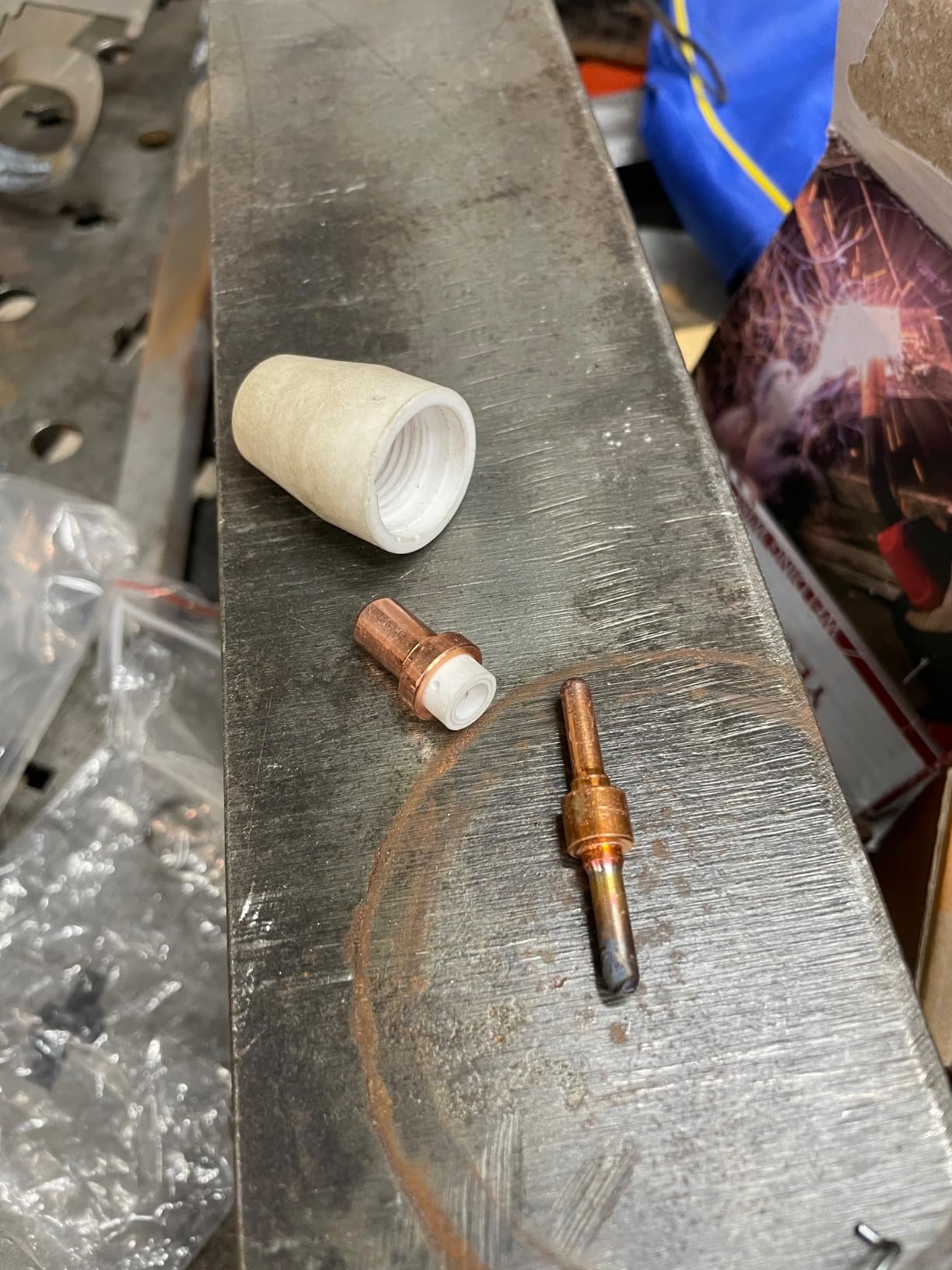
The included package is unusually complete: a 15AK MIG torch, a plasma cutting torch with consumables, an air filter regulator, a TIG torch with consumables, gas hose, ground clamp, electrode holder, Teflon liner and the 110V to 220V adapter.
Where the FEMEROL Falls Short
The most serious complaint group is about control behavior. Reviewers report amperage and voltage scales jumping between adjustment ranges, and settings that cannot be repeated reliably between sessions. On a machine where you are blending between cutting and welding, that unpredictability is tiring.
Plasma arc start is reported as difficult on both voltages, and the gas line fitting is too small for standard argon tanks without an extra brass adapter. Some reviewers also report choppy MIG beads and heavy spatter on gas wire, so the MIG side is the weaker half of this package.
Do You Actually Need a 220V MIG Welder in a Home Shop?
You need one if you regularly weld mild steel thicker than about 5mm, or anything in quarter inch plate. A 220V machine delivers roughly twice the usable output of a 110V welder, runs cooler under load, holds a higher duty cycle and handles thick steel in a single pass.
You do not need one if your work is occasional sheet metal, and you may not be able to plug one in yet. A 220V machine is unusable without a dedicated circuit, and many home shops do not have the 50 amp breaker and NEMA 14-50R outlet for it.
Here is the short version of the 110 versus 220 decision. On 110V you are typically limited to roughly 130 amps, which suits 16 gauge and 18 gauge sheet and light square tube. On 220V you get 180 to 250 amps depending on the model, which opens up 6mm plate, quarter inch steel, trailer frames and structural work.
Forum consensus is that dual voltage is worth buying even if you only have 110V today. It means you never have to replace the machine when your shop power improves. Every dual voltage machine in this roundup does exactly that.
How Many Amps Do You Need for a 220V MIG Welder?
Most home shops need between 180 and 200 amps. Anything below 150 amps is a 110V class machine with a 220V label, and anything above 200 amps costs more money and draws more current than a residential shop usually needs.
Match the amperage to the thickest steel you plan to touch. Roughly speaking, solid wire MIG wants about 1 amp per thousandth of an inch of material thickness on a single pass, so 1/8 inch steel sits near 130 amps and quarter inch plate sits near 250 amps.
For a home shop welding 16 gauge to 3/16 inch mild steel on a mix of gas and flux core, the 180 to 205 amp machines in this roundup cover the range without straining a residential circuit.
Watch the duty cycle figure at a stated amperage rather than the headline number. A machine rated 200 amps at 30 percent duty cycle welds for three minutes out of every ten at full output. A 60 percent machine at the same amperage welds for six. That difference decides whether you finish a gate in one session or two.
Gas MIG vs Gasless Flux Core for a Home Shop
Solid wire with an argon and CO2 mix gives the cleanest, lowest-spatter welds indoors, which is why it is the default for garage work. Gasless flux core welds without a cylinder, which is why it wins outdoors and on a farm.
A home shop that only ever welds inside does not need a gas cylinder, a regulator or a gas storage bracket. It does need a machine that runs flux core cleanly, because the gasless process is what you will reach for on a windy day or an outdoor repair.
Beginners should know that gasless wire is more forgiving in position but produces more spatter to clean up. If you are working inside on visible surfaces, plan for chipping and grinding time.
How to Set Up a Dedicated 220V Circuit in Your Garage
No competitor in this space covers this, and it is the most common reason a 220V machine sits unplugged in a home shop. Here is the sequence.
Run a double pole 50 amp breaker on a dedicated circuit. Do not share it with a table saw, welder, or the garage door opener.
Install a NEMA 14-50R outlet, ideally within about 6 feet of where the welder sits, so you are not relying on a 25 foot cord to reach the panel.
Use 10 AWG or 8 AWG copper conductors on that circuit and keep the run short. Long cord runs and undersized wire both cost you arc stability.
If your panel has no room, install a small subpanel in the garage and feed it from the main panel.
Have a licensed electrician confirm the work and the breaker size for your machine’s input current and duty cycle.
Extension cords are where setups fail. Welding machines need a heavy gauge cord rated for the machine’s amperage, and a household extension cord is a fire risk. If you must use one, match the cord gauge to the input current and keep it as short as possible.
Buying Advice for the Best 220V MIG Welders for Home Shops
Read the duty cycle at a stated amperage. Marketing says heavy duty without numbers. A useful spec says something like 30 percent at 180 amps, which you can translate into about three minutes of welding per ten-minute cycle.
Check the cable construction. Pure copper ground clamps and torch cables transfer current better than copper-clad aluminum, which runs hot, degrades fast and destabilizes the arc. This is the single most repeated recommendation from experienced forum users, and several of the machines above ship with thin cables that owners replace.
Decide about aluminum now. Aluminum needs a spool gun, and spool guns cost real money as a later purchase. The PrimeWeld MIG180 includes one. The others need a separate buy plus an argon mix and a machine that is spool gun ready.
Value synergic control. It matches voltage to wire feed speed automatically, which removes the most common beginner failure. Every machine here has some version of it, though the ANDELI and Bestarc read wire feed in amps, which confuses US users.
Count on parts and support. US-based service and standard Tweco consumables mean a replacement drive roller arrives before your project stalls. That advantage is real and it is why the PrimeWeld commands the following it does.
Budget for the extras. Shielding gas and regulator, a true-color sensor helmet, welding gloves, contact tips, a spool gun if you want aluminum, and a cart. These are what separate a machine in the box from a working home shop.
Frequently Asked Questions
What is the best 220v MIG welder for home use?
The YESWELDER MIG-205DS PRO is our top pick for a home shop. It delivers 200 amps on 220V, runs five processes including spool gun aluminum MIG, lift TIG and stick, and pairs a synergic wire feed with a digital current display. At 37.5 lb it is heavy enough to feel solid but still easy for one person to move around a garage.
Is it better to weld with 110 or 220?
Weld on 220V whenever your material demands it. A 110V machine typically tops out near 130 amps, which suits 16 and 18 gauge sheet and light tube. A 220V machine gives roughly double the usable output, so 6mm plate, quarter inch steel and structural work become single-pass jobs. Buy dual voltage if you can, so you have both options in one box.
How many amps do I need for a 220v welder?
Between 180 and 200 amps covers almost every home shop. Solid wire MIG needs roughly 1 amp per thousandth of an inch of thickness on a single pass, so 1/8 inch steel sits near 130 amps and quarter inch plate near 250 amps. Below 150 amps you are in the 110V class, and above 200 amps you pay for capacity most home shops never use.
Is there a 220 volt MIG welder that uses gas?
Most of them do. Gas MIG with solid wire and an argon or CO2 mix gives the cleanest indoor welds, and every machine in this roundup runs it except the flux core focused HITBOX. Buying gasless flux core capability alongside gas MIG is the right call, because gasless is what you want outdoors or in wind where shielding gas is impractical.
What size breaker do I need for a 220V MIG welder?
Plan on a dedicated double pole 50 amp breaker with a NEMA 14-50R outlet on 10 AWG or 8 AWG copper conductors. Do not share that circuit with a table saw, another welder or the garage door opener. Keep the outlet close to the welder and use a heavy gauge welding cord rather than a household extension cord.
Final Verdict for the Best 220V MIG Welders for Home Shops
The YESWELDER MIG-205DS PRO takes the crown for most home shops, with 200 amps of real 220V output, five processes and the widest owner feedback in the group. Upgrade the torch and replace the manual before you start.
Choose the ARCCAPTAIN MIG200 if feature count and stored settings matter to you, the Bestarc MIG145 if you are learning and want forgiving synergic control, the PrimeWeld MIG180 if aluminum is in your project list, the ANDELI if your work is thin sheet, and the HITBOX if you need to carry the machine to the job.
Whatever you pick, confirm the dedicated 220V circuit first. More machines go unused in home shops for want of an outlet than for want of amperage.