
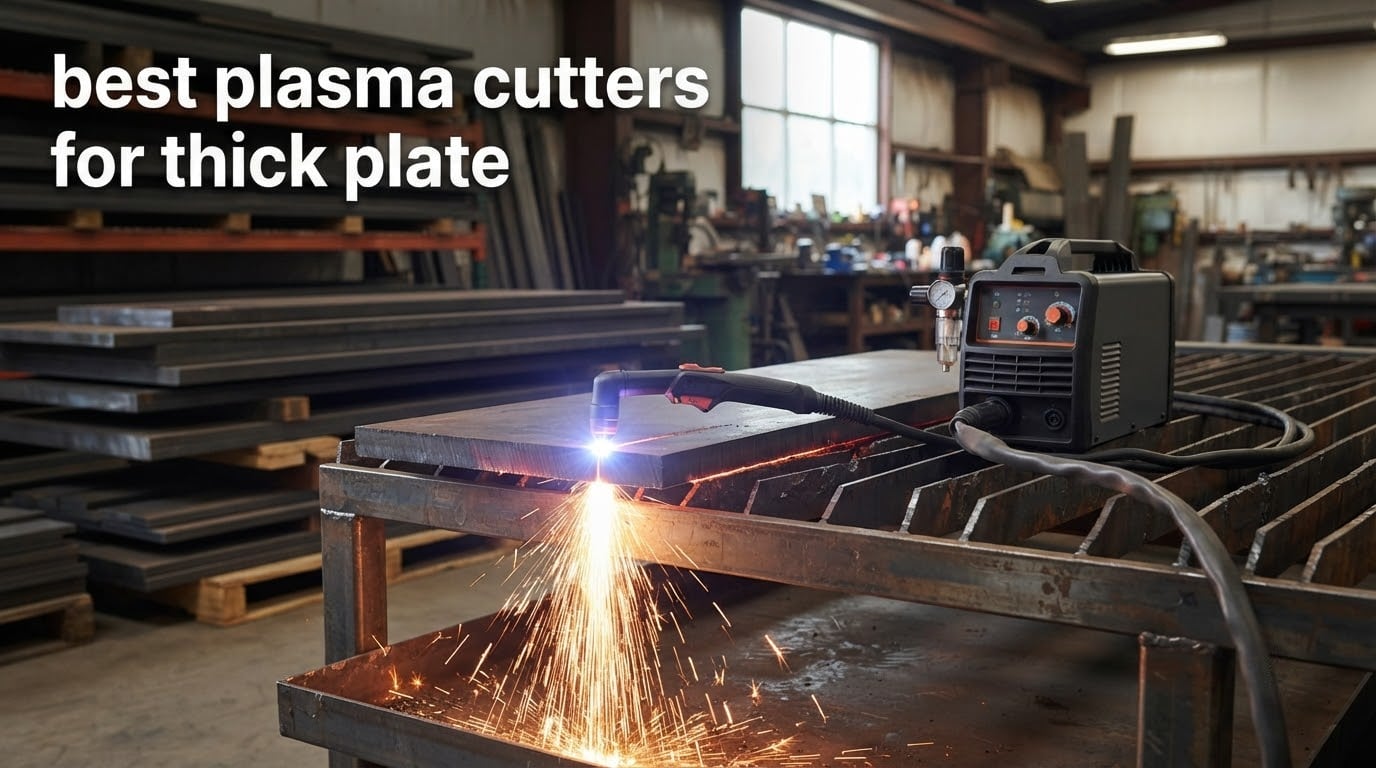
If you want one machine that answers the question of the best plasma cutters for thick plate, the LOTOS LTP5505D leads this roundup with a 55 amp inverter, a rated 5/8 inch clean cut and 2400 owner reviews behind it. Plenty of budget cutters advertise a big severance number on the box, but the number that matters on a thick plate job is the clean cut rating at the amperage you can actually feed it.
Thick plate means different things to different shops. To a farm or ranch operator it might be 1/4 inch hay ring material. To a structural fabricator it is 1/2 inch plate, while a demolition crew or a shipbuilding outfit lives in 1 inch and heavier material. The machines below cover that whole range, from 50 amp cutters that handle half-inch mild steel cleanly to a 60 amp cutter rated for a 60 percent duty cycle at full output.
Choosing between them comes down to a data question: which one is rated for the plate thickness you actually cut, and whether your circuit and compressor can support it. What surprised us most is how much of the marketing is noise. A 2/3 inch maximum cut figure is a severance number, and severing 2/3 inch is not the same as moving through it at a travel speed you can use. Every recommendation here is weighted toward clean cut capacity, pierce reliability on heavy material, and the air and power requirements you will actually have to satisfy.
We also broke down the buyer questions we see asked over and over: how many CFM of air a given machine wants, what breaker you need, and whether to edge start or pierce start on plate over 1/2 inch.
If you are still narrowing the field for lighter material, our guide to the best plasma cutters for metal fabrication covers thin-gauge and sheet work, while our best plasma cutters for home shops roundup focuses on small shops working to reclaimed vehicle metal.
Table of Contents
Top 3 Picks: Best Plasma Cutters for Thick Plate (October 2026)

LOTOS LTP5505D 55A
- 55A inverter
- 5/8 inch clean cut
- dual 110V/220V
- non-touch pilot arc
- rust removal mode
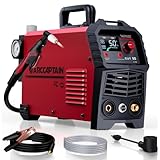
ARCCAPTAIN CUT50 50A
- 50A output
- 1/2 inch clean cut
- LED parameter display
- 13 lb body
- 2T/4T modes
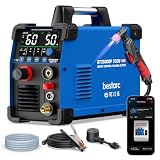
bestarc BTC500DP 50A
- 2/3 inch maximum cut
- Bluetooth remote to 98 ft
- air pressure sensor
- IGBT inverter
- 15.2 lb body
The LOTOS wins on evidence: it carries the largest review base in the roundup and a 5/8 inch clean cut rating in the 55 amp class. If your shop runs mostly half-inch plate, the ARCCAPTAIN CUT50 gives you a clear parameter display and a 13 pound body, and if you are working across a big laydown area the bestarc BTC500DP lets you change output without walking back to the panel.
Best Plasma Cutters for Thick Plate Compared Side by Side
| Product | Specifications | Action |
|---|---|---|
| LOTOS LTP5505D 55A Pilot Arc |
|
Check Latest Price |
| ARCCAPTAIN 50A Dual Voltage |
|
Check Latest Price |
| bestarc BTC500DP 50A IGBT |
|
Check Latest Price |
 TOOLIOM CUT-50 PRO 50A TOOLIOM CUT-50 PRO 50A |
|
Check Latest Price |
 YESWELDER CUT-65DS 60A YESWELDER CUT-65DS 60A |
|
Check Latest Price |
 PrimeWeld CUT50D 50A PrimeWeld CUT50D 50A |
|
Check Latest Price |
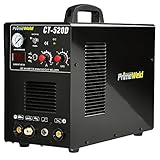 PrimeWeld CT520D 3-in-1 Combo PrimeWeld CT520D 3-in-1 Combo |
|
Check Latest Price |
 ARCCAPTAIN CUT55 Pro 55A ARCCAPTAIN CUT55 Pro 55A |
|
Check Latest Price |
 PrimeWeld CUT60 60A PrimeWeld CUT60 60A |
|
Check Latest Price |
 SILATU STC650P 65A SILATU STC650P 65A |
|
Check Latest Price |
1. LOTOS LTP5505D 55A – Best Plasma Cutter for Thick Plate Overall
LOTOS LTP5505D 55A Pilot Arc Plasma Cutter with Rust Removal Mode
55 amps output
5/8 inch clean cut
110V/220V auto-sensing
Non-touch pilot arc
16 lb
Pros
- Punches through 1/2 inch steel easily once dialed in
- Pilot arc starts without touching the work
- Light 16 pound body moves easily
- Automatic dual voltage works on both circuits
Cons
- Ground clamp lead is short and does not lock positively
- Air fittings at the regulator can be loose out of the box
- Consumable tips and electrodes wear relatively quickly
- Thin documentation on air pressure by thickness
We picked the LTP5505D as the best all-round thick-plate cutter because its 5/8 inch clean cut rating is unusual in a machine this size. Other 55 amp machines tend to quote a 1/2 inch clean figure and a 3/4 inch severance headline. This one cuts 1/2 inch steel with a normal travel speed rather than a crawl, which is the difference between a productive afternoon and a frustrating one.
The rust removal mode is the feature we did not expect to care about. It adjusts the arc behavior for scaled surface metal, and on painted or weathered plate it saves you from grinding the surface back to bright metal first. The non-touch pilot arc also means you can start through expanded metal without touching the work, which extends tip life compared with contact-start torches.
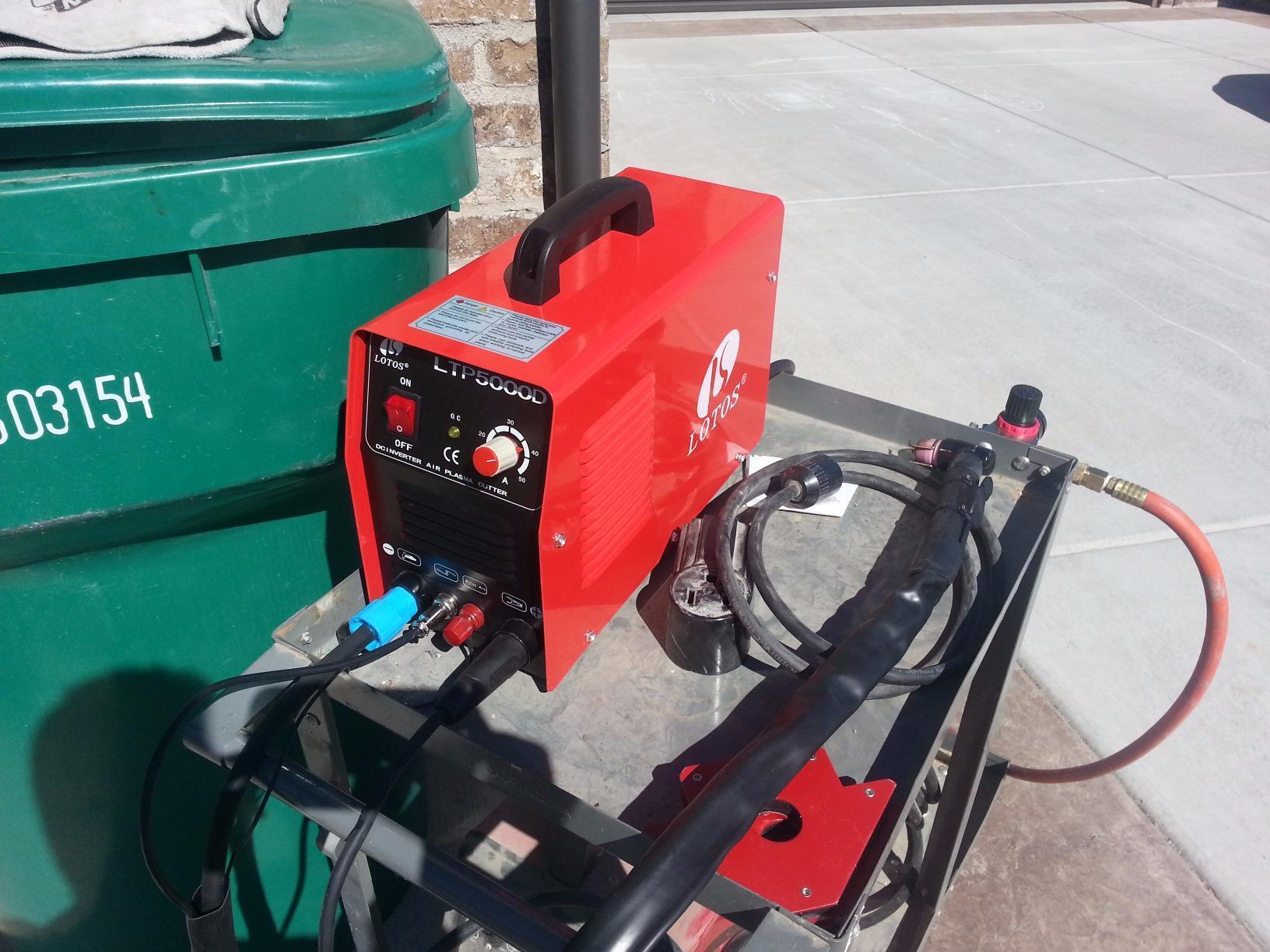
Owners consistently describe this machine as performing like machines costing far more than it does, and the 5 star share of 72 percent supports that. Cut quality on 1/4 inch is clean, and 1/2 inch comes through with slower travel. The recurring complaints are mechanical rather than electrical: a short ground lead, air fittings that may need extra sealing, and consumables that need replacing sooner than you would like.
The one practical upgrade we would make immediately is the ground clamp. A ground lead shorter than the torch lead is annoying on a full sheet of plate because you spend the walk back to the machine every few cuts. Everything else about the package, including the front-mounted regulator with a pre-fitted NPT quarter-inch Type-D plug, gets you cutting quickly.
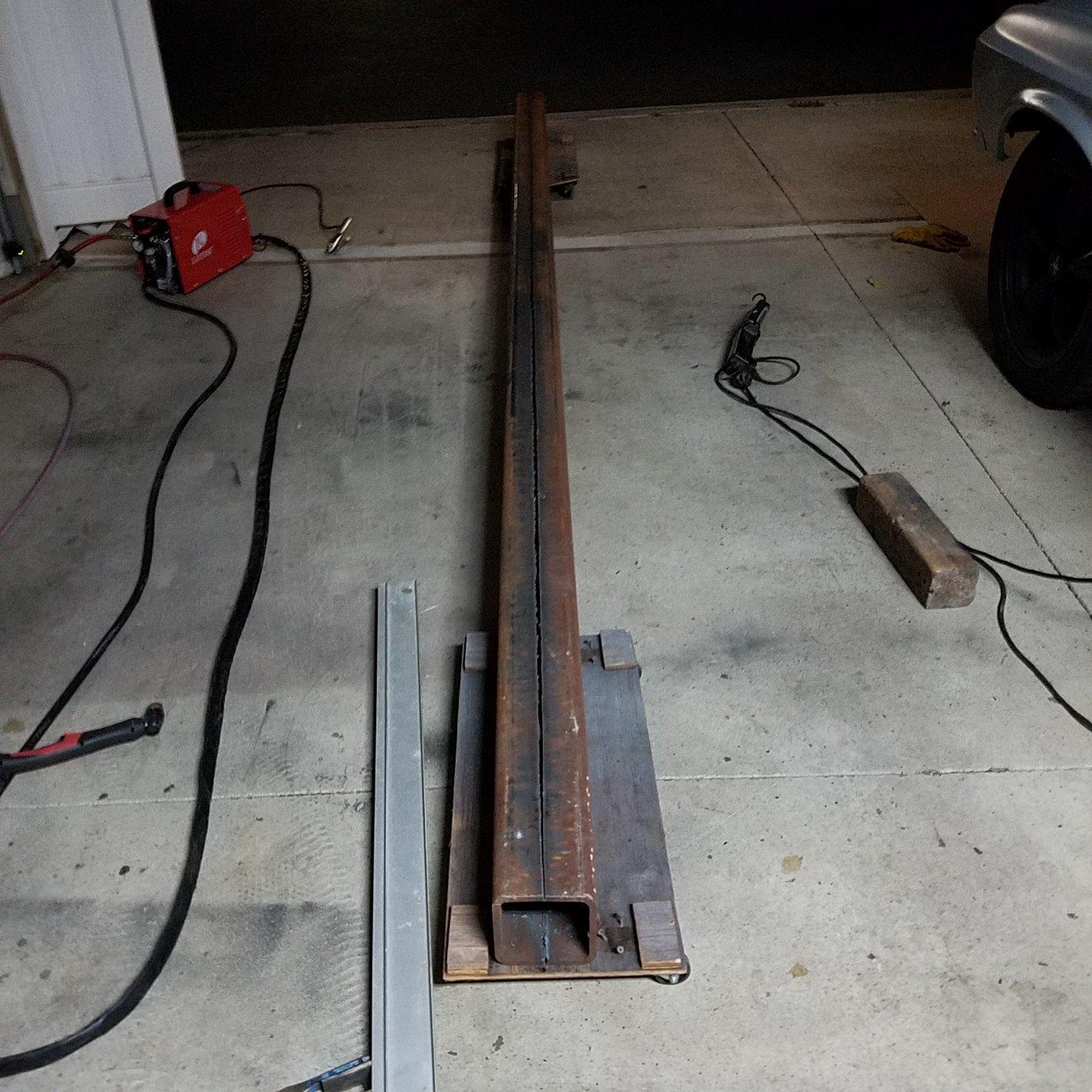
Why this is the best pick for 1/2 inch plate jobs
The 5/8 inch clean cut rating means you can run 1/2 inch plate at a sensible travel speed and still get a square edge with minimal backside dross. That is the workload most shops cut most often, and it is where a 50 amp machine starts to labor.
At 16 pounds it is also light enough to move between a truck bed and a welding cart without begging for help. For a farm, ranch or mobile repair operation that is worth more than a larger machine you leave behind.
Where the LTP5505D falls short for heavy work
This is a 55 amp machine, not an 85 amp or 100 amp unit. If your thick-plate work regularly runs past 3/4 inch or you cut continuous structural sections, you will spend time multi-passing that the higher-amp machines handle in one go.
Consumable wear is the running cost buyers notice most. Tip and electrode life on sustained plate work runs shorter than on the blow-back machines in this group, so budget for replacement kits rather than treating the starter set as permanent.
2. ARCCAPTAIN CUT50 50A – Best Value Plasma Cutter for Thick Plate
ARCCAPTAIN 50A Plasma Cutter Machine, 110V/220V Dual Voltage, 2/3″ Max Cut
50 amps output
1/2 inch clean cut
18 mm maximum
LED display
13 lb
Pros
- Cuts 1/2 inch and thicker steel with minimal dross on 220V
- 13 pound body with shoulder strap moves to job sites
- LED screen and error codes simplify setup
- Consumables held up over heavy cutting sessions
Cons
- Some machines arrive with a hard-line air fitting instead of a quick connect
- A minority of owners report inconsistent arc that starts and stops
- Finishing quality on thicker material is average next to higher-end machines
- No laminated amperage and PSI reference chart included
The CUT50 is the machine we recommend to someone whose thick-plate work is real but not relentless. Output peaks at 50 amps, delivering a 1/2 inch clean cut and an 18 mm maximum at full power on 220V with 75 PSI of air. In practice owners report it handles half-inch and a bit beyond cleanly, with dross increasing as the thickness climbs.
What separates it from the other 50 amp machines here is the control interface. The LED screen shows live voltage, current and error codes, so when a cut goes wrong you have a number to read instead of a guess. Adjustable post-flow from 5 to 15 seconds plus 2T and 4T cutting modes give you the trigger behavior you want for marking, gouging or chained cuts.
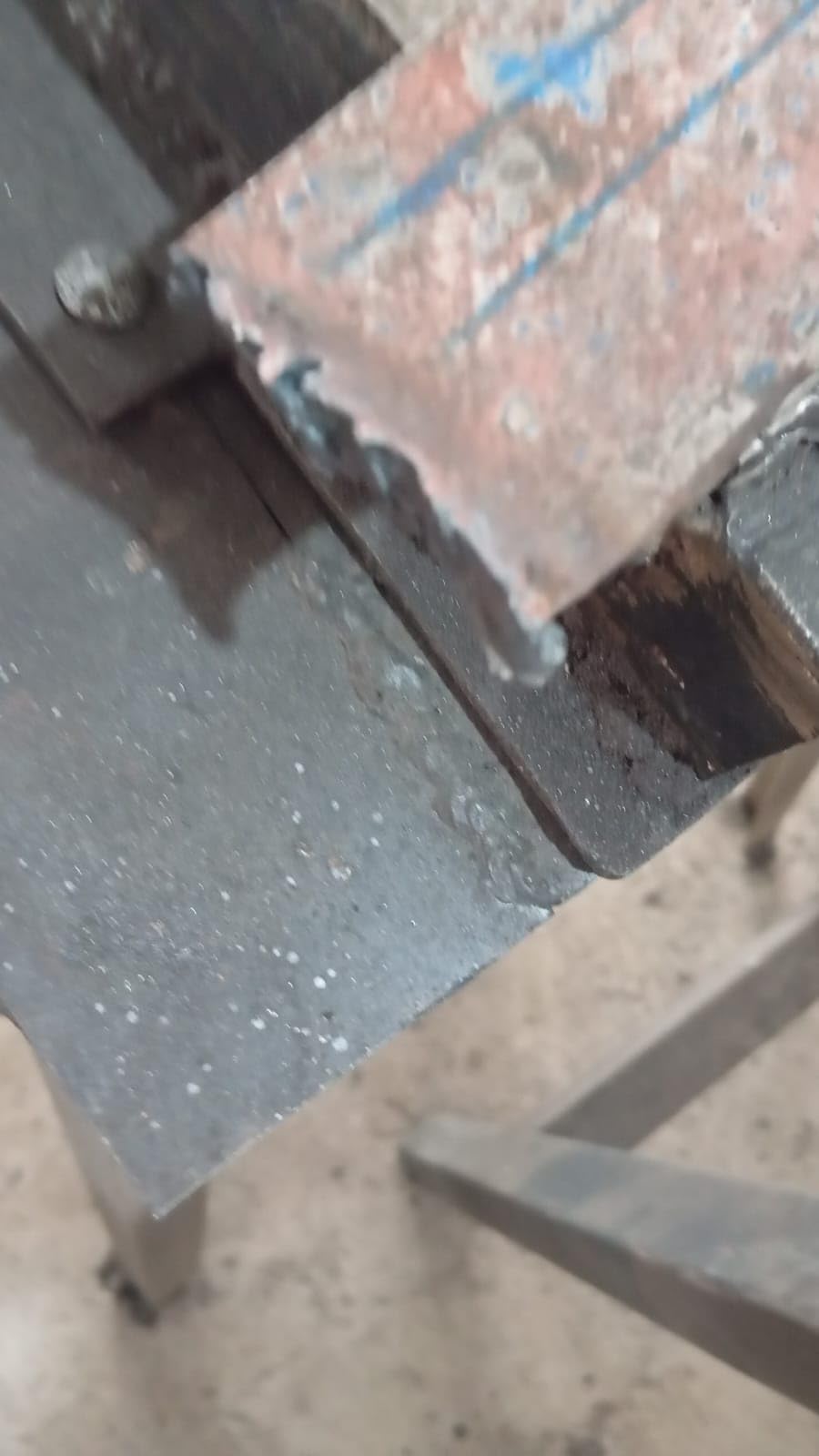
Weight is the quiet win. At 13 pounds with a shoulder strap, this is one of the few machines in the roundup you can carry up a ladder or across a jobsite without a cart. Built-in regulator, gauge and quick connect mean no extra plumbing before the first cut.
The 79 percent five-star share is strong, and the complaints that come with it are mostly first-run details. Some machines arrive with a hard-line fitting instead of the quick connect you would prefer, and a small number of owners report an arc that starts and stops. Finish on thicker material is described as average next to the cleaner cuts from the higher-amp machines.
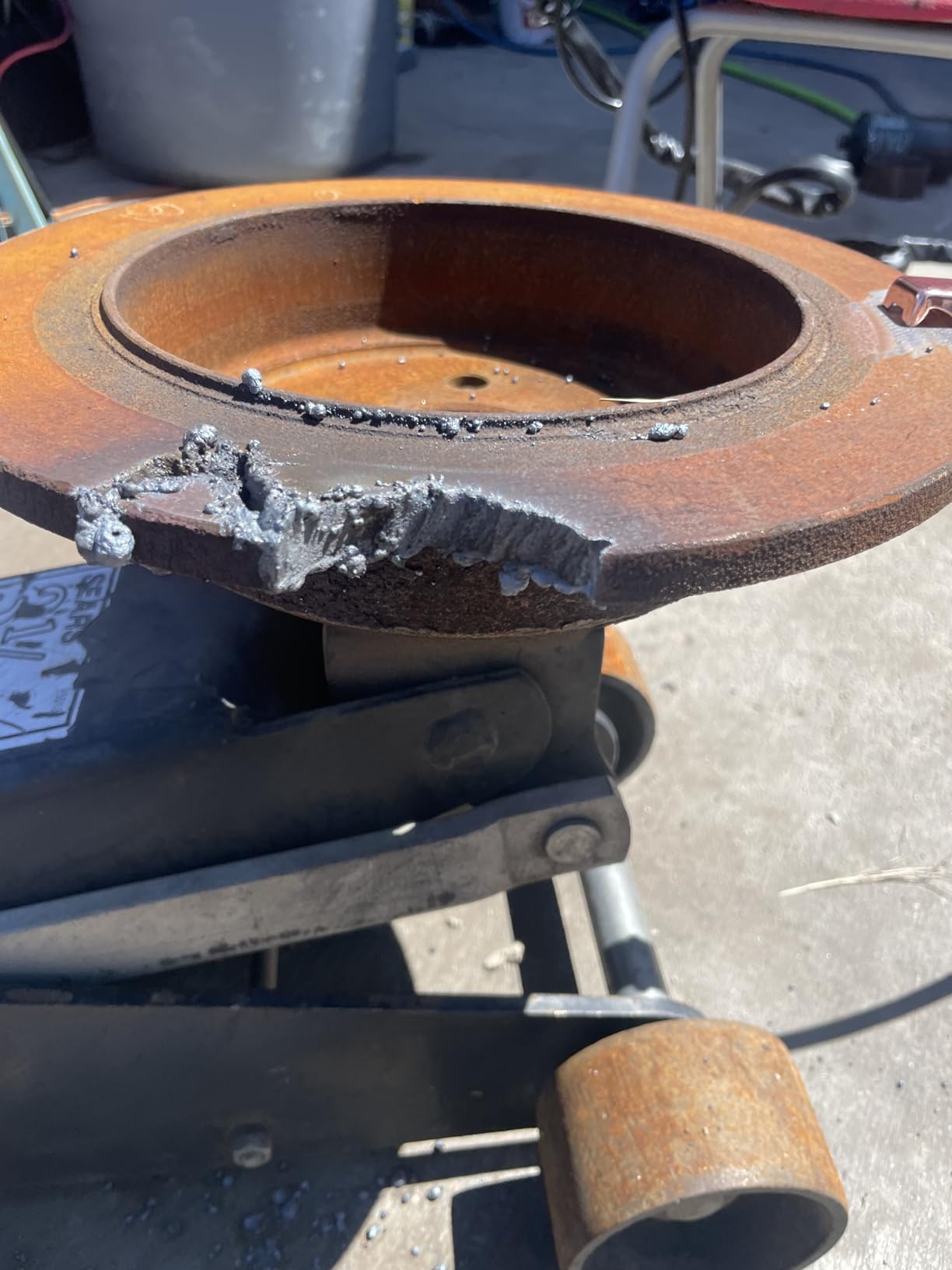
Where the CUT50 handles thick plate well
Half-inch mild steel is this machine’s sweet spot. Owners cutting 1/2 inch report a smooth edge and modest dross with the amperage and travel speed dialed in properly, and the 220V setting is where the output is available.
It also handles expanded metal and mesh well thanks to the non-touch start, which matters for farm, demolition and HVAC work where material is rarely clean.
Where it will frustrate you
Run it on 110V and the 50 amp output is not available; the range drops to roughly 20 to 35 amps. Buyers expecting the advertised maximum on a household circuit are disappointed, and we would plan this machine around a 220V outlet.
For continuous plate work in the 3/4 inch range or heavier, the 50 amp ceiling means slow travel and more consumable wear. In that case move up an amperage tier rather than fighting the machine.
3. bestarc BTC500DP 50A – Best App-Controlled Plasma Cutter for Thick Plate
Bestarc Plasma Cutter Machine, Pilot Arc, 50A IGBT 110V 220V Dual Voltage
50 amps output
2/3 inch at 50A on 220V
Bluetooth to 98 ft
IGBT inverter
15.2 lb
Pros
- Cuts 3/8 and 1/2 inch plate cleanly with clear settings
- Pilot arc starts on rusted and painted material without prep
- Air pressure sensor and LED screen remove setup guesswork
- Compact 15 pound body fits on a welding cart
Cons
- Ground and torch leads are thin and short for large workpieces
- Included air line and fittings swell with use and get upgraded
- Air regulator on some machines failed after moderate use
- Needs roughly 4 CFM or more for consistent thick plate cuts
The bestarc BTC500DP has the longest remote control range in this roundup, with Bluetooth control up to 98 feet away. On a big plate where the cut line takes you to the far side of the table, that is a genuine convenience rather than a gimmick: you can change amperage and post-flow without walking back.
For thick plate the important number is the 2/3 inch capacity at 50 amps on 220V with 65 PSI, with 1/2 inch achievable at 35 amps on 110V at 50 PSI. Owners confirm 3/8 and 1/2 inch cut cleanly once air pressure and travel speed are set, and the built-in air pressure sensor plus metal air filter keep the setup repeatable.
The recommended breaker is up to 40 amps on 110V and up to 30 amps on 220V, which is easier to accommodate than most 50 amp machines. Post-flow cooling adjusts from 3 to 15 seconds, and both 2T and 4T modes are available, with a pilot arc time adjustable to 15 seconds for awkward starts.
Reviewers treat this as strong value in the 50 amp class, and the criticism lands on accessories rather than performance. The leads are thin and short, the supplied air line and fittings are lightweight and tend to swell with use, and some owners replaced the regulator after moderate service. Plan on a compressor around 4 CFM or better for clean thick-plate results.
Why the app control matters on thick plate
When you are cutting 1/2 inch plate out in the middle of a yard or a large fabrication laydown area, adjusting output from 98 feet away saves repeated trips to the machine. It also makes dialing in a new thickness faster, since you can change settings between passes without walking back.
Combined with the air pressure sensor, it means fewer trial cuts on scrap and less scrap burned through while you learn the machine.
Where this plasma cutter runs out of capability
At 50 amps there is a hard ceiling. Plate at 3/4 inch and above is outside a comfortable single-pass range, and multi-pass cutting slows you down enough that the app convenience matters less.
The included leads are the bigger practical issue for full-plate work. A longer torch lead and heavier ground clamp are the first two upgrades most owners make, and a compressor in the 4 CFM range is not optional if you want clean edges on 1/2 inch.
4. TOOLIOM CUT-50 PRO 50A – Best Plasma Cutter for Thick Plate on Rusted and Painted Material
TOOLIOM 50A Non-Touch Pilot Arc Plasma Cutter, Dual Voltage 110/220V
20-50 amps
5/8 inch clean at 220V
3/4 inch maximum
AG60 torch
DC power
Pros
- Rated 5/8 inch clean and 3/4 inch maximum on 220V
- Non-touch pilot arc handles stainless alloy mild steel copper and aluminum
- Digital display tracks air pressure voltage and current in real time
- Tool-free 110V and 220V connection
Cons
- Lowest average rating in this roundup with a 12 percent one-star share
- Listed item weight of 21.6 pounds is high for a 50 amp machine
- Non-touch start wears consumable tips faster than contact-start designs
The CUT-50 PRO publishes the thick-plate numbers we like to see from a 50 amp machine: a 1/4 inch clean cut on 110V rising to 5/8 inch clean cut on 220V, with a 1/2 inch maximum on 110V and 3/4 inch maximum on 220V. Air pressure runs up to 50 PSI at 110V and 65 PSI at 220V, and the AG60 non-touch pilot arc torch handles stainless, alloy steel, mild steel, copper and aluminum.
That specification sheet matches what buyers report. They describe usable output on heavy steel, which puts this machine on the shortlist for anyone whose thick-plate work is inconsistent rather than constant. The digital display tracks air pressure, voltage and current together, which is more instrumentation than most 50 amp machines offer.
The honest caveat is the 4.1 star average, the lowest here, with 12 percent of reviews at one star. Buyers focused purely on maximum amperage report more reliability and finish complaints than they get from higher-rated alternatives, and that is worth weighing against the 5/8 inch clean cut figure.
Two other things stand out. The listed item weight is 21.6 pounds, noticeably heavier than most 50 amp competitors, even though the unit itself is quoted at 13.23 pounds in owner reports. And the non-touch pilot arc start, while convenient, consumes tips faster than a contact-start arrangement on long jobs.
When the TOOLIOM earns its place
If you cut stainless or aluminum alongside mild steel, the material list is broad and the non-touch start means no surface prep on oxidized material. The 5/8 inch clean cut rating on 220V is genuinely useful for structural work that is too heavy for a 1/2 inch machine.
The tool-free dual voltage connection is also a real convenience for mobile work, since there is no adapter to lose or miswire between a household circuit and a shop outlet.
Where you should look elsewhere
Reliability and finish consistency are the reported weak spots, and the one-star share is large enough that we would not build a production schedule around this machine. If your thick-plate work is customer-facing or deadline-driven, a higher-rated unit with a longer track record is the safer bet.
The heavier listed weight also makes it a less pleasant carry than the lightest machines in this class, which matters on job sites where the plate is not always at waist height.
5. YESWELDER CUT-65DS 60A – Best Non-High-Frequency Plasma Cutter for Thick Plate
YESWELDER 60A Non-HF Plasma Cutter, Non-Torch Pilot Arc, 110/220V
60 amps
5/8 inch clean cut at 220V
63/64 inch maximum
Non-HF blow-back start
IP21 rated
Pros
- 60 amps gives the deepest maximum cut in the dual voltage class here
- 5/8 inch clean cut at 220V suits thick plate work
- Non-HF blow-back start plays well with other shop electronics
- Digital display with error codes and built-in rear air filter
Cons
- Blow-back start is less forgiving on heavily coated or grimy material
- Shortest warranty in the roundup at one year
- Amperage gain over the 50 amp machines is modest relative to the added current draw
When your thick-plate work shares a shop with computers, CNC controls or sensitive electronics, the YESWELDER CUT-65DS is the machine we would put on that circuit. Its non-high-frequency blow-back ignition starts without the electromagnetic burst that high-frequency machines send through the air, which is a documented problem in mixed shops running plasma and CNC equipment close together.
On thick plate it delivers 5/8 inch ideal clean cut at 220V with a maximum cut of 63/64 inch, and 5/16 inch clean with a 1/2 inch maximum at 110V. Peak output power is listed at 9840 watts, and the IP21 water rating plus overload and overheat protection suit outdoor and shop environments.
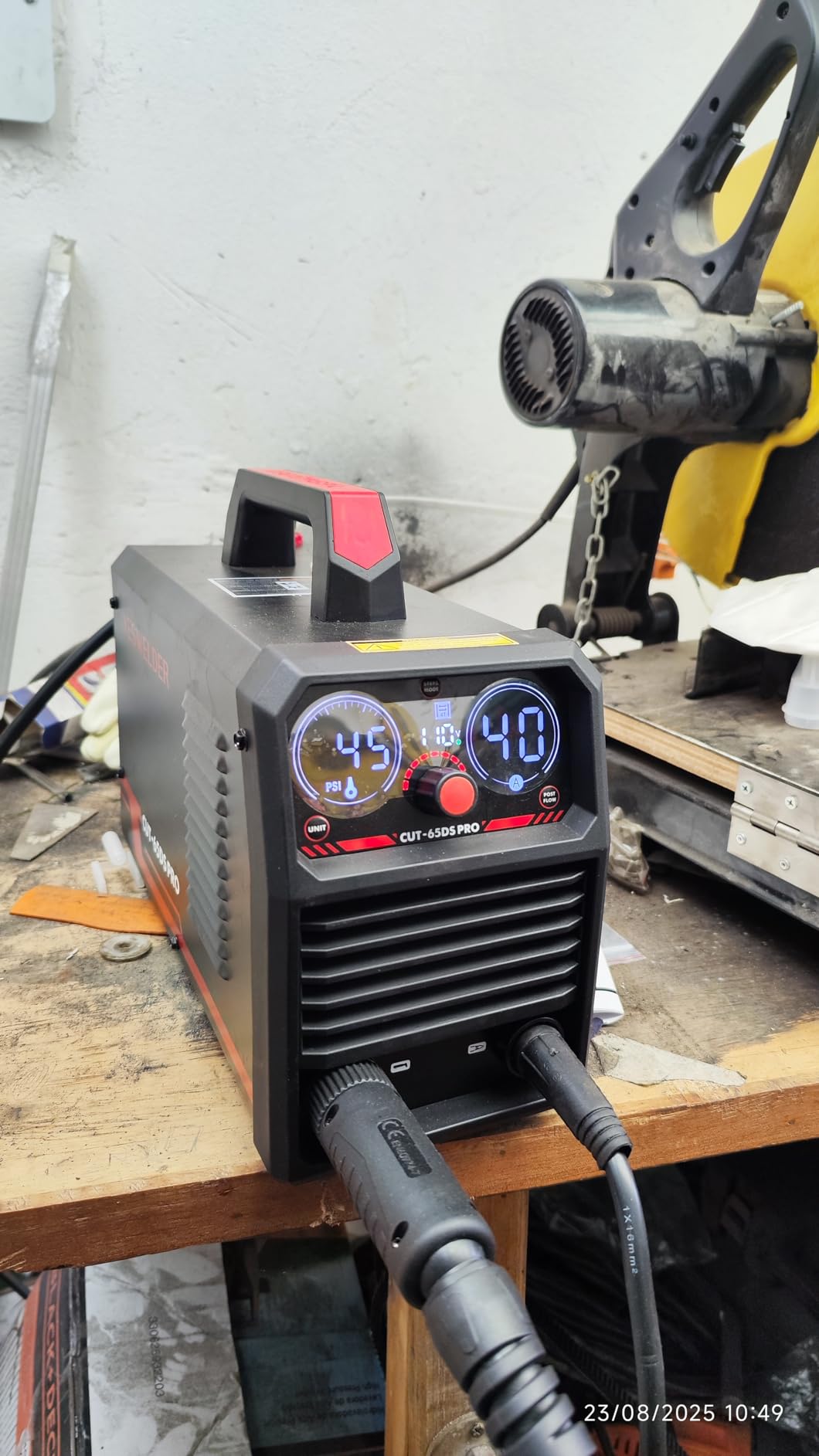
The non-touch pilot arc IPT40 torch still handles rusted and painted surfaces, and the PT, 2T and 4T functions with 5 to 20 second post-flow give you control over mark, cut and gouge behavior. The kit includes an earth leakage protection unit, air filter regulator, air hose, ground clamp, power adapter, torch and manual.
The trade-off is honesty about the ignition system. A blow-back start is less forgiving on heavily coated or grimy material than a true high-frequency pilot arc, so you will spend more time on edge preparation on rough jobs. The one-year warranty is also the shortest we found in this group, which matters more on a machine at this amperage.
Why shops with mixed electronics pick this model
High-frequency start sends a discharge through the air that interferes with nearby controls. If your shop already runs a CNC table, a computer-driven camera or a sensitive power supply, removing that ignition style removes a whole category of troubleshooting.
For any of our other best CNC plasma tables for metal fabrication picks, pairing the table with a non-HF machine like this is the low-risk configuration.
Where the CUT-65DS is not the answer
If your thick-plate work is heavily scaled, painted or dirty, the blow-back start asks for more preparation than a high-frequency non-touch pilot arc would. That extra cleanup time can erase the advantage on short production runs.
The one-year warranty is also the shortest in the roundup, and at 60 amps the jump over a 50 amp machine is modest unless you are regularly working past half-inch plate.
6. PrimeWeld CUT50D 50A – Best Supported Plasma Cutter for Thick Plate
PrimeWeld 50A Air Inverter Plasma Cutter, Portable Plasma Cutting Machine, Premium and Rugged Plasma Cutter Kit, Automatic Dual Voltage 110V/220V AC with Plasma Torch, 1/2″ Clean Cut, CUT50D
50 amps
1/2 inch clean cut
Automatic 110V/220V AC
AG60 torch
Pre-plumbed air panel
Pros
- Cuts cleanly through 1/2 inch cold rolled and 3/8 inch mild steel
- Rated 4.7 stars across 668 reviews with an 80 percent five-star share
- US-based support refurbishes and returns machines under warranty
- Pre-plumbed fittings and included adapter cut setup time
Cons
- Manual is widely described as unclear so buyers rely on setup videos
- Power cord is short and some machines had air leaks at fittings
- Accessories cost more than on cheaper imported competitors
The CUT50D stands apart for a reason that has nothing to do with amperage: after-sales service. Buyers describe the seller covering return shipping and refurbishing machines with new guns and consumables under warranty, and that is the single most underrated factor when a machine like this fails in the middle of a job.
The cutting performance backs it up. It handles 1/2 inch cold rolled steel and 3/8 inch mild steel cleanly, which is squarely the thick-plate range most shops cut weekly. Automatic dual voltage on 110V and 220V AC means one machine covers a home circuit and a shop outlet without a manual switch.
Air is pre-plumbed on the back panel with a brass quick connect, the air filter and regulator are pre-installed, and both a 220V cord and a 220V to 120V adapter are included. Newer builds use a Hobart-compatible 6-50P style plug, which matters if you already own Hobart equipment and want one air fitting for the whole shop.
The AG60 torch with trigger guard is a standard platform, so consumables are easy to source. The 4.7 star average with an 80 percent five-star share puts it near the top of the dedicated cutters here, and the complaints cluster around documentation and cord length rather than cut quality.
Why support quality changes the buying decision
A plasma cutter is a consumable-driven machine with a torch, a control board and an air path. When something fails, knowing that a US-based team will refurbish and return the unit changes the risk calculation compared with an unbranded import with unclear warranty handling.
For a shop cutting thick plate to order, that reliability of support is often worth more than a small difference in cut speed between two machines in the same amperage class.
Where the CUT50D is limited
It is a 50 amp machine with a 1/2 inch clean cut rating. If your work regularly runs past that, you will be multi-passing plate that a 60 amp machine would take in one go.
The unclear manual is a genuine annoyance for first-time buyers, and the short power cord limits where you can set the machine in a large shop. Accessories and consumables also carry a higher price than on the cheaper imports.
7. PrimeWeld CT520D – Best 3-in-1 Combo for Thick Plate Welding Work
PrimeWeld 3-in-1 50 Amp Plasma Cutter, 200 Amp TIG Welder and 200 Amp Stick Welder – Welding and Cutting Combo, Mobile Welding Machine, Portable Plasma Cutter, Multipurpose Welder and Cutter, CT-520D
50A plasma output
200A TIG and 200A stick
60 percent duty cycle
3-year warranty
Pros
- Plasma section handled 7/16 inch flat bar and 1/2 inch mild steel on 220V
- Bundles 200 amp stick and TIG with the cutter in one box
- Front-mounted PSI gauge on heavy gauge leads simplifies setup
- Three-year warranty with US-based parts and service
Cons
- Documentation is vague for first-time users so setup videos are needed
- Ground clamp lead is shorter than the plasma lead
- Arrives with an L6-30 plug so an adapter is needed for 110V testing
- 50A plasma output is the lowest here against dedicated 55A to 65A cutters
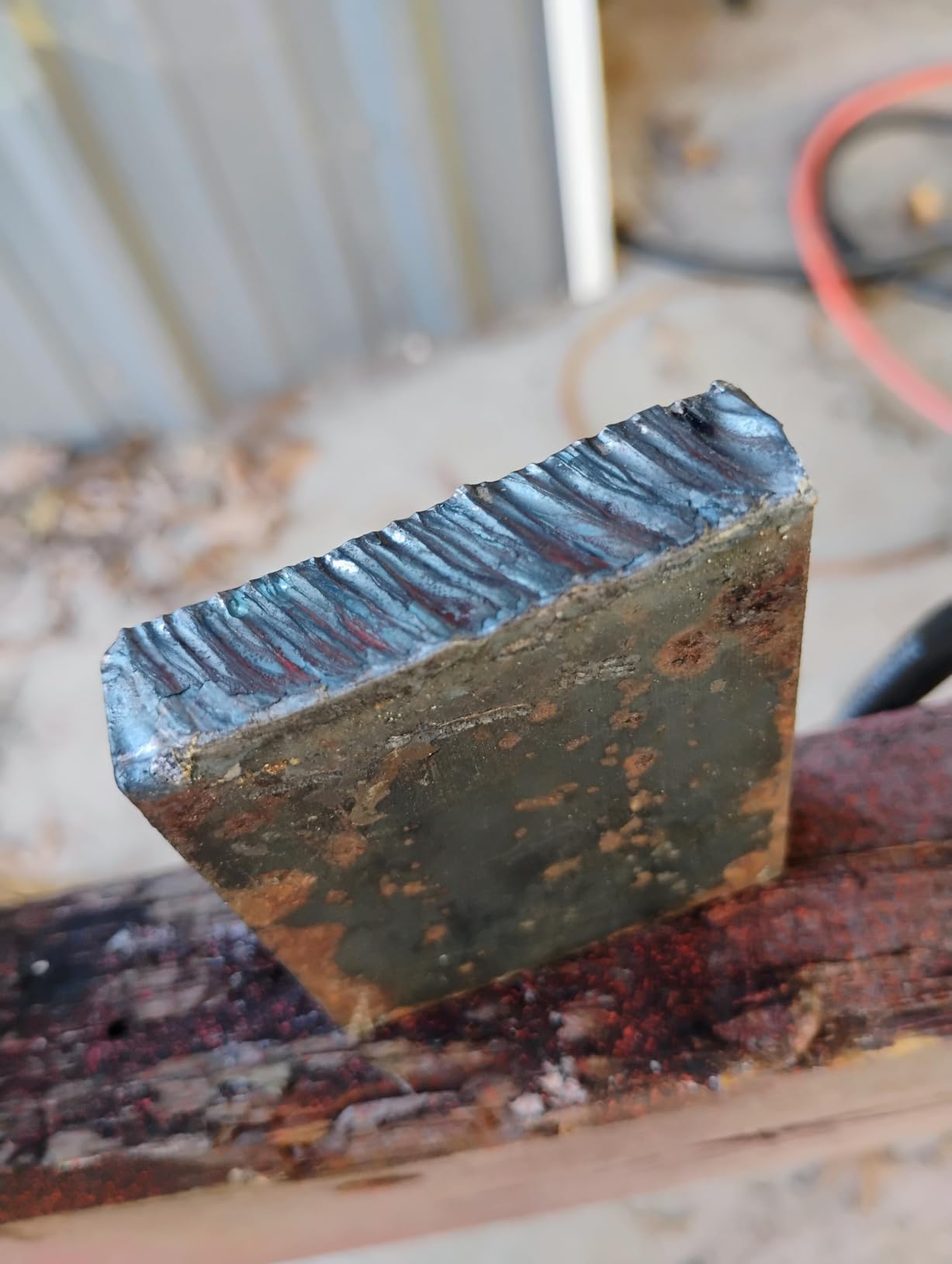
The CT520D answers a different question than the other machines here: what if you want to cut thick plate and weld in one box. The plasma section is 50 amps and cuts up to 1/2 inch, and owners report it blasted through 7/16 inch flat bar and 1/2 inch mild steel on 220V without drama.
Alongside it you get 200 amp DC TIG and 200 amp stick, with a 60 percent duty cycle at maximum amps across all three processes and 85 percent power efficiency. For a shop doing fabrication rather than pure cutting, that is one enclosure covering the bundle of cutting, TIG and stick functions.

The TIG function handles magnesium and stainless steel, the stick function is what most owners report using daily, and the plasma section also cuts cast iron and copper. USA-based parts and customer service run seven days a week, with a three-year warranty behind it.
Owners treat it as a value-packed multipurpose box, and the complaints are practical details: vague documentation that makes setup videos effectively mandatory, a ground lead shorter than the plasma lead, and an L6-30 plug that needs an adapter before you can test it on a household circuit. At 32 pounds it wants a cart.
Who should buy a combo box for thick plate
If your work includes gouging out a bad weld, tack-up on plate and final TIG or stick finishing, this machine covers all three in one enclosure. The 200 amp TIG and stick outputs are the real draw, since dedicated welders in the same class are a separate purchase.
It also makes sense for a mobile operation where carrying one machine instead of two is worth the weight of 32 pounds on a cart.
Where the combo compromises on plate work
The plasma section is 50 amps, the lowest plasma output among the dedicated machines here. If plate cutting is your primary business rather than a supporting function, a dedicated 55 or 60 amp cutter will serve you better.
Sharing one machine also means one set of consumables and air requirements across three processes, so switching between TIG, stick and plasma has more overhead than running separate boxes.
8. ARCCAPTAIN CUT55 Pro 55A – Best Plasma Cutter for Thick Plate With Long Leads
ARCCAPTAIN iControl CUT55 Pro Plasma Cutter Machine, 55Amp, 120V/240V
55 amps
1/2 inch quality cut
3/4 inch maximum
10 ft torch and leads
ANSI certified
Pros
- 3/4 inch maximum with a 1/2 inch quality cut rating at 55 amps
- Pre-installed regulator and filter allow cutting within a minute of unboxing
- 10 foot torch air hose and earth clamp suit full-plate work
- Smart fan and cooling system reduce noise and extend machine life
Cons
- App control range is only about 10 meters which is short for app-driven machines
- Heavier at 19.46 pounds than most 50 to 55 amp portable machines
- Maximum cut is below the 63/64 inch rating on the 60 amp model
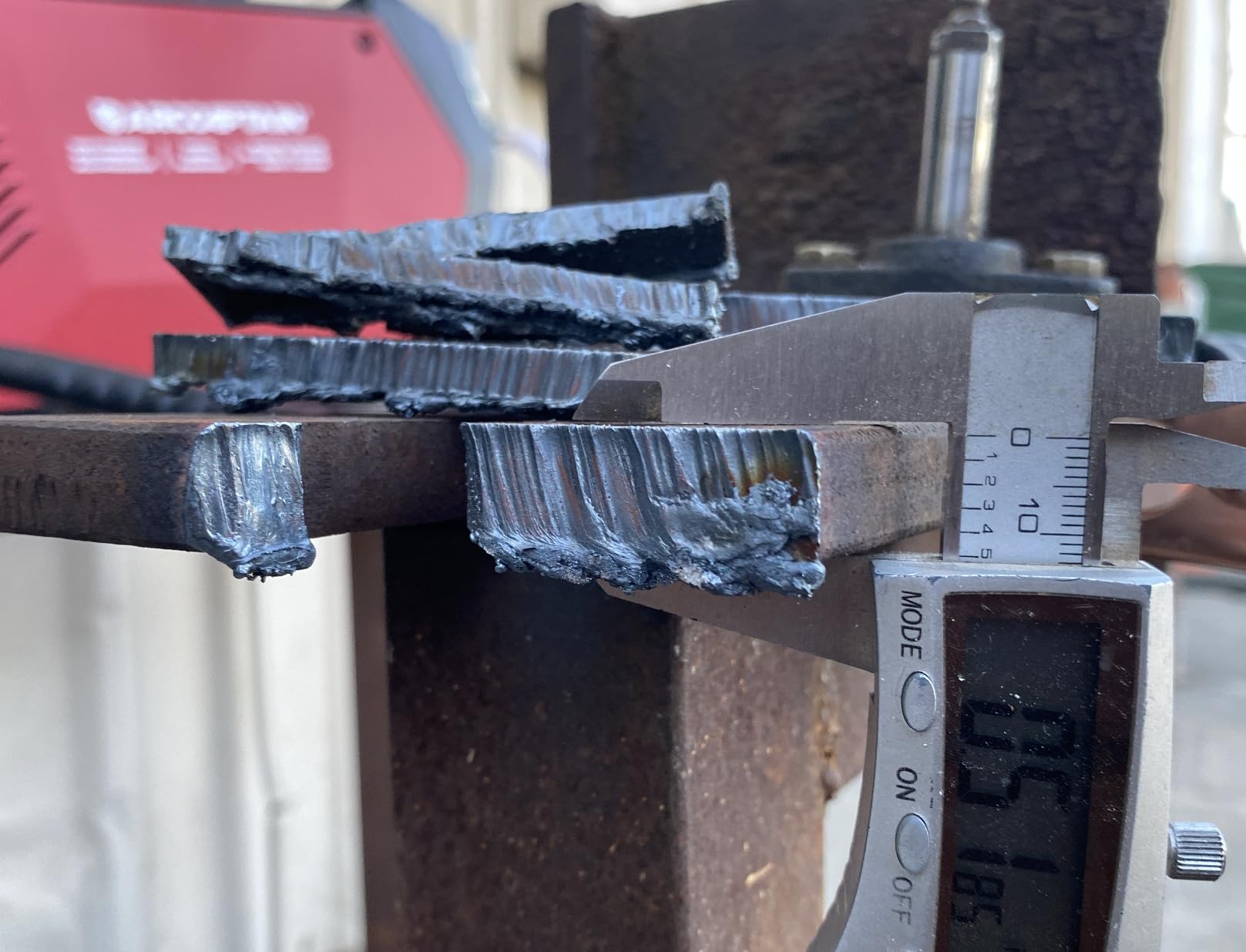
Lead length is unglamorous and it decides whether a machine is pleasant on a full sheet of plate. The CUT55 Pro includes a 10 foot cutting torch, a 10 foot air hose and a 10 foot earth clamp, which is enough reach to walk around a large workpiece without dragging the machine along with you. Most competitors in this class include much shorter runs.
Output is 55 amps with a 12 mm quality cut and a 20 mm maximum cut, and the ranges are broken into 20 to 34, 35 to 45 and 46 to 55 amp steps so you can land on a repeatable setting rather than guessing. MCU control technology drives full digital parameter control, and the machine is ANSI certified with overcurrent, overvoltage, overload and overheat protection.
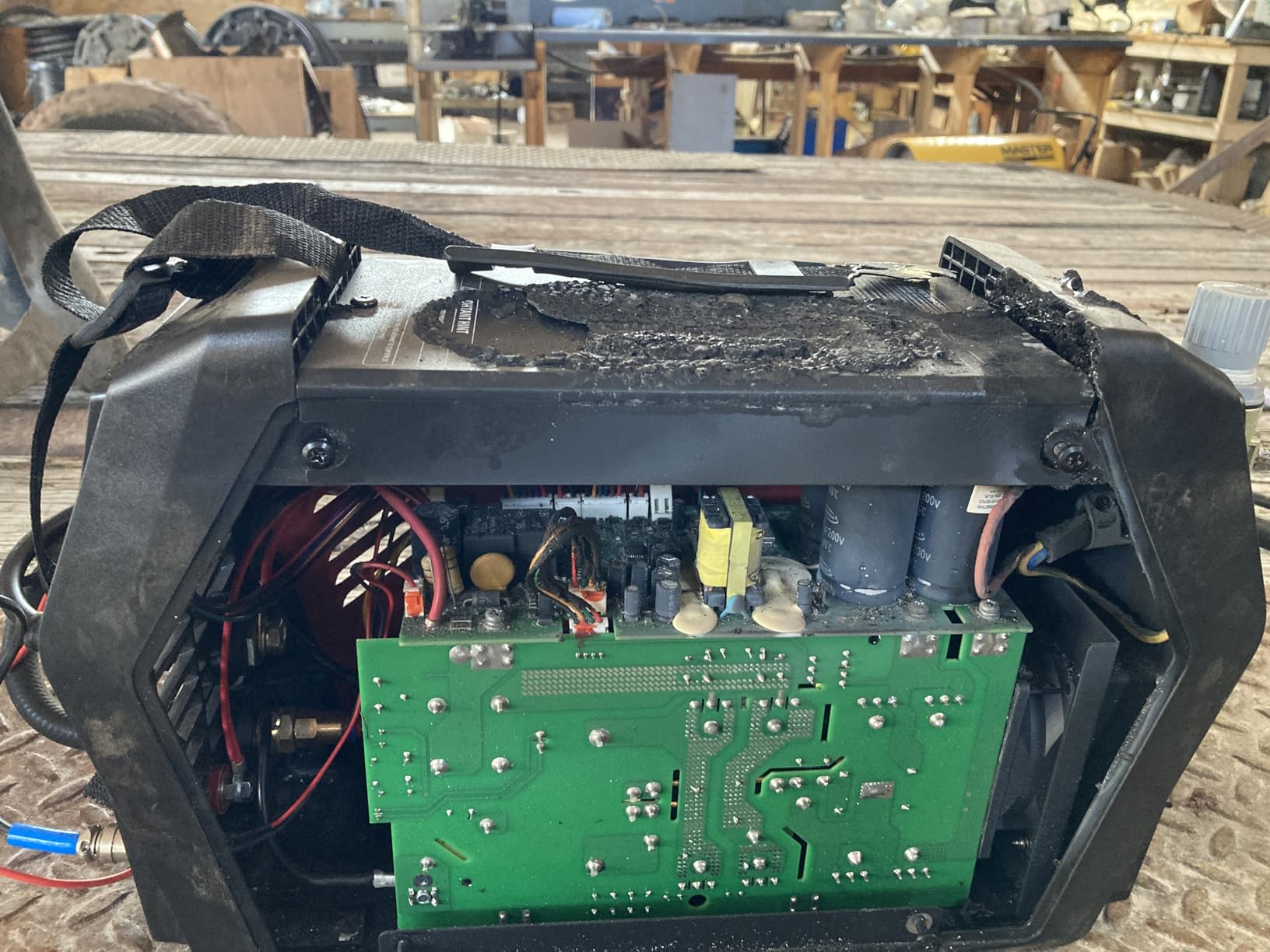
Setup speed is a genuine strength: the air regulator and filter are pre-installed, so you are cutting within about a minute of opening the box. Intelligent post-blow timing adjusts automatically, using 5 seconds below 35 amps, 8 seconds between 35 and 45 amps and 10 seconds above 45 amps, which protects consumables when you are working at full output on thick material.
Owners also like the smart fan and cooling system, which roughly halves noise compared with a continuously running cooling fan and extends machine life. The downsides are the short 10 meter app range, the 19.46 pound weight against lighter 50 amp machines, and a 20 mm maximum cut that sits below the 63/64 inch rating of the 60 amp model in this roundup.
Why long leads matter more than buyers expect
A short ground lead means constant reconnection on plate work. Every time you move the torch to a new side of the workpiece, you drag the machine or unplug and re-plug. With 10 feet of both torch and ground lead, you can often reach the far edge of a standard plate from one position.
The included air hose matches at 10 feet, which is long enough to keep the regulator at the compressor and the machine at the cut line.
Where this cutter stops short
A 3/4 inch maximum cut is a severance figure. For clean work, plan on 1/2 inch as your practical ceiling and use multi-pass cutting beyond that.
The 10 meter app range is short enough that it will not help across a wide laydown yard, and at 19.46 pounds it is one of the heavier machines in this power class. The 3-year warranty is a point in its favor, though.
9. PrimeWeld CUT60 60A – Best Premium Plasma Cutter for Thick Plate
PRIMEWELD CUT60 60Amp Non-Touch Pilot Arc PT60 Torch Plasma Cutter 110V/220V Dual Voltage 3 Year Warranty
60 amps
60 percent duty cycle at 60 amps
PT60 blow-back torch
3-year warranty
Pros
- Highest star rating in this roundup at 4.8 across 486 reviews
- 60 amps with a 60 percent duty cycle suits sustained thick plate cutting
- PT60 blow-back pilot arc torch starts through expanded and rusted metal
- Three-year warranty with USA-based support
Cons
- Highest tier in the roundup so it stretches a shop equipment budget
- Blow-back pilot arc wears consumables faster than high-frequency non-touch designs
- Bulky 20 x 11 x 19 inch body needs dedicated cart space
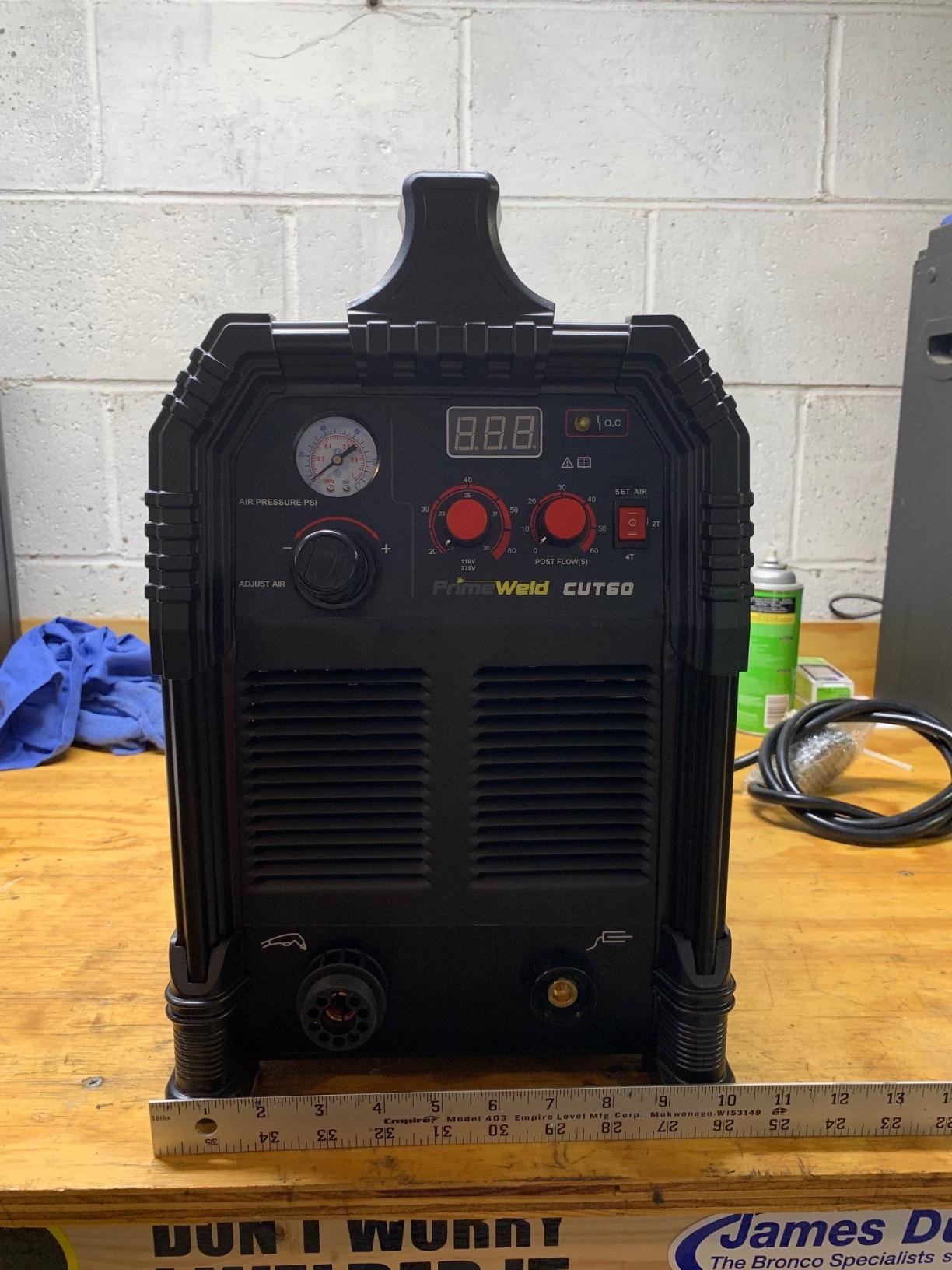
The CUT60 earns the premium slot on two published numbers: 60 amps of output and a 60 percent duty cycle at 60 amps. Duty cycle is how long the machine can hold rated output before it needs to cool, and on sustained thick-plate work it is the number that decides whether you finish a plate or stop halfway through.
The 4.8 star average is the highest in this roundup, with 86 percent of reviews at five stars and only 1 percent at one star. That distribution tells you the results are repeatable rather than occasional. Owners describe strong support and durable construction as the recurring themes.
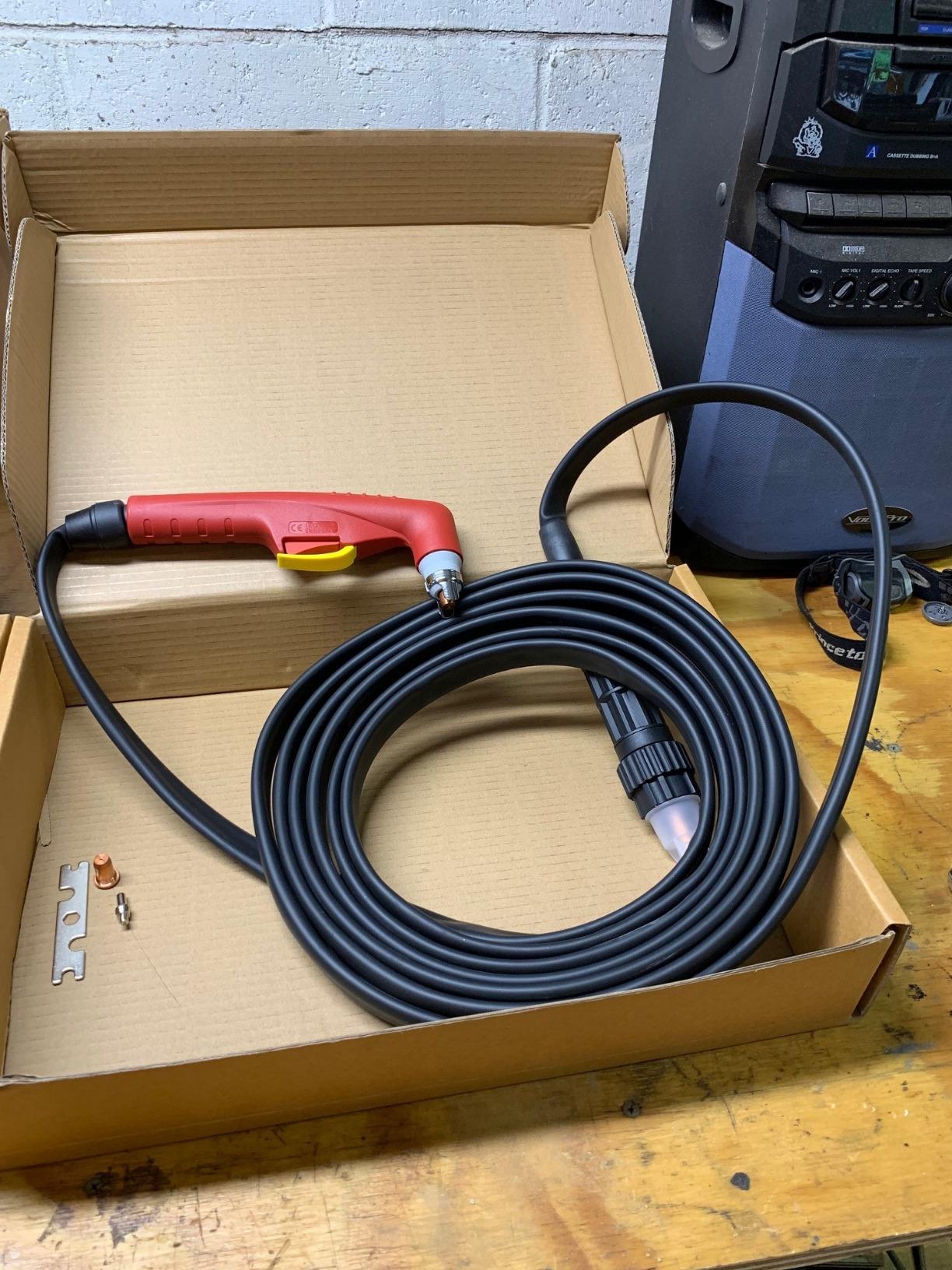
The PT60 blow-back cutting torch uses a Euro central connection, and the continuous pilot arc cuts expanded, rusted and painted metal without contact. Dual voltage at 110V and 220V comes with an adapter, so the same machine works on a shop circuit or a lighter outlet for occasional work.
Where it costs you is at the consumables bench. Blow-back pilot arc operation wears tips faster than high-frequency non-touch ignition, so on a high-volume plate schedule you will replace electrodes and nozzles more often than you would on an HF machine. The body is also bulky at 20 by 11 by 19 inches and wants real cart space.
When duty cycle matters more than price
If you cut plate for hours at a stretch, the 60 percent duty cycle at full 60 amps means the machine holds its rated output instead of throttling. That translates into more cuts per hour and less frustration when a heavy section takes several passes.
Fabrication shops, demolition crews and anyone with a full plate queue will feel that difference within a week of ownership.
Where the CUT60 is not worth it
For occasional half-inch work, a 50 amp machine with a 1/2 inch clean cut will produce a good edge and leave your budget intact. The premium here buys sustained heavy output, not basic capability.
The consumable wear rate from blow-back operation and the bulky case are the two practical drawbacks. Neither is serious, both are predictable, and neither will bother you if plate work is a daily activity.
10. SILATU STC650P 65A – Best High Output Plasma Cutter for Thick Plate
SILATU Plasma Cutter, 65A Non-Touch Pilot Arc, 110V/220V, 4/5” Max Cut
15-65 amps on 220V
20 mm maximum cut
250 LPM air flow
13.45 lb body
Pros
- Highest rated output in this roundup at 65 amps on 220V
- 20 mm maximum cut suits heavy plate in a compact body
- Only 13.45 pounds which is the best output per pound here
- 13 foot torch and 10 foot ground clamp give reach around large plate
Cons
- Air hose is only about 3 feet so a longer whip is usually needed
- Requires a dedicated 40 amp circuit or the breaker trips during cuts
- Compressor is not included and 250 LPM airflow is a real requirement
- Newest entry in the roundup with the smallest review base at 264 reviews
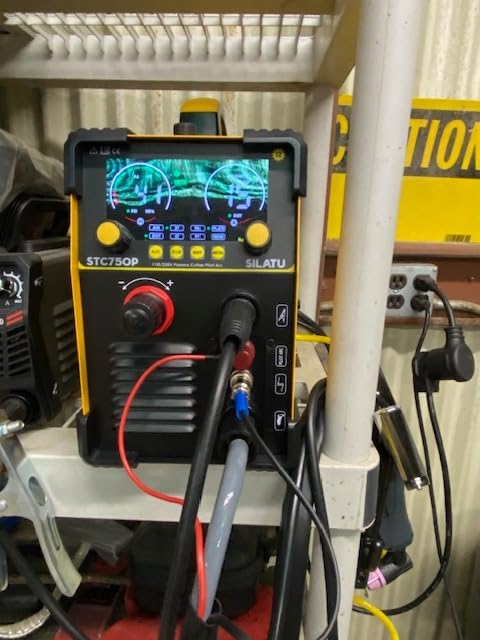
The STC650P puts 65 amps into a 13.45 pound body, giving it the best output per pound of anything we reviewed. On 220V it delivers up to 20 mm maximum cut at 65 amps and 70 PSI, while 110V is limited to 40 amps and 12 mm. That asymmetry is the key planning detail: this machine earns its output rating on 220V.
Air demand is real, at 250 liters per minute up to 70 PSI. The built-in air pressure sensor with an internal air filter and quarter-inch NPT quick connect helps you set it correctly, and the digital display shows error codes when something is off. PT, 2T, 4T and PA functions give you mark, cut and gouge modes with post-time adjustable from 3 to 15 seconds.
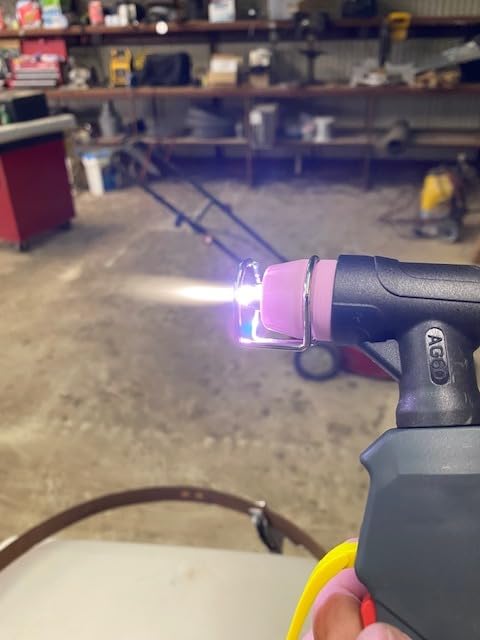
Reach is handled by the leads rather than the body. A 13 foot AG60P cutting torch and a 10 foot earth clamp let you walk around large plate without moving the machine, and the 13.45 pound weight means you can carry the unit itself rather than drag a cart.
Two constraints deserve attention before you choose. The included air hose is only about 3.3 feet, so most owners add a longer whip, and the unit requires a dedicated 40 amp or higher circuit or the breaker trips mid-cut. It is also the newest entry here with the smallest review base, at 264 reviews, so the long-term reliability picture is less settled than for the models with thousands of reviews.
Why high output at low weight matters on plate work
Amps translate directly to how fast the kerf travels and how wide you can cut without slowing to a crawl. At 65 amps you can hold a workable travel speed on 1/2 inch plate, which is the difference between a productive cut and a frustrating one.
The light weight means it can go where the work is: up a ladder, onto a trailer, out to a job site, without a second person or a cart.
Where the STC650P asks for preparation
The 40 amp dedicated circuit requirement is the biggest hurdle. Many home shops do not have one, and sharing a 30 amp branch with a compressor and a saw is exactly how breakers trip during a heavy cut.
The 250 LPM airflow also needs a compressor sized for the job. Combined with the short air hose and the small review base, this machine rewards a buyer who plans the electrical and air infrastructure before the machine arrives.
Best Plasma Cutters for Thick Plate: How to Choose
Clean cut vs max severance vs pierce capacity
Clean cut capacity is the thickness at which you get a square edge with minimal backside dross at a normal travel speed. Max severance is the thickest material the machine can completely separate, often at a crawl, with heavy dross. Pierce capacity is how thick a hole the torch can start without stalling.
For thick plate, buy on clean cut capacity. Severance numbers are marketing, and reviewers repeatedly name them as the biggest source of disappointment on plate work. If a machine says 3/4 inch maximum, assume 1/2 inch is your practical working limit.
Amperage tiers mapped to plate thickness
Here is how the amperage classes in this roundup translate into real plate work. A 50 amp machine handles 1/2 inch clean cut. A 55 amp unit reaches 5/8 inch. A 60 amp machine offers 5/8 inch clean with capacity approaching 3/4 inch in single pass, and a 65 amp unit pushes toward the upper end of that band with less travel-speed compromise.
Amps also drive pierce reliability. Piercing material past 1/2 inch with a handheld torch is where it gets unreliable, and drilling a pilot hole with a mag drill removes the problem entirely. On plate over 5/8 inch, we start with a drilled pilot hole.
Power supply and breaker sizing
Most of these machines are dual voltage, but the output is usually only available at the higher setting. A 50 amp cutter may deliver 20 to 35 amps on 110V and the full 50 amps on 220V, so plan the machine around a 220V outlet if you want the published capacity.
Current draw matters as much as voltage. The bestarc recommends up to 40 amps at 110V and 30 amps at 220V, and the SILATU requires a dedicated 40 amp circuit or higher. Running a plasma cutter and an air compressor on the same branch is the most common cause of mid-cut breaker trips, and it is worth the extra cost of one more circuit to avoid.
Air supply in CFM and PSI
An undersized compressor is the number one cause of poor thick-plate cuts, according to reviewer feedback on this group. A 50 amp machine wants roughly 4 CFM or more for consistent results, and higher amperage machines want substantially more. Air pressure at the torch should be 60 to 75 PSI for 220V work, and the machine should be rated to deliver that.
Use a regulator at the machine and a filter to remove moisture and oil. A cheap compressor delivering 4 CFM on paper may deliver 2 CFM at pressure, and that shortfall shows up as an unstable arc and heavy dross rather than as an obvious failure.
Pilot arc, blow-back and high-frequency ignition
A non-touch pilot arc starts without touching the work, which means you can start through expanded metal, mesh and rusty plate, and it extends consumable life. Blow-back ignition starts without the high-frequency electrical burst, which is safer around computers and CNC controls. High-frequency start is the fastest and most reliable on dirty or coated material.
For a shop mixing electronics with cutting, the non-HF blow-back approach is the safer choice. For rough outdoor material, a high-frequency non-touch pilot arc starts more reliably. We saw that trade-off clearly between the YESWELDER and the high-frequency machines in this group.
Torch type and consumable platform
Most of the machines here use an AG60 or AG60P style torch, or a PT-series torch with a Euro central connection. These platforms are widely supported, and consumables are easy to source. The risk to avoid is a proprietary platform with no replacement torch available, which is a real problem with older machines that have been out of production for decades.
Check that replacement electrodes, nozzles and caps are sold separately before you buy. A machine with no consumable supply is not a cheap machine, it is a machine that stops cutting.
Best Plasma Cutters for Thick Plate: Thick Plate Cutting Techniques
How to reduce dross on 1/2 inch and thicker plate
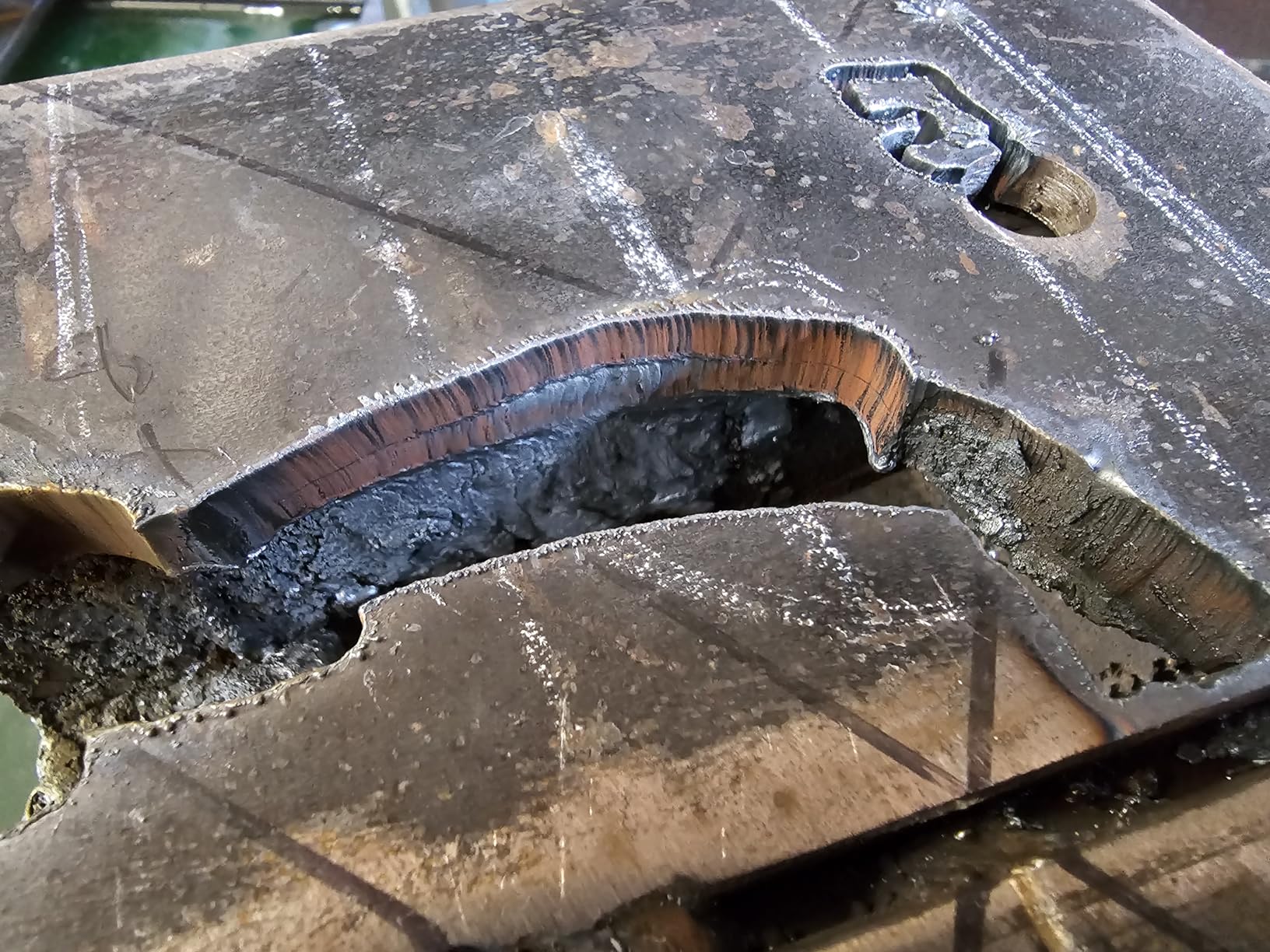
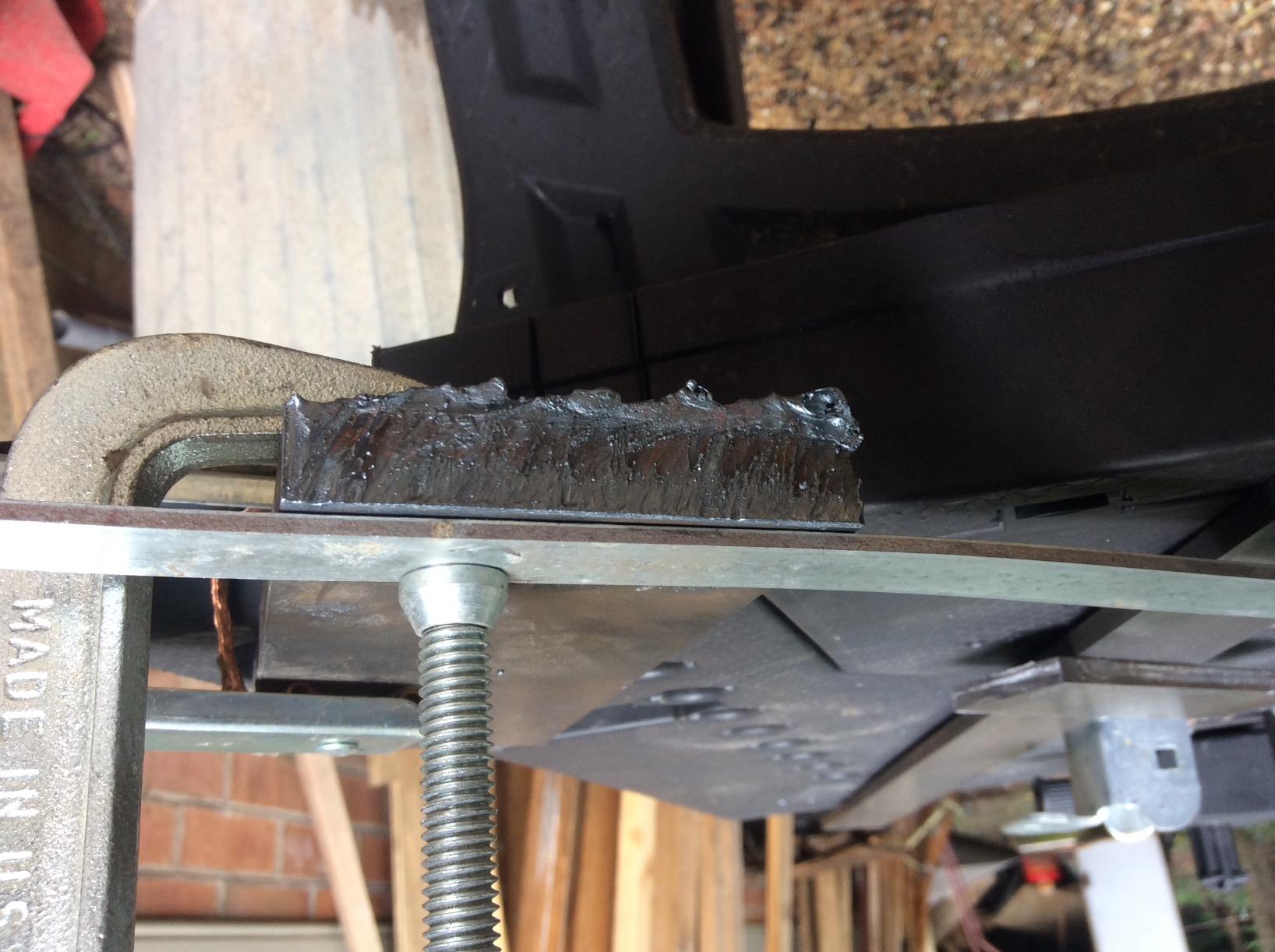
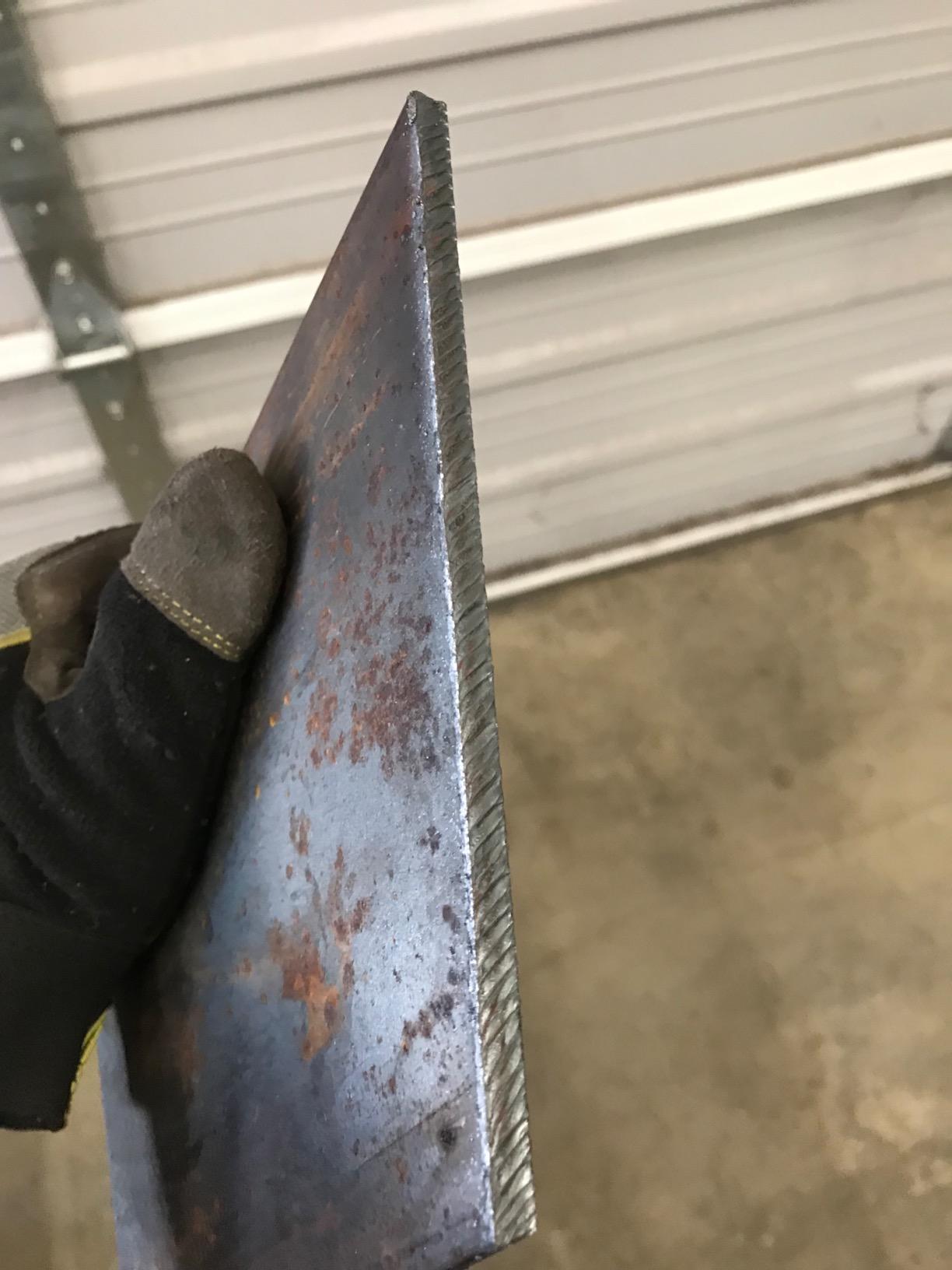
Dross is the melted metal that re-solidifies on the underside of the cut, and on thick plate it is the most common complaint we found in owner feedback. Four things move the needle: correct amperage for the thickness, a slightly slower travel speed, consistent torch standoff height, and clean air at the right pressure.
Most dross on heavy plate traces back to running too little amperage or too little air. If the arc sounds thin and the kerf looks narrow and sluggish, add air before you add amps. Keep the nozzle roughly 1/8 inch from the surface and hold that height with a guide roller for long straight cuts.
Clean the leading edge of the cut before you start. Slag and scale from a previous pass block the arc and force it to wander, which is the most common cause of an interrupted cut and heavy backside deposits.
Edge start vs pierce start on heavy plate
Piercing a hole through thick plate is the weakest part of the process. The arc forms on the surface, works through, then stabilises, and on material over 1/2 inch it often fails partway through and leaves a ragged hole.
An edge start avoids the pierce entirely. You begin the arc just outside the cut line and lead into the material along the intended path, which is why it is the standard method for plate above half-inch. On material at or below 1/2 inch, piercing is fine and faster.
Reviewers who edge-start heavy plate report clean results at higher amperage, which confirms what the technique is for. Where piercing is unavoidable on heavy material, drill a pilot hole with a mag drill first.
Cutting plate beyond the rated severance
Multi-pass cutting works, and it is how most shops handle plate that exceeds the machine’s rating. Cut partway through, flip the plate, and cut the remainder from the opposite side. This is also how you manage heat distortion in tall plates.
Remove slag between passes, keep the amperage the same on both sides and keep your travel speed consistent. Raising amps on the second pass to finish faster usually makes distortion worse rather than faster.
Safety on thick plate work
The plasma arc is far brighter than a welding arc, and it emits ultraviolet that can damage your eyes from a distance you might not expect. Wear a welding helmet rated for the process, not sunglasses or a cut-resistant visor, and keep the helmet down whenever the machine is energized.
Fume extraction matters more on thick plate because you are vaporising more metal per foot of cut. A water table on a CNC, or a fume arm over a handheld position, keeps the extraction close to the source. Add gloves, flame-resistant clothing and hearing protection for extended sessions.
Frequently Asked Questions
What is the maximum thickness a plasma cutter can cut?
The maximum thickness varies by machine class, and the number on the box is a severance rating rather than a clean cut rating. The 50 amp machines in this roundup quote 18 to 20 mm maximum, while 55 and 60 amp units quote 16 mm clean cut and up to 63/64 inch maximum. For usable production work, plan on 1/2 inch clean cut from a 50 amp machine and 5/8 inch from a 55 or 60 amp machine.
What plasma cutter can cut 1/2 inch thick steel?
Most machines in this roundup handle 1/2 inch mild steel cleanly when run on 220V. The ARCCAPTAIN CUT50, the PrimeWeld CUT50D and the PrimeWeld CT520D are all rated at a 1/2 inch clean cut, while the LOTOS LTP5505D and the TOOLIOM CUT-50 PRO reach 5/8 inch. Use 60 to 75 PSI of dry air and hold a steady travel speed.
How thick can a 100 amp plasma cutter cut?
A 100 amp class machine is not in this roundup, but the amperage tiers here show the pattern. A 50 amp unit cuts 1/2 inch cleanly, a 55 amp unit reaches 5/8 inch, and a 60 amp unit approaches 3/4 inch. Doubling amperage roughly doubles usable plate thickness, so a 100 amp machine is generally expected to clean cut around 1 inch mild steel.
What is the best plasma cutter for cutting 1 inch thick steel?
None of the machines here is rated to clean cut 1 inch mild steel in a single pass, and we would not claim otherwise. Cutting 1 inch plate on a 60 amp machine means multi-pass work, or moving up to a higher amperage class. Drill a pilot hole with a mag drill, use an edge start rather than a pierce, and plan on flipping the plate for the second pass.
What causes excessive dross on the backside of a plasma cut?
Dross on thick plate almost always traces to insufficient air, insufficient amperage, or a torch standoff that drifts. Check that the compressor delivers its rated CFM at working pressure, keep air at 60 to 75 PSI at the torch, and hold the nozzle about 1/8 inch above the surface with a guide roller. Scale from a previous pass also forces the arc to wander.
Do plasma cutters need gas or air?
Every machine in this roundup is air-fed, so a compressor is a hard requirement rather than an accessory. A 50 amp machine wants roughly 4 CFM or more for consistent thick plate cuts, and higher amperage machines want more. Use a regulator and filter at the machine, and keep the plasma cutter and compressor on separate circuits so breakers do not trip mid-cut.
Conclusion: Best Plasma Cutters for Thick Plate by Use Case
The LOTOS LTP5505D is our pick for the best plasma cutters for thick plate overall, because its 5/8 inch clean cut rating and 2400 reviews make it the most proven option here. Pick the ARCCAPTAIN CUT50 if you want a clear parameter display and a 13 pound body at half-inch capacity, and pick the bestarc BTC500DP if you would rather not walk back to the panel on every adjustment.
For the ARCCAPTAIN CUT55 Pro, the deciding factor is lead length on full-size plate. For the PrimeWeld CUT50D, it is US-based warranty service. For the PrimeWeld CT520D, it is getting cutting, TIG and stick functions in one box. The SILATU STC650P gives you the most amps in the lightest package if you can provide a 40 amp circuit and proper air supply.
Whatever you choose, judge these machines on clean cut capacity rather than severance headlines, give them dry air at the stated pressure, and give yourself a dedicated circuit. None of that advice changes in 2026, and the difference between a good plate cut and a frustrating one usually comes down to those three things.