
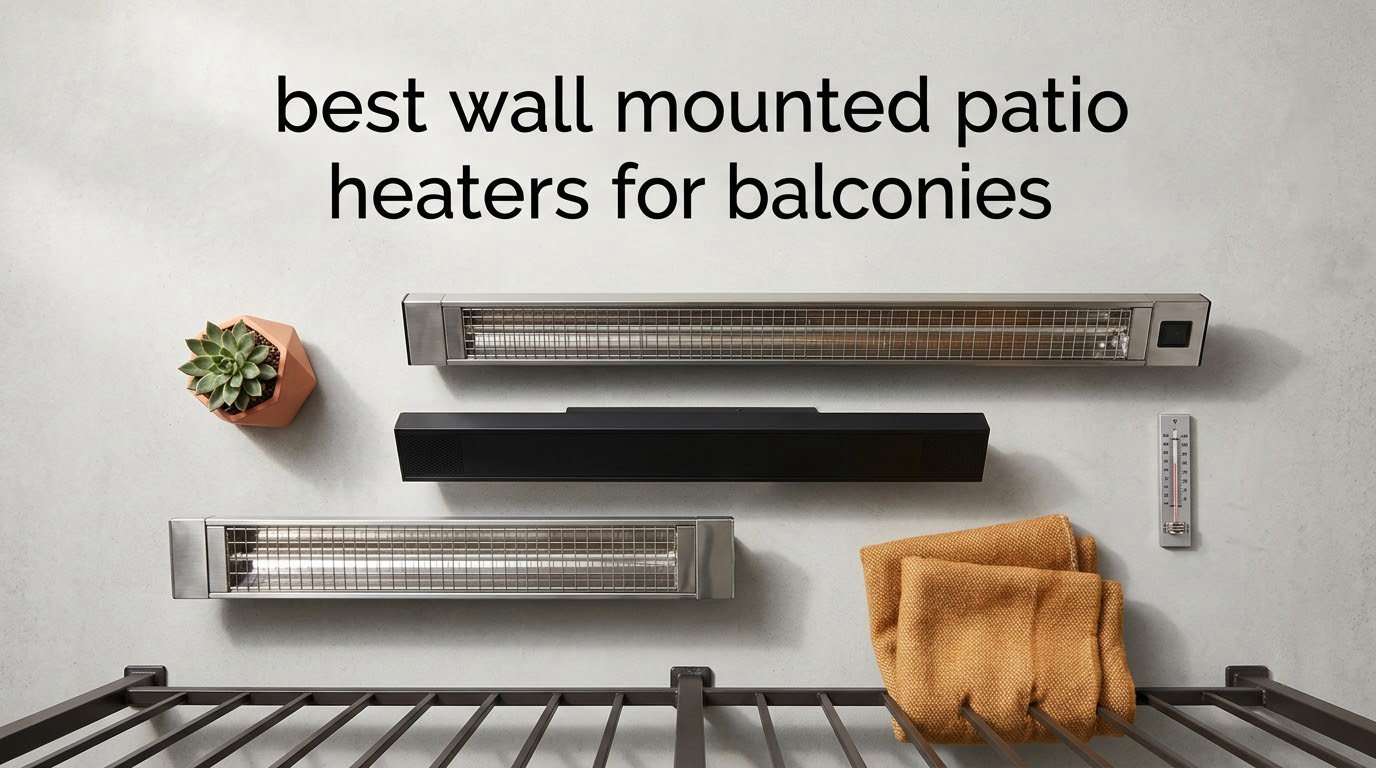
Most apartment buildings ban propane tanks and open flames on a balcony outright, which removes the entire high-output category of patio heaters from consideration before you ever look at a spec sheet. That leaves electric infrared as the only realistic way to make a small outdoor space usable in cold weather, and it is why this roundup covers wall mounted patio heaters for balconies exclusively rather than freestanding towers. Our team compared ten mounted units across wattage, voltage, IP rating, mount type, controls, dimensions and warranty, and read through thousands of buyer reviews plus renter discussions on sites like r/vancouver and r/HomeImprovement to find out where these things actually fail.
Two things surprised us. First, placement matters far more than wattage, and the majority of “my heater does nothing” complaints trace back to a mounting angle or distance problem rather than a defective unit. Second, the gap between the 120V consumer units and the 240V commercial models is not a quality gap, it is a ceiling gap, since a standard outlet caps you at 1500W no matter what the box claims. We explain that in the buying guide, along with the clearance rules and the permission questions renters ask about most.
If you want the wider picture of seasonal heating options first, our patio heater guide for winter covers the full fuel comparison. This list is narrower by design, because a wall mounted unit solves balcony-specific problems like walkway clearance and tip-over risk. For context on the hardware itself, we also reviewed the best wall mounted electric heaters separately, and if you are chasing ambience rather than raw warmth the wall mounted electric fireplaces are worth a look.
Table of Contents
Top 3 Best Wall Mounted Patio Heaters for Balconies in 2026
The best patio heater for a typical apartment balcony is a 1500W 120V carbon infrared wall unit with an IP rating of IP55 or better, mounted at roughly chest height and aimed directly at the seating. On a balcony that has a 240V line already run, a 3000W or 6000W commercial model will hold a larger seating area warm. Avoid propane entirely, since most leases and fire codes prohibit both the flame and the tank.

DR. INFRARED DR-239 3000W
- 3000W carbon infrared
- IP55 weatherproof
- Wall or ceiling mount
- Remote included
Bromic Tungsten Smart Heat 6000W
- 6000W dual quartz
- 160 sq ft coverage
- Stainless steel
- 240V 25A circuit

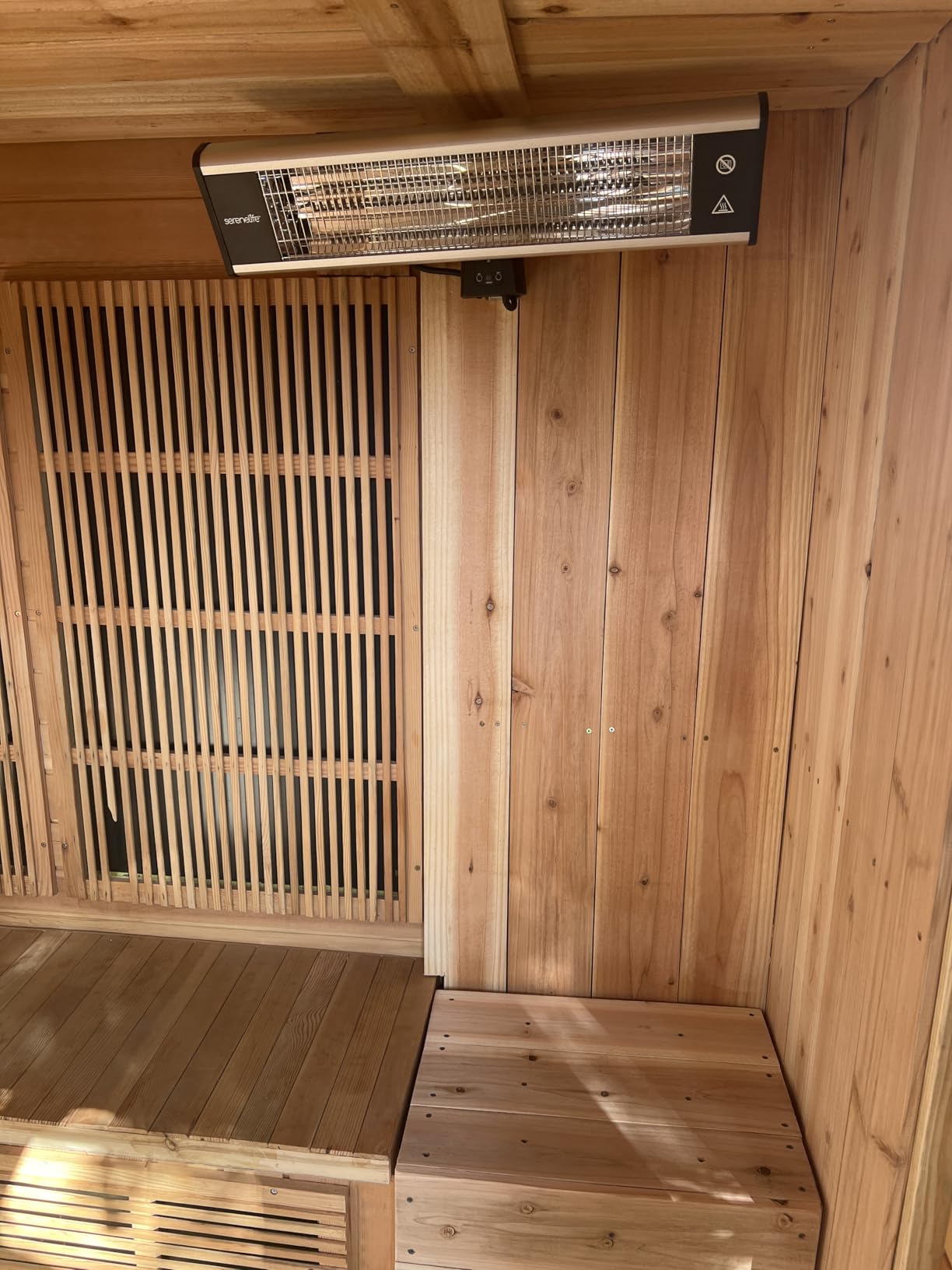
SereneLife 1500W IP65 Wall Unit
- 1500W plug-in
- IP65 frame
- Remote control
- Compact 25.6 inch body
All Ten Wall Mounted Patio Heaters at a Glance (October 2026)
Every unit below is wall mountable and rated for outdoor use. The key dividing lines are voltage, IP rating and heat pattern, and the next ten sections break each one down in detail.
How We Picked These Balcony Heaters
Every model here is genuinely wall mountable and rated for outdoor exposure, which alone eliminates a large share of the category. We then checked the listed wattage, voltage, amperage, IP rating and included mounting hardware against the physical reality of a balcony, meaning outlet type, wall material and ceiling height.
We weighted review volume heavily. A unit with 6000 ratings tells you far more about long-term behaviour than one with 19, and buyers on r/HomeImprovement and r/patio repeatedly point out that anonymous brands without replacement parts programs are a gamble regardless of how good the spec sheet looks. Certification marks such as ETL Listed were treated as a minimum rather than a differentiator.
We also read the negative reviews first. A wall mounted heater lives or dies on bracket quality, cord length, remote reliability and whether the manufacturer answers the phone after a failure, so those complaints carried more weight than praise for heat output, which almost every infrared unit generates. Specifications were verified in October 2026 and change as manufacturers revise listings, so treat numbers as a starting point rather than a contract.
1. DR. INFRARED HEATER DR-239 3000W – Best Overall Wall Mounted Patio Heater for Balconies
DR. INFRARED HEATER DR-239 3000W Indoor & Outdoor Infrared Patio Heater, Wall or Ceiling Mount, IP55 Weatherproof, Commercial or Residential, 220V-240V Electric Heater with Remote & Mounting Kit
3000W carbon infrared
240V at 12.5A
IP55 weatherproof
41.2 inch wall or ceiling mount
Pros
- Strong instant radiant heat with two power levels
- Wall and ceiling brackets included
- Remote works reliably
- IP55 rated and silent
- Thousands of reviews across years of use
Cons
- Highly directional so you must sit close
- Needs a 240V dedicated circuit
- Fixed bracket hole spacing
- Does not restore the last setting after a power cut
The DR-239 is the unit we keep coming back to because the combination of 3000W output, a genuine IP55 rating and 6096 reviews is hard to find anywhere else. Ten thousand two hundred and sixty BTU per hour from a 240V line is roughly six times what a 1500W plug-in unit delivers, and on a balcony where you cannot add floor space it makes a real difference to how large a seating group you can hold.
Installation is straightforward once you have the circuit. Wall and ceiling brackets are in the box along with the remote, and the unit weighs 7.6 pounds, so one person can hold it while the other anchors it. The element is carbon fibre rather than quartz, which means no warm-up time and no orange glow visible from the street.
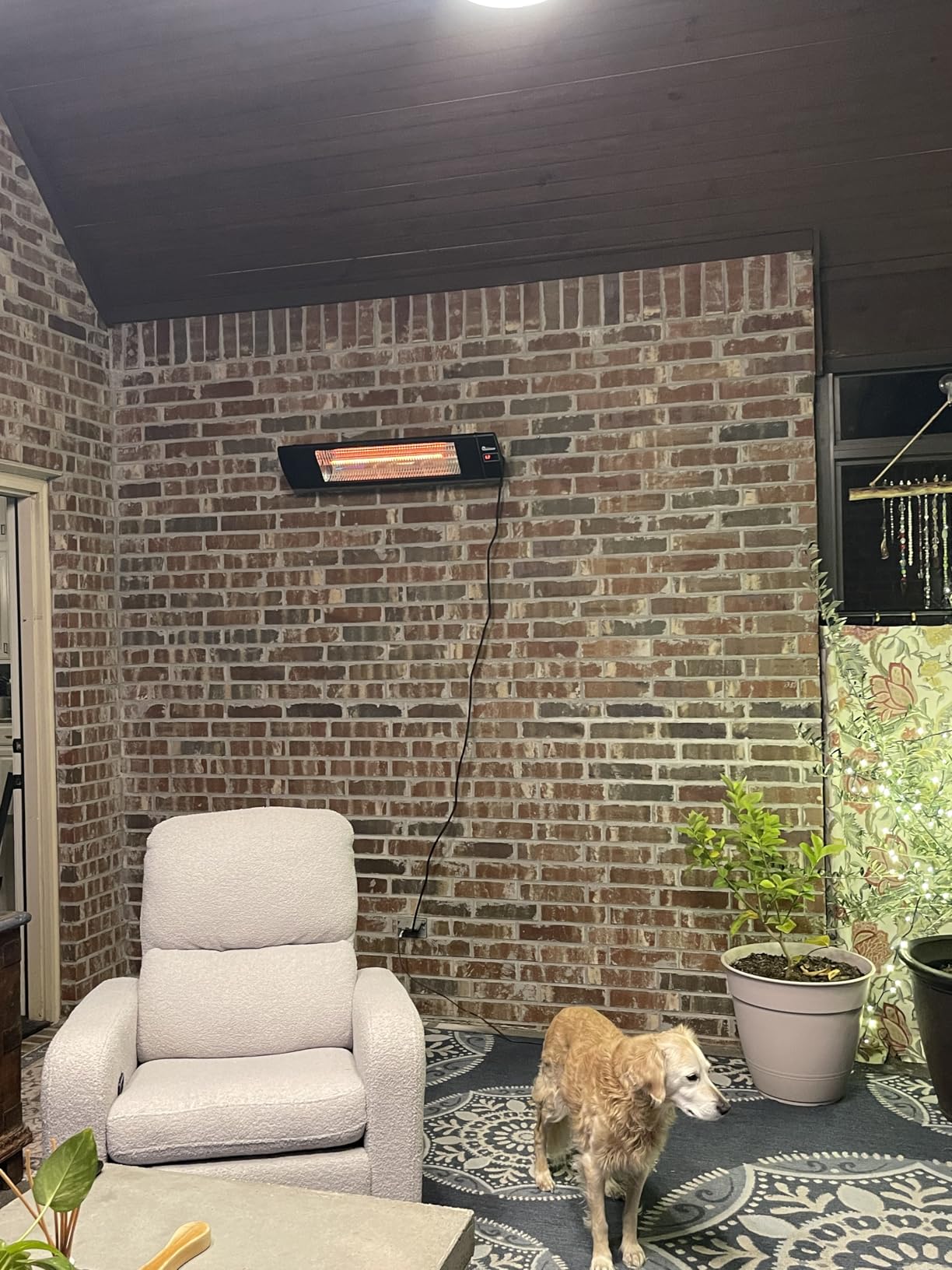
What buyers consistently report is that this is a point-source heater. You feel it immediately if you are seated within a few feet and almost not at all if you drift to the far end of the railing, and that is the nature of radiant heat rather than a fault. Our advice is to mount it low and close, aimed at chest height across the table rather than high above the seating.
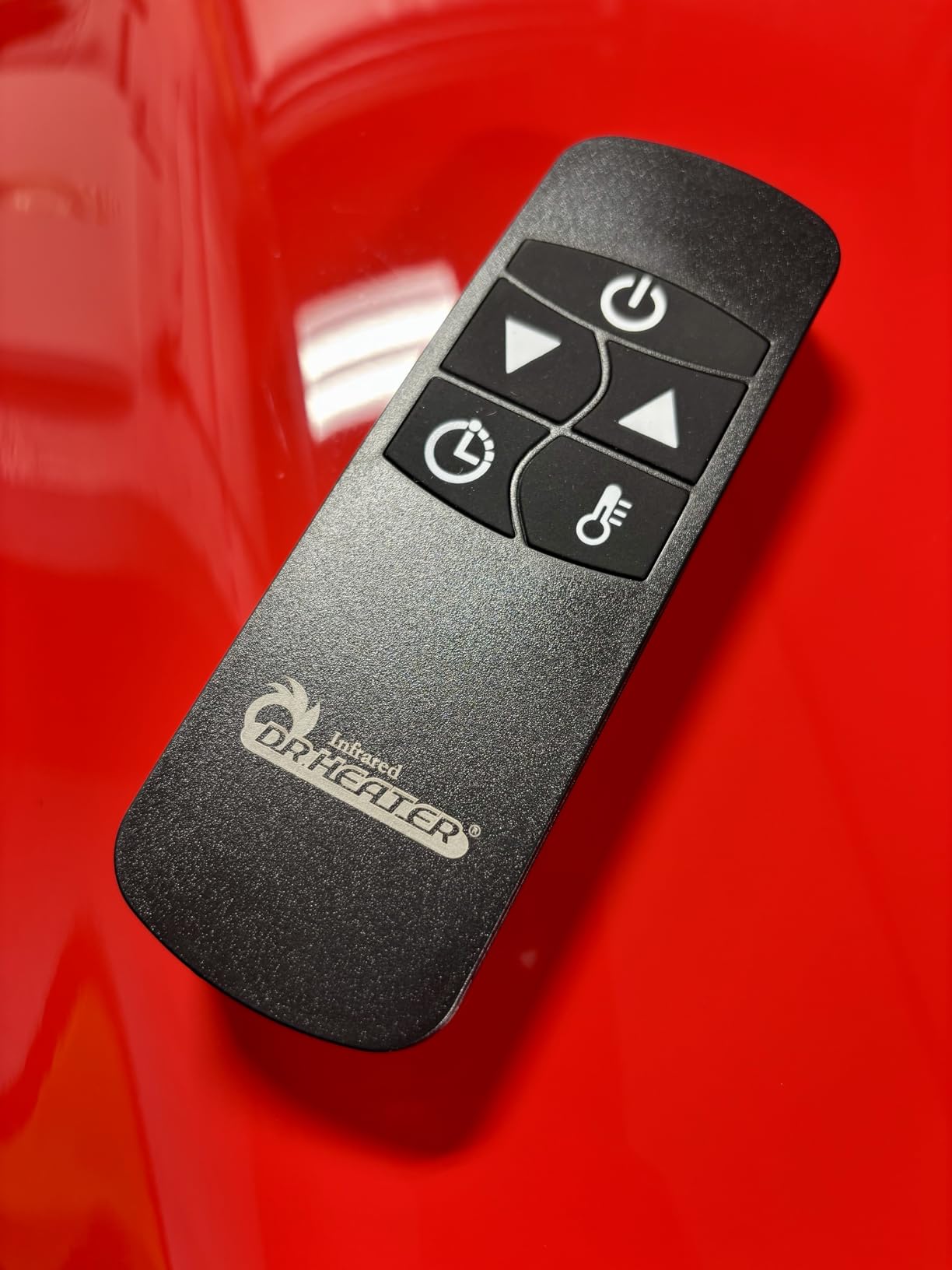
The other recurring detail is that it will not remember its setting through a power loss, so after a breaker trip you need the infrared remote in hand to turn it back on. Several owners also asked for a mounting template because the bracket hole spacing is fixed. Neither is a dealbreaker, but both are worth knowing before the drill comes out.
When the DR-239 is the right call
Choose it if you already have, or can get, a 240V line and want genuine heat across a seating area of four or more. It is the pick for a condo balcony where drilling into an exterior wall is permitted and the electrical panel has room for a dedicated breaker.
It also suits people who want two settings rather than one, since the two power levels let you drop to half output on a mild evening and stay comfortable longer on a modest circuit.
When the DR-239 will disappoint you
Skip it if your balcony has only a standard 120V outlet, since a 240V heater is simply not installable without an electrician. It is also the wrong choice for an open, wind-exposed balcony, where moving air strips the radiant heat before it reaches you.
If you are renting and have not yet secured written permission to hardwire, do not buy it. The hardwiring is the part buildings object to, not the heater.
2. Bromic Tungsten Smart Heat 6000W – Best Premium Commercial Build
Bromic Tungsten Smart Heat 6000W Electric Patio Heater – Dual Element Infrared, 220V-240V, Black Finish – BH0420033
6000W dual quartz elements
240V at 25A
IPX4
56 inch wide for wall, ceiling or flush mount
Pros
- Premium stainless steel with corrosion-resistant finish
- Dual-element 6000W covers roughly 160 sq ft
- Adjustable directional bracket
- Commercial-grade build
Cons
- Costs far more than consumer 1500W units
- Requires a 25A 240V circuit
- Remote and smart controls not included
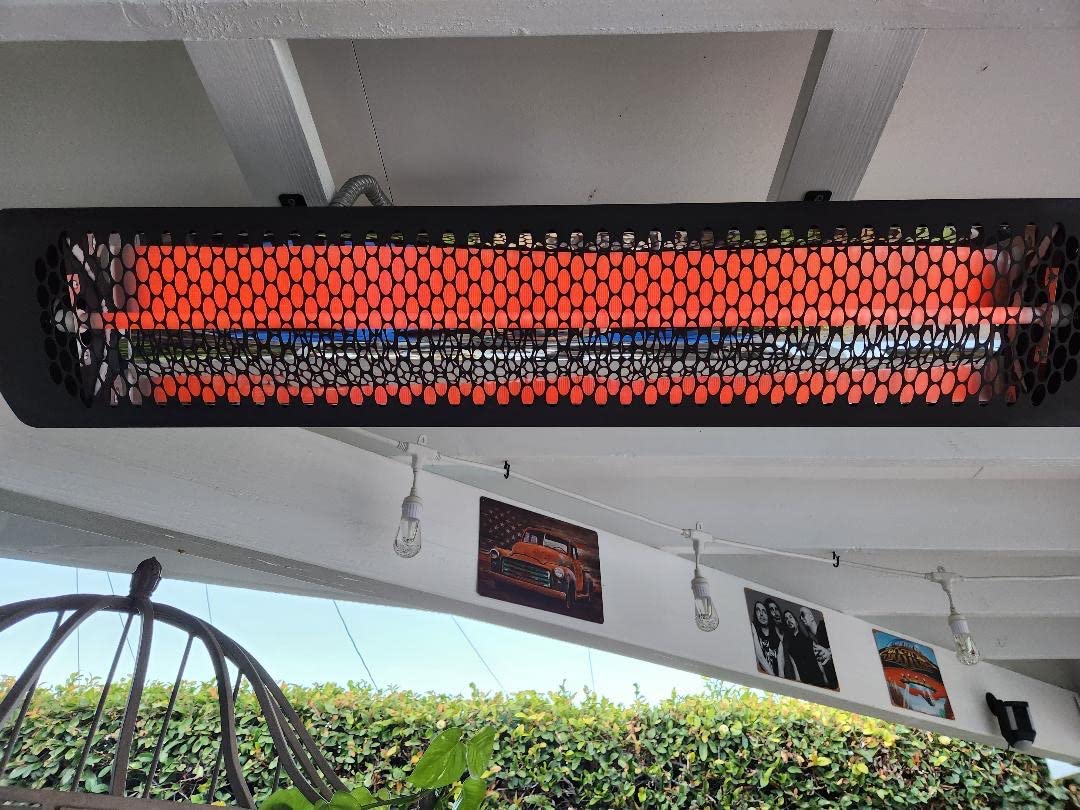
This is the heater you buy when the balcony is really an outdoor room and you want restaurant-grade output from a fixed installation. The dual quartz elements put out 6000W across a stated 160 square feet of coverage, and the stainless steel housing is the kind of finish that will still look right in ten years on an exposed wall.
It is a big object at 56 inches wide and 22 pounds, so plan the wall space before you commit. Minimum clearances are 72 inches for a wall mount and 96 inches from the ceiling when mounted overhead, which on a typical apartment balcony overhang means wall mounting is usually the only option.
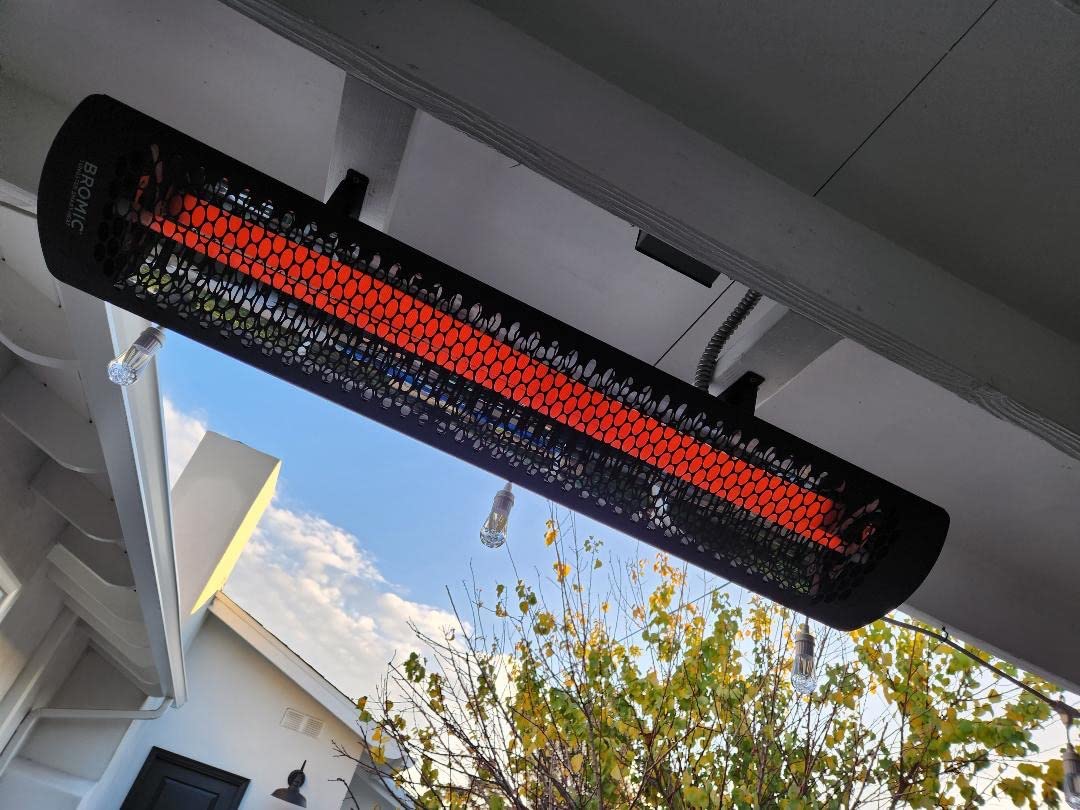
Owners of this unit are consistent about the payoff. Fast heat-up, quiet operation and no visible glow, and the adjustable bracket lets you aim the cone across a table rather than straight down. The 4.5 rating across 64 reviews is small in volume but heavily skewed positive, with 77 percent five-star.
The catch is that the remote and smart control accessories are not included, so budget separately if you want phone control. The 25A draw also means a dedicated 240V branch circuit, and on an apartment panel that is often the entire installation cost.
Who should buy the Bromic
This suits a large covered balcony, a rooftop terrace or a ground-floor patio where you want one heater to cover a proper seating area. If you already have a 240V circuit and care about exterior finish, the stainless build is a genuine upgrade over powder-coated consumer units.
Restaurant and hospitality buyers in the reviews use it for exactly that reason, and reviewers consistently praise the feel of the materials as much as the output.
Who should pass
Pass if you have a small balcony, since a 6000W cone aimed into a 6-foot-deep space is wasted power. It is also the wrong pick for renters, since the circuit work and the weight both point to a permanent installation.
Anyone who just wants a plug-in heater to try out before committing should start with one of the 120V units further down this list instead.
3. Infratech CD-6024 SS – Best for Large Covered Balconies
Dual Element – 6000 Watt Electric Patio Heater – C Series-240 Voltage-Stainless Steel Finish
6000W dual element
240V at 25A
About 121 sq ft coverage
61.25 inch brushed stainless
Pros
- 4.7 rating with no one or two star reviews
- 304 stainless steel brushed finish
- Fast element heat-up with no orange glow
- Swivel brackets and an install video
Cons
- Heat falloff limits who feels it
- Needs a 25A 240V circuit
- Wiring notes for two-stage control are unclear
The Infratech converts over 90 percent of its input energy to radiant heat and lands at roughly 20,472 BTU per hour, which puts it in the same output class as the Bromic with a different physical footprint. The coverage figure is stated as about 121 square feet on average, rising to 10 by 10 feet in cold conditions and up to 12 by 12 in protected areas.
At 61.25 inches wide and 20 pounds it is the largest unit here, so a long blank wall is a prerequisite. Swivel mounting brackets are included for wall or ceiling use, and the manufacturer publishes an install video, which matters on a unit this size.
Unlike the consumer units, the element temperature is adjustable from 40 to 130 degrees Fahrenheit, so you can hold a gentler output on a mild evening rather than running full tilt. A 3-year manufacturer warranty also outlasts the 1-year terms common on cheaper models.
Where the Infratech earns its place
This is the pick for a genuinely large covered balcony or a ground-floor patio where you want a permanent architectural fixture rather than a seasonal appliance. The stainless finish suits a building where visible hardware matters.
Buyers pairing it with an Infratech duplex switch to run two heat levels are the most enthusiastic reviewers, particularly those on covered decks in wet climates.
Where it falls short
The heat falls off quickly, so only people directly beneath or immediately in front of the unit feel it strongly. That is fine on a broad patio and a problem on a narrow one.
The instructions for two-stage control wiring are also called out as unclear by several owners, so if you plan to use the temperature range you may want an electrician on the install rather than just a screwdriver.
4. SereneLife 1500W IP65 Wall Unit – Best Value Plug-In for Small Balconies
SereneLife Infrared Patio Heater, Wall-Mounted Electric Heater with Remote Control, 1500W, IP65 Approved, Odorless, Indoor/Outdoor for Patio, Restaurant, Backyard, Garage, Decks
1500W carbon fibre at 88 percent efficiency
120V plug-in at 12.5A
IP65 aluminium frame
25.6 inch body
Pros
- Plugs into a standard 120V outlet
- Compact body suits small balconies
- IP65 frame with a mesh safety guard
- Remote for hands-free control
Cons
- Single heat level with no adjustment
- Standby LED cannot be switched off
- Limited 18 sq m range
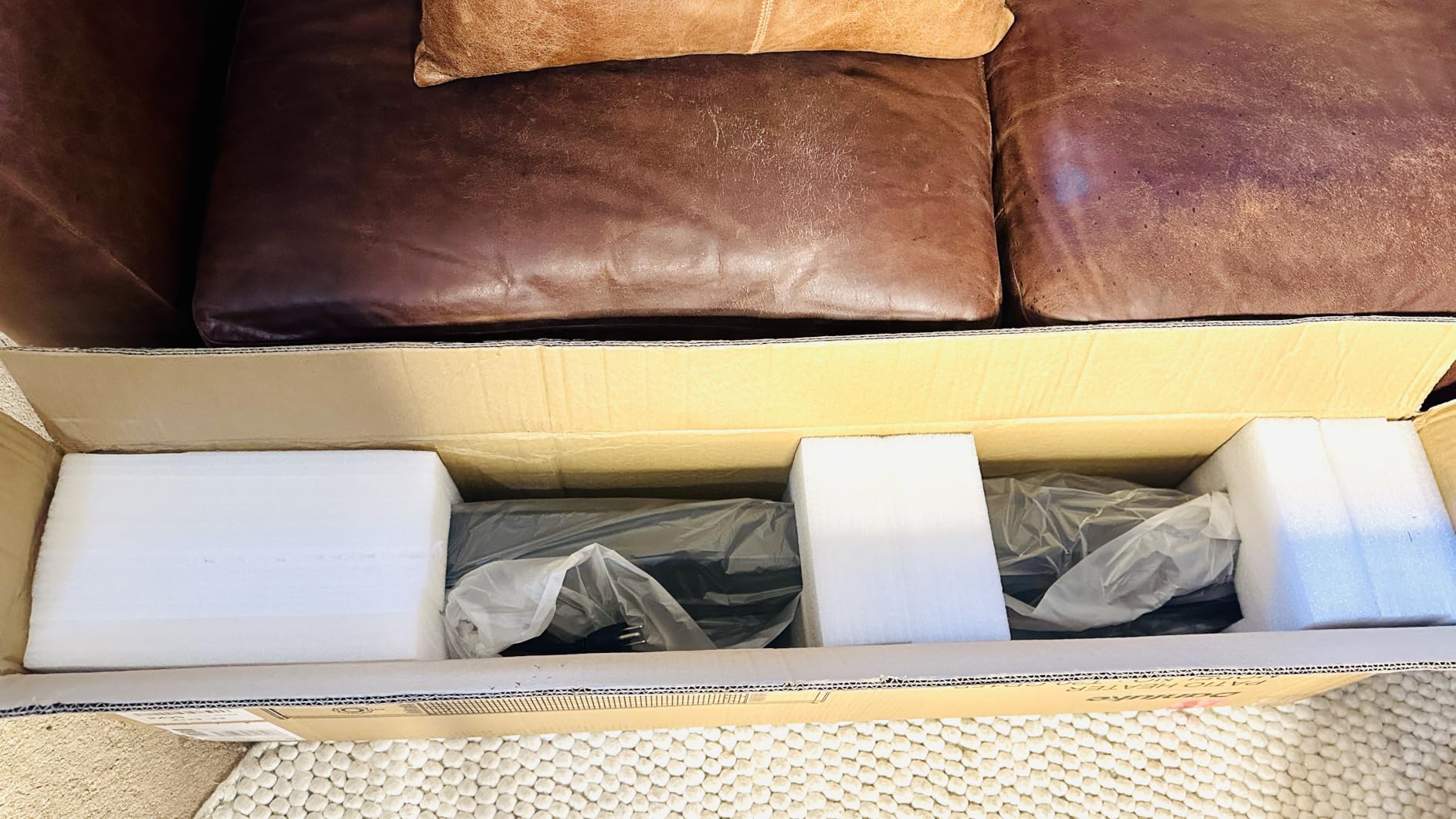
- Packing foam must be pulled out before use
For most apartment balconies this is the practical starting point, because a standard 120V outlet is all that stands between you and a working heater. The 1500W carbon fibre element is ETL-certified at 88 percent efficiency, and the IP65 aluminium alloy frame is one of the better weather ratings in the group.
It is also compact at 25.6 inches and 5.7 pounds, which matters when balcony wall space is measured in feet rather than yards. The mesh guard prevents contact with the element, and the remote handles on and off without leaving the table.
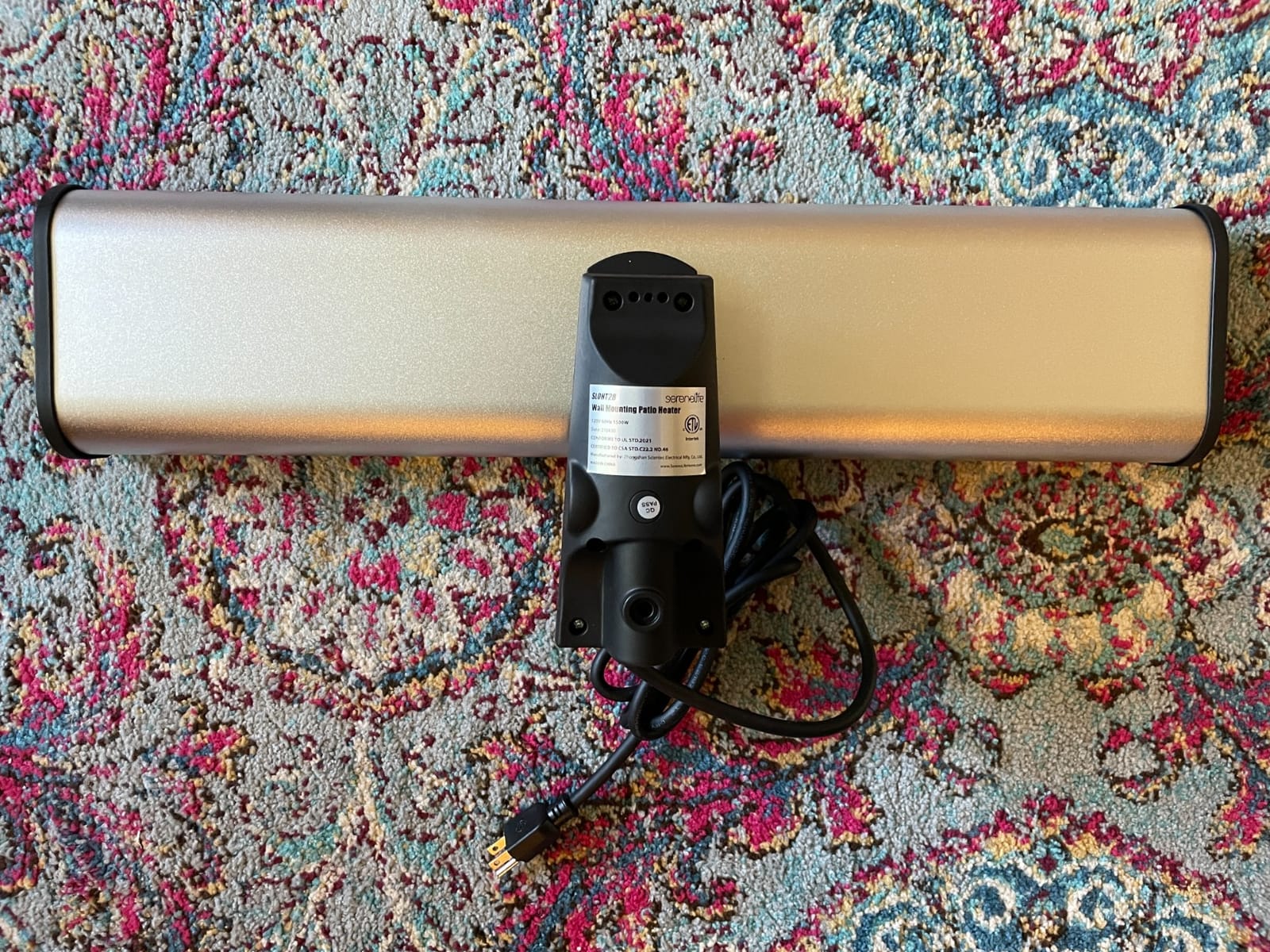
The most common owner note is about the standby light. A constant blue LED stays on and cannot be switched off, which several buyers found irritating in a bedroom-adjacent balcony. Others point out that the foam inserts over the element must be pulled out before first use, and the packaging does not flag this clearly.
With only one heat setting there is no way to soften the output on a mild night, and the stated 18 square metre coverage is a ceiling rather than a guarantee. Heat beyond a few feet falls away quickly, which is expected from a compact unit but catches out first-time buyers.
When the SereneLife fits
It fits renters and owners who want the simplest possible install, since there is no electrician and no hardwiring. Small balconies, gazebos and covered nooks where people sit close together are the sweet spot.
Choose it over the higher-priced 120V units if your priority is a genuinely high IP rating and a small footprint rather than extra controls.
When it is not enough
Skip it if you want adjustable output, since one setting is all you get. It will also disappoint anyone expecting to warm a group seated more than a few feet away.
If your balcony is exposed and breezy, look at a unit with a post or no-drill mount instead, since keeping the heater close is what actually solves the problem.
5. ZeboZap KDHT1500 – Best No-Drill Mount for Renters
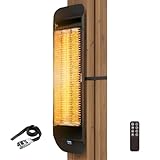
ZeboZap KDHT1500 1500W Infrared Electric Patio Heater for Gazebos, Pergolas, Decks, Garages, Backyards & Restaurants | Wall & Post Mounted Outdoor Heater
1500W carbon infrared
120V at 12.5A
IP65 with tip-over shutoff
30.9 inch, wall, post, strap or tripod
Pros
- Wrap-around post bracket needs no drilling
- Only 2 pounds so it is easy to reposition
- Two remotes plus adjustable temperature and fan speed
- IP65 with tip-over and overheat protection
Cons
- Display shows Celsius only
- Post bracket on some units will not swivel
- Warmth drops off past 4 to 5 feet
- Short 6 foot cord and no remote batteries included
This is the only unit in the group designed explicitly for the situation a lot of balcony shoppers are actually in, which is that they cannot or will not drill. The wrap-around post bracket clamps onto a gazebo leg, pergola post or balcony rail post, and the same body also takes wall, strap and tripod mounting.
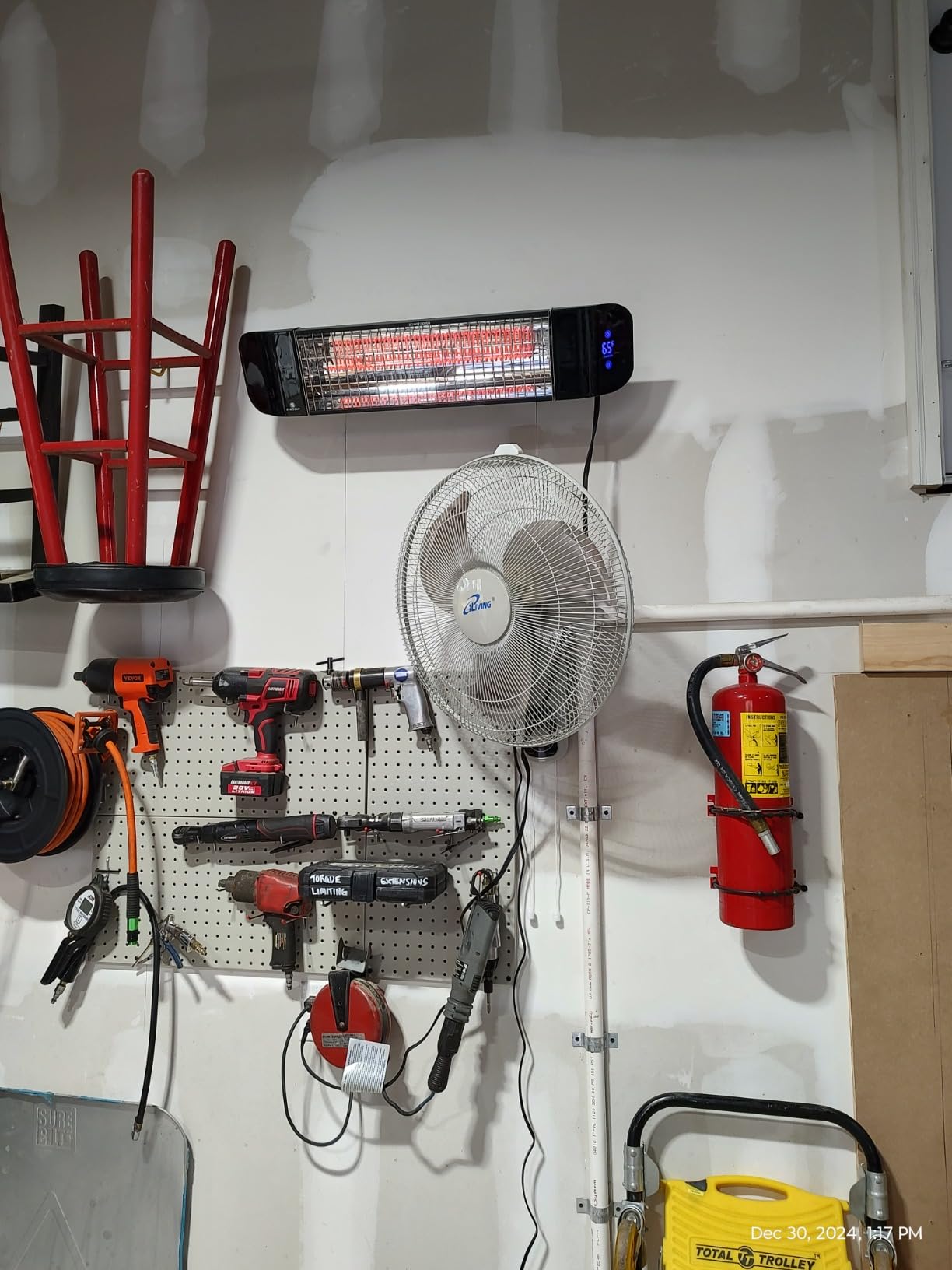
At 2 pounds it is by far the lightest thing here, so repositioning it between a dining table and a lounge chair takes seconds. Temperature and fan speed are both adjustable, and two remotes ship in the box, which is generous at this level.
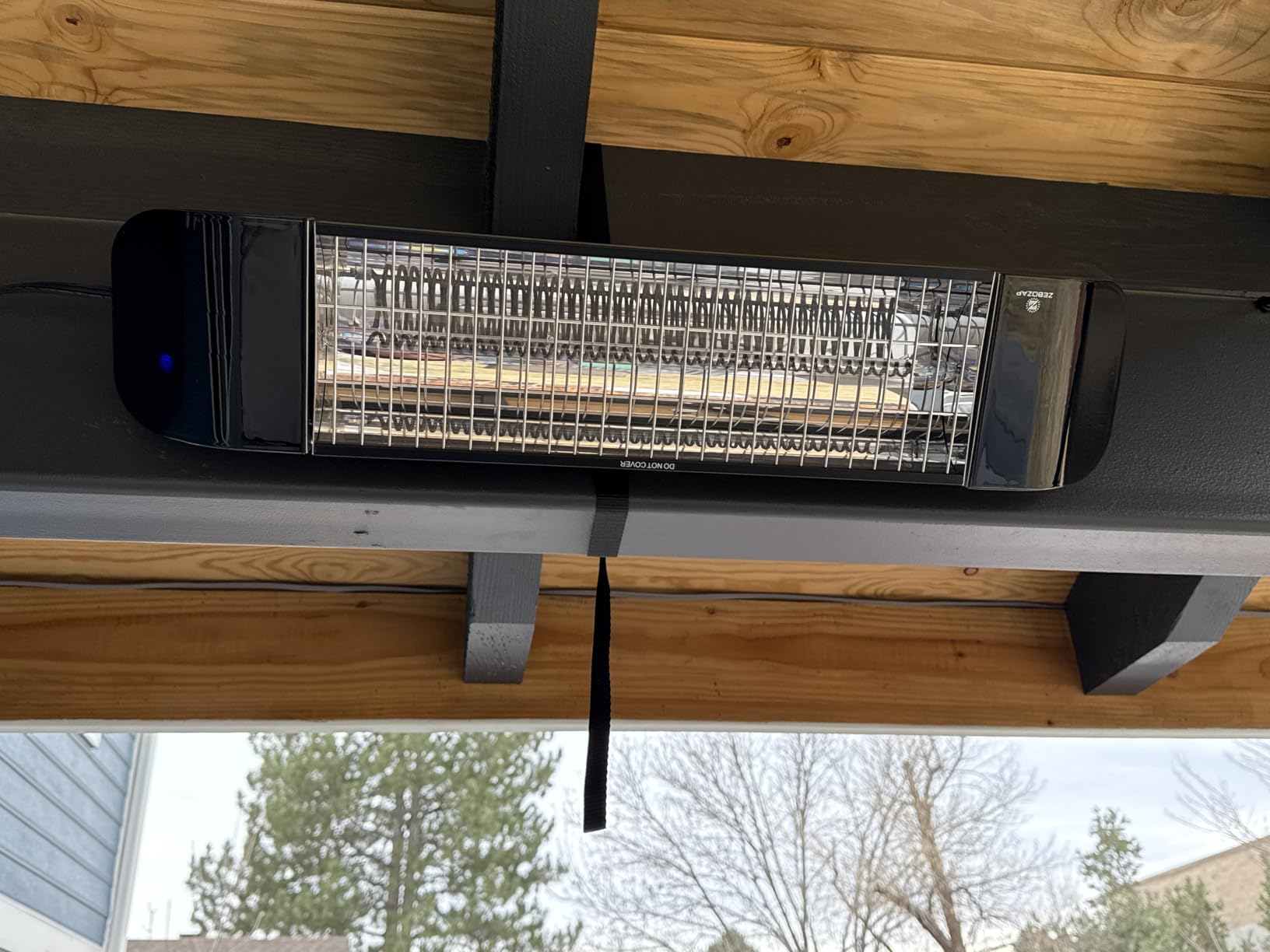
Reviewers using it on steel-framed decks and pergolas report that it does what a point heater should, warming the people in front of it rather than the air. The carbon fibre element is IP65 rated and there is a tip-over shutoff, which matters when a unit hangs at head height on a bracket rather than sitting on the ground.
Two complaints recur. The display reads in Celsius with no way to switch to Fahrenheit, and on some units the post bracket does not swivel, so the balance is off and the aim is not where you set it. The 6 foot cord is short, which means the post you choose is partly decided by where the outlet is.
Why renters gravitate here
No drilling means no lease conversation in most cases, though a clamp on a common railing can still fall under building rules, so check first. It is also reversible, so moving out means unclamping rather than patching.
Buyers who want to move the heat to wherever people are sitting rate it highly for exactly that reason. The lightweight body is the standout feature.
Where it falls down
The narrow throw past 4 to 5 feet is the main limitation, and the non-swivelling bracket makes aiming harder than it should be. A Celsius-only display is a small annoyance that has generated a surprising share of negative reviews.
Anyone wanting a thermostat-grade control experience should look further down the list, and anyone far from an outlet should plan on a longer outdoor-rated cord run.
6. Sundate 1500W WiFi Wall-Mounted Heater – Best for Fine Heat Control
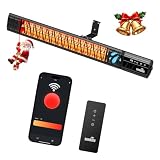
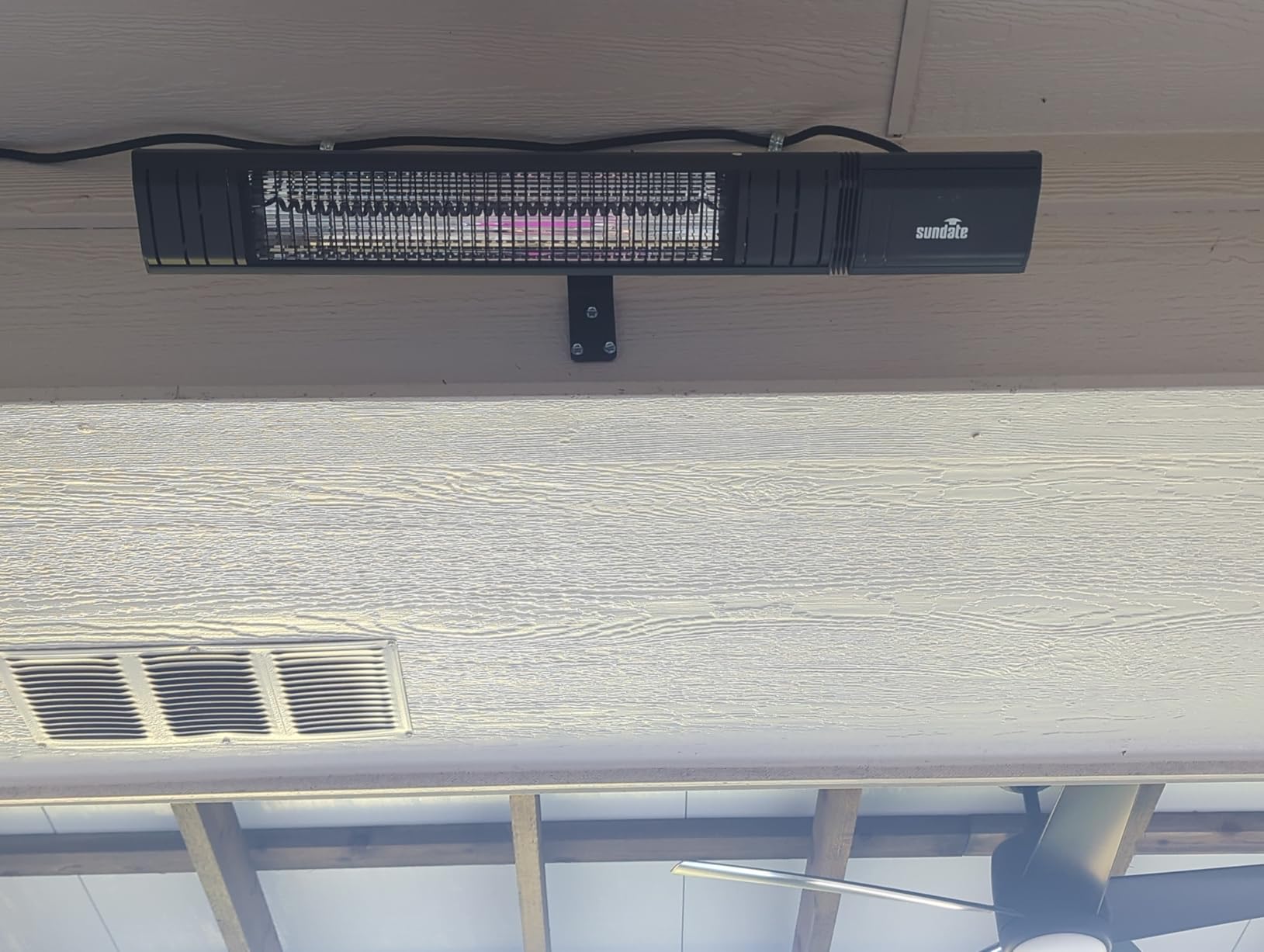
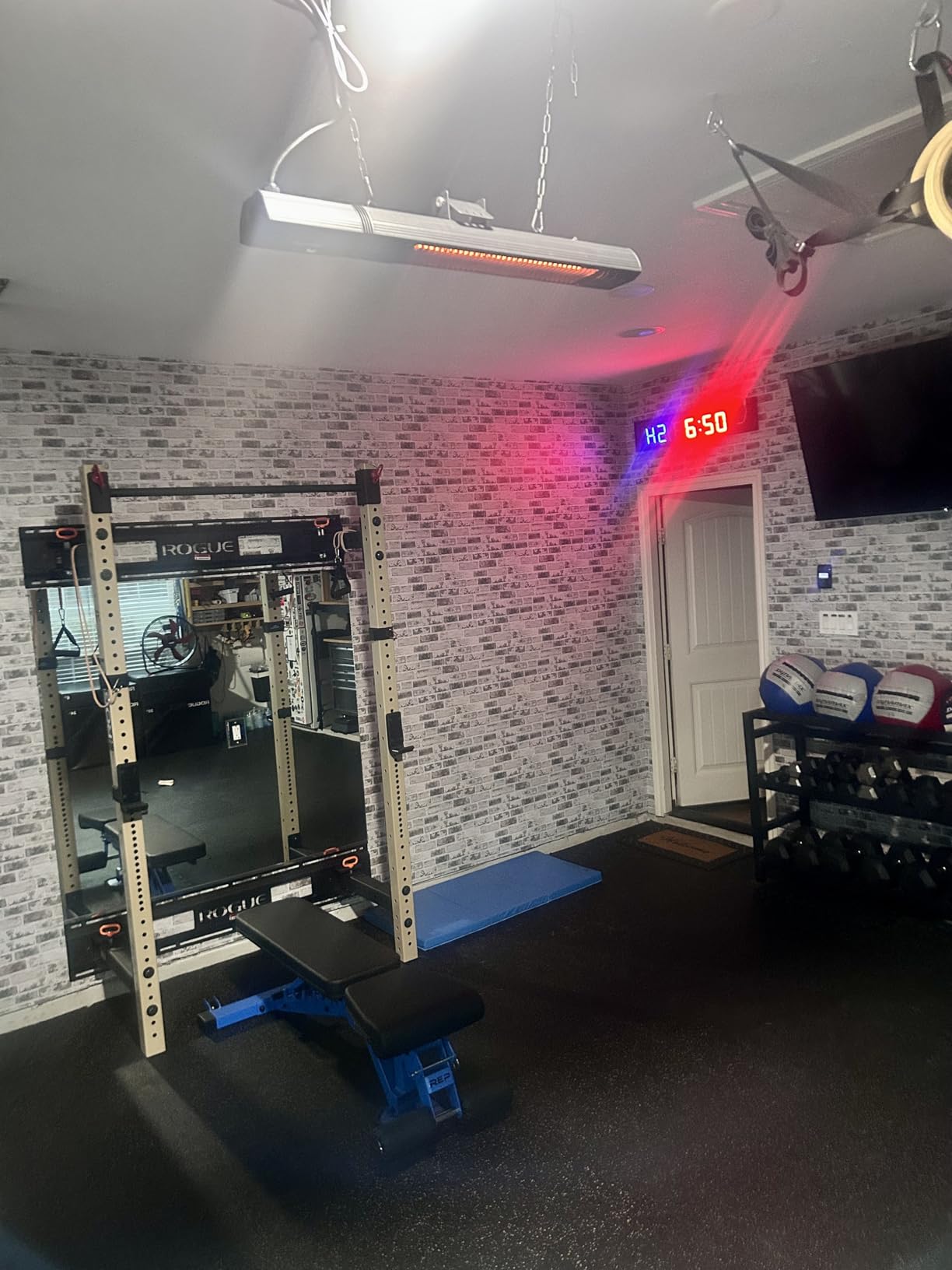
Sundate Electric Outdoor Heater Wall-Mounted Wifi Control Wall-Mounted Hanging Patio 1500W Infrared 9 Heat Levels, 24H Timers, Carbon Fiber Tube Heating Wall Heater for Gazebo, Balcony
1500W carbon fibre at 95 percent efficiency
120V at 12.5A
Nine heat levels and 24H timer
WiFi, remote and touch panel
Pros
- Nine heat levels give the finest control in this group
- WiFi app plus remote and touch panel
- Weatherproof housing for year-round use
- No fan noise during conversation
Cons
- Lowest average rating in the roundup
- Directional throw suits a small cluster only
- App setup adds complexity
Control granularity is the whole pitch here. Nine separate heat levels, a 24-hour programmable timer with automatic shutoff, and three ways to run the unit through a WiFi app, a remote or a touch panel. Nobody else in this list offers that combination at 120V.
The carbon fibre tubes are rated at 95 percent thermal efficiency and the body is slim at 3.93 inches deep and 32.87 inches long, which keeps a wall free when floor space is at a premium. Weatherproof housing is specified for year-round outdoor use.
Buyers who like being able to drop to level 3 when guests arrive and level 8 when they leave rate it very highly. Running a heater from a phone before stepping out onto a cold balcony is genuinely useful, and the timer means you can leave it on without thinking about it, which is the single most requested feature across renter discussions.
It is also the lowest rated product here at 4.0, with a 9 percent one-star share. Most critical reviews are not about failure but about output, since a directional throw only reaches people seated close by, and some buyers found the app pairing fiddly.
Who this suits
It suits people who want fine-grained control rather than a single on or off, and anyone already running smart-home routines who would rather add a heater than lightbulbs. The slim profile works well on a narrow balcony wall.
If you are comfortable with app setup and want to schedule heat around when you actually sit outside, the timer and nine levels are the reason to pick this over simpler units.
Who should skip it
Skip it if you want strong heat across a wide area, since the 4.0 rating partly reflects modest real-world output in open air. Anyone averse to app setup will find three control methods excessive.
Renters should also note that this is a drill-mounted bracket, so the no-drill flexibility of the post-mount unit below matters more if you cannot touch the wall.
7. PowerScale 1500W IP65 Wall Mounted Heater – Best for Small Apartment Balconies
Powerscale 1500W Electric Patio Heater, IP65 Waterproof, Remote, Fast Heating, 4 Heat Levels, 24H Timer & Memory Function, Wall Mounted Indoor/Outdoor Heater for Patio, Garage, Backyard, Black
1500W carbon fibre lamps
110V at 14A
IP65 enclosure
30 inch wall mount, 4 heat levels
Pros
- Memory function restores settings after a power cut
- Four heat levels with a touchscreen display
- IP65 rated and owners use it through winter
- Heats in about 2.5 seconds and runs quietly
Cons
- Modest output so you need to sit close
- Short power cord constrains placement
- Some units failed within weeks with unresponsive replacement support
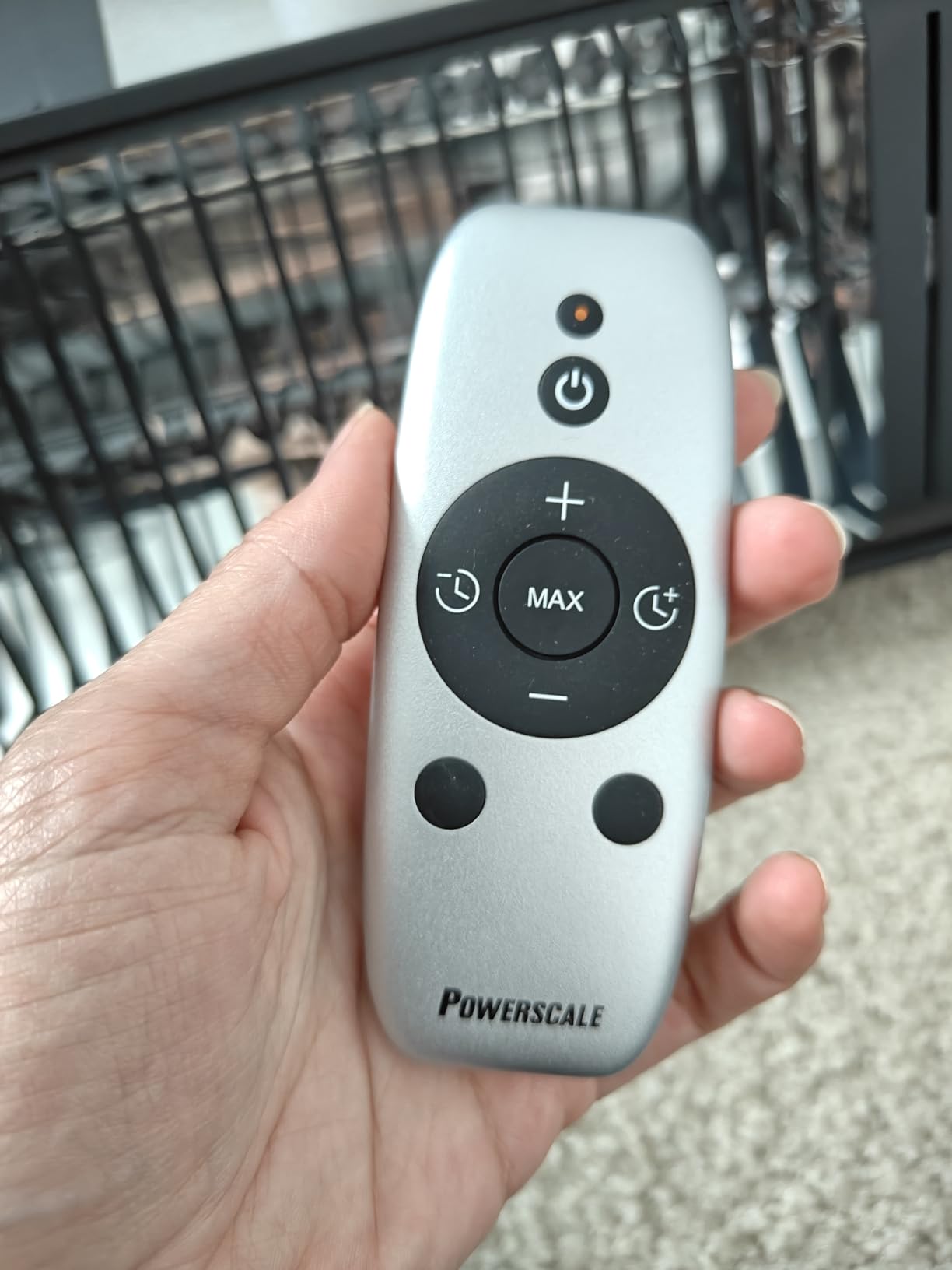
The memory function is the detail that separates this unit. If you run it off a smart switch or app and the power blips, it comes back on the last setting you used instead of requiring a walk back to the wall, and small-apartment owners mention this as the reason they like it.
It also offers four heat levels, a touchscreen with a digital display, a 24-hour timer and roughly 2.5 second warm-up, with an IP65 enclosure for all-season use. Overheat protection and tip-over shutoff are both built in.
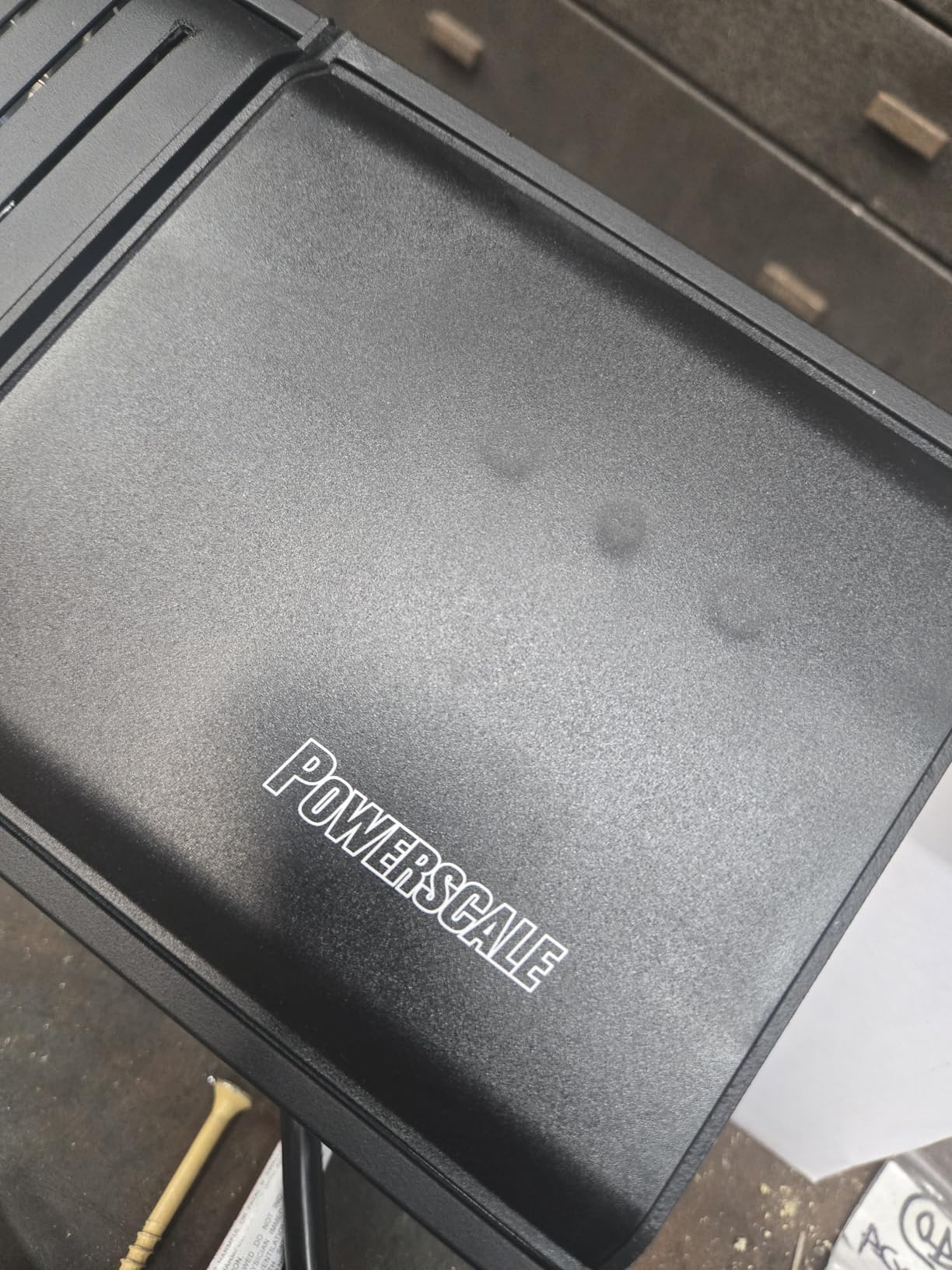
Balcony owners make up the enthusiastic half of the reviews, with 68 percent five-star, and they frame it around the same use case our team would: keeping a small seating area usable on cold spring and autumn evenings without giving up the floor space.
The important caveat is amperage. At 14A this is the highest draw of the 120V group, and on a 15A circuit it leaves almost nothing for a kettle, a phone charger or string lights. There is also a documented minority of owners reporting units cutting out within weeks and difficulty getting a replacement, which is the most common thread in the one and two-star feedback.
Why the memory function matters
Any heater used on a smart plug or timer loses its setting on a power cut, and a wall-mounted unit is the worst place to discover that because you have to physically reach it. Restoring the last setting removes that problem entirely.
For a balcony used intermittently, this is the feature that decides whether the heater is pleasant or annoying day to day.
What to watch for
Plan the circuit carefully. Fourteen amps on a 15A circuit means the heater should be the only thing on that outlet, and running it alongside other loads is the fastest route to a tripped breaker on a cold evening.
Support is the weak point, so if you cannot verify a replacement path before buying, the next option is the better-reviewed alternative below.
8. blessny 1500W Wall Mounted Outdoor Heater – Best for Outdoor Kitchens and Garages

blessny 1500W Wall Mounted Electric Heater for Outdoor Patio & Garage
1500W carbon fibre tube
110V wall mount
IP65 and ETL certified
34.3 inch, 3 heat levels and 24H timer
Pros
- Heats up in about 3 seconds
- Adjustable brackets adapt to awkward walls
- IP65 tolerates outdoor kitchens and garages
- Quiet 0 dB operation with remote
Cons
- No built-in thermostat
- Timer is a countdown rather than a schedule
- Point-source warmth only felt in front of the unit
- Remote batteries not included
Owners use this unit in specific spots rather than general patio heating, and they are unapologetic about it. Mounted above a grill, over an outdoor sink or inside a catio, it delivers three seconds to heat and an ETL certification with overheat protection at a modest outlay.
The oxidised sprayed aluminium shell with a carbon fibre tube is rated IP65, and the adjustable mounting brackets are adaptable enough for walls that are not square or plumb, which balcony walls frequently are. A 6 foot cable and a one-year manufacturer warranty round out a straightforward package.
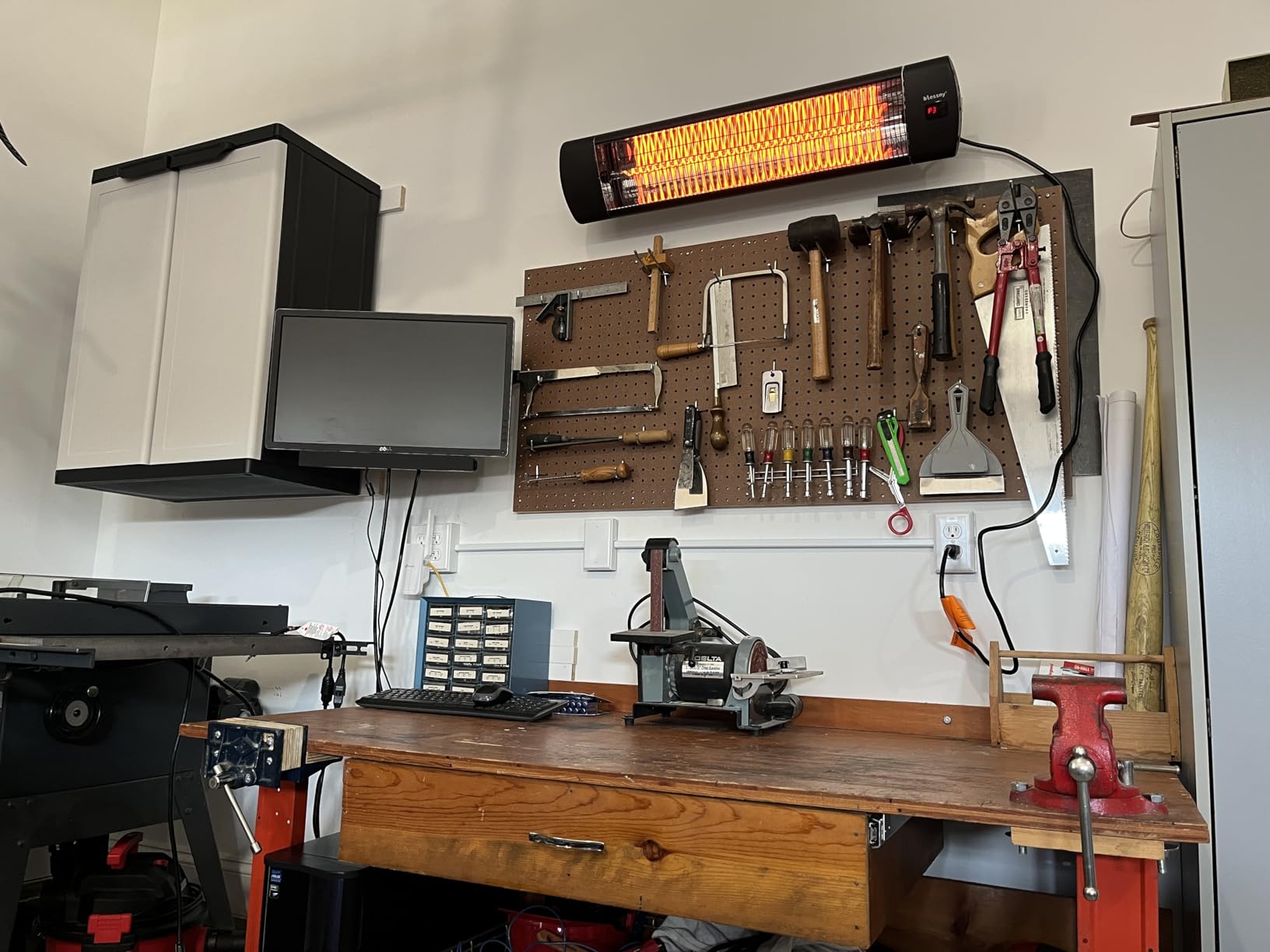
At 69 percent five-star and only 78 reviews, the sentiment is warm but small. The recurring reservations are about control rather than heat, which tells you the output does its job when you are standing in the right place.
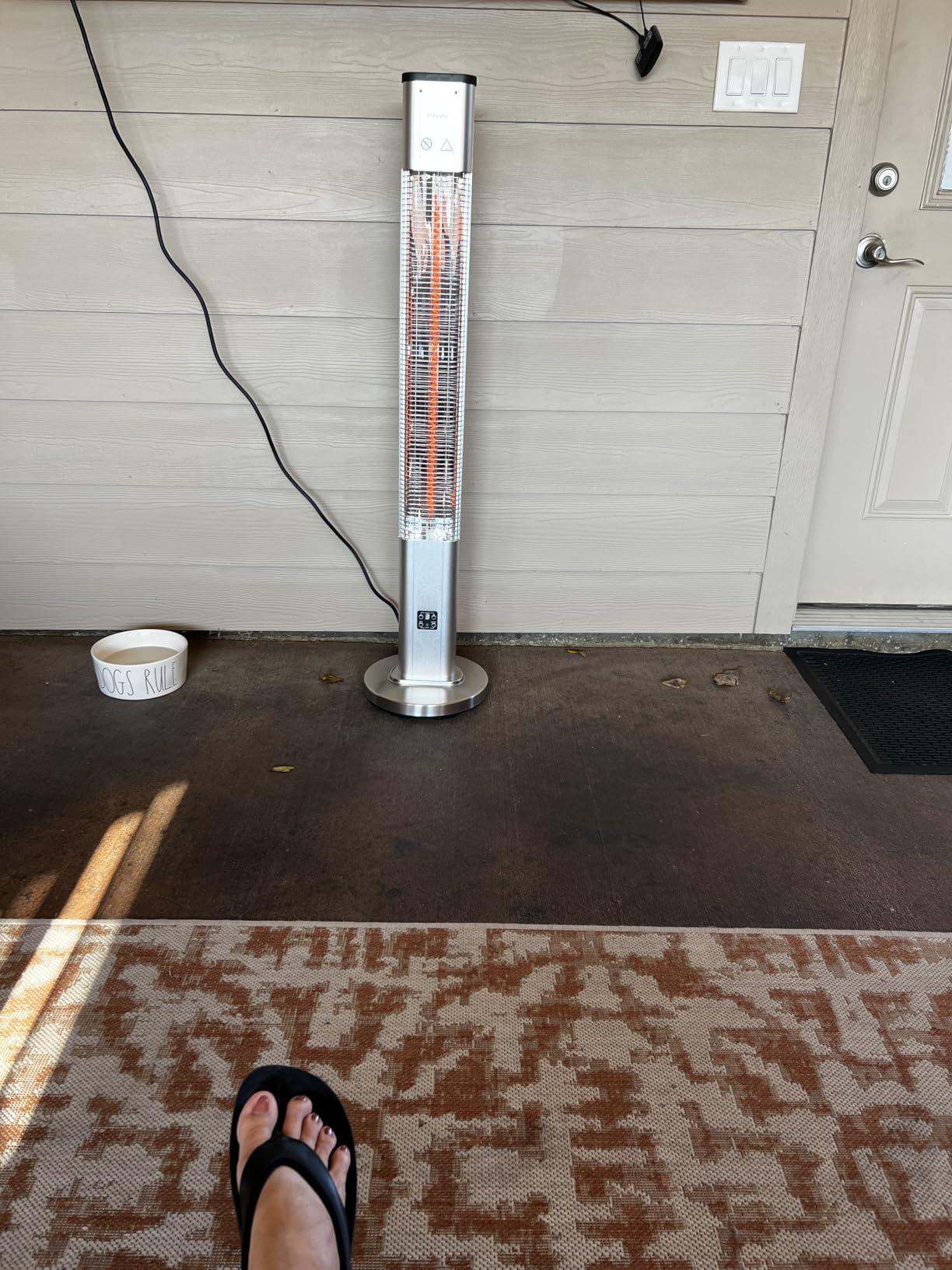
That point-source character is the thing to understand before buying. You will feel it directly in front of the unit and not much anywhere else, so the correct installation is close and aimed, not high and centred. The countdown timer rather than a schedule is the other control limitation, and remote batteries are not included.
Where it works best
It is at its best as a task heater for a specific spot, an outdoor kitchen worktop, a garage bay, a catio wall, rather than as a general solution for a seating area. The three-second heat-up is genuinely useful when you only need warmth for a few minutes.
Outdoor kitchen and garage users report the IP65 rating standing up to real exposure, and the adjustable brackets solving mounting problems on older walls.
Where it will not deliver
It will not fill a large patio, and anyone expecting thermostat-style control or a programmable schedule should choose a unit that has them. The missing remote batteries are a two-minute fix but an avoidable annoyance on first night.
For warming people at a table, a wider-angle or higher-output unit serves better, and the review pattern here is consistent on that point.
9. Danluke 1500W 8-Level Wall-Mounted Heater – Best for Precise Heat Adjustment

Patio Heater for Outdoor Use 1500W, 8H Timer, Waterproof, Infrared Electric Wall-Mounted Patio Heater, 8 Levels Heating for Garage Backyard Black
1500W carbon fibre tube
120V at 12.5A
8 heat levels and 8H timer
Waterproof with overheat protection
Pros
- 4.6 rating with no one or two star reviews
- Eight heat levels plus a straightforward 8-hour timer
- Casing stays near room temperature
- Carbon tube runs cooler and resists rain
Cons
- Very narrow projector-style heat pattern
- Wall brackets are thin sheet metal and the tilt drifts
- Knob has no detent click and settings are unlabelled
- Four foam inserts must be removed before use
The carbon fibre tube here is rated at over 95 percent electrothermal conversion efficiency and the case stays near room temperature even when the core is glowing, which is a genuine safety and comfort advantage over quartz units that radiate heat into the wall behind them.
Eight evenly divided heat levels are set by remote or a touch knob, and the 8-hour timer shuts down automatically. At 12.5A it draws the standard 1500W load, so it fits a normal outdoor outlet on its own circuit.
The 4.6 rating is the second highest here, and worth noting alongside the small review count of 19, many of which are Vine reviews rather than long-term owner feedback. Treat the rating as encouraging but not proven over years of use.
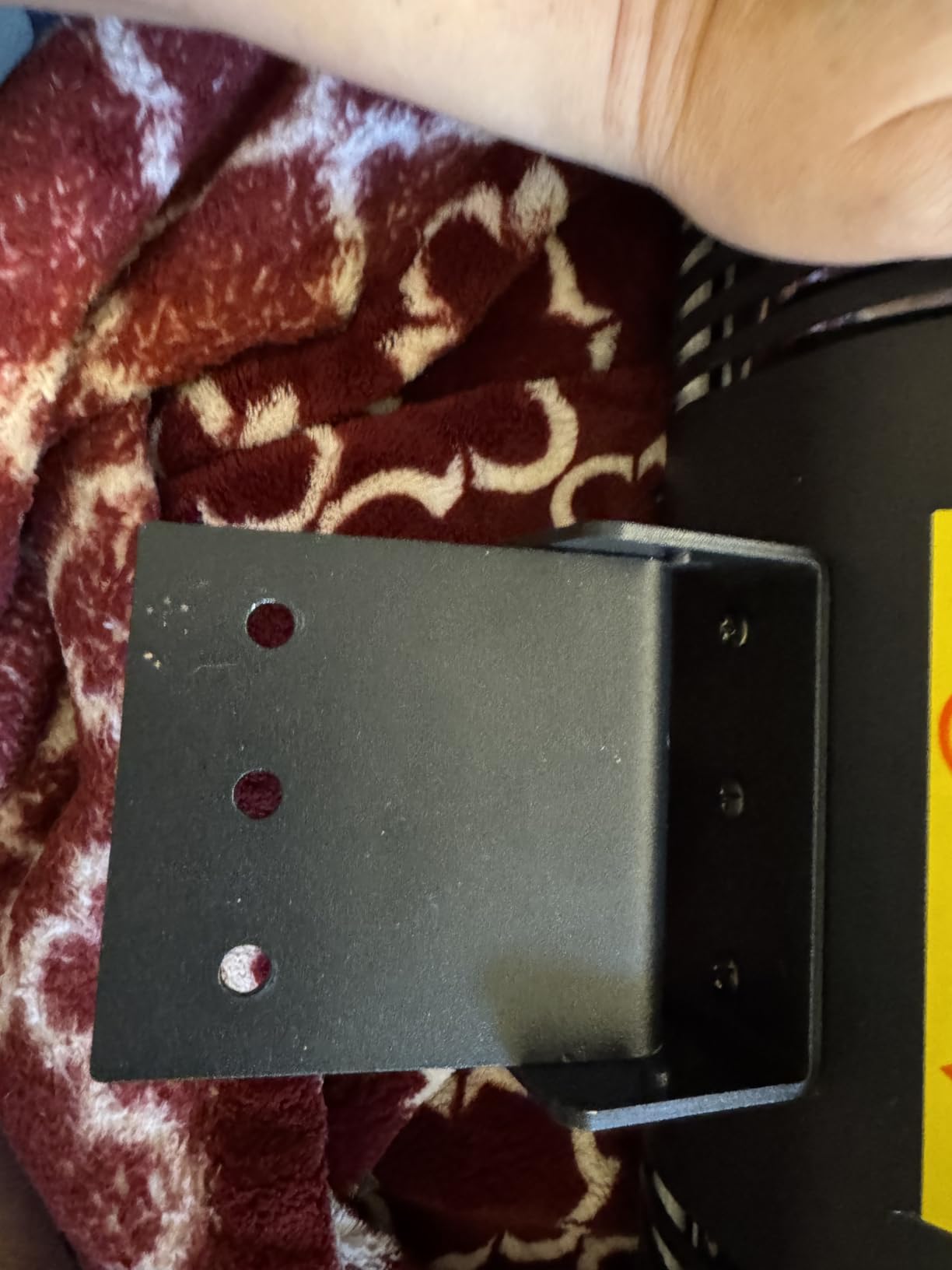
Two build details get repeated criticism. The adjustable wall brackets are thin sheet metal and the tilt joint drifts downward over time, which matters because a fixed bracket is the most common failure point in this category. The knob has no detent click and the levels around it are unlabelled, so you are guessing at settings in the dark.
Why the carbon tube is worth it
Carbon fibre tubes run cooler than quartz and resist breakage from rain, and the lower casing temperature means it is safer to mount close to a wall or under a soffit. Reviewers who have used both element types consistently prefer carbon for outdoor work.
Eight fine levels also make it easier to run at a low setting for two hours than to run full power and get too warm, which matters on a metered apartment supply.
What gives us pause
The heat pattern is described as very narrow and projector-like, so it serves a single seat or a tight table far better than a group. The drifting tilt bracket is the most legitimate complaint here, since a wall heater that slowly aims itself at the floor stops working.
With 19 reviews we would want a longer track record before recommending it ahead of the better-established units in the middle of this list.
10. Paraheeter 1500W Wall Mount or Tripod – Best for Wall or Freestanding Flexibility

Outdoor Electric Heater, Infrared Patio Heater for Outdoor/Indoor Use, Wall Mounted/Freestanding Infrared Heater Outdoor, 1500W Electric Patio Heater with Tripod, MATT BLACK
1500W carbon fibre tubes
120V wall mount or tripod
IP65 with tip-over shutoff
35.1 inch, 3 levels with 1 to 8 hour timer
Pros
- Only unit here that ships with a tripod
- Light body with a genuinely sturdy wide-base tripod
- Wide heat angle felt out to 8 feet on high
- Per-level 1 to 8 hour timer options
Cons
- Remote only works when aimed at the display end
- Assembly instructions are hard to follow
- Short power cord constrains wall placement
- Shorter throw in open windy conditions
Every other wall mounted unit here is wall only, and that is where this one differentiates. The same body mounts on a wall bracket or on the included tripod, so you can start the season wall-mounted against the building and move it to the middle of the seating area on a windy evening.
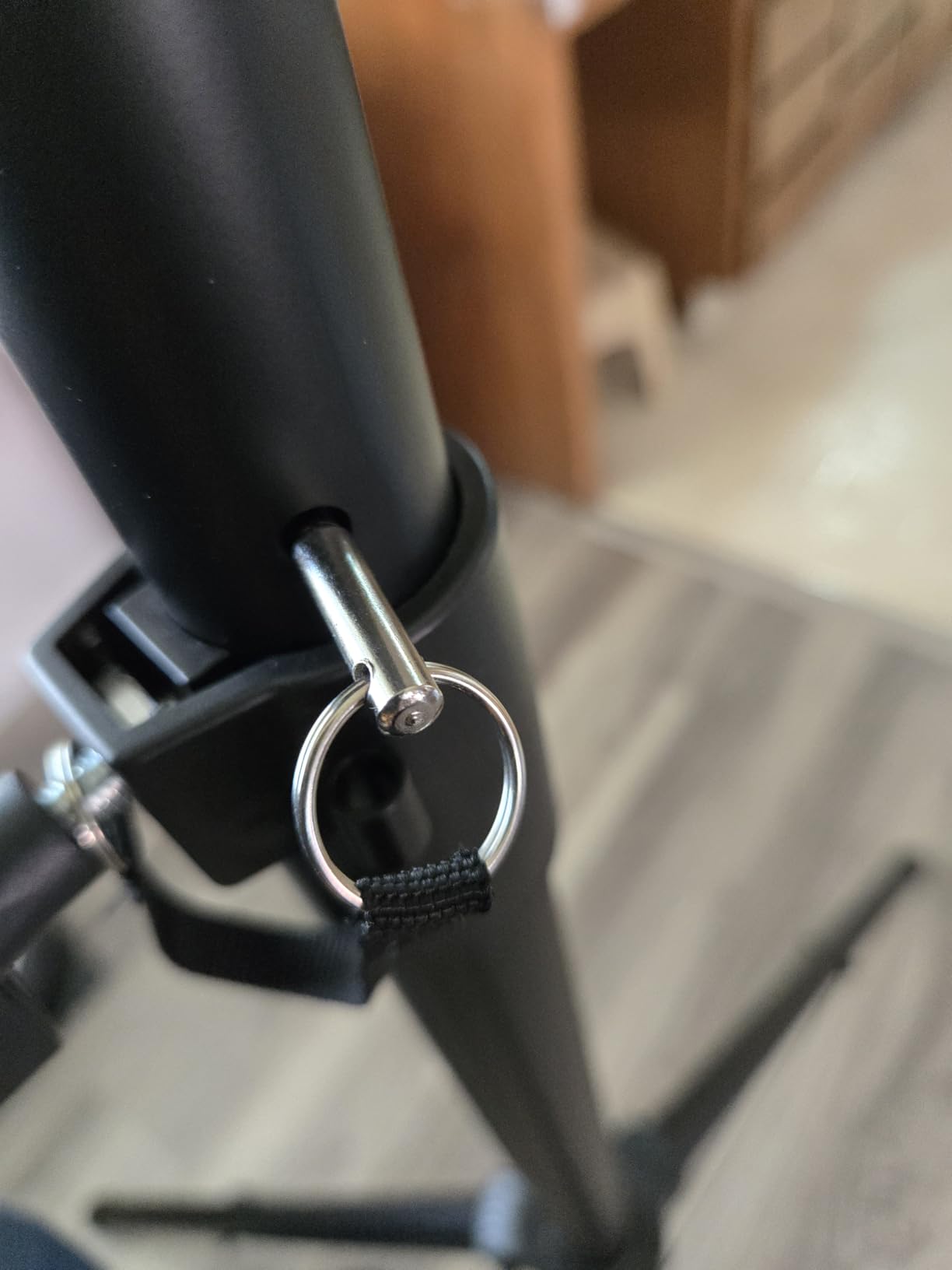
The tripod is the part reviewers single out. It is described as stronger and more stable than competing stands, which matters given how often cheap freestanding patio heaters tip on a balcony. Carbon fibre tubes are rated for a 10,000 hour lifespan, and the unit carries an IP65 rating with a metal grille, grounded plug and tip-over auto shutoff.
It also throws further than most 1500W units. Owners report feeling it out to 8 feet on the highest level, which is a wider cone than the compact units above, and the 4.5 rating across 24 reviews is strong for such a small base.
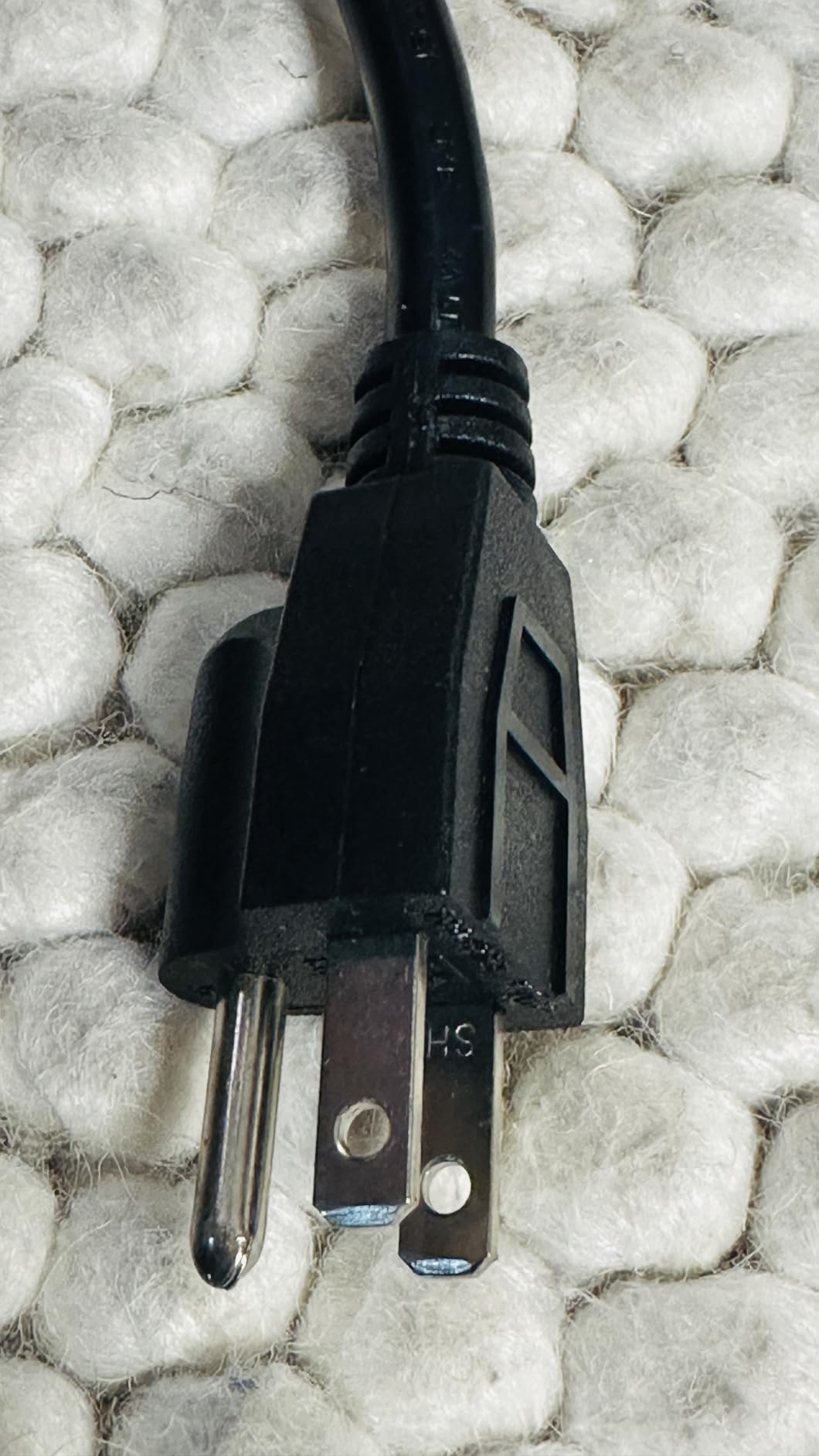
The remote is the weak point, because it only works when pointed at the display end of the unit, which is an awkward detail in a dark balcony. Assembly instructions are translated English and difficult to follow, and the short cord means the wall position has to be near an outlet. Some users also found the throw short in open, windy conditions.
When two-way mounting is the deciding factor
It is the right call when you are undecided about permanent fixing, or when you want heat on the seating rather than on the wall for part of the evening. A tripod also solves the problem of a balcony with no suitable wall surface at all.
For renters, the tripod option means you can try a heater without any commitment, which removes the single biggest obstacle to buying one at all.
Where to manage expectations
The fussy line-of-sight remote will frustrate you until you learn the angle, and the assembly instructions assume more than they should. Expect to place it near the outlet rather than where the heat is needed.
If your balcony is genuinely open and windy, none of the 1500W units here will restore the experience of a warm evening, and no amount of adjustment changes that.
What to Know Before You Buy a Balcony Heater
Electric infrared versus propane on a balcony
Electric infrared is the only realistic fuel for a balcony, and the deciding factor is not efficiency but permission. Buildings and local fire codes routinely prohibit propane tanks and open flames on balconies, sometimes including storage of the tank anywhere on the property, so a propane heater is frequently illegal before it is ever used.
Electric infrared also has a real efficiency edge. Combustion heaters lose a large share of their fuel energy to exhaust, whereas radiant elements convert over 90 percent of input electricity to heat in the zone you are aiming at. The catch is output, since 1500W is about 5,100 BTU per hour against roughly 40,000 BTU for a propane patio heater, and no wall unit on a normal balcony circuit closes that gap.
On running cost, a 1500W electric heater draws 1.5 kWh per hour, so the hourly figure tracks your utility tariff directly. A propane heater burning a 20 lb tank delivers several hours of heat and then needs a refill or a tank exchange, which is why renters weighing cost per evening often find electric easier to budget for even at a higher hourly rate.
120V plug-in versus a 240V dedicated circuit
A standard 120V outlet caps any electric patio heater at 1500W, because a 15A circuit cannot deliver more. That single fact explains why almost every consumer balcony heater stops at exactly 1500W, and it is a hard ceiling rather than a manufacturer choice.
A 240V dedicated circuit removes that limit. A 3000W unit draws 12.5A at 240V and a 6000W unit draws 25A, so the second tier needs a 25A branch circuit and frequently a panel upgrade on an older apartment building. The installation is electrician work rather than a weekend project, and it is also the point where a landlord is most likely to object.
For a balcony where you want to seat four or more people outdoors through the shoulder season, the 240V tier is worth the electrician. For two people at a small bistro table, a 1500W plug-in unit aimed correctly delivers most of the available warmth for a fraction of the disruption.
IP rating decoder: IP24, IPX4, IP55 and IP65
Most cheap balcony heaters are advertised as waterproof or weather resistant with no number attached, and that wording tells you nothing. A numeric IP rating is the only claim worth relying on, and the two digits mean something specific: the first is solid particle protection, the second is water ingress protection.
For a covered balcony, IP55 is the sensible minimum. IP65 gives you a fully dust-tight enclosure with protection against powerful water jets, which is what you want if the balcony gets wind-driven rain rather than a dry overhang. IPX4 means splash protection only, which is fine under a solid roof and inadequate for a side-exposed wall. Anything described only as IP24 is indoor-plus-splash territory and we would not put it on a balcony at all.
Six of the ten units in this roundup carry IP65. If a listing says waterproof with no figure, treat that as marketing.
Carbon fibre versus quartz tube elements
Carbon fibre elements warm almost instantly, run cooler at the casing, and have no visible orange glow, which matters on a balcony overlooking neighbours. They also tend to survive rain better because there is no fragile glass tube to crack.
Quartz tubes run hotter and push more energy into the beam, which is why the commercial 6000W units in this list use them. The trade-off is a visible glow, a hotter casing, and a longer warm-up. For a domestic balcony, carbon is the more considerate choice; for a large commercial patio where output per pound of hardware matters most, quartz wins.
Mounting height, clearance and aiming rules
Mount low and aim across the seating rather than high and down at it. Radiant heat only warms what it can see, so a unit mounted at head height across a table warms faces and torsos directly, while the same unit mounted above eye level warms the floor nobody is sitting on. Forum users describe this as the single biggest difference between a heater that works and one that feels broken.
On clearance, follow the manual, and expect 72 inches minimum for a wall mount and 96 inches for a ceiling mount on commercial units. Keep the heater clear of combustible surfaces, do not run it under a canvas pergola top or a market umbrella, and never extend it into a walkway head-height path on a narrow balcony.
Aim from upwind, not downwind, and if wind strips the warmth, a screen or curtain on the exposed side does more than a bigger heater. Positioning the unit on the wall closest to the prevailing wind puts the heat downwind of itself, where people sit.
How many heaters your balcony actually needs
Size by seating position rather than by square footage, because radiant heat is a cone rather than a room-filling system. A 1500W unit comfortably warms two people seated within about 6 feet, a 3000W unit handles a four-person table, and a 6000W commercial model covers a larger patio or restaurant row of seating.
The rule people repeat in renter discussions is that two heaters run at a lower setting beat one heater run at full power, because lower output over a longer period is more comfortable and costs less. If your balcony has two distinct seating zones, a unit per zone aimed at each one works better than a single larger unit aimed at the middle of the space.
For a balcony deeper than about 6 feet, wall placement on the short wall matters more than the heater you choose, because a unit at the far end of a long balcony loses most of its throw before it reaches the seating.
Running two heaters without tripping a 15A breaker
One 1500W heater draws 12.5A on a 15A circuit, which leaves only 2.5A of headroom. That is enough for a lamp and nothing else, so running two 1500W units on the same circuit will trip the breaker, and so will one heater plus a kettle, a space heater or a string-light set.
Plan the circuits before you buy. Each 1500W unit needs its own 15A circuit with a GFCI-protected outdoor outlet, or you need to move up to a 240V branch circuit that can carry two units on a duplex receptacle. Electricians repeatedly tell people that extension cords are not a substitute for a dedicated outlet, and that a manual requiring a dedicated GFCI circuit is not a suggestion.
If your balcony has only one outdoor outlet, that single fact caps you at one heater no matter what else you install, and budgeting for an electrician is more useful than buying a second unit.
Off-season cleaning and storage
Give the element and reflector a wipe with a dry or lightly damp cloth before you put it away, and never spray cleaner directly onto a carbon fibre tube or a quartz element. Dust on the reflector reduces output noticeably, and salt air on a coastal balcony accelerates corrosion on cheaper casings.
On a balcony where the unit cannot come inside, cover it with a fitted waterproof cover rather than a loose tarp, which traps wind and can work the brackets loose. Retract any extendable parts and check that the tilt joint still holds its angle, since that is the component most likely to have drifted.
Before the first cold evening of the season, confirm the unit still reaches the GFCI outlet and that the remote batteries still respond. Every one of the firmware or battery complaints we saw would have been caught by a two-minute test.
Renter, Landlord and HOA Checklist
Getting written permission before you buy is the step most people skip and most regret. The heater is rarely the problem, since a fixed electric unit is far easier for a building to approve than a propane tank, but drilling into an exterior wall or running a new circuit is the part that triggers refusals.
1. Read your lease or strata bylaws for terms covering drilling, exterior modifications, flame, propane and tank storage before you look at any product.
2. If a rule is ambiguous, ask the building manager in writing and keep the reply. An email is evidence; a verbal assurance from a neighbour is not.
3. Get landlord or HOA approval in writing, and be specific about the request: one exterior wall mount, the model, whether drilling is needed, and that no gas line is involved.
4. Confirm where the power will come from. An existing outdoor GFCI outlet on a 15A circuit supports one plug-in unit; anything more needs an electrician and usually written sign-off too.
5. Ask about clearance from the balcony ceiling, doors and neighbouring units, since buildings frequently specify their own minimums over and above the manufacturer guidance.
6. If drilling is refused, choose a post or strap clamp mount or a tripod unit, which needs no wall penetration and is far easier for a building to accept.
7. Photograph the finished installation and keep the product manual and warranty details, since future repairs usually need proof of what was approved.
Frequently Asked Questions
What is the best patio heater for my balcony?
A 1500W 120V carbon infrared wall unit with an IP rating of IP55 or better is the best starting point for a typical apartment balcony, because it plugs into a standard outdoor outlet and needs no electrician. Mount it at roughly chest height and aim it across the seating rather than down at it, since radiant heat only warms what it faces. If a 240V circuit is already available, a 3000W model will hold a larger group warm.
Can I use a wall mounted patio heater in the rain?
Yes, as long as the unit carries a numeric IP rating of IP55 or better for an exposed balcony. IP65 is better still, since it protects against powerful water jets from wind-driven rain. A unit advertised only as waterproof or weather resistant with no IP number is telling you nothing useful. Most manufacturers also require a GFCI-protected outdoor outlet and a dedicated circuit, so keep the connection dry and correctly rated.
Are wall mounted patio heaters allowed on an apartment balcony?
Usually yes, because a fixed electric unit has no flame and no fuel tank, which is what most building rules actually prohibit. What buildings often restrict is drilling into the exterior wall or running a new circuit, so get landlord or strata approval in writing first and describe the unit as a fixed electric heater with no gas connection. If drilling is refused, a post clamp mount or a tripod unit needs no wall penetration at all.
How much clearance is needed for a wall mounted patio heater?
Follow the manual for your specific model, and expect at least 72 inches of clearance for a wall mount and around 96 inches for a ceiling mount on commercial units. Keep the unit clear of combustible materials, and never install it under a canvas pergola top or a fabric market umbrella. On a narrow balcony, also keep the heat above head height out of the walkway so it does not extend into a walking path.
Why does my wall mounted patio heater feel weak?
Almost always placement. Radiant heat warms people and objects in line of sight, so a unit mounted high and aimed at the floor will feel far weaker than the same unit mounted low and aimed at chest height. Distance matters too, and heat beyond a few feet falls away quickly on 1500W models. Wind strips the warmth before it reaches you, which is why a screen on the exposed side often helps more than a more powerful heater.
Do I need an electrician to install a wall mounted patio heater?
Only for the 240V units and for anything on a new circuit. A 120V 1500W model that plugs into an existing outdoor GFCI outlet is a straightforward DIY bracket install. A 3000W heater still draws 12.5A but at 240V, and a 6000W model draws 25A, so both need a dedicated branch circuit installed by a licensed electrician and often written landlord approval.
What We’d Actually Buy on a Balcony
For most people reading this, the DR-239 at 3000W is the strongest all-round choice in the best wall mounted patio heaters for balconies lineup, because it combines real output, an IP55 rating and a review history deep enough to trust. If your balcony only has a 120V outlet, the SereneLife is the honest answer, and the ZeboZap post mount is the only one here you can install without asking permission to drill.
On a large covered terrace where an electrician is available, the Infratech or the Bromic will hold a proper seating area warm, and the Paraheeter is the pick if you want to move the heat rather than commit to one wall. Whichever you choose, mount it low, aim it across the seating, and give it a proper IP rating and a circuit to itself. Recheck all of it in the 2026 buying season before the first cold evening rather than on the night itself.